Mon, 08/01/2022 - 11:16

SEMA News—August 2022

LEGISLATIVE AND TECHNICAL AFFAIRS

Law and Order

By Daniel Ingber
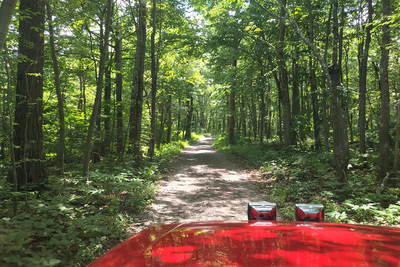
Outdoor RecOutdoor Recreation: The U.S. Senate Energy and Natural Resources Committee unanimously passed the bipartisan America’s Outdoor Recreation Act of 2022 (S. 3266), a package of public lands and recreation legislation designed to increase access to the outdoors, streamline and simplify land-management processes, and improve America’s recreation infrastructure.

The legislation includes provisions to improve the permitting process for outfitters and guides who work on public lands, and it streamlines the process and expenses associated with obtaining special recreation permits. The bill includes a travel management provision that directs the U.S. Bureau of Land Management and the U.S. Forest Service to make maps available to the public depicting where vehicles are allowed and where they are prohibited, as well as to update them periodically to ensure that the maps do not become outdated.

In carrying out this section, agencies are required to increase opportunities for motorized and non-motorized access and experiences on federal land. SEMA and the other members comprising the Outdoor Recreation Roundtable are strong supporters of the legislation, which is the first comprehensive recreation package since 1963 that will improve and expand America’s outdoor recreation economy while delivering sustainable economic boosts to rural communities.

For more information on the Outdoor Recreation Act, please contact Eric Snyder at erics@sema.org.

FEDERAL UPDATE

RPM Act: As federal lawmakers are back in their communities during Congress’s August recess, now is the time to demand that they pass the Recognizing the Protection of Motorsports Act (RPM Act; H.R. 3281 and S. 2736). The RPM Act clarifies that it is legal to make emissions-related changes to convert a street vehicle into a dedicated racecar under the Clean Air Act (CAA). The bill would also confirm that producing, marketing and installing racing equipment on track vehicles does not violate the CAA. While the RPM Act enjoys strong bipartisan support in the 2021–2022 session of Congress, including more than 150 co-sponsors, it is imperative that SEMA members and the racing community continue to apply pressure on their lawmakers to pass the bill.

Below are things you can do right now to help to pass the RPM Act:

  • Invite your members of Congress to visit your business, or participate in a virtual meeting with your lawmaker and SEMA staff. Email erics@sema.org for a template and more information.
  • Call and send a letter to your lawmakers at saveourracecars.com. A letter has already been drafted. It takes less than a minute.
  • Sign a letter to your lawmakers on company letterhead. Email erics@sema.org for a template and more information.
  • Post about the RPM Act on your company’s social-media accounts using the digital assets toolkit at www.sema.org/rpmtools.
  • Learn more about SEMA’s Political Action Committee (SEMA PAC) at www.SEMApac.com. SEMA PAC allows SEMA members to support the lawmakers who stand up for our industry in Washington, D.C.

Section 301 Tariffs: The Office of the U.S. Trade Representative (USTR) issued a notice that it will begin a formal review process of the Section 301 tariffs on goods imported from China that could lead to the continuation, modification, or end to the tariffs. At this time, the review is for only the List 1 and List 2 tariffs, but a review for Lists 3 and 4a will be announced later this year.

When Section 301 tariffs are imposed, the law requires the USTR to pursue a review at the beginning of the fourth year. The first step is to notify representatives of domestic industries that benefit from the tariffs about the possibility of the tariffs being terminated and allow those representatives to request their continuation. Requests for continuation must be received in the 60 days leading up to the four-year anniversary of the tariffs.

Assuming that a continuation request is received, the tariffs will remain in place into the next phase of the review process when all interested stakeholders may provide comments. SEMA will provide comments recommending the removal of the tariffs. The USTR will then review the public comments and determine whether to continue, modify or end the tariffs.

In 2018, the USTR instituted a Section 301 investigation of Chinese trade practices and imposed $50 billion in tariffs on a variety of goods on Lists 1 and 2, including miscellaneous metal and rubber parts. After China responded with retaliatory tariffs, the U.S. imposed the additional List 3 and 4a tariffs. The List 3 tariffs apply to most auto parts. They began at 10% in September 2018 but increased to 25% in May 2019.

STATE UPDATE

Alaska—License Plate: The Alaska House of Representatives passed SEMA-supported legislation to allow the display of only a single, rear-mounted license plate for all passenger vehicles. Under current law, vehicles must display two license plates. The bill passed the Senate Transportation Committee and is now pending in the Senate Finance Committee.

California—Automobile Cruising: The California Assembly introduced a SEMA-supported resolution celebrating the history and culture associated with automobile cruising. This resolution encourages local officials and law enforcement to work with local car clubs to conduct safe cruising events. The bill currently awaits consideration in the Assembly Transportation Committee.

California—Zero-Emissions Vehicle Conversions: The California Assembly Natural Resources Committee unanimously passed SEMA-sponsored legislation to incentivize the conversion of gas- and diesel-burning vehicles into zero-emissions vehicles. If passed, the bill would provide motorists with a $2,000 voucher for the conversion of eligible vehicles. The bill awaits consideration in the Assembly Appropriations Committee.

Hawaii—Exhaust Noise: The Hawaii legislature failed to pass prior to adjournment SEMA-supported legislation to protect enthusiasts from unfair exhaust noise citations by allowing the use, sale, alteration or installation of car mufflers that meet a 95-decibel noise limit.

Hawaii—License Plate: The Hawaii legislature failed to pass prior to adjournment SEMA-supported legislation to require the display of only a single, rear-mounted license plate for all passenger vehicles. Under current law, vehicles must display two license plates.
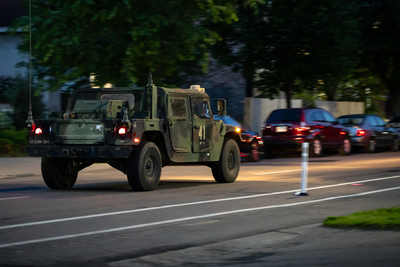
OklahomaOklahoma—Military Vehicles: Governor Kevin Stitt signed into law SEMA-supported legislation to allow the registration and titling of former military surplus vehicles. The new law defines a military surplus vehicle as a vehicle less than 35 years old and manufactured for use in either the United States Armed Forces or any country that was a member of the North Atlantic Treaty Organization at the time the vehicle was manufactured.
Mon, 08/01/2022 - 11:15

SEMA News—August 2022

LEGISLATIVE AND TECHNICAL AFFAIRS

Throw Out That Vehicle Code Book!

Gearhead’s Guide to U.S. Public Policies

By Colby Martin

SAN

Help protect our industry from government threats by getting involved with the political process and holding lawmakers accountable—SEMA is your advocacy guide.

No one wants to run afoul of the law. Every state and the federal government have rules governing automobiles. Some policies are similar between jurisdictions, but most vary from place to place. Keeping tabs on current requirements once meant accessing a given state’s book of vehicle codes. For most, that is a less than desirable solution. The same goes for navigating complex government websites. There must be a better way to understand one’s rights.

As the industry’s organized legislative force, the SEMA Action Network (SAN) breaks down the automotive laws on the books for curious enthusiasts. In fact, the SAN was formed in 1997 just as the world was discovering the internet’s emerging possibilities.

Over time, a slew of useful tools has been added to the SAN’s online hub and is available at no charge at www.SEMAsan.com. The mobile-friendly platform has been completely overhauled in recent years and is fully searchable. It has never been easier for enthusiasts to locate specific statutes and participate in the political process further.

To begin, let’s dive into the basics:

The Rules Are the Rules

With limited exceptions, the nation’s automotive-related public policies are found at the state level rather than federal. However, laws governing vehicles often vary between states just like other types of laws. Understanding how to title and register specialty cars and trucks in each state, meet emissions standards or fight unfair inoperable vehicle storage rules at the local level can prove challenging.

What Are the Rules?

SAN

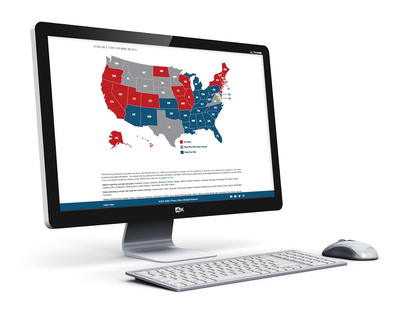
Using mobile-friendly interactive U.S. maps, quickly look up any state’s unique vehicle-related requirements and proposed bills.

Among the most popular features on the SAN website are the comprehensive lists of topic-based statutes organized alphabetically by state. To clarify any confusion, looking up each state’s unique requirements has been simplified by SEMA staff. A fully interactive map of the United States is prominently featured on each page for quick reference anywhere. The following online resources are posted live and updated as frequently as possible. Of course, the information is subject to change. Please consult the statutes and regulations directly to ensure the accuracy of the information.

  • Titling & Registration (www.SEMAsan.com/tagandtitle): To register and title a vehicle in any state is a daunting effort. When the unique laws and regulations governing hobby vehicles are factored in, the process can be a nightmare. SEMA sought to reduce the confusion in 2010 by creating the Tag & Title Toolbox. Individual entries for each state include full registration and titling provisions, inspection criteria and other requirements, as well as exemptions. Being that uniform terms for “specialty” vehicles are not shared across the jurisdictions, a simple glossary of definitions is included at the top of each state’s document. This one-stop shop also includes key administrative forms used by each motor vehicle department.
  • Emissions (www.SEMAsan.com/emissions): Vehicle emissions inspections are a necessary task for much of the country. We all understand that our planet needs clean air to survive. Strides in technology have greatly improved air quality in many places, and staying current with changing rules can pose a challenge. Many jurisdictions handle this issue differently, so the SAN has made it easy to look up each state’s emissions requirements online.
  • Exhaust Noise (www.SEMAsan.com/noise): Motor-vehicle exhaust noise continues finding itself in the crosshairs of state capitols. This resource identifies the states that have adopted measurable exhaust noise limits, the states that prohibit “excessive or unusual noise,” and the states that ban all modifications that lead to noise increases above the levels created by the factory-installed exhaust system.
  • License Plates (www.SEMAsan.com/licenseplates): After tracking and influencing license plate legislation nationwide, SEMA fulfilled the need for a comprehensive resource on this topic. Designed as a quick reference guide, the compilation includes the number of plates required as well as specialty-designated plates available in each state. Those looking to purchase or apply for a specialty plate are advised to check with their local DMV for guidance and paperwork.
  • Altered-Height Vehicles (www.SEMAsan.com/alteredheight): Thinking about lifting or dropping a ride? Make sure the finished job is done within the legal confines. Before tackling that next project, look up the state laws impacting altered-height vehicles for any limitations. The laws include those addressing maximum allowable bumper and frame heights, headlamp and taillamp heights, tire and wheel sizes and other equipment restrictions. A full update is in the works; expect to see it posted later this year.
  • Motorsports Racing Trailers (www.SEMAsan.com/motorsportstrailers): Towing-related statutes from coast to coast are posted to help the motorsports community continue hauling lawfully. Enforcement action often comes down to perceived “commercial” activity or a trailer’s overall size. Designed to inform before a citation is given, this online resource clarifies rig requirements for each state. This guide assists in keeping competitors away from the wrong side of the law on the highway throughout the racing season.
  • Warranty Issues (www.SEMAsan.com/warranty): Performance and appearance upgrades on newer vehicles can be challenging when it comes to vehicle warranties. For those modifying later-model cars and trucks, the online Warranty Guide can clear up many questions about the topic. Posted materials are intended to help where a vehicle warranty claim is denied in circumstances involving a specialty product.

Can I Follow Rules Being Considered?

SAN

Avoid run-ins with the law by grabbing the tools to understand your automotive rights.

With thousands of bills proposed each legislative session, SEMA staff reviews, tracks and responds to hundreds of legislative initiatives that may affect the community. Some bills will not advance past introduction; others will go on to become the laws of tomorrow. Stay in tune with current state activity by viewing bills the SAN is actively watching. Remaining up to date on matters in one’s state is just a few clicks away at www.SEMAsan.com/legislation.

Once legislation is eligible for consideration by elected officials, outreach from the industry is needed. Legislative Action Alert messages targeted by state are sent to resident SAN contacts when a bill is moving through a state’s legislature. Easy-to-follow guidance on contacting lawmakers helps immediately influence proposals. For the latest status on this year’s efforts, check out the complete list at www.SEMAsan.com/alerts.

Can the Rules Be Improved?

In its fight to protect the automotive community from unfair laws, the SAN has long battled familiar issues in multiple places. Existing vehicle-related policies and classifications are often well behind the times. In certain jurisdictions, outdated and convoluted registration rules create confusion among motorists as well as those charged with applying the laws at the ground level.

Over time, the SAN has crafted unique solutions to combat common difficulties nationwide. Early on, a SEMA-model street-rod/custom-vehicle bill was developed to simplify matters regarding modified vintage and reproduction vehicles for government officials. With enactment of this template into law in several states demonstrating widespread success, the SAN had proof that positive, proactive legislation could serve to create new opportunities for the growth of the hobby. As a result, additional model legislation was designed specifically to create reasonable and practical solutions for other specific issues, including the
following:

  • Exhaust noise
  • Street rod/custom vehicle
  • Inoperable project vehicle
  • Former military surplus vehicle
  • Nitrous oxide
  • Warranty denial

The next time actions threaten one of the subjects mentioned above, don’t make enemies—take the opportunity to build bridges with lawmakers. Working together with a fair approach in hand will make arriving at a hobby-friendly outcome much more likely. Find each of the SEMA-model templates posted at www.SEMAsan.com/modelbills.

Can I Help Sway the Rules?

The greatest tool at each citizen’s disposal is his or her right to vote. Voting gives you a voice in government, allowing you to choose leaders and shape the future of the country and our industry. Use the voting tool to register to vote and learn the deadlines for where you live at www.SEMAsan.com/SEMAvotes. Before you cast your ballot, find out if your state and federal representatives are affiliated with the hobby-friendly, SEMA-supported caucuses at www.SEMAsan.com/statecaucus
and www.SEMAsan.com/federalcaucus. You can locate your elected officials on the website under the “Legislators” tab. Why wait? Begin making your plans to vote now! Take part in our democracy and make your voice heard in every election.

Fortunately, we can impact how we are governed through the power of our vote. Holding lawmakers accountable by relaying our thoughts on issues affecting us as voters is crucial to protecting the industry. Most importantly, each of us must seek to unite our diverse community and successfully lobby decisionmakers with a unified purpose—thereby raising our collective automotive voice as a grassroots force across the nation.

Individuals of all ages can learn the basics of advocacy at the grassroots level. Whether starting from scratch or seeking the next level, the SAN has a new means to assist your participation in the political process. The SAN’s latest online enhancement is a digital lobbying guide complete with animated video shorts. This series of quick and simple tips breaks down common misconceptions about influencing public policy. Empowering enthusiasts with the necessary tools can ease doubts about the system. Boost involvement with our cause at www.SEMAsan.com/lobby.

How Do I Impact Future Rules?

Now more than ever, it is important to keep up with legislative trends in Washington, D.C., and the rest of the United States. After all, proposals in one jurisdiction are often considered by others. Want to keep tabs on your state? Subscribe for breaking updates from the SAN without cost or commitment at www.SEMAsan.com/join. Of course, there is no fee, SPAM or “catch” to sign up. Ask your friends and customers to follow suit.

Mon, 08/01/2022 - 11:03

SEMA News—August 2022

HERITAGE

Over the Wall

By Drew Hardin

Photography Courtesy: Steve Kelly, Petersen Publishing Company Archive

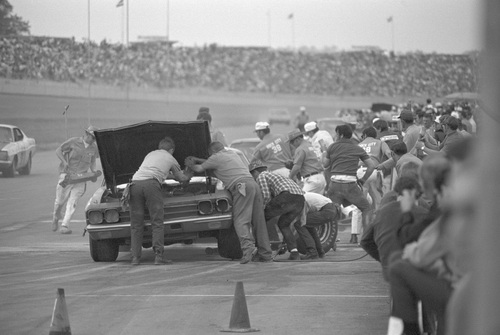
HeritageHot Rod Feature Editor Steve Kelly traveled to Alabama in April 1970 to cover NASCAR’s inaugural Alabama 500 in Talladega. His spot along the pit wall gave him a good view of the furious activity that took place while the race was under caution.

“Six men were allowed over the wall, and the fastest cars had all four tires changed at once,” he wrote. “Mechanics got a workout!”

Pit crew safety equipment has come a long way since then.

This was the second race that took place at Talladega, and it went much smoother—literally—than the first, which was held the previous September. Rough track surface conditions on the new tri-oval—in combination with downforce generated by a new wave of car aerodynamics (particularly with the winged Dodge Charger Daytona)—were shredding race tires.

In the interest of their own safety, drivers wanted the race postponed until a solution was found; NASCAR owner Bill France said they’d be fine if they just slowed down. As a result of the stalemate, more than 30 drivers boycotted the race, and France was forced to fill the grid from the ranks of the Grand Touring support series.

Since that rocky start, most of the track had been resurfaced, Kelly reported, and the tires were improved.

“Goodyear spent time and money on six different testing sessions and finally came up with a ‘minimum tread pattern’ tire that made it possible for drivers to run their cars as fast as they could without fear of tire failure,” he wrote.

Bobby Isaac, driving a ’69 Charger Daytona, was the fastest qualifier for the weekend, running 199.658 mph.

“Chrysler products definitely had the edge,” Kelly noted, “but David Pearson [in a Ford Torino Talladega] was close at 198.928 mph.”

By the end of the race’s 188 laps, Isaac finished second and Pearson third. Pete Hamilton won the race in a ’70 Plymouth Superbird, leading the final 18 laps.

“Pete wasn’t the same dark horse at Talladega that he was when he won this year’s Daytona 500,” Kelly wrote. “The Petty Engineering crew responsible for his Plymouth never has been.”

Mon, 08/01/2022 - 10:46

SEMA News—August 2022

SEMA DATA

By Gigi Ho

SEMA Data Product News

The products featured below are from SEMA Data member companies that have attained Gold- or Platinum-level data, which means that their product data is robust and complete—likely to drive customer purchase decisions. SEMA Data members meeting data scorecard requirements are invited to submit product releases for consideration to enews@semadatacoop.org.

Borla
Forgestar
Rigid
Borla

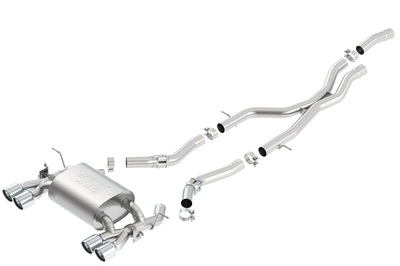
F80/F82 M3/M4 2015-2020 Cat-Back Exhaust System ATAK

System features a merge X-Pipe for increased performance and improved sound. The system has valves and features polished T-304 stainless steel tip and Borla’s Polyphonic Harmonizer Technology, which utilizes patented units that contain pipes of different diameters and lengths to create multiple exhaust notes that harmonize to deliver a clean, rich, full-bodied sound to the Borla mufflers. The mufflers then enhance this sound to the character and volume appropriate for our Touring, S-Type and ATAK systems.

Information: www.borla.com

PN: 140731

Forgestar

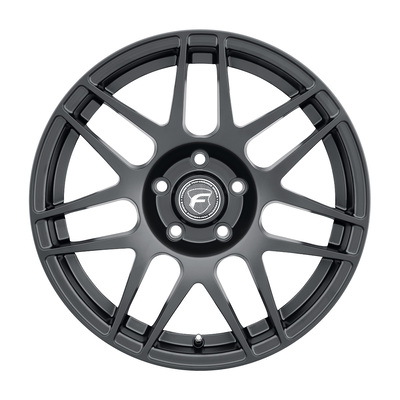
F14 Wheel Satin BLK

Forgestar performance wheels bridge the gap between forged wheels and cast wheels for the world’s most prestigious luxury and high-performance machines. Its innovative rotary-formed production process allows Forgestar to create a lightweight cast wheel with strength and impact values similar to a forged wheel. In turn, we’re able to create a lightweight aftermarket wheel solution for various street, racing and drag-racing applications, catering to various applications and vehicles. Custom bolt patterns. Lightweight monoblock construction. Rotary-formed flow-formed barrel. Semi, deep, super-deep concave and ultra-deep concave profiles. Big-brake-kit clearance.

Information: www.forgestar.com

PN: GH-13053X

RIGID

Adapt LED Light Bar With EIGHT Beam Patterns, GPS And
RGB-W Backlight, 30 in.

The RIGID Adapt LED Light Bar has a signature look that is unlike any other light bar on the market. Feature-packed, this light bar has eight selectable beam patterns and accent lighting that can be programmed to display any color in the light spectrum. The Adapt features an integrated optics design with spot, flood and driving zones. Horizontal beam patterns range from 90-degree slow or moderate speed broad beam to a highly focused 15-degree high-speed spot beam in a single fixture. The new Active View Technology allows the beam pattern to automatically adjust based on the vehicle’s speed when set to adaptive mode.

Information: rigidindustries.com

PN: 230413

Mon, 08/01/2022 - 09:02

By Caroline Fletcher

Bonneville

Hundreds of land-speed records have been set and broken by racers driving all types of two-, three- and four-wheeled vehicles. Photo courtesy: D.Lopez-FotoMundo America/Shutterstock.com

For more than 100 years, racers have descended upon the crystalline white salt remnants of the ancient lakebed that comprises the Bonneville Salt Flats in search of epic speeds. Not only does this unique landmark attract tourists, filmmaker and other commercial activity, but it also possesses rare physical qualities that make it the perfect venue for land-speed racing.

Despite being designated as a historic landmark, Bonneville is imperiled. Beginning in the ’60s, federal mining leases allowed salt to be transferred from Bonneville for potash extraction. Once processed, the remaining salt was not returned to Bonneville until 1997, and the amounts pumped in subsequent years have not made up for decades of losses.

SEMA has worked with the Save the Salt Coalition—a group of concerned racers, businesses and community members—to create the “Restore Bonneville” program. The goal is to gradually increase the yearly amount of salt brine pumped onto
Bonneville from an average of 300,000 tons per year to more than 1 million tons per year. SEMA and the racing community have joined forces with the U.S. Bureau of Land Management (BLM), the Utah Department of Natural Resources (DNR), the Utah Geological Survey, and Intrepid Potash Inc. in the collaborative restoration effort.

The restoration program is managed by DNR in conjunction with the BLM, and it is operated by Intrepid Potash. In working with Intrepid Potash, the volume of salt laid down on Bonneville will be increased by updating and improving the efficiency of the current pumping infrastructure and water conservation efforts, which includes rebuilding water wells, covering ditches and installing new pipes and pumps. Great efforts to use water more efficiently will help achieve the goal to increase the volume of salt returned to the salt flats.

More than $1.2 million in federal and Utah state funds were released last year to start the ambitious restoration effort. During the summer of 2021, a new water well was installed along with equipment to measure water evaporation rates and collect scientific data. The data will seek to identify the best ways to take advantage of the salt laydown and study the effects on the salt crust and underlying brine aquifer. For example, the program will consider ways to contain the salt within the large pumping area with dykes or berms.

Stakeholders are now pursuing projects to continue increasing the volume of salt being pumped in 2022 and beyond. While the fight to save the Bonneville Salt Flats is far from over, this program represents a tangible step toward “saving the salt” and protecting the future of racing at Bonneville. If you’re looking for a way to help, financial contributions to the program from the racing community are gratefully accepted at www.savethesalt.org.

Quick History Lesson

Bonneville’s hard salt provides a cool surface that doesn’t overheat tires as vehicles hit mind-boggling speeds. Hundreds of land-speed records have been set and broken by racers driving all types of two-, three- and four-wheeled vehicles. Speed Week is the marquee event, drawing large crowds of racers and spectators nearly every August since 1949. Bonneville also has a long history of being nature’s test track for equipment produced by SEMA and PRI members.

Bonneville serves another important role as a crucial resource for potash used primarily in fertilizers. To obtain potash, salt brine is collected in large solar evaporation ponds from which potash is separated out and processed. The remaining salt is stored and may then be returned to the Salt Flats as salt brine.

Beginning in the ’60s, the U.S. Bureau of Land Management, which manages the land, issued leases to the north of Interstate 80, where motorsports racing and other recreational activities take place, allowing salt brine to be collected in open ditches for commercial potash processing. The mine operator began pumping the processed salt back onto Bonneville in 1997 as part of a pilot project SEMA helped create, but it has not kept pace with the loss of salt over previous decades.

In the ’60s, the racing venue at Bonneville was more than 13 mi. in length, but there is now 8 mi. or less that can be used for competition. SEMA and the racing community are now pursuing a program to dramatically increase the volume of salt returned to Bonneville.

Thu, 07/28/2022 - 20:29

By Ashley Reyes

FLNBrian Doyle is the SEMA Future Leaders Network’s (FLN) newest spotlight member. Doyle is the general manager at Tire Service International Inc., an aftermarket manufacturer of tire service equipment and shop tools.

Get to know Doyle in his interview with SEMA below.

SEMA: What is the best advice you have ever received?

Brian Doyle: You fail your way to success. The owner of TSI told me this when I first started here. It allowed to me to realize that I don’t have to be perfect here or at home, that I will make mistakes and I will fail. In the end, as long as I learn from those failures personally as a parent, husband or at work, I will ultimately become the man, husband and leader I want to be and know I can be.

SEMA: What keeps you in the industry?

BD: The people. We are a unique fun-loving group of people. I’ve been in this industry for more than 17 years, and the hard work has been so rewarding to myself and family. We work hard and play harder!

SEMA: Where can you be found on a Saturday?

BD: With my family. Nowhere else I’d rather be.

SEMA: How do you prepare for an important meeting?

BD: In my position, I rely heavily on data. I will spend hours researching and developing a plan for attack.

SEMA: If you could go to lunch with one industry leader, living or dead, who it would be and why?

BD: In working for Discount Tire for more than 15 years, there is only one man I would have loved to have lunch with and just pick his brain—Mr. Bruce Halle. He was a visionary, a leader and motivator. I met him two to three times over my tenure there, and each time, our one-to-two-minute exchange was more captivating than ever. I wish I had the chance when he was alive to just pick his brain for an hour or two.

If you are a current FLN member, fill out an FLN member spotlight form. Selected candidates may be featured on FLN’s social media, SEMA News and FLN member updates.

Thu, 07/28/2022 - 20:25

By Ashley Reyes

SEMA members will be able to connect with notable off-road racer, entrepreneur and professional stuntwoman Sara Price during a Facebook and Instagram live chat on Wednesday, August 3, at 12:00 p.m. (PDT).   

Sara Price

Sara Price was the first factory-supported female racer under Monster Energy Kawasaki, as well as an X-Games medalist.

Named the 2016 Off-Road Motorsports Hall of Fame Rising Star, Price’s racing career is unlike any other. A versatile competitor, she was the first factory-supported female racer under Monster Energy Kawasaki, as well as an X-Games medalist. She has also competed in a vast array of competitions, and has many wins under her belt for motocross, rallying, the X Games and Stadium Super Trucks. Today, Sara can be found competing with RPM Offroad in a Trophy Truck Spec. in Baja, Mexico, in the SCORE International Desert Series.  

Tune into the SBN Facebook page where you will have the exclusive opportunity to ask Price questions on her career accomplishments, anecdotes and the challenges she’s overcome.  

Live Chat Location: SBN Facebook page and SBN Instagram page (@sbn_sema).

Thu, 07/28/2022 - 15:00

B. Force, Tasca III, Enders and Gladstone Get Wins at Denso NHRA Sonoma Nationals

Force

Brittany Force went 3.709 seconds at 335.48 mph in her 11,000-hp Flav-R-Pac dragster to beat Mike Salinas in the final round.

Top Fuel star Brittany Force rolled to her fourth win of the 2022 season last Sunday and moved into the points lead in front of a packed house at the 34th annual Denso NHRA Sonoma Nationals. Bob Tasca III (Funny Car), Erica Enders (Pro Stock) and Joey Gladstone (Pro Stock Motorcycle) also won at the 12th of 22 races during the 2022 NHRA Camping World Drag Racing Series season and the second stop of the three-race NHRA Western Swing. All four winners on Sunday are first-time Sonoma winners as well.

Force went 3.709 seconds at 335.48 mph in her 11,000hp Flav-R-Pac dragster to beat Mike Salinas in the final round, moving back into the points lead over Salinas with her first win at Sonoma and 15th in her career. Salinas now trails Force by six points.

Tasca III went 3.911 at 325.61 in his 11,000hp Motorcraft/Quick Lane Ford Mustang to knock off John Force in the final round.

Erica Enders knocked off Greg Anderson on a holeshot in the final round to collect her first career victory at Sonoma Raceway. Enders posted a brilliant .018 reaction time and held off Anderson at the finish line with a run of 6.574 at 196.62 in her Melling Performance/Elite Motorsports Chevrolet Camaro to earn her 39th career win and sixth this season.

After back-to-back final-round appearances, Gladstone broke through for his first career victory in Pro Stock Motorcycle last Sunday, knocking off Eddie Krawiec in the final round with a pass of 6.759 at 200.68 on his J&A Service Suzuki Hayabusa. Krawiec went a quicker 6.758, but Gladstone was quicker on the starting line with a .026 reaction time and held off the veteran to claim his first win in the class.

The NHRA Camping World Drag Racing Series returns to action on July 29–31 with the final race of the Western Swing, the Flav-R-Pac NHRA Northwest Nationals at Pacific Raceways in Seattle. It is the first race at the track since 2019.

Maynards Named Majority Owner of DSR Top Fuel Team

Don Schumacher Racing (DSR) and Joe and Cathi Maynard have announced an expanded partnership that sees the Maynards as majority owners of the Top Fuel operation piloted by Tony Schumacher. The new Maynard Family Racing/Don Schumacher Racing team (JCM/DSR) will launch during the NHRA Northwest Nationals (July 29–31 at Pacific Raceways in Kent, Washington), when the Maynards will oversee the day-to-day operations of the Schumacher-driven/Todd Okuhara-tuned machine.

DSR will continue to operate its hospitality program, graphic design and vinyl installation, nitromethane, parts, and chassis sales, and a 75,000-sq.-ft. precision machining and fabrication facility in Brownsburg, Indiana. Additionally, DSR’s trio of Factory Stock Showdown Series entries will also continue to compete under the DSR banner. Don Schumacher, DSR Performance President Chad Osier and DSR Vice President Megan Schumacher will continue to develop DSR Performance, DSR’s performance aftermarket, aerospace and defense manufacturing division.

ORMHOFOff-Road Motorsports Hall of Fame Announces Class of 2022

The Off-Road Motorsports Hall of Fame (ORMHOF) has announced its class of 2022 includes Randy Anderson, Lance Clifford, Vic Curl, Butch Dean, Jim Fricker, Brad Lovell, Eric Solorzano, Scott Taylor and Mike Thomas.

The ORMHOF Class of 2022 will be celebrated at the Off-Road Motorsports Hall of Fame Induction & Awards Gala presented by 4 Wheel Parts on Sunday, October 30, at the South Point Hotel Casino & Spa in Las Vegas. For biographies of the inductees, visit the ORMHOF announcement here. For more information, visit ormhof.org.

Kyle Larson
Kyle Larson

Kyle Larson Wins Best Driver Award at 2022 ESPYs

The 2022 Excellence in Sports Performance Yearly (ESPY) Awards presented by Capital One recently celebrated athletes, teams, and moments in the world of sports. Reigning NASCAR Cup Series champion Kyle Larson received the honor of “Best Driver,” beating out Max Verstappen (Formula One), Steve Torrence (NHRA) and Alex Palou (IndyCar).

The driver of the No. 5 Hendrick Motorsports Chevrolet claimed 10-points-paying Cup Series victories in 2021, including the Championship 4 season finale at Phoenix Raceway to claim the title and a win in the annual All-Star Race.

NASCAR Hall of Famers and fellow Hendrick alumni Jeff Gordon and Jimmie Johnson each own four ESPY awards for the same distinction, with Larson’s victory being the 19th time a NASCAR driver took home the nod. Kyle Busch is the most recent NASCAR driver to win the award, claiming it in 2019. Kevin Harvick (2015) and Martin Truex Jr. (2018) are the only other active NASCAR drivers to have won an ESPY.

For more racing news, visit Performance Racing Industry’s (PRI) website.

Thu, 07/28/2022 - 14:36

By SEMA Washington, D.C., Staff

RPM ActArizona, Kansas, Michigan, Missouri and Washington will hold their 2022 primary elections on Tuesday, August 2, and Tennessee will hold its primary on Thursday, August 4. It’s important to know which candidates support racing when going to the polls or voting early. For information on voting in the primary (including absentee and early voting), registering to vote and identifying your lawmakers and the candidates running in 2022, visit SEMA’s vote racing page.

The Recognizing the Protection of Motorsports Act (RPM Act), H.R. 3281 and S. 2736, enjoys strong support from Arizona, Kansas, Michigan, Missouri, Tennessee and Washington members of Congress. The bipartisan RPM Act guarantees the right to modify street cars, trucks and motorcycles into dedicated race vehicles and safeguards the industry’s right to offer parts that enable racers to compete. For more information on the RPM Act, click here.

Below is a list of federal lawmakers who have co-sponsored the RPM Act in the 2021–2022 session of Congress and are running for re-election in 2022. Below is a list of federal lawmakers who have co-sponsored the RPM Act in the 2021–2022 session of Congress and are running for re-election in 2022.

ARIZONA:

KANSAS:

MICHIGAN:

MISSOURI:

TENNESSEE:

WASHINGTON:

*Original RPM Act co-sponsor

**Running for U.S. Senate.

For more information, contact erics@sema.org.

Thu, 07/28/2022 - 14:34

By SEMA Washington, D.C., Staff

The Biden Administration announced that it has revived the Federal Interagency Council on Outdoor Recreation (FICOR) that was created in 2011 and disbanded in 2017. FICOR will provide a forum for federal government agencies to coordinate recreation management, improve access and provide a better recreation experience on federally managed lands and waters. The Outdoor Recreation Roundtable (ORR), of which SEMA is a member, has been working to restore the council and increase collaboration between federal agencies to address recreation management issues such as increased demand.

ORR is America’s leading coalition of U.S. outdoor recreation trade associations. It represents more than 50,000 businesses that produce vehicles, apparel, equipment and services enjoyed in our nation’s parks, waterways, trails and outdoor spaces. SEMA’s focus within ORR is on motorized recreation (four-wheel, ATVs, UTVs, etc.) along with all the equipment that makes it possible to tow RVs, trailers, boats and off-road vehicles (suspension, wheels, tires, increased horsepower, etc.).

Click here for an ORR fact sheet on FICOR.

For more information, contact Caroline Fletcher at carolinef@sema.org.