Registration for the 2022 SEMA Show, the premier gathering for the automotive specialty-equipment industry, is now open at www.semashow.com/register.
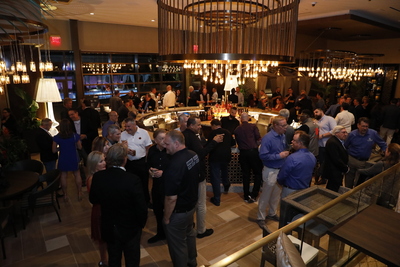
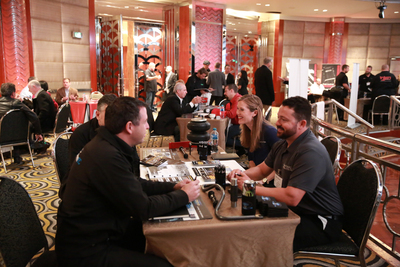
Taking place November 1–4 at the Las Vegas Convention Center, the 2022 SEMA Show will build upon the positive momentum following last year’s event, which successfully connected the $47.8 billion industry in person in what was the largest automotive trade show in North America since the pandemic shut everything down in 2020.
“The SEMA Show is where industry professionals go to grow existing relationships, create new ones and push their businesses forward,” said Tom Gattuso, SEMA vice president of events. “Exhibitors are eager to showcase their products and services to the tens of thousands of qualified professionals in attendance.”
Anticipation for this year's SEMA Show ramped up in recent weeks as exhibitors selected their booth locations during Priority Space Selection, a weeks-long process that took place May 2–18.
“Enthusiasm for the 2022 Show continues to exceed last year’s, with more than 1 million sq. ft. of exhibitor space already committed for the 2022 SEMA Show and confirmed spaces running 25% above last year,” said Warren Kosikov, SEMA vice president of sales.
Attendees at the 2022 SEMA Show will learn about the latest products, trends and technology in the industry from manufacturers exhibiting throughout the entire Las Vegas Convention Center, including the surrounding parking lots. Educational seminars led by industry experts and networking events that bring market niches together will also be available during the four-day trade event.
“Our industry continues to thrive despite current challenges in the marketplace, and last year’s event proved that the value of conducting business and networking face-to-face can never be replaced,” said Gattuso. “Our mission is to help continue that momentum by providing an unparalleled experience that builds meaningful business relationships.”
Registration for the 2022 SEMA Show is offered in three categories—attendee, exhibitor and media—and everyone must qualify to attend. Attendees are encouraged to register early at www.semashow.com/register so they can secure their credentials and receive updates on breaking news from the 2022 SEMA Show.
Attendees are encouraged to check the floorplan to see where the companies they need to interact with will be located at the 2022 SEMA Show.
For more information about qualifying documents and the 2022 SEMA Show, log on to www.semashow.com.
Are you hunting for a new job? The SEMA Career Center has a comprehensive listing of automotive-related job openings around the country. Here are some of the latest jobs posted to the website.
ProCharger is hiring an inside sales representative with a comprehensive understanding and passion for the high-performance motorsports industry as well as strong mechanical aptitude. This position will be involved in the daily sales process, building relationships with consumers, dealers and racers. Other duties include the ability to travel to events, trade shows and meet with dealers. This position will be onsite full-time in Lenexa, Kansas.
eFlexFuel is hiring a national sales manager to develop the U.S. territory to grow revenue and profits through building productive sales relationships with the automotive aftermarket industry via dealer partnerships and direct customer contacts with automotive sales channels and retailers. Candidates must be inspired by growth to build market share in the United States.
Full Race Motorsports is hiring a professional e-commerce marketing professional with experience and knowledge of automotive performance turbocharging. A positive attitude, a desire to learn and 100% commitment are needed. You’ll be helping passionate gearheads succeed with their turbocharged dreams. Excellent written and verbal communication skills, grammar and spelling are required. In the process you’ll learn to speak fluent “turbo.”
Exhibitors of the 2022 SEMA Show are invited to expand their reach, product exposure and Show-floor presence by offering products to builders through the Products for Project-Vehicle Builders list. The list connects manufacturers with builders looking to create or complete a vehicle project.
The list, which will be updated in SEMA eNews, features product offers and contact information provided by confirmed SEMA Show exhibitors. Builders interested in obtaining a product use the information to contact exhibitors directly. With each project vehicle required to be supported by a current 2022 SEMA Show exhibitor, all product-placement decisions, negotiations and agreements are the responsibility of the exhibiting manufacturer and the builder.
The list is open to exhibitors of the 2022 SEMA Show only. To be included in the list, complete the form.
Exhibitors: Each submission will appear on a first-come, first-served basis. As participation increases, all submissions will also be archived on www.SEMAShow.com.
Note: For verification purposes, the Project-Vehicle Builders form must be used to participate in the program; email submissions will not be included in the list. Participation in the list does not guarantee product or vehicle placement at the 2022 SEMA Show.
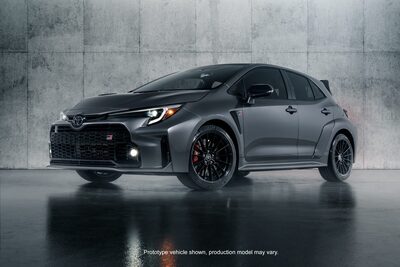
GR-Four all-wheel-drive drivetrain with user-selectable torque split.
Reinforced chassis for added stiffness and rigidity.
Available Torsen limited slip differentials (F/R).
Standard 8-in. touch-screen display.
Available eight-speaker, JBL premium sound with subwoofer.
Standard 18-in. wheels and 235/40R18 tires.
Automatic high beams.
Dynamic radar cruise control.
Toyota Safety Sense 3.0.
Note that this will be an in-person event at the SEMA Garage. In order to comply with state and local health guidelines, this event will require scheduled appointments. Due to high demand, all appointments will be time-limited. Please only register for one attendee per member company, and a follow-up email will be sent to confirm additional attendees.
The automotive specialty-equipment industry continues to experience strong growth and demand as the United States puts COVID-19 in the rearview mirror. According to the “State of the Industry–Spring 2022” report from SEMA Market Research, 75% of manufacturers, 68% of distributors and 53% of retailers/installers reported that sales were above where they were prior to the pandemic, and consumer demand continued to remain robust for most companies.
SEMA Market Research provides information and insights to help members (and the specialty auto aftermarket in general) make better business decisions. SEMA produces different research reports on the industry and consumers throughout the year, all of which are available for download at www.sema.org/research. The following media wrote about the key findings in the “State of the Industry–Spring 2022” report, which highlights current industry trends, business metrics and sales estimates.
CEoutlook
CEoutlook keeps stereo and electronics industry professionals up to date on news relevant to their businesses. Editor Amy Gilroy scoured the report to find that car audio manufacturers in the sound systems and audio accessories category saw their sales grow 22% in the previous 12 months.
Hagerty
“The automotive aftermarket is flying high even in the face of rising inflation and fuel prices,” reported Hagerty, whose editors provide readers with a view into the automotive hobby and industry. “The overall growth trend is expected to continue in the coming months, which is great news for customers and insiders alike.”
The Journal
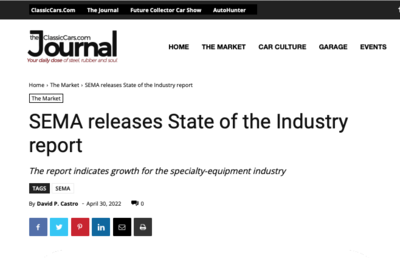
Editor David P. Castro highlighted findings in the report that classic vehicle enthusiasts would find interesting. “On the retail end, classic vehicle parts led with 26% of the market segment,” he wrote. “Internal engine products lead the way with a 21% increase by manufacturers.”
Road To The SEMA Show: The Journey Begins
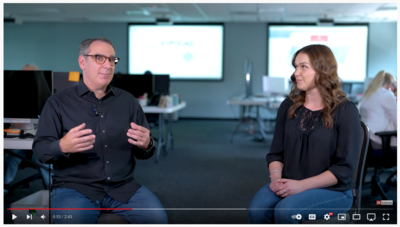
SEMA Industry Sales Director Becca Butler (right) talks booth space selection, live floorplan and the “Road to SEMA” with Vice President of Events Tom Gattuso. For all the latest updates on the 2022 SEMA Show visit www.SEMAShow.com.
ARMO Builder Series: A Story of Heroes in the Shadows
Mentorship plays a huge role in the lives of many automotive aftermarket professionals. In fact, many if not all successful industry leaders will attest to having benefitted from some form of mentorship in their career along the way.
ARMO Builder Series: Dan Short
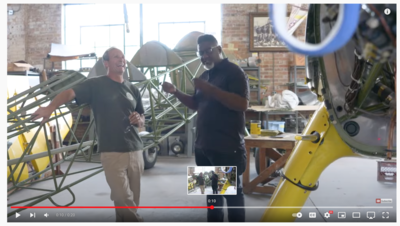
In this ARMO Builder Series video, FantomWorks Owner Dan Short (left) shares his company’s build philosophy for auto restoration Sabra Johnson of City Classic Cars takes viewers behind the scenes into his shop.
Faces in the Crowd
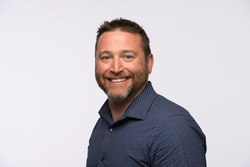
Eric Ritz
@impalow66
Eric Ritz is an industrial designer, specializing in automotive design. Growing up on the race track, Ritz has spent many years building classic cars and show cars, competing in SEMA: Battle of the Builders with his Datsun 240z in 2020.
He has a garage full of classic cars that are frequently highlighted on this social-media channels with new-product installations and events he and his father attend. In early 2022, Ritz launched a YouTube channel with his father that follows their adventures with both model cars and actual vehicles.
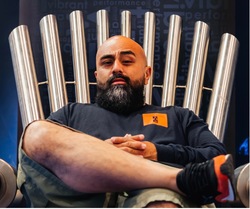
Big Mike
@thebigmike
For the past 25+ years, Big Mike has been a passionate member of the automotive community. From contributing to the industry and culture as a journalist for numerous media publications, to building award-winning, magazine cover cars, to working with SEMA and PRI to educate the community and upcoming enthusiasts on evolving laws and regulations, to traveling all over the United States and the world to host and emcee automotive meets, shows and productions, there are countless levels of contributions that Big Mike continues to make for the betterment of our industry, community and culture—and these are what has made him a household name and icon to us all.
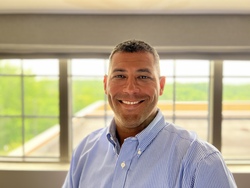
Matthias Ingle
@4god_4country
Matthias Ingle is a diesel truck builder from South Carolina. He works full-time in IT for the in the Army but enjoys building trucks in his spare time. His content consistently contains truck modifications, product performance reviews and new upgrades that engage his audience. Ingle documented his build for the 2021 Road to SEMA with his partnership with Hostile/MKW Wheels. His progress has been documented thoroughly over the past year through his own platform and other creators’ channels, highlighting every modification and partner associated with the build.
HEARD ON SOCIAL MEDIA
“The specialty-equipment industry continues to experience sales and consumer demand that exceed pre-pandemic levels, according to SEMA’s new ‘State of the Industry–Spring 2022’ report.”—Automotive Business Review, via Facebook
“SEMA’s ‘State of the Industry–Spring 2022’ report shows sales surpassed pre-pandemic levels.”—12 Volt News, via Facebook
“@SEMAMembers can get details on the state of the automotive specialty-equipment market in the new report.”—Motor, via Twitter
SEMA’s Political Action Committee (PAC) plays an important role in SEMA’s overall government affairs strategy. Every dollar that goes into the PAC is strategically placed to meet one goal: increasing congressional support for the specialty aftermarket. In Washington, D.C., the size of the PAC matters, and SEMA’s new PAC Manager, Samantha Large, wants to take the SEMA PAC to the next level. Samantha’s goal is to grow SEMA PAC funds to protect the industry and ensure that your dollars are being used with your best interest in mind.
SEMA News wanted to learn more about the new SEMA PAC manager, diving into details on who she is and why members need to pay attention to the PAC.
SEMA News: Tell us about yourself.
Samantha Large
Samantha Large: I’m originally from the Lone Star State. My family still resides Houston, Texas, where at the age of 18,
I headed to colorful Colorado to escape the heat and to attend the University of Colorado at Boulder.
After graduating from college, I lived in Denver, where I got my first real taste of politics as an intern for a political organization. About a year into my internship, I visited D.C. for a legislative conference. After my first meeting on Capitol Hill, I was hooked. Two weeks later, I was back in D.C., heading to my first Congressional hearing, and I’ve been here ever since.
I’ve worked in corporate fundraising for the National Rifle Association, served as a federal lobbyist and PAC fundraiser for the biofuels industry, and managed events for the Congressional Sportsmen’s Foundation. I live and love all things politics, and I’m excited to bring my experience and knowledge to SEMA.
SN: What made you want to join SEMA?
SL: While I’m not a gearhead, I have a tremendous amount of respect for the specialty automotive aftermarket and the excitement around all forms of motorized recreation. I know a passionate industry when I see one.
SEMA’s members love the industry, and its obvious that they are willing to put up a good fight to protect it. I’m all about advocacy, and I like to know I’m representing a group that is made of good, hardworking people who believe strongly in something. In the case of SEMA and its members—y’all love your cars! To me, it feels good to know I’m helping to protect the right to modify and personalize the style of vehicles.
SN: You have a background in political fundraising. Why should SEMA members get involved in politics?
SL: I’m a big fan of the quote, “You may not take an interest in politics, but politics will take an interest in you.” Because it’s true.
Politics can be messy, and it’s hard to have a daily interest in it unless you’re in the heart of it in D.C. It’s not in your face every day until some regulation or mandate creeps up on you, and then you’re stuck asking yourself: Why is someone telling me what I can and can’t do with my vehicle? Politics impacts you whether you like it or not. Which is why getting involved in the SEMA PAC is so important.
SN: And why is the SEMA PAC so important?
SL: You can’t always avoid having to meet certain regulations or standards, but you can help influence who is making those laws and how they are implemented. When it comes to Congressional elections, fundraising is a key factor in deciding the outcomes of races. The more money a candidate raises means their campaign has money to spend on advertising and staff to get their message out to the public.
The better campaign wins. Unfortunately, that usually means the campaign that raised the most money. Therefore, our Congressional leaders’ second-biggest job in D.C. is raising funds for their campaigns and reelections.
It’s crucial that SEMA has a well-funded PAC to support our Congressional champions in their races. We support them so they can win their reelection and stay in D.C. to continue fighting for our members on Capitol Hill. And our support for their campaigns does not go unnoticed by members of Congress. It helps us build key relationships with them that we could not have without PAC funds.
SN: How does the SEMA PAC work?
SL: One hundred percent of the donations to the SEMA PAC go to campaigns of congressional candidates who support SEMA and its members. Only members of SEMA are allowed to participate and contribute to the PAC, and they are eligible to contribute up to $5,000 per calendar year. We have SEMA PAC membership packages that offer great benefits and recognition opportunities throughout the year to our contributors.
SN: How does a SEMA member contribute to the SEMA PAC?
SL: It’s easy! All we need is your first and last name and email address to confirm that you’re a SEMA member, and then there is a short contribution form that takes seconds to fill out. All of this can be done in a matter of seconds at www.semapac.org.
SN: Is there a minimum contribution to support SEMA PAC?
SL: No. We are grateful for any and all donations. We have some people who commit to monthly or quarterly contributions. For example, some donors have committed to doing $25 to $100 a month to the PAC, which allows these members to make a huge difference without the stress of donating a large sum all at once. We can work with each member to get creative on how donating to the PAC will work for best for them.
SN: How do SEMA members learn more?
SL: I’m all about open communication. I want everyone to feel that they can call me and ask any questions about the PAC. Feel free to contact me at 202-796-2252 or samanthal@sema.org.
››› SEMA Political Action Committee (PAC) Manager Samantha Large.
The STEP program is helping to fund programs such as the SEMA Australia program pictured above and the August 24–28 2022, SEMA Nordic program in Stockholm Sweden. More information is available at www.sema.org/nordic.
This is another in a series of articles identifying government funds for U.S. SEMA-member companies to defray the costs of developing export business. A previous SEMA News article entitled “Grow Your Bottom Line: Export to the Underserved Global Market” in May 2022 focused on the Department of Commerce International Trade Administration’s Market Development Cooperator Program. This month’s article will focus on a partnership between the Small Business Administration (SBA) and the states called the State Trade Expansion Program (STEP), in which the states provide grants to help qualified companies export.
STEP funds can be used towards defraying the cost for participation in trade missions and foreign-market sales trips, export trade shows, international marketing efforts and export training. It provides federal (SBA) funding to states through a competitive application process, with nearly all states receiving funds.
SEMA has been actively connecting participants with grant opportunities to defray the cost of association international programs. With its recent trade missions to the United Arab Emirates and Saudi Arabia and the upcoming Nordic Business Development Program to Sweden, as well as the new SEMA International Promotion Program (SIPP), which included a listing and ad in an export directory distributed in SEMA News and as an insert in SEMA News, SEMA has developed a state-by-state list of STEP contacts available at www.sema.org/international.
In all, more than 40 companies participating in SEMA programs have received STEP grant funds since September 2021. SEMA News reached out to a dozen of these recipients based in various states to ask about their experiences and the benefits of the STEP grant program.
California
“The trip was planned and executed extremely well by SEMA International. Additionally, [SEMA] helped coordinate engagement with the state of California to receive reimbursement grants toward the cost. This made the decision to join the trip easy, enabling us to further benefit from visiting key international markets.”
—Adam Weisner, President, SuperSprings International
“The performance and racing markets benefit from exposure to global markets. Thank you to SEMA for organizing and promoting these international events. In addition to the SEMA organization, we thank the state of California and appreciate its support. The total effort is impressive and beneficial to all involved, including new potential customers.”
—Mark Cornwell, Vice President New Business Development and Specialty Markets, Wilwood
“The SEMA international business trips are already one of the most cost-effective and productive ways to reach international markets. By using state grants that are available, the minimal cost can be further reduced. At McLeod, we have been awarded multiple California STEP grants that have been easy to obtain and require minimal effort to apply for.”
—Bob Scheid, Vice President, Wharton Automotive Group
“The California STEP program has been such a helpful tool and monetary resource in expanding our business internationally! [SEMA] is an indispensable asset as a liaison to making the smooth transition of all the pieces fitting into place, and the California STEP program has made it more inviting to help defray some of the costs involved to get into exporting. Everyone was very helpful in wanting to make it a success for me and our business, Baja Forged.”
—Theresa Contreras, Lead Designer and Co-Owner, Baja Forged
Connecticut
“Getting assistance from Laura’s team and the Connecticut STEP program has been crucial in enabling our company to attend international events and continue to grow our export efforts. Meeting international customers face to face has created long-
lasting relationships with buyers in many countries that continue purchasing our products.”
—Yury Lyalko, CEO, Wiring Specialties LLC
Michigan
“As a startup, Blacklake Research and Development has been able to participate in several SEMA-sponsored events that were dedicated to expanding business internationally. The Michigan Economic Development Corporation [MEDC, the Michigan STEP/export-assistance program] has been very supportive of our efforts to pursue export markets and expand business opportunities into other parts of the world. We received a Michigan STEP grant for the most recent Middle East Business Development trip, which was sponsored by SEMA. Through the work with MEDC, we have been able to access grant funding for participation in foreign trade missions and have also been connected to other SBA resources.”
—Joe Valentich, Co-Owner, Blacklake Research and Development
“The staff at SEMA were great to work with in regards to the SIPP program. Not only did they introduce us to government programs we were unfamiliar with, they offered their guidance, reminders, and knowledge whenever it was needed. It was invaluable to have their assistance, otherwise we would have missed out on potentially thousands of dollars of aid and grants.”
“STEP funding through the North Carolina EDPNC (Economic Development Partnership of North Carolina) makes our travel to international trade events possible. Participation in the trade shows, in our customers’ regions, helps to build the relationships we need to grow our export business.”
—Mark Whitney, CEO, Performance Analysis
Ohio
“The international grant money available from the state of Ohio has helped fund several projects for the Malco international sales team. From trade shows and travel for customer visits to advertising campaigns and content creation, Malco has been able to put these funds to great use, increasing our international brand presence in the automotive industry.”
—Jennifer Bowman, Director of Marketing, Malco Products Inc.
South Carolina
“I worked with Anita and the South Carolina STEP office last year, and it has worked out very well. By having them help defray some of the cost, we were able to make the most out of our SEMA Show budget, and the connections we made during the Show due to the SIPP program allowed us to connect with an even larger audience than we were originally intending to connect with. We truly feel that our involvement in the SIPP helped us win our three international media awards, which generated positive exposure overseas for a market that we were not targeting to service. I had not worked with them before but plan to try to partner with them every opportunity I get going forward.”
—Christopher Owens, CEO, Last Drop Wrench
“The South Carolina STEP program is a great help with our overseas expansion. South Carolina STEP provided us with funding for exhibiting overseas, help with travel expenses, and B2B matchmaking.”
—Barry Adler, President, Quick Time Performance
Utah
“The state official in Utah who assisted us in obtaining STEP funds is an incredibly helpful individual. She helped us qualify for reimbursements that will cover nearly the entire expense for two travelers to attend not one, but two SEMA events overseas. We are off to the SEMA Nordic event in August largely due to their help. I would recommend contacting their office if your business is looking at expanding overseas.”
—Shaun Hill, Chief Revenue Officer, Hypercraft
For more information on SEMA’s international programs or the STEP program, contact Linda Spencer at lindas@sema.org or Kristin Atwan at kristina@sema.org.
What Aftermarket Companies Need to Know About Federal Safety Regulations
By Caroline Fletcher
As advanced driver-assistance systems (ADAS) become federally required on new vehicles, the burden on aftermarket parts manufacturers to ensure that their parts and a vehicle’s ADAS functions are compliant increases.
No one likes to be told what to do—especially by a government agency that doesn’t know anything about you or your business. It is, however, a legal requirement to follow the regulations set forth by these agencies. We all know how heavily regulated emissions-related aftermarket parts are, but other auto parts are regulated as well.
As advanced driver-assistance systems (ADAS) become federally required on new vehicles, the burden on aftermarket parts manufacturers to ensure that their parts and a vehicle’s ADAS functions are compliant increases. This article will help you make sure your company is up to speed with the current safety regulations and understands what might be coming down the pike.
There are two federal agencies that regulate automotive aftermarket parts: the U.S. Environmental Protection Agency (EPA), which oversees emissions-related parts, and the National Highway Traffic Safety Administration (NHTSA), which regulates parts for safety. This article focuses on safety regulations, although SEMA has a multitude of other resources for emissions-related information.
NHTSA has the authority to issue Federal Motor Vehicle Safety Standards (FMVSS) that set minimum performance standards for motor vehicles and motor vehicle equipment. The types of equipment that have their own standards is a relatively small selection of parts, including tires, headlamps/taillamps, and mirrors. It’s fairly easy to intuit that if you’re producing an aftermarket headlamp, for instance, it must comply with the standards set in FMVSS 108: Lamps, Reflective Devices, and Associated Equipment. Accordingly, it would be illegal to manufacture or sell lamps that, when installed, would make headlamps too bright or not bright enough based on the performance requirements of FMVSS 108.
The other type of FMVSS relates to vehicle-based standards—things such as front- and side-impact and roof-crush standards that apply to the vehicle as a whole and are intended to keep passengers safe in the event of a crash. Automakers must ensure that their vehicles comply with these standards.
However, just because you are an equipment manufacturer doesn’t mean you’re off the hook from these regulations. It is illegal to knowingly manufacture, sell or install any product—including aftermarket equipment—that would take a vehicle out of compliance with any safety standard, including the vehicle-based standards. This is informally known as the “make inoperative” provision.
How does NHTSA enforce this? Aftermarket companies selling parts (lift kits, for example) that don’t fall under a specific FMVSS must self-certify that, once installed, their part won’t take a vehicle out of compliance with any safety standards. Self-certification is automatically implied when offering the product for sale. Examples include testing, engineering analyses or computer simulations. While NHTSA won’t ask for this information unless it becomes aware of a safety issue, this data is important to ensure that your product is legal and your company is protected from potential liability.
Most people know that it’s hard for the government to accomplish anything, and NHTSA is no exception. New FMVSS are created through a long and sometimes slow process. In fact, technological advancements often become commonplace on new vehicles by the time NHTSA establishes a safety standard.
One reason for the delay is that NHTSA needs to establish a reputable test procedure that the agency will use for testing compliance. Meanwhile, the technology may continue to be refined and voluntarily installed on new vehicles while the test protocol is being developed.
NHTSA may use its five-star rating system, known as the New Car Assessment Program (NCAP), as a way to encourage installation of new technologies on new vehicles before a safety standard is established, which is currently the case with ADAS. The five-star rating program already includes four ADAS technologies: forward-collision warning, lane-departure warning, crash-imminent braking, and dynamic brake support. NHTSA is proposing to add four more ADAS technologies to NCAP: lane-keeping support, pedestrian automatic emergency braking, blind-spot warning, and blind-spot
intervention.
As noted, the implementation of a safety standard is what triggers the make-inoperative provision, and parts manufacturers must have a reasonable basis to conclude that their product won’t take a vehicle out of compliance with the standard.
Aftermarket companies need to consider how their products interact with vehicle technology even if there is no safety standard. In the case of ADAS, the customer will likely expect the technology to operate properly after an aftermarket part is installed. Further, there may be liability if a vehicle without functioning ADAS is involved in an accident. Looking back at the implementation of FMVSS 126, Electronic Stability Control (ESC), gives us insight into what to anticipate when ADAS safety standards are created.
In 2006, NHTSA proposed requiring installation of ESC systems on all new vehicles by 2011. The anti-rollover technology had already become popular with automakers in the years leading up to NHTSA’s proposal. The final rule became effective in 2008 and provided a three-year phase-in period for installation on new cars. SEMA and other industry groups were successful in securing an additional year (until 2012) for aftermarket companies to ensure that ESC systems continued to operate after a vehicle had been modified.
NHTSA is proposing to add four more ADAS technologies to NCAP: lane-keeping support, pedestrian automatic emergency braking, blind-spot warning, and blind-spot intervention.
SEMA launched a vehicle dynamics program in 2008 to provide member companies with access to on-track and computer simulation tests to demonstrate compliance with the ESC standard. SEMA’s new garage facility in Detroit is now developing a similar program to understand how aftermarket modifications affect ADAS. The information gleaned from this program is necessary to ensure that companies are prepared for what’s coming.
While there is currently a voluntary commitment by automakers to make automatic emergency braking (AEB) standard on most new vehicles by September, a federal standard is right around the corner. The U.S. Congress directed NHTSA to issue an AEB safety standard, and NHTSA is expected to issue a proposed rule later this year.
For more information on SEMA’s Detroit Garage, contact benjamink@sema.org. For more information on federal regulation of aftermarket parts, visit www.sema.org or contact carolinef@sema.org.
2022 SEMA Hall of Fame Welcome Walker Evans, Jack Roush and Gene Winfield
By Chris Shelton
Walker Evans
It seems simple enough to elect three industry leaders from an organization that boasts more than 6,500 members. But as the SEMA Board and its Hall of Fame Task Force members will testify, it’s no easy job. How does one—much less a group of many—choose just a handful of people to induct into its annual Hall of Fame? It’s an unenviable task, to say the least.
The SEMA Hall of Fame award honors those who built the specialty-equipment market into the $51 billion powerhouse it is today. Since 1969, SEMA has inducted some 170 pioneers. For 2022, it adds three more: Walker Evans, Jack Roush and Gene Winfield.
Jack Roush
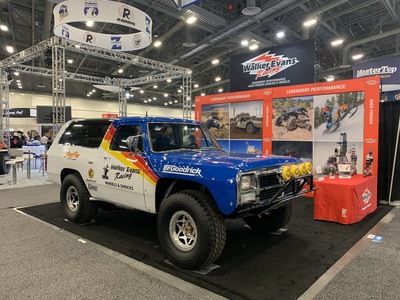
If you love trucks, you owe a debt of gratitude to Walker Evans. Before he won the 1979 Baja 1000 in a ’78 Dodge pickup, trucks were largely relegated to towing the buggies and bikes that won the event every year prior. Starting as a driver for famed builder Bill Stroppe, Evans eventually set up his own shop building some of the most competitive trucks in off-road motorsports. At the turn of the millennium, he switched gears to develop and manufacture a line of performance products. Today Walker Evans Racing is a fixture across the off-road spectrum from Jeeps to snowmobiles.
Gene Winfield
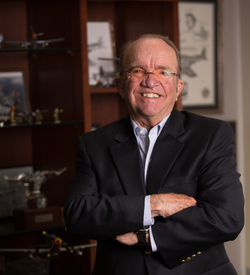
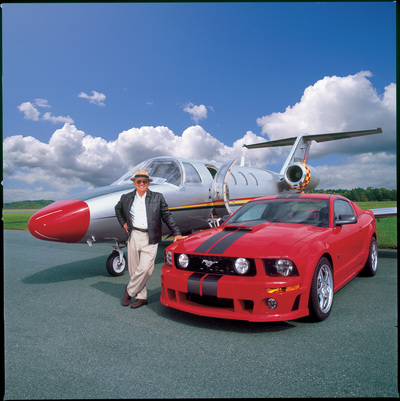
It’s impossible to describe Jack Roush with any single title. His parent company has three units. Roush Performance develops and sells performance vehicles and aftermarket performance parts. Roush CleanTech develops clean-fuel solutions for fleet vehicle applications. Roush Industries designs, engineers, prototypes, tests and even manufactures across industries the mobility, aerospace, defense and theme-park industries. But it all began with OEM engineering jobs that morphed into a brief stint as a multi-
championship drag-racing enterprise. If Jack Roush hasn’t done it, it’s probably not worth doing.
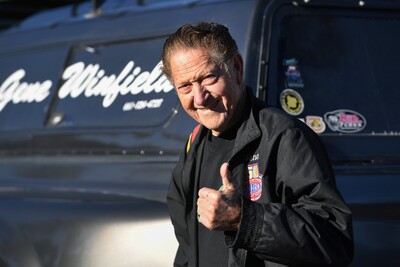
Few people have inspired a more diverse array of automotive enthusiasts than Gene Winfield. A customizer of the first order, his career spans more than seven decades to include the golden age of the custom car. Scale-model manufacturers rendered his creations in miniature and, after recognizing his widely ranging talents, ultimately hired him to create full-scale examples. Soon the entertainment industry caught on to Winfield’s magic, giving him yet another career building for Hollywood—a professional arc that culminated in his shop building the automotive props for big-budget productions like Blade Runner and Back to the Future II.
Walker Evans: All-Terrain Ambassador
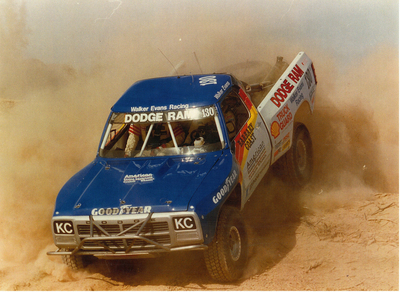
In 1979 Evans almost singlehandedly changed the way people thought about trucks by winning the Baja 1000 in one, the first in the event’s history. The current crop of long-travel rear suspensions can trace their ancestry to the novel cantilever design that helped make this truck so competitive. Fun fact: Evans did it with all the windows in place and the air conditioning blasting. Courtesy Walker Evans.
Today the light truck represents one of the preeminent and most lucrative divisions within the automotive market. But until 1979, the pickup represented little more than a support vehicle, something that would facilitate activities rather than spearhead them.
But that year a pickup did something unprecedented in the field of motorsports. In the hands of team owner, builder and driver Walker Evans, it beat a field of the most competitive dune buggies and motorcycles to win what’s arguably the most grueling auto-racing event in North America: the Baja 1000. It’s a win that transformed not just the off-road racing industry but the modern truck market as we know it.
In 2000, Evans quit driving full-time to transform his enterprise into a bona fide manufacturer. The first product line included wheels and shocks, but under his guidance and with the help of SEMA and its affiliates, Walker Evans Racing expanded to include parts and accessories for Jeeps, ATVs and snowmobiles. Courtesy Walker Evans.
Evans began racing in 1967, two years before actor James Garner and Fleetwood RV’s John Crean hired him to build engines for their American-Motors off-road race team. Though designated ride-along mechanic at 1969’s Baja 500, Evans found himself behind the wheel when driver Crean fell ill. His third-place finish inspired him to build an entry of his own, a Ford pickup prepped by legendary builder Bill Stroppe.
The Stroppe relationship led to a 1974 contract with teammate and event promoter Mickey Thompson, who a year prior founded the SCORE off-road sanctioning body. Though known now as Southern California Off Road Enterprises, Mickey initially branded it as Short Course Off Road Enthusiasts and hired Evans to build the organization’s flagship track at Riverside International Raceway, a course that served as a test bed for what became Mickey Thompson Entertainment Group’s successful short-course racing series.
In 2000, Evans (left) quit driving full-time to transform his enterprise into a bona fide manufacturer. The first product line included wheels and shocks, but under his guidance and with the help of SEMA and its affiliates, Walker Evans Racing expanded to include parts and accessories for Jeeps, ATVs and snowmobiles. Courtesy Walker Evans.
Evans raced with Stroppe until he founded his own team, Walker Evans Racing, in 1976. But it was a 1978 deal struck with Chrysler’s Dick Maxwell that changed everything. With factory backing, the team built a D100 pickup with innovations like a cantilever rear suspension and amenities like air conditioning. After only the briefest test session at Riverside, the team took the truck to the 1979 Baja 1000 where Evans proceeded to win not just Class 8, but the overall race—a first for a truck in the event’s history and an accomplishment that heralded the future of trucks in the motorsports and enthusiast markets.
Over the decade that followed, Evans oversaw the shop’s operations and either participated—and, in some cases, played instrumental developmental roles—in numerous sanctioning bodies. These included Short-Course Off Road Driver’s Association (SODA), Championship Off Road Racing (CORR) and High Desert Racing Association (HDRA). He also competed in NASCAR’s SuperTruck Series in 1995 and 1996. In a driving career that spanned 31 years, he amassed a whopping 142 overall and class victories, nine of those at SCORE Baja 1000 events.
“Ever since 1967 I raced full-time right up to 2000,” Evans recalls. “I had like 18 to 19 full-time employees manufacturing trucks, preparing them for almost all the races put on by whatever promoter. That was my full-time living.
“Right about that time is when I made a trip to China with a group of SEMA guys,” he recalls. “At the time I told them that I needed to go right away to put together a deal to meet with people in China to have some wheels made. Well, they said, ‘we’re going next week!’ I asked if they minded some company. ‘Mind? No! We’re wide open!’”
The China Expedition, a delegation formed to explore business opportunities, changed Evans’ focus. Inspired by the prospect of competing in a more global market, he began manufacturing wheels and shock absorbers, naturally promoting his products at SEMA’s annual Las Vegas trade show. “My company literally took off from that point.
“It was one of the greatest things that happened to me,” he continues. “If you accompany them, you’ll wind up meeting the right people and making great parts over there. They were excited to help me do it!”
For more than 50 years, Walker Evans has led the pack at every level of the off-road racing industry, first as driver, then as constructor, team owner and, ultimately, manufacturer. His career follows the arc of the industry’s grassroots model: He began as a young racer who leveraged his successes on the track into a prosperous business, becoming a legend in the process.
He excelled at every level of the performance industry. As a racer, he’s one of the most accomplished drivers, builders and team owners in off-road. As an entrepreneur, he excelled in promoting whatever activity that he participated in. As an employer, he mentored employees who went on to join SEMA and establish successful businesses of their own. And as a person, he facilitated some of the strongest working relationships the industry has known.
SEMA owes a large part of its identity and prestige to Walker Evans’s achievements and exuberant personality. And the world at large owes the popularity of the pickup in a sporting rather than supporting role to his endeavors on the track.
Jack Roush: The Engineer of Enterprise
In 1995 Roush began manufacturing parts and accessories for Ford vehicles. Later that year, the company began modifying Mustangs sold exclusively through Ford dealers. The Enhanced Ford Vehicles program now includes pickups. He pursues his other passion, aircraft, through the aerospace division of Roush Industries and through Roush Aviation, which supplies parts and certification services for vintage aircraft. Courtesy Roush.
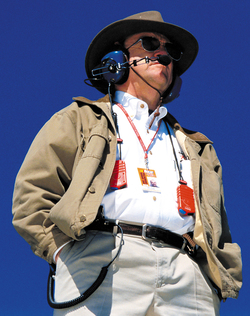
Make no mistake: the automotive industry has produced its fair share of titans. But few have ascended the ranks quite as meteorically as Jack Roush. His various companies have produced more than 30,000 special-edition vehicles, won more than 400 national motorsports events and 30 championships, employ more than 5,000 people in five states and 19 countries, and generate nearly half a billion dollars in revenue annually.
Roush graduated from Berea College in 1964 with a mathematics major and a physics minor. He moved to Detroit that year and took a job in quality control at Ford’s Dearborn plant. Drawn by Ford’s extensive motorsports activities, he joined a group of fellow racing enthusiasts, The Fastbacks, in 1966.
He left Ford to work for Chrysler in 1969 but maintained relationships with former Ford colleagues. In 1970, he earned his master’s in Scientific Mathematics at Eastern Michigan University and left Chrysler to teach physics and automotive classes at Monroe County Community College. That year, he also teamed up with one of his former Ford colleagues, engineer Wayne Gapp. Roush attended his first SEMA Show in 1971, securing sponsorship for the 1972 Gapp and Roush Pro Stock Drag Racing Program. The team campaigned in NHRA, IHRA and AHRA events and won the NHRA Pro Stock championship in 1973. Gapp and Roush won three more championships over the two years that followed.
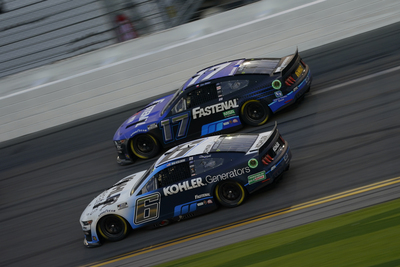
Since entering NASCAR in 1988, cars campaigned by Roush and his partners have covered nearly 2 million mi. and won more than 325 events. Most recently, Roush and partner Fenway Sports Group added driver Brad Keselowski to create RFK Racing. Keselowski drives the No. Ford Mustang GT. Chris Buescher fields the No. 17 Mustang. Photo courtesy: Roush.
Recognizing that domestic manufacturers were finding ways to rein in spending by minimizing the thing he excelled at—engineering—Roush ventured out as an independent consultant, founding Jack Roush Performance Engineering in 1976. He personally hired the firm’s first 100 employees, cultivating an organization of highly creative and divergent thinkers.
While Roush stopped operating a race team in the late ’70s, his company remained in motorsports by building engines for teams throughout the early ’80s. In 1982, he partnered with German firm Zakspeed to develop road-racing vehicles for Ford. In 1984, Roush returned to racing as a team owner in the Sports Car Club of America (SCCA) and International Motor Sports Association (IMSA) road-racing series. Through the remainder of the decade and into the following, Roush’s drivers won 119 races, 24 national championships and 12 manufacturer’s championships. Roush also captured 10 consecutive sedan-class wins at the 24 Hours of Daytona, an unbeaten record.
Roush formed his first NASCAR Cup Series team in 1988, with future hall-of-famer Mark Martin behind the wheel of the #6 Thunderbird, and in the following year Roush Racing won its first NASCAR Cup Series victory.
An engineer at heart, Roush created numerous technological and safety features. He co-developed roof flaps to prevent stock cars from taking flight while spinning, a lifesaving feature required by all NASCAR entries since 1994.
In the early ’90s, Roush bought a pre-production SN-95 Mustang from Ford to develop a line of products under the Roush Performance banner. The venture culminated with a special-vehicle program where select Ford dealers sold Mustangs modified by Roush Performance. Over the decades that followed, Ford and Roush expanded the special-vehicle program to include the Focus and F-150. Roush Performance modifies Ford products to the extent that the company is listed as Manufacturer of Record, some models bearing warranties serviced by Roush rather than Ford.
Roush and Doug Yates partnered to form Roush Yates Engines in 2005. The Mooresville, North Carolina, shop supplies engines to Roush Fenway Racing, Team Penske and numerous teams in the NASCAR Cup, XFINITY, Truck and ARCA Series. Sister company Roush Racing joined Fenway Sports Group (FSG) to form Roush Fenway Racing in 2007.
Under Roush’s guidance, Roush Fenway won its first Daytona 500 trophy and the team’s 2,500th NASCAR Cup Series start in 2009. In 2021, Brad Keselowski joined the organization as owner/driver under its new name, Roush Fenway Keselowski (RFK) Racing.
Though known for his participation in the automotive industry, Roush and the companies he formed play pivotal roles within the electronics, entertainment, aviation and aerospace industries. He began developing propane-fuel systems in 2008 and in 2010 formed Roush CleanTech to convert fleet vehicles. Roush Industries built the Firefly network of vehicles for Waymo, Google’s autonomous-vehicle program, and converts the Chrysler Pacifica vans that replaced the Firefly upon its retirement in 2017. The company is also designing engines for NASA’s so-called space-taxi program that promises to make space exploration more accessible. Another subsidiary, Roush Entertainment Services, designs and builds theme-park rides.
Though active in so many industries, Jack Roush remains a significant presence in SEMA activities. He’s participated as attendee, exhibitor, celebrity guest of various manufacturers, including Ford Motor Company, and by preparing concept vehicles for numerous automakers. He still consistently employs SEMA’s Global Platform to launch new products.
Gene Winfield: The Ace of Fades
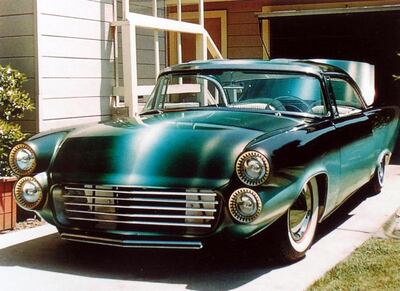
The car that Winfield restyled in the late ’50s emerged unrecognizable from the ’56 Mercury that it started as. “Jade Idol” showcased the customizer’s metalshaping chops and its distinctive fade paint job put it at the forefront of the custom-car movement. Winfield owes much of his recognition to his promotional abilities; he and his crew toured the country attending car shows with “Jade Idol” for several years. Courtesy Gene Winfield.
There’s probably no better way to light a fire in potential consumers’ hearts and minds than to show the potential in a company’s goods or services. And few people have done it better than custom-car pioneer Gene Winfield.
In 1942 a 15-year-old Winfield bought his first car, a ’28 Ford coupe, for $75. The antenna he installed was more an array for the foxtail that topped it, for the car had no radio.
In 1946, inspired by the photos of custom cars he and his pal Bart Bartoni took and exchanged, Winfield converted an oversized chicken coop behind his family’s home in Modesto, California, into Windy’s Custom Shop, a dirt-floor auto salon. That year he also co-founded the Modesto Century Toppers car club, a group made of mostly by friends who brought their cars to Winfield for modifications. They elected him the club’s first president.
Winfield closed his shop when he enlisted in the U.S. Army in late 1949. While deployed to Japan, he and three other GIs rented a small shop, hired a local metal-shaping craftsman and began modifying cars.
Winfield returned to his converted chicken coop in 1951, reopening as Winfield’s Custom Shop. Whereas he once buried crudely welded seams in heaps of lead, Winfield now could shape, hammer-weld and metal-finish modified panels thanks to the mentorship of his former Japanese employee. To represent his new venture, he bought a ’50 Mercury that he’d previously restyled for a customer and modified it to a greater degree.
Initially working on a dirt floor in the converted chicken coop, Winfield expanded the shop several times, at one point installing a paint booth. But in 1955, to meet greater demands, he bought a former radiator shop in downtown Modesto. The finer work conditions attracted a finer grade of clientele. In 1958, Leroy Kemmerer brought his ’56 Mercury for a complete redesign. With a real budget, free rein and the license to show the finished product for the year following its completion, Winfield had his first complete commission.
He sectioned the car, essentially slicing a 4-in. band out of the body’s beltline. He reshaped the front fenders to fit stacked headlights in the style of the recently released ’58 Lincoln. He replaced the quarter panels with those from a ’57 Chrysler New Yorker, creating taillights and a rear grille every bit as radical as those in the front. He finished the body in a design where one color gently transitioned or “faded” into another. The two years he spent touring the “Jade Idol” around the country made Gene Winfield a name, its novel fade-paint design becoming his design signature. “That car made Gene a name,” recalls Russ Meeks, who worked for Winfield from 1962 to 1967.
Now a known entity in the custom-car world, Winfield appealed to the Custom Car Caravan. A joint venture between Aluminum Model Toys (AMT) and Ford Motor Company, the Caravan traveled the car-show circuit. It showcased Ford vehicles modified by prominent custom-car restylists, the premise being that the model company would produce the designs in 1:25 scale for the youth market. Winfield built two Caravan vehicles, one an asymmetrically styled Ford Econoline pickup dubbed “Pacifica.”
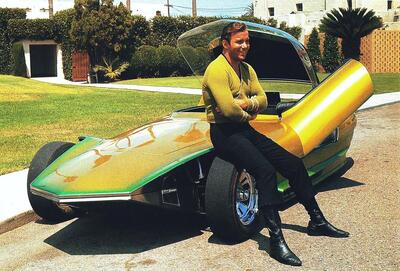
“Jade Idol” opened doors for Winfield, including a show-car project for an indoor car show promoter. After he fulfilled his touring obligations with “Reactor,” Winfield presented it to entertainment executives who used it in some of the era’s most significant TV productions. This outtake was from a photo session used to promote the “Bread and Circuses” episode in “Star Trek.” Photo courtesy: Gene Winfield.
In 1963, Promotions Inc., promoters of the famed Detroit Autorama among other events, commissioned Winfield to build a hand-formed asymmetrical body around a 427 Ford engine. “Strip Star” later appeared in Back to the Future II as a car from 2015.
Two years later, Hartford Autorama promoter Joe Kizis paid Winfield $20,000 to build a show rod based on a design by ArtCenter College of Design student Ben Delphia. The “Reactor” was an ambitious mid-engine, front-drive, aluminum-bodied sports car based on a Citroën DS suspension and powered by a turbocharged Corvair engine. The hydropneumatic suspension raised and lowered Reactor at driver’s will. “He always had an open mind,” Russ notes. “He wasn’t afraid to try anything.”
After completing the show circuit, Winfield promoted Reactor in entertainment circles. It appeared as the “Super Car” in “Bewitched,” as the “Jupiter 8” in the original “Star Trek,” “Catmobile” in “Batman,” and “The Freeze” in Mission: Impossible.
Reactor made Winfield a name among studio executives, who hired him to modify a Sunbeam Tiger for star Don Adams to drive in the “Get Smart” series. He gave Agent 86’s Tiger a cigarette lighter that doubles as a grenade and a car phone, an explosive throttle pedal, a poison-emitting radiator, a passenger-side ejector seat, a tailpipe that doubled as a machine gun and an oil slick dispenser, and a 50-caliber machine gun that emerged from a door in the hood.
In 1966, AMT hired Winfield to run its Speed & Custom Shop in Phoenix. Drawing upon his Hollywood credentials, AMT secured license to design and build the shuttlecraft for the first season of “Star Trek.” AMT also bought the rights to the Cycolac Research Vehicle (CRV), a concept car intended by Borg-Warner to explore the use of ABS plastic in automotive design. Winfield modified fullsize examples which AMT promoted as “Piranha” among car shows to sell scale-model variations. One Piranha appeared in “The MAN from U.N.C.L.E.” starting in 1967. Winfield oversaw numerous builds for commercial advertising projects, including splitting an Impala Super Sport down the middle for Chevrolet.
Recognizing the potential building for the entertainment industry, Winfield opened another California shop. Winfield’s Special Projects in North Hollywood built vehicles for Robocop, The Last Starfighter and—probably most notably—the 25 vehicles for Blade Runner and the flying DMC DeLorean for Back to the Future II.
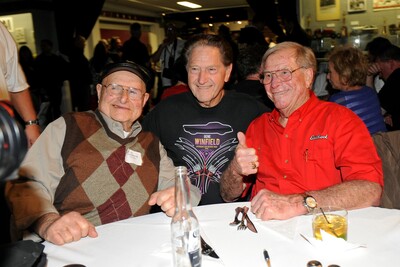
You know you’ve got some clout when SEMA founders Ed Iskenderian (left) and Vic Edelbrock Jr. (right) lean in and give thumbs-up when they have their photo taken with you. With his, well…genial personality, Winfield makes friends across industries. His willingness to invest in the people who work for or around him has a ripple effect across the automotive industry. Courtesy Gene Winfield.
Winfield relocated to Mojave, California after leaving the entertainment industry. But one could hardly call it a retirement; he began hosting classes to teaches enthusiasts tricks of the trade, including how to apply his trademark Winfield Fade. At 95, he still travels the globe showing students how to unlock the potential in automotive designs.
How the New SEMA Garage Detroit Greatly Expands Your Ability to Speed Products to Market
By Mike Imlay
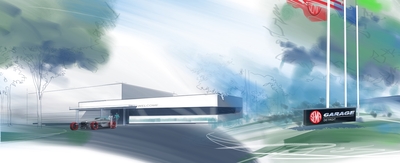
An architectural rendition of the new SEMA Garage Detroit. Although parts of the facility are still under construction, the Garage officially opens its doors to the industry this month and will greatly enhance SEMA’s product-development services to members.
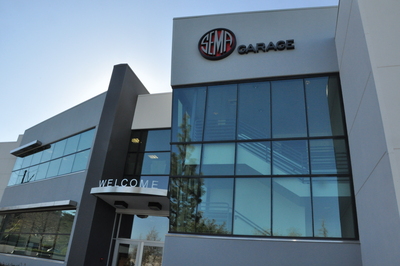
It’s official: The new SEMA Garage Detroit facility opens its doors to the industry on August 18. In reality, the facility has been undergoing a soft launch for the past several months, with different services coming online through the completion of a series of construction phases. Nevertheless, this month marks a major milestone in the SEMA Garage’s ability to bring cutting-edge research and development programs and technologies to a rapidly changing industry.
“The productivity of the original SEMA Garage in Diamond Bar [California] and the fast pace of automotive technology prompted further investment in our Garage initiatives, and so the SEMA Board of Directors approved a plan to add another SEMA Garage facility in the Detroit area,” explained SEMA CEO Mike Spagnola. “What’s especially noteworthy is that some 5,000 sq. ft. of the new building will be devoted exclusively to research on advanced driver-assistance systems [ADAS], which is a major priority in our association’s drive to make R&D technology accessible to members.”
Each year, SEMA members introduce thousands of cutting-edge products designed to add enjoyment to vehicle ownership. While some feature universal fitment, many are model-specific, requiring significant R&D. The SEMA Garage was conceived over a decade ago to provide association members with access to high-tech tools, equipment and services to help speed product to market. With its original 15,000-sq.-ft. facility in Los Angeles County, the heart of Southern California car culture, and its new 45,000-sq.-ft. location in Plymouth, Michigan, the SEMA Garage is the only known aftermarket R&D center of its type in the United States.
Situated in the Detroit hub, the new Garage will especially offer proximity to SEMA members in the Midwest region and create greater throughput on the emissions-compliance front. It will house equipment that will offer the ability to test both two-wheel-drive and all-wheel-drive vehicles. Since it’s located in the same area as many Tier-1 OEM suppliers, the Detroit facility will also offer the long-term opportunity to build and expand on relationships with carmakers and major suppliers, helping to create avenues for collaboration on vehicle personalization.
The features and details of the new SEMA Garage Detroit are outlined in our “From the Association” column on p. 10 of this issue. This story focuses on the overall expansion of the SEMA Garage’s services at both locations, what they mean for SEMA members, and how specialty automotive product innovators can access them.
“At the new Detroit Garage, we’re trucking along through construction,” said Ben Kaminsky, SEMA Garage general manager. “We’ve had some big pieces of equipment successfully installed recently, so from a buildout standpoint, we feel extremely good about our direction.”
Kaminsky added that hiring staff is on pace as well. Among other positions, the SEMA Garage has added Shawn Ranganathan as its SEMA Certified-Emissions engineer and Mike Mueller, formerly of Bosch, as its aftermarket ADAS engineer. Both will play key roles going forward.
Tackling ADAS
The Detroit facility will house SEMA’s ADAS Research Center, which will devote itself to better understanding and cataloging ADAS technologies and helping SEMA members develop products and modifications in compliance with emerging vehicle-safety features.
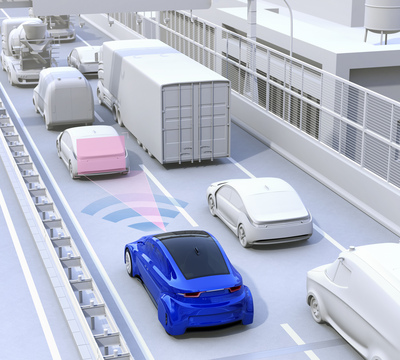
ADAS presents a unique challenge for the aftermarket, since specialty-equipment products and modifications can interfere with the radar, cameras and other key components that enable the systems to operate safely. Even a simple change of wheels and tires or a modest suspension lift might in theory affect ADAS operations without proper recalibration. In addition, ADAS equipment and calibration techniques vary from automaker to automaker and even model to model. Many industry products must be fully tested before introduction to the market—a costly proposition, especially for smaller companies.
The collision and repair industry has done much groundwork in properly putting ADAS-equipped vehicles back together. To date, however, no organization has addressed how to make different tires, bumpers, mirrors, grilles, suspensions and other modifications compatible with ADAS features. SEMA’s new ADAS Research Center in Detroit aims to fill that void by systematically researching popularly modified vehicles, model by model and building a library of best practices accessible to all SEMA members.
“It’s trailblazing work that needs to be done now, before there are more regulations and obstacles, in order to stay ahead of this fast-moving technology,” Kaminsky said. To build the ADAS Research Center, SEMA turned to outside industry pioneers in the field.
“They helped us understand what our facilities and systems should be like,” Kaminsky explained. “That included everything from light fixtures to wall colors down to not putting metal plates on our outlets because radar can reflect off them. We also had to pay close attention to the flatness and levelness of the floor. We mapped out a grid that told the construction crew almost foot by foot where to grind the concrete to make it level.”
The SEMA Garage has also assembled an ongoing ADAS advisory panel to help set research priorities. The panel was key to the selection of a ’22 Chevrolet Silverado truck as the first vehicle to study. They were also specific about the vehicle’s configuration and trim.
Over a decade ago, SEMA opened the first SEMA Garage in Diamond Bar, California. Along with the new Detroit expansion, it is the only known aftermarket R&D center of its type in the United States. Its programs continue to ensure the industry’s future amid rapidly emerging technologies.
“A lot of our members from around the industry said this was the first vehicle they wanted answers on,” Kaminsky said. “It’s one of the more popular trucks for consumer modifications. Our Silverado had to have a particular engine configuration, a particular cab configuration and particular ADAS options. Our advisory panel basically steered us in the right direction for that.”
The vehicle will now be modified with the panel’s input. New wheels, tires and a leveling kit are at the top of the list. As the Garage crew performs each modification, there will be careful study on its effects on ADAS features. Solutions to any problems that arise will be documented to help builders and installers everywhere. Numerous other popular trucks and vehicles will follow.
“The interesting part is that many of our panel members are competitors in the industry, and they’re coming together to solve a common problem so they can all have a common footing,” Kaminsky added. “I’ve been very impressed with how they’re working together and how open they’ve been with information and which vehicle and product configurations sell.”
Emissions Compliance
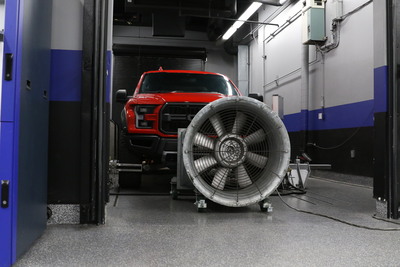
Both the Diamond Bar and Detroit Garages feature emissions-compliance labs to assist performance manufacturers in obtaining CARB EOs and EPA 49-state-legal certification through the new SEMA Certified-Emissions program. With two new dynos, the Detroit Garage greatly enhances these capabilities.
Since the inception of the SEMA Garage, another of its key programs has been assisting members in demonstrating that their performance products meet regulatory emissions-compliance standards and gaining California Air Resources Board (CARB)Executive Orders (EOs) that permit the legal sale of those products.
In February 2022, however, SEMA added the SEMA Certified-Emissions program, a new way for specialty automotive parts manufacturers to meet the legal requirement for emissions compliance under the U.S. Environmental Protection Agency’s (EPA) Tampering Policy. SEMA’s certification program enables manufacturers to verify that a product meets the EPA’s “reasonable basis” criteria and is therefore legal for sale in 49 states. According to Peter Treydte, SEMA director of emissions compliance, the new Detroit Garage will greatly enhance those services to members.
“We’re adding manpower for our Compliance Center, whether that be for assisting with CARB EOs or for SEMA Certified-Emissions services,” he explained. “We’re also adding another laboratory and two new dynos, which means we’ll have more capacity for doing the testing that’s necessary.”
With the advent of vehicle electrification, the Garage is keeping an eye on the future as well.
“With electric vehicles (EVs), it’s not directly emissions testing, but it is range testing, and range translates into emissions in one form or another,” Treydte explained. “There may come a time when evaluating the range of EVs that have been modified would be required, and we’ll be able to provide that service as well.”
Forward Thinking
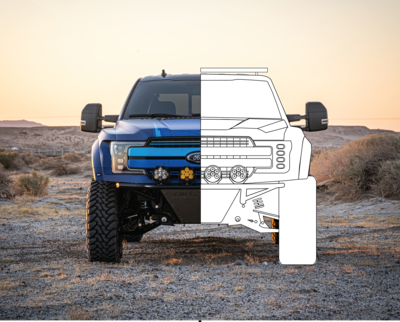
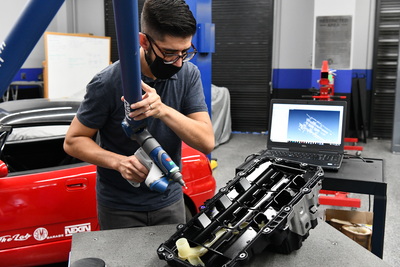
SEMA Garage tech services to members include laser scanning, an OEM-vehicle CAD library, 3-D printing and live measuring sessions of popular new vehicles. These provide member companies of all sizes access to rapid-prototyping tools that can speed product to market.
According to Luis Morales, SEMA director of vehicle technology, EVs will become more prominent in many Garage programs.
“We just launched our first-ever measuring session for an electric vehicle with the Ford F-150 Lightning,” he said. “It was very successful, very well attended and well received by the industry.”
Live measuring sessions of popular new and preproduction vehicles are just one component of the SEMA Garage’s many technical services, which also include 3-D printing and scanning services for members, and the Tech Transfer program with its OEM and scanned vehicles CAD library.
“We actually broke ground in May by providing access to some of Ford’s latest electric-vehicle data, including a good chunk of data for the Mustang Mach-E,” Morales said, adding that the idea is to stay abreast of all automotive innovations, whatever they may be.
“Internal-combustion engines are not going anywhere,” he said. “They’re very healthy and running strong, and there’s always going to be an effort to make them cleaner in terms of emissions output.”
Kaminsky noted that all of the SEMA Garage programs benefit not only manufacturers but also resellers and shops clear down to the mom-and-pop level. Helping to ensure that industry products are emissions- or ADAS-compliant and made to the highest standards ultimately deceases legal and liability risks for everyone in the chain, and it sustains viability and growth in an increasingly complex and competitive marketplace.
As the person tapped to helm the SEMA Garage in Diamond Bar in 2009, Spagnola said that even he marvels at how much its programs have grown and how the industry has embraced them. When it first opened, the facility was envisioned as a tech center with a clubhouse feel—a comfortable place to R&D product. Today, there is hardly a moment when the Garage team is idle, and the staff often assists SEMA members with emissions testing and other services well into the night. Plus, the Garage’s capabilities have become increasingly high-tech.
“The new Garage will more than double our industry’s capacity to keep up with the latest technology and help manufacturers develop new, exciting products,” Spagnola said. “It really represents another step toward addressing the challenges we see now and those in the future. With vehicle electrification, self-driving cars and artificial intelligence all on the horizon, some of those challenges may be more daunting, but we’re eager to help our members take them on.”
SEMA Garage Services Guide
No matter what sort of aftermarket performance product a company may be developing, the SEMA Garage has the services and tools to assist. The following are the main programs offered:
Tech Transfer: OEM-provided CAD files that can minimize the need for reverse engineering.
Custom Scanning Services: Featuring a state-of-the-art FaroArm/CMM scanning system, these services are exclusive to SEMA members.
3-D Printing: Rapid prototyping using cutting-edge technology to create a physical model of your product in a variety of materials.
Measuring Sessions: Timely sessions offering hands-on access to popular new vehicles for designing and developing prototypes, including global models customized abroad but not sold in the United States. (CAD files also available.)
Emissions Compliance: Assistance with all aspects of emissions compliance, including preparation of CARB EO and SEMA Certified applications, lab testing and interaction with CARB and EPA on behalf of SEMA members.
Vehicle ADAS: Research and resources to assist with the development of products and modifications that impact active and passive ADAS safety-performance technologies that assist drivers and automate vehicle systems.
Vehicle Dynamics: Ensuring that a company’s products and modifications successfully integrate with the latest and emerging vehicle dynamics technologies and comply with federal motor-vehicle safety regulations.
Vehicle Electronics: Helping companies integrate their products with the latest automotive and consumer electronics technologies and leverage emerging opportunities with connected vehicles.
Vehicle Technology Alerts: Providing SEMA members the latest information about advanced vehicle technologies and regulations impacting their products and businesses.
Training Centers: For hosting impressive product or reveals to the industry, or conducting full training sessions for a company’s new products or emerging technologies.
Installation Centers: Fully equipped centers for test-fitting product prototypes or installing components on a project vehicle.
Accessing the SEMA Garages
To learn more about the SEMA Garage Detroit and Diamond Bar facilities and all their programs and services, visit www.semagarage.com, email garage@sema.com or phone 909-978-6728.


 Eric Ritz
 Big Mike
 Matthias Ingle