Mon, 07/04/2022 - 15:50

By SEMA Editors

The SEMA Awards Gala returns to Anaheim, California, July 29, to honor industry leaders and volunteers, and celebrate the newest members of the SEMA Hall of Fame. The gala is open to the industry. Tickets for the event are available at www.sema.org/gala.

Gala

The prestigious SEMA Awards Gala will return to Anaheim, California, on July 29, to honor industry leaders and SEMA Hall of Fame inductees.

“The SEMA Awards Gala is a great opportunity for the industry to come together at mid-year to connect in person and have meaningful conversations in an intimate setting,” said SEMA CEO Mike Spagnola.

Among those to be honored at this year’s Gala are incoming and outgoing board members, and 2022 SEMA Hall of Fame inductees Walker Evans, Jack Roush and “Gene” Winfield.

Hall of Fame

“Gene” Winfield, Jack Roush and Walker Evans.

The SEMA Cares Pinewood Drags, a cherished Gala tradition, will also return to offer industry participants the chance to sponsor a child-built pinewood racecar or challenge industry colleagues in head-to-head competition.

Pinewood

The races, which are run throughout the Friday reception and into the evening, support the fundraising of SEMA Cares.

Tickets for he gala are available at www.sema.org/gala.

Immediately following the gala, there is a private SEMA PAC reception scheduled. For more information, contact Samantha Large at samanthal@sema.org or 202-796-2252.

Mon, 07/04/2022 - 15:16

By SEMA Washington, D.C., Staff

The California Senate Committee on Governance and Finance unanimously passed SEMA-supported legislation (AB 1951) that would provide a full sales and use tax exemption for the purchase of manufacturing and research and development (R&D) equipment not exceeding $200 million. The bill currently awaits consideration in the Senate Appropriations Committee. SEMA members are encouraged to register their support for the bill by clicking here.

If enacted, the exemption would change the current, narrowly applied exemption, and focuses on improving cost competitiveness to spur investment in California. Accounting for both local and state taxes, California’s ranks among the highest tax rates in the country.

AB 1951 is authored by Assembly Member Tim Grayson (D-Concord). Asm. Grayson is a member of the SEMA State Automotive Enthusiast Leadership Caucus and was the 2019 winner of SEMA’s Stephen B. McDonald Legislator of the Year award. In addition to being a lawmaker, Assembly Member Grayson, along with his wife Tammy, is also an enthusiast. Included in the Grayson’s collection are two classic Ford Mustangs.

For more information, please contact Christian Robinson at christianr@sema.org.

Mon, 07/04/2022 - 15:10

By SEMA Washington, D.C., Staff

In a 6-3 decision, the U.S. Supreme Court has held that Congress did not grant the EPA the authority to devise carbon emissions caps for power plants that would shift the way they generate energy away from coal. The case, West Virginia vs. EPA, is unusual in that it centers around the 2015 Clean Power Plan that never went into effect. The Obama administration plan was blocked in court and subsequent Trump administration plan struck down. The Biden administration has yet to release a new power sector regulation, and this decision impacts any such regulation as the EPA is no longer allowed to compel power plants to switch their energy generation from coal to natural gas, wind turbines, or solar energy.

This decision, while limiting how the EPA can use its authority to reduce carbon dioxide emissions from power plants, has no effect on current EPA regulation of aftermarket performance products or mobile source emissions. It could have future implications for how much authority government agencies have to enact substantial policy without congressional approval.

The Supreme Court ruling restricts the EPA’s authority to regulate emissions controls to individual power plants rather than regulating the sector as a whole. The EPA had claimed it had this power under the Clean Air Act, while the Supreme Court ruled that Congress would need to explicitly direct the EPA to take this action. Chief Justice John Roberts wrote in the majority opinion that “It is not plausible that Congress gave EPA the authority to adopt on its own such a regulatory scheme”.

For further details, contact Daniel Ingber at danieli@sema.org.

Mon, 07/04/2022 - 15:07
Mon, 07/04/2022 - 15:01

Are you hunting for a new job? The SEMA Career Center has a comprehensive listing of automotive-related job openings around the country. Here are some of the latest jobs posted to the website.

Latest Jobs Added to SEMA Career Center


AccuTune Off-road Inc.
Sales Manager or Sales Director

AccuTune Off-road Inc. is looking for a Sales Manager or Sales Director to join the team. The ideal candidate has at least 10 years of sales experience, and at least five years experience managing an inside sales team or as a store manager in the automotive industry. Experience managing employees, cultivating a team environment, and motivating them to achieve sales and customer service goals is required.

Power Automedia
Automotive Editor, Diesel Army

Power Automedia,  a leading digital media company in the automotive industry, has an opening for an Automotive Editor, Diesel Army (www.DieselArmy.com). Looking for a passionate and knowledgeable diesel truck expert with a strong basis in writing and photography. This position is based in Temecula (Murrieta), California, with a hybrid in-office schedule, but also open to remote applications.

Custom Trucks Unlimited
Automotive Technician

Technician is responsible for installation of aftermarket accessories, including lift and leveling kits;  alignments; mount and balance wheels and tires; bed covers; grille guards; bumper replacements; winch and winch Mounts; cab lighting; LED lighting; all hitch types (Goosenecks, Fifth Wheel and Receiver); step bars; toolboxes; cargo management systems; fiberglass products, etc.

Fri, 07/01/2022 - 22:58

SEMA News—July 2022

INDUSTRY NEWS

Photos courtesy SpiedBilde, Brian Williams. Reuse or reproduction without the copyright holder’s consent is prohibited.

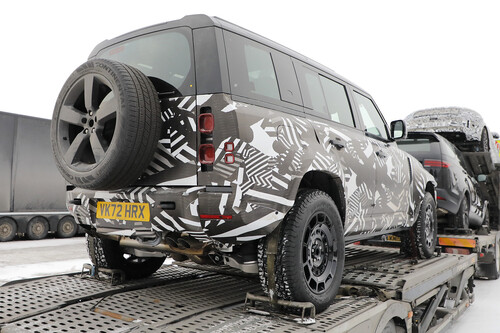
’23 Land Rover Defender 130
Land Rover

Land Rover will expand the Defender lineup next year with the introduction of the extended-wheelbase 130 variant, which has been spotted on Nürburgring.

Land Rover

It is positioned as the “premium explorer” of the Defender range, while the entry-level 90 is the “halo, image icon” and the 110 is the “definitive Defender.” The 130 is therefore likely to command a substantial price premium over the other Defender models and may be available in top-end trim levels only.

The Defender 130 is expected to receive the full raft of diesel and gas powertrains, including the P300e PHEV option and the hot, 550hp supercharged V8, as seen in these pictures.

’24 Chevrolet Silverado HD
Chevy

Here are two prototypes of the upcoming Silverado HD dually. One (towing via a hitch) appears to be a lower-end model, while the other (towing via a gooseneck) is a High Country trim. The Silverado’s refresh will bring an updated exterior design, a new cabin and new powertrain bits that offer more power and torque.

Chevy

Sources confirmed that the 6.6L Duramax V8 will make at least 500 hp and 1,000 lbs.-ft. of torque, which is a substantial upgrade compared to the current specs of 445 hp and 910 lb.-ft. of torque.

Expect an official debut this fall.

Next-Gen Cadillac CT6
Cadillac

This is the next-generation Cadillac CT6 undergoing testing in Michigan. The prototype appears to be the same general size as the current model but with key updates to the exterior, including new a roofline treatment and body panels.

Cadillac

According to a 2019 report by enthusiast website GM Authority, the next-gen CT6 is assigned program code 7ESL, meaning that it will move to the VSS-R platform. The website reported that the next-gen model is destined for the Chinese market, but its presence in the U.S. market is still unclear with the discontinuation of the CT6 in North America after the ’20 model year.

Fri, 07/01/2022 - 22:38

SEMA News—June 2022

INDUSTRY NEWS

FAST FACTS

YokohamaYokohama Tire Corporation (YTC) announced that Ray Polentz was promoted to senior director of supply chain and logistics. He will report to Yokohama President and CEO Jeff Barna. Polentz, who works out of YTC headquarters in Santa Ana, California, joined Yokohama in October 2017 as regional distribution center manager. He was promoted to director of distribution operations in July 2018. Before joining Yokohama, Polentz had more than 15 years of supply chain and logistics experience. He previously held senior positions at JCPenney as well as Stein Mart in both operational and transportation roles.

R&R Marketing Consultants Inc. (RRMCI) announced the recent hire of John Keller as sales and marketing representative. Keller will join the RRMCI West Coast sales team. Keller began his career in the aftermarket with Goodguys Rod & Custom in 2009. Twelve years later, he moved to Arizona, where he worked as a sales manager for an aftermarket billet company.

HyundaiHyundai Motorsport announced a change to its senior management, with Sean (Seon-Pyung) Kim taking over the role of president. He replaces outgoing President Scott Noh, who is set to take up a new position at Hyundai Motor Company in Korea. During Noh’s tenure, Hyundai Motorsport secured consecutive world titles in the FIA World Rally Championship (2019 and 2020) and the FIA World Touring Car Cup (2018 and 2019).

Fullbay, a turnkey platform designed to improve the operational efficiency of heavy-duty repair shops, acquired Dieselmatic Digital Inc., a digital marketing agency focused exclusively on diesel repair shops. The acquisition layers the digital marketing services of Dieselmatic onto the shop management software Fullbay already offers in order to help drive demand for repair shop businesses.

World ProductsWorld Products appointed Lance Stillwell as its director of operations. Stillwell will oversee the development and manufacturing of World Products’ engine blocks and cylinder heads. In 1997, Stillwell founded parts provider and engine builder Motorsports Unlimited in Terre Haute, Indiana. Today, he has more than 25 years of engine machining experience and in-depth knowledge of World Products’ product line, the company stated.

Wheel Pros, backed by Clearlake Capital Group LP and in partnership with management, announced that it acquired TeraFlex, a designer, manufacturer and distributor of aftermarket suspensions, shocks and other components for automotive and off-roading enthusiasts. TeraFlex operates three domestic U.S. facilities.

Hemmings announced that President Jonathan Shaw appointed Douglas R. Glad as head of editorial. Terry McGean, who had acted as editor-in-chief since 2005, will remain at the company in an editorial capacity. Glad’s employment will commence this month. Glad has more than 20 years of experience in the automotive publishing industry.

DENSO Products and Services Americas Inc., an affiliate of DENSO Corp., promoted Reggie Cruz to director of corporate planning and Manny Rodriguez to senior manager of product development. Cruz, who has been with DENSO for more than 16 years, is now responsible for overseeing business and corporate planning, financial services and new-business strategy development. Rodriguez, who has been with DENSO more than 22 years, is responsible for collaborating with DENSO’s engineering, procurement and supply chain teams on product development.

Denso

Reggie Cruz

Denso

Manny Rodriguez

PFC Brakes announced the promotion of Luis Maurel to the role of director of global motorsports. Maurel will manage the company’s race department and help expand into sports cars and other professional motorsports segments across the world, the company stated. He will also manage PFC Brakes’ involvement as providers for racing series, including the NTT IndyCar Series, the Superstar Racing Experience and the Renault Sport Series.

Senior business executive and sales professional Devron Jeffers returned to Speedway Motorsports as vice president of business development for the company’s
national sales team, as announced by Speedway Motorsports Executive Vice President and Chief Sales Officer Kevin Camper. Jeffers will be based in the Dallas-Fort Worth area and will focus on national sales opportunities for companies headquartered in Texas and the central United States.

Race Winning Brands Inc. (RWB), a portfolio company of MiddleGround Capital, announced the acquisition of PAC Racing Springs (PAC), a manufacturer of high-performance valve springs serving the automotive and powersports performance and racing aftermarket. PAC represents the ninth add-on acquisition for Race Winning Brands. RWB also announced the acquisition of RevMax, TransGo and Transmission Specialties Inc. (TSI).

Fri, 07/01/2022 - 22:28

SEMA News—July 2022

INDUSTRY NEWS

SEMA Industry Report: Specialty-Equipment Sales Surpass Pre-Pandemic Levels

Market Report

Consumer demand for automotive specialty-equipment parts has exceeded pre-pandemic levels for a majority of companies, according to the latest SEMA “State of the Industry Report.”

The automotive specialty-equipment industry continues to experience strong growth and demand as the United States puts COVID-19 in the rearview mirror. According to SEMA’s new “State of the Industry—Spring 2022” report, 75% of manufacturers, 68% of distributors and 53% of retailers/installers report that sales are currently above where they were prior to the pandemic, and consumer demand is equally higher for most companies than it was in 2019.

Additional key findings from the report include:

  • More than half of companies expect sales to continue to grow in the coming year.
  • Supply-chain issues remain a challenge for more than 90% of the industry, and most don’t see things returning to normal until at least 2023.
  • The current inflation rate of 8.5% is the highest it has been in 40 years, yet consumers continue to spend.
  • Amid record consumer demand, 70% of manufacturers, 56% of distributors and 45% of retail installers have had difficulty filling open positions due to a shortage of qualified applicants to hire.

For more details, see our coverage starting on page 34. The complete “State of the Industry” report is available to download for free at www.sema.org/research.

BMW Invests in Smart Technologies to Identify Counterfeit Parts

BMW

Counterfeit auto parts are a growing challenge for the aftermarket, but cloud-based smart technologies may soon provide a solution.

Counterfeit automotive parts are a growing problem confronting the specialty-equipment aftermarket. They’re also a huge global business. A recent estimate from the U.S. Department of Commerce puts the value of trafficking in fake parts at some $45 billion annually. The problem becomes even more acute in the online retail arena; according to Amazon, the company confiscated more than two million counterfeit products in 2020 alone. But a potential solution may soon be at hand.

BMW iVentures, the investment arm of BMW, has made a substantial investment in a company that uses what it calls “digital fingerprinting” technology to detect fake parts. Altheon, a technology company based in Washington state, uses its proprietary FeaturePrint software and cloud computing capabilities to compile a database of legitimate production parts, which can then be used to compare to parts of unknown origin. With a single camera image, retailers and distributors can know whether the parts they are being sold are in fact legitimate or counterfeit.

For the present, Altheon operates in only the B2B and B2C realms, but it aims to make its software available to the public in the future via a downloadable smartphone app. More information is available at www.altheon.com.

Registration Open for SEMA Nordic Trip

Nordic

The Nordic region hosts a thriving automotive enthusiast scene. Join SEMA this summer for the inaugural SEMA Nordic trip.

Join SEMA on the first SEMA Nordic trip, August 24–28, in Stockholm, Sweden. Participants will learn the potential for their products in this performance and classic-car paradise. Meet with top trade buyers enabling the half-century-old craze in Sweden and the surrounding countries of Norway, Finland and Denmark to restore and upgrade American classic cars. Trade buyers are expected from throughout Europe.

Performance is among the top upgrades sought for a range of vehicles. The region hosts the headquarters of the European drag-racing championship, and rally racing and drifting also have their passionate fans. High disposable income and a love of American vehicles and products, coupled with a passion for personalization, make this an attractive region.

The SEMA Nordic trip is the fifth region for the popular SEMA Business Development Programs. These low-cost, turnkey overseas events bring together SEMA-member manufacturers and buyers from key global markets. The price of the upcoming trip includes hotel accommodations, a table-top display, meals and networking events. Prices start at $3,860 per company, not including flights to/from the United States (for qualified companies taking the instant $1,200 U.S. government grant).

More information is available at www.sema.org/nordic, or contact Linda Spencer at lindas@sema.org to schedule a call.

Goodyear to Develop Domestic Source of Natural Rubber

Goodyear

Goodyear announced a partnership with the U.S. Defense Department and other government agencies to develop a domestic source of rubber from a species of dandelion.

The Goodyear Tire & Rubber Company announced a multi-year, multi-million-dollar program supported by the U.S. Department of Defense, the Air Force Research Lab and BioMade to work with Ohio-based Farmed Materials to develop a domestic source of natural rubber from a specific species of dandelion.

Natural rubber has been classified as a strategic raw material that serves as a critical ingredient in military, aircraft and truck tires. Today, more than 90% of the world’s natural rubber is made from latex derived from rubber trees and is primarily sourced from tropical locations outside of the United States.

The program will build on research that analyzed more than 2,500 species of plants but found only a few with properties suitable for use in tires. Taraxacum kok-saghyz, a species of dandelion known as TKS, is a proven alternative to natural rubber trees. Farmed Materials has shown positive results in pilot programs for TKS, yielding strong harvests that necessitate the need for additional funding.

While rubber trees typically take seven years to produce the latex needed for rubber production, dandelions can be harvested every six months. TKS dandelions are also resilient and can grow in non-tropical climates. If additional testing provides promising results, Goodyear sees potential for use in all tire applications.

Fri, 07/01/2022 - 22:02

SEMA News—July 2022

RESEARCH

Examining the Post-Pandemic Rebound

SEMA Market Research Reveals an Industry Primed for Steady Growth in 2023

By Mike Imlay

State of Industry

Despite the many recent economic disruptions, the aftermarket continues to see growth and strong demand. The Spring 2022 “SEMA State of the Industry Report” is designed to help specialty automotive businesses grasp the current landscape and make sound market decisions.

With the final quarter of 2022 approaching and the pandemic largely receding, there’s good economic news for the aftermarket. According to recently released SEMA market research, the automotive specialty-equipment industry continues to enjoy strong growth and is well positioned for the coming year. That and other key takeaways can be found in the “State of the Industry—Spring 2022” report, now available for free download at www.sema.org/market-research.

The 71-page report is designed to help aftermarket operations make better business decisions based on current trends, business metrics and estimates on how sales have changed over the last year. Brimming with fresh data, the report closely examines the ongoing supply-chain disruptions vexing many organizations. In addition, it takes a “pulse check” on industry businesses, along with consumers in general, as they navigate economic uncertainty and significant price hikes on many goods
and services.

State of Industry

While the COVID situation continues to improve, lingering supply issues and inflation are dampening consumer views of the economy and their financial situations. So far, however, this is not slowing spending, which in turn is revving the economy and prices.

Perhaps most noteworthy, 75% of industry manufacturers, 68% of distributors and 53% of retailers/installers surveyed for the report indicated that sales are now above pre-pandemic levels. Moreover, consumer demand has remained robust for most companies. Amid this strong growth, however, the industry faces headwinds from ongoing supply-chain issues, inflation, economic uncertainty, and the war in Ukraine. Among the report’s other findings:

  • More than half of industry companies expect continued sales growth in the coming year.
  • Supply-chain issues remain a challenge for more than 90% of the industry, and most businesses don’t expect a return to normal until at least 2023.
  • The current inflation rate of 8.5% (as of March 2022) is the highest it has been in 40 years, yet consumers continue to spend.
  • Despite gas prices being up more than 40% on average from last year, 80% of Americans are still planning road trips this summer.
  • Amid record consumer demand, 70% of manufacturers, 56% of distributors and 45% of retail installers have had difficulty filling open positions due to a shortage of qualified applicants.

“I think the biggest takeaway from our research is that companies are saying the demand for their products is greater now than it was in 2019,” said SEMA Market Research Manager Kyle Cheng. “Essentially, we’re looking at industry businesses doing better than they were before the pandemic.”

Unlike the massive sales frenzy that marked the peak of the pandemic, however, the growth going forward is shaping up as calmer and steadier.

“When we looked at how sales performed over the last year, we saw a lot of disruption, both in terms of record sales and then declines,” Cheng explained. “Now sales have started to flatten, and we’re getting back to more normal operations overall, with most companies saying that sales are good, business is good, and things are looking up.”

“When COVID kicked in, it looked like it was going to be really bad times for our industry and the economy overall, but it turned out to be just the opposite,” observed Gavin Knapp, SEMA director of market research. “In fact, these last two years have been really good for a big chunk of our industry.”

Knapp pointed to the industry’s manufacturing segment as particularly benefiting from heightened consumer demand.

“That said, some retail businesses did suffer hurt,” he noted. “There are also some warning signs as we look forward, both in terms of the general economy and specifically looking at the supply chain.”

Expectations for Sales Over Coming Year

State of Industry

The disruptions of the pandemic are starting to flatten, slowing runaway business growth to normal levels. The good news is the industry is still experiencing overall growth, which is bringing optimism for the year ahead.

In regard to demand for aftermarket products, three-quarters of surveyed manufacturers said that sales were better than in 2019, with nearly just as many (74%) reporting the same about consumer demand in general. In addition, 46% said their production levels were also better than in 2019. By contrast, only 35% said their employment levels were better. Finally, just 12% characterized their inventory and supply chains as improved over the same period.

Retailers and installers were somewhat more muted in their responses. On average, 53% said sales and consumer demand were better than in 2019. Even fewer (15%) reported their employment levels as exceeding those of 2019, and only 9% said that inventory and supply-chain conditions have gotten better since then.

Still, such figures represent a healthy reversal from the industry-wide shock brought by the early pandemic.

“Many of the companies that were disrupted by the pandemic—especially retailers—are reporting much less significant sales declines now,” Cheng observed. “In spring of this year, 19% of retailers said that they were experiencing declines. That’s a huge drop from the 41% who reported declines back in the fall of 2020.”

The report also pays considerable attention to broader consumer expenditures and their implications for the aftermarket. It finds that, even amid ongoing economic uncertainty, consumers continue to spend at high levels. Fueled by low unemployment, demand for products and services throughout the American economy remains strong. However, inflation and other factors are expected to tap the brakes and pull consumer demand back to more normal levels going into 2023.

“We’ve run out of government stimuluses,” Knapp explained. “Savings rates have come down, which means people will likely have less money to spend over this year than they did over the last two years. So while things are really good right now, and we’re certainly not looking at a collapse, there are some signs that we might see some real slowing going forward.”

One mitigating factor may be gas prices, which had soared to a national average of $4.20 per gallon by April of this year. So far, motorists appear to be taking the hike in stride. According to surveys, only 10% of them are extremely concerned about the rising costs at the pump. The vast majority are slightly (33%), somewhat (21%) or moderately (18%) concerned. Moreover, freed from pandemic constraints, roughly four out of five Americans are planning road trips this summer, many for significant distances.

“The national average for gasoline right now is insane, considering it usually is about half that of current levels,” Cheng said. “Despite that, consumers are holding on to some lingering habits of the pandemic. People still feel safer traveling by their cars, especially with airline tickets getting more expensive. Travelers are looking at their situations and figuring out what’s best for them, and that usually means driving.”

Perhaps a bigger question for consumers is what they’ll be driving.

“Right now, goods are obviously expensive, and inflation is at a record high, which affects things related to our industry like used-car prices,” Cheng said. “They were up 35% over 2021 as of March 2022, and new vehicles were up 12.5%.”

Several factors have played into surging car prices. At the pandemic’s beginning, major OEMs slowed production or shut down assembly lines completely, at times furloughing workers. Although the closures were short-lived, they were enough to send automakers into a game of catch-up to meet unexpected demand. In addition, chip and other raw materials shortages have stymied production and pushed new-vehicle costs upward. That, in turn, has driven the value of older models to unprecedented levels. Consequently, many consumers are delaying vehicle purchases of all types.

New Light-Vehicle Inventory in the United States

State of Industry

Due to supply-chain issues and chip shortages, among other factors, new-vehicle availability remains extremely tight. This will undoubtedly slow the rate of new-vehicle accessorization but may simultaneously increase the accessorization of older models.

“That brings up the supply chain—the next big thing relating to the economy and our industry,” Cheng said. “We surveyed industry companies and got a lot of detail on the situation. More than 90% are saying that they’re being affected moderately to severely by the supply-chain crunch. Sales are up, but it’s really hard for companies to keep up with demand due to production delays and the inability to get raw components or even the products themselves. Retailers also say they can’t keep up with demand and keep inventory full.”

Although supply-chain issues show every indication of easing over time, most industry businesses are tempering their expectations.

“When we ask companies about their outlook for supply-chain disruption, most think it will bleed into next year,” Cheng said. “Depending on whether they’re manufacturers or retailers, between 48% to 63% of companies expect the disruption to last until 2023 or later. But there’s also a good chunk that just don’t know. Continued consumer demand just makes the whole problem worse because it keeps cycling.”

“Companies are taking a lot of steps in response to the supply-chain issues,” Knapp added. “They’re bulking up their own internal capabilities for things such as manufacturing and even their inventory-holding capacities. They’re diversifying their supplier lists so that they have more opportunities. Some companies are even looking to source more from domestic suppliers rather than overseas suppliers. They’re finding ways to improve their business while also improving their ability to get through this crunch.”

Hand in hand with stubborn supply-chain tangles, both the industry and consumers will have to contend with persistent inflation as they enter 2023.

How company sales have changed over the past 12 months

State of Industry

Without minimizing the hurt that some aftermarket businesses definitely felt, most industry companies reported increased sales numbers over the past year. What’s more, demand for specialty automotive products remains significant.

“Inflation is at a record high,” Cheng explained. “It was 8.5% in March, and the biggest contributors to that happen to be factors that tangentially relate to our industry. It’s weighing on consumers’ minds, even if they do continue to spend a lot of money.”

Aftermarket businesses will also face a labor shortage for the foreseeable future—a double-edged sword that is sustaining consumer demand for product while simultaneously raising business costs.

“We’re really in a state of full employment,” Knapp said. “Anybody who wants a job right now has a job, which means people have steady sources of income and will be looking for outlets to do things.”

On the other hand, Cheng said, “Companies can’t find enough employees to keep up with demand. They need to hire, and they’re having trouble hiring, including in our industry.”

As of May, inflation, supply-chain snags, labor shortages and the war in Europe were raising the specter of a possible recession, but Cheng noted that the economic factors at play today are unlike those that preceded the Great Recession of 2008.

What Segments Does The Industry View as Having the Most Opportunity

State of IndustryState of Industry

Specialty-equipment companies are finding significant business opportunities across a variety of segments. Among these, the off-road and musclecar categories especially stand out.

“No one can ever really know for sure, but based on the sources we consult, a recession is not on the radar—at least not in the short term,” he said.

In fact, Knapp believes that the real story going into 2023 is one of resilience and optimism.

“The interesting thing is that if you looked at April 2020, when things collapsed, and into the summer of 2020, we were all expecting our industry to drop overall,” he explained. “But by the time the end of that year came around, the script had flipped and sales were going gangbusters. Through 2020, we actually ended up right where we would have expected without the disruption.

“At this point in time, our industry is feeling really good in terms of sales and consumer demand, and while we definitely see some potential difficulties ahead, there’s still a general expectation that things will remain good.”

Stay on the Growth Curve

As the industry moves beyond the pandemic, economic trends information is more vital than ever for business planning. For your free download of the 71-page “SEMA State of the Industry Report—Spring 2022,” visit the SEMA Market Research webpage at
www.sema.org/market-research.

While there, be sure to also check out the monthly “SEMA Industry Indicators Reports” for regularly updated economic data affecting the aftermarket.

Fri, 07/01/2022 - 21:46

SEMA News—July 2022

MARKET RESEARCH SNAPSHOT

CUVs on the Rise

By SEMA Market Research

U.S. New-Vehicle Sales Forecast Light-Duty Vehicles, Millions of Units

Market Research

Crossover Utility Vehicles (CUVs) are the fastest-selling and most common vehicle on the road in the United States today. At the end of 2021, they represented 24% of all registered passenger vehicles, and are projected to represent almost half of all new vehicles sold by 2029. They’re also a significant part of the specialty-equipment aftermarket, accounting for more than $7.7 billion in specialty parts sales in 2020. While they are a very diverse segment, there’s plenty of opportunity to be found for specialty-equipment businesses, including a growing off-road niche.

2020 Product Types Purchased for CUVs Off-Road vs. Non-Off-Road

Market Research

One niche to watch within the CUV segment is off-roading. While CUVs are perhaps less likely to be used as hardcore off-road vehicles, CUVs intended for off-road use tend to receive heavier modifications than others—making them a great sales opportunity.

2020 Aftermarket Sales Estimates by Vehicle Segment

Market Research

CUVs account for a significant share of specialty-equipment retail sales, with consumers spending $7.7 billion on parts for these vehicles in 2020. While it remains to be seen the extent to which these vehicles are embraced by enthusiasts, the segment is definitely an emerging opportunity.

For more SEMA research information, visit www.sema.org/research.