Thu, 12/01/2022 - 10:05

By Eric Colby

Many employees hear things like “the company’s for sale” or “we’re being sold to a private-equity firm” and conjure up an image of Michael Douglas playing the role of Gordon Gekko, the ruthless slick-haired Wall-Street tycoon. They see the man who said “greed is good” taking over their company, firing everyone and counting the checks after he sells the business.

That rarely happens, and as former SEMA Chairman of the Board Wade Kawasaki, explained in a webinar entitled “Thriving During Corporate Climate Change,” a private-equity investor purchasing a company can actually be a boost for the business.

“They’re going to want to win, increase the size of the company, increase their market share,” Kawasaki said during the webinar. “To me, the best way to keep your job is to not worry that you’re going to lose it.”

Corporate

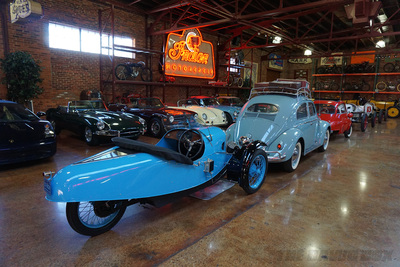
A visit to the Coker Museum should be on the bucket list of any vintage car enthusiast.

During the webinar, Kawasaki, who became the CEO of Coker Tire after he and a private-equity investor bought the company, walked viewers through the process of a private-equity firm acquiring a company and the ways an employee can ensure long-term job security.

The webinar was hosted by SEMA’s Businesswomen’s Network (SBN) and chair Allison Harding, who introduced the presentation by noting, “The [SBN’s] resource and events committee has been hard at work to provide additional resources for our members to enhance their professional career paths.”

Coker Tire was rebranded as part of Legendary Companies when Kawasaki and the management team purchased the business. Brands under the corporate umbrella include Wheels Vintiques and Paragon Corvette, and the company has a partnership with a German distributor to sell products for vintage cars overseas.

Private Equity 101

During the webinar, Kawasaki explained the process of a private-equity sale. He discussed the types of private-equity companies, those that are most likely to invest in automotive aftermarket, and other topics.

Obviously, the first step is making the decision to sell. “The reasons for selling are many,” said Kawasaki. “It could be a family company that doesn’t have a next generation that wants to run the company and would like to position it so [they] can retire.”

He continued, “It could be a need for capital for growth, we just need more money to do what we need to do.”

From the investor’s standpoint, Kawasaki said, an acquiring company will look at five things: the market, the company’s competitive position, the management team, how the business is valuated and the corporate structure.

“When you’re looking for a business, you need to make sure that they are in a space where you can win,” said Kawasaki. “The automotive aftermarket has always been very resilient.”

SEMA estimates the value of the automotive aftermarket at $52 billion broken into many segments. “Understanding your segment and the potential within that segment is pretty crucial as you present this to private equity,” said Kawasaki.

A key factor for a business is its ability to produce barriers to entry that make the company look more attractive than the competition. For example, Coker Tire has 1,100 molds for vintage and current tires in its warehouse and it licenses the rights to those tires to companies like Firestone, BFGoodrich, Uniroyal and more. “It costs millions of dollars to make those molds,” said Kawasaki. “The more barriers to entry your business has, the higher price you’ll get, and the more important that staff is that created those barriers.”

A potential buyer is also going to want to look at the long-term forecast. An investor may be focused on long-term success, but it might not want to invest long-term.

“Can you continue to have that unique product or service or different company or product, and why can your company win over the long term?” asked Kawasaki.

Smart people refer to other smart people, and Kawasaki brought up a favorite quote from investing guru Warren Buffet: “The key to investing is not assessing how much the industry is going to affect society or how much it will grow, but rather determining the competitive advantage of any given company and, above all, the durability of that advantage.”

kawasaki

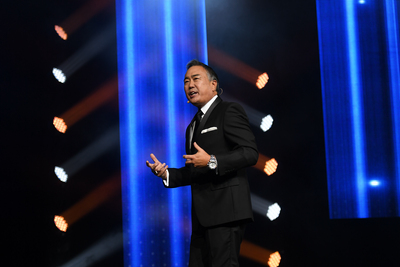
A frequent public speaker, former SEMA Chairman of the Board Wade Kawasaki brought personal experience to the “corporate climate change” discussion.

Step by Step

One critical element of the automotive aftermarket segment is something that many investors might overlook. “We don’t sell something people need,” said Kawasaki. “Nobody needs to buy a single thing we sell. We’re driven by passion. All the companies on this [webinar] call are passionate about what they do and create the need for their product.”

He added that a private-equity firm looks closely at the CEO of a company under consideration for purchase. “Besides the CEO, they’re going to be looking at having that A-plus management team with a track record of success, and that they’ve been able to accomplish those things they’ve been asked to accomplish,” said Kawasaki. “They’re looking for those managers who are smarter than them.”

Once a company commits to selling, a couple of things could happen. One of the first items on the list might be retaining an investment banking firm.

“Depending on the size of the company, it may be hiring a banker, it might be hiring a consultant,” said Kawasaki. “There are many consultants in the automotive aftermarket that will help guide you through the sale process.”

The company will also need to come up with a statement describing why it would be attractive to potential buyers. A Confidential Information Memorandum (CIM) provides specifics for the company that’s up for sale.

“The next thing that happens is the investment banker, consultant or your marketing team prepares a pitch deck,” said Kawasaki. “That pitch deck is what you’re going to turn into a CIM that’s going out to private-equity companies for them to decide if this is something that’s going to interest them or not.”

While a private-equity firm is one potential category of investor or owner, there may be situations where a competitor would be interested in buying a company to solidify or enhance its position in the industry.

“Is there a competitor that would be interested, or a supplier, or a customer that would be interested in purchasing the company?” said Kawasaki.

He explained that deciding to sell and coming up with the CIM and potential list of buyers takes about 30 days. Then it’s another month to get the information out to prospective buyers.

“The next step is going to depend on the structure of the deal,” said Kawasaki. “It’s either going to be a management call or management meeting to take a look the CIM and formulating a letter of intent and sending it off to the company.”

Corporate

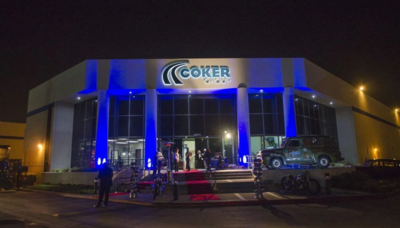
Coker Tires recently underwent a corporate structure change.

More Than Money

In the case of the Coker Group, the company fielded many calls with prospective buyers to explain the CIM instead of a more-drawn-out presentation.

“We sent out hundreds of CIMs and got dozens of letters of intent,” said Kawasaki. “All the letters came back to the ownership group. We looked at those and decided who we wanted to come out and make a presentation, looking at not only the things that are covered in the CIM but also [going] into greater detail of our market size and [how] they would get a more confidential look at the company.”

The management team then decides if it wants to be exclusive with one of those companies to move forward. For the Coker Group, it was about more than money. The company narrowed the field down to three investment bankers before management decided it found the right fit.

“The bid didn’t just include the dollars,” said Kawasaki. “The bid included what they planned to do with the company, how they planned to involve the management team, so there were many other discussions that came up before we made a decision.”

He continued, “We didn’t choose the highest bid, we chose the one that had the best overall package that made the best sense for the go-forward company.”

Inevitable Questions

During the webinar, questions were raised that focused on quelling the concerns that employees at the company being purchased are likely to feel. “It’s very important that the entire team understands what’s going on,” said Kawasaki. “The team doesn’t need to know you’ve hired an investment banker, but once the CIM goes out and the process continues, that’s when we had a townhall meeting with the entire staff.”

Kawasaki held a meeting with all of the company’s employees and tried to be as transparent as possible to make people more comfortable. “That’s how they understand the full process,” said Kawasaki. “The same process I outlined today, I outlined in our townhall meeting. The more you can share, and the earlier you can share, the better off you’ll be.”

It’s also critical to have good team leaders in place. “The more important questions got asked after the meeting, so it’s those team leaders who can get the information from the ownership team going forward,” said Kawasaki.

He added that it’s rare that a private-equity firm will insert a person into a company that it’s purchasing. In the case of Coker Tires, the COVID-19 pandemic presented unique challenges from the supply-chain perspective. The investing company had a supply-chain specialist who helped Coker find creative ways to deal with slowdowns.

Finally, a webinar attendee asked how an employee can participate in the ownership of the company being purchased. “The more you participate in the return on investment, the more that possibility exists,” answered Kawasaki.

Thu, 12/01/2022 - 09:59

By Mike Imlay

Americans (and indeed car buyers throughout the world) love pickup trucks. What’s more, they love accessorizing them—so much so that 49% of all late-model pickups are modified with specialty-equipment parts.

That’s just one of the key findings of the new “2022 SEMA Pickup Accessorization Report.” Compiled by SEMA Market Research, the report offers a comprehensive look at the evolving pickup landscape along with sales forecasts and other data relating to the parts that accessorizers buy and how they buy them. Packed with plenty of useful statistics and analysis, the 158-page report is available to download for free at www.sema.org/research.
Pickup Report

The new “2022 SEMA Pickup Accessorization Report” provides a comprehensive review of the evolving pickup landscape and the key aftermarket business opportunities to be found in the segment.

“The pickup truck market is the largest segment of the specialty-automotive aftermarket and a key opportunity for businesses,” said SEMA Director of Market Research Gavin Knapp. “This report helps SEMA members understand where the opportunities are and how to best connect with pickup accessorizers.”

According to Knapp, the report focuses specifically on late-model and newer mid-size and fullsize pickups found on the road today. It takes a deep dive into the consumer market (as opposed to fleets) in which pickups are personally owned, but also frequently used for work purposes. Its key findings include the following interesting facts:

  • Pickup owners spent $16 billion on specialty parts in 2021.
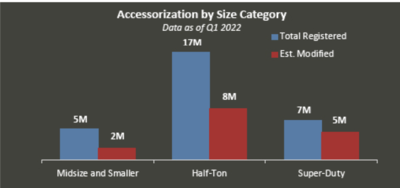
  • There are more than 29 million late-model (’10 and newer) pickups on the road, and about half of them are modified.
  • 62% of late-model pickup accessorizers buy off-road-focused parts for their trucks.
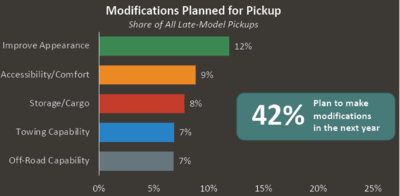
  • 84% of late-model accessorizers plan to make additional modifications in the near future.
  • 45% of specialty-equipment businesses view battery-electric pickups as an opportunity.
Pickup Report

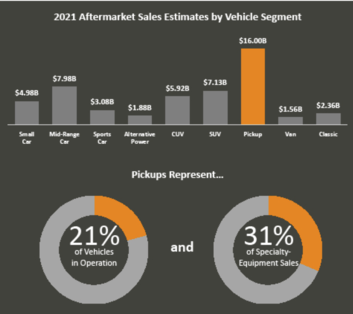
By far, pickups comprise the largest single specialty-equipment segment in terms of sales. Consumers spent $16 billion on aftermarket parts for pickups in 2021, representing 31% of the industry’s sales.

The Pickup Landscape

“There are more than 280 million passenger vehicles on U.S. roads today, and the majority of those are considered light trucks,” observed Knapp. “There’s often some confusion, though, because people use the terms ‘pickup’ and ‘truck’ interchangeably. Keep in mind that the light truck category includes pickups, sport utility vehicles [SUVs], crossover utility vehicles [CUVs] and vans. This report centers on pickups. While light trucks outsell cars three to one, pickups represent about every fifth vehicle on the road right now.”

Still, he noted, pickups have outperformed many other vehicle types in terms of new sales over the past several years, despite the recent economic hardships, chip shortages and supply-chain issues. “Pickup demand has remained strong, and they’re pretty high-value vehicles for OEMs, which makes them a potential priority in their production cases,” he said.
Pickup ReportPickup Report

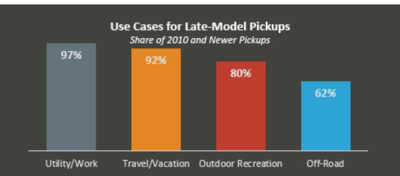
The majority of pickup owners use their trucks for daily tasks, short road trips, light utility and outdoor recreation. But because pickups fulfill a wide range of roles, they often require specialized accessories or modifications.

In fact, while OEMs are now shifting away from traditional passenger vehicles in favor of CUVs, the pickup category is remaining stable, and will likely stay that way for the foreseeable future.

“Traditionally, pickups have been a small, contained collection of models, allowing something like the Ford F-150 to become the top-selling vehicle in the United States. And if we think about the hottest pickups for our industry, the big, fullsize models are at the top, plus the Toyota Tacoma,” continued Knapp. “But one difference we are seeing now is a reemergence of some midsize and smaller pickup brands and models as people look for cheaper options and better gas mileage.”

Regardless of their size, accessorizing pickups of all types remains a lucrative area of opportunity for the aftermarket. According to SEMA Market Research, specialty equipment sales for passenger vehicles topped $50 billion last year, and the largest individual slice of those sales—$16 billion worth—were in the pickup category.

“Pickups really are a booming market for our industry,” said Knapp. “Looking at our manufacturers and retailers, many companies are selling into the pickup market and have been doing really well. They’ve continued to see increased sales largely over the last 12 months.”
Pickup ReportPickup Report

Super-duty pickups are more likely to be modified for specialized purposes, but all makes and models receive a good share of aftermarket upgrades.

Profiling the Pickup Owner

Of course, to truly leverage this $16 billion market, industry businesses must understand pickups owners, how they use their trucks, and ultimately their motivations for vehicle modifications. In that regard, the report arms manufacturers and retailers alike with a wealth of data.

“Nearly all trucks are used as daily drivers, and most people consider their pickup a utility vehicle,” said Knapp. “But a large percentage also utilize their pickups for travel, which can mean pulling a trailer, adding a camper, or equipping it with gear to get off road. It’s when we get into some of those specifics that we really see the opportunities for our industry. If you look at the people who think of their truck as an outdoor recreation vehicle, as a work vehicle, or as an off-road vehicle, their specialized needs become the driving forces for all of their accessory and modification decisions.”

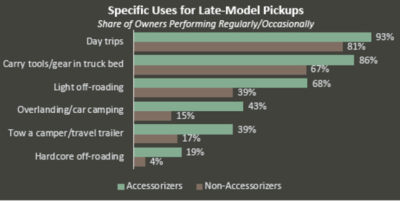
The report finds that more than 90% of late-model pickup owners use their vehicles for travel or road trips, whether they be to access recreation areas, multi-day drives into the wilderness for camping, an overland trip, or an off-roading excursion. In addition, a good portion of their trips include sleeping in the truck, a bed-mounted camper or a trailer towed behind. “For many, the pickup is like their home away from home, and modifications for pulling a trailer or hauling gear is one of their more common needs,” said Knapp.
Pickup ReportPickup Report

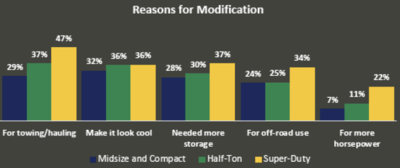
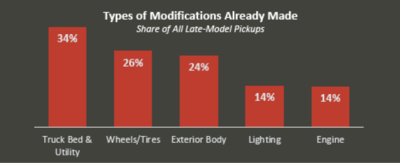
Most commonly, owners modify their pickups for improved utility and looks, but performance enhancements also enter the mix. Modifications are typically made soon after vehicle purchase, although some owners continue modifying as long-term projects or as new needs arise.

But if anything defines a pickup, it’s versatility—for work as well as play. In fact, SEMA Market Research also finds that about 28% of pickup owners see their trucks as true work vehicles and modify them accordingly.

“There are so many general-utility uses that encompass the entire pickup market, and a lot of overlap between work around the house and work at a job site,” explained Knapp. “However, when it comes to a true work truck, there tends to be more interest in the comfort aspects of riding to and from a job, the ability to tow and haul work gear, and having the necessary storage for it. We see a lot of specialization, especially when it comes to things like a toolbox in the vehicle.”

Still, not every pickup owner feels compelled to modify a truck. The market is actually split between those who keep their trucks stock (51%) and those who accessorize (49%). Among those who do accessorize, the report finds that “non-enthusiast” consumers comprise 57% of the market. True “enthusiast” consumers—those primarily motivated by the enjoyment of working on a vehicle, maximizing performance and handling, or making their vehicle stand out—represent 43% of the marketplace.

Overall, pickup owners tend toward practical modifications for trailering and hauling (38%), easier entry and exit (27%), added storage (24%), or light off-road use (23%). In addition, owners of heavy-duty pickups are especially likely to enhance their vehicles for towing and hauling (47%). Meanwhile, a healthy percentage of pickup owners of all types opt to improve their vehicle’s appearance (35%).

Top specialty-equipment product categories for 2021 reflect all these goals. Popular purchases include off-road and oversize tires; suspension products; bedliners and accessories; transmission products; bed covers; fender, hood and body upgrades; brake products; trailer and towing products; and performance or special-purpose tires.

Off-Roading and Adventuring

Not surprisingly, equipping trucks for off-roading and overlanding pursuits continue to offer prime opportunities for the aftermarket as well. “More than half of people who own pickups—regardless of whether they lightly modify their vehicle or have a purpose-built off-road truck—get onto dirt roads or gravel paths a few times a year, if not on a regular basis,” said Knapp. “In terms of really hitting the trails, going mudding and dealing with steep inclines, we also see a good share of the overall pickup market doing those things as well as other hardcore activities like bouldering and rock crawling.”

Helping these owners achieve their goals (or simply look the part) will go a long way toward gaining loyal customers. This is an audience known for return business—the vast majority of pickup accessorizers who have already done work on their trucks say they plan to do more.

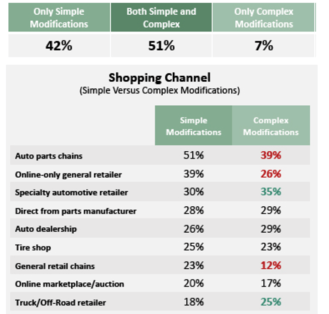
Also reflecting the diverse nature of the pickup lifestyle, aftermarket businesses will find many avenues for engaging truck owners. “It’s not just online, just on social media, or even just in-store,” said Knapp. “With pickup owners we see a lot of word of mouth, YouTube and social-media engagement. Instagram is important too, but you don’t want to neglect building up your own website and training your own staff. Especially with people seeking complicated modifications, if you can guide them through the process, you’ll see a lot of success.”

In short, pickup owners are willing to invest in quality parts that get the job done. As a whole, they’re also brand-loyal, with reliability being front of mind.

“They spend a good amount of money on their vehicles, upgrading and accessorizing them,” observed Knapp. “Trucks are supposed to be tough, and they’ll prioritize tough parts and accessories over the lowest price.”
Pickup Report

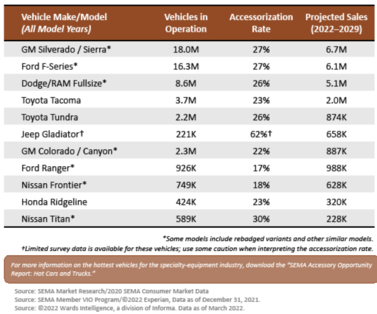
Domestic fullsize units dominate the pickup landscape in terms of vehicle and aftermarket parts sales, and thus top the SEMA list of hot pickups for accessorization. Still, there are a range of platforms offering opportunities for the industry.

As for the foreseeable future, the pickup market offers a sense of continuity in a changing automotive landscape. The SEMA Market Research report sees growing opportunity in the midsize market, and although smaller pickups currently lag in accessorization, that’s likely due to their market absence of late. As consumers embrace the emerging “compact” models, modifications are bound to follow. Likewise the new rugged models like the Jeep Gladiator, which is also predicted to be a strong platform for the aftermarket.

“The great thing about the pickup market is there aren’t any of them that can’t be modified and accessorized,” Knapp reiterated. “Going forward, we also looked at the electric-vehicle [EV] market. It’s everywhere right now, and our expectation is we’ll see more and more EV pickups hitting the road, along with some increases in hybrid models. But gasoline power will remain the standard for quite some time.”

If anything, the new EV platforms are introducing novelty to the market—along with a new demographic of customers who would not normally consider themselves “truck people.”

“They are early adopter types,” explained Knapp. “But as time goes on and more EV pickups are sold and EVs become more mainstream, so will these consumers.”
Pickup Report

Not surprisingly, while accessorizers buy parts for both simple and complex jobs through a variety of channels, particularly difficult or costly mods are more likely to be bought in-store.

After all, added Knapp, “It’s a truck. It’s got four wheels. It’s got suspension. It’s got exterior body panels. It’s got a truck bed. All of those things can be modified and accessorized in the same way that a traditional pickup can.”

In other words, the American love affair with pickups will remain undiminished for a long time to come. And that is bound to spark continued innovation and growth for the specialty-equipment industry too.

Get All the Details

To learn more about the pickup market, pickup owners and the parts they love and buy, download the “2022 SEMA Pickup Accessorization Report” today at www.sema.org/research.

The report is also the subject of a SEMA on-demand webinar video titled “Understanding the Pickup Accessorization Market,” which is now available through SEMA Education at https://learning.sema.org/on-demand-video.


This story was originally published on December 1, 2022. For more industry news, visit SEMANews.com and subscribe to SEMA News at the bottom of the webpage to get the latest updates straight to your inbox, twice a week.

Thu, 12/01/2022 - 09:56

SEMA News—December 2022

RESEARCH

The “2022 SEMA Pickup Accessorization Report”

Solid Facts and Data Shed Light on a Ruggedly Dependable Market

By Mike Imlay

Pickup Report

The new “2022 SEMA Pickup Accessorization Report” provides a comprehensive review of the evolving pickup landscape and the key aftermarket business opportunities to be found in the segment.

Americans (and indeed car buyers throughout the world) love pickup trucks. What’s more, they love accessorizing them—so much so that 49% of all late-model pickups are modified with specialty-equipment parts.

That’s just one of the key findings of the new “2022 SEMA Pickup Accessorization Report.” Compiled by SEMA Market Research, the report offers a comprehensive look at the evolving pickup landscape along with sales forecasts and other data relating to the parts that accessorizers buy and how they buy them. Packed with plenty of useful statistics and analysis, the 158-page report is available to download for free at www.sema.org/research.

“The pickup truck market is the largest segment of the specialty-automotive aftermarket and a key opportunity for businesses,” said SEMA Director of Market Research Gavin Knapp. “This report helps SEMA members understand where the opportunities are and how to best connect with pickup accessorizers.”

According to Knapp, the report focuses specifically on late-model and newer mid-size and fullsize pickups found on the road today. It takes a deep dive into the consumer market (as opposed to fleets) in which pickups are personally owned, but also frequently used for work purposes. Its key findings include the following interesting facts:

  • Pickup owners spent $16 billion on specialty parts in 2021.
  • There are more than 29 million late-model (’10 and newer) pickups on the road, and about half of them are modified.
  • 62% of late-model pickup accessorizers buy off-road-focused parts for their trucks.
  • 84% of late-model accessorizers plan to make additional modifications in the near future.
  • 45% of specialty-equipment businesses view battery-electric pickups as an opportunity.
Pickup Report

By far, pickups comprise the largest single specialty-equipment segment in terms of sales. Consumers spent $16 billion on aftermarket parts for pickups in 2021, representing 31% of the industry’s sales.

The Pickup Landscape

“There are more than 280 million passenger vehicles on U.S. roads today, and the majority of those are considered light trucks,” observed Knapp. “There’s often some confusion, though, because people use the terms ‘pickup’ and ‘truck’ interchangeably. Keep in mind that the light truck category includes pickups, sport utility vehicles [SUVs], crossover utility vehicles [CUVs] and vans. This report centers on pickups. While light trucks outsell cars three to one, pickups represent about every fifth vehicle on the road right now.”

Still, he noted, pickups have outperformed many other vehicle types in terms of new sales over the past several years, despite the recent economic hardships, chip shortages and supply-chain issues. “Pickup demand has remained strong, and they’re pretty high-value vehicles for OEMs, which makes them a potential priority in their production cases,” he said.

Pickup ReportPickup Report

The majority of pickup owners use their trucks for daily tasks, short road trips, light utility and outdoor recreation. But because pickups fulfill a wide range of roles, they often require specialized accessories or modifications.

In fact, while OEMs are now shifting away from traditional passenger vehicles in favor of CUVs, the pickup category is remaining stable, and will likely stay that way for the foreseeable future.

“Traditionally, pickups have been a small, contained collection of models, allowing something like the Ford F-150 to become the top-selling vehicle in the United States. And if we think about the hottest pickups for our industry, the big, fullsize models are at the top, plus the Toyota Tacoma,” continued Knapp. “But one difference we are seeing now is a reemergence of some midsize and smaller pickup brands and models as people look for cheaper options and better gas mileage.”

Regardless of their size, accessorizing pickups of all types remains a lucrative area of opportunity for the aftermarket. According to SEMA Market Research, specialty equipment sales for passenger vehicles topped $50 billion last year, and the largest individual slice of those sales—$16 billion worth—were in the pickup category.

“Pickups really are a booming market for our industry,” said Knapp. “Looking at our manufacturers and retailers, many companies are selling into the pickup market and have been doing really well. They’ve continued to see increased sales largely over the last 12 months.”

Pickup ReportPickup Report

Super-duty pickups are more likely to be modified for specialized purposes, but all makes and models receive a good share of aftermarket upgrades.

Profiling the Pickup Owner

Of course, to truly leverage this $16 billion market, industry businesses must understand pickups owners, how they use their trucks, and ultimately their motivations for vehicle modifications. In that regard, the report arms manufacturers and retailers alike with a wealth of data.

“Nearly all trucks are used as daily drivers, and most people consider their pickup a utility vehicle,” said Knapp. “But a large percentage also utilize their pickups for travel, which can mean pulling a trailer, adding a camper, or equipping it with gear to get off road. It’s when we get into some of those specifics that we really see the opportunities for our industry. If you look at the people who think of their truck as an outdoor recreation vehicle, as a work vehicle, or as an off-road vehicle, their specialized needs become the driving forces for all of their accessory and modification decisions.”

The report finds that more than 90% of late-model pickup owners use their vehicles for travel or road trips, whether they be to access recreation areas, multi-day drives into the wilderness for camping, an overland trip, or an off-roading excursion. In addition, a good portion of their trips include sleeping in the truck, a bed-mounted camper or a trailer towed behind. “For many, the pickup is like their home away from home, and modifications for pulling a trailer or hauling gear is one of their more common needs,” said Knapp.

Pickup ReportPickup Report

Most commonly, owners modify their pickups for improved utility and looks, but performance enhancements also enter the mix. Modifications are typically made soon after vehicle purchase, although some owners continue modifying as long-term projects or as new needs arise.

But if anything defines a pickup, it’s versatility—for work as well as play. In fact, SEMA Market Research also finds that about 28% of pickup owners see their trucks as true work vehicles and modify them accordingly.

“There are so many general-utility uses that encompass the entire pickup market, and a lot of overlap between work around the house and work at a job site,” explained Knapp. “However, when it comes to a true work truck, there tends to be more interest in the comfort aspects of riding to and from a job, the ability to tow and haul work gear, and having the necessary storage for it. We see a lot of specialization, especially when it comes to things like a toolbox in the vehicle.”

Still, not every pickup owner feels compelled to modify a truck. The market is actually split between those who keep their trucks stock (51%) and those who accessorize (49%). Among those who do accessorize, the report finds that “non-enthusiast” consumers comprise 57% of the market. True “enthusiast” consumers—those primarily motivated by the enjoyment of working on a vehicle, maximizing performance and handling, or making their vehicle stand out—represent 43% of the marketplace.

Overall, pickup owners tend toward practical modifications for trailering and hauling (38%), easier entry and exit (27%), added storage (24%), or light off-road use (23%). In addition, owners of heavy-duty pickups are especially likely to enhance their vehicles for towing and hauling (47%). Meanwhile, a healthy percentage of pickup owners of all types opt to improve their vehicle’s appearance (35%).

Top specialty-equipment product categories for 2021 reflect all these goals. Popular purchases include off-road and oversize tires; suspension products; bedliners and accessories; transmission products; bed covers; fender, hood and body upgrades; brake products; trailer and towing products; and performance or special-purpose tires.

Off-Roading and Adventuring

Not surprisingly, equipping trucks for off-roading and overlanding pursuits continue to offer prime opportunities for the aftermarket as well. “More than half of people who own pickups—regardless of whether they lightly modify their vehicle or have a purpose-built off-road truck—get onto dirt roads or gravel paths a few times a year, if not on a regular basis,” said Knapp. “In terms of really hitting the trails, going mudding and dealing with steep inclines, we also see a good share of the overall pickup market doing those things as well as other hardcore activities like bouldering and rock crawling.”

Helping these owners achieve their goals (or simply look the part) will go a long way toward gaining loyal customers. This is an audience known for return business—the vast majority of pickup accessorizers who have already done work on their trucks say they plan to do more.

Also reflecting the diverse nature of the pickup lifestyle, aftermarket businesses will find many avenues for engaging truck owners. “It’s not just online, just on social media, or even just in-store,” said Knapp. “With pickup owners we see a lot of word of mouth, YouTube and social-media engagement. Instagram is important too, but you don’t want to neglect building up your own website and training your own staff. Especially with people seeking complicated modifications, if you can guide them through the process, you’ll see a lot of success.”

In short, pickup owners are willing to invest in quality parts that get the job done. As a whole, they’re also brand-loyal, with reliability being front of mind.

“They spend a good amount of money on their vehicles, upgrading and accessorizing them,” observed Knapp. “Trucks are supposed to be tough, and they’ll prioritize tough parts and accessories over the lowest price.”

Pickup Report

Domestic fullsize units dominate the pickup landscape in terms of vehicle and aftermarket parts sales, and thus top the SEMA list of hot pickups for accessorization. Still, there are a range of platforms offering opportunities for the industry.

As for the foreseeable future, the pickup market offers a sense of continuity in a changing automotive landscape. The SEMA Market Research report sees growing opportunity in the midsize market, and although smaller pickups currently lag in accessorization, that’s likely due to their market absence of late. As consumers embrace the emerging “compact” models, modifications are bound to follow. Likewise the new rugged models like the Jeep Gladiator, which is also predicted to be a strong platform for the aftermarket.

“The great thing about the pickup market is there aren’t any of them that can’t be modified and accessorized,” Knapp reiterated. “Going forward, we also looked at the electric-vehicle [EV] market. It’s everywhere right now, and our expectation is we’ll see more and more EV pickups hitting the road, along with some increases in hybrid models. But gasoline power will remain the standard for quite some time.”

If anything, the new EV platforms are introducing novelty to the market—along with a new demographic of customers who would not normally consider themselves “truck people.”

“They are early adopter types,” explained Knapp. “But as time goes on and more EV pickups are sold and EVs become more mainstream, so will these consumers.”

Pickup Report

Not surprisingly, while accessorizers buy parts for both simple and complex jobs through a variety of channels, particularly difficult or costly mods are more likely to be bought in-store.

After all, added Knapp, “It’s a truck. It’s got four wheels. It’s got suspension. It’s got exterior body panels. It’s got a truck bed. All of those things can be modified and accessorized in the same way that a traditional pickup can.”

In other words, the American love affair with pickups will remain undiminished for a long time to come. And that is bound to spark continued innovation and growth for the specialty-equipment industry too.

Get All the Details

To learn more about the pickup market, pickup owners and the parts they love and buy, download the “2022 SEMA Pickup Accessorization Report” today at www.sema.org/research.

The report is also the subject of a SEMA on-demand webinar video titled “Understanding the Pickup Accessorization Market,” which is now available through SEMA Education at https://learning.sema.org/on-demand-video.

Thu, 12/01/2022 - 09:35

SEMA News—December 2022

PEOPLE

Meet the 2022–2023 SEMA Board of Directors

By Douglas McColloch

Photography Courtesy Micah Dahlberg

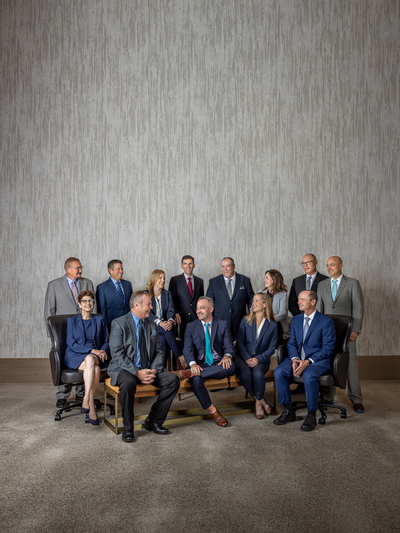
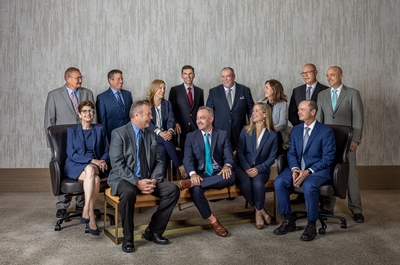
BODThe Specialty Equipment Market Association (SEMA) is governed by a Board of Directors who volunteer their time to provide leadership and guidance to the organization. Board members are nominated and elected by the association’s membership at large. They represent the organization’s key membership categories: manufacturers, distributors/retailers, manufacturers’ reps and services. Directors serve a three-year term, while the chairman serves for two years immediately after completing a two-year term as chairman-elect. The current Board was inaugurated at the SEMA Awards Gala held on July 29, 2022.
The Board underwent a few personnel changes for 2022–2023. The Board welcomed new members Norris Marshall, founder and CEO of BluePrint Engines, and Rich Butler, CEO and Co-Chairman of R&R Marketing Consultants, who were elected to serve a three-year term. In addition, current Board members Kathryn Reinhardt and Melanie White, president of Hellwig Products, were re-elected to a second term. Stepping down after the conclusion of their terms of office were Chris Douglas, CCO of Edelbrock Group, and Les Rudd, President of Bob Cook Sales, who now serves as treasurer.

Besides having the ability to vote in the Board election, SEMA-member companies can play a constructive role in the selection process from the very beginning. For instance, member companies are free to nominate industry colleagues who they think are worthy of recognition. To learn more about the process, visit www.sema.org/board-of-directors.

“The SEMA Board of Directors represent many different aspects of our industry and come together to set the association’s priorities, and to discuss issues, initiatives and programs,” said SEMA President and CEO Mike Spagnola. “They give SEMA staff great feedback on issues affecting our industry and have a wealth of knowledge and background to guide and direct the association and its future.”

2022–2023 Board of Directors

Chairman of the Board
James Lawrence
CEO, Power Automedia

Chairman-Elect
Kyle Fickler
Director of Sales and New Business Development, Driven Racing Oil

Immediate Past Chairman/Secretary
Tim Martin
CEO, Aftermarket Advisors LLC

Treasurer
Bunyan L. (Les) Rudd, CPMR
President, Bob Cook Sales

Rich Butler (not pictured)
EO and Co-Chairman, R&R Marketing Consultants

Lindsay Hubley
Managing Partner,
Lodestone Events LLC

Larry Montante
Vice President, Category Management, Keystone Automotive Operations

Norris Marshall
Founder and CEO, BluePrint Engines

Kim Pendergast
CEO, Magnuson Superchargers

Brian Reese
President and CEO, T Sportline

Kathryn Reinhardt

Ted Wentz III, CEO, Quadratec

Steve Whipple

Melanie White, President, Hellwig Products

Thu, 12/01/2022 - 09:31

Speed TubeSPEEDTubeTV is actively seeking new content creators and talent to feature in new programming. Whether you’re a prolific producer, a bespoke builder, a raucous racer or discerning designer, SPEEDTubeTV wants you for upcoming shows, and they are open to meeting with prospects at this year’s Performance Racing Industry (PRI) Trade Show, December 8–10.
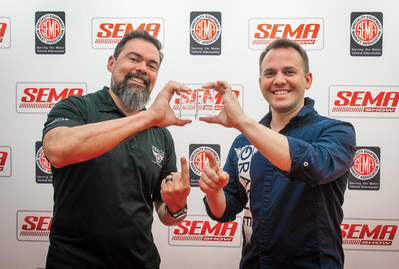
Think you got what it takes to be the next SPEEDTubeTV star? Stop by booth #7192 at PRI, sponsored by INSPEX, and ask for Brian Bossone or Ray Iddings, executive producer and head of content. They want to talk with you.

The booth will feature autograph signings with drag race royalty:

  • Six-Time Top Fuel World Champ Clay Millican (December 8, 3:00 p.m.)
  • Three-time NHRA Top Fuel Champ Larry Dixon (December 9, 11:00 a.m.)
  • Three-Time NHRA Top Fuel Champ Antron Brown (December 9, 3:30 p.m.)

All programming on SPEEDTubeTV’s YouTube channel is free of charge. New episodes of their popular automotive programming are added every Tuesday and Thursday and new shows are added and updated on a consistent basis. For more information, visit www.SPEEDTubetv.com.

Oracle LightingORACLE Lighting Gains Four Awards During 2022 SEMA Show
ORACLE Lighting walked away from the 2022 SEMA Show with four more awards to add to its showcase.

“ORACLE Lighting is proud to have been awarded the SDC Data Excellence Award, Runner-Up for Best New Off-Road/4-Wheel-Drive Product 2023 for the Integrated Bronco Windshield Roof LED Light Bar, a Global Media Award for the Jeep JL/JT Skid Plate with Integrated LED emitters and a Global Media Award for the Jeep JK Flush Mount LED taillights,” said Justin Hartenstein, Oracle Lighting director of development.

MidwayPlus Announces Platform Integration Deal With Major Worldwide Freight Carrier

MidwayPlus has announced the completion of a successful partnership with a major global freight carrier. Providing a comprehensive single log-in B2B platform, the new partnership includes impressive pre-negotiated rates. These rates include shipping solutions for manufacturers, logistics and customs brokerage solutions to meet growing client demand for better shipping rates. The new freight program is poised to save clients thousands of dollars annually, by allowing companies to capitalize on pre-negotiated rates and passing those rates onto their buyers for shipping with in the 48 continental United States.

Mike Rice Named NHRA Senior Director of Competition; Matt DeYoung Named Pacific Division Director

NHRA officials announced the promotion of Mike Rice to senior director of competition and the addition of Matt DeYoung as division director of the Pacific Division (Division 7).

Rice, who started with NHRA in 2001, served as the division director of Division 7 for 16 years. In his new role as NHRA senior director of competition, Rice will lead tower operations at all NHRA national events, coordinate and maintain daily on-track schedules, and communicate with race teams. Rice will also be instrumental in guiding the division directors with his years of experience.

With Rice in his new role as NHRA senior director of competition, DeYoung will step into the Division 7, working with the NHRA member tracks in Arizona, California, Nevada, New Mexico and Hawaii. Prior to his new role, DeYoung managed Tucson Dragway for five years.

The Pacific Division sees several Lucas Oil Drag Racing Series events throughout the season as well as NHRA national events at Wild Horse Pass Motorsports Park, The Strip at Las Vegas Motor Speedway, Sonoma Raceway and the newly named In-N-Out Burger Pomona Dragstrip.

Liqui MolyDr. Uli Weller, Günter Hiermaier to Serve as LIQUI MOLY Managing Directors
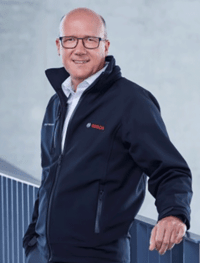

The long-standing commercial director of the company in Ulm, Dr. Uli Weller, will become the second managing director of the group of companies at the start of 2023. For LIQUI MOLY, this is a logical step and a guarantee for lasting stability and security. “My responsibility is to lead our company into a secure future. For me, a second managing director means perfect strategic support,” said Günter Hiermaier.

With this step, Dr. Weller will be promoted to an additional managing director of the LIQUI MOLY Group, which also includes the Meguin GmbH & Co. KG Mineraloelwerke in Saarlouis as well numerous LIQUI MOLY subsidiaries abroad. He will continue functioning as the commercial director.  

Bosch
Ingo Mauel

Ingo Mauel Named New Head of Bosch Motorsport

Bosch Engineering has announced Ingo Mauel has taken over management of Bosch Motorsports. He succeeds Dr. Klaus Boettcher, who will go into early retirement at the end of January following 23 years as the leader of Bosch Motorsport. Mauel has been with Bosch since 1996 and has worked in various management roles in electronics, software and systems development, among others. In 2015, he assumed leadership of the motorsport engineering department.

During his time as the face of Bosch Motorsport, Dr. Boettcher experienced countless victories and championships, including successes in the German Touring Car Masters (DTM), in the 24 Hours of Le Mans with Audi, Bentley and Peugeot, in rally series and in the customer racing sector.

Speedway
Matt Greci

Speedway Motorsports Promotes Matt Greci to Senior Vice President, General Manager at Nashville Superspeedway  

Speedway Motorsports has announced that motorsports industry executive Matt Greci has been promoted to senior vice president and general manager at Nashville Superspeedway. He replaces Erik Moses, who leaves on December 2 to become executive director of the Fiesta Bowl.

No stranger to Speedway Motorsports, Greci relocated to Nashville shortly after the company acquired the 1.33-mile speedway as part of its purchase of Dover Motorsports in 2021. Prior to that, Greci spent nearly 16 years at Charlotte Motor Speedway (Concord, North Carolina), where he began his career as a sales department intern, then joined the speedway full-time as the track rental and suite coordinator for corporate sales. Greci moved to the events department in 2008, working his way from events manager to vice president of events.

During his tenure at Charlotte, Greci earned recognition as the CMS Employee of the Year in 2013. He also received the company’s highest honor, the Speedway Motorsports O. Bruton Smith Award, in 2018 while managing event production at zMAX Dragway, The Dirt Track and the superspeedway.

Have some company news you would like to share? Let us know and the news may appear in an upcoming issue of SEMA News. Send your items for consideration to editors@sema.org.

Thu, 12/01/2022 - 09:17

The following message is from SEMA President and CEO Mike Spagnola

Dear SEMA Member:
SEMA Board of Directors
Nominations for the SEMA Board of Directors are
due on Wednesday, January 4, 2023.

A strong SEMA Board means wise leadership and an association that serves its members well.  As a member of the Association, we are currently seeking your recommendation of industry leaders to serve on the SEMA Board of Directors.

The following seats are open for this year’s election:

  • Chairman-elect (one open seat)
  • Distributor/Retailer (one open seat)

Please take a moment and tell us whom you would recommend as a potential nominee for a board member position by completing and submitting a nomination form. To help the vetting process, please include brief information about the nominee’s qualifications, such as background, experience and achievements that would make that nominee an outstanding board candidate.

Nominations for the SEMA Board of Directors are due on Wednesday, January 4, 2023. Please complete and submit the nomination form.

We urge you to take part in the nominations process—our industry has many individuals who would be an asset to the Board, but we need you to help bring them to the attention of the Nominating Committee.

Thank you for your attention to this important request.

Sincerely,

Mike Spagnola
SEMA President and CEO

Thu, 12/01/2022 - 09:16

Are you hunting for a new job? The SEMA Career Center has a comprehensive listing of automotive-related job openings around the country. Here are some of the latest jobs posted to the website.

Latest Jobs Added to SEMA Career Center

Technical Service Associate
ProCharger

ProCharger is seeking a full-time technical performance representative with strong phone skills, automotive knowledge and understanding of high-performance motorsports. The primary responsibility of this position is to assist customers by answering their questions, taking orders and resolving technical issues promptly via the telephone and email. This position requires the ability and endurance to answer a high volume of calls while maintaining accuracy, good interpersonal skills and excellent telephone manners.  

Outside Sales Rep
Cognito Motorsports Inc.

Cognito Motorsports Inc. is hiring an outside sales rep responsible for new dealer acquisition, top-line sales production, relationship management and customer retention. The successful candidate will be an effective hunter and relationship builder capable of consistently adding new resellers to our existing book of business. Strong connections in the passenger truck and UTV upfitting dealer markets is preferred. At least 2–3 years of experience with executing on the full sales cycle for an established automotive aftermarket brand/distributor is required.

Creative and Design Manager
Edelbrock Group

Edelbrock Group is hiring a creative and design manager to oversee a team of creatives, collaborate with others inside and outside of marketing for project specifics, improve the quality of current design/graphics work and ensure all finished creative work is accurate, on brand and on time for the entire team. To be successful in this role, you must be a well-rounded creative expert who is skilled in all of aspects traditional and digital marketing design. You must have experience executing a diverse mix of creative projects from conception to production in a multi-brand environment.

Thu, 12/01/2022 - 09:15
Tue, 11/29/2022 - 21:10

Compiled By SEMA Editors

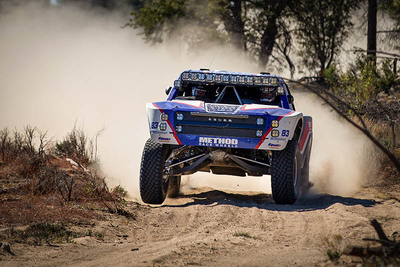
Luke McMillin and Rob MacCachren teamed to rise above the rest in a field of 276 starters to win the overall and SCORE Trophy Truck title in the season-ending BFGoodrich Tires 55th SCORE Baja 1000, presented by 4 Wheel Parts. The international event was the season-finale of the four-race 2022 SCORE World Desert Championship.

Starting second physically on the road in the elapsed time race and splitting the driving in McMillin’s Big Blue M racing machine all-wheel-drive 4 Wheel Parts/BFGoodrich Tires No. 83 Chevy 1500, the duo worked their way to the front of the pack and finished the 828.25-mile race around the Northern Part of Mexico’s Baja peninsula in a penalty-free time of 16:37:46 with an average speed of 49.81 mph.

McMillinOne of several ”super teams” competing in this race primarily because of the length of the course, Off-Road Motorsports Hall of Fame inductee MacCachren stabled his aging two-wheel-drive thoroughbred when invited to join the Big Blue M race team again for this historic race and be McMillin’s second driver in the McMillin’s No. 83 McMilling Racing AWD Chevy 1500 built by Mason Motorsports.
Using McMillin’s No. 83 SCORE Trophy Truck, McMillin entered the race as the SCORE Trophy Truck overall point leader for 2022 and second in the SCORE Overall points. A third-generation desert racer, McMillin and MacCachren started second behind another ”super team” of Bryce Menzies and Luke McMillin’s cousin Andy McMillin. Last year, the McMillin family allowed MacCachren to be driver of record while driving in Luke’s truck and the pair won that race as well and MacCachren earned the SCORE Trophy Truck season point-championship.

This year, MacCachren started and stayed the course, with Luke McMillin taking over the wheel at race mile 394, they then battled Luke’s older brother Dan McMillin and Josh Daniel, passing Josh when he had a flat tire, never looking back the rest of the way to the checkered flag. Dan McMillin and Daniel finished second to give the McMillin Racing family their first one-two overall finish in a SCORE race.

With his victory, Luke McMillin also earned a U.S. $25,000 contingency bonus from long-time SCORE sponsor and race title sponsor BFGoodrich Tires, offered to the winner of this year’s race. The victory also marked the 33rd overall victory in this race for vehicles equipped with BFGoodrich Tires.

For complete results visit the SCORE International website.

Lucas OilLucas Oil Pro Pulling League to Be Discontinued in 2023
Lucas Oil Products has decided to discontinue its ownership and operation of the Lucas Oil Pro Pulling League following the conclusion of the 2022 season. Established in 2006, the Lucas Oil Pro Pulling League has operated as one of the premier pulling organizations in the country, with 14 member state groups and 1,400 competitors across several different divisions. The Champions Tour and Silver Series comprised 13 classes of pulling action. The series officially wrapped at the 2022 Champions Tour Banquet held at the Hyatt Regency in Louisville, Kentucky, November 19. For more information, visit propulling.com or contact lucasoil@godriven360.com.

NASCAR Announces Launch of Brazil Sprint Race Series

NASCAR has announced the creation of the NASCAR Brasil Sprint Race, the sanctioning body’s fourth international series and first in South America. The series, which will begin competition in 2023, is a partnership between NASCAR and the GT Sprint Race series in Brazil.

GT Sprint Race was founded in 2012 by Thiago Marques, a former standout stock car driver in Brazil, with the goal of balancing high levels of competition, performance and safety. The 2022 schedule included 18 sprint races over nine weekends at road courses across Brazil, including Autodromo Jose Carlos Pace (Interlagos) in São Paulo. The 2023 schedule will be released at a future date.

NASCAR Brasil Sprint Race joins the NASCAR Mexico Series, NASCAR Pinty’s Series (Canada) and NASCAR Whelen Euro Series as the fourth international series racing under the NASCAR banner. In 2023, NASCAR racing will take place in 12 different countries on three continents. For more information, visit nascar.com.

For more racing news, visit Performance Racing Industry’s (PRI) website.

Tue, 11/29/2022 - 20:56

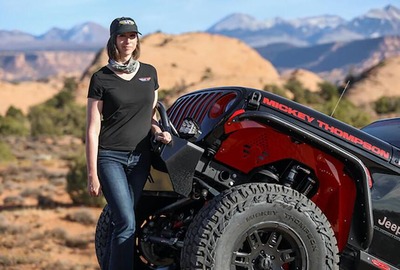
Mickey ThompsonMickey Thompson Names Heather Tausch Senior Director, Marketing

Mickey Thompson Tires & Wheels has promoted Heather Tausch to senior director of marketing. She was formerly director of product management. In this new role, Tausch will lead Mickey Thompson’s product and marketing teams and oversee the strategy and execution of all product development and marketing activities to form holistic consumer-targeted go-to-market plans, a company release stated.

Since Tausch joined the company in 2020, Mickey Thompson has won four SEMA Best New Product awards over two consecutive years. She has extensive experience in various aftermarket segments, including MOMO Motorsports and Peak’s BlueDEF. Additionally, Tausch serves as both a select committee member of the SEMA Wheel & Tire Council (WTC) and as Mickey Thompson’s liaison as a PRI Founding Member.

Hemmings Names Evan Perkins Director, Digital Content

Hemmings has appointed Evan Perkins as director, digital content. Perkins has more than 10 years of experience in the automotive publishing industry, including roles as editor-in-chief of HOT ROD magazine, editor of Super Chevy magazine and editor of Fastest Street Car magazine. In addition, Perkins produced tech-driven SEO content for top-of-page search results for Race Winning Brands, and Holley as a content marketing manager.

Holley Names Brian Appelgate Interim COO

Holley has announced Brian Appelgate as the interim COO. He has advised Holley since 2018 as the head of mergers and acquisitions (M&A). As interim COO, Appelgate will be focused on driving near-term improvement in the end-to-end supply chain, manufacturing and engineering functional areas. As a performance automotive industry veteran, Appelgate has experience in branded enthusiast consumer products, manufacturing and distribution in private, private equity and public market environments. He has served on multiple boards in the industry and is a former SEMA chairman. Prior to advising Holley, he was president and CEO of Driven Performance Brands.

NGK Spark Plugs Adds Two to Its Leadership Team

NGK Spark Plugs has announced the appointment of two individuals to its leadership team. Megan McDonald, an NGK associate for more than 23 years, has been promoted to general manager of corporate planning. In this newly created role, she will be responsible for the execution of NGK’s critical business initiatives from planning through implementation, expediting NGK’s decision-making process, creating transparency and optimizing its risk management.

Alex Sanchez Salazar has joined the company as general manager of internal audit. In his new role, Salazar will be responsible for providing consult, audit and advisory services to effectively identify and address significant risks to the company across all business units. Sanchez Salazar joins NGK Spark Plugs with more than 30 years of experience in manufacturing finance and compliance.

eBay Bans Non-Emissions-Compliant Tuning Parts, Accessories

eBay has banned the sale of automotive tuning devices that defeat the factory emissions systems. The announcement was likely primarily due to policy and regulations implemented by the U.S. Environmental Protection Agency (EPA). Under the Clean Air Act, the EPA can charge eBay up to $4,819 for each non-compliant part sold through its site, according to published reports. Any product that may “bypass, defeat or render inoperative emissions-control systems” is not allowed either on its own or when combined with other hardware or software.

Prohibited components include, but are not limited to:

  • Tuners, services, software or devices that modify the performance of vehicles, such as cars, trucks and off-road vehicles.
  • Aftermarket standalone (non-OEM) electronic control unit (ECU), including full electronic fuel injection (EFI) conversion kits.
  • Powertrain or exhaust parts intended for “race only” or “off-road only.”
  • Active fuel management/dynamic fuel management or auto start-stop disablers.
  • Blocking plates for emissions-control systems.
  • Products that remove factory catalytic converters (CAT) or diesel particulate filters (DPF), selective catalytic reduction (SCR) and diesel exhaust fluid (DEF).
  • Throttle-response controllers.
  • Exhaust servo eliminators.
  • Devices intended to bypass or reduce flow to oxygen sensors.

For more information, visit the eBay Emissions Control Defeat Devices Policy here.

Have some company news you would like to share? Let us know and the news may appear in an upcoming issue of SEMA News. Send your items for consideration to editors@sema.org.