Thu, 12/01/2022 - 17:35

By Ashley Reyes

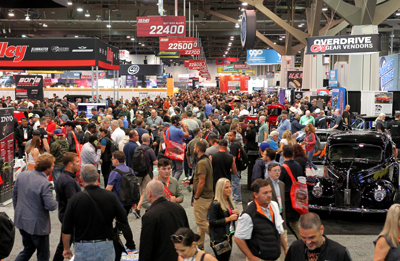
Among the several dozen activities slated for the 2022 PRI Trade Show (December 8–10 in downtown Indianapolis) are networking opportunities and events from the SEMA Future Leaders Network (FLN), Motorsports Parts Manufacturers Council (MPMC) and SEMA Businesswomen’s Network (SBN).

PRI

Reserved only for women, the Gear Up Girl Lunch, Powered by SBN serves as a networking opportunity for professionals to give back and share advice with today’s female youth.

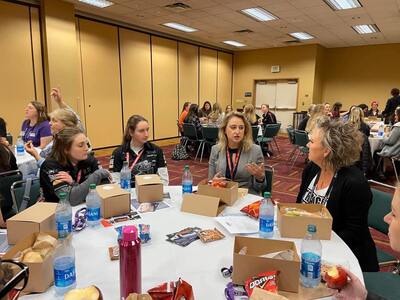
Female racing and aftermarket industry professionals will connect with female students pursuing careers in the motorsports industry at the second annual Gear-Up Girl Lunch, Powered by SBN, Friday, December 9, 12:00–1:30 p.m. (EST). Reserved only for women, this fun and dynamic event serves as a networking opportunity for professionals to give back and share advice with today’s female youth. To RSVP for the Gear-Up Girl Lunch, Powered by SBN, click here.

On Friday, December 9, from 5:00 p.m.–6:30 p.m. (EST), the FLN and MPMC joint reception will serve as an opportunity to close out day 2 of the PRI Trade Show while networking with industry friends and colleagues in a relaxed setting. The event—open to current and prospective FLN and MPMC members—will feature complimentary hot hors d’oeuvres and cold drinks, and will also include the induction of the next MPMC Hall of Fame member. In addition, select committee members from both groups will answer questions about the council and network membership. To RSVP for the FLN/MPMC PRI Reception, click here.

For a complete list of events at the 2022 PRI Trade Show, and to add them to your Show planner, visit here.

To register for the PRI Trade Show, visit here.

Thu, 12/01/2022 - 14:30

Don Prudhomme Joins First Lions Automobilia Class

Don Prudhomme
Don Prudhomme

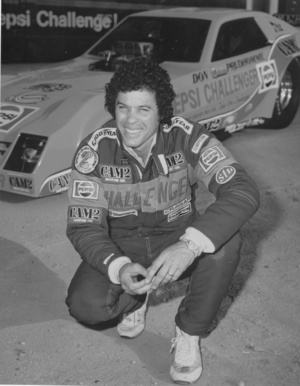
On Saturday night, December 3, the Inaugural Lions Automobilia Foundation Awards Dinner and Silent Auction will be held celebrating the “Golden Anniversary of the Last Drag Race.” The sold-out event will be dedicated to recognizing those who influenced Southern California Motorsports and inspired its car culture lifestyle. Drag-racing legend Don Prudhomme will join Mickey Thompson, Ed Iskenderian, Vic Edelbrock Sr. and CJ Pappy Hart as a member of the first Hall of Fame class. Prudomme is already a member of the Drag Racing Hall of Fame, International Motorsports Hall of Fame, the Motorsports Hall of Fame of America, the SEMA Hall of Fame and recognized as a Texas Motorplex Legend, Bristol Dragway's Legends of Thunder Valley and the No. 3 racer on the NHRA’s list of “The 50 Top Drivers of All Time.”

The event will also celebrate the 50th Anniversary of the Last Drag Race at Lions and recognizing its winners: Carl Olson (TF), Tom McEwen (FC), Bill Bagshaw (PS), Jimmy Scott (Competition), Ken Veney (Injected FC), Ed Sigmon (Modified), Ron Zeolle (Super Stock) and Dave Benisek (Stock). Proceeds from the event and silent auction will go to support the Lions Automobilia Foundation Youth Engagement and Career Path Programs.

New Car, Format, Venues for ABB FIA Formula E in Season 9

Officials have unveiled a new look ahead of Season 9 of the ABB FIA Formula E World Championship and the debut of the Gen3 car, along with a new series logo, new races in iconic cities, new teams and new sporting formats.

The Gen3—designed to be the fastest, lightest, most powerful and most efficient electric race car ever built—will make its competitive debut in Round 1 in Mexico City on January 14, following pre-season testing next month in Valencia. The championship will continue with three new cities hosting Formula E races for the first time: Hyderabad, India (Round 4, February 11); Cape Town, South Africa (Round 5, February 25) and São Paulo, Brazil (Round 6, March 25).

Sporting regulation updates include a return to racing over laps; rookie drivers taking a seat for teams in FP1 sessions; and a plan to introduce a 30-second 4kWh ‘Attack Charge’ boost at select races. In addition, McLaren and Maserati are new to the Formula E grid next season.

For the complete details, visit the announcement here. For more information, visit fiaformulae.com.

Bachman
Tyler Bachman

Xtreme Outlaw Midget Series Announces Tyler Bachman as Series Director

World Racing Group’s Xtreme Outlaw Midget Series presented by Toyota has named Tyler Bachman as the new series director. Bachman is a longtime official and safety director within the World of Outlaws and DIRTcar Racing family. He served as competition director for the Xtreme Outlaw Series in 2022 and aims to expand the Midget tour in 2023. Most recently, Bachman was nominated to the board of directors for the International Council of Motorsports Sciences (ICMS). With Bachman at the helm, the 2023 schedule will focus solely on the Midget Series, rather than spread across to Non-Wing Sprint Cars. Volusia Speedway Park's DIRTcar Nationals in February will continue to feature premier Non-Wing Sprint Car racing.

ARCA Menards Series Announces 2023 Schedule

Officials with the ARCA Menards Series have announced the 2023 schedule. The season will once again feature 20 races at 19 tracks, kicking off the series’ 70th anniversary with its 60th race at Daytona International Speedway (Daytona, Florida) and concluding, for the second consecutive year, with its championship event at its home track: Toledo Speedway (Toledo, Ohio).

The ARCA Menards Series will also hold a combination race with the ARCA Menards Series West, at Phoenix Raceway (Avondale, Arizona) in March, while the events at Iowa Speedway (Newton, Iowa), Lucas Oil Indianapolis Raceway Park (Indianapolis, Indiana), The Milwaukee Mile (West Allis, Wisconsin) and Bristol Motor Speedway (Bristol, Tennessee) will be combination races with the ARCA Menards Series East.

In addition, officials have also announced the 2023 schedules for the ARCA Menards Series East and ARCA Menards Series West. Eight races are slated for the East Series, and 12 are set for the West Series. The 2023 West Series schedule will begin at Phoenix Raceway on March 10 with a combination race with the ARCA Menards Series. The 2023 East Series schedule will commence with the series’ sixth visit to the historic Five Flags Speedway in Pensacola, Florida, March 25.

For the complete schedule, visit the ARCA Menards Series website.

For more racing news, visit Performance Racing Industry’s (PRI) website.

Thu, 12/01/2022 - 14:05

By SEMA Market Research

What did you think of the 2022 SEMA Show? Now that it’s over, the SEMA Show team is collecting feedback on how the show went, and we could use your help.

SEMA Show 2022

If you have received an email from the Show team, please take our survey. Your feedback will help us improve next year’s show for attendees and exhibitors like you.

Thu, 12/01/2022 - 13:08

SEMA News—December 2022

INTERNET

Auto-Transcription of Video Meetings

Never Take Notes on a Meeting Again

By Joe Dysart

Web

With AI-powered transcribers, making a text record of a video meeting—including adding notes, commentary, questions, still images and more—is a snap.

AI transcription of video meetings has gotten so good, many workers have completely abandoned the idea of taking notes during meetings, entrusting that task—and more—to artificial intelligence.

“In the age of remote meetings, classes, and events, keeping track of meetings can be tricky,” says Chang Chen, head of growth and marketing, Otter.ai, a popular AI-powered video meeting transcriber.

“People struggle to keep up with the conversation while taking notes, and it’s absolutely important to capture the information and make it instantly available to everyone,” Chen says.

Adds Brian Lynch, president, SteelEye Americas, a maker of an AI transcriber. “We are already seeing tier-one firms investing in advanced and real-time transcription as a priority.”

Going far beyond transcribing simply what’s being said at meetings, many AI-powered transcribers now also enable users to add commentary—on-the-fly—to the meeting record, as well as emojis, questions and similar edits.

Moreover, some apps also enable you to perform significant edits to a meeting transcript after the close of a meeting, offering one-touch addition of a slide, image or similar graphic anywhere in the transcription text, meeting summaries, meeting highlights and more.

And most software makers in the space also pre-configure their apps to integrate seamlessly with popular video meeting applications, including Zoom, Microsoft Teams, Google Meet and Webex.

Granted, no auto-transcriber of any kind right now—AI-powered or otherwise—can claim 100% accuracy. Even many humans are not that good.

But many of these AI-powered solution makers are asserting that their transcriptions of video meetings are 99% accurate.

That’s not bad if you’d rather focus entirely on a meeting rather than trying to scribble down everything you’re hearing and thinking about what’s going on.

Essentially, AI transcribers are automating virtually every aspect of creating, working with and enhancing meeting transcriptions that people used to take by hand.

And additional new features for these solutions just keep coming—thanks to fierce competition among video meeting transcriber app makers.

Key apps to evaluate include Otter.ai, Descript, Dubber, Fathom, Interprefy, Amazon Transcribe, Nuance, IBM Watson, Transcribeme, Verbit.ai, Sonix, Voicea, QNAP and Trint.

As with most apps in a hyper-competitive genre, there’s an excellent chance you’ll be able to find one that’s perfect for you.

Overall, here are the features to look for in a best-of-breed video meeting transcriber:

Live Transcription On-the-Fly: Incredibly, many AI-powered meeting transcribers now stream a live text transcription of a meeting in progress. This voice-to-text feature is great for people who may have missed something, people who have arrived late to a meeting or people who are having a problem understanding the voice of a specific person.

Live Transcription Editing, On-the-Fly: With live transcription often standard with today’s meeting transcribers, it makes sense that many offer real-time editing of a transcript of a meeting in progress.

With many solutions sporting this optimization, you can mark certain statements as ‘action items’ to follow-up on, type in questions in response to what’s being said, or mark moments in the transcript you plan to revisit after the meeting’s over.

Body Language Analysis On-the-Fly: Perfect for people who never attended the meeting, this feature enables AI to study the gazes, body language and facial expressions of people attending a video meeting and then embed the meaning of those movements into the transcript.

A thumbs-up at a meeting, for example, translates to a thumbs-up emoji in the transcript. And a bored look translates into a bored-look emoji.

Add Real-Time Human Translators: Some AI-driven transcribers are also designed to port picture-in-picture feeds of human translators or human sign-
language specialists into a meeting video. This feature enables you to broadcast a meeting in as many languages as you wish—in real-time.

Bookmarking: No more trying to remember where in the video a salient point popped up during a meeting that you want to remember. With many solutions, you can simply create a timestamp bookmark of a moment of a meeting you want to revisit—with a simple click.

Meeting Summaries: Given that AI summary technology is already so well developed, it’s no surprise that many AI meeting transcribers offer text summaries of meetings within minutes of a meeting’s conclusion.

After-Meeting-Transcript Editing: The same transcript editing actions you can perform while a meeting is in progress can also be used to enhance a transcript after the meeting’s over, including adding questions, commentary, marking action items and the like.

The same keyword feature also enables you to auto-add a slide, screenshot or other image at any point in the transcript with a single click.

Search-by-Keyword: Many solutions automatically generate a list of keywords you can use to search for statements and concepts discussed at the meeting, bringing you to specific points in the transcript where those search terms are discussed—and also enabling you to call-up the corresponding audio that generated those insights.

Plug-and-Play Integration: Many solutions are pre-configured to work seamlessly with popular software apps and platforms including Slack, Asana, Jira, Salesforce and Hubspot. With some solutions, distributing a meeting transcript on a Slack channel, for example, takes only a click or two.

Auto-Sync With Popular Calendars: With many auto-transcribers, the transcription of a meeting will start automatically as long as you schedule the meeting using popular calendar software from Google or Microsoft.

Query the Transcript for Info: On the horizon, some AI developers hope to embed additional tools in transcription software that will enable you to query the stored transcript of a meeting with specific questions you have about topics discussed.

Free: In some cases, some high-powered AI transcription solutions are actually free. The logic: The app makers are looking to grow the popularity of their apps very quickly by offering an exciting product—and then start charging users looking to add premium features.

Joe Dysart is an internet speaker and business consultant based in Manhattan.

646-233-4089

joe@customtechadvisor.com

www.dysartnewsfeatures.com

Thu, 12/01/2022 - 12:40

SEMA News—December 2022

INTERNATIONAL

SEMA Delegation Warmly Welcomed in Europe

First SEMA Nordic/Europe Business Development Program a Success

By Linda Spencer

International

The SEMA Business Development Program U.S. delegation attended an American Car Cruise, which takes place the last Friday night of each summer month. American vehicles from the ’30s–’90s lined the street, and enthusiasts with vehicles such as those pictured above cruised down Sveavägen, a main Stockholm, Sweden, thoroughfare.

Thirty-five SEMA members from 18 companies spent a week in Stockholm, Sweden, this past summer networking with trade buyers from throughout Europe. The week included exhibiting at two events—one trade-only and the other a large consumer and trade event hosted by one of Sweden’s largest distributors.

“The Nordic region is a great automotive enthusiast market,” noted Barry Adler, president of Quick Time Performance. “Their love for U.S. cars and trucks makes for great business opportunities.”

While the program was initially planned to be a gathering with buyers from the Nordic countries (which include Sweden, Norway, Denmark, Finland and Iceland), trade buyers attended from throughout Europe, including the United Kingdom, Switzerland, Germany and Netherlands. The U.S. delegation had the opportunity to meet both formally and informally with the visiting resellers at a trade-only day as well as a consumer event. Rounding out the week, the U.S. companies attended the famed Sveavägen Car Cruise and spent a day visiting retailers, wholesalers and installers with one route focusing on performance upgrades for street and racing and the other visiting shops focused on classic vehicles and restoration.
Europe

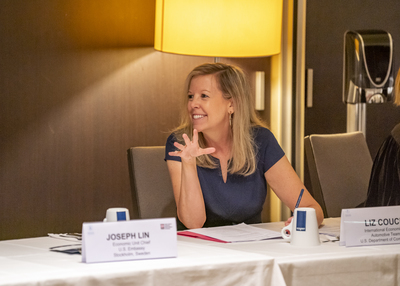
Pictured is Liz Couch, international economist—Automotive Team, U.S. Department of Commerce, Washington, D.C. Couch, SEMA’s liaison with the U.S. Department of Commerce, has attended nearly all of the SEMA business development programs and arranges the panel of U.S. government officials at each of these events—bringing together U.S. Embassy staff handling commercial affairs and other government officials, such as those charged with improving the protection of global IPR rights of U.S. companies.

Todd Payne, director of sales for Magnuson Superchargers singled out a main highlight of the trip for him—the day of touring trade buyers’ facilities in the greater Stockholm area. “The shop visits were well planned and provided a great spectrum of the Swedish automotive culture and their strong affinity for American muscle and Americana as a whole.” He added, “I attended with high expectations for the quality of this venture and they were exceeded.”

“Even though I had been to Sweden and have an existing customer, this really opened my eyes to the size and enthusiasm of the market,” said Tom Davis, UK and European business development manager for VP Racing Fuels. For him, the opportunity to exhibit at a consumer event hosted by Hansen Racing was extremely valuable as “it gave me insight into what the actual end user wants and their thoughts/experiences.”
Europe

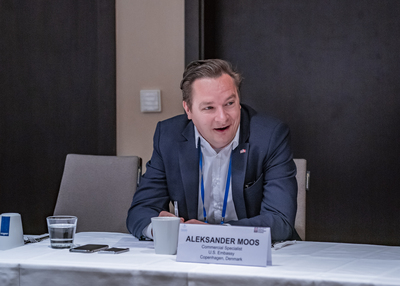
Aleksander Moos, commercial specialist, U.S. Embassy, Copenhagen, Denmark.

Robert Scheid, vice president for McLeod Racing LLC, spoke more broadly of the program’s importance for his business. “Meeting face to face with potential new distributors was just one of the highlights of the trip. Also getting to visit key distributors, attend the famous Sveavägen Car Cruise, and other key events built the foundations for growing our business in the region exponentially.”

Performance Analysis Owner Mark Whitney noted that the trip is for companies already active in a market as well as those new to the region or exporting more generally. “These trips put you face-to-face with vetted buyers in the region. For first-time exporters, a company new to exporting and even seasoned exporters, the SEMA trade events are the best way to do what we do best, promote our products.”
Europe

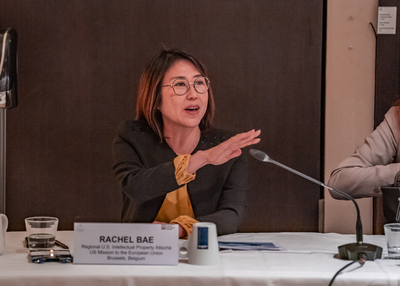
Rachel Bae, regional U.S. intellectual property attaché, U.S. Mission to the European Union, Brussels, Belgium, provided an overview on property rights protection in the Nordic region and throughout Europe. One of the first steps for a company is to ensure that trademarks and other property rights are protected in the markets in which they seek to do business. Creating a priority list of these countries and/or regions in which these protections should be secured is key. Bae mentioned that there are seven U.S. IPR attachés throughout the world available to provide guidance.

Andy Lamus, vice president of international sales for Dynocom Industries Inc., similarly pointed out the benefits to his company: “New contacts, market knowledge, real on-the-ground experience and the opportunity to talk, one-on-one, to the players in this market.”

The region was new, saleswise, to a number of the participants, including Radflo Suspension Technology. Glenn Classen, CEO and president of Radflo Suspension Technology, has participated in a number of previous business development programs with SEMA, and is actively exporting to a number of global markets, but was new to the Nordic region. “I was impressed with the knowledge and enthusiasm shown by the vendors and attendees to the show.”
Europe

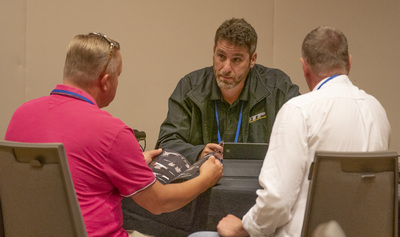
Barry Adler (center), president of South Carolina-based Quick Time Performance, and a repeat participant on the SEMA business development program, commented, “The Nordic region is a great automotive enthusiast market. Their love for U.S. cars and trucks makes for great business opportunities.”

The wholesale distribution system for parts for American vehicles and automotive specialty products in Europe, and the Nordic region in particular, is quite established and growing. The delegation met with many large wholesalers during the trip and visited two of the distributors’ facilities, the latter of which featured a heavy use of robotics to keep up with the demand. “The availability of parts and components into the market by local companies was impressive,” noted Classen.

Participants commented on the benefits of spending the time and funds needed to visit key markets and to meet with potential or current customers in person. “Deeper knowledge into the Northern European automotive aftermarket was gained by firsthand accounts through one-on-one interviews with buyers, workshop visits in the local area, and an American-flavored car show that can only be earned by showing up,” said David Reyna, international accounts manager for DeatschWerks Fuel Systems. A number of participants signed sales agreements during the trip. The vast majority expect that the leads they developed during the program will equate to sales in the short-term. Still others are planning to further research the market to determine whether it will be a good fit for their products.
Europe

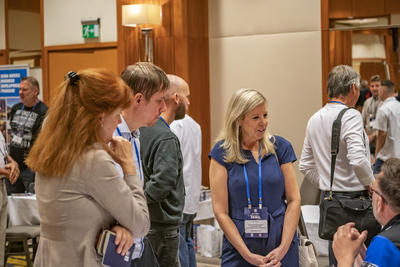
Nancy Bjorshammar (left), commercial specialist, U.S. Embassy, Stockholm, Sweden; Johan Bjorkman (second left), commercial specialist, U.S. Embassy, Stockholm, Sweden; and Liz Couch (second right), international economist—automotive team, U.S. Department of Commerce, Washington, D.C.; and Tom Davis (right), UK and European business development manager for VP Racing Fuels. The U.S. government officials participated in a briefing on the European market for the U.S. delegation, including information on the market, such as car registration figures, population and per capita income, information on the specialty market, and enthusiast events in each of the five countries. The U.S. officials also met one-on-one with the U.S. delegation during the weeklong event.

The SEMA Nordic program is the fifth venue for the SEMA overseas business development programs, with each market chosen by the association based on a number of factors, including the current and potential sales of specialty products, sizable local interest in customizing, and the disposable income to afford this discretionary expense. This first program in Europe was added as the 25th business development program as Sweden, the Nordic region and Europe more broadly fit these criteria.

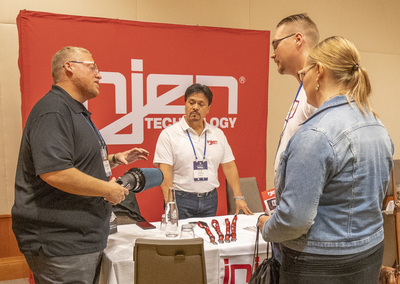
“As the European and Nordic markets continue to grow, and their demand for American brands remains relentless, this trip proved extremely valuable for international veterans and the newcomer alike,” noted Injen Technology Global Business Manager Jay Crouch. “Over the years, we’ve found that the SEMA international trips allow businesses like ours to network with key buyers in one place and get a real pulse for the region’s marketplace. We’re able to see how the local shops evolve on a yearly basis and how the market trends begin to shift before it happens,” added Crouch.
Europe

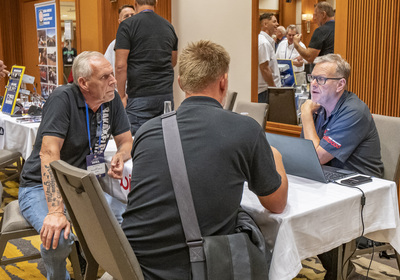
Mark Cornwell (right), vice president, new business development and specialty markets for Wilwood Disc Brakes, stated it was “hard to believe the commitment and following of American classics and hot rods in this region. It was awesome to meet with key players and listen to understand their needs. Another great SEMA export event—was a win, win, win for SEMA, manufacturers and the Nordic people.”

“The automotive-enthusiast scene in Stockholm and the surrounding region is alive and well,” commented Tim McCarthy, founder and CEO of Hushmat and a first-time business development program participant. “It was exciting to see the cruises and enthusiasm right in front of our eyes. If you did not know you were in Sweden, you would have thought you were standing at a car cruise right [in] Kansas City.” Ryan McDonald, sales manager for Custom Autosound, put it succinctly: “The Swedes aren’t just enthusiasts, they are car crazy!”

“Hard to believe the commitment and following of America classics and hot rods in this region,” added Wilwood Disc Brakes’ vice president of new business development and specialty markets Mark Cornwell. “It was awesome to meet with key players and listen to understand their needs.”
Europe

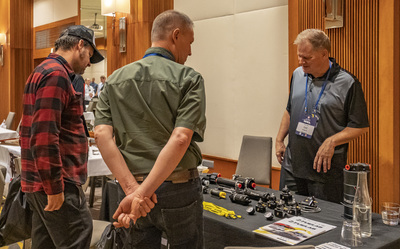
This was FUELAB’s first overseas trip with SEMA. President Brian Paitz (right) joined the SEMA delegation that was comprised of both veteran travelers, expert exporters, and those new to exporting.

The U.S. Department of Commerce’s (DOC) International Trade Administration (ITA) once again greatly enhanced the business development program experience for SEMA-member manufacturers, providing grants to trip participants to defray the cost of participating on the trip, and providing officials and briefings comprised of officials from the United States through the Market Development Cooperator Program (MDCP). This ITA program has a longstanding partnership with SEMA, which began in 2011 and since has provided $1.1 million in federal funds and technical assistance to assist U.S. companies in growing their export sales. The ITA’s efforts in the SEMA business development programs, including this program in Stockholm, have been coordinated by Brad Hess, director of the market development cooperator program, and Liz Couch, international economist—Automotive Team, U.S. Department of Commerce (DOC), Washington, D.C.; and the DOC lead on the SEMA-MDCP partnership.
Europe

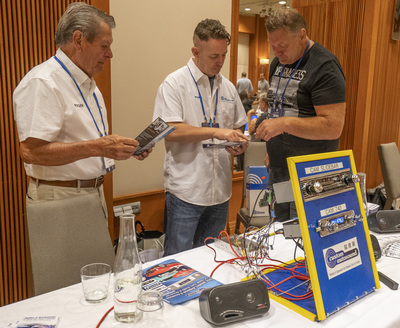
Rogers Myers (left), co-founder of Custom Autosound Mfg., and Ryan McDonald (center), sales manager for Custom Autosound Mfg., along with other participating U.S. companies, exhibited in this one-day trade-only table-top display and reception. They also met with more than 1,000 attendees and saw hundreds of American project vehicles. Noted McDonald, “The Swedes aren’t just enthusiasts, they are car crazy!”

Other U.S. officials participating in the inaugural SEMA Nordic program include Nancy Bjorshammar, commercial specialist, U.S. Embassy, Stockholm, Sweden; Aleksander Moos, commercial specialist, U.S. Embassy, Copenhagen, Denmark; Joseph Lin, economic unit chief, U.S. Embassy, Stockholm, Sweden; and Rachel Bae, regional U.S. intellectual property attaché, U.S. Mission to the European Union, Brussels, Belgium.

The following photos were taken at the 2022 SEMA Nordic Business Development Program.

Companies participating in the 2022 SEMA Nordic trip:  

  • aFe Power
  • Bed Wood and Parts LLC
  • Borla Performance
  • Custom Autosound Mfg.
  • DeatschWerks Fuel Systems
  • Dynocom Industries Inc.
  • FUELAB
  • HushMat
  • Hypercraft
  • Injen Technology
  • Magnuson Superchargers
  • McLeod Racing LLC
  • Performance Analysis
  • Quick Time Performance
  • Radflo Suspension Technology
  • United Engine & Machine Co.
  • VP Racing Fuels
  • Wilwood Disc Brakes
Europe

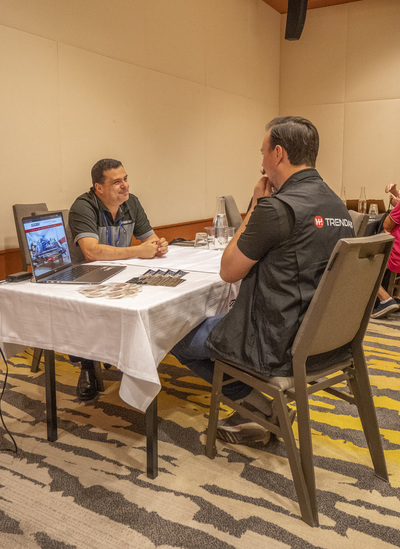
Jay Crouch (left), director of global business for Injen Technology, and Ron Delgado (second left), president for Injen Technology. Injen participated in the first SEMA overseas business development program to China and most trips since then. “Injen Technology looks forward to the SEMA international events every year,” noted Crouch, “and without fail, SEMA delivered beyond expectations with the Nordic trip. This is key to growth for any region, and SEMA provides this to their members at a cost that is outweighed by the tremendous ROI.” The company typically adds additional days either before or after the program to follow up with current or potential buyers or to use the opportunity to measure vehicles not present in the U.S. market to create product.
Europe

Andy Lamus (left), vice president of international sales for Dynocom Industries Inc., was one of 35 SEMA members from 18 companies who participated in the four-day program, which included receptions, briefings, exhibiting and site visits to resellers and installers. Lamus noted that he most valued the “new contacts, market knowledge, real on-the-ground experience, and the opportunity to talk one-on-one with the players in this market.”
Europe

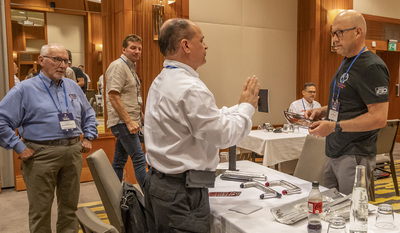
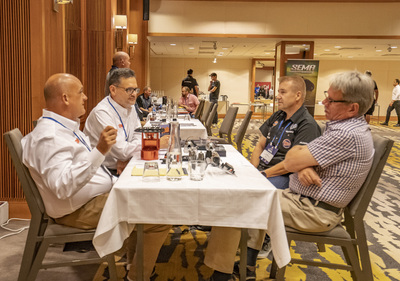
Mark Whitney (center, white shirt), owner of Performance Analysis, noted, “These trips put you face to face with vetted buyers in the region. The opportunities provided by these trips cannot be duplicated by just traveling to a country. For first-time exporters, a company new to exporting, and even seasoned exporters, the SEMA trade events are the best way to do what we do best—promote our products.”
Europe

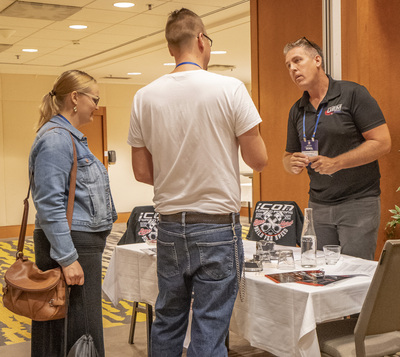
Christopher Sulprizio (right), vice president of United Engine & Machine Co., participated in his company’s first overseas trip with SEMA, though he has traveled numerous times to the nation. It was a great opportunity for the company to visit current customers and to meet additional resellers from throughout Europe.
Europe

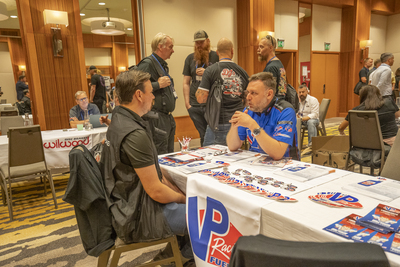
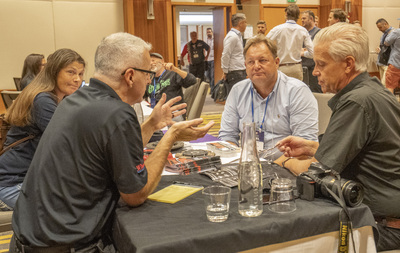
Tom Davis (right), UK & European business development manager for VP Racing Fuels, said, “It was a fantastically well put-together event and agenda. Even though I had been to Sweden and have an existing customer, this really opened my eyes to the size and enthusiasm in the market. The Hansen Day was great as it gave me insight into what the actual end user wants and their thoughts/experiences. If you are a U.S. business that isn’t working in the Nordics already, then I believe you are missing a fantastic opportunity.”
Europe

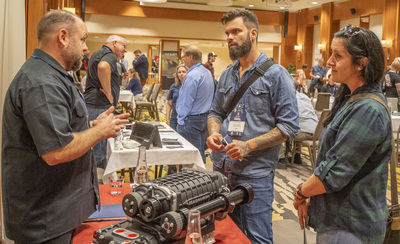
Robert Scheid (second left), vice president for McLeod Racing LLC, has participated in most of the SEMA business development programs and takes pre-trip and post-trip preparation seriously. He contacts current and potential customers before leaving the United States, sets up additional meetings while in a country, and makes sure to follow up promptly with all leads and inquiries upon returning to the States. Scheid and other experienced exporters have been an invaluable resource to SEMA-member suppliers that are newer to exporting and/or the SEMA business development programs. “Meeting face-to-face with potential new distributors was just one of the highlights of the trip,” noted Scheid. “Also getting to visit key distributors, attend the famous Sveavägen Car Cruise, and other key events, built the foundations for growing our business in the region exponentially.”
Europe

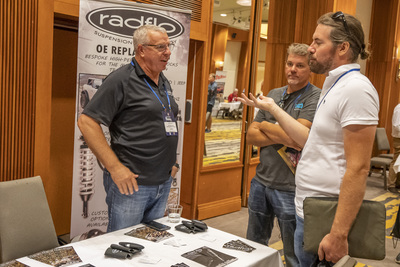
Todd Payne (left), director of sales for Magnuson Superchargers. Magnuson has participated in both of the 2022 SEMA business development programs and the first since international travel became possible post-COVID. “The inaugural SEMA Nordic trip was well worth the wait,” noted Payne. “The business owners I met with during meetings were engaged and prepared to discuss their unique markets. The shop visits were well planned and provided a great spectrum of the Swedish automotive culture and their strong affinity for American muscle and Americana as a whole. I attended with high expectations for the quality of this venture and they were exceeded.“
Europe

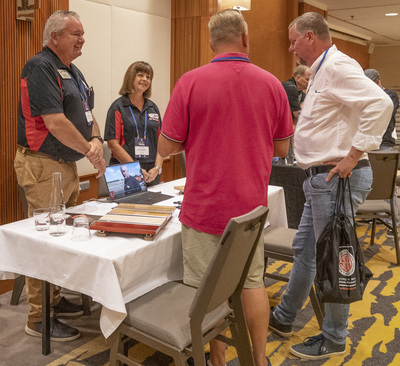
Glenn Classen (left), CEO and president of Radflo Suspension Technology, has participated in previous SEMA business development programs. His company has a strong overseas presence. Classen signed up for this inaugural trip to the region—one in which his company is not currently active—as a first step in exploring the Nordic market.
Europe

Jeffrey Major (left), CEO of Bed Wood and Parts LLC, and Amanda Major (second left), vice president of risk management for Bed Wood and Parts LLC. Resellers are always eager to see new products and companies come to the market. This was Bedwood’s first overseas trip with SEMA, and they experienced both the camaraderie among delegation participants and the eagerness of the European specialty-equipment market to meet with the visiting Americans.
Europe

David Deatsch (left), president of DeatschWerks Fuel Systems, and David Reyna (second left), international accounts manager for DeatschWerks Fuel Systems. Noted Reyna, “Happy to attend the 2022 inaugural SEMA Nordic event in Stockholm, Sweden. Deeper knowledge into the Northern European automotive aftermarket was gained by firsthand accounts through one-on-one interviews with buyers, workshop visits in the local area, and an American-flavored car show that can only be earned by showing up.”
Europe

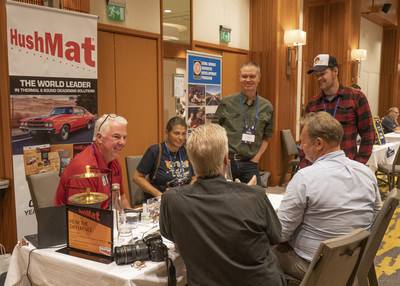
Timothy McCarthy (left, red shirt), founder/CEO for HushMat. The SEMA Nordic trip was HushMat’s first business development program. McCarthy returned with insight into the market and a new customer. “There is tremendous potential in the Nordic/European region, as virtually every product sold in the sound-deadening and insulation-materials category is manufactured in either Russia or China,” commented McCarthy. “There is a need for American-manufactured technology that is designed to reduce noise and heat inside the vehicle. We are very excited to announce our distribution relationship with the Hansen Racing team in Sweden and look forward to bringing our technology to the automotive enthusiasts in this region.”
Europe

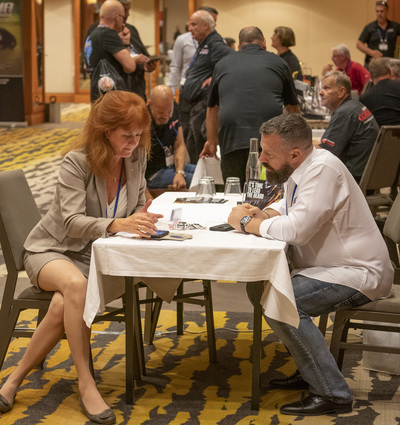
Nancy Bjorshammar (left), commercial specialist with the U.S. Embassy, Stockholm, Sweden, speaks with Joshua Abbott (right), global sales manager for Borla Performance Industries Inc. Borla Performance, which has participated in nearly all of the SEMA business development programs, was one of 18 SEMA-member manufacturers traveling on the inaugural trip to Sweden. Other venues for international business development programs are Australia, China, the Middle East and Russia. The most recent trip was the first to Europe. The U.S. government representatives from the region participated in a briefing for the U.S. suppliers and met one-on-one with each of the American companies.
Europe

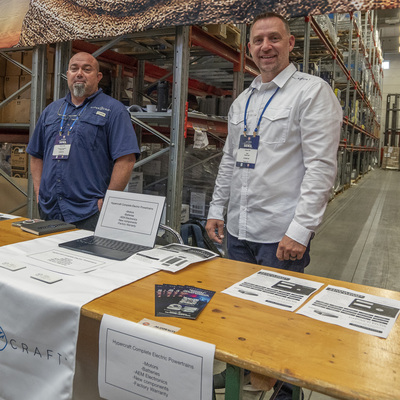
Pictured: Casey Lewis (left), account executive for Hypercraft, and Shaun Hill (right), CRO for Hypercraft. The U.S. suppliers exhibited at both a trade-only event as well as a consumer event (pictured above) at Hansen Racing featuring 1,000 consumers, hundreds of customized American vehicles and a BBQ.
Europe

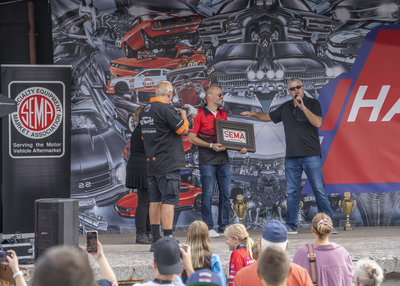
The U.S. delegation exhibited at a large consumer event hosted by Hansen Racing, one of the biggest distributors in Sweden. Here, William Hansen (center) was just presented with a SEMA Ambassador license plate from Bill Miller (far right), SEMA senior vice president of operations.
Europe

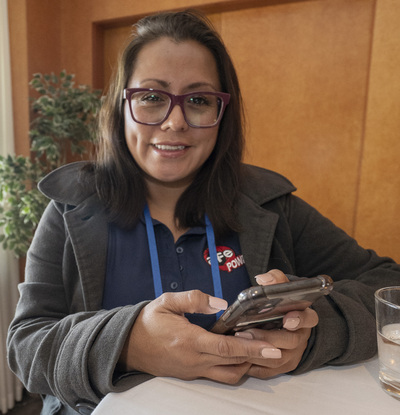
Jenny Amado is aFe Power’s export account manager. The company has attended a number of SEMA overseas business development programs and is actively selling abroad. “The Nordic trip was eye-opening, many opportunities to explore,” commented Amado. “We at aFe will be focusing on how we can best service this region and focus on development.”
Europe

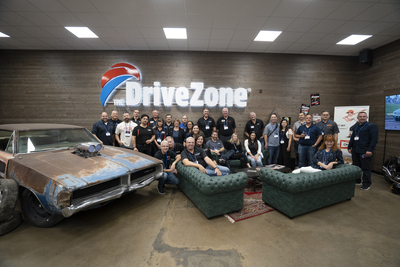
The U.S. delegation spent a day visiting retailers, wholesalers and installers, including this shop on the outskirts of Stockholm.

Thu, 12/01/2022 - 12:27

SEMA News—December 2022

INTERNET

Hanging On to Employees With the Stay Interview

Expert Tips to Retain Top Talent

By Joe Dysart

Web

Businesses are finding they can hang onto valuable employees longer by engaging in “Stay Interviews.”

Facing one of the most intense competitions for employees in years, businesses are finding they can hang onto valuable employees longer by engaging in “Stay Interviews.”

Recruiting experts say these interviews ensure current employees feel valued—while uncovering beneath-the-radar problems that could lead to abrupt departures.

Plus, they can also spare businesses the often arduous process of onboarding a promising new hire—if they can find one.

Bonus: There are also a few software packages you can use to fine-tune, monitor, analyze and continually improve on your use of Stay Interviews.

Essentially, Stay Interviews say, “We care about what you have to say, we value you as a part of our organization, we are assessing workplace culture, workplace communication and we want to improve for you as an organization and leaders,” says Matthew W. Burr, owner, Burr Consulting.

Adds Richard Finnegan, an HR consultant who literally wrote the book on the topic, The Power of Stay Interviews for Engagement and Retention: “Senior managers know that unwanted turnover and disengaged employees drag down profits. Conducting Stay Interviews is an effective, fast solution that gives a mega-return on investment in the form of increased revenue and earnings.

“Our research shows that improvements in engagement and retention have direct impacts on revenue produced-per-employee and for the company as a whole,” he added.

Interestingly, Stay Interviews also dispel the common notion that money—and the pursuit of more of it—is the overwhelming reason why employees disappear from workforce rosters.

Says Beverly Kaye, co-author of Hello Stay Interviews, Goodbye Talent Loss: “Most employees who leave don’t start looking for other opportunities because of dissatisfaction with pay, perks or benefits.”

Instead, Kaye says employees are more likely to bolt if one of these key ‘reasons to stay’ are lacking:

  • Meaningful, challenging work.
  • A chance to learn and grow.
  • A good boss.
  • The sense of being a part of a team.

In a phrase: It’s much better for your business to develop the fine art of conducting Stay Interviews than becoming the master of The Exit Interview.

Here are key tips from recruiting experts on how to develop your own Stay Interview—and save yourself the hassle of going back into the marketplace to experiment with yet another stranger:

Key elements of the new software solution include:

  • Training and guiding managers on conducting Stay Interviews.
  • Managing the hierarchy—My Team—of who is to be interviewed by each leader in the organization along with the complete workflow.
  • Developing a customized Stay Interview for each employer.
  • Producing STAYview Action Plans for each employee—and follow-up interviews.
  • Producing analytics to show leaders those employees who are likely to separate from the company.
  • Scheduling with reminder prompts to ensure Stay Interviews get done on schedule.
  • Increasing visibility of retention and engagement issues.
  • Providing leaders the tools and confidence necessary to conduct Stay Interviews and act on their results.

Meanwhile, competitor HSD Metrics (https://hsdmetrics.com/stayright) offers its own package for managing Stay Interviews—StayRight. The web-based system handles the entire process, including notifying employees, collecting data from interviews and reporting on results. And the 24/7 web portal displays numerical findings for all data gathered—as well as external benchmarks and commentary.

StayRight also offers charting comparisons, filtered data, robust analytics and reports, which together enable managers to maintain deep insight on the morale of their employees.

  • Add Employee Pulse Surveys for Additional Insight: Some HR departments also augment Stay Interviews with software that enables them to stay abreast of overall employee morale and engagement.
  • Use the same script/questions: Burr recommends standardizing the questions you use in your Stay Interview. This will enable managers to analyze information and insights on an employee-by-employee basis.

Plus, the collation and analysis of these standardized interviews—using either off-the-shelf Stay Interview software or a custom software solution—may enable you to develop business-wide policies based on concerns widely shared by your employees, he says.

  • Make Sure the Employee’s Manager—and Not HR—Is the Primary Interviewer: Given that an employee generally has a day-to-day relationship with a manager—rather than HR—it’s critical that the manager conduct the Stay Interview, according to Christopher Mulligan, CEO, TalentKeepers.
  • Be Ready to Be the Listener—and Hear Some Things You’d Rather Not Hear: “The employee should talk the majority of the Stay Interview, as the interviewer listens and takes notes on key points and concerns.

“In order to be effective, the management team must approach these interviews with an open mind and with humility.

“It will be common when the employee may not like something or want a change in their work environment. And it is easy for managers and especially owners to take the criticism personally.

“Leave your ego at home, and be ready to listen for ways you can improve your business and the loyalty of your employees.”

  • Experiment With the frequency of Your Stay Interviews: Recruiting experts interviewed for this piece were all over the map on how often to schedule Stay Interviews.

Mulligan suggests at least once a quarter with the first interview scheduled within 14 days of the hire.

Michael Murphy, CEO, Platinum Group, agrees: “Frequent—possibly quarterly—check-ins can keep things relevant, addressing what might be top-of-mind for employees.

“The exact frequency will depend on the current climate of the company:

  • Are there big shifts in direction that might affect people’s well-being?
  • Or, are there external forces at play that require pivots, where utilizing each employee’s skills to the maximum are essential?”

Kaye thinks as often as once a month could work.

And Meagan Johnson, an expert on fostering optimum workplaces that feature multi-generations (and co-author of Generations, Inc.) thinks a Stay Interview should be scheduled immediately “if you feel that someone’s becoming discouraged, disheartened, burnt out,” or similar.

Adds Peacock: “The most important thing is for the employee to know you will listen on a regular basis.”

  • Telegraph Clearly That the Stay Interview Will Be a Safe Space for the Employee: The very premise of the Stay Interview—‘Tell me what’s on your mind, good and bad’—demands real trust from the employee.

This means you’ll want to be sure employees are convinced they won’t be penalized for what they say.

Says Mulligan: “Executed properly, stay interviews provide a safe, structured discussion for team members to share their career growth aspirations, how they prefer to be led, engaged and recognized.”

  • Be Prepared to Dig Deep: The more granular you’re able to get with your Stay Interview, the more likely you’ll be able to effect real, productive change.

Jim Peacock, owner/principal, Peak Careers Consulting, for example, discovered—with a little digging—that one of his employees was secretly pining for some imaging software. She wanted the new tool to enable her work to appear more artistic and professional.

Says Peacock: “This was a minor thing for me and a convenience thing for her. I would never have known if I had not asked her.”

  • Have Answers Ready for Those Tough Questions: While many managers are reluctant to do Stay Interviews for fear they’ll be unable to deliver on some employee requests, Kaye recommends managers be honest about what they’re actually able to do—and then focus on those capabilities.

“Our research has proved that if managers are willing to hang in and drill deeper,” they’ll be able to find three or four changes for an employee that they’re able to make, Kaye says.

  • Ensure You Follow Through: Probably the easiest way to sabotage your Stay Interviews is to nod and smile—and then do nothing.

Most employees realize that asking for the moon will get them nowhere. But they’ll also be thoroughly disenchanted if you ask them to share openly and then ignore all their concerns.

Says Platinum Group’s Murphy: “Letting them know they are heard by the actions you take after the interview is the most powerful thing you can do.” Adds Burr: “If the organization fails to act, employees will never trust the process again.”

Joe Dysart is an internet speaker and business consultant based in Manhattan.

646-233-4089

joe@customtechadvisor.com

www.dysartnewsfeatures.com

Thu, 12/01/2022 - 11:29

SEMA News—December 2022

HERITAGE

Show-Go Machine

By Drew Hardin

Photography: Eric Rickman, Petersen Publishing Company Archive

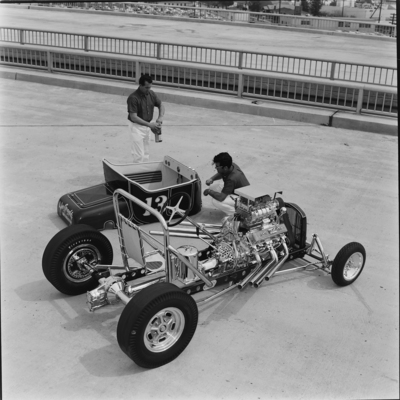
HeritageHot Rod magazine’s October 1959 cover car, a 1923 Model T called Grasshopper, “was one car that shouldn’t ever have to wear a body,” said Eric Rickman, who shot the feature in March 1959. “It covers the best part!” This unpublished outtake shows off why Rickman felt that way—in addition to capturing builders John Geraghty and John Crawford as they prep the car for the camera.


The T was named for its mint green paint, but Rickman was far more interested in the liberally chromed chassis and the blown 461-inch Oldsmobile V-8 that he said could propel the car to “130-plus-mph runs.” Tom Beatty provided the 4-71 GMC supercharger, which could be fed either by fuel injection or the dual-quad carburetors seen in the photo. Visible behind the supercharger case is a “Joe Hunt converted Swiss Scintilla magneto.” The bellhousing ahead of the La Salle transmission was punched full of lightening holes, as were the “already light alloy channel framerails” and the backing plates for the rear brakes. “Rear brakes are all there is,” Rickman said, and they needed to be cooled to bring the car down from “draggin’ speeds.”

The front suspension consisted of a dropped Ford axle, transverse spring pack and Monroe shocks, their lower mount combined with the attachment point for the split-wishbone radius arms. In back, a chromed Halibrand quick-change center section “does the thinking for the late pre-war Ford rearend.” Geraghty and Crawford also tapped Halibrand for the magnesium wheels for the front runners and Inglewood slicks.

The seat, such as it is, is a strip of green and white leatherette strung “hammock-style” to the rollbar. The inside of the T’s body was upholstered in matching material, and the simple dashboard held just oil pressure, coolant temperature and fuel pressure gauges and a tachometer.

Rickman said Geraghty and Crawford took “just two months” to build the T, a remarkable achievement in that brief span of time. He said they spent “$3,000 in the process,” about the cost of a brand-new Corvette in 1959.

Thu, 12/01/2022 - 11:15

SEMA News—December 2022

INTERNET

Google Topics:

Another try at ad targeting tech Google hopes you’ll cotton to

By Joe Dysart

Google

Google is struggling for a way to target consumers with ads—without stepping on privacy concerns.

Businesses that employ ad tech companies to run ads for them on digital properties will need to come up with a new strategy by the close of 2023.

That’s when search-engine behemoth Google plans to drop its support for third-party cookies—a web surfer tracking technology that has been fundamental to web advertising since the mid-’90s.

Google’s dramatic decision to ditch third-party cookies has been triggered by a steady flow of surveys in recent years finding that significant numbers of web surfers are fed up with company surveillance of their web use.

A February 2022 survey from the Future of Tech Commission (www.futureoftechcommission.org/press-release-launch-2ndpoll), for example, found that 78% of consumers want laws to force businesses to seek their permission before gaining access to such personal data. Moreover, 75% of those surveyed want to prohibit businesses from collecting any personal data on anyone 16 or younger. And 75% want laws ensuring that businesses are prohibited from pushing inappropriate or harmful content to children 16 or younger on the web—including questionable advertising.

“The findings are clear: Americans everywhere want an internet they can trust,” says Deval Patrick, former governor of Massachusetts, who helped spearhead the survey.

Patrick adds: “When misinformation runs rampant, every community suffers— and we’re running out of time. Our leaders must lead and summon the political will to protect our children, safeguard our privacy, and rein in the undue influence of Big Tech.”

Smarting from those kinds of protests, Google’s original plan on third-party cookies was to drop them from its Chrome browser earlier this year.

But the tech titan decided to hang onto third-party cookies this year after privacy groups vehemently criticized FLoC, a replacement technology it wanted to use as a substitute for third-party cookie tracking.

This time around, Google has yet another new technology it wants to use to replace third-party cookies, dubbed “Google Topics.”

Google’s hope: That this latest replacement tech will satisfy privacy advocates while still enabling advertisers to target web surfers with ads based on how they interact with websites.

Not surprisingly, there’s a great deal of technical detail regarding how Google’s newly proposed tracking technology works.

But boiled down, the tech giant’s latest proposal is really its way of saying to web surfers: “Look, we know we’ve been really nosy in the past about how we track, analyze and target how you surf the web.”

In practice, Google Topics significantly limits the way the Google search engine currently tracks your every movement on the web by studying your use of the Google Chrome browser.

This new answer to web-surfer tracking offers advertisers only a limited, general idea of what interests you—and what you might be interested in buying—as you surf the web.

The result is the new tracking system will only be able to track a handful of broad interest areas, or Topics, that dovetail with how you use your web browser.

Initially, Google’s plan is to track five Topics associated with how you use your browser—along with one more Topic that is chosen at random.

Once Google has tagged your browser with Topics that give advertisers a better idea of your interests and intentions, any given website you visit will be able to “see” three of the Topics Google associated with your web browser—and target ads to you accordingly.

Google is also building in some other privacy controls with Google Topics that it hopes will make the new tracking system more palatable to web surfers and political activists concerned about web privacy.

For example, Google is currently developing new controls for its Chrome browser that will enable you to see the Topics associated with your browser.

Plus, you’ll also have the option to remove any of the Topics associated with your Chrome browser use that displease you, according to Vinny Goel, product director, Privacy Sandbox, Chrome.

“Soon, we will launch a developer trial of Topics in Chrome that includes user controls—and enables website developers and the ads industry to try it out,” Goel says.

Before getting the green light to launch Google Topics, the search giant will need to secure official approval for its new tracking technology from key governmental bodies across the globe, including the United States and the European Union.

So far, the tech giant has won approval from the United Kingdom via that country’s Competition and Markets Authority.

Says Andrea Coscelli, chief executive, CMA: “While this is an important step, we are under no illusions that our work is done. We now move into a new phase, where we will keep a close eye on Google as it continues to develop these proposals.”

The reason why parting with third-party cookies has been such sweet sorrow for Google is that, privacy concerns aside, it really is a fantastic way of finding out what people are likely to buy based on their web surfing behavior.

Currently, if you visit a number of auto parts websites, for example, and start clicking on mufflers, you’ll most likely start noticing muffler ads popping up on many of the websites you subsequently visit.

Ad tech companies are now able to discern that you’re interested in mufflers by cutting deals with the websites already featuring their ads—who in turn place a third-party cookie in your Google Chrome browser when you visit the site.

That third-party cookie—owned by the ad company—begins tracking your movements on the web the moment it is embedded in your browser.

And with each website you visit featuring advertising from that same ad tech company, another third-party tracking cookie is placed in your Google Chrome Browser, tracking you all the way.

Each new cookie beams back data to the ad tech company about your web movements and preferences. And each enables the ad tech company to develop an ever-deepening interest profile on you, enabling it to target ads to you on other websites featuring its technology—based on your preferences.

The system has worked exceptionally well for Google and advertisers for more than a quarter of a century. But, as noted, has also triggered the ire of more than a few consumers and privacy advocacy groups for nearly as long—users and political activists who feel such tracking violated their privacy and generally made them feel creeped-out.

Consequently, even if Google Topics manages to become the de facto replacement for third-party cookies, web advertising experts recommend that advertisers begin to rely more heavily on other ways to engage with customers including:

Email Marketing Lists: While web advertising fads come-and-go, email marketing keeps on chugging along, offering marketers some of the best ROI for marketers’ efforts, year after year. Marketers build email lists by soliciting email addresses in exchange for providing riveting email newsletters, informative white papers, early notice on new goods and services, discounts and coupons and the like. Expect increasing numbers of businesses to double-down on this tried-and-true marketing tool in coming months.

Old School Advertising: Back in the olden days, marketers would seek out content that matched the goods and services they were selling and place ads there. A bikini retailer might embed its ads in an article about summer vacations, a local beach, or an upcoming Olympic diving competition. These days, they’re calling this old school technique ‘contextual targeting.’ But it’s the same idea: matching ads to content.

Buying Someone Else’s Audience: While you may not have a great deal of data on people who are interested in bikinis, another website—such as a swimsuit publication—may have plenty. Once third-party cookies are phased out, expect more businesses to buy and use info about such potential customers from such websites.

Device Fingerprinting: Similar to third-party cookies, device fingerprinting is an extremely effective tracking technology—but also extremely controversial. Device fingerprinting enables a website to reach down into your device and retrieve all the information about that device that makes it unique to you—the language it runs on, the web browser it uses, the times of day its usually used, its location, its IP address, and similar personalized data. Once an ad tech company has your device fingerprint, it can track you as you move across the web.

Joe Dysart is an internet speaker and business consultant based in Manhattan.

646-233-4089

joe@customtechadvisor.com

www.dysartnewsfeatures.com

Thu, 12/01/2022 - 11:06

SEMA News—December 2022

FROM THE ASSOCIATION

The Path Ahead:

Educating Lawmakers

In 1963, before there was even a SEMA Show, a group of small business entrepreneurs who made parts for early hot rods organized to support the hobby, the enthusiasts, and the motorsports lifestyle. One of their original goals was to have a voice at the table when it came to negotiating with state, federal and regulatory agencies that often proposed overly broad restrictions—failing to perceive less-obvious, often detrimental side effects. Now, 60 years later, it’s clear that SEMA’s watchdog role on behalf of its members in the legislative and regulatory arena continues to be of critical importance to everyone in the industry—hobbyists and motorsports participants included.

In today’s environment of rapid innovation and technological change, adding expert government affairs staff to help the association step up its government affairs activity has been a top priority. The recent hiring of a senior vice president of public and government affairs represents an important step forward in the association’s ability to raise visibility of the specialty-equipment industry among policymakers.

The new senior vice president, Karen Bailey-Chapman, will work to ensure that SEMA has a strong voice in regulatory and policy discussions at both state and federal levels. She is a seasoned public affairs executive who excels at understanding complex policy issues. And her extensive experience in government relations, plus solid relationships on Capitol Hill, will be instrumental in the effort to educate lawmakers, regulators and the public about the specialty-equipment industry, which employs large numbers, fosters innovation and is a major sector of the country’s economy. She will work in close collaboration with SEMA’s communications and legal departments.

The tasks ahead are not insignificant.

Among the challenges is the need to ensure enthusiasts, aftermarket businesses and repair shops have access to the information and tools needed to repair and upgrade today’s more complex vehicles. This “right to repair” effort goes hand-in-hand with the need to make sure that SEMA members can safely modify vehicles with advanced driver-assistance systems (ADAS) technologies that assist drivers and automate vehicle systems. SEMA and industry partners are currently working to develop tests to confirm that vehicles remain in compliance after customization, but the need to convince Congress to consider the aftermarket when pursuing ADAS legislation remains clear.

Another top priority is maintaining off-highway vehicle (OHV) access to public lands, a topic of keen interest to off-road enthusiasts and SEMA-member companies that support the outdoor recreational community. SEMA supports policies that expand responsible OHV recreational opportunities, and opposes land use policies that unnecessarily limit access.

And then there is the 2015 Environmental Protection Agency (EPA) provision making it illegal to convert street vehicles into dedicated race cars. SEMA has been working with allies in Congress to pass the Recognizing the Protection of Motorsports (RPM) Act, which clarifies that it is legal to make emissions-related changes to a street vehicle for the purpose of converting it into a race car used exclusively in competition.

Other ongoing legislative initiatives involve protecting members’ intellectual property rights, addressing warranty denial, eliminating tariffs that impact American consumers and businesses, and coping with electric vehicle mandates that threaten to change the landscape in the coming decade.

The recent Washington Rally provided an opportunity for SEMA members to remind their lawmakers that decisions they make are being closely monitored by the specialty equipment community. Even if you could not attend this year, you can help support your industry by signing up for the SEMA PAC and by defending the hobby through the SEMA Action Network (SAN). Visit www.semasan.com to join SAN, stay up-to-date on important state and federal bills, and help advance our automotive freedoms.

Thu, 12/01/2022 - 10:38

SEMA News—December 2022

BUSINESS

Industry Market Trends, Sector by Sector

SEMA Council and Network Leaders Share Their Insights Into What Lies Ahead in 2023 (Part I)

By Mike Imlay

Council Trends

What trends, challenges and opportunities lie ahead for the aftermarket in 2023 and beyond? SEMA News turned to council and network leaders representing our major industry sectors for answers.

The automotive industry—and consequently the aftermarket—has entered a period of unprecedented change. Emerging technologies, new ways of doing business, and market, social and governmental forces are creating a barrage of opportunities and challenges for our industry. As a trade organization, SEMA is committed to helping members navigate industry trends so they can future-proof their businesses, succeed and prosper.

SEMA councils and networks play a vital role in this mission. They offer members a variety of niche-specific programs and activities designed to provide educational and networking opportunities while promoting their particular market segment. They also serve as “think tanks” to help identify segment needs and priorities.

For this two-part series, SEMA News queried the leaders of each SEMA council and network for a SWOT analysis of their industry segments. What follows are insights into the restoration, restyling, and wheel and tire segments, as well as trends relating to career development and opportunities for women. In our January 2023 issue, we will hear from the other segments served by association councils and networks. The statements below are edited for clarity and conciseness.

Joanna Agosta-ShereAutomotive Restoration Market Trends

Reported by Joanna Agosta-Shere,
Chair Elect, SEMA Automotive Restoration Market Organization (ARMO):

Continued growth of the restomod market is a positive trend in our industry, as more people want the traditional look of a vehicle with modern conveniences. This isn’t necessarily a new trend but continues to be popular. I think there is a growing interest in ’80s and ’90s Asian vehicles as well. This is what my generation drove in high school, and that nostalgia is driving the trend.

There are, however, two challenges that I see currently facing our industry segment. The main one, supply-chain disruption, is very universal and still impacting all of our businesses. For the most part, as a manufacturer, we’ve been very fortunate to have suppliers that can regularly provide our raw material but with longer lead times and regularly increased prices. Some of the more niche components in those parts have been more challenging to source, however, and those are needed for the final product.

Secondly, I’ve heard over and over from our members that finding people who have the skills to restore vehicles has exceedingly become difficult. There are not enough people who are trained to do transmission or wiring work for classics. As if the current employment market isn’t challenging enough, the lack of available people with these skill sets makes it tougher for restoration shops and customers to find help.

Looking at long-term opportunities, there’s no denying that electric vehicles (EVs) are in our future. As a segment, we have to figure out how we fit in with this emerging technology. The great thing about the restoration market is that because we’re in a segment that deals with vehicles from the past, we have a long-range crystal ball to prepare for the future.

Vehicles with battery-electric motors will still need tires and wheels. They will still need classic-looking instrument panels. And they will still need interiors. In fact, making these vehicles more environmentally friendly or easier to drive and maintain may create a customer base who didn’t grow up in their dad’s garage tooling around but do appreciate having a fun vehicle to drive around.

ARMO is helping to address these issues in a couple of ways. First, we want to be a forum to help your company get their new products in front of buyers’ eyes. ARMO has been hosting the Hot Product Showcase at Spring Carlisle—one of the largest consumer restoration shows—for many years. As an ARMO member, you’re able to submit products for display at the event for free. Contact our council liason Marcy Yanus at marcyy@sema.org to submit your product.

Secondly, ARMO hosts quarterly membership meetings and panel discussions. In those discussions, topics are brought to us by members so that we can address business needs that they are facing. Past topics have included “General Industry Trends,” “How to Utilize the SEMA Washington Office for Legislative Issues,” and “OE Licensing Education.”

ARMO specifically wants to help our member companies succeed in business. We support networking, education and youth engagement. If you have an interest in learning more about ARMO, please join one of our Virtual Quarterly Panel Discussions or contact us at marcyy@sema.org. We also invite those interested to join us for our annual ARMO Receptions at the SEMA Show. We always love extending the opportunity for you to learn more and speak to other member companies about the value of their ARMO membership.

Nick CalorosoCareer and Leadership-Development Trends
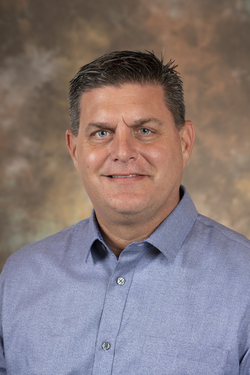
Reported by Nick Caloroso, Chair,
SEMA Future Leaders Network (FLN):

The rapid landscape shift from internal combustion engines (ICE) to EVs has become a catalyst for new ideas and innovation in the automotive aftermarket industry. New business owners, entrepreneurs, engineers, and EV enthusiasts are joining the industry just as quickly.

As a result, SEMA’s Future Leaders Network (FLN), formerly the Young Executives Network (YEN), has shifted efforts to focus on the creation of new opportunities for professional development and career growth. The Dale Carnegie-backed, Professional Development Program (PDP) is the first program of its kind aimed toward welcoming these new leaders into the industry. Members who attend the program are given an opportunity to network with peers and establish deep connections that create value and support.

SEMA has absorbed a large portion of the cost to make this program accessible to businesses of any size. If you are new to the automotive aftermarket industry and looking for opportunities to learn and grow, visit www.sema.org/fln to learn more.

Josh PoulsonRestyling Industry Trends

Reported by Josh Poulson
Chair, SEMA Professional Restylers Organization (PRO):

Despite some challenges, our restylers and restyling manufacturers remain busy and profitable. Many of the shops around the country have been pivoting to do more retail business instead of the traditional wholesale dealer business. Ideally, most shops we hear from would like to be closer to a 50/50 margin mix of wholesale and retail.

In addition, the film market (window tint, paint-protection and wrap films) continues to grow at a rapid pace. This growth will continue over the next five years, and many core products will remain popular. These include leather interiors, sunroofs, heated seats and truck accessories. As dealership inventories improve, most shops that have built dealer relationships will get busier. That should provide a needed boost to the industry.

One challenge is that many restylers have relied on business from car dealerships, and that has been hurt by the lack of vehicle production and availability. This will continue to be an issue well into 2023, according to many experts.

A longer-term challenge is how OEMs will sell their vehicles. The dealership model isn’t going away; however, the process for selling new vehicles has been interrupted and will continue to evolve. There probably won’t be as many cars on a dealer’s lot, and the OEMs would love to push the “build to order” model if Americans prove willing to wait for their vehicles. If this happens, the Restyling industry will need to evolve with the trend and make sure our products are still presented to consumers at the time of sale.

Our PRO council continues to host our annual PRO Cup Challenge at the SEMA Show each year. This year, we had seven restyling shops from around the country building realistic packages on everyday vehicles found on the road. PRO manufacturers had the opportunity to see how their products can be packaged together with others to create a distinct package that can be easily replicated in any restyler’s local market. Many restylers were in attendance to take these ideas back to their own markets.

Outside of the Show, we are also scheduling our ongoing regional sales/installer training sessions that allow shops to send their sales and/or technicians for training from manufacturer instructors in multiple categories. We will continue to announce these dates and locations starting early 2023.

On the emerging technology front, we at PRO don’t really fear the growth of EVs. In fact, we embrace them! Whether a customer has an EV or an ICE vehicle, they want it to stand out and look different from others on the road. We restyle many EVs currently, and as more and more products come out for these vehicles, PRO will be at the forefront of working with car dealers to offer these products.

One of the biggest things we at PRO pride ourselves on is the fact that everything we discuss and do is aimed at making money for our members. Most of our engaged members are owners and executives who want to grow business and be more profitable. We welcome new members from throughout the category.

Cathy ClarkIndustry Businesswomen’s Trends

Reported by Cathy Clark, Chair,
SEMA Businesswomen’s Network (SBN):

More and more women are joining our industry, and with that comes an increase in women in leadership within the industry. The SEMA Board of Directors, for example, currently has four female members. This increase in women also means there are many opportunities for involvement.

Our All Female Bronco Build has introduced a number of women, both within and outside our industry, to the opportunities that await them. We also plan to have an educational series in 2023 that will help men learn to become allies for industry women. The more we do to make women feel comfortable and welcome in the automotive aftermarket, the more women that will join us. Diversity brings new ideas and change and can only lift our industry to new levels.

The biggest issue that I’ve seen for industry women is that some believe they lack the technical knowledge required to make an impact or answer technical questions accurately. We’ve seen it time and time again at trade events where a man will bypass a woman to address a technical question to another man. In a number of instances, the man answering then directs the person right back to the woman because she is the expert on that subject. If we can help bring more awareness to the industry and its members that women are just as knowledgeable about the automotive aftermarket as men, we can help eliminate instances like this.

I think we see more opportunities than challenges for industry women in the next five to 10 years. With the cost of a college education rising, more and more people are looking to trade schools to get their education for a future career. SEMA needs to be out in the high school championing automotive schools as a viable and profitable option to youth. More women than men are attending traditional universities at this time, and I feel that we should challenge ourselves to make sure that more women than men are enrolling in technical colleges as well.

The biggest way that we are helping women in our industry is by providing them networking, educational, and recognition opportunities. Our All Female Bronco Build has had more than 300 women want to volunteer (and counting) so far. We prioritized women-owned and/or -led manufacturers for the products that we put on the vehicle. We also had our first Women’s Leadership Forum in March of 2022 and will have it again in March of 2023. It’s an opportunity for women to get together to collaborate on issues that they have faced in their careers and learn from each other and professional speakers.

SBN is not exclusively women only. We are open to male members and leadership. We are looking to increase the number of women in our industry and make it the best possible experience for them. My dream would be that the SBN one day becomes unnecessary. That would mean that women are treated and recognized as equals in the industry. We are on our way, but still have a long road ahead of us.

We are here to serve industry women. We want to provide services, activities and opportunities that they feel are needed. We are very approachable and always love hearing new ideas. You can easily volunteer on any of our task forces and committees, and it doesn’t require a ton of commitment (usually just one phone call per month). Get involved. The more you put into it, the more you get out of it.

Mike LussoWheel and Tire Industry Trends

Reported by Mike Lusso,
Chair-Elect, SEMA Wheel and Tire Council (WTC):

Based on input from WTC members, we see many positive wheel and tire trends going into 2023. In general, supply-chain issues seem to finally be resolving. Losses for 2022 have seemed to stabilize, and our RTO customers are increasing. Also, there has been development in electric vehicle (EV) technology across all major brands, along with the tires and wheels that support those vehicles. The development of non-pneumatic tires continues as well.

Additionally, there is a continued influx of low-cost advertising opportunities within new social channels. With opportunities such as TikTok and a growing app presence in the automotive industry, the decreased performance of Facebook and Google can now be translated to new channels where new consumers exist. A wider network equals more first-time
conversions.

Meanwhile, as EVs continue to be adopted by both enthusiasts and standard users, the mentality of modification is finding its way to a wider range of enthusiasts. I typically categorize Tesla enthusiasts as “tech enthusiasts,” not “car enthusiasts.” However, it doesn’t matter what label they carry, as they are both modifying their vehicles the way they feel best.

In the area of business challenges, EV and advanced driver-assistance systems (ADAS) technologies are driven by market consumption, and shop owners need education to support the vehicles they see in the shop. Wheels and tires are the first things to hit the road, so we need good education around the effects they bring to the vehicle. There will also be new challenges in wheel and tire manufacturing, pricing, training and staffing. In fact, training and retention of front-line personnel is still a major opportunity.

Council Trends

From the restoration segment to wheels and tires, electrification ranks as a hot-button challenge—and opportunity—for SEMA-member businesses. But further innovations to traditional powertrains will also figure prominently in the aftermarket’s future.

There may also be hesitation to embrace and spend on emerging technologies due to cost. But those who do so now will be ahead of the curve when the economics rebound. They will be stronger for it. The more companies hold back, the more it hurts other companies. We need to push forward.

With supply-chain issues somewhat easing, we are also seeing overseas brands that had issues fulfilling demand during the pandemic starting to flood the market. However, for industry businesses, challenges remain. For instance, parts for testing machinery are up to 200 days out in some cases, and materials testing delays can be up to five months.

Plus, with inflation consumers are starting to stretch their dollars. We are seeing an “emptying out” of demand in the Tier-2 space with more consumers seeking Tier-3 supply. As always, the rich remain rich, and Tier-1 brands seem to be holding their own fairly well in comparison to other tiers. However, for truck buyers, being an enthusiast is going from “really expensive” to “too expensive.” The results are individuals leaving the segment for a more affordable “non-lifted” segment.

Some other developments to watch relate to lighter wheels, higher-torque vehicles, newer EV winter tires, rolling resistances and regulation. The latter includes California’s explorations of rolling-resistance and wet-grip minimum mandates, which may disproportionately impact the specialty tire market. Federal agencies tend to adopt such policies nationwide.

Our biggest need is industry education and advocacy on emerging technologies and the market. Many don’t understand the issues—or are clouded by personal opinions about EVs, grid infrastructure, economics and the effects of inflation. We have used our connections with larger organizations to advise government about their impacts using data and insights provided by SEMA. We are lobbying for exemptions that will benefit the entire wheel and tire aftermarket.

Additionally, we have several education initiatives for 2023 that will educate SEMA members on changes to vehicles and how they affect wheels and tires. Our programs will include topics like rolling resistance, tread wear and traction, and how EVs are affected. The WTC Education Committee goes to great lengths to inform are members and to keep businesses on top of these and other topics. We invite businesses in our segment to contribute their feedback and keep us informed of their needs.

Editor’s Note: The viewpoints expressed in this article are those of our council and network sources and do not necessarily reflect the official positions of SEMA or its Board of Directors.