SEMA News—March 2022
EVENTS
Compiled by SEMA News Editors
Battle of the Builders
The 12 Finalists and Their Custom Creations
Custom-car builders from all parts of North America entered the 2021 Battle of the Builders competition. Industry veterans competed with newbies looking to make names for themselves. The format remained the same as in previous years, with winners recognized in four different categories: Hot Rod, Truck/Off-Road, Sport Compact and Young Guns (builders under age 27).
A panel of industry experts reduced the more than 250 entries to a list of 40 semifinalists within the first couple of days after the deadline for submissions passed. Those 40 made the trip to Las Vegas for the 2021 SEMA Show, where their numbers were subsequently winnowed down to a Top 12. At that point, the 12 finalists judged each other’s work to determine the winner of each category as well as the overall winner.
In 2021, the winners were Bob Matranga (Hot Rod), Bryan Thompson (Truck/Off-Road), Eddie Pettus (Sport Compact/Import) and Dayton Jacobson (Young Guns). When the dust settled, Bob Matranga ended with the best-overall award for his ’55 Chevy.
Especially notable for 2021 was the presence of BOTB’s first-ever female competitors, with both Sammi Frazier (Sport Compact/Import) and Chelsie Lesnoski (Young Guns) making the Final 12 entries.
The four finalists of this year’s competition were highlighted along with other featured builders in a TV special, “SEMA: Battle of the Builders,” which aired on A+E Networks’ FYI and History’s Drive block last month. Check your local listings for repeat broadcasts.
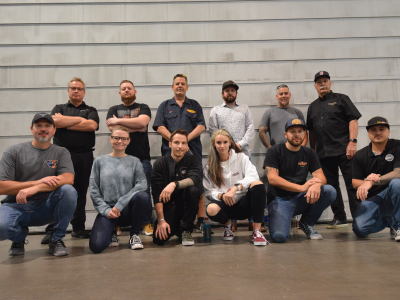
The top 12 finalists at the 2021 BOTB included (top row, left to right) Simo Veharanta (Sport Compact/Import), Dayton Jacobson (Young Guns), Mike Filion (Hot Rod), Eddie Pettus (Sport Compact/Import), Jeremy Miranda (Hot Rod), Bob Matranga (Hot Rod) and (front row, left to right) Bryan Thompson (Truck/Off-Road), Sammi Frazier (Sport Compact/Import), Cole Marten (Young Guns), Chelsie Lesnoski (Young Guns), Mark Giambalvo (Truck/Off-Road) and Kamaka Pocock (Truck/Off-Road).
For more information on the competition, visit www.sema.org/botb.
Builder: Chelsie Lesnoski, Throttle Thrashers Garage, Penticton, British Columbia, Canada

Vehicle: ’93 Mazda RX7 FD
Category: Young Guns
“I always wanted to make a mid-engine,” Chelsie Lesnoski explained. “I liked the platform and the idea of it, and I knew it would make people say: ‘What is that?’”
The best part of the build? “It’s the world’s first mid-engine Mazda RX7,” which was put together in a brisk two months. The powertrain of choice—an Audi 2.7L twin-turbo V6 mated to a VW Passat transmission—could be swapped into the vehicle easily enough, but in-cab difficulties arose when relocating the powertrain rearward. “RX7 cockpits are already ridiculously small,” Lesnoski noted. “I was basically eating the steering wheel” with the new underhood configuration.
The solution she devised was to move the custom-welded FD rear axle three inches toward the back of the car, which created the necessary clearance “for saving your kneecaps.” Custom subframes were added to support the new engine/transmission assembly, and an early-’00s Porsche Cayenne donated its shift linkage, which was “just the right length.” Because no aftermarket version exists for this project, a custom wiring harness was built and plumbed into the vehicle’s electrics.
Scarcely a single body panel exists from the original car. The custom 6-in. widebody kit was builder-made and -molded out of 22-gauge outer and 18-gauge inner sheet steel. The massive molded-in side vents provide air flow for the 2.7L engine, and the custom front trunk tubs accommodate a fuel cell. The hood vents, front valence and rear diffuser are all custom pieces.
Metallic Root Beer paint was blended with a black base coat to make a two-tone paint scheme with a satin and gloss finish. Underneath, the floorpan was removed and replaced by custom-braced and -bent 14-gauge steel, and the transmission tunnel was inverted, resulting in a fully flat undercarriage with no hoses or lines visible.
“Every nut, bolt, weld and paint was done by my own hands,” Lesnoski concluded.
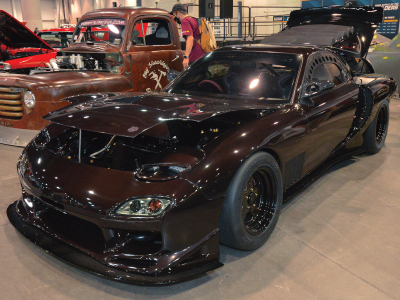
Sporting a host of custom metal work and massive side vents, the RX-7 features a custom two-tone paint scheme with a satin and gloss finish.
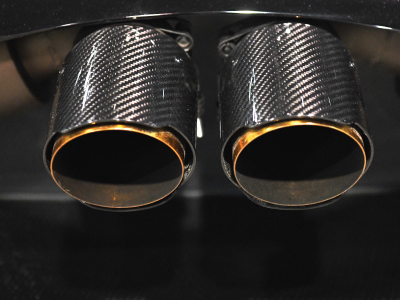
The custom fabricated dual exhaust tips are tucked up high on the rear of the vehicle, safely out of harm’s way.
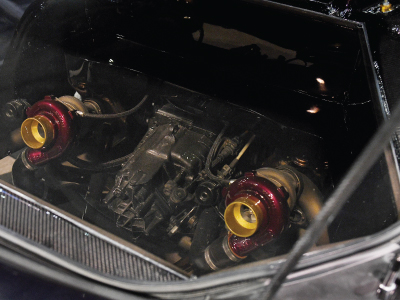
The mid-engine 2.7 Audi twin-turbo V6 utilizes a VW Passat transmission to transfer power to a custom-welded rearend running FD hubs.
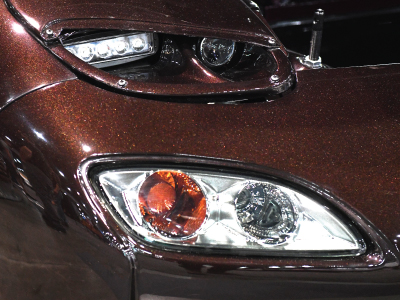
An examination of the Mazda’s exterior reveals seamless body panel fitments and a lustrous paint application.
Builder: Bryan Thompson, Serious Customs, Boise, Idaho
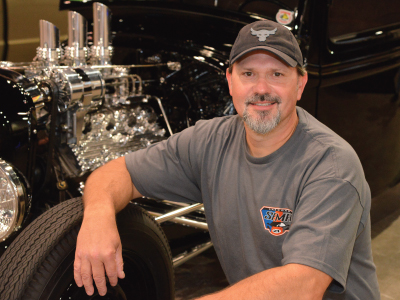
Vehicle: ’34 Ford Pickup
Category: Truck/Off-Road
“Massively customized” was Bryan Thompson’s description of his ’34 Ford pickup, which was a 13-year project stretching over “several thousand hours.” Painstakingly crafted with a healthy respect for the past, this classic pickup was the deserving winner of the always-competitive Truck/Off-Road class.
Not unexpectedly, “Serious Black” rests on a classic foundation. Start with the original Henry Ford steel cab, which was chopped 5 in., stretched 6 in. in the doors, channeled over a slivered ’34 Ford frame, and outfitted with a sectioned grille. All told, the vehicle was stretched some two feet longer than stock.
More old-school goodness can be found under the hood in the form of an Isky-cammed ’49 8BA Ford Flathead engine built by H&H Flathead. It is secured by custom “must-see” motor mounts—repurposed rear wishbones from a ’39 Mercury—and topped with three Stromberg 97 carbs and polished Edelbrock cylinder heads.
A Ford C4 transmission sends power to a Ford 9-in. rearend that is located by a pair of Aldan coil-overs. This modification required the frame to be stepped up in back to achieve the proper axle/suspension clearance, while a dropped tube Super Bell front end runs split wishbones. The entire front-end assembly has been chromed to achieve an optimal color balance with the black paint scheme. One set of components that wasn’t touched was the brakes, which are still the original units “with a little dolling up,” Thompson said. The Coker tires are pointed in the right direction by Ford F1 cowl steering.
The Ford’s interior is all custom, with stitch work from Andrew’s Upholstery and components from Lokar and Classic Instruments incorporated into the mix. In the back, the custom bed incorporates bead rolls to match the tire size and body lines, and the ’30s Ford luggage chest now serves as a fuel tank. The paint and bodywork were handled by Antone’s Chrome by Global Plating, and Wrecked Metal also provided additional assembly support.
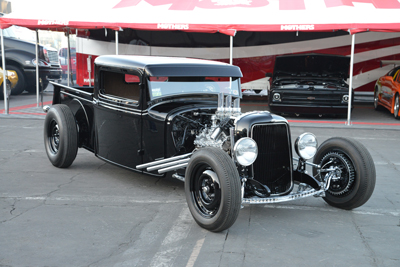
Striking a classic stance, Bryan Thompson’s Truck/Off-Road champion ’34 Ford was chopped, channeled and stretched 6 in. in the doors.
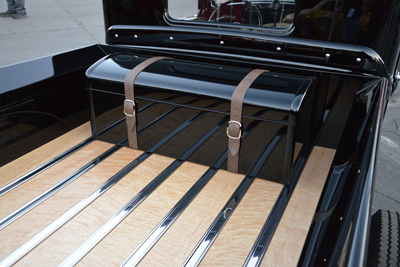
The trick bed treatment includes bead rolls to complement the truck’s body lines, and the old ’30s luggage box now serves as a fuel tank.
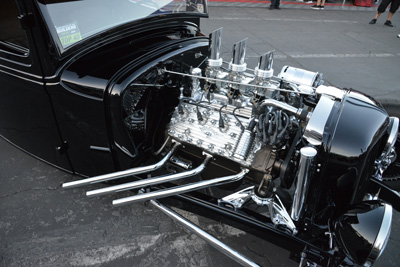
A ’49 8BA engine powers the Ford, and it’s fed by three 97 Stromberg carbs and polished H&H Flathead cylinder heads.
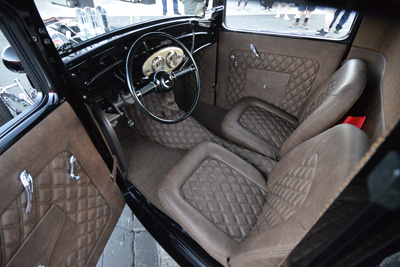
The all-custom Ford’s interior preserves much of the ’34’s aesthetics, though the presence of Lokar and Classic Instruments parts bring it into the present day.
Builder: Eddie Pettus, Eddie’s Rod and Custom, Cedar Rapids, Iowa
 Vehicle: ’61 Austin Healey Sprite
Category: Sport Compact/Import
In a world dominated by musclecars, Tri-Fives, rat rods and square-bodies, Eddie Pettus’ ’61 Bugeye stands out from the crowd at any car show, and BOTB 2021 was no different. Built to “feel and appear like a vintage race car while functioning and handling like a new car,” it was a deserving winner of the Sport Compact/Import class.
“Many thousands of hours” went into the build, which began with a bare Austin tub and a mid-’90s Mazda Miata that donated its innards to give the project life. The 1.6L Mazda four-cylinder was swapped into the Austin’s engine bay, but the five-speed transmission, driveshaft and rear axle all needed extensive modifications.
All told, the drivetrain was shortened over a foot to fit the wheelbase, and it was narrowed a foot to fit beneath the body. All that custom work likewise required fabricating a custom chassis, which now incorporates the Mazda suspension that was also narrowed over a foot and now utilizes QA1 coil-over shocks. Ultra-grippy Toyo Proxes tires comprise the rolling stock.
The exterior underwent extensive modifications. The body panels and moldings were shaved to give the car a smoother, more streamlined look, and a custom tilt hood/front-end assembly was fabricated. The rear tail pan and underbelly are also custom one-offs, as are the wheelwells and LED headlights and taillights. The windshield was chopped and customized, and the body was treated to a coat of BASF Glasurit red paint.
Sprites were originally envisioned as budget-friendly vehicles in 1961, and this build does a commendable job of recreating the cars’ relatively Spartan interior. It’s all custom, however, with Moore & Giles upholstery enveloping passengers in luxurious leather work and a shaved dash housing a complement of aftermarket gauges. Design Engineering titanium insulation provides heat and noise reduction, and an XS Power lithium battery delivers spark.
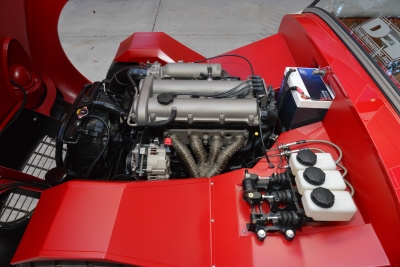
The Mazda four-cylinder fits snugly in the Austin’s engine bay. Design Engineering heat wrap keeps underhood temperatures down, and an XS Power lithium battery provides spark.
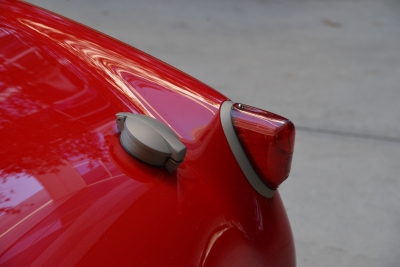
The Sprite’s head- and taillights are custom LED units that are housed in custom bezels.
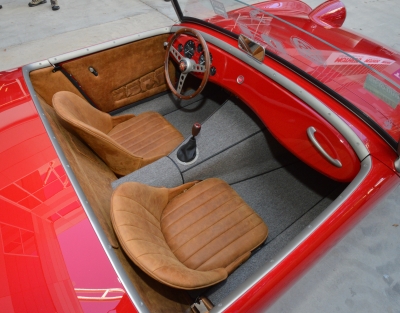
As it was in 1961, the budget-minded Austin’s interior is fairly Spartan—save the luxurious Moore & Giles leather package.
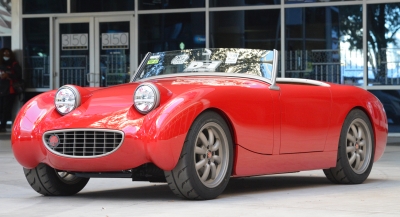
The Battle of the Builders Sport Compact/Import champion, the Bugeye Sprite was a crowd-pleaser at the 2021 SEMA Show.
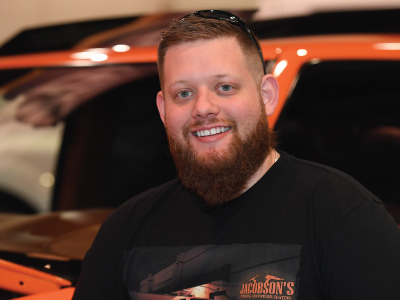
Builder: Dayton Jacobson, Jacobson’s Welding & Powdercoating, Burnsville, Minnesota
Vehicle: ’00 Chevrolet S10
Category: Young Guns
This bright orange S10 is “my business card, so everyone knows what I can do and what they can have done on their cars,” said Dayton Jacobson. Now that he and his truck have been named the BOTB Young Guns champion for 2021, there’s a chance he might just see an uptick in business this year.
A four-year overhaul of a truck he’s owned since age 15, Jacobson calls his creation “The V-Killer”—because it’s faster than his CTS-V. That’s not surprising, given the estimated 1,000 hp lurking under the hood courtesy of a built 5.3L aluminum block that’s been turbocharged, overbored and outfitted with CNC-machined heads. Behind it is a built 4L80E transmission that transfers power to a Ford 9-in. rearend with a Strange center section equipped with a Detroit Locker and 3.50:1 gears.
Suspension duties are handled by a four-link supplemented by Ride Tech Shockwave air springs, a rear Watts link and “the biggest sway bars I could fit.” The three-piece custom-powdercoated Brada Forged wheels that were made to builder spec are halted by six-piston front and four-piston rear Brembo brakes. The truck’s rear frame was back-halved to accommodate wide 335/30R19 tires.
The exterior sports numerous carbon-fiber touches, including the bed floor and the hand-formed front bumper, grille and tailgate. A CTS-V hood vent was integrated into the custom hood, Cadillac taillights were added to the back, and a panoramic sunroof from a Pontiac G6 was grafted onto the roof. All of the powdercoating, ceramic coating and carbon-fiber work were builder-applied, and the Recaro seats and RJS harnesses are accented by upholstering from Top Stitch Upholstery (the only thing Jacobson didn’t do).
A first-time SEMA Show attendee, Jacobson appreciated being able to meet and interact with people he’s looked up to for years. “When they come up to me and say something nice about my carbon-fiber work, it really means a lot, because it’s something I’ve worked really hard at.”
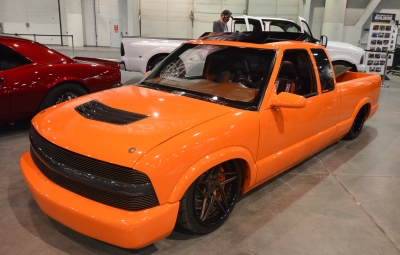
The bright orange “business card” S10 serves as a rolling showcase for its builder’s fabrication and customization skills, which can be seen in the bumpers, hood and panoramic sunroof.
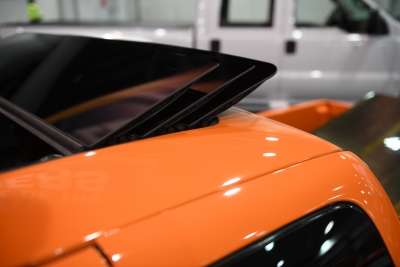
The S10’s retracting panoramic sunroof was donated by a Pontiac G6.
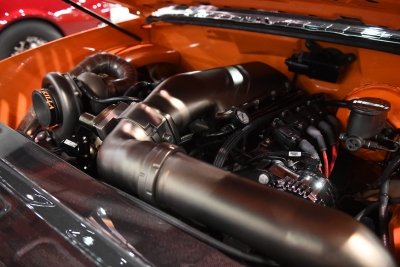
Producing an estimated 1,000 hp, the built 5.3L aluminum block is outfitted with CNC cylinder heads and backed by a 4L80E transmission.
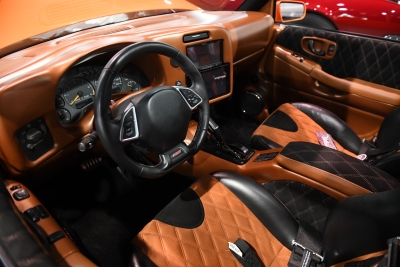
The interior color matches the exterior, with Recaro seats and RJS harnesses providing comfort and security.
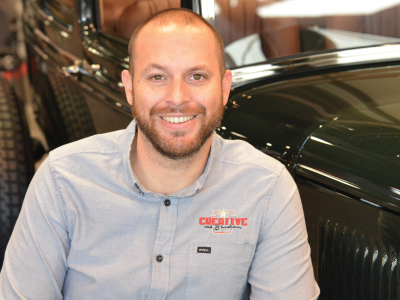
Builder: Mark Giambalvo, Creative Rod and Kustom, Womelsdorf, Pennsylvania
 Vehicle: ’30 Ford Model A Two-Door Sedan
Category: Hot Rod
Last year’s SEMA360 Truck class champion returned to the 2021 SEMA Show with a classic Ford that’s “built to Ridler-quality level,” he stated. With at least 2,000 hours of work put into it over the past year, the Ford features many minute details that might escape the casual viewer but make it a contender at any car show.
Sitting on a custom Roadster Shop chassis that incorporates a 7-in.-stretched wheelbase and a custom cantilevered suspension, the Ford is powered by a smoothed and polished ’56 Cadillac V8 topped with Tri-Power injection and an air cleaner/intake assembly that was CNC-machined from billet aluminum. Backing it is a Bowler-prepped five-speed that provides motive power for a set of Excelsior tires. The one-off Dayton wire wheels feature a cross-lace pattern and are braked by a set of stoppers provided by Johnson’s Hot Rod Shop.
The Ford’s exterior is awash in custom work. The roof was treated to a 41/2-in. chop courtesy of Cornfield Customs Ltd., and the hood and hood sides are hand-built units. The rear wheelwells were hand-
fabricated, the windshield frame is a one-off billet piece, and the body was channeled 1 in. over the chassis.
A one-off Pines Waterfront-style grille was provided by Alumicraft, and the hand-built roof section with a removable flush insert evokes the lines of a ’32 Ford. Advance Plating applied the Black Pearl chrome work, which is a first-ever feature, and the PPG Rebel Green paint was laid down at the builder’s shop, with all exterior parts painted and chromed “so they wouldn’t take on a modern look.”
The interior is likewise filled with one-off touches, including a custom set of Classic Instruments gauges and sound-deadening materials from Design Engineering. The custom seats were upholstered by Bux Customs and rest on hand-built floorboards. The removable roof insert utilizes dozens of pieces of black walnut that were water-jetted and formed to fit the roofline.
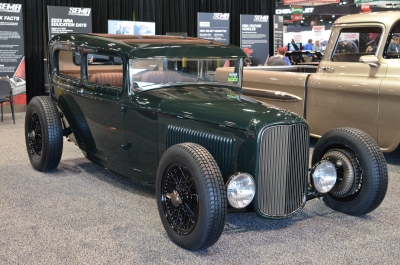
The Model A’s wheelbase was stretched 7 in., its roofline was chopped 41/2 in., and its bodywork was slightly channeled to match the custom Roadster Shop chassis.
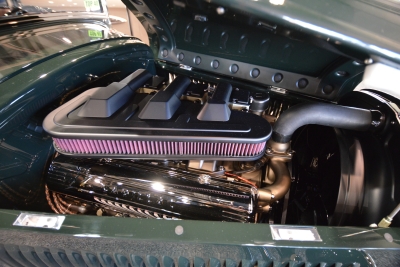
Tri-Power-injected Cadillac power moves the Ford, and a Bowler Performance five-speed gets the ponies to the wheels.
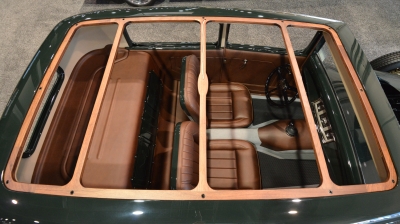
The Bux Customs-built interior sits on hand-built floorboards, and the Classic Instruments gauges are one-off items.
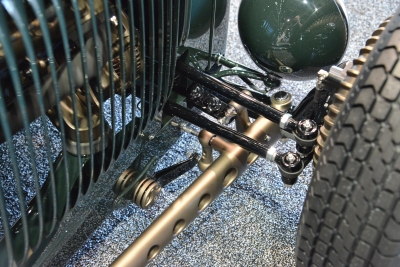
The custom suspension shows the same meticulous attention to detail as was paid to the rest of the car.
Builder: Jeremy Miranda, Miranda Built, Delray Beach, Florida
 Vehicle: ’59 Chevrolet Apache
Category: Truck/Off-Road
Trucks have been a hot commodity in the restoration and restomod sectors in recent years, and Jeremy Miranda’s ’59 Apache aims to bring an old Bowtie into the digital age with a full roster of modern-day componentry that’s complemented by classic bodywork.
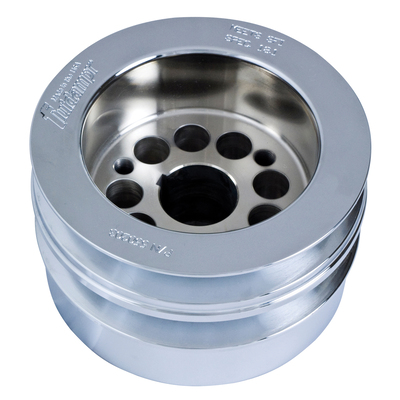
Inside the custom-fabricated engine bay, a 435hp LS3 is topped by a TVS 2300 Magnacharger and rests within a Roadster Shop SPEC chassis. It’s equipped with a Concept One front drive pulley system and aided by a custom 21/2-in. stainless exhaust and Borla mufflers. Backing the engine is a TR56 six-speed transmission that sends power to a Ford 9-in. rearend fortified with 3.70:1 gears. Baer disc brakes with custom stainless brake lines bring a set of Michelin tires and ADV1 wheels to a halt.
Inside, the Apache sports a custom leather interior treatment from InnerWorx Custom. The custom-fabricated dash houses a complement of Auto Meter SPEK gauges, and Vintage Air A/C keeps cabin temperatures comfortable. An Infinity multiplex wiring system enables pushbutton start, and an Alpine 7-in. screen with JL Audio components provides infotainment. A Sparc Industries steering wheel utilizes an ididit steering column, and Design Engineering Boom Mat reduces vibration and harshness for the occupants.
The Chevy’s fully gapped exterior is awash in custom bodywork courtesy of Relic Resto Mods, including the smoothed and tucked bumpers, the flush-fit glasswork and the custom-fabricated wheel tubs. The carbon-fiber hood and rear spoiler add style, and the front valence and grille are both one-off fabrications. BBT Fab billet mirrors and EMS billet hood hinges provide strength and sizzle. The custom-fit aluminum-panel bed incorporates airbrushing and polished bed straps from Bones Custom. PPG paint adorns the body, and the underside utilizes Raptor Liner to protect against the elements.
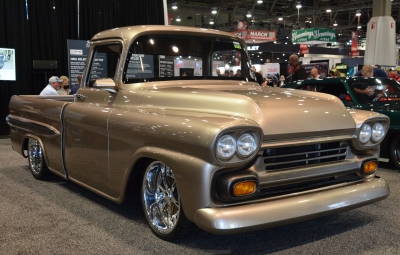
Sporting a fully gapped exterior, Jeremy Miranda’s ’59 Apache features a one-off grille and front valence, flush glasswork and custom wheel tubs.
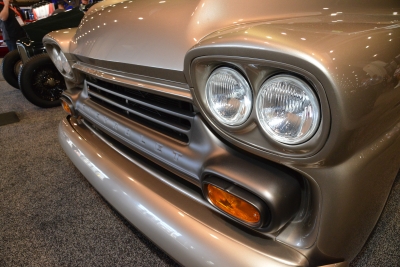
The Chevy’s grille and front valence are one-off-pieces, and its bumpers have been smoothed and tucked.
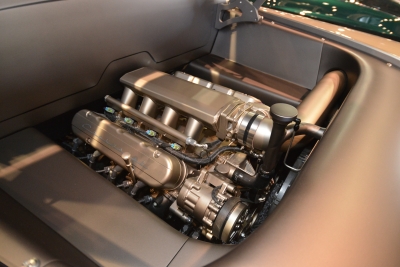
The clean and uncluttered engine bay is home to an LS3 topped with a Magnuson supercharger, and it’s backed by a T56 six-speed transmission.
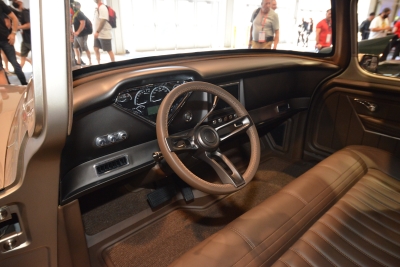
The InnerWorx Custom interior accommodates a Sparc steering wheel, a 7-in. Alpine display screen, JL Audio components, and pushbutton start.
Builder: Sammi Frazier, Campbell Auto Restorations, Campbell, California
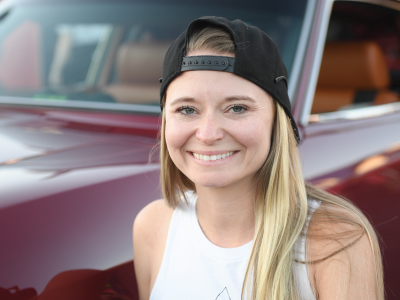 Vehicle: ’73 Datsun 240Z
Category: Sport Compact/Import
As one of BOTB’s two first-ever female competitors, Sammi Frazier is “really excited that I can go to the SEMA Show and hold my own against these other builders,” adding that “this is my first build.” Judging by the looks of her handiwork—not to mention a Top 3 finish in Sport Compact—it surely won’t be her last.
“There’s not a part on this car that hasn’t been touched or modified in some way, shape or form,” she claimed of her six-year project, which was built primarily to autocross. The Datsun packs a punch under the hood in the form of an LS2 engine that was pulled from a Corvette. It’s topped by a Speedmaster intake with eight-stack injectors and aided by a Comp camshaft. Output is an estimated 420 hp, which is plenty of muscle for a lightweight vehicle (2,700 lbs.). Interestingly, no modifications needed to be made to the hood.
The engine is backed by a T56 six-speed transmission donated by a ’00 Camaro, and it sends power to a ’92 Infiniti Q45 rear differential with CV shafts that turn a set of refinished and bronze-painted 17-in. Bogart wheels and 255/70R17 Falken Azenis tires. The rolling stock is located by Techno Toys Tuning lower control arms, and all drivetrain components have been metal-finished and two-stage painted.
Outside, the Datsun was equipped with a SubtleZ flare kit that was cut to accommodate custom bumpers and a larger-
diameter tire. The rear BRE spoiler was custom-notched to provide a trick look. The fuel filler door, all emblem holes and the side-marker lights were welded up in the body, and the stock fuel tank was swapped out for an ’89 Camaro EFI tank with the filler door relocated behind the license plate.
Inside, the Garrett saddle-leather bucket seating sports Alcantara styling touches and removable seat inserts, and a full eight-point rollcage (which was “a real pain” to work around) is ready for hot laps. Classic Instruments gauges keep watch over the underhood functions, and Vintage Air provides the heat and defrosting.
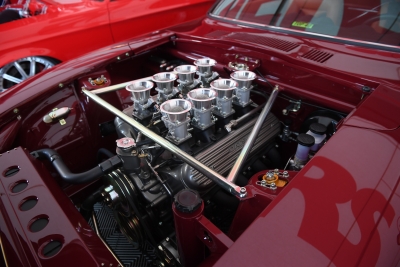
Putting out an estimated 420 hp, the LS2 V8 is topped by a Speedmaster intake and eight-stack injectors, and it’s beefed up internally by a Comp cam.
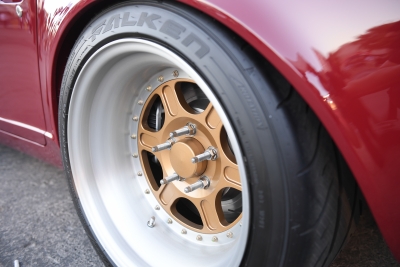
The Falken tires are mounted to trick Bogart Racing wheels, which were sourced from a customer who refinished them before Frazier treated them to a bronze paint scheme.
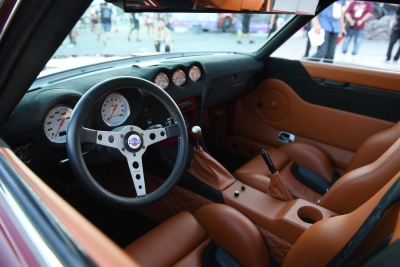
Saddle leather and Alcantara trim combine with an eight-point cage and race-ready harnesses to make a car that’s at once sumptuous and straightforward.
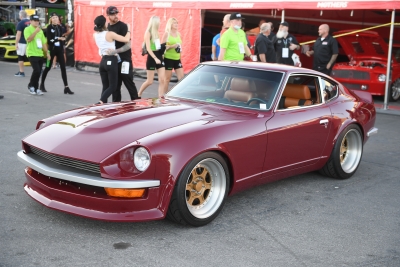
The 240Z is coated in rich burgundy paint and equipped with a custom-cut Subtle Z flare kit and Falken Azenis tires wrapped around 17-in. Bogart wheels.
Builder: Cole Marten, Throttle Thrashers Garage, Penticton, British Columbia, Canada
Vehicle: ’91 Nissan Skyline R32 GTR
Category: Young Guns
“Surprised to be here.” That was Cole Marten’s reaction to getting a Golden Ticket to compete at 2021 Battle of the Builders. Looking at his custom handiwork, though, it’s apparent that his one-of-a-kind GTR is a worthy competitor and a deserving Top 12 finalist. It’s a combination of creativity and resourcefulness.
“I’ve been on a budget when building this car, so I had to find ways to be resourceful, not always buying brand-new parts but creating stuff out of scrap metal that was laying around the shop,” he said. Examples of his adaptability abound on the Nissan, starting with the exhaust manifold, which was a secondhand piece. “It was originally a top-mount turbo manifold, which I cut up to turn it into a bottom-mount manifold,” he said. “That’s where I learned how to TIG weld.”
The custom dash provides another example. Since he wanted to convert the right-hand-drive Skyline to left-hand drive, Marten faced the problem many builders face: “Nobody made any parts for these.” He fabricated his own dash, but it took some trial and error. “First I tried cutting up the original dash, and that didn’t work,” he said. “Then I tried a Passat dash, and I didn’t like the way that looked either.” Eventually, he made up a new piece from scratch, welding up pieces of sheetmetal that he then covered with foam and suede-like fabric, which in turn is highlighted by custom yellow stitching.
Billed as “the world’s first-ever 2JZ AWD conversion,” the Nissan’s engine bay attracted a lot of attention, starting with the 1,000hp Supra engine that Marten built from a bare block. He welded a custom GTR front differential to the bottom of the engine to achieve an all-wheel-drive conversion in the process.
There are numerous one-off touches, from the molded-in 6-in. widebody kit to the custom-tubbed front end with the tubs shaved “so it looks like the engine is floating,” with no visible wires or rubber hoses. “I’ve done everything to the car but putting the rubber on the wheels,” he concluded.

Built on a budget, the Skyline GTR was converted to an all-wheel-drive powertrain, then to left-hand-drive operation.
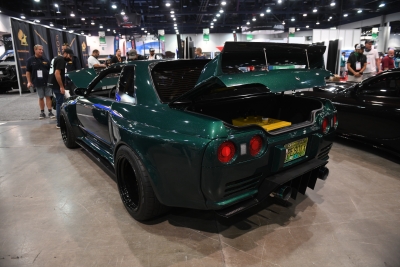
The 6-in. molded widebody kit lends an aggressive look while largely preserving the factory proportions. In the trunk sits a custom fuel cell.
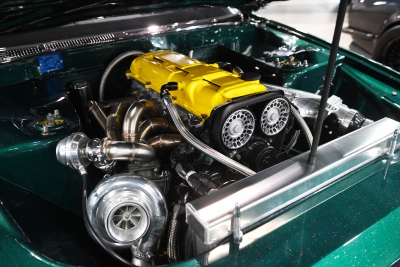
“The world’s first-ever 2JZ AWD conversion,” the Nissan’s powerplant produces an estimated 1,000 hp. It was “built from a bare block,” Marten said.
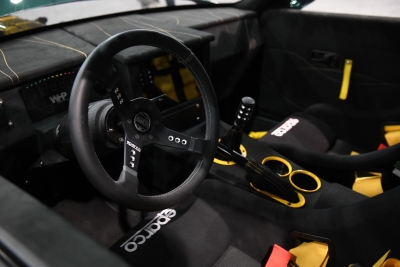
The Skyline’s custom left-hand-drive dash was fabricated from sheetmetal, then covered in suede-like fabric. A Sparco wheel and Sparco racing seats provide race-caliber performance.
Builder: Mike Filion, Pro Design, Lake Havasu City, California
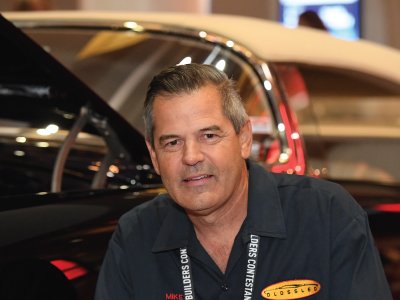 Vehicle: ’56 Oldsmobile 98
Category: Hot Rod
“It’s a big car,” Mike Filion noted with a smile, “with a lot of pieces to the puzzle that make it difficult to work with.” Still, it’s a winner of multiple car-show accolades, including Goodguys’ 2020 Custom of the Year award, so “Oldssled” came to BOTB with an impressive pedigree. Eight years in the making, this custom build required thousands of man-hours (an estimated 2,500 for the paint and bodywork alone) to bring it to fruition.
Virtually every element of the Olds’ bodywork has been redesigned or revised. For starters, the original hard top was ditched in favor of a removable Carson-type soft top that flows from the windshield, which received a 21/4-in. chop. The Corvette-style grille adds a toothy look, and the frenched headlights contain 3-D-printed LED lenses.
Looking toward the back, the rear bumper was notched to accommodate a custom dual exhaust, and the custom taillights also use 3-D-printed three-piece lenses in hand-fabricated bezels that mimic ’56 Packard units. The exterior was treated to a custom blend of House of Kolor “Way Past Midnight Blue” paint, which was applied by Star Side Designs. The triple plating of all chrome components was executed by Advanced Plating.
Underneath the lustrous sheetmetal lies a full custom engine bay housing a ’55 Chrysler 354ci Hemi that’s topped by an Autotrend EFI resting on a six-carb manifold and highlighted by billet air cleaners. A custom exhaust incorporates Magnaflow mufflers and Cerakoted exhaust components. The Olds rides on a fully boxed frame that incorporates an Air Ride suspension, and it rolls on a set of Nitto tires wrapped around 3-D-printed custom wheels that were designed to mimic ’56 Olds Starfire hubcaps.
The all-custom interior is relatively simple yet luxurious. The beige leather stitch work was handled by Bill’s Auto Upholstery. A floating center console houses a custom shifter, and a Lincoln Zephyr-inspired gauge cluster is outfitted with a set of Classic Instruments gauges.
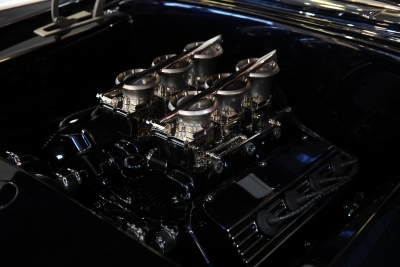
A first-generation 354 Chrysler Hemi resides inside the all-custom engine bay, and it’s topped by an Autotrends EFI faux six-carb setup.
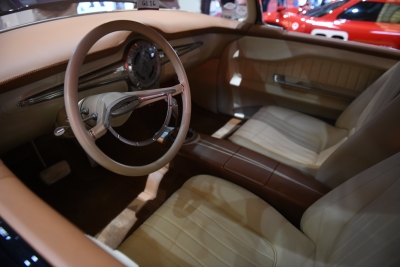
The tastefully accented interior features a one-off center gauge cluster from Classic Instruments and a custom-painted steering wheel.
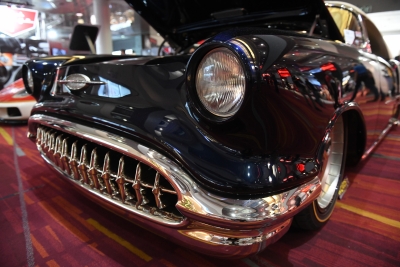
The Olds’ bodywork is extensive, as seen by the heavily massaged bumpers, custom headlight bezels and toothy ’Vette-style grille.
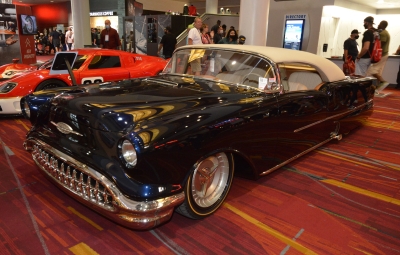
A classic reimagined, Mike Filion’s ’56 Olds 98 brings elegance and style to any car show, and SEMA Showgoers took notice.
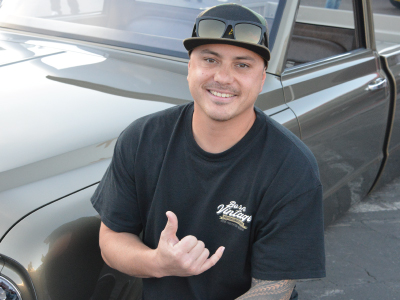
Builder: Kamaka Pocock, Born Vintage Hot Rods, Bakersfield, California
 Vehicle: ’67 Chevrolet C10
Category: Truck/Off-Road
“It’s the Super Bowl for what we do,” said Kamaka Pocock of the SEMA Show. “All the top builders will be there, and you’ve gotta bring your A game.” Considering the stiff competition anyone building a GM square-body would face, a Top 3 finish in class indicates that this truck is ready to mix it up with the heavy hitters.
With a focus on a timeless look, the Chevy’s exterior received an extensive reworking. The billet front grille was machined by EVOD, as were the one-off headlight bezels, exhaust tips and hood hinges. The front bumper was shaved, tucked and frenched, and the rear bedside was lowered 2 in. to match the bottom of the tucked rear bumper. The bed floor and bedsides were hand-hammered, the bed being air hammered out of two pieces of sheetmetal to differentiate it from a conventional bead roll treatment.
The LED headlights were sourced from J.W. Speaker, and the “earthy tone” paint scheme was chosen “so five to 10 years from now, it’ll look like it was done just yesterday.” Ogden Chrome applied the chrome work, and AM Hot Rod Glass provided the custom glass.
Cradled inside a Porterbuilt chassis that utilizes a fully bagged AccuAir suspension, an LSX 376 engine is topped with a Magnuson supercharger and assisted by a Magnaflow exhaust. Power flows to a TCI 6X six-speed transmission, which further transfers power to a set of Forgeline DE3C wheels sporting polished lips and satin bronze fascias. They’re stopped by Wilwood disc brakes.
Inside the Chevy, the Ron Mangus interior was inspired by “the elegant look and feel of a Denali pickup,” with leather applications to the seats, dash and door panels. Dakota Digital gauges monitor engine functions, and the dash, steering wheel and vents are all custom pieces.
“We really tried to emphasize the fit and finish of the truck and just refine what is already a good-looking truck,”
Pocock said.
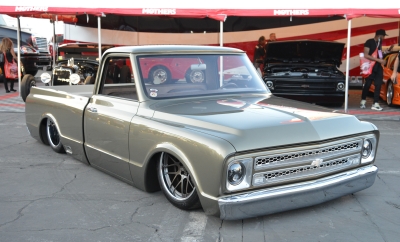
Built with an eye on fit and finish, the square-body C10 features subtle and understated design modifications to its front end, bumpers and bed work.
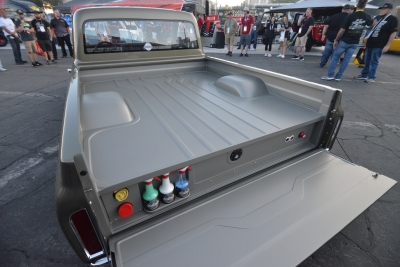
The hand-hammered bed and bedside metal was designed to give a greater sense of depth to the bed over a traditional bead-roll look.

Nestled in an all-custom engine bay, the LSX engine is topped by a Magnuson supercharger and backed by a TCI six-speed transmission.
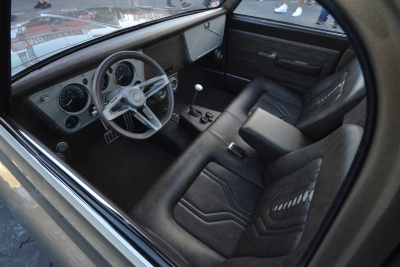
The Ron Mangus interior is awash in sumptuous leather, and Classic Instruments gauges reside in a custom cluster.
Builder: Simo Veharanta, SV Automotive Engineering, Ontario, California
 Vehicle: ’82 Porsche 911 RSR
Category: Sport Compact/Import
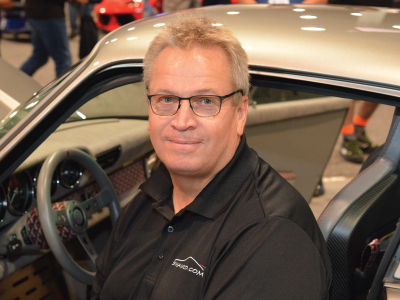
A veteran Porsche builder but a first-time SEMA attendee, Simo Veharanta put his BOTB experience into perspective: “It would be nice to know that after [building] 400 vehicles and all the sweat we put into this car, making the Top 12 would validate everything that we’ve put into the job.” A “backdate to the future,” this ’82 911 merges modern and vintage elements to make a heritage Porsche build.
Starting with an empty body shell and envisioned as “a driver’s car,” the ground-up restoration aimed to conjure the spirit of the early-’70s RSRs by employing a variety of custom touches. The all-metal body utilizes an aluminum hood and a 959-style gas cap, a one-off custom aluminum duck-bill deck lid, steel turbo rear fenders, and custom front and rear bumpers. Custom carbon-fiber treatments were applied to the front clip, rear diffuser and engine deck lid. Titanium nuts and bolts can be found “all over the car.”
Under the hood, a drive-by-wire 3.9L 400-plus-hp engine is fortified with pistons from Mahle Motorsport and provided fuel via Kinsler ITB injection, with a Motec ECU and Rywire harness further enhancing performance. A 991 GT3 exhaust was plumbed into the engine bay and equipped with 935-style titanium exhaust tips. A modified G50 five-speed from Patrick Motorsports features a shortened bellhousing to fit the G-body 911, and it’s actuated by a Sachs Performance clutch.
The motive power flows to a set of Michelin tires wrapped around Rotiform custom center-lock wheels (“a world debut of a new design”) that in turn are halted by a Stoptech Level 3 big-brake kit. To handle the suspension duties, the Porsche uses a KW Suspension “Club Sport” coil-over setup that incorporates components from Tarrett Engineering.
The interior has a custom leather/Alcantara treatment, with material from authentic Goyard handbags repurposed for upholstery. A Sparco wheel offers precise handling, electric A/C provides creature comfort, and a CAE billet shifter delivers crisp gear shifts.
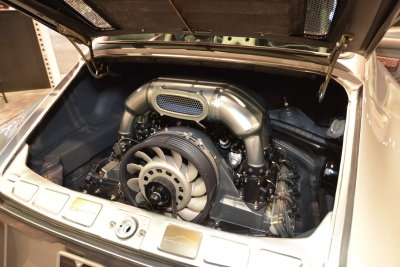
A Kinsler-injected 3.9L engine is fortified with internals from Mahle Motorsport, and a 991 GTE exhaust expels spent gases.
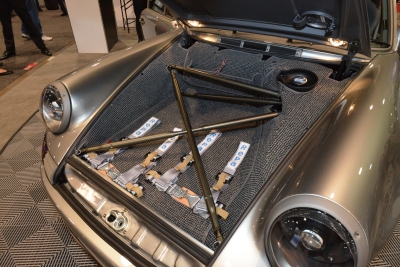
Under the front hood, the 911 is gusseted for additional rigidity, and a set of racing harnesses is at the ready should some hot laps be in order.
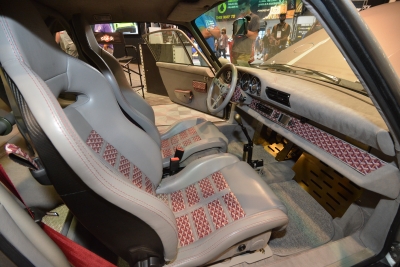
The custom-upholstered interior utilizes handbag fabrics, and a CAE billet shifter provides crisp, precise gear changes.
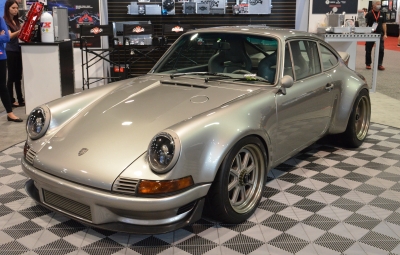
A “backdate to the future,” this Porsche reimagines the 911 through the lens of an early-’70s RSR. The aluminum hood and carbon-fiber rear diffuser are one-off originals.
Builder: Robert Matranga, Matranga Hot Rods, Irvine, California
 Vehicle: ’55 Chevrolet
Category: Hot Rod
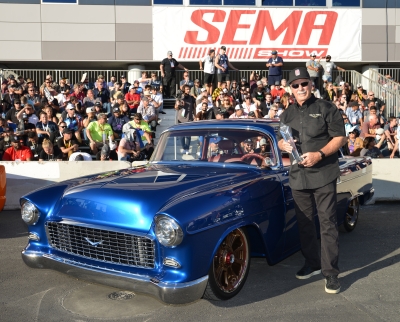
The winner of Goodguys’ 2020 BASF Most Beautiful award, “Brute Force” came to Battle of the Builders with high expectations—and it didn’t disappoint, capturing both the Hot Rod and Best Overall trophies for 2021.
“Every part of Brute Force has been scratch-built or heavily modified to reward viewers with a seemingly infinite number of details,” Matranga explained.
For starters, every body panel on the car was reimagined and reproportioned. The top received a modest 3/4-in. chop, and the wheel openings were resized. Flush-fit window trim, one-off bumpers and the reverse-opening hood were all fabricated from scratch. The EVOD aluminum grille was fabricated from a single piece, and one-off headlamps reside in the custom bezels. Out back, swing-out rear taillights conceal the fuel filler door and battery shutoff. The exterior is awash in a custom blend of “Brute Force Blue” PPG paint, which was applied by Mick’s Paint.
Under the hood, a bronze-painted, 800-plus-hp, 540ci Merlin V8 is topped by Arias Hemi heads and Garrett twin turbochargers, and the assembly resides in an Art Morrison chassis. A 4L80E transmission sends power to a Ford 9-in. equipped with 3.55:1 gearing. The one-off independent front and rear coil-over suspension comes courtesy of Brown Auto Design and Kugel Komponents, and the custom stainless brake rotors are aided by a set of Wilwood calipers. The brushed bronze 18x7 and 20x10 wheels were machined by EVOD and feature red pinstriping.
Inside, the old ’55 is filled with new technology. A CAN bus wiring system enables an integrated iPad to control HVAC, audio and navigation functions; a one-off steering wheel utilizes shift paddles; and custom Chrysler Sebring seats are outfitted with integrated seatbelts. The custom leather interior was fashioned by Gabe’s Custom Interiors and incorporates 13 custom-dyed hides into the seats and door panels. The leather package extends to the trunk, where a quartet of custom-latching storage compartments house tools and lubricants. A set of one-off Classic Instruments gauges monitors underhood functions, and Vintage Air likewise provided a one-off HVAC system.
Looking back, Matranga views his time spent with his colleagues at BOTB as a learning experience.
“It’s an educational process,” he said. “Everybody’s got little things they do differently, and you get to look and see what other guys are doing. It’s a great education.”
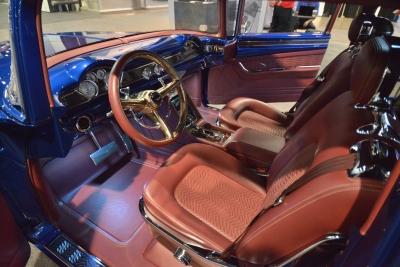
Full of new tech, CAN bus wiring enables the integrated iPad to control most interior functions, while the one-off leather package is comprised of more than a dozen custom-dyed hides for the seats and door panels.
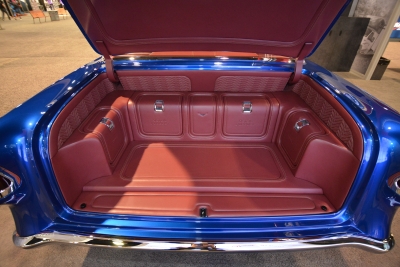
The leather-lined trunk hosts a quartet of latchable storage boxes that house an assortment of tools and car-care products.
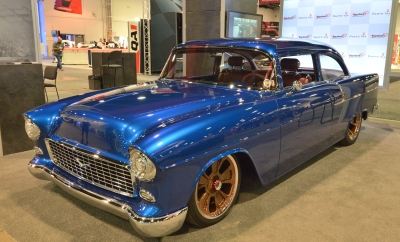
Every body panel and exterior component on Matranga’s BOTB-winning Chevy was reimagined, from the one-piece aluminum grille to the swing-out rear taillights.
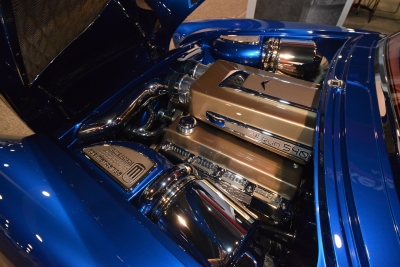
Detuned from its peak 1,400 hp, the bronze-painted, stainless-accented, 800hp, 540ci Merlin engine is topped by twin Garrett turbochargers and Arias Hemi cylinder heads.