Join SEMA Monday, November 1, for a series of roundtables focused
on key international markets.
Exhibiting at the SEMA Show? Registration is now open for the International Happy Hour, where you can network with international buyers and global enthusiast media.
Want to meet with international buyers even before the Show opens? Join us on Monday, November 1, for four International Roundtables.
For a copy of the Roundtable schedule and other international programs and resources at the 2021 SEMA Show, including how to order a complimentary “We Export” sign, visit SEMA News.
For more information, contact Linda Spencer at lindas@sema.org.
SEMA advocates for the industry before regulatory agencies
since government officials have authority to regulate a broad
range of issues that may impact SEMA members and their
customers. Photo courtesy: Shutterstock.com
Most people involved in the automotive industry have heard of the RPM Act, SEMA’s federal legislation to ensure that street vehicles can be modified into dedicated race cars. However, many people aren’t aware that SEMA works to influence regulatory agencies as well as the legislative process.
While not as flashy as introducing a bill in Congress, much of SEMA’s advocacy efforts are on the regulatory front—protecting members and enthusiasts from bureaucratic overreach. Regulatory agencies frequently issue proposed rulemakings, and they have authority over a broad range of issues that could impact SEMA members. SEMA staff monitor the Federal Register (where federal rulemakings are published daily) to make sure that the automotive aftermarket’s concerns are taken into consideration before the rulemakings are finalized.
In the last few months alone, SEMA has submitted comments to the U.S. Environmental Protection Agency (EPA), the National Highway Traffic Safety Administration (NHTSA), the Patent and Trade Office (PTO), and the California Energy Commission (CEC) on topics of importance to the specialty auto parts market, ranging from cybersecurity and ethanol-blended gasoline labels to tire standards.
Cybersecurity is an issue of growing concern for many industries, including the automotive aftermarket. SEMA submitted comments to NHTSA on its updated document, “Cybersecurity Best Practices for the Safety of Modern Vehicles.” SEMA is supportive of cybersecurity best practices for vehicles that maintain the legal right of vehicle owners to access data, hardware, and software in order to repair or modify their vehicles.
In its comments, SEMA cited the recent Massachusetts right-to-repair ballot initiative that passed in 2020, emphasizing consumers’ desire to legally modify and repair their vehicles how they see fit. SEMA recommended that the best practices document’s reference to “vehicle modification” be expanded to confirm the consumer’s right to modify their vehicles in addition to having them serviced. SEMA also recommended that NHTSA clarify that the document applies to all types of aftermarket parts, not just the referenced mobile phones or other digital devices.
SEMA noted that it is working with lawmakers, regulators and
industry partners to make sure customers always have a
chance to modify and customize their vehicles. Photo
courtesy: Shutterstock.com
Other issues of increasing interest for the automotive aftermarket are advance driver-assistance systems (ADAS) and automated driving systems (ADS). While NHTSA was focused on developing a framework for ADS safety, SEMA noted that automated driving relies on ADAS technology (cameras, radar, LIDAR, etc.) for features such as advanced braking and lane departure, so the two issues are commingled.
Within that context, SEMA’s comments focused on information availability to the automotive aftermarket in the coming years to ensure that vehicles can be independently serviced, repaired and modified as new ADS/ADAS-related technologies emerge. As the agency works with industry stakeholders to create a regulatory overlay for both topics, SEMA took the opportunity to proactively focus attention on the issue.
In comments to the EPA on its proposed rulemaking on E15 gas pump labels, SEMA pushed back on the EPA’s proposal to limit or remove the labeling requirement. Ethanol—especially in higher concentrations such as E15—can cause metal corrosion and dissolve certain plastics and rubbers in older automobiles that were not constructed with ethanol-resistant materials, or in certain specialty high-performance equipment.
SEMA expressed dismay that the EPA would suggest making the current label smaller in size and soften the warning language—or rescind the warning label altogether—since there are still millions of older vehicles and non-road vehicles for which ethanol poses a threat. SEMA argued that the label needs to be larger and have a stronger warning to prevent misfuelling.
Protecting SEMA members’ intellectual property rights and combatting counterfeit product sales is a top priority. SEMA submitted comments to the PTO in support of its proposal to develop a national consumer awareness campaign on combatting trafficking in counterfeit and pirated products. For example, current major sources of counterfeit products are internet consumer purchases that arrive in the United States via postal and overnight carriers rather than container ships.
SEMA noted that it is working with lawmakers, regulators, and industry partners to combat the problem. SEMA is a part of the National Association of Manufacturers’ anti-counterfeiting task force, which is seeking to enact legislation that would require e-commerce platforms to provide basic information about their identity and location and to compel the platforms to exert oversight over their sellers.
While this article focuses on federal issues, SEMA also monitors and advocates on behalf of the industry before state-level regulatory bodies. Most recently, SEMA provided comments on the replacement tire efficiency program being pursued by the CEC. SEMA worked with California lawmakers in 2003 to limit the scope of the Replacement Tire Efficiency Program (AB 844), which largely applies to mass-produced passenger and light-duty truck tires.
Other issues of increasing interest for the automotive
aftermarket are\ advance driver-assistance systems (ADAS)
and automated driving systems (ADS). Photo courtesy:
Shutterstock.com
Lawmakers provided an exemption from the program to five categories of tires, including tires with the same SKU, plant and year in volumes of 15,000 or less annually, along with several other categories. The exemptions apply to most specialty tires marketed by SEMA members.
In its comments, SEMA reinforced the idea that the program is a consumer awareness initiative and not a mechanism for removing consumer choice. SEMA also reminded regulators that consumers may desire to emphasize tire characteristics other than fuel efficiency for their driving needs when selecting a replacement tire, such as wet traction, handling or mileage.
While federal and state regulations aren’t a subject many people find riveting, bureaucrats sitting in office buildings in Washington, D.C., and in state capitals around the country can have enormous impact on issues relevant to the automotive aftermarket. Those positions usually aren’t elected but appointed, so they lack the level of accountability that can keep elected officials in check. However, SEMA members can rest easy knowing that their industry is being looked out for from incoming threats from regulatory agencies.
New Legislative Proposals Target Street Racing, Loud Vehicles
By Christian Robinson
Illegal street racing took off during the pandemic, sometimes
to deadly effect. Photo courtesy: Shutterstock.com
When the COVID-19 pandemic took hold in early 2020 and stay-at-home orders became the new normal, many Americans suddenly found themselves stuck at home with spare time on their hands. Often, that meant new hobbies or binging on classic TV shows. For gearheads across the country, it was a new opportunity to put in quality time on the project car that had been collecting dust in the garage. As a result, many manufacturers in the automotive specialty-equipment aftermarket experienced boom markets. Unfortunately, not all of the automotive trends to emerge from the pandemic were positive, especially when it came to state legislation.
The early days of the COVID-19 pandemic were uncharted territory for most Americans. Business as usual had been turned on its head by wide-ranging shutdown orders. Unless travel was “essential,” Americans were told to remain at home. As a result, roadways were eerily empty. While most people heeded instructions to limit their time spent out and about, others saw an opportunity to behave badly.
Illegal street racing took off during the pandemic, sometimes to deadly effect. In New York City, incidents of illegal racing increased 500% from 2019, while the city of Albuquerque, New Mexico, handed out thousands of tickets during a crackdown last fall. In Arizona, Georgia and Oregon, innocent bystanders lost their lives after being struck by out-of-control racers. As a result, at least a dozen states have taken up measures to crack down on those who feel the need to turn public roadways into their own personal dragstrips.
While most states already have laws on the books making street racing illegal, the latest efforts sought to increase and expand the penalties, including substantially raising fines and jail time, seizing vehicles, and enforcement against all who were involved in the practice, even if they weren’t behind the wheel.
SEMA has long held that all racing should take place on the track and not on public roads. While none of 2021’s proposals to curb illegal street racing impact law-abiding enthusiasts, the association continues to monitor and track such legislation in all 50 states. To see if your state is considering new restrictions on street racing, please visit www.SEMAsan.com/legislation.
Bills targeting illegal street racing weren’t the only automotive trend emanating from state capitols this year as a result of COVID-19. Motor vehicle exhaust noise also found itself in the crosshairs.
For many workers across the country, the pandemic meant an unexpected shift to remote work. Office settings suddenly changed from cubicles to dining-room tables, with business being conducted on Zoom. Not only that, but people were forced to exercise in the great outdoors while gyms and fitness centers were closed. Additionally, an evening spent at a local eatery meant dining al fresco. As a result, people became far more aware of their surroundings and the noises that come with them, especially from cars and trucks.
So far in 2021, 11 states have introduced bills aiming to curb the amount of noise emitted from a vehicle’s muffler. While no two states’ means of achieving that goal have been identical, they all have one thing in common: They were requested by constituents upset by loud vehicles in their communities.
Some lawmakers had their own ideas in mind when it came to
regulating muffler noise. In New York, Nevada, Vermont and
Oregon, legislators proposed banning any modification to a
vehicle’s exhaust system that made it louder than when it left
the dealership. Photo courtesy: Shutterstock.com
In some instances, that presented an opportunity for SEMA to promote its model legislation, which sets a reasonable exhaust noise limit of 95 decibels when using an objective Society of Automotive Engineers test. Georgia, Maryland, Hawaii and Texas each opted to go that route, which sets the bar high enough to allow enthusiasts to enjoy their passion.
However, some lawmakers had their own ideas in mind when it came to regulating muffler noise. In New York, Nevada, Vermont and Oregon, legislators proposed banning any modification to a vehicle’s exhaust system that made it louder than when it left the dealership.
That approach is problematic for several reasons. For starters, it sets hundreds if not thousands of exhaust noise standards for police to enforce. For example, a midsize family sedan may emit 80 decibels of noise, while a high-performance sports car emits 95 decibels. It is unreasonable to expect law enforcement to know the factory noise level for thousands of makes and models.
Worse, the owner of the same sedan may install a new cat-back exhaust system made by a SEMA-member company that marginally increases the vehicle’s noise. If those states had their way, the modified grocery getter would be illegal while the louder stock sports car would pass muster. It simply defies logic.
Fortunately for SEMA-member companies and enthusiasts alike, SEMA’s Government Affairs staff has been successful thus far in killing or amending any onerous proposals before they become law. Why? SEMA’s position on exhaust noise is well established.
For decades, SEMA’s Government Affairs team has successfully worked to ensure that states enact reasonable muffler noise laws that are not burdensome to the industry while not creating a nuisance for local communities. Successfully enacted in states such as California, Maine and Montana, SEMA’s model bill sets one exhaust noise limit (95 decibels) and uses an objective test procedure (SAE J1492) to determine compliance. The more states that enact the bill, the easier it is to get others to do the same.
Has your home state enacted SEMA’s exhaust noise model bill? To learn more, contact Christian Robinson with SEMA Government Affairs at christianr@sema.org, or find out by visiting www.semasan.com/resources/exhaust-noise-laws-state.
Behind the Scenes With U.S. Representative Bill Posey
Florida Congressman Tells SEMA News About His Racing Experiences
By Eric Snyder
U.S. Representative Bill Posey (R-FL) after a win at New Smyrna
Speedway.
How many members of Congress have sold more than 100 racetracks, raced professionally, and have fought to reform government at the local, state, and federal levels? If your answer was one, you guessed correctly. U.S. Representative Bill Posey (R-FL) is one of a kind. He is a former racer, classic car owner, and has been one of SEMA’s strongest supporters since his days in the Florida State Legislature. When he’s not fighting to make the federal government more accountable and fiscally responsible, he’s working to advance policy solutions that benefit racers and automotive enthusiasts.
Rep. Posey serves as the House co-chair of the Congressional Automotive Performance and Motorsports Caucus, a position he’s uniquely qualified for given that he’s owned more than 30 race cars. He enjoys driving his ’66 Chevrolet Chevelle Malibu, ’57 Chevy stock tribute and ’30 Model A Ford Speedster when he’s back home in Florida. His daily driver is a ’15 Mustang GT. The Congressman is also an accomplished stock car racer, having received the Victory Lane Racing Association award for short track driver achievement in memory of Davey and Clifford Allison presented by Bobby and Judy Allison, Living Legends of Auto Racing, and other Hall of Fame awards.
Growing up in Southern California in the ’50s, the car culture was omnipresent. As a young boy, Rep. Posey started attending short track races with his father and riding his bike to watch older children race midgets. His family moved to the Space Coast of Florida, also known for its proximity to Daytona, when he was nine; his father accepted a position working on the Delta rocket. Rep. Posey witnessed the last Daytona race on the beach in 1958 and attended the next 10 Daytona 500s at the Super Speedway. By age 13, he started racing a Harley-Davidson motorcycle. Rep. Posey purchased his first stock car at 15 and a ’54 Corvette when he was 16. He also raced a local businessman’s ’33 Ford with a fuel injected Hemi and a ’56 Chevy Gasser.
Former SEMA Chairman of the Board and member of the SEMA
Hall of Fame Doug Evans (left) and SEMA President and CEO
Chris Kersting (right) present Rep. Posey with an award at the
2017 SEMA Washington Rally.
By his senior year at Cocoa High School, Rep. Posey purchased Mercury Astronaut Gus Grissom’s ’63 fuel-injected Corvette. Of course, he raced that too. After graduating from Brevard Community College with an Associate of Arts degree in 1969, he worked as an inspector for McDonnell Douglas on the third stage of the Saturn V Apollo rocket at the Kennedy Space Center but was laid off shortly after the Moon landing. While this period of transition ended his work in aerospace, it was the start of his career in real estate, including the buying and selling of racetracks.
At the age of 21 he was primarily racing at the Eau Gallie Speedway in Melbourne, Florida. When the track closed, Rep. Posey then formed the Mid-Florida Racing Association Inc. which bought, renovated and operated the speedway. Two years later he wrote the first book ever published about race promoting.
Rep. Posey heard the call to public service in 1974 when he was recruited to join the Rockledge Planning Commission. He was elected to the Rockledge City Council in 1976, serving for 10 years.
While Rep. Posey took a 12-year break from racing after the birth of his first child, he couldn’t keep away from the track and started to race again in the ’80s, primarily at Orlando Speedworld and New Smyrna Speedway.
He founded Posey & Co. Realtors and served as a Director of the Florida Association of Realtors and President of the Space Coast Association of Realtors. Continuing his ties to the motorsports industry, he established the National Racetrack Clearinghouse, which listed and sold racetracks in 35 states.
In 1992, Rep. Posey was elected to the Florida House of Representatives where he served for eight years before being elected to the Florida Senate in 2000. Despite his burgeoning political career, Posey continued to race late-models as a state lawmaker and began competing in classic race cars on dirt and asphalt in 2001.
SEMA started working with Rep. Posey when he was serving in the Florida Senate, where he was a charter member of SEMA’s State Automotive Enthusiast Leadership Caucus and sponsored SEMA-model legislation in 2007 to amend the vehicle titling and registration classification for street rods and create a new classification for custom vehicles. In 2008, he introduced legislation to provide an exemption from the commercial motor-carrier regulations for vehicles that occasionally transport personal property to a motorsports facility. Both bills were enacted into law. He also led the successful effort to reform Florida’s insurance laws to increase competition and lower rates and oversaw reforms to lower the cost of workers’ compensation, medical malpractice, and automobile insurance laws.
Congressman Posey competes at Eau Gallie Speedway in
Melbourne, Florida, in his ’56 Ford.
When former U.S. Representative Dave Weldon announced his retirement from Congress in 2008, Posey once again heard the call to serve. He won a three-way primary for the U.S. House of Representatives and went on to handily win the general election. Rep. Posey currently represents the 8th Congressional District, which encompasses all of Brevard and Indian River Counties, and a portion of east Orange County.
Rep. Posey continues to be an excellent friend to automotive enthusiasts, racing, and the specialty automotive aftermarket in Washington. He was an original sponsor of the Low-Volume Motor Vehicle Manufacturers Act, which streamlined the requirements associated with producing replica vehicles. Rep. Posey worked closely with the White House and the U.S. Department of Transportation to advocate for completing the replica car rule in the final days of the Trump Administration. He is also an enthusiastic supporter of the Recognizing the Protection of Motorsports Act (RPM Act), serving as an original cosponsor of the bill during each session that it’s been introduced. As an accomplished racer, he is passionate about amending federal law to clarify the right to convert a street vehicle into a race car.
The Congressman is also a fierce advocate for reining in federal deficit spending and reducing government regulations. Rep. Posey serves on the Financial Services Committee and its two subcommittees on Consumer Protection & Financial Institutions and Housing, Community Development & Insurance. He is also a member of the Committee on Science, Space and Technology and its subcommittee on Space & Aeronautics.
Now, let’s go behind the scenes and hear directly from Congressman Posey.
SEMA News: What sparked your interest in cars and racing?
Bill Posey: It started when I was just a child. We lived in Encino, California, and my dad took me to what were then known as jalopy races at tracks in Culver City, Saugus, and other places around Los Angeles. I loved it, and we had a great time together.
I also used to ride my bicycle to watch the kids race midgets at a public park there that was about a mile or two away. It was exciting stuff. My one lifetime achievement that went unfulfilled is that I never had a quarter midget. Our family just couldn’t afford it. They were luxury items back in those days.
SN: Which classes of racing did you compete in?
BP: I started in the early model class at Eau Gallie Speedway. I raced there, on and off, from 16 until I was 21. I had a number of different cars, including a ’51 Ford, ’55 Chevy, two Hudson Hornets, and then a ’56 Ford, which was my best one, and I finally learned how to make these things work. Back in those days, a lot of performance products were homemade, including downdraft intake manifolds and headers.
I remember when I bought a cam for my ’56 Ford. It was a Crane cam. And if you go back to 1969, Harvey Crane was answering the phone. I told him what I wanted, referencing the lift and duration that the other guys were saying they were running, and Mr. Crane said, “I think you’re over-camming that thing for what you have in it. Send me your old cam, and I’ll regrind it for you.” Instead of charging $60 for new cam, he reground my cam for $25. And this was Harvey Crane!
Rep. Posey prepares to drive a ’30 Ford Speedster in the annual
North Turn Legends Beach parade at Ponce Inlet, Florida.
SN: What motivated you to become a racetrack owner?
BP: I wanted to race, and Eau Gallie Speedway was closed. The next closest track is probably 60 mi. away. The previous owner of Eau Gallie Speedway was just behind on his payments, and I just got laid off from the Apollo rocket program. I worked as an inspector on the rocket. Not long after we got a man on the moon, they laid us off because we already had the next three rockets pretty much ready to go. At that time, I was wondering if I could make a living in racing.
I blew up the engine on my car the last night the racetrack operated before it closed. The owner was in foreclosure, so I cut a deal with him and quickly formed a company. I was only 21 years old at the time.
I put together a business plan and ran the numbers for what I thought it should look like for six months. A buddy and I each put up $10,000, and I went to the owner of the racetrack. I said, “Listen, in 30 days you’re evicted from this place and you’ll have nothing. If you agree to put in your equity, we’ll each own a third of it. Let me go renegotiate this mortgage. I think we can pay it down with $10,000 and then have $10,000 to make some improvements.” He was impressed enough with the business plan that he agreed to it.
I owned the racetrack for about a year and turned it around. I promulgated a new set of rules that made sense. I had the first tire rule that I ever heard of in the country in 1969. Nobody else had tire rules anyone would want to have.
SN: How many tracks were you involved in buying and selling?
BP: In more than 40 years, maybe 100.
SN: What inspired you to run for office?
BP: I never saw myself involved in politics. I was in real estate and sold a friend a building lot, but the owner couldn’t get a permit to build his house because the city never dedicated the street. The city manager told me it’s the city’s fault, the developer did nothing wrong. It’s just a box they didn’t check, and he needed to check it before he could issue more permits. But one guy on the city council gave me a rash of baloney three times. I kept my mouth shut until after the thing was approved, and I shot back a wise comment to him. When I left city hall, a bunch of people followed me downstairs and said “it’s about time somebody stood up to that bully. You need to run for office.”
A friend of mine worked for Boeing and was on the council. He got a job promotion and moved to Seattle, so there was a vacancy and people encouraged me to run for it. I just started my real estate company, so my attention wasn’t on running for office. The day before the qualifying deadline, when I came home from work my wife Katie told me that, “three more people called today encouraging me to run.” So, we prayed about it. At the time I was thinking along the lines of, “if you want me to do that, you’re going to have to show me a way to do this that’s not going to be too expensive or too time-consuming.” Then I walked into the den and started opening the mail, and there’s a letter with no return address. Inside was a wanted poster for William J. Posey, like they put on the post office wall.
So, I decided to run. I drew up a poster with WANTED at the top. Under that it said “For Better Ideas” followed by my photograph and “REWARD.” The reward was my ideas about how to make government more efficient. I went down the next day to Village Printing and paid $100 to print up about 300 posters and filed for office on the last day. I came in middle of the pack, but I only had about 10 days to campaign before the special election.
A college political science teacher won, and I told him that he would always have my support if he did what he promised. After getting sworn in down at city hall, he gave some remarks and said, “It’s a good thing people didn’t elect Bill Posey blah, blah, blah.” He kept egging me on to run. So, a year later, at age 26, I spent $400 and unseated the political science professor. I served three terms. I promised my wife I would never run again. I was off for seven years, and they were the best seven years of making money, selling real estate, selling racetracks, racing cars, having a good life. I’ve been working as an elected official ever since.
Congressman Posey celebrates a 1982 super late-model victory
at Orlando Speedworld.
SN: Why is the RPM Act so important to the future of motorsports?
BP: Well, if you don’t get interested in politics, you’re probably going to be out of business. That’s the bottom line. We know that our government tends to overregulate, including the automotive field. They also tend to be dishonest about it, as evidenced by the threat the RPM Act was initiated to defeat. They tried to sneak in rules saying you can never remove any pollution control devices even if it’s not for the street. I keep up to date on the bills introduced, but I don’t have a chance to read all the rules and regulations. Most people don’t know that rules are enforceable as laws, and rules are made by unelected bureaucrats. The Federal Register was 1 to 5 in. thick!
One of my big three goals in the Florida Legislature was to change the state’s Administrative Procedures Act, which I did. It took me eight years to do it. One of my goals was to change that up here, so that they couldn’t make laws they weren’t authorized to do. The EPA wasn’t authorized by any legislation to write a rule declaring it illegal to convert a motor vehicle into a race car, but they did anyway. Had it not been for SEMA, it would have been implemented. I didn’t catch it, nobody else caught it, because we don’t read the rules. The only thing we do about a bad rule, is to pass legislation to counteract it. It’s purely a matter of freedom. The omnipresent defenders of the nonexistent problems of the people never sleep!
SN: What can motorsports industry members do to better protect the future of racing? What can they do to make an impact?
BP: Get engaged. There are so many things on peoples’ plates right now between the pandemic, the border crisis, and the economic crisis. They don’t worry about automotive issues until they go to a car show or racetrack on a Saturday. It’s hard to keep it front and center.
If you’re worried about the defense of your industry, follow the SEMA Action Network (SAN). People need daily reminders, such as a decals on the back of their vehicle—maybe a sticker that says, “I vote motorsports rights!”
People need to understand. Performance automotive enthusiasts can’t sit on their hands hoping to be the last sheep eaten. Because surely, they will be eaten if they don’t take action and stop this craziness.
Market Research to Inform Business Planning After a Year of Disruption
By Mike Imlay
As the worst of the pandemic recedes in the United States, where
does the industry now stand? The latest SEMA “State of the Industry
Report” looks at how the aftermarket weathered disruptions and is
poised for renewed growth this year and beyond.
Back in late 2019, the trendlines looked good for the automotive specialty-equipment industry. Then, of course, the 2020 pandemic threw the world into confusion. As lockdowns swept the United States, uncertainty gripped virtually every market sector, including the aftermarket. With the pandemic ebbing, it’s a good time to assess where the industry finds itself and where it may be headed. Enter the latest SEMA 2021 “State of the Industry Report,” now available from SEMA Market Research.
Seeking to bring some clarity to a jumbled financial picture, the report is based on a statistical survey of aftermarket manufacturers, distributors and retailers/installers who were asked a series of questions touching on their overall economic health as well as their expectations and outlooks for the coming year. Government data encompassing broader American consumer and automotive-sector trends was also tapped for comparison with industry benchmarks.
Company Sales Performance Over Time
Statistical surveys performed by SEMA Market Research indicate that
the aftermarket’s manufacturing, distributor and retailer/installer
sectors have all largely weathered the COVID-19 disruption. As
companies continue to recover, many are experiencing strong sales
growth.
“This is a study that we do twice a year to gauge the state of the industry, how aftermarket sales are doing, and other metrics that are of interest to SEMA members,” said SEMA Market Research Manager Kyle Cheng. “For this report, we were especially interested in how the industry did after a lot of disruption. Now that we’re further removed from the initial shock of the pandemic, the data is reflective of where our businesses stand as we return to some sort of normalcy.”
According SEMA Senior Director of Market Research Gavin Knapp, the study was designed as a comprehensive view of the aftermarket.
“We looked across the industry at different business types, from manufacturers to retailers, distributors and other business models,” he said. “Wherever they are in the industry, whether they focus on classic cars or musclecars or whether they’re in the performance or accessory world or even the racing world, our goal was to bring them all together and get their input for our ‘State of the Industry’ research.”
When Companies Expect Industry To Return to Pre-Pandemic Levels
With the pandemic not yet completely in the rearview mirror, some
aftermarket companies believe there is still work to do before the
industry fully recovers. However, the aftermarket is showing more
optimism about rebound than it did last fall.
A Year of (Mixed) Growth
Perhaps the report’s biggest takeaway is the impressive aftermarket sales growth that followed the widespread U.S. lockdowns shortly after COVID-19 hit.
“Obviously, the elephant in the room is that sales have really performed and that many companies have really killed it,” Cheng said. “We’ve heard anecdotally from a lot of them that they’ve seen record sales, and the data largely supports that across the industry. That’s not to say that some companies out there—particularly retailers—weren’t hit fairly hard in sales, but most companies are showing pretty good sales growth compared to where things were last fall.”
For many companies, the surge in sales came as an unexpected windfall, Knapp added.
How Total Number of Staff Changed Over Past Year
While all sectors of the specialty-equipment industry suffered some
degree of job losses, most companies managed to maintain and, in
some cases, even grow their staffs over the past year.
“The pandemic shutdowns brought a lot of disruption over the last year, and we would’ve expected a year ago that there would be some serious ramifications for the industry in terms of sales,” he said. “But while companies were really worried last spring and even took a sales shock, the outlook was much better by fall. Now we’re seeing even more increases. We’re at a point where a majority of companies report doing as well as or better than they did in 2019 over this past year.”
That specialty-equipment sales growth mirrors an overall trend in the automotive sector at large. In March 2021, U.S. government data indicated that consumer spending at motor vehicle and parts dealers had hit $135.5 billion—the highest number ever recorded. By the following month, that figure had climbed even higher to $139.5 billion.
“This record spending is helping our market recover a lot faster,” Cheng noted. “On top of that, automotive parts production, which was disrupted in the beginning of the pandemic, is now reaching really high capacity and producing more parts than it had in the last 20 years.”
Overall, aftermarket manufacturers saw the steadiest sales growth, while the industry’s retailers experienced a more mixed outcome.
“In a recession, we would typically expect a lot of hurt across all industries and sectors of the economy, but this was very sectorial,” Knapp observed. “Certain industries were hurt a lot, others not so much. Luckily for us, our industry was one that fared very well. But even within our industry, there were a lot of differences.”
On the manufacturing side, business remained good as long as consumers were buying parts and manufacturers could crank them out and ship them. But Knapp explained that the inherent structure of retailing sometimes worked against resellers and mom-and-pop shops.
“For example, people were afraid during lockdowns—and sometimes are still afraid now—to go into a brick-and-mortar store,” he said. “We also saw a lot of differences in results, depending on the size of a business. Larger businesses came through very well and have by this point not only recovered but are likely to say they’re growing, but there is a larger proportion of smaller businesses who say they got hurt over the year and are still feeling it.”
The ability to source products from multiple suppliers and to sell online helped many businesses (notably manufacturers) weather the storm. Leveraging social-media channels also seemed to bolster retail sales for many. While the downturn was generally tougher on retailers, fewer than a third of those surveyed for the “State of the Industry Report” said they suffered losses over the past year. In fact, a relatively healthy 40% said they grew their sales—some by double digits. Without minimizing the pain of the smaller businesses that struggled, the aftermarket retail segment in general demonstrated remarkable resiliency.
“If you think about how things looked a year ago, again, those numbers are better than we might have expected,” Knapp said. “While we can say the pandemic hurt more retailers than it did manufacturers or other types of businesses, it certainly wasn’t uniform.”
Expect Industry to Grow Next Year
Among retailers and installers, business size as reflected in
sales noticeably influences expectations for industry
recovery.
The Industry Is Hiring
After some industry job losses last year—with 17% of manufacturers, 21% of distributors and 13% of retailers reporting staff decreases—the good news is that the industry is looking to hire in the coming months. Moreover, the positions that aftermarket businesses seek to fill are broad and varied.
“Companies across the board are certainly looking for more general-labor-type people to work in warehousing, shipping and areas like that,” Knapp explained. “However, a lot of companies on the manufacturing and retail sides are also looking at other jobs, such as sales. As things ramp up, there will also be engineering and product-development-type jobs as well as other skilled positions to move products out the door. In fact, 83% of manufacturers expect to increase staffing in the next 12 months or so. That’s big.”
Cheng added that the industry has made significant progress in bringing back jobs thus far.
“Within a period of a couple of months, we had recovered about 80% of the jobs that were lost over the past year,” he said. “It’s that last 10% to 20% that is going to take some time to fully bounce back from, and when we look at companies’ opinions on when the industry will be back to pre-pandemic levels, most are looking at the end of 2021 as the goal.
When Industry Will Return to Pre-Pandemic Levels
Looking specifically at retailers/installers, most believe the
industry will be back to pre-pandemic levels by the end of
2021.
“Along those lines, the pandemic disrupted a lot of supply chains, so companies are looking at ways to repair and rebuild that infrastructure or find alternative pathways. In order to do that, you need a lot of staff and resources. That could also mean a lot more business opportunities. A lot of companies relied on international suppliers that were disrupted severely, so new ways to source parts will be an important issue for the future.”
Out of the Storm?
Taking into account the sharp ups and downs of the past year, the various uncertainties still playing out in the overall economy and the business challenges ahead, what’s the prognosis for the industry? Are the economic winds blowing favorably again for the aftermarket?
“I think the overall story is pretty good,” Cheng answered. “Our companies are doing pretty well. They’re optimistic for the future. Still, there is a fair degree of economic uncertainty. Companies are kind of figuring out where the economy is and where it will be in the next couple of months. Obviously, the virus situation has gotten a lot better, but there’s still some concern that about that, too.
“Another factor is consumers. Over the past year, they have spent a lot of money on our industry, as we see from the government data, but will they continue to funnel money into our industry at the levels they have lately as we return to normal? That’s going to be an important question moving forward. All indications are yes, but consumers will have more options. Of course, enthusiasts will always find ways to invest in the aftermarket.”
Knapp agreed.
“Keep in mind that as we look at expectations for this year, we see that 70% of our manufacturing and 57% of our retailer respondents said they expect to grow,” he said. “Only a very small portion expect to see declines this year, so optimism for sales in 2021 is really strong across the industry right now.”
Get the Latest Research
To download your free copy of the 2021 “State of the Industry Report,” visit the SEMA Market Research webpage at www.sema.org/market-research. While there, be sure to check out the many other research reports that can help your business succeed and prosper in 2021 and beyond.
FTC Report on Right to Repair: The Federal Trade Commission (FTC) issued a report to Congress that is highly critical of anti-competitive repair restrictions employed by manufacturers that limit consumer choice. The report is based on industry research gathered at an FTC workshop in 2019 and covers a wide range of products, including automobiles. The FTC noted little evidence to support manufacturers’ justifications for repair restrictions (e.g., safety, cybersecurity, liability and reputational harm, quality of service). While the Magnuson-Moss Warranty Act makes it illegal to void a warranty or deny coverage due to the mere presence of an aftermarket replacement or specialty part, the FTC expressed concern that new technologies such as software lockouts may prevent independent servicing or installation of the non-OEM parts. SEMA noted at the FTC 2019 workshop that it periodically receives complaints of auto dealerships voiding warranties based on the presence of a specialty part rather than confirming that the part had caused a malfunction. SEMA recommended that consumers be provided a written explanation if being denied warranty coverage. The FTC will consider if there are additional regulatory and legislative actions that can be taken to better protect consumers.
Definition of Independent Contractor: The Biden administration officially withdrew the independent contractor regulation issued in the closing days of the Trump administration. While the issue may be revisited in the future, the U.S. Department of Labor (DOL) is reverting for now to previous guidance on distinguishing whether an individual should be classified as an independent contractor or an employee. Specifically, the DOL is deferring to the seven-factor “economic realities” guidance test issued in 2008:
The extent to which the services rendered are an integral part of the principal’s business.
The permanency of the relationship.
The amount of the alleged contractor’s investment in facilities and equipment.
The nature and degree of control by the principal.
The alleged contractor’s opportunities for profit and loss.
The amount of initiative, judgment or foresight in open market competition with others required for the success of the claimed independent contractor.
The degree of independent business organization and operation.
The increase of independent contractors in recent years who perform on-demand services such as drivers and other gig workers has placed a focus on the definition. Company employees have protections under the Fair Labor Standards Act such as minimum wage and overtime compensation that do not apply to independent contractors.
STATE UPDATE
Alaska—License Plates: The Alaska House Transportation Committee passed SEMA-supported legislation to allow the display of only a single, rear-mounted license plate for all passenger vehicles. Under current law, vehicles must display two license plates. The bill currently awaits consideration in the House Finance Committee.
Illinois—Antique Vehicles: The Illinois Senate Transportation Committee passed SEMA-supported legislation to allow expanded-use antique vehicles to be driven without limitation for two additional months. Currently, expanded-use antique vehicles are defined as being more than 25 years old “or a bona fide replica” and are limited to traveling to and from auto shows, exhibitions, service stations and demonstrations during the colder months (November through March) but can be driven without limitation during the warmer months (April through October). The bill proposes that the months without driving limitations be expanded to March through November. The bill previously passed the House of Representatives and now awaits consideration on the Senate floor.
Kansas—Antique Vehicles: Kansas Governor Laura Kelly signed into law SEMA-supported legislation to redefine vehicles eligible to be registered as antique vehicles. Previously, the Kansas Highway Patrol defined an antique vehicle as being “more than 35 years old and as close to the original as possible, without any significant alterations to the major component parts.” The new law requires only that the vehicle be more than 35 years old, regardless of the age of the component parts installed.
Massachusetts—Antique Vehicles: The Massachusetts House of Representatives introduced a pair of SEMA-supported bills to exempt older antique vehicles from the state’s annual safety inspection requirement. The bills apply to vehicles at least 50 years old and registered with antique or year-of-manufacture (YOM) license plates and whose owner is a member of a recognized antique automobile club. Current law requires all vehicles to be inspected every year regardless of model year, including those registered as antiques. The bills await consideration in the Joint Transportation Committee.
Massachusetts—License Plates: The Massachusetts House of Representatives introduced legislation to allow the display of only a single, rear-mounted license plate for all passenger vehicles. Under current law, vehicles must display two license plates. The bill currently awaits consideration in the Joint Transportation Committee.
Massachusetts—YOM Plates: The Massachusetts Legislature introduced a pair of SEMA-supported bills to allow year-of-manufacture (YOM) registration plates to be restored to their original colors and designs. Vehicles registered as antique may currently display YOM plates with DMV approval. DMV regulations state that the plates must be in original condition. The bills await consideration in the Joint Transportation Committee.
New York—Historic Vehicles: The New York Assembly introduced SEMA-supported legislation to allow historical vehicle owners to pay only a one-time registration fee of $100 upon initial registration. Under current law, owners of the vehicles pay a fee of $28.75 every year. The bill currently awaits consideration in the Assembly Transportation Committee.
North Dakota—Antique Vehicles: The North Dakota legislature failed to pass prior to adjournment SEMA-supported legislation to lower the age requirement for a vehicle to be registered as antique from at least 40 years old to at least 35 years old. It also would have lowered the age requirement for a vehicle to be registered as a collector’s vehicle from at least 25 years old to at least 20 years old.
North Dakota—Vehicle Titling: The North Dakota legislature failed to pass prior to adjournment SEMA-supported legislation to allow a “collector’s title” to be issued to an owner of a rebuilt, reconstructed, salvaged, antique or vintage motor vehicle without a certificate of inspection.
Texas—License Plates: The Texas Senate passed SEMA-supported legislation to allow the display of only a single, rear-mounted license plate for passenger vehicles if the vehicle is unable to display a front license plate. The bill awaits consideration by the House Transportation Committee.
Economic Support for Racetracks: SEMA, the Performance Racing Industry and 17 other organizations representing live recreation and amusement venues asked the U.S. Small Business Administration (SBA) to expand the Shuttered Venues Operator Grant (SVOG) program to include motorsports, horse racing, recreation events, and mobile amusement. The COVID-19 pandemic posed significant challenges for racetracks and other live entertainment operators, especially when states placed restrictions on the sizes of gatherings. The U.S. Congress created the $16 billion SVOG program to assist live entertainment and performing arts venues that experienced significant revenue declines, but the SBA did not include racetracks and many other forms of live entertainment in the list of groups that are eligible to apply for grants. The coalition asked the SBA to reconsider its eligibility guidance and is also working with Congress to expand the SVOG program through legislation.
Trade Show Participant Tax Credit: SEMA-supported legislation was introduced in the U.S. Congress that would provide tax credits to cover 50% of the expenses associated with exhibiting at or attending trade shows and conventions in the United States between January 2021 and December 2024. SEMA continues to work with other key industry and trade groups in urging Congress to consider the Hospitality and Commerce Job Recovery Act. The legislation has been referred to the House and Senate tax and finance committees.
Reducing Micromanagement to Increase Workplace Productivity
By Douglas McColloch
While it may be well-intended, the oppressive office atmosphere that’s engendered by an excessively “hands-on” management style can contribute to poor employee performance, inefficient teamwork and a high company
turnover rate—all of which can negatively impact
a company’s bottom line. Photo courtesy: Shutterstock
Merriam-Webster defines micromanagement as managing “especially with excessive control or attention to details,” and while it may be easy to define, its presence in an office environment may be difficult to pinpoint because its presence can take many forms: poor communications, a risk-averse workforce, projects that never seem to get completed in a timely manner and—perhaps of most concern to a successful business—a high employee turnover rate. However well-intended, what we generally refer to as micromanagement can have a corrosive effect on an office culture and can hinder efficiency and productivity.
A recent SEMA Education webinar, “Reducing Micromanagement and Increasing Employee Self-Sufficiency,” was hosted by the SEMA Businesswomen’s Network. Moderated by Vintage Air Chief Operating Officer Allison Harding, the seminar featured Christine Ashmore, senior vice president and financial adviser for Morgan Stanley, who tapped into her experience in executive-level management, including chairing several corporate boards, to discuss best practices and to recommend employee-management strategies.
Identifying the Problem
As mentioned, micromanagement can often be recognized more by its symptoms than its cause. Ashmore suggested that managers ask themselves some basic questions about the following workplace scenarios.
Unfinished projects: “Do you have a long list of pending approvals and decisions? Do your employees feel that if they try to move forward with a project without getting your approval, you’re probably going to make them redo it? Unfortunately, that’s a real big issue with micromanagers.”
Unwillingness to delegate: “Do you not trust your employees to perform a meeting without you with people whom you consider important senior executives of the organization, your boss or key clients?”
Insistence on control: “Do you insist that your employees copy or blind-copy you on all communication to people that you’ve deemed important or on subject matter that you deem important?”
Company brain drain: “Do you have high turnover on your team, or possibly low satisfaction in the workforce? That’s a big problem when you have high performers on your team. If they feel micromanaged and feel that they can’t spread their wings, they’ll leave and find a place where they can.”
Before we draw harsh conclusions, Ashmore reminded us that what we refer to as micromanagement is, in some ways, a wholly natural impulse.
“It’s actually a very natural thing,” she noted, because “you’ve been promoted to a management position because you’ve done a really good job at your previous position and therefore want to keep doing what you’ve been good at and tend to fall back into what’s comfortable.”
That is where managers need to engage in some self-assessment and realize that an overly assertive management style comes with a long-term cost to the business:
Poor employee development: “By engaging in micromanagement,” Ashmore said, “you’re not only hurting yourself because you’re hampering your career development, but you’re also hurting the people who work for you and their career development.”
Reduced workplace efficiency: Another key takeaway from micromanagement is that “you’re reducing your effectiveness. If you’re caught up in the details, you’re not looking at the big picture. You’re not really steering the ship of the team in that bigger strategic direction. And then, as we said before, micromanaging really interferes with the development of your team.”
Stagnating office culture: “One of your key jobs as a manager is to cultivate competent and independent employees so that they can naturally move up in the organization. If you’re micromanaging and you’re not letting them expand their abilities, they’re never going to be in a position to move on to higher roles within the organization or in other firms.”
Working Toward Solutions
There are a number of proactive steps managers can take to address these issues.
Give your team clearly defined goals, with an emphasis on what each individual team member brings to the project: “The key here is really taking the time and sitting down with your team, not just on the forefront of a project or a relationship but also throughout the course of the project,” Ashmore advised. “It’s key that your employees understand: What are the larger goals? What’s the larger goal of this project? How does it fit with the larger goals of the organization? And how can they contribute individually to help you get to the goal line? Really, that’s setting the culture of the team where everybody knows that they’re important and valued employees.”
Give your employees a stake in the work by actively seeking their advice: “When you’re sitting down, solicit input. Don’t just sit there and talk to your employees like you’re standing on a pedestal, just telling them what needs to be done. Really solicit input from the team as far as their view of what it’s going to take to get the project done.”
Involve team members in all stages of a project, and be willing to call out their achievements: “Maybe when you’re making a presentation to your boss or senior executives or a client, you bring in someone on your team who’s done a really fantastic job. Make sure you celebrate their successes in the meeting, and they’ll tend to work harder for you. That is a way of giving them ownership in their success.”
Instill a culture of accountability: “There has to be accountability among the team—not just accountability to the boss or the manager but accountability across the team to each other that everyone’s contributing.”
Encourage constructive criticism, and be willing to be criticized: “A great way to start this is to make sure that you have clear and concise conversations among the team that constructive criticism is not only freely given in a very respectful way but also that it is solicited from the employee to other employees.
“It’s good for a manager to come out and say, ‘Hey, what could we have done better? How could I have supported you better?’ I think it’s really important for this process to involve everybody on the team and not just the feedback you’re giving your team members.”
Be willing to delegate: “You might not be able to be at every meeting with your team, but pick some senior people on your team to sit down and meet with the younger people. As they say, ‘If you want a promotion, do your boss’s job, not just your job.’ By delegating a senior person who’s proven that he or she can take a project from beginning to end, give them that ownership to unofficially manage some of the younger people on the team. That gives them great experience for the time when they want to move to that next step in their career.”
Be willing to lead by example, not by rank: “Let your employees know that you’re willing to get in the trenches with them. At the end of the day, whatever you’re working on is a team project with a team solution, and sometimes you have to throw designated job titles or job responsibilities out the window. The team needs to know that everyone will do whatever it takes to meet deadlines and produce a quality output that is of the level that we expect from ourselves and the team as a whole.”
Be a mentor, not a boss: Put another way, find out what motivates your employees, then leverage that knowledge to increase their effectiveness in the workplace.
Involving team members in all stages of a project can include
delegating a presentation at an executive meeting to a capable
junior-level employee, then being willing to call out the
employee’s achievements at the meeting. The objective is to
give employees greater ownership of their work and a greater
stake in the company’s success, both of which can improve
workplace morale. Photo courtesy: Shutterstock.com
“I was personally kind of shocked to find out it wasn’t just purely money in compensation,” Ashmore said. “‘I get up every day to go to work so that I can get paid,’ but for some people, that’s not it. Some people are driven by a job title. They may feel that respect is given based on what their business card says.
“To a lot of people—and I think it’s especially being recognized during this time of COVID—flexibility is becoming a key driver. ‘Hey, I’ve done a really good job, and I’m going to get the work done for you. Give me the flexibility to go pick up my kids from school and either come back or log on to my computer at home.’
“So I really believe that if you can figure out what motivates people, you can help them meet their goals. They’re going to do whatever they can to get the job done in an effective and efficient time frame.”
To Ashmore, it all comes down to what a former manager once told her: “I don’t want you to think of me as your boss,” she recalled. “I don’t want you to think of me as your manager. I’m your mentor. I’m here for you. I’m here to help you grow and develop.”
“When employees look at you like that, I think it’s through a completely different lens. All of a sudden, you’re a thought leader—someone who cares about them, cares about their development, and they’ll feel more supported.”
About SEMA Virtual Education
Accessing SEMA’s industry-leading education is easier than ever. With dozens of live and on-demand offerings—and more debuting during the year—SEMA Virtual Education includes comprehensive presentations, insightful discussions, and short videos that teach, inform, inspire and entertain automotive specialty-equipment professionals. From builders and engineers to marketers and sales staff and much more, participants become more educated and prepared for success through SEMA’s Virtual Education.
The products featured below are from SEMA Data member companies that have attained Gold- or Platinum-level data, which means that their product data is robust and complete—likely to drive customer purchase decisions. SEMA Data members meeting data scorecard requirements are invited to submit product releases for consideration to enews@semadatacoop.org.
AlphaRex
Projector Headlights for ’14–’20 Toyota 4Runner
AlphaRex designs its lights from inception, patents every component it’s designed, and guarantees that its products are compliant with SAE and DOT requirements.
High-beam bulb size: H7
Attachment method: plug and play
Projector headlights, plank-style design, midnight black with sequential signal light
Fuelab offers diesel performance lift pumps and filtration systems. The Velocity 100-gph lift pump with filter and Velocity 200-gph lift pump with filter and Vortex air separator represent a major upgrade in diesel lift pump efficiency and technology.
Extremely quiet operation and steady pressure
1,500hp support
Backed by a two-year limited warranty
Carbon nine-vane construction with pressure-balanced rotor for high reliability
Underseat Storage for ’15+ Ford F-150 Super Crew and Ford ’17+ F-250 Through F-550 Super Duty Crew Cab
Du-Ha’s underseat and behind-the-seat storage units are available for all major truck brands. Other Du-Ha products such as the Tote, Humpstor, Reach E-Z and Dri-Hide gun protectors have been developed and added to complement the Du-Ha line. Presently, the company’s innovative automotive and sporting-goods products are being sold throughout North America and worldwide.
SEMA Data is “data central” for the specialty-equipment segment, containing millions of products and vehicle fitments from performance and accessories brands. Created by SEMA, SEMA Data is the definitive, industry-owned and -operated centralized data warehouse, complete with comprehensive online tools, and a team of dedicated data and technology experts to assist manufacturers and resellers with product data needs. Learn more at www.semadatacoop.org or scan the QR code with your smartphone camera.
Created in 1969, the SEMA Hall of Fame represents the most prestigious honor that the association can bestow on an individual. It is reserved for outstanding achievers whose work has significantly enhanced the stature and growth of the industry and association. For 2021, SEMA inducted Jessi Combs, Rick Love, Bob Moore and Carl Schiefer, all of whom have made lasting impressions on the automotive world.
As the host of several television programs, the founder of a variety of businesses, and an accomplished fabricator and race-car driver, Combs built an accomplished automotive-industry career. In 2019, she set a land speed record for women—522.783 mph—on an Oregon dry lake bed, but it was a feat that resulted in an accident that led to her untimely death at age 39.
As president of Vintage Air, Love never wavers from volunteering his time and expertise to the industry. Having served multiple terms as chairman of the SEMA Hot Rod Industry Alliance (HRIA), he has been a tireless ambassador, recruiting and encouraging individuals to deepen their association involvement and to learn, network and grow.
As a SEMA Board member and the co-founder and chairman of the SEMA Business Technology Committee, Moore was instrumental in creating standardized data and standards for the automotive specialty-equipment industry. His efforts ultimately resulted in the first-ever one-stop product information data pool.
As the son of the first SEMA Hall of Fame recipient Paul Schiefer, Carl Schiefer built a legacy of his own by founding one of the first marketing agencies dedicated to automotive brands. His agency, Schiefer Media, became instrumental in bringing motorsports brands to the mainstream public.
The careers and contributions of these inductees exemplify hard work, innovation, professionalism and integrity—the very hallmarks of the SEMA Hall of Fame. Their dedication and relationships within the industry have helped make the specialty-equipment marketplace what it is today. SEMA is honored to count these four individuals among its Hall of Fame recipients.
Jessi Combs started her automotive
career by graduating at the top of
her class with a degree in custom
automotive fabrication from WyoTech.
Jessi Combs
Fastest Woman on Four Wheels
Her racing suit was covered in Johnson Valley dirt, and her close friend and navigator Theresa Contreras was by her side. It was 2015, and Jessi Combs had shocked the world 12 months prior with a spec-class win at King of the Hammers, leading to an Ultra4 season in which she was crowned national champion. Despite the frustration of needing a new engine to continue, she still made time to talk to SEMA News, offering this advice to aspiring racers: “It’s dedication and passion, and when you have that, nothing can slow you down.”
Combs’ love for all things off-road and racing began in Rapid City, South Dakota, in 1980. Her family introduced her to exploring the great outdoors, creating a passion for both adventure and artistry.
That foundation from her childhood helped guide her career path, beginning with her first stop—a WyoTech classroom in Laramie, Wyoming. Graduating at the top of her class, she crossed the stage with a degree in custom automotive fabrication. During an interview for SEMA’s education department, Combs talked about her lightbulb moment from school.
“I knew that I liked cars. I knew that I liked fixing them. I knew that I liked racing them,” she explained, her eyes lighting up as she continued. “But I thought for sure that I was going to put my creative skills into custom painting. What I didn’t realize is how good of a fabricator I would turn out to be.”
WyoTech was the first to recognize her talent, offering her the chance to build a ’64 Mercury Cyclone alongside fellow classmate Ben Bright. There was just a six-month window to complete the project for a 2004 SEMA Show display. It was a different kind of race, and the podium was actually the convention center in Las Vegas. Her victory proved to be the start of a SEMA Show dynasty.
Combs first appeared on the SEMA Show floor in 2004 to showcase
a ’64 Mercury Cyclone she built with WyoTech classmate Ben
Bright. She returned year after year, making appearances
throughout Show week, like this one for Warn Industries.
Her work on the Mercury also landed her an opportunity to be a guest fabricator on a popular TV show called “Overhaulin’.” Audiences were drawn to her personality, mesmerized by her talent in the garage and behind the wheel, and she added “TV Show Host” to her business card literally overnight.
From 2004–2008, Combs shot more than 90 episodes of “Xtreme 4x4” for Spike TV. She left in 2008 and began making appearances on “Two Guys Garage,” “TruckU” and “Full Throttle TV,” and she went on to be the season seven host of “Mythbusters.” She also found her way into the cockpit of numerous race vehicles and began filling her trophy case accordingly.
In 2013, Combs joined the North American Eagle Supersonic Speed Challenger team as it attempted to break the 512-mph women’s land speed record. With a top speed of 440 mph, she was christened “The Fastest Woman on Four Wheels.” The moniker fueled her need to compete as she returned to that familiar Johnson Valley, where she had been crowned “Queen of the Hammers” in 2014.
Despite the blown engine in 2015, Combs retained her legendary status with another first-place finish in the Every Man’s Challenge Modified Class in the 2016 King of the Hammers just to prove that she was the Queen. In a follow-up interview about her time racing King of the Hammers, Combs was beaming when SEMA News caught up with her.
In addition to being a TV host for numerous shows, Combs was also a
co-host for SEMA’s Installation & Gala as well as the annual SEMA
Industry Awards Banquet.
“There is something inside of me that’s beyond competitive, that loves putting myself to the test endurance-wise and strength-wise, mentally and physically,” she said. “I mean the support system. It’s by far the most important. Not just my sponsors, but when it comes to friends and family, your team is super-duper important.”
On August 27, 2019, Combs achieved her dream of setting a new overall women’s speed record at 522.783 mph, but tragedy struck in a fatal accident during her final run that day.
When talking about Combs’ legacy, friends such as Theresa Contreras remember her support.
“In October one year, she jumped into the paint booth to say ‘hi’ and then popped back out,” Contreras remembered. “She was always a welcome surprise with her beautiful energy, but she could tell I was stressed out. When I walked back to the office later, there was a note sitting on my desk. It read, ‘Theresa, if there is anyone that can handle all this awesomeness it’s you! Love ya tons, Jessi.’”
Contreras teared up.
“That is Jessi,” she said. “Being everyone’s cheerleader! And she still is!”
Jessi’s brother Kelly also saw first hand how she always mentored and encouraged everyone.
“Her talent, work ethic and passion for the automotive industry were magnified by her natural ability to make a lasting impression on anyone she met.” He added, “It is incredibly special that SEMA was at the forefront of it all.”
When asked about the family’s emotions regarding Jessi being inducted into the Hall of Fame, her mother Nina Darrington offered a message of hope.
“The entire family is so very proud for her to receive this honor,” said Darrington. “Through this, her amazing tenacity, energy and passion in the industry will continue to inspire women. She was and forever will be an inspiration.”
The Queen of the Hammers. The Fastest Woman on Four Wheels. And now, SEMA Hall of Fame member. Ladies and gentlemen, the real deal: Jessi Combs.
In 2007 and 2008, Rick Love fulfilled his lifelong dream of driving a
roadster at Bonneville. He made several licensing runs, reaching
speeds up to 185 mph. “Being able to drive a roadster where Mickey
Thompson, Sir Malcolm Campbell and so many more legends ran on
the salt is still one of the biggest thrills of my life,” Love said.
Rick Love
From Hot Rodder to Industry Ambassador
As president of Vintage Air, Rick Love is passionate about hot rods, restomods and classic cars. He’s been that way since his youth, thanks in large part to his father.
“My dad worked at IBM his entire life, but he was kind of a car guy who did mechanical side work on other people’s cars,” Love explained. “In fact, I still actually have the ’56 Cadillac Sedan Deville he bought in 1958.”
Born May 7, 1961, Love grew up in Binghamton, New York—a small upstate town where nearby dirt tracks were his entertainment and introduction to the world of constant modification and improvement. Naturally, he segued to hot-rodding. As a high-school senior, Love built “a little ’40 Chevrolet that became my daily driver through college.”
After earning a degree in electronics, Love sought warmer climes in San Antonio, Texas, and landed a job with a simulator company that gave him the opportunity to travel the world. Much like his father, Love continued to build cars and did wiring and air-conditioning installations on the side from a home shop. He also freelanced for Rodder’s Digest magazine. His work caught the attention of SEMA Hall of Famer and Vintage Air founder Jack Chisenhall, who invited Love to assist in hot-rodding events and R&D projects.
“Then Jack called me one night out of the blue and said, ‘Why don’t you come meet me for breakfast? I want to talk to you a bit,’” Love recalled. That breakfast turned into lunch, then a dinner topped with a job offer.
“The timing was just really good,” Love said. “We had a young son [Matt] at home, and I was tired of all the traveling. I went to work for Jack full-time in 1998 and have been there ever since.”
Love was named company president in spring 2021, but from the beginning, Chisenhall encouraged him to get involved with SEMA, so he joined what’s now the Hot Rod Industry Alliance (HRIA) and became an energetic volunteer. He served on the HRIA select committee and as the council’s chair. A veteran of several Washington Rallys, he also served on the SEMA Board nominating committee and helped advance numerous HRIA education programs for builders.
In the ‘80s and ‘90s, Love spent many hours in his shop working on
a variety of projects, including this American Graffiti-inspired ’32 Ford
Coupe built as a project car for Rodder’s Digest magazine in 1990. He
remains a staunch supporter of today’s young builders.
“So many of these guys go from a backyard business to renting or owning a larger building, but nobody ever teaches them the business skills they need with that growth,” he observed. “I have also really enjoyed the HRIA feature vehicle program. One of our mandates was to get young upcoming builders and their cars to the SEMA Show and get them some limelight on the bigger stage. A lot of builders benefited from that. It gave them exposure they couldn’t get anywhere else. They would get television interviews, meet potential customers and encounter other industry people to help their career.”
In fact, Love considers the relationships built through SEMA—and especially at the Show—to be among the association’s greatest benefits.
“Where else can you learn what everybody else is doing with new products and trends?” he asked. “Just the people you meet and the information you can gain from people from all over the world is incredible. Some of the best industry connections I’ve made couldn’t have been made anywhere else.”
A tireless industry advocate, Love remains hands-on in the car hobby. Along with his father’s car, his collection includes a ’32 Ford coupe, ’72 Camaro, ’66 El Camino that serves as his runabout, and ’39 Ford Deluxe coupe that he has owned for more than 35 years.
“My wife Linda and I were just dating—gosh, that was 1991 or so,” he said. “We got in that ’39 and went to Florida for an NSRA event. Her family was just aghast that we were going to get in that old car and drive all the way to Florida.”
Love has been a tireless SEMA volunteer and has played a frequent
leadership role in numerous SEMA events, including the annual HRIA
receptions at the SEMA Show. “I was very fortunate to follow
[legendary motorsports announcer] Dave McClelland for several years
as the reception’s emcee,” said Love.
Today their son Matt is about the age Love was when he started building hot rods. So will Matt carry on the tradition?
“Interestingly, he likes the old cars, and we got a ’56 Ford Victoria two-door hardtop when he was a junior in high school,” Love said. “It’s a basic restoration that we upgraded a little bit for daily driving. It’s funny, but in many ways he’s representative of our new kind of customer, because he loves that ’56 and drives it everywhere, but he’s not a mechanic. Changing the oil is about all he does, but he loves the car.”
And that leads to what Love views as one of the industry’s big challenges.
“I think we need to do everything we can—as SEMA is—to get as many younger people as we can interested in not only the industry but cars in general. Growing up, cars were your ticket to freedom,” he said, adding that the industry can still offer that thrill to young people, albeit differently.
“I feel so blessed to be involved with this industry,” he concluded. “Jack Chisenhall took a chance on me as a young kid and gave me a rope and room to grow. This industry has given me the best friends of my life, and we’re all so fortunate to be part of this family.”
For his work spreading that family experience to others, Rick Love joins the Hall of Fame.
Bob Moore started his own advertising and marketing firm in 1996
with a focus on leveraging that “crazy little emerging technology
called the internet” to help his clients grow their businesses.
Bob Moore
An Online Marketing and Sales Visionary
When Bob Moore was notified by SEMA President and CEO Chris Kersting of his induction into the SEMA Hall of Fame, his reaction was, in his words, “stunned disbelief.”
“I told Chris, ‘I’m not a builder, and I’m not a racer,’” Moore recalled.
Fair enough, Kersting replied, but what Bob Moore had accomplished was equally noteworthy and deserving of recognition. In Moore’s case, his accomplishments span some four decades in the aftermarket as a marketing visionary and a tech innovator who helped shepherd the industry into the digital age. And yet, a career in the aftermarket was not among his future plans as a young man.
“I like to say that I didn’t pick the aftermarket,” he said. “The aftermarket picked me.”
Moore grew up in the Kansas City area. While attending Kansas State Teachers’ College with a dual major—psychology and anthropology, which “qualified me to be a tedious conversationalist”—he and a roommate started a college radio station, which led him to the worlds of marketing and advertising. Upon graduation, he took a marketing job at a local agency that included a number of automotive aftermarket companies as clients. That eventually led him to his first SEMA Show in 1980.
“SEMA was really cool,” Moore recalled. “Even then it was big, and it was really cool to walk around and see all the cars, the stars and the drivers.”
That led him to focus his sales and marketing expertise more exclusively on the aftermarket in the ensuing years, eventually working with leading companies such as Dana, Western Auto and Federal Mogul. But working with such big clients gradually “drew me away from SEMA, where it all started,” so in 1996 he started his own company, Bob Moore & Partners, where he began to focus his attention on “this crazy little emerging technology called the internet.”
In those early days, he recalls, it wasn’t easy to convince clients to embrace the new technology as a sales and marketing tool for fear of disrupting their existing business models.
A two-term SEMA Board of Directors member, Moore has lectured at
numerous industry seminars and hosted many SEMA educational
events.
“But what I learned early on in helping customers put their products on the internet was the importance of data—and more importantly, getting that data into a shareable state,” he said. “In those days, manufacturers had all that information—images, drawings, installation instructions, specifications—but they didn’t have it readily packaged to be shared, and there wasn’t a mechanism to gather up all the information and distribute it, either to their point-of-sale systems if they were a retail chain or to post on their websites if they were a web seller.”
After working for several years with clients on building and maintaining shareable online databases, a phone call led him directly back to SEMA in 2002.
“Jon Wyly [former SEMA Data Co-op CEO] called me and said that SEMA had been watching my work, was trying to replicate what the aftermarket was doing, and he asked if I’d be willing to help out,” Moore recalled. “I said ‘Sure,’ and that’s when we formed the SEMA Business Technology Committee.”
Out of that initial collaboration came a working study group that, nearly 20 years later, has evolved into the SDC, now known as SEMA Data. In its present form, it serves as an industry-leading shareable database hosting more than 4.6 million parts with 67 million applications.
Looking back on the project, Moore said it’s the career accomplishment he’s proudest of, adding that “it took a lot of vision on the part of a lot of people on the Board and on the [SEMA] staff to convince the naysayers that this was the thing to do.”
But Moore’s experience in digital sales and marketing predates SEMA by many years. In 1983, working with Clevite Engine Bearings, he created Compukit—one of the industry’s first electronic engine-parts catalogs. He also co-founded Free-Cat, a supplier-led electronic parts catalog and data service. During his time working with Dana Corp., he helped create the first vendor-managed inventory system, called the Collaborative Automated Replenishment Program.
Moore’s initial work for SEMA on database management resulted in
SEMA Data, the industry’s largest shareable product management
data source.
Moore’s career accomplishments extend far beyond data management, however. He has taught several University of The Aftermarket courses, most notably on the subject of supply-chain technology, and is a recipient of Northwood University’s prestigious Automotive Management Education Award. His monthly column, “Ahead of The Curve,” was featured in Aftermarket Business Magazine for more than 30 years (he estimates that he’s written some 3,000 pages of copy), and he’s also been a featured speaker at events hosted by the Aftermarket eForum, the Automotive Warehouse Distributors Association, the Automotive Suppliers Association and other industry groups.
As a SEMA volunteer, Moore’s record is extensive, including two terms on the Board of Directors and its executive committee; service as a SEMA Ambassador; six years of lobbying in Washington, D.C., as part of the SEMA legislative team; chairmanship of the SEMA Person of the Year Task Force; and as a speaker at numerous SEMA educational forums. He was awarded the SEMA Chairman’s Service Award in 2010 and is now a Hall of Fame inductee for 2021 for his contributions to the industry.
“I always had an interest in technology, and I always had an interest in marketing and selling,” Moore reflected. “The confluence between these two things is what drove me throughout my career.”
Carl Schiefer created Schiefer Media in 1985 as an
enthusiast media agency with an original focus on
automotive aftermarket and related enthusiast
categories. He initiated advertising for automotive
brands on television—a practice that may seem
standard today, but was unusual at the time and
significantly expanded market reach to a nationwide
audience.
Carl Schiefer
Family Tradition, Groundbreaking Media
Carl Schiefer is known as a pioneer of automotive aftermarket and motorsports marketing. He was the first to bring high-performance products and motorsports personalities to a mainstream audience through cable TV advertising. With spots on then-budding cable channels such as ESPN and TNN, Schiefer helped aftermarket companies capture more market share, gain a massive number of leads, and generate new business overall.
As the son of Paul Schiefer—the first member of the SEMA Hall of Fame and a legend in the development of the earliest flywheels and clutches for all-out high performance—Carl grew up around racing. He spent his early years watching his father race in dry lake meets during the late ’40s. The time he spent at the track inspired him to get behind the wheel and compete.
“My father was very successful at the dry lakes, and I admired that,” Schiefer said. “It made me want to punch the throttle.”
By the time he was 13, Schiefer was helping to promote the Schiefer Manufacturing Company and its high-performance products at local racetracks and businesses. With a love of high performance in his blood, it did not take long before Schiefer’s days at the track watching his father shifted to days at the track racing for Don “Big Daddy” Garlits.
“We’ve always had a great relationship with ‘Big Daddy,’” Schiefer said. “I have been friends with him since I was 13 years old. It was the same time when my father was running the clutch business and I was promoting it.”
During Schiefer’s time chasing checkered flags, he competed against other racing greats such as Tommy Ivo and the Smothers Brothers. He raced Top Gas and Top Fuel dragsters and credits his success to technicians who knew how to push the most power from an engine, pre-race preparation, and a bit of good timing.
During his time behind the wheel, Schiefer raced Top
Gas and Top Fuel dragsters amongst the greats,
including Don Garlits, Tommy Ivo and the Smothers
Brothers.
“At the track with Big Daddy, for example, he’d have me change tires, check the engine and everything on the car, and then take a pass with it,” Schiefer recalled. “I was fortunate to work with great racers and mechanics—guys who really knew what they were doing. I happened to capture the essence of leaving the starting line first and won some races.”
He continued to race through his late 20s. In his 30s, Schiefer worked as a marketing director for several high-performance parts manufacturers. He had already earned a reputation as a worthy competitor and a trustworthy person, which helped him build strong relationships with racers and forge friendships throughout the motorsports industry, but it did not stop there.
During his short stint running a landscaping business, Schiefer’s reputation and hard work created an unexpected opportunity to shift into sports marketing. He was doing work at Don Sutton’s house, and the Hall of Fame pitcher was impressed with the job that Schiefer had done. He was equally impressed with Schiefer’s work ethic and background in advertising and promotion.
As a sports agent, Schiefer represented athletes such as Eric Dickerson and Wilt Chamberlin in addition to Sutton. He created advertising and marketing campaigns promoting professional athletes to a wide audience.
It was around that time that he was out at a track with his good friend Steve Evans. With a few words, Evans would steer Schiefer in a direction that would permanently change the future of motorsports marketing.
According to Schiefer, Evans said, “We should check the cable TV business. It’s going to be a big thing.”
Schiefer’s time at the track racing and promoting his
father’s clutch and flywheel shop earned him a
reputation as a worthy competitor and trustworthy
person, helping him to build a strong bond with racers
and forge friendships throughout the motorsports
industry.
Through Schiefer Media, companies that were never before seen on TV, such as MOPAR, Edelbrock and Bilstein, gained brand exposure outside of the ordinary automotive advertising avenues. Schiefer Media soon was working with retailers such as AutoZone and Advance Auto Parts, creating national advertising to drive business to those stores.
“We broke out of the traditional Hot Rod magazine-type of advertising and took them on ESPN, ESPN Sports and TNN, and we helped grow the businesses in a national market,” Schiefer said.
Even with a history of racing, promotion and marketing, combined with his work with SEMA and his extraordinary reputation in the automotive aftermarket, an induction into the SEMA Hall of Fame was something that he did not expect.
“When Chris Kersting called me to tell me I am being inducted, I was shocked.
I really was,” Schiefer said.
Today, Schiefer Media continues to operate as SCS, with Schiefer’s son James as CEO.
James shared his father’s excitement and appreciation of being inducted into the SEMA Hall of Fame, something that’s becoming a trend for the Schiefer family.
“It’s an incredible honor,” James said. “Seeing my dad’s lifelong passion for the automotive industry, his commitment to his friends, to the brands, to SEMA, it was beyond work for him. It was fun. He followed his father’s footsteps; I guess I have big shoes to fill for myself.”
To that, his father replied, “I think you’re filling them nicely.”
The SEMA Board of Directors is composed of industry representatives who volunteer their time to lead and guide the association. They are elected by SEMA-member companies and reflect the trade association’s key membership categories: manufacturers, distributors/retailers, manufacturers’ representatives and services.
Member terms are staggered so that there is regular turnover in the Board’s composition. For the 2021 election cycle, there were 10 candidates running for six open seats, which included chair-elect, distributors/retailers, services, and manufacturers board positions. Online voting took place from May 11 through May 25 and was open to all current SEMA-member companies. Per SEMA bylaws, votes were cast by each company’s primary contact.
With the results tallied, SEMA announced that Kyle Fickler of Driven Racing Oil will become the chair-elect. In addition, Larry Montante of Keystone Automotive Operations and Steve Whipple of Jegs High Performance were elected to distributors/retailers seats; Kim Pendergast of Magnuson Superchargers and Brian Reese of Driven Lighting Group were elected to manufacturers seats; and Lindsay Hubley of Lodestone Events was elected to a services seat.
The entire Board of Directors is honored each July at the association’s Installation & Gala, which for 2021 takes place Friday, July 30, in the new West Hall of the Las Vegas Convention Center. This year, outgoing Immediate Past Chair and Secretary Wade Kawasaki of Legendary Companies and Board members Donnie Eatherly of P&E Distributors, Dan Kahn of Kahn Media, and Brian Lounsberry of One 6 Motorsports also will be recognized for their service on the Board.
The following pages provide biographical information and statements from the newly elected Board members regarding the platforms they ran on, their views on issues confronting the industry, and their priorities for serving the association.
Chair-Elect
Kyle Fickler
Director of Sales & New Business Development
Driven Racing Oil
As SEMA Board chair-elect, I will work to maintain our right to modify our vehicles and have a place to enjoy them. This freedom can be restricted in many ways, but whether it is regulatory, legislative or societal, we need to act proactively as an industry to provide solutions. I bring SEMA members a unique perspective blended from the education of a licensed attorney, the unwavering commitment required of a business owner, and the hands-on passion demonstrated by a virtual lifetime of successful participation in motorsports and our industry.
I have served the last eight years on the SEMA Board of Directors and as SEMA treasurer, following six years as a select committee member and as chair of the Motorsports Parts Manufacturers Council. I’ve also served on numerous SEMA task forces and committees, including:
SEMA Board Executive Committee
SEMA Investment Committee
SEMA Budget Committee (chair)
PRI Advisory Committee
SEMA Manufacturer of the Year Task Force (chair)
SEMA Person of the Year Task Force
SEMA Board Nominating Committee (chair and three-time member)
SEMA Town Hall (host and three-time panelist)
MPMC Rules of the Road (three-time panelist)
MPMC Future of Performance (panelist)
CBLC Liaison
SEMA PAC President’s Club
Although I am a licensed attorney in Missouri and Montana, my best experience has been in service of three different industry-leading manufacturers dating back more than 25 years: director of business development for Aeromotive Inc.; vice president of sales and equity partner at Weld Racing LLC; and current director of sales and business development at Driven Racing Oil.
I am very active in motorsports, with an AHRA world championship and two NHRA national event wins to date. My wife and daughter also race, with Danika (my daughter) winning back-to-back races to start this season. When I’m not racing, you are likely to hear a story about our JK on a Badge of Honor trail. Like most gearheads, we also have plenty of projects (10) that need attention.
Our industry is what my family lives for, and I will be a capable and energetic leader serving our industry for the benefit of current and future generations.
Distributors/Retailers
Larry Montante
Vice President, Category Management
Keystone Automotive Operations
My name is Larry Montante, and I am excited to have the opportunity to serve the SEMA membership.
The market is changing, and it’s time for action with a fresh approach. I am a proven, innovative leader with 37 years of industry experience across many functions and channels, and I know the needs of the supplier, retailer and consumer.
Agenda: Leveraging my experience, passion for driving change and strategic nature, I will drive several impactful topics to be part of SEMA’s future plans.
Preserve: Protect our industry by engaging in key legislative areas, understanding and managing market shifts that cause disruption, fostering the creative passion that drives our industry, and preparing for changes brought on by future vehicles and technologies.
Grow: Expand our industry and increase consumer awareness, target youth markets and onboard new enthusiasts and consumers while developing plans to pursue adjacent markets.
Engage: Drive more engagement from existing membership and grow membership; drive effectiveness and reach of SEMA communications; diversify SEMA’s influence beyond the SEMA Show and deliver more consumer reach through digital channels.
Experience:
Career: 37 years with Keystone Automotive. Well-versed in different business functions from my various leadership roles:
Currently: vice president, category management.
Previously: vice president, marketing; pricing and analytics director; category manager; buyer; salesperson; retail store associate; and warehouse associate, where I started my career at Keystone.
Industry: Served on the SEMA Show Committee, TORA, WTC and YEN. Hosted several SEMA events and served as an advisor to SEMA and member companies. Currently a Federated Group Executive Board member.
Accomplishments: Multiple SEMA WD of the Year Awards and more than 30 top customer awards. Launched more than 25 innovative programs, websites, loyalty programs, promotions, shows and publications. Led new brand, product and market launches. Graduate of the Wharton School Advanced Management Program.
At Work for You: As a hands-on driver of change, I will deliver fresh thinking to protect the future of our industry and promote growth.
Distributors/Retailers
Steve Whipple
Director of Private Label Sourcing
Jegs High Performance
The world has changed; undoubtedly, we won’t go back to where it was. It’s time for leadership to shape the industry of tomorrow: new thinking, new innovation, new motivation, new inspiration, new transparency and commitment—not the same old stuff. It’s not the same old world!
Passions
Protect the Industry: Guard against being regulated out of business with unnecessary regulations and governmental overreach.
Focus on the Future: Overcome the challenges in vehicle technology, including electric vehicles; successfully engaging the next generation of automotive enthusiasts, including customers and employees, to influence our great industry going forward.
Provide a Passionate Voice for All SEMA Members: Whether you’re a manufacturer, a warehouse distributor, an industry service provider or a small shop fighting for your life, I will be your voice. I will serve the SEMA members passionately.
Leadership Experience
Jegs Automotive, director of private brands–new markets (four months)
Edelbrock, vice president, sales and marketing (21 years)
Nitrous Oxide Systems (NOS), director, sales and marketing (two years)
Super Shops, western states sales manager (22 years)
20+ years in performance core manufacturing
20+ years in performance distribution
40+ years in the performance industry
SEMA Service and Awards
SEMA Board of Directors (three years)
SEMA MPMC Select Committee (five years)
SEMA WD of the Year Committee (five years)
SEMA Rep of the Year Committee (three years)
Attended the SEMA Washington Rally to meet with
Congress in support of the RPM Act
PWA 2015 Person of the Year
SEMA MPMC 2016 and 2017 Chairman’s Award
SEMA MPMC Hall of Fame
Personal Life
Been married for 42 years to the same lady, Lisa.
Have two great kids: Lindsey, 37, married to Christian; and Michael, 32, married to Kelly. I also have two “faultless” grandkids, Charlotte and Elliot.
Manufacturers
Kim Pendergast
CEO
Magnuson Superchargers
I’m Kim Pendergast, CEO and owner of Magnuson Superchargers and an entrepreneur with 44 years of experience in business and 15 years in the automotive aftermarket. Although new to the SEMA Board (replacing Dr. Jamie Meyer when he became president of PRI), I have experience on five boards in the automotive industry.
So why did I run for reelection? Simple: I believe it is critical that we protect our industry—my business and your business—from increasing attacks by the EPA and restrictive government regulations. I will be a voice in the boardroom, pushing for our industry—through SEMA—to mount an aggressive and effective response in Washington.
How? First, SEMA must grow its political action committee—and quickly. Next, SEMA must proactively and massively push back against the actions being taken against our industry through public awareness campaigns, grassroots efforts and organized, aggressive outreach campaigns at the local, state and national levels. Let them know who we are and why we are important!
As a business owner and manufacturer, I understand all too well the issues the industry is facing, and I want to address them head on. I promise to help SEMA be a strong industry advocate in Washington and make clear to America, to Congress and to regulators who we are and the immense popularity and size of our industry.
New technological trends such as electrification threaten to become political mandates. We must take the lead on these issues and make sure the aftermarket is not banned from playing a role in the future modification of vehicles.
I have been a member of SEMA since 2005 and a strong supporter of the SEMA Businesswomen’s Network (SBN). In 2018, I was honored with the SEMA SBN Athena Woman of the Year Award. I served as the SEMA chair of the 2017 Person of the Year Task Force as well as the 2018 Scholarship Committee.
As a Board member, I will fight for our companies and our industry as a whole.
Manufacturers
Brian Reese
President and CEO
Driven Lighting Group
With the honor of serving on the SEMA Board, my overarching commitment is to represent the best interests of all SEMA members. My focus will start with four objectives. First, keep our industry legal! Legislative threats must be met with increased proactive effort from SEMA, and I will push for that. Second, SEMA must look forward and prepare the industry for emerging trends and technology, such as vehicle electrification. I will drive SEMA to lead this charge. Third, I will push SEMA to market the thrills and excitement of the aftermarket in order to attract new enthusiasts and appeal as a career for talent so that we continue to be relevant and enticing to next generations. Finally, my door is always open—I welcome contact from the members who I am here to serve.
I bring broad and extensive experience, having worked my entire career for SEMA-member companies across several categories. Currently, I am the president, CEO and co-owner of Driven Lighting Group—the leader in aftermarket lighting. Previously, I was the president and CEO of Race Winning Brands (JE Pistons, Wiseco, Diamond Pistons, Trend, Dart, MGP, Rekluse, ProX and Manley). Prior to Race Winning Brands, I served as a vice president at Comp Performance Group, vice president at Craftsman and DieHard, and director at SLP Performance.
My SEMA volunteer experience spans more than 20 years, starting as a YEN member. I have served on three councils (SCC, SPC and ETTN), chaired two councils, was elected to the CBLC, served as a YEN Launch Pad judge, and served on several task forces and committees, including the SEMA Hall of Fame, Gen-III Innovator and SEMA Garage planning team. I have been honored with the GEN-III Innovator (2012) and YEN Vanguard (2020) awards.
I am a fanatical “car guy.” From motorcycles to Jeeps to classics to performance and racing, I am an active participant. I have built engines, painted cars, raced motocross, autocrossed, road raced and drag raced. It’s my passion, personally and professionally. Beyond SEMA, I am also an endurance athlete who enjoys precious time with my wife and son as well as traveling the world.
My name is Lindsay Hubley, and I am honored to be elected to the SEMA Board of Directors. I am an experienced public trade show and consumer event strategist with a passion for the overall sustainability of the automotive aftermarket, fostering the careers of women and youth, protecting our right to modify our vehicles and OHV land-use advocacy!
I grew up in this industry, working into a leadership role in my father’s event production company—producing events such as the Hot Rod Power Tour, the Car Craft Summer Nationals, the Sand Sports Super Show and the Off-Road Expo. Today, I am a 20-year active SEMA member and co-founder of Lodestone Events, producers of the Overland Expo series.
Over my career, I’ve produced thousands of events reaching millions of automotive enthusiasts nationwide across racing/performance, classic car, powersports and off-road. My event management background, combined with the successful pivot of a live-event business through the pandemic, makes me uniquely qualified to guide SEMA’s development of a hybrid trade show strategy that is both live and virtual, and a 365-day content plan to engage young innovators and expand SEMA’s reach.
Youth Engagement, Education and Advocacy:
SEMA Young Executives Network (YEN) Select Committee (2012–2016)
Developed the first SEMA YEN Launch Pad (2013)
Developed the first SEMA YEN Power Tour (2014)
SEMA Political Action Committee Member (2015–2021)
Curated Overland Education for the SEMA Overland Experience (2019)
Current Positions:
Off-Road Business Association Board Member
Tread Lightly! Education and Fundraising Partner
Founding and Current Board Member, One Voice Foundation for Off Road Motorized Recreation
Strategic Initiatives:
Expand SEMA’s youth engagement and global reach.
Enhanced SEMA member benefits, including a robust year-round business education program.
Address threats from intellectual property and trademark infringement plus the counterfeit community.
Automotive and aftermarket industry sustainability in a looming net-zero emissions economy.
Protect the right to modify our vehicles and motorized access to public lands.
I am an industry professional who raises the bar, questions the status quo and drives change. As a SEMA Board member, I will protect our right to innovate, modify and recreate the automobile.


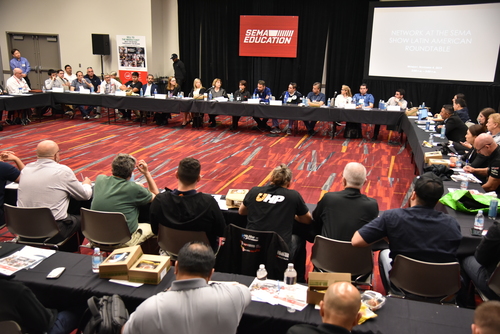




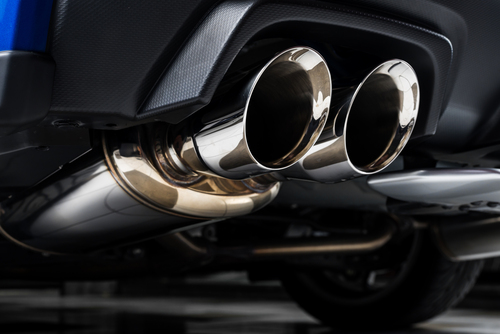
 Has your home state enacted SEMA’s exhaust noise model bill? To learn more, contact Christian Robinson with SEMA Government Affairs at christianr@sema.org, or find out by visiting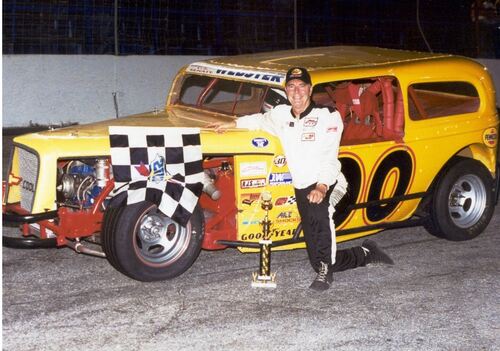
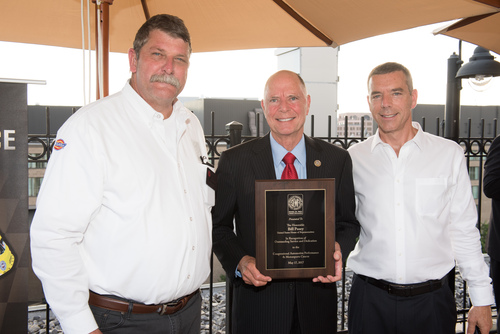
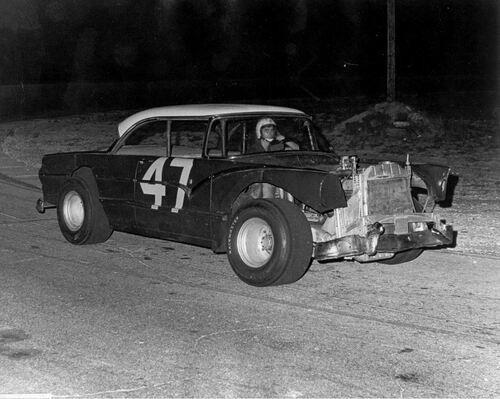
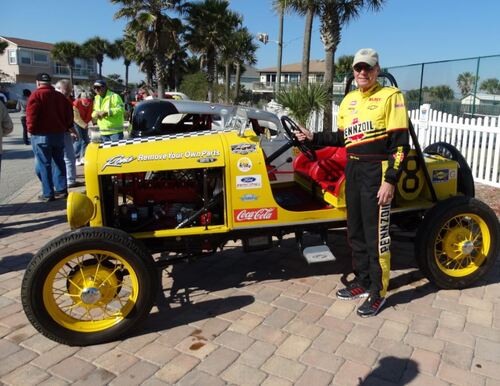
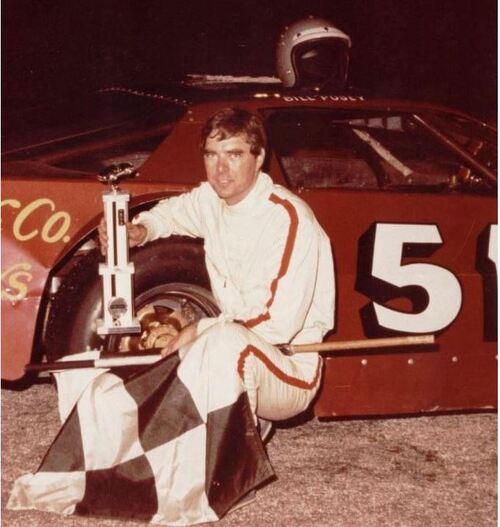
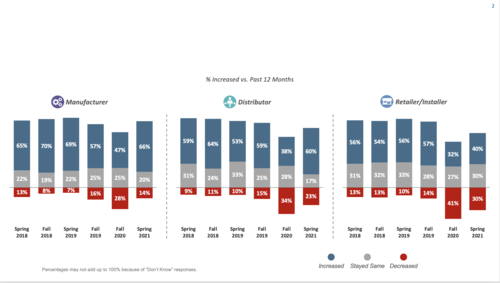
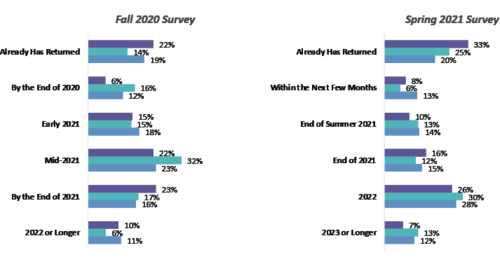
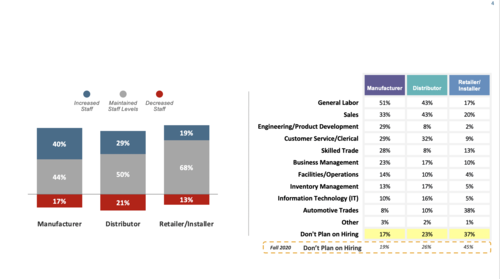

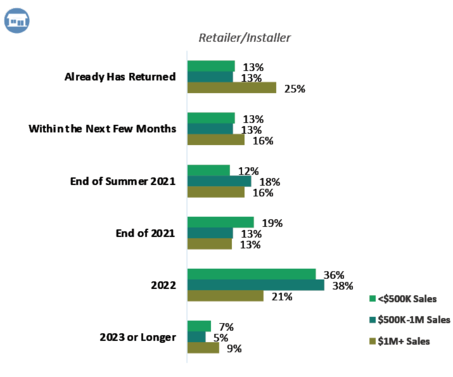
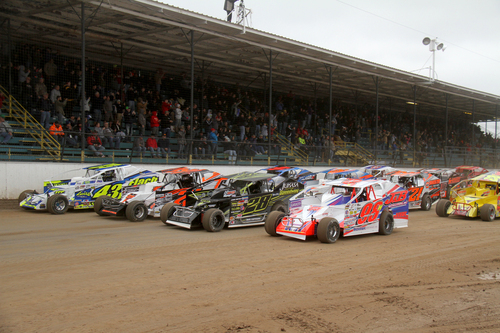 Economic Support for Racetracks: SEMA, the Performance Racing Industry and 17 other organizations representing live recreation and amusement venues asked the U.S. Small Business Administration (SBA) to expand the Shuttered Venues Operator Grant (SVOG) program to include motorsports, horse racing, recreation events, and mobile amusement. The COVID-19 pandemic posed significant challenges for racetracks and other live entertainment operators, especially when states placed restrictions on the sizes of gatherings. The U.S. Congress created the $16 billion SVOG program to assist live entertainment and performing arts venues that experienced significant revenue declines, but the SBA did not include racetracks and many other forms of live entertainment in the list of groups that are eligible to apply for grants. The coalition asked the SBA to reconsider its eligibility guidance and is also working with Congress to expand the SVOG program through legislation.

 About SEMA Virtual Education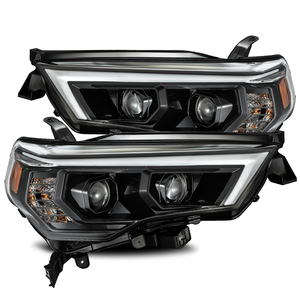
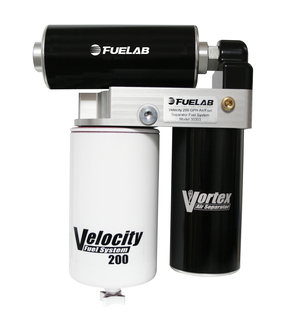
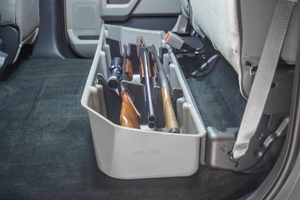
 SEMA Data is “data central” for the specialty-equipment segment, containing millions of products and vehicle fitments from performance and accessories brands. Created by SEMA, SEMA Data is the definitive, industry-owned and -operated centralized data warehouse, complete with comprehensive online tools, and a team of dedicated data and technology experts to assist manufacturers and resellers with product data needs. Learn more at
  Created in 1969, the SEMA Hall of Fame represents the most prestigious honor that the association can bestow on an individual. It is reserved for outstanding achievers whose work has significantly enhanced the stature and growth of the industry and association. For 2021, SEMA inducted Jessi Combs, Rick Love, Bob Moore and Carl Schiefer, all of whom have made lasting impressions on the automotive world.
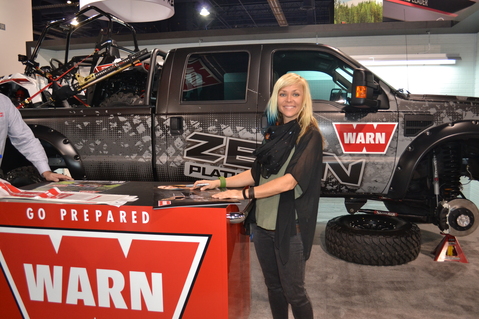
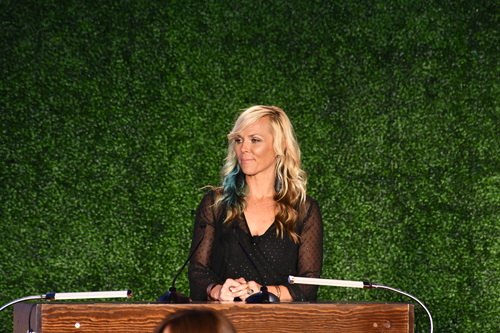
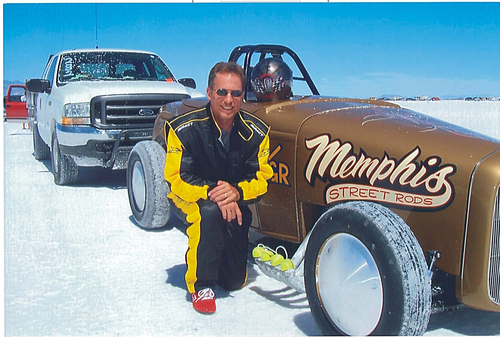
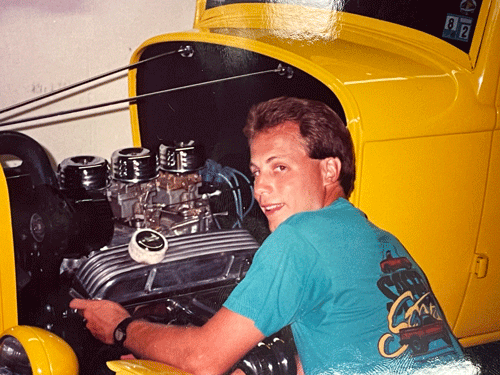
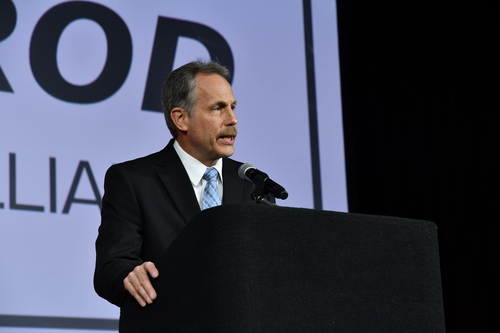
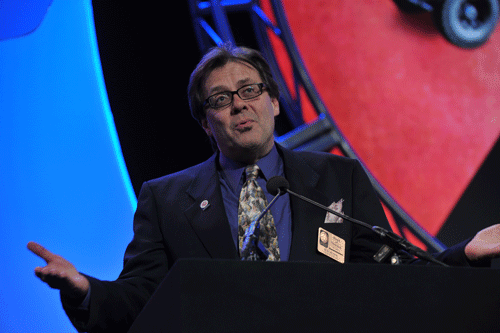
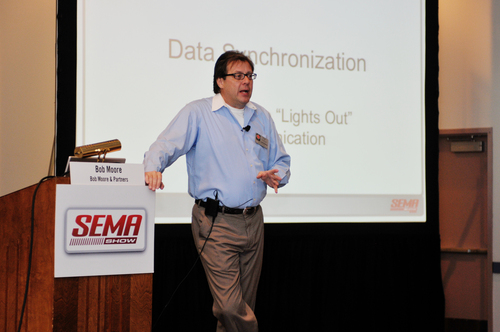
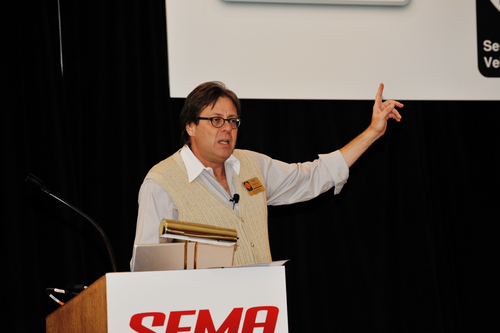
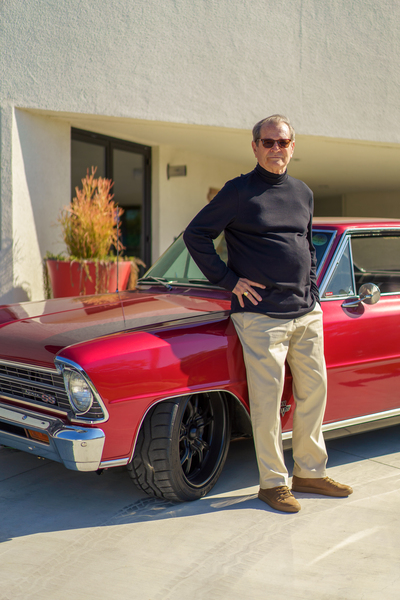
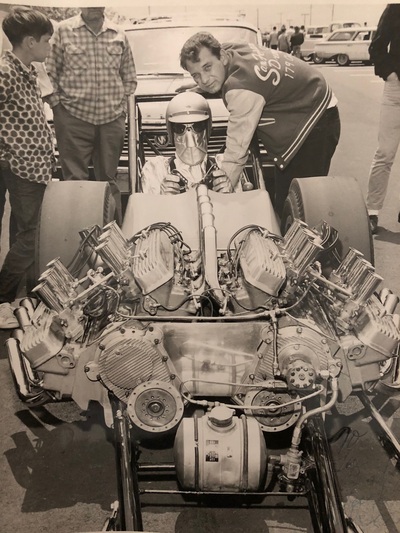
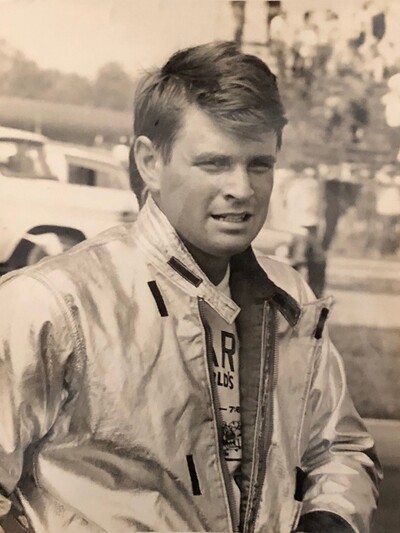
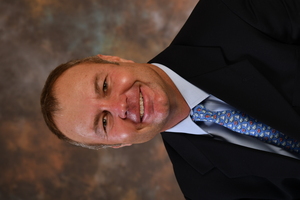 Chair-Elect
 Distributors/Retailers
 Distributors/Retailers
 Manufacturers
 Manufacturers
 Services