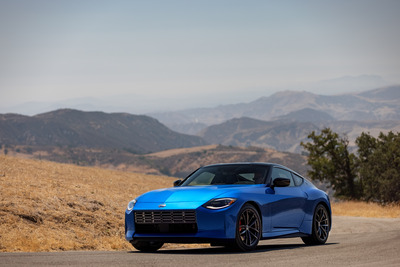
In partnership with Nissan, the SEMA Garage in Diamond Bar, California, has announced a Measuring Session for the all-new ’23 Nissan Z, March 15–18.
The performance-grade Nissan Z is equipped with a standard twin-turbo V6 engine with 400 hp and 350 lb.-ft. of torque and six-speed manual transmission.
The event will allow SEMA members to test-fit prototypes, 3-D scan, measure and have a close-up experience with the newly designed Z.
The event will feature a Performance grade level Z, equipped with:
A standard twin-turbo V6 engine with 400 hp and 350 lb.-ft. of torque.
Six-speed manual transmission.
U.S. market consumers will have the option of a Sport- or Performance-grade vehicle, six-speed manual or nine-speed automatic transmission, as well as a special-edition Proto Spec (limited to just 240 units).
Please note that this will be an in-person event at the SEMA Garage in Diamond Bar, California. In order to comply with state and local health guidelines, this event will require scheduled appointments. Due to high demand, all appointments will be time limited. All attendees will be required to sign an NDA upon arrival. Photography will be limited during the event.
*All registered attendees will be required to wear face coverings and practice social distancing during their appointment. With the exception of wheels & tires, there will be no disassembly of this vehicle.
SEMA eNews highlights new products from industry companies when available. To have your product considered for upcoming issues, send product press releases to editors@sema.org.
Mishimoto
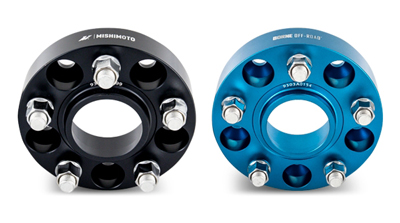
Wheel Spacers
Mishimoto's wheel spacers are direct-fit and available in multiple bolt patterns. The wheel spacers are available for Jeep Wrangler, Ford F-Series, Honda and more.
CRP Automotive
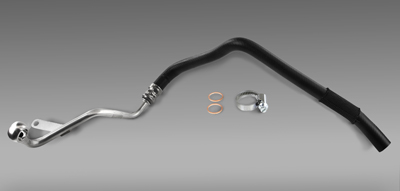
Direct-Fit Audi Turbo Coolant Return Hose Replacement
CRP Automotive offers the Rein Automotive Turbo Coolant Return Hose CHT0688 as a direct replacement for Audi P/N 06H121492D on a wide range of Audi models. The hose is designed to ensure trouble-free installation and does not require any adapters. The part also comes with the needed washers and hose clamp.
Rein Turbo Coolant Return Hoses are designed to withstand the high demands of automotive turbo systems. They are manufactured with premium OE quality materials to offer maximum protection from premature failures. Excessive heat, oil and ozone are factors that can break down rubber and cause hose failure.
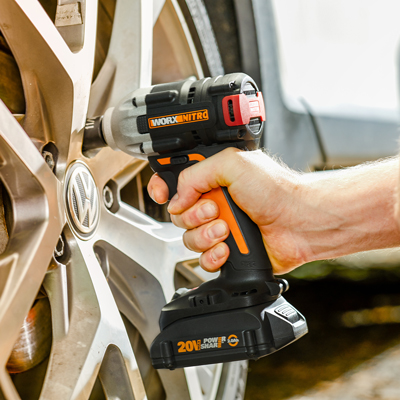
The new WORX Nitro 20V ½-in. Brushless Impact Wrench is a compact, lightweight powerhouse. This brushless impact wrench busts loose and tightens stubborn nuts, bolts and lugs, and it’s not limited to automotive use.
Instead of a lug wrench, the new WORX Nitro 20V ½-in. Brushless Impact Wrench applies the necessary torque to break free, spin or tighten lug nuts in no time at all.
The cordless impact wrench is equipped with a Nitro brushless motor for enhanced output, performance and dependability. The maintenance-free, brushless motor runs cooler with less friction and heat buildup than conventional motors with brushes.
The impact wrench provides three no-load speeds of 0-1300/2000 and 2900 rpm. The tool’s impact rate is 0-2000/3200 and itWORX Nitro 20V .5-in. Impact Wrench delivers 3,600 impacts-per-minute (ipm). The tool’s maximum torque is 2664 in.-lbs. Speed, impact and torque ranges are selected through the wrench’s digital keypad. Pressing the keypad advances the tool’s torque from low (1), to medium (2) and high (3). The fourth keypad is for driving screws with a screw icon ID.
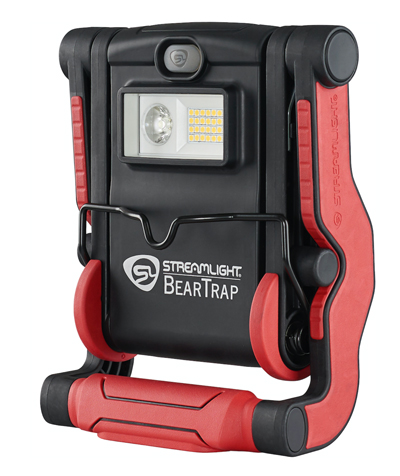
Streamlight Inc. introduced the BearTrap high-power work light that delivers up to 2,000 lumens. Featuring both spot and flood beams, the light can rotate 270 degrees in its frame and clamps to virtually any surface or stands hands-free. It also features a magnetic base and a hanging hook for more placement options.
The work light provides six output modes, including three spot and three flood settings. The BearTrap’s flood mode fills work areas with soft, bright light, ranging from 2,000 lumens on high with a 2.5-hour run time to 575 lumens on low, with an 8.75-hour run time. In spot mode, the light provides a white concentrated beam for specific task lighting, ranging from 1,000 lumens on high for 4.5 hours to 325 lumens on low for 12.5 hours.
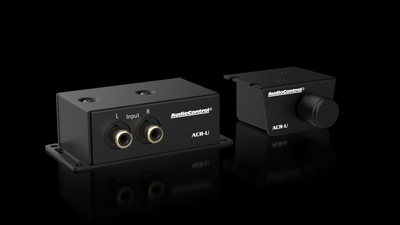
AudioControl has introduced the ACR-U universal volume control, a premium performance, highly durable level control that will improve the performance and user experience for OEM audio upgrades, classic car entertainment systems, marine audio installations and more.
The ACR-U is a passive control and takes RCA audio inputs into a compact receiver that connects to the volume control via standard ethernet cable for wire runs up to four hundred feet with zero loss—ideal for luxury yachts and other large-scale projects.
Users will appreciate that the ACR-U is a linear control, offering a smooth, even increase/decrease in output with the rotation of the knob. The ACR-U has been conformal coated for durability against the elements.
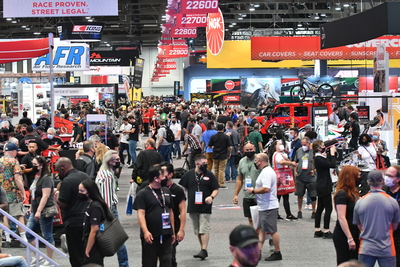
Companies planning to exhibit at the 2022 SEMA Show need to submit booth space applications and deposit prior to Monday, April 4, to participate in the Priority Space Selection process.
The space selection takes place May 2–18, and provides exhibitors with the opportunity to secure the best location for their SEMA Show display. The selection process is based on exhibitor seniority.
The 2022 SEMA Show space selection process takes place May 2–18, and provides exhibitors with the opportunity to secure the best location for their SEMA Show display.
The 2022 SEMA Show is scheduled for Tuesday–Friday, November 1–4, in Las Vegas. Complete information about the 2022 SEMA Show is available at www.SEMAShow.com.
The SEMA Data Excellence designation recognizes the companies that have worked with SEMA Data to recreate and relaunch industry-leading product data sets. Here are products from current SEMA Data members that have achieved data excellence.
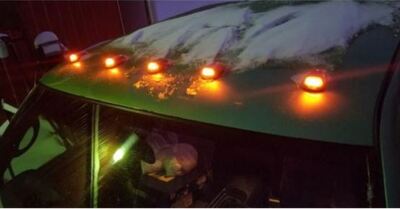
LoPro Wireless Solar-Powered Truck CAB LED Light System
The NEW LoPro series Wireless Solar-powered marker cab light system is revolutionary to the marketplace and gives you sharp and bright LED cab lights on your vehicle, but with no drilling, no holes, no wiring and no problems! Eliminate water leakage, corrosion on your roof and major issues with wired kits. The wireless cab light kit is easy to install, and after the first initial power on, takes care of the rest using light and vibration sensors to control the light. When the vehicle is moving, the sensor picks up the light vibration and turns the lights on so as it is dark out. Within 1–2 minutes after the vehicle is shut off, and the vibration stops, the cab lights will shut off on their own.
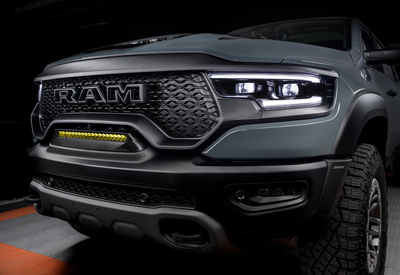
Looking for a ’19+ RAM 1500 light bar system with a seamless look? This unique LED system provides functional forward lighting while maintaining a factory appearance. Our high-powered 100W LED light bar is fitted into a housing that is designed to mimic the shape of the original factory bumper and integrate into the front end of the ’19+ RAM 1500 TRX or Rebel. Available in white or yellow LED emitters for a custom lighting solution. The projection is a mixed beam, so the user has the advantages of both a wide field of vision and a long narrow beam. The rugged construction of the RAM light bar provides durability in any condition, and the expertly designed system exhibits high-performance illumination with a seamless appearance.
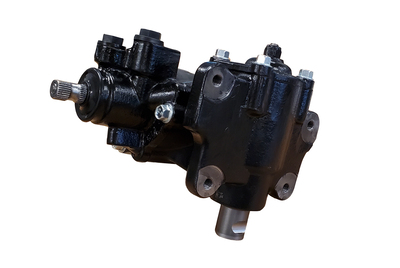
Borgeson Universal now offers the only quick ratio power steering box to replace the Saginaw/Delphi 800 series in the ’68–’91 Chevrolet K and V Series trucks. This all-new power steering box has a quick 12.7:1 ratio with firm modern steering feel. The Borgeson Street & Performance power steering box will bolt directly to the stock location and fit to the original power steering pitman arms. Steering box includes adapters to be able to use either O-ring or flare-style hose connections. This new Borgeson steering box uses a ¾-in.-30 spline input shaft and all pre-’77 trucks will require a new rag joint connector #990012.
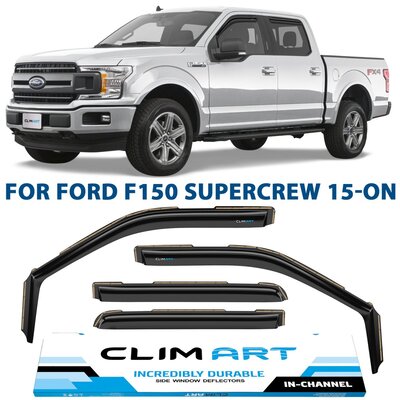
In-Channel Incredibly Durable Rain Guards for Ford F-150 ’15–’22 SuperCrew, Original Window Deflectors, Vent Deflector, Vent Window Visors, Dark Smoke Truck Accessories
CLIM ART window deflectors are specially designed to deflect rain, wind and snow to make car rides a more enjoyable experience for you and your family. They are an attractive smokey-gray color for added sun protection while also adding to the appearance of your vehicle. CLIM ART window deflectors are car-wash friendly. Package includes two front deflectors, two rear deflectors, installation instruction and degrease wipes. They are made of special, shatterproof, flexible polycarbonate. You can be sure that your window deflectors will not break during installation or use.
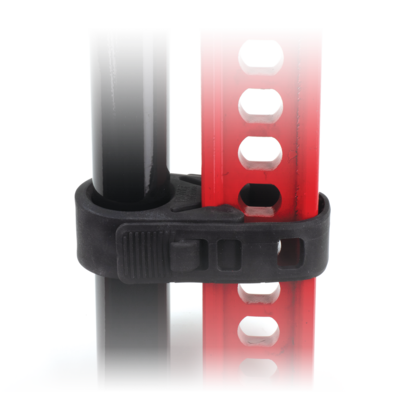
Introducing the new and improved Handle-Keeper. Using Quick Fist USA technology and material, the new and improved Handle-Keeper holds the Hi-Lift Jack’s handle to the upright steel bar, keeping it in place when not in use and eliminating “rattling” during transportation and storage. The new and improved Handle-Keeper works with all Hi-Lift Jack models and sizes. It easily attaches to the Hi-Lift Jack Handle and clamps to the steel standard bar when not in use. The new and improved design allows for proper use of the Hi-Lift Jack. The handle can be operated fully while raising and/or lowering without removing the Handle-Keeper. Still available in two colors: black (Mfr #HK-B) and red (Mfr #HK-R).
ENEOS Fully Synthetic Motor Oil 5W-20 is formulated from 100% synthetic base oil, providing superior fuel saving performance, thermal and oxidation breakdown resistance. These oils flow better at cold temperatures, reducing wear on critical engine parts at start up.
Features:
Formulated from 100% synthetic base.
Meets latest industry standards, API SP and ILSAC GF-6A.
The SEMA-supported “INFORM Consumers Act,” H.R. 5502, passed the U.S. House of Representatives as part of the “America Creating Opportunities for Manufacturing, Pre-Eminence in Technology, and Economic Strength Act of 2022” (America COMPETES Act), H.R. 4521. The INFORM Consumers Act, which appears as Section 20213 of the larger bill, is designed to protect Americans from criminals who sell counterfeit and stolen goods through online marketplaces. Below are highlights of the INFORM Consumers Act:
Requires online marketplaces to verify certain information about high-volume third-party sellers of consumer products (sellers who make 200 or more discrete sales or transactions totaling at least $5,000 during any continuous 12-month period in the last 24 months), including the seller’s bank account number, business tax identification number or a taxpayer identification number and contact information.
High-volume third-party sellers with $20,000 in annual gross revenue through an online marketplace would have to disclose to consumers the full name of the seller or company, business address and contact info (current working email address, phone number or other direct electronic messaging for the seller) after each sale.
Empowers online marketplaces to suspend high-volume third-party sellers of consumer products who do not provide the required information within 10 days of the request from the online marketplace.
SEMA is advocating for Congress to pass the INFORM Consumers Act in coordination with our partners that compromise the Buy Safe America Coalition, a diverse group of retailers, consumer groups, manufacturers, intellectual property advocates and law enforcement officials who support efforts at all levels of government to protect consumers and communities from the sale of counterfeit and stolen goods.
“We are alarmed by the danger posed to unsuspecting consumers when they purchase what they believe to be legitimate auto parts and equipment,” said Daniel Ingber, SEMA’s vice president of government and legal affairs. “The reality is that major sources of counterfeit products are internet consumer purchases that arrive in the United States via postal and overnight carriers. We are confident that by passing commonsense legislation like the INFORM Consumers Act, we can stop these bad actors from selling dangerous counterfeit automotive parts and equipment to unsuspecting consumers.”
There has been a steep rise in the sale of counterfeit automotive parts on online marketplaces, posing a threat to the safety of U.S. consumers. The coronavirus pandemic has only exacerbated the issue of counterfeit product sales, as traffic toward e-commerce has grown and current regulatory standards fail to hold third-party marketplaces accountable.
A recent study published by the Buy Safe America Coalition found that illegitimate imports entering the U.S. cost domestic retailers nearly $54.1 billion in sales annually, and more than 39,000 jobs in wholesaling and 280,000 retail jobs—paying more than $13.6 billion in wages and benefits to workers—were lost because of counterfeit production.
The U.S. House-passed America COMPETES Act is the counterpart to the U.S. Senate-passed “United States Innovation and Competition Act of 2021” (USICA), S. 1260, which did not include the INFORM Consumers Act. The House and Senate are expected to conference the two bills and reconcile their differences. SEMA and its coalition partners will advocate of inclusion of the INFORM Consumers Act in the final consensus bill produced by the two houses.
For additional information, contact Eric Snyder at erics@sema.org.
The National Highway Traffic Safety Administration (NHTSA) has released a final rule amending the federal motor vehicle safety standard regulating lighting equipment (FMVSS No. 108) to include performance-based standards for adaptive driving beam (ADB) headlights. ADB headlights or “smart headlights,” which have been permitted on vehicles in Europe since 2006, operate as high-beam headlights and automatically dim portions of the beam when oncoming vehicles are detected by sensors.
The bipartisan infrastructure bill that was signed into law last year mandated that NHTSA update FMVSS No. 108 to allow for this technology. The final rule permits the use of ABD headlights on new vehicles as well as aftermarket installation of these systems, both for replacing original equipment and replacing a non-ADB headlight.
For more information, contact Caroline Fletcher at carolinef@sema.org.
California Assembly Member Tim Grayson (D-Concord) introduced SEMA-supported legislation (AB 1951) that would create the California Manufacturing Attraction and Development Exemption (CA MADE). If passed, the CA MADE exemption would eliminate the sales tax on most manufacturing equipment purchases. SEMA members are encouraged to register their support for the bill by clicking here.
If enacted, California would join 38 other states that currently have full exemptions on manufacturing equipment from sales and use tax. This exemption would change the current, narrowly applied exemption, and focuses on improving cost competitiveness to spur investment in California. Accounting for both local and state taxes, California’s ranks among the highest tax rates in the country.
Assembly Member Grayson is a member of the SEMA State Automotive Enthusiast Leadership Caucus and was the 2019 winner of SEMA’s Stephen B. McDonald Legislator of the Year award. In addition to being a lawmaker, Assembly Member Grayson, along with his wife Tammy, is also an enthusiast. Included in the Grayson’s collection are two classic Ford Mustangs.
For more information, please contact Christian Robinson at christianr@sema.org.
SEMA eNews highlights new products from industry companies when available. To have your product considered for upcoming issues, send product press releases to editors@sema.org.
Quadratec
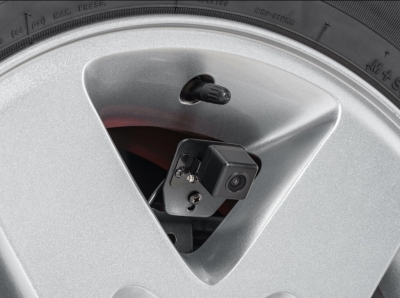
Spare Tire Mount Backup Camera for Jeep Wrangler JK
Quadratec Inc. has released a new Spare Tire Mount Backup Camera system for ’07–’18 Jeep Wrangler JK vehicles. The Spare Tire Mount Backup Camera improves the safety and overall visibility of the Jeep Wrangler. Available for vehicles equipped with both factory and aftermarket stereos, the backup camera reduces the blind zone of the Wrangler, which is often blocked by oversized spare tires or other bumper-mounted accessories.
The easy-to-install kit comes complete with a camera, a black powdercoated stainless-steel mounting bracket, a plug-n-play wiring harness and installation hardware. The Quadratec Spare Tire Mount Backup Camera features a 170-degree viewing angle with integrated fixed parking lines for maximum visibility. These guidelines can be deactivated during installation by bypassing the line wire. With a fully sealed zinc-alloy housing, the camera is corrosion-resistant and features an IP68 waterproof rating.
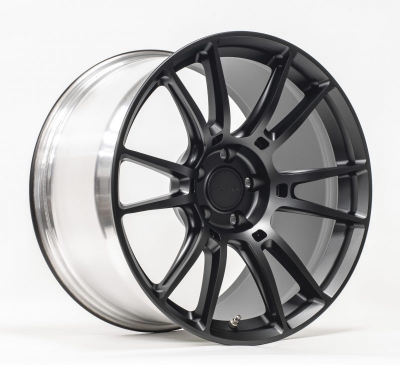
Derived directly from the SS1R-GT wheel (which is engineered specifically for ultra-competitive IMSA and WEC GT3 racing), the Forgeline one piece forged monoblock SS1R 5-Lug wheel is the company's lightest, strongest, and stiffest racing wheel made to date. The Forgeline SS1R 5-Lug wheel is precision-machined from a single forging of a proprietary grade of 6061-T6 aerospace aluminum. It features a split six spoke design, I-beamed spokes, tapered outer edge, and aggressive machining details that allow it to look as good as it performs.
The Forgeline SS1R 5-Lug is available in a range of widths and custom offsets in diameters ranging from 18 to 22 in. and can be finished with a wide offering of fully customizable powdercoat colors and finish options.
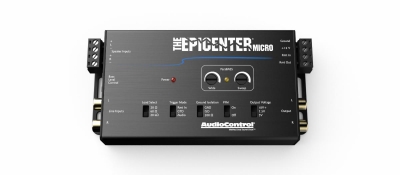
AudioControl has introduced The Epicenter Micro, a modernized revision of the Epicenter bass-restoring audio processor. A new member of The Epicenter family, The Epicenter Micro adds AudioControl’s OEM integration capability and increased durability from a new form factor that delivers easy-to-use top-mounted controls.
The Epicenter Micro delivers an ultra-clean signal from even the most challenging factory sound systems to one or more amplifiers, accommodating any system design. And with easily accessible top-mounted controls, perfectly calibrated OEM integration and superb sound quality have never been easier to achieve.
The processor comes with the brand new ACR-4 dual-concentric controller, enabling listeners to adjust both subwoofer levels (inner knob) and Epicenter effect levels (outer knob) all from a single, elegant module.
BDS Suspension
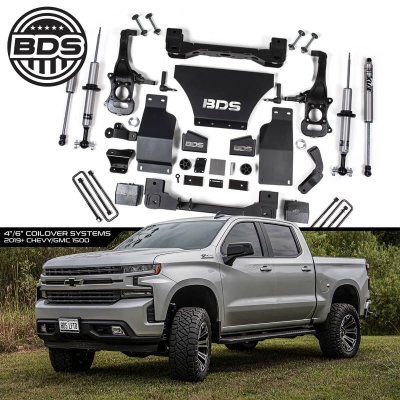
Coilover Lift Systems for '19+ GM 1500 Trucks
BDS Suspension is offering their 4-in. and 6-in. high-clearance coilover systems for the ’19–’21 Chevy/GMC 1500 trucks with FOX 2.0 Performance Snap Ring Coilover (struts). The systems join the existing 4-in. and 6-in. lift options as an intermediary between the standard (strut spacer) kits and full-blown FOX 2.5 R/R coilover systems by utilizing FOX 2.0 performance series IFP (non-reservoir) coilovers and 2.0 PS IFP rear shocks.
The new suspension system features the high-clearance IFS to correct suspension, steering and driveline geometry for improved on road comfort and off-road performance and combine with FOX 2.0 coilovers and shocks for improved performance.
Raptor Series
Slide Track Series Bracket Kit Covers
The new Raptor Series Slide Track Series Bracket Covers are designed to install with all Raptor Slide Track Series Brackets that are easily trimmed to the user's liking. The heavy-duty thermoplastic rubber is designed to last in all elements and help to protect powdercoated steel brackets from snow.
Raptor Series offers the bracket covers in packs of four, six and eight.
Gas Monkey Garage Becomes Title Sponsor for Peter Hickman in Isle of Man ’22 TT Races
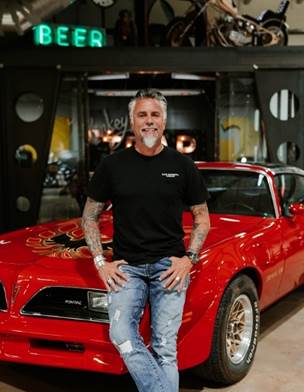
Gas Monkey Garage will become the title sponsor of Peter Hickman and FHO Racing at the 2022 Isle of Man TT Races. Headed by entrepreneur Richard Rawlings, Gas Monkey Garage will utilize the platform of the world’s largest road race to spread the Gas Monkey influence and brand across the globe. Gas Monkey Garage will showcase the 37.73-mile Mountain Course to a whole new audience via its social-media platforms, which boast 20+ million followers.
The new partnership will see the Gas Monkey Garage logos and brand adorn outright lap record holder Hickman’s BMW M1000RR in the Superbike, Senior and Superstock races at the TT, which makes its return to the calendar after being absent in 2020 and 2021 due to the COVID-19 pandemic. With five wins and 14 podiums between 2017 and 2019, as well as the outright and Superstock lap records, 34-year-old Hickman—who still holds the fastest Newcomer lap around the Mountain Course—will go into the meeting as the undoubted favorite for honors.
JRi Shocks Continues Partnership With ARCA Menards Series
JRi Shocks announced the company's continued sponsorship as an authorized product supplier in the Performance Parts Program for the ARCA Menards Series through the 2022 season. JRi Shocks will provide a contingency award to the highest finishing driver participating in the program, as well as the hard charger rookie and hard charger non-rookie at each event across the ARCA Menards Series, the ARCA Menards Series East and the ARCA Menards Series West.
Trans Am Series Announces New Leadership in Driver Orientation Program
The Trans Am Series presented by Pirelli has announced new leadership for its Driver Orientation Program. Following the upcoming retirement of Terry Earwood, who has managed the program since its inception, Ernie Becker will be at the helm of the curriculum, which aims to assist SVRA crossover drivers and series newcomers both on and off the race track. Becker has previously participated in the series with Class Auto Motorsports as team manager, driver development coach, and test driver from 2016 to 2018. The 2022 Trans Am Series season kicks off at Sebring International Raceway on February 24–27. For more information, visit gotransam.com.
Patriot Sprint Tour Sets 14-Race Schedule
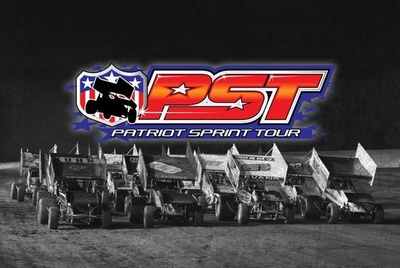
Officials with the A-Verdi Storage Containers Patriot Sprint Tour have announced its schedule for 2022. The point fund will pay out a guaranteed $20,000 cash to the top five finishers in points in honor of the series’ 20th anniversary season. After a two-year hiatus, the season will kick off at the New York State Fairgrounds in Syracuse, New York, for the 34th annual Syracuse Motorsports Expo, March 11–13. Next will be the annual Outlaw Spring Nationals at Outlaw Speedway. The event will pay $4,000 to the winner on Friday, April 15, and marks the first of five trips to the Dundee, New York-based oval. Click here for the complete schedule.
NASCAR Cup Series Drivers Form Advisory Council
Previous and current NASCAR Cup Series drivers have formed the Drivers Advisory Council, which former competitor Jeff Burton will lead, according to published reports. The council has a collective goal to “move the sport forward and conduct positive change.” The Board of Directors includes Kurt Busch, Austin Dillon, Denny Hamlin, Corey LaJoie, Joey Logano, Kyle Petty, and Daniel Suarez. The initiative marks the second iteration of a drivers council, including one in 2015 and another in 2018. Burton stated the key to making this new council work is to “have someone on the outside that can help. There are conversations that the drivers don’t have to be involved in. They can [meet] with me, then I can go have the lengthy conversations,” Burton said, according to published reports.
WISSOTA Announces Rod Lindquist as Interim Executive Director
The WISSOTA Promoters Association has announced Rod Lindquist as the interim executive director during its search for a permanent position. He will officially start on March 1. Lindquist brings years of motorsports and business experience. He was a former WISSOTA Late Model sponsor, car owner in several racing series, primary sponsor in the former ASA Midwest Tour, and sponsor in NASCAR for former NASCAR driver and car owner Stanton Barrett. Lindquist replaces Carson Gramm, longtime WISSOTA executive.
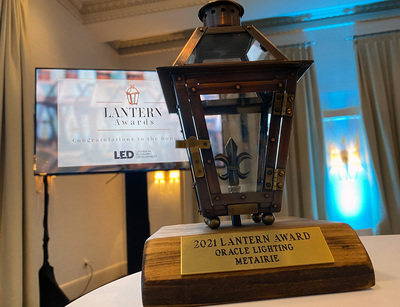
The Louisiana Lantern Awards provide an opportunity for the state to celebrate manufacturers from across Louisiana.
Oracle Lighting received the 2021 Louisiana Lantern Award last Wednesday evening during a special reception at the Hilton Baton Rouge Capitol Center. The company is one of eight manufacturers across the state to be recognized this year.
The Louisiana Lantern Awards provide an opportunity for the state to celebrate manufacturers from across Louisiana. The winning company for each district displays a contribution to the Louisiana economy and their local business communities through employee growth, increased revenue, facility expansion and community engagement. The Jefferson Parish Economic Development Commission (JEDCO) nominated Oracle Lighting for the special distinction this year. The lighting manufacturer was selected from the Greater New Orleans region to receive the coveted award.
Born from humble beginnings in a Metairie, Louisiana, garage, Oracle Lighting has grown into a global leader in the automotive lighting industry. The company was founded by Justin Hartenstein when he was just 18 years old. Now he and his wife, Tiffanie, run the business together, innovating in both product offerings and operations. Today, Oracle employs more than 30 full-time team members and has made nine appearances on the Inc Magazine “Inc. 500/5000 List”, which highlights the nation’s fastest-growing small businesses. Oracle plans to expand the company’s headquarters to double the size of the main facility in 2022, which will allow Oracle to create more jobs and significantly increase their production capabilities.
In November of 2021 Oracle also received an honor from SEMA, when it was named the 2021 Manufacturer of the Year. Oracle Lighting has won many local, national and international awards for its work. The company gives back whenever possible. As an example, Oracle helped to donate thousands of PPEs to first responders and health care workers at the start of the pandemic. The founders also serve a number of local charitable organizations.
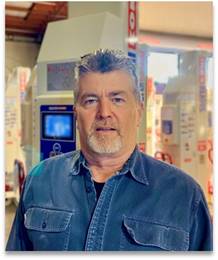
Cary Redman
Race Winning Brands Welcomes Cary Redman to Its Team
Race Winning Brands (RWB) welcomes seasoned industry professional Cary Redman to the RWB family as vice president of sales – automotive. Redman has more than 25-years’ experience in the performance manufacturing and retail sectors working with veteran organizations such as Holley Performance, Mr. Gasket Co. and Edelbrock in sales leadership roles.
Redman’s passion and involvement in automotive performance began at an early age, growing up in Michigan surrounded by automotive racing and manufacturing history. He will spend time with each of RWB’s automotive brands to become familiarized with their leading components and technology, ultimately helping him champion customer relationships and sales and marketing initiatives. He will be based out of RWB’s Mentor, Ohio, headquarters effective immediately.
David Hamblin
AP Racing Opening New U.S. Office
AP Racing is opening an all-new U.S. office in Charlotte, North Carolina. AP Racing North America Corporation (APRNA) will provide customers throughout the United States and Canada with greater access to AP Racing’s road and race technologies. According to AP Racing, investment in this new office and a skilled local team will greatly enhance support and customer liaison for new and existing customers using AP Racing’s high-performance brake and clutch components.
The new office will closely support all AP Racing’s U.S. customers, including its recent contract win with an OEM, which will adopt AP Racing components, with production beginning later in 2022. While AP Racing has been a mainstay of the U.S. market for some time, APRNA will enhance the connection between AP Racing’s global headquarters in Coventry, United Kingdom, and direct customers, including OEMs and race teams in the United States.
David Hamblin, managing director at AP Racing, commented: “Formation of our first U.S. office, AP Racing North America Corp., is a major milestone in the history of AP Racing and further development of the organization within the strategic North American automotive market. APRNA will support business for both road and race applications in the United States. Centrally located in Charlotte North Carolina, the new office provides the perfect location to service our expanding customer base.”
The new APRNA site is undergoing final fit out and is expected to open in April.
“Oil & Whiskey” Podcast Arrives
On the new IRONCLAD original series, “Oil & Whiskey,” the crew behind the creations brings listeners into the shop for discussions on the kind of content gearheads want: insights about the latest tech, updates about their custom builds, events, industry news, tips and more. Along with insights from the hosts, Jeremy Gerber, Phil Gerber and Josh Henning, listeners also get to hear the guys answer their questions, break down some of their favorite models and get to know the crew responsible for the shop’s award-winning collection of musclecars. Listen on Apple Podcasts or Spotify.
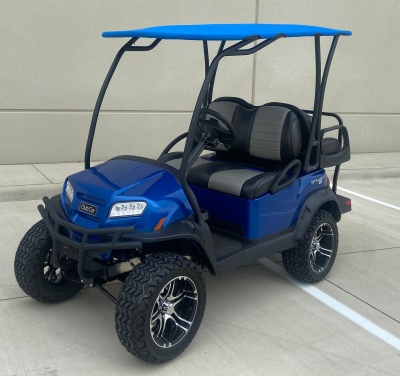
Meyer announced that the winner of its custom golf cart promotion is Quadstar Tuning. The golf cart is equipped with upgrades, including wheels, tires, lift, roof and rear seat. Meyer Distributing launched the Golf Cart promotion in September 2021, and ran it through the end year. The company partnered with Titan Fuel Tanks and Fluidampr to reward a qualifying customer.
Hedges & Company Named a 2022 Google Premier Partner
Digital marketing agency Hedges & Company has been awarded 2022 Premier Partner status in the Google Partners program, a program for accreditation with Google Ads. To qualify for Premier Partner status an agency must rank among the top 3% in the United States. In February, Google recognized the achievements of top-performing digital marketing partners across the globe by awarding Premier Partner status as part of the new Google Partners program.
The Google Partner program is designed for advertising agencies and third parties that manage Google Ads accounts for other brands or businesses. It is designed to empower digital agencies by giving them innovative tools, resources, and support to help their clients succeed and grow online.
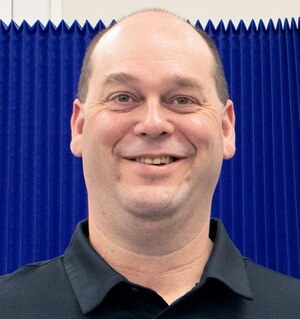
Michael Tillbery
Stertil-Koni Names Michael Tillbery Service Manager
Stertil-Koni has announced that Michael Tillbery has joined the company as service manager, based in the organization’s North American headquarters in Stevensville, Maryland. In his new post, Tillbery brings more than three decades of top experience specializing in customer care, technical vehicle service and maintenance support, service management, project coordination and heavy-duty equipment operation. Most recently, Tillbery worked for the Maryland Queen Anne’s County government as a heavy equipment operator, where he oversaw county-wide safe maintenance of roadways, bridges and overpasses and assisted with critical disaster relief. Prior to that he worked for Criswell Performance Car in Annapolis, Maryland, specializing in Audi and Acura as a service manager, dispatcher and quality assurance coordinator.
Live Fast Motorsports Names Jessica McLeod CEO
Live Fast Motorsports has announced that former general manager Jessica McLeod has been appointed as the company’s new CEO. McLeod will be working directly with the company’s team owners Matt Tifft and her husband, co-owner and driver B.J. McLeod. The McLeods have had many business ventures within NASCAR’s K&N, Trucks, Xfinity, and Cup Series. Jessica and B.J. co-own the Xfinity Series B.J. McLeod Motorsports (BJMMS), which fields three full-time stock cars (Numbers 5, 78 and 99).
P.T. Muldoon
CRP Industries P.T. Muldoon Named as MERA Technology & Operations Council Chairman
CRP Automotive announced that Director of Engineering, P.T. Muldoon, has been named Chairman of the Technology & Operations Council of MERA—The Association for Sustainable Manufacturing.
Founded in 2021, the Technology & Operations Council is a peer group network that provides a forum for MERA member companies to discuss the latest techniques, developments, and equipment that are advancing the remanufacturing industry.
Muldoon currently oversees CRP’s Complex Electronics and Mechatronics R&D Center in Ann Arbor. Prior to joining CRP Automotive, he served as the Director of New Product Development - Electronics Remanufacturing for BBB Industries, where he helped head up the company’s Detroit Technical Center.
Optronics Celebrates 50-Year Anniversary With New Headquarters, Website, and More
Optronics International announced that it will move its North American headquarters into a new 200,000-square-foot facility on a 17-acre campus as part of the company's 50-year anniversary. Accompanying the announcement was the introduction of a new 50th anniversary logo and a newly revised corporate website. Details of the new facility, logo, website and other related developments will be presented to the industry at Optronics booth 5191 during NTEA Work Truck Week, March 8–11.
With 700 staff members worldwide, Optronics will ultimately consolidate its three current Oklahoma-based operations into the new Tulsa facility and will maintain its Goshen, Indiana, location and its USA Harness manufacturing plant in Winnsboro, Texas. The Tulsa campus will serve as the company’s corporate headquarters, as well as a research and development lab, assembly plant and distribution hub, and will allow Optronics to immediately expand to accommodate rapid growth.
Have some company news you would like to share? Let us know and the news may appear in an upcoming issue of SEMA eNews. Send your items for consideration to editors@sema.org.



 Patriot Sprint Tour Sets 14-Race Schedule