
By Mike Imlay
If you're an industry buyer or media representative, there are plenty of reasons to attend the 2023 SEMA Show this October 31-November 3, in Las Vegas--over 400 new reasons, to be exact. That's the number of new exhibitors signed on to the Show so far, bringing the number of total exhibitors to more than 2,200, ensuring the introduction of several thousand new products.
But that's just part of the story. The specialty-equipment industry is undergoing possibly its greatest transformation in recent history. New ideas, emerging technologies and transportation options, fresh possibilities and novel challenges are everywhere. And the annual SEMA Show is arguably the single best place to take them in, grasp where the industry is headed, and position your business for future success.
"No two SEMA Shows are ever alike," asserts SEMA Trade Show Director Andy Tompkins. "Every year is a new year, filled with new opportunities, new exhibitors and new concepts. There are new products, new advancements, new launches and new brands that have never been part of the Show before. Even our returning exhibitors never sit still. Our marketplace is exciting and dynamic, and the SEMA Show embodies it all."
To assist attendees with their Show planning, SEMA News asked Tompkins for a quick tour of must-see additions and changes to the Show, starting at the Las Vegas Convention Center's (LVCC's) West Hall and ending at the South Hall.
West Hall: The SEMA Show Main Stage Experience
The centerpiece of the SEMA Show's newly updated industry education program will figure prominently in the LVCC's West Hall. Highlighting the 2023 Main Stage Experience will be star athlete and car enthusiast Tim Tebow, who will deliver his keynote address Thursday afternoon, November 2.
"In terms of brand-new offerings, we've entirely re-envisioned our educational events and seminars," relates Tompkins. For starters, seminars will now be offered Monday, October 30, before Show opening, giving exhibitors greater access to the education tracks. Additionally, there will be more than 99 seminars offered throughout Show week—many of them new or revamped—and several high-profile keynote speakers and events on the Show floor itself.
"A few of the more notable ones include the Women in Automotive Symposium, the Digital Marketing Boot Camp and our first-ever EV certification program in partnership with Legacy EV," Tompkins points out. "There's also variety of new diversity, equity and inclusion [DEI] programs, and we have a whole new series of thought leaders with fresh curriculums, perspectives and next-step ideas." (Consult SEMAShow.com for the full education roster and registration.)
West Hall Diamond Lot: The Overland Experience
Just three years old, the massive LVCC West Hall is relatively new in itself, but the major change here for the 2023 Show is the repositioning of the Overland Experience feature outside the hall. With roots in remote parts of the world, Overlanding continues to gain in popularity across the U.S. For 2023, the SEMA Show section will include industry experts addressing key Overlanding opportunities and trends that can add important new profit centers for a business. "This section begs to be outdoors, so we're excited to be relocating it to the Diamond Lot," says Tompkins. "The Overland Experience is a unique showcase centered on outdoor recreation, and this change really gives us a chance to educate attendees about pastime's vehicles, accessories and lifestyle in a setting that they're designed for."
North Hall: The New Products Showcase
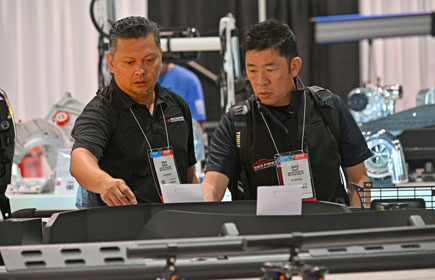
This year, the New Products Showcase moves to the North Hall. It remains the first stop for attendees in search of innovations reflecting the latest automotive trends.
The addition of the West Hall has shifted the LVCC's center of gravity, so to speak. And considering how the New Products Showcase is the most popular destination for attendees and buyers, repositioning the feature in the North Hall makes visiting it more convenient than ever. "What hasn't changed is the Showcase will once again be one of the largest collections of new products in the world," Tompkins states. "We expect over 1,700 new innovations, so this section is a great chance for buyers to understand the latest trends and really see the products up close." Plus, using the SEMA Show app, attendees can scan the products that most interest them to collect data on the manufacturer and map a route to their booth.
North Hall: First-Time and Featured Exhibitors
While visiting the LVCC North Hall, buyers and attendees will also want to add the First-Time and Featured Exhibitors section to their Show itinerary. Composed mostly of exhibitors new to the Show, it represents a prime opportunity to keep pace with a changing industry. "It's really a dedicated area where you'll see a variety of innovations, meet new exhibitors and become acquainted with a host newly introduced products from the different business categories, including restyling, restoration, global tire companies and more," notes Tompkins.
North Hall: The Art Walk
Highlighting automotive art by Chip Foose, Max Grundy and many other notable creators, the popular SEMA Show Art Walk will get a more prominent and expanded location in the North Hall. "This year it will span the width of the hall, creating a unique showcase between the Business Services and Mobile Electronics sections. According to Tompkins, "The Art Walk reflects the automotive culture and lifestyle that surrounds the SEMA Show. It's a chance for showgoers who love the industry to experience an artistic point of view and purchase some unique posters, lithographs and paintings."
(Speaking of art, Chip Foose, the SEMA Show's official artist, is currently at work on new and expanded signage and visual cues to enhance the thematic feel of the Show. In addition, there will by a wide variety of new SEMA Show digital content and display packages throughout the LVCC designed to highlight the trade event's community hubs and encourage connections between exhibitors and attendees.)
Central Hall: The EV and Future Propulsion Feature
Traditionally, Central Hall is home to the Racing & Performance, Hot Rod Alley and Restoration Marketplace sections, among others. This year, the hall adds the rebranded SEMA EV and Future Propulsion area, formerly known as SEMA Electrified.
"As its new name indicates, the concept is an exploration of the future of mobility—not just battery electric vehicles, but the entire gamut of alternative fuel sources and powertrains," explains Tompkins. "It's going to be as much an educational tool as a showcase."
Greatly expanded for 2023, the space will feature SEMA-curated exhibits and demonstrations, along with an adjacent area for brands to display products and innovations. "There will be discussions, workshops and meet and greets," Tompkins adds. "We'll also be engaging the media. You'll see a great synergy between what SEMA is showcasing and what the industry is doing in its own right."
Central Hall: SEMA Data
SEMA Data is the association's industry initiative to connect manufacturers and resellers through the sharing of quality product data. Located in the Central Hall, the SEMA Data booth is set to introduce a whole new series of programs to Show attendees. "For one, SEMA will be promoting a whole new subscription program, so visiting the booth affords both exhibitors and attendees a great opportunity to learn more about data compliance and leveraging clean data to drive business," notes Tompkins.
South Hall: The SEMA Garage, SCRS
With locations in Diamond Bar, California, and Detroit, the SEMA Garage program gives SEMA-member businesses access to special high tech-tools and equipment they need to get products off the drawing board and into their customer hands. Offering services like 3D scanning, 3D printing, advanced driver assistance systems (ADAS) testing, vehicle measuring sessions, fully equipped bays, emissions testing and certification, the Garages are the only known facilities of their kind in the U.S.
This year, the SEMA Garage relocates to the west portion of the Upper South Hall with a greatly expanded exhibit focusing on ADAS and other automotive and manufacturing technologies. "It will be a highly interactive area focusing on trends in product development, emissions testing, and ADAS calibration after vehicle repair or modification, and more," relates Tompkins.
"It's also worth mentioning that the Society of Collision Repair Specialists [SCRS] will have its Collision Repair Stage in the South Hall. It's another educational opportunity for anyone in that field to learn the latest repair and refinish techniques."
Outdoor Activations and Feature Vehicles

New outdoor activations promise plenty of tire smoke and excitement, but at their heart these Show features are designed to demonstrate products and concepts in action.
Known for the excitement outside the LVCC halls as much as inside, the 2023 will include several soon-to-be-announced outdoor activations, including fast-paced demonstrations, thrilling ride-and-drives, and inspiring feature vehicle displays. Even the annual Monday Night Reveal party before the Show's opening and the SEMA Cruise at Show's end are slated to get a few new twists, with more than 1,000 vehicles expected to participate in the latter.
"We're always looking to change things up and push boundaries," Tompkins confides. And while he couldn't yet discuss sponsors and participants for all the activations, Tompkins did hint that the popular Optima Village is returning with some fresh excitement, along with other big industry names. "Our outdoor spaces will be phenomenal," he promises. "They'll not only present products as they're being used in the marketplace, but the thrills and enthusiasm they bring to our consumers. There's always a lot of excitement and smoke, and QR codes on the many feature vehicles lead attendees directly to the exhibitors who make the products."
The Las Vegas Festival Grounds: SEMA Fest
While not actually part of the SEMA Show, we'd be remiss if we didn't mention the debut of SEMA Fest at the nearby Las Vegas Festival Grounds, November 3-4. "SEMA Fest will mark the launch of a whole new consumer-facing event dedicated to the automotive lifestyle through the celebration of car culture, music and craft food," Tompkins explains. Tickets are sold separately from the SEMA Show.
Greater Las Vegas
Beyond the SEMA Show, there's also a lot new in Las Vegas itself—namely new hotels, entertainment venues, restaurants and infrastructure. "Vegas is definitely not resting on its laurels; it's continuing to expand. So, there will be much that's new to explore outside of Show hours," according to Tompkins.
From a transportation point of view, that also means Show goers will want to factor the city's monorails, taxis and ride-sharing services, hotel shuttle buses, and other forms of public transit into their plans. Pertaining to the LVCC itself, the underground Tesla Loop will be in operation, with stops at the West, Central and South Halls, plus the Loops extension to Resorts World Las Vegas is expected to be open in time for the 2023 Show.
A Show for a Changing Industry
All in all, the 2023 SEMA Show will both lead and mirror a marketplace that continues to innovate and influence the future of the automobile and mobility. "The synergy that our global industry brings to this Show is unlike any other event, and when we get together, we're definitely more than the sum of our parts," says Tompkins. "Plus, if you think about the current narrative in the media and decisions being made at governmental levels, this industry is on the tip of the spear, so to speak, in terms of bringing our society to the future."
"And you'll see real solutions and advancements at our Show," he adds. "Having over 400 new exhibitors is proof that this market continues to push the envelope. We're really thinking about different forms of mobility, new products to improve automotive transportation and lifestyle, and sharing new insights through education and outreach. In the end, all the collective energy is what I get excited about, not to mention the spectacle that is the SEMA Show. There's really no other trade event like it."
Register Now for the Show
If you haven't yet registered as a SEMA Show attendee, don't miss out on the experience. Registration through September 29, 2023, is just $60 and allows you to get your badge in the mail, saving time onsite at the Show. (Starting September 30, registration increases to $120. Also note that registration at the Show will move to the east side of the Lower South Hall, with some pre-registered badge pick-up services in the West Hall.) For more information and registration, go to SEMAshow.com/attendee.
Get the SEMA Show Mobile App
Like other aspects of the Show, the official 2023 SEMA Show app will also feature important new updates. The app is the perfect pre-Show planning tool, and also puts the entire Show in your pocket when you get there. It arms you with exhibitor lists, turn-by-turn directions around the LVCC, and comprehensive listings of new products from the New Products Showcase, feature vehicles, Show event and education schedules, and a host of other features. Download it today free at your mobile device's native App Store.
Good News for Exhibitors: Strong Attendee Support "Reminiscent of Highest Records" Expected for 2023
The 2023 SEMA Show, October 31-November 3, is gearing up with incredible industry support from a wide range of industry segments from across the world. Exhibitor registration is on pace to exceed 2,200, with 400 first-time exhibitors already signed on.
For exhibitors, the Show delivers enormous buying power through its attendees, plus scores of qualified trade, mainstream and new media members alongside established and emerging influencers. These unique attendees help exhibitors expand their branding and product lineups well beyond their booths, making the SEMA Show a sound investment for the year to come.
"The SEMA Show is shaping up to be one of the best events to date. The industry support is reminiscent of our highest attendance records, and participation is trending above pre-pandemic levels," said SEMA Show Director Andy Tompkins. "From key buyers, top media members and qualified industry influencers, the professionals you need to help grow your business will be in Las Vegas for what is shaping up to be a real industry homecoming!"
There is still time to secure booth space for the 2023 SEMA Show. Visit SEMAShow.com/exhibitor to start creating your Show plan today!


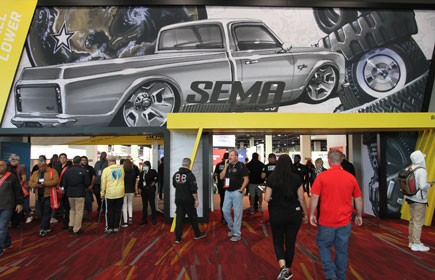 Vegas for the 2023 SEMA Show, October 31-November 3. As exhibitors gear up to connect with a projected 160,000 buyers, influencers, dealers and more automotive professionals, here's a list of key deadlines and checklists to keep the industry on track and on budget.
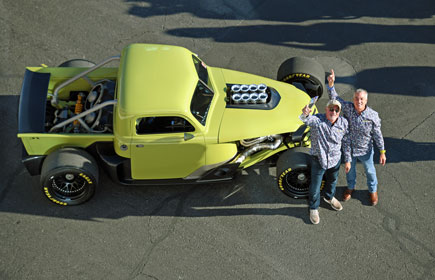 is proud to announce that Mothers Polish is returning as the competition's presenting sponsor!
 financial impact on wheel and tire aftermarket companies--particularly when it comes to data. Knowing what to order, how much to order, how to price items and where to store them in your network are all important for saving money and maximizing efficiency.
 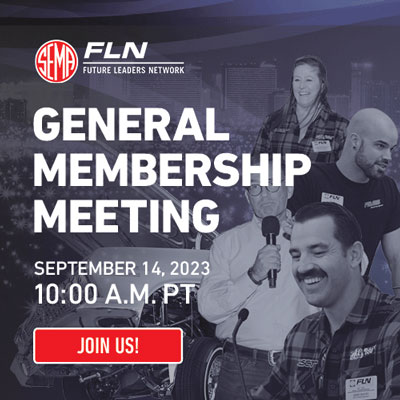 hosting an online General Membership Meeting on Thursday, September 14, at 10:00 a.m. PDT.
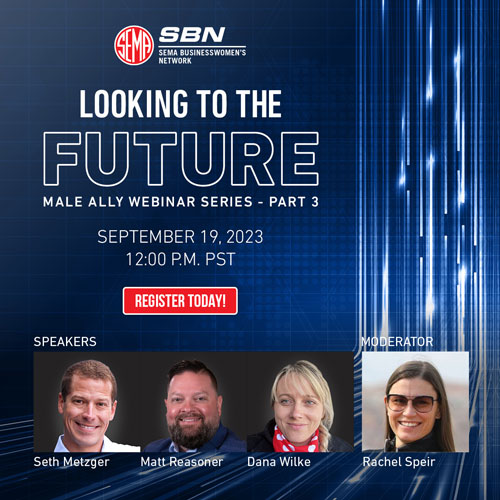 Businesswomen's Network (SBN) Male-Ally Webinar series provided members with examples and knowledge of a male ally in the automotive aftermarket.
 2023 event, October 31-November 3 in Las Vegas. But the comfort of having a phone number available "just in case" something happens can often make you feel as safe as snapping in your seatbelt.
 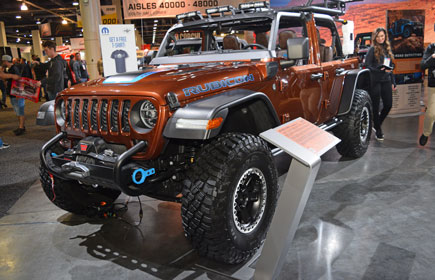 presence through the exclusive Products for Project-Vehicle Builders program.
 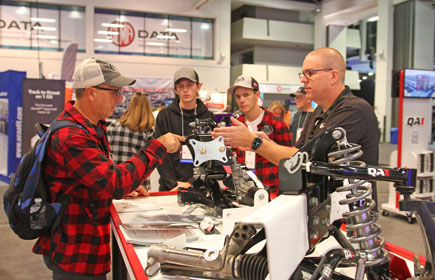 their products, feature vehicles, and services in person, October 31-November 3 in Las Vegas.