The seventh annual SEMA Battle of the Builders contest featured more than 330 submissions from a talented pool of builders who were looking to win the prestigious competition in 2020. The Top 40 and the Top 12 finalists were selected by a panel of industry experts before the 12 finalists performed the judging duties and rated their peers to name a winner in each category (Hot Rod, Truck/Off-Road, Sport Compact, and Young Guns) and one overall Top Builder. Brady Ranweiler (Hot Rod), Mark Giambalvo (Truck/Off-Road), Chip Foose (Sport Compact), and Cody Medeisis (Young Guns) won their respective categories before Ranweiler was named the overall winner. Below are some of the media that followed the competition.
“Tech Life Today”
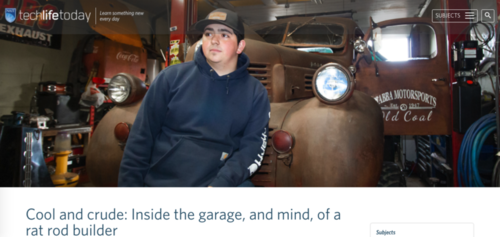
Editor Scott Messenger did a profile piece on builder Matteo Medoro, a 20-year-old Canadian builder who has competed in the Young Guns category the last two years. Medoro posted a Top 40 finish in 2020 with his ’47 Dodge 3/4-ton W250, which features hand-painted door signs and an interior lined with potato sacks.
“DUB”
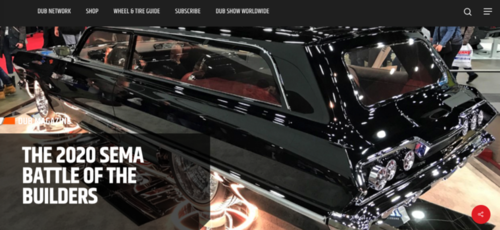
DUB kept its readers informed on the results of the 2020 competition, featuring winner Brady Ranweiler’s ’63 Chevrolet two-door wagon prominently in its coverage. The editors noted how the pandemic couldn’t stop the creative flow of custom-car builders in 2020 nor prevent SEMA from “coming through for the aftermarket with a virtual [Show] in SEMA360.”
“GM Authority”
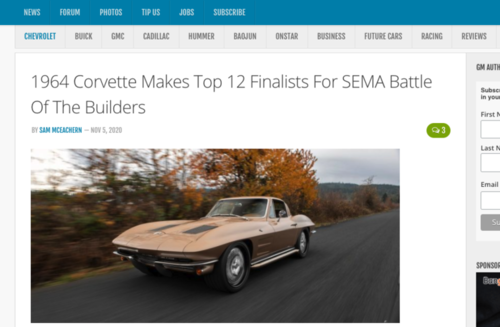
Kuhnhausen Metal Concepts’ ’64 Corvette caught the attention of editor Sam McEachern when it was named a Top 12 finalist. McEachern praised the builder’s craftsmanship and attention to detail and described the car as being extremely high quality and jam-packed with impressive performance parts.
Heard In The News
“This gorgeous Mustang restomod was a hit at SEMA, earning Top 40 Battle of the Builders status.”—Ford Authority, via Facebook
“For the first time in the history of the @SEMASHOW Battle of the Builders, a wagon has won the top award!”—Autosphere, via Twitter
“So #SEMA360 is going strong, and one of the biggest highlights of the day was the announcement of the 2020 #BattleoftheBuilders Top 40.”—Automotive Videos, via Twitter
“Join me as I talk to SEMA VP-Marketing Ira Gabriel and SEMA Battle of the Builder/SEMA Young Guns Director Mike Robleto about the newest details, opportunities and looming deadlines for SEMA360 Battle of the Builders/SEMA Young Guns.”—The Aftermarket Insider, via Facebook
China Tariffs: Tariffs were imposed on most imported goods from China starting in July 2018. The tariffs were divided into four separate lists, with auto parts generally placed on List 3. The tariffs were first intended as leverage during U.S.–China trade talks. While the two nations reached a Phase One agreement in January 2020 on increasing intellectual property protection, eliminating forced technology transfer and other issues, the tariffs remain to ensure compliance. They are also bargaining chips for Phase Two negotiations on addressing cybertheft and reducing the U.S.–China trade imbalance. Products on Lists 1–3 are subject to 25% tariffs, while List 4 tariffs are set at 7.5%. The U.S. Trade Representative established a process for companies to seek an exclusion from the tariffs if it could be demonstrated that there was no other supply source and the company would suffer serious economic harm. Some exclusions were granted for a limited time, but nearly all ended as of August or December 2020. SEMA, along with many other trade associations and companies that comprise the Americans for Free Trade coalition, has urged President Biden to repeal the tariffs, which are paid by American businesses and passed along to U.S. consumers.
Duties on Tires From Southeast Asia: The U.S. Department of Commerce (DOC) issued a preliminary ruling that Vietnamese tire producers were receiving unfair subsidies due to the country’s “undervalued currency.” The DOC calculated countervailing duty rates ranging from 6.23% to 10.08%, and Customs began collecting cash deposits from tire importers based on the preliminary rates. The countervailing duty decision is part of a broader investigation alleging that passenger-car and light-truck tires from South Korea, Taiwan, Thailand and Vietnam are being sold in the United States at less than fair value (“dumping”). The DOC was expected to issue its preliminary anti-dumping decisions by late December, with final decisions to be issued in mid-March 2021. The alleged dumping margins are as high as 195% for Korea, 147% for Taiwan, 217% for Thailand, and 33% for Vietnam. The U.S. International Trade Commission (ITC) has already made an initial determination that U.S. industry is likely being harmed by the alleged dumping and subsidies. For duties to take effect, the ITC must confirm that there is harm or threatened harm to U.S. industry once the DOC has issued its final dumping and subsidy calculations.
Digital Millennium Copyright Act Extension: The U.S. Copyright Office recommended extending an existing exemption that allows vehicle owners and authorized third service and repair parties to perform vehicle diagnosis, repair and modification without fear of prosecution under the Digital Millennium Copyright Act. The exemption was first granted in 2015 and is subject to renewal every three years. The extension was requested by SEMA along with the Auto Care Association and Motor and Equipment Manufacturers Association. The three trade associations argued that the exemption is needed, since vehicles are becoming more digital and the affected parties will otherwise be denied the chance to make vehicle repairs and modifications. The Copyright Office will now consider requests to rescind or limit the exemption, if any, before it is scheduled to be renewed next October.
STATE UPDATE
Virginia—Vehicle Modifications: Virginia Governor Ralph Northam signed into law SEMA-supported legislation which includes provisions that change certain traffic infractions from primary to secondary offenses. A secondary offense is one for which a citation can be issued only if the driver is stopped for another, separate offense. Beginning March 1, 2021, the following traffic infractions will be changed to secondary offenses: operating a motor vehicle without an exhaust system that prevents excessive or unusual levels of noise, operating a motor vehicle without a light illuminating a license plate, or operating a motor vehicle with certain sun-shading materials and tinting films.
California—CARB EO Certification Fees: The California Air Resources Board (CARB) held a virtual workshop and accepted public comments on a proposal to establish Executive Order (EO) certification fees for emissions-related aftermarket parts and other products. For context, companies submitting EO applications for emissions-related performance aftermarket parts have never been assessed a certification fee. California enacted SEMA-supported legislation in 2018 permitting CARB to adopt a fee program allowing the agency to expand staffing and process EO applications more quickly. SEMA continues to advocate for reasonable fees and for a streamlined application
process.
Michigan—Liability Protection: Michigan Governor Gretchen Whitmer signed into law a SEMA-supported bill that provides liability protections for businesses and healthcare providers if proper safety protocols are in place.
Three States Celebrate “Blue Flame Day” in Recognition of the 50-Year Anniversary of Bonneville Salt Flats Speed Record
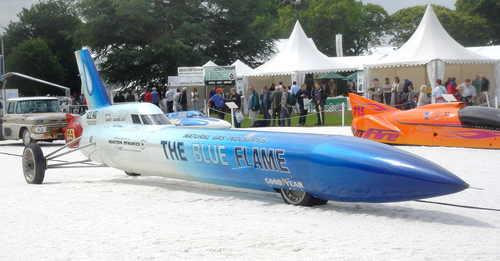
On October 23, 1970, the Blue Flame rocket car became the world’s fastest vehicle when driver Gary Gabelich recorded the FIA-certified World Land Speed Records of 622.407 mph (1,001.667 kph) for the flying mile and 630.388 mph (1,014.5111 kph) for the flying kilometer. Fifty years later, the achievement was commemorated as the states of Utah, Wisconsin and Illinois issued proclamations celebrating “Blue Flame Day.”
The rocket car was designed in part by several professors and students at the Illinois Institute of Technology in Chicago. It was fabricated by motorsports enthusiasts at Reaction Dynamics in Milwaukee, Wisconsin, and raced by the Blue Flame team at the Bonneville Salt Flats in Utah.
The Blue Flame was 37 ft. long and nearly 8 ft. high and wide. It had an aluminum skin and weighed more than 6,500 lbs. The rocket engine produced 58,000 hp and 22,000 lbs. of thrust burning a combination of hydrogen peroxide and liquified natural gas pressurized by helium gas. To this day, the vehicle remains the fastest American hot rod and the fastest vehicle ever driven at Bonneville.
Congratulations to the Blue Flame team and their colleagues who helped design, construct and race this timeless vehicle.
Photos courtesy SpiedBilde, Brian Williams. Reuse or reproduction without the copyright holder’s consent is prohibited.
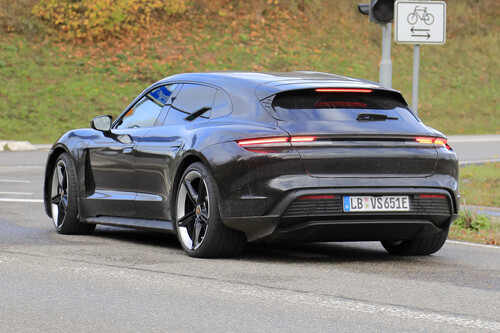
’22 Porsche Taycan Cross Turismo
This Porsche Taycan Cross Turismo was caught testing near Weissach, Germany, and is scheduled for a production reveal in the coming 10 months.
Confirmed for production almost two years ago, the Cross Turismo will essentially be a wagon-bodied version of the Taycan four-door coupe.
The powertrain should be similar to that used in the concept shown at last year’s Geneva Motor Show, which put out around 600 hp from its dual-motor electric setup, good for a 0–60 sprint in 3.5 secs. Like its performance stats, the Taycan Cross Turismo’s driving range should be impressive; projected range for the concept was rated at 310 mi.
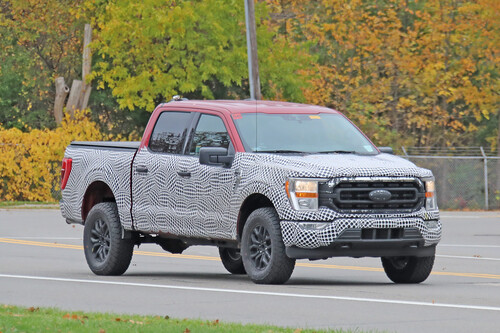
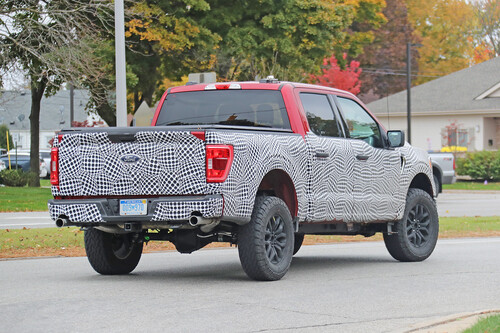
Ford F-150 Tremor
Here’s a first look at the rumored Tremor off-road package for the new Ford F-150, which will slot between the entry-level FX4 rugged package and range-topping Raptor.
Following in the footsteps of the Tremor package for the Super Duty and Ranger, the package for the F-150 has a suspension lift as its primary feature. Around back is a dual exhaust setup, which had not been seen on the all-new ’21 F-150 previously. A set of unique black wheels are wrapped in knobby all-terrain tires measuring 275/70R18.
Launch timing of the Tremor package for the F-150 is currently unclear, but it wouldn’t be surprising to see it for the ’21 or ’22 model years.
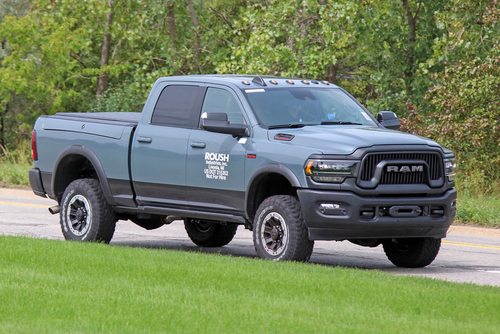
75th Anniversary ’21 Ram Power Wagon
Ram is celebrating the 75th anniversary of its iconic Power Wagon nameplate with a new special-edition model that was caught recently on the roads of Metro Detroit. The ’21 Ram 2500 Power Wagon 75th Anniversary Edition, shown in the unique Anvil exterior color here (the same color as on the new ’21 Ram 1500 TRX Launch Edition), features a unique jail-bar grille (a retro cue from the original Power Wagon), rock rails with side steps, blacked-out premium headlamps from the Ram 2500 Limited Black, 17-in. beadlock wheels, and an electronic transfer case.
The vehicle was slated to go on sale by the end of 2020.
Billed as an “all-out content creation bonanza,” the PRI
Road Tour took PRI personnel to more than 80 member
locations across the United States over a two-month
period. At each stop, PRI staff created varieties of digital
content that member companies could use to build
their online brand profiles.
Last November, the Performance Racing Industry (PRI) announced that its annual trade show in Indianapolis, Indiana, would not be taking place as scheduled in December. The announcement came after months of working closely with event staff and government officials to develop a plan for a safe and productive Show. Unfortunately, mounting uncertainty related to COVID-19 led the PRI staff to conclude that a productive in-person show was not feasible at the time.
Not long after, though, PRI announced the launch of a new cross-country campaign to gather and share news and updates from dozens of racing-related businesses. Dubbed the PRI Road Tour, the campaign aimed to provide an all-out content-creation bonanza that would take the PRI team directly to manufacturers, wholesalers, retailers, race teams, race tracks and more over a two-month span.
“Our goal is to always do what is best for the motorsports industry, and PRI will continue to lead with business solutions for an ever-changing future,” said PRI President Dr. Jamie Meyer.
Aimed at helping manufacturers promote their products and services, the PRI Road Tour began October 10, 2020, in Indianapolis, with more than 85 planned stops at motorsports businesses and facilities throughout the country, concluding on December 15. At each stop, the PRI team captured and shared video, photos and exclusive interviews highlighting the industry’s newest products, vehicles, races and developments.
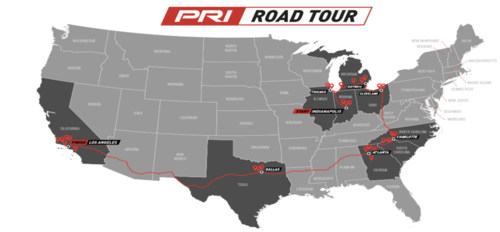
After the Indy kickoff event, the Road Tour was scheduled to make its way through Chicago, Detroit and Cleveland, followed by cities in North Carolina, South Carolina, Georgia, Texas, Arizona and California.
Meyer summed it up: “If the industry can’t come to the PRI Trade Show in Indianapolis, then PRI is coming to the industry.”
The PRI Road Tour kicked off in Indianapolis in mid-
October, with planned stops to more than 80 companies
in nine states before concluding in California in mid-
December.
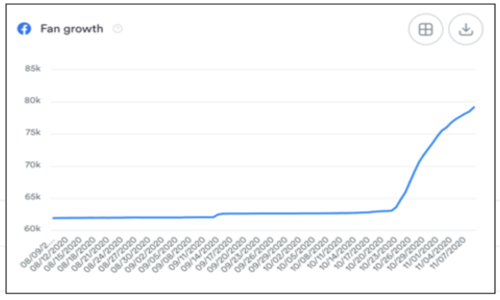
While the Tour was ongoing at the time this article was written, one early metric to measure the event’s success is social media. To date, the Tour has generated a significant amount of online buzz. Though mid-November, Road Tour content had already generated more than nine million impressions (on a 2.5 million target), with Facebook and Instagram the strongest performers. Instagram impressions were up more than 400%, with an average engagement-per-post rate up 60% from previously. In addition, PRI saw a 20% increase in Facebook fans over the same period.
SEMA News recently met with representatives of three companies that participated in the Road Tour to learn about their experiences, discuss the benefits that accrued from participating, learn how interacting with PRI staff helped them to better define their business goals, and to learn how taking part in the Road Tour could help companies in the racing and performance aftermarket stay better connected.
Carrie Ember is vice president of marketing for RE Suspension, a suspension support company and parts supplier with a focus on the racing sector and headquarters in Mooresville, North Carolina. Steve Garrett is creative director and Mike Buca the brand manager for Design Engineering, an Avon Lake, Minnesota-based manufacturer of heat solutions for multiple markets since 1985. Mike Goodwin is engine/drivetrain/calibration product manager for Ford Motor Company, based in Dearborn, Michigan. What follows has been edited for clarity and length.
SEMA News: We’re sure folks in the industry were disappointed to hear that the PRI Trade Show had been canceled for 2020. What was your reaction and the reaction within your company when you heard that PRI was launching a two-month road tour to visit some of its various members?
Carrie Ember: We were really surprised and not quite sure how that was going to work. I think we all had a bit of trouble visualizing what they were going to do, but we were all really impressed that they were doing something, because it would have been really easy for them to just chalk up this year as a loss and say “See you in 2021.” So the fact that they were going to try something different and something new—we thought it was great.
Mike Goodwin: I was pretty excited to have some type of event where we could discuss some of the cool stuff we have coming up, just get the information out there. Given the world we’re in right now, it was great to have another avenue to reach out and connect with people in the racing and performance markets.
SN: What was your company’s experience with the Road Tour? Did you have any particular goal or aim that you were hoping to achieve from it, and do you feel that you were successful in achieving that goal? Was PRI helpful to that end?
Mike Buca: All the people from PRI were great. They did a great job when they were here. To be honest, we weren’t exactly sure what was going to happen when PRI came, so we had a couple of different things prepared from a few new products that we were going to show at the PRI Trade Show.
Steve Garrett: When you hear about heat control and sound control, a lot of people don’t really know what’s involved in it, and one of the main goals was to help people understand what our capabilities are. We’ve brought in a lot of technology in the last couple of years that has really kind of pushed us to the forefront of this market, and the PRI crew did a really good job with helping us to get that across.
Design Engineering, based in Avon Lake, Ohio, has been
providing heat-control solutions for automotive, aviation,
powersports and marine markets since 1985. Courtesy
Andrew Link
CE: Our main goal was just a little bit of exposure for our company, since we’ve obviously had an up-and-down year due to COVID-19. It was a strong year to start out, then it kind of died, and it hit a brick wall when the state shut down, so we just wanted that little burst of exposure. PRI has been so supportive of everybody who exhibits at the Show, so when they called, we didn’t even hesitate.
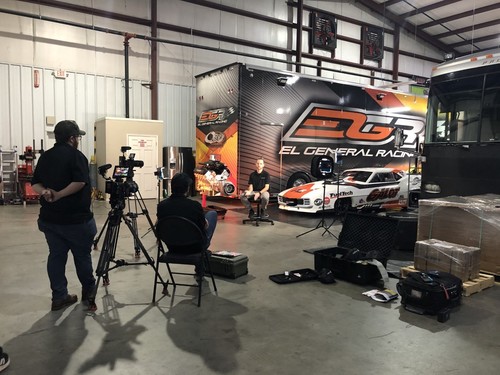
And we had a great time! They were here for about five hours, taking a lot of still photography, walking around the shop and taking pictures of our different products and our different machinery. They also shot some video of our various staff here at work, and then they set up an hour-long interview with our president.
MG: We didn’t have anything concrete written on paper, but our goals going in were to get some new product info out there and to show off some of our newest products on video. The videos that [PRI] sent look great overall, and the edits were first class, so the goals of a well-produced professional video with professional editing and high production values were definitely met.
SN: Have you talked with anybody else within the industry or gotten any feedback from other folks who may have been involved with this? If so, what are you hearing from them?
CE: We’re good friends with the guys over at Port City [& Buzze Racing]. The PRI team visited there a couple of days after us, and they had the same experience—just a great time with the guys. I talked to some of the people over at JRI, who PRI also visited, and it’s been great feedback from everybody I’ve talked to. Everybody here in Mooresville has been really impressed.
MB: There are quite a few companies around our area, and those kinds of companies are the ones we talk to on a pretty regular basis. They all seemed to like the way it happened, the same way we did, and I think that it was a positive deal with our company overall.
MG: I’ve had limited conversations, but from what I’ve heard, it’s all been pretty positive.
SN: What benefits would other member companies gain from having participated in the Road Tour—particularly smaller companies that maybe have limited marketing and advertising resources? What kind of company would stand to benefit the most?
Headquartered in Mooresville, North Carolina, RE
Suspension provides suspension support and a full
range of products for the racing and performance
industry.
CE: The level of professionalism that the crew had—it’s like you can’t pay for that kind of exposure and that level of photography. Just to have a pro-quality video done at no cost to you, there’s absolutely no downside to it.
Having someone come in and see everything in your shop from a different angle than you see it every day and point out the things that they think are really great, it can turn your perception of your company a little bit and make you start seeing things in a different way and see some new angles from which you can market. For us, there was absolutely no downside.
SG: I think it’s just plain exposure. A lot of these companies on the Road Tour are smaller companies, and people don’t know exactly what they do, what they’re capable of. That was the exposure that
we got.
I think a lot of people can benefit from that, especially if it’s all compiled in one area where you’re not walking for miles around a show every day. And in case there isn’t a PRI Trade Show, you can sit and surf around the PRI website to get some good information on other companies that you might not necessarily know about.
MG: It’s going to give you a better reach, because all the videos can be leveraged through all your social-media channels. They can be shared; they can be e-mailed directly to your people; they can be put on social-media pages. It gives a kind of a different perspective for people who haven’t been to the PRI Trade Show. For us, we have seen some bumps in terms of traffic on our website, our Facebook sites and our e-commerce site.
SN: Looking forward into 2021 and beyond, would you like to see something like the Road Tour continue in the future, even after the actual trade show returns to Indianapolis?
The PRI Road Tour has generated substantial interest on
social media. User impressions on PRI’s Instagram feed
is up more than 400%, and PRI has increased its Facebook
fans by some 20% since the Tour’s inauguration. Courtesy
Andrew Link
CE: I think it’s a great supplement, but I don’t think that anything can ever replace the face-to-face contact you get at the PRI Show. I do think that it’s a great promotion to lead into the Show.
As people gear up to go to Indianapolis, some smaller businesses might not think to head up, because smaller companies like ours can get lost in the shuffle with all the big eye-catching booths there. But if people know that we’re going to be there, that might increase our traffic at the Show. It might make people stop and look up our booth number and think, “Hey, I want to stop and see those guys.”
MB: I think they could expand it even when the Show returns to Indy. Think about having something like a PRI Road Tour Stage at the PRI Trade Show, where you bring companies up on the stage and interview them live. We did something similar a few years ago with NHRA at the SEMA Show. We were interviewed, and we talked about our company and what we do as it’s related to NHRA. There was a pretty big group of people watching it, so it was a good experience for us.
MG: I think it’s a neat addition from a nontraditional “guerrilla marketing” standpoint. If you do it in conjunction with the in-person Show, with a Road Tour in the fall and then kind of leverage it with the Show in Indy in December, it could be a great additional tool to reach customers and create some buzz out there from your staff.
2020 was anything but a typical year, defined by the COVID-19 health crisis that disrupted almost every facet of life in the United States. It should be no surprise that the results of the November election were equally unique. As the political world tries to make sense of the mixed messages that voters sent to Washington, D.C., on Election Day, the balance of power in Congress was still uncertain as this issue of SEMA News went to press. Two U.S. Senate races in Georgia, which carried over into a January 5 runoff election, would determine which political party controlled the Senate. Let’s take a look at the results of the elections and how they will impact the issues on the legislative horizon in the 117th session of Congress (2021 and 2022).
Much like the 2016 election, political pundits predicted that the 2020 election would be disastrous for the Republican Party. Public polls consistently showed former Vice President Joe Biden with a commanding lead over President Donald Trump in almost every swing state, and there was an expectation that Biden would win the race handily and provide strong coattails that would expand the Democratic majority in the U.S. House of Representatives and help the party regain control of the U.S. Senate.
The results of the election ended up not being nearly as clear-cut, proving the polls wrong once again. Former Vice President Biden won by a margin of 306 electoral votes to 232, but Republicans picked up nine seats in the House of Representatives (there were still five races that were too close to call at press time), and Democrats picked up only one senate seat. Democrats retained the House, although the party will have its slimmest majority in the chamber since 1945.
As if the 2020 election cycle didn’t last long enough, the two U.S. Senate races in Georgia both went into runoffs, since no candidate received at least 50% of the vote in November. (Georgia state law requires a separate election between the top two candidates if no candidate receives majority support.) The balance of power in the U.S. Senate for the next two years depended on the outcomes of the runoffs.
Democrats needed to win both seats to take control of the Senate. A win by either incumbent Senator David Perdue (R-GA) or Senator Kelly Loeffler (R-GA) would enable Republicans to retain their majority. The Democratic Party’s goal of flipping the Senate and establishing a unified government for the next two years rests on the shoulders of candidates Jon Ossoff and Reverend Raphael Warnock.
Given what is at stake in this election and the respective policy positions of the candidates, SEMA endorsed Senators Perdue and Loeffler, whose pro-business voting records and support for the automotive aftermarket provided a clear contrast with their Democratic opponents.
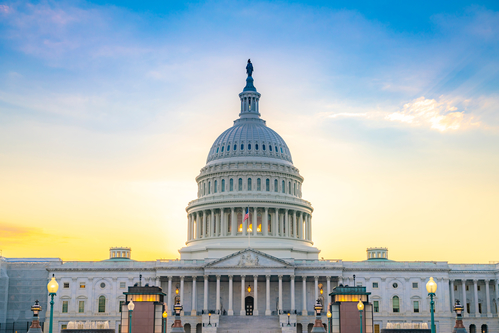
As the country moves beyond the 2020 election,
President Biden will face the challenge of uniting a
divided electorate and passing bipartisan
legislation to help the economy recover from the
damage inflicted by COVID-19.
Courtesy Alex Gakos/Shutterstock.com
As we move beyond the 2020 election, President Biden will face the challenge of uniting a divided electorate as his administration works with Congress to pass bipartisan legislation to help the economy recover from the damage inflicted by COVID-19. Millions of Americans are unemployed as businesses face an uncertain future, which is inextricably tied to getting the pandemic under control.
Despite continued partisan differences over how to safely reopen the economy, Congress came together in the wake of the pandemic to pass legislation last March and April to stabilize the economy, providing more than $2.2 trillion in relief to individuals and companies, including small businesses, along with aid to fund testing, vaccine development, and to assist state and local governments. There is broad consensus that additional relief is still needed to shore up the economy and help struggling businesses. It is important that President Biden and congressional leadership collaborate on passing a recovery plan that helps distressed businesses in a fiscally responsible way.
Finding common ground between Republicans and Democrats is no small task, as the divide between the respective parties is as wide as it’s ever been. Regardless of whether the U.S. Senate is controlled by Republicans or Democrats, the chamber will retain its role as a moderating force. Additionally, the House will face a greater challenge in passing legislation, given the Democrats’ slim majority and the diversity of thought within its caucus on most issues. It is our hope that this will help the House restore the bipartisan policymaking process that was once the norm.
There are many factors that will impact the issues Congress chooses to prioritize over the next two years. A comprehensive infrastructure bill is expected to be a top priority for both Republican and Democratic leadership. With many roads and bridges in disrepair, an infrastructure bill is ripe for bipartisan consensus. It is also an issue of critical importance to automotive enthusiasts and SEMA members alike.
SEMA will also be working to influence the Biden administration’s policies on trade and tariffs, which are paid by American businesses and passed along to U.S. consumers. For example, it is a top priority for the industry that the new administration removes the threat of automotive tariffs, which were proposed but never implemented by the Trump administration.
For more information on the 117th Congress and how SEMA Government Affairs is protecting the industry on Capitol Hill, please contact Director of Congressional Affairs Eric Snyder via email at erics@sema.org.
Permatex appointed Dan Clarke (left) to the position of director of marketing for the engine repair division. Clarke will be responsible for driving the development and execution of all marketing activities for the engine repair business to meet strategic objectives and deliver financial goals. The announcement was made by Lee Burtelson, vice president/general manager of engine repair. With Permatex since 2015, Clarke recently served as the company’s sales director for the U.S. traditional channel. Prior to Permatex, Clarke was a business unit manager at Coburn Technologies Inc. and spent 11 years with HID Global Corp. in various management and sales positions.
Premium Guard Inc. (PGI) purchased Tenneco’s global aftermarket filters business in Mexico. The announcement was made by Anan Bishara, CEO and president of PGI, who noted that the acquisition, which was finalized on October 31, includes Tenneco’s manufacturing facility in Tultitlan, Mexico; the Interfil and Engine Clean brands; and filter inventories. PGI plans significant investment at the Tultitlan facility to fulfill customer requirements and volume.
Eleven Engineering Inc. announced that Matt Michielin joined the company as marketing team leader. His responsibilities at Eleven Engineering include maintaining the SKAAstore and the creation of the new SKAAstore website, customer service, office operations, database management and social-media and communications assistance. Prior to joining Eleven Engineering, Michielin worked with Clean Harbors Environmental Services, the government of Alberta, and Special Olympics Alberta.
NGK Spark Plugs (USA) Inc. announced two promotions within its executive team. Brian Norko was promoted to senior vice president of commercial business. Prior to his promotion, Norko served as vice president of aftermarket for three years. Lesley Skinner was promoted to vice president for culture, communication and people. In her newly created role, Skinner will be responsible for driving the company culture, corporate communications and administration strategies.
Pertronix Performance Brands announced that industry veteran Jenna Jefferies joined the company as national account manager. She previously spent 18 years at K&N as national account manager. Jefferies will be responsible for growing national account revenue and for providing new product feedback to the Pertronix engineering team. She comes from a motorsports family and is passionate about desert off-road racing. The SEMA Businesswomen’s Network (SBN) recently named her as its SheIsSEMA Woman of the Year.
Brembo acquired SBS Friction A/S—a Danish company that develops and manufactures eco-friendly sintered and organic-material brake pads for motorbikes. Brembo will integrate the company’s brake pads into its current product range, strengthening its position in the motorbike sector. The agreement is expected to be finalized in the first quarter of 2021.
Meyer Distributing Inc. announced a new location in Bridgeport, West Virginia. The cross-dock will have a direct, next-day feed from Meyer’s distribution hub in Jasper, Indiana, which houses one of the largest inventories of automotive accessories, exhaust and RV parts in the region.
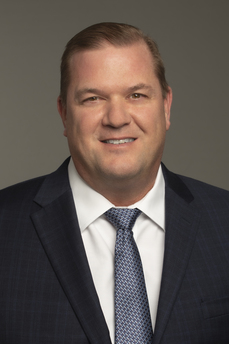
Caliber announced that current President and Chief Operating Officer Mark Sanders succeeded longtime CEO Steve Grimshaw, effective January 1, 2021. Grimshaw moved to full-time executive chairman at that time. Sanders has spent his entire career in the automotive industry and joined Caliber Collision in 1997 as it expanded its operations into Texas. As president and COO, Sanders led the growth strategy, which expanded Caliber Collision’s footprint throughout the United States while also positioning Caliber for the future through the strategic acquisition of other lines of business. During Grimshaw’s tenure, the organization grew from 68 locations in two states to more than 1,200 locations in 34 states across the United States.
Dynamat Inc. announced new executive leadership. Dynamat founder Scott Whitaker retired from the company but is assisting with the transition as a consultant. Michael Good, an executive with more than 25 years of experience in sales, marketing, operations and process management, was named president. Whitaker will remain engaged with Dynamat as a consultant through February 2021.
Red Line Synthetic Oil announced a new partnership with quick lube chain Oil Changers. Through this partnership, Red Line will supply the company’s high-performance oil for use at Oil Changers locations. The company’s high-performance engine oil will be used to service all types of vehicles.
Pertronix Performance Brands announced that it has acquired Aeromotive Inc. and Waterman Racing Components. Over the past 26 years, Aeromotive designed and manufactured fuel systems and components for the automotive aftermarket and OEM manufacturers. Aeromotive will continue to operate out of its manufacturing and development facility in Lenexa, Kansas, while Waterman Racing Components will continue to operate out of its locations in Concord, North Carolina, and Brownsburg, Indiana. Aeromotive’s leadership team will continue to manage the business.
Photography By Ray Brock, Petersen Publishing Company Archive
When the California Highway Patrol (CHP) needed to replenish its fleet of patrol cars in late 1958, it asked car manufacturers to submit sample versions of their ’59 models for evaluation. At the time, the CHP had some pretty specific requirements: The car had to be a two-door sedan with a minimum wheelbase of 122 in. and weigh at least 3,800 lbs.; be equipped with heavy-duty suspension, heavy-duty brakes, 15-in. wheels, six-ply nylon tires, and an automatic transmission with at least three forward speeds; and be powered by an OHV V8 of at least 380 ci with at least 9.75:1 compression, hydraulic lifters, a single carburetor (though multiple carburetors were allowed) and dual exhaust.
Those prerequisites ruled out some of the most popular cars of the time, including models from Ford, Chevrolet and Plymouth. Of those makes that did qualify, just three—Dodge, Mercury and Pontiac—submitted cars for the CHP to test in November 1958.
Hot Rod Technical Editor Ray Brock tagged along with the CHP officers tasked with evaluating the potential cruisers, and he described them in the magazine’s February 1959 story, “How Hot are the Police Specials?”
The Dodge Coronet “was the lightest of the three, weighing just 4,060 lbs.” It was powered by a 383ci, 345hp D-500 V8, and its TorqueFlite transmission sent power to a 3.36-geared axle. The Mercury Monterey was the heaviest at 4,560 lbs. “but also had the largest engine, a 430-incher rated at 345 hp.” Its Merc-O-Matic transmission was paired with a 3.22 axle ratio. The Pontiac, weighing 4,390 lbs., “used a Tempest 420-A engine with 389ci and rated at 330 hp” and a “dual-range Hydra-Matic” to send power to the 3.08 rearend. The Dodge and Merc rolled on Goodyear Bluestreak tires, while the Pontiac was fitted with Firestone Super Sports.
The four-day test began with a drive from the state capitol in Sacramento up to Lake Tahoe and then to the small town of Bridgeport on the eastern edge of the state—a route that subjected the cars to the “all types of roads imaginable” that can be found in California, “from freeways to twisting mountain roads to city streets to rutted dirt roads and sometimes across wild stretches where there are no roads,” Brock wrote.
Day Two found the fleet doing acceleration tests on an Air Force runway in Palmdale, where each car had to run at least 110 mph. The cars “qualified easily,” Brock said, with the Dodge hitting a top speed of 122.023, the Mercury 121.84, and the Pontiac 117.34 mph. More acceleration tests were done on the third day, this time at Riverside Raceway. In the standing-start quarter-mile, the Dodge was fastest at 86.89 mph, followed by the Mercury at 83.15 and the Pontiac at 81.98. The Dodge was also fastest in the standing-start mile, running 117.67 to the Pontiac’s 115.28 and the Mercury’s 112.96.
The test drivers, all veteran officers from CHP headquarters, also used Riverside to test the cars’ handling. “A couple of the test drivers had former racing experience,” Brock noted, “so they showed no mercy as they whipped the cars through their paces.” At the end of the day, the drivers “judged the cars to be of equal ability in handling and roadability.”
The final day was devoted to testing the cars’ brakes, “since high speed chases are quite frequent and the drivers must often use the brakes severely,” Brock said. The brake systems were evaluated for fade over repeated panic stops, and the cars were also judged to see how much they deviated from a straight line while under heavy braking. Here, the Mercury fared best, followed by the Dodge and the Pontiac. “All were judged to have acceptable braking ability for patrol cars,” Brock said.
Since all three cars were “judged acceptable in all phases of the tests,” in the end, the CHP’s choice came down to money. “A Dodge dealer had the lowest price so received the contract,” Brock wrote, without mentioning what that price was (darn it). This initial purchase would be for 331 cars—about half the number the CHP expected to buy in 1959.
“A lot of prestige goes along with the contract for the cars,” Brock said, “since the CHP consistently wins the fleet safety award given by the International Association of the Police Chiefs each year. We predict the bidding will be furious for the second group of ’59 cars because of the obvious advertising value of being selected by such a particular
organization.”
One silver lining in the COVID-19 pandemic comes by compelling all of us to innovate, adapt and find new paths to success. In some cases, we can imagine that these new ideas may evolve into practices and tactics for the long haul. Case in point: The PRI Road Tour.
In the absence of the annual Performance Racing Industry (PRI) Trade Show this year, thoughts turned to how PRI could still provide a way for the motorsports industry to share ideas and help motorsports industry manufacturers and service providers remain top of mind in the worldwide racing scene. Ultimately, the PRI team launched the PRI Road Tour—an ambitious cross-country campaign to gather and share news and updates from dozens of racing-related businesses. The campaign was an all-out content-creating project that took the PRI team—and a host of other media outlets—directly to manufacturers, wholesalers, retailers, race teams and race tracks over a two-month span, finally ending up in California after making stops in nine states in 70 days.
The PRI Road Tour is remarkable for its goal of helping elevate an entire industry, its collaboration with outside media, and its innovative use of social media. The racing world is rich in specialized media outlets, large and small, that reach passionate audiences. By creating content opportunities for freelance writers, TV shows and racing-scene influencers, PRI is investing to create activity that benefits the entire motorsports industry.
Because the PRI Road Tour leverages outside media and a basket of social-media platforms, it has generated an immediate buzz that is reaching a global audience. Content loaded into Instagram, LinkedIn, TikTok, YouTube, Facebook and Twitter has gone live within hours and is being viewed by enthusiasts all over the world, providing a burst of energy to the businesses in question.
After the first 30 days, the PRI Road Tour had logged 9,035,610 total impressions and a unique reach of 6,327,255. At press time, Instagram and Facebook have been the strongest performers, and LinkedIn and YouTube have begun to put up excellent results. One example was a 7.3 Godzilla engine video, which logged 42,000 views on YouTube in three weeks.
The PRI Road Tour is still ongoing at the time of this writing, but if social-media analytics remain on the same trajectory, it’s possible that the initiative will have created as many impressions as a Super Bowl ad by the time it concludes.
Also notable is that the PRI Road Tour has been undertaken not to generate revenue but to assist the industry—and a way of life—by returning proceeds from the PRI Trade Show and other operations back to the industry. This kind of initiative is an example of one way that PRI will accomplish its mission as an organization dedicated to helping the racing community succeed and prosper.
Significantly, about 50 of the companies visited are also SEMA-member companies, and many more make products not just for racing but also product lines that reach into other aftermarket segments aimed at a broad range of performance enthusiasts. We think the success of the PRI Road Tour could help SEMA shape future outreach as it serves the broader aftermarket.
Perhaps most significantly, the PRI Road Tour is another clear demonstration of the growing potential social-media platforms offer moving forward—and proof of another way an organization can invest time and energy to lift an entire industry via new online communications tools.
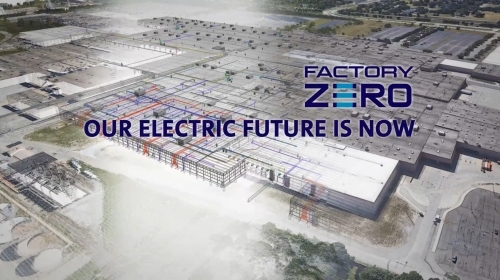
GM’s all-electric vehicle assembly facility is the first automotive plant
to install dedicated 5G fixed mobile network technology.
GM EV Plant to Feature 5G Technology
General Motors announced that Factory Zero, the company’s all-electric vehicle assembly plant at the Detroit-Hamtramck Assembly Center, is the first automotive plant in the United States to install dedicated 5G fixed mobile network technology. Verizon’s 5G ultra-wideband service is operating now at Factory Zero, with its exponential increases in both bandwidth and speed supporting the ongoing transformation of the plant as it prepares to begin producing EVs in 2021.
Factory Zero is being completely retooled with a $2.2 billion investment, the largest ever for a GM manufacturing facility. Once fully operational, the plant will create more than 2,200 U.S. manufacturing jobs. Both the upcoming GMC Hummer EV and the Cruise Origin will be built at Factory Zero on GM’s Ultium battery platform. Ultium is flexible enough for a wide range of EVs—cars, trucks and more—and is the heart of GM’s future EV lineup.
Key benefits of 5G in a manufacturing plant include reliability, speed and sheer scale. 5G’s massive bandwidth offers scalability to manage thousands of devices across Factory Zero’s more than four million square feet of space, with ample capacity to support emerging technologies.
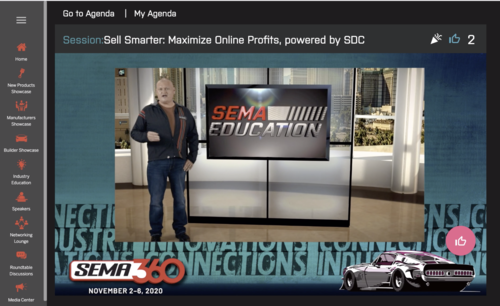
Many of SEMA360’s SEMA Education seminars are now available for
viewing online. Visit the SEMA YouTube channel for more details.
SEMA360 Education Seminars Now Available on Demand
Thousands of participants took part in the SEMA360 Education program last November, where they heard from leading experts and innovators and left motivated and educated on how to work better and smarter on various topics relating to the automotive specialty-equipment industry.
SEMA Education programs encompass all of the association’s educational efforts. For the first time ever at SEMA360, the education seminars took place virtually in absence of the in-person SEMA Show in Las Vegas, with each session designed to help businesses succeed and automotive aftermarket professionals advance their business goals.
For those who might have missed any of the SEMA Education seminars, many of them are now available to all industry members on the SEMA360 Education Playlist at the SEMA Show YouTube channel. Viewers will be able to see the actual presentations that took place during the exclusive SEMA360 event, including live questions and answers. The learning tracks and seminars available include such topics as advanced vehicle technologies; business management; hot-rod and off-road builders panels; vehicle accessorization demonstrations; Brew Talks; and interviews with industry leaders, legends and influencers on The Stage.
For more information, visit the SEMA360 YouTube page.
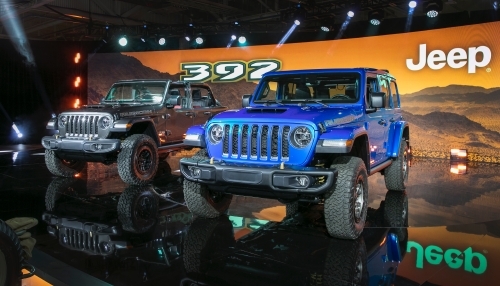
The Jeep Wrangler Rubicon 392, slated to go on sale in Q1 2021, will
offer a V8 option for Jeep’s iconic bobtail for the first time in 40
years.
’21 Jeep Wrangler 392 to Feature 470HP V8
For the first time since 1981, Jeep will bring its flagship bobtail to market with a V8 option in 2021. The 6.4L V8, rated at 470 hp and 470 lb.-ft. of torque, will be mated to the TorqueFlite eight-speed automatic transmission and Selec-Trac fulltime active transfer case. The powertrain is said to power the Wrangler Rubicon 392 from 0–60 mph in 4.5 sec. and produce elapsed times in the quarter-mile of 13.0 sec., and it comes with a factory-backed warranty.
Away from the pavement, the trail-rated Wrangler Rubicon 392’s potent powertrain meshes with heavy-duty wide-track Dana 44 axles, a 3.73 final drive ratio, a transmission torque converter lockup control, a 2-in. lift, and standard 33-in. tires on 17-in. beadlock-capable wheels. The result is said to be the most capable Jeep Wrangler ever, with 10.3 in. of ground clearance; improved suspension articulation and maneuverability; approach, breakover and departure angles of 44.5, 22.6 and 37.5 degrees respectively; and the ability to traverse up to 32.5 in. of water.
The ’21 Jeep Wrangler Rubicon 392 goes on sale in the first quarter of 2021 and will include 11 premium feature packages for consumers to choose from.
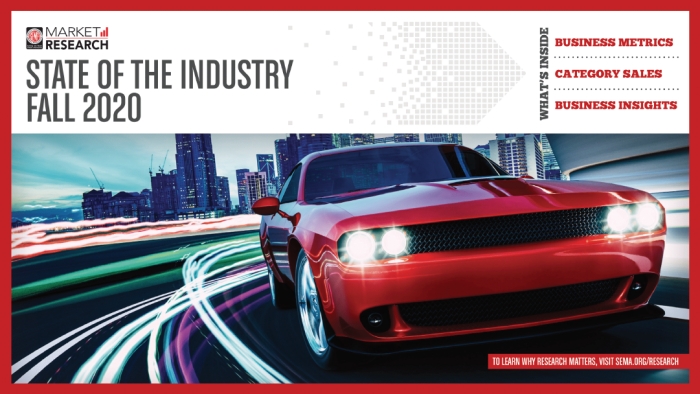
As automotive specialty-equipment businesses draw up their business plans for 2021, many undoubtedly face some degree of uncertainty. Will the pandemic fade into the rearview mirror? What was the economic impact on the industry? Will this year’s gains extend into 2021? To help answer those questions and more, SEMA Market Research has released an extensive and timely Fall 2020 “State of the Industry Report.”
“Over the past several months, we’ve done a lot of research into consumers and how they’ve handled the pandemic,” said SEMA Research Manager Kyle Cheng, the report’s lead analyst. “But a real question a lot of our members are asking is how the industry is doing. As we enter 2021, they’re looking for benchmarks and forecasts useful to their business planning
“We’ve heard anecdotally that many companies are doing better than last year. When we dive into the data, something that pops out is that there are definitely some companies doing well and others not as well. It’s kind of mixed, but across the board, things are not as bad as they looked early in the pandemic.”
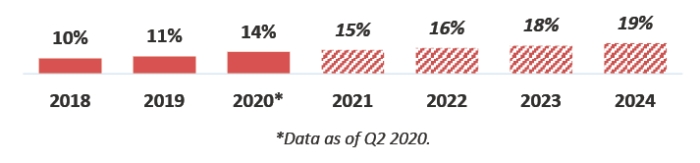
E-commerce Sales As A Share Of All U.S. Retail Sales
The report is based on a statistical survey of aftermarket manufacturers, distributors and retailers/installers who were asked a series of questions surrounding their overall economic health in 2020 as well as their projections for 2021. Government data encompassing broader American e-commerce and business trends were also included for comparison with industry benchmarks. While the full report offers extensive details for planning, its five basic takeaways can be summarized as follows.
The Industry Is Already Rebounding
Like many sectors of the American economy, the automotive specialty-equipment industry experienced appreciable sales disruptions due to COVID-19.
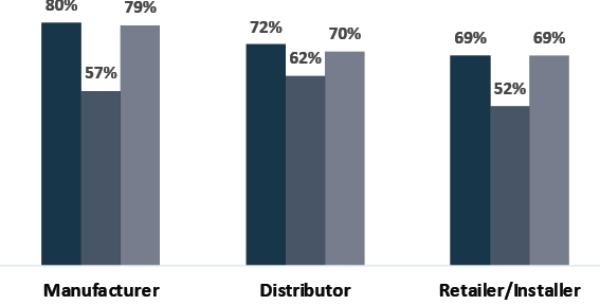
Company Sales Performance During COVID-19 Outbreak
Nevertheless, the industry is showing overall resilience, with data indicating that a rebound is already taking place. Despite Q2 sales declines, most aftermarket companies met or exceeded both the first- and third-quarter goals they set at the beginning of 2020.
“Obviously, COVID-19 had an impact, particularly around March, April and May when the country wasn’t sure where things were going and everything locked down,” Cheng explained. “However, more than 90% of the aftermarket companies we surveyed reported that they were now seeing either business as usual or experiencing only short-term impacts from the pandemic. In fact, 55% of companies expect their 2020 sales to finish higher or at least the same as in 2019, and no companies said they have any plans of closing. When we look at government data, retail spending at motor vehicle part dealers is now at its highest point ever. Those are all positive indicators we expect to continue.”
In-Store Purchasing Remains Healthy
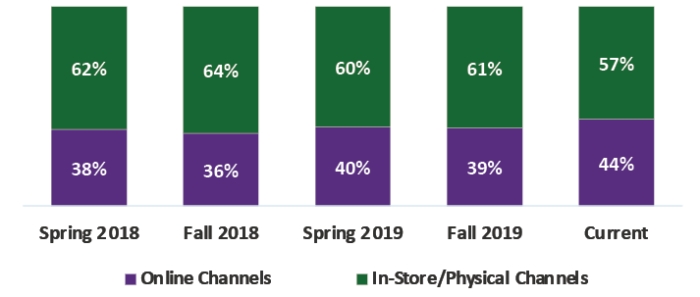
Nationwide growth in online shopping has received a lot of media attention throughout the pandemic, but it appears to be overly hyped. The data shows that specialty-equipment retail transactions remain mostly in-person affairs, and with many of the industry’s retailers designated as “essential businesses” during the shutdowns, they saw only modest increases in online purchasing.
Share Of Specialty Equipment Industry Sales By Channel
“Despite shifting consumer habits during the lockdowns, our industry and the retail sector across the country as a whole continues to be driven by in-store and physical-channel sales,” Cheng said. “Overall, e-commerce makes up only a small share of retail in the United States, and it’s projected to remain that way for the future. Companies in our industry report that 57% of sales this year still came from in-store and physical channels, only slightly down from the previous year.
“The bottom line for our industry is that people still want to touch and see our products. You can’t experience online what you can in a store while getting someone’s expertise.”
Staffing Is Holding Mostly Stable
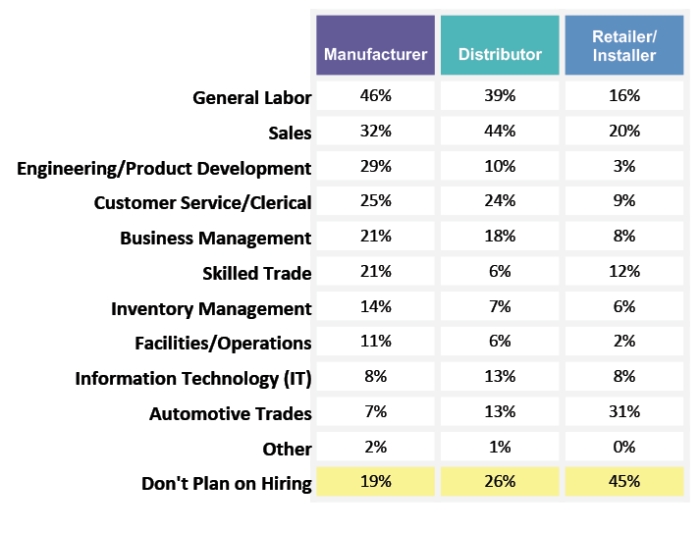
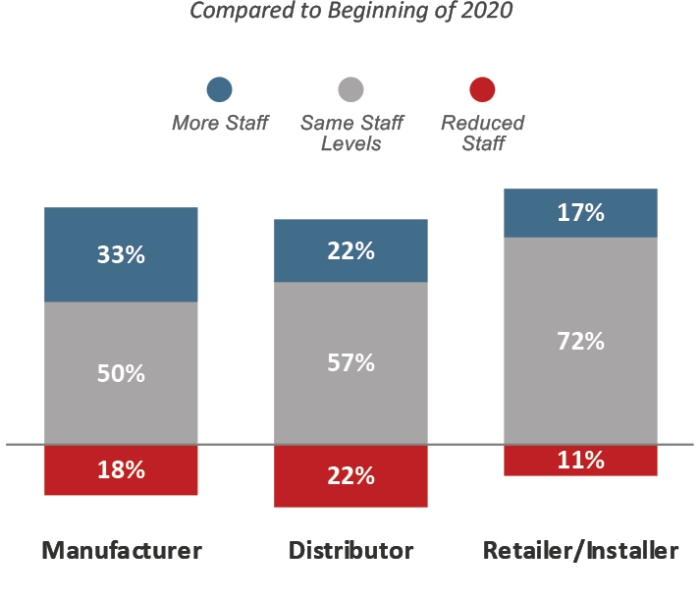
While other American industries have suffered marked layoffs, most automotive aftermarket businesses have managed to avoid widespread staffing disruptions. In fact, the majority of companies surveyed either maintained or increased staff over the last year, and most plan on hiring over the next 12 months. Additionally, despite taking the brunt of the recent economic downturn, retailers/installers have held notably steady with their workforces.
Jobs Planning To Hire Within The Next 12 Months
This makes sense, considering that large manufacturing and distribution facilities faced a number of initial safety hurdles for maintaining capacity in the early days of the pandemic, resulting in temporary closures or worker furloughs for some. Being smaller operations and almost universally recognized as essential businesses, retail and installation operations had a slight advantage in that regard.
“What we found was that the larger a manufacturer in terms of annual sales, the more likely it was to change its staffing,” Cheng said. “But even with that, almost 90% of manufacturers and most of the industry plan on bringing back the staff they laid off.”
How Staffing Will Look At The End Of 2020
Aftermarket Businesses Are Feeling Bullish
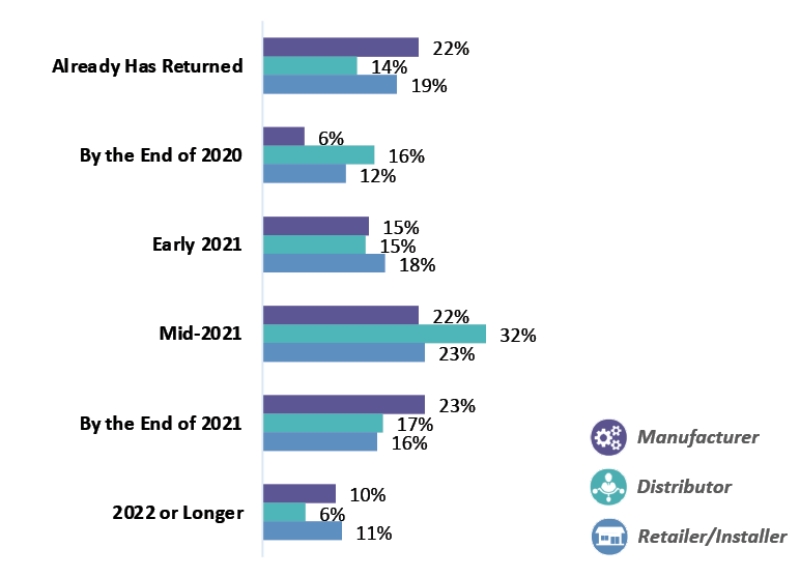
As a whole, the industry shares a positive outlook for the coming year. Most businesses surveyed anticipate strong sales growth and a quick rebound for the entire aftermarket. In fact, nearly 70% think that the industry will bounce back to pre-pandemic levels by mid-2021, with 90% seeing recovery by the end of 2021.
“This wasn’t a recession about economics, lower demand or a contraction in desire for what we do,” noted SEMA Director of Market Research Gavin Knapp. “This was really about structure and whether or not you were able to have people in your facility to make or sell parts. So long as people are allowed to have their employees make their parts and sell them in stores, our industry is doing well.”
The Aftermarket Is Poised for 2021 Growth
Is the industry being overly optimistic? Not when you look at the economic numbers found in the “State of the Industry Report.” They show every indication that the industry is primed to resume the growth that was interrupted in late 2020.
When The Industry Will Return To Pre-Pandemic Levels
“Overall, our industry appears in good shape,” Cheng said. “Once the country reopens and effective vaccines are distributed, it appears that our industry will be able to readily bounce back and continue to grow.”
“That’s part of the reason companies are so optimistic,” Knapp added. “Once things open up and people are allowed to get back some normalcy, they’re going to want to go places. They didn’t stop working on their vehicles during this time, and they’re going to want to enjoy them again.”
Get All the Latest Research
For your free download of the 65-page Fall 2020 “State of the Industry Report,” visit www.sema.org/market-research. While there, you can also download SEMA’s “State of the American Consumer” snapshot report, which offers insights into current consumer sentiment.
SEMA also has a report about the quickly changing economic metrics. Check out the monthly “SEMA Industry Indicators Report” at the same link for regular updates on economic trends affecting the aftermarket.


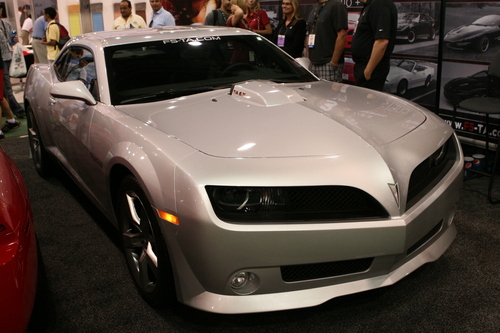 Virginia—Vehicle Modifications: Virginia Governor Ralph Northam signed into law SEMA-supported legislation which includes provisions that change certain traffic infractions from primary to secondary offenses. A secondary offense is one for which a citation can be issued only if the driver is stopped for another, separate offense. Beginning March 1, 2021, the following traffic infractions will be changed to secondary offenses: operating a motor vehicle without an exhaust system that prevents excessive or unusual levels of noise, operating a motor vehicle without a light illuminating a license plate, or operating a motor vehicle with certain sun-shading materials and tinting films.
 On October 23, 1970, the Blue Flame rocket car became the world’s fastest vehicle when driver Gary Gabelich recorded the FIA-certified World Land Speed Records of 622.407 mph (1,001.667 kph) for the flying mile and 630.388 mph (1,014.5111 kph) for the flying kilometer. Fifty years later, the achievement was commemorated as the states of Utah, Wisconsin and Illinois issued proclamations celebrating “Blue Flame Day.”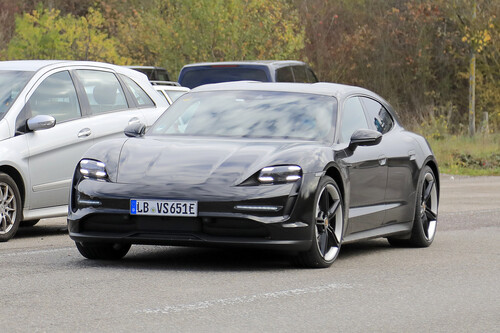

 See PRI Road Tour videos on shop visits at
  2020 was anything but a typical year, defined by the COVID-19 health crisis that disrupted almost every facet of life in the United States. It should be no surprise that the results of the November election were equally unique. As the political world tries to make sense of the mixed messages that voters sent to Washington, D.C., on Election Day, the balance of power in Congress was still uncertain as this issue of SEMA News went to press. Two U.S. Senate races in Georgia, which carried over into a January 5 runoff election, would determine which political party controlled the Senate. Let’s take a look at the results of the elections and how they will impact the issues on the legislative horizon in the 117th session of Congress (2021 and 2022).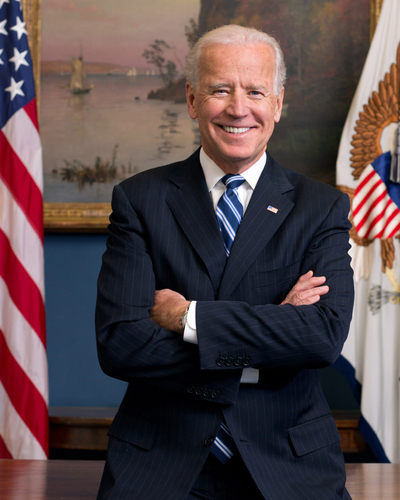
 Permatex appointed Dan Clarke (left) to the position of director of marketing for the engine repair division. Clarke will be responsible for driving the development and execution of all marketing activities for the engine repair business to meet strategic objectives and deliver financial goals. The announcement was made by Lee Burtelson, vice president/general manager of engine repair. With Permatex since 2015, Clarke recently served as the company’s sales director for the U.S. traditional channel. Prior to Permatex, Clarke was a business unit manager at Coburn Technologies Inc. and spent 11 years with HID Global Corp. in various management and sales positions.
 Eleven Engineering Inc. announced that Matt Michielin joined the company as marketing team leader. His responsibilities at Eleven Engineering include maintaining the SKAAstore and the creation of the new SKAAstore website, customer service, office operations, database management and social-media and communications assistance. Prior to joining Eleven Engineering, Michielin worked with Clean Harbors Environmental Services, the government of Alberta, and Special Olympics Alberta.
 Pertronix Performance Brands announced that industry veteran Jenna Jefferies joined the company as national account manager. She previously spent 18 years at K&N as national account manager. Jefferies will be responsible for growing national account revenue and for providing new product feedback to the Pertronix engineering team. She comes from a motorsports family and is passionate about desert off-road racing. The SEMA Businesswomen’s Network (SBN) recently named her as its SheIsSEMA Woman of the Year.
 Caliber announced that current President and Chief Operating Officer Mark Sanders succeeded longtime CEO Steve Grimshaw, effective January 1, 2021. Grimshaw moved to full-time executive chairman at that time. Sanders has spent his entire career in the automotive industry and joined Caliber Collision in 1997 as it expanded its operations into Texas. As president and COO, Sanders led the growth strategy, which expanded Caliber Collision’s footprint throughout the United States while also positioning Caliber for the future through the strategic acquisition of other lines of business. During Grimshaw’s tenure, the organization grew from 68 locations in two states to more than 1,200 locations in 34 states across the United States.
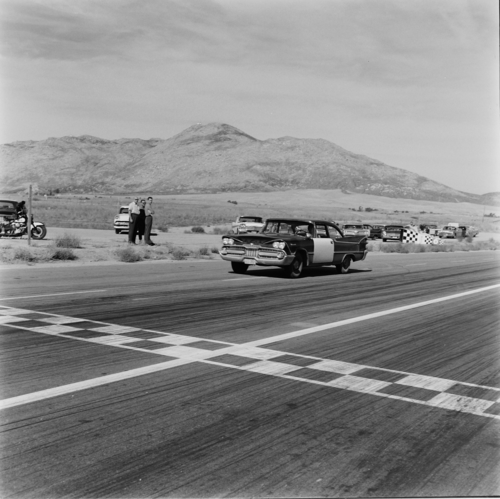 When the California Highway Patrol (CHP) needed to replenish its fleet of patrol cars in late 1958, it asked car manufacturers to submit sample versions of their ’59 models for evaluation. At the time, the CHP had some pretty specific requirements: The car had to be a two-door sedan with a minimum wheelbase of 122 in. and weigh at least 3,800 lbs.; be equipped with heavy-duty suspension, heavy-duty brakes, 15-in. wheels, six-ply nylon tires, and an automatic transmission with at least three forward speeds; and be powered by an OHV V8 of at least 380 ci with at least 9.75:1 compression, hydraulic lifters, a single carburetor (though multiple carburetors were allowed) and dual exhaust.
 One silver lining in the COVID-19 pandemic comes by compelling all of us to innovate, adapt and find new paths to success. In some cases, we can imagine that these new ideas may evolve into practices and tactics for the long haul. Case in point: The PRI Road Tour.