

By SEMA Washington, D.C., Staff
SEMA’s top federal legislative priority is passing the “Recognizing the Protection of Motorsports Act” (RPM Act), which clarifies that it is legal to make emissions-related changes to a street vehicle for the purpose of converting it into a dedicated racecar. The RPM Act also confirms that it is legal to manufacture, sell and install race parts. SEMA is currently working with the RPM Act’s strongest supporters in Congress to identify the best strategy for reintroducing the bill in a way that maximizes its chances of becoming law, either as a stand-alone bill or part of a larger legislative package. In recent days Congress has been overwhelmed with messages of support for this legislation. Please keep up the momentum; tell Congress to Save Our Racecars.
The RPM Act, first introduced in 2016, reverses the U.S. Environmental Protection Agency’s (EPA) interpretation that the Clean Air Act (CAA) does not allow a motor vehicle designed for street use—including a car, truck or motorcycle—to be converted into a dedicated racecar. This American tradition was unquestioned for nearly 50 years until 2015, when the EPA took the position that converted vehicles must remain emissions-compliant, even though they are no longer driven on public streets or highways. A version of the RPM Act was included as part of the energy bill that passed the House in 2020, but the Senate never took it up.
SEMA is fighting this battle both in Congress and in federal court. The association recently filed an amicus brief in a lawsuit between the EPA and Gear Box Z. Inc. (GBZ) arguing against EPA’s contention that the CAA does not allow a motor vehicle to be converted into a racing vehicle used solely for competition. In its brief, SEMA asserts that “the agency’s interpretation breaks from the plain language of the CAA, the legislative history, and EPA’s regulations and guidance.” SEMA’s brief also notes that the EPA’s position contradicts its longstanding guidance and regulations and the agency previously stated that it “has no interest in vehicles that begin their existence as normal, EPA-certified production vehicles used on public roads and are then permanently converted to sanctioned competition-use only vehicles.”
The EPA’s unwillingness to pull back from its regulatory overreach emphasizes the need to pass the RPM Act in this Congress.
The GBZ case is before the U.S. District Court for the District of Arizona. SEMA will continue to fight the EPA’s flawed interpretation in court while urging the U.S. Congress to end the debate by enacting the RPM Act.
For details, contact Eric Snyder at erics@sema.org.
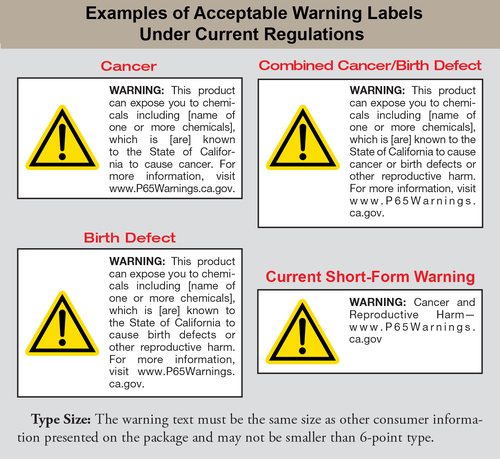 The California Office of Environmental Health Hazard Assessment (OEHHA) has proposed significant revisions to Proposition 65’s short-form warning. The SEMA-opposed changes would restrict use of the short-form warning implemented in 2018. The current short-form warning does not identify a specific chemical. The long-form warning requires identification of a specific chemical(s):
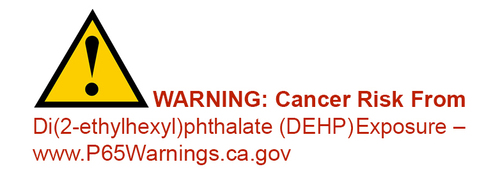 Under the rulemaking:

 SEMA Education remains committed to empowering industry professionals by sharing innovative strategies, information and learnings through new and engaging webinars.
 The pandemic seems to have accelerated the online streaming market, with videos available on demand and catering to any lifestyle or interest group. Get a firsthand perspective about the changing landscape of media and trends in direct-to-consumer, subscription-based media streaming services during the SEMA Facebook Live Chat featuring Matthew Boice, vice president of sales for the automotive aftermarket, at MotorTrend Group—a Discovery Communications Company—March 10, at 12:00 p.m. (PST). Live Chats are open Q&As that make it possible for the industry to tap into knowledge and communicate directly with the featured guest.
 SEMA Education remains committed to empowering industry professionals by sharing innovative strategies, information and learnings through new and engaging webinars.