SEMA News—March 2023
EVENTS
By SEMA News Editors
Observations From the 2022 PRI Show
Manufacturers and Buyers Share Their Takes on the Key Racing and Performance Trends Likely to Drive This Year’s Market
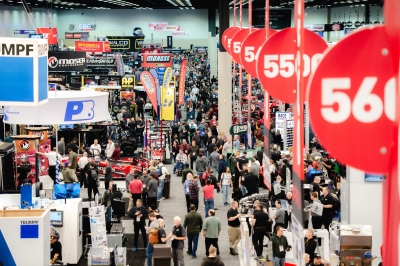
The recent PRI Trade Show in Indianapolis was among the most successful on record. The booths and aisles bustled with attendees eager to see the latest trends and business opportunities to be found in a fast-paced industry.
When it comes to the racing and performance category, there’s perhaps no better glimpse into the market’s top trends than the annual Performance Racing Industry (PRI) Trade Show in Indianapolis. Billed as the three biggest business days in motorsports, the 2022 Show roared back to the Indiana Convention Center this past December 8–10, its aisles bustling with exhibitors and attendees eager to gain a competitive edge in 2023. For readers who may have missed the event, the following are some key PRI Trade Show takeaways.
Fire-Breathing Power
“As if there wasn’t already enough interest in Ford’s Godzilla engine platform, son of Godzilla will ensure the fire-breathing monster is in the forefront of aftermarket product development heading into the 2023 season,” wrote automotive journalist Mike Magda, reporting on the trends he picked up on for the February 2023 issue of PRI Magazine.
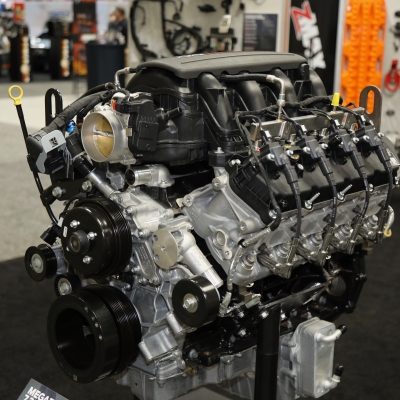
Expect to see Megazilla, Ford’s new 7.3L crate engine, high on racer wish lists. It will offer 615 hp and 640 lb.-ft. of peak torque.
Magda added that other priorities for performance and racing companies include improved fuel-delivery products to keep up with the ever-increasing demands of new power-adder engine combinations, as well as more use of sophisticated simulators to expedite driver development and preparation before races.
“With the horsepower level that we’re seeing these days, the racers need a real fuel system in the car,” confirmed Phillip VanBuskirk, national sales manager of Aeromotive, Lenexa, Kansas, which is developing high-performance fuel components for race cars and late-model production cars like the Ford Mustang. “We’re really stepping up the game for stock fuel tanks. They want a high-horsepower pump that can go into a stock tank, and they want brushless with a speed controller that can be tied to the ECU.”
“Driving simulators will be the wave of the future to help drive down costs,” promised David Smith driver for Shockwave Motorsports, Sidney, British Columbia, Canada, which manufactures race-car simulators suitable for NASCAR, ARCA, Trans-Am, late models and Sprint Car training. A typical setup includes body, roll cage, window net, dash, steering and seating similar to the desired race car. On-track realism is achieved through three 75-in. high-def TVs, fully programmable travel vibrations, adjustable torque steering and even in-helmet sound. “It’s one more tool for developing drivers,” added Smith.
Sharp-eyed Show observers also honed in on several more trends that race-equipment manufacturers say will be key to a successful 2023, and addressing high-horsepower demands is high among them. Transmissions will have to be more robust to handle the power that bigger turbos and superchargers will deliver. Hub dynos that measure that horsepower will be essential to some teams. Innovations that save time in the garage or pits will also be embraced, and even companies that simply help racers get the race cars from the shop to the track are promising more comfort and utility.
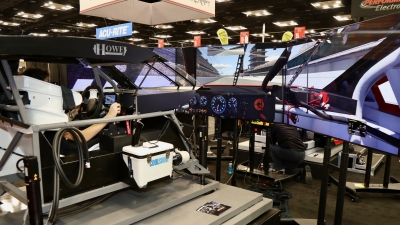
Increasingly, driving simulators are seen as the wave of the future as teams look for more cost-effective means to train drivers and hone their skills.
What’s more, if new-product releases are an indication of the most popular engine in the country right now, then many of those race trailers will have cars powered by the Ford Godzilla engine. And very soon, a more powerful relative will be on many wish lists.
Dubbed the Megazilla, the new 7.3L crate engine will offer 615 hp and 640 lb.-ft. of peak torque, with 500 lb.-ft. or more reportedly available from 2,500–6,000 rpm, Ford said. The original headliner, Ford’s Godzilla crate engine, is also 7.3L and is rated at 430 hp with 475 lb.-ft. of peak torque.
A sampling of other leading aftermarket companies reveals significant Godzilla development programs. In fact, companies are developing improved versions of every component in a fuel system, including fuel tanks, pumps, hoses, fittings, regulators, injectors, and carburetors—all to keep up with the power demands of the engine.
Meanwhile, demand for “late-model stuff,” including newer Ford and LS platform products, as well as lighter-weight billet parts, and even kits for big-wheel drag cars is expected to intensify in the coming year.
Manufacturers’ Assessments
Across the show floor, various manufacturing exhibitors also noted some interesting trends. “The big trend we’ve started to see as we exit the pandemic is that there’s still a lot of demand for Ford FE and early Chrysler product—the Cs and Ds,” said Bryan Barlow, Canadian sales manager for The Edelbrock Group, based in Olive Branch, Mississippi. “During the height of it all, everyone focused on getting their orders out on A and B movers. Along the way, a lot of C and D movers got depleted or discontinued. So we’re starting to see a big push right now as everyone’s getting caught up.”
Pleasantly unexpected, Edelbrock’s new VRS carb also continues to resonate with racers following its introduction last year, Barlow added. “About June we started to ship it, and we’re already overwhelmed with orders,” he said. “With the market shifting so greatly toward EFI, we were a little nervous on the introduction of a new carburetor, but carburetor sales have been through the roof.”
For the team at Valencia, California-based Air Flow Research and Scat Enterprises, flat-plane crankshafts that deliver “the sound and performance of the Ferraris and Lamborghinis” are expected to remain atop racers’ 2023 wish lists, according to Danny Cerny, inside sales lead, Scat Enterprises. However, “for strength and a lot of the drag racing and performance sports, it’s the billet crankshafts,” he noted. “While manufacturing and producing the billets, we are also expanding a lot of our lightweight forgings that hold up to the industry’s punishing demands.”
Cerny also predicted that, somewhat ironically, the push for vehicle electrification could bode well for his segment. “People are going to want to rebuild a lot of the modern vehicles because the mileage is going to be coming around,” he said, “and they’re not going to want to upgrade or go into an electric vehicle. So for us, it creates a whole new avenue in providing crankshafts, pistons, cylinder heads and connecting rods.”
From the viewpoint of Lakeville, Minnesota-based manufacturer QA1, buyers are eyeing rear suspensions for such classic trucks as the ’73–’79 Ford F-150, as well as full-handling kits for ’71–’76 Impalas/Caprices that are popular among Donk racers and other big-wheel enthusiasts.
Along with products designed for older vehicles, QA1 also is utilizing advanced technologies and materials to meet customer demand. “They’re looking at new things like our carbon-fiber driveshafts,” said Steve Smith, QA1 representative. “There are still some folks out there who just can’t believe that a carbon-fiber driveshaft can actually be stronger, lighter, and safer than any other driveshaft there is. They’re intrigued by things with innovation in the parts.”
Based in Glendale, Arizona, Pro EFI noted its wiring harnesses for the Ford Coyote engine as top attention-getters; at King Engine Bearings, meantime, much of the focus was on the company’s first-to-market Can-Am race bearings, which were displayed at PRI in a Brian Crower specially crafted Can-Am engine block.
Aside from the hard parts, other new and often unexpected business opportunities were found throughout the Show, as Edward Cooper, president of Nu-Ice Age, a dry-ice blasting operation in Jackson, Michigan, discovered at the Miles Ahead booth. Based in Carmel, Indiana, Miles Ahead brings turnkey open-wheel electric kart racing competitions to fundraising and company team-building events. And that presented Cooper with a potentially new application for his product.
“When [blasted] dry ice hits, there’s no water in it,” Cooper explained. “Tiny explosions take place that lift dirt off walls or off a vehicle. They’re perfectly cleaned off, without hurting the finish.”
This waterless technology could be an ideal solution for cleaning e-karts and their specialized components, he surmised. “It’s cold and takes the dirt down to the ground. You just sweep it up and you’re done,” he said. “We’ve been doing this, but we also race cars, so this is kind of what we’re looking to as a next step.”
Breakthroughs for Buyers
While many buyers arrived at the Show with a wide-ranging list of needs, they also learned of many new ideas and solutions they could tap into. Indianapolis-based racer Nick Taylor was among those examining the aforementioned QA1 setup for big-wheel vehicles. Although he doesn’t race Donks or big-wheel cars, “I do no-prep racing and we like long-travel suspensions,” he said. “So I’m trying to gauge how this [product] could work out for what we do, not just the application they’ve produced it for.”
Fellow attendee Ryne Moonshower, with Moon’s Fabrication in Fort Wayne, Indiana, agreed. “There’s crossover between a lot of different sports here,” he added. “New products for Circle Track may also be useful in another area like drag racing, and you would never know that unless you came to PRI. There were some circle track twin-tube shocks that really piqued our interest, even though we do drag racing and a lot of backtrack stuff.”
For many buyers, Machinery Row always ranks among the Show’s top attractions—and Daniel Adams, with CT Race Worx in Monroe, North Carolina, was on a mission there. A welder and fabricator specializing in side-by-sides and powersports vehicles, he was looking for new and upcoming welders, CNC tube benders, and air-driven and cordless power tools.
“Those are big things in our industry now, and every time I turn around [here], I’m finding something that I need and want,” he said. A seven-year veteran of the PRI Trade Show, Adams noted that Machinery Row consistently proves valuable to his business. “We’re able to increase production times and also the quality of our end products because we’re able to find the tools and equipment that help us produce better product in the end,” he said.
Tony Hatfield, owner of Modco Racing Engines in Joplin, Missouri, was in the market for CNC machines, and he found several by Howard, Pennsylvania-based Centroid that merited closer examination. Hatfield, who’s considering updating his equipment for cylinder heads and other engine-building tasks, noted improved efficiencies of the industry’s latest tooling; he was able to visualize the possibilities thanks to “hands-on” demonstrations provided by Centroid and others on Machinery Row.
“It’s more impressive to see it live than on paper,” he noted. “Seeing it in working mode tells us if it’s something we really need for where we want to be at. We get an idea of what’s new out there [and] make sure we’re not missing anything. The whole drive is to move forward.”
With motorsports broadening its appeal, especially among younger demographics, experts say the market for racing apparel, helmets, and safety gear is expected to continue expanding through at least 2026. Of course, comfort, lighter weight, and fire protection remain key factors for buyers, with manufacturers jockeying to differentiate themselves in the areas of quality, regulatory compliance, aesthetics and innovation.
Will Wattanwongkiri, owner of Chino, California-based WRTeknica, was examining helmets and other safety equipment by Scala Gear. Wattanwongkiri’s performance motorsports-oriented shop also fields TeamWWR, which has raced in NASA Super Touring, SRO GT4 World Challenge, and various other series.
“We resell, distribute, car build, support, transport—we’re a one-stop shop for customers with high-performance cars,” he said. “We’re here to buy helmets [and] also here to buy suspension parts and brake parts, wheels—just all kinds of things. Our business is focused on vehicle dynamics… We build a lot of race and track cars, and we’re focused on meeting all these vendors here.”
Like scores of other buyers flooding the aisles, Wattanwongkiri found it difficult to single out any one product trend that especially captured his attention. There were so many innovations across so many categories, making them impossible to list. However, he did agree with other attendees we spoke with that the relationships forged at the Show stood out.
“Coming to PRI, for me, is about connecting with all the motorsports industry people, a lot of whom I’ve been talking to on the phone and now am putting a face to the name,” he said. “There are also a lot of old industry friends [here] who we just don’t get to see often,” he added. “I’m meeting other people through my current connections and then also introducing new connections to them—it’s a really good networking opportunity.
Editor’s Note: This story is adapted from reporting by Mike Magda and Mike Imlay for the February 2023 issue of PRI Magazine.


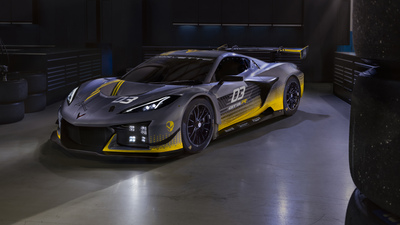 Chevrolet has debuted the new Corvette Z06 GT3.R racecar, a year before it makes its competition debut at the 2024 Rolex 24 at Daytona.
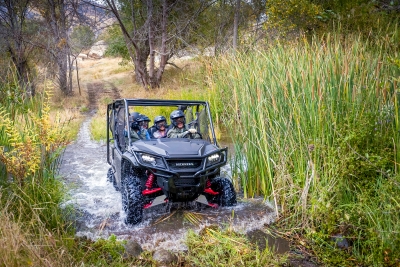 A Booming Outdoor Recreation Industry: New data released by the U.S. Department of Commerce’s Bureau of Economic Analysis (BEA) shows that outdoor recreation generated $862 billion in economic output and 4.5 million jobs in 2021. This equates to 1.9% of GDP in the U.S. economy and highlights the record-setting growth that the outdoor recreation industry has seen over the past few years. “From the creation of jobs and increased profit for small businesses in local economies, to larger boons to our national economy, this sector is a consistent driver, even in times of economic uncertainty,” said Jessica Turner, president of the Outdoor Recreation Roundtable (ORR), of which SEMA is a member. ORR is America’s leading coalition of U.S. outdoor recreation trade associations. It represents more than 50,000 businesses that produce vehicles, apparel, equipment and services enjoyed in our nation’s parks, waterways, trails and outdoor spaces. SEMA’s focus within ORR is on motorized recreation (four-wheel, ATVs, UTVs, etc.) along with all the equipment that makes it possible to tow RVs, trailers, boats and off-road vehicles (suspension, wheels, tires, increased horsepower, etc.).
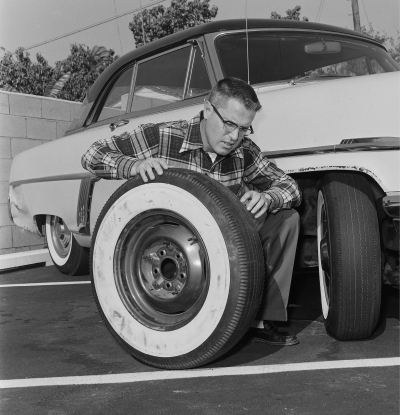 “The study of tread wear is as important to a mechanic as the study of fingerprints to a detective.” So wrote SAE engineer Ed Packer to open a February 1959 Hot Rod technical article about interpreting tire tread wear. By “watching your treads,” Packer stated, “you can keep your roadster or family sedan safer and more comfortable. As a bonus, you will cut operating costs.”

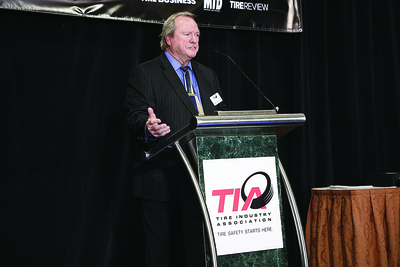 When the subject of conversation turns to tires, few industry experts can speak with as much authority as Dick Gust. The current CEO of the Tire Industry Association (TIA), Gust started his decades-long career while still in college, and upon graduation was hired as a design engineer with Uniroyal. He subsequently spent time in a variety of managerial roles with Sears Roebuck, Lakin Environmental and Liberty Tire Recycling, where he served as director of government affairs. He has worked with a number of industry associations, including the National Tire Dealers & Retreaders Association, American Retreaders Association and International Tire & Rubber Association. He has also served on the U.S. Department of Commerce’s Environmental Technologies Trade Advisory Committee.