“Carr Parts” is dedicated to builders. It's about quick tips and tricks and the newest must-have products. It's about visiting with a fellow builder, walking around their project and getting an up-close look at their handiwork. It's also about our industry sharing their passion for turning a wrench and taking time to give advice to fellow gearheads. Episode Seven features JW Montoya talking about inspecting the hubs on his truck.
For more information about other talented young builders visit SEMA's Young Guns www.semayoungguns.com.
SEMA’s video team is currently in production on future episodes of “Carr Parts“ and we’d love to hear from you. Do you have a tip, trick or advice you can share with our audience? Drop us a note at marketing@semaignited.com and we’ll connect with you.
We can't wait to find the next guest for “Carr Parts.” And finally...keep building.
The SDC Data Excellence recognizes the companies that have worked with SDC to recreate and relaunch industry-leading product data sets. Here are products from current SDC members that have achieved data excellence.
HushMat
’82–’92 Chevrolet Camaro Kit
Sound-deadening and thermal-insulation material is designed to make every type of vehicle cool, quiet and comfortable to drive and enjoy. HushMat is an easy-to-install, USA-made material that molds, forms and adheres to your vehicle’s surface. No tools, glues and or special equipment needed to install HushMat; simply peel and stick.
HushMat has invested thousands of hours over the past 15 years measuring vehicles to create a year-, make-, model-specific portfolio of 365,000 part numbers. HushMat insulates firewall, floor pan, tunnel, doors, roof and trunk. HushMat even provides installation templates to show where each piece is placed.
Oracle Lighting
Rear Bumper LED Reverse Lights for Jeep Gladiator JT
Oracle Lighting launched new rear bumper LED reverse lights. Unsatisfied with the visibility of your Jeep Gladiator reverse lighting when backing up at night? Then replace the factory bumper reflectors with high-output replacement auxiliary LED reverse lights from Oracle Lighting. Designed for function and durability, these lights feature an aluminum housing with PMMA lens while also maintaining the rear reflector function with a scaled-down version integrated into the housing. Scheduled to release April 20, 2021.
Engineered to “Activate More Grip,” sway bars are principally designed to reduce body roll or sway. By reducing body roll, lateral loads are spread more evenly across the tires thereby increasing cornering grip and improving outright performance. This Whiteline sway bar equals more grip, equals better handling, equals outright performance. Benefits extend to improvements in handling, safety and tire wear without affecting ride quality or comfort.
SEMA eNews highlights new products from industry companies each week. To have your product considered for upcoming issues, send product press releases to editors@sema.org.
Oracle Lighting
Rear Bumper LED Reverse Lights for Jeep Gladiator JT
Oracle Lighting announced the launch of the new Rear Bumper LED Reverse Lights for Jeep Gladiator JT (PN: 5878-504). Scheduled to release April 20, the new reverse lights have an MSRP of $149.95 per pair. Replace the factory bumper reflectors with Oracle’s high-output auxiliary LED reverse lights. The design seamlessly integrates into the bumper's reflector area to provide more than 1,500 additional lumens when backing up.
Designed for function and durability, the lights feature an aluminum housing with PMMA lens, while also maintaining the rear reflector function with a scaled-down version integrated into the housing. These compact lights pack a big punch with a total of 30 high-powered LEDs to improve your Gladiator’s reverse visibility. The lights come ready to install out of the box, ensuring that you will have rear visibility in your Jeep Gladiator when it matters. Installation uses factory mounting hardware, and the lights tie into the rear light wiring with the included T-taps or with the optional Plug-and-Play adapter (PN: 5881-504) for even easier installation.
Additional features and specifications include:
Connects to existing reverse light power source without error code.
Integrated rear reflector for OE appearance and function.
Total of 30 high-powered LEDs with 3,000 raw Lumen output.
Aluminum housing with black powdercoat finish.
Optic-focused beam pattern for an extended field of view.
Milwaukee Tool is adding Knee Pads to its personal protective equipment offering. The new Knee Pad Lineup comes in a variety of cap styles, including Free-Flex, Hard Cap Gel, Performance, Non-Marring Performance and Stabilizer Performance. These solutions are thoughtfully designed to provide all-day comfort on the jobsite and are EN14404 tested.
Free-Flex Knee Pads: The Free-Flex Knee Pads are constructed with a lightweight, comfortable foam that allows users to easily move around the jobsite. They are built with a water-resistant cap and adjustable straps for easy and quick size adjustments.
Hard Cap Gel Knee Pads: The Hard Cap Gel Knee Pads are built with a secure gel zone to provide better comfort and create a contoured fit to the user’s knees. Constructed with thick comfortable foam and durable caps, these knee pads are designed for extended wear and can withstand a variety of surfaces.
Performance Knee Pads: The Performance Knee Pads provide maximum comfort and deliver the longest life. These knee pads are constructed with pressure-reducing foam that maintains its shape for extended wear and layered gel that absorbs pressure and supports the knee for all-day kneeling. To withstand changing jobsite conditions, the knee pads are complete with a robust, durable cap. Non-Marring Performance Knee Pads are also available for applications on sensitive surfaces.
Stabilizer Performance Knee Pads: The Stabilizer Performance Knee Pads are equipped with large flat caps, making them the most stable knee pads for working in stationary locations and layered gel that absorbs pressure to support the knee during all-day kneeling. These knee pads are built with a hinged thigh strap for better mobility, allowing the user to easily move around the jobsite.
Dana Incorporated
Ultimate Dana Kingpin Knuckle Kits
Dana Incorporated launched its new Ultimate Dana Kingpin Knuckle Kits
in conjunction with the Easter Jeep Safari in Moab, Utah. Only available from Dana, the kits include all of the top-quality components required to install a kingpin assembly for more robust off-road performance on Jeep vehicles.
The kits feature an updated knuckle design that delivers added strength to the axle while improving turning radius and steering. Available for Jeep JK, JL and JT models, the Ultimate Dana kingpin knuckle kits are the newest addition to the Dana builder axle program.
The 2021 Easter Jeep Safari was held March 27–April 4, in Moab, Utah. Dana had six of its branded vehicles on-site, including the Jeep vehicle, which has been upgraded with the Ultimate Dana Kingpin Knuckle. In addition, Dana was the official sponsor of three of the Easter Jeep Safari trails, and members of the Dana sales and engineering teams were on site to interact with Jeep owners and answer questions about Dana products.
PPE (Pacific Performance Engineering)
304 Stainless Steel Cat-Back Exhaust Systems for GM and Ford
The 304 Stainless Steel Cat-Back Exhaust Systems is for drivers who want their trucks to sound better and get better performance, while not being annoying to drive day-to-day. This kit offers a mellow interior tone with an aggressive sound on the exterior.
Easy to install, the kits use the factory hangers and clear the factory-mounted spare tire. A single, 3-in. inlet pipe splits into two, 2.5-in. over-axle tailpipes after the stainless steel muffler containing reinforced internal baffles. Exhaust then exits the two large-diameter stainless-steel tips. Tips are available in a ceramic-coated black or polished finish. A fully polished kit with brightly polished tubes, muffler and tips is also available.
Features
304 stainless steel exhaust tubes and mufflers available in raw or polished finish.
Tips available in ceramic coated black or fully polished.
Easy, bolt-on upgrade.
Complete with all fasteners, 304 stainless-steel clamps and hangers.
Billet timing pointer and degree wheel for SB and BB Chevy, including supercharged engines. Timing degree wheel is only 1/16-in. thick, with a diameter of 7 in. Add 0.050 thousands thick in spacing, black anodized and Lazer Etched degree wheel installs between the first V- pulley and the crank hub. Provides marks every 2 degrees, with larger marks every 10 degrees. Using this degree wheel and application-specific pointer eases the chore of setting the ignition timing.
Website: www.blowerdriveservice.com
PN: CH-3199KB Timing Pointer and Crank Hub Degree Ring Kit (BB)
PN: CH-3199KS Timing Pointer and Crank Hub Degree Ring Kit (SB)
Champion
Red Poly-7 Racing Grease
Champion Brands has recently introduced a professional-grade Poly-7 Red Racing Grease for high-speed competition and racing applications.
Champion Poly-7 Red Racing Grease (PN: 4053T/40 -14 oz.) is red in color, a NLGI #2 classification, tacky, multi-purpose, and high-temperature grease that incorporates polymer technology, premium additive technology, hydro-treated base oils, calcium sulfonate, and a lithium complex thickening system. Its unique chemistry prevents melting and breakdown of the grease at temperatures more than 500°F.
These additive and polymer technologies ensure for the racer maximum lubricity, adhesion, resistance to water wash-out and defiance to sling-off. Strong tackiness additives keep this grease in place under high pitch line speeds, and provide ease of application.
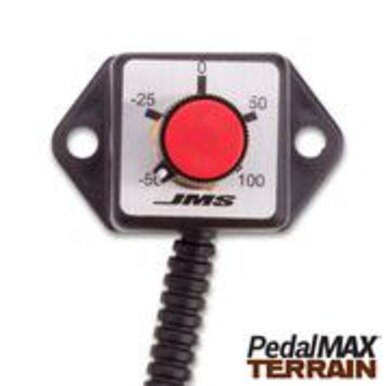
The all-new, redesigned L5P Duramax Pulsar V3, with the addition of an industry-leader in digital gauges provides a potent power-plus-visibility combo. The Insight CTS3 has a high-res, 5-in. color touch screen with full swipe capability and edge-to-edge graphics. When the Pulsar V3 and the CTS3 Insight are paired, users gain full control over the Pulsar, including power-level adjustment, transmission-slip protection on/off, EGT backdown adjustment, high-idle adjustment, throttle-sensitivity adjustment and more.
Every month witnesses the release of hundreds of new products across every segment of the specialty-equipment aftermarket. This is especially true for trucks, SUVs and Jeeps, which have remained a vibrant and expanding market sector in spite of the pandemic and feature a steady stream of new releases aimed at improving a truck’s performance and functionality. Featured on these pages are a few of the most recent new-product announcements that have found their way to our inbox.
Elka Suspension
3-in.-Lift 2.5 Reservoir Shock Kit for Ford F-150s
Elka’s new Reservoir Shock Kit for ’14–’19 F-150s features an external reservoir with increased oil volume for cooler operating temperatures. The 2.5 Reservoir Shocks provide better performance and consistency for a comfortable yet highly capable ride. The rear shocks are piggyback configuration for easy installation. Like all Elka products, they are also fully rebuildable and easy to service. Suggested MSRP is $3,099.98 for all four shocks.
Meyer Products
Ram- and Jeep-Licensed Plows and Spreaders
Meyer Products now offers Jeep and Ram owners and enthusiasts a full line of Ram- or Jeep-licensed snowplows and spreaders. All plows and spreaders will be engineered and manufactured in the United States and will be available at local participating Ram and Jeep dealerships. The Drive Pro pictured here is a lightweight, high-strength-steel, commercial-grade plow that is designed to provide optimal maneuverability in small commercial lots and driveways. It attaches or detaches with the pull of one handle, and it comes standard with a snow deflector and Nite Saber III lights.
Curt Group
2.5-in. Shank for Class 5 Trailer Hitches
CURT Group has expanded its Rebellion XD cushion hitch line to include 2.5-in. shank options and several new accessories to accommodate Class 5 receiver hitches. Curt Group has also added dual-ball options for 2-in. shanks (coming soon) and 2.5-in. receivers, accommodating 2- or 25/16-in. couplers and up to 15,000- and 20,000-lb. GTWR, respectively. The company has also added a pintle mount with standard holes to accept any of its pintle hooks or ball-and-pintle combos.
Westin’s Pro-Series Front Bumper for the ’14–’21 4Runner features a distinctive low-profile bumper that retains the OEM factory styling while adding a winch-capable platform engineered to accommodate virtually any 8,000- to 12,000-lb. winch. The bumper is constructed of a 10-gauge steel outer shell and a heavy-duty four-gauge center section. It also features large winch-area access holes for easier winch access and operation, and it provides two additional recovery/mounting points for shackles or ropes.
Warn Industries announces the release of its modular Trans4mer mounting system for the ’19–’20 Ram HD gen III and ’20 Ford Super Duty. The kit is designed to retain the factory front bumper. The kits are constructed of heavy-gauge steel with a durable black powdercoated finish engineered to protect against corrosion. The base winch mounting kit is required and includes brackets and a winch carrier. They also include J-hooks for increased recovery options and provisions to mount lights.
SmartCap has released its EVOa Adventure line for most late-model midsize trucks. The world’s first flat packable truck cap, SmartCap ships to your home or dealership in as little as 24 hours. Built to withstand abuse off-road or on the job site, the fully configurable EVOa comes with double-walled, stainless-steel gullwing doors and interior MOLLE panels. The cap will hold 330 lbs. when moving on the road, and 770 lbs. when stationary.
Diablosport announces the release of its Sprint Auto/Stop Start disabler on late-model Ford F-150s. The 3.5L Eco-Boost, the 5.0L V8 and the 3.0L diesel are supported. Plug in the disabler into the OBD-II port and it should stop the Auto Start/Stop feature indefinitely as long as it remains plugged into the vehicle. To revert to stock, simply unplug the disabler.
Quadratec
Driver-Side Dead Pedal for ’18—’21 Wrangler JLs and Gladiator JTs
Add a piece of functional style to the interior of your Jeep Wrangler JL or Gladiator JT with the Driver Side Dead Pedal. The pedal is constructed using 304 stainless steel and installs easily to factory locations using the supplied hardware. The large 9.84x3-in. surface makes for the perfect spot to rest your foot and will help with leg fatigue on long trips. No drilling or modifications are required. Adjustable to fit most factory and aftermarket floor liners. (Automatic transmissions only.)
Flowmaster introduces its FlowFX cat-back exhaust system for the ’07–’14 Toyota FJ Cruiser. The system is manufactured using 409 stainless steel throughout and features 2.50-in. mandrel bent pipes for better exhaust gas flow and a FlowFX “straight-through” muffler designed for better sound and maximum performance. The system is finished off with a 3.50-in.-diameter black ceramic-coated 304S stainless-steel tip. The system uses all the existing factory hanger locations and includes installation instructions and all necessary hardware for an easy installation.
Given the stubborn persistence of COVID-19, increasing numbers of firms are turning to teams software, which helps organize groups and enhances their communications, to ensure that their managers and staff can work virtually for the foreseeable future. Indeed, Google (a key player in teams software) has decided that nearly all of its 200,000 employees and contract employees will be working remotely through July 2021.
“The virtual work phenomenon is here to stay, and it’s only going to involve more people over time,” said Jeanne MacDonald, president of Global RPO Solutions for Korn Ferry.
Fortunately, businesses of all sizes have a cornucopia of teams software to choose from to guarantee that their remote workers can easily communicate with one another, quickly get together for group audio or video calls, or even collaborate on a long-term project that might last months or years. The good news is that teams software can actually increase productivity when leveraged expertly.
Specifically, a study of worker productivity at businesses in March and April 2020 (during which many were relying on remote workers) found that productivity increased 47% (https://bwnews.pr/2RQ19vC).
“The common assumption is that remote workers are less productive than those who are in a traditional office, but our ability to capture, integrate and analyze workplace data shows otherwise,” said Crisantos Hajibrahim, chief product officer for Prodoscore, the company that conducted the study.
More than 100 teams software platforms in varying configurations are currently competing for your business, according to Capterra, an online software review firm (www.capterra.com/collaboration-software).
Most are designed to offer managers and staff a quick and easy way to check in, communicate and collaborate on projects in a shared virtual space.
Many also offer users the ability to share their screens with coworkers and work together online with popular software packages such as Google Docs, Microsoft Excel or Salesforce, and most offer users the ability to quickly communicate via direct messaging and online chat video calling. Teams software also often offers safe storage of key documents, projects and files in the cloud—a distinct backup advantage for users who are also storing the same data on their computers or hard drives.
Fortunately, the wide variety of teams software guarantees that you’ll most likely be able to find a platform optimally suited to your needs, but here’s what you should look for in any decent teams software package for fundamentals:
Messaging: Nearly all teams packages offer some form of instant messaging. You’ll want to give this feature a go before evaluating any other features, since it’s so critical to the overall performance of your chosen package.
File Sharing: The best way to test file sharing on a teams software package is to bring in the applications you’re using everyday, such as Microsoft Word, Google Calendar, Zendesk and the like, and ensure that they work without a hitch.
Document Collaboration: You’ll want to take special care that document collaboration works with any teams software you choose, given that most businesses are so heavily reliant on such collaboration.
Audio and Video Calling: The use of video calling at businesses (using Zoom and the like) has exploded since spring, so you’ll want to carefully confirm that your choice of software—or the video calling software that’s built into the package—is easy to use and reliable. Ditto for audio calling from within the package.
Version Tracking: Managers and staff will need to be absolutely sure that they’re working with the latest version of any document or file while using teams software, so you’ll want to confirm the efficacy of this feature.
Calendaring: Virtually all collaboration and a great deal of communications will hinge on calendaring, so don’t commit to a teams package until its calendaring (or import of your favorite calendaring tool) is verified.
Bottom line: Before settling on a teams software package for your business, it’s a good idea to run the top packages through their paces and then see how those features compare to a package you may be evaluating.
Below is a look at la crème de la crème—the top five teams software packages currently on the market, which have been evaluated by at least 9,000 users, according to Capterra.
Slack (5.5 of 6 Stars): Easily one of the most popular and well-known team software packages, Slack has yielded excellent results for users for a number of years. Like most top packages, Slack offers direct messaging for all users, and it includes dedicated conversations for specific groups that are looking to go over a particular project, brainstorm an idea or just check in.
Slack also comes with group video calling, group audio calling and the ability to drag, drop and share files with colleagues. You can also run a poll with Slack, search previous messages, and post a personal status update (such as whether you’re in a meeting, out sick or have just won the lottery). Like most top packages, Slack also integrates with a number of other software packages, including email, GitHub, Google Calendar, Zendesk, Salesforce and Wunderlist.
Trello (5.5 of 6 Stars): Trello’s emphasis is on project management, so its design focuses a great deal on enabling staff and management to track, organize and coordinate a project through to completion. With Trello, you can easily inform others on the progress of various components of a project, and you can quickly create your own custom boards and lists to more easily manage and/or communicate about a project.
Like most top packages, Trello also integrates with a number of other software packages, including GitHub and Slack.
Basecamp (5.5 of 6 Stars): Basecamp, another pioneer of team software, is also known for its emphasis on project management. The company literally wrote the book on teams software, titled “Remote Working” (https://amzn.to/3mMbre6).
Basecamp easily enables you to create a project and then put together all the people, discussions, documents, files, tasks and deadlines associated with that project in one place. Staff can share their personal to-do lists for the day and then update those lists to inform management on how they’re progressing.
Meanwhile, company managers can post key announcements and notices in virtual spaces in Basecamp that are common to all, and clients can be brought into the loop with the ability to see data that managers deem appropriate.
Managers can also opt to receive a daily digest of pertinent Basecamp activities to their email inboxes every day.
Microsoft Teams, Part of Microsoft 365 (5.5 of 6 Stars): This platform enables you to create a separate team for each project you’re looking to complete. Each team “meets” in a virtual building where members can communicate and collaborate, and there are also rooms where select members of a team can break off into smaller groups.
The platform also has all the communications options that you’d expect from a top-tier choice, including private chat, instant messaging, calendar integration, group voice calls and group audio calls.
Perhaps one of the package’s greatest strengths, however, is its tight integration with other Microsoft apps such as Word, Excel, Powerpoint and Whiteboard, which makes it a high contender for workplaces based around Microsoft products.
G Suite (5.5 of 6 Stars): Formerly Google Apps, G Suite offers a collection of tools millions of users turn to every day: Google Docs, Gmail, Google Hangouts, Google Currents, Google Calendar and the like. With Google Hangouts, you’ll easily be able to meet for video conferences, and with Google sites, you’ll be able to quickly put together a quick website for a company or internal project.
The platform also comes with Google Work Insights—an analytics tool that uses charts to report on how your team is using G Suite and how the tool may or may not be helping with worker productivity.
Essentially, G Suite is a natural high contender for workplaces that rely heavily on Google apps.
Joe Dysart is an internet speaker and business consultant based in Manhattan.
Superformance MKIII-Custom Series, a modern take on the
iconic Cobra.
When Congress passed a SEMA-led law in 2015 to allow small businesses to produce completed replica cars, it was hailed as “revolutionary.” For the very first time, federal statute authorized small auto manufacturers to produce completed replica vehicles under a streamlined regulatory structure that reflected the distinctly different business model of this niche industry. The National Highway Traffic Safety Administration (NHTSA) completed the law’s implementing regulation in January, which must be reviewed by the Biden administration before it becomes official. NHTSA’s regulation offers a business-friendly pathway for companies to begin producing classic cars in 2021.
The Low Volume Motor Vehicle Manufacturers Act, which is more commonly known as the replica car law, enables small-volume auto manufacturers to construct up to 325 such replica cars a year under a simplified regulatory structure. Replicas must resemble production vehicles manufactured at least 25 years ago to qualify. From ’30s roadsters to ’70s musclecars to the DeLorean of the ’80s—it’s back to the future time.
“SEMA applauds NHTSA’s final rule allowing companies to market classic-themed cars,” said SEMA President and CEO Christopher J. Kersting. “Regulatory barriers have previously prevented small automakers from producing heritage cars for eager customers. The roadblocks have been eliminated. Companies will be able to hire workers, start making necessary parts and components, and produce and sell cars.”
Until now, NHTSA had only a one-size-fits-all regulatory framework intended for companies that mass-produce millions of cars. Members of Congress understood that a car produced in 1931 is different from a 2021 vehicle and therefore adopted the kit-car approach that treats the car as automobile equipment. While exempt from the vehicle-based Federal Motor Vehicle Safety Standards (FMVSS), parts used in replica cars produced under the 2015 law must meet NHTSA’s equipment-based standards. The law applies to the appearance of the vehicle, which means manufacturers can incorporate new platforms and high-performance equipment under the hood.
Implementation of the replica car law promises to create opportunities throughout the industry. For example, traditional kit-car businesses such as Superformance and Factory Five will be able to diversify their customer bases. For other companies such as DeLorean Motor Co., it is a chance to sell their classic original again.
There will still be many enthusiasts who prefer to assemble a car from a kit or purchase a rolling chassis and install the engine and transmission themselves. Those gearheads will still have that option. For consumers who may not have the time or skills to build a kit car, they now have the option to purchase a turnkey replica.
Factory Five’s all-new second-generation ’33 Hot Rod with the
optional ’32 Deluxe nose.
Change is Never Easy: A History of the Replica Car Law
When NHTSA was created in the ’60s, the agency focused its attention on vehicles coming off the assembly line. Over subsequent decades, many other countries expanded their policies to create separate programs for regulating low-volume vehicle manufacturers. Meanwhile, it was impossible for domestic small businesses to produce limited-edition classics since NHTSA required, for example, a ’26 Packard replica to comply with current model-year vehicle standards.
SEMA worked closely with a core group of companies to craft legislation authorizing the replica car program. The bill was first introduced in 2011 by former U.S. Representative John Campbell (R-CA). The quest toward enactment involved a considerable education campaign on Capitol Hill and faced long odds, as the issue proved obscure to most members of Congress and staff.
Gradually, the program’s merits were understood. Along the way, SEMA was able to partner with longstanding legislative allies, including U.S. Reps. Bill Posey (R-FL) and Doug LaMalfa (R-CA), in addition to fostering relationships with Reps. Markwayne Mullin (R-OK), Gene Green (D-TX), and Mike Kelly (R-PA), who were integral in enacting the Low Volume Motor Vehicle Manufacturers Act into law in 2015. U.S. Senator Jon Tester (D-MT) and former U.S. Senator Dean Heller (R-NV) played critical roles in securing the Senate’s approval of the replica car law.
SEMA and the industry celebrated passage of this carefully crafted law, which explicitly required NHTSA, the U.S. Environmental Protection Agency (EPA), and the California Air Resources Board (CARB) to issue implementing regulations or guidance within 12 months. Several years would pass before there was tangible action. During that time, SEMA and members of the industry contacted the agencies and expressed concern about missing the December 2016 statutory deadline. SEMA pursued grassroots and media campaigns while members of Congress met with agency officials, sent letters, and even questioned government officials during congressional hearings.
Partial success was achieved in 2019 when the EPA issued guidelines for the engine packages to be installed and CARB issued a regulation for certifying the vehicles and engine packages. The law requires vehicles to meet current model-year emissions standards, and the program was based on certified engine packages recognized by California for specially constructed vehicles.
NHTSA moved at a much slower pace. Despite repeated outreach to senior agency officials, SEMA felt it had little choice but to ask a federal court to intervene. A 2019 lawsuit citing NHTSA’s failure to issue a regulation in a timely fashion had its intended effect—helping spur the agency to issue a proposed rule in January 2020. The industry welcomed NHTSA’s replica car proposal, although it included a few provisions that required modification. Most importantly, the draft rule provided the industry with optimism that implementation of the law was in sight.
The new and timeless DeLorean.
“NHTSA started off with a more conservative approach under which replica vehicle manufacturers would be limited to the same length, width and height as the vehicle being replicated,” said Stuart Gosswein, SEMA’s senior director of federal government affairs. “The draft regulation even specified that the replica vehicle’s interior would have to match the original vehicle’s interior dimensions as well, so they’d just be building reproductions. We argued that the operative word is ‘resemble’ not ‘duplicate,” and they agreed.”
NHTSA issued a final rulemaking on January 15, 2021, which included changes requested by the industry (highlighted in the sidebar “Major Issues Addressed in Final Rule”). The program does not take effect until the NHTSA rule has been officially published in the Federal Register, which was delayed due to the presidential transition but is expected to occur within weeks.
Businesses producing replica cars will need to register with NHTSA and the EPA (and CARB, if selling cars in California). The registration process may take up to 90 days for NHTSA review and approval.
Background on Kit Cars
Kit cars have been around nearly as long as the automobile itself. The term is associated with vehicles that are completed by the purchaser.
Production encompasses many possibilities, ranging from hobbyists assembling all the parts in their garages to turning a rolling chassis produced by a commercial manufacturer into a completed car by installing the powertain.
The kit-car industry took hold in the ’50s as companies began marketing products that provided older vehicles with a second life. Beyond ordinary repair and replacement, kit-car products instilled a desire for customization and personalization. By the ’70s, enthusiasts were able to purchase components to convert older cars into unique classics or build them from the ground up. The industry addressed a variety of issues, whether supplying consumers with sports-car replicas or fanciful variations of historic vehicles. Kit cars expanded the marketplace, addressed demand for vehicles originally produced in limited numbers, and provided the latest technology.
SEMA embodies the kit-car industry’s spirit and soul. It also has two councils whose companies incorporate the industry: the Automotive Restoration Market Organization and the Hot Rod Industry Alliance.
Replica Vehicle FAQs
Why is this law necessary? Until now, all motor-vehicle manufacturers were treated the same, regardless of whether a company produced one car or one million. The law directed NHTSA to create a simplified regulatory program that considers the unique differences between a company that mass produces thousands of cars and one that handcrafts a limited number.
What is a “low-volume” manufacturer? The law states that a low-volume manufacturer is a company whose annual worldwide production (including by a parent or subsidiary of the manufacturer) is not more than 5,000 motor vehicles each year. Such companies will each be able to sell up to 325 replica cars annually in the United States.
How does the law define a replica vehicle? A replica vehicle’s body resembles that of another motor vehicle produced at least 25 years ago. The vehicle is produced under a license agreement from the original manufacturer, its successor/assignee, or the current owner of the replicated vehicle’s intellectual property rights. In some instances, the replica car manufacturer may be the current owner (for example, when the original manufacturer no longer exists or the replica car has a distinguishably different appearance and brand name).
How are replica cars regulated by NHTSA? Replica vehicles are subject to
NHTSA’s equipment standards, including lighting, brake hoses, glass and tires. However, the automobiles are exempt from safety standards that apply to motor vehicles (roof crush, side impact, bumper standard, etc.). The exemption recognizes that it is impractical to apply current model-year standards to vehicles designed decades ago or crash-test vehicles when only a few are being produced.
How are replica cars regulated by the EPA and CARB? Replica cars will meet current model-year emission standards. The engine package must be approved by the EPA and, if produced or sold in California, by CARB. SEMA and the replica car industry worked with the agencies to develop an EPA guidance document and a CARB regulation for recognizing compliant engine packages.
When will the program begin? The program has been on hold while NHTSA drafted a regulation. NHTSA submitted a final rule to the Federal Register on January 15, 2021. The rule becomes effective upon publication, which means that companies can then file registration applications to be reviewed by NHTSA within 90 days, allowing sales to commence. Companies are also required to register and file annual reports with the EPA and CARB.
How will this law impact kit-car consumers? Hobbyists will still have the freedom to assemble their own vehicles from kits if they prefer, including modern-era cars. The law expands the market of who can purchase a replica car to include those who don’t have the time or skills to complete a kit car. In short, this law means more business opportunities for the industry and more choice for consumers.
Will I be able to title/register the car? SEMA has worked with many states to establish specific categories for titling, registering and regulating kit cars (for example, street rods and customs, including replicas and specialty constructed vehicles), which will also apply to turnkey replicas. For more information on the laws in your state, visit the Titling & Registration page on the SEMA Action Network’s website, www.semasan.com.
Size: NHTSA adopted a size definition consistent with that adopted by CARB, whereby the length, width and height of the replica motor vehicle may vary +/-10% from the original motor-vehicle dimensions. It may also exceed that number for a warranted need, such as incorporating an extra safety feature.
Definition of “Resemble”: NHTSA recognizes that the law permits the sale of vehicles that resemble a vehicle that is least 25 years old but is not an exact reproduction. The agency will take an individualized approach when determining that a replica car sufficiently resembles the overall appearance of the original vehicle, noting that there is a difference between the term “resemble” versus merely “inspired” by an older vehicle, or it “reminds” the public of past automotive heritage.
Term “Body”: When applying the term “body” to replica cars, the agency will be referring to only the outside appearance of the vehicle. The term will not apply to the interior portions of the vehicle.
Intellectual Property (IP): Replica car manufacturers must certify that they own or have a license for the IP associated with the vehicle. However, the manufacturer is not required to submit documentation. NHTSA agreed that the U.S. Patent and Trademark Office or the federal courts are more proper venues for resolutions if there are any disputes.
Multistage Manufacturing: In addition to replica car companies being the sole fabricators of the vehicles, NHTSA will allow replica cars to be produced in two or more stages. Under that scenario, the replica car manufacturer is the final stage manufacturer and is responsible for instructing the incomplete vehicle manufacturer to assign a replica car VIN. (The Society of Automotive Engineers assigns VINs and will now include a unique replica car manufacturer VIN that will assist NHTSA in monitoring the replica car inventory.)
Registration: NHTSA has streamlined the regulatory text to clarify how the agency will process registrations and confirmed that registrations are deemed approved if processing has not been completed by the agency (unless additional time is necessary for incomplete registrations). NHTSA retains the authority to revoke a registration at any time if the manufacturer has failed to comply with the rules.
Equipment: NHTSA will permit manufacturers to comply with the replacement-equipment provisions contained in the lighting and glazing standards (FMVSS numbers 108 and 205), which allow manufacturers to comply with the standards in effect for the original equipment being replaced. If installing seatbelts with retractors, they must comply with the current FMVSS number 209 for seatbelt assemblies. (NHTSA assumes that most replica vehicle manufacturers will provide three-point seatbelts voluntarily or, at minimum, a lap belt.)
Preemption: The rule preempts any state safety standards for replica vehicles.
The April 2021 digital issue of Off-Road Business includes a recap of the ongoing fight to save Oceano Dunes, Southern Four Wheel Drive Association’s valuable tips for OHV rides, Part II of an article exploring abandoned mines and cool trails in Death Valley, and an article about how C.M.I. Precision Machining produces high-performance components for racers and extreme enthusiasts.
Other features to check out include: the “Ultimate Overland Vehicle” built by Overland Expo with the 2021 Toyota 4Runner TRD Off-Road, 4 Wheel Parts celebrates its 60th anniversary, ORW adds two new locations in Las Vegas and Corona, California, donations benefiting ORBA by TrailBuilt and Method Race Wheels, and newest products offered by EMPI and Nanuk.
The Environmental Protection Agency (EPA) is adopting three technical standards developed by SAE International (previously known as the Society of Automotive Engineers) for equipment that recovers, recycles and/or recharges the refrigerant in motor vehicle air conditioners. This final rule adopts the most current version of standards SAE J2843, SAE J2851, and SAE J3030. Service and repair shops will be required to use equipment certified to meet these SAE standards when servicing motor vehicle air conditioners using R–1234yf. The rule goes in effect April 23, 2021.
For more information, contact Stuart Gosswein at stuartg@sema.org.
The SEMA Action Network (SAN) is pleased to offer a new digital lobbying guide to assist enthusiasts in navigating the political process. This mobile-friendly multimedia advocacy tool features a series of quick and simple tips that break down common misconceptions about influencing public policy.
Last November’s historic U.S. election reinforced the need to be an advocate for your industry, your business, or your individual cause. Not sure where to begin or how to initiate the conversation with your local elected representatives? The SAN’s new digital lobbying guide has everything you to put you on the road to success.
Refine your lobbying skills by taking advantage of this new resource free of charge and be sure to share it with others. Visit the SAN website for full details. While there, sign-up to stay informed on issues in your region by subscribing: www.semaSAN.com/join.
Vehicle electrification is here, with the major automakers racing to
redefine performance for a new era. Ford’s new Mustang Mach-E is
just one example of the advanced vehicle platforms destined to
create new challenges—and opportunities—for the aftermarket.
In January, General Motors (GM) grabbed headlines with the announcement that it planned to be carbon-neutral in both its global products and operations by 2040. A key part of that ambitious goal will be the elimination of tailpipe emissions from its light-duty vehicles by 2035. The automaker said it plans to accomplish that through a heavy $27 billion investment in electric and autonomous vehicles over the next five years. Additionally, GM is committed to offering 30 all-electric vehicle models by mid-decade, with Chevrolet especially at work on eCorvette and electric SUV designs.
GM’s announcement is yet another milestone in the original-equipment manufacturer (OEM) race toward zero emissions, spurred on by advancing fuel economy and CARB regulations, not to mention California’s recently adopted policy goal of phasing out gasoline-powered vehicle sales by 2035. In early 2020, Ford added a Mustang Mach-E GT Performance Edition to its Mach-E stable. The electric-vehicle (EV) pony car pumps out 480 hp (358 kw) and 634 lb.-ft. of torque (860 Nm) to go zero–60 in 3.5 sec. And, while not fully electric, Ford has confirmed it’s rolling out a hybrid Bronco to compete with the Jeep Wrangler 4xe hybrid.
Meanwhile, for vehicle builders, Chevrolet Performance recently debuted the e-crate “Connect and Cruise” concept, using a double-stack electronic motor as a replacement for an original gas engine to yield up to 700 hp. The e-crate engine was teased at the 2019 SEMA Show in project vehicles such as the E-10 restomod ’62 C-10 truck and the eCOPO Camaro, which wowed attendees.
Those are just a few highlights of a much larger picture. In tandem with advanced driver-assistance systems (ADAS) and autonomous vehicle technologies, electrification is adding to the list of disruptive innovations promising to radically reshape the industry.
“I don’t know if there’s ever been a larger shift for our industry, except maybe when it moved from carburetors to fuel injection,” observed Mike Spagnola, SEMA vice president of OEM and product development programs. “You see the amount of money being poured in by the OEs—all chasing the EV market.”
Although Spagnola expects the market for traditional engine and related performance parts to remain viable for some time, the future is certain: Electrification isn’t just coming; it’s here. But rather than spelling the end of an aftermarket era, it presents exciting new opportunities for those ready to capitalize on the trend.
The possibilities offered by Chevrolet’s new e-crate motors were
demonstrated at the 2019 SEMA Show with the Chevrolet E-10
concept build project. The double-stacked replacement motors can
deliver up to 700 hp, not to mention instantaneous torque.
Race-Proven Tech
Indeed, many are already innovating—notably in the realm of racing, which has always been the test bed for new performance technologies.
“Racing is the arena where manufacturers can test different products on vehicle systems that don’t have to remain street legal,” explained Performance Racing Industry President Dr. Jamie Meyer. “There’s a bigger concern about regulations, safety and hurting people [on the street], where we’re a little bit more free to experiment in racing—keeping people safe, of course, but doing things that may upset the streetability of a vehicle.”
When it comes to emerging technologies, racing also holds another advantage: its long collaborative history with OEMs. Such cooperation will become increasingly important as automakers lock out their vehicle platforms, computer coding and advanced systems to outsiders. Although such lockouts are a growing frustration for the aftermarket, Meyer said they’re not aimed at inhibiting competition but rather targeted toward safety and liability protection.
“The way the aftermarket has been locked out of these new vehicles has nothing to do with the aftermarket industry,” he explained. “The OEMs absolutely don’t even acknowledge that tuning goes on. This is completely for cybersecurity and to keep people who want to hurt people out of these vehicles.”
To overcome that hurdle, many aftermarket companies will have to rethink their business models to forge joint efforts with automakers. Instead of focusing merely on what their innovations will do for a vehicle and end users, aftermarket product developers will also have to factor in what they can do for an OEM.
“An OEM is a business,” Meyer said. “They’re in it for the money, so what can the aftermarket do to help an OEM sell more vehicles? If a company has a viable answer to that question and can help an OEM sell more vehicles, then you’re much more likely to at least approach an OEM and discuss a partnership with how your parts, your technology and your workforce can help their brand, help their vehicles and increase market share for that company. It’s as simple as that.”
At first glance, that might appear to put smaller companies and startups at a disadvantage, but Meyer believes businesses that grasp the changing marketplace will find opportunities.
“A super-aggressive little guy may have a bigger advantage over a larger aftermarket company because the little guy can be more nimble,” he said “Or they have a relationship with an OEM. Or they’re someone from an OEM who sees an opportunity and leaves the company to start their own aftermarket company.”
He added that remaining open to the opportunities that present themselves will be key.
“It might not be the company you want to work with,” he continued. “It might be a Mazda or Nissan or Toyota or someone who wants market share in the enthusiast area, and they want their brand to appeal to a younger audience. They may be open to working with an aftermarket company, getting performance parts or race parts available for their platform, and it might open that vehicle to a whole new audience of enthusiasts.”
Examples of such partnerships are cropping up at a quickening pace. In September 2020, Ford announced that its all-electric Mustang Cobra Jet 1400 prototype had blazed through an 8.27-sec. quarter-mile run at 168 mph while reaching 1,502 peak wheel hp. Noteworthy for the aftermarket, the prototype’s private development and testing was achieved through collaboration with Cascadia Motion and AEM-EV.
Based in Wilsonville, Oregon, Cascadia is a manufacturer of electric-vehicle motors, inverters, batteries and control systems. It supplied the vehicle with four PN-250 DZR inverters coupled to a pair of DS-250-115 motors, yielding a total of four motors spinning as high as 10,000 rpm.
Meanwhile AEM-EV, the performance EV controls brand of AEM Performance Electronics, based in Hawthorne, California, assisted in the development of an advanced data and control system to manage the vehicle’s high-propulsion package. The system included a unique control algorithm tailored specifically for the vehicle.
“The most important achievement that the Ford Mustang CJ1400 accomplished was to show everyone that EV power can compete on the same level as internal combustion engine power at the dragstrip,” said Kirk Miller, AEM vice president of sales and marketing.
Following that milestone, AEM-EV announced in January that it is now releasing a comprehensive control system for EV conversions using a Tesla Large Drive Unit base drive that can significantly increase horsepower over the factory output. “When we entered the segment, we quickly realized that unless you are an EV OEM, there are limited resources to safely control an EV conversion and supervise the multiple systems on the vehicles to ensure the best performance and safety. This is where AEM EV comes in. Our control acts as the ‘supervisor’ over all of an EV’s systems. It provides tuning capabilities, but just as important, it looks at the ‘big picture’ of what is happening with the various vehicle systems to ensure that the best performance is delivered within the vehicle’s available resources,” said Miller.
Built by Icon in collaboration with Stealth EV, this ’49 Mercury Coupe
“Derelict” project sports dual electric motors and a transmissionless
design providing 470 lb.-ft. of freight-train torque and the equivalent
of 400 hp. The vehicle reaches 120 mph without shifting and has a
150- to 200-mi. range on a 1.5-hour full recharge.
The Electric Speed Shop
AEM-EV’s efforts are timely because builders and customizers are increasingly working with electrification. Located in San Marcos, California, and specializing in complete electric driveline conversions, EV West offers a range of EV conversion kits tailored mainly for classic Volkswagen Things, Beetles, buses, Karmann Ghias and select ’60s–’80s Porsche models—vehicles whose smaller size, lighter weight and simple mechanics make the adaptation process easier. In addition, the business boasts a wide selection of electric-car components, including motors and controllers, cables and charging station solutions. Customers generally install the kits and components themselves, or turn to a local mechanic to do the work.
“We always tell people that this is going to be one of the more expensive car projects they’ve ever done, so we want people to pick an appreciative car,” said EV West CEO Michael Bream. “That’s where you start falling into the Volkswagen stuff. There’s a large quantity of Volkswagens on the road, and they’re all arguably appreciating right now.”
Bream views his business in traditional terms and is quick to dispel any notions that the engineering, product development and conversions taking place at EV West are based on an environmental crusade.
“A lot of people assume that you’re this big environmental company if you’re doing electric cars, and we’re not,” he said. “What we are is an electric vehicle speed shop, straight up. There’s no real fight for us with the environment, but what we’re here to do instead of saving the environment is to save the cars. We put all the focus on performance, horsepower numbers, torque, a dyno sheet—things that are quantitative instead of qualitative and that can’t really be argued.
“We’re in a time right now where we get a customer who comes in and he drives a [Porsche 911] GT3 RS, and he just got beaten in a stoplight race by some lady sipping a pumpkin spice latte in a [Tesla] Model S. She’s got this luxury sedan with 2.5–3-sec. 0–60 times, and the Porsche struggles with that, even though it’s about 2,000 to 3,000 lbs. lighter. So we’re doing exactly what my father used to do in West Hollywood back in the day. We’re taking the motor out of this big, heavy luxury car and we’re putting it in a lightweight car that looks better and is more fun to drive. What makes the wheels turn is less significant than the actual process of what you’re doing.”
After a decade in the business, Bream is pleased to see industry attitudes shifting as EV technologies prove themselves in motorsports.
“Right now, the electrics are kind of going for the low-hanging fruit: drag racing, short runs, time trials, autocross, hill climbs,” he said. “They’re not running Indianapolis, NASCAR or Formula One—but give it time.”
In Los Angeles, Jonathan Ward also sees a growing market for EV conversions among classic-car enthusiasts. Along with his wife, Jamie, Ward founded Icon for customers who appreciate a meld of timeless styling and enhanced performance.
“I’ve always had an open mind,” Ward said. “A lot of the components that we’ve integrated into our vehicles are from aerospace, marine or rail car, and architecture. But when it comes to innovations and contemporary powertrain solutions, all the way through to our partnership with Brembo brakes, it’s also about staying current and evolving with client tastes. We’re trying to provide the best drivability experience, because at root, Icon is simply all about revisiting classic transportation design in a modern context.”
Ward’s engineering has principally centered on outfitting collectible vehicles with modern chassis, powertrains and conveniences.
“Obviously, Tesla paved the road and proved the viability to the market and the masses,” he explained. “It just seemed like a really exciting opportunity. That being said, we ran into a lot of struggles because I am such a geek.”
Ward pays meticulous attention to any component even remotely affected by an EV motor. He feels that many entry-level aftermarket EV systems are designed primarily for ease of adoption.
“In general, they’re not so focused on optimum driver experience, maximum range, safety, integration, CAN-bus communication, limited slips and torque vectoring, so I really felt that’s where I wanted to go,” he said. “Serviceability is certainly a concern with EVs, because we don’t have a dealer network and the aftermarket service carriers are barely starting to exist.”
Icon’s initial projects involved off-the-shelf solutions from established EV suppliers for vehicles like the Volkswagen Thing and a ’66 Fiat. The shop has since tackled a more complicated array of projects, including a ’46 Oldsmobile, ’48 Buick, ’49 Hudson Coupe and ’48 Rolls Royce.
“I really wanted to get into exploring transmissionless solutions,” he said. “While a stock transmission is convenient and easy, that transmission is not only suddenly scavenging a ton of efficiency and power, but it’s also noisy. When you do an EV conversion, especially on a vintage vehicle, every rattle and every little tweak, quirk and vibration is suddenly very evident. We also push boundaries in performance and range, chargeability and CAN-bus. Internal combustion transmission gear ratios also are not generally a good fit for EV motors.”
One of Ward’s favorite projects was a ’49 Mercury that ran a transmissionless dual motor directly to a Dana 60 nodular third member. The build boasted a four-wheel independent-suspension chassis with Brembo brakes. Underhood, Ward kept to the ’49’s “design language” with such touches as cross-braided cable sheaths that wrapped around the conversion’s high-voltage insulated cables.
EV West offers an array of electric conversion kits for vintage
Volkswagens and early-model Porsches, including “starter kits” for
customers seeking a professional fit and finish on drive components
but willing to build and install their own battery systems.
A New SEMA Garage
According to Spagnola, SEMA is determined to help members find opportunities in all of the rapidly developing technologies. At the association’s SEMA Garage in Diamond Bar, California, members have access to a growing Tech Transfer vehicle CAD library as well as vehicle measuring sessions, 3-D printing and scanning services, and an advanced emissions compliance center to help attain CARB Executive Orders. The association is also finalizing arrangements to add a similar SEMA Garage in Detroit, which will additionally include a research center for ADAS and other emerging technologies.
“The goal is to develop better relationships with the OEMs as well as the tier-one suppliers,” Spagnola explained. “We see ADAS, hybrids and electrification as here and now, and we’re anxious to work with manufacturers on all of the hardware adaptations that can take place.
“As for the full EV market, let’s take the example of an electric truck. There will still be the opportunity to develop all of the different truck and overland accessories. It will still have a bed and still have operating capabilities. The only thing that changes is engine performance, which will be a little harder but not impossible for the aftermarket to do.
“Even full electric vehicles will have to achieve emissions compliance, believe it or not, and we’ve had some work being done in our lab already. If you’re developing an electric golf cart or an electric truck, it has to be able to show that it can run a certain amount of time in both cold and hot weather and then run down its battery and recharge in a certain amount of time at a certain capacity. That work can be done in our emissions lab.”
Meyer also underscored the importance of embracing the coming changes.
“There’s never been a more profitable time than now for the aftermarket to work with the right OEM,” he said. “It might be their electric truck and your lift kit. It might be your wheels and tires. Whatever the case, we’re going to race them, so if you’re a pioneer in the electric space, in autocross or off-road truck racing or drag racing, you can make a heck of a name for yourself right now.
“You know, there will be another Carol Shelby in the electric-car racing space, and the next 10 or 20 years is going to define who it’s going to be.”
For more information about emerging technologies and SEMA programs to address them, visit the SEMA Garage at www.semagarage.com.