Tue, 03/01/2022 - 12:41

SEMA News—March 2022

INTERNET

Free Social-Media Marketing Tools

By Joe Dysart

Social Media

There are plenty of pro-grade social-media marketing tools you can use that are absolutely free.

Businesses looking to engage customers on social media without adding another expense to their marketing budgets are in luck: There are plenty of pro-grade social-media marketing tools you can use that are absolutely free—forever.

Of course, these top-level solution providers (some of the most popular in the digital space) are offering free plans as a way to entice you to ultimately switch to their paid offerings. But if your plan right now is simply to engage in a moderately aggressive social-media marketing campaign or to get a feel for social-media marketing before it becomes an expense in your marketing budget, these tools are the perfect solution.

“If you want to connect and engage with your future customers, you have to be where they are, and that’s largely on social media,” said Daniel Ku, CEO of PostBeyond, a social-media marketing firm.

Probably the number-one reason you’ll be attracted to free social-media marketing tools is that they enable you to schedule multiple posts about your business during a single log-on session. That’s an incredible time-saver when you consider the alternative—logging onto Twitter, Facebook, Instagram or another social-medial network every single time you want to make a marketing post about your business.

You’ll also find that the free plans can be fairly generous when it comes to scheduling posts. AgoraPulse, for example, enables you to schedule up to 40 posts per month, absolutely free. And Buffer, Crowdfire and Later each enable you to schedule up to 30 free posts per month. Indeed, should you decide to try out all four of those social-media marketing tools at once, you’ll be able to schedule a total of 120 posts per month—or four marketing posts per day—absolutely free.

For many marketing departments, the ability to log on once a month to four free tools so they can schedule four posts per day for the next 30 days may be all the social-media management they ever need.

Besides post scheduling, many social-media marketing tools also offer analytics about your posts in terms of who’s clicking on them, whether or not your posts are driving more traffic to your website or other digital property, which social-media network is delivering the most traffic for you and more.

In addition, some of the tools, such as Crowdfire, will help you find articles and other content on the web, which you can summarize and turn into posts to help keep your brand top of mind with your customers on social media.

The bottom line is that it really does make sense to check out one or more free social-media marketing tools to get a feel for everything the tools have to offer—and how they can substantially enhance your social-media marketing efforts.

Here’s a representative sampling of some of the best social-media marketing tools on the market, all available for a song:

AgoraPulse (www.agorapulse.com/pricing): AgouraPulse offers 40 free scheduled posts per month as well as a content calendar to ensure that managing your social-media marketing is a snap. You can auto-post to Facebook, Twitter, Instagram, LinkedIn and YouTube on AgoraPulse—all from one dashboard.

You’ll also be able to use AgoraPulse’s onboard analytics to assess if your social-
media posts are resulting in more traffic to your website as well as assess social-media sentiment about your company name and its overall online reputation. Power users will also appreciate AgoraPulse’s ability to create custom reports, which will track just the things you’re looking to monitor.

Buffer (https://buffer.com/pricing): Buffer enables you to schedule up to 10 posts per social-media channel each month, and you’ll be able to post up to three social-media channels, bringing your total scheduled free posts per month to 30.

Posting to Facebook, Instagram, Twitter, LinkedIn and Pinterest are all supported, and you can tweak Buffer to schedule your posts when your audience happens to be most active on a specific social-media site—say 9:00 a.m. EST for your customers on
LinkedIn. Buffer will also alert you when the posts you schedule go live.

The Buffer dashboard is spare by design—and easy to use.

Crowdfire (www.crowdfireapp.com/pricing-page): Crowdfire’s free plan is similar to Buffer’s: You can schedule up to 10 posts per social-media channel each month, and you’re able to post to up to three social-media channels, bringing your total free scheduled posts per month to 30. Various social platforms are available for posting: Facebook, Twitter, LinkedIn, Instagram, YouTube, Pinterest, Etsy, Shopify, Medium 500px, Vimeo—and a number of others.

Crowdfire will also recommend hashtags that will most likely work for you when you’re posting to social media. That will be a major plus when you’re posting to Twitter, and the solution will display previews of your posts for your approval before scheduling them for live publishing.

Yet another bonus: Crowdfire also offers a curation feature that enables you to capture articles from thousands of sources, offer article summaries, and then post those summaries and links to those articles as a way to supply an unending supply of content to your customers on social media.

Later (https://later.com/pricing): Later allows you to freely post up to 30 posts per month using one social identity. Supported social-media networks are Instagram, Facebook, Twitter, TikTok, LinkedIn and Pinterest, and the solution also comes with easy access to high-quality stock images you can use in your posts.

Friends Plus Me (https://friendsplus.me/pricing): This social-media tool offers an interesting twist on free usage: You can schedule up to five posts at any time, with no limit on the number of posts you schedule in any given month, and you can schedule posts using up to two social network identities.

Friends Plus Me offers posting to Facebook, LinkedIn, Twitter and Tumbler.

QRSocialoomph: (www.socialoomph.com/pricing): Socialoomph also enables you to post as many times as you’d like for free, as long as you limit your posts to three per hour using one social network identity. Social-media networks supported by the tool are Discord, Facebook, Twitter, Pinterest, Reddit, LinkedIn, Mastodon and StockTwits.

Joe Dysart is an internet speaker and business consultant based in Manhattan.

646-233-4089

joe@dysartnewsfeatures.com

www.dysartnewsfeatures.com

Tue, 03/01/2022 - 12:37

SEMA News—March 2022

SEMA HERITAGE

Big Al Takes the Checkered

By Drew Hardin

Photography: Bob D’Olivo, Petersen Publishing Company Archive

UnserLess than a year after the death of his older brother Bobby, Alfred “Al” Unser Sr. succumbed to his years-long battle with cancer in December. He was 82.

Al Unser did not have his brother’s outspoken nature, but one trait they did share was the driving ability that runs deep in Unser genes. Al Unser is one of just four men to have won the Indianapolis 500 four times, a list that stood at just three until 2021, when Helio Castroneves joined A.J. Foyt, Rick Mears and Unser in that storied group. Unser had the distinction of holding two other Indy records: He had led the most laps (644) and was the race’s oldest winner, as he was just days shy of his 48th birthday when he won for the fourth time in 1987.

In addition to his Indy 500 victories, Unser won USAC and CART championships in 1970, 1983 and 1985 and amassed a total of 39 wins while running in those open-wheel series.

These photos come from his first Indy victory in 1970. When Hot Rod magazine covered the event (“The Big Happening,” August 1970), feature editor Bud Lang noted that Unser and his Ford-powered Johnny Lightning Special lead for 190 of the race’s 200 laps and “headed the fastest field ever to assemble on the Hoosier oval.” His 170.221-mph qualifying speed earned him the pole position; and his race pace was so fast that, even after slowing down for the final few laps, he finished more than 30 seconds ahead of Mark Donohue in second.

UnserWhile he achieved most of his success in open-wheel racing, Unser was a versatile driver. In 1964 and 1965 he won “King of the Mountain” honors at the Pikes Peak Hill Climb as the fastest overall up the 12.42-mile, 156-turn unpaved course. He raced stock cars in NASCAR in the late 1960s, and he competed in the International Race of Champions (IROC) in the 1970s, winning the IROC championship in 1978. He retired from racing in 1994, the year his son, Al Jr., won his second Indy 500.

There were years when Big Al and Little Al competed against each other—and fiercely. Al Sr. won his 1985 CART championship by a single point over his son. But family rivalries were nothing new for the Unsers. Al had tried for several years before finally beating Bobby at the Peak in 1964, bringing to an end his elder brother’s six-race winning streak. As Ray Brock reported in the September 1964 Hot Rod, “Al’s winning time of 12 minutes 24.5 seconds represents a new record and the first time that anyone has averaged a mile-a-minute up the treacherous road to the summit. With the road all uphill and tight switchbacks that require almost a complete stop at times, the 60-mph average is particularly impressive.” Words that aptly sum up this racing legend.

Tue, 03/01/2022 - 12:32

SEMA News—March 2022

A Message from the Association:

Changes and the Hidden Silver Lining

By SEMA News Editors

As most SEMA members have learned by now, SEMA President and CEO Chris Kersting, who traditionally pens this column, announced his retirement on January 5. In his position over the last 20 years, Chris has helped guide the industry through numerous challenges, and his leadership will surely be missed. His retirement will bring changes, but at times like this, we are reminded that change is inevitable—it’s the only constant in life and business.

We mention this because almost all SEMA-member companies have been dealing with big changes lately. The ongoing pandemic has compelled companies to find new ways of working, communicating, and serving customers.

Given the disruption in the business environment, it’s hard to appreciate that unexpected circumstances have once again spawned innovation, as companies find ways to maintain and actually intensify their ability to reach customers and create value. Reduced costs in business travel, more flexible employment structures and opportunities to embrace markets on a broader basis are among the benefits that were previously untapped.

Here at SEMA, we too have seen how limitations imposed by the pandemic have actually led us to advantageous ways to deliver benefits and services.

A good example would be the SEMA Virtual Education website (www.sema.org/education)—a new online library created to provide the industry with year-round access to experts and leaders. When you visit, you’ll find that more than 50 on-demand sessions are already housed on the site. A good portion of the content regarding best practices and tips on common business skills was generated at the SEMA Show, which still provides a key means of attracting top experts. But since the website is ongoing and continuous, new content can be added weekly, resulting in a growing collection of educational materials available to automotive professionals.

It’s a benefit that did not exist before the pandemic forced us all to find new ways of getting things done.

Another example can be seen in the SEMA Washington Rally, an event that has given hundreds of industry members the opportunity to discuss issues with their elected representatives over the years. In 2021, compelled by restrictions on meetings in the U.S. Capitol complex, SEMA members met with their lawmakers and their staffs remotely rather than in person. The result was record participation. The switch to virtual meetings also made it easier for the SEMA office in Washington, D.C., to schedule quality time with legislators, since appointments could be made over a period of months instead of days.

Still another example would be the recent Motorsports Parts Manufacturers Council Media Trade Conference. As a virtual event, it attracted global media participation and led to even more productive interactions between the industry and media influencers.

In short, when we’re forced to think outside the box, it becomes possible to adapt in ways that ultimately become major drivers of growth and development.

Change is usually uncomfortable, but the end result is that we become more resilient. In many ways, change equates to opportunity. We’ve seen it before. Time and time again, the specialty products industry has weathered unexpected changes in the business environment and come out ahead.

Sooner or later, most successful companies must come to address the challenge of succession in leadership. SEMA is no exception.

On February 1, Chris transitioned into an advisory role through July 2022. SEMA executives Bill Miller (previous senior vice president of operations) and Mike Spagnola (previous vice president of OEM and product development programs) serve as interim co-CEOs.

Throughout its history, the association has been fortunate to have strong leaders at the top, including many gifted, charismatic volunteers and dedicated staff members. We’ll always miss those who have moved on. But we’ve also seen that changes can have an unexpected silver lining, creating an exciting opportunity to succeed in new and totally unexpected ways.

Tue, 03/01/2022 - 12:28

SEMA News—March 2022

INTERNET

In the Crosshairs

Websites That Forget Disabled Users

By Joe Dysart

web

Retail websites have become low-hanging fruit for attorneys filing accessibility lawsuits.

Businesses are discovering the hard way that websites forgetting to accommodate disabled people are targets for usability lawsuits. The great irony underscoring the trend is that scores of service providers can quickly analyze your website for a few hundred dollars and advise—point for point—how to safeguard it against such a lawsuit.

Most of the lawsuits are coming from web surfers who have difficulty seeing as well as those who have difficulty hearing. In 2020, nearly 11,000 disabilities lawsuits were filed against website owners, charging that they were in violation of the U.S. Americans with Disabilities Act (ADA), according to Crownpeak (www.crownpeak.com), a service provider specializing in making sure that websites comply with the ADA.

Perhaps even more harrowing were the more than 265,000 ADA demand letters that were sent to U.S. businesses in 2020. The letters threatened lawsuits unless businesses became ADA-compliant for any number of reasons and better represent the full scope of vulnerabilities businesses face if they don’t comply with the ADA, according to Crownpeak.

Essentially, the ADA has triggered open season on litigation against businesses that are not in complete compliance, and business websites have become an easy mark for such litigation and protests.

“In the United States, it is largely accepted—due to overwhelming case law—that the internet is a place of public accommodation and it is therefore broadly considered that business websites are subject to regulation by the Americans with Disabilities Act,” said Claire Van Note, sales support coordinator for Accessible360
(https://accessible360.com), an ADA-compliance service provider.

Even more concerning for businesses is that 78% of the websites hit with ADA lawsuits were retail sites, according to “2020 Full Year Report: Digital Accessibility Lawsuits” by UsableNet—a consultant in ADA web compliance (https://info.usablenet.com/2020-report-on-digital-accessibility-lawsuits).

In addition, many of the attorneys behind the suits got especially creative with their litigation, filing one lawsuit against a business for a website that was out of ADA compliance and filing a second lawsuit against the same business for a mobile app that was also out of compliance.

In a phrase, businesses are the very definition of low-hanging fruit for ADA lawsuits in the eyes of attorneys specializing in ADA litigation. Indeed, in a recent study, 97% of the world’s top one million websites had accessibility issues, according to WebAim (https://webaim.org/blog/webaim-million), a nonprofit research group affiliated with Utah State University.

Not surprisingly, there is intense interest among businesses on how to comply with the ADA and similar regulations. One telling example is a library of digital accessibility rules that is maintained by Deque Systems, an ADA compliance service provider. It hit more than 100 million downloads in December 2020—less than two years after it was made available for free on the web.

“The exponential rate of adoption we’ve seen in recent years is indicative of digital accessibility becoming more pervasive for the nearly one in four U.S. citizens with disabilities,” said Dylan Barrell, chief technology officer for Deque Systems.

Granted, there has been pushback against the ADA from some business defense attorneys, who have successfully argued that the act does not apply to digital properties. Specifically, the United States District Court for the Southern District of Florida recently found that Winn-Dixie Stores was exempt from providing an ADA-compliant website (www.workforcebulletin.com/files/2021/04/Gil-v.-Winn-Dixie-Stores.pdf).

The legal technicality was that the ADA regulates 12 kinds of tangible physical places. A website, by definition, is not a physical place, according to the court. Even so, other courts—including the United States Court of Appeals for the Ninth Circuit—have found the opposite, concluding that websites do need to comply with the ADA.

According to Accessible360’s Van Note, the bottom line is that your best move is to ensure that your business website complies with the ADA unless you’re looking to play the odds.

Not only will ADA compliance for your website keep the attorneys at bay, but it can also be used as a marketing tool, enabling you to advertise that your website—unlike the 97% of the top million sites on the web—is user-friendly to disabled surfers.

“Besides being legally mandated per the Americans with Disabilities Act, more organizations are realizing the benefits of digital accessibility, ranging from capturing overlooked market share to lowering operational costs and boosting brand value,” said Preety Kumar, CEO of Deque Systems.

Added William Littman, head of legal affairs for Crownpeak, an ADA compliance service provider: “What’s important is realizing that we’re dealing with real people and real issues related to accessibility. These are people who need to have access to your website, and accessibility is a feature that companies should adopt as a matter of course. There’s really a lot more going on under the surface of the data that’s published, and every business needs to remember that this is more than just trends and numbers. At the end of the day, it’s about people.”

Despite all the lawsuit threats, there is currently still no law in the United States that sets out specific guidelines for how websites should comply with the ADA. Congress attempted to pass such a law in 2020, but it failed. In the meantime, service providers advising on ADA compliance have been relying on guidelines developed by the World Wide Web Consortium (WC3) to prove a website’s ADA compliance.

The WC3 is an international community of mostly web designers and related techies that has maintained web accessibility guidelines for years now (www.w3.org/WAI/standards-guidelines/wcag).

There are many ways to ensure that your website matches WC3 guidelines, including reading the WC3 guidelines and doing it yourself—or hiring an ADA consultant to eyeball your website and draw up a list of changes needed. Perhaps one of the easiest alternatives, however, is to tap an online monitoring service for as little as $390 per year, which will check your website regularly and alert you to any changes your website needs to stay in ADA compliance.

An even less expensive alternative: If you have a website that essentially remains unchanged, you could subscribe to one of the online services for just a month, make the suggested changes, and then cancel the service until you make additional changes to your website that may put you in ADA jeopardy.

Here’s a representative sampling of online compliance service providers that promise to ensure that your website is ADA-friendly:

accessiBe (https://accessibe.com): $49 per month. This service provider uses artificial intelligence to analyze your website and offers recommendations such as screen readers and keyboard navigation tools that you can add to your site to make it ADA-
compliant.

EqualWeb, (www.equalweb.com): $390 per year. Another compliance advisor that uses artificial intelligence analysis, EqualWeb also offers plug-ins for ADA compliance, including text readers, screen reader adjustments, an accessibility menu and the like. Web authoring platforms supported by the service include Wordpress, Wix and Shopify.

MaxAccess (https://maxaccess.io): Starts at $37 per month. This service provider scans your website every 24 hours to ensure that it’s ADA-compliant. Features it looks for include accommodation for color blindness, color contrast, toolbar options, screen options and the like.

Crownpeak Digital Quality Management (www.crownpeak.com/products/digital-quality-and-accessibility): Call for pricing. Crownpeak does a complete scan of your website for ADA compliance, including rich media, metadata, content presentation, links, URLs, mobile experience, images, PDF accessibility and the like.

Accessible360 (https://accessible360.com): Call for pricing. In addition to computer analysis for ADA compliance, Accessible360 also offers live user testing of your website.

Deque Systems Axe Plug-In (www.deque.com): Call for pricing. Deque uses a plug-in for Chrome and Internet Explorer that tests your website for accessibility compliance as well as any web applications that may be running on your website.

Silktide (https://silktide.com): Call for pricing. Silketide’s analysis serves up a task list your web designer can use to bring your website into full ADA compliance. The service explains the need for every accessibility task required, and Silktide also offers ongoing accessibility training via phone, chat, webinar and video tutorials.

QRDubBot (https://dubbot.com): Call for pricing. DubBots’ analysis produces of list of changes you’ll need to make to your website, ordered by priority. The service also offers a detailed description of each ADA issue.

Joe Dysart is an internet speaker and business consultant based in Manhattan.

631-438-1142

joe@joedysart.com | www.joedysart.com

Tue, 03/01/2022 - 12:08

SEMA News—March 2022

INTERNET

Doubling Down on Ransomware Protection

Key Software to Check Out

By Joe Dysart

Hacker

Many businesses across the globe are doubling down on their defenses against ransomware.

As the threat of ransomware reached new heights in 2021, many businesses have doubled down on their defense against the scourge—making sure they’ve done everything they can to avoid becoming its next victim. Indeed, successful ransomware attacks on key infrastructure and supply lines in the United States have proven so visceral this year that they’ve triggered an executive order from President Joe Biden, nudging all U.S. businesses to get serious about ransomware protection.

The order “calls for federal agencies to work more closely with the private sector to share information, strengthen cybersecurity practices, and deploy technologies that increase reliance against cyberattacks,” Biden said. “It outlines innovative ways the government will drive to deliver security and software—using federal buying power to jumpstart the market and improve the products that all Americans use.”

During 2021 alone, businesses across the United States were reeling from successful ransomware attacks, including attacks against SolarWinds, a commonly used IT-management software program; the ransomware disruption of service on the Colonial Pipeline, the largest conduit of refined oil products in the United States; and the ransomware seizure of computer files of the Washington, D.C., Metropolitan Police Department.

Still other ransomware takedowns include a takeover of computer files at goliath meatpacking concern JBS Foods as well as at the National Basketball Association.

Granted, authorities occasionally got lucky against ransomware hackers during 2021. For example, excellent cyber forensic work by the U.S. Department of Justice clawed back $2.3 million in Bitcoin that the Colonial Pipeline paid to ransomware hackers to help get its computer network up and running again.

“Following the money remains one of the most basic yet powerful tools we have,” said Lisa O. Monaco, U.S. deputy attorney general. “We will continue to target the entire ransomware ecosystem to disrupt and deter these attacks. Today’s announcements also demonstrate the value of early notification to law enforcement; we thank Colonial Pipeline for quickly notifying the FBI when they learned that they were targeted by DarkSide.”

Even so, hackers more often than not get away with their exploits, extorting hundreds of thousands of businesses across the globe each year—and disrupting the day-to-day operations of each.

Overall, 37% of organizations around the world experienced some sort of ransomware attack between May 2020 and April 2021, according to a study from cybersecurity firm Sophos titled “The State of Ransomware 2021” (https://tinyurl.com/
sophoswhitepaper).

Based on that survey of 5,400 IT managers at midsize organizations across 30 countries, the study also found that the average ransom paid to recover data from a ransomware attack was $170,404. Not surprisingly, many of the criminals behind the successful ransomware attacks kissed off promises to restore files once ransoms were paid, according to the study.

On average, victimized organizations that paid ransoms in the study got back only 65% of their data, and only 8% of organizations forking over money to hackers were able to retrieve all of their files, according to the Sophos study.

Equally vexing for the victim organizations was the cost to day-to-day business. The average cost to restore the impact of a successful ransomware attack on a midsize business—taking into account downtime, lost wages, device cost, network cost, lost sales and ransomware paid—was $185 million.

In addition, hackers have increasingly exploited a new wrinkle in their ransomware schemes during the past year—threatening (and often making good on the threats) to publish sensitive data found in company files on the Dark Web if a victim company refused to pay a ransom. Fortunately, the guys in the white hats have been busy strengthening software designed to thwart ransomware attacks.

What follows is a representative sampling of that software, all highly rated and all available at entry-level prices. Essentially, your computer security personnel can try out these programs at extremely low rates and, in some cases, opt to bring in an enterprise-level alternative to the same program should he/she deem it necessary.

Bitdefender Antivirus Plus (www.bitdefender.com): Starts at $23.99 per year. A player in the anti-ransomware space for a number of years now, Bitdefender Plus offers many of layers of anti-ransomware protection along with a myriad of other security features.

The software is designed to eliminate known ransomware on the spot, and it will also watch for unexpected behaviors on your PC or network that indicate ransomware activity, such as a sudden, wholesale change in the names of files or the extension names of files.

In a phrase, Bitdefender backs up all of your files at the first whiff of what it determines may be a ransomware attack beginning to deploy—and then restores the files after the attack has been fully neutralized.

ZoneAlarm by Checkpoint (www.zonealarm.com): $39.95 per year. This is another highly rated anti-ransomware package that erases all vestiges of ransomware on your computer system once they are detected. It also embeds “bait” files on your computer or network that are designed to lure ransomware into changing those files first, setting off alarms and enabling ZoneAlarm to neutralize the attack before it spreads to actual company files. ZoneAlarm can also repair files after a ransomware attack, if possible.

Kaspersky Security Cloud—Free (www.kaspersky.com/free-cloud-antivirus): Free. It’s hard to argue with free, so if you’re looking for instant piece of mind today, Kaspersky Security Cloud—Free may be your ticket.

Kaspersky is designed to protect against two types of ransomware: The first encrypts your files, making them unusable to you. The second encrypts your entire hard disk, making the whole computing device unusable.

Kaspersky can also neutralize ransomware that locks up your computer screen, and it offers monitoring and auto-neutralization of typical ransomware behaviors such as wholesale renaming of files and/or file extensions.

Other features include Idle Scan, which monitors resources such as system memory when you’re not using your computer, and there’s a rootkit scan function that helps betray ransomware activity designed to elude typical monitoring of Windows and typical monitoring used by everyday antivirus software.

Sophos Home Premium (https://home.sophos.com): Starts at $44.99 per year. This program is a lite version of a more robust type of anti-ransomware protection that Sophos offers to enterprise-level businesses. Sophos is designed to plug known security holes in commonly used software, and it offers downloadable analysis of programs that you’re thinking of downloading that may have a bad reputation.

Sophos could do the trick for a small business that decides enterprise-level protection is not necessary—especially since this lite version enables you to remotely safeguard, monitor and manage the software on up to 10 remote computers. One caveat, however: Novice users may face a bit of a learning curve before they can use Sophos’ advanced features.

NeuShield Data Sentinel (www.neushield.com/store): Starts at $23.99 per year. NeuShield is the only candidate in this pack that does not offer ransomware protection. Instead, NeuShield is an after-the-fact ransomware product that offers one-click restoration of files encrypted by ransomware—if possible.

Essentially, NeuShield is not a panacea against a ransomware attack, but giving it a whirl after your business has been taken down by ransomware is well worth the price of entry.

Users install NeuShield on their computers before an attack occurs. That enables the software to “virtualize” any changes to the files on your system. Theoretically, virtualized files cannot be corrupted by a ransomware attack, given that they are not fully operational files in a virtualized state. Users of NeuShield regularly decide when to approve changes in virtualized files—which makes those files operational once again.

QRIt’s a powerful way to put a buffer on any files in your system that undergo changes—including changes ransomware is seeking to make.

Joe Dysart is an internet speaker and business consultant based in Manhattan.

646-233-4089

joe@dysartnewsfeatures.com

www.dysartnewsfeatures.com

Tue, 03/01/2022 - 11:57


SEMA News—March 2022

EVENTS

Trendspotting at the 2021 PRI Trade Show

A Look at What’s New, Exciting and Fueling Growth in the Racing and Performance Sector

By Mike Imlay

Trendspotting

After a 2020 hiatus due to the COVID-19 disruptions, the Performance Racing Industry (PRI) Trade Show roared back to the Indiana Convention Center in Indianapolis this past December. The trade event offered a concentrated look at the industry’s latest trends and developments.

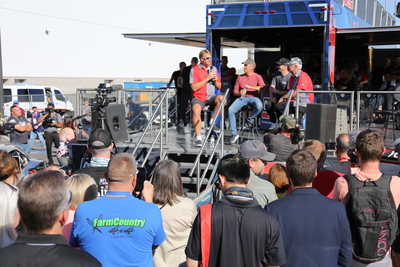
The Performance Racing Industry (PRI) Show is known across the racing and performance sector as a concentrated indicator of the industry’s latest developments and opportunities. After a forced hiatus due to COVID-19 in 2020, the 2021 trade event made its highly anticipated return to the Indiana Convention Center in Indianapolis, Thursday through Saturday, December 9–11.

The event drew more than 50,000 exhibitors, attendees and media representatives all eager to reconnect, do business and learn not only what the industry had been up to over the past two years but also how those developments might benefit their operations.

For SEMA and its member companies, the PRI trade event was especially significant. March marks the 10th anniversary of the transaction that brought the PRI Trade Show and publications under the SEMA umbrella. That strategic partnership has since seen PRI expand its role as an advocacy group to protect and grow racing.

“Racing is important to practically every automotive business, whether directly involved in motorsports or not, so SEMA extends its congratulations to PRI for what it has accomplished on behalf of everyone in the industry,” said SEMA President and CEO Chris Kersting. “For all of us in the specialty aftermarket, the PRI Trade Show was an impressive example of the passion we all share.”

So what’s new in the racing and performance world? The following are some key trends we observed in Indy.

Vehicle Electrification

PRI

The PRI Trade Show demonstrated the high level of youth interest in all aspects of racing, including engine and car building. Pictured here, young attendees representing high schools from throughout the United States showcase their skills in the Hot Rodders of Tomorrow (HROT) engine-building championship.

At road courses, down dragstrips, around dirt tracks and even across the Bonneville Salt Flats, electric vehicles (EVs) have become a significant trend in the performance-racing sector. In part, this trend is being driven by OEM initiatives. Out of the top 20 global automakers—which together in 2020 represented around 90% of new-car registrations worldwide—18 have announced plans to rapidly scale up EV production in the coming decade.

Of course, motorsports have always been the proving ground for emerging technologies, and that spirit of engineering was on full display in the PRI Show EV Performance Zone, a feature area highlighting the growing EV presence in racing. The Zone’s exhibitors included Chevrolet Performance, Ford Performance and several aftermarket brands providing new products and solutions for the electrification market. In addition, purpose-built feature vehicles demonstrated the latest EV applications being introduced into Trophy Trucks, dragsters, motorcycles and other racing vehicles.

“Electrification is the future of the automotive industry, so we’re here to showcase the awesome power of our electric vehicles,” said Ford Performance Global Marketing Specialist Autumn Schwalbe.

Those vehicles included a Ford Cobra Jet 1400, Mach-E Mustang and ’78 F-100 concept pickup equipped with Ford’s Eluminator electric crate motor, which Schwalbe said has especially caught the attention of the racing industry.

“When we revealed the Eluminator, we sold a lot right away,” she said. “Whether for drag racing, short-course racing or small tracks, a lot of people are getting involved.”

Opposite the Ford exhibition, Chevrolet displayed a ’72 El Camino conversion built in partnership with Lingenfelter Performance Engineering and featuring the OEM’s e-crate system.

“We’re trying to give racers—and any individual—the opportunity to move toward an electric drive system,” said Mike Celotto, an assistant chief engineer with General Motors. “We know that electric drive is in its early stages. We expect it to grow just like the overall automotive industry is growing, so we want to have a space in that for our customers.”

Allen Thomas, president-elect of the National Electric Drag Racing Association (NEDRA), has been drag racing EVs for a decade now. While he also enjoys building and racing internal-combustion cars, Thomas said that the vehicle electrification movement reminds him of his early days in racing.

“I see the technological advancements,” he said. “I grew up during the heyday of drag racing, when there were different things hitting the dragstrip and incredible innovation and people building things. This is the feeling I get from building electric cars now—it’s back to the ’60s. It invigorates me because no one has a cookie-cutter approach.”

NEDRA is a coalition of electric drag racing vehicle owners, drivers and fans. The organization promotes EV manufacturers and parts suppliers while organizing and sanctioning electric drag events. Its exhibition at the show included two drag EVs.

“There’s going to be a lot of learning, a lot of challenges in electric drag racing, and it really draws me in,” Thomas said. “There’s exponential growth right now.”

Rob Ward, founder and CEO of Legacy EV, said that growth potential is pulling brands of all types into the EV space. A parts distributor for the EV market, Legacy was among several performance aftermarket companies educating showgoers about the emerging opportunities in the space.

“We’re working our tails off to be the face of aftermarket EV performance,” Ward said. “We’re working with more than 60 manufacturers right now to provide a complete electrification system for pretty much anything. There are a lot of companies investing a lot of energy and money into advancing complete EV systems, so we’re excited about where it’s headed.”

Other EV Zone exhibitors included Holley-AEM, Burrowmax, FirstCorner, HyperCraft, MRE Racing, ReVolt and Torque Trends. Key products in the category currently include EV control units, drive systems, gear-reduction boxes, battery packs and related components, but the field is ripe for all sorts of invention.

Diesel Motorsports

PRI

The growth, diversity and technical advancements found in today’s motorsports were on full display in Indianapolis. Among the many examples was diesel racing, which has become especially popular in recent years, leading to new opportunities for hardcore parts makers and performance suppliers.

Although diesel motorsports have been around for decades, the last five to 10 years have seen an explosion of fan interest. S&S Diesel Motorsport Co-Owner Luke Langellier believes that technological advancements are behind the category’s surge.

“If you think about the big picture, all the emissions regulations that the OEMs have had to abide by, that’s what pushed all this technology,” he said. “It would never have needed to exist if it weren’t for having to meet all those stringent requirements. That’s why we have trucks now that are perfectly quiet, make tons of power, tow like crazy and can do everything you want them to do.”

S&S Diesel’s exhibit space included a massive semi engine—a nod to the semi drag racing that’s become a major crowd pleaser.

“People love to race whatever they’re passionate about,” Langellier said. “We’ve got a pretty strong following of guys who are really passionate about getting as much performance from a semi as they can—in Canada and the northern United States, especially.”

Diesel Motorsports President Ron Knoch said that his organization’s drag races, sled-pulling and show-and-shine events continued unabated during the pandemic, partly because they’ve become popular staples of county fairs and similar family-friendly events, especially in the American heartland.

“Most people don’t know that there is a sled pull every night from June to the end of August in every state across what we call the ‘flyover states,’” he explained, adding that his organization’s races with five competitive classes are always well attended.

Greg Jolly, race director of the Outlaw Diesel Super Series, said that diesel truck events offer a unique thrill.

“For me, it’s watching them go down the track as fast as they do and as heavy as they are,” he said. “It takes a lot more horsepower and torque than it does on the car side of things, and it’s a lot harder on parts.”

In other words, things break a lot—which brings numerous opportunities for the performance aftermarket to produce everything from hardcore engine parts to heavy-duty suspension components.

“It’s pushing the limits and pushing the aftermarket to make better product,” he said.

Donk Racing

Few shows capture motorsports’ diversity like the PRI Trade Show, where there’s always something new and unexpected to encounter. Take for example, Donk, or big-wheel racing—a novel form of competition gaining serious traction in urban markets. At a seminar titled “Big Wheel Racing: Why It’s a Big Deal,” Sage Thomas (aka the Donkmaster) announced the formation of the National Donk Racing Association, a new sanctioning body bringing safety and organization to the rapidly growing niche.

What’s a Donk, you ask? Technically, it’s a customized ’71–’76 Impala or Caprice riding on 20-in. or larger wheels. (Preferably larger.) However, the term has become generic for similarly styled vehicles.

With Donk racing racking up millions of YouTube views and legions of social-media followers, Thomas believes the sport is opening new doors for sponsors, safety equipment suppliers, fabricators and parts makers—and of course, specialty wheel and tire makers.

“We’re showing people this is real, because a lot of big companies thought it was a fad,” Thomas said. “But it’s something new for the racetracks, for the fans and for supporters to be a part of something big. The opportunities are endless for small companies all the way up.”

Gridlife iRacing

PRI Trade Show attendees also got a look at Gridlife’s iRacer Experience, a new immersive racing concept designed to promote grassroots enthusiasm. The Gridlife booth feature consisted of six networked competition racing simulators running the latest iRacing build, complete with a live announcer broadcasting to online
enthusiasts.

According to Gridlife Creative Director Chris Stewart, the organization’s simulator competitions open motorsports to a gaming audience while teaching valuable track skills. Ultimately, that can encourage newcomers to embrace the racing lifestyle through the organization’s live track days, time-attack events, drifting events, education programs and festivals.

“Our intention is motorsports inclusion,” Stewart said. “We try to get people closer to motorsports—particularly younger individuals. Our core demographic is 18 to 38. We’re one of the youngest driving organizations globally.”

Youth in Motorsports

With the future of the performance industry hinging on attracting next-generation talent, PRI also made youth engagement a top show priority. On Friday, December 10, 2021, hundreds of young attendees gathered for the annual PRI Student Breakfast and Career Day, which connected students from across the United States with industry leaders. The exclusive meetings exposed the students to career opportunities ranging from team and shop roles to product development and administrative positions. The breakfast also served as an entrée to the Show’s world-class trade environment, where attendees could further take in the industry’s size and scope. Northwood University of Midland, Michigan, was among the many organizations participating in the event.

“Students come to Northwood to learn all about the automotive aftermarket,” said Michael Kinney, Northwood director of aftermarket curriculum. “We’re seeing a workforce in manufacturing—all the way down to service technicians—that is aging out and taking retirement. We need young people to come into the industry, and events like this show them how exciting it can be [with] a great future and great earning potential.”

Meanwhile, on the PRI Trade Show floor, exhibitor Preston Lewis was
promoting youth involvement through the Off-Road Motorsports Youth Foundation (OMYF). A survivor of childhood cancer, Lewis launched the nonprofit organization at the 2019 PRI Trade Show to give other youth affected by unfortunate life circumstances a taste of motorsports. OMYF is now building a desert racing team and a Class 7100 Unlimited Trophy Truck.

“Our growth has skyrocketed in the past couple of years after our first launch at PRI,” Lewis said. “Our sponsor list has increased drastically, and the quality of our sponsors has gone up quite a bit.”

Lewis expects the truck and the team to be race-ready by October 2022. He said OMYF came to the show to highlight alternatives for young adults who aren’t necessarily college-bound.

“What we’re trying to do is give them opportunities in a format where they can really find what they love,” he said. “If we could leave here with 15 to 20 kids who are really dedicated and want to be involved with us, that would be a win in our books.”

Young PRI attendees also demonstrated their building skills through the Hot Rodders of Tomorrow (HROT) competition, in which high school teams tear down and reassemble engines. The timed rounds took place over three days, with the Burton Center for Arts & Technology E3 Spark Plugs squad from Virginia taking 2021 National Champion honors.

“We had to shut the operation down for a year and a half due to COVID, and we thought it would be a great way to reboot it here,” said HROT President Rodney Bingham. “Just getting these students exposed to our performance racing industry shows them a whole new world of jobs and great careers that they could have.”

Led by instructor Chris Overfelt, the E3 Spark Plugs team scored an average time of 20 min. and 51 sec. Second place went to the Forsyth Central High School team sponsored by SCAT, which clocked in at 22 min. and 2 sec. The Moroso team from C.D. Hylton High School, finished third with a perfect engine build in 22 min. and 23 sec.

Growing Business

The PRI Show was also a prime venue for performance aftermarket manufacturers to discover new ways to sustain and grow their businesses. The possibilities for military contracts were discussed at a seminar titled “Army Ground Systems: Overview & How to Do Them.” Presented by Thomas Vern of the U.S. Army DEVCOM-Ground Vehicles Systems Center (GVSC), the workshop highlighted the synergy between motorsports and DEVCOM (Development Command) vehicle research and development.

“Anything on wheels, we handle it,” said Vern, who added that the GVSC is especially interested in several areas where the performance industry excels. They include EV technologies, heat dissipation, weight savings, suspension geometry, 3-D printing in metals, and parts-making for legacy items no longer mass-produced.

Business growth through content creation was also front and center at the show. The PRI Trade Show Content Creation Zone featured a Content Creator Stage Presented by Speed Sport with Ralph Sheheen. Throughout the week, onstage content creators educated attendees with tips for engaging audiences through success stories, insider news, introductions to gear and technologies, and hands-on demonstrations.

In addition, Justin Cesler of Driveline Studios presented the “WTF Is Content?!?” workshop, where he shared simple but effective tools for creating pro-level content for both traditional and new-media channels. According to Cesler, the biggest mistake a young brand can make is to sporadically post content or give up altogether due to sluggish response.

“Consistency is key,” he emphasized. “Don’t go out and make content one or two times and say it isn’t working.”

Protecting Motorsports

PRI

The PRI Trade Show’s return to a live format proved a successful reconnection for the industry, and a great deal of business was accomplished on the show floor. In addition, seminars, featured speakers and exclusive industry events inspired and primed attendees for the year ahead.

Since the recent U.S. Environmental Protection Agency (EPA) interpretation that the Clean Air Act prohibits motor vehicles designed for street use—including cars, trucks and motorcycles—from being converted into dedicated race cars, the entire performance racing industry has come under threat. In response, the 2021 PRI Trade Show included education on emissions compliance and action to pass the Recognizing the Protection of Motorsports (RPM) Act.

The RPM Act is bipartisan congressional legislation (H.R. 3281) designed to protect Americans’ right to convert street vehicles to dedicated race cars. It also protects the motorsports parts industry’s ability to make, sell and install products enabling racers to compete. The bill clarifies the legality of emissions-related modifications to street vehicles used exclusively in competition and reverses the EPA’s recent interpretation holding otherwise.

Industry support for the bill is strong, and two particular PRI events related to the issue were widely attended. The first was the Thursday “Update: RPM Act & Emissions Compliance” seminar, where a panel led by SEMA General Counsel David Goch presented steps for remaining compliant with EPA and California Air Resources Board requirements. The conference included a status update on the RPM Act and what performance and racing businesses could do to push it forward. Goch said critical mass for the legislation is building and passage is within grasp.

“What I have witnessed in my five years with the industry as general counsel is a true awakening and education,” he said after the seminar. “Five years ago, the questions were pretty rudimentary, such as, ‘What is the Clean Air Act and emissions compliance?’ Now people are asking more sophisticated questions to get a better understanding of what they need to do to comply. I think our future is bright, because my experience is that most of the folks that I touch through PRI are here
to learn to do it right and keep this industry strong.”

Friday evening, PRI also held a “Save Our Race Cars Rally” in the Quarterback Suite of Lucas Oil Stadium. The exclusive event offered further insights into the RPM Act and was open only to PRI Pro, PRI Champion and PRI Founding Members. PRI recently launched its membership program to help mobilize the industry and fundraise for the RPM Act and other initiatives to protect and grow the industry.

Among the speakers was Garrett Mitchell, aka Cleetus McFarland, a motorsports influencer with more than 1.2 million YouTube subscribers. He said that he was happy to lend his persona to the cause.

“A lot of these guys here are entrepreneurs,” he said. “Many of the people who sit in this room have their own businesses that are solely invested in the motorsports industry, which I can relate with because I have all my eggs in this basket, too. I just wanted to talk from my point of view and reiterate how important it is for us to all stick together.”

Ultimately, the 2021 PRI Trade Show was a testament to the industry’s continued innovation, grit and endurance, even through a pandemic.

“The racing industry is resilient and continues to push forward, and PRI very much reflects that spirit,” said PRI President Dr. Jamie Meyer. “Racing businesses have demonstrated remarkable passion and perseverance over the last year, and many even reported record sales and month-over-month revenue growth in 2021.”

Judging by what we just saw in Indy, the sector is again revved and ready to race forward in 2022.

Connecting With PRI

To get all the latest PRI developments, visit www.performanceracing.com where you’ll also find links to the PRI Trade Show, the recently launched PRI Business and Individual Membership programs that help protect the industry, and many other performance-racing business resources.

Tue, 03/01/2022 - 11:21

SEMA News—March 2022

RESEARCH

The Fall 2021 SEMA “State of the Industry Report”

Specialty-Equipment Companies Saw Double-Digit Growth During the Pandemic, but Optimism Is Fading Due to Supply-Chain Problems

By Chad Simon

State of Industry

The “State of the Industry Report” is about what’s happening on the business side of the automotive specialty-equipment market. It reports on different industry trends that may not necessarily fit into the consumer-focused “SEMA Market Report.”

Not to be confused with the annual “SEMA Market Report,” the “State of the Industry Report” is released biannually in the spring and fall and details specific manufacturer and retailer data, sales trends by product category, and popular retail channels and vehicle segments. It explores the industry from a company perspective rather than at the consumer level.

“The ‘SEMA Market Report’ is about understanding the market for parts based on how much consumers are spending and how they are behaving,” said Matt Kennedy, SEMA market research manager. “By contrast, the ‘State of the Industry Report’ is about what’s happening on the business side. It reports on different industry trends that may not necessarily fit into the consumer-focused ‘SEMA Market Report’; however, specialty-equipment businesses should still pay attention to them. It’s about what businesses need to know about the industry versus what businesses need to know about the market.”

The COVID-19 Factor

Society is still dealing with COVID-19, and it’s affecting the industry in a plethora of ways. Although two-thirds of manufacturers reported that they experienced double-digit growth last year, the pandemic has wreaked havoc on both the supply chain and in-store purchases behind the scenes, according to Gavin Knapp, SEMA director of market research.

“Manufacturers have seen strong results over the last two years, but it’s been a bumpier road for retailers,” Knapp said. “Some have adapted well, while others have seen fewer people showing up in their stores.”

The automotive specialty-equipment industry is driven by disposable income, and during the earlier days of COVID-19, there were fewer ways to spend money due to restrictions and lockdowns on travel, live entertainment and restaurants, according to Kennedy. That created an opportunity for consumers to work on their cars, since they couldn’t do anything else. Many of them said they spent more time shopping online and working on their vehicles themselves. Getting into the garage was a way to pass time that might have otherwise been spent on leisure activities.

Despite robust consumer demand, predictions are for flat and slower growth rather than shifting into a decline going forward. That is expected to carry on well into 2022.

“It’s not a reversal of fortune,” Kennedy said. “It’s understanding that there were some unique circumstances that created some exceptional opportunities, and businesses feel they are still in a good position to succeed. If 2020 and 2021 were about capitalizing on how conditions created some unique opportunities for our industry, 2022 looks like people have made those adjustments and are now getting through the rest of the recovery and a return to normalcy.”

Emerging Trends

Market Research

Despite ongoing disruptions to the economy, most specialty-equipment businesses reported increased sales over the past year.

There’s much hype about online retail taking over, but actual economic data suggests that e-commerce is still a small share of total sales, and it’s returning to its historical trend, according to Kennedy.

“Industry sales are ahead of the curve in terms of how much product is sold online because, as a specialty industry, they aren’t always available locally,” he said. “More than half of sales were online in 2020, but now it’s drifting back down toward a 55%–45% balance, which is the trend we were expecting to see prior to the pandemic.”

Companies Expecting Sales Growth Over Next Year

Market Research

Strong optimism earlier in the year has been tempered by growing uncertainty about how soon things will truly get back to normal.

The automotive specialty-equipment industry traditionally has been more highly integrated with online shopping than other parts of retail and has had a healthy online shopping presence for a number of years, according to Knapp. In many cases, there’s still a preference for in-person shopping. Some people prefer to examine products in the store and speak to a salesperson when they go to buy, but it’s also related to the nature of certain products. If it’s a more complicated, expensive and difficult-to-ship item, consumers prefer to purchase in the store.

“Some people might be comfortable buying a part without ever seeing it, because they know exactly what they need and that it’s going to fit and perform how they expect,” Knapp said. “If it’s a product they don’t know how to use, there’s more of a desire to speak to someone who knows more than they do and to see if it’s right for them. Neither of those things is going away.

“We did have a jump in online sales over the past year, but as restrictions ease and comfort levels grow with going back out in person, we expect sales-channel trends to drift back to where they would have been had the pandemic never happened.”

Looking a little further ahead, electric vehicles (EVs) are beginning to make a dent in new-vehicle sales. Several new models will be released over the next few years, but EVs aren’t going to replace gas engines anytime soon, according to Kennedy.

“We project that by 2035, 45% of new vehicles sold will be some form of alternative fuel—excluding the population currently on the road, which will take a while to cycle out—a quarter of which will be fully electric,” he said.

A Shift Toward Light Trucks

New Light Vehicles Sales by Vehicle Type

Market Research

Back in 2007 and 2008, passenger cars and light trucks (CUVs, SUVs, vans and pickups) each represented about half of all new light vehicles sold in the United States. By 2020, the share of light trucks grew to roughly 76%. That growth is expected to continue in the coming decade. Much of the increase can be attributed to CUVs. Source: 2021 Wards Intelligence, a division of Informa. Data as of October 2021. Source: SEMA Member VIO Program/2021 Experian, Data as of June 30, 2021.

Vehicle sales continue to shift from cars toward light trucks, which include pickups, SUVs and CUVs. That trend does not look to be going away, according to Knapp.

“The vehicle landscape is changing dramatically,” he said. “Eighty percent of new-vehicle sales—especially for the Detroit OEMs—are light trucks, but the CUV space is where the big growth is happening. Pickups and SUVs are great sellers, but in terms of new-vehicle sales, consumers are switching from sedans to crossovers. In the specialty-equipment market, it’s interesting to see if people who move into the CUV space treat them more like trucks or SUVs, where they install towing equipment, racks and other utility features. Maybe they buy wheels and tires more equivalent to the truck space than you would see in the car space. There could be a boom for our industry if people start to take advantage of the utility aspect of these vehicles.”

Toyota and Volkswagen are also drifting toward crossovers as the jack-of-all-trades family vehicle with the potential to be treated as a utility vehicle, according to Kennedy. In 2000, 1% of Volkswagen’s new-vehicle sales were light trucks. In 2020, it’s increased to 58% because of the shift toward CUVs. These trends are still very much in play and affect how the vehicle landscape is supposed to evolve.

Common Upgrades

Market Research

Light trucks (pickups, SUVs, CUVs and vans) are becoming a larger share of the overall vehicle population as OEMs shift their production away from passenger cars to more profitable light-truck platforms. This has been largely driven by the popularity of CUVs. Source: SEMA Member VIO Program/2021 Experian, Data as of June 30, 2021

The specialty-equipment market is vast. Just about any part of a vehicle can be customized and improved, and consumers are buying everything across the board, according to Knapp. All of the product categories seemed to get a boost over the past two years while people were willing to spend money. Even some of the softer categories in previous years, such as mobile electronics and stereos, also saw jumps in sales.

“We often think of wheels and tires as the gateway drug to the industry, where they are easy to do and make a difference for your vehicle,” Knapp said. “Some consumers are focused on look and feel, while many others are focused on performance. There are classic vehicles, restorations and hot rods. The types of products sold in this industry are all over the place.”

Industry Outlook

Market Research

Online specialty-automotive sales have been growing over the past few years as more and more businesses get the hang of selling on the web. But the unique circumstances of 2020 pushed more sales online than normal.

Despite healthy sales numbers over the past couple of years, there is a tempering of optimism due to supply-chain issues and having enough product to sell, according
to Kennedy.

“The demand is still expected to be there,” he said. “We’ve seen many different shifts in how products are sold and what vehicles are popular over time, but that drive to make a vehicle your own is not going anywhere. Consumer demand is still going to be what drives this industry.”

The shortage in hourly labor at the lower end of the pay scale is also affecting most businesses. The automotive specialty-equipment industry can be tough for hiring quality employees, and some companies are struggling a little more than usual, according to Kennedy. However, many of them might have already done some hiring in 2020–2021, while others are looking to hire now, which makes it tough for them when there is more competition from the same labor pool.

The “SEMA State of the Industry Report—Fall 2021” is free and a benefit of SEMA membership. Along with a host of other free industry reports, it can be found at www.sema.org/market-research.

The SEMA market research team is available to help the industry directly. Contact Matt Kennedy at mattk@sema.org or call 909-978-6730 for questions about how to interpret and utilize the data found in the “SEMA State of the Industry Report—Fall 2021.”

“We believe it’s important that businesses are able to make good decisions based on the information we put out there, and we encourage folks to contact us if they need help making use of it,” Kennedy said.

Tue, 03/01/2022 - 11:20

SEMA News—March 2022

INDUSTRY NEWS

Photos courtesy SpiedBilde, Brian Williams. Reuse or reproduction without the copyright holder’s consent is prohibited.

’23 Nissan Altima
Nissan

Here’s a first look at the ’23 Nissan Altima while testing in Metro Detroit. The sixth-generation Altima debuted in 2018 at the New York Auto Show as a ’19 model. Since then, there have been virtually no changes made to the model other than some appearance packages and Nissan Safety Shield 360.

Nissan

Changes seem to be only to the front end. The camouflage would suggest that there will be new headlamps along with a completely revised front end. Power is still expected to come from the 2.5L I4 as well as the optional 248hp turbocharged I4, both being mated to a CVT transmission. An official debut should happen in mid 2022.

’23 Volkswagen Aero B Sedan
VW

Volkswagen’s electric Passat equivalent will be launched in 2023. The range of the model, which comes both as a sedan and a station wagon, should then be around 400 mi. Our spies caught the production version of the sedan variant during its first test drive in the Austrian Alps. It’s expected to be called the Aero B.

VW

The production Aero B is based on the VW Group’s MEB electric car platform, which is also used for the hatchback ID 3 and will be launched after the MEB SUVs ID 4 and ID 5. The production start is now nailed to 2023.

The new model will be offered with rear-wheel drive as standard. There will also be a four-wheel-drive GTX performance model that will offer up to 435 mi. of range.

’23 Audi E-Tron
Audi

Audi is in the process of developing a mid-cycle update for its E-Tron and E-Tron Sportback electric crossovers, and a prototype of the first has been spotted in Germany. The prototype is for the updated E-Tron, but the changes seen here should also end up on the updated E-Tron Sportback.

Audi

The prototype points to significant styling tweaks coming, including a new headlight and grille treatment similar to the new ’22 Q4 E-Tron. The front and rear fascias also appear to feature a more streamlined look, and it’s possible that the internal graphic of the taillights will sport a new design. It’s also rumored that the vehicles will receive new batteries, more efficient electric motors and new electronic control software.

Tue, 03/01/2022 - 11:11

SEMA News—March 2022

RESEARCH

Market Research Snapshot

Facts at a Glance: The Economic Impact of the Supply-Chain Disruption

By SEMA Market Research

Market Research

The prices of many inputs and raw materials have skyrocketed. As of October 2021, steel was 400% above where it was in October 2019. Aluminum prices (+49%) and copper prices (+66%) were also well above their 2019 levels.

The ongoing supply-chain disruption has affected businesses in many ways: shipping delays, production issues, inability to find suppliers and increased costs, to name a few. However, the worst of the effects have likely passed. Most issues, including transportation delays and supply shortages, should improve throughout the year and return to more normal levels by the end of 2022. However, some elevated prices may linger into 2023. See “The Supply-Chain Breakdown” on p. 110.

Market Research

More than 75% of the U.S. supply chain moves by truck, but a shortage of around 80,000 truck drivers is causing delays and driving up prices. As of December 2021, rates were up nearly 60%, and the load per truck was three times where it was before the pandemic.

Market Research

As a result of shipping delays and container shortages, container rates have quadrupled. As of mid-December 2021, freight shipping prices from Chinese main ports were 73% higher than they were in December 2020 and up nearly 400% compared to December 2019.

“As of mid-December 2021, rates for ocean shipping containers are 73% higher than in 2020 and up nearly 400% compared to 2019.”

“More than 80% of specialty-equipment companies have been severely or moderately impacted by supply-chain disruption.”

Tue, 03/01/2022 - 10:59

SEMA News—March 2022

BUSINESS

How to Maximize Your Online Footprint

Neglecting Your Company Website and Online Presence is Costing You Money—Here’s What to Do About It

By Douglas McColloch

Best Practices

Having a well-planned, well-executed company website with fresh and relevant content is the foundation of a company’s online presence, and keeping the site regularly refreshed can improve a company’s search rankings. Photo credit: Shutterstock

The COVID-19 pandemic sparked a dramatic surge in online sales beginning in 2020, and the automotive specialty-equipment sector was no exception. Online aftermarket parts sales exceeded 50% of total sales for the first time, and while in-person sales have gained traction again as the pandemic recedes and lockdowns ease, online sales still account for nearly half of total sales and are forecast to remain that way for the foreseeable future.

It’s clear, then, that maintaining your business’s online presence and website is more crucial than ever. User experience is the key to success and higher conversion rates, and neglecting your company’s online presence can hinder a customer’s ability to navigate your service and may encourage them to shop elsewhere.

Web Building 101: The Basics

At the 2021 SEMA Show, a SEMA Education seminar entitled “Why Ignoring Your Online Presence Is Costing You Money” examined this subject in detail with a survey of hundreds of aftermarket websites and suggested best practices that companies can follow to maximize their online presence. Presenters Barry Alt and Dean Heckman of Motorhead Digital, an automotive aftermarket marketing consultancy, shared analyses of websites from more than 450 restoration, performance and restyling shops. Their findings are summed up in the following recommendations.

Build an Amazing Website. “It’s the foundation for everything,” Heckman stated. “What we found in our research was how many companies didn’t realize how much their website is the pillar of their organization, so they were neglecting it, and it was costing them opportunities.”

Alt stressed the importance of a clean, streamlined, modern-looking appearance. He noted that too many aftermarket websites suffer from a cluttered and confusing home page with too many features for users to decipher at once.

“About 94% of first impressions are from people coming to your website and your design,” Alt said. It takes users only about 50 milliseconds to decide whether or not they find your site is friendly to them. Page loading speed is crucial, but even more importantly, “75% of your website’s credibility comes from its design, and 88% of consumers are unlikely to return if they can’t navigate your website.

“When we’re talking about ‘professional appearance,’ we’re also talking about content. If you’re showing an award you won at the SEMA Show 10 years ago but you’re not showing the award you won two years ago, people aren’t going to know about your products. If you’ve got builds or new products going on, you need to get them on your website.”

Alt also recommended refreshes or redesigns every three to five years to keep your company’s website up-to-date.

“Google actually knows when you update your website, and if you don’t update a lot, it can negatively affect your search rankings,” he said.

“Think of your website as a perishable commodity,” Heckman added. “It can go stale quickly, so make sure you keep refreshing it with lots of fresh content.”

Build a Mobile-Ready Website. With the ubiquity of affordable smartphones and the explosion of e-commerce apps, the need for mobile-readiness has never been greater.

“We found that 40% of the sites we looked at were not mobile-ready,” Alt said. “If someone’s at a car show and they’re looking at a build and want to know more about the products on it, they’re not going to wait until they get home to do their research. They’re going to take out their phone and search for it.”

“Sometimes, mobile is the first point of entry [for potential online sales] and we don’t realize it,” Heckman emphasized. “If that first experience is negative, it’s a lot harder to advocate for your brand.”

Additionally, Alt pointed out that Google uses numerous metrics for determining website rankings, and mobile-device accessibility is one of them. The quarantines and lockdowns of the COVID-19 pandemic caught many companies flat-footed in that regard, as users spent less time at their work PCs and more time on their personal devices.

“In the course of our survey, we found that a lot of shops realized that they had completely overlooked the mobile experience,” Heckman said.

The rules for designing your mobile site are the same as for a site accessed by PC.

“A quality mobile-ready website conveys a professional image and helps users find information quickly and easily on a mobile device,” Alt said.

“Users shouldn’t have to click more than once or twice to find your basic contact information, especially when you’re trying to attract new customers,” Heckman added.

Finally, Alt noted that 83% of the U.S. population accesses the web via phones, tablets or other mobile devices. That figure is even higher for the 18–49 age demographic, where some 95% of users access the web via mobile devices.

Make Sure Your Site Complies With Americans With Disabilities Act (ADA) Guidelines. This may seem unimportant at first, but Alt stressed that you need to consider users who may have vision impairments such as color-blindness or physical impairments such as arthritis, which can make operating a mouse difficult.

“It’s kind of hidden behind the scenes, but it’s absolutely huge,” Alt said, adding that failure to factor in ADA compliance can leave businesses exposed to potentially costly litigation. “There are all sorts of ways to design an ADA-compliant website,” he said. “At the end of the day, it’s the right thing to do.” (See “In The Crosshairs” on p. 126 for more on this.)

Make Sure Your Site’s Data Is Secured and Protected. “About five years ago, Google said that every website needs to be Secure Sockets Layer (SSL) protected,” Alt said. “Because websites have forums, contact information and personal data, Google wants people to feel comfortable sharing their information with you.”

Motorhead Digital’s survey of the aftermarket revealed that 40% of websites did not have an SSL security certificate installed.

“If your website isn’t secure, it’ll show up in a Google search—and there are people out there who, when they see that, will run, not walk, away from those websites,” Alt warned. “It’s super easy to get an SSL certificate installed to your website these days, and it’s another factor that helps you rank higher in searches.”

On a related note, Alt advised having a notice of your website’s privacy policy visible to users.

“This is not something you want to write off the top of your head,” he said. “There are companies that specialize in writing privacy policies, and they’re not that expensive.”

This is important because the notice will provide information to users about features that are not readily visible to the user.

“There’s a lot of hidden stuff—Google Analytics, for instance, or forms you use to capture information for e-mail marketing—that needs to be included. Some U.S. states are requiring this now, so get in touch with someone who can make sure that your privacy policy is up-to-date.”

Optimizing Your Outreach

Best Practices

Digital Motorhead’s industry survey showed that some 40% of aftermarket companies have failed to obtain Secure Sockets Layer (SSL) certification for their websites. This is a huge red flag for consumers and a barrier to generating online business. Photo credit: Shutterstock.com

Once you’ve taken all of those steps, you need to keep driving traffic to your website. There are many ways to do so, and many of them are low or no cost.

Get Your Site in Front of Eyeballs. “Visibility and awareness are key,” Alt said, pointing to Google My Business, YouTube, social-media sites such as Facebook, online forums and industry associations such as SEMA or PRI as opportunities to gain online exposure for little to no cost.

“These are our digital footprint fundamentals,” he said.

One reason to engage such fundamentals is to populate the web with “citations,” or listings. A citation is an online mention of the name, address and phone number of a local business, along with links, photos or other digital assets. Citations can include mentions in business directories, websites and apps, and social platforms. They can help users discover your business, and they can improve your search-engine rankings.

Google is particularly attuned to citations that appear on the larger aggregator sites such as Yelp and YouTube, but for specialty-equipment companies, so-called “niche” citations on car-centric sites such as AutoBlog, Motor Trend, Hemmings Motor News and others can be just as valuable in gaining traction on search engines.

“Google’s job is to make your experience with them better,” Alt explained. “When people are doing searches, they want to find what they’re looking for as quickly as they can—and to find the right thing as quickly as they can.”

Citations are also ranked based on relevance, which makes those so-called “niche” citations on third-party automotive sites such as SEMA even more valuable to a specialty-equipment company.

Make Sure Your Customers Can Find You. According to Alt, three of the most important online resources available to any business looking to maximize its digital outreach are Google My Business, YouTube and LinkedIn.

“Google My Business is the Mack Daddy of all citations,” Alt exclaimed. It’s a free marketing opportunity that can improve your SEO ranking. It’s completely customizable, and it’s entirely free.

“If you have a business location, you already have a Google My Business page whether you know it or not, so the first thing you need to do is to claim the page, then optimize the heck out of it,” Alt said. “It’s a must for local businesses—particularly those in industrial areas that aren’t located on a main street where people can easily find you.”

Alt also noted that a Google My Business page can be customized with photos, videos and even links users can click to purchase products and merchandise.

While Google matters in the search realm, YouTube represents the greatest opportunity to improve your rankings. It’s the second-most-popular site online. It gives you access to millions of potential clients worldwide, and you can create and customize your own channel. You can even convert your free YouTube channel to a so-called “brand channel” for business purposes. In any event, YouTube brings huge SEO juice, Alt emphasized.

“Because it’s such a huge opportunity for search, when you upload videos, you want to think carefully about the title for your video and the description of it, because those are the things that will affect where it lands in search,” he said. “If you’re not on YouTube, you might want to look into it. Video at this point trends much higher than strictly text-based information.”

Finally, LinkedIn is not just a job site anymore.

“Professionals live there, and they have money,” Alt said. “There are 10 million C-level executives on LinkedIn, and more than one out of three U.S. adults use the site. If you’re selling a high-value build or high-dollar products, LinkedIn is where the money is.”

As with Google My Business and YouTube, it’s another free site that allows interacting with Facebook and the use of hashtags.

Marketing Strategy and Tactics

Best Practices

A mobile-ready version of your company’s site should also be considered essential. Mobile-ready sites are increasingly becoming the initial point of entry for potential customers, so building a website with cross-platform compatibility is key to optimize sales. Photo credit: Shutterstock.com

Know Where Your Customer Lives Online. “Talk to your customers and find out where they live online,” Alt said. “Are they on Facebook? Are they on Instagram? Understand where they live, what their hobbies are, what their income level is, whether or not they own a house, things like that.”

Once you’ve gained greater clarity into your customer, you can start to devise a marketing strategy, Alt said. Organic marketing can be as simple as an Instagram or a Facebook post, so it’s important to determine ahead of time where you’re going to post content; when and how often you’re going to post; and what you’re going to represent online. Do you want to post a build in your shop, spotlight a new product, or maybe show your staff talking with customers? Once that’s figured out, you can move on to tactics. What tools are you going to use?

In addition to leveraging a company’s social-media pages, there are many non-
organic tools that can help, including Google Analytics, Google My Business and Google Ad Words, which can provide a platform to post content or to automate posts across the internet. Using Google Ads, for instance, your posts can enable you to show up in searches—not only your business but for terms related to what you offer. Google sometimes offers first-time advertisers a credit for placing additional ads, which can help companies on a budget.

Blogs Are Still Essential. Motorhead Digital’s survey showed that businesses that incorporate regular blog posts can increase monthly sales leads by as much as 67%.

“Blogs can educate your prospects as well as current customers, and sites with up-to-date blogs rank higher in search engines,” Alt said. “Blogs can also build and control your online identity.”

Surprisingly, 88% of the surveyed aftermarket companies didn’t have a blog or any related content (e.g., short-form articles) posted to their websites, which represents a wasted opportunity to expand a company’s online footprint.

“Blogs are huge,” Alt emphasized. “You can use them to talk about projects in your shop, or new products you are working on, or how your shop operates every day.”

For those who don’t feel they have the time, Alt reminded that there are people who specialize in producing this kind of content. All you have to do is sit down with them and let them know how often you want to post and what the titles of the posts should be.

Email Marketing Isn’t Dead. “Email marketing is still one of the best ways to build a relationship with your market,” Alt said, pointing out that fewer than 75% of companies use email as a marketing tool. “For every dollar spent, the average return is $42, and it has a 40% better conversion rate than Facebook or Twitter.”

Summing up, an up-to-date-website that is loaded with fresh and engaging content; a clear and coherent online marketing strategy; and a robust social-media presence should all be considered absolute must-haves for any business. As Alt noted, some 3.6 billion people—nearly half of the planet’s population—use social media every day, and sites such as LinkedIn and YouTube provide companies with a platform for what is essentially free advertising.

To boost your search rankings and keep users activated, post consistently and keep your profiles up to date. Interact and respond to customers and prospects, and choose the platforms your customers are hanging out on.

SOURCE

Motorhead Digital
1191 Garnsey Rd.
Palmyra, NY 14522
585-766-9785
www.motorheaddigital.com