Fri, 04/01/2022 - 13:05

SEMA News—April 2022

BUSINESS

Truck and Off-Road Market Trends

Consumer Demand Continues for Pickups and Crossovers; Overlanding Remains a Growth Sector; Electrification Continues Apace

By Douglas McColloch

Truck

A resilient market sector, off-roading remains a popular automotive pastime. That’s never been more true than in the Age of Social Distancing. Land-access issues continue to pose a challenge for the future, however. Photo courtesy: Shutterstock

Consumer trends and preferences have changed many times over the years, but in the automotive sphere, pickups never really fall out of fashion. They’re the ideal multipurpose vehicles that are equally functional as daily commuters, jobsite workhorses or recreational trail toys. For sheer versatility, nothing compares to them on the road and off, and that’s probably why the bestselling vehicle in the United States for more than 40 years in a row has been a pickup.

More than half of all vehicles on the road in the United States are either pickups, SUVs or CUVs. According to the most recent issue of “SEMA Future Trends,” the light-truck segment (which includes pickups, vans, SUVs and CUVs) is forecast to account for close to 80% of all new-vehicle sales by 2027, with pickups alone making up nearly 50% of all new vehicles sold.

Healthy truck and SUV sales generally bode well for the automotive aftermarket. Parts and accessories for trucks and SUVs account for 30% of specialty-equipment sales, according to the latest “SEMA State of the Industry” survey, and that number has remained steady in the midst of the pandemic and its related economic disruptions. In fact, several segments saw appreciable sales increases over the previous year, with suspension, wheel and tire products all registering double-digit sales gains over 2020. Some segments—truck racks and carriers, bedliners and bed covers, and towing products—logged year-over-year sales gains of 25% or more. Off-road/oversize tires alone comprise a $2 billion annual market, so there is still ample consumer demand to keep the truck and off-road segment strong, even amidst a global pandemic.

New-vehicle sales in 2021 remained relatively flat compared to 2020, with an estimated 14.9 million units sold—a 2.5% increase over the previous year, according to Cox Automotive. Shortages of semiconductors kept inventories low for most of the period, and the year ended with roughly 1 million units on dealer lots, down from 3.5 million in pre-pandemic 2019.

More promisingly for the truck and off-road segment, pickups, SUVs and crossovers represented more than 80% of all new-vehicle sales in the month of December, according to J.D. Power & Associates. For the year, the top three best-selling vehicles in the United States were ½-ton pickups from Ford, Ram and Chevrolet, and seven of the top 10 U.S. best sellers in 2021 were either trucks, SUVs or crossovers.

For this article, we consulted a number of industry leaders for their perspectives on the overall state of the marketplace. What follows is a summation of their views.

Ford

Ten years ago, smaller midsize pickups were an afterthought. Now, with fuel prices higher and a new generation of truck buyers shopping on a tighter budget, vehicles such as Ford’s Maverick have been gaining popularity and market share. Photo courtesy: Ford Motor Company

New and Notable for 2023

A number of new trucks, SUVs and crossovers are set to hit the market within the next 12 to 18 months, including many all-electric and hybrid-electric models. Among them are:

Chevrolet

Avalanche: Based off GM’s T1 global chassis architecture, the all-new, four-wheel-independent Avalanche revives a discontinued marque as Ford has done à la the Maverick. The engine could be the 360hp 5.3L V8 that’s standard in the Silverado line or the optional 6.2L that produces 420 hp. An eight-speed automatic transmission is the likely standard gearbox, and MSRP should start around $30,000.

Colorado: The third generation of Chevy’s midsize will feature all-new exterior and interior styling as well as a revised powertrain lineup. The 310hp 2.7L LB3 turbocharged I4 sourced from the Silverado/Sierra ½-ton is the expected base engine, and it should be backed by a 10-speed automatic transmission. The I4 Duramax diesel and 3.6L V6 gas engine are said to be discontinued, and the truck should be available for sale by the second half of 2022.

Silverado EV: Chevrolet’s first all-electric pickup arrives for the ’24 model year sporting 660-plus hp, 400 mi. of range, a standard 6-ft. bed that can be extended to more than 10 ft. in length and a 10,000-lb. tow rating. The truck is said to share no componentry with the conventional Silverado, and an 800-volt charge capability is said to give it 100 mi. of range in only 10 min. Base MSRP will be around $40,000, though a fully optioned RST model may exceed six figures.

Ford

F-150 Lightning: First unveiled in May 2021, Ford’s first all-electric pickup comes to market delivering an estimated 563 hp, 775 lb.-ft. of torque and a 10,000-lb. towing capacity. Annual production was initially projected to reach 80,000 units by the ’24 model year, but demand was so strong that Ford was forced to stop taking preorders after receiving an initial 200,000 reservations for the truck. Originally set to launch last October, the vehicle is now set to officially go on sale this spring.

Maverick HEV: Slotting below the Ranger in the Blue Oval pickup line, the four-door Maverick HEV rides on the same unibody chassis as the Bronco Sport and Escape and is available in all-wheel drive. With a base-model MSRP below $20,000, demand for the small truck far outstripped projected factory output, and Ford announced last December that the truck’s initial production run was fully sold out for the 2022 calendar year. Preorders for ’23 will resume this summer.

Ranger: The new global-architecture Ranger replaces the eight-year-old Australian version that arrived here in somewhat revised form in 2019. The new model features all-new styling, an upgraded interior and a more refined ride. The base 2.0L twin-turbo powerplant is expected to carry over, with the 10-speed automatic transmission the likely gearbox. Ford has promised an electric Ranger in the not-too-distant future, so an all-EV or HEV model could be forthcoming. Base price is estimated in the mid-$20,000s.

GMC

Hummer EV: General Motors’ first all-electric pickup sports 1,000 max hp, a 300-mi. cruising range and an MSRP of $106,000. (Less expensive models will be available for 2024.) The truck will utilize four-wheel independent suspension with locking front and rear differentials and 35-in. mud-terrain tires. Air suspension and “CrabWalk” four-wheel steering are available options. Production begins in spring 2023.

Nissan

Frontier: The third generation of Nissan’s midsize will launch for 2023 with an all-new exterior, a more luxurious interior, and an upgraded suspension system. The 310hp 3.8L V6 will carry over from the previous year, along with a nine-speed transmission. Both Pro-X and Pro-4X models will be offered. The truck utilizes the existing chassis, so no gas-electric hybrid model is expected.

Titan: Mostly unchanged since its 2004 debut, Nissan’s fullsize emerges for 2023 with a more aggressive look, thanks to all-new sheetmetal and a substantially revised interior. The aging 400hp 5.6L V8 is said to be replaced by the more fuel-efficient 400hp 3.0L V6 sourced from the Infiniti Q60, which could also be offered with a hybrid-electric option. Given Nissan’s rumored partnership with EV startup Hercules Electric, an all-electric variant is a possibility as well.

Rivian

R1S: Fresh off the launch of its award-winning R1T electric pickup, Rivian is scheduled to roll out a seven-passenger, three-row SUV based off the same platform as the pickup. Slotted to compete against the Tesla Model X, the R1S offers an estimated 800 hp, a 0–60-mph time of 3.0 sec., 300 mi. of range and an adjustable air suspension that is said to provide as much as 14 in. of ground clearance. Estimated MSRP is around $70,000.

Subaru

Solterra: A joint venture with Toyota (which provided the battery and powertrain), the five-passenger Solterra is Subaru’s first-ever all-electric SUV. Two electric motors power the symmetrical X-Mode all-wheel-drive system, which controls throttle response, transmission shift points and torque transfer to optimize traction on wet or uneven terrain. Rated power for the Solterra is 215 hp and 248 lb.-ft. of torque, and the battery is said to accept an 80% charge in under an hour.

Tesla

Scheduled to go into production early next year, Tesla’s highly anticipated 2023 Cybertruck is the latest example of the rapid electrification of the pickup sector. Photo courtesy: Tesla

Tesla

Cybertruck: Perhaps the most anticipated new truck arrival for 2023, Tesla’s stainless-bodied all-electric Cybertruck goes into production early next year at Tesla’s new assembly plant in Austin, Texas. Available with built-in solar charging to extend vehicle range, the Cybertruck will be offered in three trim levels, in rear-wheel or all-wheel drive, and with dual- and tri-motor drive configurations. Zero-to-60 acceleration is said to be as low as 2.9 sec., cruising range as much as 500 mi., and base MSRP an estimated $40,000.

Toyota

bZ4X: Short for “Beyond Zero,” Toyota’s first all-electric EV launches, along with its upscale companion, the Lexus RZ 450e, later in the year. A joint venture with Subaru (see Solterra above), the bZ4X will be available in either front-wheel or all-wheel drive and will offer a cruising range of up to 250 mi., opting for affordability at the expense of range. The Lexus variant, which shares the same TNGA global chassis architecture, will offer a more luxurious interior package, extended cruising range, and a heftier price tag.

Grand Highlander: Essentially a longer-wheelbase version of the Highlander, Toyota’s new three-row will slot above the Highlander and below the Sequoia in Toyota’s SUV lineup. Powertrains are likely to be the Highlander’s existing 3.5L V6, which produces 295 hp, and a 2.5L four-cylinder HEV. A diesel-electric hybrid may be offered at a
later date.

Tacoma: Redesigned for 2023, Toyota’s midsize is expected to sport a new coil-link rear suspension to deliver a more supple on-road ride, along with exterior styling cues taken from the all-new Tundra. The 3.5L V6 may be replaced by a version of the more fuel-friendly 275hp 2.4L I4 that’s used by the Lexus NX350.

Tundra: Largely unchanged since 2007, Toyota’s fullsize reemerges for 2023 as an all-new model. The gas-hungry iForce V8 is said to be going away in favor of a more economical 3.5L V6 that can be tuned to produce as much as 430 hp. A luxury “Capstone” model will feature 22-in. wheels, a 580 lb.-ft. hybrid-electric powertrain, and a price tag in the $60,000 range.

The State of The Industry: Pent-Up Demand, Record Growth

All of our industry experts agreed that the state of the truck and off-road market is robust, with opportunities for additional growth available through numerous
channels.

“The industry is still very healthy,” said Ted Wentz, CEO of Quadratec. “The entire industry experienced massive growth during the pandemic. We undertook years of growth in a period of around nine months.”

“There aren’t a lot of new cars entering the market anymore,” said Jenna Jefferies, national account manager for Pertronix Performance Brands. “We’re backordered for months on end—and growing, growing, growing.”

On a related note, PSC Motorsports COO Randall Speir noted the many new truck and SUV models, such as Chevrolet’s Colorado Trail Boss and Ford’s Ranger Raptor, that are more off-road-friendly in design than their predecessors.

“We have new entrants in the market, with Ford coming in and Chevrolet with some new things, and now Rivian,” he said. “We’ve got lots of new off-road-focused vehicles coming into the market, and that’s great, because they give us platforms we can use to make cool products for them.”

All of our experts similarly agreed that the combination of pandemic lockdowns, corporate work-from-home directives and government stimulus checks contributed to the growth of the sector.

“People wanted to get outside, and they had time on their hands to go outside with their vehicles and have fun with their families, so that played a big part in it,” Speir said.

“At the beginning of the pandemic, there was a bit of a growth in replacement parts as people were just trying to keep their vehicles running and didn’t necessarily feel comfortable going to shops,” Wentz said. “Now we’re seeing growth in categories that support an outdoor lifestyle.”

From a business perspective, the pandemic also gave many companies a chance to reevaluate and reassess their existing sales and marketing models and to make adaptations to changes in the marketplace.

“With the pandemic, everybody had an opportunity to sit down at their desks, take a breather, think about what they could do differently, and now they’re bringing great things to market,” said Charlene Bower, owner of Bower Motorsports Media. “As business owners, we’ve all had a chance to review what we’ve been doing and see what we need to continue and what we need to redevelop—from services to products to everything in between.”

Perhaps because of that, she added, “I saw more innovation at the 2021 SEMA Show than I have seen in years.”

Digital Resources: The New Media Landscape

The COVID-19 pandemic posed a unique challenge for businesses that rely primarily on a retail presence: How do you reach your customers when they’re sheltered at home? For the truck and off-road aftermarket, the answer was online content and social media.

Besides running her own media company, Bower also heads Bower Academy, an educational program that provides hands-on instruction for women in subjects ranging from off-road driving and vehicle maintenance and repair to principles of Tread Lightly! and other topics. When the pandemic hit and indoor hands-on learning wasn’t feasible, “I took a nap for two weeks to think about what I could do differently with my business,” she said.

“I rotated all my educational programs online as opposed to being in-person. We have online classes now through Bower Academy, which includes how-to classes, and I was able to turn my backyard into an area where girls can learn and train.”

Along with providing online content for customers, many companies learned to leverage the power of social media to maximize consumer outreach.

“While face-to-face and meeting at events are the best ways to interact with customers, social media is an extension of word-of-mouth with photos,” Speir said. “People want to be a part of something, so it’s great that we have a social network and that we have Facebook Groups and things that are around our industry. It’s becoming a big part of promoting our brand.”

Social media is huge, Wentz agreed. “It’s another touchpoint to communicate with your customers and to create a community,” he said. “As the younger generations move up in the workforce, they’re generating capital, and they’re ready to go have some fun with their vehicles. If you want to communicate with those folks, you need to find a way to do so in the channels they’re comfortable with.”

While acknowledging social media’s brand-building potential, Wentz also offered a word of caution when dealing with a form of media that’s still rapidly evolving.

“TikTok is big right now, and for now, that’s the big growth channel,” he said. “What we tend to see with these new social-
media outlets is that sometimes they go up in popularity really quickly, and sometimes they stay popular and sometimes they don’t. You have to be cautious about how you invest in these things and make sure you don’t overcommit to something that isn’t going to be around tomorrow.”

Bower took a similar outlook, preferring to stick with a proven platform.

“It’s a great way to get free exposure,” she noted. “But it’s also very volatile, with a lot of political issues that have caused us to drop a lot of people on social media. If you don’t have a great marketing case, social media isn’t always the best way to reach people,” adding that “I’m a Facebook girl.”

One form of content that our experts agreed has proven effective is event coverage.

“When we post to social media, it’s always the events and videos about events that get the most response,” Speir said. “People were really hungry for that—the desire to see people out there, utilizing their vehicles, and be a part of that even if they can’t get out themselves.”

Outdoor Lifestyles: Opportunities for Growth

On the subject of events, Bower exclaimed that crowds are coming out to the races again.

“The crowds at Crandon [International Off-Road Raceway] for the World Championships were the biggest they’d ever been,” she said. “I know there are still some challenges with crowd capacity, but as time continues, we’ll see racing fans coming back because they’ll realize what they’ve been missing.”

All of our sources also agreed that the steady popularity of overlanding remains a bright spot in the market. First popularized in Australia, the hobby caught on quickly in South America and Sub-Saharan Africa before catching fire in North America, where it has grown exponentially over the past decade and a half.

Due to its overlap with numerous outdoor lifestyle activities, it’s difficult to measure overlanding’s market growth precisely in dollars and cents. However, the global adventure tourism market—which includes camping, hiking, mountain biking, kayaking and other pursuits that are closely associated with overlanding—enjoyed a boom in the 2010s and is forecast to grow in value from $112 billion in 2020 to $1.17 trillion in 2028. The 30-to-40 age demographic is the most heavily invested in the market, according to a recent report by Allied Market Research.

One element that’s possibly contributing to overlanding’s growing popularity is its inclusivity. While it’s certainly possible to spend a great deal of money to outfit a vehicle for overlanding (some adventurers will spend upward of six figures on their rigs), it can also be done on a reasonable budget. One need not possess a heavily modified trail machine. In fact, a Subaru Crosstrek or a Dodge Sprinter cargo van can be converted into a capable backcountry explorer with just a few basic modifications, including more aggressive tires, upgraded shocks, some extraction equipment, and an assortment of camp gear.

“It’s not just overlanding,” Wentz said. “It’s whatever you can use on your vehicle to enjoy being outside. Overlanding’s a part of that, sure, but anything to do with biking or hiking or fishing [is becoming popular]—any of those things you can do outside and that allow you to accessorize your vehicle to help achieve that.”

“We’re also seeing some movement in the crossover segment—Subarus for one—and that is bringing new customers to our industry.” Speir said.

That said, overlanding is still a huge deal, Jefferies said, noting that the Jeep market is still going, and the Bronco market is taking off.

“Work-from-home options during the pandemic gave people the opportunity to go adventure while still being successful at their businesses, and I see that trend continuing going forward,” Bower added.

Truck

Still a promising growth sector, overlanding remains a hot consumer segment, and accessories that can convert SUVs and crossovers into “outdoor lifestyle vehicles” are an additional market driver. Photo courtesy: Shutterstock

Future Challenges and Opportunities

Nearly all of our experts said that staffing issues pose the greatest potential obstacle to growth in the short term.

“Right now, the labor shortage is a real problem,” Wentz said. “I’ve never seen anything like it.”

Speir agreed. “We’re not finding enough people who want to work,” he said. “The pandemic may have changed the way some people feel about life and changed their priorities, and that may have had an effect on the job market. Hopefully, we’ll see some additional influx into technical schools where kids are actually working on vehicles and falling in love with working on them, and that will refresh out talent pool. Getting involved in educating the future of our industry is a tremendous opportunity.”

Jefferies concurred, adding that it’s crucial to get the youth involved in the market.

Supply-chain issues also pose an ongoing challenge, although Wentz sees signs of improvement in the not-too-distant future.

“I’m seeing some signs that there could be some normalization coming at some point in 2022, but I think we’re going to have to ride this supply-chain issue for a while,” he said. “It’s definitely a challenge.”

A further potential problem facing the off-road side of the market is maintaining access to public lands.

“That’s one of our biggest issues at the Truck & Off-Road Alliance,” Speir said. “We must make sure that people take care of the land and that we don’t lose our access.”

For companies and individuals wondering where they should target their resources, Speir noted that the greatest progress with land use will be at the state level.

“I think that’s really where we’re going to make the most impact, and that’s our focus right now,” he said.

Bower uses her experience as a master trainer for Tread Lightly! to promote responsible off-road practices.

“Land use and land access are very important now,” she said. “Education is the key element to helping people understand what we need to do to be responsible recreationalists to keep our trails open. From a business perspective, none of us would be standing here if we didn’t have trail access, and from the consumer and overland perspective, we can’t get out there if we don’t have trails open. It should be everybody’s position to get behind these initiatives and make sure everybody is doing a great job.”

Jefferies also noted the rapid growth of electrification in the truck sector and the need to keep up with the latest OE technologies.

“I think EVs are a huge thing that we’ll need to get adjusted to, and that will require adaptation by our industry,” she said.

More than 1.2 million HEVs or EVs were sold in the United States in 2021, a 75% increase over 2020 and a combined 8% of all new-vehicle sales. Still, our panel believes that the foreseeable future is still relatively bright for the industry. Wentz offered this advice for businesses looking to increase their market presence in the coming year:

“From an opportunity perspective, the industry has acquired more customers over an 18-month period than it has ever had before. What are we going to do with those customers? What are we going to innovate for them? What are we going to do to keep them interested in our brands? Those are the kinds of questions we need to be asking ourselves if we want to take advantage of this growth opportunity that’s right in front of us.”

About the Truck & Off-Road Alliance

The Truck & Off-Road Alliance (TORA) represents the collective interests of its members through a single, powerful voice that can play a significant role in shaping the industry. The membership joined together to form a potent coalition whose mission is to determine the shape and future of the truck and off-road accessory industry. TORA is a council whose member companies manufacture, distribute, sell and/or install accessories for off-road vehicles, light-duty pickups or ATVs, or provide services to the off-road or truck accessory industry. To learn more about TORA and SEMA’s other industry councils, visit www.sema.org/get-involved.

Fri, 04/01/2022 - 12:55

SEMA News—April 2022

INDUSTRY INSIDERS

10 Questions for Jim McFarland

By Douglas McColloch

Photo Courtesy: Jim McFarland

McFarland

June 1967: Hot Rod editor Jim McFarland (center, surrounded by a few dozen junior-high students) stands beside a brand-new '67 Chevy Camaro. It was the first-ever Camaro shipped to the state of California, and Hot Rod snagged it for a project build. With the aid of 16 aftermarket companies, the Camaro was said to be the first of its kind to run 11-sec. quarters.

Longtime followers of the automotive aftermarket need no introduction to Jim McFarland. Formerly an editor at Hot Rod who attended the first-ever SEMA Show, he became renowned for his work at Edelbrock as vice president of R&D through the ‘70s and ‘80s. Later, he worked in marketing and engineering positions at companies including Flowmaster, Hedman and Hypertech. He is the author of more than 400 technical articles, including SAE papers and publications for the motorsports, TV and outdoor markets. He was SEMA’s Person of the Year for 1985, and he was inducted into the SEMA Hall of Fame in 2001.

We spent a few minutes with McFarland to see what he’s been up to in recent days and to get his thoughts on the specialty-equipment industry. What follows has been edited for clarity and length.

SEMA News: What’s one of your most recent projects, and what inspired you to do it?

Jim McFarland: Years ago, I chaired the SEMA Emissions Committee, and I came to the conclusion along the way that the organization needed its own emissions lab. I said it would bring a lot of credibility to the industry, and it would facilitate the kind of activities that the industry needed. I spent years and years trying to get it done, but eventually I managed to get across the point that SEMA needed its own testing facility.

SN: What do you drive nowadays and why?

JM: A late-model SUV. The utility vehicle is becoming the most predominant vehicle coming out of Detroit and it will become the next ’55 Chevy over time in terms of its effect on the industry.

SN: What gets you excited about the performance aftermarket these days?

JM: The possibility of electric vehicles. They are obviously coming, and that will create a great deal of opportunity as a viable area of growth for the industry.

SN: What industry trend has most surprised you over the years?

McFarlandJM: I was around when SEMA first started. Back then, there was a fair amount of resistance to letting the OEMs come in for fear of losing control, so the way the organization allowed the OEs to eventually join surprised me based on the way they were thinking in the beginning.

SN: What’s one rule you refused to break throughout your caree?

JM: I think because I originally came from the magazine side of the industry, I always thought the most important thing was to be honest and not misrepresent things, especially not in print.

SN: Talk about a project that was a failure but which taught you a valuable lesson later on.

JM: Vic Edelbrock was president of SEMA in the early ’70s. During that time, I thought it would be a good idea to have an open house and let the industry see what the organization was doing about emissions. At the same time, I thought it would be good to invite representatives from the California Air Resources Board [CARB] to come down as well. Once it was known that we were inviting CARB to our open house, it scared off the industry, so we ended up having an open house for CARB. The lesson I learned from this is that you have to be careful in how you frame your events so that you don’t run off the people you’re most trying to attract.

SN: What’s the most unusual work assignment you’ve ever been given?

JM: When Vic was president of SEMA, he created three committees that hadn’t existed before. One was dedicated to safety, one was for noise, and the third was for emissions. He tapped me to run the emissions committee, and it was completely foreign ground to me. We had objectives but no roadmap to go by, so it was strictly seat-of-the-pants.

SN: You can take a road trip with anyone to anywhere. Who would you choose, and where would you go?

JM: [Legendary GM engineer and “Father of The Corvette”] Zora Arkus-Duntov. I admired him growing up and used a lot of his camshafts when I built engines during my college years. Later I got a chance to meet him, and we became very good friends and did a lot of things together. So if I had a chance to go anywhere, I’d take a road trip with him to the Corvette Museum, because it’s packed with stuff he was personally involved with.

SN: What’s on your personal bucket list?

JM: At my age, although it may seem idealistic, it would be to do whatever I can to help SEMA grow its membership. A lot can be derived from the association, and the benefits it can offer the membership is something that we all should support.

SN: Describe a perfect day in the life of Jim McFarland.

JM: Because of all the time I spent doing industry-related things such as SEMA activities, serving on the SEMA Board and traveling for business, I think a perfect thing for me would be to spend time with my wife. She put up with all this stuff, so I spend as much time with her as I can now.

Fri, 04/01/2022 - 11:56

SEMA News—April 2022

LEGISLATIVE AND TECHNICAL AFFAIRS

Law and Order

By Daniel Ingber

FEDERAL UPDATE

RPM Act: SEMA and the Performance Racing Industry (PRI) continue to lead the fight to pass the Recognizing the Protection of Motorsports Act (RPM Act; H.R. 3281 and
S. 2736) into law. The RPM Act, if enacted into law, would clarify that it is legal under the Clean Air Act to make emissions-related changes to convert a street vehicle into a dedicated race car. The bill would also confirm that it is legal to produce, market and install racing equipment. The bill enjoys strong bipartisan support, as H.R. 3281 has 119 co-sponsors (91 republicans and 28 democrats), and S. 2736 has 24 co-sponsors (16 republicans and eight democrats). SEMA’s and PRI’s efforts to pass the RPM Act were backed by unprecedented grassroots support in 2021, as enthusiasts and industry sent more than 1.5 million letters to members of Congress in support of the bill. It is imperative that we continue to keep the pressure on lawmakers to pass the bill before this session of Congress comes to a close on January 3, 2023.

The RPM Act letters that enthusiasts and businesses have sent through
www.saveourracecars.com are being noticed on Capitol Hill and continue to make a difference, but there’s more that you can do to pass the RPM Act:

  • Sign a letter to your lawmakers on company letterhead. Email erics@sema.org for a template and for more information.
  • Post about the RPM Act on your company’s social-media accounts using the digital assets toolkit at https://sites.sema.org/rpmtools.
  • Become a member of SEMA and learn more about SEMA’s Political Action Committee (SEMA PAC) at www.SEMApac.com. SEMA PAC allows SEMA members to support the lawmakers who stand up for the industry in Washington, D.C.

Off-Roading at Oceano Dunes: A San Luis Obispo County Superior Court judge will allow a “quiet title” lawsuit filed by Friends of Oceano Dunes against the California Coastal Commission (CCC) and California State Parks to move forward. The suit contends that off-roading and camping access to Oceano Dunes is protected by an “implied-by-law dedication,” since OHV enthusiasts and campers recreated on the land for decades before the government entities acquired the properties, and the land was specifically designated for use for beach driving and camping. The case is set for trial in March 2023. This action is separate from a lawsuit challenging the CCC’s claim that environmental concerns require the closure of Oceano Dunes to OHV use. The latter suit was filed by SEMA, the Off-Road Business Association, the American Sand Association, and the American Motorcyclist Association District 37, and joined by Friends of Oceano Dunes. The lawsuit is currently in discovery.

The Oceano Dunes State Vehicular Recreation Area has been managed by California State Parks since 1974. It provides the only opportunity for motorized recreation at a state park along California’s Pacific coast but has been under threat of closure for many years. Opponents to motorized recreation at the dunes cite airborne particulate matter (dust) and/or environmental threats to plants and animals. For years, SEMA has joined with many other OHV groups in challenging the scientific basis for these claims.

In March 2021, the CCC voted to shut down OHV access, thereby triggering the lawsuits. In December, the CCC reversed course and agreed not to pursue several projects until the litigation is resolved. Specifically, some camping will be permitted immediately, and the Pier Avenue vehicle entrance to Oceano Dunes will not be closing in July 2022. Further, Arroyo Grande Creek will no longer be closed when the ocean touches the lagoon; rather, the creek crossing will be closed only when the creek water reaches a depth of 12 in.

E15 Gasoline: The U.S. Supreme Court will not consider an appeal to permit the year-round sale of gasoline with up to 15% ethanol. Biofuel producers had asked the U.S. Environmental Protection Agency (EPA) to allow year-round sales of E15 for many years, and the Trump administration issued a rule in 2019 to permit such sales. However, the Biden administration rescinded the rule in 2021, and the U.S. Court of Appeals for the District of Columbia agreed that the EPA had overstepped its legal authority when issuing the 2019 rule. The Appeals Court upheld the pre-2019 restrictions prohibiting the sale of E15 between June 1 and September 15 due to fuel-volatility concerns that higher blends of ethanol combined with warmer temperatures may lead to increased ground-level ozone formation and smog. Ethanol, especially in higher concentrations such as E15, can cause metal corrosion and dissolve certain plastics and rubbers in older automobiles that were not constructed with ethanol-resistant materials and in certain specialty high-performance equipment installed on newer vehicles. SEMA opposes the expansion of E15 gasoline as there may not be enough protections to guard against misfuelling.

Greenhouse Gas Emission Standards for New Vehicles: The EPA has finalized a rule to tighten the new-car emissions requirements for greenhouse gases. For model-year ’26, the fleetwide average for cars, SUVs and pickup trucks will be 161 grams of carbon dioxide per mile. If expressed in miles per gallon (mpg) in real-world stop-and-go driving, the new rule translates into a fleetwide average of about 40 mpg for model-year ’26 vehicles, much higher than the 32-mpg requirement set under the Trump administration. The rule takes effect for model-year ’23 and increases the requirements each year through ’26. The EPA anticipates that the automakers will meet the standard via gradual increased sales of zero-emissions cars. EVs and plug-in hybrids are expected to represent 7% of all new vehicles sold in 2023 and rise to 17% by 2026.

STATE UPDATE

MissouriMissouri—Historic Vehicles: Missouri introduced SEMA-supported legislation that would allow historic vehicles to be issued license plates without an annual mileage restriction. Current law limits historic-vehicle owners to 1,000 miles of driving for personal use per year. The bill currently awaits consideration in the Senate Transportation, Infrastructure and Public Safety Committee.

Iowa—License Plates: The Iowa House of Representatives introduced SEMA-supported legislation to allow the state to issue newly created year-of-manufacture (YOM) license plates for antique vehicles. Current law allows only vintage YOM plates in original condition with DMV approval. The bill currently awaits consideration in the House Transportation Committee.

New Hampshire—Exhaust: The New Hampshire House of Representatives introduced SEMA-supported legislation to allow the use of side-mounted exhaust on antique vehicles. The bill is pending before the House Transportation Committee.

New Hampshire—Inspections: The New Hampshire House of Representatives introduced SEMA-supported legislation to exempt antique vehicles from the state’s annual equipment inspection. The bill is pending before the House Transportation Committee.

New Hampshire—License Plates: The New Hampshire House of Representatives introduced SEMA-supported legislation to allow the owner of a motor vehicle to apply for a waiver to display only a single rear-mounted plate if affixing a front license plate would alter the vehicle’s historic character, its collectability or devalue the vehicle. The bill is pending before the House Transportation Committee.

New York—License Plates: The New York Assembly introduced SEMA-supported legislation to allow for the display of only a single, rear-mounted license plate. The bill is pending before the House Transportation Committee.

New York—Inspections: The New York Assembly introduced SEMA-supported legislation to reduce the required safety inspection for antique, classic and collector vehicles from annually to biennially. The bill is pending before the House Transportation Committee.

New York—Historic Vehicles: The New York Assembly introduced SEMA-supported legislation to create a one-time $50 registration fee for historical vehicles. Owners of these vehicles are currently subject to an annual $28.75 fee. The bill is pending before the House Transportation Committee.

Utah—Military Vehicles: The Utah Senate introduced SEMA-supported legislation to exempt military vehicles from displaying a license plate. The bill would require a license plate to be carried inside the vehicle and ready for inspection by law enforcement upon request. Currently, all vehicles must always display two license plates. This bill currently awaits consideration in the Senate Transportation, Public Utilities, Energy, and Technology Committee.

Vermont—Inspections: The Vermont House of Representatives introduced SEMA-supported legislation to require biennial safety and emissions inspection in lieu of the current annual obligation. The bill awaits consideration by the House Committee on Transportation.

Virginia—Exhaust Noise: The Virginia Senate introduced SEMA-supported legislation to implement a fair testing procedure for vehicle owners accused of exhaust noise violations. Under the proposal, vehicles would be limited to 85 dB of sound when measured at 50 ft. The bill currently awaits consideration in the Senate Transportation Committee.

Washington—Military Vehicles: The Washington House of Representatives introduced SEMA-supported legislation to allow for the registration of former military surplus vehicles. Under the bill, a military surplus vehicle is defined as a vehicle that is not operated using continuous tracks, was originally manufactured and sold directly to the armed forces of the United States, and is no longer owned by the United States Armed Forces. The bill currently awaits consideration in the House Transportation Committee.

West Virginia—Antique Vehicles: The West Virginia House of Delegates introduced a bill to create an antique fleet program. Under the proposal, the owner of five or more antique vehicles would be able to use a single registration plate. The bill is pending before the House Technology and Infrastructure Committee.

West Virginia—Collector Vehicles: The West Virginia House of Delegates introduced SEMA-supported legislation to limit the amount a county tax assessor may increase the assessed value of an antique or classic car each year for annual personal property taxes. The bill currently awaits consideration in the House Political Subdivisions Committee.

Prop 65California Prop 65: California’s Office of Environmental Health Hazard Assessment (OEHHA) has proposed significant revisions to Proposition 65’s short-form warning requirement. The revisions are opposed by SEMA, the California Chamber of Commerce and dozens of other companies and organizations. OEHHA first released its planned changes in early 2021, but they were met with widespread criticism. OEHHA revised the proposal last December. Although it has been scaled back, SEMA continues to oppose the proposed changes. Among other considerations, the proposal would require that at least one chemical associated with cancer and/or one chemical known to be a carcinogen be identified on the short form.

The current short-form warning does not identify a specific chemical(s) while the long-form warning requires identification of a specific chemical(s):

  • Short-Form: WARNING: Cancer and Reproductive Harm—www.P65Warnings.ca.gov.
  • Long-Form: WARNING: This product can expose you to chemicals, including [name one or more chemicals], which is (are) known to the State of California to cause cancer or birth defects or other reproductive harm. For more information, visit www.P65Warnings.ca.gov.

Under the proposed rule, companies would now be required to list at least one chemical on the short form. Companies could use the short-form warning only if the product label was 12 sq. in. or less. OEHHA would continue to permit companies to use the short-form warning on their websites or in catalogs.

Prop 65 was a ballot initiative enacted by California voters in 1986. It requires warning labels on products containing chemicals listed as known to cause cancer, birth defects or reproductive harm. There are more than 1,100 chemicals currently on the list. Prop 65 doesn’t stop anyone from selling products, regardless of what chemicals they contain; it is simply a law that requires consumer warning labels under certain circumstances.

The business community worked with OEHHA for several years to develop the original Prop 65 regulations that took full effect in September 2018. Companies subsequently invested significant resources in updating product labels, websites and catalogs, and instructing others in the product chain about their obligations. OEHHA’s proposed short-form warning changes would negate those efforts for many companies. If the agency seeks to implement the rule, the agency has proposed a one-year phase-in period for companies to make any necessary labeling changes.

VermontVermont—Exhaust Noise: The Vermont House of Representatives introduced SEMA-model legislation to create a fair testing procedure for vehicles suspected of exhaust noise violations. The proposal implements the Society of Automotive Engineers’ objective testing procedures for determining if a vehicle’s installed exhaust system is more than 95 decibels. The bill awaits consideration by the House Committee on Transportation.

Fri, 04/01/2022 - 11:44

SEMA News—April 2022

RETAIL BEST PRACTICES

Small-Business Hacks

14 Shortcuts for Success

By Chad Simon

Barry Moltz

Moltz advised attendees to sell an experience rather than a product when they go to raise their prices, because people will pay for value.

Barry Moltz revealed 14 of his 100 shortcuts to success at his education session—aptly named after one of his books, Small Business Hacks—during the 2021 SEMA Show in Las Vegas. The author—a three-time entrepreneur, public speaker and business consultant—kept it lively by telling jokes (often at his own expense), asking what strategies attendees used to grow their businesses and handing out $5 bills to those who played along.

Without further ado, the following is a sampling of Moltz’s hacks for small-
business owners:

How do you get more online reviews and why are they important?

Online reviews provide businesses with credibility and attract more customers, so the idea is to continuously gain more reviews wherever customers are looking.

“When you go to Amazon, you read the reviews because you believe them as much as you would believe someone who refers you,” Moltz said.

However, he advised business owners to solicit reviews in a systematic way as part of their marketing strategy by posting signs or logo endorsements and asking for them on receipts, tickets or follow-up emails. Moltz recommended using a customer relationship management system, such as Nicejob or Birdeye, which, for $20 a month, will automatically send emails and texts to customers asking for a review and whether they’ll approve putting it on social media.

How do you respond to negative reviews?

Not everyone will have a great experience, but the hope is that 95% of customers will. According to Moltz, there are three types of people who write reviews: the ones who are unhappy, those who really like you, and those you pay to write a review. How do you know if you get a bad review? Google Alerts, Buzz Sumo, Talkwalker and Yelp are free services that notify you when someone writes about you on the web.

“When you get a bad review, you can’t get angry,” Moltz said. “It’s not about you, but you can’t ignore them either. Happy people will tell five other people, and unhappy people tell 25 people. Customers just want to be heard and receive empathy. Don’t just look at the good reviews; read the bad reviews to see if management responded, because if they did, it means if I have a bad experience, chances are they will respond to me. How you respond is important. Apologize for how they feel. Ask them to contact you offline to resolve the problem in a way that’s fair to them. Follow up with them, and if they’re satisfied, ask them to remove the bad review.”

How to raise prices

Business owners are afraid they’ll sell less and lose customers if they raise their prices.

“People will pay for value,” Moltz said. “The wrong way to do it is to let them know you raised your prices at the bottom of their receipt or added a COVID surcharge. Raise your prices, but don’t give your customers a surcharge. Dropbox did it well. They raised their prices by 20%, but they added more value. Why does a Harley cost more than a Honda? It’s all about brand awareness or the idea that you’re getting more value.”

It’s inevitable that business owners must raise their prices at some point, and when they do, Moltz advised that they sell an experience, not a product.

“Trying to be a low-cost business is a straight path to the bottom, and you won’t make any money,” he said. “If you’re afraid to raise your prices, try it first on your new customers and see how that goes, or raise prices every year so people expect it. If you can add an increase on the top line, it should trickle down to your bottom line and make you more money.”

How to negotiate anything

Know what you’re worth without caring if the customer says no. You can’t want the deal too much or else you’ll lose your leverage. Be willing to walk away.

“It’s like when you’re buying your dream house and you really want it, you keep bidding up and you end up paying a lot more money for it,” Moltz said. “Recognizing dirty negotiating tactics is the key to being successful. There’s ‘Good Cop, Bad Cop’ where two people negotiate with you; one is nice and one is not. ‘Left at the Altar’ is when you go to sign the deal and they don’t show up. ‘Calling a Higher Authority’ is when the customer has to check with their wife or boss.”

How to survive a government audit

Know your rights and get help. Don’t disclose anything you don’t have to; answer questions narrowly.

How to work a tradeshow

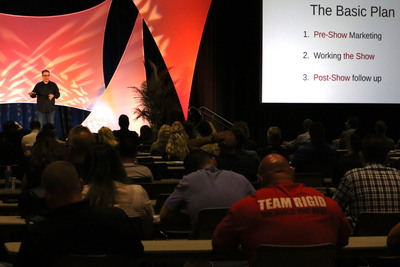
Have a plan and know what you are trying to accomplish. Think about why you’re there and set goals for the event. Make sure to follow up, because relationships have to be nurtured.

How to read your web stats

Use Google Analytics to find out if your marketing strategy is working. It tells you who’s coming to your website, where they are coming from, how they found you, and what pages they visited once they landed on your website, among countless other statistics. Are they typing in your URL? Are they searching on Google, social media or a back link from someone else’s site to your site? In the Google Search console, you can find out what keywords people type into the search engine to visit your site.

How to get PR in the media

Try to make your public relations strategy a part of whatever current events are going on around the world at that moment.

“Cars are a hot topic right now because they’re hard to get,” Moltz explained. “You can’t get a new car, and can you believe what a used car costs these days? To get good PR, sponsor a local sports team or get involved in local charitable organizations.”

How to read financial statements

According to Moltz, only 75% of the small-business owners he met with before COVID knew how to read a profit-and-loss statement; only 25% could read a balance sheet; and only 5% could read a cash-flow statement.

“If you don’t know where you’ve been, you don’t know where you’re going,” he said. “If you don’t understand what these things mean, it’s okay, but you’ve got to be able to figure it out because if you don’t know your past results, you don’t know where you’re going in the future. Start small. What’s my revenue for the month, and what are my expenses?”

How to maximize profitability

Profit is why you are in business. The problem is that business owners usually pay themselves last.

“Put something for yourself into your expenses, because if you can’t pay yourself, you don’t really have a business,” Moltz said. “To maximize profitability, find customers who are willing to pay for your service or product, and don’t charge based on your time or cost. Charge based on the value you bring and what you’re giving.”

How to get your marketing email opened

You can’t sell anything to anybody; you have to be there when customers are ready to buy, according to Moltz. When they have a problem, they’ll think of you.

“Two-hundred billion emails are sent per day,” he said. “The key metric is email open rate. People don’t open them because of bad subject lines. Instead of ‘Aftermarket Service Newsletter,’ call it ‘The Hottest Car Modifications for 2021.’ Personalize the email by using your name. Use intriguing titles. Be controversial. Negativity sells. Use words such as ‘worse,’ ‘wrong,’ ‘absolutely,’ or ‘no fewer.’ Be exclusive. Use words such as ‘VIP invitation,’ ‘limited-time deadline,’ ‘only three seats left!’ or ‘once-a-year event.’ However, be careful about spam traps; don’t use words such as ‘free,’ ‘reminder’ or ‘help.’”

How to legally spy on your competitors

Sign up for their mailing lists and like them on social media. Put them into Google Alerts to find out when people mention them. Learn who they follow on social media and who follows them by using tools such as Fan Page Karma or Follower Wonk. Track their back links for their website using Moz Onsite Explorer or Majestic Site Explorer.

How to get a prospect to respond

People are afraid to tell you “no,” so send an email entitled “Please Reply A, B or C.” This works 90% of the time, according to Moltz.

I have not heard from you recently about working together. Is this because:

a) I am no longer interested.
b) I am still interested but busy, so contact me in a week.
c) I have been busy, but I am now ready to get started with your company.

QRLet bad employees go

According to Moltz, bad employees can bring down an entire company, and they’re stealing from you because they’re not doing their best and they’re not part of the company’s culture.

To learn more about Moltz’s shortcuts to success and for more information, visit https://barrymoltz.com.

Fri, 04/01/2022 - 11:16

SEMA News—April 2022

BUSINESS

Keys for Driving Internet Sales

Practical Advice for Retailers Looking to Increase Online Market Share

By Douglas McColloch

Online Best Practices

SEMA Data Vice President of Operations Gigi Ho (left) led a discussion of online sales with former Motovicity CEO Brian Lounsberry to discuss best practices for online retailers. Lounsberry’s 25 years of experience spans sales, marketing, IT, software and executive management.

The onset of the COVID-19 pandemic in spring 2020 and the ensuing quarantines and lockdowns it occasioned highlighted the need for companies to build and maintain a robust online infrastructure to optimize consumer outreach and leverage sales when conventional retailing methods aren’t an option. Online sales of specialty-equipment products represented more than half of all parts sales in calendar year 2020, and while that number has declined as retail stores have reopened for business, online sales still account for 40%–45% of all sales in the industry. That fact presents challenges and opportunities for specialty-equipment companies looking to expand their digital footprint to drive brand awareness and sales.

A recent SEMA Education seminar, “Tactics to Increase Online Market Share,” took a closer look at the subject, with an informal discussion aimed at diagnosing trouble spots that may arise for businesses and recommending best practices for optimizing online retail sales. The discussion was hosted by SEMA Data Vice President of Operations Gigi Ho and featured Brian Lounsberry, former CEO of Motovicity and a 25-year industry veteran with experience in wholesale distribution, sales, IT and marketing operations. Lounsberry now works at helping automotive brands achieve success by revolutionizing the way they engage with their B2B customers.

Online Sales: Still a Growth Sector

While brick-and-mortar retail has bounced back from its pandemic lows, online parts sales continue to grow. Even prior to the pandemic, online sales of automotive parts nearly doubled from 2016 to 2019, rising from $7.6 to $12.3 billion annually, according to a recent survey published by Hedges & Co. Online sales topped $16 billion in 2020 and are forecast to pass the $20 billion mark by 2023, so opportunities abound for enterprising companies that are willing to tap into this rapidly growing market.

The growing consumer transition to online purchasing isn’t likely to change soon.

“Habits have changed,” Ho said of consumer shopping preferences. “They say it takes 16 weeks to form a habit, and we’ve had 18 months to form a habit, which is searching for and buying our products online. This is where we’re going to be.”

Lounsberry recalled his years of experience at Motovicity, where he had the opportunity to interact with all aspects of the aftermarket (manufacturers, distributors and retailers) in seeing which sales and marketing strategies worked and which did not. Among his findings and recommendations were:

Don’t Try to Please Everybody: “The common thing I saw among retailers that made them struggle is that they tried to be all things to all people,” he said. “They tried to sell everything when it’s easier to remove parts that don’t sell and focus on the parts that you do sell and that you understand.”

For Inventory Management, Smaller Is Better: “We had some 760,000 SKUs at one point inside Motovicity’s engine, and we were paying a lot of money for the cloud to power all that space,” Lounsberry said. After performing a data analysis, he realized that “we only really ever sold 60,000 of those SKUs, and I could see by looking at the website that there were thousands of SKUs that no one had ever looked up! The retailers I saw that did really well were doing the same exact thing: Focus on those things you can really communicate with the consumer.”

Be an Expert, Not a Generalist: “Consumers can recognize a genuine company,” Lounsberry said. “They know if you’re a value-add or not, so when you’re all things to all people, you’re really just offering price—you’re just a shopping experience. But the person who dials down and focuses on, say, three or four specific platforms can start putting out content related to those platforms, perhaps describing how they modified a vehicle. Then that content connects with the next customer and the customer after that. You become an expert in the eyes of consumers, and that drives traffic to your site and people to your store.”

This is also important because many customers don’t simply want to go parts shopping. They want an interactive experience.

“Once you’ve become an expert, people are not only shopping when they walk into your store,” Lounsberry explained. “They want to interact with you because they want to learn.”

Pick Common Platforms That Enjoy Wide Appeal: “You could specialize in, say, a Volvo 240, but how many people are buying and modifying them? If you’re looking for decent revenues and sales, you’ve got to pick decently popular things consumers want.”

Make Your Website an Extension of Your Business: Lounsberry reminded his audience that first impressions are crucial to win over consumers.

“You take pride in your shop,” he explained. “It’s clean, the cars are clean, your staff is clean. You want your customer to have a fantastic experience. When a customer drops off his $50,000 vehicle, he wants to make sure the person who’s going to work on it looks good and that the work environment looks good. But sometimes people don’t connect that principle to their websites.

“Your website is the best salesperson you’ll ever have, and it’s got to be beautiful. Don’t just slap pictures of parts all over it so it looks like some Penny Saver ad.

“Everyone wants to increase online traction, but when people log on, what are they doing there? If you look at your bounce rate, they’re probably leaving—and they’re leaving because they’re not interested.”

Online Best Practices

Online sales of automotive parts and accessories surged during the 2020 pandemic year and show little sign of abating, with total online sales projected to exceed $20 billion by 2023.

Take Advantage of Online Analytics: Lounsberry stressed the importance of tracking metrics in assessing consumer behavior.

“I’ll ask people sometimes, ‘How much traffic do you have?’” he said. “They’ll answer, ‘I have no idea.’

“You’ve got to know your numbers. It can be daunting, but you don’t need to hire advertising companies to help you do it. If you have a website, you can just plug into Google Analytics, and there are tons of resources online that can help you with that.”

The most important metrics to watch?

“You have to look at your conversion rate, where the traffic is coming from, your buyer demographic, and take that as a snapshot. Generally, your conversion rate is the most important, because a lot of times, for a retailer, it might only be 1%. But if you get that number up to even 2%, you’re doing great.”

Lounsberry also reminded companies not to confuse data with revenue.

“You can obsess about data, but it’s not connected to revenue,” he said. “Data is a tool to get you to revenue. Better to obsess over the transaction, asking yourself: ‘How can I get to the sale? How can I make it faster? Can I do four sales in the same time I used to do three?’”

Use Your Website the Same Way Your Customers Do: In other words, go shopping on your own website to see how easy or difficult it is to close a sale.

“If you have a website where someone can make a purchase, when was the last time you made a purchase on your own website? No one ever does! Because of that, you have no idea what your customer goes through.”

Lounsberry suggested purchasing a product at least once a month and returning a product at least once a month.

“That’s how you’ll find the kinks and the problems in your site,” he said.

He also suggested that business owners use their own shopping experiences as a guide when constructing their own online stores.

“Some people like shopping at Wal-Mart, and some like shopping at Target,” he said. “Why is that? In this case, it’s really not about price. It’s about the shopping experience. Your website should be an extension of what you like to do and how you like to buy online.”

The same attitudinal approach can be extended to amplify a company’s online presence.

“Think about what gets your attention online,” he proposed. “Your eyeballs go somewhere. How did they [other online platforms] get you to notice? For instance, I love cars, but I also love a bunch of other stuff. How’d those other things get my attention? Think about what brought you to those other platforms and just push it over onto what you do.”

Set Up Your Site to Maximize Each Sale Opportunity: Lounsberry suggested recommending other parts when consumers log on to your website.

“If you can add $5 of profit to each transaction, you’ll be doing a heck of a lot better,” he said, pointing to Amazon as an example of a company that adds value at every transaction point. “When you shop at Amazon, you’ll see those three other related items on the same page. If you’re an expert in your field on a vehicle or a platform, you should know exactly what other parts your buyers will need to add on to a transaction.

“Everybody asks, ‘How can I lower my prices?’ Well, if you’re going to compete over the same exact part that I can buy somewhere else, you’re never going to win. You have to increase the value of each transaction.”

Avoid Negativity Online: “Make sure your message is always positive. Never point out the failures of others. If something’s wrong, just fix it and make it better.

“Never dog the competition, because you never know: Some day you might be working for them. Some day you might sell your company to them!”

QRSEMA Data: Features and Benefits

In addition to helping to make the most of your company’s product information, SEMA Data membership provides a host of other benefits that can help manufacturers to optimize business operations, including:

  • Unlimited exports to approved resellers at no extra cost to the manufacturer—and SEMA Data’s permissions-based export protocol ensures that manufacturer data is shared with only approved resellers.
  • Full file refreshes or “net change” updates on a schedule the member chooses: daily, weekly, monthly or whenever a supplier makes changes to its product database. This can put buyers and suppliers closer together and enable greater speed to market.
  • SEMA Data is a one-stop source for all manufacturer product information, new-product announcements, digital assets, fitment info and more.

Using the Bronze, Silver, Gold and Platinum scales, SEMA Data can show exactly how a dataset rates. The required fields to achieve each level are based on feedback from buyers and resellers, so manufacturers can know at a glance what information their client-customers need to maximize sales.

For more information on SEMA Data and its range of services and benefits, visit www.SEMAdata.org.

Fri, 04/01/2022 - 10:45

SEMA News—April 2022

Coming Soon:

A Second SEMA Garage

By Mike Spagnola

Mike SpagnolaThe SEMA Garage in Diamond Bar, California, was conceived as a comprehensive product development center to address the needs of manufacturer members. It was equipped with state-of-the-art tools and equipment and staffed with expert personnel. Since it opened almost nine years ago, hundreds of members have taken advantages of the facility’s many services. These include access to OEM CAD data, 3-D printing and scanning, emissions testing, and measuring sessions. Even while running two shifts, the facility currently has a backlog in the emissions lab as more manufacturers conduct emissions certification procedures.

The productivity of the Diamond Bar facility and the pace of automotive technology prompted further investment, and so the SEMA Board approved a plan to build another SEMA Garage in the Detroit area. It’s been a full year since work began on that plan—an ambitious, complex build. A major milestone came in January, when riggers unpacked two semi-truck loads (nine crates in all) of emissions dynamometer equipment.

The new facility, located in Plymouth, Michigan, will offer better proximity to SEMA members in the Midwest region and create greater throughput on the emissions-compliance front. It will house equipment that will offer the ability to test both two-wheel-drive and all-wheel-drive vehicles.

Importantly, some 5,000 sq. ft. of the 45,000-sq.-ft. building will be devoted exclusively to research on advanced driver-assistance systems (ADAS), the newest element in the association’s work to make technology accessible to members. In that portion of the Detroit garage, manufacturers will have access to OEM-quality equipment that will allow member manufacturers to identify and correct hardware and software that might be affected when a vehicle is modified. Dynamic testing will also be performed to confirm recalibration processes.

Even as ADAS systems are now becoming ubiquitous on new cars and trucks, specific processes to go about readjusting them after modifying a vehicle are not widely documented. Different manufacturers have developed proprietary systems independently, so testing and recalibration processes will need to be researched vehicle by vehicle.

The collision and repair industry is working on identifying how to put an ADAS-equipped vehicle back together after a crash, but as it stands, no organization has addressed the challenge of learning how to make ADAS systems compatible with newer vehicles after different tires, modified suspensions, custom bumpers, mirrors, grilles or other modifications are made.

The immediate plan is to conduct systematic research on two widely modified vehicles that have two completely different types of ADAS technology. As time goes on, other vehicles will be added, building a library of best-practices information that will be available to members. It’s groundbreaking work that needs to be done now, before there are more regulations, in order to stay ahead of this fast-moving technology.

Strategically located in an area where many tier-1 OEM suppliers are situated, the Detroit facility will offer a long-term opportunity to build and expand on relationships with carmakers and major suppliers, helping to create avenues for collaboration on vehicle personalization.

There will be more challenges in the future, some perhaps even more daunting. Electrification, self-driving cars and artificial intelligence are all on the horizon. When the Detroit SEMA Garage opens later this year, it will represent another step toward addressing the challenges we see now and those in the future. It will more than double the industry’s capacity to keep up with the latest technology and help manufacturers develop new, exciting products.

You’ll be hearing more about the Detroit Garage this summer. Stay tuned!

Fri, 04/01/2022 - 10:35

SEMA News—April 2022

SEMA HERITAGE

Utterly Improbable

By Drew Hardin

Photography Courtesy: Jack Brady, Petersen Publishing Company Archive

HeritageSixty years ago, what we know now as the Rolex 24 at Daytona began as the three-hour Daytona Continental. It was the brainchild of NASCAR’s Bill France, Sr., and was intended to bring the world’s best sports and road-race cars to his Daytona Speedway.

The Daytona Continental was sanctioned by the Fédération Internationale de l’Automobile (FIA) as the first race of the 1962 World Sportscar Championship season. As such, it drew an entry list that read like a who’s who of mid-century racing talent, from Phil Hill, Stirling Moss and Jim Clark to A.J. Foyt, Fireball Roberts, Jim Hall and Roger Penske.

Hill, sharing a Ferrari with Ricardo Rodriguez, finished the race in second place. Hall, driving a Chevy V8-powered Chapparal, finished third. Dan Gurney, who at the time was a Formula 1 driver for Porsche, won the Continental in a Lotus 19 powered by a Coventry Climax engine.

But that factual recounting doesn’t capture the drama of what actually happened. Jack Brady, writing in the May 1962 issue of Sports Car Graphic magazine, said that if Hollywood were making a movie about the race, its ending “would rate an immediate thumbs-down as being utterly improbable.”

Let’s set the scene: In the first half of the race, “Gurney never lost sight of the number-one spot and swapped places with Phil Hill on several occasions,” Brady wrote. “The amount of acceleration displayed by Gurney’s Lotus was almost unbelievable,” he said, crediting the “loving care lavished on the aging Lotus 19” by its chief mechanic.

All that changed on the last lap.

“With almost a four-mile lead over Rodriguez, Gurney approached the final turn riding midway up the banking.” As Gurney came through the turn, there was a “tell-tale whisp of smoke, followed by a rush of steam.” Post-race examination “showed that a piston had disintegrated, and the connecting rod and wristpin had beaten a fist-sized hole in the block.”

Though Gurney kept control of the wounded Lotus, “he still had over 1,200 feet to go for the start-finish line, with very little assurance that his lead was sufficient to wait out the clock.”

Gurney coasted to the wall under the starter’s stand, “10 feet from the white line. FIA rules no longer permit the car to be pushed on the course, so he had to get the Lotus across the line under its own power.”

The grandstand behind the finish line “went wild” while Gurney waited tensely. “The end of the three hours was signaled by a wildly waving flag, and he skittered across the finish line on the starter motor,” Brady said. “The number two and three cars were in the same lap at the finish, but not quite close enough.”

Fri, 04/01/2022 - 10:06

SEMA News—April 2022

REQUIRED READING

By Juan Torres, Rachel Tatum and Carr Winn

SEMA Members in the Media

Aftermarket Trendsetters

At the 2021 SEMA Show, exhibiting manufacturers voted on the best new vehicles for personalization and presented them with SEMA Awards, an annual recognition given to the top trending vehicle models in five categories. The 2021 SEMA Award Winners were the Ford Mustang (Car of the Year), Toyota Supra (Sport Compact of the Year), Ford Bronco (4x4/SUV of the Year), Ford F-Series (Fullsize Truck of the Year) and Toyota Tacoma (Midsize Truck of the Year).

The winning models were featured throughout the 1.25 million sq.-ft. Las Vegas Convention Center during the SEMA Show, each uniquely customized to highlight the many aftermarket products and accessories that are available for the vehicles. The following are some of the publications that reported on the award winners.

Associated Press

AP

The Associated Press was among the media outlets that spread the news about the vehicles that won a 2021 SEMA Award. Readers also learned that the awards provide guidance on which vehicles offer the greatest opportunities for customization and the aftermarket products available for them.


Automotive World Magazine

Automotive World

The 2021 SEMA Show was a milestone event for Toyota, as it was the first time a Toyota model had won a SEMA Award. The article described the recognition as proof that “the collaboration between Toyota and the aftermarket has resulted in greater options for consumers.”


Muscle Cars & Trucks

Musclecars

“These awards seem to have Ford’s big blue oval glowing a little brighter at the 2021 SEMA Show,” read the Muscle Cars & Trucks article. The reporter also pointed out that the Ford Bronco being named 4x4/SUV of the Year put an end to the Jeep Wrangler’s stronghold on the award.

The 2021 SEMA Show was a milestone event for Toyota, as it was the first time a Toyota model had won a SEMA Award. The article described the recognition as proof that “the collaboration between Toyota and the aftermarket has resulted in greater options for consumers.”

SEMA Cares Charity Builds at the 2021 SEMA Show
SEMA Cares

SEMA News spotted all these amazing builds on the 2021 SEMA Show floor. A Factory Five 65 Coupe, a Factory Five Cobra and a classic Chevrolet 3100—all coming up for auction to benefit SEMA Cares charity partners. Visit www.sema.org/semacares to make a donation today.

’22 Toyota GR86 Walk-Around with Chelsie Lesnoski
Toyota GR86

Top 12 Battle of the Builders finalist Chelsie Lesnoski (left) from Throttle Thrashers Garage got a tour around the GR86 from Toyota Spokesperson Dan Gardner.

Sana Dadabhoy Scans Toyota GR86 at SEMA Garage
Sana Dadabhoy

Influencer Sana Dadabhoy (@ladyzla_) collaborates with SEMA Garage Mechanical Engineer Luis Morales (right) to scan the ’22 Toyota GR86.

Faces in the Crowd

AnataliaAnatalia Villaranda
@anataliav

Anatalia Villaranda is a social-media content creator personality who incorporates her talents (such as her professional singing background, dancing and positive attitude) to the automotive industry. She has starred on multiple TV shows and worldwide performances and has been active on the social-media side of entertainment. Villaranda is currently building and prepping her ’94 Mazda Miata and getting it ready to hit the track for some unique content coming this year.

Cole MartenCole Marten
@cole.ttg

Cole Marten specializes in fabrication, mechanical and business operations and is the co-owner of Throttle Thrashers Garage in Penticton, British Columbia. Marten started his automotive journey restoring Nissan Skylines and has slowly evolved into building custom cars for customers throughout Canada and the United States. Marten’s AWD 2JZ R32 GTR earned him a Golden Ticket to the SEMA Show through the Young Guns program, and he finished in the Top 3 of the Young Guns category of the “Battle of the Builders.”

Craig LoPrestiCraig LoPresti
@thecraig909

Craig LoPresti is a 22-year-old automotive videographer who owns and operates TheCraig909 YouTube channel, specializing in buying, building and driving classic cars. LoPresti does everything from engine building to paint and bodywork and documents his projects with in-depth videos covering specific topics or parts being installed/used. He posts almost daily to 16,000+ followers on Instagram and 100,000+ subscribers on YouTube.

SanaSana Dadabhoy
@ladyzla_

Sana Dadabhoy is a mechanic turned mechanical engineer with a passion for race cars, and she is the proud owner of ‘15 Nissan GT-R “Ladyzla.” Over the years, she has built it into the 9-sec. stock-engined street car it is today. Dadabhoy shares her adventures in tuning, power mods and drag racing on her social channels. SEMA has partnered with Dadabhoy on key industry initiatives, including the RPM Act, SEMA Individual Membership and SEMA Garage Measuring Sessions.

HEARD ON SOCIAL MEDIA

“The 2021 SEMA Award finalists have been announced and it’s a great list. Which vehicles are leading the league for aftermarket customization?”—BangShift, via Facebook

“2021 SEMA Awards Winners Announced, GM Misses Out.”—GM Authority, via Twitter

“SEMA-member companies pick the GR Supra and Tacoma as the best new models to customize in the Sport Compact and Midsize Truck categories.”—The News Channel, via Facebook

“The best new vehicles for personalization were announced at the #SEMA2021 in Las Vegas, Nev.”—Racing Equipment News, via Twitter

Fri, 04/01/2022 - 09:48

SEMA News—April 2022

INDUSTRY NEWS

Photos courtesy SpiedBilde, Brian Williams. Reuse or reproduction without the copyright holder’s consent is prohibited.

’23 Hyundai Ioniq 6
Hyundai

Hyundai’s Prophecy concept car will morph into the Ioniq 6 when it finally hits dealers in production form in 2023. As expected, spy shots now prove that the radical design of the Prophecy has been toned down considerably for the Ioniq 6.

Hyundai

The images show that the suicide doors of the concept are not making their way to production and that both the front and rear overhangs have increased in size (presumably because a production car needs more space for things like battery packs and trunk space). These changes likely mean it won’t have the same svelte curves as the concept. There will be both single- and dual-motor variants to be offered. The latter is likely to produce more than 300 hp.

 
’23 Ford Bronco Raptor
Bronco

The new Bronco Raptor features the famous Ford grille, which has been seen on Raptors since their inception, and it also gains some aggressive front fender vents—something not previously seen on a Bronco. The prototype rides on a set of BFGoodrich AT All-Terrain T/A tires, though we can’t quite make out the size (it appears to be a 17-in. rim). Power is expected to come from the 3.0L twin-turbo V6 mated to a seven-speed automatic.

Bronco

The Bronco Raptor will launch for the ’23 model year, where it is expected to join the F-150 Raptor and Ranger Raptor. Expect an official debut in the first quarter of 2022.

’23 Corvette E-Ray
Corvette

Here is the upcoming Corvette E-Ray, testing in Metro Detroit without a single ounce of camo. The prototype seen here wears an identical body to that of the ’23 Corvette Z06 with the optional Z07 package—but with one exception: the exhaust. While the Z06 has a center-exit exhaust setup, this prototype has the same outboard exhaust configuration as the C8 Stingray. In addition, this vehicle sounded very different from the raspy and high-revving Z06.

Corvette

The Corvette E-Ray is expected to mate the 6.2L V8 from the Stingray with a hybrid configuration, adding a new model to the Corvette family. Expect a launch toward the end of the 2022 calendar year as a ’23 model.

Fri, 04/01/2022 - 09:34

SEMA News—April 2022

INDUSTRY NEWS

Eckelberg
Jonathan Eckelberg

The newly created High School Racing Association (HSRA) named Jonathan Eckelberg as its first director. In his new position, Eckelberg will help grow the association, increase driver participation, and manage race schedules and point rankings. HSRA features high-school-aged drivers in competition throughout the summer race season. The group’s goal is to provide young adults with an economical way to enter stock-car racing and keep younger generations interested in the sport.

Lubrication Specialties Inc. (LSI) announced the expansion of its warehouse footprint with the addition of a 24,000-sq.-ft. facility located in Mt. Gilead, Ohio. The new distribution and shipping hub will help accommodate the 50-plus SKUs of Hot Shot’s Secret products and LSI Chemical products developed and shipped in bulk for international sales.

MW Industries completed two new acquisitions that expand its precision spring and fastener manufacturing capabilities. They include Fox Valley Spring Co. (a supplier of springs, wire forms and flat springs) and Ideal Fasteners (a global manufacturer of threaded fasteners). These additions expand MW’s U.S.-based manufacturing locations and broaden its custom and stock component capabilities.

Bowser
Christine Bowser

Christine Bowser has been appointed president of Pinnacle Media, a full-service marketing communications agency serving clients in the global automotive, commercial vehicle, industrial and financial services sectors. The agency’s founder, Drew Shippy, will remain with the firm as chairman and CEO. Bowser most recently served as vice president and director of account service, overseeing the company’s relationships with clients throughout North America.

Holley acquired substantially all of the assets of Arizona Desert Shocks, Baer Brakes, Brothers Trucks and Rocket Racing Wheels. Holley completed the acquisitions for approximately $56 million during the fourth quarter of 2021. For 2022, Holley expects these acquisitions to contribute net sales of approximately $30 million, the company stated.

Covercraft announced the acquisition of Lloyd Mats, a manufacturer of custom-fit carpeted floor and cargo mats for cars, trucks, vans, SUVs and RVs. Since 1978, Lloyd Mats has developed a comprehensive library of vehicle-specific patterns in the custom floor mat category. The company offers multiple branded, licensed and personalized versions of its floor mats across dozens of colors and carpet styles.

Kahn Media made several recent strategic hires and staffing changes. Jeff Dillow, a PR agency leadership veteran with two decades of experience in outdoor, automotive, CPG, CSR and crisis communications, joined the team as an account supervisor, leading one of Kahn’s three account teams. Russell Stacey was promoted to director of
digital marketing, following his six-year track record of continual growth of the company’s digital marketing capabilities and team. Heather Buchanan was appointed to the newly created position of creative project manager.

Automotive Content Pros
Jonathan Briseno

The Automotive Content Professionals Network (ACPN), a community of the Auto Care Association, named Jonathan Briseno of SEMA Data as the 2022 ACPN Scholarship winner. The ACPN Scholarship is awarded to one individual who has the passion and determination to pursue professional and personal growth. The scholarship provides the opportunity to attend the 2022 ACPN Knowledge Exchange Conference—a gathering of content professionals and service providers in the aftermarket.

VP Racing Fuels Inc. announced the promotion of Ben Dolan to vice president of marketing. Prior to joining VP, Dolan was director of sales and marketing at holding company UGGM LLC, where he was responsible for the marketing and sales of the company’s five largest divisions, ranging from signage fabrication to diesel mechanics. He has more than 20 years of marketing and sales experience across a broad range of industries.

Arnott, a provider of air suspension products, announced the acquisition of JRi Shocks, based in Mooresville, North Carolina. JRi Shocks will continue to serve its existing markets and customers, “but will now be better positioned to grow those markets even further while also expanding into new ones,” according to Arnott. Customers should see no change in the day-to-day operations of the business.

Quadratec
Eric Ammerman

Quadratec Inc. announced the promotion of Eric Ammerman as the company’s director of creative content. Ammerman will oversee Quadratec’s print catalog as well as its digital product pages, its highly successful YouTube channel and its Torque editorial section. Ammerman recently celebrated his 10-year anniversary at Quadratec and formerly helmed the company’s video department and YouTube channel. Additionally, he headed Quadratec’s YJL project vehicle build that was a Battle of the Builders nominee at the 2021 SEMA Show.

SCAT Enterprises announced that it has been acquired by Taglich Private Equity, which recently acquired Air Flow Research Heads, a manufacturer of cylinder heads and intake manifolds for the high-performance automotive aftermarket. The transaction includes the Procar by SCAT seating division. SCAT’s management team will remain in place along with SCAT’s production facility and employees, located at its headquarters in Redondo Beach, California. SCAT founder Tom Lieb will remain involved in the business going forward, and SCAT’s current COO, Craig Schenasi, will become CFO of the combined companies and an owner in the business.

SuperSprings International (SSI) announced changes to its leadership team. SSI restructured to establish five defined business units led by a member of its new leadership team. The units include Tom Bateman, director of marketing; Jeni Chen, director of operations; Justin Tevis, director of data and tech ops; and Ryan Dougan, controller. All members of the leadership team report to Chief Commercial Officer Adam Weisner, who reports to SSI Chairman and CEO Gerry Lamberti.