Tue, 04/05/2022 - 09:38

By SEMA Editors


Latest Jobs Added to SEMA Career Center


Are you hunting for a new job? The SEMA Career Center has a comprehensive listing of automotive-related job openings around the country. Here are some of the latest jobs posted to the website.

Sales Account Manager
Energy Suspension is hiring a sales account manager. The ideal candidate preferably has a thorough understanding of the automotive aftermarket covering several distribution channels and relevant experience in a position of similar responsibility. This person must be detail oriented, an excellent communicator, problem solver and a strong desire to exceed sales objectives. Proficiency with Microsoft Office applications is also necessary.

Marketing Manager
Turn 14 Distribution is hiring a marketing manager to lead development and execution of all T14 events. This position is responsible for creating and maintaining a rolling 12-month calendar of industry events; securing and maintaining relationships with sponsors; all status reports, packets, promotional materials, invoices and any media coverage details and logistics.

Industrial Designer
Oracle Lighting is hiring an industrial designer. Under the direction of the director of product development, this position is responsible for developing concept drawings based on input from R&D, creating photorealistic renderings of on-vehicle applications, working closely with the R&D and design team to achieve client design demands and presenting pre-visualized ideas for in-house projects and clients. A minimum four years’ experience in 3-D design software and automotive design environment is required.

Tue, 04/05/2022 - 08:39
Force
Brittany Force

B. Force, Capps and Enders Claim Wins at NHRA Four-Wide Nationals

In the final round featuring the last eight Top Fuel world champions, it was Brittany Force who powered to the win, claiming a victory on Sunday at the NHRA Four-Wide Nationals at The Strip at Las Vegas Motor Speedway. Ron Capps (Funny Car) and Erica Enders (Pro Stock) also won at the fourth of 22 races during the 2022 NHRA Camping World Drag Racing Series season.

In a championship quad that also included four-time defending world champ Steve Torrence, Tony Schumacher and Antron Brown, Force went 3.718 seconds at 338.00 mph in her 11,000-hp Monster Energy dragster to pick up her first win this season and 12th in her career. Torrence finished as the runner-up, taking over the points lead in the process.

It was a monumental day for Capps in Funny Car, as the defending world champ claimed his first victory since becoming a team owner this year with a stellar run of 3.914 at 331.20 in his 11,000-hp NAPA Auto Parts Funny Car. Matt Hagan advanced to his second straight final round and also took over the points lead from Robert Hight with his 74th final round appearance. He won his opening-round quad and finished second to Capps a round later to advance to the final.

Enders secured her second win this season in Pro Stock and 35th in her career, outlasting a trio of young standouts with a strong run of 6.668 at 206.32 in her Melling Performance/Elite Motorsports Chevrolet Camaro in the final round.

The NHRA Camping World Drag Racing Series returns to action, April 22–24 for the NHRA SpringNationals and the final NHRA race at Houston Raceway Park.

Papadakis Racing Scores First-Ever Win for Toyota GR Corolla

Papadakis

Fredric Aasbo is tied for third place in the Formula DRIFT standings after opening round competition in Long Beach last weekend. Photo credit: Larry Chen

Just two days after the official unveiling of the Toyota GR Corolla, Ryan Tuerck scored its first-ever win. He topped the podium in the Rain-X/Nitto Tire Toyota GR Corolla at the 2022 season opening Formula DRIFT Long Beach round. Teammate Fredric Aasbo made a good start on defending his 2021 championship title and heads into Round 2 tied for third in the points in his Rockstar Energy Drink Toyota GR Supra. Tuerck achieved a rare perfect weekend in the Rain-X/Nitto Tire Toyota GR Corolla, taking the No. 1 qualifying spot on Friday before running the competition ladder all the way to the top on Saturday.

After advancing past Jeff Jones in the Round of 32, he then faced down promising young driver Branden Sorensen, before battling past longtime friend and rival Chris Forsberg. He next advanced past Aurimas “Odi” Bakchis in the Final 4, setting the stage for a final battle against either veteran Matt Field or teammate Aasbo. But an unusual turn of events meant that match never materialized. Aasbo made contact with Field, who spun into the wall. Judges deemed Aasbo at fault and awarded Tuerck the event victory when Field was unable to bring his car to the line.

For 2022, Formula DRIFT returns with a schedule of eight event weekends at a mix of new and returning venues across the country. Next on the calendar is the Road Atlanta stop, May 6–7.

For more racing news, visit Performance Racing Industry’s (PRI) website.

Tue, 04/05/2022 - 08:35

By SEMA Washington, D.C., Staff

The U.S. Court of International Trade ruled that the Trump administration had sufficient authority to impose tariffs on nearly $320 billion worth of Chinese goods even though the U.S. Trade Representative (USTR) did not adequately explain the rationale for the tariffs. As a result, the Court will not overturn the tariffs imposed on the so-called Lists 3 and 4a goods. List 3 covers most auto parts imported from China, from engines and metal fasteners to tires and brake pads.

In 2018, the USTR instituted a Section 301 investigation of Chinese trade practices and imposed $50 billion in tariffs on a variety of goods on Lists 1 and 2, including miscellaneous metal and rubber parts. The tariffs were intended to serve as bargaining chips in trade negotiations between the two countries. After China responded with retaliatory tariffs, the U.S. imposed the additional List 3 and 4a tariffs. The List 3 tariffs began at 10% in September 2018 but increased to 25% in May 2019.  

More than 6,000 importers challenged the List 3 and 4a tariffs as not being within the scope of the original Section 301 unfair trade investigation. The Court ruled that there was sufficient nexus tying the tariffs to the investigation but ordered the USTR to provide the Court with further explanation and justification for the List 3 and 4a tariffs. The USTR was specifically directed to explain in greater detail how it decided to include or exclude particular tariff code subheadings, concerns raised about the impact of the duties on the U.S. economy, and potential alternative courses of action.

For more information, contact Caroline Fletcher at carolinef@sema.org.

Mon, 04/04/2022 - 16:26

By SEMA Editors

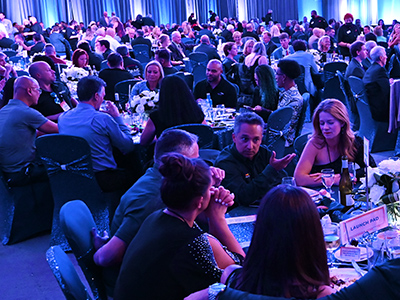
SEMA Awards GalaThe SEMA Awards Gala (formerly the SEMA Installation Gala) is a long-established tradition where individuals who have made extraordinary contributions to the industry are honored and celebrated.

Join SEMA leadership, volunteers and industry icons at the SEMA Awards Gala, Friday, July 29, in Anaheim, California, to honor 2022's SEMA Hall of Fame Inductees. The gala will take place at the Westin Anaheim Resort.

Since its inception in 1976, the SEMA Installation Gala (now the SEMA Awards Gala) has served as the formal gathering where new SEMA Hall of Fame inductees are introduced, the incoming Board of Directors are recognized, and outgoing Directors are thanked. SEMA council, network and industry leaders are also highlighted during the event.

Connect with friends and family who share a common passion and love for the industry. Join others in helping celebrate Hall of Fame inductees’ lifetime achievements.

The evening will feature cocktails, networking and dinner. Seating is limited. A full table can be purchased by selecting 10 tickets.

Registration for the 2022 SEMA Awards Gala opens Friday, April 29.

Fri, 04/01/2022 - 17:54

SEMA News—April 2022

SEMA Member News

Council & Network Leadership

By SEMA Editors

ARMOAutomotive Restoration Market Organization (ARMO)

Behind the Scenes With ARMO’s Sabra Johnson

Sabra Johnson has 30-plus years of restoration experience. He started out collecting and modifying vehicles as a hobby. The hobby evolved into City Classic Cars, a flourishing Houston-area restoration business specializing in restomods and ground-up restorations.

HRIA

Sabra Johnson serves on the ARMO select committee and chairs the ARMO Builder Panel and Builder Series subcommittee.

A SEMA member and a volunteer leader, Johnson serves on the select committee of the Automotive Restoration Market Organization (ARMO) and chairs the ARMO Builder Panel and Builder Series subcommittee.

We asked Johnson to share his thoughts on his volunteer experience and the importance of the subcommittee he leads.

SEMA Member News: What motivated you to get involved in ARMO?

Sabra Johnson: As a restorer, I have a shared affinity with ARMO for preserving and promoting the beauty and history of the automobile. Sharing that rich history is one of my passions. I’m on the select committee because SEMA encourages involvement, and I’m honored to be of service and give back.

SMN: What is the driving force behind the ARMO Builder Panel and the new Builder Series?

SJ: The vision is to create an ongoing resource culminating at the Builder Panel during the SEMA Show, where [other] builders can ask questions and be inspired by the stories and business acumen of industry leaders in the restoration segment.

The focus of the Builder Panel is to attract leading builders from various regions of the country, not just to share information to help people build better cars. It is about sharing information to help people build more profitable businesses.

For the Builder Series, we did three on-site visits led by me and my Rusty Bones Production crew. The project consisted of a feature story and professionally produced sit-down interviews with Ridler winner Steve Cook, TV personality Dan Short, and Ferrari purist Bob Smith. We also produced a series, “In the Shadows,” that focused on a student and a teacher. We tied that into how ARMO companies are training the next generation and partnering with schools and students.

I believe the digital content is invaluable and has the future potential to become a case study for an ARMO master class in restoration. The builders and manufacturers want to give back to the industry and help others find success. These digital resources will prove invaluable 20 years from now.

>>Sabra Johnson serves on the ARMO select committee and chairs the ARMO Builder Panel and Builder Series subcommittee.

ETTNEmerging Trends & Technology Network (ETTN)

ETTN Expands Education Lineup

The Emerging Trends & Technology Network (ETTN) has enriched its educational offerings. From a new virtual education series and an in-person tech symposium to Facebook Live Chats, ETTN programs aim to help members advance careers and build connections.

“Our mission is to provide resources to help engineers and product developers succeed in this industry,” said ETTN Chair Rob Simon. “Each of these programs provides knowledge and tools essential to continued success.”

ETTN

“By collaborating with the industry’s best talents to share their knowledge and expertise, we will give members the best and most relevant program available.”—Robert Prucka, PhD, ETTN Select Committee member.

Virtual Learning Experiences

The virtual education series launched in January, with sessions scheduled monthly through October. The interactive series delves into technical topics in 30–45-min. segments. Topics range from common repairs affecting advanced driver-assistance systems and electric-vehicle powertrain technology to diesel emissions formation and beyond. The Simulive sessions are led by select committee members Robert Prucka, PhD, and Bob Morreale.

“We’re taking a deep dive into the world of automotive engineering and offering ETTN members quality content in bite-size segments,” Prucka said. “By collaborating with the industry’s best talents to share their knowledge and expertise, we will give members the best and most relevant program available.”

ETTN is also continuing with Live Chats. The platform allows members to engage with thought leaders.

How do the sessions differ from virtual education? According to Simons, Live Chat presenters share aspects of their careers and advice from a technical aspect, whereas the virtual sessions dive deeply into technical topics.

Immersive Symposium Combines Education, Networking

Merriam Webster defines “nerd” as “a person very interested in technical subjects.” That’s an apt description of ETTN’s inaugural NERD Symposium slated for August 17–19 in Detroit. The multifaceted symposium (whose acronym stands for networking, education, resources and development) is designed for engineers and product developers.

First-day activities include a tour of the new Detroit SEMA Garage, measuring sessions, and an evening networking reception. The remaining days will consist of rotating meetings, giving attendees access to a range of service providers that include test labs, tools and machinery manufacturers and intellectual-property protection experts. Additionally, in-depth training and keynote presentations will address some of today’s hottest topics. The event will conclude with the grand opening reception of the SEMA Garage.

While education is a core element, abundant networking opportunities are a high priority, Simons noted.

“Of course, we want to provide value through education, but the idea is to get engineers to network with other engineers and service providers and get involved in SEMA,” he said. “With the SEMA Board’s strategic priority on vehicle technology, we want the industry to be an attractive place to work, and we want to provide the resources for engineers and others to be part of the SEMA family.”

FLNFuture Leaders Network (FLN)

YEN Rebrands as FLN, Cultivates Aspiring Leaders

The Young Executives Network (YEN) has undergone a transformation, changing its name to the Future Leaders Network (FLN). The rebranding, approved by the SEMA Board, more accurately reflects the network’s vast membership, which encompasses a diverse workforce segmented within multiple titles and job descriptions that do not necessarily reflect an executive role.

FLN

“Our mission has always been to support our members in their career-advancement journeys... As our members aspire to further their careers, the name change more accurately reflects our goal of cultivating future leaders in our industry.”—FLN Chair Nick Caloroso

In advocating for the name change, the group noted that more than half of its 1,100-plus members do not hold executive positions, which could deter potential members from joining the network, and that changing the name would broaden the network’s appeal and encourage greater engagement.

“Our mission has always been to support our members in their career-advancement journeys,” said FLN Chair Nick Caloroso. “While we are retaining our under-40 age requirement, the word ‘young’ in our name conveyed inexperience. At the same time, the word ‘executive’ didn’t fit a substantial portion of our membership. As our members aspire to further their careers, the name change more accurately reflects our goal of cultivating future leaders in our industry.”

Mastering Leadership Skills

A new professional development program was launched in March at SEMA’s headquarters in Diamond Bar, California. The two-day leadership program, sponsored by FLN in partnership with Dale Carnegie, focused on helping a select group of FLN members master essential skills to expand both personal and professional capabilities.

The idea for the program sprang from Caloroso’s own experience of attending an immersive 12-week Dale Carnegie course. His experience motivated the network’s select committee to propose an abridged version for FLN members, which was greenlit by the SEMA Board.

According to certified Dale Carnegie Trainer Brett Campbell, the abridged version packed 12 weeks of content into two days. The interactive format focused on core learnings: confidence building, improving communication skills. and strengthening human relationships.

“One of the principles of adult learners is that they want a say in the training, and Dale Carnegie really champions that,” Campbell said. “It’s built on the idea that everyone has inherent greatness, but not everyone knows how to tap into that. Because we want everyone to experience maximum benefit, we do that by keeping participants engaged with their peers.

“As much as people think of Dale Carnegie as a public-speaking course, it’s not. It’s a leadership course. It’s about building confidence, becoming an effective communicator, [learning] how to lead through change, and how an individual can be the best possible representative of their company, both internally and externally.”

HRIAHot Rod Industry Alliance (HRIA)

Meet HRIA Select Committee Members

Members of the Hot Rod Industry Alliance (HRIA) select committee are volunteers who work collaboratively within subcommittees and task forces to develop industry-specific tools and resources. For an inside look, we interviewed two subcommittee chairs. These are their edited comments.

HRIAJosh Mishler, Education Days Subcommittee

The industry has given me so much. It has provided an enjoyable career and introduced me to amazing individuals. When I became aware of HRIA, I wanted to be involved.

Being from the younger crowd, I knew youth involvement would be a major facet in advancing the industry. That I could help by inviting the next generation of hot rodders was very appealing.

Education Days is a wonderful initiative. The two-day event is part of the National Street Rod Association Street Rod Nationals and features 12 presenting companies. It provides member manufacturers with the opportunity for face time with consumers and hobbyists alike.

As we look to expand the reach of Education Days and further education about the industry, we’re focused on hosting a panel discussion at the Grand National Roadster Show in 2023. Details are being worked out. We hope to bring in students from area high schools and trade schools.

We are a voice for everyone who is an HRIA member. Attending open meetings is a great way to meet others in the industry, grow your connections, and brainstorm issues many of us share. If you have a passion for this industry, we would be glad to have you on our team.

HRIAJeff Grantmeyer, Membership Subcommittee

Borgeson Universal was an HRIA member before I started in 2008. When attending trade shows, I always attended open meetings and Education Days as an attendee and a presenter. This gave me a good idea of what HRIA was about. In 2018, I threw my hat in the ring for the select committee elections.

The role of the subcommittee is to provide a key point of contact for HRIA-member companies as well as member retention and recruitment. HRIA engages with member companies through social media with our member spotlights, which feature a member company or an individual. Additionally, we have virtual and in-person meetups and open meetings throughout the year.

As a select committee, we advise SEMA as to what resources the industry needs and help to deliver those resources. Membership benefits include manufacturer seminar opportunities at Education Days, the feature-vehicle program at the SEMA Show, and access to SEMA market reports specific to the hot-rod industry. Other benefits in the works will be rolled out soon.

We are always looking to add more members to strengthen and expand our industry. We are always looking for new volunteers to join our select committee.

MPMCMotorsports Parts Manufacturers Council (MPMC)

MPMC Hails PRI Success, Memorializes Industry Icons

Members of the Motorsports Parts Manufacturers Council (MPMC) were overjoyed at the prospect of reuniting at the 2021 Performance Racing Industry (PRI) Trade Show. According to MPMC Chair Melissa Scoles, the atmosphere was upbeat and the show was a resounding success.

MPMC

SEMA Board Chair-Elect Kyle Fickler delivered a heartwarming tribute at the MPMC Performance Industry Reception at PRI.

“PRI has always been one of my favorite shows, and it skyrocketed to the top last year,” she said. “It was great to be together again. We’re a tightknit industry, and the show did a good job of showcasing that.

“Nobody knew what to expect walking in. The staff did a great job putting together a well-run event. Everyone was happy, the aisles were crowded, conversations were engaging, booth traffic was great, and the ancillary events were well attended. It felt like a normal PRI.”

Networking Mixer Sparks Dialog

MPMC

The MPMC Happy Hour afforded manufacturers and the select committee a welcome opportunity to engage in quality conversations.

MPMC kicked off the show with its traditional Happy Hour. Held after business hours on setup day, the mixer afforded manufacturers and the select committee a welcome opportunity to engage in quality conversations.

“We had some really great conversations,” Scoles noted. “We got a lot of good feedback about how we could use MPMC to better benefit to our motorsports parts manufacturers, including ideas on what other services we could provide. As a select committee, we are excited to run with some of those ideas.”

Lost Legends Remembered

MPMC ended the Show on a high note, hosting its longstanding Performance Industry Reception. Apart from the camaraderie typical of council events, the reception presented an opportunity to talk about council activities and issues important to the motorsports community.

“The reception itself was great,” Scoles said. “There was solid attendance and some great conversations. We were able to share information about MPMC and talk about volunteering. We also touched on the Recognizing the Protection of Motorsports (RPM) Act and why it’s important for our industry to support it and stay involved.”

The highlight of the evening, however, was a remembrance of industry legends who passed away during the past two years. Set against a PowerPoint collage of photos, SEMA Board Chair-Elect Kyle Fickler delivered a heartwarming tribute.

“Kyle did a really fabulous job of talking about some of the people who really impacted our industry and telling personal stories about a lot of these individuals whom we recently lost,” Scoles recalled. “It was gratifying that some family members and coworkers were able to be there and for us to honor these individuals in this way.”

PROProfessional Restylers Organization (PRO)

PRO Cup Challenge Reaps Rewards

The 2021 PRO Cup Challenge, held by the Professional Restylers Organization (PRO), celebrated restyler craftsmanship and creativity. Seven vehicles competed, each upfitted with an accessory package that could be easily replicated, appeal to a range of customers, and enhance profitability for new-car dealers and restylers.

“We were excited to participate in two Challenge events,” said Automotive Concepts’ Dino Perfetti, whose Bronco was chosen as the fan favorite. “It allowed our team to build packages that proved profitable for our dealer partners. But the ultimate takeaway was the creatively designed packages by some of the leading companies in our industry.”

Four contestants—including winner Tom Waitzman—shared their experiences in interviews with SEMA Member News. Here are edited excerpts:

ChelseaChelsea Allen, Crush Customs

I’ve always been in awe of the cars on display at the SEMA Show. When the opportunity presented itself, Colby McLaughlin (PRO chair-elect) encouraged me to apply.

Putting together a build during a pandemic was challenging. Overcoming those challenges was a huge morale boost for our team. I brought some of my guys to the SEMA Show. Their joy at seeing their work on display was priceless, and the dealer couldn’t be more pleased: The vehicle sold in three days.

It’s great for restylers to see builds we can recreate. Discussing ideas and benefits with fellow PRO members presents huge opportunities.

Chris TurgeonChris Turgeon, On the Rocks 4x4

When I learned about the Challenge, we talked about how it would be a boost to our small shop. We’ve always had a goal of doing restyling for dealers but had yet to make good contacts.

We benefitted in many ways. It was a hit with our social media. We gained new followers, with a percentage turning into customers. It provided a boost of credibility with our suppliers.

One of the best benefits was exposure to dealers. When we finished the truck, we showed it around. This has led to many leads and steady accessory work with two multi-line dealer groups. The exposure is already paying dividends.

Aaron VaccarAaron Vaccar, Vaccar Co.—City Kia

I learned about the Challenge from media coverage of the 2019 SEMA Show. The desire to participate in 2021 aligned with the work I’m involved with and my passion for project vehicles.

I gravitated toward a Kia because of my relationship with City Kia. While the idea of added marketing was a worthwhile benefit, it was equally meaningful to support a unique, education-type contribution.

For PRO members, the Challenge can be a source of aspiration, inspiration and information. These are real-world examples that get budgeted, built and sold. It provides a rare, unfiltered look at how a profitable business relationship exists between restylers and dealerships.

PROTom Waitzman, DPS Automotive Group

I saw the 2019 Challenge. Once it was announced for 2021, I wanted to be involved. I’m proud of what my team does on a daily basis, and the opportunity to show that at the SEMA Show was very exciting.

I’ve always dreamed of having a car at the SEMA Show. I knew choosing a brand like VW, which doesn’t get accessorized as much as other brands, would set us apart. Winning the Challenge brings an enormous amount of pride and satisfaction for the hard work we put into the build.

Having a car at the SEMA Show is an accomplishment in itself. Restylers should want to show customers and their peers what they do to support our industry.

SBNSEMA Businesswomen’s Network (SBN)

SBN Forges Ahead With New Initiatives

The SEMA Businesswomen’s Network (SBN) kicked off 2022 on a high note, launching its latest virtual education series and Live Chats in January, followed by SBN’s Leadership Forum and plans to embark on an all-female project-vehicle build.

“We are excited for the opportunities we’ve created for our members to expand their knowledge and leadership skills,” said Chair Cathy Clark.

SBN

In 2012, SBN tackled the SEMA Mustang Build Powered by Women. More than 40 industry women volunteered their time and talents to customize a ’13 Mustang GT.

Career-Advancing Resources

SBN has successfully utilized virtual platforms to deliver information and resources. The current lineup of Facebook Live Chats, for instance, offers insights into the careers of seven prominent industry women.

“Live Chats are a great way to learn about accomplished women and how they forged their own paths in a male-dominated industry,” Clark said. “They all have inspiring stories to share.”

The virtual education series focuses on refining professional skills and knowhow. Sessions are free. They are open to women at any level in their careers, and both members and nonmembers are encouraged to attend.

Each of the 11 sessions is presented by a professional speaker with expertise in a specific topic. Subjects include the importance of performance reviews, implementing a healthy work/life balance, navigating change, how to maximize one’s role for success and more.

The newest experience was the in-person Leadership Forum held in mid-March in Costa Mesa, California. The fee-based, women-centric event concentrated on honing leadership skills and community building through education, mentorship and group discussions.

“SBN is focused on providing resources to help our members advance their careers,” Clark said. “Our resources and event committees teamed up to provide a worthwhile forum for women to grow personally and professionally.”

SBN

SBN recently received SEMA Board approval for an all-female build. SBN plans to partner with a West Coast shop and the SEMA Garage.

Harnessing Female Talent

In 2012, SBN tackled an ambitious project: the SEMA Mustang Build Powered by Women, with SEMA and Ford Motor Company teaming up for the build. While many member companies contributed products and services, more than 40 industry women volunteered their time and talents to customize a ’13 Mustang GT. The project was a huge success, garnering widespread media coverage, and was ultimately auctioned to raise funds for the SEMA Memorial Scholarship Fund.

Flash forward to 2022. SBN recently received SEMA Board approval for an all-female build. SBN plans to partner with a West Coast shop and the SEMA Garage to host the vehicle and encourage participation among association members.

Though details are still being ironed out (a proposal to an OEM to receive a project vehicle is in the works), the goal is to build a vehicle that encompasses and showcases many women’s skill sets. The project also aims to create opportunities for women to learn new skills. By increasing awareness of female expertise and their presence in the industry, the project aspires to shift the dynamic of a male-dominated industry to create equal opportunities for women.

According to Clark, once the vehicle is secured, work will begin in the late spring or early summer, with plans to unveil the completed project at the 2022 SEMA Show.

“This is something we’ve been working on for a while,” Clark said. “The goal is to feature the vehicle in an OEM booth at the SEMA Show. For 2023, we plan to take the vehicle to events to promote the build and show off what women in our industry do. We are so excited that the SEMA Board has greenlit the project, and we can’t wait to get started.”

TORATruck & Off-Road Alliance (TORA)

TORA Sets Fundraising Record

Improving the lives of children in need through charitable contributions is a worthy cause, one that the SEMA Board embraced in 2007 with the establishment of SEMA Cares. The nonprofit provides a forum for SEMA members to act as a collective influence by making a positive impact beyond the automotive
community.

TORA

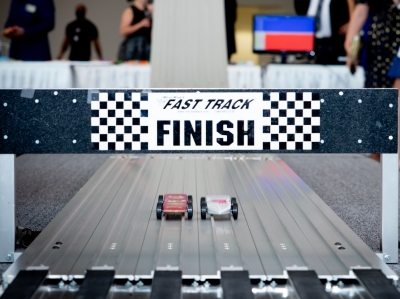
The Pinewood Derby is a lively staple that sparks enthusiasm and opens wallets for SEMA Cares.

SEMA Cares supports three charities: Childhelp for the prevention and treatment of child abuse; Victory Junction for children with serious medical conditions; and the Austin Hatcher Foundation for pediatric cancer care.

Primary fundraising is through direct donations and charitable events, including the popular Pinewood races and the Industry Cup Challenge, held during the SEMA Installation Gala. Some SEMA councils—and notably the Truck & Off-Road Alliance (TORA)—have embraced SEMA Cares in a variety of ways.

TORA

Some SEMA councils—and notably the Truck & Off-Road Alliance (TORA)—have embraced SEMA Cares in a variety of ways.

Making a Difference

As anyone who’s attended TORA’s industry reception at the SEMA Show knows, the Pinewood Derby is a lively staple that sparks enthusiasm and opens wallets for SEMA Cares.

“Our community has supported SEMA Cares for many years, back to the Light Truck Accessory Alliance,” said Troy Wirtz, council chair. “It’s such a worthy cause, and we promote that. We want our members to know that participation in the Pinewood Derby directly benefits the three charities.”

Putting the derby together took a team effort, with volunteers helping to set up and operate the track and others manning the door.

“Everyone’s always willing to pitch in,” Wirtz said. “Dave Williams helped with setup, Rick Hermann did a great job again as emcee, and we’re grateful to everyone who helped make the Pinewood Derby a success.

“The new location on the West Hall terrace was great. It worked to our advantage. There was only one door to get in, which helped with the sale of the cars. We were able to capture everybody walking in.”

In 2019, TORA raised about $3,500.

“We wanted to hit the $4,200 mark last year [2021], and we did,” Wirtz said. “SEMA matched that, so we ended up hitting $8,400. That $4,200 came just from the sale of cars at $20 apiece. Knowing we’re making a difference in children’s lives is such a good feeling.”

WTCWheel & Tire Council (WTC)

WTC Presents Educational, Networking Opportunities

Following on the heels of its successful webinar series, the Wheel & Tire Council (WTC) has embarked on a new virtual education initiative for its members. While the 2021 program consisted of separate tracks (one for wheel specialists, the other for tire pros), the current program covers a range of topics.

WTC

“...Education needs to be at the forefront, and we want it to be impactful to the entire membership.”—WTC Chair Todd Steen

“Things are changing so rapidly that we should all be looking at ways to stay at the top of our games,” said WTC Chair Todd Steen. “Therefore, education needs to be at the forefront, and we want it to be impactful to the entire membership.”

Steen noted that the schedule includes six webinars, one every other month, with the possibility of a seventh presentation. All sessions are presented live and run 30–45 min., allowing speakers to answer questions on the spot.

The lineup features industry thought leaders and experts, including SEMA Board members and staff. Subjects run the gamut from a deep dive into the Recognizing the Protection of Motorsports (RPM) Act and advancements in tire and wheel designs to ways to grow and sustain business for the future.

“The value lies in giving people insights in small bites on a regular basis so that everyone can take advantage,” Steen said. “Whether it’s what wheels and tires will look like in five, 10 or 20 years, the RPM Act as it relates to our members, or human resources issues, it’s about sharing nuggets of industry and business wisdom.”

Virtual and In-Person Connections

Intent on helping members build meaningful connections and having some fun in the process, WTC has taken a two-pronged approach that includes virtual events and in-person gatherings.

To jumpstart the season, the council teamed with two SEMA networks to cohost a networking mixer during the Grand National Roadster Show in Pomona, California. That event was followed by a similar joint mixer at the Keystone Big Show in Dallas, Texas, in March, with future WTC gatherings slated for an Off-Road Expo and a Formula DRIFT event.

In early February, members were treated to a unique and entertaining virtual experience—a live version of Kahoot!, a game-based learning platform that allows remote players to join a game or trivia quiz. The event was emceed by industry pioneer Brad Fanshaw, who shared stories about life as a custom car builder, TV personality and entrepreneur. A second virtual event is on tap for August 3.

For details on upcoming webinars and networking opportunities, log on to the WTC Facebook page, check out council updates or visit www.sema.org/wtc.

Fri, 04/01/2022 - 15:25

SEMA News—April 2022

BUSINESS

SEMA Announces First-Ever Emissions Certification Program

The New Initiative Meets EPA Tampering Policy Requirements to Help Speed Products to Market

By Mike Imlay

SEMA Certified

For nearly a decade, the SEMA Garage has assisted association members in obtaining CARB EOs. Now a new SEMA Certified-Emissions (SC-E) program is helping manufacturers demonstrate “49-state legality” for their products under EPA guidelines. For many, this means quicker speed to market.

In February, SEMA announced an industry first: a new program making it possible for specialty automotive parts manufacturers to meet the legal requirement for emissions compliance under the U.S. Environmental Protection Agency’s (EPA) Tampering Policy. The program, called SEMA Certified-Emissions (SC-E), enables manufacturers to verify that a product meets the EPA’s “reasonable basis” criteria and is therefore legal for sale in 49 states.

According to Mike Spagnola, SEMA vice president of OEM and product development programs, SC-E now gives product makers “a clear, accelerated path to compliance so they can begin selling products legally in 49 states prior to receiving a California Air Resources Board (CARB) Executive Order (EO), which remains a requirement for selling products in all 50 states.”

Ultimately, SC-E aims to help manufacturers more quickly speed products to market while paving a path for demonstrating emissions compliance in all 50 states. For the inside scoop on this new program, SEMA News turned to Peter Treydte, SEMA director of emissions compliance, and David Goch, SEMA general counsel, for a brief Q&A. The following is that interview, edited for clarity and length.

SEMA News: Let’s start with some background. Why did SEMA launch the SC-E program?

Peter Treydte: Until recently, the CARB EO was really the only known path toward clear emissions compliance in all 50 states. If you followed that program and obtained an EO, the EPA always recognized it as a proper demonstration of emissions compliance. What remained unclear until recently was the path to emissions legality in 49 states without a CARB EO. Companies realized they needed to demonstrate a “reasonable basis” to claim 49-state legality, but they didn’t know how to get there.

In November 2020, the EPA clarified what constitutes a reasonable basis in its Tampering Policy. Now that we have clear guidance, SEMA is leveraging that document to provide a program that can give manufacturers assurance that their products are 49-state legal. They can become EPA-compliant through SEMA certification.

Detroit

Work is continuing on the new 45,000 sq. ft. SEMA Garage facility in Detroit, pictured in this artist rendering. The Detroit location’s new emissions lab is expected to open this summer, bringing substantially expanded testing capabilities to the SC-E program.

David Goch: Members also need to know that this is about more than compliance. This is about enforcement. The Clean Air Act and CARB mandates have been in place for half a century, but there wasn’t strong enforcement during much of that time. Now it’s different. We aren’t dealing with the EPA or CARB of the ’70s, ’80s or ’90s. Aggressive enforcement is now taking place. Moreover, EPA and CARB enforcement techniques—the fines they are leveling and the consent agreements they are having parties enter into—are difficult and onerous. We’re trying to help the industry stay compliant and avoid all that.

SN: How does SC-E lessen the risk of the severe business disruptions you describe?

DG: If the EPA knocks on your door thinking that you’re doing something illegal, you’re in for a long road. You’ll have to produce information about your sales, customers, and all sorts of other documents. You’ll spend a lot of time and money on that, not to mention legal bills and civil enforcement. But if you can pull out your SEMA certification, we’re confident the EPA will say, “Fine, thank you,” and accept it as evidence that your product is legitimate. Hopefully, the EPA never knocks, but if it does, this will be the best way to quickly end the conversation.

SN: How does a manufacturer access the program?

PT: It starts by contacting the SEMA Garage. We’ll assist the manufacturer with the application process, which includes a product description, what it fits and so forth. There is a $500 fee to submit the application.

In processing the application, we’ll determine and advise whether any testing is necessary and what that testing will be. If it’s testing available at either our Diamond Bar or Detroit SEMA Garage facilities, we’ll perform it. If not, we’ll help guide the project through an appropriate outside testing facility.

I should add that the program is already active. We completed our first project earlier this year, and we have another seven or eight projects in the hopper that will be certified within a month or so.

SN: What are the nuts and bolts of the testing process?

PT: Functionally, it’s going to feel very similar to a CARB EO process. However, we aim to be faster than CARB is at issuing EOs. It can take CARB up to six months to issue an EO. Since we’re certifying EPA compliance, we also have a little more flexibility than CARB in certain areas. Still, the idea is that if you’re also intent on receiving a CARB EO, we’ll tailor your project to meet both the EPA and CARB requirements.

In other words, you can obtain an SC-E certificate followed by a CARB EO. In most cases, the SC-E certificate will be in your hand a month or more ahead of the CARB EO, enabling you to confidently market your products in 49 states sooner than in California. But ultimately, our testing will be in the same format CARB requires. We’re simply leveraging what we already know about the CARB process for our SC-E program.

DG: Just to emphasize what Peter said, SEMA believes that its program is equivalent to a CARB EO. In time, we’ll be able to demonstrate that. Our goal goes beyond EPA compliance. We plan to work with other state and local agencies concerned with vehicle emissions standards to secure their recognition of our SC-E program as well.

What’s exciting about this is that it’s SEMA’s first foray into assisting the aftermarket and performance racing industries with a standards and certification program. We anticipate that it will be successful and become a template for any future programs addressing other segments of our industry. In fact, this resembles the self-regulation found in many industries. When they need clarity in a particular area, they find ways to set and meet standards and promote their products in a legal manner.

SN: Like the Underwriters Laboratories (UL) label for electric products?

PT: That’s a good example. In fact, along with an official certificate and seal, we’ve developed a label that can be affixed to products or packaging.

SN: Many association members are probably familiar with the testing process at the SEMA Garage, but just as a refresher, what’s involved?

SEMA Certified

With a new emissions lab in Detroit and this one in Diamond Bar, California, the SEMA Garage has full, state-of-the-art OBD and tailpipe-emissions testing capabilities, covering well over 90% of product applications. For outlier projects, an SC-E engineer can determine and direct the right testing at an outside facility.

PT: There are generally three aspects to emissions evaluation. First, there’s an evaluation of the onboard diagnostic system (OBD), which is fairly self-explanatory. We basically look at the vehicle’s ability to diagnose itself and ensure that all the emissions equipment is working properly. Whenever you’re dealing with an aftermarket product that involves emissions, you have to make sure the OBD system remains functional.

The second aspect is tailpipe emissions, or what the vehicle produces while it’s running. The third is evaporative emissions. That’s what’s coming off the vehicle when it’s not running. At the SEMA Garage, we directly evaluate the first two—OBD and tailpipe emissions. Between our two lab locations, those comprise well over 90% of the cases that come to us.

Evaporative emissions testing is a little more nebulous at the moment. Our industry hasn’t had to do as much of it in the past, so SEMA doesn’t currently have that capability. However, it’s an area where we would cooperate with other laboratories that do. In such cases, we would establish the testing parameters to obtain the required data.

SEMA Garage

Vehicles carrying SEMA-member products acclimate as they await emissions testing at the SEMA Garage in Diamond Bar, California. SEMA’s emissions compliance program has been groundbreaking for manufacturers in developing products that embody today’s clean-air standards.

SN: What about staffing? We imagine that’s a consideration in launching the new SC-E program.

PT: Yes, definitely. Our emissions compliance center already has an experienced staff that has been assisting members with CARB EOs for the past eight years. We’ll continue to leverage that staff for SC-E because the work is comparable to what it’s currently doing. In addition to that, we’ll expand our engineering staffing, which will be principally responsible for evaluating a product, examining the test data, and writing up or documenting the justification for the certification. So there will be added staff behind the scenes, so to speak.

SN: Can you help us picture that documentation? What will it look like and where will it reside?

PT: We’ll produce an official, two-page document that will be all locked down and available via our website and in printable form. The certificate will include a description of the product and everything pertaining to its certification that anyone who’s interested needs to know.

In addition, the member company will also receive a test report to keep in its possession. This report won’t be made available to the public. The applicant or manufacturer can share it however it chooses, but it’s really intended for EPA purposes. If the EPA has any questions, a company can whip out this report to demonstrate the reasonable basis for its product’s compliance. It provides all the justification that’s necessary.

Finally, we’ll have a small label available that a manufacturer can ship with its product. That will carry basic information about the certification. It will also have a QR code so that any technician who’s doing a smog check can scan it and see the public certification document on our website. This way, a manufacturer’s customers can also have confidence in the products they install on their vehicles.

SN: It seems this program covers all the bases. Before we wrap up, are there any closing thoughts you’d like to emphasize?

DG: I would underscore—and you’ve probably already picked this up as a theme—that SEMA is addressing the changing emissions landscape. The fact is that enforcement against our industry is now a way of life. Manufacturers and companies that want to continue in the performance parts arena have to recognize this reality.

SEMA is here to help, and we’re creating a pain-free program to do so. It’s not like dealing with the government but rather our outreach to SEMA members to give them the certainty they desire. It offers the ability to go to market pretty much as quickly as their R&D allows. That’s our goal here.

PT: I also like to characterize SC-E in terms of its benefits to our members. Dave just mentioned the faster path to market and, really, a faster path to a compliance demonstration. A second benefit is that we’re providing clarity for the industry on what constitutes “reasonable basis” for the EPA. That’s been ambiguous up until now. EPA documentation offered guidance but didn’t provide a path.

Certification

BluePrint Engines was among the first SEMA-member companies to secure a SEMA Certified-Emissions certificate. Manufacturers that pass certification receive both public documentation and a detailed private report that they can present to regulatory officials as needed.

The EPA doesn’t have its own certification program, so we’re basically creating one for the industry. It will deliver credence to a claim of EPA compliance and the term “49-state legal.” In the past, that terminology has sometimes been very loosely applied or even misused. We’re clearing up the situation.

Finally, there will be some product types that simply won’t fit the CARB EO program. Our program will provide a path to emissions compliance for those products as well.

QRSEMA Certified-Emissions (SC-E) Fast Facts
  • Since 2014, the SEMA Garage has been instrumental in helping automotive aftermarket parts manufacturers obtain California Air Resources Board Executive Orders.
  • With state-of-the-art, CARB-recognized testing equipment and dedicated expert staff conducting tests and assisting with the process, the SEMA Garage has helped association members secure more than 500 CARB EOs. That represents more than half of all performance-parts EOs issued by CARB.
  • The new SC-E program is comparable to CARB EO requirements and was developed in response to the EPA’s Tampering Policy.
  • Members of SEMA staff are experts in assessing a manufacturer’s needs and advising the most appropriate path forward, including whether to apply for a CARB EO or SEMA emissions certification.
  • The SC-E program may help manufacturers get their products to market about three months before obtaining a CARB EO.
  • SC-E is also ideal for products that may not have a clear path in the CARB EO process (such as flex-fuel modifications, HCT-equipped intakes and engine packages).
Fri, 04/01/2022 - 15:08

SEMA News—April 2022

SEMA DATA

By Gigi Ho

SEMA Data Product News

The products featured below are from SEMA Data member companies that have attained Gold- or Platinum-level data, which means that their product data is robust and complete—likely to drive customer purchase decisions. SEMA Data members meeting data scorecard requirements are invited to submit product releases for consideration to enews@semadatacoop.org.

Bestop
Vibrant
Rough Country
Bestop

Replace-A-Top for OEM Hardware

Replace-A-Top takes advantage of your still-good factory hardware and gives you all-new fabric and windows without having to replace your existing frames and hardware. It’s the most economical way to make your top look new again.

It requires factory original hardware and includes the soft-top fabric, window panels and door skins (where applicable). Some applications offer choice of clear or tinted windows. For appearance and durability, the premium fabric maintains shape in any temperature.

Information: www.bestop.com

PN: 51117-01

Vibrant Performance

Intercooler

All Vibrant intercooler assemblies are designed in-house and feature bar-and-plate construction as well as the louvered fin design on ambient air paths with the offset fin design on charge air paths that are found in the company’s line of intercooler cores. Each assembly also features cast-aluminum, TIG-welded end tanks with a 2.5- or 3-in. inlet/outlet (depending on intercooler size). Intercoolers include mounting brackets and hardware.

Information: https://vibrantperformance.com

PN: 12810

Rough Country

2.5-i.n. Jeep Lift Kit, ’11–’20 Grand Cherokee WK2

This easy-to-install kit features front and rear spacers to lift and level the vehicle for an improved look and enough ride height to run up to 33-in. tires. Features a 100% bolt-on installation process with no need to trim the factory studs, making it easy to improve the look of the vehicle. This kit is designed to retain the vehicle’s smooth, factory ride quality. Includes a lifetime replacement guarantee.

Information: www.roughcountry.com

PN: 63300

Fri, 04/01/2022 - 13:28

SEMA News—April 2022

INDUSTRY NEWS

SEMA Market Research: Supply-Chain Issues Expected to Ease by End of 2022

Market Research

According to the latest “SEMA Future Trends” report, more than 80% of industry companies described having severe or moderate impacts in 2021 because of supply-chain disruptions, including production delays, shipping issues and higher prices.

The ongoing supply-chain disruption has had ripple effects throughout the global economy, including the specialty-equipment industry. More than 80% of industry companies reported having severe or moderate impacts in 2021 because of it, including production delays, shipping issues and higher prices. However, this year should be better.

SEMA Market Research projects that the most pressing issues with the global supply chain should improve in the second half of 2022. However, prices may remain elevated for longer and likely into 2023.

Want to learn more? Interested in seeing what the forecast is for the specialty-equipment industry moving forward? Download the new report entitled “SEMA Future Trends—January 2022.” In it, you’ll find:

  • The outlook for the specialty-equipment industry in 2022 and beyond.
  • Projections for the U.S. economy, including consumer spending, inflation and employment.
  • The outlook on the global supply chain and input prices.
  • A look at the changing demographics of consumers and what that means for the industry in the future.

Download the report today at www.sema.org/research.

SEMA Young Executives Network Announces Rebranding

FLN

The Young Executives Network, a SEMA group dedicated to cultivating talent in the automotive aftermarket, is now the Future Leaders Network (FLN). The new name more accurately reflects the network’s more than 1,140-person membership, which includes employees ranging from entry-level staff to managers, trade workers, executives and business owners.

“The network supports talent and individuals who are aspiring to further their careers in the automotive aftermarket,” said FLN Chair Nick Caloroso. “FLN will continue to offer programs and resources that will help members advance their careers.

“More than half of our members do not fall into the executives category, and although we will retain the age requirement, the word ‘young’ is relative and implies inexperience. Regardless of the individual’s role, each member is aspiring to become a more effective and productive leader in the industry.”

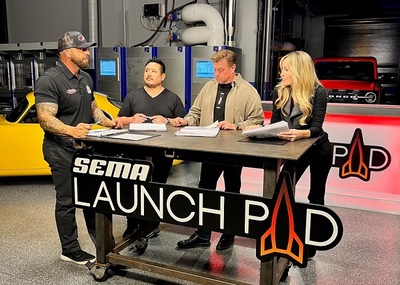
Since 1989, the network has evolved and grown. In addition to year-round virtual and in-person mixers and gatherings, FLN hosts education sessions targeted to up-and-coming leaders. FLN also introduced the Launch Pad product-pitching competition to support emerging entrepreneurs and business owners.

To learn more about FLN or to sign up to become a member, contact FLN Director Denise Waddingham at deniselw@sema.org.

Toyota to Build $1.3 Billion North Carolina Battery Plant

Toyota

By 2025, Toyota will have the capability to produce lithium-ion batteries for up to 1.2 million vehicles per year at the company’s new battery plant in Greensboro, North Carolina.

Toyota Motor North America announced that Greensboro, North Carolina, has been chosen as the location for Toyota’s new $1.29 billion automotive battery manufacturing plant, to be named Toyota Battery Manufacturing, North Carolina (TBMNC).

When it comes online in 2025, TBMNC will have four production lines, each capable of delivering enough lithium-ion batteries for 200,000 vehicles, with the intention to expand to at least six production lines for a combined total of up to 1.2 million vehicles per year. The $1.29 billion investment made by Toyota and Toyota Tsusho is partially funded from a total investment of approximately $3.4 billion previously announced on October 18 and is expected to create 1,750 new American jobs.

“The future of mobility is electrification, and the Greensboro-Randolph Megasite is the ideal location to make that future a reality,” said Ted Ogawa, CEO of Toyota Motor North America. “North Carolina offers the right conditions for this investment, including the infrastructure, a high-quality education system, access to a diverse and skilled workforce, and a welcoming environment for doing business. Today marks the beginning of a mutually beneficial partnership with the Tar Heel state as we embark on our journey to achieve carbon neutrality and provide mobility for all.”

Longtime Auto Journalist Marlan Davis Passes Away

Marlan Davis

Veteran Hot Rod and Car Craft technical editor Marlan Davis passed away January 15.

Veteran Hot Rod and Car Craft technical editor Marlan Davis passed away January 15, 2022, from complications of pancreatic cancer. He was 66 years old.

Born in New York in 1955 and raised in Sherman Oaks, California, Davis was a recent graduate from Cal State Northridge with a degree in political science when a chance encounter between his father and Hot Rod publisher Dick Day landed him a job in the West Hollywood mailroom at Petersen Publishing Company in 1977. Despite having virtually no prior experience in either journalism or hot rodding, Davis eventually worked his way onto the editorial staff of Hot Rod. For the next 40 years, he informed and entertained readers of the magazine with his written and photographic work, first as associate editor and later as technical editor.

In his later years, Davis designed and built his own house in the California high desert, from whence he devoted himself to various automotive projects while authoring “Ask Marlan,” Hot Rod’s monthly technical advice column, before retiring in 2019.

Fri, 04/01/2022 - 13:11

SEMA News—April 2022

PEOPLE

Servant Leader

Three Decades of Helping the Industry Grow and Prosper

By John Stewart

Chris K

After 30 years of service to SEMA and two decades as the association’s president and CEO, Chris Kersting retired, effective February 1.

Growing up in Ohio, Chris Kersting had five older brothers, “and they were all bigger than me,” he recalled. One morning as he played outdoors with the older boys swinging on vines, he fell and broke his wrist, earning a trip to the hospital. Returning that afternoon with a cast, he again joined his brothers, this time climbing onto a platform in an apple tree. When he got knocked off the platform, he broke the other arm and went right back for another cast. “I think the same shift was still on at the hospital,” he laughed.

It’s not everyone who breaks both arms in a single day. But it’s an incident which suggests that, from a young age, Kersting was never the kind of guy to be deterred just because he got banged up a little. That degree of tenacity was one of the qualities that became evident during Kersting’s 30-year service to SEMA. That service ended February 1 upon his retirement.

Looking back across those decades provides insights into a time of growth for the industry and the association—and into the nature of Kersting’s leadership.

Flash forward to 1989: Young Kersting had graduated from law school and was looking for work. At the time, Russ Deane was a partner in a law firm based in Washington, D.C., serving as general counsel to SEMA.

Chris K

Paul “Scooter” Brothers, shown here in 2011, worked closely with Kersting on a number of projects, including the acquisition of the Performance Racing Industry organization. “We really enjoyed some of that stuff we got to do together,” Brothers said. “He’s just a special person. He was there when you had to recognize that it was a special time, you had to reach out and work harder, longer, stick your neck out more. And he did that stuff with the conviction that he knew he had everything in line to pull it off, and he always did.”

“I walked into an interview, sat down, and on the other side of the table was Russ Deane,” Kersting recalled. “I certainly didn’t know that this was the beginning of a road that would last 30 years, working with the companies and the great people in this industry. But that was a fateful day.”

Deane’s recollection of that interview is that he didn’t think he needed any additional help at the time and was unlikely to hire anyone. But after he met with Kersting, he changed his mind.

“What I saw was this innate talent, the intellectual capacity to think through things and deal with difficult questions—and deal with them in a very sophisticated fashion,” Deane recalled. “I said to my partners after the initial interview, ‘We’re hiring this guy.’”

Deane moved quickly to monopolize the time of young Kersting and began to load him with a wide variety of projects.

“Over the years, we dealt with very difficult issues involving a lot of complexity and a lot of technical detail,” Deane said. “Chris thrived on that, and over time, that became obvious to others—especially at SEMA.”

Chris K

Russ Deane (left) hired Kersting right out of law school, circa 1989, when Deane was serving as general counsel for SEMA.

Revving Up the Washington Office

“After a period of time, it became clear SEMA needed its own Washington office to handle the onslaught of regulations confronting the industry,” Deane said.

“I enjoyed what we were doing,” Kersting recalled, thinking back to 1996. “I’d figured out that this was my passion. SEMA members were like David in front of these huge government Goliaths—the U.S. EPA [Environmental Protection Agency], NHTSA [National Highway Traffic Safety Administration], the California Air Resources Board [CARB], and all the state regulators. It was challenging, but we were making a real difference for the people in our industry. In the course of all of this, SEMA President Chuck Blum asked me to join the association as vice president of government affairs; it was a pretty natural transition.”

When Kersting came on as a SEMA employee, he found that he had his work cut out for him.

“Challenges in the legislative and regulatory arena were in many ways similar to today’s, but also different,” Kersting recalled. “We had federal issues, but the states were much more active then with unresolved safety regulations. I cut my teeth on federal lawsuits challenging the EPA’s proposed on-board diagnostic (OBD) regulations [work that ultimately secured the right for SEMA manufacturers to access and modify OBD programming]. Yet it was the state governments that were causing a lot of the grief for the SEMA marketplace.”

That required SEMA to build out a monitoring-and-response capability in all 50 states—no simple task in the pre-internet era.

Deane recalled that time: “Noise control was a big deal. In California, the cops would use noise control as a way of harassing hot rodders. We faced similar issues with raised and lowered vehicles and a range of lighting issues. Chris and SEMA’s D.C. team lined up a reliable monitoring network and basically went state to state to convince lawmakers to adopt SEMA’s model regulations.”

They launched a grassroots partnership with car clubs and enthusiasts nationwide (the SEMA Action Network) to raise a voice to support the industry’s efforts—things that really gave the industry the chance to grow.

During those days, Kersting became more visible in the association, regularly attending SEMA board meetings.

“They got to know him and his capabilities,” Deane said. “He demonstrated all the characteristics that most people would find important in a CEO.”

Chris K

After a time Kersting was asked to become a SEMA vice president and run the Washington, D.C., legislative affairs office. Kersting, shown here with then-president Chuck Blum (left) and race-car driver Dale Jarrett (right), was instrumental in setting up the lobbying opportunity for SEMA members that later became the Washington Rally.

Entrepreneurial Man in the Middle

Kersting took the handoff from Blum in 2002. As SEMA’s president and CEO, he found himself managing a growing professional staff located in Diamond Bar, California, and serving at the pleasure of the board of directors, which turned over every few years. It meant that he had to work closely with the chairman of the board, the board members themselves, and also maintain a strong relationship with his own team in the Diamond Bar headquarters.

“That’s a tough position, being in the middle,” said Nate Shelton, who was the first board chairman Kersting worked with when he assumed the CEO leadership role. “He was always really good that way. He knew that his job was not necessarily to handle us but to put in place the things we asked him to do. And that’s really hard to find in somebody.”

Shelton was one of 10 different chairmen Kersting worked with spanning his 20 years as CEO. Corky Coker was another.

Chris K

Even before he joined SEMA, Kersting worked with Deane for clients that included the National Hot Rod Association (NHRA). He became fast friends with many NHRA directors, including founder Wally Parks (right).

“I got to know Chris very well during those early years,” Coker said. “I have always admired his energy, his integrity, his commitment to his family, and his love for whipping things up to a place of success. Despite the fact that he has been for these 30 years a ‘recovering attorney,’ he still has always had an entrepreneurial energy and sense about him.”

Shelton, who served in two different decades as SEMA board chairman, had the opportunity to witness Kersting’s bent for business across a lengthy period of board service. He saw Kersting taking up opportunities and seeing them through.

“I thought he was very sharp, really a bright guy, to the point where he could make choices and decisions,” Shelton said. “I thought he was very good at that. He wasn’t puffed up—and he didn’t think that just because an idea wasn’t thought of here, it wasn’t any good.”

“Chris was involved when we started the SEMA Garage,” Shelton said. “We recruited [SEMA Interim Co-CEO] Mike Spagnola, who was finishing up on the board at the time, to head that one up. Chris was also on the forefront of buying PRI [Performance Racing Industry]. I was chair-elect, and Chris was really instrumental in accomplishing that.”

Kersting remembered that time vividly.

Chris K

The first chairman to work with CEO Kersting was Nate Shelton (left), who served two terms as chairman many years apart. Next came Corky Coker (center) who recalls working so smoothly with Kersting that “we could finish each other’s sentences.”

“I became aware that there might be an opportunity with PRI,” he said, “but the matter needed to be kept confidential.”

Kersting worked closely with then-Chairman Paul “Scooter” Brothers, who arranged the initial meeting.

“Having Scooter involved as chairman at the time and tapping the relationships he had on the racing side, that was a key factor,” Kersting recalled.

When the time was right, the two brought the opportunity to the larger board, and eventually a decision was made.

“It took us about a year, but we ended up buying it,” Brothers said.

Next, it became apparent that it would be ideal if the PRI Trade Show could move from Orlando, Florida, back to Indianapolis, relieving the racing community of the need to attend two similar trade shows just weeks apart. The Indianapolis show, known as IMIS [International Motorsports Industry Show], had become a legitimate competitor to the PRI Trade Show by that time.

“Chris and I went to Indy and met with the IMIS owners, and we ended up putting that together,” Brothers said.

Then yet another obstacle arose: “Moving the PRI Trade Show back to Indy was the easy part—the hard part was moving it without financial setbacks for leaving Orlando,” Brothers said. “Chris did all the behind-the-scenes stuff that had to be done, and the fact that he is an attorney probably kept me out of trouble, because we were spending a lot of somebody else’s money. So this is Chris Kersting, who has this ability to look into the future and say, ‘There’s an opportunity,’ and to go get it done.”

To hear Kersting tell it, the ability to foresee problems and opportunities came with his vantage point as SEMA’s CEO.

“It afforded me the chance to see and collect a lot of information as the association went about its work,” he said. “We had a great team of colleagues at SEMA and on the board who were doing the same thing.”

True enough, but perhaps just as important was that the people he was in touch with trusted him, even with information that had to remain strictly confidential. Then too, he was very good at connecting the dots.

“It was important to sift through the information to see what challenges and opportunities were apparent there,” he reflected. “This helped us to conceive and deliver innovative services such as the SEMA Garage, the emissions lab and certification assistance program, and the SEMA Data Co-op [now known as SEMA Data].”

Scooter Brothers put it this way: ‘The board was his boss, but Chris was the one who stayed out in the marketplace and was able to recognize an opportunity, bring it back to the board, and let the board think it was their idea.”

Chris K

Kersting supported 10 different board chairmen during his tenure as president and CEO; among them were (left to right) Nate Shelton, Wade Kawasaki and Doug Evans.

Evolving the SEMA Show

One of the important developments during Kersting’s early years was the expansion of the SEMA Show beyond the walls of the exhibit halls.

“We stuck our necks out a bit with that one,” Kersting remembered. “The cardinal rule was that you didn’t take buyers off the Show floor, you didn’t take them away from the exhibitors.”

Many in the industry were adamant about that, but Kersting persisted and was ultimately persuasive.

“We began adding opportunities around the perimeter of the Show for the industry to celebrate the automotive culture,” recalled Wade Kawasaki, a past chairman who has known Kersting for more than two decades. “In the boardroom, that was a very bold stance for Chris to take, and it’s one that has benefited us in amazing ways over the years.”

A particularly big moment came when DUB Co-Founder Myles Kovacs proposed a DUB event outside the South Hall. When Kovacs faced stiff board headwinds on the matter, Coker recalled that “Chris just made sure everyone was heard and continued on, showing that the more we bring to the Show and the more we make this thing bigger, badder and better, the more the buyers will show up.”

“We were a team that was inspired to make changes,” Kersting noted. “Bill Miller [SEMA interim co-CEO], Peter MacGillivray [previous SEMA vice president of events], Tom Gattuso [SEMA vice president of events]—these were talented instigators and facilitators for these changes.”

Paving the way for later additions such as SEMA Cruise, SEMA Ignited, Battle of the Builders and Launch Pad, the Show today provides platforms in a digital world that allow people to share the industry’s incredible automotive content with enthusiasts all over the planet.

“That attracts a lot more young people, “Kawasaki observed, “and that’s a really important thing to do to keep our industry viable.”

In the end, Kersting observed, “Breaking the old rules allowed us to take the SEMA Show from being a highly valued business-to-business market event to also becoming a mecca for automotive culture.”

Chris K

Very much in his wheelhouse at the Washington Rally, Kersting (center) and Russ Deane (right) enjoy a moment with Rep. Bill Posey (R-FL).

Growth and Challenges

Kersting had the good fortune to lead across a period of growth and opportunity for the automotive specialty-equipment industry, but he also led through times of difficult challenges.

Through any given time, there is a multitude of factors that lead to progress, including hard work by numerous individuals at all levels, but there is no question that Kersting’s time with the association marked a period of rapid growth for both the association and the industry.

Association membership, just a tad over 2,400 when Kersting started, grew steadily during his tenure and tops 6,463 member companies today. The industry as a whole expanded from $15 billion in 1994 to $48 billion as of 2020, and notably, the SEMA Show enjoyed conspicuous growth during his tenure.

“It’s a delicate tightrope for a leader who works for companies governed by a board of directors,” Coker observed. “But Chris did bring us into making our event a worldwide draw.”

Chris K

As leader of the SEMA staff, Kersting made it policy to carve out employee-appreciation events, where he and the leadership team would wash the cars of other employees, or cook up parking-lot picnic lunches. At the car wash event, a water-balloon war was certain to break out.

On the challenges side: “When 9/11 hit us, we had to make a big decision, because there were a lot of people who didn’t want to have the Show,” Shelton recalled. Ultimately, the Show went on, even though air travel was restricted and attendance was lower than usual. “But it built up every year after that—and it just kept growing and growing. I think that had a lot to do with Chris and what he did for SEMA.”

Another period of challenge came in 2008, when the Great Recession took hold. Jim Cozzi was chairman at the time and recalled the situation.

“It was an unprecedented time for the auto industry, the organization and the Show,” he said. “We just didn’t know what was going to happen. Up until that point, I don’t think SEMA ever had to go into a budget cycle and make cuts—but we did then. And we helped the industry get the SEMA Show accomplished over a couple of tough years. Those were difficult times for Chris, myself, and everybody on staff. But he did what he had to do, and it was best for the association.”

These early trials were good preparation for what would come later: a pandemic the likes of which the modern world has never known. As SEMA Vice President of Events Tom Gattuso noted, the job of president and CEO “takes on a different life during times of turmoil, and coming out of 9/11, getting through the financial crisis, [holding a Show] 30 days after the shooting at Mandalay Bay, going through COVID and having to cancel the Show for the first time in 54 years-—those are the types of things where Chris really had to take the things he had learned and lead the association through them.”

The COVID pandemic, in particular, created huge challenges for the industry and especially trade shows, including SEMA and PRI. As convention venues shut down in 2020 and large, in-person gatherings became impossible, the association staff quickly shifted toward creating a virtual meeting place to serve SEMA members’ needs. That effort may have worked for some people, but not the vast majority of SEMA members, who have come to rely on face-to-face meetings to do business.

The following year, with COVID restrictions reduced, a successful Show was held in Las Vegas, but not without coping with numerous unknown variables and shifting circumstances.

“In the weeks leading up to the 2021 Show, we had to remap the floor every night,” Gattuso recalled.

In order to accommodate changing plans among exhibitors and vendors, new foot-traffic patterns and safety precautions had to be developed.

“Producing a Show in 2021 in Las Vegas and following that up with PRI, those were two of the most challenging experiences we’ve ever had,” Kersting recalled.

But in the end, buyers and sellers had the opportunity to meet face to face once again, and the SEMA Show turned out to be the largest and most successful trade show gathering in America during the pandemic.

Chris K

Over the years, Kersting was an advocate of adding lifestyle features to the SEMA Show, like the SEMA Cruise. The result was greater public awareness of the automotive aftermarket, and increased attendance at the Show.

Executive Leadership

Among the staff and others in the industry, Kersting is thought of as an exceptionally hard-working, well-prepared executive who is capable of grasping the big picture and fine detail at the same time. Gattuso put it this way: “The thing about Chris is that he’s got his finger on the pulse of every business unit that we have. Because of that, you might think he doesn’t understand your business unit until you’re in a meeting with someone and he explains it better than you could have explained it yourself. I came to SEMA with 15 years of experience doing events. Chris is not an event guy by background, but he understood how events work, how they can be successful, and he became someone I realized I could learn from.”

Kersting has also been described by more than one associate as a servant leader.

“Chris is a pretty humble guy,” said Spagnola. “Humble in nature, he makes sure everybody gets to share in the glory.” Recalling that the vast majority of SEMA-member companies have fewer than 10 employees, Spagnola observed, “Chris is always looking out for the little guy and making sure he gets a fair shake. He always thinks, ‘What would our members want?’”

SEMA Interim Co-CEO Bill Miller is among those who has worked for Kersting for more than a decade.

Chris K

A devoted husband and father, whenever possible Kersting brought his wife Lisa and their two daughters along for events that required him to be away from home.

“Chris was the epitome of a great player-coach,” Miller said. “As leader of the team, he set the tone and articulated the ‘what’ and ‘why’ messages better than anyone I know. Then, when needed, he’d be there in the trenches, working alongside us creating opportunities, solving problems and delivering benefits to our members.”

And then there is Kersting’s way of motivating staff and inspiring commitment.

“With Chris, we see this passion for what he does,” said SEMA Councils and Membership Vice President Nathan Ridnouer. “It’s not just that he doesn’t give up, like a bulldog, it’s that he loves it. He loves every conversation. He loves the nuance of it. He doesn’t just check the box to call something ‘done.’ I have never seen him check the box and not care. Chris has been an approachable leader whom people also look up to.”

Outside of work, Kersting is an avid back-country guy, enjoying all endeavors involving a dirt trail. At 60, he’s still on the steeps weekly with his mountain bikes, and to replenish the calories, he is an experienced brew master, crafting beer at home since 1987.

“I have friends who enjoy sending me pictures of themselves when I am out of town, standing at my patio brew tap and pouring themselves a cold beer,” he said.

Those friends may have a harder time raiding Kersting’s kegs now that he will have more time at home and hearth. He has been married to wife Lisa for some 35 years, and they have two daughters, now grown and out of the house.

“It gets tough for a man in his position,” Cozzi observed. “But with Chris, his family was always first—Lisa and the girls. I guess it might not seem that way from the outside, but I spent a good portion of two years with that guy.”

Kersting would be the first to credit Lisa for her support over the years, when he worked long hours and spent many days on the road developing opportunities and guiding the association.

Chis K

Kersting with SEMA Chairman James Lawrence (second left), SEMA Chair-Elect Kyle Fickler (second right) and SEMA Immediate Past Chairman Tim Martin (right) at the 2021 SEMA Installation Gala.

Kersting’s tenure as president and CEO was completed at the end of January, and he has transitioned into an advisory role through July 2022. SEMA executives Bill Miller and Mike Spagnola serve as interim co-CEOs as the association moves to select a new president. Both have broad experience and extensive contacts, logging many years in the association serving the industry.

“The selection of the new president is going to be really tough,” Brothers observed. “Chris was the perfect man at the perfect time who took SEMA from almost a club to something that now has serious international clout. In a relatively short period, it changed from a good guys little network and grew and grew to something that is now run like a real business and has pretty good assets—and a pretty good chance to move to the next level.”

Many board members, past and present, look back on the association’s years of growth with appreciation for Kersting’s efforts. Current Chairman of the Board James Lawrence put it this way: “Over the past 30 years, Chris has lived his life dedicated to making an impact in the automotive aftermarket. SEMA and the entire automotive aftermarket are lucky to have had someone as talented at the helm. There were many situations over the years that needed his steady hand, through emissions challenges and economic headwinds. In recent times, Chris successfully worked with the SEMA board to start the process of transforming the association into being more consumer-focused, and he supported both the PRI acquisition and the drive toward supporting the motorsports community through the PRI association. Chris retires having left quite a ding in the automotive universe.”