Thu, 03/03/2022 - 10:28

By SEMA Editors


Latest Jobs Added to SEMA Career Center


Are you hunting for a new job? The SEMA Career Center has a comprehensive listing of automotive-related job openings around the country. Here are some of the latest jobs posted to the website.

Product Manager
T Sportline is hiring a product manager responsible for developing an electric-vehicle product portfolio that is informed by market research combined with company core competencies. You will define and propose new products, oversee development and sourcing, develop forecasts and pricing plans, and manage the lifecycle for the assigned product lines. Responsibilities also include supplier relationship management, value proposition development, training and collaboration with marketing asset development. Candidates must have a minimum of three years of progressive experience in a branded-product, consumer goods product manager-related role.

Automotive Customization Technician
Wildside Jeep Customs is hiring a highly motivated automotive customization technician with experience working on vehicles. Candidates must have experience performing brake jobs, maintenance and installing suspensions systems. Experience with welding, re-gearing, alignments on lifted vehicles, wheel mounting and balancing and other 4X4 upgrades is definitely a plus.

Sourcing Agent
Quadratec is hiring a sourcing agent to lead the planning, monitoring, execution and successful completion of all projects in the portfolio—on time, on budget, on quality and on scope—generating awesome online content to attract new and existing customers in both the Jeep and off-roading communities. Candidates must have at least three years of experience in a similar role with comparable goals and responsibilities and proven project-management experience.

Thu, 03/03/2022 - 10:28

SEMA eNews highlights SEMA-member companies’ websites weekly through the Hot Links to Cool Sites section. SEMA members: To be included in Hot Links to Cool Sites, email your company name and website to enews@sema.org. Note: Make sure to include “Hot Links” in the subject line of the email.

Thu, 03/03/2022 - 10:27

By SEMA Editors

Dates and locations have been scheduled for several upcoming SEMA-sponsored shows, measuring sessions and activities.

Thu, 03/03/2022 - 10:22

By Ashley Reyes

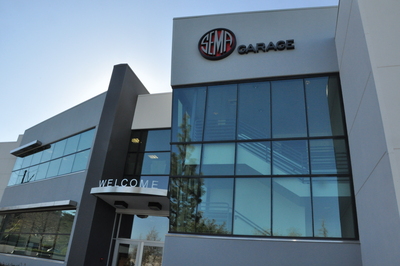
FLNThe SEMA Future Leaders Network (FLN) will kick off its inaugural Professional Development Program with a mixer on March 23, from 6:00 p.m.–7:00 p.m., at the SEMA Garage in Diamond Bar, California.  

The event is open to industry professionals under the age of 40 and will bring together members from throughout the area to grow and expand their professional network.  

“It's a chance for both current and prospective FLN members to come together and celebrate our industry,” said FLN Director Denise Waddingham. “It’s always a pleasure when our members connect in-person, and this event will provide the quality connections that our industry thrives off of.”  

Attendees from the first-ever FLN Professional Development Training and the FLN select committee will be in attendance. All FLN members will be able to learn about FLN’s current member resources and share laughs and stories during the event.   

Learn more and RSVP here

Wed, 03/02/2022 - 22:34

Companies planning to exhibit at the 2022 SEMA Show need to submit booth space applications and deposit prior to Monday, April 4, to participate in the Priority Space Selection process.

The space selection takes place May 2–18, and provides exhibitors with the opportunity to secure the best location for their SEMA Show display. The selection process is based on exhibitor seniority.

Reserve Space Here

SEMA Show

The 2022 SEMA Show space selection process takes place May 2–18, and provides exhibitors with the opportunity to secure the best location for their SEMA Show display.

To secure your booth for the 2022 SEMA Show, visit www.SEMAShow.com/buyabooth.

The 2022 SEMA Show is scheduled for Tuesday–Friday, November 1–4, in Las Vegas. Complete information about the 2022 SEMA Show is available at www.SEMAShow.com.

Wed, 03/02/2022 - 16:23

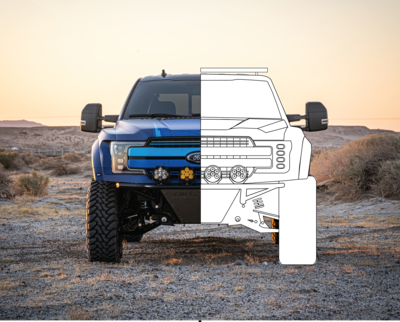
SEMA is always looking for the next trend or advancement in technology and the SEMA Show is the cultivation of that ideology brought to one place. Ford and Fox are putting the technology that they bring to the SEMA Show to real-world use.

SEMA News Caught up with them in Johnson Valley, California, to see how they are revolutionizing the off-road game.

Wed, 03/02/2022 - 11:36

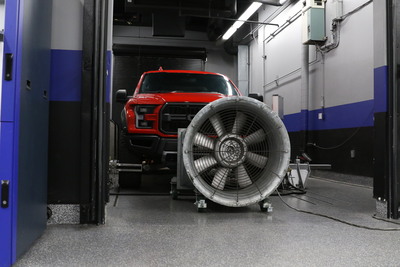
In partnership with Nissan, the SEMA Garage in Diamond Bar, California, has announced a Measuring Session for the all-new ’23 Nissan Z, March 15–18.

Nissan Z

The performance-grade Nissan Z is equipped with a standard twin-turbo V6 engine with 400 hp and 350 lb.-ft. of torque and six-speed manual transmission.

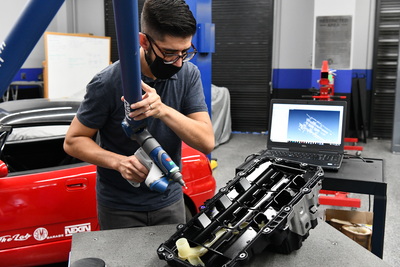
The event will allow SEMA members to test-fit prototypes, 3-D scan, measure and have a close-up experience with the newly designed Z.

The event will feature a Performance grade level Z, equipped with:

  • A standard twin-turbo V6 engine with 400 hp and 350 lb.-ft. of torque.
  • Six-speed manual transmission.

U.S. market consumers will have the option of a Sport- or Performance-grade vehicle, six-speed manual or nine-speed automatic transmission, as well as a special-edition Proto Spec (limited to just 240 units).

Please note that this will be an in-person event at the SEMA Garage in Diamond Bar, California. In order to comply with state and local health guidelines, this event will require scheduled appointments. Due to high demand, all appointments will be time limited. All attendees will be required to sign an NDA upon arrival. Photography will be limited during the event.

Register now!

*All registered attendees will be required to wear face coverings and practice social distancing during their appointment. With the exception of wheels & tires, there will be no disassembly of this vehicle.

Tue, 03/01/2022 - 17:50

SEMA News—March 2022

SEMA DATA

By Gigi Ho

SEMA Data Product News

The products featured below are from SEMA Data member companies that have attained Gold- or Platinum-level data, which means that their product data is robust and complete—likely to drive customer purchase decisions. SEMA Data members meeting data scorecard requirements are invited to submit product releases for consideration to enews@semadatacoop.org.

KC
MaxFlow
KSport
KC HiLites

50-in, Pro6 Gravity LED Eight-Light Curved Light Bar System—160W Combo Beam

Patented Gravity LED G6 optical inserts provide exceptional output and efficiency. Pro6 light utilizes a combination of SAE/ECE Driving and Wide-40 G6 optical inserts. Driving beam lights provide powerful forward distance and equal beam distribution, while the Wide-40 beam offers a wider area of coverage, increasing high-speed cornering visibility. The result is a highly targeted light distribution and beam shape to deliver more usable light than standard forward-facing LED lights.

Information: www.kchilites.com

PN: 91398

SpeedFX

MaxFlow Xtreme Exhaust System Kit

Built using T-304 austenitic stainless steel, which will not pit or rust. A 300-series stainless-steel weld filler supports the overall quality and durability of the system. Smooth mandrel-bent angles ensure maximum air flow for the very best sound and performance. CNC manufacturing creates precise fitment and reduces installation times. Dual side or dual rear exit options are included on applicable systems.

Information:

www.speed-fx.com

PN: 50100

Ksport

Procomp Big Brake Kit

Ksport says that its Big Brake Kits provide the ultimate in stopping power for vehicles. Integrating new brake technology into the design allows for a kit that highly reduces brake fade and continually cools and refreshes the brake pad surface under braking. These brake systems are designed for easy installation with minimal tools (in most applications). The extremely lightweight one-piece caliper comes in differential bore configurations. CNC machined from aircraft-quality billet and weighs just over 5 lbs. each.

Information:

www.ksportusa.com

PN: BKFD050-432SO

Tue, 03/01/2022 - 17:26

SEMA News—March 2022

PEOPLE

A Man of Many Talents

As Stuart Gosswein Announces His Retirement, SEMA Salutes His Four Decades of Industry Achievements

By Mike Imlay

Gosswein

SEMA Senior Director for Federal Governmental Affairs Stuart Gosswein at his office in Washington, D.C. After four decades protecting the specialty-equipment industry’s interests in the nation’s capital, Gosswein is retiring to pursue his career in art and other personal interests.

After four decades of service to SEMA and the aftermarket industry, SEMA Senior Director for Federal Governmental Affairs Stuart Gosswein is retiring. His career with the association represents one of incredible achievement, but more than that, said SEMA President and CEO Chris Kersting, Gosswein’s tireless and respected voice as an industry advocate will be sorely missed.

“More than any other person I’ve known, when Stuart sets his mind to accomplishing something for the industry, he stays with it and gets results,” Kersting said. “Whether it was the passage of the Low Volume Replica Act, fending off cash-for-clunker programs or preserving the Bonneville Salt Flats, Stuart always made the industry’s causes his own. He deserves our sincere appreciation and congratulations for all he has done.”

“I love the industry and don’t really want to leave, but I have other things on my bucket list that I want to get to, and that’s really my motivation for leaving SEMA,” Gosswein said.

One of the things he wants to get to—or rather, get back to—is his fulltime career as an artist, which was his original calling.

“When I was a little kid growing up in Chicago, I was drawing and painting, and my parents nurtured and supported that, putting me into art schools,” he explained. “When I graduated from high school and said I wanted to continue art school, they said, ‘Well, how are you going to support yourself?’ The one thing art school doesn’t teach you is how to sell art. I didn’t know I was going to be working for [former SEMA General Counsel] Russ Deane and SEMA.”

After high school, Gosswein entered The School of the Art Institute of Chicago, graduating in 1975. He then moved to Washington, D.C., for graduate studies at George Washington University. In 1983, Gosswein joined Deane’s law firm to gain some added income while pursuing his art.

Art

Although the automotive industry has come to know Gosswein as a tireless legal advocate, he is also widely known in the nation’s arts community as an accomplished painter and sculptor. His painting “Horse” is among his prized creations.

Those, of course, were the days when Deane was taking on California’s new emissions and noise regulations and undertaking a historic lawsuit against the U.S. Environmental Protection Agency to reverse onerous rule-making threatening the aftermarket. Decades later, Deane still marvels at the tremendous work ethic and late-night research abilities that Gosswein brought to those issues.

“He never would say ‘no’ to any task, and the interesting characteristic about Stuart is there wasn’t anything he couldn’t do,” Deane said. “He was materially involved in every single important thing that happened to SEMA and was largely responsible for causing things to happen. So many of our industry’s government affairs acheivements largely rest upon the things he did.”

In 1996, Kersting joined what had by then become SEMA’s government affairs office in Washington, D.C., serving in the role of vice president. In 2002, Kersting became SEMA president and CEO. At the same time, Gosswein (who had served as a governmental affairs manager) began taking on a series of ever-greater roles, including that of regulatory affairs manager, director of governmental affairs and, ultimately, the senior director title that he holds today.

Kersting also praised Gosswein’s dedication, adding that he brought several unique qualities to his work, including keen insights into problems, determination and tenacity.

“Over Stuart’s time serving the industry, he developed a bond and a kinship with the people SEMA serves,” Kersting observed. “Their causes became personal to him. One of the wonderful things about knowing Stuart throughout his career has been seeing him emerge from a behind-the-scenes support position to find his voice and make a powerful and lasting impact.”

Gosswein

Gosswein (left) is a veteran of numerous annual Washington Rallies in which industry businessmen meet with elected officials to lobby for the aftermarket. In this 2018 meeting with Rep. Bill Posey (R-FL, seated right), he was joined by SEMA Director of Congressional Affairs Eric Snyder (left center) and SEMA President and CEO Chris Kersting (right center).

Famed Hot Rod editor/publisher and Edelbrock designer Jim McFarland also came to know Gosswein during his early work on organizing an effective industry response to air-quality initiatives. Today, he too regards Gosswein as a lifelong friend.

“He just has a way of getting things done, and I don’t know how to describe it beyond that,” McFarland said. “He established a working relationship with a lot of people around the Hill [in Washington], including the people who support various political leaders. He understands how the system works. He’s been right in the thick of things and very much an organizer.”

When asked to name what he considers his career accomplishments with SEMA, Gosswein’s immediate reply is the low-volume replica car law enacted in 2015.

“That was huge,” he said. “For our office, it represented four years of work up on Capitol Hill, and now we’re going to be looking at placing a spotlight on the program, making consumers aware of it, and getting replica car manufacturers up and running.

“The other is the Bonneville Salt Flats. We’re still working with all the stakeholders to implement that [preservation]program. It’s all incremental—you have to be in it for the long run, and SEMA has been. But what’s been really exciting and rewarding for me personally is how we represent small businesses. SEMA doesn’t just take on automotive issues. We look at all the issues that face our members, so we’ve had to become experts on taxes, health care, you name it—even the recent anti-dumping duties.”

Gosswein

Gosswein with friends and colleagues Russ Deane, SEMA’s former general counsel (center), and SEMA President and CEO Chris Kersting (right). The trio worked together at Deane’s legal firm in Washington, D.C., which gave birth to the SEMA Governmental Affairs office.

Still, throughout his busy career with SEMA, Gosswein managed to carve out the time and energy for his other passions in life. He has climbed Mt. Whitney in the High Sierras nine times and was instrumental in creating the Downtown Arts Coalition in Washington, D.C., to develop a vibrant arts district in the city. He now looks forward to burning the midnight oil in his studio there.

“I’ve learned from SEMA members that you have to follow your bliss and identify what that is,” he said. “In terms of art, you know, I do portraits, landscapes. I’ve dabbled in architecture. The 9/11 attacks hit close to home, and I ended up doing several different architectural designs—one submission for the New York memorial and one for Shanksville, Pennsylvania. I’ve been doing some sculpture right now, and I just can’t wait to get back to painting.”

But he’ll always have a place for SEMA and will continue to lend his support to its mission and especially to its people when needed.

“I’ll miss the daily interaction with all my coworkers the most,” he said. “I’m one that likes the repetitious things—getting up and coming into the office and having my cup of coffee, catching up with the newspapers and blogs, and greeting coworkers. Yes, I’m going to miss that.”

And SEMA will surely feel Gosswein’s absence as well.

“He’s one of the people who brings real meaning to the words, ‘We couldn’t have done this without him,’” Kersting said. “We wish Stuart a very fulfilling retirement.”

Tue, 03/01/2022 - 14:20

SEMA News—March 2022

BUSINESS

The Supply-Chain Breakdown

Some Quick Takes on the Impact to the Aftermarket as It Looks Toward Recovery

By Mike Imlay

Supply

While clogged shipping lanes have grabbed headlines, a lack of enough truckers has also slowed domestic movement of product. In fact, from ships to trucks to air freighters, all forms of transportation rose last year, sometimes up to 30% and even 80% for some destinations or routes. Photo credit: Shutterstock

Flotillas of cargo ships drifting aimlessly outside Los Angeles Harbor and other major American ports. Stockpiled warehouses and sidelined commercial trucks. Inflated costs for shipping and goods and, in many cases, depleted retail shelves. Those are just a few of the images conjured up by the massive breakdown of supply chains since the fall of 2021.

So what has been the ongoing impact of the supply-chain crisis on the specialty-equipment industry? And, just as important, when can aftermarket businesses expect the prolonged disruptions to ease?

Unfortunately, there are no simple answers to those questions, but SEMA Market Research recently conducted an in-depth “Future Trends” study of the situation, its continuing effects on the industry, and the prospects for a return to some sense of normalcy in the coming year. That research, along with the insights of industry veterans representing a variety of sectors, offers valuable information for how the aftermarket is weathering the crunch.

“Our research into the data specifically surrounding our industry and the impact of supply-chain disruptions is literally the only deep dive into the topic to date,” said SEMA Market Research Manager Kyle Cheng. “We looked into the impact on different kinds of aftermarket companies through a post-2021 SEMA Show survey, so the data is fresh. From parts manufacturers to distributors, retailers and even automakers, it’s clear that the impact has been pretty big across the board.”

The Overall Picture

Why Consumers Shopped Earlier During the 2021 Holiday Season

Supply

Unexpected consumer demand helped create the supply-chain crisis, and that demand has scarcely waned. SEMA market research found that consumers are simply shifting their purchasing tactics to fulfill their thirst for goods when confronted with shortages or delays for the products they seek. Source: McKinsey and Company, “The Ship Has Sailed But Many U.S. Shoppers Won’t Wait.” November 26, 2021. Source: McKinsey and Company, “Early Birds Grab the Goods.” December 8, 2021.


First it might be best to review how we got here. By now, the complex web of disruptions slowing the world’s supply chains is well known, but to recap some highlights:

Over the past decade, many industries (including the aftermarket) increasingly turned toward just-in-time manufacturing and inventory models. Ironically, those best practices helped set the stage for the present crisis. When COVID-19 struck in 2020, lockdowns temporarily shut factories worldwide, especially in the Asian and South American nations that industrialized countries heavily rely on for manufacturing, computer chips and raw materials.

“During the pandemic, many companies anticipated that demand would wane in a recession,” Cheng explained. “But what we actually found is that it didn’t. Instead, it jumped in the United States because of stimulus programs. Consumers had a lot more money to spend, which increased demand, and companies weren’t ready for that.”

To catch up with that unexpected demand, many companies upped their shipping orders in late 2021, which clogged ports and distribution centers and tied up cargo ships.

“Usually, the ships are going back and forth at the same time, but now they’re all stuck in one place,” Cheng noted. “At Long Beach and Los Angeles, California, which are among the world’s busiest ports, the backlog is still really high even now.”

But shipping lanes aren’t the only problem. Months after the initial slowdowns, containers, crew people, dockworkers and truckers remained in short supply. That, in turn, caused costs for warehouse space and containers to soar. In fact, intense bidding wars for containers had broken out by the 2021 holiday season.

“We know for a fact that we’ve had cargo containers of ours that have been bumped further back because there are other companies willing to pay a higher price for a container to get in,” said Troy Wirtz, director of aftermarket sales for Des Moines-based Dee Zee Inc. and chair of the SEMA Truck & Off-Road Alliance (TORA).

Dee Zee wasn’t alone. According to one The Wall Street Journal report, the bidding wars caused container prices to surge 53.5% at the height of the supply-chain bottleneck before easing somewhat going into 2022. Further adding to the industry’s woes, OEMs have had to slow production lines due to chip shortages, with detrimental effects on several key aftermarket segments. Add in rising labor, fuel and raw materials costs, and the inflationary pressures are obvious.

Assessing the Impact

Impact of Supply-Chain Disruption on Specialty-Equipment Industry

Supply

From suppliers to the retail level, all sectors of the aftermarket report feeling the squeeze of the supply-chain breakdown. However, SEMA market research also indicates across-the-board optimism that disruptions will continue to diminish over the next several months. Source: SEMA Survey Conducted in Late 2021 Among SEMA Show Attendees and Exhibitors. Over the last six months, have supply chain challenges impacted your company’s operations?

“Almost 90% of the parts manufacturers responding to our survey said that they were impacted by some kind of supply-chain issue either moderately or significantly, and the responses from distributors and retailers were similar,” Cheng said. “However, the biggest impact has been on automakers and dealerships, which probably isn’t a surprise.”

In fact, market research shows that auto sales saw a strong rebound as COVID-19’s initial economic shock dissipated. In early 2021, new-vehicle sales were expected to reach pre-recession levels by the end of 2022. However, demand for new vehicles skyrocketed faster than manufacturers and dealers could supply them, pushing vehicle prices to historic highs.

Consumers at first seemed undeterred and willing to absorb the increased costs. Entering 2022, however, prospective buyers became discouraged, and the pace of new-vehicle sales slowed. (SEMA expects that sales will continue to recover as the supply-chain bottlenecks ease.)

The squeeze on automakers naturally unleashed a trickle-down effect on a variety of specialty-equipment businesses. One notable example is restylers.

“A local dealership that used to have maybe 300 cars on its lot and sold 150 a month now has less than a dozen cars on its lot, which has both hurt and helped us,” said Josh Poulson, general manager of Auto Additions Inc. and chair of SEMA’s Professional Restylers Organization (PRO).

“It hurts because we used to be able to pick out a few of those vehicles and dress them up and make packages for the dealership to resell and mark [the vehicles] up a little. We’re obviously not able to do that now because they can’t give us anything right now.”

But necessity being the mother of invention, many restylers have changed tactics to become what Poulson described as “gap fillers.” For example, a customer may be set on a brand-new truck, but because supply is limited, a dealership may not be able to deliver a model in the desired trim level. In such cases, the dealer can offer the customer a lesser model upgraded with a restyler package boasting leather, remote start and all the higher-line comfort and convenience items that the customer
is seeking.

“That’s given us the opportunity to fill some of those gaps when manufacturers just don’t have the inventory,” Poulson said, adding that restylers are also confronting a range of price hikes. For now, they’ve been able to pass on increased costs to their customers.

“Of course, when you’re dealing with local car dealers, they’re used to a certain price and they don’t like price increases, but we’ve had little pushback when we’ve had to raise prices the last year,” he said.

That acceptance of price increases has been one of the ironies of the current disruptions. While supply-chain slowdowns and inflation may have curtailed consumer demand for some products such as new vehicles, they haven’t yet curbed overall consumer enthusiasm for specialty products, according to Cheng.

“Most consumers have faced some kind of supply-chain issue,” he said. “Almost two-thirds of consumers surveyed said that they experienced an inventory problem when they wanted to buy something. But the interesting thing is that when they couldn’t get something, they weren’t going to wait for it from a company. When it comes to our industry, they’re switching brands and switching retailers, and that’s another impact.”

Behind the Demand

Types of Supply-Chain Issues Experienced

Supply

The recent disruptions have impacted industry businesses in a wide variety of ways. Interestingly, retailers reported more difficulty finding domestic suppliers over foreign suppliers, which reflects the North American trucking slowdown. Meanwhile, OEMs seem to have taken the brunt of the supply-chain crisis. Source: SEMA Survey Conducted in Late 2021 Among SEMA Show Attendees and Exhibitors. Has your company experienced any of the following in the past 6 months?

Stimulus checks weren’t the only factors fueling the rise in consumer demand. Stuck with nothing to do during lockdowns, many consumers decided to take on automotive restorations and related projects, creating a significant thirst for aftermarket products. Others opted to accessorize their vehicles for outdoor adventuring—one of the few pursuits they could enjoy in a pandemic world. From late 2020 through 2021, many aftermarket suppliers reported record profits as even newcomers rushed to embrace the automotive lifestyle. The open question is how long that phenomenon might continue.

From his vantage point, Wirtz predicted that Dee Zee’s typical truck enthusiast, who tends to be a well-established male in his mid 40s to upper 60s, will likely continue spending despite inflation.

“With these guys, a truck is a priority, and they’re going to make sure they drive a nice one,” he said. “I think people who are dialed in to accessories are going to spend money on accessories, regardless.”

On the other hand, Camaro and Firebird Central CEO Ben Tucker, who chairs the SEMA Automotive Restoration Marketplace Organization (ARMO), believes that the number of new enthusiasts coming into the restoration market has plateaued.

“I’d say 2020 was the peak of new people,” Tucker observed. “So many new projects got started during COVID. Whether for overlanding, restoration, racing or simple repairs—an insane amount of people started these projects. I would say we’ve got another year to a year and a half of those guys staying in the market. Then, eventually, it will creep back down to where we were in 2018 to 2019.”

While suppliers have largely been able to ride out the supply-chain disruptions, other aftermarket businesses in the segment have suffered tremendously, Tucker added.

“Some of the harder-hit people would be the builders,” he said. “They’re the guys who are waiting on an item that’s holding up a whole project. That can be devastating.”

Sabra Johnson, owner of City Classic Cars in Spring, Texas, can speak to the many difficulties faced by builders.

“From a builder perspective, the pandemic is crippling business, and we did not experience the record-breaking year the retailers and wholesalers experienced—we survived or died,” he said.

“The supply-chain delays dead-end at the restoration shop, and we are the ones who have to explain and apologize on behalf of the industry.

“Delays [also] mean work stoppage, which in turn means no cash flow on that project and no way to get new projects into the pipeline. The lack of aftermarket products creates cash-flow, shop-flow and even work-scheduling problems. A supplier can sell a different product, but the restoration shop has only one product to sell.”

Johnson said that many builders he knows have coped by deepening product inventories when they can, stockpiling wiring harnesses, air products, engines and other parts to maintain their supplies. Meanwhile, he said, “the consumer gets a false impression of product availability based on the online presence of products. The reality is that parts are missing or are on backorder when you order them, so the builder is feeling the [shortages] in a special way.”

Poulson noted that he sees some accessories moving again, but electronics remain especially hard to come by.

“Radios, navigation systems, anything 12-volt is very difficult because of the chip shortage,” he said. “I used to keep a multitude of different types of radios in stock, but now I can barely keep anything.”

Labor is also in short supply. This past December, the American economy added just 199,000 new jobs—far short of the 400,000-worker gain that economists had hoped for. While the unemployment rate did drop to 3.9%, the labor-force participation rate remained unchanged at 61.9%, signaling a continued struggle for businesses to fill positions. That in itself presents a huge hurdle for suppliers trying to keep up with orders and get product out the door.

“Workforces have gone down to working only one shift, and it takes a long time to get normal orders out,” Tucker explained. “Even in 2020, you could get a lot of orders sent out on a weekly rotation. Now that same order is taking eight to 10 weeks.”

Rising Costs

Supply

Rising materials costs have also made headlines recently, and the pain there is real as well.

“Input prices are another thing that’s really concerning SEMA members,” Cheng said. “It’s not just that they can’t get stuff, but that it’s really expensive. We looked at several key inputs that fall into our industry’s manufacturing in order to do some forecasting. For example, copper prices jumped due to the pandemic, and we anticipate that they’ll probably stay high for the next year. Same thing with aluminum—we’ll see a little drop-off, but it will remain elevated. Steel also saw a huge jump, and while it’s working itself down, it’s still above its pre-pandemic levels.”

Meanwhile, Cheng said that the price of oil is of special concern for the industry, not only because of its impact on manufacturing and transportation but on consumers as well.

“When gas prices are high, people tend to drive less, and that impacts our industry,” he said. “And all of these price increases are caused by supply-chain issues. When we look at shipping and transportation, even air freight is expensive now. Throughout the transportation industry, prices are up sometimes 30% to 80% in some places, depending on the routes.”

Retail Advice

While the impact of supply-chain slowdowns has fallen disproportionately on smaller aftermarket businesses, there are some steps that the retail level can take to minimize the damage. In a recent Forbes article, ProTexting.com founder and CEO Kalin Kassabov recommended: (1) monitoring stock closely, using cloud-based supply-chain and inventory tracking software if possible; (2) increasing inventory whenever possible, taking advantage of discounted items and even gaining financing to invest in more inventory when practical; (3) broadening suppliers and being creative in offering alternative options to customers, and; (4) remaining honest and transparent with customers. Kassabov’s advice echoes that of other retail experts who say that, given the forecasts for continuing disruptions, those who haven’t yet implemented such measures should do so now.

The good news is that specialty-equipment companies were reporting some improvement in the flow of goods and raw materials as of press time. Current indications are that supply chains are inching toward recovery, but there will be hiccups along the way. (In January, for example, China announced renewed lockdowns of several manufacturing centers due to a sudden rise in Omicron cases.)

“In our survey, we asked companies about their expectations beyond this year and into the next,” Cheng said. “By and large, most companies expect some disruption to remain or get better. Few believe it’s going to get worse, so it appears that we’ve bottomed out in terms of the worst of the supply-chain breakdown, barring any unforeseen circumstances.”

Get the Report

For a free, downloadable copy of the SEMA Market Research “Future Trends” report, go to www.sema.org/market-research.