Thu, 12/03/2015 - 09:15

By SEMA Editors

kn
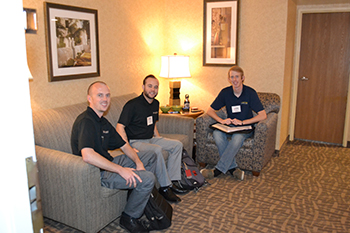
Team K&N from Loara High School in Anaheim, California, finished in third place, qualifying for the Engine Challenge Finals at the PRI Show in Indianapolis in two weeks.

Loara High School in Anaheim, California, had two teams qualify for the Hot Rodders of Tomorrow (HROT) Engine Challenge Dual Championship. Both teams finished in the top 15, and Team K&N finished in the top four. Completing their rebuilds in an average time of 23:52, Team K&N qualified for the Engine Challenge Finals, where, in less than two weeks time, they will compete against seven other teams to determine who will be crowned the 2015 Engine Challenge Champion.

During the Engine Challenge, teams comprised solely of high-school students must complete performance engine rebuilds to exact specifications, all while competing against the clock and other teams in front of live audiences. Even when teams have perfected their jobs, the pressure can cause simple mistakes that are costly in the end. The teams that hold up under pressure are the often the ones that go the distance. Such was the case for Team K&N, as their coach Anthony Boccignone explains:

“My team overcame some challenges. They kept it together when things were going wrong. That’s something I’ve always emphasized with them; things don’t always go right, so you have to be prepared for anything. When we practice at school, we have the best conditions because it’s a controlled environment, but when we’re out in an actual competition, it’s not our engine or our room. I emphasize keeping a cool head and staying focused. My second team had greater challenges. They got out of sequence. When they get out of sequence, it’s really hard to get back on track because other teammates have to do jobs they know how to do but don’t normally do. I was really pleased with my students and satisfied that they could keep their cool and help each other out when things were going wrong. I’ve been working with these guys for over a year now and getting them to communicate and keep talking to each other.”

“To me, it’s fascinating,” added Boccignone, who is in his second year as a Hot Rodders of Tomorrow coach. “The competition really draws students in. My other students who aren’t involved in the program take notice. I’m starting to get more and more of my students asking how they can be involved in the program.”

The team’s sponsor, K&N, has also seen the tremendous draw of the program and how it has grown since its inception in 2008–2009. “K&N has supported the Hot Rodders of Tomorrow program since the beginning,” stated Tim Martin, COO of K&N. “This program promotes automotive education, skills and teamwork. It also educates high-school students about vehicle customization, scholarships and various career paths. The SEMA Show is the second largest trade show in the world, with more than 150,000 attendees. Loara High School performed very well, finishing third. They now are qualified for the HROT finals at the Performance Racing Industry show—the largest racing technology show in the world. HROT provides outstanding opportunities to these students and K&N is proud to be involved.”

As Martin noted, the teams are able to attend some of the largest industry trade shows in the world. This provides students with incredible opportunities to meet companies and immerse themselves in the automotive world. The benefits of the program, including secondary school scholarships, are seemingly unending. Boccignone notes that developing teamwork and communication skills are some of the biggest assets his students gain. It also gives them a greater motivation to do well in school and have greater career possibilities.

“A lot of my students don’t know what they’re going to do in life,” Boccignone explained. “They don't have a specific direction. Then they come into auto shop and they’re like, ‘Wait a minute, There’s a career in this?’ It gets them energized and excited so that they want to learn more about it. Other kids get interested in the program and want to come into the shop and see what we’re doing.”

Team K&N has just a few practices left before competing in the Engine Challenge Finals at the PRI Show in Indianapolis, December 10–12.

“The SEMA-PRI Dual Championship format provides a platform that highlights the tremendous talent and preparation needed to excel at this level of competition,” added Zane Clark, who serves as SEMA’s director of education. “These students now understand that success does not come without hard work and commitment. The fact that they are invested in a path that leads to a future in our industry in both inspiring and reassuring.”

Thu, 12/03/2015 - 08:13

By Linda Spencer

mezsesh
The new ’16 Toyota HiLux and two other international vehicles popularly customized by enthusiasts worldwide but not sold in the United States will be available in the SEMA Garage the week of December 14.

All SEMA manufacturing members are invited to attend three international vehicle measuring sessions at the SEMA Garage the week of December 14. The three vehicles available are the ’16 Toyota HiLux double-cab 4x4, ’14 UAZ Hunter, and ’14 Mitsubishi L200 4x4 double-cab.

’16 Toyota HiLux double-cab 4x4: This is the fifth vehicle SEMA has purchased to provide members with access to hard-to-obtain vehicles that are popularly customized globally but not sold in the United States. One of the most iconic Toyota vehicles, the HiLux has sold more than 16 million units in more than 180 countries and regions since the first-generation model launched in 1968, and is now in its eighth reiteration. The just-arrived truck was built in Thailand and purchased from the United Arab Emirates (UAE). It is spec'd with a five-speed manual transmission and the 2TR-FE 2.7L petrol four-cylinder VVT-i engine.

’14 UAZ Hunter and 4x4 double-cab ’14 Mitsubishi L200: HiLux participants will also be able to measure/conduct fitness checks on a ’14 UAZ Hunter and 4x4 double-cab ’14 Mitsubishi L200. There are no fees to participate. Register now!

’17 Hyundai Elantra: Available for measuring at the SEMA Garage just weeks following its North American debut at the Los Angeles Auto Show, will be the all-new ’17 Hyundai Elantra. As one of Hyundai’s all-time best-selling models, the Elantra enters its sixth-generation, building on the momentum and success of its award-winning formula: bold aerodynamic design, all-new efficient powertrain, enhanced fuel economy, better ride quality and comprehensive safety upgrades. Register now to measure the Elantra.

An expert panel of industry manufacturers will share their insights on how measuring sessions have helped to grow their business during a three-hour program/luncheon, December 15, from 10:00 a.m–1:00 p.m. The panel will highlight the benefits of new-vehicle measuring sessions and SEMA resources for product development. Attendees will also receive a private tour of the SEMA Garage’s all-new CARB-recognized emissions lab, installation center, photography studio, meeting facility and 3D printing solutions. In addition, attendees will witness first-hand live measuring sessions as SEMA hosts three of the most-popular international vehicles, including the ’16 Toyota HiLux double-cab 4x4. Participants will be briefed on the upcoming SEMA-sponsored trip to the Middle East and other programs designed to help SEMA members grow their overseas business. A complimentary lunch will be provided.

To register, please email SEMA Education Director Zane Clark, and include the names, titles and company of all attendees.

Thu, 12/03/2015 - 08:13

By Linda Spencer

mezsesh
The new ’16 Toyota HiLux and two other international vehicles popularly customized by enthusiasts worldwide but not sold in the United States will be available in the SEMA Garage the week of December 14.

All SEMA manufacturing members are invited to attend three international vehicle measuring sessions at the SEMA Garage the week of December 14. The three vehicles available are the ’16 Toyota HiLux double-cab 4x4, ’14 UAZ Hunter, and ’14 Mitsubishi L200 4x4 double-cab.

’16 Toyota HiLux double-cab 4x4: This is the fifth vehicle SEMA has purchased to provide members with access to hard-to-obtain vehicles that are popularly customized globally but not sold in the United States. One of the most iconic Toyota vehicles, the HiLux has sold more than 16 million units in more than 180 countries and regions since the first-generation model launched in 1968, and is now in its eighth reiteration. The just-arrived truck was built in Thailand and purchased from the United Arab Emirates (UAE). It is spec'd with a five-speed manual transmission and the 2TR-FE 2.7L petrol four-cylinder VVT-i engine.

’14 UAZ Hunter and 4x4 double-cab ’14 Mitsubishi L200: HiLux participants will also be able to measure/conduct fitness checks on a ’14 UAZ Hunter and 4x4 double-cab ’14 Mitsubishi L200. There are no fees to participate. Register now!

’17 Hyundai Elantra: Available for measuring at the SEMA Garage just weeks following its North American debut at the Los Angeles Auto Show, will be the all-new ’17 Hyundai Elantra. As one of Hyundai’s all-time best-selling models, the Elantra enters its sixth-generation, building on the momentum and success of its award-winning formula: bold aerodynamic design, all-new efficient powertrain, enhanced fuel economy, better ride quality and comprehensive safety upgrades. Register now to measure the Elantra.

An expert panel of industry manufacturers will share their insights on how measuring sessions have helped to grow their business during a three-hour program/luncheon, December 15, from 10:00 a.m–1:00 p.m. The panel will highlight the benefits of new-vehicle measuring sessions and SEMA resources for product development. Attendees will also receive a private tour of the SEMA Garage’s all-new CARB-recognized emissions lab, installation center, photography studio, meeting facility and 3D printing solutions. In addition, attendees will witness first-hand live measuring sessions as SEMA hosts three of the most-popular international vehicles, including the ’16 Toyota HiLux double-cab 4x4. Participants will be briefed on the upcoming SEMA-sponsored trip to the Middle East and other programs designed to help SEMA members grow their overseas business. A complimentary lunch will be provided.

To register, please email SEMA Education Director Zane Clark, and include the names, titles and company of all attendees.

Thu, 12/03/2015 - 08:13

By Linda Spencer

mezsesh
The new ’16 Toyota HiLux and two other international vehicles popularly customized by enthusiasts worldwide but not sold in the United States will be available in the SEMA Garage the week of December 14.

All SEMA manufacturing members are invited to attend three international vehicle measuring sessions at the SEMA Garage the week of December 14. The three vehicles available are the ’16 Toyota HiLux double-cab 4x4, ’14 UAZ Hunter, and ’14 Mitsubishi L200 4x4 double-cab.

’16 Toyota HiLux double-cab 4x4: This is the fifth vehicle SEMA has purchased to provide members with access to hard-to-obtain vehicles that are popularly customized globally but not sold in the United States. One of the most iconic Toyota vehicles, the HiLux has sold more than 16 million units in more than 180 countries and regions since the first-generation model launched in 1968, and is now in its eighth reiteration. The just-arrived truck was built in Thailand and purchased from the United Arab Emirates (UAE). It is spec'd with a five-speed manual transmission and the 2TR-FE 2.7L petrol four-cylinder VVT-i engine.

’14 UAZ Hunter and 4x4 double-cab ’14 Mitsubishi L200: HiLux participants will also be able to measure/conduct fitness checks on a ’14 UAZ Hunter and 4x4 double-cab ’14 Mitsubishi L200. There are no fees to participate. Register now!

’17 Hyundai Elantra: Available for measuring at the SEMA Garage just weeks following its North American debut at the Los Angeles Auto Show, will be the all-new ’17 Hyundai Elantra. As one of Hyundai’s all-time best-selling models, the Elantra enters its sixth-generation, building on the momentum and success of its award-winning formula: bold aerodynamic design, all-new efficient powertrain, enhanced fuel economy, better ride quality and comprehensive safety upgrades. Register now to measure the Elantra.

An expert panel of industry manufacturers will share their insights on how measuring sessions have helped to grow their business during a three-hour program/luncheon, December 15, from 10:00 a.m–1:00 p.m. The panel will highlight the benefits of new-vehicle measuring sessions and SEMA resources for product development. Attendees will also receive a private tour of the SEMA Garage’s all-new CARB-recognized emissions lab, installation center, photography studio, meeting facility and 3D printing solutions. In addition, attendees will witness first-hand live measuring sessions as SEMA hosts three of the most-popular international vehicles, including the ’16 Toyota HiLux double-cab 4x4. Participants will be briefed on the upcoming SEMA-sponsored trip to the Middle East and other programs designed to help SEMA members grow their overseas business. A complimentary lunch will be provided.

To register, please email SEMA Education Director Zane Clark, and include the names, titles and company of all attendees.

Thu, 12/03/2015 - 07:22

By Linda Spencer

mideast
Each company is provided a turnkey booth at a local specialty-equipment show. “The SEMA Middle East Business Development Program was a perfect opportunity for us as a new entrant to the Middle Eastern market,” said Michael Sampson (left), director of operations and foreign sales for Rock-Slide Engineering. “Attending the SEMA Middle East Business Development Program allowed us to find our first cus­tomers and begin what should be a long and profitable relation­ship in the Middle East for Rock-Slide Engineering.”
mideast
Visiting speed and off-road shops is on the SEMA Middle East Business Development Program schedule.

Join SEMA for the 5th annual Middle East Business Development Program in Abu Dhabi, United Arab Emirates (UAE), March 29–April 2, 2016.

What is included:

  • A turnkey booth at the Custom Show Emirates—the largest specialty-equipment show in the Middle East.
  • A hands-on workshop with vehicles popularly customized throughout the Middle East but not sold in the United States.
  • Hotel accommodations and all meals.
  • Tours of local speed and off-road shops.
  • A briefing with U.S. Government officials and seasoned exporters on the “do’s and don’ts of setting up successful distribution in the region.”
  • Pre-trip support and a pre-trip briefing on what to bring and what to expect.

What your peers are saying about the SEMA Middle East trip:

“This was our fourth year participating in the SEMA Middle East event, and the results surpassed our expectations once again. SEMA’s contribution to our success is crucial, and these trips are undeniably beneficial for us. The fact that we are provided with the chance to meet a group of hand-selected, prequalified buyers is priceless, and we very much appreciate the opportunity to be a part of this effort of bringing companies and markets together for the greater good of the industry.”

—Josh Abbott, international sales manager for Borla Performance Industries

“The buyers that SEMA vetted for our Abu Dhabi meetings were top-tier businesses that really knew the racing and performance market, which is a lot like ours in the United States. What’s really great about doing these types of shows in a foreign country with SEMA is that you don’t have to have any anxiety about finding new businesses, the hotel, the food, your booth or transportation. They have worked through all the details and timetables, and you can really concentrate on learning the nuances of the culture and that particular automotive market. You can focus on your business and getting things accomplished.”

—Karl Dedolph, director of international sales for Champion Oil

“The SEMA Middle East trip was an eye-opening experience. This trip can open new doors to distributors you never knew existed. It can give you first-hand visibility of the consumer market and see the vehicles in action. It can also give you the confidence you need to export into a part of the world that you may not have thought you could reach.”

—Kathryn Reinhardt, marketing manager for MagnaFlow

“SEMA’s diligent efforts to vet and qualify buyers in the region have made the SEMA Middle East Business Development Conference one of the most lucrative SEMA events in terms of return on investment. When we visited the Middle East with SEMA last year, it opened our eyes to what the real potential of this market could be. Since we began visiting the region with SEMA, we have picked up more than 20 new customers who are doing significant sales volume, most of which represent new business.”

—Daniel Dolan, sales and marketing manager, Diablosport Inc.

For more information on how to exhibit, visit the SEMA website or contact Linda Spencer. For a recap of last year’s event, read the SEMA News article or view video highlights of the 2015 and 2014 events.

Register now!

Thu, 12/03/2015 - 07:22

By Linda Spencer

mideast
Each company is provided a turnkey booth at a local specialty-equipment show. “The SEMA Middle East Business Development Program was a perfect opportunity for us as a new entrant to the Middle Eastern market,” said Michael Sampson (left), director of operations and foreign sales for Rock-Slide Engineering. “Attending the SEMA Middle East Business Development Program allowed us to find our first cus­tomers and begin what should be a long and profitable relation­ship in the Middle East for Rock-Slide Engineering.”
mideast
Visiting speed and off-road shops is on the SEMA Middle East Business Development Program schedule.

Join SEMA for the 5th annual Middle East Business Development Program in Abu Dhabi, United Arab Emirates (UAE), March 29–April 2, 2016.

What is included:

  • A turnkey booth at the Custom Show Emirates—the largest specialty-equipment show in the Middle East.
  • A hands-on workshop with vehicles popularly customized throughout the Middle East but not sold in the United States.
  • Hotel accommodations and all meals.
  • Tours of local speed and off-road shops.
  • A briefing with U.S. Government officials and seasoned exporters on the “do’s and don’ts of setting up successful distribution in the region.”
  • Pre-trip support and a pre-trip briefing on what to bring and what to expect.

What your peers are saying about the SEMA Middle East trip:

“This was our fourth year participating in the SEMA Middle East event, and the results surpassed our expectations once again. SEMA’s contribution to our success is crucial, and these trips are undeniably beneficial for us. The fact that we are provided with the chance to meet a group of hand-selected, prequalified buyers is priceless, and we very much appreciate the opportunity to be a part of this effort of bringing companies and markets together for the greater good of the industry.”

—Josh Abbott, international sales manager for Borla Performance Industries

“The buyers that SEMA vetted for our Abu Dhabi meetings were top-tier businesses that really knew the racing and performance market, which is a lot like ours in the United States. What’s really great about doing these types of shows in a foreign country with SEMA is that you don’t have to have any anxiety about finding new businesses, the hotel, the food, your booth or transportation. They have worked through all the details and timetables, and you can really concentrate on learning the nuances of the culture and that particular automotive market. You can focus on your business and getting things accomplished.”

—Karl Dedolph, director of international sales for Champion Oil

“The SEMA Middle East trip was an eye-opening experience. This trip can open new doors to distributors you never knew existed. It can give you first-hand visibility of the consumer market and see the vehicles in action. It can also give you the confidence you need to export into a part of the world that you may not have thought you could reach.”

—Kathryn Reinhardt, marketing manager for MagnaFlow

“SEMA’s diligent efforts to vet and qualify buyers in the region have made the SEMA Middle East Business Development Conference one of the most lucrative SEMA events in terms of return on investment. When we visited the Middle East with SEMA last year, it opened our eyes to what the real potential of this market could be. Since we began visiting the region with SEMA, we have picked up more than 20 new customers who are doing significant sales volume, most of which represent new business.”

—Daniel Dolan, sales and marketing manager, Diablosport Inc.

For more information on how to exhibit, visit the SEMA website or contact Linda Spencer. For a recap of last year’s event, read the SEMA News article or view video highlights of the 2015 and 2014 events.

Register now!

Wed, 12/02/2015 - 12:13

By SEMA Editors

toolbox
Shell will give away a toolbox signed by industry luminaries, including Craig Breedlove, Joey Logano and John Hennessey.

Shell Lubricants is giving away a Craftsman toolbox signed by major celebrities who appeared on the Shell Live Stage Experience at the 2015 SEMA Show, including Craig Breedlove, Joey Logano, John Hennessey and more.

To enter for a chance to win the toolbox, click on the link from the posts displayed on the Pennzoil, Quaker State or SEMA Show Facebook or Twitter pages between December 7–19 and leave a product review on your favorite Pennzoil or Quaker State motor-oil product. Be sure to check the box located in the review form to enter for your chance to win.

No purchase necessary. United States participants only. Must be at least 18 years old. Sweepstakes end December 18, 2015, at 11:59 p.m. (CST). See electronic entry form for full terms and conditions.


Wed, 12/02/2015 - 12:13

By SEMA Editors

toolbox
Shell will give away a toolbox signed by industry luminaries, including Craig Breedlove, Joey Logano and John Hennessey.

Shell Lubricants is giving away a Craftsman toolbox signed by major celebrities who appeared on the Shell Live Stage Experience at the 2015 SEMA Show, including Craig Breedlove, Joey Logano, John Hennessey and more.

To enter for a chance to win the toolbox, click on the link from the posts displayed on the Pennzoil, Quaker State or SEMA Show Facebook or Twitter pages between December 7–19 and leave a product review on your favorite Pennzoil or Quaker State motor-oil product. Be sure to check the box located in the review form to enter for your chance to win.

No purchase necessary. United States participants only. Must be at least 18 years old. Sweepstakes end December 18, 2015, at 11:59 p.m. (CST). See electronic entry form for full terms and conditions.


Tue, 12/01/2015 - 12:03

SEMA News—December 2015

BUSINESS

By Steve Campbell

Private Labeling

Making the Most of Manufacturing Capacity

Private Labeling
Private labeling may allow companies to help forge the reputation of a market segment through the production of quality commodities.

Photo courtesy of Hellwig Products.

Efficiency is paramount to manufacturing companies. Exploiting the full capacity of available tooling and resources maximizes bottom-line profits. For some companies, peak efficiency is derived from adding a private-labeling operation to their product offerings.

In the automotive specialty-equipment market, as in other industries, products manufactured by one company and then sold to and offered under another company’s brand are known as private-label goods. In the grocery industry, for instance, a food producer may process, package and label a given product for sale under a chain store’s own label. The store’s private-label brand then becomes known as a commodity unto itself.

“Private labeling gives entrepreneurs who don’t have the capital to purchase machinery, technology and engineering the ability to use an established manufacturer to supply products,” said Anthony Thompson, president of Nutek Wheels. “That enables the customer company to focus more on branding and marketing to grow its business. We currently have seven private-label accounts. Many of them sell directly to the public, some wholesale, and many sell through the Internet.”

Private labeling helps manufacturers increase production volume and takes advantage of excess capacity. It allows a manufacturer to use its expertise to quickly develop quality products similar to its own line for other businesses. TMI Products is an example of a company that uses its extensive experience making world-class automotive interiors and related products for third-party customers.

“The advantages of high-quality products without the infrastructure investment are very attractive to the companies we build private-label products for,” said Dean Satterfield, general manager of TMI Products. “It is like having your own factory without having to build it. That allows a company to build and market its brand or product rather than focus on operational issues related to making the product. We are good at what we do, so they don’t have to be. TMI also takes advantage of this same philosophy when we need something to market that we do not make ourselves.”

Private Labeling
Private labeling helps manufacturers increase production volume and takes advantage of excess capacity. It allows a manufacturer to use its expertise to quickly develop quality products similar to its own line for other businesses.

Photo courtesy of TMI Products.

Melanie White, vice president of Hellwig Products Co. Inc., said that private labeling also allows companies to be more in control of the reputation of a product line within a market segment, helping to set the stage for standards. If the parent company devotes itself to developing quality products—both for itself and for its private-label partners—it can enhance the entire marketplace. Private labeling, therefore, requires due diligence for both the supplier and the buyer.

Mark Turner, CEO of Daystar Products International, said that a good first step toward developing a private-label operation is to look at the companies you do business with currently.

“Make sure the products fit in your current offering and have the quality you are looking for,” he said. “There are very few products that are original, and if someone wants to sell the product, you can’t keep them from doing it. Embrace the fact that another company feels so strongly about your product that they want to sell it. It’s best to make the sale even if it’s under a private-label program.”

Satterfield noted that his company still sometimes turns down opportunities because they would not be a good fit with TMI’s products or processes.

“There are some companies that cannot produce the private-label product for you in a reliable way,” he said. “And, unfortunately, there is also the potential of an unscrupulous person taking your product and then selling out the back door to your own customers. The main point is to be wise and do your homework.”

Satterfield said that private-label pricing also requires some research and calculations, including the cost of engineering, development, materials and labor.

“TMI provides 100% of the materials for some of our private-label customers, but it may be a mix of customer-supplied materials and components and some items supplied by TMI for others,” he said. “We even make products only up to a point and then ship to the partner company to complete the product.”

Todd Payne, director of international sales and co-manufacturing for MagnaFlow, said that his company begins each private-label project by providing a budgetary estimate to its partner, with the estimate based on R&D time, materials costs, annual consumption, part number life expectancy and production intricacy.

Thompson said that volume also comes into the pricing equation for Nutek’s private-labeling operations.

“We have different tiers determined by how much of our capacity they take up,” he said. “That includes everything from the forgings and hardware to finishing and shipping. We have contracts that hold both parties accountable, ensuring that we meet our lead-time commitment and they are able to make their sales commitment.”

Packaging and labeling may also add to costs and depend on the customer’s preference and capabilities.

“Having a private-label product come in ready to sell is a big plus,” Satterfield said, “but that complete solution is more costly. We package, label and ship hundreds of items every day, many of which are private labeled, so the expertise is there for a turnkey solution. However, we also provide bulk packing and shipping of finished products and components to transport to
other assembly facilities or the brand company facility.”

On the other hand, Nutek does all the packaging and labeling for its private-label operations.

“The private-label customer just provides a template to us,” he explained. “Some of our private-label accounts come and pick up their products, but we also ship directly to some of our private-label accounts’ customers. We have different UPS and FedEx accounts based on our different private-label contracts. We use their account numbers and label printouts that show their business and their customer.”

Private Labeling
Private-labeler customers should spend time at the manufacturing site to see what actually goes into the production process, including materials, engineering and labor.

Photo courtesy of Hellwig Products.

There are also differences in the way various companies handle private-label marketing. White said that Hellwig’s private-label partners handle their own branding and marketing. Satterfield said that TMI can and does market some private-label products, but most do their own marketing.

“TMI remains invisible to their customers in this relationship, although we stand behind the products we make, whether under our brand name or the customer’s,” he said. “Sometimes changes are made to distinguish a brand-name product from the identical private-label product, although each is made with the exact same materials and processes. Brand-name tags or package labeling can be added to maintain
brand identity.”

Distribution of private-label products is, for the most part, unfettered. Most manufacturers consider such products as unique and wholly owned by the contracting company. In addition, Payne said that MagnaFlow’s private-label parts are available for purchase only by the customer who initiated the development of the product, and that customer is therefore empowered to sell or redistribute that product to whomever it chooses and at the price it chooses.

Thompson said that Nutek’s private-label partners also maintain the engineering rights to all of their drawings, even though his company’s personnel did the actual development.

“Some of them may give us no more than a sketch on a piece of paper and say they want a wheel that looks like the sketch, and we will have our engineers come up with several iterations to develop a final product,” he said. “We also do complete testing so that the final product meets our quality standards. But at the end of the process, it’s their product. The most important thing is that there are quality multi-piece wheels available to end consumers. In too many private-label companies, there is not enough emphasis on safety and engineering.”

One problem with supplying that type of service is that some private-label customers simply don’t understand what goes into manufacturing a product.

“A customer may have an idea of how they’d like a wheel to look but not realize how much engineering or machining goes into it,” Thompson said. “In some cases, a design simply cannot be made into an actual wheel. I would advise private labelers to spend time at the manufacturing site to see what actually goes into producing the product. They should meet the engineering team and the design team and understand how much back-and-fourth there is, how much strength testing and fatigue testing there is, so that they really understand the manufacturing process.”

Private Labeling
Most manufacturers package, label and ship their private-label products, while some customers prefer to pick up their product runs and perform those functions themselves. Private-label manufacturing and distribution can be a win-win for the name-brand factory, the distributor, the private-label brand and the consumer.

Photo courtesy of TMI Products.

Satterfield said that some of TMI’s private-label products are restricted by minimum advertised pricing policies because a premium name brand cannot afford to have identical product selling for significantly less.

“We know a dealer who sells identical products for two different prices,” he said. “One is the name brand, which uses the product logo and has an advertising co-op allowance, and the other is a ‘replacement no-name brand’ for 15% less. They have huge sales for both brands.”

Payne said that MagnaFlow generally has very few issues with its private-label business competing with the standard MagnaFlow production offerings. In fact, MagnaFlow has shifted away from a traditional private-label framework to a co-manufacturing structure in order to protect the parent brand.

“If we build a product now, our brand is represented somewhere on it,” Payne said. “The vast majority of our partners understand the value and quality that our brand stands for, and that actually appeals to them strongly when it comes to seeking a manufacturing partner for their project. Our co-manufacturing philosophy invites our partners to approach us for unique products that are significantly different from what they already have access to from our catalog. Projects may be driven by aesthetics, application coverage, performance, unique fitment requirements or a myriad of other inputs as well as a mixture of several of them.”

Satterfield said that a consistent marketing presence is key to protecting the parent brand from being cannibalized by a private-label product.

“Recognition and trust of the parent brand must continue to be built upon, otherwise brand confusion and customer apathy may set in,” he said. “Running parallel name-brand and private-label products is a strong strategy to serve the buyer of the higher-priced reputation brand and the lower-priced value buyer. Both need and want the same product but are motivated by different values or budgets.”

He cited Seiko watches as a prime example. The company builds excellent quality watches in a higher price range while also producing internal movements for many other watch companies, including some high-volume/low-price brands.

“Buying a non-Seiko brand with the quality of a Seiko inside builds enormous sales volume,” he said. “The Seiko brand is well established and respected, yet much of Seiko’s volume comes from the millions of internals they sell as private-label components.”

While there are obvious benefits to private labeling for companies that have access to untapped manufacturing capacity, there are also pitfalls to be avoided. One is focusing so much attention on the private-labeling enterprise that the parent brand begins to suffer.

“Unless the intent is to become solely a supplier to other brands, you should be careful to protect your own name and not dilute company capabilities and brand value by selling all your capacity and good will to your customers,” Satterfield said. “Brand-name value can have strong bottom-line contribution and return on investment, but some companies may actually find that the role of behind-the-scenes support manufacturer suits them well and supports strong financials.”

In the end, he said, private-label manufacturing and distribution can be a win-win for all concerned, including the name-brand factory, the distributor, the private-label brand and the consumer, serving all customer wants, needs and desires.

Tue, 12/01/2015 - 11:33

SEMA News—December 2015

BUSINESS

By Steve Campbell

Trends for 2016

A Look to the Future With SEMA Council Leaders

SEMA News annually canvasses the leaders of the association’s councils and networks for the December issue to seek their views about how the industry is shaping up for the coming year. The chairs of each group provide responses based on what their organizations and their companies are seeing within their marketplaces. Their responses provide helpful insights for businesses in every segment of the marketplace.

Automotive Restoration Market Organization

Chair: Dennis Roberts, Distinctive Industries

Dennis Roberts

In the last decade or so, members of the Automotive Restoration Market Organization have downsized the resources used to enter product in their marketing vehicles of choice, be they catalogs or electronic means. This downsizing has become a problem for manufacturers and results in new challenges when it comes to getting new product to market. With few resources and an endless stream of restoration, performance, custom and new products in general, the retailer is stymied. The overhead for a full staff for new-product development, catalog production, website product entry and social media is hard to support and justify in this day of doing more with less.

There is a new focus from the manufacturers and third-party vendors to help make this daunting task easier. Product load sheets developed by these sources have become a very sophisticated and efficient source of marketing data. For the most part, detailed descriptions, specifications, dimensions, images, installation instructions, etc., are linked to these load sheets.

Retailers can personalize and map this product to their system, catalog or website in a fraction of the time traditionally spent researching and manually entering every line. This could bridge the resource gap!

The mainstream business world long ago adopted the above-mentioned practices, but the niche aftermarket seems to be unaware of these benefits. Being nimble in today’s world is essential.

Emerging Trends and Technology Network

Chair: Regis Finn, Thyssen-Krupp Bilstein of America

Regis Finn

Automotive technology is rapidly changing. Pending 54.5-mpg Corporate Average Fuel Economy rules, autonomous driving, stricter emissions standards and vehicle connectivity are driving the changes. In addition, the 2016 elections will weigh heavily on the economy, as will expected interest-rate increases and worldwide instability.

We expect to see continuing consolidation on both the manufacturing and retail/warehouse-distributor sides of the market, but the biggest challenges remain hiring the right people and retaining the good ones you already have. As the available employee pool shrinks, companies are starting to target employees of other companies. Retaining your good employees will put increased pressure on your labor expenses as you compete to keep them.

With the importance of the Internet and extremely competitive market conditions, I feel that providing top-notch customer service and technical support are among the few ways that you can gain an advantage over your competition.

The Emerging Trends & Technology Network (ETTN) is here to help its members better understand and prepare for the coming changes. We will be working closely with SEMA Garage and SEMA Vehicle Technology Vice President John Waraniak’s vehicle technology programs.

The best thing you can do to stay abreast is become a member of the ETTN. Membership is free to any SEMA member. Please visit www.sema.org/ettn to join today!

Hot Rod Industry Alliance

John McLeod

Chair: John McLeod, Classic Instruments

Building or rebuilding hot rods, trucks and musclecars is clearly a growing trend. Folks are back in their garages and working on their toys. Young builders seem to be concentrating on trucks, as they are a little cheaper to buy, a little easier to work on and have better parts availability. We need to continue to focus on the upcoming generation. We are in great hands, but we must make sure that we stay focused and pay attention to them.

Change continues to happen in electronic marketing. While some segments may stay with traditional marketing and print media, you have to have your head under a rock if you do not see the electronic media blitz that is going on. From having a webpage and a Facebook presence to all online marketing, the change is clearly coming at us at a fast pace.

The most significant opportunities come from the basics: Treat your customers like you want to be treated. But we need to get more companies involved—and I mean really involved—with the Hot Rod Industry Alliance, not just joining and never doing anything with it. The volunteers and the select committee are here for you and your challenges, but we need more people to help, to get involved, to vote on issues and bring their questions to us. SEMA gives us the resources to do almost anything, and it always amazes me how few use them.

Truck and Off-Road Alliance

Lee McGuire

Lee McGuire, Superlift Suspension

Consumers are now really turning to the Internet for research and to purchase aftermarket parts. Consumers in our industry were later to adopt this practice because of the complexity of our products, but they are now embracing online convenience even to purchase items such as full lift kits. A website that is responsive to mobile devices is increasingly important, as more than half the consumers now search from their mobile devices.

E-commerce and a strong voice on social media are becoming so important for manufacturers building a community and for retailers developing a loyal customer base. If you don’t have a social-media presence, you are missing out on so much potential conversation about your brand or business. It is becoming increasingly important for our membership to make sure that they engage in social media in whatever capacity they can. With the growth of social media, it is no longer just word of mouth. It has become “world of mouth.”

The light-truck market has seen some recovery, and certainly some of our membership is reaping the rewards of that. Some members have reported stronger sales, but some product categories remain a bit soft. The most significant opportunities lie in finding unserved or underserved product areas and segments and having a product available to meet the needs of that consumer. The TORA select committee tries to identify areas that are relevant for our members and, with SEMA’s help, start the conversation so that we know what opportunities are out there.

Motorsports Parts Manufacturers Council

Rich Barsamian

Rich Barsamian, Advanced Clutch Technology

Industry consolidation is one of the most significant trends for members of the Motorsports Parts Manufacturers Council (MPMC). Historical data shows that the automotive aftermarket experiences a softness in most presidential election years, so we expect a flat to slightly declining market in 2016.

There are always lots of changes and movement taking place in the marketing realm, but the prevailing trend is an over-saturation of niche marketing options and channels, both in print and in electronic media. It has become overwhelming for those without sophisticated marketing efforts.

The biggest challenges are fighting for the next generation of customers and fighting to remain relevant in a marketplace that is crowded with options for entertainment, hobbies and ways to spend disposable income, but bolt-on street-performance products provide opportunities. The easier they are to install, the better the potential sales.

Product, vehicle and market data are becoming increasingly important. The hardcore motorsports market continues to sag due to cost and legislative pressures as well as changing consumer behavior. The aftermarket media is in a phase of heavy transition, and the MPMC’s Media Trade Conference must also evolve with the market changes.

Manufacturers’ Representative Network

Vic Bennett

Chair-Elect: Vic Bennett, Gantt-Thomas & Associates Inc.

Vendor consolidation is a significant concern in business today. Vendor consolidation occurs when one manufacturer acquires another. In some cases, this can benefit your company, but unfortunately, it can have a negative impact in other cases because you end up loosing the opportunity to represent that line, which translates into loss of income.

Opportunities are found in developing new customers. New customers are the lifeblood of all businesses.

In my opinion, communication is very important with both our customers and our manufacturers. Conference calls are increasing in popularity and are becoming a daily occurrence, as are video conferencing and, of course, we have the everyday phone calls, e-mails and, my favorite, face-to-face meetings.

Partnering with our customers and manufacturers with their social-media efforts adds to the relationship. What agency reps contribute is feedback about what we see and hear on the streets. This information helps the customer and/or manufacturer understand the voice of the consumer.

New-vehicle applications are highly anticipated every year. Manufacturers and customers race to be first to market with new applications and products to fit these new vehicles. New-vehicles applications are key to business.

Professional Restylers Organization

Scott Wolin

Scott C. Wolin, Chicago Parts & Sound

Vehicle connectivity and infotainment are exciting new trends that bring complexity on many levels. During our recent long-range planning meetings in Detroit, we created a new taskforce called Smart-Connected, which will focus on new-vehicle technologies and autonomous driving. It will also facilitate forward thinking in the council’s approach and support of our Professional Restylers Organization (PRO) manufacturers, restylers and distributors. PRO manufacturers are accomplishing goals by working closely with the SEMA OEM-relations team, SEMA Garage and SEMA’s staff specialized in vehicle technology.

There is an urgent need for creating new ways to find, attract and retain young, fresh talent to help us grow our businesses in the short and long term, especially in the technology area. Marketing in our industry is changing dramatically with the enormous impact of social media. Most forward-thinking companies are developing a presence on Facebook, Instagram and Twitter to market and promote products and to communicate with their customers. Each business has unique needs and should carefully research their business opportunities and then adjust their marketing to take full advantage.

I am proud of the work we do at PRO and of the valuable resources we have created for our members. We are working on other important initiatives such as the PRO Seating Certificate Program, Sales Training Certificate, and engaging with NADA on educational programs. If you are not yet a PRO member, please consider joining us. Your membership will directly support our industry and help us move forward. Just visit www.SEMA.org/pro and click on “Join This Council.”

SEMA Businesswomen’s Network

Erin Gilhuly

Chair: Erin Gilhuly, Toyota Motor Sales

Manufacturers and retailers must embrace the idea they do not have their brand reputations entirely in their own hands. Who hasn’t read a consumer review before buying something online, particularly the one-star reviews? Consumers are more savvy and educated about the products they want and need.

I believe that one of the biggest opportunities for the industry will be finding ways to tap into the ever-expanding market for alternative-fuel vehicles. The OEMs are under pressure to raise mileage ratings, and alternative-fuel vehicles will be a key part of that strategy. I can foresee a shortage of qualified technicians and mechanics to fix and maintain alternative-fuel vehicles, which could provide a great advantage for young people coming into the industry with those skills.

Specifically for the SBN, we are seeing more and more women entering niches in the industry that have been traditionally dominated by men. Women racers, engineers, mechanics and builders are becoming more commonplace. They are not only entering these fields, but their expertise and knowledge also have them on par—or in some cases above—their male counterparts. They are being recognized and acknowledged as leaders. The goal of the SBN will continue to be to bring recognition to these amazing women and encourage more young women to enter our industry.

Wheel & Tire Council

Joe Findeis

Chair: Joe Findeis, www.PlusSizingGuide.com

With plenty of exposure from “The Fast and Furious” movies and online enthusiast forums, the “flush fitment” segment of the wheel/tire industry has expanded throughout the country and continues to grow each year. Wider rims combined with lower offsets are used to create the desired stance.

Car dealers are again dressing up their inventories of vehicles, which is always a good sign. Aftermarket wheel sales appear to be on the rise. In spite of the somewhat sluggish economy, people will buy the things they want, not just what they need.

People love Jeeps and love to improve their off-road capability and appearance with wheels and tires. Trucks—whether two-wheel drive, four-wheel drive, lifted, leveled, modified or stock—continue to be extremely popular for accessorization, especially with an aftermarket wheel-and-tire package. Silver, gray and black in a variety of flat, gloss and hyper finishes are still the most popular, but colors such as reds, golds, yellows, greens, blues and others are being sought by wheel buyers who are looking to stand out from the crowd.

Traditional print media will most likely continue to decline as consumer behavior changes. Online marketing techniques should provide mobile-friendly content in websites, blogs, videos, buying guides and product information in order to inform and educate consumers. Popular forms of social media such as Twitter, Facebook, YouTube, Google+ and others are being used to build loyal customer followings and gain referrals.

Competent installation partners are required for online tire and wheel sellers that need a physical location for drop shipping and installation. While the installer will not get the initial sale, they gain new customers for future profitable services such as brakes and alignments that the online seller is not capable of providing.

Young Executives Network

John Rosanbalm

Chair: John Rosanbalm, Conklin Company Inc.

Maintaining differentiation in the market is as key as it’s ever been, and it’s as tough as it’s ever been in a market gravitating toward competing on price points. We have found that investing internally is helping us to regularize the business we get. Improving internal operations and procedures is setting us up better for growth and to improve customer service at the existing levels of business.

Although we have new products in the pipeline, they will primarily be to maintain existing market share for customers with newer vehicles who need a newer oil specification. Regardless, we have recently picked up an additional 80,000-sq.-ft. building, allowing us to build up more inventory depth for the spring of 2016. We have seen steady growth over the last few years, and we see that continuing. We also see the continuation of companies being purchased by others, either by competitors or by companies looking to diversify.

We are concerned about government and industry regulations that are in the pipeline and the consumer-education issues that these regulations cause. Motor-oil misapplication is also a concern as cars get smaller engines, smaller oil capacities, more strain on the oil via needing to cool turbos, lower viscosities to also improve fuel efficiency, and new specifications and weights of oils for consumers to pick from. Further regulations will lead to other reformulations in 2016, and that isn’t a trend that has slowed in recent years.

I positively view new product niches and the new company startups I see entering the automotive aftermarket. This influx is key to the future growth of the industry.