Tue, 06/06/2023 - 13:51

By the SEMA D.C. Office

The National Highway Traffic Safety Administration (NHTSA) has issued a proposed rule to require automatic emergency braking (AEB) and pedestrian AEB systems on new passenger cars and light trucks weighing up to 10,000 lbs. Once finalized, the rule would be phased in over three years, with an additional year for small-volume manufacturers, final-stage manufacturers and alterers to comply.  

Recognizing its potential to help save lives and reduce injuries, most automakers voluntarily agreed in 2016 to begin installing AEB systems. About 95% of all model-year '23 light-duty cars and trucks have such equipment. The systems use sensors and software to identify dangers and apply brakes if the driver hasn't responded quickly enough or with sufficient braking force.

NHTSA added AEB systems to its five-star New Car Assessment Program (NCAP) starting in model-year '18. The agency is now considering including pedestrian protection in the consumer information program. Under the 2021 Infrastructure Investment and Jobs Act, Congress directed NHTSA to pursue a safety standard for AEB and pedestrian detection. NHTSA's proposed rule would require a vehicle traveling as fast as 62 miles an hour to stop to avoid colliding with a vehicle or pedestrian. Testing conditions would include daylight and darkness with both lower beam and upper beam headlamps activated.

SEMA is reviewing the rule to understand its potential impact on the industry. Comments will be due 60 days after publication in the Federal Register. For more information, contact Eric Snyder at erics@sema.org.

Tue, 06/06/2023 - 13:51

By the SEMA D.C. Office

The National Highway Traffic Safety Administration (NHTSA) has issued a proposed rule to require automatic emergency braking (AEB) and pedestrian AEB systems on new passenger cars and light trucks weighing up to 10,000 lbs. Once finalized, the rule would be phased in over three years, with an additional year for small-volume manufacturers, final-stage manufacturers and alterers to comply.  

Recognizing its potential to help save lives and reduce injuries, most automakers voluntarily agreed in 2016 to begin installing AEB systems. About 95% of all model-year '23 light-duty cars and trucks have such equipment. The systems use sensors and software to identify dangers and apply brakes if the driver hasn't responded quickly enough or with sufficient braking force.

NHTSA added AEB systems to its five-star New Car Assessment Program (NCAP) starting in model-year '18. The agency is now considering including pedestrian protection in the consumer information program. Under the 2021 Infrastructure Investment and Jobs Act, Congress directed NHTSA to pursue a safety standard for AEB and pedestrian detection. NHTSA's proposed rule would require a vehicle traveling as fast as 62 miles an hour to stop to avoid colliding with a vehicle or pedestrian. Testing conditions would include daylight and darkness with both lower beam and upper beam headlamps activated.

SEMA is reviewing the rule to understand its potential impact on the industry. Comments will be due 60 days after publication in the Federal Register. For more information, contact Eric Snyder at erics@sema.org.

Tue, 06/06/2023 - 13:38

By Ashley Reyes

SEMA members are invited to a liveMarket webinar on Wednesday, June 21, at 11:00 a.m. PDT to connect with the SEMA Market Research team and discuss the "2023 SEMA Market Report." The latest annual study, available for download Thursday, June 15, will give members an in-depth look at market changes from the past year and help them identify the greatest business opportunities in various aftermarket segments.

During the webinar, attendees will be able to ask questions as they learn about the report's critical findings, like how much consumers spent on parts in 2022, how they used the vehicles they modified, how economic and industry factors are affecting the market, new data on market sizing, changes in the vehicle population and relevant trends.

Register for the webinar here and download the report when it becomes available Thursday, June 15, at sema.org/research.

Tue, 06/06/2023 - 13:06

By Ashley Reyes

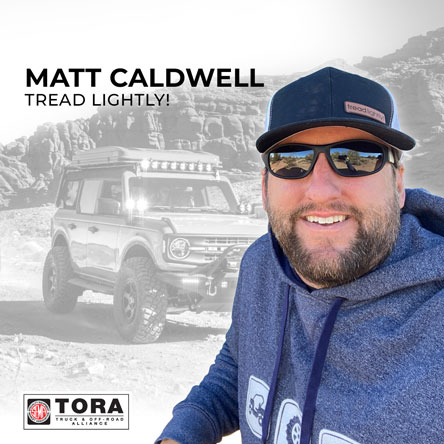
The SEMA Truck & Off-Road Alliance (TORA) has namedMatt Matt Caldwell as the council's newest spotlight volunteer. Caldwell is the executive director of Tread Lightly!, a non-profit organization that promotes the responsible use of motorized vehicles when recreating outdoors. Get to know Caldwell in his interview with SEMA News below. 

SEMA News: What inspired you to pursue a career in the truck and off-road industry? 

Matt Caldwell: A passion to see so many of the great places that our country has to offer. 

SN: Why did you decide to volunteer for TORA?  

MC: The need to continue to expand the need for the off-road community to "do your part" to protect the adventures that we are able to have on public lands. With TORA wanting to focus on that, it was a natural fit. 

SN: What advice do you have for someone pursuing a career in the automotive aftermarket? 

MC: Use every day as a learning experience. I'm always amazed at how the things, small and large, that I've learned throughout my career continue to benefit me in my current role. 

SN: What is your dream truck or off-road vehicle? 

MC: Bronco Raptor. I'd love to say you'd find me off-roading in the desert, but most likely, you'd find me out doing a trail project somewhere. 

Fill out a TORA-member spotlight form to highlight how you or your company are contributing to the truck and off-road specialty-equipment industry. Selected candidates are eligible to be featured on TORA's social media, SEMA News and future TORA member updates.

Tue, 06/06/2023 - 12:09

By SEMA Editors

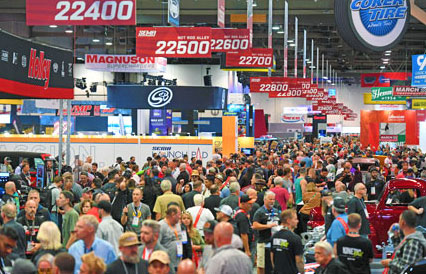
Registration for the 2023 SEMA Show, October 31-November 3 in Las Vegas, is nowSEMA Show open at SEMAShow.com/register, and there's no better time than the present for attendees to start planning their custom SEMA Show experience.

For those that still need to, maximize your savings and register at SEMAShow.com/register by June 30 for just $40. Registration is $60 through September 29 and $120 after that date. Early registration ensures that attendees receive their badges in the mail prior to the Show.

Below are some ways attendees can maximize their 2023 SEMA Show experience:

  • Check out the floorplan at SEMAShow.com/floorplan and discover new and returning features, including:
    • The New Products Showcase is now in the North Hall, where attendees can see innovation and a vision of the future on full display. The North Hall also features the Battle of the Builders and the Art Walk, where attendees can immerse themselves in the lifestyle of automotive car culture; first-time and featured exhibitors; plus expanded Business Services and Mobile Electronics & Technology areas.
    • The evolution of electric vehicles (EV) and the future of propulsion will be on display in the EV & Future Propulsion showcase in Central Hall, which also features the Racing and PerformanceHot Rod Alley and the Restoration Marketplace.
    • SEMA Central will remain in the Grand Lobby with new content and networking opportunities available for all automotive professionals. 
    • The world-class SEMA Show Education program and learning areas will be showcased throughout the Las Vegas Convention Center, including the SEMA Collision Repair Stage in the Upper South Hall. Stay tuned for the complete schedule in the coming weeks.
    • The world's largest collection of collision repair and refinish products and tools and equipment will be displayed in the Upper South Hall.
    • The Global Tire Expo, Powered by TIA, will fill the Lower South Hall alongside Wheels & Wheel Accessories.
    • Buyer lounges, networking areas, outdoor exhibits and soon-to-be-announced Show features and activations will be located across the campus.
    • The future of trucks, SUVs and off-road, restyling and car care services, and powersports and utility vehicles will be the hallmarks of West Hall.
  • Book your favorite hotel at the guaranteed lowest rate in Las Vegas through SEMA's only official housing provider at SEMAShow.com/hotel.
  • Review travel discounts available to attendees and save on flights with several major carriers, including Alaska Airlines, Delta Airlines and United Airlines, at SEMAShow.com/attendee
  • With the easing of travel restrictions, SEMA Show organizers are seeing an increase in international travelers and expect the SEMA Show to be a global meet-up. International attendees can use the U.S. Department of State's Visa Wizard to determine their visa needs. In addition, many countries are eligible for the U.S. Visa Waiver Program. If you are traveling from any eligible country, register for your Electronic System for Travel Authorization (ESTA) approval before your travel. If you have questions or need assistance, contact customer service at 866-229-3687. International callers dial direct +1-224-563-3154 or email aapexsema@csreg.zohodesk.com. Service is available Monday through Friday, 9:00 a.m.-6:00 p.m. CDT.

Visit SEMAShow.com/register to start your journey to the 2023 SEMA Show today!

Thu, 06/01/2023 - 16:32

SEMA News—June 2023

REQUIRED READING

The Future of ICE

By Mike Imlay

Can internal-combustion engines stay relevant in an EV world? (Hint: the answer is yes).

To paraphrase Mark Twain, reports of the internal-combustion engine's imminent demise have been greatly exaggerated. Sure, we've all seen the headlines. For the past several years, all major automakers have announced ambitious electric vehicle (EV) goals to do their part in warding off climate change. Plus, stung by rising fuel costs, more and more consumers are opting for battery-electric vehicles (BEVs). But let's look at the facts.

It's certainly true that from the European Union (EU) to the United States, the race to curtail and even phase out ICE vehicles is on. The Biden Administration has made no secret that it sees full vehicle electrification as an essential step in carbon reduction. As of press time, the Environmental Protection Agency (EPA) was said to be finalizing even more stringent limits on light-vehicle tailpipe emissions.
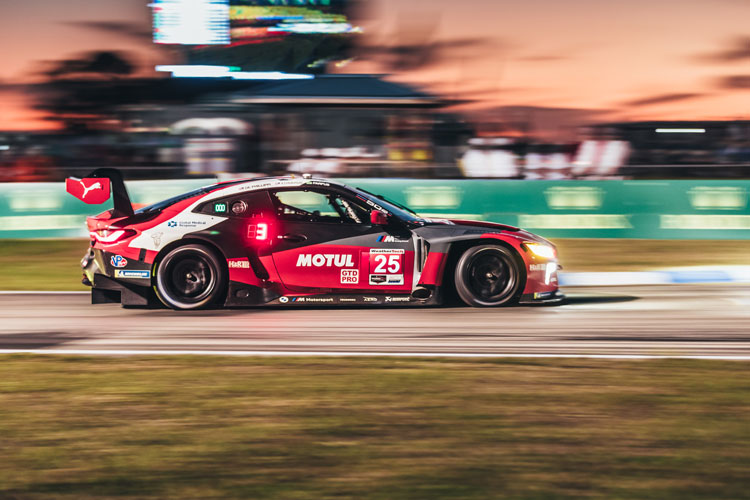
The internal-combustion engine is far from dead, and motorsports and aftermarket performance companies will play a key role in making ICE vehicles environmentally sound for decades to come. Photo courtesy of Motul

The internal-combustion engine is far from dead, and motorsports and aftermarket performance companies will play a key role in making ICE vehicles environmentally sound for decades to come.  
Photo courtesy of Motul.

Of course, in America, politics are also local. California and 16 other states have either banned or are moving to ban some or all ICE-powered vehicles. (California's ICE ban, which takes full effect in 2035, applies to new-vehicle sales only.) A few U.S. cities and counties are even weighing limits or total bans on gas stations, although other states and localities are pushing back and severing themselves from California's zero-emissions targets.

Apart from legislation, market incentives also play a major role in the OEM drive toward an electrified future. For one, EV programs attract capital investors. Plus, EVs require fewer parts, meaning manufacturers can streamline sourcing, production, labor forces and their associated costs. But despite this and all the media hype, there are signs that a new realism is setting in.

Reality Check

In December 2022, Toyota Motor Corp. President Akio Toyoda caused a stir when he openly questioned an EV-only strategy in the quest for carbon-neutral automobiles. In remarks made to reporters in Thailand, Toyoda argued that a sound strategy should include hybrids and hydrogen-powered vehicles. Identifying himself as among a "silent majority" within the auto industry, Toyoda was quoted by The Wall Street Journal as saying, "That silent majority is wondering whether EVs are really OK to have as a single option. But they think it's the trend so they can't speak out loudly."

Other automakers appear to share this viewpoint. Porsche recently announced that it had powered a 911 with a new e-fuel developed from air and water. Produced in Chile by the Highly Innovative Fuels company, the fuel is made by capturing atmospheric carbon and combining it with hydrogen taken from water to create methane. The fuel can be used in virtually any ICE vehicle, and Porsche plans to continue experimenting with such alternatives.

Meanwhile, while remaining committed to its growing EV program, General Motors has tempered its sales targets, citing challenges with battery production. And earlier this year, Ford disclosed that it expected to lose $3 billion on its EV program in 2023—news that The Wall Street Journal called "a reminder of how far traditional auto makers have to go in turning their EV portfolios profitable."
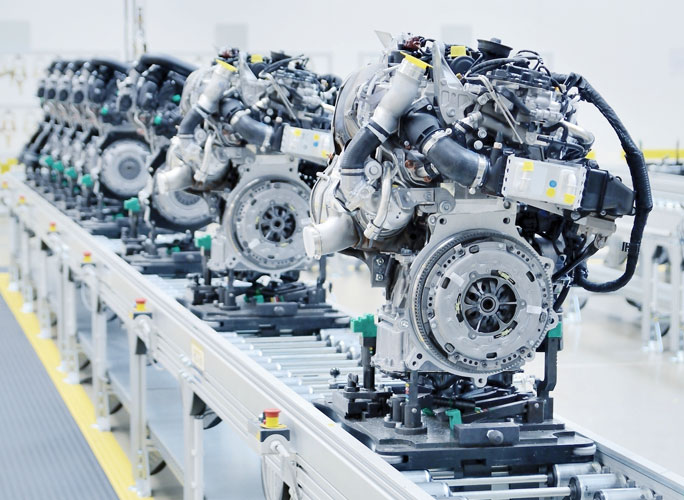
Amid their stated commitment to electrification, automakers continue to roll out IC engines. Hydrogen, propane, hybrid applications and e-fuel alternatives will help ensure an ICE future for motorsports, long-distance drivers, farmers and commercial truckers.

Amid their stated commitment to electrification, automakers continue to roll out IC engines. Hydrogen, propane, hybrid applications and e-fuel alternatives will help ensure an ICE future for motorsports, long-distance drivers, farmers and commercial truckers.

Even the environmentally hardline EU seems to be rethinking its stance. Responding to resistance from member-states Germany, Italy and Poland, the EU recently modified a total ban on ICE vehicles by 2035 to allow for those running on synthetic fuels.

According to SEMA Market Research Director Gavin Knapp, the simple truth is that ICE-powered vehicles will be with us for a long time to come. "The thing to keep in mind about EVs is when people talk about them being 50%-100% of the market, they're talking about new-vehicle sales, which will still be a small portion of the vehicles on the road," he observed. "Even if production were to ramp up really fast in 2030, EVs would still only represent 15% to maybe 20% of vehicles in operation."

Moreover, major obstacles remain to widespread EV adoption, including building the required infrastructure and, more importantly, gaining consumer acceptance. Lately, mainstream publications have been rife with stories of consumer frustrations with EV range and towing capacities, not to mention charging options. For these and other reasons, SEMA Market Research projects that by 2035, EVs will account for a mere 39% of OEM new-vehicle sales.

Aftermarket Opportunities

Given all the above, many specialty-equipment manufacturers say their long-term plans call for continued investment in ICE applications. They envision further refinements in engine performance, efficiency and emissions reduction. In fact, some futurists believe that by 2035 the total carbon footprint of an ICE vehicle may nearly match that of an EV—especially when you factor in the rare-earth mining, spent battery disposal and other not-so-eco-friendly activities associated with electrification.

"The automotive aftermarket, for as long as it's been around, has driven innovation—specifically towards efficiency around the internal-combustion engine," said Ian Lehn, Boostane owner and former chair of the SEMA Emerging Trends and Technology Network (ETTN). "I look at vehicle technology as a spectrum, and no one technology is going to be the silver bullet for our transportation demands."

Lehn's specific interest is in developing e-fuels, which he believes offer an ideal carbon-reducing solution for the millions of ICE vehicles that will remain in operation for decades to come. "I enjoy synthetic fuels because I think they're a fresh perspective on the internal combustion engine, which still has a lot of capability for gains and efficiency, offsetting its carbon footprint, and being a continued option for long-haul trucking and driving and more," he said.

The problem, he said, is that the current focus on EVs discourages the investment needed to make e-fuels viable. "A lot of the advancement and innovation has come from private industry," he explained. "There haven't been any huge, sweeping subsidies from the government. You know, just use this credit card when you go to pay at the gas station, and you'll get $3 back. I mean, it's expensive, but so were electric vehicles when they first came out. But the government subsidized them to make them affordable. E-fuels haven't been able to enjoy that type of favorable treatment, so adoption has been slow."

Ultimately, Lehn believes an electrification-only stance inhibits real progress toward carbon reduction. "If people put blinders on and say we need to just grind ahead on only EVs, and we leave all of these internal-combustion engines to continue to operate at current efficiencies, it's going to be a bigger issue down the road," he asserts.

Equally frustrating, he adds, is that those working to refine ICE vehicles are often painted as anti-EV and anti-environment. But that stereotype doesn't fit many like Lehn, who loves performance and technology across the board. "I think that EVs have a prominent place in our future," he observed. "I also think hybrid vehicles are an incredibly sustainable solution versus plug-ins or pure battery electric vehicles. I think the BEV is going to be an incredibly wonderful solution for urban and metropolitan scenarios for lowering noise pollution, smog and things like that."

Taking the Long View

In fact, many of the aftermarket's biggest players have programs for a variety of propulsion systems.

"From MAHLE's perspective, having the dual strategy that we do allows us to be on the cutting edge of everything that's going on with electric," said Joe Maylish, sales and program manager for the MAHLE Motorsports North American division. "We are a transportation company, and we're on the cutting edge of ICE, and we're right there learning and being on the cutting edge of electric."
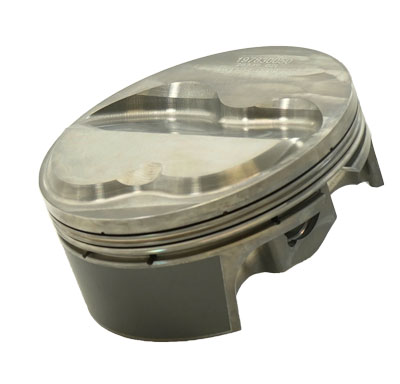
 Higher efficiency means cleaner performance, so perfecting every ICE component will be critical to sustainability. Pictured is a modern MAHLE small-block Chevy 23-degree piston dome, complete with gas ports and a GRAFAL skirt coating for cushioning.

Higher efficiency means cleaner performance, so perfecting every ICE component will be critical to sustainability. Pictured is a modern MAHLE small-block Chevy 23-degree piston dome, complete with gas ports and a GRAFAL skirt coating for cushioning.

Maylish points to the recent GM introduction of a new small-block Chevrolet engine as a sign of ICE viability. "You know, that takes a lot of commitment and a lot of belief. And they have a lot of very smart people working over there that are looking ahead in the future of what's going to be the best mobility out there for the customer."

Moreover, he sees motorsports as the ideal proving ground for engineering innovations that can make ICE vehicles leaner and greener--and there are plenty of ICE components to work on.

"Within motorsports, [MAHLE is] still actively working with OEs to manufacture pistons and rings for their programs," he noted. "It seems that [work] has been maintaining and not decreasing in volume—so we're very happy to see that.

Nor should anyone underestimate the industry's ability to rise to environmental challenges. "Just think about a diesel engine in the 1970s and its efficiency compared to what we have today, with so many more of them in operation, and just how much cleaner they are and how much more efficient they are," he remarked.

According to Jack Roush Jr., ROUSH Performance vice president of marketing, his company has also taken a diversified approach to vehicle propulsion for some time now. While ROUSH is well known for its performance division, its biggest business is the engineering services it provides to major automotive brands, the military and other industries.

"Along with our IC engine development, which we're very well known for, we've been in the EV space for 20 plus years, and alternative fuels as well," he explained.

In the latter category, the ROUSH Cleantech product division produces propane conversion kits to help fleets lower their emissions." Those are primarily for school buses and delivery vehicles," he said, noting that there is a new propane fuel coming out for such ICE applications. "It's cleaner, that is, even when comparing it to EV, it does an even better job."

On the performance side, Roush said the company continues to refine supercharging and other technologies requiring California Air Resources Board (CARB) certification. "Thinking about the future for automotive, things are becoming more difficult because of certification and the complexity of vehicles," he conceded. "We could look at that and think there's not much opportunity. But I think there's tremendous opportunity for bringing performance to vehicles."

"I'm very passionate about the gas engine myself," Roush declared. "There's a certain life that a breathing engine that gets its power from explosions has—it's almost like a living animal… It will be interesting to see how the enthusiast culture changes over time. Will they adapt more? I think it's a little premature to say which way it's going to go."

SEMA Director of Vehicle Technology Luis Morales closely monitors trends across various automotive segments. He said the trucking industry is increasingly exploring hydrogen technologies as more viable alternatives to electrification.

"They understand that you can't run multiple applications in their industry with batteries," he observed. "When you talk about the amount of battery power that they would require, the storage for those batteries, and then the payloads placed on top of that, it just doesn't make sense. And you would need so much infrastructure for their routes to make it happen."

He added that hydrogen technologies can be found in both EV and ICE applications. "In terms of a fuel cell, it's really using hydrogen to power an electric motor. And then you look at other work that's being done on the hydrogen front, like internal-combustion engines run by hydrogen. Your output there is only water with some NOx due to heat. But nonetheless, we could still progress into the future with internal-combustion engines, making them cleaner."

"For shorter routes, EV makes sense for passenger vehicles," Morales predicted, agreeing with the other sources that SEMA News interviewed for this story. "But for other needs you have to look at other options, like hydrogen technology, that can take you across the country and not have to rely so much on infrastructure. I think at the end of the day, it's going to be a really nice balance between all of the different options that are out there."

If you're in a heavily urbanized and regulated region like California, it's easy to get the impression the automotive landscape is rapidly electrifying, mused Nolan Browning, Motul North American marketing manager. "But I think once you branch outside of the big cities, it's pretty apparent that while growing for sure, EVs are a small percentage. Combustion is still being used pretty heavily."

"In motorsports too, which has always been our background and focus, I think there's always going to be a demand for [ICE] racing," he continued. "I think there will be a world, obviously, with electrification and testing that technology in motorsports. But especially in the vintage races which we're all involved with, the hobby is not going to go away. There's still going to be gasoline certainly for the next several decades."
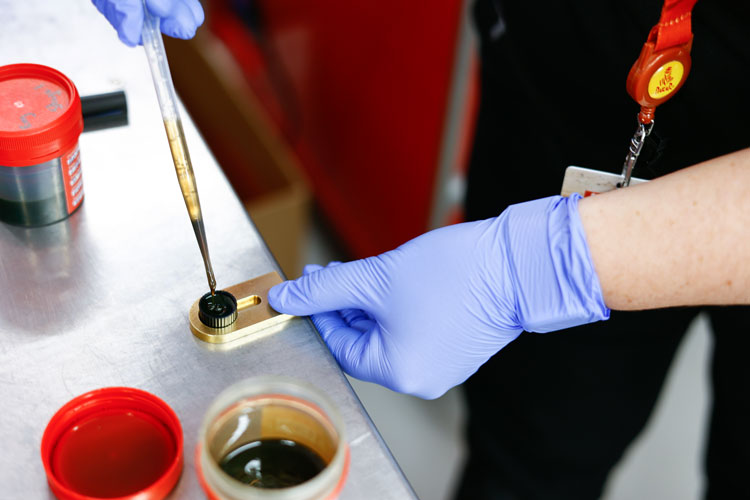
In the quest for carbon neutrality, even the oils and chemicals used make a difference, so lubricant companies like Motul continue to advance technologies for both ICE vehicles and EVs, which have differing requirements.

In the quest for carbon neutrality, even the oils and chemicals used make a difference, so lubricant companies like Motul continue to advance technologies for both ICE vehicles and EVs, which have differing requirements.

The question, said his colleague, Motul Technical Manager Nicolas Demaria, is how to make existing engines cleaner: "That's the big challenge for fuel suppliers, but also for us as a lubricant manufacturer."

Motul specializes in engineering and blending oils and lubricants, not drilling and refining them, which gives the company a leg up in research and reducing its overall carbon footprint. Like other brands, Motul is diversifying into the EV space but by no means abandoning ICE.

"We're looking into battery coolants and doing our part to develop more renewable materials in our oil because we can source from different partners," explained Browning. "We're also pivoting really hard in general for the distant future. We're looking at dielectric coolants for batteries, working with some racing teams that do hydrogen fuel, and even EVs within rallycross."

Demaria meanwhile emphasized that lubricants will also be a major factor in sustaining ICE powerplants. "The very first tool that the manufacturers have to diminish fuel consumption, to diminish pollutants and emissions, is through the lubricant [and] transitioning over to a low-friction lubricant based on first lower viscosity," he said. "And second, more advanced additive technologies will give them the best percentage of fuel consumption reduction per dollar invested."

The bottom line is that racing and performance brands aren't viewing electrification as a death knell, but rather an opportunity to diversify, placing one foot in the growing EV market, and keeping the other firmly planted in new and emerging ICE technologies for virtually every engine component. With the right shift in mindset, equipment, products and investments, aftermarket shops, builders and retailers can do the same to future-proof their businesses for decades to come.

ICE technologies will certainly evolve, but they won't vanish. And if history teaches us anything, it's that while regulators often have brave new visions for the future, technology and markets seldom march in lock step. Instead, they have a way of charting their own, often unpredictable paths. And that has many of the specialty-equipment industry's biggest players envisioning a future ripe with possibilities.

Future-Proofing With the SEMA Garage

Amid rapidly advancing technologies and regulations, the SEMA Garage is a tremendous resource in helping association members future-proof their businesses. With locations in Diamond Bar, California and Detroit, the SEMA Garages give members access to special high tech-tools and equipment they need to get innovations off the drawing board and into customer hands.  

Offering services like 3D scanning and printing, ADAS testing, vehicle measuring sessions, fully equipped bays, emissions testing and certification, as well as educational programs, the SEMA Garages are the only known facilities of their kind in the U.S. For more information visit semagarage.com.

Thu, 06/01/2023 - 16:08

SEMA News—June 2023

INDUSTRY INSIDER

10 Questions for Aliceje Keyburn

By Douglas McColloch

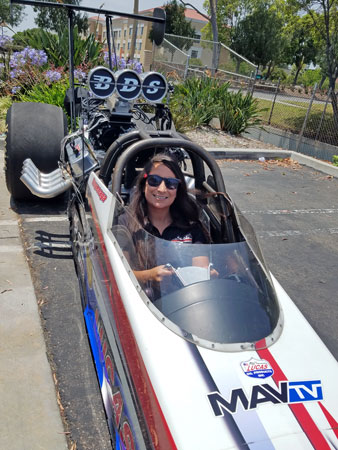
"There is a certain vibe and energy in the sports industry that you can't get anywhere else," AlicejeAliceje Keyburn SEMA Member (pronounced Alicia) Keyburn says. A powersports lover and a whiz at Creative Suite, she brings her enthusiasm for racing and an eye for design to her current position as Senior Graphic Designer for Race Winning Brands. In the past five years at RWB, she has designed everything you can think of: From websites to print catalogs, apparel to booth displays, and banners to vehicle wraps, there's scarcely an automotive design element missing from her portfolio covering RWB's line of products, which includes Dart Machinery, Wiseco and JE Pistons. She has also worked with Yamaha, Malcolm Smith Racing and DragonFire Racing, among others, and she continues to expand her horizons by "getting out from behind the computer to work at trade shows and events."
SEMA News spent a few minutes with this multitalented individual, to find out the secret of her creativity. What follows has been edited for clarity and length.

SEMA News: What's your latest project? What's new in your studio? 

Aliceje Keyburn: Latest projects include working with SBN to plan our All Female Bronco Build 2023 event list. I recently had the opportunity to host an incredible panel of women at the SEMA Businesswomen's Network Women's Leadership Forum. I'm working on a cool packaging project with a big-name shoe company coming out soon for a motorcycle grip company.  

SN: What first attracted you to the powersports/off-road world?

AK: I grew up going to Speedway races with my dad and going to car shows on the weekends, it was something I enjoyed with my family. My dad used to race dirt bikes and was part of a car club. Powersports and off-roading just looked like a fun thing to be a part of.

SN: When did you know that it was going to be an essential part of your career?

AK: It wasn't until college that I realized the doors available to me with graphic design. My eyes were opened to just how many things required a designer—whether it was giant action shots on a window front of a dealership, websites, catalogs, sales flyers, apparel, etc. I could utilize my passion for motorsports and fuse it with my passion with design. I could create those "Whoa, look at that" moments.

SN: You started working in the automotive industry straight out of art school. How did that come about?  

AK: I took a risk when I decided to make my graduating portfolio heavily focused on action sports. A few teachers warned me that I'd be smarter to widen my portfolio, but I was also told to do what you love—I didn't want to work in a field that I might consider "boring." I was fortunate enough to catch the eye of an art director who happened to work in the aftermarket motorsports world, and after a few interviews, I received a job offer.

SN: Where do find your inspiration when starting a project? What fuels your creativity?

AK: I start with a little research and investigation into a project: Who is the main target audience, and what has been done in the past? What is the main message we are trying to get across or the action we want to see from it? I pull inspiration from different types of sports, magazines, social media, design forums, etc. It gets tough to turn on a creative switch with tight deadlines, but knowing that what I am doing is going to be seen by hundreds or thousands of people pushes me to make sure I give it my all.

SN: Describe your first SEMA Show. What do you remember most about it?

AK: Nerves. It was my first time working on some large displays and product displays; it was going to be my first time seeing it all come together in person. I remember thinking, 'What if something didn't print right? What if the pictures or pixelated or the colors are off?' I was told that all the big bosses were going to be at the Show, meeting with important clients, so I was really hoping to be able to impress them. Luckily, everything turned out great and we received nothing but great feedback.

SN: What's the most challenging project you've tackled thus far, and what did you learn from it?

AK: Catalogs are always challenging. For anyone that has ever been involved in trying to put a large catalog together, especially with heavy data, it can get pretty complicated and stressful. I have learned that communication and keeping people accountable is important. You can't just wait for assets to come to you, especially with tight deadlines, which is why I learned to become vocal and stand up for the things I need in order to get projects done in time.

SN: What's your daily driver, and what do you like best about it?

AK: I have a pretty sweet 2013 Ford Edge. It's Kodiak Brown which almost looks like a copper metalflake in the sun. It gets the job done and can carry my dirt bike. My weekend driver is a 1970 Chevy C20. The neighbors love us when we fire it up.

SN: What's on your personal bucket list?

AK: Travel the world more and enter a motorcycle race. I think travel is important not only to avoid burnout but it is a great way to see what others are doing and think about what creative things can I incorporate in my next project. 

SN: When you're not working, where can we find you and what will you be doing?  

AK: I work a lot and I have been trying to be better at balancing work and personal life. My fiancé and I both have motorcycles, and I've been trying to learn mechanics and tinker more on mine. I enjoy going to the beach, still love going to motorcycle races and hot rod shows, or just enjoying those rare days of staying home and binge-watching the latest crime shows.

Thu, 06/01/2023 - 16:07

SEMA News—June 2023

BUSINESS

2023 Mobile-Electronics Trends

By Douglas McColloch

As cars increase their reliance on electronics, the market is poised to grow.

SEMA Show North Hall

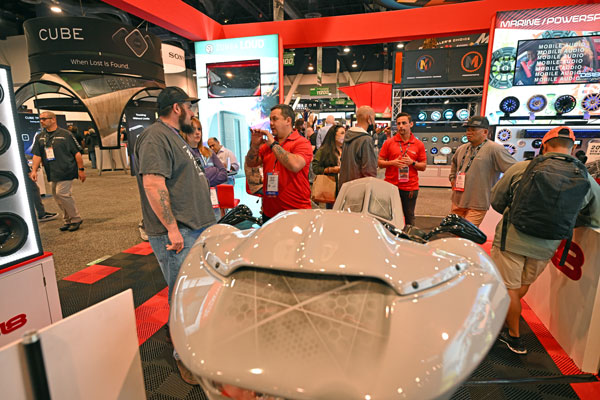
North Hall at the 2022 SEMA Show was ground zero for mobile-electronics exhibitors, with companies that manufacture information, entertainment and onboard safety systems all represented.

It's often said that today's cars are, effectively, computers that come equipped with four wheels. And there's certainly some truth to that, as onboard electronic safety and driver-assistance systems proliferate and as cars edge ever closer to full autonomous operation. Mercedes-Benz made news earlier in the year with the announcement that it had produced the first SAE Level 3 autonomous driving system that was capable of state certification. The state of Nevada has already okayed the use of the M-B system on its roads, California may soon follow suit, and it is only a matter of time before other OE manufacturers roll out vehicles with similar state-certified AI drive systems in place.

In any event, the mobile-electronics market continues to diversify and grow as consumers demand more onboard content for their purchasing dollars and as automobiles continue to grow more technologically complex in response. Electronic componentry already accounted for some 35% of a new vehicle's cost in 2020, and that number is forecast to reach close to 50% by 2030, according to a recent survey published by Grandview Research.

For this article, we consulted more than a dozen industry experts. What follows is a summation of their insights, edited for clarity and length.

The State of The Industry

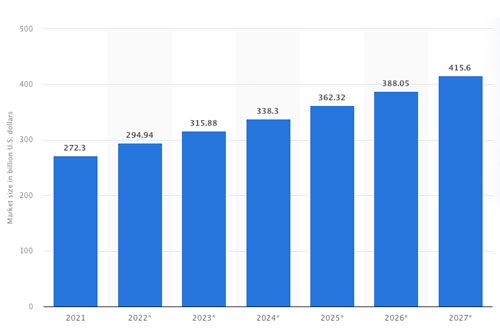
The mobile-electronics industry took a hit during the first year of the COVID-19 pandemic, with a 5% decline in sales worldwide in 2020, according to Fortune Business Insights, as supply-chain disruptions and a steep decline in new-vehicle sales both inhibited market activation. Since then, the industry has rebounded despite continued sluggish new-car sales, with a global market valuation of $295 billion in 2022 and a forecast to reach $415 billion by 2028, with a compound annual growth rate (CAGR) of around 7%, according to a 2022 survey published by Statista.

Mobile Trends

Globally, the mobile electronics market is primed for future growth, reaching an estimated $415 billion in sales by 2028. (Chart courtesy Statista.)

"We are coming out of a time where initial uncertainty yielded unforeseen opportunity," said Zach Luke, national sales manager for Rockford Fosgate. "The market flourished, and companies that were able to adapt and pivot found success, growth, and a resurgence of consumer interest. Consumers' spending options were narrowed, which focused them to engage and prioritize discretionary spending to categories that were maybe once not priority on the 'wants' list but which had now become in demand as an edifying option."

"The market is, I think, kind of flat," said Jeff Varick, founder and director of business development and connected vehicle services for BrandMotion Solutions, adding that the market appears to be fragmenting into more granular niche segments. "You really have to know your customer and the particular use cases that customer has."

Emerging Trends AND Technologies

The pandemic-related surge in off-road motorized recreation, including overlanding, impacted the mobile-electronics sector as well. "The absolutely insane growth in the off-road space during the pandemic was surprising to us," said Brian Sherman, vice president of product and marketing at Maxxsonics USA. "We exceeded forecast in aftermarket and OEM sales during this period by double digits. This has allowed us to hire additional engineering and support staff to fuel future growth and develop new applications more aggressively."
"It's an advantageous time to be in the aftermarket performance business," added Zach Luke.

Mobile Trends

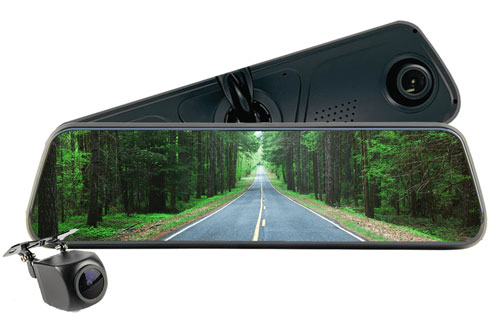
Onboard safety systems are set to proliferate as ADAS, LIDAR and other driver-assistance technologies become more universal. This FullVue mirror from BrandMotion gives truck owners three distinct rear views for monitoring the truck’s bed or a towed load.

Consumer demand for more advanced safety systems—which already constitutes some 30% of the automotive mobile-electronics market—continues to drive new product innovation. "On the powersports and off-road side of our business, we're seeing more advanced technologies used," Sherman noted. "We recently completed a dual camera setup for one OEM customer and have added multi-camera inputs to most of our marine and powersports source units."

The need for onboard safety has never been greater. Auto-related fatalities rose again in 2022 to an estimated 46,000 deaths, according to the National Safety Council. That represents a 22% increase since 2019, even though total vehicle miles traveled in 2022 were still below pre-pandemic levels.

"We have big problems on our nation's roads, a big national public health problem," Varick said. "A lot of it's due to speeding, drugs or drinking, and then cell-phone distraction. So solutions for those things are where I see the most activity right now in the safety end of the mobile-electronics market." Navigation systems and mobile TV and video cameras for automotive applications currently constitute a North American market size of nearly $1 billion, according to the most recent SEMA Market Report.

Mobile Trends Powersports

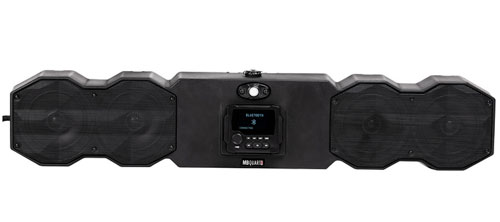
The explosive growth in recent years of off-roading and powersports has reverberated (pun intended) into the mobile electronics marketplace, with audio systems such as this all-in-one MB Quart from Maxxsonics registering strong sales.

Sales of premium audio systems have also shown signs of growth. "We have seen an uptick in sales of higher-priced, higher-end car audio amps and speakers in our Hifonics and MB Quart brands," said Sherman.

Consumer demand for higher-end audio has forced companies to continue to innovate. "Our continual development of upgraded in-car solutions keeps us on the cutting edge of technology as consumer expectations of performance, reliability, and overall integration, and fit-and-finish are high," said Luke. "This allows us to 'push' our propriety technologies into the platforms where we're seeing our customers engage."

Looking at future trends, Varick sees electrification as the most likely new growth market. "I'm bullish on fleet and EVs, which are coming faster than shared mobility and faster than V2X. Electric vehicles aren't that different—it's just a different powertrain—so it creates another segment of the market to look at for opportunities."

Challenges and Opportunities

Economic headwinds can also present opportunities for secondary markets. "Rising interest rates and manufacturing costs will force OEMs to be more frugal with development and sourcing," Sherman said, adding that "this can provide more opportunities for upgrades from the aftermarket."

"Today we find ourselves in a position where we need to elevate our business strategies and offerings, both where B2B and B2C are involved, with better service, support, and product," said Luke. "We're once again competing with an expanded list of items and events that consumers can spend their money on."

Varick doesn't see any "one-size-fits-all solutions anymore, like a backup camera. I think you really have to come up with custom solutions and niche applications."

Harley

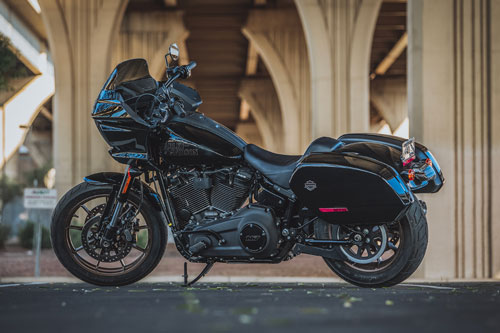
Higher-end niche applications have gained market share in the mobile space. This all-in-one Rockford Fosgate ST audio system for the Harley-Davidson Low Rider series provides an example of the type.

As an example, Varick explains, "We have a pretty successful digital rear-view mirror that gives you a full video screen on the mirror. You push a button, and it goes back to being a regular mirror. But when it's a video screen, it's seeing behind you. Even if you have people in the back seat, it's just a camera pointing backward. So we just added a version of that that has a wireless trailer camera for RVs or for a trailer that you're towing, and a custom third brake-light bezel that watches the bed of your pickup."

Our sources unanimously agreed on the need to maintain a robust presence across numerous social-media channels to optimize marketing.

"Most of our brands' ad dollars go to social now as it's the most targeted way to reach consumers," said Sherman. "Niche products require niche marketing, and this provides a clean way for us to market direct to the consumer and drive business to our retail and distribution partners."

Looking Ahead

Sherman echoed the sentiments of our panel with his near-term forecast. "We feel that business will be up in all segments, but not without challenges."

"Our objective is to continue creating demand by delivering industry-leading product and service," said Luke, "which enables us to continue capturing consumers open to buy."

The market is more fragmented now," Varick concludes, "so you need to find a market that isn't getting served by the OEMs or the general aftermarket."

SOURCES

Brandmotion

41100 Bridge St.
Novi, MI 48375
734-619-1250

brandmotion.com

Maxxsonics USA

8561 E. Park Ave.
Libertyvllle, IL 60048
847-540-7700

maxxsonics.com

Rockford Fosgate

600 S. Rockford Dr.
Tempe, AZ 85281
480-967-3565

rockfordcorp.com

Thu, 06/01/2023 - 15:37

SEMA News—June 2023

BUSINESS

Maximizing ROI at the 2023 SEMA Show

By Mike Imlay

Automotive specialty-equipment manufacturers are geared up and eager to connect with attendees at the 2023 SEMA Show, taking place October 31–November 3 in Las Vegas. With exhibitor numbers expected to top 2,000 companies, buyers and media will have plenty to explore at the Las Vegas Convention Center.

SEMA Show

As SEMA Show organizers like to say, "You can't smell rubber on a Zoom call." Live events and demonstrations help immerse attendees in industry trends, innovation and excitement.

"The commitment we've seen from exhibitors is a positive sign that companies are excited to reconnect face-to-face," said Tom Gattuso, SEMA vice president of events. "It's also a sign that companies are confident that they will have new products and stories to share."
Meanwhile, SEMA officials are finalizing new features to further evolve the Show and deepen attendee engagement. To help attendees get their best return on energy and investment, we turned to Gattuso and SEMA Trade Show Director Andy Tompkins for some behind-the-scenes insights.

SEMA News: There's been a lot of talk in the media about how trade events are changing. In a world of Zoom, Teams and social media, what is the value of a live trade event like the SEMA Show?

Tom Gattuso: I'd go a step further and ask, "What is the value of face-to-face events?" We find a tremendous positive response from the people who attend the SEMA Show. They value connecting in person with their end users or future suppliers and industry colleagues. There's just no replacement for what you can see, hear and feel in terms of industry passion and enthusiasm onsite at the Show. You just can't replace that peer-to-peer exchange, and you can't smell burning rubber on a Zoom call. 

Andy Tompkins: I'd underscore that value of relationships. The SEMA Show gathers the entire industry in one place so people can do business with one another, regardless of how technology is accelerating. It's a great opportunity to rekindle relationships, develop new ones, and have significant conversations. It can be difficult at times to solve business issues and more nuanced situations through technology like the phone, internet or email. A trade show offers the chance to look somebody in the eye and really talk about your issues and goals. You can pick up on non-verbal cues and have that more innate conversation that is really part of our DNA. 

SN: Part of business is ensuring return on investment and energy. What does the SEMA Show offer attendees in that regard?

TG: In 2021, the SEMA Show was the highest attended trade Show in the U.S. That emphasizes the value people see in our Show. It reflects the trends and interactions within the marketplace and is set up to help people make connections efficiently and then foster those connections for the next one, three and five years. And that's important--return on energy doesn't stop at the Show.
Connections need to be followed up with periodic conversations throughout the year because if you don't do that, others will. If your plan is to come to the SEMA Show and try your hardest for four days but then do nothing else, you're not going to see a good ROI. But if you come to the Show to make connections that you plan to nurture over the next weeks, months and years, you will definitely get a very strong return.

AT: It's so important to have goals as you enter the SEMA Show and really think about what ROI means to you. Do you have a three- to five-year strategic plan? The SEMA Show offers a long-term opportunity to truly think about what's coming next for the industry. It helps you see business challenges or opportunities that you might not be aware of. It's a glimpse of the future that you can only get from a global, immersive event like our Show. 
As Tom mentioned, relationships are built that can deliver for your business in the future. They might be those serendipitous moments in the aisles, a conversation that sparked an idea, or a tangible business opportunity you're working on that needs time and connections to develop. That face-to-face interface is just so enormous.

SN: Maintaining an edge in today's market is more vital than ever. How does the SEMA Show help attendees stay competitive?

AT: The Show is a great opportunity for that. You'll have the entire landscape of industry products in one location so you can see firsthand what's being introduced, how it's being marketed. You'll get an understanding of the buzz over not only what the business audience sees, but what consumers are gravitating towards through the Show's Friday Experience. If you're looking for skills that you and your team may need, there are also the Show's educational opportunities. You'll also see where you stack up in the marketplace from a competitive angle. You'll be in the best position to utilize it all to be successful going forward. 

TG: I'm going to key in on the word "innovation." A sustainable business is about constant innovation and evolution in answering consumer needs. That manifests itself at the SEMA Show through new products, cutting-edge vehicle builds and world-class education. You're able to be part of where the industry is going. There's no place as passionate about the industry's growth as the SEMA Show. Vehicles keep evolving in technology, performance and styling, and the Show immerses you in all of it to help you stay up to speed and competitive.

SN: Let's talk about some key 2023 Show features that attendees will want to leverage.

AT: They'll see thousands of products on display from our New Product Showcase to our more than 2,000 exhibitors, many of whom are debuting them for the first time. Again, our educational tracks offer a whole series of ways to fine-tune your business and your career, along with presenting some skills you might want to work on personally. Then there's just the experience, the chance to get out of your day-to-day work to really think about what's next and those inspirational opportunities that come from being immersed with thousands of like-minded peers. 

TG: Building on what Andy said, I'd add that our New Products Showcase and features like SEMA Central, SEMA Electrified and the ADAS and Overlanding Experience sections are designed to educate attendees on the latest marketplace trends. More than that, they make it efficient for showgoers to connect with product exhibitors on the Show floor, getting questions answered by experts, and seeing the products demonstrated. We've also made it easy to connect with exhibitors whose products are found on featured and sponsored vehicle builds throughout the Show. 
In addition to educational seminars, keynote events and presentations, there are also countless other ways to advance your professional development and become an asset to your company or business. For example, our Battle of the Builders program highlights what's happening in the builder community and what's coming next there. We have a whole series of council events and other industry activities that help you network and immerse yourself in the marketplace. You can connect to become part of the industry's next generation of leaders or support them and the industry's diversity. There are opportunities everywhere.

SN: You've mentioned that the SEMA Show is always evolving. Can you offer any insights into new Show features or plans for 2023 that we should highlight?

TG: We can offer a teaser: With the industry workforce changing and evolving, we've seen a desire within the trade show industry to provide more features that entertain attendees. As many know, we're creating a new SEMA Fest event to give people the chance to connect with the industry on a whole new level. It's really a lifestyle event combining entertainment and vehicle demonstrations. 
Although it's not a direct part of our annual trade Show, it's going to be adjacent to the SEMA Show. It will give those who want to mix their business needs with world-class entertainment the opportunity to do so. Unlike the SEMA Show, which continues to be trade-focused, SEMA Fest will be a public event. It's designed to help generate enthusiasm and excitement for our industry among consumers, especially those drawn to the automotive lifestyle.

AT: I can also report that will be some new and interesting thought leaders presenting SEMA Education sessions. We'll absolutely have more for attendees to experience there. We're also expanding several of our industry-community areas to spark more interaction and connections. Plus, as Tom mentioned, we'll see a greater presence of enthusiast end users in the Las Vegas Convention Center through the Show's Friday Experience. 

SN: We've covered a lot in this interview. Do you have any closing thoughts you'd like to add?

TG: We're really keyed in on what industry attendees seek in an event. We're building new facets of the Show around those needs. So we're excited with what the future holds not only for our Show, but face-to-face trade events in general, and the value they bring. We feel strongly as a trade association that showcasing innovation, providing education and building an engaged community delivers attendees personal and professional development in a rapidly changing industry. 

BUSINESS

With exhibitor numbers expected to top 2,000 companies, buyers and media will have plenty to explore live and in-person at the 2023 SEMA Show.

Live events and demonstrations help immerse attendees in industry trends, innovation and excitement.

Industry Exhibitors Geared Up for 2023 SEMA Show Attendees

Eager to connect with buyers and media in person, introduce new products, develop relationships and tell their company stories, the 2023 SEMA Show was on track to exceed 2,000 exhibiting companies as of press time.

An up-to-date exhibitor list of the major automakers, iconic aftermarket brands, and new, first-time exhibitors confirmed for the Show can be viewed at SEMAShow.com/participating-manufacturers.

Advantages of Meeting Face-to-Face

Seeing product displayed, explained and demonstrated face-to-face is one of the SEMA Show's many exclusive advantages.

The SEMA Show is driven by connections, and brings exhibitors, buyers and media from around the world together for the automotive aftermarket's most impactful business-to-business experience. Its in-person nature delivers key advantages that other forms of connecting simply can’t match.

  • When you meet in person, you can read body language, see facial expressions, use context clues and better get to know someone's
    personality.
  • The automotive aftermarket prefers to meet face-to-face, without potential distractions or technical difficulties.
  • It's more effective to brainstorm, generate ideas and discuss what is working, and what is not, face-to-face.
  • Conducting business in person provides the opportunity to engage in purposeful small talk, deepening relationships, loyalty and trust.
  • Research from MIT's Human Dynamics Lab shows face-to-face requests are 34 times more effective than those sent by email, and that a physical handshake promotes cooperation and influences negotiation outcomes for the better.
  • According to a Forbes Insight study, 85% of people say they build stronger, more meaningful business relationships during in-person meetings and conferences.
  • According to a Harvard Review study, 95% of people say face-to-face meetings are a key factor in successfully building and maintaining long-term business
    relationships. 

SEMA Week Expands in 2023

At last year's Industry Awards Banquet, SEMA introduced SEMA Fest, an enthusiast-focused experience that connects automotive enthusiasts with the aftermarket industry for a celebration of car culture and automotive lifestyle. The event will add a new dimension to SEMA Week.

Over a planned five-year rollout period and beyond, SEMA will remain dedicated to producing the annual SEMA Show—the specialty-equipment industry's premier automotive trade event—at the Las Vegas Convention Center. Open to the automotive trade, the Show takes place October 31–November 3.

For more information or to register, visit SEMAShow.com.

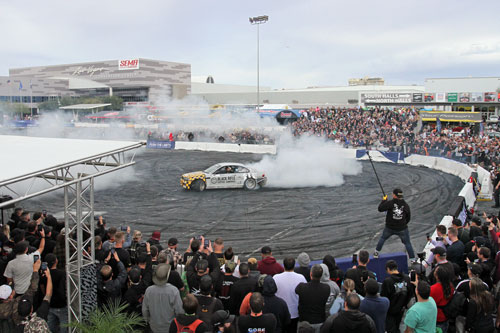
Not to be confused with the SEMA Show, SEMA Fest will be an enthusiast-focused event open to everyone, including automotive enthusiasts and professionals. The two-day celebration will be held at a separate venue—the Las Vegas Festival Grounds—Friday and Saturday, November 3–4. It will feature music and entertainment, craft food, automotive celebrities, drifting competitions, freestyle motocross and the world's most innovative and advanced custom vehicles.

To register for SEMA Fest or for more information, visit SEMAFest.com.

Thu, 06/01/2023 - 15:27

SEMA News—June 2023

SEMA HERITAGE

Living Legend

By Drew Hardin

Iskenderian

Photography: Eric Rickman, Petersen Publishing Company Archive
 

As Ed Iskenderian recalls it, he wasn’t at the meeting in 1963 in which several members of the automotive performance industry gathered to name officers for their new trade organization. So they decided to appoint him president of what was then the Speed Equipment Manufacturers Association.

Even in an association made up of now-legendary figures, Iskenderian was a standout. He was mentored in the art of grinding camshafts by Ed Winfield, regarded as the father of performance cam grinds. Iskenderian bought a Model T-based hot rod to test various combinations of speed equipment in 1938, and he was clocked at 120 mph at a Western Timing Association meet at El Mirage in 1942, just before he joined the Army Air Corps. Iskenderian still owns the car, which, much like its owner, remains in unrestored yet well-preserved condition.

Iskenderian began his cam grinding business after World War II, setting up a used grinding machine in the back room of a tool and die company owned by a friend. As a dry lakes racer himself, he had a lot of ideas about how to wring performance from Ford flathead V-8s, Olds Rockets and, later, the Chevrolet small-block and Chrysler Hemi. He studied the camshafts in Italian sports cars to come up with his famous 5-Cycle cam (the fifth combustion cycle being the valve overlap period). He would be the first to augment his own intuition about cam grinds with computer-aided designs, what he called “IBM electronic computed calculations” in his information-packed magazine advertisements.

Those ads were just part of an innovative, and often ground-breaking marketing approach Iskenderian took with his business. He was constantly looking for ways to get exposure for his products. Along the way he was one of the first, if not the first, to put his name on T-shirts, done originally in 1951 for a Bonneville racing team. He also brokered what is believed to be the first professional drag racing sponsorship for a young racer out of Florida named Don Garlits. He was a prolific advertiser in Hot Rod magazine and would use the typically full-page ads to celebrate recent winners who used his cams while also informing readers about his latest products—when he wasn’t sniping at other cam grinders, most often Howard Johansen, in what came to be known as the “cam wars.”

It was Iskenderian’s notoriety as much as his business and marketing acumen that made him an attractive candidate for the SEMA presidency. The other founding SEMA members were as successful as he was in their various performance niches, but Iskenderian—even before he shortened the name on his business to his nickname, Isky—was a bigger name, so to speak, to the general racing public.

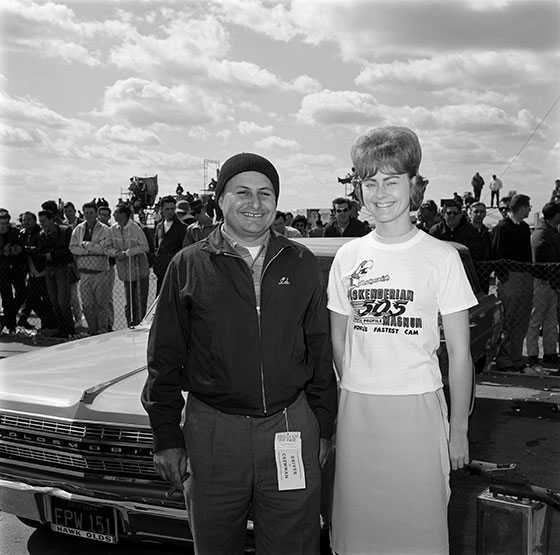
This month’s Heritage photo was shot by Hot Rod’s Eric Rickman during the 1963 March Meet in Bakersfield, just a couple of months before Iskenderian was named the first SEMA president. The young woman next to him is wearing a T-shirt emblazoned with his latest innovation: the Polydyne Profile 505 Magnum camshaft. The Polydyne Formula was Iskenderian’s term for a computer-aided cam design, and the 505 was the 5-Cycle-based successor to his very popular 404 grind that he originally produced for the Ford flathead. The 505 Magnum was a high-lift cam that “reaches rpm’s of unbelievable magnitude,” he said in a 1962 Hot Rod ad that introduced the camshaft. Not long after, his ads featured racers winning with the 505, including Jim Nelson, Tommy Ivo, Jack Chrisman and Big John Mazmanian.

Today, nearing his 102nd birthday, Iskenderian remains an enthusiastic participant in the automotive performance world. He may not make it to the shop every day, but he is a guest of honor at nostalgia drag races and car shows, always willing to tell stories and sign an autograph.