SEMA News—June 2023
COVER STORY
Tracking The Growth of an Ever-Evolving Industry
Compiled by SEMA News Staff
"The 60th anniversary of SEMA the organization is testimony to the strength and resiliency of our member companies," said Mike Spagnola, SEMA president and CEO. "Through changing and often turbulent times, the specialty-equipment market has continuously evolved to meet the demands of the moment. While SEMA has done its part to help advance the cause of the industry, it's the unflagging enthusiasm and perseverance of our members that has been the reason for our longevity."
What follows is a review of the past 60 years—the trends that influenced the aftermarket, and the ways that SEMA has changed to meet the needs of its member companies. Special thanks to all those industry members who shared their recollections with SEMA News for this article.
It all began in May 1963, at a meeting in the offices of a model-toy manufacturer in Hollywood, California, when 20-odd members of the fledgling automotive performance aftermarket—who were normally fierce competitors—first discussed the possibility of joining forces. From those inauspicious beginnings emerged the makings of a trade association that now serves more than 7,000 members comprising a $50 billion specialty-equipment market.
SEMA at 60
The automotive aftermarket as we know it today most likely began on the dry lake beds of California's Mojave Desert, where the earliest enthusiasts gathered for speed trials to test the products they'd produced for their (mostly) Ford and Chevy roadsters. In the early postwar years, those vehicles were plentiful and affordable, and Southern California's temperate weather enabled enthusiasts to wrench on (and race) their cars virtually year-round.
Things started to pick up for the industry when Robert Petersen launched Hot Rod in 1948, and the demand for speed equipment increased exponentially.
"What Hot Rod did was take a very regional Southern California phenomenon of building up cars to run on the lakes and extend that across the country," said Drew Hardin, longtime automotive journalist and author of Hot Rod Magazine: 75 Years. "Now people everywhere in the United States could read about what was going on in Southern California, and now people everywhere in the United States could find those parts that were being made by Vic Edelbrock and Barney Navarro and all the pioneer speed part manufacturers."
Also, Hot Rod provided enthusiasts around the United States an opportunity to interact with each other via the magazine. "Before then, the only way you could do that was to talk to friends, talk to fellow racers or go to speed shops," Hardin said. "Things were a little more catch-as-catch-can until Hot Rod came along." As a result, so-called "speed shops" began to spring up across the country to serve the growing demand of enthusiasts.
Another innovation that fueled further interest was the debut of Chevrolet's small-block V8 in 1955. "Much like what happened with Ford's overhead valve V8 in 1932, suddenly you had a V8 engine that was priced and marketed to the masses, and you also had one that was very receptive to modification," Hardin said. "Guys were hopping up that engine almost right out of the gate and making more power from it. It was a watershed moment."
Also of note, Hardin continued, was Chrysler's introduction of the "FirePower" Hemi, which even pre-dated the Chevy small-block. "Those early Hemis were the backbone for drag racers for years."
While the aftermarket continued to grow into the '60s, there was little or no coordination between companies. Distribution networks didn't exist, and neither did industry product standards or much, if any, collaboration between manufacturers. These were, after all, competing entities that carefully guarded their trade secrets. "They were racers first and businessmen second," Hardin noted.
That all began to change in 1963.
Before the Beginning: The Early Postwar Years
SEMA TIMELINE
The 1960s: How it Started
Accounts have varied over the years, but the surviving narrative, as originally reported in SEMA News in 1986 and again in 2003, is that SEMA was formed after a query from an outsider: Henry Blankfort, a marketing executive with model-car manufacturer Revell Inc. (now Revell USA LLC), who was seeking exclusive licensing agreements with various speed-equipment manufacturers to use their company logos on Revell's model cars.
To that end, Blankfort enlisted the aid of advertising executive Ed Elliot, who was well connected to the aftermarket—he represented most of the companies that advertised in Hot Rod—to convene a meeting of speed-shop owner/manufacturers in order to make his pitch. Some 20-odd manufacturers attended the meeting at Revell's headquarters on Hollywood Boulevard in May 1963, and among those known to have been in attendance were Ed Iskenderian of Isky Cams, Els Mohn of Eelco Manufacturing, Dean Moon of Moon Equipment and Roy Richter of Cragar Equipment.
Blankfort, who was also an officer with the Hobby Industry Association (HIA), a trade association of craft and hobby-equipment manufacturers, suggested the attendees form a similar umbrella group. The new association, he explained, could handle mundane administrative requests such as his more efficiently, and the new group could also be useful for government advocacy programs; a trade association could lobby more effectively against future regulations than any single company ever could. (The HIA was formed in part to lobby against legislative initiatives that sought to limit the sale of model airplane glue.) The idea took hold, and the attendees agreed to form an association.
Ed Iskenderian, 101 years of age at the time this issue went to press, recalled the meeting. "We especially liked the idea of having a lawyer in D.C. who could help us fight against any government regulations that might come along, so we agreed to join forces." John Bartlett, president of Grant Racing Pistons, drew up the first bylaws (he was also a licensed attorney), and the Speed Equipment Manufacturers Association was incorporated in May 1963, with Ed Iskenderian subsequently elected the association's first president. Iskenderian, who wasn't present for the vote, still isn't sure why he was selected, but adds that "it was really a great honor, though the fellow who really kept the organization running in the early years was Ed Elliot."
The new organization's mission was straightforward: develop uniform standards for products used in motorsports; promote the industry to consumers; develop business best practices among member companies; and hold regular meetings to promote solidarity as an organization. The founding and charter member companies are listed in the sidebar below.
The SEMA Show: Origins
The idea for a specialty-equipment industry trade show sprang from a number of divergent sources, and several different aftermarket gatherings have been suggested as SEMA Show forerunners. Among the best-known was a trade event organized by the late Noel Carpenter, then the publisher of Speed & Custom Equipment News (which merged with Hot Rod in the' 70s). It debuted at the Disneyland Hotel in 1965 as the "Speed & Custom Equipment Show" and featured 70-odd exhibitors and roughly 1,000 attendees. SEMA was not involved in organizing that event, but the association did sponsor the event the following year and received a share of show profits: a check for $535.
The first "officially recognized" SEMA Show was held in 1967 under the aegis of Petersen Publishing, which purchased the rights to the Show from SEMA. Petersen's Hot Rod Industry News, edited by Alex Xydias of SO-CAL Speed Shop fame, was the Show's official host, and Petersen's Special Events division, helmed by Dick Wells, was charged with the event's production and logistics.
The inaugural SEMA Show—officially, the "High Performance & Custom Trade Show"—was held January 10–12, 1967, at the club-level concourse at Dodger Stadium. "It was raining and freezing cold," said Gigi Carleton, Bob Petersen's longtime executive secretary, in an interview with SEMA News in 2017. "The manufacturers came from all over the United States—some locally, some from as far away as the Midwest, and everyone stayed at the old Ambassador Hotel on Wilshire Boulevard.
"No one was sure how well a show like this would turn out," Carleton added, "because no one had ever done anything like it before."
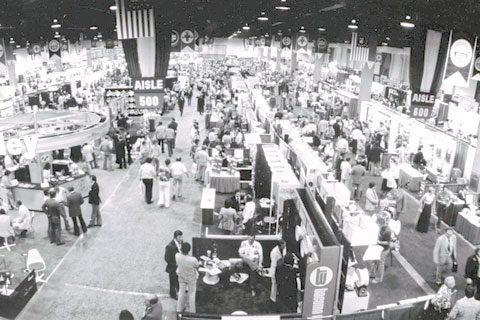
As with any first-time exhibition, the initial SEMA Show had its share of challenges, with poor weather and slapdash booth displays that were sometimes little more than folding card tables and cardboard signs held together with Scotch tape. "It was kind of a mess," Ed Iskenderian admitted.
Still, with 98 exhibiting companies and some 3,000 industry professionals in attendance, the Show was judged to have been worth the effort, and worth revisiting the following year. "It was a huge success," Carleton said. "We couldn't believe it!" Many SEMA-member companies that exhibited that year are still in business today, including Air Lift Co., B&M Automotive, Crower Cams, Edelbrock Group, Hedman Hedders, Hellwig Products, Mickey Thompson Wheels & Tires, Milodon Engineering and Valley Head Service, among others.
Looking back, Carleton attributed the Show's success to a healthy economy and good timing. "Many of the exhibitors wrote so many orders at the first show that they could hardly wait for the second one," which was relocated the following year to the newly opened Anaheim Convention Center.
SEMA TIMELINE
The 1970s: Regulations and Innovations
The year 1970 saw the passage of the Clean Air Act—and with it, the first enforceable federal emissions mandates. In addition, the publication of Ralph Nader's Unsafe at Any Speed a few years prior led to a public outcry for improved vehicle safety, and in the years that followed, the automotive industry was hit with a raft of new regulations, including a federal speed limit.
In response, SEMA's name was changed to its present form in 1970 at the suggestion of Earl Kitner, SEMA's first Washington, D.C.-based attorney, for reasons that were as much political as organizational. "A name change would greatly assist our representation," Kitner said at the time, adding that "elderly bureaucrats are not likely to appreciate the swinging generation's preoccupation with speed." The aftermarket had begun to diversify beyond hard parts for racing, and the members agreed that the more generalized "Specialty Equipment" better reflected an industry that was now serving multiple automotive market segments while de-emphasizing the go-fast enthusiast element.
"We also wanted to attract distributors," Ed Iskenderian added.
Still, the '70s witnessed the first of many skirmishes between SEMA-member companies and the new wave of environmental regulations from the newly created U.S. Environmental Protection Agency (EPA) and the California Air Resources Board (CARB). In response, SEMA's legal department rose to meet the challenge.
"One of the secrets of our success was keeping the EPA and CARB at arm's length," said Chuck Blum, SEMA president and CEO from 1980 to 2002. "Their regulations basically wouldn't allow you to touch any emission-control devices on a car. If you did, you violated the regulation even if the aftermarket guys were making products that didn't violate emissions. But the way the law was written, they couldn't make those products and sell them. They wanted to shut down the aftermarket.
"But that's where SEMA played a major role in that," Blum continued. "We sued the EPA, and we won."
On the other hand, Blum reminded, "A lot of the same laws are still on the books to this day. And SEMA is still fighting those same regulations."
In any event, the aftermarket experienced robust growth during the decade, and it was reflected in the rapid expansion of the SEMA Show, which had outgrown its Anaheim exhibition space by the middle of the decade. Would-be industry attendees were turned away from sold-out events in 1975 and 1976, and in response, the SEMA Board of Directors, following the guidance of CEO Leo Kagan, made the decision to relocate the Show to the city of Las Vegas. Only a decade after the initial SEMA Show, which hosted fewer than 100 exhibitors, the inaugural Vegas event hosted more than 800 companies.
The 1980s: The Aftermarket Diversifies
A succession of Middle East oil embargoes in the '70s, combined with years of near double-digit inflation, kept fuel prices high for the better part of the decade. As a consequence, consumer preferences began to shift away from full-size domestic sedans toward smaller imports, and by the mid-'80s, Honda Civics and Toyota Corollas were commonplace on America's roads. These cars were highly economical but lacking in the kind of power and performance many consumers desired. The specialty-equipment market responded in kind, and a "sport compact" aftermarket sector began producing parts for Japanese and German imports.
"We ran across this guy, Chuck Schwartz, who had his own little import show called Auto Internacional, and we negotiated with him to bring the import show into our group," Chuck Blum said. "And in so doing, we ended up hiring him as our show manager. It was basically the import parts segment of the industry, which at that time was pretty unique."
In addition, the pickup enthusiast market grew by leaps and bounds in the '80s, particularly in response to the unexpected popularity of monster truck racing that began in the middle of the decade. Initially derided as a passing fad, the monsters caught the fancy of the American public, and eventually the industry became a leading innovator in chassis and suspension design. Once again, the aftermarket rushed to fill a growing enthusiast demand with suspension lifts, oversized tires and numerous related components for trucks, Jeeps and SUVs.
Chuck Schwartz was also instrumental in the expansion of the truck and off-road sector, forming the Off-Road Equipment Association (OREA) along with Pete Condos, Bill Stroppe and Thurston Warn, among others, as a response to concerns about land closures. Schwartz produced the OREA trade shows, which eventually was folded into the SEMA Show.
As the aftermarket grew into greater numbers of segments, the annual SEMA Show, which had no systematized exhibit protocols, became an increasingly taxing experience for attendees.
"A lot of the attendees were complaining that if they wanted to, say, see truck accessories, they had to walk all over the place to find them," Blum recalled. "The show was getting bigger and the convention center was getting bigger, and it became very difficult. So we decided we'd go with dedicated Show sections."
It may be hard to believe in retrospect, but "we got a lot of pushback at the start," Blum said. "We had exhibitors complaining, 'I don't want to be anywhere near my competitors,' that type of thing. But as it turned out, even those naysayers agreed that it was probably the best thing to do."
SEMA TIMELINE
The 1990s: Street Performance and SUVs
The '90s marked the post-Cold-War Era, the decade when America saw the fall of the Iron Curtain and the launch of the internet (then spelled with a capital "I"). The "peace dividend" expanded the economy, and hence new aftermarket opportunities. There are some, in fact, who argue that the decade was among the most exciting periods in automotive history.
"For the aftermarket, adding a body kit or spoiler was popular, wheels got bigger and spinners enjoyed renewed popularity, among many other innovations," noted Stuart Gosswein, former SEMA senior director for federal governmental affairs. "On the safety side, the National Highway Traffic Safety Administration [NHTSA] introduced the five-star rating system in 1993 to help consumers focus on issues such as front, rear and side impact. Anti-lock brakes became standard equipment, and cars were required to have front passenger-side airbags."
Meanwhile, the introduction of the Ferrari F50 and Lamborghini Diablo took sports performance and handling to new levels. (For more modest budgets, there was the "Ferrari-slaying" Acura NSX or the V10 Dodge Viper.) Especially noteworthy, GM introduced the LS engine in 1997 with the C5 Corvette.
For the trendy, the Plymouth Prowler and a revamped VW Beetle brought the market a retro vibe. But the Hip Hop Age continued the proliferation of "tricked out" lowriders and mini trucks begun in the '80s, while the sport-compact scene redefined street performance.
"That market gave a giant shot in the arm to SEMA and the industry because it brought in a much younger crowd," observed former SEMA News Editor Bill Groak. "They were doing the same thing that SEMA folks did back in the '50s and' 60s—improving horsepower and suspensions and adding cool goodies."
The rise of the SUV was another gift to modifiers, given how consumers liked their vehicles rugged-looking, bull-bar-equipped and ready to go off-road on a moment's notice—whether or not they ever really did.
But there were rising challenges. In 1991, CARB mandated OBD II for all new cars, with the EPA quickly following suit. Foreseeing growing regulatory battles, SEMA relocated its Government Affairs office to Washington, D.C., in 1995 and held its first Washington Rally to connect members and lawmakers in 1996. "SEMA also sponsored the formation of the Congressional Automotive Performance and Motorsports Caucus to help raise the industry's profile with Capitol Hill and the public," added Gosswein.
SEMA TIMELINE
The 2000s: "Fast and Furious" Car Culture
As the 21st century dawned, the aftermarket experienced "Fast and Furious" growth—literally. Released in 2001, the film arguably influenced the aftermarket more than any other in recent memory. In fact, Hollywood seemed intent on promoting fast and blingy cars. (Think MTV's "Cribs," "Pimp My Ride," big chrome wheels and spinners.)
The mix of urban culture, stars and cars opened a fresh niche for publications, including DUB magazine, which helped inspire toy car lines, video games and concerts. This and other car-oriented phenomena greatly broadened the audience for all things automotive.
"Suddenly cars were cool among the youth again," observed SEMA Vice President of Marketing RJ de Vera, who came of age amid the craze. "It was a lifestyle movement as much as a car movement."
That movement encompassed car shows and concerts, Hot Import Nights and other motorsports events delivering DJs and live music, dancing, big-name sponsors, and other festival elements to young attendees. Formula Drift became a sanctioned form of motorsports, while off-road and dirt racing also greatly expanded, garnering major media coverage and non-endemic sponsorships. And, though few foresaw it then, Yamaha's 2004 introduction of the Rhino would hatch an exciting new UTV powersports class.
Among the OEMs, SUVs continued in popularity, with Jeeps surging in ascendancy by mid-decade. The Chrysler PT Cruiser caused a stir, as did the Chevy Corvette Z06 and Ford GT. The truck wars between Ford, GMC/Chevrolet, Dodge and Toyota heated up as well. By end of decade, however, rising gas prices had many consumers considering recently introduced subcompacts and hybrids like the Honda Fit and Insight and the Toyota Prius.
Tech-wise, the TREAD Act of 2000 required the NHTSA to issue a new tire safety standard and mandates for tire-pressure monitoring and electronic stability control systems on new cars. OEMs also introduced dual-clutch transmissions, backup radar and rearview cameras. "Infotainment," too, became an aftermarket buzzword: this encompassed DVD players, enhanced audio and GPS navigation systems, Bluetooth, iPods and charging units for early smartphones. (Remember the Blackberry?)
On the legal front, SEMA fought "Cash for Clunker" initiatives throughout the '00s at state and federal levels. To further expand industry influence, SEMA created the Political Action Committee (SEMA PAC) in 2003 and the State Automotive Enthusiast Leadership Caucus in 2005. "Both organizations remain vital to supporting federal and state lawmakers who support the automotive hobby and businesses," explained Stuart Gosswein.
SEMA TIMELINE
2010–Present: Reaching New Heights
If you could sum up the last 13 years in two words, they might be "growth" and "technology." Plunged into the Great Recession in 2008, the economy righted itself around 2010, and the industry roared back.
By 2015, what former SEMA President and CEO Chris Kersting called "the Golden Era of Off-the-Shelf Horsepower" was in full swing with musclecars gaining a fresh following. In fact, the OEM push for ever-higher fuel efficiency and performance through turbo- and supercharged engines has delivered consumers vehicles capable of 700+ hp. Smaller-displacement engines have benefitted too. The horsepower of an average four-cylinder is double—sometimes triple—that of 2010.
Aftermarket upgrades have become "simpler" also: a new intake, exhaust kit, springs and electronic tuning. What isn't so simple is the emissions compliance surrounding certain mods. Both CARB the EPA stepped up emissions enforcement in the '00s, prompting SEMA to open the Diamond Bar, California, SEMA Garage in 2015 to assist manufacturers in developing compliant products. In 2022, SEMA added a Detroit facility.
SEMA also stepped up its industry advocacy, introducing the RPM Act and mobilizing enthusiast supporters, lobbying state legislatures for more favorable laws, and increasingly taking on land-use issues. It worked to save the Bonneville Salt Flats and recently joined a lawsuit to keep California's Oceano Dunes open to OHV recreation.
"Member challenges and opportunities abounded in the '10s," said Kersting. "We prioritized the use of SEMA funds on solutions and tools that they couldn't develop or afford individually. These included the Diamond Bar and Detroit SEMA Garage emissions and ADAS centers, SEMA Data services, and growing the SEMA Show into an all-encompassing automotive cultural event." (This helped lay the groundwork for SEMA Fest.)
It's no understatement to say the current decade is one of major industry transformation. OEMS are shifting toward trucks, mainly pickups and CUVs. Plus, all automakers plan to significantly up hybrid and battery electric vehicle production in the coming decade. (Autonomous cars are further off, but techies are working on it.)
In terms of aftermarket styling, more nuanced kits with vinyl wraps and carbon-fiber pieces are the latest vogue. The truck surge has also kept lift, suspension, wheel and bumper suppliers busy. Meanwhile, restorers are redefining "classics" to include restomodded '80s and '90s cars and trucks.
Even when the 2020 pandemic hit, the industry kept its momentum, aided by the tech that has radically reshaped marketing. In 2006, Twitter was a fledging and Facebook a "fad." Now digital media drives consumer engagement. Time and again, the industry demonstrates ingenuity and resilience, and SEMA and its members stand well poised for the future.
The Mystery of the SEMA Time Capsule
Upon entering the SEMA Garage lobby in Diamond Bar, California, visitors often spy a strange, 7-ft. cylindrical relic ensconced in a museum-like display case. That display case is no accident, because the object in question was indeed once meant for a museum. So begins the unusual history of the SEMA Time Capsule.
Designed by Chip Foose and built by Boyd Coddington Hot Rod Shop in 1996 to commemorate the first "100 Years of the Automobile in America," the tube contains a variety of artifacts contributed by SEMA members (and even racer Mario Andretti). But just what all those artifacts are will likely remain a mystery until 2096, the tube's intended opening date.
According to a memo dated June 6, 1996, by GiGi Carleton, secretary to famed automotive publisher Robert E. Petersen, SEMA offered the capsule to the Smithsonian Institute, but the Smithsonian people passed on it. That's when Petersen, who was founding the $40-million Petersen Automotive Museum in Los Angeles, took interest in the capsule.
"Presently the capsule is scheduled to go on tour for the rest of the year," Carleton explained to Petersen in her memo. "During the month of July it is to be displayed at the Henry Ford Museum [in Detroit]. Then to a museum in Philadelphia and will also be on display at the NHRA Nationals in Indianapolis over the Labor Day Weekend."
After the tour, the Henry Ford Museum planned to inter the capsule for the next 100 years under a floor "with a very thick armored glass over it so the museum goers can inspect it and possibly walk over it," wrote Carleton. The estimated cost for such an arrangement was approximately $5,000—cheap by today's architectural standards.
Carleton's question for Petersen: Did he want to offer a similar subterra display at his museum instead? The estimated cost was "nothing," since the project could be folded into the construction then underway. Moreover, an NBC "Today Show" interview with the publishing scion about the museum was in the works, presenting an ideal PR opportunity.
"A decision must be made immediately since it will be announced on the 'TODAY' show the end of June, the same show on which you will have your interview clips," Carleton pointed out.
Alas, permanent entombment at any of the proposed museums was not to be. After a brief stint as an above-ground display in the Petersen Museum, the capsule wound up back at SEMA's SoCal headquarters. There its secrets await their unsealing some 73 years from now.
SEMA TIMELINE
1963: The Speed Equipment Manufacturers Association (SEMA) is founded. Thirty-six companies join the new association by year's end.
1967: The first official SEMA Show takes place in January 1967 at Dodger Stadium in Los Angeles; 98 companies and 3,000 industry professionals attend.
1968: The SEMA Show relocates to the Anaheim Convention Center in Anaheim, California.
1969: SEMA membership surpasses 100 companies.
1970: SEMA changes its name to the Specialty Equipment Market Association.
1971: SEMA membership surpasses 500 companies.
1977: The SEMA Show moves to the Las Vegas Convention Center.
1977: SEMA membership surpasses 1,000 companies.
1984: SEMA Scholarship Council is formed.
1988: SEMA Show sections originate; exhibitors within the street-rod market are grouped in a "Street Rod Equipment" area.
1992: SEMA joins other specialty-equipment organizations to create Automotive Aftermarket Industry Week (AAIW), occurring annually the first week of November in Las Vegas.
1993: ARMO, SBN, SRMA (later HRIA), AARM (PRO) and YEN (FLN) councils are formed.
1994: SEMA membership surpasses 2,000 companies.
1995: MPMC council is formed.
1996: MRC (MRN) is formed.
1997: The TIA International Tire Expo and the SEMA Show merge to create Global Tire Expo.
1998: WIC (WTC) council is formed.
1999: TCAA (TORA) council is formed.
2002: The Las Vegas Convention Center expands an additional 1 million sq. ft. with the opening of South Hall.
2002: SCC (ETTN) council is formed.
2003: A vehicle Proving Ground is added to the SEMA Show where attendees experience exhibitors' products in action for the first time.
2003: SEMA membership surpasses 5,000
companies.
2006: SEMA holds its 10th Annual Washington
Rally.
2008: SEMA focuses on supporting
member businesses through the Great Recession.
2012: SEMA launches the SEMA Data Co-op (now SEMA Data) for the management and sharing of industry product data.
2012: SEMA acquires Performance Racing Industry (PRI); its 2013 show returns to Indianapolis.
2013: The SEMA Launch Pad
competition debuts.
2014: SEMA Garage opens in Diamond Bar, California, with facilities for emissions testing, CARB certification, measuring sessions and more.
2014: SEMA Ignited is introduced.
2014: The Battle of the Builders competition debuts.
2019: SEMA Electrified, a new emerging-tech SEMA Show feature, debuts.
2019: SEMA membership reaches a record 7,703 companies.
2021: The Las Vegas Convention Center expands by 600,000 sq. ft. with the opening of West Hall.
2021: The Boring Co. launches its underground shuttle service between West Hall and South Hall.
2021: SEMA Individual Memberships are offered for the first time.
2022: SEMA Garage Detroit opens a 45,000-sq.-ft. facility, which includes 5,000
sq. ft. dedicated to ADAS testing and calibration.
2022: The SEMA Show New Products Showcase expands to include sections dedicated to the latest EV and ADAS products.
SEMA Founding and Charter Member Companies
Company, Owner
* denotes founding companies
American Racing Equipment, Jim Ellison
Ansen Automotive Engineering,* Louis Senter
B&M Automotive Products,* Bob Spar
CAE Racing Products, Jim Culbertson
Chuchua’s 4-Wheel Drive, Brian Chuchua
Cragar Equipment*, Roy Richter
Crankshaft Co., Huey Holik
Dempsey Wilson Racing Cams*, Dempsey Wilson
Edelbrock Equipment Co., Vic Edelbrock
Ed Iskenderian Racing Cams*, Ed Iskenderian
Eelco Manufacturing & Supply*, Els Lohn
Enginetics, Ruth Wilson
Grant Industries*, John Bartlett
Halibrand Engineering, Ted Halibrand
Henry Blankfort Group, Henry Blankfort
Hedman Manufacturing Co., Bob Hedman
Hurst-Campbell Inc., George Hurst
Inglewood Tire Co., Bill Krech
J.E. Engineering, Bill Pendleton
Milodon Engineering*, Don Alderson
Moon Equipment Co.*, Dean Moon
Offenhauser Sales, Fred Offenhauser
Potvin Equipment, Chuck Potvin
Schiefer Manufacturing Co.*, Paul Schiefer
Scott Engineering
Segal Automotive, Al Segal
Shelby American, Carroll Shelby
Spalding Products, Tom Spalding
Speed-A-Motive, Harold Osborne
Thomas Automotive, Products Bill Thomas
Traction Master Co., Maury Leventhal
Trans-Dapt*, Willie Garner
W&H Engineering, Bob Wyman
Weber Speed Equipment*, Harry Weber
Weiand Power & Racing*, Phil Weiand


 which beginning in January 2024, will be known as Bosch Mobility. A significant focus of the realignment is strengthening the regions to "serve existing and new customer needs even better and faster with customized technologies and solutions," a company rep stated.
 Autosport was awarded this year's Robin Miller Award. He was honored during a ceremony as part of the Miller Lite Carb Day at Indianapolis Motor Speedway.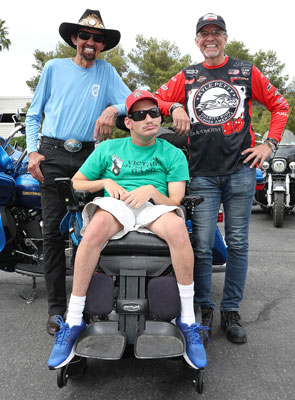
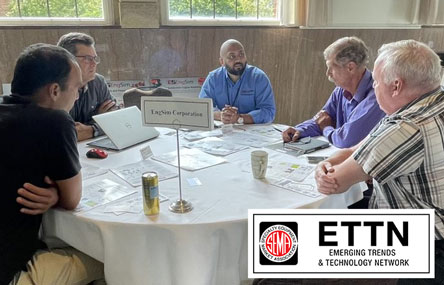 Product and service providers can now register for the 2023

 2023 Show. But the comfort of having a phone number available "just in case" something happens can often make you feel as safe as snapping in your seatbelt.