Tue, 03/31/2026 - 13:58

By Cristian Gonzalez

A Ford Fox Body Mustang.


Over the Past Few Years, Fox Bodies Have Made a Comeback—and the Aftermarket Is Responding With Increasing Ingenuity

They are so back!
 

And who would have thought? The iconic Fox-Body Mustangs of the '80s and early '90s are making a comeback in the restomod arena as well as increasing inroads into pro-touring motorsports.
 

If you attended the 2024 SEMA Show in Las Vegas or the PRI Show in Indianapolis, you might have noticed a more significant Fox-Body presence, signaling a return of these vehicles to the automotive spotlight amid the cultural zeitgeist for all things retro. They are popular once more—but why, and why now?
 

A RETURN TO GLORY DAYS

A Fox Body Mustang


The Fox-Body Mustang is the third generation in the Ford Mustang lineage, following the uncelebrated run of the Mustang II. Its manufacturing years were from '79–'93, with a significant change to the front end from a "four-eye" design to the more popular and recognizable aeronose in '87. Rear-end styles encompassed the notchback, hatchback or the less popular convertible. Ford offered such powertrain options as the 2.3L inline-4 Lima and the 3.8L Essex V6; however, it was the 5.0L High Output 302ci V8 that became synonymous with the platform.
 

To better understand the current market and find out what demographic is restomodding Fox Bodies, we contacted Manir Karim, owner of Our Dream Resto Mod, out of Salsbury, North Carolina. The hot-rod shop never labeled itself a Fox-Body specialty shop, but Karim considers himself a fan of the platform. Owning a few in his lifetime gave him the eye and creativity for some pristine builds. Word of the shop's work got around, and now Fox Bodies are their bread and butter.
 

"I would say we've been messing with them on a business level for the last 13 years or so," says Karim. "And definitely from when I first started to now, I'd say the last five years have been crazy as far as popularity."
 

Karim believes nostalgia plays a significant role in the platform's current revival. Most customers bringing in their Fox Bodies are in their 50s and 60s—either original owners or enthusiasts who recently bought the same model they drove in the '80s or '90s to relive the good times with modern upgrades.
 

The extent of vehicle modification has also paralleled the platform's popularity. Fox Bodies have always been easily modifiable cars with strong aftermarket support. But where modifiers were previously apprehensive about putting big money into restomodding them, Karim says that's not the case anymore.
 

"We've done many no-budget Fox-Body builds, which was unheard of because it was almost like you're throwing your money away. People would do it on fastback Mustangs or 'Cudas. Whatever it took, they would fix them, make them nice, but no one would do that with a Fox Body. But we have done quite a few six-figure builds, which in the grand scheme of things in the restoration world isn't much, but for Fox Bodies, it's a lot."
 

Karim, along with every other source for this article, sees the original targeted demographic for this vehicle now at an age where they are monetarily stable enough to invest in their high-school dream cars.
 

With more premium Fox-Body builds making waves, like Holley's pro-touring notchback at the recent SEMA Show, it's a green light for others to follow suit and take it further.
 

THE AFTERMARKET

A Fox Body Mustang


Several factors make third-gen Mustangs so popular within their restomod circles: their abundance in the secondhand market, their low market cost, aftermarket support, and how relatively simple they are to work on.
 

Modifiers typically start with five-lug conversions, permitting a wider wheel selection, followed by upgrades that enhance stance and handling, such as suspension and brake improvements. "Getting the stance right and putting a nice set of wheels goes a long way on these cars," expresses Karim.
 

Detroit Speed and Engineering made serious strides in the Fox-Body suspension market at the 2024 SEMA Show as the architect behind Holley Performance's Fox-Body build. (At that time Detroit Speed was under the Holley umbrella, but since has been acquired by QA1.) The performance notchback was Holley's booth vehicle promoting domestic muscle products and garnering favorable attention from attendees. Nathan Peterman, senior product design engineer at Detroit Speed, says with the rise in Fox-Body interest, the company wanted a project vehicle for use as a research and development canvas—a way to test new suspension systems.
 

"They're extremely well supported on a lot of the driveline stuff," says Peterman. "But we saw a hole for high-end-racing and pro-touring-type suspension. There's a lot of suspensions that have been on the market for a long time, but of course, with time you learn new things, and there's ways to improve upon it."
 

Companies like Detroit Speed are making third-gen Mustangs more prevalent in motorsports. While the vehicles have always been present in the drag-racing world, their unibody flex has hindered their cornering performance in other types of racing. But the aftermarket has been catching up to alleviate that trouble, and Detroit Speed has demonstrated the platform is far more capable than previously noticed.
 

The company has different levels of suspension conversions for the front and rear systems, but its notchback project utilizes Detroit Speed's Short Long Arm (SLA) conversion system that incorporates upper and lower control arms with coilovers. According to Peterman, track testing has demonstrated a significant drop in lap times when the front strut setup is exchanged for the new SLA system.

A Fox Body Mustang racing on a drag strip.


"We got a good chance to do back-to-back, similar weather, fresh tires for both runs on the same racetrack to see how advantageous it is to go to an SLA compared to a max effort strut suspension. We headed up the local track that we use and went from a minute 45 lap to a minute 43, just from the front suspension change."
 

In racing, 2 seconds can feel like an eternity, and when you add a Ford Performance 363 crate engine with a Holley 4150 intake and a Sniper throttle body, you show the performance world that Fox Bodies can hold their own beyond the dragstrip.
 

Peterman and the Detroit team "took it on Power Tour and probably put 8,000 to 10,000 miles on it last year, just driving it on the road to different events. We autocrossed it, we drag-raced it, drove on road courses, and all around it turned out to be a good everything vehicle… We saw a big uptick in road racing and autocross and the street pro touring scene. We wanted to jump on that and ride that wave of popularity on those."
 

When a Fox Body grabs a spotlight in a Holley booth, it's clear the platform isn't just back. It's building prominence. But Holley and Detroit Speed weren't the only ones making a buzz at SEMA with a Fox Body.
 

A NEW FRAMEWORK

A Fox Body SPEC Chassis at the SEMA Show from Roadster Shop.


More Fox and a little less Body, Roadster Shop's booth featured a remarkable display debuting their new SPEC Chassis for third-gen Mustangs. The display featured the new chassis bolted to a half-skeletonized body to mock up how their new frame would interact and bolt up to the original subframe.
 

Roadster Shop specializes in aftermarket chassis for both body-on-frame and unibody vehicles, and the SPEC chassis give the unibody cars body-on-frame handling while eliminating the shock towers, allowing more engine bay room and compatibility with popular powertrains.
 

The display certainly grabbed attention and widened some eyes, but just how responsive was the public to the release? Was there much demand for aftermarket products starting at $15,000 for this platform? According to Roadster Shop Co-Founder Jeremy Gerber, demand has indeed made the chassis a hot commodity.
 

Gerber explains that when they unveil a new product, it's typically a slow rollout. It's never a floodgate of overwhelming demand. However, "This particular product was the closest thing I could say we've experienced [to instant demand]. Honestly, I was shocked by the reaction and by how many initial sales we got… Right out of the gate, it's a pretty damn good performing product."
 

Roadster Shop didn't time the market for this release, but Gerber believes this phase in the platform's aftermarket growth was bound to explode based on its history. "It's not like it just came out of nowhere," he says. "It's been a popular car that people modify ever since its inception. It has a huge fan base… So I don't think we necessarily timed it to when the car became popular. I think we timed it so the right demographics are now getting to the point that they're willing to spend a little bit more money than in years past."
 

A GROWING FUTURE

A Fox Body mustang.


The aftermarket future looks bright for Fox Bodies. "I think it's just getting started," asserts Gerber, noting that the demand for higher-end level builds will increase. Shops like Our Dream are already making great strides with his new frame.
 

Karim had ordered the SPEC chassis for a client with an '81 T-top coupe and has big plans for the project. He hopes to show more consumers that a high-end Fox Body build is worth pursuing. "We're going to flush fit all the glass… And then we're going to [build] a pretty wild coyote. Hopefully, [we'll get] a four-digit car with more than 1,000 hp. We have some ideas on the body. We might do some unique engine bay stuff since the Roadster Shop chassis gives us a blank canvas for the engine compartment."
 

New products like the SPEC Chassis and Detroit's SLA system are opening new opportunities for Fox-Body builders and, as Karim expressed, offering a new slate for higher-end builds in a market seeking more from the platform. So, what's next?
 

Having built numerous Fox-Body Mustangs and being familiar with their stock and modified architecture, Karim hopes to see more support in exhaust systems. "There's tons of exhaust systems for these cars," he says, "but there's not an exhaust system that goes from the headers back that fits. Usually, this company will make a great header. That company will make a great mid-pipe, and then this company will make a great cat-back. But when you try to put it all together, you have to modify something to get it to fit nicely."

A Fox Body mustang.


For Gerber, higher-end bodywork is a gap that has yet to be filled in these builds. That could very well change in the coming years as more products are released for the platform, encouraging top-tier, SEMA Battle of the Builders-level vehicles.
 

Josh Stamper, vice president of marketing and new product development for SS Tubes, is familiar with the platform, having developed a two-piece fuel-line system that works around aftermarket subframe connectors for the third-gen. Stamper agrees we'll see significant movement with the body of these Mustangs in the coming years and predicts the Fox-Body aftermarket will soon mirror that of the first-generation Mustangs in some aspect.
 

He explained that with companies like Roadster Shop now offering complete chassis, a growing market for reproduction body panels—similar to what exists for late-'60s Mustangs—is likely to follow. Stamper concludes, "I think with Fox Bodies, in the next 10 years, we'll be able to purchase a brand-new shell and custom panels. I think they'll be that popular." 
 

Tue, 03/31/2026 - 13:58

By Cristian Gonzalez

A Ford Fox Body Mustang.


Over the Past Few Years, Fox Bodies Have Made a Comeback—and the Aftermarket Is Responding With Increasing Ingenuity

They are so back!
 

And who would have thought? The iconic Fox-Body Mustangs of the '80s and early '90s are making a comeback in the restomod arena as well as increasing inroads into pro-touring motorsports.
 

If you attended the 2024 SEMA Show in Las Vegas or the PRI Show in Indianapolis, you might have noticed a more significant Fox-Body presence, signaling a return of these vehicles to the automotive spotlight amid the cultural zeitgeist for all things retro. They are popular once more—but why, and why now?
 

A RETURN TO GLORY DAYS

A Fox Body Mustang


The Fox-Body Mustang is the third generation in the Ford Mustang lineage, following the uncelebrated run of the Mustang II. Its manufacturing years were from '79–'93, with a significant change to the front end from a "four-eye" design to the more popular and recognizable aeronose in '87. Rear-end styles encompassed the notchback, hatchback or the less popular convertible. Ford offered such powertrain options as the 2.3L inline-4 Lima and the 3.8L Essex V6; however, it was the 5.0L High Output 302ci V8 that became synonymous with the platform.
 

To better understand the current market and find out what demographic is restomodding Fox Bodies, we contacted Manir Karim, owner of Our Dream Resto Mod, out of Salsbury, North Carolina. The hot-rod shop never labeled itself a Fox-Body specialty shop, but Karim considers himself a fan of the platform. Owning a few in his lifetime gave him the eye and creativity for some pristine builds. Word of the shop's work got around, and now Fox Bodies are their bread and butter.
 

"I would say we've been messing with them on a business level for the last 13 years or so," says Karim. "And definitely from when I first started to now, I'd say the last five years have been crazy as far as popularity."
 

Karim believes nostalgia plays a significant role in the platform's current revival. Most customers bringing in their Fox Bodies are in their 50s and 60s—either original owners or enthusiasts who recently bought the same model they drove in the '80s or '90s to relive the good times with modern upgrades.
 

The extent of vehicle modification has also paralleled the platform's popularity. Fox Bodies have always been easily modifiable cars with strong aftermarket support. But where modifiers were previously apprehensive about putting big money into restomodding them, Karim says that's not the case anymore.
 

"We've done many no-budget Fox-Body builds, which was unheard of because it was almost like you're throwing your money away. People would do it on fastback Mustangs or 'Cudas. Whatever it took, they would fix them, make them nice, but no one would do that with a Fox Body. But we have done quite a few six-figure builds, which in the grand scheme of things in the restoration world isn't much, but for Fox Bodies, it's a lot."
 

Karim, along with every other source for this article, sees the original targeted demographic for this vehicle now at an age where they are monetarily stable enough to invest in their high-school dream cars.
 

With more premium Fox-Body builds making waves, like Holley's pro-touring notchback at the recent SEMA Show, it's a green light for others to follow suit and take it further.
 

THE AFTERMARKET

A Fox Body Mustang


Several factors make third-gen Mustangs so popular within their restomod circles: their abundance in the secondhand market, their low market cost, aftermarket support, and how relatively simple they are to work on.
 

Modifiers typically start with five-lug conversions, permitting a wider wheel selection, followed by upgrades that enhance stance and handling, such as suspension and brake improvements. "Getting the stance right and putting a nice set of wheels goes a long way on these cars," expresses Karim.
 

Detroit Speed and Engineering made serious strides in the Fox-Body suspension market at the 2024 SEMA Show as the architect behind Holley Performance's Fox-Body build. (At that time Detroit Speed was under the Holley umbrella, but since has been acquired by QA1.) The performance notchback was Holley's booth vehicle promoting domestic muscle products and garnering favorable attention from attendees. Nathan Peterman, senior product design engineer at Detroit Speed, says with the rise in Fox-Body interest, the company wanted a project vehicle for use as a research and development canvas—a way to test new suspension systems.
 

"They're extremely well supported on a lot of the driveline stuff," says Peterman. "But we saw a hole for high-end-racing and pro-touring-type suspension. There's a lot of suspensions that have been on the market for a long time, but of course, with time you learn new things, and there's ways to improve upon it."
 

Companies like Detroit Speed are making third-gen Mustangs more prevalent in motorsports. While the vehicles have always been present in the drag-racing world, their unibody flex has hindered their cornering performance in other types of racing. But the aftermarket has been catching up to alleviate that trouble, and Detroit Speed has demonstrated the platform is far more capable than previously noticed.
 

The company has different levels of suspension conversions for the front and rear systems, but its notchback project utilizes Detroit Speed's Short Long Arm (SLA) conversion system that incorporates upper and lower control arms with coilovers. According to Peterman, track testing has demonstrated a significant drop in lap times when the front strut setup is exchanged for the new SLA system.

A Fox Body Mustang racing on a drag strip.


"We got a good chance to do back-to-back, similar weather, fresh tires for both runs on the same racetrack to see how advantageous it is to go to an SLA compared to a max effort strut suspension. We headed up the local track that we use and went from a minute 45 lap to a minute 43, just from the front suspension change."
 

In racing, 2 seconds can feel like an eternity, and when you add a Ford Performance 363 crate engine with a Holley 4150 intake and a Sniper throttle body, you show the performance world that Fox Bodies can hold their own beyond the dragstrip.
 

Peterman and the Detroit team "took it on Power Tour and probably put 8,000 to 10,000 miles on it last year, just driving it on the road to different events. We autocrossed it, we drag-raced it, drove on road courses, and all around it turned out to be a good everything vehicle… We saw a big uptick in road racing and autocross and the street pro touring scene. We wanted to jump on that and ride that wave of popularity on those."
 

When a Fox Body grabs a spotlight in a Holley booth, it's clear the platform isn't just back. It's building prominence. But Holley and Detroit Speed weren't the only ones making a buzz at SEMA with a Fox Body.
 

A NEW FRAMEWORK

A Fox Body SPEC Chassis at the SEMA Show from Roadster Shop.


More Fox and a little less Body, Roadster Shop's booth featured a remarkable display debuting their new SPEC Chassis for third-gen Mustangs. The display featured the new chassis bolted to a half-skeletonized body to mock up how their new frame would interact and bolt up to the original subframe.
 

Roadster Shop specializes in aftermarket chassis for both body-on-frame and unibody vehicles, and the SPEC chassis give the unibody cars body-on-frame handling while eliminating the shock towers, allowing more engine bay room and compatibility with popular powertrains.
 

The display certainly grabbed attention and widened some eyes, but just how responsive was the public to the release? Was there much demand for aftermarket products starting at $15,000 for this platform? According to Roadster Shop Co-Founder Jeremy Gerber, demand has indeed made the chassis a hot commodity.
 

Gerber explains that when they unveil a new product, it's typically a slow rollout. It's never a floodgate of overwhelming demand. However, "This particular product was the closest thing I could say we've experienced [to instant demand]. Honestly, I was shocked by the reaction and by how many initial sales we got… Right out of the gate, it's a pretty damn good performing product."
 

Roadster Shop didn't time the market for this release, but Gerber believes this phase in the platform's aftermarket growth was bound to explode based on its history. "It's not like it just came out of nowhere," he says. "It's been a popular car that people modify ever since its inception. It has a huge fan base… So I don't think we necessarily timed it to when the car became popular. I think we timed it so the right demographics are now getting to the point that they're willing to spend a little bit more money than in years past."
 

A GROWING FUTURE

A Fox Body mustang.


The aftermarket future looks bright for Fox Bodies. "I think it's just getting started," asserts Gerber, noting that the demand for higher-end level builds will increase. Shops like Our Dream are already making great strides with his new frame.
 

Karim had ordered the SPEC chassis for a client with an '81 T-top coupe and has big plans for the project. He hopes to show more consumers that a high-end Fox Body build is worth pursuing. "We're going to flush fit all the glass… And then we're going to [build] a pretty wild coyote. Hopefully, [we'll get] a four-digit car with more than 1,000 hp. We have some ideas on the body. We might do some unique engine bay stuff since the Roadster Shop chassis gives us a blank canvas for the engine compartment."
 

New products like the SPEC Chassis and Detroit's SLA system are opening new opportunities for Fox-Body builders and, as Karim expressed, offering a new slate for higher-end builds in a market seeking more from the platform. So, what's next?
 

Having built numerous Fox-Body Mustangs and being familiar with their stock and modified architecture, Karim hopes to see more support in exhaust systems. "There's tons of exhaust systems for these cars," he says, "but there's not an exhaust system that goes from the headers back that fits. Usually, this company will make a great header. That company will make a great mid-pipe, and then this company will make a great cat-back. But when you try to put it all together, you have to modify something to get it to fit nicely."

A Fox Body mustang.


For Gerber, higher-end bodywork is a gap that has yet to be filled in these builds. That could very well change in the coming years as more products are released for the platform, encouraging top-tier, SEMA Battle of the Builders-level vehicles.
 

Josh Stamper, vice president of marketing and new product development for SS Tubes, is familiar with the platform, having developed a two-piece fuel-line system that works around aftermarket subframe connectors for the third-gen. Stamper agrees we'll see significant movement with the body of these Mustangs in the coming years and predicts the Fox-Body aftermarket will soon mirror that of the first-generation Mustangs in some aspect.
 

He explained that with companies like Roadster Shop now offering complete chassis, a growing market for reproduction body panels—similar to what exists for late-'60s Mustangs—is likely to follow. Stamper concludes, "I think with Fox Bodies, in the next 10 years, we'll be able to purchase a brand-new shell and custom panels. I think they'll be that popular." 
 

Tue, 03/31/2026 - 13:11

By Michael Imlay

An exterior shot of the SEMA Garage in Diamond Bar, California.


Launched in 2014, the SEMA Garage Program Continues to Evolve, Keeping SEMA Members at the Forefront of Innovation


When the SEMA Garage first opened in Diamond Bar, California, in 2014, attendees came to new-vehicle measuring sessions toting items like cardboard, tracing paper, calipers, yardsticks and pencils. Today, they come armed with laser scanners.
 

Held regularly throughout the year, these SEMA Garage gatherings offer aftermarket businesses of all sizes first-hand access to new OEM vehicles, enabling them to design, develop, prototype and speed new parts to market early in a vehicle's production cycle. And while the purpose of these sessions hasn't changed over time, the tools that today's attendees utilize underscore not only the rapid technological advancements transforming the automotive space, but the SEMA Garage's ongoing mission to keep the aftermarket at the leading edge of the tech evolution.
 

"Our mission is no different now than it was back then in 2014," says Jim Moore, SEMA vice president, OEM and product development. "We support companies that manufacture products so they can put the best possible products they can make into the market and give end users the best possible experience that they can have with their vehicles. We view the SEMA Garage as a sort of 'member skunkworks' where all SEMA-member companies can leverage modern research and development assets quickly, easily and affordably."
 

What has evolved are the tools in SEMA's arsenal. The Garage program now encompasses two facilities—the original 15,000-sq.-ft. Diamond Bar Garage at SEMA's headquarters, and a second, 45,000-sq.-ft. facility that opened four years ago in Detroit. Both locations offer a large array of services to SEMA members, including Tech Transfer, 3D scanning and printing, emissions-compliance testing, measuring sessions, and installation and training centers (see sidebar, p. 75). Additionally, both SEMA Garage facilities are equipped with ADAS Research Centers, where experts explore the implications of advanced driver assistance systems and their interplay with aftermarket vehicle modifications.
 

An exterior shot of SEMA Garage Detroit


Moore notes that a key goal of the SEMA Garage program is to anticipate and identify new automotive trends and technologies to help SEMA members stay ahead of the curve and future-proof their businesses.
 

"We're creating a portfolio of tools that's expanding at the rate at which our market is demanding new access, new tools and new pathways," he explains, adding that exposure to the latest innovations can also accelerate their adoption among SEMA-member businesses.
 

Take, for example, laser scanners and 3D printers. When the first SEMA Garage opened, many smaller aftermarket parts makers were unfamiliar with such tools, let alone their capabilities and value for even a small operation. But after experiencing their potential through the Garage, more and more shops and companies began investing in these devices. Today they're common tools of the trade for builders, garages and parts manufacturers alike.
 

FROM ANALOG TO SOFTWARE-DEFINED


Yet these innovations pale in comparison to what's coming down the pike. According to Moore, the automotive industry is on the verge of a "macro technology shift" that will soon transform the "analog" cars and trucks of yesterday into the "software-defined vehicle [SDV] platforms" of tomorrow. From emissions-controlled internal-combustion engines (ICE) to electric powertrains and autonomous systems, "technology is going to redefine how we build, modify, enjoy and interact with our vehicles," he observes.
 

"What we're seeing now is really a radically new interpretation of what a vehicle can be," continues Moore. "All of the inputs in the vehicle are effectively becoming software-driven systems. What was once primarily an ecosystem of hardware upgrades is quickly expanding to include entirely new software-generated performance and user experiences."
 

And that radical shift is coming faster than perhaps any previous development in the automobile's 140-year history, requiring equally rapid adaption from SEMA and its members. As a critical hub in the association's response, the SEMA Garage is now working to expand its tools, research expertise and policy influence to ensure that aftermarket manufacturers can continue to innovate safely, legally and profitably as they navigate this evolution.
 

Meanwhile, Moore says the Garage also continues to build on the successes of existing services. Notably among them is the SEMA emissions compliance program, which has helped product developers achieve nearly 1,000 California Air Resources Board (CARB) executive orders (EOs) over the past 12 years.
 

This is no small achievement. The passage of the federal Clean Air Act in the '70s presented a major challenge to automotive parts manufacturing. Any product that might adversely impact vehicle emissions became illegal unless it could demonstrate compliance with clean-air standards. The main path to doing so meant undergoing CARB-prescribed emissions testing and documentation to obtain a CARB EO, effectively clearing a part for legal sale. The stakes were high: fines for noncompliance before sale could reach tens of thousands of dollars per part.
 

But many aftermarket manufacturers found CARB testing complicated, expensive and time consuming. The uncertainties around the entire process threatened to stifle the performance industry. Launched with the opening of the first SEMA Garage and expanded with the addition of the Detroit facility, the SEMA Garage emissions testing and certification program helped streamline the process, rein in costs and offer a surer path to compliance.
 

A car undergoing emissions testing at SEMA Garage.


More recently, the SEMA Garage also introduced the SEMA Certified program, an EPA-accepted process for "49-state legality" that further fast-tracks the certification and sale of parts in all other states while a manufacturer awaits a final CARB EO for California. This has been a tremendous boon for speeding new parts to market, with approximately 200 certifications approved to date. Moreover, thanks to SEMA Garage testing and awareness programs targeted to the industry, aftermarket emissions compliance has grown dramatically.
 

"Our industry has made incredible progress in, frankly, a short amount of time," says Eric Snyder, SEMA senior director, federal government affairs. "The amount of demonstrated compliance has risen dramatically over the last 15 years, and SEMA has been at the forefront of that. The association has made significant investments to make it easier for SEMA member companies to do the testing to demonstrate emissions compliance, and that has given us tremendous credibility when we advocate for the industry in both Sacramento and Washington, D.C."
 

Moore is quick to underscore that SEMA Garage's emissions and other programs help level the playing field for smaller aftermarket businesses which might otherwise lack the resources for emissions testing and costly research and development efforts.
 

"We're one of the largest, most diverse communities of small-business manufacturers in the world," he explains. "We have some 3,500 companies that are making, innovating, creating and following dreams—doing things that normally only larger companies could do. By democratizing innovation across such a large base, we're empowering these small businesses to find new pathways and scale. That's one of our duties as an association—to connect people to resources, socialize ideas and give them a voice at the table."
 

FUTURE-PROOFING AN INDUSTRY


According to Moore, emissions compliance was a defining issue for SEMA, which learned a major lesson from its experiences safeguarding the industry's right to modify. "We were somewhat reactive on emissions. It taught us we need to be more proactive going forward," he observes, especially with the urgent challenge of addressing ADAS.
 

"ADAS systems are going to reshape the automotive experience and will have significantly greater impact on our industry than emissions did," Moore predicts.
 

Utilizing cameras, lidar and radar, these systems automate such vehicle safety functions as emergency braking, lane-keeping and adaptive cruise control, among others. And while OEMs are rolling them out rapidly in their new vehicles, the systems have yet to be standardized across automakers. Moreover, government regulators have adopted a cautious approach to setting blanket standards, preferring to see how many of these technologies shake out before mandating them.
 

3D scanning a vehicle in the SEMA Garage.


Regardless, these technologies have vast implications for vehicle modifications. As vehicles become further "software defined," ADAS is certain to become more deeply integrated within vehicle platforms. Even now, lifting, leveling or lowering a vehicle can interfere with ADAS sensors and their calibration. An aftermarket bumper or winch or a new wheel/tire combo can easily throw off ADAS features, rendering a vehicle unsafe. The wrong mods can void OEM warranties and raise huge liability issues.
 

"Many aftermarket manufacturers don't yet realize they're even affected," adds Luis Morales, SEMA director, vehicle technology and product development. "There's going to be a spike in urgency as ADAS features become federally mandated or undefeatable."
 

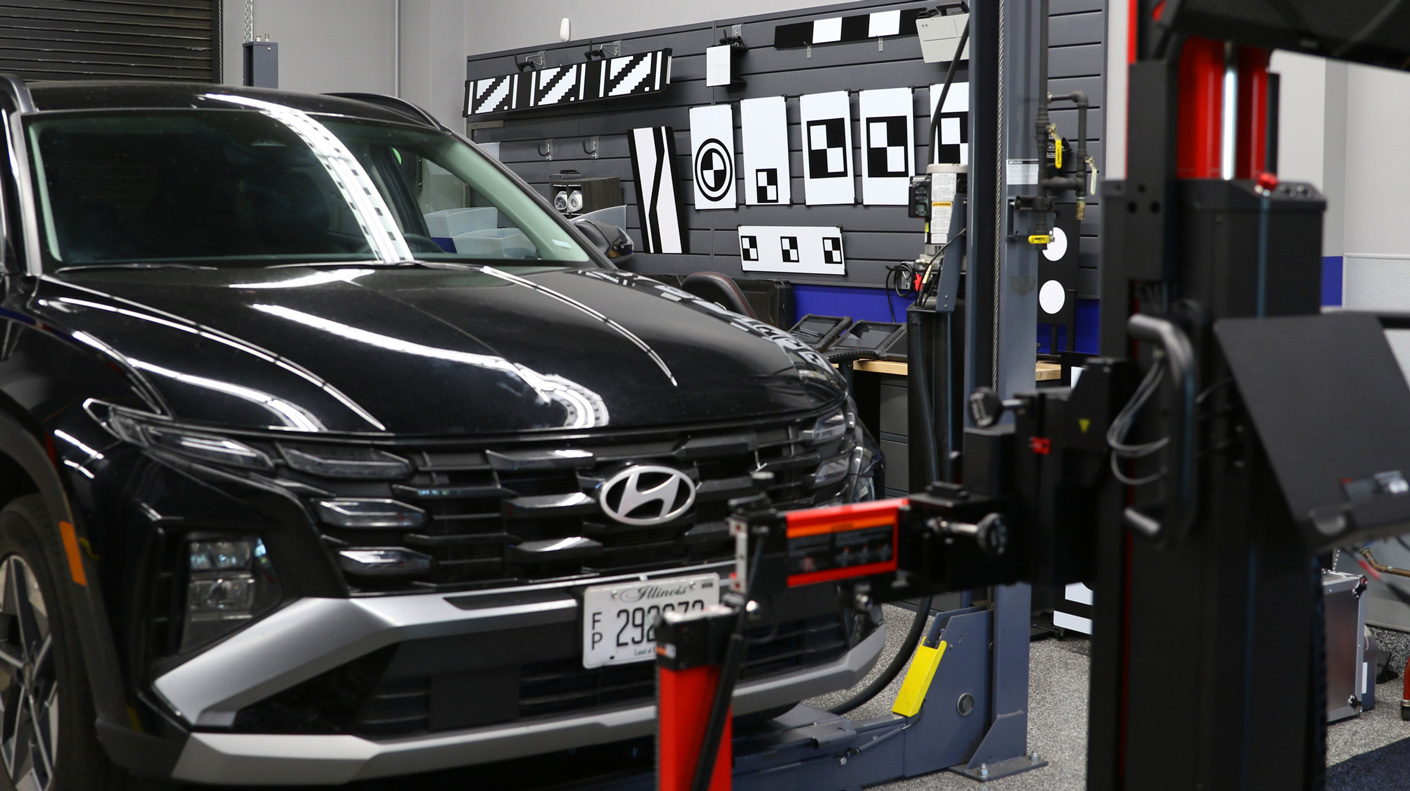
The SEMA Garage's response is the ADAS Research Centers located in both facilities. As ADAS "think tanks," the centers feature purpose-built environments, calibration systems and OEM scan tools so SEMA members can test, recalibrate and validate the fitment and function of their parts with ADAS features. The centers also research and produce white papers to help the aftermarket safely navigate these new technologies.
 

"We need to translate these concepts and educate our members so they can validate that their products aren't going to negatively impact how these systems work," explains Morales.
 

Keeping pace with propulsion technologies, the SEMA Garage has also been adding support for electrified vehicle (EV) and hybrid electrified vehicle (HEV) systems, including the specialized tools, safety and charging equipment required to work with such platforms. These updates will assist companies in developing parts for new- tech vehicles as well as the rapidly expanding EV conversion market.
 

But according to Morales, these additions are just the beginning of a larger range of programs the Garage is developing to help future-proof the aftermarket.
 

"EVs and HEVs are not the only vehicle propulsion solutions out there," he explains. "There are also new ICE opportunities emerging in hydrogen, gaseous fuels and commercial platforms. We're addressing this diversity to help assure our members that their product development won't just hit a dead end in five years. These technologies make the overall landscape of our industry much more colorful and present us with a lot more options."
 

From his vantage point in the SEMA government and public affairs office, Snyder views the SEMA Garage program as a vital pillar of the association's policy and advocacy work, lending credibility to discussions with regulatory agencies and lawmakers.
 

"One of our top legislative priorities right now is getting Congress to pass the ADAS Functionality and Integrity Act, a bill that would require the federal government to create guidelines for ADAS tolerances that would address calibration information gaps that currently exist," he notes, adding that SEMA Garage research and data is also crucial when engaging with the EPA, CARB, DOT, NHTSA and other agencies. Ultimately, he says, policy certainty reduces business risk and accelerates industry innovation.
 

STAYING AGILE, FINDING SOLUTIONS


A SEMA Garage staffer looking at 3D scans of a vehicle.


Moore, Snyder and Morales all agree that the future of the automotive space will remain fast-moving and unpredictable—but most of all exciting. "It would be irresponsible to try to project that we know everything that's coming with precision, but we do know that technology is going to be moving quickly," Moore emphasizes.
 

Still, whatever twists and turns lie ahead, the SEMA Garage plans to remain agile, investing in the right tools and talent for the drive forward while deepening relationships with OEMs and policymakers to protect aftermarket access in the emerging SDV landscape.
 

"If we don't have those conversations," cautions Morales, "the aftermarket will find itself shut out very quickly." But as Snyder also hastens to add, through the SEMA Garage and association advocacy efforts "we now have a seat at the table, not just at local, state and national levels, but at a global level as well."
 

In the end, concludes Moore, "technology is about solving problems, and our job is to make sure the right people are paying attention to the right problems." 
 

Tue, 03/31/2026 - 13:11

By Michael Imlay

An exterior shot of the SEMA Garage in Diamond Bar, California.


Launched in 2014, the SEMA Garage Program Continues to Evolve, Keeping SEMA Members at the Forefront of Innovation


When the SEMA Garage first opened in Diamond Bar, California, in 2014, attendees came to new-vehicle measuring sessions toting items like cardboard, tracing paper, calipers, yardsticks and pencils. Today, they come armed with laser scanners.
 

Held regularly throughout the year, these SEMA Garage gatherings offer aftermarket businesses of all sizes first-hand access to new OEM vehicles, enabling them to design, develop, prototype and speed new parts to market early in a vehicle's production cycle. And while the purpose of these sessions hasn't changed over time, the tools that today's attendees utilize underscore not only the rapid technological advancements transforming the automotive space, but the SEMA Garage's ongoing mission to keep the aftermarket at the leading edge of the tech evolution.
 

"Our mission is no different now than it was back then in 2014," says Jim Moore, SEMA vice president, OEM and product development. "We support companies that manufacture products so they can put the best possible products they can make into the market and give end users the best possible experience that they can have with their vehicles. We view the SEMA Garage as a sort of 'member skunkworks' where all SEMA-member companies can leverage modern research and development assets quickly, easily and affordably."
 

What has evolved are the tools in SEMA's arsenal. The Garage program now encompasses two facilities—the original 15,000-sq.-ft. Diamond Bar Garage at SEMA's headquarters, and a second, 45,000-sq.-ft. facility that opened four years ago in Detroit. Both locations offer a large array of services to SEMA members, including Tech Transfer, 3D scanning and printing, emissions-compliance testing, measuring sessions, and installation and training centers (see sidebar, p. 75). Additionally, both SEMA Garage facilities are equipped with ADAS Research Centers, where experts explore the implications of advanced driver assistance systems and their interplay with aftermarket vehicle modifications.
 

An exterior shot of SEMA Garage Detroit


Moore notes that a key goal of the SEMA Garage program is to anticipate and identify new automotive trends and technologies to help SEMA members stay ahead of the curve and future-proof their businesses.
 

"We're creating a portfolio of tools that's expanding at the rate at which our market is demanding new access, new tools and new pathways," he explains, adding that exposure to the latest innovations can also accelerate their adoption among SEMA-member businesses.
 

Take, for example, laser scanners and 3D printers. When the first SEMA Garage opened, many smaller aftermarket parts makers were unfamiliar with such tools, let alone their capabilities and value for even a small operation. But after experiencing their potential through the Garage, more and more shops and companies began investing in these devices. Today they're common tools of the trade for builders, garages and parts manufacturers alike.
 

FROM ANALOG TO SOFTWARE-DEFINED


Yet these innovations pale in comparison to what's coming down the pike. According to Moore, the automotive industry is on the verge of a "macro technology shift" that will soon transform the "analog" cars and trucks of yesterday into the "software-defined vehicle [SDV] platforms" of tomorrow. From emissions-controlled internal-combustion engines (ICE) to electric powertrains and autonomous systems, "technology is going to redefine how we build, modify, enjoy and interact with our vehicles," he observes.
 

"What we're seeing now is really a radically new interpretation of what a vehicle can be," continues Moore. "All of the inputs in the vehicle are effectively becoming software-driven systems. What was once primarily an ecosystem of hardware upgrades is quickly expanding to include entirely new software-generated performance and user experiences."
 

And that radical shift is coming faster than perhaps any previous development in the automobile's 140-year history, requiring equally rapid adaption from SEMA and its members. As a critical hub in the association's response, the SEMA Garage is now working to expand its tools, research expertise and policy influence to ensure that aftermarket manufacturers can continue to innovate safely, legally and profitably as they navigate this evolution.
 

Meanwhile, Moore says the Garage also continues to build on the successes of existing services. Notably among them is the SEMA emissions compliance program, which has helped product developers achieve nearly 1,000 California Air Resources Board (CARB) executive orders (EOs) over the past 12 years.
 

This is no small achievement. The passage of the federal Clean Air Act in the '70s presented a major challenge to automotive parts manufacturing. Any product that might adversely impact vehicle emissions became illegal unless it could demonstrate compliance with clean-air standards. The main path to doing so meant undergoing CARB-prescribed emissions testing and documentation to obtain a CARB EO, effectively clearing a part for legal sale. The stakes were high: fines for noncompliance before sale could reach tens of thousands of dollars per part.
 

But many aftermarket manufacturers found CARB testing complicated, expensive and time consuming. The uncertainties around the entire process threatened to stifle the performance industry. Launched with the opening of the first SEMA Garage and expanded with the addition of the Detroit facility, the SEMA Garage emissions testing and certification program helped streamline the process, rein in costs and offer a surer path to compliance.
 

A car undergoing emissions testing at SEMA Garage.


More recently, the SEMA Garage also introduced the SEMA Certified program, an EPA-accepted process for "49-state legality" that further fast-tracks the certification and sale of parts in all other states while a manufacturer awaits a final CARB EO for California. This has been a tremendous boon for speeding new parts to market, with approximately 200 certifications approved to date. Moreover, thanks to SEMA Garage testing and awareness programs targeted to the industry, aftermarket emissions compliance has grown dramatically.
 

"Our industry has made incredible progress in, frankly, a short amount of time," says Eric Snyder, SEMA senior director, federal government affairs. "The amount of demonstrated compliance has risen dramatically over the last 15 years, and SEMA has been at the forefront of that. The association has made significant investments to make it easier for SEMA member companies to do the testing to demonstrate emissions compliance, and that has given us tremendous credibility when we advocate for the industry in both Sacramento and Washington, D.C."
 

Moore is quick to underscore that SEMA Garage's emissions and other programs help level the playing field for smaller aftermarket businesses which might otherwise lack the resources for emissions testing and costly research and development efforts.
 

"We're one of the largest, most diverse communities of small-business manufacturers in the world," he explains. "We have some 3,500 companies that are making, innovating, creating and following dreams—doing things that normally only larger companies could do. By democratizing innovation across such a large base, we're empowering these small businesses to find new pathways and scale. That's one of our duties as an association—to connect people to resources, socialize ideas and give them a voice at the table."
 

FUTURE-PROOFING AN INDUSTRY


According to Moore, emissions compliance was a defining issue for SEMA, which learned a major lesson from its experiences safeguarding the industry's right to modify. "We were somewhat reactive on emissions. It taught us we need to be more proactive going forward," he observes, especially with the urgent challenge of addressing ADAS.
 

"ADAS systems are going to reshape the automotive experience and will have significantly greater impact on our industry than emissions did," Moore predicts.
 

Utilizing cameras, lidar and radar, these systems automate such vehicle safety functions as emergency braking, lane-keeping and adaptive cruise control, among others. And while OEMs are rolling them out rapidly in their new vehicles, the systems have yet to be standardized across automakers. Moreover, government regulators have adopted a cautious approach to setting blanket standards, preferring to see how many of these technologies shake out before mandating them.
 

3D scanning a vehicle in the SEMA Garage.


Regardless, these technologies have vast implications for vehicle modifications. As vehicles become further "software defined," ADAS is certain to become more deeply integrated within vehicle platforms. Even now, lifting, leveling or lowering a vehicle can interfere with ADAS sensors and their calibration. An aftermarket bumper or winch or a new wheel/tire combo can easily throw off ADAS features, rendering a vehicle unsafe. The wrong mods can void OEM warranties and raise huge liability issues.
 

"Many aftermarket manufacturers don't yet realize they're even affected," adds Luis Morales, SEMA director, vehicle technology and product development. "There's going to be a spike in urgency as ADAS features become federally mandated or undefeatable."
 

The SEMA Garage's response is the ADAS Research Centers located in both facilities. As ADAS "think tanks," the centers feature purpose-built environments, calibration systems and OEM scan tools so SEMA members can test, recalibrate and validate the fitment and function of their parts with ADAS features. The centers also research and produce white papers to help the aftermarket safely navigate these new technologies.
 

"We need to translate these concepts and educate our members so they can validate that their products aren't going to negatively impact how these systems work," explains Morales.
 

Keeping pace with propulsion technologies, the SEMA Garage has also been adding support for electrified vehicle (EV) and hybrid electrified vehicle (HEV) systems, including the specialized tools, safety and charging equipment required to work with such platforms. These updates will assist companies in developing parts for new- tech vehicles as well as the rapidly expanding EV conversion market.
 

But according to Morales, these additions are just the beginning of a larger range of programs the Garage is developing to help future-proof the aftermarket.
 

"EVs and HEVs are not the only vehicle propulsion solutions out there," he explains. "There are also new ICE opportunities emerging in hydrogen, gaseous fuels and commercial platforms. We're addressing this diversity to help assure our members that their product development won't just hit a dead end in five years. These technologies make the overall landscape of our industry much more colorful and present us with a lot more options."
 

From his vantage point in the SEMA government and public affairs office, Snyder views the SEMA Garage program as a vital pillar of the association's policy and advocacy work, lending credibility to discussions with regulatory agencies and lawmakers.
 

"One of our top legislative priorities right now is getting Congress to pass the ADAS Functionality and Integrity Act, a bill that would require the federal government to create guidelines for ADAS tolerances that would address calibration information gaps that currently exist," he notes, adding that SEMA Garage research and data is also crucial when engaging with the EPA, CARB, DOT, NHTSA and other agencies. Ultimately, he says, policy certainty reduces business risk and accelerates industry innovation.
 

STAYING AGILE, FINDING SOLUTIONS


A SEMA Garage staffer looking at 3D scans of a vehicle.


Moore, Snyder and Morales all agree that the future of the automotive space will remain fast-moving and unpredictable—but most of all exciting. "It would be irresponsible to try to project that we know everything that's coming with precision, but we do know that technology is going to be moving quickly," Moore emphasizes.
 

Still, whatever twists and turns lie ahead, the SEMA Garage plans to remain agile, investing in the right tools and talent for the drive forward while deepening relationships with OEMs and policymakers to protect aftermarket access in the emerging SDV landscape.
 

"If we don't have those conversations," cautions Morales, "the aftermarket will find itself shut out very quickly." But as Snyder also hastens to add, through the SEMA Garage and association advocacy efforts "we now have a seat at the table, not just at local, state and national levels, but at a global level as well."
 

In the end, concludes Moore, "technology is about solving problems, and our job is to make sure the right people are paying attention to the right problems." 
 

Tue, 03/31/2026 - 12:10


From the SEMA Washington, D.C., office


An image of off-road vehicles in action, overlaid with the ORBA powered by SEMA logo.


Good news: the U.S. House Natural Resources Committee recently held a hearing on H.R. 7979 the Public Lands Access Restoration Act (PLARA), a SEMA and ORBA-supported bill that would restore the presumption that public lands managed by the U.S. Forest Service and Bureau of Land Management (BLM) are open for all different types of recreation, including motorized use, unless there is a reason for a designated closure. 


Your help is still needed: send a letter to your U.S. Representative in support of H.R. 7979.  


The bill seeks to restore a long-standing "open unless posted closed" policy for lands managed by the Forest Service and BLM, reversing more restrictive access policies that have been in place since 2005.  


U.S. Representatives Jeff Crank (R-CO) and Mike Kennedy (R-UT) recently introduced the Public Lands Access Restoration Act to restore recreational access to public lands unless the land managers are able to justify closures based on resource protection or public safety reasons. The bill increases transparency and accountability in how access decisions are made on BLM and Forrest Service lands and establishes a clearer review process for restricting recreation, with the goal of balancing conservation priorities with recreational use. 


SEMA and ORBA strongly support H.R. 7979 and included the following remark in the official press release announcing Reps. Crank and Kennedy's introduction of the bill. 


"On behalf of motorized recreational businesses and the millions of off-road enthusiasts who support the industry, SEMA and ORBA thank Reps. Crank and Kennedy for introducing the Public Lands Access Restoration Act," said Karen Bailey-Chapman, the senior vice president of Government and Public Affairs for SEMA. "This bill offers an important policy shift to ensure that BLM- and Forest Service-managed lands are open to motorized vehicles unless there is a justifiable resource protection or public safety need to prohibit motorized access. We strongly support the return to an 'open unless posted closed' policy on public lands."


PLARA would restore and expand recreational access to public lands, which is critical to the local economies of communities throughout the country that depend on recreational tourism. If enacted into law, this bill will support tourism, outdoor businesses and the broader recreation economy, particularly in rural areas that rely heavily on public land use.  


The introduction of PLARA adds to ongoing congressional efforts to address access and infrastructure challenges on federal lands, building on recent bipartisan interest in outdoor recreation policy. As the bill moves forward, stakeholders across the recreation and conservation communities are expected to engage closely on its implications for access, land management, and resource protection. 


Questions? Want to invite the SEMA team to go off-roading? Contact Juan Mejia, SEMA's Senior Manager of Government Affairs, at juanm@sema.org  


This story was originally published on Tuesday, March 31.


Image courtesy of Shutterstock | Reinhardt and Co

Tue, 03/31/2026 - 12:06

By Ashley Reyes
 

Graphic of a loudspeaker with the words Call for SEMA Scholarship Judges, Apply Now.


The SEMA Scholarship Program supports career development and access to the automotive industry by offering financial awards of up to $5,000 to students preparing for automotive careers. Volunteer judges play a vital role in reviewing scholarship applications and selecting deserving recipients.
 

Judges will review inspiring stories and accomplishments that highlight the talent and determination of the industry's next generation. These stories showcase students' passion for the aftermarket and the skills and perspectives shaping its future.
 

Volunteer hours are flexible and can be completed remotely on your schedule. Judging runs from late April through May. Learn more and apply to volunteer.

Red button with white text, with the word "VOLUNTEER."


Learn more about the SEMA Scholarship Program at sema.org/scholarships.

Tue, 03/31/2026 - 11:31

From the SEMA Washington, D.C., office

SEMA and PRI logos over a picture of the US capitol.


SEMA and PRI are building up its capacity to advocate for the motorsports community, adding two new strategic roles on its Washington, D.C., government affairs team to bring more focus to racing and its legislative and regulatory issues.

"The addition of these positions is a strategic investment back into the motorsports community, which is a significant economic driver and a jewel in the crown of American culture," said Karen Bailey-Chapman, SEMA senior vice president for public and government affairs. "When SEMA and PRI support racetracks, we're supporting community, innovation and our nation's competitive spirit; these new roles are in service to that calling."

SEMA is promoting Tierra Hubbard to director of government affairs for racing. In this new role, Hubbard will lead advocacy on racing-specific issues at local, state and federal levels, including developing and executing proactive legislative strategies to advance positive, racing-friendly policies at all levels of government. Hubbard, previously SEMA senior manager for state government affairs, has played a pivotal role in both organizations' national Right-to-Race campaign, helping deliver meaningful wins on the eastern half of the U.S.

"Tierra is one of the hardest-working and most effective advocates in our organization, and she's earned the respect of lawmakers and the racing community alike. Over the past year, she has led the charge on our Right-to-Race efforts, helping drive meaningful progress in multiple states and building the coalitions needed to sustain that momentum," said SEMA Senior Director for State Government Affairs Christian Robinson. "We are thrilled to see her step into this new role, where her leadership and work ethic will continue to deliver results for the motorsports community."

"Working with SEMA and PRI on motorsports initiatives has been incredibly rewarding, and because of my father's passion for racing, it serves as a personal reminder of why racetracks mean so much to communities across the country," said Hubbard. "I'm excited to get on the road, meet with track owners, drivers, pit crews and fans, and continue advancing the Right-to-Race campaign to protect and preserve this cultural treasure for generations to come."

Hubbard, a native of Minnesota, holds a degree in political science and criminal justice from George Washington University.

Lifelong motorsports enthusiast and seasoned political operative Coby Lobaugh is joining SEMA as grassroots manager for racing. This new position will help engage the motorsports community in advocacy efforts. Lobaugh brings with him a lengthy track record of success in managing digital advocacy campaigns for political candidates, not-for-profit organizations and members of the U.S. Congress.

In this new role, Lobaugh will support the efforts of SEMA and PRI to activate and educate track owners, drivers, fans and local communities on key legislative priorities.

"We're thrilled to add Coby to the PRI Government Affairs team and believe he adds a potent mix of motorsports enthusiasm and digital communications acumen," said SEMA Political Director Lauren Wilbor. "This is a critical step as PRI continues to build up our capacity to advocate for the nation's motorsports industry and its $69 billion annual economic impact, while engaging and mobilizing the people with whom the racetrack is a second home."

Lobaugh joins PRI from Judicial Watch, where he created content and oversaw broadcast productions reaching the organization's more than 7-million audience members. He also served as digital director for Rep. Mike Lawler's successful electoral campaign in New York, and built a compelling and engaging online communications platform for Rep. Lauren Boebert (R-Colo.). Lobaugh's passion for cars and automotive culture is well-documented, including stints as a contributor and photographer for Viper Quarterly Magazine, an enthusiast-focused publication devoted to Dodge's iconic sports car.

"Anyone who loves cars knows and appreciates what PRI is doing to preserve American car culture and protect our nation's motorsports industry," Lobaugh said. "It's exciting to have this opportunity to work directly with those who pour their hearts and souls into racing and motorsports and ensure that this vibrant part of our nation's heritage continues to flourish."

Lobaugh is a Texas native and holds a degree in broadcast production from Sam Houston State University.

Tue, 03/31/2026 - 11:31

From the SEMA Washington, D.C., office

SEMA and PRI logos over a picture of the US capitol.


SEMA and PRI are building up its capacity to advocate for the motorsports community, adding two new strategic roles on its Washington, D.C., government affairs team to bring more focus to racing and its legislative and regulatory issues.

"The addition of these positions is a strategic investment back into the motorsports community, which is a significant economic driver and a jewel in the crown of American culture," said Karen Bailey-Chapman, SEMA senior vice president for public and government affairs. "When SEMA and PRI support racetracks, we're supporting community, innovation and our nation's competitive spirit; these new roles are in service to that calling."

SEMA is promoting Tierra Hubbard to director of government affairs for racing. In this new role, Hubbard will lead advocacy on racing-specific issues at local, state and federal levels, including developing and executing proactive legislative strategies to advance positive, racing-friendly policies at all levels of government. Hubbard, previously SEMA senior manager for state government affairs, has played a pivotal role in both organizations' national Right-to-Race campaign, helping deliver meaningful wins on the eastern half of the U.S.

"Tierra is one of the hardest-working and most effective advocates in our organization, and she's earned the respect of lawmakers and the racing community alike. Over the past year, she has led the charge on our Right-to-Race efforts, helping drive meaningful progress in multiple states and building the coalitions needed to sustain that momentum," said SEMA Senior Director for State Government Affairs Christian Robinson. "We are thrilled to see her step into this new role, where her leadership and work ethic will continue to deliver results for the motorsports community."

"Working with SEMA and PRI on motorsports initiatives has been incredibly rewarding, and because of my father's passion for racing, it serves as a personal reminder of why racetracks mean so much to communities across the country," said Hubbard. "I'm excited to get on the road, meet with track owners, drivers, pit crews and fans, and continue advancing the Right-to-Race campaign to protect and preserve this cultural treasure for generations to come."

Hubbard, a native of Minnesota, holds a degree in political science and criminal justice from George Washington University.

Lifelong motorsports enthusiast and seasoned political operative Coby Lobaugh is joining SEMA as grassroots manager for racing. This new position will help engage the motorsports community in advocacy efforts. Lobaugh brings with him a lengthy track record of success in managing digital advocacy campaigns for political candidates, not-for-profit organizations and members of the U.S. Congress.

In this new role, Lobaugh will support the efforts of SEMA and PRI to activate and educate track owners, drivers, fans and local communities on key legislative priorities.

"We're thrilled to add Coby to the PRI Government Affairs team and believe he adds a potent mix of motorsports enthusiasm and digital communications acumen," said SEMA Political Director Lauren Wilbor. "This is a critical step as PRI continues to build up our capacity to advocate for the nation's motorsports industry and its $69 billion annual economic impact, while engaging and mobilizing the people with whom the racetrack is a second home."

Lobaugh joins PRI from Judicial Watch, where he created content and oversaw broadcast productions reaching the organization's more than 7-million audience members. He also served as digital director for Rep. Mike Lawler's successful electoral campaign in New York, and built a compelling and engaging online communications platform for Rep. Lauren Boebert (R-Colo.). Lobaugh's passion for cars and automotive culture is well-documented, including stints as a contributor and photographer for Viper Quarterly Magazine, an enthusiast-focused publication devoted to Dodge's iconic sports car.

"Anyone who loves cars knows and appreciates what PRI is doing to preserve American car culture and protect our nation's motorsports industry," Lobaugh said. "It's exciting to have this opportunity to work directly with those who pour their hearts and souls into racing and motorsports and ensure that this vibrant part of our nation's heritage continues to flourish."

Lobaugh is a Texas native and holds a degree in broadcast production from Sam Houston State University.

Tue, 03/31/2026 - 11:18

By Ashley Reyes

HRIA General Membership Meeting graphic.


On Tuesday, April 28, at 10:00 a.m. PT/1:00 p.m. ET, the SEMA Hot Rod Industry Alliance (HRIA) will host a General Membership Meeting and Panel Discussion on "Building Your Future Workforce: Practical Hiring Pathways for Automotive Businesses."
 

Designed to address the urgent need for sustainable talent pipelines in the industry, this session will help automotive businesses strengthen their future workforce by understanding proven talent pathways, including hands-on training, certified education and institutional college programs, as well as helping students and parents see that there is more than one road to success.
 

Moderated by Kevin Webb, owner at Hot Rod Custom Garage, the session will feature panelists George Arrants, vice president at ASE Education Foundation; Cindy Barlow, director of industry relations at Wyotech; and Aaron Valencia, executive director and founder at Los Angels Career Center. Together, they will help shop owners understand what students value today, how to communicate career progression clearly, and how to build a culture that supports long-term retention and growth.
 

Discussion topics include:

  • Talent pipeline challenges and growth strategies
  • Multiple entry ways into the industry
  • The early engagement and mentorship model
  • Career profession and retention strategies
  • Aligning shop culture with next-generation workforce expectations
  • Action steps for partnership and hiring within 90 days
  • Executing a long-term industry-to-education vision


Whether you're looking to attract, develop or retain the next generation of talent at your business, this event will help you understand the training pathways available today, how to connect with emerging talent and actionable steps you can take immediately to begin building a stronger workforce pipeline.
 

Register.

Tue, 03/31/2026 - 11:18

By SEMA News Editors
 

An aerial image of the Las Vegas Strip and hotels.


Travel costs can stack up quickly for business travel, but SEMA Show organizers are helping attendees stay on budget with exclusive hotel rates, added perks and a streamlined booking experience for 2026.

SEMA Show's block of Las Vegas hotels offers options across every price tier, with the best nightly rates — plus exclusive perks and a simple, affordable booking process.

Hotel reservations for the 2026 SEMA Show, November 3-6, Las Vegas, can be made online at semashow.com/hotel.


Red button with the words "Book Here".


See the top five benefits of booking your 2026 SEMA Show hotel through our only official partner, onPeak, below:


Deep Value and Discounts 

SEMA negotiates the lowest available nightly rates -- often below hotel rack rates. Skip the hours of searching online and book directly through onPeak--but don't wait! Visit semashow.com/hotel as early as possible to lock in the best available rates. 


Even better, organizers will price-match if you find a lower rate -- so there's no downside to booking within the official SEMA Show hotel block.


Earn Hotel Rewards Points 

Hotel rewards points add up quickly, especially during trade show travel. Reservations made through official SEMA Show hotels are eligible for loyalty programs. Simply enter your rewards number when booking, and you're set.


For example, SEMA Showgoers who are already Marriott Bonvoy members (a free program) can earn points by following these steps:

  • Book your SEMA Show hotel through onPeak, the official housing provider. Select a Marriott or MGM property.
  • Enter your unique Marriott Bonvoy number in the "Hotel Rewards" section upon check-out. 
  • IMPORTANT: Provide your Marriott Bonvoy number again at the front desk during check-in.


Fully Flexible Booking

Plans change. There are no change fees and no full prepayment required at the time of booking -- unlike many other booking channels. You can modify or cancel your reservation without penalty through October 8.


Easy Group Bookings 

Book your entire group -- large or small -- in real time with immediate confirmations. Reserve rooms now and assign guests later.


You can select rooms based on preferred travel dates and manage payments for the full group or assign individual payment methods.


A Sustainable Hotel Stay 

The official SEMA Show hotel provider, onPeak, offers resources to support more sustainable travel. View hotel sustainability plans at onpeak.com/sustainability and explore additional travel tips at blog.onpeak.com.


The 2026 SEMA Show is set for November 3-6, in Las Vegas. Interested exhibitors can buy a booth and learn more at semashow.com/exhibitor. Attendee and buyer registration opens in Spring 2026; to sign up for notifications, visit here. For more information, visit semashow.com