Sun, 05/01/2022 - 11:53


SEMA News—May 2022

INDUSTRY NEWS

Photos courtesy SpiedBilde, Brian Williams. Reuse or reproduction without the copyright holder’s consent is prohibited.

’23 Hyundai Ioniq 6
Hyundai

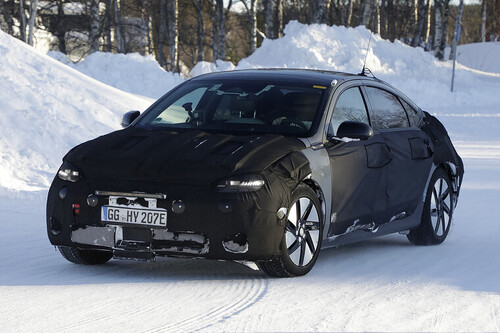
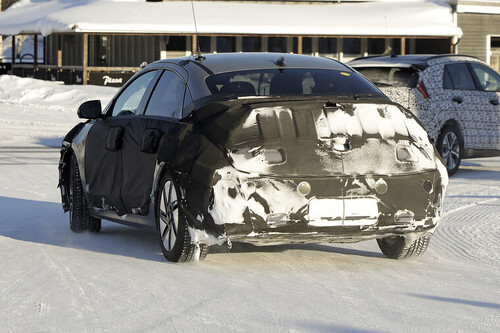
Hyundai’s Prophecy concept car will morph into the Ioniq 6 when it finally hits dealers in production form in 2023. As expected, spy shots now prove that the radical design of the Prophecy has been toned down for the production model.

Hyundai

The images clearly show that the suicide doors of the concept will not make their way to production and that both the front and rear overhangs have increased in size, presumably because a production car needs more space for things such as battery packs and trunk space. These changes likely mean the production version won’t have the same svelte curves as the concept.

 
’23 Jeep Wagoneer LWB
Jeep

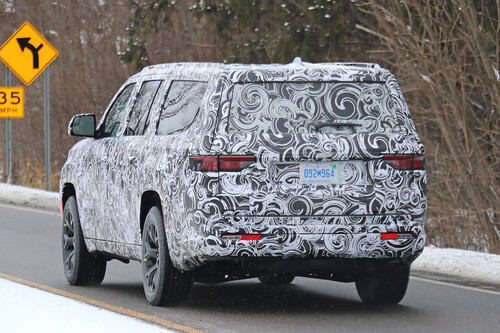
This Wagoneer long-wheelbase model was caught on Michigan public roads, showing us that Jeep is serious about competing with the likes of Cadillac’s Escalade, Lincoln’s Navigator and GMC’s Yukon Denali.


Jeep

This Wagoneer appears to be a Series III model with the available Advanced All-
Terrain Group, which features Falken Wildpeak A/T tires, a 3.92-ratio rear axle, chrome tow hooks, an electronic limited-slip rear differential, a front axle skidplate, a fuel tank skidplate shield, a removable rear tow hook, and a transfer case skidplate shield.

Expect the Wagoneer and Grand Wagoneer LWB models to join the short-wheelbase models sometime in Q3 2022.


’23 Range Rover Sport
Range Rover

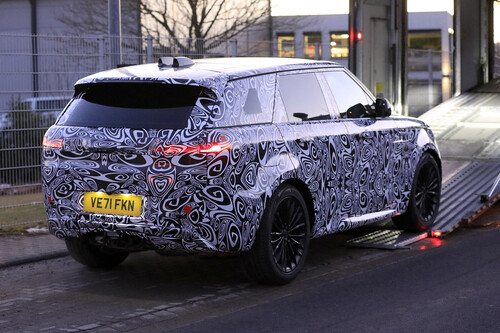
Spies in Germany caught shots of the Range Rover Sport wearing a lot less camouflage than ever before. The new Range Rover Sport could arrive about a year after the standard Range Rover, with the grand unveiling around the end of this year.

Range Rover

The Sport will be underpinned by the new Modular Longitudinal Architecture (MLA) platform. The MLA platform supports full electrification, so a Range Rover EV/Range Rover Sport EV should follow in a few years. At launch, partial electrification should be standard across the range, with mild-hybrid and plug-in hybrid technologies.

The next-generation Range Rover Sport will arrive as the ’23 model, likely in the second half of this year.

Sun, 05/01/2022 - 11:39

SEMA News—May 2022

BUSINESS

Protecting the Freedom to Customize

SEMA Board Member Kim Pendergast Explains the Association’s New Individual Membership Program

By Mike Imlay

Protect Freedom

From the earliest days, the automobile and its surrounding lifestyle have been about freedom. However, recent years have seen a growing assault on many of the freedoms consumers, hobbyists and recreational enthusiasts have come to enjoy.

Twelve states have signaled an intent to ban gas-powered engines, and the Environmental Protection Agency (EPA) is stepping up emissions enforcement in all 50 states. Legislation has placed hundreds of thousands of acres off limits to off-roading. Meanwhile, OEMs are locking consumers and the aftermarket out of vehicle computers, limiting the ability to customize.

SEMA has always been an industry advocate, but its founding purpose was to facilitate business between members. Now there are external forces shaking the industry’s core that can’t be stopped by SEMA alone. Consequently, the association amended its bylaws to launch the SEMA Individual Membership (SIM) program. Designed for the car lover, the overlander, the restorer, the adrenaline junkie and even the weekend warrior, the program seeks to build an enthusiast network, expand political action committee [PAC] fundraising, and grow the industry’s voice at local, state and federal levels.

“This isn’t just your standard networking initiative being created by any old organization,” said Nathan Ridnouer, SEMA vice president of councils and membership. “We’re creating something fun, educational and impactful. In the automotive world, it’s easy to be a car or truck hobbyist without knowing all the different small to large issues out there threatening your right to modify, customize and enjoy your vehicle.

“We don’t want our enthusiasts to face a day where they encounter roadblocks to those freedoms. In addition, we want to instill knowledge and confidence about the many ways they can safely enhance their rides, from lifts to wheels to styling and comfort features.”

Magnuson Superchargers CEO Kim Pendergast, who serves on the SEMA Board of Directors, helped spearhead the SIM initiative. To better understand the program’s origins and goals, SEMA News reached out to Pendergast with several key questions. The following is our interview, edited for clarity and conciseness.
Individual Membership

SEMA individual members receive gearhead-inspired “Freedom to Customize” decals to apply to their favorite vehicles. SEMA hopes the decals will quickly become ubiquitous sightings on the nation’s roadways.

SEMA News: Can you give our readers some background on why the SEMA Board of Directors greenlit this program?

Kim Pendergast: The history of how the program unfolded is very pertinent to where SEMA is going. Being involved with the SEMA Political Action Committee [SEMA PAC] for SEMA-member businesses, I and other Board members felt that we would never get our message across to legislators through the PAC alone. We needed the government to realize that our approximately 6,000 business owners and their people represent a much wider demographic.

There are eight million hardcore performance consumers who modify their cars every year, so I’ve always said we represent eight million people. But in reality, about one-third of all consumers who drive also modify their cars in some way. That means our potential audience is actually about 60 million people.

When legislators are concerned about issues such as zero emissions, noise or whatever else, they need to understand that there is an extremely large constituency their legislation affects. The number of automotive enthusiasts is far greater than just our businesses, and the only way legislators will understand is when voters call and tell them.

We’ve always had the SEMA Action Network for car-hobby enthusiasts, but we need to build on that and mobilize a group that’s more representative of the large number of people touched by legislation. I don’t think Washington, D.C., understands the size and importance of the audience.

SN: What are some of the things at stake for SEMA and our consumers?
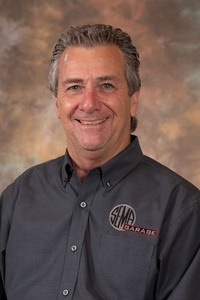
Pendergast

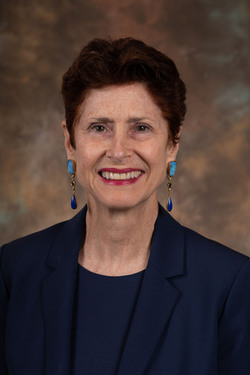
SEMA Board member and Magnuson Superchargers CEO Kim Pendergast.

KP: SEMA began as a business-to-business trade association. We’ve done an amazing job of building that side of our industry, and that’s really important. But now legislation and other outside forces are impinging on our industry and our customers. For example, there’s recreational areas such as Oceano Dunes, California, where they’re trying to take away off-road activities. Then there’s also the right to modify vehicles for dedicated racing. We’ve become the whipping boy for the EPA and climate activism.

At the same time, OEMs are safety-conscious, which is good. However, in being so, they are locking us out of their platforms. The fact is, OEMs can separate out the modification and calibration ranges that are safe for us, but it’s going to cost them a little bit of money, so why should they do that? That’s another area where we must keep our eye on the ball.

We need external support for our industry as much as internal, because the world has changed. Those changes could also limit consumer choices and drive up vehicle prices. They could lose their freedom of modifying their vehicles because of legislation and regulation, and the OEMs could also very quietly take back this $47-billion industry and make it impossible for us to modify powertrains, wheels and tires and everything down to your fuzzy dice.

People need to hear our community’s voice. SEMA Individual Memberships give enthusiasts—our customers—the opportunity to protect their right to modify, their hobby, their industry, their family outings and their love of the automobile and the ability to enjoy it with their families.

SN: How does the individual membership program accomplish those things?

KP: We’re empowering consumers, enthusiasts and others with a stake in our industry to link with their legislators. There are many hobbyists and people who may not identify themselves as performance consumers but still enjoy what our industry does. There are also many individuals at all levels of our industry whose livelihoods depend on a thriving aftermarket. Those and many others are going to be impacted by the issues we’re discussing.

Maybe they see what’s happening through the media or maybe they’re not even aware, but let’s say an individual is aware. What can that individual do? They may think, “I’m just one person, right?”

The SIM program will educate them and connect them to decision-makers. We’re bringing them into our community in a way we never could before because the technology just wasn’t there. Now, with the internet and social media, we can welcome our enthusiast-consumers into our very cool industry and make them a part of something special.

They’ll get emails, marketing information and alerts as to what’s happening and who to call or contact and when. Now, instead of having a few hundred or even a thousand people engaged, we can have three million contacting their representatives. Numbers matter. There is a large community that knows we’re not out to harm the environment, limit safety or hinder technology, but they’re afraid to speak up or don’t know how. We’ll help them do it.

SN: Let’s talk a little more about the membership benefits. What do new members get for joining?

KP: Currently, when charter members sign up, they get a recognition letter, a member identification card, an exclusive SIM baseball cap and a “Right to Customize” decal they can place prominently on their vehicles. Individual membership also allows them to support SEMA PAC. Of course, they also begin receiving the member communications I’ve mentioned.

Other benefits are still in development and not yet ready for announcement, but they’ll be tangible and valuable for our enthusiast base. I should add that we’ve made a conscious decision to pilot this program and listen and learn what our consumers want. SEMA has a lot of business-to-business experience, so we know what trade professionals want and how to communicate with them. Consumers, of course, are a very different audience for a trade association like ours.

SN: So there are already plans to continue growing this program over time?

KP: Yes. A gradual rollout of the program allows us to begin talking with our individual membership and obtain feedback. The more people we get involved, the more we’ll be able to do for them.

We’re already exploring a number of potential new benefits, including ways to deliver special promotions, such as discounts and participation in exclusive SEMA events and programs. The possibilities are endless. Ultimately, we’re forming a vast club—a grassroots organization of people with a common goal, a common purpose and a common hobby.

It’s interesting to note that about 70% of our charter members tell us their motivation is to protect the hobby. Another 20% or so say they just want to be a part of the SEMA name. We have a great, untapped following that supports what we do and is excited by the SEMA brand.

SN: In a nutshell, what’s the chief difference between the traditional SEMA business membership and the new individual membership?

KP: They address two different goals. The business membership is about supporting the history of SEMA, its B2B relationships and all the things that SEMA has always been. A business joins for itself and for all of its employees. Every employee gets access to the research, the councils, the business resources and all the things that the association offers.

The individual membership is very much about supporting the industry. Individual membership money is not going to SEMA in support of the trade members to sell to each other, our standard model. Instead, these membership dollars are specifically for building awareness, understanding and connections to the legislators and OEMs who will decide our future. It’s aimed at educating them and ensuring that they have all the information to make the best impact for us all.

SN: What is the relationship between an individual membership and SEMA PAC?

KP: There is a tremendous amount of legislation around a political action committee [PAC] to ensure that people are appropriately donating money. Because of that, there are a lot of necessary obstacles to sign up as a SEMA PAC member and make donations. For a business, you are not just signing yourself up; you are really signing your whole business up when you join a PAC.

For SEMA that means company owners who donate to our PAC rarely have employees or other stakeholders also making donations. Maybe there are 500 people who work for an organization. We don’t get to those 500 people. We don’t get to 30 people or even five people in an organization. It usually ends up being just one person signing up and writing a fairly large check, usually $1,500. That’s a significant hurdle for other potential donors, so we’re not really accessing all the people we could for fundraising.

Opening SEMA to individual members changes all that. What if we have eight million people sign up for individual memberships and donate $10 each to our efforts? That’s $80 million. Even more important than the money is letting Congress know there are those eight million voters. That’s a larger voice saying how important our issues are and presenting a balanced view that legislators certainly aren’t getting from the other side. That’s why the SIM program is so critical.

SN: We understand that the SIM program also has an Ambassador component. Can you talk about that?

KP: When we launched our SIM initiative, we began seeing industry companies asking how they can join in promoting the program and recruiting individual members, so we built this Ambassador program to help our companies reach out to their consumers as SEMA Ambassadors. The program is looking at different digital tools to help them spread the word through social media as well as customized materials they can hand out at events or include with the products they ship to customers. We’re also encouraging them to get their employees involved. So far, we have 50 Ambassadors, but we’re aiming for 1,000 or more.

We know that SEMA can’t do this alone, and we very much appreciate the support our Ambassadors are providing.

SN: Finally, the Performance Racing Industry (PRI) has a similar individual membership program. Some people might ask why they should choose between the two or perhaps consider signing up for both. How would you answer them?

KP: I like to credit [PRI President] Dr. Jamie Meyer with the idea for both programs. I had a conversation with him when he first became a SEMA Board member, and he mentioned the idea. It just stuck with me. When he became president of PRI and I assumed his place on the SEMA Board, I saw an opportunity to push his vision forward.

To answer the question, though, SEMA serves many different audiences, among which are racers. We represent the broad spectrum of the specialty equipment that consumers can choose for their vehicles. PRI is motorsports- and racing-
centric, with very engaged professional and semi-professional racing elements. Each association has its own special needs, and each membership program is tailored to its audience and the specific issues they care about. From time to time, SEMA and PRI priorities overlap, and our programs will work in tandem in those cases to the benefit of all our enthusiasts.

QRProtect Your Automotive Passions!

EPA overreach. Electric-vehicle mandates. The right to modify a vehicle. Those are just a few examples of how automotive enthusiast rights are being threatened around the United States. For the first time ever, individuals can now officially join SEMA and help win the fiercest battles for their right to enjoy their automotive passions. For further information or to sign up with the SEMA Individual Membership program, go to www.sema.org/individual-membership.

Sun, 05/01/2022 - 11:36

SEMA News—May 2022

INDUSTRY NEWS

Mike SpagnolaThe Automotive Aftermarket Charitable Foundation announced the election of Mike Spagnola to its board of trustees. Formerly SEMA vice president of OEM and product development programs with oversight of the Government Affairs, SEMA Data, human resources and accounting departments, Spagnola currently serves as interim CEO for the association until a new CEO is hired.
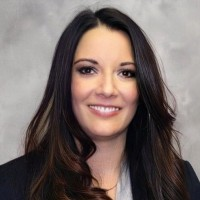
Belinda TschornAWE appointed Belinda Tschorn its new head of human resources to support the growth of the organization. As human resources director, Tschorn will oversee all areas of organizational development, training, employee relations, benefits, recruiting and HRIS as well as building out the HR department at AWE to support future growth. Prior to joining AWE, Tschorn held executive and management positions at Piramal Pharma Solutions, Omni Cable and Scala.
RNR Tire Express officially announced the appointment of three new executives to the brand’s national leadership team, including the promotions of Tracy Cintron to the role of franchise director, Candace Lovett to national marketing director, and the recent addition of Susan Vice as the company’s new financial controller. Cintron will continue helping franchisees in their store development efforts and play a more central role in their onboarding, training and overall success. Lovett will oversee strategic planning and initiatives for the company’s 160-plus locations nationwide. Vice’s position with the franchisor puts her in control of the daily operations of the accounting department.

Leed BrakesLeed Brakes is growing its sales team by adding 30-plus-year industry veteran and Buffalo native Pat Infantino to the position of wholesale sales manager. Infantino’s longtime industry experience includes 15 years as a manufacturer’s rep, three and a half years as national sales manager at Castle Chemical, followed by eight and a half years as sales manager at Stainless Steel Brakes. Most recently, he spent six and a half years with Covercraft Industries as eastern director of sales.
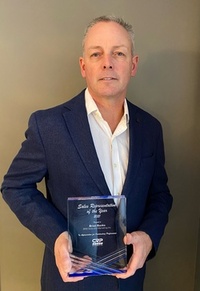
CRPCRP Automotive named Brian Banks its 2021 Canadian Sales Representative of the Year. Banks is the president of BRB Sales and Marketing Inc. and represents CRP Automotive’s AAE, Ajusa, Pentosin and Rein brands in the Ontario province. Banks served his first full year as a sales representative for CRP Automotive in 2021. The award was presented by CRP Automotive Canadian National Sales Manager Patrick Hébert.
MAVTV Motorsports Network, the U.S.-based TV network owned by Lucas Oil Products, appointed Mark Carter director of sales and marketing. Carter will be responsible for MAVTV brand strategy and implementation in growing sales and advancing the entire MAVTV platform to a larger and more engaged audience.

ContinentalContinental named Peter Dobrowolski the new product manager for diagnostics and services for North America. In his new role, Dobrowolski will be responsible for managing the portfolio of diagnostics products that include the Autodiagnos Pro Automotive Diagnostic System, Autodiagnos TPMS Tools and the Autodiagnos Drive Connected Vehicle Data Solution. Dobrowolski is a long-time employee of Continental, serving in several capacities during the past 10 years.
HopkinsHopkins Manufacturing Corp. announced the addition of Barrie C. Green as vice president for human resources and chief human resources officer. Barrie brings to Hopkins an extensive background in human resources, most recently serving as the vice president of human resources for CFS Brands LLC. Prior to that, Barrie served as vice president of human resources for Horton Automatics, a division of Overhead
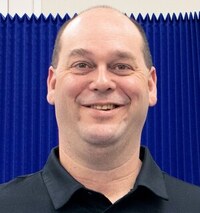
Door Corp.

RWBRace Winning Brands (RWB), a leading manufacturer of high-performance engine components for the automotive and powersports aftermarkets, added Cary Redman to the RWB family as vice president of sales for automotive. Redman has more than 25 years of experience in the performance manufacturing and retail sectors, working in sales leadership roles with veteran organizations such as Holley Performance, Mr. Gasket Co. and Edelbrock.
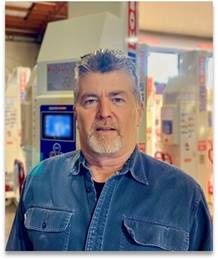
Live Fast Motorsports announced that former general manager Jessica McLeod was appointed CEO. McLeod will be working directly with company team owner Matt Tifft and her husband, co-owner and driver B.J. McLeod. The McLeods have had many business ventures within NASCAR’s K&N, Trucks, Xfinity, and Cup Series. McLeod and her husband co-own the Xfinity Series B.J. McLeod Motorsports (BJMMS), which fields three full-time stock cars (numbers 5, 78 and 99).

Stertil-KoniStertil-Koni announced that Michael Tillbery joined the company as service manager. In his new post, Tillbery brings more than three decades of experience specializing in customer care, technical service and support, service management and heavy-duty equipment operation. Most recently, Tillbery worked for the Maryland Queen Anne’s County government as a heavy-equipment operator.
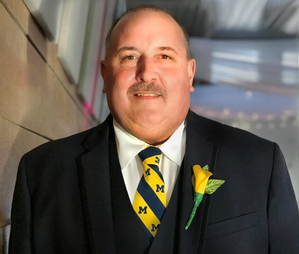
CRPCRP Automotive announced that Director of Engineering P.T. Muldoon was named chairman of the Technology & Operations Council of MERA—The Association for Sustainable Manufacturing. Founded in 2021, the Technology & Operations Council is a peer group network that provides a forum for MERA-member companies to discuss the latest techniques, developments and equipment that are advancing the remanufacturing industry.
Sun, 05/01/2022 - 11:21

SEMA News—May 2022

INDUSTRY INSIDERS

10 Questions for Christopher Polvoorde

By Jay Carpio, Fredy Ramirez and Carr Winn

KOH

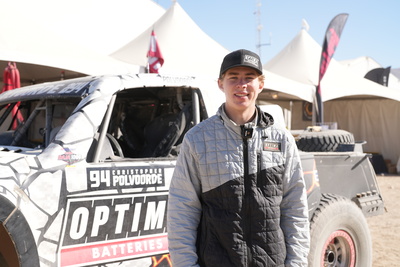
Christopher Polvoorde (right) after winning 1st place in the 2022 King of the Hammers Toyo Tires Desert Challenge in the T2 class with co-driver Bryce Romine. Photo Courtesy Christopher Polvoorde.

At just 21 years old, Christopher Polvoorde added some new hardware to an amazing trophy case. He passed by friends, competitors, and some of his heroes on his way to taking first place in the 2022 King of the Hammers Toyo Tires Desert Challenge in the T2 class. SEMA News caught up to Polvoorde to talk about his experience.

SN: Tell us a little bit about your backstory and how you came to be standing in front of that award-winning truck.

CP: My name is Christopher Polvoorde. I’m 21 years old. I grew up in Southern California racing in short-course off-road. Racing in a stadium in these miniature carts—they’re called trophy carts—was tons of fun. I did that for years. I still continue to race short course, and now I’ve worked my way into the desert and spent a lot of time down in Baja racing SCORE.

SN: We heard that your trophy case got new hardware. Tell us about that day a little bit and the emotions associated with it. What do you remember?

CP: We just wrapped up the Toyo Tires Desert Challenge in my T2 truck. It was pretty much a perfect day. It was amazing. We went out there, qualified first, and then ran up front all day and ended up winning the thing and then also finishing second overall, right behind some Trophy Trucks. I have 500 hp, and they have 1,000 hp, so it’s really getting up there with the big dogs. I was passing some of my heroes. It was a pretty cool thing. It still doesn’t seem real.

SN: After you stepped off the stage with your trophy, any special moments with family and friends?

CP: Just the post-race, being able to spend it with my family. And my crew chief—he’s family now, too! He was out in a remote pit, so he didn’t get to celebrate with the team and everything. By the time he got here, everything had died down. Everyone went home and he came up and gave me a big hug; he was teared up. It was just one of those moments that I’ll never forget. We put a lot of time into this and a lot of long hours and, you know, to make it all pay off. I’ll never forget that hug.

SN: Your T2 Ford Raptor would be a great daily driver, though maybe not in Southern California. What is your daily driver?

CP: I drive an F-150 PowerBoost. Pretty standard, bought right off the lot. It’s a fun little truck and gets great gas mileage, so
I love it—because I do a lot of miles.

SN: Has there been a moment as you started your professional racing career that you wish you could relive?

CP: The first time I won a professional championship in Crandon, Wisconsin. I was on an eight-win streak, and I kind of forgot that entire day because it was all like just a blur. It’s definitely one of those moments that I’d really love to relive.

SN: What’s next on the bucket list?

CP: My next big thing—I’d like to win a Baja 1000. That’s a really big thing that I’ve always dreamed of. Also, to get up into a Trophy Truck, that’s definitely next on the list, too. And just go win more races and see where it takes me. I just love driving race cars.

SN: Is there any particular development in technology right now that is literally a game changer?

CP: The new suspension these trucks run. Some of them are fully electronic, and the capabilities of these new Fox shocks is just mind blowing—the live valve. I’ve got to play with it a little, and I think it’s going to absolutely change the game, because you can adjust and tune the suspension on the fly, and you really never would have even dreamed of being able to do that. In the past, you started with a car and that’s what you got, and you hoped it worked. Now you have the ability to tune on the fly, and there’s an artificial intelligence computer doing it for you.

KOH

Follow Christopher Polvoorde on social media @Christopher Polvoorde.

SN: What’s a perfect day at work for you?

CP: On a perfect day for me at work, I wake up in the morning down in Baja and drive a race car for 10 to 12 hours. It’s just a feeling that you can’t even—it’s hard to grasp. It’s one of those things you just dream about and chase after, and being down in Baja and that vibe, that’s truly a perfect day. Then we go get some fish tacos on the beach to wrap it up.

SN: Who do you want to thank for helping you have such an amazing week at the 2022 King of the Hammers?

CP: I’m extremely lucky to be out here racing. It takes an army, and I’m extremely fortunate to have Optima Batteries and Ford Performance—all these guys allow me to come out here and chase my dream. It’s really been a lot of fun, and there’s a lot that goes into this truck behind the scenes and all the companies that support me and allow me to live my dream.

SN: How can people follow you online?

CP: Just follow me on all my social media. It’s all @Christopher Polvoorde—YouTube, Facebook, Instagram—we do it all. I do weekly vlogs, and we have a lot of fun. Watch the vlogs if you want to see the behind-the-scenes of what goes into racing a Trophy Truck when you’re 21 years old. It’s a little chaotic and fun.

Sun, 05/01/2022 - 11:18

SEMA News—May 2022

INDUSTRY NEWS

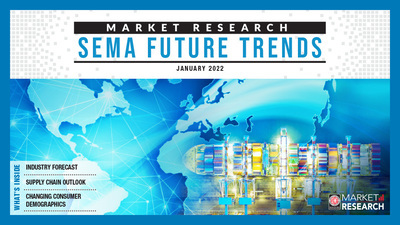
SEMA Future Trends: 74% of Industry Companies Expect Sales Growth in 2022

Future Trends

According to the “SEMA Future Trends—January 2022” report, nearly three-quarters (74%) of industry companies expect sales growth in 2022.

Overall, 2021 was a strong year for the industry amid high demand, with many companies reporting record growth, according to “SEMA Future Trends—January 2022.” The specialty-equipment market should continue to grow through this year at more muted levels before returning to more normal (pre-pandemic) growth for 2023 and beyond. In fact, nearly three-quarters (74%) of industry companies expect sales growth in 2022. Key impacts to keep an eye on include rising fuel costs, supply-chain disruptions and geopolitical instability in eastern Europe.

Want to see the latest economic and supply-chain projections for 2022 and beyond? Download the new “SEMA Future Trends—January 2022” report. In it, you’ll find:

  • The outlook for the specialty-equipment industry in 2022 and beyond.
  • Projections for the U.S. economy, including consumer spending, inflation and employment.
  • The outlook on the global supply chain and input prices.
  • A look at changing demographics of consumers and what it means for the industry in the future.

Download the report free today at www.sema.org/research.

NHTSA Approves Manufacture of Low-Volume Turnkey Replica Cars

NHTSA

Thanks to a final ruling issued by NHTSA, low-volume manufacturers of turnkey replica cars may now legally build up to 325 vehicles per year based on designs that are at least 25 years old.

Small-volume motor-vehicle manufacturers may begin selling replica cars that resemble vehicles produced at least 25 years ago now that the National Highway Traffic Safety Administration (NHTSA) has finalized a regulation to implement the SEMA-led Low Volume Motor Vehicle Manufacturers Act. SEMA worked with Congress to pass this federal policy change, which became law in 2015 as part of the Fixing America’s Surface Transportation Act.

“SEMA applauds NHTSA’s final rule allowing companies to market classic-themed cars,” said Daniel Ingber, SEMA vice president of government and legal affairs. “Regulatory barriers have previously prevented small automakers from producing heritage cars that are coveted by consumers. The roadblocks have been eliminated. This is a hard-fought victory for enthusiasts, small-volume manufacturers, their suppliers and all the men and women who will be hired to fill new jobs created by this law.”

The replica car law and implementing regulations allow a low-volume manufacturer to construct up to 325 such replica cars a year, and the vehicles are required to meet current model-year emissions standards. Low-volume vehicle manufacturers must first register with NHTSA, EPA and CARB before selling vehicles, and thereafter submit annual reports on vehicle production. Enthusiasts will still have the option to build a car from a kit, but now they may also purchase a turnkey replica car.

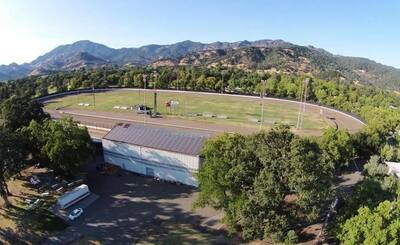
City of Calistoga Announces Plans to Purchase Famed Speedway

Calistoga

Officials have announced that the City of Calistoga is preparing to purchase the Napa County Fairgrounds in Napa, California.

Officials have announced that the city of Calistoga is preparing to purchase the Napa County Fairgrounds in Napa, California—
a move that would reopen the famed Calistoga Speedway half-mile dirt oval, best known for the annual “Louie Vermeil Classic.”

“Whether it’s saving a local track or voicing support for the RPM Act, it’s critical that the racing industry engages with elected officials,” said SEMA Director or State Government Affairs and SEMA PAC Christian Robinson. “We’ve all heard the phrase ‘the squeaky wheel gets the grease,’ right? The more people who get involved, the more likely we are to affect change.”

Calistoga Speedway is one of a few half-mile dirt tracks in the state, first opening in 1938. The track’s “Louie Vermeil Classic” honors Calistoga resident Louie Vermeil, the driving force behind auto racing at the Speedway located on the Napa County Fairgrounds. The track has not hosted the event since 2018. After a two-year absence due to COVID-related restrictions, it was moved to Silver Dollar Speedway in Chico, California, for 2021.

SEMA encourages contacting Napa County and city officials to voice support of the transfer of ownership and the reopening of the speedway.

SEMA Newsletter Launches New Look, Goes to Twice a Week

SEMA News

SEMA News email is now being delivered to readers and members twice a week—each Tuesday and Thursday.

SEMA’s longtime member- and industry-focused newsletter, SEMA eNews, has been updated and upgraded to bring you the membership information you want and the news you need in a colorful, easy-to-navigate layout.

Renamed “SEMA News,” the redesigned newsletter features the latest updates from the association, including SEMA Show exhibitor and attendee news, developments from SEMA’s Washington, D.C., office, the latest on emissions compliance, and SEMA Garage measuring sessions. The newsletter will also remain a key source for specialty-equipment market updates, including vehicle previews, tech news, new products, job openings, new hires and promotions, member and industry announcements and more.

In addition to the new name and look, the SEMA News email is now being delivered to readers and members twice a week—each Tuesday and Thursday. Originally sent on Thursdays only, the additional Tuesday SEMA News delivery will offer editorial flexibility to provide more timely news, and the opportunity to produce a “front-page” treatment to help readers quickly locate the majority of the news included throughout the week.

For more information on SEMA News, or to submit company announcements, contact editors@sema.org.

To sign up for the SEMA News email, visit www.sema.org/enews.

Sun, 05/01/2022 - 11:06

SEMA News—May 2022

FROM THE HILL

State Capitol Gains

State Lawmakers Honored at 2021 SEMA Show

By Christian Robinson

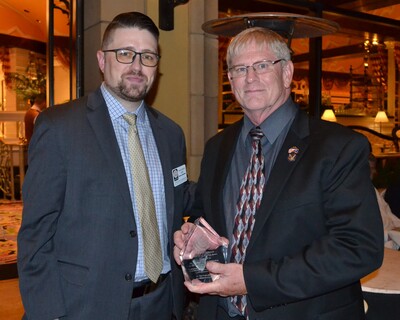
Leo Delperdang

Kansas Rep. Leo Delperdang (right) was awarded the SEMA Stephen B. McDonald Lawmaker of Year Award at the 2021 SEMA Show by SEMA Director of State Government Affairs and the SEMA Political Action Committee Christian Robinson.

More than 700 lawmakers comprise SEMA’s State Automotive Enthusiast Leadership Caucus, a bipartisan group of state legislators who share a passion for all things automotive. When you have that many allies in your corner, deciding upon whom to bestow the Stephen B. McDonald Lawmaker of the Year award is no small task. However, there was never any doubt when it came to 2021’s winner.

Kansas Representative Leo Delperdang has routinely gone above and beyond to promote the automotive hobby in his home state. Most recently, Rep. Delperdang championed an effort to restore order to vintage vehicles eligible for antique registration. Until 2021, an antique vehicle was defined by the Kansas Highway Patrol as being “more than 35 years old and as close to the original as possible, without any significant alterations to the major component parts.” The law did not allow the use of non-original materials and did not recognize the limited availability of factory replacement parts. Thus, the overly strict policy prevented the automotive community from lawfully practicing common restoration techniques.

In response, Rep. Delperdang authored legislation (H.B. 2165) to remove the unnecessary registration restrictions for antique vehicles. Having quickly passed the Kansas legislature, the new pro-hobby law took effect last summer with Governor Laura Kelly’s signature.

The new law requires only that the vehicle be more than 35 years old, regardless of the type or age of the component parts installed. Kansas now falls in line with other states that allow antique vehicles to be properly defined by their age. While many would be satisfied to call it a day at that point, Rep. Delperdang went one step further, personally accompanying enthusiasts to the DMV to ensure that their paperwork was processed correctly.

In addition to being a lawmaker, Rep. Delperdang is also an enthusiast with a strong interest in the MOPAR brand. Rep. Delperdang drives a special-order 2019 Dodge Challenger ScatPack 392 Hemi and is a member of the Wichita Area MOPAR Club.

When the Kansas legislature resumed its work in early 2022, Rep. Delperdang wasted no time following up on his award-winning 2021. After learning about the case of a Kansan who had his prized ’59 Chevy Corvette deemed contraband and ordered destroyed under existing law over an issue with the rivets on its vehicle identification number (VIN), Rep. Delperdang introduced legislation to ensure that restorers do not face prosecution for removing a vehicle’s VIN during the restoration process. As of this writing, the House Transportation Committee had passed the bill, and it was awaiting consideration on the House floor.

Changing of the Guard

Kevin Hornberger

State Automotive Enthusiast Leadership Caucus Chairman Del. Kevin Hornberger (R-MD) addressed fellow Caucus members at the 2021 SEMA Show.

Rep. Delperdang wasn’t the only state lawmaker recognized for his work in 2021. At a gathering of state lawmakers during the 2021 SEMA Show in Las Vegas, Maryland Delegate Kevin Hornberger was named the new chairman of the State Automotive Enthusiast Leadership Caucus. Del. Hornberger was appointed to the post after West Virginia Del. Gary Howell’s term as caucus chairman was completed. Del. Howell served in the role for eight years and will remain involved with the caucus as chairman emeritus.

Del. Hornberger was elected to the Maryland House of Delegates in 2014 and has continuously demonstrated his commitment to keeping his home state friendly to automotive enthusiasts, including introducing SEMA’s model legislation to ease the process for titling and registering former military vehicles during the state’s 2022 legislative session. He is also personally invested in protecting the hobby as an enthusiast himself. He owns an ’86 Oldsmobile Cutlass 442 T-Top, a ’67 Chevy RSS Camaro, a ’65 GMC, a ’74 Chevy Blazer K5 and a ’77 GMC Jimmy.

“SEMA has had the pleasure of working with Del. Hornberger on several pieces of pro-hobby legislation in recent years and is excited to welcome him as caucus chair,” said Christian Robinson, SEMA’s director of state government affairs and the SEMA political action committee.

Del. Gary Howell, who was honored with a lifetime achievement award at the 2021 SEMA Show, served as an exemplary caucus chair for the past eight years. Thanks to his determination and hard work, he has contributed to the thriving automotive hobby in West Virginia. From championing bills to recruiting fellow lawmakers to the caucus, Howell upheld the rights of vehicle enthusiasts and raised awareness to the issues facing them. He will continue to be a valued member of the caucus and a steadfast advocate for the industry.

“Del. Howell’s dedication to the specialty automotive aftermarket industry is unparalleled,” Robinson said. “He has been an ardent ally for enthusiasts nationwide. SEMA thanks him for his leadership of the State Automotive Enthusiast Leadership Caucus throughout his term.”

Sun, 05/01/2022 - 10:42

SEMA News—May 2022

INTERNET

Video Conferencing for Power Users

Key Features You’ll Want for Your Business

By Joe Dysart

Video Meeting

Video meetings appear destined to be a permanent component of the post-COVID workforce.

Given that remote work is expected to become a permanent component of business culture moving forward, you’ll want to be sure you’re using video meeting software that’s a perfect fit for your company.

“Remote work has proven to be a critical enabler of business and economic continuity, ultimately proving that work really is something that we do and not somewhere that we go,” said Jim Lundy, lead analyst for Aragon Research. “In this next phase, companies have the opportunity to completely rethink how they operate. Collaboration technologies that provide high quality and highly secure video at scale will be key.”

While it’s tempting to simply grab a popular name such as Zoom (https://zoom.us) or Skype (www.skype.com/en) for your videoconferencing needs and call it a day, you’ll be better served if you’re aware of all the key features available from video meeting software providers these days. There is a slew of providers fiercely vying for your business, and you may find that there’s a novel video meeting feature or two on the market that will really make a difference for your company.

Zoom, for example, has become a household name (and even a verb) among its legions of business user fans, but it may turn out that you prefer a lower-profile solution such as Whereby.com (https://whereby.com), given that the solution enables you to bring someone into a video meeting with you with just a single mouse click. Or you may decide that another video meeting solution rings the bell for you because it’s designed to work with Zapier (https://zapier.com)—a software integration solution that enables thousands of apps from thousands of app makers to work together seamlessly.

Toward that end, here’s a roundup of the key power-user’s features you’ll find in video meeting software that you can use to decide on the ultimate solution for your business:

Live Text Transcription: One of the newest features emerging in video meetings, live text transcription enables you to see a real-time voice-to-text record of everything everyone in the meeting is saying. As you might imagine, the tech is not perfect yet, but Zoom, for example, has still promised to offer live text transcription to all users sometime in 2022.

Meeting Recording: Many video meeting software packages already offer an audio/video recording of a meeting that is available right after the meeting ends. This is a great feature for anyone on a team looking to double-check what was said or decided in any given meeting.

Meeting Highlights: This is a handy feature that enables a staffer or other employee to effortlessly put together a video-highlights reel for anyone unable to attend a meeting. For example, Blue Jeans (www.bluejeans.com/products/meetings) offers a meeting-highlights feature that enables a user to click a keyboard button to capture a 40-sec. clip of something important going on in any Blue Jeans meeting.

Any number of 40-sec. highlight clips can be created, and they are subsequently automatically strung together by Blue Jeans in a video-highlight reel that can be emailed to anyone. The recipient also has the ability to toggle ahead past any highlight and toggle back to a highlight they’d like to view again.

Screen Sharing: Most business-grade videoconferencing software offers the ability for one user to share a PC screen with everyone else or collaborate in other ways using a whiteboard or similar collaboration software. For many businesses, the feature is a must-have.

Live Public and Private Text Chat: Text chat is also standard for many videoconferencing packages, enabling people to add a quick thought to everyone while a meeting is in progress. They can also choose to have a private discussion with someone while the main video meeting broadcasts.

Instant Entry: While video meeting software makers have made entry to meetings as easy as clicking on a link and entering an ID and password, video meeting software from Whereby.com has made it a step easier. With this software, you can be invited to a meeting with a link. Simply click on it and you’re there, immediately onscreen and conferencing with the person who invited you.

This is a great feature for someone who may be instant messaging a customer, colleague or business partner and wants to get a video meeting going very quickly with no fuss and no muss.

Easy Integration With Other Software: Integration with other software is almost considered a prerequisite for any productivity app these days, and most video meeting programs offer some sort of integration. For example, thousands of software programs can be integrated with one another using Zapier (https://zapier.com), an online service specifically designed to enable all of those programs to work together.

Some major video meeting software names (such as Zoom) have their own marketplaces of hundreds of productivity apps that are specifically designed to integrate with their software.

Instant Bios on All Attendees: Warmly (www.warmly.ai) is an app for Zoom that scours the web for biographical information on everyone who is attending a Zoom meeting. It is based on data from the web associated with the attendee’s email address, and it’s a great way to break the ice or find something in common with someone else before you even get the meeting started.

Private Breakout Rooms for Smaller Meetings: Many video software packages also offer attendees the ability to break out into smaller rooms for private meetings while the main meeting is still going on. This feature is especially helpful for meetings featuring hundreds of people.

Virtual Backgrounds: As riveting as the home bookshelf behind you may be, business colleagues at a video meeting may not be interested in peeking into your home or watching your toddler make faces at the camera. Virtual backgrounds solve that problem by superimposing your image over a digitized background of anything you can photograph, illustrate or otherwise image, including a smart-looking office, a backdrop of the Grand Canyon or the captain’s seat on the Starship Enterprise.

Waiting Room: Virtual meeting waiting rooms are another must-have for most businesses. They enable you to get a look at people trying to enter your video meeting and block entrance to those who don’t belong there or ne’er-do-wells who are trying to crash your meeting for grins and giggles.

Gmail Meeting Scheduling: Many video meeting packages that are integrated with Zapier or another integration solution enable you to schedule your video meeting from within Gmail or other popular email programs.

In-Suite Videoconferencing: Before you go looking for video meeting software, double-check any remote productivity software you may be using. Many of these suites (including Microsoft Teams, Slack, and Google Workspace) already include video meeting software that may satisfy all your needs.

Popularity: More often than not, extremely popular video meeting solutions got that way by consistently wowing their users. The top five most popular solutions currently on the market, according to software review site G2Crowd (www.G2crowd.com) are:

Free Plan: Some of the most popular video meeting packages (including Zoom, Google Meet and the video conferencing found in Microsoft Teams) offer a basic, bare-bones plan you can use for free forever. These free plans offer you the luxury of getting a feel for how video meeting works while simultaneously giving you the time to figure out which features in video conferencing are important to you and which are simply nice-to-haves.

DysartJoe Dysart is an internet speaker and business consultant based in Manhattan. 631-438-1142
joe@joedysart.com

www.joedysart.com

Sun, 05/01/2022 - 10:39

SEMA News—May 2022

SEMA HERITAGE

The Hot Breath of High Performance

By Drew Hardin

Photography Courtesy: Eric Rickman, Petersen Publishing Company Archive

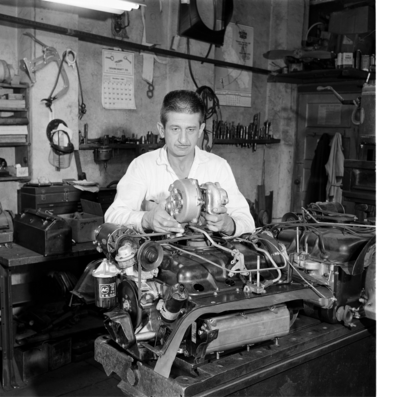
Barney NavarroBarney Navarro was best known as a speed-equipment pioneer in the years immediately after World War II. He was a dry-lakes racer before the war, studied Ford engine components while he served in the Army Air Corps, and used that knowledge to produce flathead intake manifolds, cylinder heads and other products sold by Navarro Racing Equipment.
Those who knew him describe Navarro as a talented machinist with a pragmatic mind and a thirst for knowledge. He credited his favorite quote to his high school science teacher: “There’s nothing more fun than learning.” That largely explains why his accomplishments stretch beyond the automotive performance industry to include inventions as diverse as a heart-lung machine and concrete-cutting equipment.

In the early ’60s, Navarro’s inquisitive mind turned to turbocharging, which, at the time, had been used primarily in aircraft and diesel applications.

“The general public did not become aware” of these so-called turbosuperchargers, Navarro wrote, “until World War II, when they appeared in all high-altitude bombers.” He was explaining the concept of “putting your exhaust to work” in a January 1962 Hot Rod article he wrote called “Hot Horsepower.”

Since “most of the heat energy liberated by the burning of gasoline within an engine flows out the exhaust pipe without contributing one bit to ‘turning the wheels,’ it is most reasonable to believe that some effort should be made to tap this energy source,” he wrote. His proof of concept was a Corvair to which he fitted an AiResearch turbocharger originally designed for a diesel engine. The caption that ran with this photo in the magazine described Navarro “contemplating mounting possibilities on a spare engine.”

Navarro’s use of a turbo in a Corvair predated Chevrolet’s turbocharged Corsa engine by several years, so his was a completely clean-sheet design. For his first attempt, he mounted the turbo under a fender where the muffler was originally housed, and he piped the boosted air up to the stock air cleaner.

“Though there were skeptics present when the turbo was being fitted to the exhaust system, those who drove the machine rapidly became ‘converts,’” Navarro wrote. The car—equipped with a Powerglide automatic transmission—accelerated to 60 mph in 12.8 seconds instead of the 19 seconds in stock tune.

“A 32-percent grade was climbed at 35 mph as compared to a struggling 15 mph in the stock state,” he said. “This impressive transformation was brought about by a mere 7 pounds inlet boost…by no means the maximum available but was selected arbitrarily when the diaphragm regulator was adjusted.”

In a later iteration, Navarro mounted the turbo on top of a hotter, modified version of the flat-six engine, replacing the carburetor. A Nash side-draft carburetor introduced fuel to a system of ram-induction pipes that fed the cylinders, while piping under the car routed exhaust gas to the turbo. At the dragstrip, this setup “demonstrated a surprising quarter-mile speed of 84.5 mph”—a speed hampered, Navarro noted, by the two-speed Powerglide.

Sun, 05/01/2022 - 10:10

SEMA News—May 2022

FROM THE ASSOCIATION

A New Plan to Invest in the Future

By Nicole Bradle

It’s been 10 years since the SEMA Businesswomen’s Network (SBN) hosted the “SEMA Mustang Build Powered by Women.” That project was a conspicuously successful all-female build that captured the attention of the industry and provided a spotlight for a great number of women working in the aftermarket. Now the current SBN team has conceived of another signature all-female build—this time one that has the potential to engage on an even wider basis and serve as a catalyst on a number of strategic fronts.

As the project comes together over a two-year period, it will highlight the many different professional roles our industry offers to young women, including engineering, industrial design, marketing, media, and a multitude of mechanical and trade specialties. The build will not only tickle the imagination of students considering future career paths but will also serve to put them in touch with builders and get guidance they might not otherwise receive.

The project will also help to create a focal point for participation for successful women already in the industry who can use the build as an opportunity to acquire new professional relationships and guide or mentor younger individuals. Over time, these experiences will build a stronger community and, ultimately, a more diverse, broad-based source of talent.

Significantly, this project will also provide a means to take on the challenges posed by fast-moving and complex vehicle technology. Helping the industry acquire more knowhow when it comes to customizing the newest vehicles without compromising safety features or emissions regulations is an important priority, one that will only become more relevant in the coming years.

The plan is to take full advantage of facilities at the SEMA Garages, where the association has teams working daily behind the scenes. By coordinating with the Garages, builders can explore new possibilities and discover best practices. Sharing that information will come about through videos disseminated via SEMA channels and robust social-media outreach.

The SBN project will also create opportunities for member companies to participate in a variety of ways. For starters, companies can provide a crucial boost just by encouraging their female employees to volunteer and participate. Companies can benefit from including their employees in the program because they will learn new skills, enhance current skills, and bring back a network of contacts to draw upon for years to come. That will tend to increase their ability to contribute and help qualify them for leadership
positions.

Another opportunity for member companies will be to donate products or services. The plan for this project assumes that the bulk of the products and services will come from the industry—companies that will benefit from exposure at the SEMA Show, lifestyle events around the country, plus blogs, articles, podcasts and social media posts. Still to come is the final decision as to which vehicle will be most appropriate for the purpose, but the possibilities are many and varied.

Looking back, we can see that the original 2012 SBN Mustang build created an opportunity for many women in the industry, establishing new networks and boosting opportunities for female participation within the automotive aftermarket. Many of the alumnae of that effort have since earned visible leadership roles, a development sparked—at least in part—by the simple opportunity to contribute. The current SBN project is likely to do the same and pay off for years to come, and not just for women in our industry. As a long-term investment, we can expect that it will work to broadly promote the automotive enthusiast lifestyle and help expand the overall talent pool in our industry.

SOURCE

Nicole Bradle is SEMA council director and the council liaison for SBN. She can be contacted at nicoleb@sema.org.

Thu, 04/28/2022 - 18:17

By Ashley Reyes

Profit SharingProfit sharing can be a powerful tool for attracting and keeping talented employees, building a strong and healthy foundation for your business and creating a customer-friendly environment.

Automotive service companies, particularly those in the wheel and tire industry, often struggle with customer trust and loyalty. Giving employees a stake in the company is a great way to motivate staff to improve customer service and build trust, and consequently sales and profits as well.

Aftermarket wheel and tire companies are invited to a live webinar on May 19, at 12:30 p.m. (PDT) to learn the ins and outs of offering a profit-sharing program. Dick Erickson, founder of Sun Tire, will share how his company went from good to great after introducing a profit-sharing program. Erickson will break down how offering a well-defined and transparent program resulted in reduced payroll, improved customer relations, less employee turnover and reduced shrinkage.

“I think profit-sharing is the catalyst that separates great companies from good companies. The boost in sales and profits gives employees a stakeholder mentality, which will have a positive effect on sales and profit,” says Erickson. “In most businesses, employees are not stakeholders. When all employees became stakeholders at Sun Tire, our business rose to a whole new level.”

Register for the live webinar “Building Your Business through Profit Sharing”, presented by the SEMA Wheel & Tire Council (WTC), here.