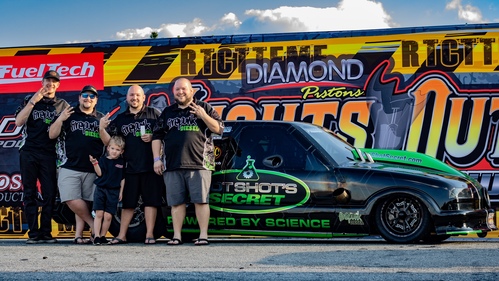
L–R: Cody Fischer, Larson Miller, Lavon Miller and son Braxton, Lyn
Miller.
Hot Shot’s Secret-Sponsored Firepunk Diesel S10 Becomes the First-Ever Diesel to Achieve a 3-Second Pass
The Hot Shot’s Secret-sponsored Firepunk Diesel S10 truck added a new chapter to the drag-racing history books by being the first ever diesel-powered vehicle to run an 1/8th-mile pass in less than four seconds. Based out of Ohio, the Firepunk Diesel team brought the Hot Shot’s Secret-wrapped S10 to Georgia to compete on Lights Out 12 at South Georgia Motorsports Park, where participants raced for more than $120,000 in cash and prizes. Larson Miller from Firepunk Diesel was behind the wheel of the only diesel-powered vehicle in the Radial vs. The World Class. The Hot Shot's Secret-sponsored Firepunk Diesel S10 achieved the world’s first-ever three-second diesel pass with a time of 3.998 seconds at 182.67 mph. Click here for video footage of the record-breaking win.
CMS Announces 30% Capacity For Coca-Cola 600
North Carolina Governor Roy Cooper and state health officials have announced a plan to allow outdoor sports venues, including Charlotte Motor Speedway, to host events with fans up to 30% of their capacity. The announcement paves the way for a limited number of fans to be part of the action when NASCAR returns to the track for the first-ever tripleheader weekend–featuring the North Carolina Education Lottery 200, Alsco Uniforms 300, and the 62nd running of the Coca-Cola 600–at Charlotte Motor Speedway, May 28–30. The track will require health and safety protocols similar to those used during its Bank of Ameria ROVAL 400 event last fall, including mask requirements, cashless transactions and social distancing. For more information and tickets, visit www.charlottemotorspeedway.com.
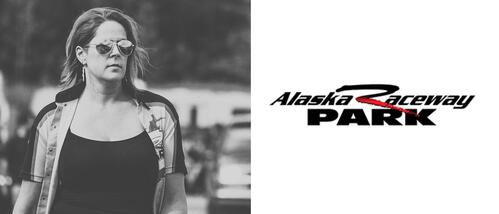
Michelle Lackey Maynor
Alaska Raceway Park Names New President
Michelle Lackey Maynor has been promoted to president and majority owner of Alaska Raceway Park. Her promotion comes as current owners Karen and Earl Lackey transition to advisory roles. As president, Lackey Maynor will be responsible for all aspects of track operation for the NHRA- and NASCAR-sanctioned motorsports facility. In addition to running day-to-day operations, her duties include facility growth, event management, marketing and promotions, staffing, sponsorships, and community relations. Lackey Maynor has served as the operations manager of the motorsports facility in Palmer, Alaska, since 2016. She has worked in many different capacities at the track since joining in 1997.
Ferrari Commits to FIA WEC With New Hypercar
Ferrari has confirmed that it will enter the FIA World Endurance Championship’s new Hypercar category in 2023. The Italian automaker will return to the top class of endurance racing for the first time since 1973 and join the likes of Toyota, Glickenhaus, Peugeot, Porsche and Audi, which have all committed to the Hypercar category. The new-for-2021 Hypercar category is where teams and drivers can compete for overall championship victory in the FIA WEC and at the 24 Hours of Le Mans.
NHRA, Mattel Partner in the Fast Lane With Hot Wheels
NHRA and Mattel have announced their licensing partnership to develop collectible die-cast vehicles under the Hot Wheels brand, hitting stores in June. The new partnership will see die-cast versions of classic hot rods, including a ’74 Chevrolet Vega Pro Stock car and a ’71 Ford Mustang Funny Car. NHRA fans young and old can host their own drag races in living rooms across the world.
LIQUI MOLY Announced as Presenting Sponsor of the 9th Annual PASMAG Tuner Battlegrounds Championship
LIQUI MOLY will be the presenting sponsor for the ninth annual championship of PASMAG’s Tuner Battlegrounds (TBG). PASMAG's Tuner Battlegrounds is an online bracket-style tournament where automotive enthusiasts compete with their modified cars and trucks and vote for their favorite modified vehicles and builders. Featured at more than 30 in-person events each year, with winners receiving a print-feature, the annual championship culminates with the champion receiving the ultimate award: the front-cover of PASMAG. Competitors and voters also receive giveaways and awards from sponsors throughout the year.
The U.S. House of Representatives passed a bill that would permanently protect more than one million acres in Colorado, 821,000 acres in California, 132,000 in Washington and more than one million acres in Arizona. The “Protecting America's Wilderness and Public Lands Act,” H.R. 803, will now advance to the U.S. Senate, although it is likely to be blocked given strong Republican opposition to the bill. The SEMA-opposed legislation is controversial because wilderness designations provide the highest level of permanent protection available, preventing the creation of roads and trails in addition to prohibiting logging, mining and drilling. Listed below are key bills that were included in H.R. 803:
The Colorado Wilderness Act protects more than 36 wilderness areas totaling 660,000 acres across Colorado to protect mid- and lower-elevation mountainous areas that are used for outdoor recreational activities and serve as critical habitats for a variety of plants and wildlife. More than two-thirds of the areas to be protected are already being treated as wilderness areas, including the Handies Peak, Dolores River Canyon and Little Bookcliffs.
The CORE Act, H.R. 577, would protect 400,000 acres in Colorado as wilderness and special recreation and conservation areas.
The Grand Canyon Protection Act, H.R. 1052, would permanently withdraw more than 1 million acres of federal land north and south of Grand Canyon National Park from eligibility for any future mining claims leaves valid existing claims intact.
The Northwest California Wilderness, Recreation, and Working Forests Act, H.R. 878, would protect 306,500 acres in Northwest California by expanding nine existing wilderness areas and establishing eight new wilderness areas.
The Central Coast Heritage Protection Act, H.R. 878, protects 287,500 acres in Central California. It would create two new potential wilderness areas and two new scenic areas in the Los Padres National Forest and the Carrizo Plain National Monument. The bill would also create a 400-mile hiking trail to connect the wilderness areas in the southern and northern portions of the Los Padres National Forest.
The San Gabriel Mountains Foothills and Rivers Protection Act, H.R. 693, protects 139,700 acres in Southern California. The bill would expand the San Gabriel Mountains National Monument, establish a new National Recreation Area, and designate approximately 30,659 acres as wilderness.
The Rim of the Valley Corridor Preservation Act, H.R. 1075, would expand the existing Santa Monica Mountains National Recreation Area in Southern California by adding 191,000 acres of the Rim of the Valley Corridor.
The Wild Olympics Wilderness and Wild and Scenic Rivers Act, H.R. 999, protects 131,900 acres in Washington State. It would designate 126,544 acres on the Olympic Peninsula as wilderness in addition to 5,346 as potential wilderness (this would be the first new wilderness designation in Olympic National Forest in nearly 30 years).
For more information, contact Eric Snyder at erics@sema.org.
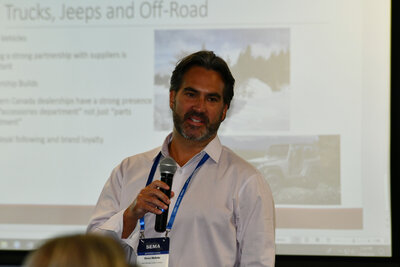
USMCA replaced the North American Free Trade Agreement (NAFTA) effective July 1, 2020. All claims for lower tariff rates for exports to Canada and/or Mexico will need to be made using the new requirements called for under USMCA instead of NAFTA. Pictured here: A Canadian off-road distributor speaks at SEMA headquarters about the export opportunities in Canada during the 2019 Export Fair.
Products manufactured and sold within North America are eligible for preferential tariff treatment if they meet minimum content requirements as dictated by the new U.S.–Mexico–Canada Agreement (USMCA).
This article answers questions SEMA News has received from SEMA-member companies about the details of the regulations under the new agreement, which took effect July 1, 2020, and the documentation required when exporting your products to Canada and Mexico.
SEMA eNews highlights new products from industry companies each week. To have your product considered for upcoming issues, send product press releases to editors@sema.org.
ARP
Stud Kits for Big Block Chevy
ARP recently introduced kits designed for use with Dart Pro 20, Ededlbrock Big Victor 12 and Big Victor 12 cylinder heads. Manufacturers from premium steel and heat-treated to 190,000-psi tensile strength, they are ideally suited for any engine combinations. The threads are rolled (not cut) following heat treat and have 10 times better fatigue life than studs made through ordinary methods. They are far superior to factory hardware and can provide additional clamping force with an extra margin of safety.
Design Engineering Inc.
Mazda Miata Interior Insulation Kit
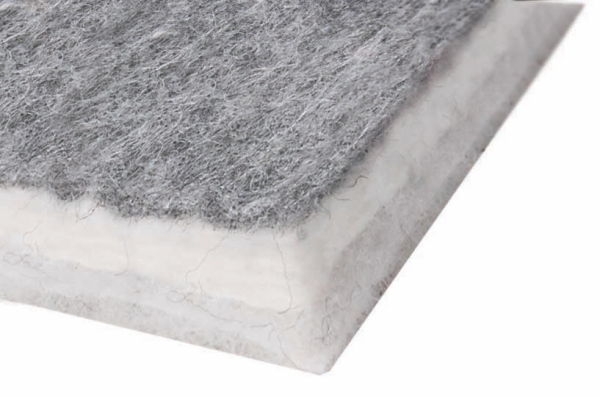
Design Engineering Inc. has introduced a new Interior Insulation Kit (PN: 050295) for the increasingly popular '90-'05 first (NA) and second (NB) generation Mazda Miata models. The Miata floor kit features DEI’s proven Under Carpet Lite material that insulates the cab from heat and blocks noise for a cool, comfortable ride. As an added level of noise and vibration control, customers are encouraged to install DEI’s Mazda Miata Vibration Damping kit (PN: 50600).
DEI’s Under Carpet Lite material is 1/2-in. thick and engineered using multilayer construction to block heat and absorb engine and road noise. Pre-cut for an easy fit in '90-'05 first (NA) and second (NB) generation Miata models, the material installs quickly on the vehicle floor to provide premium thermal insulation and reduces road and tire noise.
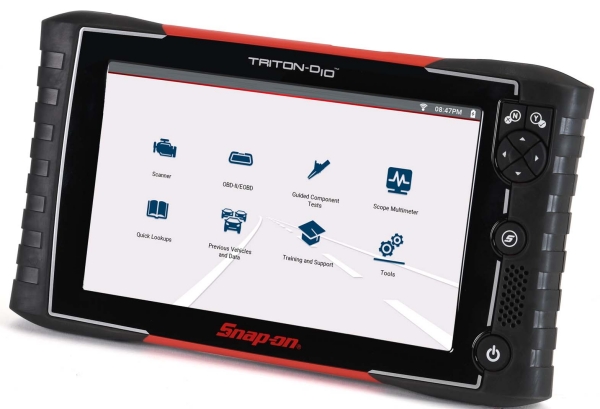
The new Snap-on TRITON-D10 allows technicians to dig deep into the systems of a vehicle and evaluate performance with comparative data to make accurate and efficient decisions on every complex repair.
With Fast-Track Intelligent Diagnostics, TRITON-D10 systematically eliminates unnecessary information and provides technicians with only the specific data and resources that they need to make repair decisions on the vehicle under the current circumstances.
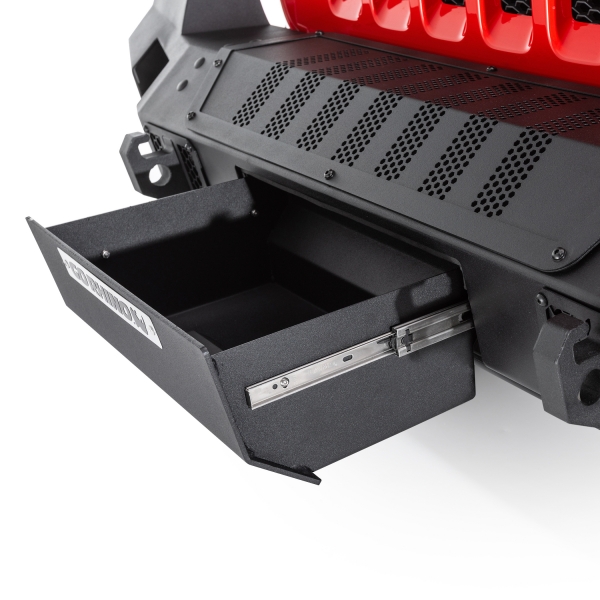
The Go Rhino Trailline family welcomes the new full-width rear bumper for the JEEP Gladiator JT (PN: 273120T). It is compatible with the vehicle’s factory hitch, features a drop step for oversize tires, and allows for installation of two flush-mount lights.
All Trailline bumpers are CNC laser cut and formed 3/16-in. steel, with fully welded and hand-finished seams. The matching front bumper (230121T) is compatible with the Wrangler JK/JL and the Gladiator JT.
Platinum status represents SDC manufacturers that have achieved the pinnacle of product data by putting in the extra effort to provide resellers with the most complete data sets available.
JMS
BoostMAX
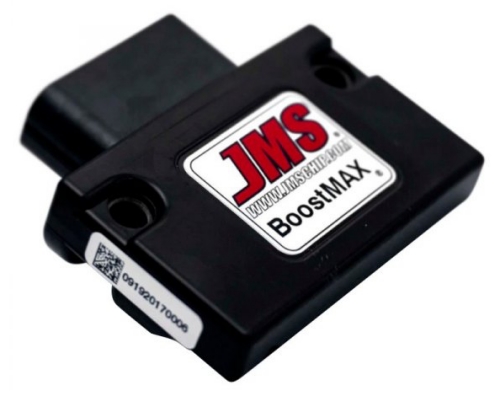
The JMS BoostMAX is designed to work with all EcoBoost engines to considerably increase horsepower and torque, up to 50+WHP depending on application. The plug-and-play design are easy to install, connecting to your factory MAP and TIP sensors with an included knob for on-the-fly boost adjustment.
You’ll feel increased throttle response across the entire power band, with no aftermarket OBDII programming required. For the ultimate in power and control, pair with the JMS PedalMAX. BoostMAX units are fully waterproof, backed by a lifetime warranty, and made in the USA.
Oracle Lighting
Powersports Illuminated LED Wheel Rings
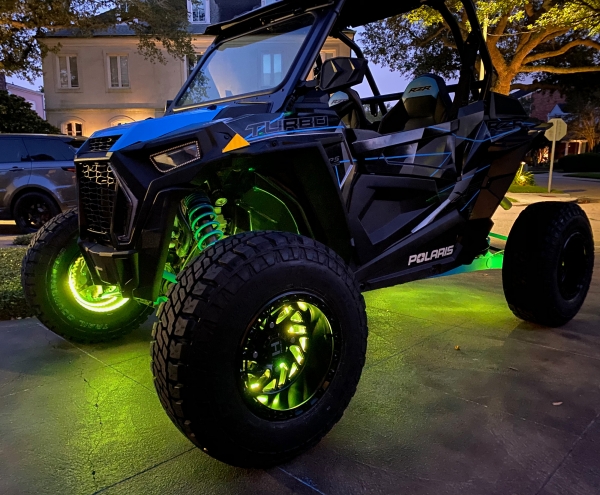
ORACLE Lighting, a market leader in innovative LED lighting solutions for the automotive aftermarket, has announced its new illuminated LED wheel rings for UTV/ATV/SXS powersports applications.
Designed specifically for the harsh conditions of off-road use, the new illuminated LED wheel rings are an easy and effective way to light up the wheels, underbody and suspension on your UTV, ATV or side-by-side.
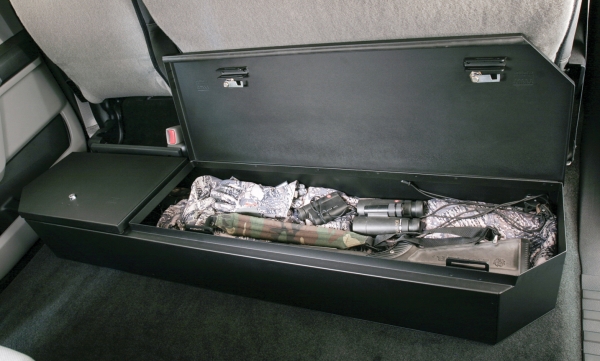
Tuffy Security Products manufactures an Under Rear Seat Lockbox for ’15 and newer Ford F-150 Super Crew Crew Cab pickup models.
Its unique design, offering 4,500 cu. in. of storage space, is concealed from view and allows the full width to be utilized for stowing firearms or other long items. Contents can be accessed by flipping either or both of the rear seats up and opening the corresponding box lid.
Champfered corners incorporated into the design make it easy to operate the seat releases and aid ease of access for passengers. The lockbox easily installs with the included mounting hardware, which works in conjunction with the OEM hardware, and does not require any drilling.
It is manufactured of welded steel with a durable texture powdercoat finish and features Tuffy’s Pry-Guard Locking System and a 10-tumbler double-bitted security lock with build-in weather seals to protect contents of the box. A weather-resistant lid with built-in lid stop supports the lid when open.
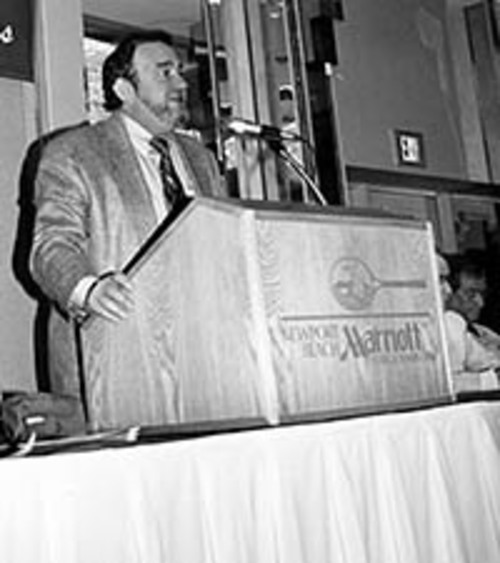
As the March 19 deadline to submit nominations for the 2021 SEMA Hall of Fame quickly approaches, many Hall of Fame members are reflecting on what the awards and the program mean to not just themselves, but also the industry.
“Some of the younger members in SEMA look at these awards as ho hum and [something that is just] for insiders, but that is not true,” said 1997 SEMA Hall of Fame inductee Chuck Blum. “Someday they will be older members and they will recognize why some individual in their peer group should be recognized.”
Blum, who worked in sales and marketing at Keystone Wheels before serving as SEMA president for 22 years, urges industry members to share their thoughts and recommendations for future SEMA Hall of Fame members. It’s a way to give back, recognize and thank those who have gone the extra mile to make the automotive specialty-equipment industry so great.
“Those who have been installed into the Hall of Fame worked hard both for their companies and the industry,” Blum continued. “They spent hours of their free time working for the industry in activities such as pouring over new regs that impact us, meeting in peer groups to create strategy on how to deal with them and, at times, making sacrifices for themselves for the benefit for the group as a whole.”
“We know that submitting a nomination can be another task on someone’s to-do list, but we rely on the industry to share their thoughts and experiences as to who deserves to be inducted each year,” added Lindsay Bianco, SEMA senior manager, membership projects. “The SEMA Hall of Fame is not something that is taken lightly, and we strive to and recognize the industry’s best. We can only do this through the help and input from the industry.”
To learn more about the SEMA Hall of Fame or view a list of inductees and their bios, visit www.semahof.com or contact Bianco at lindsayb@sema.org or 909-978-6692.
The automotive aftermarket has no boundaries, as evidenced by the thousands of articles that are produced every year by journalists throughout the world. These reporters are constantly on the hunt for the latest automotive trends to report to their readers and often rely on SEMA to learn about new parts and technology in the marketplace. By attending the annual SEMA Show in Las Vegas or following one of SEMA’s programs that help member companies expand into international markets, journalists are able to stay abreast of the latest happenings in the industry. The following are some international publications that keep an eye on SEMA’s efforts.
“TuningMex”
Editors at the online publication strive to provide automotive enthusiasts in Mexico with the latest industry news, so they compiled a list of products that were showcased during the week of the SEMA360 online event. Among the parts they highlighted for their readers were new products by Baer, Baxter Performance, Classic Instruments, CTEK, Garrett and NRG.
“Auto Service World”
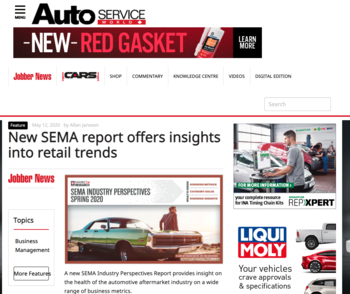
Auto Service World covers all sectors of the Canadian automotive aftermarket, including manufacturing and distribution, so it’s only natural that its editors track the aftermarket industry in the United States. When SEMA released its 2020 “Industry Perspectives Report,” editor Allan Janssen informed his readers about some of the key findings and metrics discovered by SEMA.
“Auto Motor and Sport”
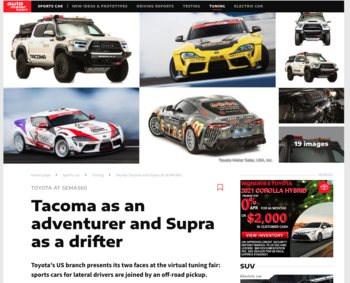
Thomas Harloff informed his readers in Germany about Toyota’s big splash at SEMA360, when the automaker revealed aftermarket variations of the Tacoma and Supra. The Tacoma pickup was modified with products essential for overlanding adventures, and one Supra the OEM displayed was a hand-painted version that was modified for drifting competitions.
Heard In The News
“A Ford Transit fully prepared for the raid, offering the comfort and volume of a van and the off-road services of a 4x4. You can find everything at the SEMA Show!”—Generation 4x4 (France)
“A SEMA event wouldn’t be the same without Kaesar Compressors in attendance, and SEMA360 was no exception.”—Collision Repair (Canada), via YouTube
“Did you know that AutoZulia International has served as a judge at the SEMA Show, selecting Top 10 New Products for the automotive market?”—AutoZulia International (Venezuela), via Facebook
“Here is an hour of your life you’ll never get back, where we check out a bunch of hot rods, custom cars and modified cars from SEMA360.”—RetroRidesTV (UK), via YouTube
How an Innovative Content-Creation Program Helped Boost an Industry
By Mike Imlay
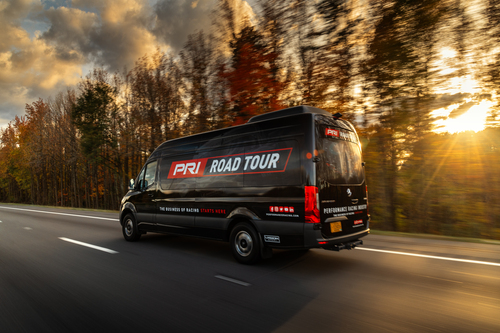
From October to December 2020, the PRI Road Tour logged
an estimated 8,600 mi. to showcase businesses of all sizes to
industry followers. The tour was designed as a dynamic
alternative to the annual PRI Trade Show, cancelled for 2020
due to COVID-19.
This past December, the Performance Racing Industry (PRI) Road Tour wrapped up its ambitious nationwide schedule of visits to racing and performance businesses from Indianapolis to California. With the metrics and reviews now in, it appears that the tour will pay dividends to businesses in the racing category for a long time to come.
Running from October 10 to December 18, 2020, the PRI Road Tour was created as an alternative to the annual PRI Trade Show held in Indianapolis each December. With the pandemic making a live trade event impossible, PRI officials decided the tour could offer the racing community far greater value than a virtual show.
“We decided to take the PRI Trade Show on the road,” explained PRI President Dr. Jamie Meyer. “There are virtual trade shows popping up. They’re safe, but they’re also less effective. Knowing how intimate this community is, we thought the right thing to do was to go see them, go visit their shops, go visit their racetracks—but we had to do it safely.”
The tour offered an innovative way to connect the industry and help suppliers promote their brands, products and services. Organizers scheduled more than 86 stops encompassing industry manufacturers, wholesalers, retailers, race teams, racetracks and related businesses. PRI’s tour contingent included PRI Housing and Travel Manager Michelle Gallegos and a full Driveline Studios content-creation crew headed by Justin Cesler, the studio’s founder. The plan: Capture and share a trove of video, images and exclusive interviews highlighting each company’s newest products, vehicles, races and developments.
The completed content and assets were not only posted on PRI’s website and social-media feeds but also supplied free of charge to the visited companies for their own marketing initiatives. According to Meyer, that reflected PRI’s mission to support the industry and give back to the racing community.
“This was something that we paid for,” he said. “This was no cost to the folks whose facilities we stopped at, and we brought the world’s best content creators right to them so they could tell their story and we could share it.”
After an Indy kickoff, the Road Tour made its way through Chicago, Detroit and Cleveland, followed by stops in North Carolina, South Carolina, Georgia, Tennessee, Texas and California. The project was conducted with the utmost in safety precautions and adhered closely to each state’s COVID-19 health orders and advisories.
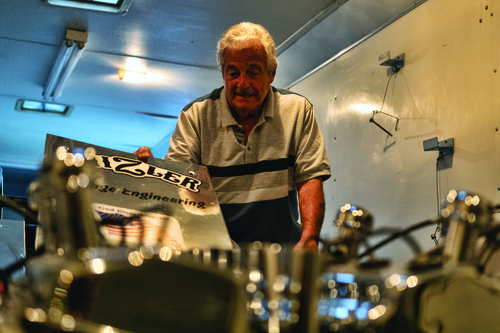
Legendary drag racer Chris “The Greek” Karamesine offered
the PRI audience a rare look into his Chicago shop. Ageless
at 89, he is still competing, building engines and maintaining
race cars.
“We limited [the team] to only critical staff,” Meyer noted. “We did have other employees who joined us, especially in California, but we also limited that so we didn’t overwhelm our guest manufacturers. We followed the state and local guidelines along the way, including daily temperature checks. These guys wore out the hand sanitizer, which was great. We wiped down everything after every stop, every night and every morning.” Because of these precautions and others, no one on the PRI team ever fell ill.
With the latest reviews and metrics still coming in (see sidebar on p. 109), the PRI Road Tour has scored an unmistakable home run.
“The content has been amazing,” Meyer said. “The content and the growth on social media have been phenomenal. We’ll end up with more than 25 million media impressions. It was a massive undertaking, and we had great engagement, great follower growth on all of our social platform forums. One of our videos went viral, really took off. YouTube labeled it as the correct video for the topic—the Godzilla crate engine from Ford Racing.”
According to Gallegos, who was with the production crew every leg of the journey, the PRI Road Tour van racked up more than 8,600 mi. while averaging two stops per day, and some days as many as four. A typical visit involved linking up with a company’s leadership for a run-through of business operations, new products and 2021 business goals, and ultimately a facilities walk-through wherever possible. Those walk-throughs were especially helpful to the production crew in scouting key settings for B-roll.
In addition, the crew set up new-product presentations and full-length interviews with company representatives. That often meant six full-length interviews per day and late nights of postproduction in hotel rooms, editing and uploading digital assets to the PRI Road Tour webpage and social-media platforms
“The goal was to spend a lot of quality time with our PRI exhibitors, attendees and the race community,” Gallegos explained. “It was more about quality and not so much the quantity of visits we could fit into a day. It was about getting to know them, their operations, and meeting all the folks to learn their stories.
“It’s really phenomenal that we could capture peoples’ stories, edit them on the road, and showcase them so quickly. The Driveline Studios team shoots Baja racing and for the industry’s big OEMs. Their work is so well respected, and the quality time they spent on each interview, getting to know the interviewees and subjects, was so appreciated by the companies we visited.”
Among those companies was Eibach, based in Corona, California, which the PRI team visited just before wrapping up in January. A well-known supplier of high-quality springs for all types of racing applications, it shared the experience of many industry companies since the pandemic onset in March 2020.
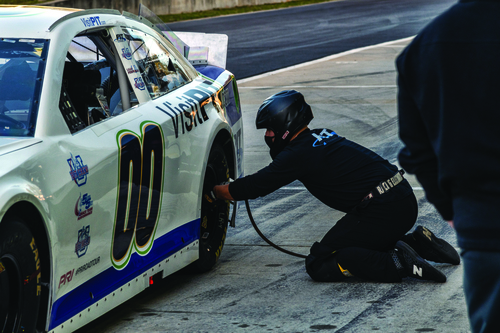
The PRI Road Tour also highlighted youth engagement in
racing with a stop to PIT Instruction & Training in Mooresville,
North Carolina, where the PRI crew got to see students
learning pit procedures as well as welding, testing and more.
“It’s obviously been a wild year,” conceded Eibach Sales Manager David Cardey. “Everybody was out of here for a good month—some up to two and three months before some people were coming back. I think we took a little bit of a [sales] hit for basically one month, and it’s been wide open ever since. Business has actually been record-breaking month after month.”
Still, he said, the COVID-19 disruptions continue in the form of staff testing, social distancing in facilities, and supply-chain and materials shortages that can make it tougher to fulfill orders on time. Those challenges made the ability to share new products and company information through the Road Tour all the more important.
“We all love the PRI Show,” Cardey said. “The fact that we are all racers, we love going and talking to the racers and seeing what products are there ourselves. With that not happening this year, PRI reached out, and we were glad to be asked to participate. It was a no-brainer to be a part of it.”
He added that Eibach’s goal for the tour was simply to keep its name out in the industry and demonstrate support for the racing community and the PRI Trade Show when it returns.
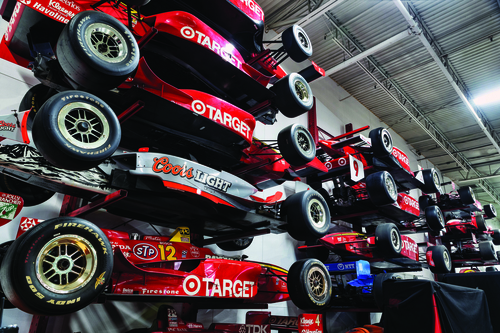
Headquartered in Indianapolis, Chip Ganassi Racing was
among the Road Tour’s first stops in October. The visit
included interviews with officials from the championship
winning team and a firsthand look at its operations.
“We want to be back,” he said. “Obviously, this [tour] is not the same as being there in person with everybody, but we’re hoping that this creates enough buzz with everybody and keeps everybody interested enough that next year gets back to normal.”
Other race-focused companies along the tour route echoed that sentiment.
“I think what the PRI team did with the Road Tour showed an incredible willingness to literally go out of the way for the exhibitors of the [PRI] show,” said Carrie Enders, front-office vice president for RE Suspension in Mooresville, North Carolina. “It took a lot of creative energy to come up with something that has every guy in our shop following along daily on Facebook. It’s a complete win for PRI as far as we’re concerned.”
However, the tour’s biggest beneficiaries may have been the industry’s grassroots racers and brands like Buzze Racing, which was another Mooresville stop.
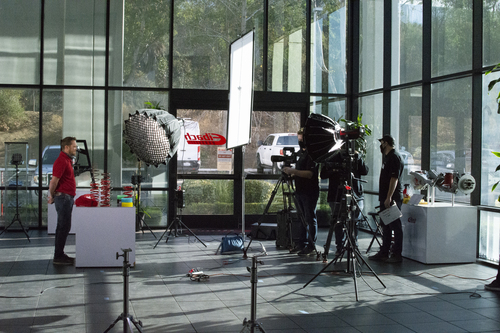
During its final leg of the tour, the PRI Team visited Eibach in
Corona, California, where the videography pros shot several
new-product presentations for the many PRI Road Tour
followers.
“We’re a small shop, and we can’t afford something like this,” said driver Tom Buzze about the digital assets and broad exposure that the PRI crew provided to his team. “We cannot thank them enough, and we could never repay them for what this means to us.”
Comments like Buzze’s were especially gratifying to Gallegos and the production crew.
“Our goal was not just to see the large companies but also to see the small mom-and-pop shops and to be with the racers,” she explained, adding that the racing industry tends to be extremely tight-knit. “Everywhere we went, everyone who followed the journey was so respectful of others in the industry. The community was not only close but also followed each other and cheered them on. It’s the racing world, and it’s competitive, but everybody is also a fan of everybody else’s work too.”
Capturing everyone’s work required a lot of logistical coordination, not to mention equipment—and Cesler’s Driveline Studios crew came fully armed for the challenge.
“For us to come out on the road in a van, we have to have all of the toys,” Cesler said. “We were doing two stops a day, so we were in every type of situation you can be in. Some were well lit, some were not. Some were small, some were big. Some were outside, some were racetracks, some were machining facilities. So we had to build and have every type of equipment we could have. That included a bunch of RED [4K digital cinematic] cameras, a bunch of tripods, a bunch of drones and a bunch of still cameras.”
But the tour mascot ended up being an RC car outfitted with a gimbal and a RED camera. Dubbed “Wall-e” by the team, he achieved a following wherever he went.
“Wall-e is the best,” Cesler said. “He was a fan favorite, for sure. Kind of fun to drive around and get some great shots with. Because of COVID-19, staying safe was our main priority. Sometimes we used Wall-e to get into areas where there were workers and we didn’t want to be in, which was great. Or at the track, like at World of Outlaws, we could get Wall-e into situations that you wouldn’t normally put a person into. He’s the same as a drone but on the ground and powered by four wheels.”
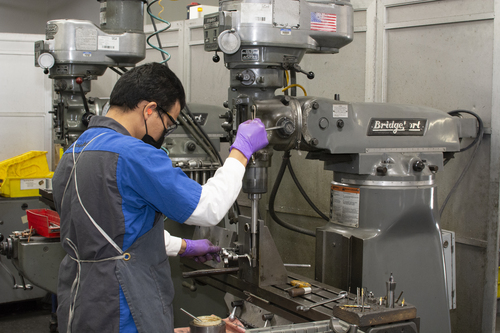
As it was at CP Carrillo, manufacturing was in full swing at
many PRI Road Tour stops, with performance and racing
suppliers seeing increased demand after an initial April 2020
slowdown. The tour connected followers with the wide array
of brands, products and services found within the industry.
In the end, Cesler said that the tour was personally rewarding for the entire PRI team.
“We’ve seen America,” he said. “We met a lot of great people, saw their hard work, saw their ingenuity. Everyone has had to shift. Everyone has had to do something different. We did something different, and to see everybody do that and put up growth numbers and to be having great years and be preparing for the future, that’s definitely been the highlight for us.”
Some Industry Reactions:
“SRI really enjoyed the opportunity to work with the PRI Road Tour! We were able to showcase some of our performance products and let people see our headquarters in Mooresville, North Carolina. Thanks to everyone at PRI for putting this together!”
—Kevin Storms, General Manager, SRI Performance
“This is a really great idea. We are so appreciative that [PRI] included us. We have been with PRI since the very beginning, and this is what PRI is all about.”
—Chris Thornton, President, Racing Radios
PRI Road Tour Fast Facts
Tour Dates: October 10–December 18, 2020.
Visit Statistics:
70 tour days in all.
86 tour stops completed.
18 “hand raisers” added to completed visits.
Average of two visits per day.
Approximately 8,600 mi. traveled.
10 states visited: Indiana, Illinois, Michigan, Ohio, North Carolina, South Carolina, Georgia, Tennessee, Texas and California.
Along with hot rods, the classic and restoration marketplace has
always formed a solid part of the SEMA universe. The new SEMA
Market Research “Classic Cars, Modern Markets” report offers the
latest insights into this category’s consumers and trends. Courtesy:
Shutterstock.com
They don’t make ‘em like they used to. Classic cars and trucks represent a vital aftermarket segment, but understanding marketing opportunities in that space poses unique challenges. To help specialty-equipment businesses get a handle on the category, SEMA Market Research has released a new report focusing on vintage vehicle customers and their customization goals. Entitled “Classic Cars, Modern Markets,” the report contains the latest data on market sizing, consumer demographics, purchasing habits, vehicle usage, and even the shifting definitions of the cars considered to be classics.
“We’re talking about a significant volume of cars still driving around, still being cherished and loved by their owners,” said SEMA Market Research Director Gavin Knapp. “Of course, that means they need to buy parts from our industry. Obviously, classic vehicles are a great platform for accessorization and modification. We estimate that consumers spent almost $1 billion buying accessories and customization parts for older cars in the last year alone.”
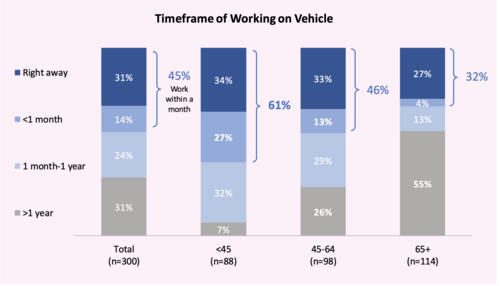
Vintage vehicles are a long-term hobby, but almost half of all classic
enthusiasts do their heaviest project work within the first month of
ownership. That tendency is especially pronounced among the
younger demographic.
The research was conducted in the fall of 2020 with a carefully selected sample of classic enthusiasts who participated through an online survey. The sample group was screened to fit SEMA’s target market of vehicle owners aged 16 and older, and the survey has a 95% confidence level.
“This is a topic that we’ve been considering for some time now,” said SEMA Market Research Manager Matthew Kennedy, the project’s lead analyst. “Part of the challenge from our perspective was how to attack it. However, once we did our report on young accessorizers, we realized that we could do studies that are not vehicle-specific but rather look at a constituency.”
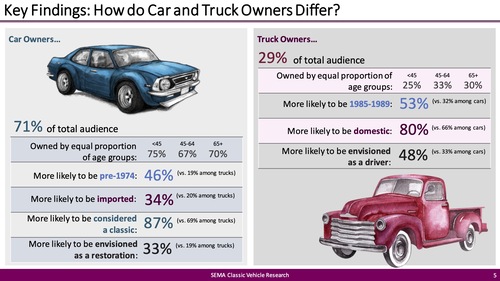
Car owners still make up the bulk of the classic-vehicle audience at
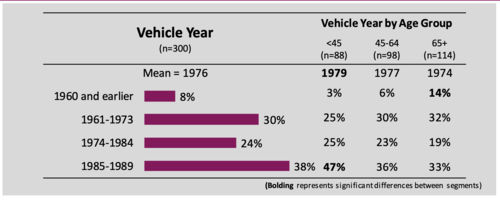
71%. While ‘60s and mid-’70s muscle has traditionally dominated the
segment, late-70’s, ‘80s and even ‘90s vehicles are making inroads.
In recent years, vintage trucks have steadily grown in popularity,
especially among younger enthusiasts. Here, the trend toward
labeling later models as “classic” vehicles is particularly apparent.
This approach allowed the research team to focus on the latest trends in the classic and restoration marketplace as well as the ways newer accessorizers differ from prior generations. The resulting report is designed to help businesses assess market potential, profile target consumers, expand their customer base, determine product development, and hone their marketing and messaging. Kennedy said that it’s an important market to address.
“The Restoration Marketplace and Hot Rod Alley are sizable sections at the SEMA Show,” he said. “There are a lot of businesses that cater specifically to the market for older vehicles. We wanted to give them some high-level research to understand what their customers are doing—even if it’s data backing up what they already know. We also wanted to take a look forward and give some insight into what’s emerging in the space.”
Key Takeaways
According to Kennedy, the research confirms several trends offering new opportunities for vintage and restoration aftermarket businesses.
Among enthusiasts, the definition of what constitutes a classic is changing. Once dominated by ’60s and mid-’70s musclecars, the vintage category is now expanding to include late ’70s, ’80s and even ’90s vehicles. There is also a noticeable gravitation toward trucks, especially among younger enthusiasts.
Although the classic-customer demographic still skews older, a next-generation enthusiast base is steadily emerging. Regardless of age, practically all vintage enthusiasts view their vehicles as drivers to be enjoyed and shown off on the road.
Because most classic vehicles are meant for driving, the popularity of restomods continues to grow, especially among younger accessorizers.
Retail automotive chains account for most consumer purchases, but there is untapped opportunity for independents as well.
Although consumers in this space mostly research online, they prefer to purchase from retail outlets where they can have meaningful conversations about their vehicles and parts.
“Obviously, this is a sector that our aftermarket industry grew up around,” Knapp said. “We had the people creating the deuces, then the Tri-Five Chevys, then the musclecar era, and that’s what people generally think about. But as we move forward in time, our definition of classics is expanding to some newer cars becoming in vogue or fashionable. We wanted this report to explore all of that.”
“One of the things we found is that ‘classic’ is a very subjective term,” Kennedy added. “The Classic Car Club of America says that it’s anything built between 1915 and 1948. But on the other end, Nationwide says a classic is something at least 20 but no more than 40 years old. Haggerty has pre-’80 or ’96-and-older, depending on the vehicle you’re looking at. From a more practical perspective, something that’s a no-brainer but worth pointing out is that classics are vehicles they’re not making anymore.”
The research found a strong correlation to the cars that enthusiasts found cool in their youth, meaning that the nostalgia factor differs greatly among age groups. Traditional classics and musclecars are perennial favorites, with ’70s and ’80s muscle also growing in status. In addition to pickups, truck enthusiasts are also now gravitating toward Jeeps and Ford Broncos. The list of emerging classics also now embraces Asian and European imports, including older BMWs, Toyotas and Hondas.
Personal nostalgia is a key driver in the vintage vehicle hobby. The
decades in which a vehicle owner grew up will highly influence what
he or she views as a classic.
Economics and availability also play into hobbyist definitions. Unless it’s a barn find, it’s difficult to get ahold of Tri-Fives or other cherished older vehicles. The sheer expense of traditional classics is also driving enthusiasts toward more modestly priced later models. The money saved can then be spent on returning the vehicle to factory condition or even improving it. In addition, less costly later-model vehicles act as a gateway for younger people who want to take up the hobby.
Ultimately, for a lot of enthusiasts, “classics are a status symbol they want to own,” Kennedy said.
Since a vehicle’s intended purpose determines the products its owner will purchase, the report delves into the various visions that classic enthusiasts hold for their vehicles. Among truck owners, nearly half (48%) envision their vehicles as drivers. Conversely, car owners are more likely to envision their vehicles as restorations at 33% versus 19% for truck owners.
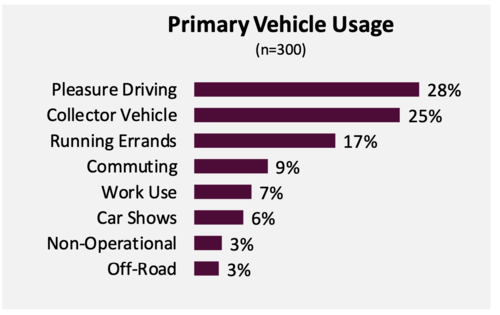
Overall, 28% of respondents said that they utilize their vehicles for pleasure driving, 25% as collector vehicles, and 17% for running errands. A mere 6% said that they enter their vehicles in car shows.
“In all honesty, there’s a big group that just wants a cool car that they can drive around in,” Kennedy noted. “They don’t necessarily have a big plan or vision to make the car perfect in every way, but they like the nostalgia of it. They like the classic look and feel, and they want to have that when they’re cruising the streets.”
Building Their Dream Cars
When it comes to preparing their dream vehicles for the road, this is a group in which a good portion of owners enjoy doing their own project work.
“A big joy for them is the process of getting in there, getting their hands dirty,” Kennedy explained. “It’s a bit more of an enthusiast market than the general population, but there are also folks who aren’t nearly as hardcore about it. Both types of consumers coexist in this market.”
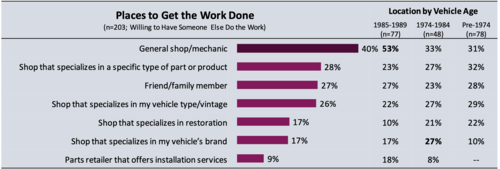
Owners of pre-’74 vehicles tend toward shops specializing in a
specific part or product. Likely needing less specialization, newer-
vehicle owners more often visit general shops or mechanics. Overall,
65% say they prefer sticking with the same shops or suppliers rather
than shopping around.
Most owners ultimately opt for a mix of DIY jobs and professional work, turning mainly to general garages and mechanics (40%), a specialty part or product shop (28%), or a shop specializing in their vehicle type or vintage (26%). Many also turn to friends or family to get the work done (27%).
In terms of average spends, 40% invest less than $3,000 in their vehicles, 35% between $3,000–$9,999, and 25% spend $10,000 or more.
“When it comes to actually getting the parts, they’re going to a number of different places,” Kennedy said. “Some of those sources are online—particularly when you look at younger owners who grew up as digital natives. They’re going to eBay or a similar marketplace, or they’re buying direct from the manufacturer.”
Still, the majority of purchases in this space remain from brick-and-mortar outlets. Like most aftermarket consumers in general, classic enthusiasts especially like to see and touch products and get personal advice from experienced parts people.
Reaching the Classic Customer
For companies and shops trying to reach the vintage audience, a key strategy is to recognize and focus on the hobby’s social nature.
“The reality is that social and web presences are a big deal in this space,” Kennedy said. “This is also a group where a lot of folks are engaged in the community, getting out to clubs, to cruises, and congregating as an enthusiast community.”
According to Kennedy, when dealing with old-school vehicles and their enthusiasts, it’s absolutely worthwhile for aftermarket businesses to utilize Facebook, Instagram, YouTube and other social media and the web to build relationships, especially with younger hobbyists. Offering project advice and showcasing parts that get the job done are exceptional ways for brands to win over these customers.
Classic vehicles are more than mere museum pieces. Whether
through pleasure driving or just running errands, vintage-vehicle
owners like to experience and show off their builds on the roads.
Another strategy is to address the increasing number of younger enthusiasts now taking up the hobby.
“Realistically speaking, the ownership base does skew older in the classic segment,” Kennedy explained. “But we also found that people under 45 are definitely an engaged group. There are some who are really passionate—not just about their vehicles but about being part of the classic-vehicle enthusiast community.”
In the end, Kennedy said, these newcomers are a group that the aftermarket can nurture.
“They’re out there buying a car they always wanted and putting in the work to actually make it their own—even more so than older customers in some cases. For a lot of them, it’s their first classic, and it’s their baby. They’re really looking to get right in and start working on that almost immediately.”
The products featured below are from SEMA Data Co-op (SDC) member companies that have attained Gold- or Platinum-level data, which means that their product data is robust and complete—likely to drive customer purchase decisions. SDC members meeting data scorecard requirements are invited to submit product releases for consideration to enews@semadatacoop.org.
Advanced Clutch Technology
Single-Disc Clutch Kits
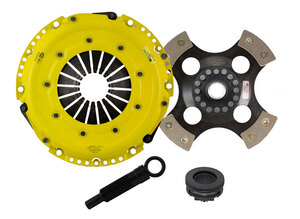
Advanced Clutch Technology (ACT) clutch kits are newly manufactured units, not rebuilt from used parts. Many other clutch companies modify the original equipment (OE) parts to produce limited benefits using the OE diaphragm spring.
ACT fully engineers every application and designs and develops entirely new diaphragms and pressure-plate faces. These steps are necessary to achieve vastly improved performance well beyond the restrictions of the OE geometry.
Features up to 28 different pressure-plate and disc combinations for anything from mild street use to full track use. Torque holding capacity increases ranging from 20%–400%. Most meet SFI Spec 1.1.
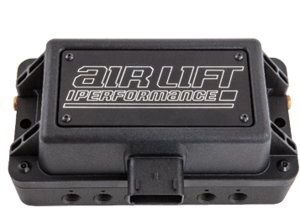
Description: In an effort to make its best-selling 3H and 3P air-management systems more customizable to builders across the globe, Air Lift Performance has introduced a new threaded-port manifold. With new NPT ports and the option of either a ¼- or a ⅜-in. air line, builders can now create trunk setups so stunning that they rival their vehicles’ stance.
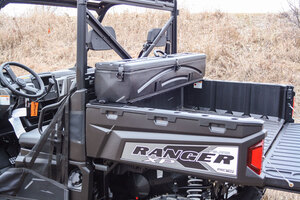
The Du-Ha All-Terrain is a storage device made specifically for Polaris Ranger or Bobcat UTVs. It mounts atop the UTV bed to store and protect gear, tools and even firearms. The heavy-duty container is easily accessible from either side, yet does not take up any floor space in the UTV bed. Three latches secure the top, and the sealed lid keeps out moisture and dust. Made of roto-molded polyethylene, it’s ultra-tough.
Easily installed and removed with Du-Ha expansion plug connectors.
The SDC is “data central” for the specialty-equipment segment, containing millions of products and vehicle fitments from performance and accessories brands. Created by SEMA, the SDC is the definitive, industry-owned and -operated centralized data warehouse, complete with comprehensive online tools, and a team of dedicated data and technology experts to assist manufacturers and resellers with product data needs. Learn more at www.semadatacoop.org or scan the QR code with your smartphone camera.


 USMCA replaced the North American Free Trade Agreement (NAFTA) effective July 1, 2020. All claims for lower tariff rates for exports to Canada and/or Mexico will need to be made using the new requirements called for under USMCA instead of NAFTA. Pictured here: A Canadian off-road distributor speaks at SEMA headquarters about the export opportunities in Canada during the 2019 Export Fair.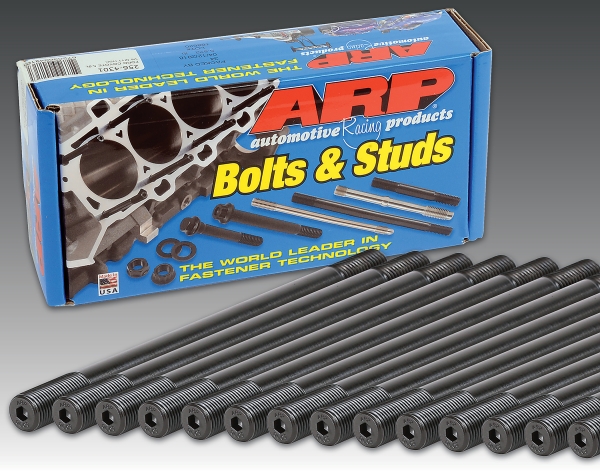
 “Those who have been installed into the Hall of Fame worked hard both for their companies and the industry,” Blum continued. “They spent hours of their free time working for the industry in activities such as pouring over new regs that impact us, meeting in peer groups to create strategy on how to deal with them and, at times, making sacrifices for themselves for the benefit for the group as a whole.”
 See the Entire PRI ROAD Tour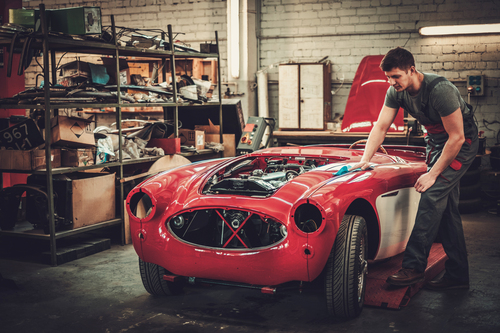
 The SDC is “data central” for the specialty-equipment segment, containing millions of products and vehicle fitments from performance and accessories brands. Created by SEMA, the SDC is the definitive, industry-owned and -operated centralized data warehouse, complete with comprehensive online tools, and a team of dedicated data and technology experts to assist manufacturers and resellers with product data needs. Learn more at