Thu, 10/01/2020 - 13:17

By Fredy Ramirez

SEMA eNews highlights products from member-companies each week. This week’s submissions are listed below.

Hooker Blackheart
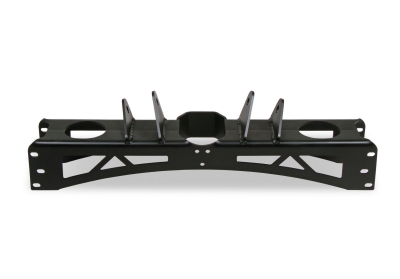
Rear Suspension Crossmember

Hooker Blackheart announces the release of its rear suspension crossmember for ’63–’72 Chevrolet C10. The crossmember is engineered to eliminate driveshaft clearance issues while maintaining proper pinion angles. The dual-exhaust cutouts allow the exhaust system to go through the crossmember instead of under the frame for extra ground clearance. The crossmember replaces the OE crossmember in the stock location and is constructed to work with the factory trailing arms.

Note: Requires use of one-piece driveshaft. Only for 2WD trucks utilizing trailing-arm rear suspension.

866-464-6553
www.holley.com
PN: BHS510

Hooker Blackheart

Holley
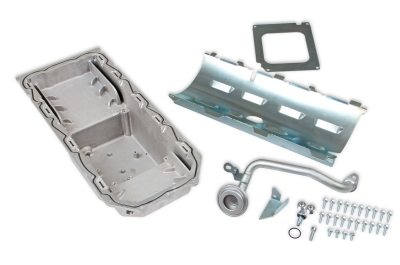
Gen III HEMI Swap Oil Pans

Holley has launched its Gen III Hemi engines oil pans swap for ’63–’74 Mopar A-Body, B-Body, C-Body and E-Body vehicles. The cast-aluminum construction and integrated windage tray combined with O-ring sealing are designed to provide a leak-free solution. The complete pan kit includes all parts required for installation (i.e. oil pan, pickup assembly, O-ring seal, windage tray, baffling and mounting bolts.

866-464-6553
www.holley.com

PN: 302-60

Holley

Hooker Blackheart
Jeep Wrangler TJ Gen-III Hemi Swap Parts

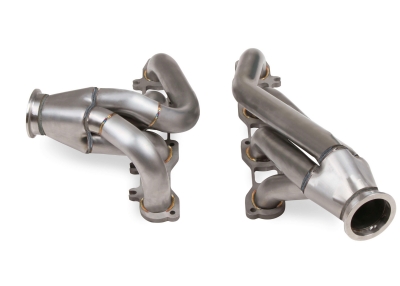
Hooker Blackheart announces the release of its Gen-III Hemi Swap Parts for the ’97–’06 Wrangler TJ. The lineup features engine swap mounts, transmission adapter brackets, headers, Y-pipes and steering shaft support brackets. The mounts are designed to work together with the stock skid plate/transmission crossmember to mount the transmission and stock NP231J transfer case. The transmission bracket is constructed to mount the 545RFE transmission and transfer case to the factory skid pate. The headers and the Y-Pipe are for ’87–’06 Jeep Wranglers with the Gen-III Hemi Engine. The support bracket bolts to the existing steering support bracket and relocates it.

866-464-6553
www.holley.com

PN: Vary

Hooker Blackheart

Redline Detection
SpeedSmoke

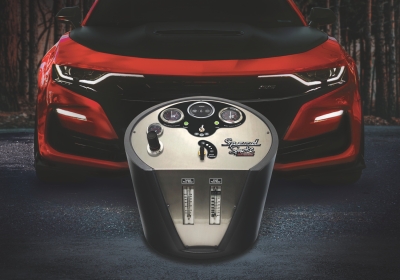
Redline Detection has launched its SpeedSmoke diagnostic leak detector. The detector is designed to address the proliferation of boosted vehicles in repair shops. It is engineered to feature diagnostic capabilities to pinpoint faults in boost leaks, naturally aspirated, high-pressure turbo, diesel and supercharged engines. The machine is constructed to run low-pressure diagnostics for general repair and naturally aspirated engines, plus high-pressure diagnostics for turbo, diesel and supercharged engines. It also features an onboard micro air compressor and 12V DC battery for total portability and includes all needed accessories.

877-557-6653
www. redlinedetection.com
PN: 95-0135

Redline


Gemini
Zero Rust Topcoat

Gemini announces the release of its Black Gloss Zero Rust Topcoat primer. The primer is manufactured to be VOC-compliant in all 50 states and available in aerosol cans only.

800-262-5710
www.usezerorust.com
PN: ARZT-02

Gemini

TRAC
Tire Jack

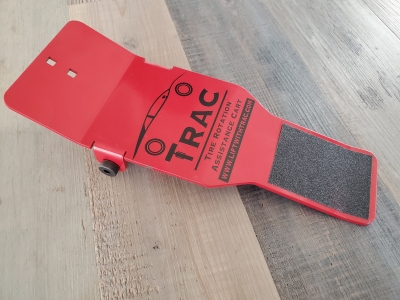
TRAC announces the release of its tire jack. The jack is constructed with welded steel for durability. The steel base rollers are designed to offer tire support and rolling convenience.

Watch: www.youtube.com/watch?v=a-tz7bYBZYA

720-231-1839
www.liftwithtrac.com
PN: Vary

TRAC

Oracle Lighting
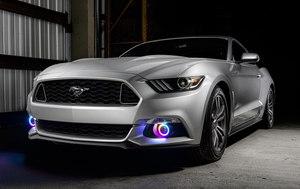
Oracle Fog Halo Kit

Oracle Lighting announces the introduction to its Dynamic ColorSHIFT RGB+A Projector Fog Halo Kit for the ’15–’17 Ford Mustangs. The integrated RGB+A turn signal features “Motion Flow” sequential effect. The LEDs on the ring illuminate sequentially for a turn signal effect. The rings are encapsulated in a polymer resin designed to make them waterproof with an IP68 rating (can be submerged underwater). Oracle Lighting recommends purchasing the ’15–’17 Ford Mustang ORACLE Dynamic ColorSHIFT Headlight DRL + Halo Kit along with the fog kit, as the fog light kit alone will not include the Bluetooth controller.

800-407-5776
www.oraclelights.com
PN: 1235-332


Thu, 10/01/2020 - 13:17

SEMA News—October 2020

BUSINESS

Modifying ADAS-Equipped Vehicles

Four Innovative Case Studies From the SEMA Detroit ADAS Forum and Vehicle Review

By Mike Imlay
ADAS
As OEMs build an increasing array of advanced driver-assistance technologies into their vehicle platforms, the aftermarket faces unprecedented challenges in developing products and modifications that integrate seamlessly with safety packages. The recent SEMA Detroit ADAS Forum demonstrated the surge of innovation the industry is deploying to meet that challenge.

The emergence of advanced driver-assistance systems (ADAS) has been a boon to automotive consumers. Among other benefits, ADAS is credited with a 1.2% drop in vehicle fatalities last year, along with significantly reduced injuries. What’s more, consumer comfort with these technologies is increasing as OEMs build ADAS into an expanding number of vehicle platforms. The result is a growing aftermarket customer base that expects specialty-equipment products and modifications to integrate seamlessly with their high-tech factory ADAS packages. But is the industry up to the task?

Those who attended the Live Across America: SEMA Detroit Virtual ADAS Forum on June 18, 2020, would be optimistic that the answer would be a yes, as four examples of successful customizations and vehicle builds were presented. The forum, now available for viewing at www.semagarage.com/virtualadasforum, brought together a live panel of SEMA manufacturers, industry leaders and technology experts to address the immediate challenges SEMA members are confronting, along with the latest innovations driving the aftermarket toward full ADAS compliance.

Built around actual SEMA manufacturing member case studies of successful product development and vehicle modifications, the forum’s goal was to help SEMA companies customize with confidence by explaining how ADAS technologies and sensors function and how aftermarket products might impact the operation of those safety features. The forum drew more than 500 online attendees from across the United States and as far away as Australia and the United Kingdom, including several OEMs and media.

“This virtual event demonstrated a new way for attendees to engage and learn as we move forward to the ‘next normal.’ This was not just another webinar but an innovative virtual event live-streamed across the country that offered our participants a new way to engage and learn,” said SEMA Vice President of Vehicle Technology John Waraniak, who organized the virtual conference. “The forum included an overview of ADAS technologies, presentations of SEMA partnerships, technology collaborations, frontline best practices and ADAS resources available through these new SEMA Vehicle Technology service offerings.”

According to Waraniak, understanding ADAS systems and how they operate will be an integral part of future aftermarket product development, since accessories such as bumpers, grilles, suspension lifts and even windshield glass can all adversely affect ADAS components.

“The goal wasn’t to make forum participants on-the-spot ADAS experts but to address immediate challenges that SEMA members are encountering due to ADAS technologies,” Waraniak said. “We sought to present the latest information, guidelines, tools and resources to help members customize with confidence as well as innovate and ensure their products, accessories and vehicle builds can be successfully integrated with the latest factory-installed ADAS technologies.”

As vehicles move toward greater autonomy, OEMs have introduced an array of safety-performance technologies under a variety of names, prompting industry organizations—including SAE—to push for a standard nomenclature for the systems. Currently, all of the technologies are divided into two main categories: passive and active. Passive ADAS features give a visual, audible or haptic warning when a collision or unsafe condition is imminent. Active systems take some level of automated control over a vehicle to help mitigate an accident.

Up to now, aftermarket contributions to the ADAS market have mainly been in the form of passive systems. Still, aftermarket ADAS is a fast-growing category that is currently valued at just under $1 billion and is projected to top more than $1.5 billion by 2021. Whether active or passive, ADAS subcategories commonly break down as follows:

  • Forward collision avoidance: Forward-collision warning, automated emergency braking, integrated emergency intervention.
  • Lateral collision avoidance: Lane-departure warning, blind-spot warning, lane-keeping assistance, lane centering.
  • Automated performance enhancements: Antilock braking systems, traction control, electronic stability control and related specialty applications.
  • Parking assistance: Passive parking assistance, automated parking assistance, autonomous valet.
  • Advanced cruise control: Adaptive cruise control, cooperative adaptive cruise control, partial automation.
  • Driver vision augmentation: Advanced headlights, infrared night-vision display, head-up display.
  • Connected-vehicle technology: Dedicated short-range communication, commercial cellular, other communication technologies.

“These technologies are the gateways for a lot of the newer technologies that OEMs are deploying today in their vehicle platforms, so we have to get them right and understand them if we’re going to continue to do safe, complete vehicle modifications and repairs,” Waraniak said. “As OEMs introduce more and more automated and autonomous technologies, we’ll see the most complex hardware and software applications ever deployed in automobiles. These systems comprise the most disruptive technologies that automakers have ever initiated.”

The forum included an overview of the new SEMA/I-CAR ADAS Baseline Resource Program as a first go-to resource for members, as well as a Q&A segment that addressed members’ concerns about modifications encompassing larger wheels and tires, bumpers, grilles and lift kits, and paint and other accessories. Issues of cybersecurity, new digital vehicle architectures and over-the-air software updates were also touched on, along with the resources that can help smaller manufacturers compete in product research and development. But the live-stream wasn’t focused on challenges only. The panel of experts also addressed the many new opportunities that the ADAS category is opening for aftermarket companies, with the following case studies highlighting the industry’s ongoing innovation:

Jeep
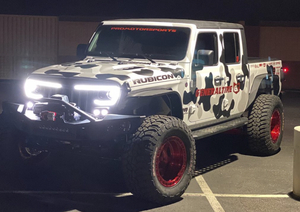
This JL370 ’20 Jeep Wrangler by American Expedition Vehicles (AEV) boasts some serious off-roading upgrades, but AEV’s careful R&D ensured that none of the added products interfered with factory ADAS components. Extensive real-world testing validated all the R&D.

Case Study 1: AEV JL370 ’20 Jeep Wrangler

American Expedition Vehicles (AEV) set out to test its ADAS prowess with its AEV JL370 project vehicle, which was built on the ’20 Jeep Wrangler JL platform.

Developed from the ground up, the Jeep is modified with a host of AEV products, including LED off-road lighting; a new front bumper with integrated skidplate, winch and light bar; a new front differential cover; AEV Borla Dualsport wheels with BFGoodrich 37-in. tires; and a snorkel for deep breathing.

In the rear, the Jeep was outfitted with a new bumper and auxiliary light; an updated rear differential; an all-new tire carrier, AEV CHMSL and camera relocation, and the addition of splash guards.

“Just about every product listed will have some sort of an impact on any factory-installed ADAS equipment, and we need to make sure that these products don’t interfere with those features before we release them to market,” said John Natoci, chief operations officer of AEV and one of the conference’s lead presenters. “In order to do that, we need to start early in the design cycle. Before we can put pen to paper, we first need to understand how the vehicle is equipped from the factory. The Wrangler isn’t the most sophisticated when it comes to advanced technology, but the current model does have a pretty decent suite of ADAS equipment.”

That collection of factory safety features includes front and rear parking assistance, a rear-vision system, automatic high-beam headlamps, adaptive cruise control (ACC), forward collision warning (FCW) and blind-spot monitoring.

“Even the smallest changes can have a really big effect,” Natoci observed. “New bumper geometry, modified wheel offset that increase curb heights—all of that needs to be considered as we get into the design phase.”

During initial R&D, AEV’s product developers closely compared their new-design bumpers to the factory originals to identify the new ADAS sensor locations that would require validation. Using field-of-view cones in CAD software, AEV was able to see how the new sensor locations would view the world, along with any interference the bumpers might cause. For the front bumper, developers also considered how winches, tow hooks and other accessories might change or hinder sensor operation. Once the CAD designs checked out, product development moved into physical testing with full vehicle mockups.

“Like a lot of companies nowadays, we use 3-D printing, which allows us to do multiple design iterations and adjust as we go,” Natoci explained. “The data we get from this [mockup] exercise is compared to the baseline data collected on the stock vehicle.”

He added that alterations in tire diameter, tire pressure and rear gear ratios can also factor into ADAS compliance. During the physical testing phase, AEV partnered with several third parties to perform proving-ground testing that the company was unable to perform in-house. Final inspection included technicians plugging into vehicle systems using MOPAR software to completely scan ADAS equipment and verify calibration and compliance.

In the end, AEV’s careful research and development and real-world testing paid off. The company was able to recalibrate and verify compliance of the fully modified Wrangler’s ADAS features. AEV also makes a ProCal Snap tool available to its customers to help them maintain their vehicle’s compliance, knowing that many of them continue to modify their vehicles over time.

“All our modified vehicles include a Snap, and we also include one with every suspension system,” Natoci said. “Since we work across multiple OEMs and multiple vehicle platforms, we’re committed to making sure that all of our new products are compliant with ADAS as they come out, and we look forward to keeping up with this new technology as it grows.”
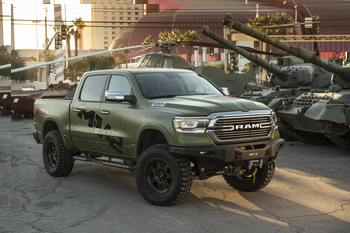
RAM
Transamerican 4WP utilized this ’19 Ram 1500 as a testbed for a modification package typically chosen by its customers. Like other aftermarket product designers, 4WP used sensor cone data in the CAD design phase to make sure the truck’s new bumpers properly accommodate factory ADAS sensors.

Case Study 2: The Transamerican 4WP ’19 Ram 1500

As another case study in successful modification of an ADAS-equipped vehicle, Transamerican 4WP presented its 4WP ’19 Ram 1500 truck to conference
participants.

“We jumped on the opportunity last year to get on this ADAS adventure, as we call it, because we not only develop house brands, suspensions and accessories that we want compliant and safe, but we also outfit thousands of vehicles a month through our 95 store locations using third-party brands,” said Kris Hernandez, director of suspension engineering for Transamerican 4WP.

The Ram truck’s factory systems included ACC; adaptive LED headlights; advanced braking assistance and FCW; advanced cameras and sensors, including a 360-degree camera; blind-spot protection; front and rear parking sensors; and lane-departure features.

For its project build, 4WP opted for a modification package typically favored among the company’s consumers. The truck received a Pro Comp 6-in. Suspension system, Pro Comp 37-in. Extreme Mud Terrain tires, Pro Comp 20x9-in. wheels, Smittybilt front and rear bumpers, and Smittybilt side steps.

Hernandez noted that introducing products for newer-model vehicles can be a challenge nowadays.

“Technology changes quickly, and OEMs are not readily handing out support to the aftermarket, so it takes a new approach and some additional steps on the development side,” he said.

According to Hernandez, the company’s end goal is always OEM equivalency of aftermarket parts and components.

“As we develop accessories for each new platform manufacturer, we need to start with some basic evaluations,” he explained.

That means acquiring all available OE data on a given vehicle’s systems, along with lots of actual road time to fully understand their operation.

“Our evaluations are performed on a documented local test loop, with all typical scenarios and road types,” he said. “On top of the standard test-loop evaluations, we perform two extended evaluations from our R&D facility in San Diego to our corporate facility in Los Angeles during typical California traffic. For this particular Ram 1500, the long-distance evaluation was accomplished on the freeway, with no brake or accelerator input once radar cruise was activated. If you know California traffic, you know that is a pretty convenient feature, to say the least. The Ram system is probably one of the nicer-performing systems that I’ve developed product for.”

Like other aftermarket product designers, 4WP also utilized sensor cone data in its CAD design phase. Once parts were ready, they were fitted on the vehicle, and all the prior drive tests were duplicated to make sure that the data matched the original performance baselines.

“Testing and mapping is repeated, and corrections are made until the systems meet the OE range measured when the vehicle was first delivered to us 100% stock,” Hernandez said, adding that 4WP routinely clocks 300 to 500 mi. in its drive evaluations.

In addition to road testing, the Ram also underwent detailed evaluation by asTech, which specializes in remote diagnostic scanning and ADAS calibrations for repair shops.

“There were a lot of things we learned on the Ram truck,” said asTech Director of Industry Relations Jake Rodenroth. “It’s a little bit different than some of the other vehicles we’ve seen. The integration of sensor fusion, where you’ve got sensors working as a team, is very true in the Ram’s case, so you have a radar and a camera system mounted in the windshield. In a lot of other vehicles we see, the radar is typically lower in the vehicle, behind a grille or a bumper cover.

“The higher mounting in the Ram’s case presents challenges. On the other hand, the system is much more forgiving in regard to the height of the vehicle. You make a measurement from the top of the tire to the bottom of the fender and enter that value into the scan tool, then go through the dynamic calibration process. We were successful in getting this vehicle to validate with the modifications placed onboard.”

In the end, asTech determined that the new suspension lift height calibrated within the Ram’s prescribed range. The wheel offset also proved compatible with the truck’s stability control features, and the front and rear bumpers and side steps properly accommodated the vehicle’s perimeter sensors and intelligent headlights. The vehicle now continues to serve as a testbed to ensure that other new 4WP products function at stock equivalency and don’t throw any codes.
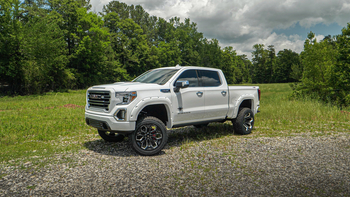
GMC
Fox Factory/SCA Performance has built successful development partnerships with General Motors, Ford, Chrysler and Nissan. That cooperation paid off with this ADAS-friendly SCA Performance ’20 GMC Sierra 2500. Sophisticated testing at TRC proved that the lifted truck still properly brakes automatically for pedestrians.

Case Study 3: The Fox Factory/SCA Performance ’20 GMC Sierra 2500

Michael McSweeney, president and general manager of SCA Performance Division for Fox Factory, said that his company has built successful development partnerships with General Motors, Ford, Chrysler and Nissan.

“Out of our four manufacturing plants, we’re currently upfitting about 1,000 lifted trucks per month, all of which end up being sold through new-car dealerships,” McSweeny explained. “It’s truly essential to our business model for our vehicles to not only meet Federal Motor Vehicle Safety Standards [FMVSS] but also be on the leading edge of adapting our upfits to new ADAS features, because they’re becoming a standard part of each vehicle. We need to assure our end users, our OEM partners, the dealers who retail our vehicles, and the insurance companies who are insuring our drivers that all of our modified vehicles continue to perform at a high level even after we modify the vehicle.”

In this case, the company turned to a ’20 GMC Sierra 2500 to prove its abilities—a special challenge given the vehicle’s sophisticated “Safety Package 2,” which includes the ability to automatically brake for pedestrians.

Modifications for the Sierra included a 6-in. BDS suspension lift system, 22-in. wheels, and 35-in. all-terrain tires. After an alignment to factory specs and a calibration of its steering-angle sensor, the big GMC was hooked up to a Cardaq 3 Plus device with GMC GDS 2 software for dynamic calibration. That put the vehicle into learn mode, and a calibration test drive followed.

While that may sound straightforward enough, McSweeny said there were a lot of layers to the process.

“Since the ADAS features really work as a big network getting information from other systems in the vehicle, there are some fundamental calibrations that need to be done even prior to focusing on the camera and the radar systems,” he said. “Those things include speedometer calibrations to account for larger tire sizes, four-wheel alignment, steering angle sensor alignment, FMVSS 126 and 135 testing so that we can ensure that the vehicle is braking and the electronic stability control systems are all performing like they should.”

After SCA Performance’s road tests were completed, all the data indicated functional compliance.

“But since this was a new thing, we didn’t really think we could roll out our own validation,” McSweeny said. “So we decided to send the truck out to the Transportation Resource Center [TRC] in Ohio for them to actually put the truck through the Insurance Institute for Highway Safety [IIHS] pedestrian autonomous emergency braking test, along with some additional testing on the adaptive cruise control system.”

TRC is among the most advanced independent mobility testing service providers in North America. Its Ohio facilities and proving grounds cover 4,500 acres and include a 7.5-mi. automotive testing track. To test AEB for pedestrians, the center utilizes walking robots that imitate the movements of both adults
and children.

As TRC ADAS Test Lead Blaine Ricketts explained, IIHS evaluations normally involve three pedestrian scenarios—one with an adult crossing a road perpendicularly, another with a child emerging perpendicularly from two obstructing vehicles, and a parallel adult facing away in the roadway. The testing equipment also includes a throttle robot inside the vehicle, along with a camera and microphone to “see and hear” visual and audible alerts. GPS is also employed to gather position, speed and ground-truth data.

Being very low to the ground, the child robot presented a unique test for the lifted Sierra. Nonetheless, the modified truck ultimately aced its exam with high marks. All the ADAS systems calibrated—and validated—as required.
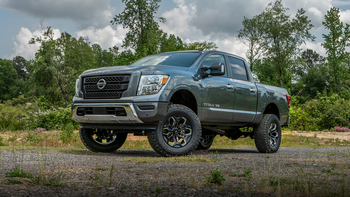
Titan

Fox Factory/SCA Performance also presented its ’20 Nissan Titan to the SEMA Detroit ADAS Forum and Vehicle Review. The vehicle was one of the first platforms to serve as a testbed for the company. Because the truck features a static ADAS system, it was relatively easy to calibrate after modification.

Case Study 4: The Fox Factory/SCA Performance ’20 Nissan Titan

According to McSweeny, when SCA Performance first began testing products on ADAS-equipped platforms, the company started with the ’20 Nissan Titan.

“The reason we chose the Titan was that it was actually the first OEM model to feature automatic braking technologies in all its trim levels,” McSweeny said. “We’re very grateful to our friends at Nissan for allowing us to have a vehicle to do some testing on.”

The Titan received a BDS 6-in. suspension lift system, 20-in. wheels and 35-in. BFGoodrich all-terrain tires, along with an alignment to factory specs.

The Titan’s ADAS features call for static verification, meaning that the truck had to be positioned within certain target floor parameters. Calibrating the truck’s forward-facing cameras also required setting up static targets per Nissan specs, including wheel-mounted lasers and framework for radar calibration. The project crew relied on asTech hardware and calibration software to communicate remotely with a dedicated technician and run a finalized DTC check to ensure that no codes were thrown. Once all those steps were accomplished, the vehicle was cleared for test drives.

During on-road testing, the Titan’s lane-departure warning and adaptive cruise control with gap adjustments were validated. Once the truck received its VIN-specific calibration documentation, it was off to TRC for further proving-ground evaluation, including FMVSS 126 testing.

“From an ADAS standpoint, calibrating the Nissan Titan truck was quite a bit different from the tests we went through on the GMC Sierra,” McSweeny said. “The GMC is a dynamic system, and the Nissan is a static system, so the pathway that we take to calibrate is much different. The ’20 Nissan Titan that we tested was equipped with both the radar system and the forward-facing camera system mounted behind the rearview mirror. We partnered with asTech to help us navigate [procedures] and build a standard process to calibrate the Titan.”

AsTech’s Rodenroth added that static systems such as Nissan’s call for careful vehicle prep to ensure proper ADAS calibration. That can include seemingly meticulous details such as maintaining specified fuel levels and tire pressures and even clean windshields.

“It’s critical that you review [OEM requirements] for every model, because you could have differences between them,” he explained.

As for TRC’s role in the process, Ricketts said that it’s gratifying to help product manufacturers create best practices for developing ADAS-compatible parts and accessories.

“As companies do aftermarket modifications, one of the best ways of performing validation is through on-pavement testing,” he added.

The SEMA Detroit ADAS Forum and Vehicle Review demonstrated the rapid innovation that is taking place in the aftermarket to embrace new-vehicle technologies. Many automotive segments are coming together to promote common goals, develop standard R&D procedures for products, and create standard operating procedures for proper calibration and validation of ADAS functionality in vehicles modified by aftermarket components. It’s a costly endeavor at times, but it’s worth the price.

“If you’re going to modify a vehicle in today’s world, safety has got to be the top priority,” McSweeny explained. “We didn’t really sit down and ask if we want to make these investments or if we want to push them off and maybe cut a corner and not do them. We had to do it.

“Figuring out the pathway to do it, who to partner with and who can provide us with the education and technology to know what to do on each model—that was probably our biggest hurdle. Our opinion and our mindset on the topic in general is let’s develop these processes and standards, let’s collaborate even with our competitors, and let’s give this information to the industry, because it’s really essential for everyone to be doing this.”

Waraniak was quick to underscore the widespread cooperation among the industry’s biggest players and the sharing of data and best practices with the little guy. To that end, SEMA and other automotive associations continue to partner to offer shared resources and tools to all SEMA members. As Waraniak summed up, “Everyone believes we have to get this right. Our industry’s future depends on it.”

Further information relating to the SEMA Detroit ADAS Forum and Vehicle Review, including a link to the full video presentation, can be found online at www.semagarage.com/services/virtualadasforum.

The SEMA Garage also maintains a comprehensive Vehicle Technology ADAS webpage at www.semagarage.com/services/vehicleadas featuring educational articles, resources and tools, along with listings of ADAS equipment by vehicle make and model.

Thu, 10/01/2020 - 13:17

SEMA News—October 2020

BUSINESS

Modifying ADAS-Equipped Vehicles

Four Innovative Case Studies From the SEMA Detroit ADAS Forum and Vehicle Review

By Mike Imlay

ADAS
As OEMs build an increasing array of advanced driver-assistance technologies into their vehicle platforms, the aftermarket faces unprecedented challenges in developing products and modifications that integrate seamlessly with safety packages. The recent SEMA Detroit ADAS Forum demonstrated the surge of innovation the industry is deploying to meet that challenge.

The emergence of advanced driver-assistance systems (ADAS) has been a boon to automotive consumers. Among other benefits, ADAS is credited with a 1.2% drop in vehicle fatalities last year, along with significantly reduced injuries. What’s more, consumer comfort with these technologies is increasing as OEMs build ADAS into an expanding number of vehicle platforms. The result is a growing aftermarket customer base that expects specialty-equipment products and modifications to integrate seamlessly with their high-tech factory ADAS packages. But is the industry up to the task?

Those who attended the Live Across America: SEMA Detroit Virtual ADAS Forum on June 18, 2020, would be optimistic that the answer would be a yes, as four examples of successful customizations and vehicle builds were presented. The forum, now available for viewing at www.semagarage.com/virtualadasforum, brought together a live panel of SEMA manufacturers, industry leaders and technology experts to address the immediate challenges SEMA members are confronting, along with the latest innovations driving the aftermarket toward full ADAS compliance.

Built around actual SEMA manufacturing member case studies of successful product development and vehicle modifications, the forum’s goal was to help SEMA companies customize with confidence by explaining how ADAS technologies and sensors function and how aftermarket products might impact the operation of those safety features. The forum drew more than 500 online attendees from across the United States and as far away as Australia and the United Kingdom, including several OEMs and media.

“This virtual event demonstrated a new way for attendees to engage and learn as we move forward to the ‘next normal.’ This was not just another webinar but an innovative virtual event live-streamed across the country that offered our participants a new way to engage and learn,” said SEMA Vice President of Vehicle Technology John Waraniak, who organized the virtual conference. “The forum included an overview of ADAS technologies, presentations of SEMA partnerships, technology collaborations, frontline best practices and ADAS resources available through these new SEMA Vehicle Technology service offerings.”

According to Waraniak, understanding ADAS systems and how they operate will be an integral part of future aftermarket product development, since accessories such as bumpers, grilles, suspension lifts and even windshield glass can all adversely affect ADAS components.

“The goal wasn’t to make forum participants on-the-spot ADAS experts but to address immediate challenges that SEMA members are encountering due to ADAS technologies,” Waraniak said. “We sought to present the latest information, guidelines, tools and resources to help members customize with confidence as well as innovate and ensure their products, accessories and vehicle builds can be successfully integrated with the latest factory-installed ADAS technologies.”

As vehicles move toward greater autonomy, OEMs have introduced an array of safety-performance technologies under a variety of names, prompting industry organizations—including SAE—to push for a standard nomenclature for the systems. Currently, all of the technologies are divided into two main categories: passive and active. Passive ADAS features give a visual, audible or haptic warning when a collision or unsafe condition is imminent. Active systems take some level of automated control over a vehicle to help mitigate an accident.

Up to now, aftermarket contributions to the ADAS market have mainly been in the form of passive systems. Still, aftermarket ADAS is a fast-growing category that is currently valued at just under $1 billion and is projected to top more than $1.5 billion by 2021. Whether active or passive, ADAS subcategories commonly break down as follows:

  • Forward collision avoidance: Forward-collision warning, automated emergency braking, integrated emergency intervention.
  • Lateral collision avoidance: Lane-departure warning, blind-spot warning, lane-keeping assistance, lane centering.
  • Automated performance enhancements: Antilock braking systems, traction control, electronic stability control and related specialty applications.
  • Parking assistance: Passive parking assistance, automated parking assistance, autonomous valet.
  • Advanced cruise control: Adaptive cruise control, cooperative adaptive cruise control, partial automation.
  • Driver vision augmentation: Advanced headlights, infrared night-vision display, head-up display.
  • Connected-vehicle technology: Dedicated short-range communication, commercial cellular, other communication technologies.

“These technologies are the gateways for a lot of the newer technologies that OEMs are deploying today in their vehicle platforms, so we have to get them right and understand them if we’re going to continue to do safe, complete vehicle modifications and repairs,” Waraniak said. “As OEMs introduce more and more automated and autonomous technologies, we’ll see the most complex hardware and software applications ever deployed in automobiles. These systems comprise the most disruptive technologies that automakers have ever initiated.”

The forum included an overview of the new SEMA/I-CAR ADAS Baseline Resource Program as a first go-to resource for members, as well as a Q&A segment that addressed members’ concerns about modifications encompassing larger wheels and tires, bumpers, grilles and lift kits, and paint and other accessories. Issues of cybersecurity, new digital vehicle architectures and over-the-air software updates were also touched on, along with the resources that can help smaller manufacturers compete in product research and development. But the live-stream wasn’t focused on challenges only. The panel of experts also addressed the many new opportunities that the ADAS category is opening for aftermarket companies, with the following case studies highlighting the industry’s ongoing innovation:

Jeep
This JL370 ’20 Jeep Wrangler by American Expedition Vehicles (AEV) boasts some serious off-roading upgrades, but AEV’s careful R&D ensured that none of the added products interfered with factory ADAS components. Extensive real-world testing validated all the R&D.

Case Study 1: AEV JL370 ’20 Jeep Wrangler

American Expedition Vehicles (AEV) set out to test its ADAS prowess with its AEV JL370 project vehicle, which was built on the ’20 Jeep Wrangler JL platform.

Developed from the ground up, the Jeep is modified with a host of AEV products, including LED off-road lighting; a new front bumper with integrated skidplate, winch and light bar; a new front differential cover; AEV Borla Dualsport wheels with BFGoodrich 37-in. tires; and a snorkel for deep breathing.

In the rear, the Jeep was outfitted with a new bumper and auxiliary light; an updated rear differential; an all-new tire carrier, AEV CHMSL and camera relocation, and the addition of splash guards.

“Just about every product listed will have some sort of an impact on any factory-installed ADAS equipment, and we need to make sure that these products don’t interfere with those features before we release them to market,” said John Natoci, chief operations officer of AEV and one of the conference’s lead presenters. “In order to do that, we need to start early in the design cycle. Before we can put pen to paper, we first need to understand how the vehicle is equipped from the factory. The Wrangler isn’t the most sophisticated when it comes to advanced technology, but the current model does have a pretty decent suite of ADAS equipment.”

That collection of factory safety features includes front and rear parking assistance, a rear-vision system, automatic high-beam headlamps, adaptive cruise control (ACC), forward collision warning (FCW) and blind-spot monitoring.

“Even the smallest changes can have a really big effect,” Natoci observed. “New bumper geometry, modified wheel offset that increase curb heights—all of that needs to be considered as we get into the design phase.”

During initial R&D, AEV’s product developers closely compared their new-design bumpers to the factory originals to identify the new ADAS sensor locations that would require validation. Using field-of-view cones in CAD software, AEV was able to see how the new sensor locations would view the world, along with any interference the bumpers might cause. For the front bumper, developers also considered how winches, tow hooks and other accessories might change or hinder sensor operation. Once the CAD designs checked out, product development moved into physical testing with full vehicle mockups.

“Like a lot of companies nowadays, we use 3-D printing, which allows us to do multiple design iterations and adjust as we go,” Natoci explained. “The data we get from this [mockup] exercise is compared to the baseline data collected on the stock vehicle.”

He added that alterations in tire diameter, tire pressure and rear gear ratios can also factor into ADAS compliance. During the physical testing phase, AEV partnered with several third parties to perform proving-ground testing that the company was unable to perform in-house. Final inspection included technicians plugging into vehicle systems using MOPAR software to completely scan ADAS equipment and verify calibration and compliance.

In the end, AEV’s careful research and development and real-world testing paid off. The company was able to recalibrate and verify compliance of the fully modified Wrangler’s ADAS features. AEV also makes a ProCal Snap tool available to its customers to help them maintain their vehicle’s compliance, knowing that many of them continue to modify their vehicles over time.

“All our modified vehicles include a Snap, and we also include one with every suspension system,” Natoci said. “Since we work across multiple OEMs and multiple vehicle platforms, we’re committed to making sure that all of our new products are compliant with ADAS as they come out, and we look forward to keeping up with this new technology as it grows.”

RAM
Transamerican 4WP utilized this ’19 Ram 1500 as a testbed for a modification package typically chosen by its customers. Like other aftermarket product designers, 4WP used sensor cone data in the CAD design phase to make sure the truck’s new bumpers properly accommodate factory ADAS sensors.

Case Study 2: The Transamerican 4WP ’19 Ram 1500

As another case study in successful modification of an ADAS-equipped vehicle, Transamerican 4WP presented its 4WP ’19 Ram 1500 truck to conference
participants.

“We jumped on the opportunity last year to get on this ADAS adventure, as we call it, because we not only develop house brands, suspensions and accessories that we want compliant and safe, but we also outfit thousands of vehicles a month through our 95 store locations using third-party brands,” said Kris Hernandez, director of suspension engineering for Transamerican 4WP.

The Ram truck’s factory systems included ACC; adaptive LED headlights; advanced braking assistance and FCW; advanced cameras and sensors, including a 360-degree camera; blind-spot protection; front and rear parking sensors; and lane-departure features.

For its project build, 4WP opted for a modification package typically favored among the company’s consumers. The truck received a Pro Comp 6-in. Suspension system, Pro Comp 37-in. Extreme Mud Terrain tires, Pro Comp 20x9-in. wheels, Smittybilt front and rear bumpers, and Smittybilt side steps.

Hernandez noted that introducing products for newer-model vehicles can be a challenge nowadays.

“Technology changes quickly, and OEMs are not readily handing out support to the aftermarket, so it takes a new approach and some additional steps on the development side,” he said.

According to Hernandez, the company’s end goal is always OEM equivalency of aftermarket parts and components.

“As we develop accessories for each new platform manufacturer, we need to start with some basic evaluations,” he explained.

That means acquiring all available OE data on a given vehicle’s systems, along with lots of actual road time to fully understand their operation.

“Our evaluations are performed on a documented local test loop, with all typical scenarios and road types,” he said. “On top of the standard test-loop evaluations, we perform two extended evaluations from our R&D facility in San Diego to our corporate facility in Los Angeles during typical California traffic. For this particular Ram 1500, the long-distance evaluation was accomplished on the freeway, with no brake or accelerator input once radar cruise was activated. If you know California traffic, you know that is a pretty convenient feature, to say the least. The Ram system is probably one of the nicer-performing systems that I’ve developed product for.”

Like other aftermarket product designers, 4WP also utilized sensor cone data in its CAD design phase. Once parts were ready, they were fitted on the vehicle, and all the prior drive tests were duplicated to make sure that the data matched the original performance baselines.

“Testing and mapping is repeated, and corrections are made until the systems meet the OE range measured when the vehicle was first delivered to us 100% stock,” Hernandez said, adding that 4WP routinely clocks 300 to 500 mi. in its drive evaluations.

In addition to road testing, the Ram also underwent detailed evaluation by asTech, which specializes in remote diagnostic scanning and ADAS calibrations for repair shops.

“There were a lot of things we learned on the Ram truck,” said asTech Director of Industry Relations Jake Rodenroth. “It’s a little bit different than some of the other vehicles we’ve seen. The integration of sensor fusion, where you’ve got sensors working as a team, is very true in the Ram’s case, so you have a radar and a camera system mounted in the windshield. In a lot of other vehicles we see, the radar is typically lower in the vehicle, behind a grille or a bumper cover.

“The higher mounting in the Ram’s case presents challenges. On the other hand, the system is much more forgiving in regard to the height of the vehicle. You make a measurement from the top of the tire to the bottom of the fender and enter that value into the scan tool, then go through the dynamic calibration process. We were successful in getting this vehicle to validate with the modifications placed onboard.”

In the end, asTech determined that the new suspension lift height calibrated within the Ram’s prescribed range. The wheel offset also proved compatible with the truck’s stability control features, and the front and rear bumpers and side steps properly accommodated the vehicle’s perimeter sensors and intelligent headlights. The vehicle now continues to serve as a testbed to ensure that other new 4WP products function at stock equivalency and don’t throw any codes.

GMC
Fox Factory/SCA Performance has built successful development partnerships with General Motors, Ford, Chrysler and Nissan. That cooperation paid off with this ADAS-friendly SCA Performance ’20 GMC Sierra 2500. Sophisticated testing at TRC proved that the lifted truck still properly brakes automatically for pedestrians.

Case Study 3: The Fox Factory/SCA Performance ’20 GMC Sierra 2500

Michael McSweeney, president and general manager of SCA Performance Division for Fox Factory, said that his company has built successful development partnerships with General Motors, Ford, Chrysler and Nissan.

“Out of our four manufacturing plants, we’re currently upfitting about 1,000 lifted trucks per month, all of which end up being sold through new-car dealerships,” McSweeny explained. “It’s truly essential to our business model for our vehicles to not only meet Federal Motor Vehicle Safety Standards [FMVSS] but also be on the leading edge of adapting our upfits to new ADAS features, because they’re becoming a standard part of each vehicle. We need to assure our end users, our OEM partners, the dealers who retail our vehicles, and the insurance companies who are insuring our drivers that all of our modified vehicles continue to perform at a high level even after we modify the vehicle.”

In this case, the company turned to a ’20 GMC Sierra 2500 to prove its abilities—a special challenge given the vehicle’s sophisticated “Safety Package 2,” which includes the ability to automatically brake for pedestrians.

Modifications for the Sierra included a 6-in. BDS suspension lift system, 22-in. wheels, and 35-in. all-terrain tires. After an alignment to factory specs and a calibration of its steering-angle sensor, the big GMC was hooked up to a Cardaq 3 Plus device with GMC GDS 2 software for dynamic calibration. That put the vehicle into learn mode, and a calibration test drive followed.

While that may sound straightforward enough, McSweeny said there were a lot of layers to the process.

“Since the ADAS features really work as a big network getting information from other systems in the vehicle, there are some fundamental calibrations that need to be done even prior to focusing on the camera and the radar systems,” he said. “Those things include speedometer calibrations to account for larger tire sizes, four-wheel alignment, steering angle sensor alignment, FMVSS 126 and 135 testing so that we can ensure that the vehicle is braking and the electronic stability control systems are all performing like they should.”

After SCA Performance’s road tests were completed, all the data indicated functional compliance.

“But since this was a new thing, we didn’t really think we could roll out our own validation,” McSweeny said. “So we decided to send the truck out to the Transportation Resource Center [TRC] in Ohio for them to actually put the truck through the Insurance Institute for Highway Safety [IIHS] pedestrian autonomous emergency braking test, along with some additional testing on the adaptive cruise control system.”

TRC is among the most advanced independent mobility testing service providers in North America. Its Ohio facilities and proving grounds cover 4,500 acres and include a 7.5-mi. automotive testing track. To test AEB for pedestrians, the center utilizes walking robots that imitate the movements of both adults
and children.

As TRC ADAS Test Lead Blaine Ricketts explained, IIHS evaluations normally involve three pedestrian scenarios—one with an adult crossing a road perpendicularly, another with a child emerging perpendicularly from two obstructing vehicles, and a parallel adult facing away in the roadway. The testing equipment also includes a throttle robot inside the vehicle, along with a camera and microphone to “see and hear” visual and audible alerts. GPS is also employed to gather position, speed and ground-truth data.

Being very low to the ground, the child robot presented a unique test for the lifted Sierra. Nonetheless, the modified truck ultimately aced its exam with high marks. All the ADAS systems calibrated—and validated—as required.

Titan

Fox Factory/SCA Performance also presented its ’20 Nissan Titan to the SEMA Detroit ADAS Forum and Vehicle Review. The vehicle was one of the first platforms to serve as a testbed for the company. Because the truck features a static ADAS system, it was relatively easy to calibrate after modification.

Case Study 4: The Fox Factory/SCA Performance ’20 Nissan Titan

According to McSweeny, when SCA Performance first began testing products on ADAS-equipped platforms, the company started with the ’20 Nissan Titan.

“The reason we chose the Titan was that it was actually the first OEM model to feature automatic braking technologies in all its trim levels,” McSweeny said. “We’re very grateful to our friends at Nissan for allowing us to have a vehicle to do some testing on.”

The Titan received a BDS 6-in. suspension lift system, 20-in. wheels and 35-in. BFGoodrich all-terrain tires, along with an alignment to factory specs.

The Titan’s ADAS features call for static verification, meaning that the truck had to be positioned within certain target floor parameters. Calibrating the truck’s forward-facing cameras also required setting up static targets per Nissan specs, including wheel-mounted lasers and framework for radar calibration. The project crew relied on asTech hardware and calibration software to communicate remotely with a dedicated technician and run a finalized DTC check to ensure that no codes were thrown. Once all those steps were accomplished, the vehicle was cleared for test drives.

During on-road testing, the Titan’s lane-departure warning and adaptive cruise control with gap adjustments were validated. Once the truck received its VIN-specific calibration documentation, it was off to TRC for further proving-ground evaluation, including FMVSS 126 testing.

“From an ADAS standpoint, calibrating the Nissan Titan truck was quite a bit different from the tests we went through on the GMC Sierra,” McSweeny said. “The GMC is a dynamic system, and the Nissan is a static system, so the pathway that we take to calibrate is much different. The ’20 Nissan Titan that we tested was equipped with both the radar system and the forward-facing camera system mounted behind the rearview mirror. We partnered with asTech to help us navigate [procedures] and build a standard process to calibrate the Titan.”

AsTech’s Rodenroth added that static systems such as Nissan’s call for careful vehicle prep to ensure proper ADAS calibration. That can include seemingly meticulous details such as maintaining specified fuel levels and tire pressures and even clean windshields.

“It’s critical that you review [OEM requirements] for every model, because you could have differences between them,” he explained.

As for TRC’s role in the process, Ricketts said that it’s gratifying to help product manufacturers create best practices for developing ADAS-compatible parts and accessories.

“As companies do aftermarket modifications, one of the best ways of performing validation is through on-pavement testing,” he added.

The SEMA Detroit ADAS Forum and Vehicle Review demonstrated the rapid innovation that is taking place in the aftermarket to embrace new-vehicle technologies. Many automotive segments are coming together to promote common goals, develop standard R&D procedures for products, and create standard operating procedures for proper calibration and validation of ADAS functionality in vehicles modified by aftermarket components. It’s a costly endeavor at times, but it’s worth the price.

“If you’re going to modify a vehicle in today’s world, safety has got to be the top priority,” McSweeny explained. “We didn’t really sit down and ask if we want to make these investments or if we want to push them off and maybe cut a corner and not do them. We had to do it.

“Figuring out the pathway to do it, who to partner with and who can provide us with the education and technology to know what to do on each model—that was probably our biggest hurdle. Our opinion and our mindset on the topic in general is let’s develop these processes and standards, let’s collaborate even with our competitors, and let’s give this information to the industry, because it’s really essential for everyone to be doing this.”

Waraniak was quick to underscore the widespread cooperation among the industry’s biggest players and the sharing of data and best practices with the little guy. To that end, SEMA and other automotive associations continue to partner to offer shared resources and tools to all SEMA members. As Waraniak summed up, “Everyone believes we have to get this right. Our industry’s future depends on it.”

Further information relating to the SEMA Detroit ADAS Forum and Vehicle Review, including a link to the full video presentation, can be found online at www.semagarage.com/services/virtualadasforum.

The SEMA Garage also maintains a comprehensive Vehicle Technology ADAS webpage at www.semagarage.com/services/vehicleadas featuring educational articles, resources and tools, along with listings of ADAS equipment by vehicle make and model.
Thu, 10/01/2020 - 12:55

SEMA News—October 2020

INDUSTRY NEWS

By Douglas McColloch

SEMA Show
Cancelled for 2020, the SEMA Show will reconvene at the Las Vegas Convention Center next year, November 2—5, 2021.

SEMA Announces Cancellation of 2020 SEMA Show

SEMA has announced that due to COVID-19 and concerns that event facilities and services will be unavailable, the SEMA Show will not take place in 2020.

While both event organizers and industry members worked tirelessly to deliver an outstanding Show, mounting uncertainty has rendered continuing with the event inadvisable. SEMA expects the decision will bring much-needed clarity to an uncertain picture and will help exhibitors, attendees and partners plan accordingly.

Recent SEMA Show survey results indicated interest in a possible virtual trade show with related live elements. SEMA will work with industry members to determine interest levels on specific alternatives.

“The SEMA Show is committed to furthering businesses in the automotive specialty-equipment market, and to providing manufacturers and buyers with the best opportunity to connect, promote new products and discover new trends,” said Chris Kersting, SEMA president and CEO. “We appreciate the spirit, hard work and innovation our industry puts into the SEMA Show each year. While we are disappointed circumstances prevent us from hosting the Show in November, we look forward to getting everyone together in 2021 for another outstanding event.”

Full refunds for SEMA Show exhibitor booth deposits and attendee registration fees will be issued. Updates will be posted to www.SEMAShow.com.

Industry Indicators
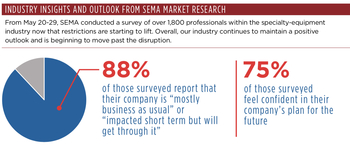
Despite economic headwinds, the automotive specialty-equipment industry remains relatively healthy overall, with over 75% of industry professionals expressing confidence in their companies’ future, according to the SEMA’s latest market research.

SEMA Industry Indicators: U.S. Economy Continues to Slowly Recover

The U.S. economy is recovering, but it will take time before the levels of production, output and economic activity enjoyed prior to the onset of the pandemic return, according to the June 2020 “SEMA Industry Indicators Report.”

April appears to have marked the bottom of the economic downturn. Economic indicators such as consumer spending and new-vehicle sales showed a strong bounce-back in May and continued to improve in June. However, other metrics such as unemployment will take much longer to recover.

Data further shows that Americans have money to spend and are putting their money in savings at a higher rate. Savings represents pent-up demand among consumers that will return once confidence and clarity about the current situation is more certain. Additionally, the state of the automotive specialty-equipment industry remains relatively strong. Among a survey of 1,800 industry professionals, 88% reported “business as usual” or that their companies were impacted short term but will get through it.

Want more information on the trends affecting the specialty-equipment industry? Download the July “SEMA Industry Indicators Report,” now available for free at www.sema.org/research.

Jeep
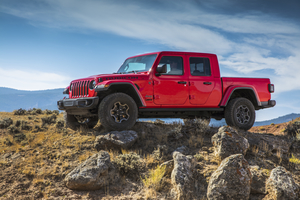
Produced at FCA’s Cento facility in Italy, the new 3.0L EcoDiesel V6 will produce 260 hp and 442 lb.-ft. of torque in the ’21 Gladiator pickup.

Jeep Adding EcoDiesel Engine for Gladiator Pickup

Jeep announced that the new 3.0L EcoDiesel V6 engine rated at 260 hp and 442 lb.-ft. of torque, with engine stop-start technology standard, is available on Gladiator Sport, Overland and Rubicon models. To handle greater torque loads, the EcoDiesel V6 connects to a newly added TorqueFlite 8HP75 eight-speed automatic transmission.

Jeep Gladiator EcoDiesel Sport, Overland and Rubicon models feature third-generation Dana 44 front and rear heavy-duty axles. Additionally, all Gladiator EcoDiesel models feature a 3.73:1 axle ratio. The Rock-Trac two-speed transfer case with a 4.0:1 low-range gear ratio is standard on Rubicon models, and the Command-Trac part-time two-speed transfer case with a 2.72:1 low-range
gear ratio is standard on Sport and Overland models.

The new engine employs the latest turbocharging technology, including a new-generation water-cooled turbocharger with variable geometry turbine and low-friction bearings. High-pressure (29,000 psi/2,000 bar) direct-injection fuel-injector nozzles increase power and efficiency, reducing fuel consumption.

A new 5.1-gal. diesel exhaust fluid (DEF) tank is located immediately behind the fuel tank, with refill location next to the diesel fuel filler. DEF refills align with oil changes lasting up to 10,000 mi. Levels are monitored via a new DEF gauge in the front cluster.

The 3.0L EcoDiesel V6 is produced at the FCA Cento facility in Ferrara, Italy.

Oracle Lighting
Oracle Lighting announced that it successfully defended its intellectual property rights regarding the Vector LED Grille by winning its legal battle against a Chinese-based manufacturer of imitation products.

Chinese Court Sides With Oracle Lighting in Case Against Counterfeit Producers in China

Oracle Lighting announced that it successfully defended its intellectual property rights by recently winning its legal battle against a Chinese-based manufacturer of imitation products.

“Shortly after we unveiled our Vector LED Grille System at a trade show in 2017, Chinese knock-offs began appearing,” explained Justin Hartenstein, director of product development at Oracle Lighting. “After nearly a year of work designing and developing this product, it was honestly heartbreaking to find knockoff products pop up online.”

The decision was issued on June 28, 2020, by the Intellectual Property Division of the Suzhou Intermediate People’s Court. The court also ordered that the defendant pay significant monetary damages to Oracle Lighting and ordered that the defendant pay certain court costs associated with the litigation. In doing so, the court also rejected the defendant’s arguments that they had come up with the design for this particular grille prior to Oracle Lighting filing its design patent application.

Thu, 10/01/2020 - 11:52

By Ashley Reyes

SEMA360 will feature more than 30 professional development seminars and conversations with industry leaders.

Consumers are surfing the Internet more than ever before. Manufacturers, distributers and resellers (both brick-and-mortar as well as eCommerce) must stay up-to-date on the fast-changing world of digital marketing in order to reach new and existing customers.

During SEMA360, industry experts and leaders will share proven tips and best practices to take the headache out of digital marketing.

Taking place 100% online, November 2–6, SEMA360 is the new trade-only event for the automotive specialty-equipment industry that is focused on new products, feature vehicles, education and manufacturer/buyer connections. Throughout the five days, the program will include more than 30 education seminars all available at no additional cost to those who are already signed up for SEMA360.

Below are eight must-attend sessions that will help businesses improve SEO, reach more customers and increase sales. All sessions and registration for SEMA360 can be found at www.sema360.com.  

Seminars for Online Marketing and Business Management include:

Monday, November 2

10:00 a.m.-10:30 a.m. – 4 Tips to Double Your Company’s Annual Sales  
Speaker: Richard Barsamian, Advanced Clutch Technology Inc.

2:00 p.m.-2:30 p.m. – Sell Smarter: Maximize Online Profits – Powered by SDC
Moderator/Speakers: Gigi Ho, Sophia Cardona, Joe Sepeda, SEMA Data Co-op

5:00 p.m.-5:45 p.m. – SEMA Launch Pad – Entrepreneur Business Competition
Host: Aaron Kaufman, Arclight Fabrication Co.                 

Tuesday, November 3

12:00 p.m.–12:30 p.m. – Digital Marketing in 2021: What the Winners Are Doing
Speaker: Jim McKinley, (un)Common Logic

2:00 p.m.-2:30 p.m. – Turning Great Ideas Into Strategies to Produce Real Results
Speaker: Mike Brown, The Brainzooming Group

Wednesday, November 4

12:00 p.m.-12:30 p.m. – The Customer Journey: From Digital Onlooker to Repeat Buyer
Speakers: Katie Mares, Brand Experience Expert and Corey Perlman, ImpactSocialMedia.com

Thursday, November 5

10:00 a.m.-10:30 a.m. – How to Protect Your Brand’s Online Reputation  
Speaker: Corey Perlman, ImpactSocialMedia.com

2:00 p.m.-2:30 p.m. – Earning HER Business—Powered by SBN   
Speaker: Katie Mares, Brand Experience Expert

View the full SEMA360 Education Seminar schedule.

Thu, 10/01/2020 - 11:52

By Ashley Reyes

SEMA360 will feature more than 30 professional development seminars and conversations with industry leaders.

Consumers are surfing the Internet more than ever before. Manufacturers, distributers and resellers (both brick-and-mortar as well as eCommerce) must stay up-to-date on the fast-changing world of digital marketing in order to reach new and existing customers.

During SEMA360, industry experts and leaders will share proven tips and best practices to take the headache out of digital marketing.

Taking place 100% online, November 2–6, SEMA360 is the new trade-only event for the automotive specialty-equipment industry that is focused on new products, feature vehicles, education and manufacturer/buyer connections. Throughout the five days, the program will include more than 30 education seminars all available at no additional cost to those who are already signed up for SEMA360.

Below are eight must-attend sessions that will help businesses improve SEO, reach more customers and increase sales. All sessions and registration for SEMA360 can be found at www.sema360.com.  

Seminars for Online Marketing and Business Management include:

Monday, November 2

10:00 a.m.-10:30 a.m. – 4 Tips to Double Your Company’s Annual Sales  
Speaker: Richard Barsamian, Advanced Clutch Technology Inc.

2:00 p.m.-2:30 p.m. – Sell Smarter: Maximize Online Profits – Powered by SDC
Moderator/Speakers: Gigi Ho, Sophia Cardona, Joe Sepeda, SEMA Data Co-op

5:00 p.m.-5:45 p.m. – SEMA Launch Pad – Entrepreneur Business Competition
Host: Aaron Kaufman, Arclight Fabrication Co.                 

Tuesday, November 3

12:00 p.m.–12:30 p.m. – Digital Marketing in 2021: What the Winners Are Doing
Speaker: Jim McKinley, (un)Common Logic

2:00 p.m.-2:30 p.m. – Turning Great Ideas Into Strategies to Produce Real Results
Speaker: Mike Brown, The Brainzooming Group

Wednesday, November 4

12:00 p.m.-12:30 p.m. – The Customer Journey: From Digital Onlooker to Repeat Buyer
Speakers: Katie Mares, Brand Experience Expert and Corey Perlman, ImpactSocialMedia.com

Thursday, November 5

10:00 a.m.-10:30 a.m. – How to Protect Your Brand’s Online Reputation  
Speaker: Corey Perlman, ImpactSocialMedia.com

2:00 p.m.-2:30 p.m. – Earning HER Business—Powered by SBN   
Speaker: Katie Mares, Brand Experience Expert

View the full SEMA360 Education Seminar schedule.

Thu, 10/01/2020 - 11:52

By Ashley Reyes

SEMA360 will feature more than 30 professional development seminars and conversations with industry leaders.

Consumers are surfing the Internet more than ever before. Manufacturers, distributers and resellers (both brick-and-mortar as well as eCommerce) must stay up-to-date on the fast-changing world of digital marketing in order to reach new and existing customers.

During SEMA360, industry experts and leaders will share proven tips and best practices to take the headache out of digital marketing.

Taking place 100% online, November 2–6, SEMA360 is the new trade-only event for the automotive specialty-equipment industry that is focused on new products, feature vehicles, education and manufacturer/buyer connections. Throughout the five days, the program will include more than 30 education seminars all available at no additional cost to those who are already signed up for SEMA360.

Below are eight must-attend sessions that will help businesses improve SEO, reach more customers and increase sales. All sessions and registration for SEMA360 can be found at www.sema360.com.  

Seminars for Online Marketing and Business Management include:

Monday, November 2

10:00 a.m.-10:30 a.m. – 4 Tips to Double Your Company’s Annual Sales  
Speaker: Richard Barsamian, Advanced Clutch Technology Inc.

2:00 p.m.-2:30 p.m. – Sell Smarter: Maximize Online Profits – Powered by SDC
Moderator/Speakers: Gigi Ho, Sophia Cardona, Joe Sepeda, SEMA Data Co-op

5:00 p.m.-5:45 p.m. – SEMA Launch Pad – Entrepreneur Business Competition
Host: Aaron Kaufman, Arclight Fabrication Co.                 

Tuesday, November 3

12:00 p.m.–12:30 p.m. – Digital Marketing in 2021: What the Winners Are Doing
Speaker: Jim McKinley, (un)Common Logic

2:00 p.m.-2:30 p.m. – Turning Great Ideas Into Strategies to Produce Real Results
Speaker: Mike Brown, The Brainzooming Group

Wednesday, November 4

12:00 p.m.-12:30 p.m. – The Customer Journey: From Digital Onlooker to Repeat Buyer
Speakers: Katie Mares, Brand Experience Expert and Corey Perlman, ImpactSocialMedia.com

Thursday, November 5

10:00 a.m.-10:30 a.m. – How to Protect Your Brand’s Online Reputation  
Speaker: Corey Perlman, ImpactSocialMedia.com

2:00 p.m.-2:30 p.m. – Earning HER Business—Powered by SBN   
Speaker: Katie Mares, Brand Experience Expert

View the full SEMA360 Education Seminar schedule.

Thu, 10/01/2020 - 11:49

By Ashley Reyes

Michael Rose
Michael Rose

Staying competitive in the business world requires companies and leaders to be adaptable. This is more true today than ever before.

In the latest member insight from the SEMA Emerging Trends and Technology Network (ETTN), Michael Rose of ATEQ TPMS Tools LLC shares the technology software that can help companies that have transitioned to working remotely. As his company pivoted from in-person meetings and working in an office, employees have been able to successfully engage with one another and improve teamwork.

SEMA: How has your company pivoted during the pandemic?    

Michael Rose: We went from being an all-in office, to having employees working remote. Due to the high energy of our team, that transition was flawless. We hit the ground running day one and have actually increased our productivity in doing so.

SEMA: What technology tools, new or old, have you leaned on recently?    

MR: Using online software like TEAMS, GoToMeeting and Google Drive have allowed us to be even more connected than when we were in the office. We have even included others from our offices globally into these platforms, allowing for a much more overall engaged team.

SEMA: What new trends have you noticed with sales and marketing?    

MR: The lack of real face-to-face meetings have been replaced with Zoom, Skype, GoToMeeting, TEAMS, etc. That, along with trade shows, training and all other in-person activities have gone virtual. The need for video (YouTube) and solid web-based meeting software has proven a must in this new environment.

SEMA: What, if any, changes in business do you feel will outlive the pandemic?    

MR: Remote working and online interaction will continue well after this pandemic. There has been too much time and money spent in making this transition to completely go back.

Fill out this form for a chance to be featured in the next ETTN member insight. By sharing your experiences, you can inspire and motivate other members to learn new tips and ideas. You will also have the opportunity to be featured on ETTN’s social media and in SEMA eNews.

Thu, 10/01/2020 - 11:49

By Ashley Reyes

Michael Rose
Michael Rose

Staying competitive in the business world requires companies and leaders to be adaptable. This is more true today than ever before.

In the latest member insight from the SEMA Emerging Trends and Technology Network (ETTN), Michael Rose of ATEQ TPMS Tools LLC shares the technology software that can help companies that have transitioned to working remotely. As his company pivoted from in-person meetings and working in an office, employees have been able to successfully engage with one another and improve teamwork.

SEMA: How has your company pivoted during the pandemic?    

Michael Rose: We went from being an all-in office, to having employees working remote. Due to the high energy of our team, that transition was flawless. We hit the ground running day one and have actually increased our productivity in doing so.

SEMA: What technology tools, new or old, have you leaned on recently?    

MR: Using online software like TEAMS, GoToMeeting and Google Drive have allowed us to be even more connected than when we were in the office. We have even included others from our offices globally into these platforms, allowing for a much more overall engaged team.

SEMA: What new trends have you noticed with sales and marketing?    

MR: The lack of real face-to-face meetings have been replaced with Zoom, Skype, GoToMeeting, TEAMS, etc. That, along with trade shows, training and all other in-person activities have gone virtual. The need for video (YouTube) and solid web-based meeting software has proven a must in this new environment.

SEMA: What, if any, changes in business do you feel will outlive the pandemic?    

MR: Remote working and online interaction will continue well after this pandemic. There has been too much time and money spent in making this transition to completely go back.

Fill out this form for a chance to be featured in the next ETTN member insight. By sharing your experiences, you can inspire and motivate other members to learn new tips and ideas. You will also have the opportunity to be featured on ETTN’s social media and in SEMA eNews.

Thu, 10/01/2020 - 11:37

SEMA News—October 2020

EVENTS

By SEMA New Editors

2020 SEMA Memorial Scholarship and Loan Forgiveness Award Winners Announced

Scholarships
The 2019 SEMA Memorial Scholarship Fund winners at the 2019 SEMA Show in Las Vegas.

The SEMA Memorial Scholarship Fund awarded $307,000 to 106 individuals this year. The financial awards include scholarships for current students and loan-forgiveness awards to employees of SEMA-member companies.

“We’re excited to award this passionate group of individuals with our support as they embark on finding new ways to advance the future of the specialty-equipment aftermarket,” said SEMA Board of Director Chairman Tim Martin. “This year’s winners represent the diversity and young talent that our industry thrives on, and we look forward to how their contributions will drive us forward for years to come.”

More than $3 million has been awarded to more than 1,600 deserving students since the program’s establishment in 1984. The SEMA Memorial Scholarship Fund and the SEMA Loan Forgiveness Program are dedicated to fostering the next generation of automotive aftermarket industry leaders and innovators by helping them get off to a successful start in their education and automotive aftermarket careers.

Online applications for next year’s awards will be accepted November 1, 2020, through March 1, 2021, at www.sema.org/scholarships.

For additional information, contact Youth Engagement Programs Manager Katie Hurst at 909-978-6693 or katieh@sema.org.

2019 SEMA Loan Forgiveness Award Winners

Recipient Employer Institution Name Major Award Fund Supporter
Sophia Dancel Ford Motor Company Kettering University Mechanical Engineering ETTN 
Kyle Ebner Ford Motor Company University of Detroit Mercy Product Development YEN
Eric Harding Pratt & Miller Engineering University of Michigan-Ann Arbor Mechanical Engineering  
Weston Kulman Pratt & Miller Engineering Northwestern University Mechanical Engineering WTC and YEN 
Jay McFarland Holley Performance Products Mid-Continent University Business, Management YEN 
Mark Mollica ThyssenKrupp Bilstein

of America
 University of San Diego Mechanical Engineering  
Joel Negrete Cummins Southern Illinois University-Carbondale 
Automotive Technology
 YEN
Hunter Pauloski Competition Cams Minnesota State University-Mankato 
Business Management
  
Christopher Pearson Directed University of Southern California Mechanical Engineering  
Nicholas Soave Race Winning Brands Kennesaw State University 
Mechanical Engineering
 YEN 
Janelle Storey Automotive Lift Institute SUNY College at Cortland Graphic Design/Art YEN
James Stray SAM Tech SAM Tech Automotive Technology YEN 
Jamison Wilcox COMP Performance Group Brigham Young University-Idaho Automotive Engineering & Technology  


2020 SEMA Scholarship Award Winners

Recipient Institution Name Major Award Fund Supporter
Jordan Aguana California Polytechnic State University, San Luis Obispo Mechanical Engineering   
Trevor Andis Indiana University-Purdue University-Indianapolis Mechanical Engineering   
Mary Elizabeth Bannister Auburn University Mechanical Engineering  
Zachary Barton Auburn University Mechanical Engineering  
Jacob Beshara Bethel College Business Management  
Alec Bianco Colorado School of Mines Mechanical Engineering   
Martin Blair Arizona State University Mechanical Engineering   
Camden Boshart California Polytechnic State University, San Luis Obispo Mechanical Engineering  
Rebecca Brunner Central Maine Community College Automotive Technician  
Omar Carrizales-Suarez University of Michigan-Ann Arbor Mechanical Engineering   
Takeshia Carter Kennedy-King College Autobody Collision  
Olivia Celinski DePaul University Finance  
Nicholas Chan Las Positas College Automotive Technology  
Dallin Clawson Brigham Young University Mechanical Engineering Nat Danas Award (PRO council) 
Cameron Cocalis Colorado School of Mines Mechanical Engineering  
Elijah Collins Valparaiso University Mechanical Engineering  
John Corder Oregon Institute of Technology Mechanical Engineering Technology  
Kevin Dennis Rochester Institute of Technology Civil Engineering  
David Dixon Jr. Wesleyan University Economics  
Bonifacio Duller III College for Creative Studies Automotive Technology  
Chad Eisele Clemson University Mechanical Engineering  
Colton Elfstrom Gonzaga University Computer Engineering  
Isabelle Erickson Iowa State University Mechanical Engineering  
Emily Fuchsen Lincoln College of Technology Autobody Collision  
Benjamin Glaus Minnesota State University-Mankato Automotive Engineering
& Technology
  
April Graham Utah Valley University Autobody Collision  
Samuel Griffith Northwood University Automotive Marketing
& Management
  
Christian Gutierrez Florida International University Construction  
Michael Hand Pennsylvania State University Electrical Engineering  
John Hartman University of Northwestern Ohio Automotive Aftermarket Melvin Burton 
Thomas Havemann Clemson University Automotive Engineering
& Technology
  
Alix Helton Colorado State University Engineering  
Ryan Hinchberger University of Northwestern Ohio Automotive Technology   
Mark Jaszkowiak University of Idaho Mechanical Engineering  
Isaac Johnson University of Indianapolis Mechanical Engineering  
Robert Johnson Jr. Highland Community College Automotive Maintenance  
Zachary Jones Clemson University Mechanical Engineering  
Christopher Kay Southern Illinois University-Carbondale Automotive Technology   
Jered Kennedy Colorado School of Mines Mechanical Engineering   
Henry Kingwill III College of Lake County Autobody Collision  
Tyler Kraft University of Akron Mechanical Engineering Harlan Felder
Matt Lambert Oklahoma State University Institute of Technology Automotive Technology  
James Larmour Nashville Auto Diesel College Diesel/Heavy Equipment Technician  
Joshua Larson Minnesota State University-Mankato Automotive Engineering
& Technology
  
Nicholas Lent Monroe Community College Information Technology
& Computing
  
Francesco LoGiudice Jr. Farmingdale State College Automotive Technology   
Scotty Lucas University of the Pacific Mechanical Engineering   
Morgan Malencia Ohio State University Mechanical Engineering   
Samuel Maner The University of Alabama Mechanical Engineering  Dan Borré 
Brandan Marhefka Pennsylvania College of Technology Welding Joseph B. Amato Sr.
Spencer Marler Brigham Young University-Idaho Business Management  
Omar Martinez Stanford University Mechanical Engineering   
Sydney McQueary The University of Tennessee Mechanical Engineering  Trudy Thompson (SBN network) 
Leticia Mercado University of New Mexico Mechanical Engineering  
Caleb Messer Mississippi State University Mechanical Engineering Steve Woomer
Evan Mihalko Gannon University Mechanical Engineering  Jeff Moses (ARMO council) 
John Milbrandt University of Akron Mechanical Engineering  
Sloane Miller North Carolina A&T State University Automotive Engineering
& Technology
  
Dudley Moore The University of Alabama Mechanical Engineering   
Nicholas Nicholson University of Northwestern Ohio High Performance Automotive  
Christian Nisperos University of California-Berkeley Mechanical Engineering  
Shane Olson University of Illinois at Urbana-Champaign Computer Engineering  
Ryan Ott Kennesaw State University Marketing Jim A. Borré
Austin Owen Western Michigan University Mechanical Engineering TORA 
Sebastian Pereira Harvard University Computer Programming  
Kenny Phan Clemson University Electrical Engineering  
Anthony Plummer Pennsylvania College of Technology Automation Technology   
John Rafferty North Dakota State University Mechanical Engineering   
Nathan Ragsdale Montana State University Mechanical Engineering Technology  
Emma Ricketts Southern Illinois University Carbondale Automotive Technology  
Sean Robinson McPherson College Automotive Technology  
Brady Robling University of Northwestern Ohio Automotive Technology  
Raquel Rodriguez Southwest Career Institute Automotive Technology Leo Kagan
Corbin Russ University of Arkansas Mechanical Engineering  
Shay Saarie Dakota Wesleyan University Business Management  
David Scagliotta Pennsylvania College of Technology Automotive Technology  
John Shanahan Western Technical College Automotive Technology  
Parker Simpson Rhode Island School of Design Fine Arts John Raffa
Michael Stamboulian Villanova University Business Management Mike Kunzman
Ashley Stamboulian Villanova University Business Management  
William Sullivan Pennsylvania College of Technology Automotive Technology John Menzler (HRIA council)
Ethan Tai University of Michigan-Ann Arbor Information Technology & Sciences
   
  
Matthew Trees Texas A&M University Mechanical Engineering Joe Hrudka
Michael Ustes University of Michigan-Dearborn Mechanical Engineering  
Jacqueline Van Zyl Georgia Institute of Technology Mechanical Engineering TOP STUDENT, MPMC and Bernie Karp
Luke Voldahl Eastern Michigan University Information Technology  
Vance Weber Kansas State University Mechanical Engineering  
William Welch University of California, Los Angeles Mechanical Engineering K&N Engineering
Joshua Wilhelm Kansas State University Mechanical Engineering  
Kinzie Wilson Belmont Abbey College Motorsports Management Wally Parks
Christopher Wong Massachusetts Institute of Technology Electrical Engineering  
Madison Wong Massachusetts Institute of Technology Computer Programming