Thu, 10/01/2020 - 13:36

SEMA News—October 2020

INTERNATIONAL

The New United States-Mexico-Canada Agreement

Tips on How to Qualify for the Lowest Tariff Rates
By Linda Spencer

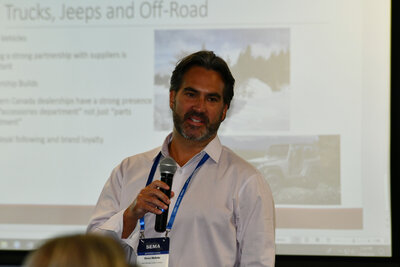
InternationalUSMCA replaced the North American Free Trade Agreement (NAFTA) effective July 1, 2020. All claims for lower tariff rates for exports to Canada and/or Mexico will need to be made using the new requirements called for under USMCA instead of NAFTA. Pictured here: A Canadian off-road distributor speaks at SEMA headquarters about the export opportunities in Canada during the 2019 Export Fair.

SEMA News appreciates the assistance of the U.S. Department of Commerce’s International Trade Administration and the U.S. Customs and Border Protection (CBP) in shedding light on the key provisions of the new trilateral trade agreement. The USMCA replaced the North American Free Trade Agreement (NAFTA), which had been governing regional trade since 1994.

What is the status of NAFTA?

USMCA replaced NAFTA effective July 1, 2020. All claims for lower tariff rates will need to be made using the new requirements called for under USMCA instead of NAFTA.

What are the new automotive rules of origin under the USMCA (the requirements a company must meet in order to claim preferential treatment)?

The automotive rules of origin for vehicles under the USMCA include several key components:

  • An overall regional content requirement (75% for passenger vehicles and light trucks).
  • A requirement that certain core parts (such as engine, transmission, body and chassis, axle, suspension system, steering system and advanced battery) must originate in North America.
  • Purchasing requirements for steel and aluminum in North America.

What about automotive aftermarket parts? Are manufacturers of specialty-equipment products required to meet the same multilevel rules of origin involving specific requirements (such as those governing labor value content and the origin of core parts and the steel and aluminum involved in the manufacturing of the product)?

Generally, no. USMCA defines an “aftermarket part” as “a good that is not for use as original equipment in the production of passenger vehicles, light trucks or heavy trucks.”

The new and complex origin requirements (outlined above) apply only to passenger vehicles, light trucks, heavy trucks and original-equipment parts. The regional value content requirement for aftermarket parts is typically less stringent than that for original-equipment parts and whole vehicles.

Aftermarket parts typically are required to satisfy a singular minimum RVC requirement, generally 50% to 60% under the net cost method. For additional information on the differing treatment of whole vehicles, OEM parts and aftermarket parts, refer to Section 13 of the USMCA uniform regulations (www.federalregister.gov/d/2020-13865/p-995).

Do the automotive rules of origin apply to exported vehicles that are primarily used off-road?

No. Producers and shippers of vehicles that are solely or principally for off-road use are not subject to the core parts, labor value content, or steel and aluminum purchase requirements. However, exporters of those products should refer to the product-specific rules of origin to find the regional value content requirement specific to their vehicle by its Harmonized System (HS) code. Such vehicles are defined as those that do not meet U.S. federal safety and emissions standards permitting unrestricted on-road use or the equivalent Mexican and Canadian on-road standards.

My specialty-equipment products are not required to meet the Automotive Rule of Origin requirements. How do I find out what minimum content I am required to meet and what the tariff rates are for my products?

There are a few steps required to determine the correct tariff code for your products:

  • In order to export to Canada or Mexico, you need to know the global product classification (HS code), as you would for any other global destination. Customs authorities around the world use the HS code to identify products when assessing duties and taxes. The United States uses a 10-digit code to classify products for export, known as a Schedule B number. Visit https://uscensus.prod.3ceonline.com for the online free “look-up feature” Schedule B search engine and to view the Census Bureau’s Export Training Video on how to classify your product.
  • Once you know the HS code applied to your product, you can use the Federal Transit Administration (FTA) Tariff Tool to look up the tariff rate for the product, available at www.export.gov/fta-tariff-tool. (Note: When entering the appropriate HS code using the above link, make sure to enter only numbers and not quote marks.) The FTA Tariff Tool incorporates all products (agricultural and nonagricultural goods) classified within all 97 chapters of the Harmonized System and includes information on product-specific rules of origin to determine the eligibility of the reduced tariff rates with any U.S. FTA partner. The Tariff Tool not only provides information on current tariff lines but also transparency on future tariffs and the year in which those products become duty-free.

The query tool allows you to generate a custom query using your product’s HS code, the FTA partner you’re trading with, and whether you are exporting or importing. Please note that all tariff rates derived from this online tool should be reconfirmed with your shipper or the appropriate customs agency, as they are subject to change.
Mexico
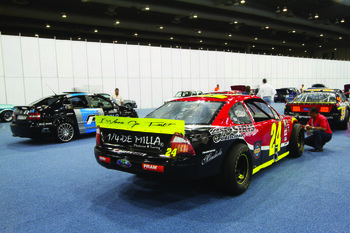
Products manufactured and sold to neighboring countries, i.e., Mexico and Canada, are eligible for preferential tariff treatment if they are sold within the region and meet the minimum content requirements as dic­tated by the new USMCA. Mexicans are big fan of musclecars, both classic and more modern. Pictured here is a section of the PAACE Automechanika show, held annually in Mexico City, that is dedicated to dozens of lovingly restored classic cars.

My products meet the regional content requirements. How do I document this information in order to claim preferential treatment?

There is no official certificate of origin for USMCA, as there was for NAFTA. USMCA requires a “certification of origin” for all products exceeding $1,000 or the equivalent amount in the importing party’s currency.

Any format is acceptable, provided it contains the following nine minimum data elements set out in USMCA, Annex 5-A:

  • Importer, exporter, or producer certification of origin
  • Certifier
  • Exporter
  • Producer
  • Importer
  • Description and HS classification of the good
  • Origin criteria
  • Blanket period (if applicable)
  • Authorized signature and date

What are the record-keeping requirements for shipments for which I have claimed preferential treatment?

Manufacturers are required to maintain, for a period of no less than five years, all records necessary to demonstrate that a good for which the exporter or producer provided a certification of origin or other written representation is originating, including records associated with (a) the purchase of, cost of, value of, shipping of, and payment for, the good or material; the purchase of, cost of, value of, shipping of, and payment for all materials, including indirect materials, used in the production of the good or material; and the production of the good in the form in which the good is exported or the production of the material in the form in which it was sold.

My aftermarket products are manufactured with 92% U.S. content and an estimated 8% Chinese content. Can I mark my products “U.S. Content” rather than listing both countries of origin?

The USMCA clarifies that most goods can be marked with a single country of origin even if up to 10% of the components do not originate in that country. If more than 10% of the components are nonoriginating, the good must be marked with multiple countries of origin.

Under CBP’s previous NAFTA marking regulations, sets had to be marked with “the country or countries of origin of all materials that merit equal consideration for determining the essential character of the good.” While subject to certain exceptions, the new rule gives importers more certainty as to how sets should be marked with the country or countries of origin.

Products manufactured and sold within North America are eligible for preferential tariff treatment if they meet minimum content requirements as dictated by the new U.S.–Mexico–Canada Agreement (USMCA). This article answers questions SEMA News has received from SEMA-member companies about the details of the regulations under the new agreement, which took effect July 1, 2020, and the documentation required when exporting your products to Canada and Mexico.

PartHS Code
Intake Air Filters for Internal Combustion Engines8421
Seats of a Kind Used for Motor Vehicles9401
Camshafts and Crankshafts8483
In order to export to Canada or Mexico (as you would for any other global destination) you need to know the global product classification known as the Harmonized System (HS) code. The HS code is used by customs authorities around the world to identify products when assessing duties and taxes. Typically, automotive specialty products and accessories for such vehicles are classified in Chapter 87 of HS system. Within this chapter, most of the HS codes for specialty products fall between 8701 to 8705. However, there are numerous exceptions,s including the parts listed above.

More information on the USMCA agreement and other exporting best practices are available online at www.sema.org/international or by contacting SEMA Senior Director of International and Government Relations Linda Spencer at lindas@sema.orglindas@sema.org.
Thu, 10/01/2020 - 13:36

SEMA News—October 2020

INTERNATIONAL

The New United States-Mexico-Canada Agreement

Tips on How to Qualify for the Lowest Tariff Rates

By Linda Spencer

InternationalUSMCA replaced the North American Free Trade Agreement (NAFTA) effective July 1, 2020. All claims for lower tariff rates for exports to Canada and/or Mexico will need to be made using the new requirements called for under USMCA instead of NAFTA. Pictured here: A Canadian off-road distributor speaks at SEMA headquarters about the export opportunities in Canada during the 2019 Export Fair.

SEMA News appreciates the assistance of the U.S. Department of Commerce’s International Trade Administration and the U.S. Customs and Border Protection (CBP) in shedding light on the key provisions of the new trilateral trade agreement. The USMCA replaced the North American Free Trade Agreement (NAFTA), which had been governing regional trade since 1994.

What is the status of NAFTA?

USMCA replaced NAFTA effective July 1, 2020. All claims for lower tariff rates will need to be made using the new requirements called for under USMCA instead of NAFTA.

What are the new automotive rules of origin under the USMCA (the requirements a company must meet in order to claim preferential treatment)?

The automotive rules of origin for vehicles under the USMCA include several key components:

  • An overall regional content requirement (75% for passenger vehicles and light trucks).
  • A requirement that certain core parts (such as engine, transmission, body and chassis, axle, suspension system, steering system and advanced battery) must originate in North America.
  • Purchasing requirements for steel and aluminum in North America.

What about automotive aftermarket parts? Are manufacturers of specialty-equipment products required to meet the same multilevel rules of origin involving specific requirements (such as those governing labor value content and the origin of core parts and the steel and aluminum involved in the manufacturing of the product)?

Generally, no. USMCA defines an “aftermarket part” as “a good that is not for use as original equipment in the production of passenger vehicles, light trucks or heavy trucks.”

The new and complex origin requirements (outlined above) apply only to passenger vehicles, light trucks, heavy trucks and original-equipment parts. The regional value content requirement for aftermarket parts is typically less stringent than that for original-equipment parts and whole vehicles.

Aftermarket parts typically are required to satisfy a singular minimum RVC requirement, generally 50% to 60% under the net cost method. For additional information on the differing treatment of whole vehicles, OEM parts and aftermarket parts, refer to Section 13 of the USMCA uniform regulations (www.federalregister.gov/d/2020-13865/p-995).

Do the automotive rules of origin apply to exported vehicles that are primarily used off-road?

No. Producers and shippers of vehicles that are solely or principally for off-road use are not subject to the core parts, labor value content, or steel and aluminum purchase requirements. However, exporters of those products should refer to the product-specific rules of origin to find the regional value content requirement specific to their vehicle by its Harmonized System (HS) code. Such vehicles are defined as those that do not meet U.S. federal safety and emissions standards permitting unrestricted on-road use or the equivalent Mexican and Canadian on-road standards.

My specialty-equipment products are not required to meet the Automotive Rule of Origin requirements. How do I find out what minimum content I am required to meet and what the tariff rates are for my products?

There are a few steps required to determine the correct tariff code for your products:

  • In order to export to Canada or Mexico, you need to know the global product classification (HS code), as you would for any other global destination. Customs authorities around the world use the HS code to identify products when assessing duties and taxes. The United States uses a 10-digit code to classify products for export, known as a Schedule B number. Visit https://uscensus.prod.3ceonline.com for the online free “look-up feature” Schedule B search engine and to view the Census Bureau’s Export Training Video on how to classify your product.
  • Once you know the HS code applied to your product, you can use the Federal Transit Administration (FTA) Tariff Tool to look up the tariff rate for the product, available at www.export.gov/fta-tariff-tool. (Note: When entering the appropriate HS code using the above link, make sure to enter only numbers and not quote marks.) The FTA Tariff Tool incorporates all products (agricultural and nonagricultural goods) classified within all 97 chapters of the Harmonized System and includes information on product-specific rules of origin to determine the eligibility of the reduced tariff rates with any U.S. FTA partner. The Tariff Tool not only provides information on current tariff lines but also transparency on future tariffs and the year in which those products become duty-free.

The query tool allows you to generate a custom query using your product’s HS code, the FTA partner you’re trading with, and whether you are exporting or importing. Please note that all tariff rates derived from this online tool should be reconfirmed with your shipper or the appropriate customs agency, as they are subject to change.

Mexico
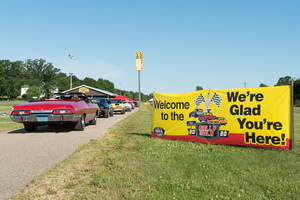
Products manufactured and sold to neighboring countries, i.e., Mexico and Canada, are eligible for preferential tariff treatment if they are sold within the region and meet the minimum content requirements as dic­tated by the new USMCA. Mexicans are big fan of musclecars, both classic and more modern. Pictured here is a section of the PAACE Automechanika show, held annually in Mexico City, that is dedicated to dozens of lovingly restored classic cars.

My products meet the regional content requirements. How do I document this information in order to claim preferential treatment?

There is no official certificate of origin for USMCA, as there was for NAFTA. USMCA requires a “certification of origin” for all products exceeding $1,000 or the equivalent amount in the importing party’s currency.

Any format is acceptable, provided it contains the following nine minimum data elements set out in USMCA, Annex 5-A:

  • Importer, exporter, or producer certification of origin
  • Certifier
  • Exporter
  • Producer
  • Importer
  • Description and HS classification of the good
  • Origin criteria
  • Blanket period (if applicable)
  • Authorized signature and date

What are the record-keeping requirements for shipments for which I have claimed preferential treatment?

Manufacturers are required to maintain, for a period of no less than five years, all records necessary to demonstrate that a good for which the exporter or producer provided a certification of origin or other written representation is originating, including records associated with (a) the purchase of, cost of, value of, shipping of, and payment for, the good or material; the purchase of, cost of, value of, shipping of, and payment for all materials, including indirect materials, used in the production of the good or material; and the production of the good in the form in which the good is exported or the production of the material in the form in which it was sold.

My aftermarket products are manufactured with 92% U.S. content and an estimated 8% Chinese content. Can I mark my products “U.S. Content” rather than listing both countries of origin?

The USMCA clarifies that most goods can be marked with a single country of origin even if up to 10% of the components do not originate in that country. If more than 10% of the components are nonoriginating, the good must be marked with multiple countries of origin.

Under CBP’s previous NAFTA marking regulations, sets had to be marked with “the country or countries of origin of all materials that merit equal consideration for determining the essential character of the good.” While subject to certain exceptions, the new rule gives importers more certainty as to how sets should be marked with the country or countries of origin.

Products manufactured and sold within North America are eligible for preferential tariff treatment if they meet minimum content requirements as dictated by the new U.S.–Mexico–Canada Agreement (USMCA). This article answers questions SEMA News has received from SEMA-member companies about the details of the regulations under the new agreement, which took effect July 1, 2020, and the documentation required when exporting your products to Canada and Mexico.

PartHS Code
Intake Air Filters for Internal Combustion Engines8421
Seats of a Kind Used for Motor Vehicles9401
Camshafts and Crankshafts8483
In order to export to Canada or Mexico (as you would for any other global destination) you need to know the global product classification known as the Harmonized System (HS) code. The HS code is used by customs authorities around the world to identify products when assessing duties and taxes. Typically, automotive specialty products and accessories for such vehicles are classified in Chapter 87 of HS system. Within this chapter, most of the HS codes for specialty products fall between 8701 to 8705. However, there are numerous exceptions,s including the parts listed above.

More information on the USMCA agreement and other exporting best practices are available online at www.sema.org/international or by contacting SEMA Senior Director of International and Government Relations Linda Spencer at lindas@sema.orglindas@sema.org.
Thu, 10/01/2020 - 13:35

SEMA News—October 2020

FROM THE HILL

Summer’s Automotive Holiday Honored in Style

Collector Car Appreciation Day Tradition Upheld by SEMA Membership

By Colby Martin

Coachmen
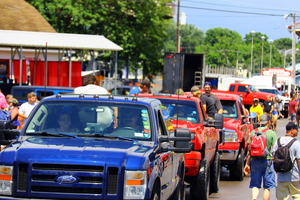
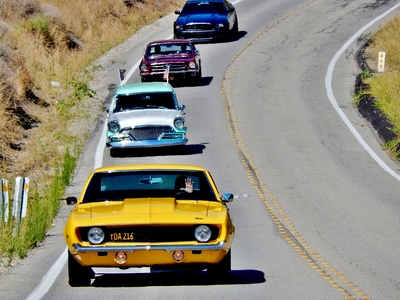
For the “Collector Car 11–Drive & Show,” the Coachmen Car Club of Ventura County adapted their event plan with a large caravan of collector cars that made a 45-mi. journey to their destination in Simi Valley, California.

On July 10, 2020, SEMA members joined with car clubs, businesses and thousands of enthusiasts to celebrate the 11th annual Collector Car Appreciation Day (CCAD). A wide range of events was held nationwide to commemorate the special day. The celebration was designated with SEMA-requested companion resolutions introduced in the U.S. Congress by the co-chairs of the SEMA-supported Congressional Automotive Performance and Motorsports Caucus. U.S. Senate Resolution 650 was sponsored by Sen. Jon Tester (D-MT) and Sen. Richard Burr (R-NC), while Rep. Bill Posey (R-FL) and Rep. Sanford Bishop (D-GA) sponsored U.S. House of Representatives Resolution 998.

The resolutions acknowledge “that the collection and restoration of historic and classic cars is an important part of preserving the technological achievements and cultural heritage of the United States.” Lawmakers in states, counties and cities all over the United States and Canada followed Congress’ lead. Louisiana, South Dakota, West Virginia and Wisconsin as well as the Canadian Provinces of British Columbia, Newfoundland and Labrador, Nova Scotia and New Brunswick adopted their own recognitions honoring the occasion.

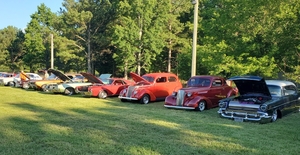
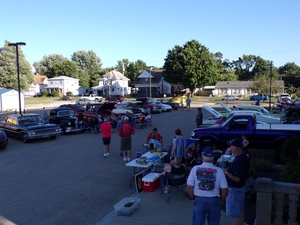
Nearly 60 official events were held throughout the month of July to celebrate the classics of the past and the future. The events included car-club cruise-ins, open houses at SEMA-member companies, specialty shows at automobile museums, and “drive your collector car to work” displays. Several participants also organized virtual gatherings and online celebrations for the first time. A summary and an online photo gallery of CCAD celebrations are available on the SEMA Action Network’s (SAN) website at www.semasan.com/ccad.

CCAD is supported by SEMA and its Automotive Restoration Market Organization and Hot Rod Industry Alliance councils.

Iola
The Iola Car Show in Iola, Wisconsin, coincides with the celebration of CCAD. In lieu of a car show, the Rally for Iola car cruise was held this year as a socially-distanced tour of the show grounds that brought in more than 1,000 cars.

SEMA-Member CCAD Event Hosts

  • Association of California Car Clubs—Auburn, California
  • Bonnier Events—Bloomsburg, Pennsylvania
  • Camaro Central/Firebird
  • Central/Muscle Car Central—Richmond, Kentucky
  • Coker Tire Co.—Chattanooga, Tennessee
  • D&S Automotive Collision & Restyling—Mentor, Ohio
  • Daniels Performance Group—Smithfield, Virginia
  • Griot’s Garage—Tacoma, Washington
  • Iola Car Show—Iola, Wisconsin
  • OC Car Guy—Buena Park, California
  • Steele Rubber Products—Denver, North Carolina

Knobley
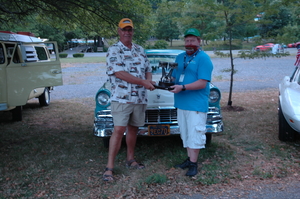
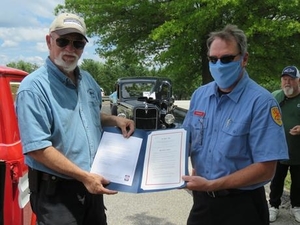
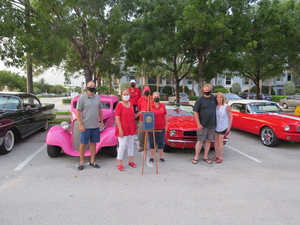
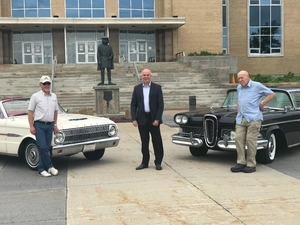
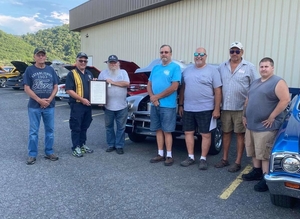
West Virginia’s Knobley Mountain Auto Club proudly recognized CCAD once again at its event in Keyser. West Virginia Delegate Gary G. Howell (second from left), national Chairman of the SEMA-supported State Automotive Enthusiast Leadership Caucus, is shown displaying the 2020 CCAD Congressional Resolution with participants.
Coker
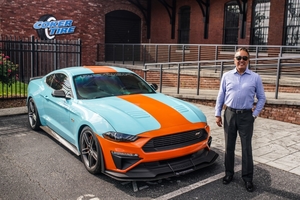
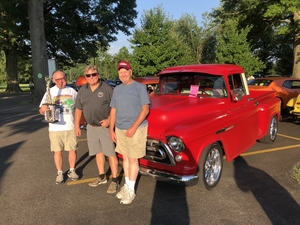
Chattanooga, Tennessee’s Coker Tire asked visitors on social media to post their collector car photos, which was kicked off by CEO Wade Kawasaki and his Roush Mustang.
Doug Reinbold
Doug Reinbold hosted a Collector Car Appreciation Cookout in North Attleborough, Massachusetts.
Steele Rubber
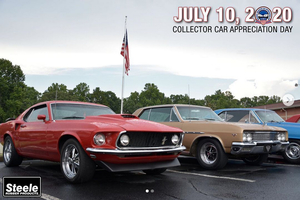
Instead of hosting its annual CCAD edition of the After Hours Cruise-In, Steele Rubber Products in Denver, North Carolina, invited the automotive community to submit their ride in a Virtual Cruise-In to Celebrate CCAD—more than 200 vehicles took part.
Nancy Perry
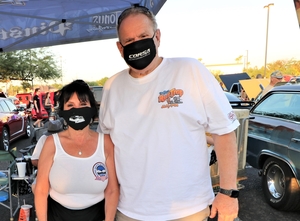
Arizona’s Nancy Perry Productions treated guests to a variety of show cars and a special CCAD cake in Glendale, including SEMA Hall of Fame inductee Chris Thomson (right).
Bonnier
Trucks brought enthusiasts to Bloomsburg, Pennsylvania, for the 4-Wheel Jamboree organized by Bonnier Corp.
Daniels
A special cruise-in celebrating CCAD took place at Daniels Performance Group in Smithfield, Virginia.
Camaro Central
The Richmond, Kentucky-based brands Camaro Central/Firebird Central/Muscle Car Central created an online holiday sale for CCAD and encouraged enthusiasts to share their collector car pictures on social media.
Crawford
The Crawford County Collectibles Car Club’s annual FRSB Cruise-In honored CCAD in Robinson, Illinois.
Wayne County
Wayne County Cruisers’ CCAD Cruise took place in Goldsboro, North Carolina.
Blair County
In Altoona, Pennsylvania, the Blair County Antique Auto Club and Lakemont Park organized a BCAAC National CCAD Cruise-in.
Clovis
CCAD was recognized at the Clovis Missionary Baptist Church’s Hot Rod Gathering in Clovis, California.
Chesapeake
The Chesapeake Region AACA’s CCAD event was held at the Fire Museum of Maryland, located in Lutherville.
Okolona
Mike Linnings’ CCAD Cruize took place in Louisville, Kentucky, supported by the Okolona Street Rods.
Brenford
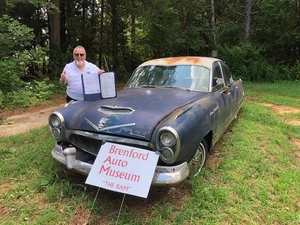
Private tours were offered at the Brenford Auto Museum in Smyrna, Delaware, for the 11th annual CCAD.
Suwannee
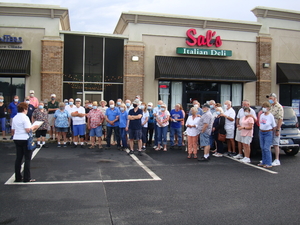
Sal’s Italian Deli in Lake City, Florida, provided the site for celebrating CCAD by the Suwannee River Region AACA (SRRAACA).
Horseless Carriage
On July 11, the Horseless Carriage Club of New Orleans Inc., held its CCAD Event in Louisiana—driving from Kenner to New Orleans.
Kustom Kings
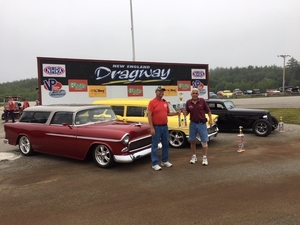
CCAD was honored in Brentwood, New Hampshire, at New England Dragway by the Kustom Kings of New Hampshire.
Ft. Lauderdale
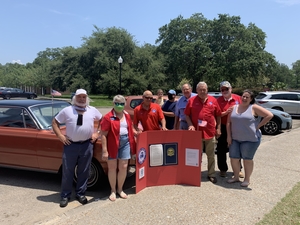
Florida’s Fort Lauderdale Region AACA celebrated CCAD, replacing their scheduled car show with a social-distancing event, highlighted by a presentation of the Congressional resolution.
Specialty Vehicle Assoc
A CCAD Cruise: Rockin’ in the Rockies took place in British Columbia, Canada, thanks to the efforts of the Specialty Vehicle Association of British Columbia (SVABC).
Dallas
In Texas, the Dallas Area Classic Chevys gathered enthusiasts for a CCAD Cruise-In at the Dairy Ette.
Cadillac
In Texas, the Dallas Area Classic Chevys gathered enthusiasts for a CCAD Cruise-In at the Dairy Ette.
Canada
Thanks to the efforts of the National Association of Automobile Clubs of Canada (NAACC), the province of Newfoundland and Labrador declared the month of July as “Automotive Heritage Month,” held concurrently with CCAD.
Northeast
A CCAD Cruise-in at Burger King in Berwick, Pennsylvania, was organized by the Northeast Cruisers Rod and Custom
Association.


Thu, 10/01/2020 - 13:35

SEMA News—October 2020

FROM THE HILL

Summer’s Automotive Holiday Honored in Style

Collector Car Appreciation Day Tradition Upheld by SEMA Membership

By Colby Martin

Coachmen
For the “Collector Car 11–Drive & Show,” the Coachmen Car Club of Ventura County adapted their event plan with a large caravan of collector cars that made a 45-mi. journey to their destination in Simi Valley, California.

On July 10, 2020, SEMA members joined with car clubs, businesses and thousands of enthusiasts to celebrate the 11th annual Collector Car Appreciation Day (CCAD). A wide range of events was held nationwide to commemorate the special day. The celebration was designated with SEMA-requested companion resolutions introduced in the U.S. Congress by the co-chairs of the SEMA-supported Congressional Automotive Performance and Motorsports Caucus. U.S. Senate Resolution 650 was sponsored by Sen. Jon Tester (D-MT) and Sen. Richard Burr (R-NC), while Rep. Bill Posey (R-FL) and Rep. Sanford Bishop (D-GA) sponsored U.S. House of Representatives Resolution 998.

The resolutions acknowledge “that the collection and restoration of historic and classic cars is an important part of preserving the technological achievements and cultural heritage of the United States.” Lawmakers in states, counties and cities all over the United States and Canada followed Congress’ lead. Louisiana, South Dakota, West Virginia and Wisconsin as well as the Canadian Provinces of British Columbia, Newfoundland and Labrador, Nova Scotia and New Brunswick adopted their own recognitions honoring the occasion.

Nearly 60 official events were held throughout the month of July to celebrate the classics of the past and the future. The events included car-club cruise-ins, open houses at SEMA-member companies, specialty shows at automobile museums, and “drive your collector car to work” displays. Several participants also organized virtual gatherings and online celebrations for the first time. A summary and an online photo gallery of CCAD celebrations are available on the SEMA Action Network’s (SAN) website at www.semasan.com/ccad.

CCAD is supported by SEMA and its Automotive Restoration Market Organization and Hot Rod Industry Alliance councils.

Iola
The Iola Car Show in Iola, Wisconsin, coincides with the celebration of CCAD. In lieu of a car show, the Rally for Iola car cruise was held this year as a socially-distanced tour of the show grounds that brought in more than 1,000 cars.

SEMA-Member CCAD Event Hosts

  • Association of California Car Clubs—Auburn, California
  • Bonnier Events—Bloomsburg, Pennsylvania
  • Camaro Central/Firebird
  • Central/Muscle Car Central—Richmond, Kentucky
  • Coker Tire Co.—Chattanooga, Tennessee
  • D&S Automotive Collision & Restyling—Mentor, Ohio
  • Daniels Performance Group—Smithfield, Virginia
  • Griot’s Garage—Tacoma, Washington
  • Iola Car Show—Iola, Wisconsin
  • OC Car Guy—Buena Park, California
  • Steele Rubber Products—Denver, North Carolina

Knobley
West Virginia’s Knobley Mountain Auto Club proudly recognized CCAD once again at its event in Keyser. West Virginia Delegate Gary G. Howell (second from left), national Chairman of the SEMA-supported State Automotive Enthusiast Leadership Caucus, is shown displaying the 2020 CCAD Congressional Resolution with participants.
Coker
Chattanooga, Tennessee’s Coker Tire asked visitors on social media to post their collector car photos, which was kicked off by CEO Wade Kawasaki and his Roush Mustang.
Doug Reinbold
Doug Reinbold hosted a Collector Car Appreciation Cookout in North Attleborough, Massachusetts.
Steele Rubber
Instead of hosting its annual CCAD edition of the After Hours Cruise-In, Steele Rubber Products in Denver, North Carolina, invited the automotive community to submit their ride in a Virtual Cruise-In to Celebrate CCAD—more than 200 vehicles took part.
Nancy Perry
Arizona’s Nancy Perry Productions treated guests to a variety of show cars and a special CCAD cake in Glendale, including SEMA Hall of Fame inductee Chris Thomson (right).
Bonnier
Trucks brought enthusiasts to Bloomsburg, Pennsylvania, for the 4-Wheel Jamboree organized by Bonnier Corp.
Daniels
A special cruise-in celebrating CCAD took place at Daniels Performance Group in Smithfield, Virginia.
Camaro Central
The Richmond, Kentucky-based brands Camaro Central/Firebird Central/Muscle Car Central created an online holiday sale for CCAD and encouraged enthusiasts to share their collector car pictures on social media.
Crawford
The Crawford County Collectibles Car Club’s annual FRSB Cruise-In honored CCAD in Robinson, Illinois.
Wayne County
Wayne County Cruisers’ CCAD Cruise took place in Goldsboro, North Carolina.
Blair County
In Altoona, Pennsylvania, the Blair County Antique Auto Club and Lakemont Park organized a BCAAC National CCAD Cruise-in.
Clovis
CCAD was recognized at the Clovis Missionary Baptist Church’s Hot Rod Gathering in Clovis, California.
Chesapeake
The Chesapeake Region AACA’s CCAD event was held at the Fire Museum of Maryland, located in Lutherville.
Okolona
Mike Linnings’ CCAD Cruize took place in Louisville, Kentucky, supported by the Okolona Street Rods.
Brenford
Private tours were offered at the Brenford Auto Museum in Smyrna, Delaware, for the 11th annual CCAD.
Suwannee
Sal’s Italian Deli in Lake City, Florida, provided the site for celebrating CCAD by the Suwannee River Region AACA (SRRAACA).
Horseless Carriage
On July 11, the Horseless Carriage Club of New Orleans Inc., held its CCAD Event in Louisiana—driving from Kenner to New Orleans.
Kustom Kings
CCAD was honored in Brentwood, New Hampshire, at New England Dragway by the Kustom Kings of New Hampshire.
Ft. Lauderdale
Florida’s Fort Lauderdale Region AACA celebrated CCAD, replacing their scheduled car show with a social-distancing event, highlighted by a presentation of the Congressional resolution.
Specialty Vehicle Assoc
A CCAD Cruise: Rockin’ in the Rockies took place in British Columbia, Canada, thanks to the efforts of the Specialty Vehicle Association of British Columbia (SVABC).
Dallas
In Texas, the Dallas Area Classic Chevys gathered enthusiasts for a CCAD Cruise-In at the Dairy Ette.
Cadillac
In Texas, the Dallas Area Classic Chevys gathered enthusiasts for a CCAD Cruise-In at the Dairy Ette.
Canada
Thanks to the efforts of the National Association of Automobile Clubs of Canada (NAACC), the province of Newfoundland and Labrador declared the month of July as “Automotive Heritage Month,” held concurrently with CCAD.
Northeast
A CCAD Cruise-in at Burger King in Berwick, Pennsylvania, was organized by the Northeast Cruisers Rod and Custom
Association.


Thu, 10/01/2020 - 13:29

SEMA News—October 2020

HERITAGE

Half-Mile Drags at Reno

By Drew Hardin

Photography Courtesy Eric Rickman, Petersen Publishing Company Archive

Heritage

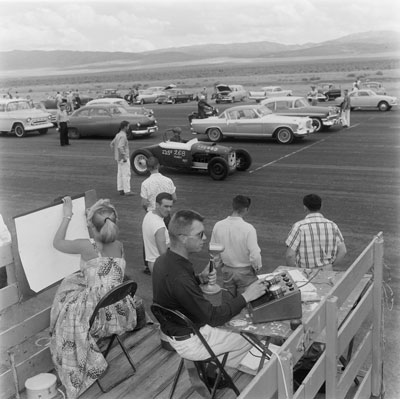
In late September 1957, Hot Rod’s Eric Rickman traveled north from Los Angeles to the Douglas-Tahoe Airport in Minden, Nevada, (near Reno) for the final meet of the Nevada Timing Association’s drag racing season.

The airstrip offered a full 8,000 ft. of runway and was “equal to four ordinary dragstrips in width,” Rickman noted. “Due to their handicap of being at an elevation of 4,703 ft. plus having adequate room for safe spectator isolation, they’ve been running both gas and fuel classes.”

The NTA staged quarter-mile races over the course of the year (including stock-class cars running four wide) and put on a special half-mile event as the season’s finale. Rickman said that the entry list included an “interesting array of cars” from western Nevada, northeastern California, “and even two from Southern California.” This photo shows an eclectic mix of entries, including several stock or nearly stock Chevys—even a pickup—plus a Studebaker, an Oldsmobile, a custom Mercury, and what looks like an Alfa Romeo sedan, along with a few hot-
rod Fords.

“Stockers had a field day,” Rickman said. “The half-mile distance is their dish.”

The fastest of the Stockers clocked a top speed of 105.10 mph.

This photo, taken from the timing tower, shows NTA announcer Bob Fabel doing double duty on the microphone and the timer. The photo’s caption in the December 1957 Hot Rod read: “Sylvia Fore keeps score on king-size chart, recording top speeds at half-mile’s end and start to finish overall elapsed times.”

One of the Southern California entries was the T roadster in the foreground, entered by Chester Osgood and Wally Fontain of Long Beach. With an Ardun-headed Mercury Flathead under the hood, the roadster clocked 122.03 mph and finished the weekend as the gas roadster class winner.

“Two cars, a roadster and a sedan, each Chrysler powered and running fuel, set identical top speeds at the year-ender—144.00 mph,” Rickman wrote.

Woody Eriksen from Winnemucca, Nevada, won Top Eliminator. His fuel sedan, which had its Hemi in the “normal front seat space” and the driver seat “at extreme rear,” beat Bill Freedman’s Oldsmobile-powered sports car for the win.

Thu, 10/01/2020 - 13:22

SEMA News—October 2020

Solutions to Support the Industry

Chris Kersting

Chris Kersting

The decision to forego the SEMA Show in 2020 has been disruptive to all in the industry, but without assurance that the Las Vegas Convention Center would be available for our Show dates, moving forward was no longer feasible.

More than just a tradeshow, the SEMA Show is actually a community mindshare of ideas and passion that fuels our industry and a setting that allows new trends to come into the spotlight. In the absence of the traditional Show, the challenge is to adapt and innovate, for SEMA to help the industry meet the core needs the SEMA Show fulfills. To do that, the association avoided hasty declarations about alternatives and instead has assembled smart, easy-to-use approaches that will help suppliers highlight new and innovative products and help resellers easily find those products.

SEMA has an unmatched relationship with the vast network of resellers and is in position to easily connect them with each supplier, to help build relationships and conduct business. And because this is the specialty automotive world, we’re making sure to provide the means to highlight the incredible cars and trucks that our industry has prepared for the SEMA Show as the best and most exciting way to feature new and innovative products.

As you’ll see from articles in this issue, OEMs are launching new enthusiast vehicles that will provide new opportunities; new products are coming to market; and companies are solving the challenges associated with customizing the newest, technology-intensive vehicles without compromising OEM safety systems.

SEMA will continue to offer resources to assist on all these fronts—plus some new ones.

As we delve into our options, we are already working to adapt print and digital resources to deliver increased new-product information to tens of thousands of jobbers, buyers, installers and builders. By enlisting teams of influencers and leveraging media connections, we can elevate those channels.

On the project-vehicle front, we expect to help builders by providing media exposure, both in print and through other media. Those builders who were working on feature vehicles for the SEMA Show have been invited to submit content to take advantage of SEMA communications channels, and the Battle of the Builders competition—which features customizers from all walks of the industry—will deliver an audience as an online contest for 2020.

When it comes to developing products, the SEMA Garage remains a key resource. Our Tech Transfer program is still adding CAD files to our library, and our Stratasys 3-D printers are still running jobs for members. The Garage continues to acquire new vehicles for measuring, and the emissions lab is also open.

For marketing new products, the SEMA Data Co-op (SDC) makes retail exposure more accessible than ever, having recently made investments in programming and automating product-information management systems. Understandably, the SDC is seeing sharply higher volumes of product-information traffic as online commerce activity booms.

The future is hard to predict, but a recent summer trend provided the industry with a needed boost. Our monthly poll of industry companies shows a month-by-month improvement in the number of companies reporting business as usual and a decline in companies who say their businesses will be severely impacted long term. And more companies are reporting sales that are higher or about the same as last year’s.

It’s impossible to know if what we’re seeing is the effect of stimulus programs, interest rates or simply the strength of motorsports and the enthusiast community, but here at SEMA, we’ll be working every angle to help our members keep that trend going.

Thu, 10/01/2020 - 13:18

SEMA News—October 2020

LEGISLATIVE AND TECHNICAL AFFAIRS

By Stuart Gosswein

FEDERAL UPDATE

Michigan
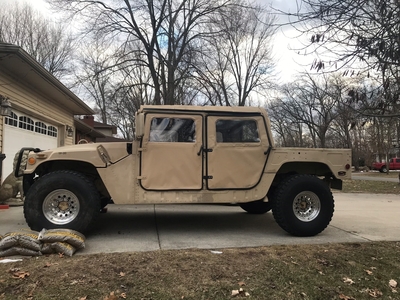
Michigan—Military Vehicles: The Michigan House of Representatives passed SEMA-supported legislation to allow for the titling and registration of historic military-surplus vehicles. Such vehicles are not currently able to be titled or registered for use on highways in the state. The bill awaits consideration by the Senate Committee on Transportation and Infrastructure.

New Law to Reduce Maintenance Backlog on Federal Lands: Congress passed and President Trump signed into law the Great American Outdoors Act (GAOA). This SEMA-supported law will dedicate $9.5 billion over the next five years to address the mainte­nance backlog on federal lands by creating a national parks and public land legacy restoration fund, enabling the National Park Service, the U.S. Forest Service and several other federal agencies to rebuild and improve trails, roads, docks, campgrounds and more. The bill will also appropriate $900 million annually to the Land and Water Conservation Fund for projects that help to protect natural areas, water resources, cultural heritage sites, and to provide recreation opportunities. The GAOA will benefit many SEMA members in the off-road market, in addition to companies selling wheels/tires, suspension, power and other equipment to help tow RVs and boats to the nation’s parks and recreation areas.

Digital Millennium Copyright Act: SEMA filed a petition with the Copyright Office to renew an existing exemption allowing vehicle owners and service and repair shops to diagnose, repair or modify a vehicle without violating copyright protections. Congress passed the Digital Millennium Copyright Act in 1998 to ensure that copyright law extended to digital products and services. Congress also included a process for securing three-year exemptions that can be renewed indefinitely when a need to access copyrighted material can be demonstrated, such as accessing vehicle software to repair a vehicle or install aftermarket products.

Regulatory Reform Bills: The U.S. Senate Homeland Security and Government Affairs Committee passed two SEMA-supported bills to make it easier for Congress to prevent the creation of overly burdensome regulations. The Regulations From the Executive in Need of Scrutiny Act would require Congress to approve economically significant regulations before they can take effect, including those that have a $100 million impact or greater on the economy. The committee also passed the Unfunded Mandates Accountability and Transparency Act to provide businesses with a stronger voice in shaping the regulatory process and to require agencies to pursue less burdensome regulatory alternatives. Both bills may now be considered by the full Senate.

Made in USA Regulation: The Federal Trade Commission (FTC) is proposing to issue a regulation to consolidate its longstanding policy to enforce unqualified “Made in USA” claims. For decades, the agency has used its general legal authority to enforce against unfair or deceptive trade practices regarding unqualified “Made in USA” claims. The FTC has issued broad guidance on the topic (most recently in 1997) but not issued a formal regulation until now. The FTC is not pursuing any changes of substance to its policy, which requires a seller making an unqualified “Made in USA” claim to have a reasonable basis for asserting that “all or virtually all” of the product is made in the United States.

Companies may still make qualified “Made in USA” claims for products that include U.S. content or processing but do not meet the criteria for making an unqualified claim. Qualified claim examples include “Made in USA of U.S. and imported parts,” “75% U.S. content” and “Assembled in U.S.A.”

The FTC rule would not supersede any other federal or state rule that is consistent or would provide greater protection. For example, California allows a “Made in USA” label for products sold in California if the product is made in the United States and all its subcomponents that are sourced from outside the U.S. constitute no more than 5% of the final value of the manufactured product.

STATE UPDATE

Ohio
Ohio—License Plates: SEMA-supported legislation from 2019 allowing the display of only a single, rear-mounted license plate went into effect on July 1, 2020. The state previously required both a front and a rear plate. The new law is expected to save the state between $1.2 and $1.4 million per year.

California Consumer Privacy Act Takes Effect: The California Consumer Privacy Act (CCPA)—a law that changed the rules governing California’s customer data collection policy—took effect on July 1, 2020. The law enhances online privacy protections for consumers.

Initially passed in 2018, the CCPA is intended to restrict how companies disclose personal information collected for commercial purposes. Under the law, impacted businesses must provide consumers with the right to know what personal data is being collected and provide the right to opt out of such collection. The law also provides California’s attorney general with right of action to enforce it. Companies have 30 days to comply if notified of a violation of the law.

The CCPA applies to any for-profit company doing business in California that meets one of the following criteria:

  • Gross revenue more than $25 million.
  • Annually purchases, receives, sells or shares personal information of more than 50,000 customers, households or devices for commercial purposes.
  • Derives 50% or more of its annual revenue from selling customers’ personal information.

Examples of personal information include the resident’s name, social security number, email address, records of products purchased, internet browsing history, geolocation data, and inferences from other information that identify personal preferences and characteristics.

The CCPA requires that companies subject to the law give California consumers a notice listing the type of personal information collected and the purposes for which it may be used. The disclosure should occur before or at the time the information is collected. The notice must also contain a link to the business’ privacy policy. If such information is sold, the company must provide an opt-out request option.

Companies may provide a link to the CCPA-compliant privacy policy on its website, with a separate link to the “Do Not Sell My Personal Information” webpage and a toll-free number. On a mobile app, the notice link may be placed in the “settings” menu. In a retail store, you may find the notice on signage or other materials at checkout.

For more information or questions regarding the CCPA, visit www.oag.ca.gov/privacy/ccpa.

Thu, 10/01/2020 - 13:18

SEMA News—October 2020

LEGISLATIVE AND TECHNICAL AFFAIRS

By Stuart Gosswein

FEDERAL UPDATE

Michigan
Michigan—Military Vehicles: The Michigan House of Representatives passed SEMA-supported legislation to allow for the titling and registration of historic military-surplus vehicles. Such vehicles are not currently able to be titled or registered for use on highways in the state. The bill awaits consideration by the Senate Committee on Transportation and Infrastructure.

New Law to Reduce Maintenance Backlog on Federal Lands: Congress passed and President Trump signed into law the Great American Outdoors Act (GAOA). This SEMA-supported law will dedicate $9.5 billion over the next five years to address the mainte­nance backlog on federal lands by creating a national parks and public land legacy restoration fund, enabling the National Park Service, the U.S. Forest Service and several other federal agencies to rebuild and improve trails, roads, docks, campgrounds and more. The bill will also appropriate $900 million annually to the Land and Water Conservation Fund for projects that help to protect natural areas, water resources, cultural heritage sites, and to provide recreation opportunities. The GAOA will benefit many SEMA members in the off-road market, in addition to companies selling wheels/tires, suspension, power and other equipment to help tow RVs and boats to the nation’s parks and recreation areas.

Digital Millennium Copyright Act: SEMA filed a petition with the Copyright Office to renew an existing exemption allowing vehicle owners and service and repair shops to diagnose, repair or modify a vehicle without violating copyright protections. Congress passed the Digital Millennium Copyright Act in 1998 to ensure that copyright law extended to digital products and services. Congress also included a process for securing three-year exemptions that can be renewed indefinitely when a need to access copyrighted material can be demonstrated, such as accessing vehicle software to repair a vehicle or install aftermarket products.

Regulatory Reform Bills: The U.S. Senate Homeland Security and Government Affairs Committee passed two SEMA-supported bills to make it easier for Congress to prevent the creation of overly burdensome regulations. The Regulations From the Executive in Need of Scrutiny Act would require Congress to approve economically significant regulations before they can take effect, including those that have a $100 million impact or greater on the economy. The committee also passed the Unfunded Mandates Accountability and Transparency Act to provide businesses with a stronger voice in shaping the regulatory process and to require agencies to pursue less burdensome regulatory alternatives. Both bills may now be considered by the full Senate.

Made in USA Regulation: The Federal Trade Commission (FTC) is proposing to issue a regulation to consolidate its longstanding policy to enforce unqualified “Made in USA” claims. For decades, the agency has used its general legal authority to enforce against unfair or deceptive trade practices regarding unqualified “Made in USA” claims. The FTC has issued broad guidance on the topic (most recently in 1997) but not issued a formal regulation until now. The FTC is not pursuing any changes of substance to its policy, which requires a seller making an unqualified “Made in USA” claim to have a reasonable basis for asserting that “all or virtually all” of the product is made in the United States.

Companies may still make qualified “Made in USA” claims for products that include U.S. content or processing but do not meet the criteria for making an unqualified claim. Qualified claim examples include “Made in USA of U.S. and imported parts,” “75% U.S. content” and “Assembled in U.S.A.”

The FTC rule would not supersede any other federal or state rule that is consistent or would provide greater protection. For example, California allows a “Made in USA” label for products sold in California if the product is made in the United States and all its subcomponents that are sourced from outside the U.S. constitute no more than 5% of the final value of the manufactured product.

STATE UPDATE

Ohio
Ohio—License Plates: SEMA-supported legislation from 2019 allowing the display of only a single, rear-mounted license plate went into effect on July 1, 2020. The state previously required both a front and a rear plate. The new law is expected to save the state between $1.2 and $1.4 million per year.

California Consumer Privacy Act Takes Effect: The California Consumer Privacy Act (CCPA)—a law that changed the rules governing California’s customer data collection policy—took effect on July 1, 2020. The law enhances online privacy protections for consumers.

Initially passed in 2018, the CCPA is intended to restrict how companies disclose personal information collected for commercial purposes. Under the law, impacted businesses must provide consumers with the right to know what personal data is being collected and provide the right to opt out of such collection. The law also provides California’s attorney general with right of action to enforce it. Companies have 30 days to comply if notified of a violation of the law.

The CCPA applies to any for-profit company doing business in California that meets one of the following criteria:

  • Gross revenue more than $25 million.
  • Annually purchases, receives, sells or shares personal information of more than 50,000 customers, households or devices for commercial purposes.
  • Derives 50% or more of its annual revenue from selling customers’ personal information.

Examples of personal information include the resident’s name, social security number, email address, records of products purchased, internet browsing history, geolocation data, and inferences from other information that identify personal preferences and characteristics.

The CCPA requires that companies subject to the law give California consumers a notice listing the type of personal information collected and the purposes for which it may be used. The disclosure should occur before or at the time the information is collected. The notice must also contain a link to the business’ privacy policy. If such information is sold, the company must provide an opt-out request option.

Companies may provide a link to the CCPA-compliant privacy policy on its website, with a separate link to the “Do Not Sell My Personal Information” webpage and a toll-free number. On a mobile app, the notice link may be placed in the “settings” menu. In a retail store, you may find the notice on signage or other materials at checkout.

For more information or questions regarding the CCPA, visit www.oag.ca.gov/privacy/ccpa.

Thu, 10/01/2020 - 13:18

SEMA News—October 2020

LEGISLATIVE AND TECHNICAL AFFAIRS

By Stuart Gosswein

FEDERAL UPDATE

Michigan
Michigan—Military Vehicles: The Michigan House of Representatives passed SEMA-supported legislation to allow for the titling and registration of historic military-surplus vehicles. Such vehicles are not currently able to be titled or registered for use on highways in the state. The bill awaits consideration by the Senate Committee on Transportation and Infrastructure.

New Law to Reduce Maintenance Backlog on Federal Lands: Congress passed and President Trump signed into law the Great American Outdoors Act (GAOA). This SEMA-supported law will dedicate $9.5 billion over the next five years to address the mainte­nance backlog on federal lands by creating a national parks and public land legacy restoration fund, enabling the National Park Service, the U.S. Forest Service and several other federal agencies to rebuild and improve trails, roads, docks, campgrounds and more. The bill will also appropriate $900 million annually to the Land and Water Conservation Fund for projects that help to protect natural areas, water resources, cultural heritage sites, and to provide recreation opportunities. The GAOA will benefit many SEMA members in the off-road market, in addition to companies selling wheels/tires, suspension, power and other equipment to help tow RVs and boats to the nation’s parks and recreation areas.

Digital Millennium Copyright Act: SEMA filed a petition with the Copyright Office to renew an existing exemption allowing vehicle owners and service and repair shops to diagnose, repair or modify a vehicle without violating copyright protections. Congress passed the Digital Millennium Copyright Act in 1998 to ensure that copyright law extended to digital products and services. Congress also included a process for securing three-year exemptions that can be renewed indefinitely when a need to access copyrighted material can be demonstrated, such as accessing vehicle software to repair a vehicle or install aftermarket products.

Regulatory Reform Bills: The U.S. Senate Homeland Security and Government Affairs Committee passed two SEMA-supported bills to make it easier for Congress to prevent the creation of overly burdensome regulations. The Regulations From the Executive in Need of Scrutiny Act would require Congress to approve economically significant regulations before they can take effect, including those that have a $100 million impact or greater on the economy. The committee also passed the Unfunded Mandates Accountability and Transparency Act to provide businesses with a stronger voice in shaping the regulatory process and to require agencies to pursue less burdensome regulatory alternatives. Both bills may now be considered by the full Senate.

Made in USA Regulation: The Federal Trade Commission (FTC) is proposing to issue a regulation to consolidate its longstanding policy to enforce unqualified “Made in USA” claims. For decades, the agency has used its general legal authority to enforce against unfair or deceptive trade practices regarding unqualified “Made in USA” claims. The FTC has issued broad guidance on the topic (most recently in 1997) but not issued a formal regulation until now. The FTC is not pursuing any changes of substance to its policy, which requires a seller making an unqualified “Made in USA” claim to have a reasonable basis for asserting that “all or virtually all” of the product is made in the United States.

Companies may still make qualified “Made in USA” claims for products that include U.S. content or processing but do not meet the criteria for making an unqualified claim. Qualified claim examples include “Made in USA of U.S. and imported parts,” “75% U.S. content” and “Assembled in U.S.A.”

The FTC rule would not supersede any other federal or state rule that is consistent or would provide greater protection. For example, California allows a “Made in USA” label for products sold in California if the product is made in the United States and all its subcomponents that are sourced from outside the U.S. constitute no more than 5% of the final value of the manufactured product.

STATE UPDATE

Ohio
Ohio—License Plates: SEMA-supported legislation from 2019 allowing the display of only a single, rear-mounted license plate went into effect on July 1, 2020. The state previously required both a front and a rear plate. The new law is expected to save the state between $1.2 and $1.4 million per year.

California Consumer Privacy Act Takes Effect: The California Consumer Privacy Act (CCPA)—a law that changed the rules governing California’s customer data collection policy—took effect on July 1, 2020. The law enhances online privacy protections for consumers.

Initially passed in 2018, the CCPA is intended to restrict how companies disclose personal information collected for commercial purposes. Under the law, impacted businesses must provide consumers with the right to know what personal data is being collected and provide the right to opt out of such collection. The law also provides California’s attorney general with right of action to enforce it. Companies have 30 days to comply if notified of a violation of the law.

The CCPA applies to any for-profit company doing business in California that meets one of the following criteria:

  • Gross revenue more than $25 million.
  • Annually purchases, receives, sells or shares personal information of more than 50,000 customers, households or devices for commercial purposes.
  • Derives 50% or more of its annual revenue from selling customers’ personal information.

Examples of personal information include the resident’s name, social security number, email address, records of products purchased, internet browsing history, geolocation data, and inferences from other information that identify personal preferences and characteristics.

The CCPA requires that companies subject to the law give California consumers a notice listing the type of personal information collected and the purposes for which it may be used. The disclosure should occur before or at the time the information is collected. The notice must also contain a link to the business’ privacy policy. If such information is sold, the company must provide an opt-out request option.

Companies may provide a link to the CCPA-compliant privacy policy on its website, with a separate link to the “Do Not Sell My Personal Information” webpage and a toll-free number. On a mobile app, the notice link may be placed in the “settings” menu. In a retail store, you may find the notice on signage or other materials at checkout.

For more information or questions regarding the CCPA, visit www.oag.ca.gov/privacy/ccpa.

Thu, 10/01/2020 - 13:17

By Fredy Ramirez

SEMA eNews highlights products from member-companies each week. This week’s submissions are listed below.

Hooker Blackheart
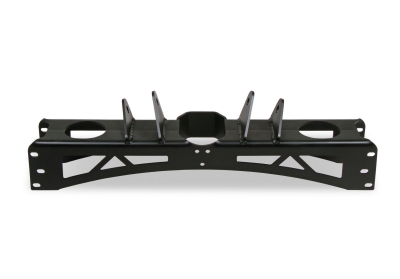
Rear Suspension Crossmember

Hooker Blackheart announces the release of its rear suspension crossmember for ’63–’72 Chevrolet C10. The crossmember is engineered to eliminate driveshaft clearance issues while maintaining proper pinion angles. The dual-exhaust cutouts allow the exhaust system to go through the crossmember instead of under the frame for extra ground clearance. The crossmember replaces the OE crossmember in the stock location and is constructed to work with the factory trailing arms.

Note: Requires use of one-piece driveshaft. Only for 2WD trucks utilizing trailing-arm rear suspension.

866-464-6553
www.holley.com
PN: BHS510

Hooker Blackheart

Holley
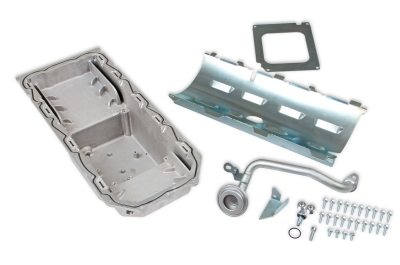
Gen III HEMI Swap Oil Pans

Holley has launched its Gen III Hemi engines oil pans swap for ’63–’74 Mopar A-Body, B-Body, C-Body and E-Body vehicles. The cast-aluminum construction and integrated windage tray combined with O-ring sealing are designed to provide a leak-free solution. The complete pan kit includes all parts required for installation (i.e. oil pan, pickup assembly, O-ring seal, windage tray, baffling and mounting bolts.

866-464-6553
www.holley.com

PN: 302-60

Holley

Hooker Blackheart
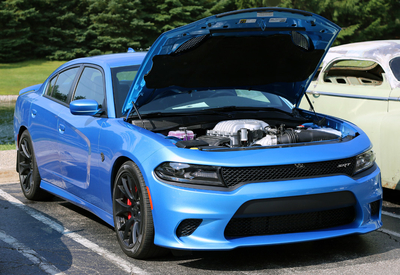
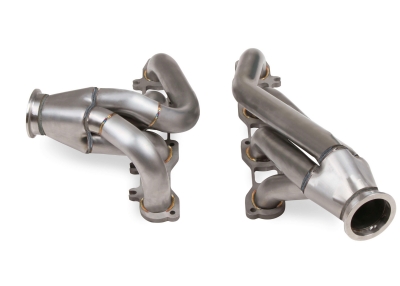
Jeep Wrangler TJ Gen-III Hemi Swap Parts

Hooker Blackheart announces the release of its Gen-III Hemi Swap Parts for the ’97–’06 Wrangler TJ. The lineup features engine swap mounts, transmission adapter brackets, headers, Y-pipes and steering shaft support brackets. The mounts are designed to work together with the stock skid plate/transmission crossmember to mount the transmission and stock NP231J transfer case. The transmission bracket is constructed to mount the 545RFE transmission and transfer case to the factory skid pate. The headers and the Y-Pipe are for ’87–’06 Jeep Wranglers with the Gen-III Hemi Engine. The support bracket bolts to the existing steering support bracket and relocates it.

866-464-6553
www.holley.com

PN: Vary

Hooker Blackheart

Redline Detection
SpeedSmoke

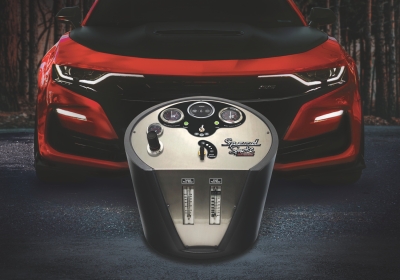
Redline Detection has launched its SpeedSmoke diagnostic leak detector. The detector is designed to address the proliferation of boosted vehicles in repair shops. It is engineered to feature diagnostic capabilities to pinpoint faults in boost leaks, naturally aspirated, high-pressure turbo, diesel and supercharged engines. The machine is constructed to run low-pressure diagnostics for general repair and naturally aspirated engines, plus high-pressure diagnostics for turbo, diesel and supercharged engines. It also features an onboard micro air compressor and 12V DC battery for total portability and includes all needed accessories.

877-557-6653
www. redlinedetection.com
PN: 95-0135

Redline


Gemini
Zero Rust Topcoat

Gemini announces the release of its Black Gloss Zero Rust Topcoat primer. The primer is manufactured to be VOC-compliant in all 50 states and available in aerosol cans only.

800-262-5710
www.usezerorust.com
PN: ARZT-02

Gemini

TRAC
Tire Jack

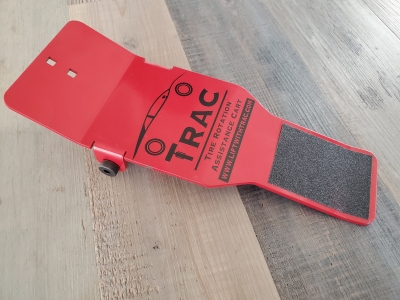
TRAC announces the release of its tire jack. The jack is constructed with welded steel for durability. The steel base rollers are designed to offer tire support and rolling convenience.

Watch: www.youtube.com/watch?v=a-tz7bYBZYA

720-231-1839
www.liftwithtrac.com
PN: Vary

TRAC

Oracle Lighting
Oracle Fog Halo Kit

Oracle Lighting announces the introduction to its Dynamic ColorSHIFT RGB+A Projector Fog Halo Kit for the ’15–’17 Ford Mustangs. The integrated RGB+A turn signal features “Motion Flow” sequential effect. The LEDs on the ring illuminate sequentially for a turn signal effect. The rings are encapsulated in a polymer resin designed to make them waterproof with an IP68 rating (can be submerged underwater). Oracle Lighting recommends purchasing the ’15–’17 Ford Mustang ORACLE Dynamic ColorSHIFT Headlight DRL + Halo Kit along with the fog kit, as the fog light kit alone will not include the Bluetooth controller.

800-407-5776
www.oraclelights.com
PN: 1235-332