Tue, 07/21/2026 - 12:33

From the SEMA Washington, D.C., office

SEMA Certified Emissions and SEMA Garage.


If you missed the big news earlier this month, the U.S. Environmental Protection Agency (EPA) has issued a groundbreaking advisory opinion that states that a SEMA Certified-Emissions certification qualifies as a reasonable basis under the Tampering Policy and companies can rely on this certificate to demonstrate compliance with federal emissions requirements. With this formal recognition, the EPA is establishing a regulatory pathway allowing for companies to meet emissions standard in 49 states (excluding California) and reasserts federal leadership on emissions issues.


To help members understand what the announcement means for manufacturers, compliance efforts and the industry at large, SEMA's Washington, D.C., advocacy team has compiled the following FAQs, a source of answers from the experts who work every day on behalf of the industry, advocating for policies that help businesses succeed and bringing clarity to complex regulatory issues.


So what's the big news here? 

The EPA announced that the SC-E program provides a recognized pathway for manufacturers to establish the "documented reasonable basis" described in EPA's 2020 Tampering Policy. That reasonable basis is the technical evidence that aftermarket manufacturers and vendors may ordinarily rely on to support the conclusion that an aftermarket product does not adversely affect vehicle emissions. 


Ok, now tell me how this happened? 

President Trump issued a presidential memorandum on June 29 within which was a request that “the Administrator of the EPA shall encourage the submission of, expeditiously consider, and act on any requests from organizations capable of testing aftermarket parts for conformance with the [Clean Air Act (CAA)]." The EPA on July 1 responded by recognizing SEMA "as an alternative certification authority for aftermarket vehicle parts. Moving forward, Americans will be able to use SEMA's Certified Emissions Program to show compliance with the [CAA] and verify that approved aftermarket parts do not negatively impact vehicle emissions."


This is what you saw in the news, but below the surface, SEMA has been paddling like crazy for nearly a decade to secure much-needed clarity on what constitutes a "reasonable basis." We've worked across several administrations to show what SC-E can provide, how it's done, the methodology and rigor, and demonstrate the value to the automotive aftermarket by providing certainty in an otherwise nebulous process. 


Really? A decade? 

Yup. We’ll give you a rundown below. But let's address your other questions first. 


So what's so different about SEMA Certified-Emissions? 

SC-E is the first non-governmental emissions compliance program that EPA has publicly recognized as satisfying the Tampering Policy’s "reasonable basis" framework. Rather than relying solely on a manufacturer's internal engineering analysis, SC-E provides standardized emissions testing together with an independent technical review to document that a product does not adversely affect emissions. 


Unlike a California Air Resources Board (CARB) Executive Order (EO), SC-E is not a California regulatory approval. Instead, it is designed to help manufacturers demonstrate federal, 49-state emissions compliance under EPA's existing enforcement framework while also generating technical data that can support a future CARB EO application where applicable. 


Why not California? 

A SEMA Certified-Emissions Certificate of Compliance does not provide access to sell regulated aftermarket products in California because California law requires a CARB EO for applicable aftermarket parts. SC-E is an alternative emissions compliance program designed to establish a documented "reasonable basis" under EPA's Tampering Policy for all other states, but it is not a substitute for CARB's requirement of obtaining an EO in California. 


SC-E and EO are complementary, not competing, compliance pathways. In fact, SEMA explicitly states that SC-E testing is designed so that, in many cases, the same test data can later be used to obtain a CARB EO. 


Aren't compliance costs still too high? 

Depending on the product and the application, costs vary. In some cases, good engineering judgement can be used to prove compliance. In other cases, actual testing must be conducted. Yes, those costs can be significant. Based on regulatory language and testing precedent, testing must be conducted pursuant to applicable processes using suitable test equipment. While that is not an inexpensive endeavor, producing irrefutable data is the goal.


The SEMA Garage for the SC-E program is at or below the standard industry rate for testing. Depending on the complexity of the project, the application cost to manufacturers is somewhere between $500 and $3,500. The SEMA Garage tests to the applicable standards, and we do so at a competitive rate that also includes the premium customer support that other labs charge tens of thousands of dollars for. Independent analysis shows that our prices are at or below others in the industry. And guess what: the SEMA Garage operates at a loss. The services the SEMA Garage provides (which go beyond just emissions compliance) are made possible through reinvestment of the organization’s revenues to help our members. 


Product testing is one of the ways we help the industry. Most SEMA members don’t have the budgets that larger manufacturers have to do this work (every test requires skilled technicians to operate the equipment and engineers to analyze and understand the data that's being generated) and that's a big part of why the SEMA Garage and SC-E program exist. 


You might have heard numbers circulating in the ballpark of $18,000 per product for emissions certification. These are accurate, but here’s some important context: they’re on the higher side––and a clear exception to most product certifications––with good reason, once you understand the breakdown of SC-E costs. 


An SC-E application costs on average $1,500, but that can range between $500 and $3,500, depending on the complexity of the application (factors of which include vehicle coverage or special features that the SEMA Garage doesn’t see as frequently). There are no surprises here––applicants know these costs at the front end of their certification process.  


CARB's EO application costs an additional $1,500 to $3,500, and the lower end of that range reflects a discount for companies who sought an SC-E certification first. 


Emissions testing is typically the largest project expense. The cost depends on the type of product and vehicle being tested. On average, emissions testing costs range from $8,000 to $17,000, depending on the project scope and testing requirements. 


Testing costs can also vary depending on the product type, required mileage accumulation, fuel type, baseline testing requirements and other project-specific factors. For example, emissions testing for a diesel vehicle is generally more expensive than for a gasoline vehicle; testing an ECU calibration typically costs more than testing a cold air intake, due to the additional testing and evaluation requirements. 


Does this action actually help fix the issue of knock-offs and counterfeit products? 

Here's an undeniable fact: counterfeit products are flooding into the United States, bypassing testing and compliance, while American manufacturers wait for approval to sell to their customers. Earlier this year, SEMA, along with one of our members, examined a counterfeit version of one of their products, available through a major online retailer.  In one year, this one product, sold on a single e-commerce platform, generated $12 million in sales. We know the issue is widespread, and our data indicates that this one product is just the tip of the iceberg. 


Meanwhile, American companies seeking emissions testing and compliance can be hindered by the time it takes to complete this process. Based on SEMA Garage data, in California, the average EO approval period is approximately six months, with some taking as long as two years to complete. While American manufacturers navigate that process, they are deprived of significant revenue and market share.


Meanwhile, the aforementioned counterfeits continue to flood the marketplace, grabbing what is not rightfully theirs while bypassing the emissions certification processes that compliant manufacturers must navigate. 


Because SC-E is a faster process, manufacturers gain a streamlined, efficient path for testing and compliance. The SC-E program further helps regulators, distributors, installers and consumers to identify products that meet established emissions requirements. 


Why can't companies just label these products for "off-road use only" and bypass the emissions compliance process? 

"Off-road use only" does not mean "off limits" from emissions standards. Every UTV, dirt bike, earth mover and Bobcat tractor has certification standards that they were certified to. Over time, the "off-road use only" title was slapped on everything in sight, with people thinking it was a clever workaround. Turns out it just positioned a bunch of folks up for enforcement by the EPA. In most cases, those off-road parts found their way to on-road applications, which is not Clean Air Act compliant. A close cousin to "off-road use only" is "race use only". This can be a legitimate label, when used correctly, and when the manufacturer (or retailer) tracks the destination to ensure it's not a workaround for on-road applications.  


How are small businesses supposed to benefit from this, anyway? 


1. Faster access to the U.S. market 

Historically, many small manufacturers delayed product launches until a CARB EO was issued. SC-E provides manufacturers with a documented "reasonable basis" under EPA's Tampering Policy to support sales in states that do not require a CARB EO. 


2. A clear compliance pathway 

Small businesses often lack in-house regulatory expertise. SC-E provides a structured process built around EPA's Tampering Policy, helping manufacturers understand what testing and documentation are needed to support emissions compliance.  


3. Independent verification 

Instead of relying solely on internal engineering assessments, manufacturers receive an independent evaluation of their product's emissions performance. This can increase confidence among distributors, installers and consumers making purchasing decisions.  


4. Better market credibility 

A SEMA Certified product gives manufacturers a recognized way to substantiate claims that a product meets EPA's "reasonable basis" criteria, reducing uncertainty for customers and business partners.  


5. A bridge to California compliance 

In many cases, the emissions data collected through the SC-E program can also support a subsequent CARB EO application, reducing duplication of testing and creating a more efficient path to nationwide market access.  


6. Opportunities for products without a CARB pathway 

Some product categories may not have a practical or available path to a CARB EO. The SC-E program provides a means to document compliance under EPA's Tampering Policy for products that can legally be marketed federally but are not eligible for California approval. 


Did this just create a federal regulation for compliance, apart from CARB's regulations? 

No. The EPA announcement did not create a new federal regulation. The announcement recognizes that manufacturers participating in the SEMA Certified-Emissions program can establish the documented "reasonable basis" contemplated by EPA's Tampering Policy for concluding that a product does not adversely affect emissions. This gives manufacturers a practical pathway to demonstrate compliance with the existing federal tampering provisions of the Clean Air Act. 


Is SEMA now regulating its own members? 

No. EPA remains the regulator and sets the standards. EPA agreed that, as described, emissions testing performed through the SC-E program satisfies the Tampering Policy's criteria. 


Does EPA review every SC-E determination? 

The EPA certainly has the authority to do so––EPA retains discretion to evaluate each case independently and may consider all relevant facts and circumstances when determining compliance. "Reasonable basis" means you are obligated to produce the methodology and testing used to determine compliance if requested. If you are unable to demonstrate this basis, the EPA can pursue civil and/or criminal charges against you.    


Can the EPA still take enforcement action against an SC-E-certified product? 

Yes, the EPA expressly stated that it retains its enforcement discretion. If the EPA determines a product violates the Clean Air Act, or if fraud was committed during the certification process, it may still take enforcement action. But that's one area where SC-E is unique: we will stand behind our testing, and if a certification is challenged, we'll defend it on behalf of the member. 


Why should consumers trust industry-run testing? 

Because it's already happening in other industries, and you’ve probably been the beneficiary of it without realizing it. Industries ranging from healthcare to education to finance and technology evaluate products, services and programs to ensure they meet standards set by the federal government. And these are big-deal organizations that have the resources and expertise to help facilitate accreditation and certification, like the American Medical Association and the American Society of Mechanical Engineers.  


In these cases, the government sets the law and the regulation, but not necessarily the standards by which compliance with those regulations is achieved. That's the role organizations like SEMA can play; they develop rigorous technical programs that manufacturers can use to demonstrate compliance with the law. SC-E is built on documented methodology, engineering rigor, reproducibility and auditability. These are all things the SEMA Garage had to show to the EPA before gaining this recognition. 


Does this weaken emissions protections? 

No. The EPA explicitly stated the action does not change emissions standards or compliance obligations; it simply provides an additional documented pathway for demonstrating emissions compliance via SC-E, and any future organization that can demonstrate that its testing has sufficient rigor can do the same. 


Is SC-E equivalent to a CARB EO? 

No, they serve similar functions under different legal frameworks. In all states except California, a CARB EO and an SC-E represent the same thing: a documented reasonable basis under EPA's Tampering Policy that aftermarket manufacturers and vendors may ordinarily rely on as documentation that a product does not adversely affect emissions. Because CARB has exclusive jurisdiction over the state of California, SC-E can serve only as the basis for an EO application. 


So again, you worked on this for how long? 

very long time. It's been a long haul! 


On April 22, 2026, SEMA made a formal request to the EPA via letter seeking recognition of SEMA Certified-Emissions as a "reasonable basis" under its Tampering Policy, but this has been in the works for nearly a decade, with a recent, sustained push toward this resolution over the last 18 months. 


SEMA has advocated for nearly a decade for clearer federal guidance on what constitutes a "reasonable basis" under the Clean Air Act.This has been a consistent part of our federal advocacy through multiple presidential administrations. For instance, the RPM Act was one piece of that effort, an effort to "solve" ambiguity issues within federal regulations, but was tabled when the originally proposed legislation became wholly unworkable for our industry (which often happens during the legislative process––sometimes you have to recognize a bad deal and step away from the table). 


But, regardless of the outcome of the RPM Act legislative effort, SEMA has continued its talks with EPA across numerous administrations to get to where we are today. 


Over the years, we've raised this topic with EPA staff who have participated in our emissions compliance panels at the SEMA Show (often alongside CARB staff), consistently encouraging the agency to provide greater clarity around the "reasonable basis" standard. We have also encouraged EPA to recognize the SEMA Certified Emissions program as a means of demonstrating compliance with applicable emissions requirements. 


The June 29 Presidential Memorandum was the first formal federal action directing EPA to consider alternative certification organizations. We learned of the White House’s announcement via social media and caught the livestream in progress. And like everyone else, we first reviewed the memorandum after it was publicly released.  


Separately, we've had similar discussions with CARB since 2017 regarding the SEMA Certified-Emissions program and the EO process. After the openings of the SEMA Garages in California and Michigan, we hosted CARB leaders for tours and discussions of how the SEMA Certified-Emissions program could complement the EO process by providing complete, technically robust applications that help reduce CARB's workload. We sought to expedite the CARB EO process, so between 2021 and 2022 we collaborated with CARB to determine appropriate fees that could fund additional staff who could help with reviews and approvals.  


And currently, we've got legislation advancing through the California legislature that would enable a "conditional sales designation" while companies' EO applications are under consideration––again, the product of discussions and negotiations with CARB to solve a shared concern of how to get clean products to market. 


From our perspective, the White House memorandum and California's EO program address two separate compliance frameworks. SB 1069 is focused exclusively on improving California's EO process and does not alter federal emissions requirements or EPA's authority.  


SEMA greatly appreciates CARB's willingness to work collaboratively with us on SB 1069. We believe the bill represents a thoughtful approach that maintains California's emissions standards while creating meaningful improvements for manufacturers that invest in compliance. 


Like we said, a long time coming, but we're thrilled with this new pathway to support the industry and help it thrive!


Visit semahq.org to sign up for advocacy updates and access additional information and resources.


Tue, 07/21/2026 - 12:33

From the SEMA Washington, D.C., office

SEMA Certified Emissions and SEMA Garage.


If you missed the big news earlier this month, the U.S. Environmental Protection Agency (EPA) has issued a groundbreaking advisory opinion that states that a SEMA Certified-Emissions certification qualifies as a reasonable basis under the Tampering Policy and companies can rely on this certificate to demonstrate compliance with federal emissions requirements. With this formal recognition, the EPA is establishing a regulatory pathway allowing for companies to meet emissions standard in 49 states (excluding California) and reasserts federal leadership on emissions issues.


To help members understand what the announcement means for manufacturers, compliance efforts and the industry at large, SEMA's Washington, D.C., advocacy team has compiled the following FAQs, a source of answers from the experts who work every day on behalf of the industry, advocating for policies that help businesses succeed and bringing clarity to complex regulatory issues.


So what's the big news here? 

The EPA announced that the SC-E program provides a recognized pathway for manufacturers to establish the "documented reasonable basis" described in EPA's 2020 Tampering Policy. That reasonable basis is the technical evidence that aftermarket manufacturers and vendors may ordinarily rely on to support the conclusion that an aftermarket product does not adversely affect vehicle emissions. 


Ok, now tell me how this happened? 

President Trump issued a presidential memorandum on June 29 within which was a request that “the Administrator of the EPA shall encourage the submission of, expeditiously consider, and act on any requests from organizations capable of testing aftermarket parts for conformance with the [Clean Air Act (CAA)]." The EPA on July 1 responded by recognizing SEMA "as an alternative certification authority for aftermarket vehicle parts. Moving forward, Americans will be able to use SEMA's Certified Emissions Program to show compliance with the [CAA] and verify that approved aftermarket parts do not negatively impact vehicle emissions."


This is what you saw in the news, but below the surface, SEMA has been paddling like crazy for nearly a decade to secure much-needed clarity on what constitutes a "reasonable basis." We've worked across several administrations to show what SC-E can provide, how it's done, the methodology and rigor, and demonstrate the value to the automotive aftermarket by providing certainty in an otherwise nebulous process. 


Really? A decade? 

Yup. We’ll give you a rundown below. But let's address your other questions first. 


So what's so different about SEMA Certified-Emissions? 

SC-E is the first non-governmental emissions compliance program that EPA has publicly recognized as satisfying the Tampering Policy’s "reasonable basis" framework. Rather than relying solely on a manufacturer's internal engineering analysis, SC-E provides standardized emissions testing together with an independent technical review to document that a product does not adversely affect emissions. 


Unlike a California Air Resources Board (CARB) Executive Order (EO), SC-E is not a California regulatory approval. Instead, it is designed to help manufacturers demonstrate federal, 49-state emissions compliance under EPA's existing enforcement framework while also generating technical data that can support a future CARB EO application where applicable. 


Why not California? 

A SEMA Certified-Emissions Certificate of Compliance does not provide access to sell regulated aftermarket products in California because California law requires a CARB EO for applicable aftermarket parts. SC-E is an alternative emissions compliance program designed to establish a documented "reasonable basis" under EPA's Tampering Policy for all other states, but it is not a substitute for CARB's requirement of obtaining an EO in California. 


SC-E and EO are complementary, not competing, compliance pathways. In fact, SEMA explicitly states that SC-E testing is designed so that, in many cases, the same test data can later be used to obtain a CARB EO. 


Aren't compliance costs still too high? 

Depending on the product and the application, costs vary. In some cases, good engineering judgement can be used to prove compliance. In other cases, actual testing must be conducted. Yes, those costs can be significant. Based on regulatory language and testing precedent, testing must be conducted pursuant to applicable processes using suitable test equipment. While that is not an inexpensive endeavor, producing irrefutable data is the goal.


The SEMA Garage for the SC-E program is at or below the standard industry rate for testing. Depending on the complexity of the project, the application cost to manufacturers is somewhere between $500 and $3,500. The SEMA Garage tests to the applicable standards, and we do so at a competitive rate that also includes the premium customer support that other labs charge tens of thousands of dollars for. Independent analysis shows that our prices are at or below others in the industry. And guess what: the SEMA Garage operates at a loss. The services the SEMA Garage provides (which go beyond just emissions compliance) are made possible through reinvestment of the organization’s revenues to help our members. 


Product testing is one of the ways we help the industry. Most SEMA members don’t have the budgets that larger manufacturers have to do this work (every test requires skilled technicians to operate the equipment and engineers to analyze and understand the data that's being generated) and that's a big part of why the SEMA Garage and SC-E program exist. 


You might have heard numbers circulating in the ballpark of $18,000 per product for emissions certification. These are accurate, but here’s some important context: they’re on the higher side––and a clear exception to most product certifications––with good reason, once you understand the breakdown of SC-E costs. 


An SC-E application costs on average $1,500, but that can range between $500 and $3,500, depending on the complexity of the application (factors of which include vehicle coverage or special features that the SEMA Garage doesn’t see as frequently). There are no surprises here––applicants know these costs at the front end of their certification process.  


CARB's EO application costs an additional $1,500 to $3,500, and the lower end of that range reflects a discount for companies who sought an SC-E certification first. 


Emissions testing is typically the largest project expense. The cost depends on the type of product and vehicle being tested. On average, emissions testing costs range from $8,000 to $17,000, depending on the project scope and testing requirements. 


Testing costs can also vary depending on the product type, required mileage accumulation, fuel type, baseline testing requirements and other project-specific factors. For example, emissions testing for a diesel vehicle is generally more expensive than for a gasoline vehicle; testing an ECU calibration typically costs more than testing a cold air intake, due to the additional testing and evaluation requirements. 


Does this action actually help fix the issue of knock-offs and counterfeit products? 

Here's an undeniable fact: counterfeit products are flooding into the United States, bypassing testing and compliance, while American manufacturers wait for approval to sell to their customers. Earlier this year, SEMA, along with one of our members, examined a counterfeit version of one of their products, available through a major online retailer.  In one year, this one product, sold on a single e-commerce platform, generated $12 million in sales. We know the issue is widespread, and our data indicates that this one product is just the tip of the iceberg. 


Meanwhile, American companies seeking emissions testing and compliance can be hindered by the time it takes to complete this process. Based on SEMA Garage data, in California, the average EO approval period is approximately six months, with some taking as long as two years to complete. While American manufacturers navigate that process, they are deprived of significant revenue and market share.


Meanwhile, the aforementioned counterfeits continue to flood the marketplace, grabbing what is not rightfully theirs while bypassing the emissions certification processes that compliant manufacturers must navigate. 


Because SC-E is a faster process, manufacturers gain a streamlined, efficient path for testing and compliance. The SC-E program further helps regulators, distributors, installers and consumers to identify products that meet established emissions requirements. 


Why can't companies just label these products for "off-road use only" and bypass the emissions compliance process? 

"Off-road use only" does not mean "off limits" from emissions standards. Every UTV, dirt bike, earth mover and Bobcat tractor has certification standards that they were certified to. Over time, the "off-road use only" title was slapped on everything in sight, with people thinking it was a clever workaround. Turns out it just positioned a bunch of folks up for enforcement by the EPA. In most cases, those off-road parts found their way to on-road applications, which is not Clean Air Act compliant. A close cousin to "off-road use only" is "race use only". This can be a legitimate label, when used correctly, and when the manufacturer (or retailer) tracks the destination to ensure it's not a workaround for on-road applications.  


How are small businesses supposed to benefit from this, anyway? 


1. Faster access to the U.S. market 

Historically, many small manufacturers delayed product launches until a CARB EO was issued. SC-E provides manufacturers with a documented "reasonable basis" under EPA's Tampering Policy to support sales in states that do not require a CARB EO. 


2. A clear compliance pathway 

Small businesses often lack in-house regulatory expertise. SC-E provides a structured process built around EPA's Tampering Policy, helping manufacturers understand what testing and documentation are needed to support emissions compliance.  


3. Independent verification 

Instead of relying solely on internal engineering assessments, manufacturers receive an independent evaluation of their product's emissions performance. This can increase confidence among distributors, installers and consumers making purchasing decisions.  


4. Better market credibility 

A SEMA Certified product gives manufacturers a recognized way to substantiate claims that a product meets EPA's "reasonable basis" criteria, reducing uncertainty for customers and business partners.  


5. A bridge to California compliance 

In many cases, the emissions data collected through the SC-E program can also support a subsequent CARB EO application, reducing duplication of testing and creating a more efficient path to nationwide market access.  


6. Opportunities for products without a CARB pathway 

Some product categories may not have a practical or available path to a CARB EO. The SC-E program provides a means to document compliance under EPA's Tampering Policy for products that can legally be marketed federally but are not eligible for California approval. 


Did this just create a federal regulation for compliance, apart from CARB's regulations? 

No. The EPA announcement did not create a new federal regulation. The announcement recognizes that manufacturers participating in the SEMA Certified-Emissions program can establish the documented "reasonable basis" contemplated by EPA's Tampering Policy for concluding that a product does not adversely affect emissions. This gives manufacturers a practical pathway to demonstrate compliance with the existing federal tampering provisions of the Clean Air Act. 


Is SEMA now regulating its own members? 

No. EPA remains the regulator and sets the standards. EPA agreed that, as described, emissions testing performed through the SC-E program satisfies the Tampering Policy's criteria. 


Does EPA review every SC-E determination? 

The EPA certainly has the authority to do so––EPA retains discretion to evaluate each case independently and may consider all relevant facts and circumstances when determining compliance. "Reasonable basis" means you are obligated to produce the methodology and testing used to determine compliance if requested. If you are unable to demonstrate this basis, the EPA can pursue civil and/or criminal charges against you.    


Can the EPA still take enforcement action against an SC-E-certified product? 

Yes, the EPA expressly stated that it retains its enforcement discretion. If the EPA determines a product violates the Clean Air Act, or if fraud was committed during the certification process, it may still take enforcement action. But that's one area where SC-E is unique: we will stand behind our testing, and if a certification is challenged, we'll defend it on behalf of the member. 


Why should consumers trust industry-run testing? 

Because it's already happening in other industries, and you’ve probably been the beneficiary of it without realizing it. Industries ranging from healthcare to education to finance and technology evaluate products, services and programs to ensure they meet standards set by the federal government. And these are big-deal organizations that have the resources and expertise to help facilitate accreditation and certification, like the American Medical Association and the American Society of Mechanical Engineers.  


In these cases, the government sets the law and the regulation, but not necessarily the standards by which compliance with those regulations is achieved. That's the role organizations like SEMA can play; they develop rigorous technical programs that manufacturers can use to demonstrate compliance with the law. SC-E is built on documented methodology, engineering rigor, reproducibility and auditability. These are all things the SEMA Garage had to show to the EPA before gaining this recognition. 


Does this weaken emissions protections? 

No. The EPA explicitly stated the action does not change emissions standards or compliance obligations; it simply provides an additional documented pathway for demonstrating emissions compliance via SC-E, and any future organization that can demonstrate that its testing has sufficient rigor can do the same. 


Is SC-E equivalent to a CARB EO? 

No, they serve similar functions under different legal frameworks. In all states except California, a CARB EO and an SC-E represent the same thing: a documented reasonable basis under EPA's Tampering Policy that aftermarket manufacturers and vendors may ordinarily rely on as documentation that a product does not adversely affect emissions. Because CARB has exclusive jurisdiction over the state of California, SC-E can serve only as the basis for an EO application. 


So again, you worked on this for how long? 

very long time. It's been a long haul! 


On April 22, 2026, SEMA made a formal request to the EPA via letter seeking recognition of SEMA Certified-Emissions as a "reasonable basis" under its Tampering Policy, but this has been in the works for nearly a decade, with a recent, sustained push toward this resolution over the last 18 months. 


SEMA has advocated for nearly a decade for clearer federal guidance on what constitutes a "reasonable basis" under the Clean Air Act.This has been a consistent part of our federal advocacy through multiple presidential administrations. For instance, the RPM Act was one piece of that effort, an effort to "solve" ambiguity issues within federal regulations, but was tabled when the originally proposed legislation became wholly unworkable for our industry (which often happens during the legislative process––sometimes you have to recognize a bad deal and step away from the table). 


But, regardless of the outcome of the RPM Act legislative effort, SEMA has continued its talks with EPA across numerous administrations to get to where we are today. 


Over the years, we've raised this topic with EPA staff who have participated in our emissions compliance panels at the SEMA Show (often alongside CARB staff), consistently encouraging the agency to provide greater clarity around the "reasonable basis" standard. We have also encouraged EPA to recognize the SEMA Certified Emissions program as a means of demonstrating compliance with applicable emissions requirements. 


The June 29 Presidential Memorandum was the first formal federal action directing EPA to consider alternative certification organizations. We learned of the White House’s announcement via social media and caught the livestream in progress. And like everyone else, we first reviewed the memorandum after it was publicly released.  


Separately, we've had similar discussions with CARB since 2017 regarding the SEMA Certified-Emissions program and the EO process. After the openings of the SEMA Garages in California and Michigan, we hosted CARB leaders for tours and discussions of how the SEMA Certified-Emissions program could complement the EO process by providing complete, technically robust applications that help reduce CARB's workload. We sought to expedite the CARB EO process, so between 2021 and 2022 we collaborated with CARB to determine appropriate fees that could fund additional staff who could help with reviews and approvals.  


And currently, we've got legislation advancing through the California legislature that would enable a "conditional sales designation" while companies' EO applications are under consideration––again, the product of discussions and negotiations with CARB to solve a shared concern of how to get clean products to market. 


From our perspective, the White House memorandum and California's EO program address two separate compliance frameworks. SB 1069 is focused exclusively on improving California's EO process and does not alter federal emissions requirements or EPA's authority.  


SEMA greatly appreciates CARB's willingness to work collaboratively with us on SB 1069. We believe the bill represents a thoughtful approach that maintains California's emissions standards while creating meaningful improvements for manufacturers that invest in compliance. 


Like we said, a long time coming, but we're thrilled with this new pathway to support the industry and help it thrive!


Visit semahq.org to sign up for advocacy updates and access additional information and resources.


Tue, 07/21/2026 - 12:05

By SEMA News Editors
An image of the New Products Showcase at the SEMA Show.


The SEMA Show, this year November 3-6 in Las Vegas, serves as the stage for the newest products, technologies and trends shaping the automotive aftermarket.


For exhibitors looking to maximize their impact on the SEMA Show floor, one opportunity stands above the rest: the New Products Showcase.


Recognized as the No. 1 destination for buyers and media at the SEMA Show, the New Products Showcase gives exhibitors a dedicated display for their latest innovations and best-selling products.


The best part: the first product entry is always free, so entering is a no-brainer. Additional entries are $95 each through Friday, October 2. After the deadline, the cost rises to $175.


New for 2026, a brand-new product category joins the ranks: Powersports | SxS | Lifestyle. It joins the current lineup:

  • Car Care & Protection
  • Collision Repair & Refinish
  • Emerging Technology
  • Engineered New Product
  • Exterior Accessory
  • Interior Accessory
  • Package Design & Display
  • Performance - Racing
  • Performance - Street
  • Powersports | SxS | Lifestyle
  • Street Rod & Custom Car
  • Tire & Related
  • Tools & Equipment
  • Truck & Off-Road
  • Wheel & Related


The Showcase is located in an easily accessible location, the east end of Lower South Hall and for many, the main entrance to the SEMA Show.


Why Participate? The Data Proves It


The New Products Showcase has long been considered one of the most valuable exhibitor programs at the SEMA Show. Now, exhibitors have the data to back it up.


A recent analysis using the New Products Showcase technology from FastSensor found that the program generated more than 620,000 brand impressions during the most recent SEMA Show.


Visitors spent an average of 21 minutes exploring products in the Showcase, while nearly 45% of qualified visitors engaged deeply with multiple product categories or displays.


In addition, 78% of buyers and media members report visiting an exhibitor's booth after discovering a product in the display. For companies looking to generate leads, build brand awareness and increase booth traffic, participation can deliver significant value.


Why Participate? Your Brand Could Win


Eligible products are automatically considered for the prestigious SEMA New Product Awards, which recognize outstanding innovations introduced at the SEMA Show. Winners are announced during the SEMA Show Kickoff Breakfast on Tuesday, November 3, and are featured in a special section of SEMA Magazine.


Why Participate? Get Additional Publicity 


Beyond the on-site exposure, participating products receive additional publicity through SEMA News, SEMA Magazine, the SEMA Show App, SEMAshow.com and the exclusive New Products digital catalog available to browse 24/7.


Exhibitors can also take advantage of optional promotional opportunities, including enhanced product listings, Buyers' Guide advertising and on-site branding packages. (Contact sales@sema.org to connect with your sales rep for more information).


How to Enter the New Products Showcase


Exhibitors can enter the New Products Showcase by visiting the Exhibitor Dashboard at exhibitor.semashow.com.


The entered products should be brought to the New Products Showcase area during designated check-in hours on Sunday, November 1, and Monday, November 2. Products checked in before 2:00 p.m. local time on Monday are eligible for New Product Award consideration.


On Tuesday, November 3, at 7:30 a.m. local time, the SEMA Show Kick-Off Breakfast will honor the winners of each category.


Exhibitors must then return to the New Products Showcase on Friday, November 6, from 4:00 to 8:00 p.m. local time to retrieve their products.


Frequently Asked Questions About the New Products Showcase


What qualifies as a new product?

To be eligible for the New Products Showcase and New Product Awards, a product must have been introduced to the marketplace after the 2025 SEMA Show and be available for shipment within 90 days following the close of the 2026 SEMA Show, or by February 2027.


Products that do not meet these requirements may still be displayed in the New Products Showcase as an Exhibitor Pick, but they will not be eligible for New Product Award consideration.


Can I show a video of my product instead of bringing the product itself?


Yes. Exhibitors may display product videos on a laptop or tablet set to run continuously throughout the Show. Alternatively, exhibitors may provide a QR code that links to a landing page or video explaining the product.


Please note that video or landing page content should be informational only and should not contain marketing, advertising or sales copy.


Can I enter the same product in more than one category?


Yes. Exhibitors may submit a product into multiple New Product Showcase categories. However, a separate product display must be provided for each category entered.


Can I ship my products in advance?


Yes. Exhibitors may ship products to the Freeman warehouse before the Show. Advance receiving begins in October, and shipments must arrive at the Freeman warehouse no later than Wednesday, October 21.


Please note that even if products are shipped in advance, they must still be checked in by a representative of the exhibiting company during the scheduled New Products Showcase check-in hours.


Do I need to pick up my products after the Show?


Yes. Exhibitors are responsible for retrieving their product displays from the New Products Showcase on Friday, November 6, between 4:00 p.m. and 8:00 p.m.


UPS representatives will be available on-site during check-in and check-out to assist with return shipping. Products not collected by the end of the designated pick-up period will be considered abandoned.


Still have questions? Contact your SEMA Show sales representative at sales@sema.org909-396-0289 or semashow.com/contact. Still need booth space for the SEMA Show? Get started at semashow.com/buyabooth.


The 2026 SEMA Show is set for November 3-6, in Las Vegas. Interested exhibitors can buy a booth and learn more at semashow.com/exhibitor. Attendee and buyer registration is now open online. For more information, visit semashow.com.  


SEMA Fest has been confirmed for Friday, November 6, 2026, and industry members will get the lowest rate on tickets through the registration portal and Attendee Resource Center. Sign up for updates at semafest.com.   

 

Tue, 07/21/2026 - 11:17

By SEMA News Editors

SEMA Fest bands lineup.


SEMA Fest has officially revealed its 2026 music lineup, and it's set to deliver one of the biggest nights of SEMA Week.


Headlining the Friday, November 6 event at the Las Vegas Convention Center is multi-platinum punk-rock powerhouse The Offspring, joined by alternative-rock favorites Jimmy Eat World, genre-blending hitmakers 311 and California rockers The Alive.


The announcement gives automotive enthusiasts even more reason to secure tickets now for SEMA Fest, the one-day celebration that combines live music, motorsports and car culture into a single high-energy experience.


Buy SEMA Fest Tickets button to semafest.com


The day begins with public access to the SEMA Show Friday experience (tell your non-industry friends they can secure passes on semafest.com), where enthusiasts can explore thousands of custom vehicles, new products and more than 2,000 exhibiting brands on the Show floor. The action continues outdoors with the legendary SEMA Cruise on Friday evening, plus drifting demonstrations from OPTIMA, the return of the Globe of Death, and a showcase of rare exotics and hypercars from Supercar Saturdays Florida.


OPTIMA at SEMA Fest.


As the sun sets, the focus shifts to the SEMA Fest stage, where fans can sing along to iconic hits like "Self Esteem," "Come Out and Play," "The Middle," "Amber" and more.


SEMA Fest has previously featured major acts such as Imagine Dragons, Cage the Elephant, Sublime and Queens of the Stone Age, and the 2026 lineup continues that tradition with a mix of chart-topping artists and fan favorites.


Buy tickets now through the SEMA Registration Resource Center or at SEMAFest.com. 


For partnership opportunities, contact info@semafest.com.


The 2026 SEMA Show is set for November 3-6, in Las Vegas. Interested exhibitors can buy a booth and learn more at semashow.com/exhibitor. Attendee and buyer registration is now open online. For more information, visit semashow.com


Tue, 07/21/2026 - 10:55

By SEMA News Editors


Stellantis Announces Appointments of Veteran Industry Executives to Lead Ram and Jeep Brands

Matt VanDyke and Branden Cote

From left to right: Matt VanDyke, CEO of Ram and Branden Coté, CEO of Jeep.


Stellantis has announced the appointment of two veteran automotive industry executives to lead the Ram and Jeep brands.


Matt VanDyke has been named the new CEO of Ram brand, effective July 20. VanDyke succeeds Tim Kuniskis, who was named head of American brands, North America marketing and retail strategy, Stellantis North America in July 2025 while also continuing to lead Ram brand.


Branden Coté has been named the new CEO of Jeep brand, effective August 3. Coté succeeds Bob Broderdorf, who has led the brand since February 2025 and will be taking medical leave. Broderdorf will assume a new leadership role within the company when he returns.


The moves are part of Stellantis CEO Antonio Filosa's ongoing strategy to build a team of experienced executives who are well positioned to lead the company's growth plan, says Stellantis. Both executives will report directly to Tim Kuniskis.


VanDyke joins Ram as a seasoned industry executive, most recently serving as president of Shift Digital, a leading digital marketing firm that has worked with some of the most recognizable automotive brands in the world. Prior to joining Shift, he served as CEO of FordDirect and held several roles at Ford Motor Company, including head of U.S. marketing, VP marketing, Ford of Europe and head of global marketing, sales and service for Lincoln. 


Coté joins Jeep with two decades of experience leading both OEM and dealer retail operations across the industry. Most recently, with AutoNation, he served as brand president, leading multiple top-tier brands.


Previously, he held key leadership roles with Aston Martin Lagonda Ltd., Canoo, Mercedes-AMG/Mercedes-Benz USA, among other automakers and dealers.


"Matt and Branden are proven leaders who will build on our successes and take these iconic American brands to the next level," said Tim Kuniskis, head of American brands, North America marketing and retail strategy, Stellantis North America. "Their skills and deep industry experience align with our simple––but very important––customer-centric objective: to provide people with the brands and products they love and trust. I also want to thank Bob Broderdorf for his exceptional leadership of Jeep. Bob is a dedicated and valued colleague, and a friend to many across the company. I look forward to continuing our work together when he takes on his new role."


For more information, visit stellantis.com.


Introducing Range Rover Sport Electric: The Pinnacle of Sporting Luxury

Range Rover Sport Electric


Range Rover has confirmed the forthcoming arrival of its second electric vehicle (EV), Range Rover Sport Electric.  


Following the Range Rover Electric, Range Rover Sport is designed to again redefine the luxury electric SUV segment when it arrives later this year. It features the same unmistakable, muscular form, now driven by a fully electric powertrain in an effort to deliver effortless, visceral performance, says Range Rover.


Recently, Range Rover Sport Electric was presented in a private preview event at Goodwood Festival of Speed, UK. In homage to its legacy of pioneering performance, such as the 999‑step ascent at Heaven's Gate in China, to the climb of an Icelandic spillway, Range Rover Sport Electric tackled a series of driven challenges on the Goodwood Motor Circuit.  


Range Rover Sport Electric is designed to integrate a suite of advanced technologies that unleash more power and torque, amplified by an advanced new chassis tune and audio sound, creating a drive that feels as distinctive as it is visceral, across any terrain.  


The addition of pure‑electric propulsion later this year will complete the powertrain lineup for Range Rover Sport, with a plug‑in electric hybrid, mild‑hybrid V8 petrol and six‑cylinder petrol and diesel offering a suitable option for every client. New Range Rover Sport Electric has been calibrated to deliver the same thrilling, engaging drive that defines the sportiest expression of the brand. 


Further details of Range Rover Sport Electric will be announced later this year.  


Range Rover Reveals Bespoke Classic at Pebble Beach to Match Range Rover SV Ultra


Range Rover has revealed a highly exclusive Classic model created to match the new Range Rover SV Ultra, featuring a bespoke exterior color, innovative interior trim and tailored detailing.


Created by Range Rover's Classic experts, the vehicle is designed to showcase the breadth of personalization available to Range Rover clients, with the ability to tailor a creation to their tastes and desires perfectly.


The '93 Range Rover is finished in Titan Silver, a color launched on the new Range Rover SV Ultra, an exquisite interpretation of Range Rover luxury and technology. The finish uses real, fine aluminum flake and advanced pigment technology to create a highly reflective, iridescent surface that evokes liquid metal.


Continuing the matched pair theme, its 16-in. three-spoke wheels finished in Satin Platinum Atlas with diamond-turned contrast rims, new Range Rover SV Ultra bonnet script and the removal of exterior side trim reflect the clean surfaces of new SV Ultra. Under the hood, a plaque highlights its provenance as the first bespoke matched pair commission.


Inside, the Range Rover Classic features trademarked Ultrafabrics for the first time, matching the light duo-tone orchid white and cinder grey colorway of Range Rover SV Ultra to create a serene and design-led sanctuary. The dashboard is upholstered in cinder grey, with color-matched air vents. The steering wheel is finished in duo-tone orchid white and cinder grey.


The seats have the same laser‑crafted pattern and intricate mosaic perforation that debuted on Range Rover SV Ultra across the sculpted upper sections and carried through onto the inserts and backrests. Bespoke door trims feature brushed aluminum handles, color-matched speaker covers and finishers.


The Range Rover Classic started life as a U.S.-market County Edition and is powered by the 3.9L V8 engine twinned with a four-speed automatic gearbox. A highly skilled team of craftspeople has drawn on years of design and engineering expertise to complete a 2,000-hour restoration, across fabrication, paint, trim and final assembly, says Range Rover.


Mechanical authenticity remained a guiding principle throughout, with a comprehensive rebuild of the engine, transmission, suspension, steering and braking components. The Classic Works team carefully restored and refined every detail to preserve the character and integrity of the original vehicle while enhancing its reliability and refinement, resulting in a highly collectible Range Rover Classic representing both modern craftsmanship and heritage.


Making its public debut during Monterey Car Week, the Range Rover Matched Pair will be showcased at RM Sotheby's Auction Preview at the Monterey Conference Center from August 12-14. Preview access is available to registered bidders and guests, with public preview tickets also available for purchase. The display features the first Range Rover SV Ultra built for the U.S. market alongside a specially commissioned Range Rover Classic inspired by its design and character. RM Sotheby's will subsequently offer the vehicles during its live auction beginning at 5:30 p.m. local time on August 14.


GFS Chemicals Expands GFS Express

GFS Express logo


GFS Chemicals, the manufacturer of specialty and fine chemicals, announces the immediate expansion of its GFS Express program.


Designed to be a no-hassle way to get laboratories and manufacturers the products they need quickly, the curated program guarantees in-stock availability with same-day or next-day shipping of essential chemicals and supplies, according to GFS Chemicals. The GFS Express program also guarantees that if the company cannot ship the products as promised, GFS Chemicals pays for the freight, says GFS Chemicals.


This year, GFS Chemicals is adding more than 100 products to its GFS Express program, increasing the total number of qualifying products to 200 in 2026. Recent additions include Karl Fischer CRM Water Standards, trace metal acids and a variety of reagents. This newly expanded offering will also include additional products across the company's catalog, ranging in product category, grade and application, says GFS Chemicals.


"Customers shouldn't have to build their schedules around out-of-stocks and shipping delays," says GFS Chemicals Marketing Manager Eric Trimble. "That's the whole reason we’re expanding GFS Express. The chemicals they count on are in stock, they ship the same day, and if we miss, we cover the freight. That's the experience we want them to have every time they order."


Program Details of GFS Express


GFS Express orders must be placed and processed by 12:00 p.m. EST to ship the same day. Orders processed after 12:00 p.m. EST will ship on the next business day. If GFS Chemicals cannot fulfill the shipping commitment, the company covers the full freight cost. This service is available to customers in the United States and Canada. Some exclusions apply.


To learn more about GFS Chemicals and the GFS Express program, visit gfschemicals.com, email service@gfschemicals.com or call 800-858-9682.


Background images courtesy of Shutterstock


Tue, 07/21/2026 - 09:57

By SEMA News Editors

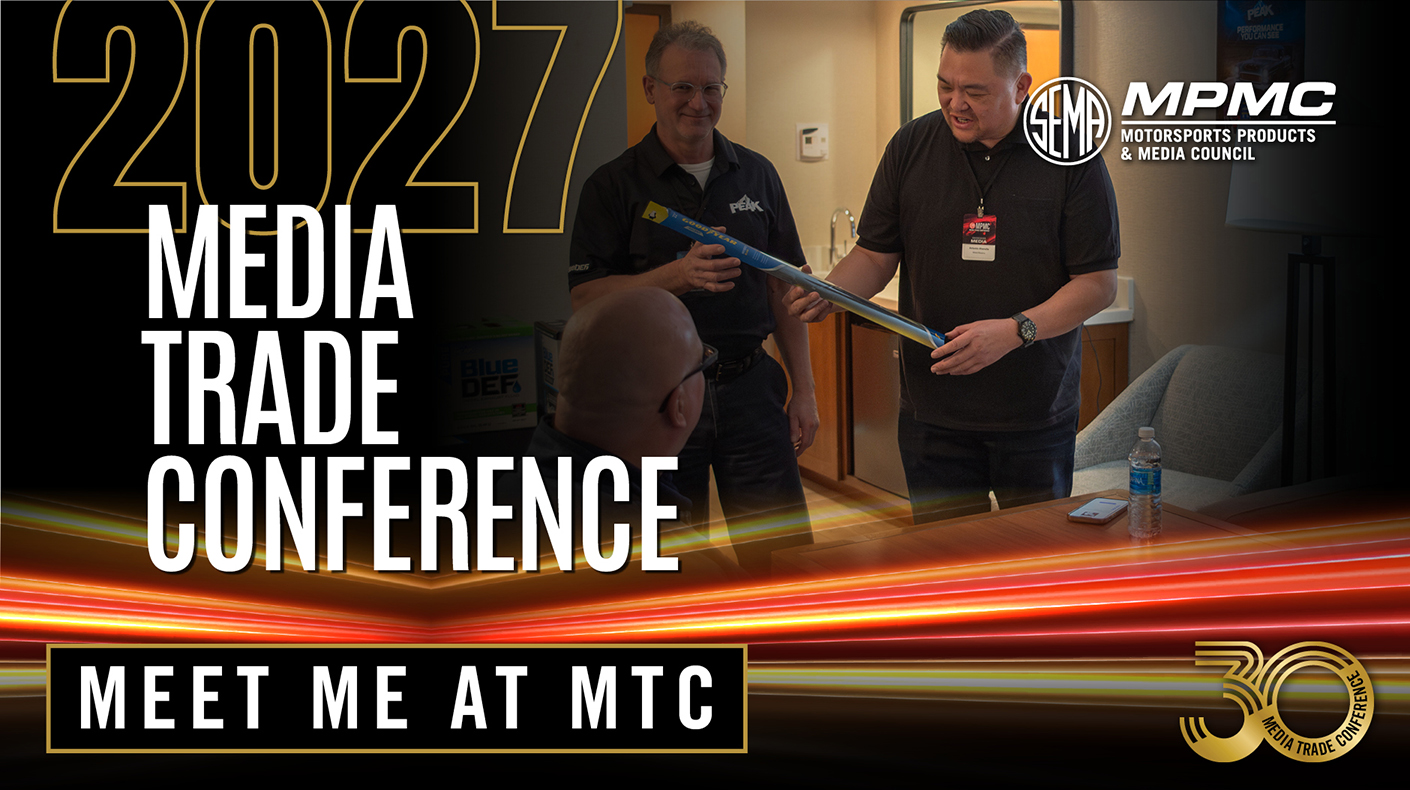
Graphic for SEMA MPMC Media Trade Conference.


The SEMA Motorsports Products & Media Council (MPMC) will celebrate the 30th anniversary of its Media Trade Conference on February 2-4, 2027, in Orlando, Flaorida. Manufacturer registration is open now to MPMC, Truck & Off-Road Alliance (TORA) and Performance Racing Industry (PRI) business members, who can lock in discounted pricing through September 8 at mediatradeconference.com


For 30 years, the MPMC Media Trade Conference has been a powerful venue for motorsports parts manufacturers to build high-quality relationships with the media. Known for its “speed-dating” format, the event enables manufacturers to engage in more than 40 half-hour meetings with journalists, podcasters and content creators throughout the three days, with the goal of establishing valuable partnerships and getting their company news and products in front of the right audience.


"The Media Trade Conference is a high-performance engine for visibility and connection in the motorsports aftermarket," said MPMC Chair Brian Bohlander. "In just three days, companies have the opportunity to engage directly with the voices that shape the industry, turning conversations into coverage and relationships into long-term momentum."


Unlike other events that focus on buyers and sellers, the Media Trade Conference focuses on helping manufacturers find valuable media partnerships without the distractions of a busy trade show floor. It’s where brands drive their narrative, share product demonstrations and discover new communication channels they may not have considered previously.


"Your network is your net worth, and the Media Trade Conference is a great way to meet different people that can help you grow your business," added Bohlander. "That's why this program has been successful for the past 30 years; it puts people in a room together to talk about what they do best and are passionate about––and magic happens."    


The Media Trade Conference will also feature daily networking opportunities to help attendees maximize making connections outside of meetings. Additionally, all attendees are invited to an evening reception featuring an awards ceremony recognizing the 2027 MPMC Robert E. Petersen Media Award winner.


MPMC, TORA and PRI business members can save money by registering before the September 8 early-bird pricing deadline. Media registration will open in October.


To learn more and to register, visit mediatradeconference.com


Tue, 07/21/2026 - 07:22

By Ashley Reyes

SEMA PRO Cup Challenge graphic.


The deadline for automotive restylers to apply for the 2026 PRO Cup Challenge, hosted by the SEMA Professional Restylers Organization (PRO), is Friday, July 24.


Culminating at the 2026 SEMA Show (November 3-6), the PRO Cup Challenge will give six automotive restylers the opportunity to showcase their builds at the PRO booth #50237 in the Las Vegas Convention Center West Hall. The challenge: design and execute an accessory package for a new-model vehicle that can be installed in fewer than 50 hours and with a total cost not to exceed $14,500.


By placing real-world constraints on time and budget, the competition highlights the value of developing repeatable, scalable packages rather than one-off show vehicles. 


The Business Opportunity of a Lifetime


At the Show, a panel of industry expert judges will select the PRO Cup Challenge winner based on vehicle marketability, ease of reproduction, creativity and profitability. Showgoers can also vote for their favorite build, recognizing it with the People's Choice Award. The competition will culminate on Wednesday, where the winner of both awards will be announced at the PRO Booth Happy Hour.


Beyond the recognition earned on the SEMA Show floor, the PRO Cup Challenge serves as a launch pad for business growth and professional connections. Participants gain visibility across SEMA channels, connect with fellow restylers to learn and share best practices and collaborate with accessory manufacturers and dealers on market-ready builds that drive sales and profits.  


Turn Your Creativity into Business Growth––Apply Today


The PRO Cup Challenge is open to current PRO members, as well as SEMA member companies in automotive restyling that are eligible to join PRO. For more information or to apply for the competition, visit here. The deadline to enter is July 24

Tue, 07/21/2026 - 01:59

By SEMA News Editors

Cyril Blais. Image courtesy of FIA.


Formula E Team Principal Cyril Blais has passed away at the age of 43. No cause of death was disclosed.


Blais was most recently the team principal for the Citroën Racing Formula E Team. He also spent time as a team principal, deputy team principal, chief engineer and race engineer with Maserati MSG Racing Formula E. Prior to that, Blais served as the race engineer for Mahindra Racing Formula E, and before that, he held roles within the Formula 2 and Formula 3 series.


The Fédération Internationale de l'Automobile (FIA) released the following announcement on Sunday, July 19:


Monaco Sports Group (MSG), operator of the Citroën Racing Formula E Team, Citroën, Stellantis Motorsports, the FIA and the entire Formula E community are deeply saddened to confirm the passing of Team Principal Cyril Blais.


Our thoughts and deepest condolences are with Cyril's family, friends, loved ones and everyone who had the privilege of knowing and working alongside him.


"We are all so saddened to lose Cyril. Many of the team have known and worked with him for several years. Our thoughts are with his family, friends and colleagues throughout the paddock. Cyril believed so much in this team and we will respect his family's wishes to honour him in the best way we can, by continuing to race in his memory with the exact dedication and passion he instilled in all of us," said Beth Paretta, managing director of the Citroën Racing Formula E Team.


"We are heartbroken by the loss of our colleague and friend, Cyril, and our heartfelt thoughts and condolences are with his family, loved ones and all those who knew him. Cyril's passing is a devastating loss for his family, for MSG, Citroën Racing and for our entire Formula E community. We have lost an extraordinary colleague, and someone many of us were proud to call a friend. The entire Formula E paddock is supporting one another through this incredibly difficult period. To honor his immense contribution to the sport, the Citroën Racing Formula E Team and the wider Formula E community will pay tribute to Cyril’s memory and incredible legacy during this weekend’s Tokyo E-Prix," said Jeff Dodds, the CEO of Formula E.


"It is with deep sadness that we learned of the passing of Cyril Blais, Team Principal of MSG, Citroën Racing’s partner in Formula E. This loss is particularly painful for us, as Cyril played a major role in our Formula E program from the very beginning of our collaboration between MSG and Citroën Racing. During this difficult time, our thoughts are with his family, loved ones and all the colleagues at MSG, Stellantis Motorsport and Citroën who had the privilege of working alongside him," said a joint statement from Xavier Chardon, the CEO of Citroën and Olivier Jansonnie the senior vice president of Stellantis Motorsport.


"The entire motorsport community is deeply saddened by this tragic news, and Cyril will be greatly missed by all who were fortunate to know and work with him. He was dedicated to our sport, earning the respect and admiration of colleagues, competitors and friends across the paddock. His passion, determination and belief in his team were evident in all he did. Beyond his achievements on track, Cyril will be remembered for the integrity he brought to our sport. He made a lasting impression on everyone who worked alongside him, and his absence will be felt deeply. On behalf of myself and the FIA, I extend heartfelt condolences to Cyril’s family, friends and colleagues. Our thoughts are with them during this incredibly difficult time," said Mohammed Ben Sulayem, the president of the FIA.


No further comments will be shared out of respect for the family's privacy and wishes.


Image courtesy of Formula E and the FIA


Thu, 07/16/2026 - 19:53

By SEMA News Editors

Skyline view of the Las Vegas strip.


SEMA Show organizers know travel costs can add up, which is why they've partnered with Las Vegas hotels across every price tier to offer the best nightly rates--plus exclusive perks and a simple, affordable booking process. Book now through onPeak, the SEMA Show's official housing partner, to maximize savings on your SEMA Show accommodations.


Even better: There's still availability, albeit limited, in different hotels* that come out to less than $175 per night, including mandatory hotel fees. These properties include:

  • Luxor ($103 per night average)
  • Circus Circus ($110 per night average)
  • OYO ($160 per night average)
  • Plaza ($166 per night average)
  • Palace Station ($167 per night average)
  • Rio Hotel & Casino ($172 per night average)
  • Horseshoe Las Vegas (formerly Bally's) ($174 per night average)


Hotel reservations for the 2026 SEMA Show, November 3-6, Las Vegas, can be made online at semashow.com/hotel.


Book here button.


The 2026 SEMA Show is set for November 3-6, in Las Vegas. Interested exhibitors can buy a booth and learn more at semashow.com/exhibitor. Attendee and buyer registration is now open online. For more information, visit semashow.com.


SEMA Fest has been confirmed for Friday, November 6, and industry members will get the lowest rate on tickets through the registration portal and Attendee Resource Center. Sign up for updates at semafest.com.  


*Availability and room options are subject to change. Options available as of the publish date on July 8. For the most up-to-date offerings, visit semashow.com/hotel.


Thu, 07/16/2026 - 18:49

By Ashley Reyes

The ABCs of EVs graphic.


As electric vehicles (EVs) represent an increasing share of vehicles on the road, aftermarket and custom builders must understand safety at the system level. Missteps with high-voltage systems are not just warranty issues; they create serious shock, fire and regulatory risks.


During the SEMA Emerging Trends & Technology Network (ETTN) virtual education session, "The ABCs of EV Safety," on Tuesday, August 25, at 12:00 p.m. PDT/3:00 p.m. EDT, a panel of experienced EV leaders will share a grounded, practical framework that improves both safety and credibility with customers. Register here.


Register Here button.


This session will demystify the "ABCs of EV Safety," or critical systems and principles that keep EVs safe to drive, service and build. Attendees will gain a practical, standards-aligned understanding of high-voltage safety fundamentals with real-world guidance for conversations and decisions in aftermarket EV integration and custom builds.


Key learning objectives will focus on safety architecture, risk awareness and how professionals can apply solid engineering and safety practices without getting lost in technical proprietary details.


This session will:

  • Explain core EV safety systems, including high-voltage (HV) interlock loops, isolation monitoring and discharge strategies.
  • Recognize safe component practices, including how covered HV connections and properly rated parts prevent failure.
  • Understand thermal and controller roles, including how temperature management and vehicle control logic maintain safety.
  • Translate standards into shop practice, including connecting safety principles to real aftermarket builds without requiring OEM-level tools or bench references.


Leading the session are speakers Chuck Kinkade, engineering manager at Redline Detection; Mavrick Knoles, president and co-founder at Legacy EV LLC; and Tom Santilli, curriculum specialist at Legacy EV, all of whom bring extensive knowledge and experience in EV workforce development and automotive diagnostic technology and leadership.


Aftermarket professionals working with EVs, particularly shop owners and lead technicians, EV conversion specialists, high-performance builders and fabricators, and technical trainers and educators are encouraged to attend the session.


Register here.


Feed image courtesy of Shutterstock | UKRID