

NEW PRODUCTS
By Mike Imlay
New Products to Fulfill Every Truck, SUV and Jeeping Need
There were hundreds of new truck and SUV-related products introduced in the recent SEMA360 New Products Showcase. The following pages offer a recap of the wide range of items that can grow your business with truck enthusiasts.
Vehicles for Work and Play
Trucks, Jeeps and SUVs—they’re powerful, versatile, utilitarian and, yes, very cool. Those and other qualities have made them American favorites. Not only are they ubiquitous on the roads but also at construction sites, on ranches and farms, off the pavement, and even on overlanding expeditions. In short, trucks get Americans and their gear (or toys) everywhere they want to go, and the aftermarket helps them do it better.
AlphaRexUSA
Nova-Series LED Headlights
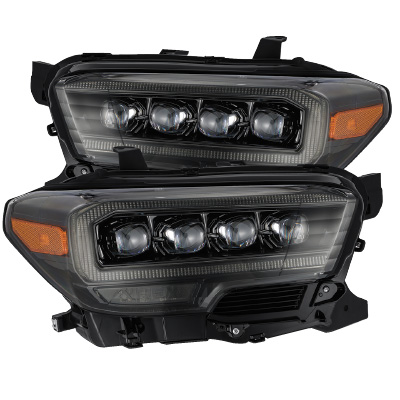
AlphaRex specializes in designing and manufacturing superior automotive aftermarket performance lighting. Its Nova-series patented Ice Cube 3D projector is the core of its exclusive design. Each projector is equipped with an Osram Oslon black flat LED chip to provide maximum light output, both in illumination and projection.
626-407-4771
www.alpharexusa.com
American Autowire
’87–’90 Jeep YJ Classic Update Wiring System
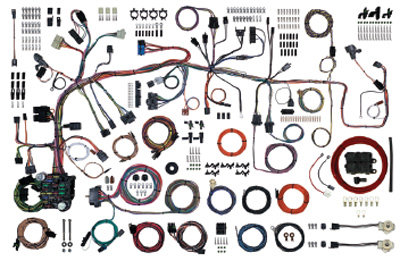
The ’87–’90 Jeep YJ classic update wiring system is a modernized wiring system designed specifically for the ’87–’90 Jeep. It is compatible with most stock or aftermarket components and has plenty of extra circuits for power accessories. Full-color instructions are included.
800-482-9473
www.americanautowire.com/shop
PN: 510742
American Power Brakes
Anaconda
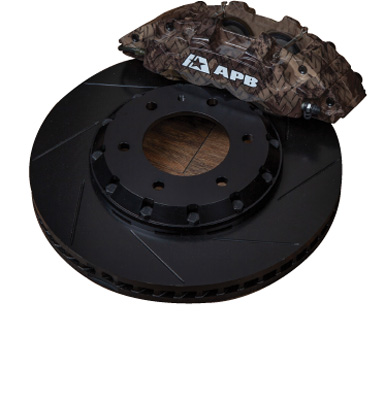
The American Power Brakes Anaconda big-brake kit is featured with a multilayer coating on the calipers and the hardest steel on the rotors. The kit can stand up in any extreme environment, such as a hot desert, a cold ice field or a muddy swamp without any leaking or vibration issues.
626-239-0808
www.americanpowerbrakes.com
PN: Z-PK-AND
American Power Brakes
Speed Fire
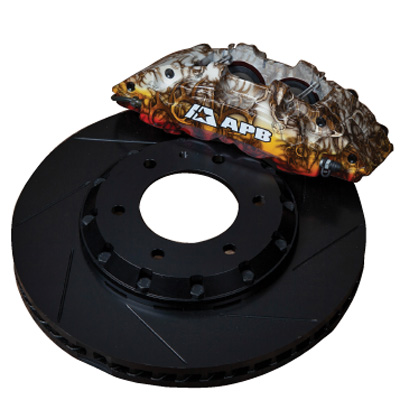
Designed for 4x4 trucks and off-road vehicles. When vehicles equipped with an American Power Brakes Speed Fire big-brake kit, the special coating, pattern and brake pads on the calipers provide heat dissipation to avoid overheating in the long run, especially with a trailer. Drivers will have more confidence when stopping vehicles immediately in any circumstance.
626-239-0808
www.americanpowerbrakes.com
PN: Z-PK-SFB
American Power Brakes
Helios Gold
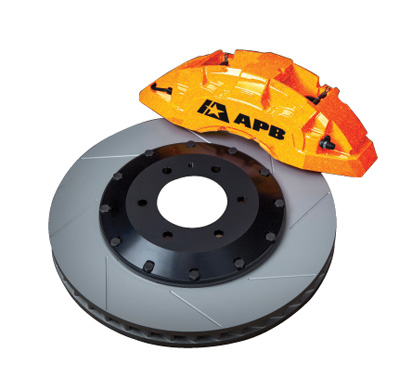
Limited edition for 299 sets. Built for fullsize trucks and SUVs, the two-piece 16-in. slotted rotors with six-piston calipers and the largest one-piece GTS brake pads bring users the strongest friction in this category. The Helios Gold coating on the caliper is not only eye-catching behind the wheel but also has the fastest heat dissipation.
626-239-0808
www.americanpowerbrakes.com
PN: Z-PK-HGB
Any Level Lift LLC
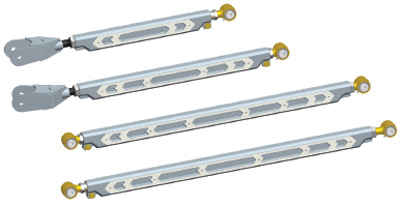
Billet 4Link Bars
518-357-3577
www.anylevellift.com
ARB 4x4 Accessories
Base Rack
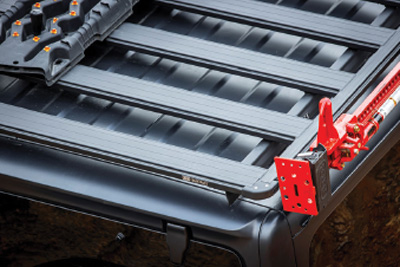
Ultra-sleek and boasting a super-low-profile and lightweight design, the Base Rack provides unmatched simplicity, flexibility and personalization in a roof rack setup. The Base Rack incorporates a revolutionary dovetail mounting system that makes attaching and removing loads and accessories easier, faster and more secure.
425-264-1391
www.arbusa.com
PN: BASE261
ARB 4x4 Accessories
Intensity Solis Lights
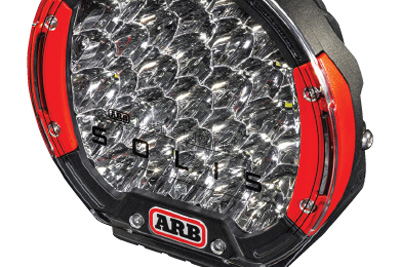
Intensity Solis driving lights are available in a spot or flood beam and come with interchangeable red and black die-cast side bezels. New to the Intensity range is the Solis five-stage dimmability function, while the introduction of a highly tuned single-piece reflector and 65 watts of Osram LED performance make it top of the class in light output.
425-264-1391
www.arbusa.com
PN: SJB36SFKIT
ARB 4x4 Accessories
Air Compressor Pressure-Control Unit
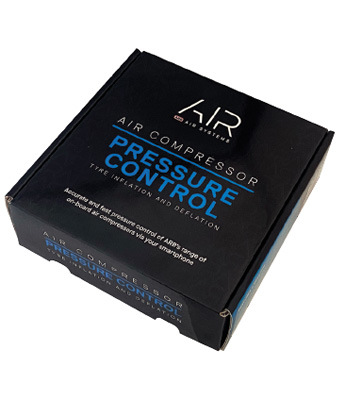
This unit utilizes a smartphone app and a pressure-control regulator valve to conveniently inflate and deflate tires. It provides the ability to set the desired pressure using four customizable preset modes of the user’s choice and receive audible and vibration alerts to indicate when desired pressure is reached. It suits Android and iOS-compatible devices.
425-264-1391
www.arbusa.com
PN: 830001
ARB 4x4 Accessories
Ford Ranger Front Bumper
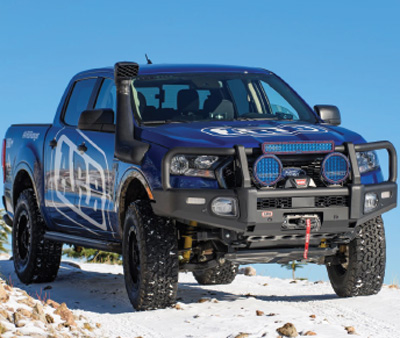
The Summit Bumper for the ’19 Ford Ranger is winch-compatible and sits higher on the vehicle for improved ground clearance. The bumper’s wings are designed to fit around the OE light located in the lower flare to provide enhanced protection. Durable steel construction for maximum protection. Finished in Integrit textured-black powdercoat.
425-264-1391
www.arbusa.com
PN: 3440560K
AutoMeter
’95–’98 Chevy Truck InVision Dash
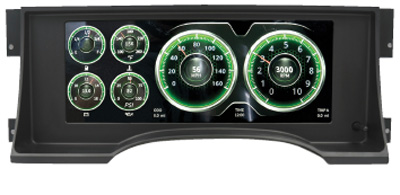
The new InVision digital dash provides a direct-fit solution for ’95–’98 Chevy trucks. Monitor the speedometer, tachometer, fuel level, oil pressure, water temperature and volts all in one place. The InVision digital dash features a 12.3-in. LCD display with three user-selectable displays and a remote-mount joystick for easy programming.
815-895-8141
www.autometer.com
PN: 7006
Baxter Performance
Toyota Cartridge-to-Spin-On Oil Filter Adapter
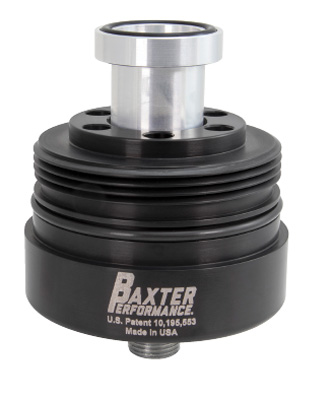
The new Toyota cartridge-to-spin-on oil filter adapter is a universal fitment for most Toyota engines. Fits 2.0L and larger engines; 4.6L and 5.7L engines require the TX-001 extension collar shown (additional cost). It retains more engine oil post filtration for fast oil delivery and pressure at startup. Fits spin-on filters with 3/4-16 threads.
509-448-7951
www.baxterperformanceusa.com
PN: TS-501-BK
Atturo Tire
Trail Blade MTS—Sport Series
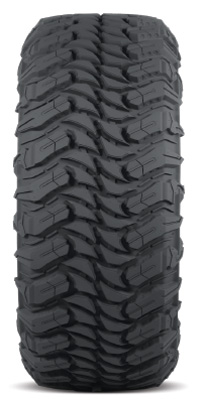
285/45R22 114H XL, 245/65R17 111T XL, LT245/70R17, 119/116S 10 PR, 33x12.50R17 120Q 10 PR, 245/60R18 109H XL, 265/60R18 110S, 265/65R18 116T XL, LT275/65R18 123/120S 10 PR, LT265/70R18 124/121S 10 PR, LT285/60R20 125/122Q 10 PR, 33x12.50R20 121Q 12 PR, 35x12.50R20 126Q 12 PR, 305/35R24 112H XL.
855-632-8031
www.atturo.com
PN: TBMTS-L73D0AFA
Baxter Performance
Toyota Cartridge-to-Remote Oil Filter Adapter
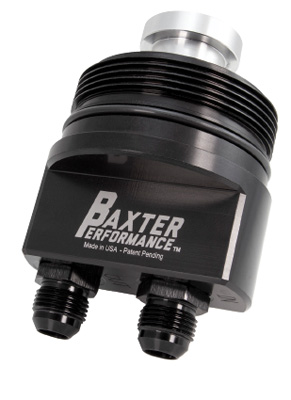
The new Toyota cartridge-to-remote oil filter adapter (multiport) is a universal fitment for most Toyota engines. Fits 2.0L and larger engines; 4.6-Land 5.7L engines require the TX-001 extension collar shown (additional cost}. It retains more engine oil post filtration for fast oil delivery and pressure at startup. -10AN male fittings included.
509-448-7951
www.baxterperformanceusa.com
PN: TR-501-BK
Atturo Tire
Trail Blade ATS—Sport Series
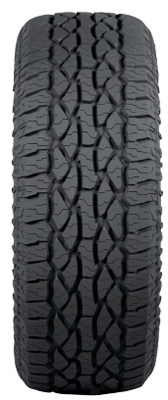
285/45R22 114H XL, 245/65R17 111T XL, LT245/70R17 119/116S 10 PR, 33x12.50R17 120Q 10 PR, 245/60R18 109H XL, 265/60R18 110S, 265/65R18 116T XL, LT275/65R18 123/120S 10 PR, LT265/70R18 124/121S 10 PR, LT285/60R20 125/122Q 10 PR, 33x12.50R20 121Q 12 PR, 35x12.50R20 126Q 12 PR, 305/35R24 112H XL.
855-632-8031
www.atturo.com
PN: TBATS-P9HH0AFA
Baxter Performance
MOPAR Cartridge-to-Spin-On Oil Filter Adapter
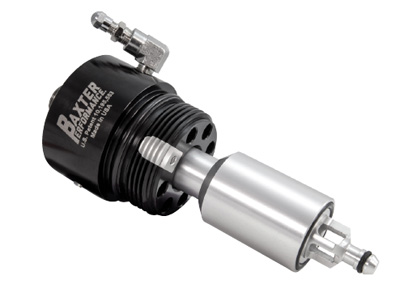
The new MOPAR cartridge-to-spin-on oil filter adapter fits ’14+ 3.6L Pentastar engines. It provides faster oil pressure at startup by keeping the upper oil system flooded. The adapter contains a full-flow check valve and a unique threaded locking mechanism. Uses a Schrader valve for oil evacuation when removing a spin-on filter. Made and patented in the U.S.A.
509-448-7951
www.baxterperformanceusa.com
PN: MS-201-BK
Baxter Performance
MOPAR Cartridge-to-Remote Oil Filter Adapter
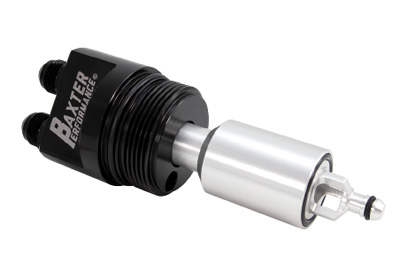
The new MOPAR Cartridge-to-Remote Oil Filter Adapter fits ’14+ 3.6L Pentastar engines. It provides faster oil pressure at startup and the ability to relocate/convert to spin-on-style oil filter mounts. It also allows the ability to add an oil cooler or accumulator. All seals made of Viton. -10AN male fittings included. Made from 6061-T6 billet aluminum.
509-448-7951
www.baxterperformanceusa.com
PN: MR-201-BK
Baxter Performance
Ford Cartridge-to-Spin-On Oil Filter Adapter
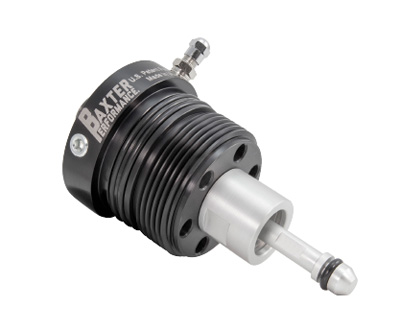
The new Ford cartridge-to-spin-on oil filter adapter fits ’15+ 2.7L EcoBoost engines. It provides faster oil pressure at startup by keeping the upper oil system flooded. The adapter contains a full-flow check valve and utilizes a Schrader valve for oil evacuation when
removing a spin-on filter. Accepts oil filters with 22x1.5 treads. Viton seals. Made in the U.S.A.
509-448-7951
www.baxterperformanceusa.com
PN: FS-101-BK
Baxter Performance
Ford Cartridge-to-Remote Oil Filter Adapter
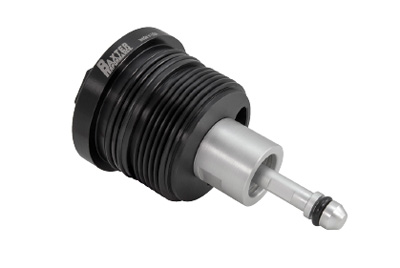
The new Ford cartridge-to-remote oil filter adapter fits ’15+ 2.7 EcoBoost engines. It provides faster oil pressure at startup and the ability to relocate/convert to remote spin-on style oil filter mounts. It also allows the ability to add an oil cooler or accumulator. #12 ports. All seals made of Viton. Machined from 6061-T6 billet aluminum. Made in the U.S.A.
509-448-7951
www.baxterperformanceusa.com
PN: FR-101-BK
With travel and event restrictions still in place, it seems as though the off-road market will not slow down anytime soon. As a company, we’re ready to stay on top of an exciting year of vehicle releases with the Ford Bronco, the Ram TRX and teasers of a third-generation Raptor. The growing popularity of overlanding has also become hard to ignore, even prior to the restrictions. We have a lot of new product launches planned to cover those markets in 2021.—Dominick Sandri, Marketing Director, Addictive Desert Designs
Baxter Performance
Inverted Remote Oil Filter Mount
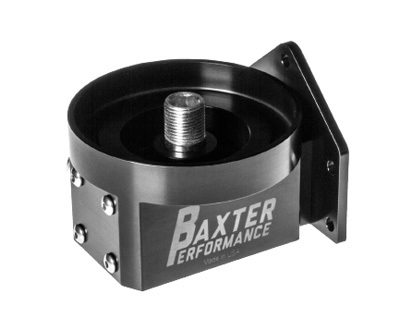
The inverted remote oil filter mount with built-in oil retaining well contains excess oil upon filter removal. It accepts oil filters with 3/4-16 treads. Oil connections can be configured ports left, ports right or ports bottom. The mounting bracket can be rotated in 90-degree increments for mounting flexibility. -10AN male fittings included. Made in the U.S.A.
509-448-7951
www.baxterperformanceusa.com
PN: RI-101-BK
Baxter Performance
Inverted Remote Oil Filter Mount
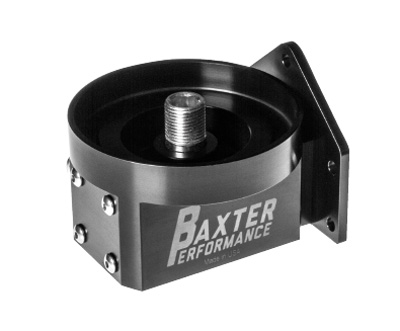
The inverted remote oil filter mount with built-in oil retaining well contains excess oil upon filter removal. It accepts oil filters with 3/4-16 treads. Oil connections can be configured ports left, ports right or ports bottom. The mounting bracket can be rotated in 90-degree increments for mounting flexibility. -10AN male fittings included. Made in the U.S.A.
509-448-7951
www.baxterperformanceusa.com
PN: RI-101-BK
Baxter Performance
Subaru Oil-Retaining Spin-On Adapter
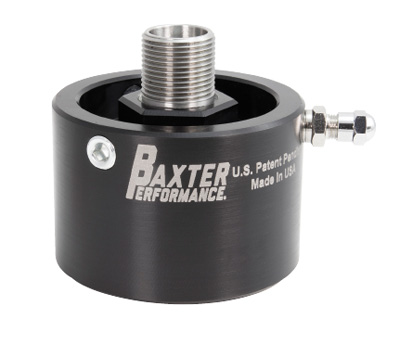
The new spin-on Subaru Oil Filter Adapter for top-mounted oil filters retains oil in the filter for faster oil delivery and pressure at engine startup. The patent-pending full-flow check valve prevents oil from draining from the output port of the oil filter. All seals made of Viton. Adapter body machined from 6061-T6 billet aluminum. Made in the U.S.A.
509-448-7951
www.baxterperformanceusa.com
PN: SS-101-BK
BD Diesel
Proforce Torque Converter for Ford 6R140
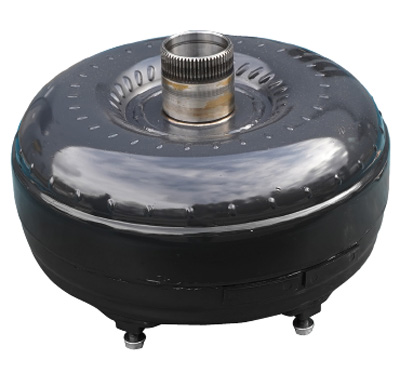
The 6R140 is designed for stock and modified 6.7L Power Strokes. The dual-surface torque converter has been proven up to 600 hp and suited for performance-street and towing applications. Fully remanufactured with new bearings, clutch friction and steel. Features a furnace-brazed pump and turbine and an upgraded billet-steel clutch reaction plate.
800-887-5030
www.bddiesel.com
PN: 1030239
BD Diesel
Ford 6R140 Flexplate
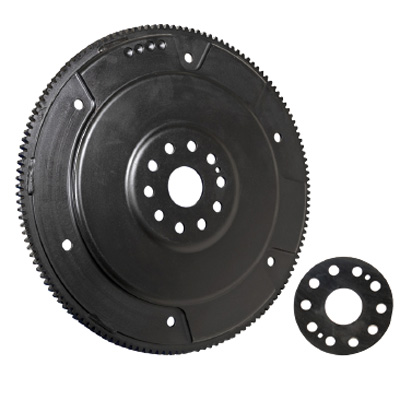
The 6R140 Flexplate is CNC machined out of 1.5 times thicker-than-stock quench and tempered 100,000-psi steel. Incorporates an integrated counterweight that is then balanced to tighter tolerances than OE specifications. Black-oxide-coated to resist corrosion. Will fit any OEM or aftermarket torque converter.
800-887-5030
www.bddiesel.com
PN: 1041245
BD Diesel
Ford Track Bar Kit for Ford ’17–’20 F-250/F-350 4WDs
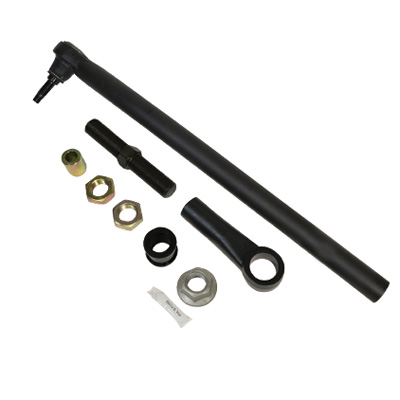
This black Cerakote-finished fully adjustable track bar will accommodate pickups lifted up to 6 in., and there is no need to remove the bar for adjustments. It allows for correct axle alignment on lifted trucks so they drive straighter with less wander and more positive steering feel. It comes with a long-lasting, easily serviceable polyurethane bushing.
800-887-5030
www.bddiesel.com
PN: 1032111
BD Diesel
Dodge 68RFE/Aisin AS69RC Cooler Bypass Delete
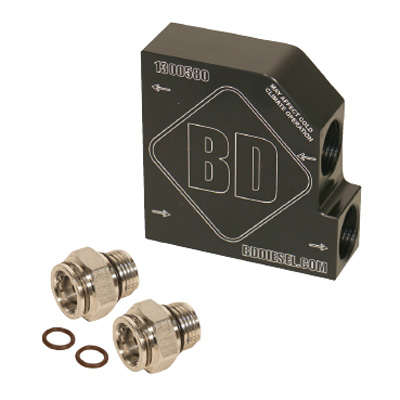
Debris in the 68RFE and Aisin AS69RC stock cooler bypass valve can cause jamming of the internal valve, keeping it in recirculation mode and causing the transmission temperature to rise, which can lead to overheating and premature transmission failure. The cooler bypass delete ensures 100% fluid flow, keeping the trans cooler operational all the time.
800-887-5030
www.bddiesel.com
PN: 1061528
BD Diesel
Ford 6.7L Power Stroke Retrofit Turbo Replacement Kit
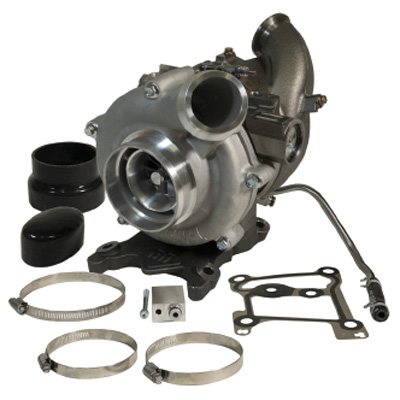
Replaces the problematic and small GT32 single sequential turbocharger on early-model Ford ’11–’14 6.7L Power Strokes by replacing it with a larger GT37 unit. Everything needed is included to drop right in place of the old unit.
800-887-5030
www.bddiesel.com
PN: 1045824
BD Diesel
Dodge/Ram 68RFE Build-It Transmission Kits
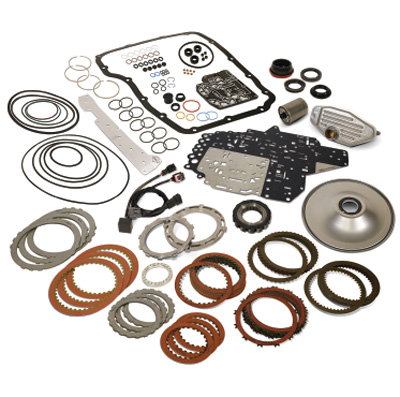
Upgraded 68RFE transmission overhaul kits and components with new stiffer billet intermediate and overdrive/rev reaction plates include the basic rebuild parts and gaskets. They also have added touches that range from stock horsepower up to a Stage 4 master kit—which is pretty well everything BD Diesel puts in its own 68RFE transmission rebuilds.
800-887-5030
www.bddiesel.com
PN: 106
BD Diesel
Duramax Venom Lift Pump Kit
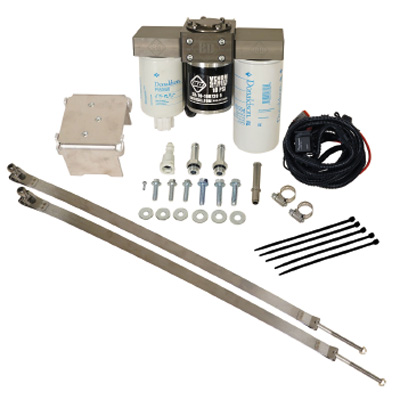
The ball-bearing rotating assembly is used to deliver up to 165 gph, which is enough to support 900 hp on Chevy Duramax engines. The low-profile pump includes both a water separator and a 3-micron fuel filter, and the pump head is made from military-grade hard-coat billet. The regulated fuel pressure diaphragm offers stable and consistent regulation.
800-887-5030
www.bddiesel.com
PN: 1050322
BD Diesel
Dodge Ram ProTect68 ’19 68RFE Transmission Upgrade Kits
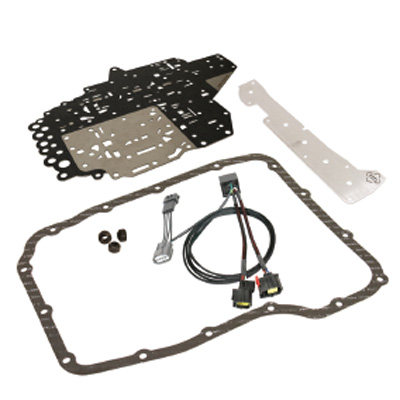
Delivers 150% of the torque holding force. Custom-bonded valve body separator plate and gaskets substantially reduces cross leaks. Heavy-duty accumulator plate to prevent blowout. Electronic pressure control module dynamically adjusts pressures based on turbo boost/engine load and delivers up to 250 psi. Also available without controller.
800-887-5030
www.bddiesel.com
PN: 1030363
BD Diesel
Dodge Ram ’10–’12 Swaybar End Links
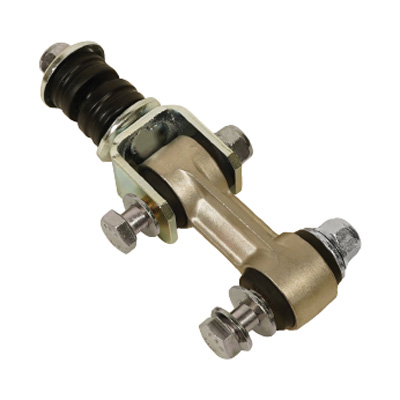
Dual-pivot design sway bar end links for ’10–’12 4WD 2500/3500 diesels allow for greater amount of articulation and less stress. Long-life urethane bushing design allows for greater flex without breaking and will not pound out or seize due to the elements. Components are designed to be easily serviceable, and wearing items are low cost to replace.
800-887-5030
www.bddiesel.com
|PN: 1032051
Once the new Ford Bronco reaches the market, there will be a scramble to get products developed for the new platform. As this platform directly competes with the Jeep Wrangler, it is a double-edged sword. On one hand, it allows us to expand our product offerings to a new platform. At the same time, we will have to understand how this will affect Jeep Wrangler sales and, therefore, our sales to that platform. With Jeep also bringing out more variations of especially the Wrangler, the aftermarket needs to adapt to changing consumer demands.—Henk van Dongen, Director of Marketing, Jeep & Off Road Accessories, Truck Hero Inc.
BD Diesel
Chevy/GMC Steering Upgrade Kit
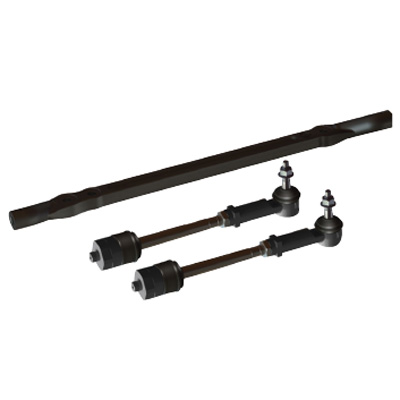
Upgraded steering kit for ’01–’10 GMC HD pickups with forged I-beam center link and heavy-duty tie rod package. Center link is 30% stronger than the OEM bar and creates a strong base for the upgraded tie rods to be attached. Tie rods feature 1.5 times larger ball studs and tie rod shaft for increased strength. Kit reduces flex in the steering system.
800-887-5030
www.bddiesel.com
PN: 1032150
BD Diesel
Chevy/GMC Tie Rod Upgrade Kit
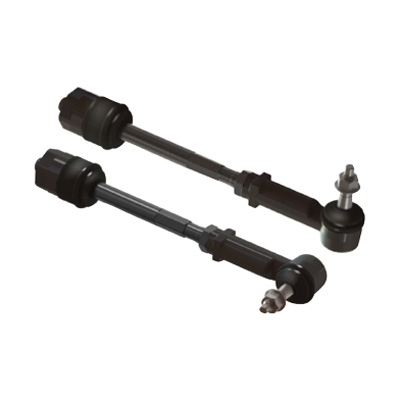
Upgraded tie rods for ’01–’10 Chevy/GMC HD pickups feature 1.5 times larger ball studs and tie rod shaft for increased strength, reducing tie rod flex. Greaseable ball joints with sintered bearings allow for better load holding and increased life.
800-887-5030
www.bddiesel.com
PN: 1032151
Bilstein Shock Absorbers
B8 8100 for ’20 Jeep Gladiators
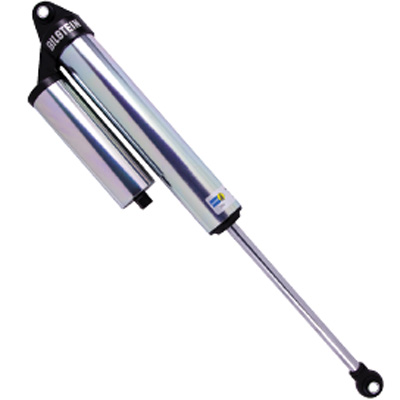
Constructed from aerospace-quality billet components, the large-bore 60mm direct-fit shock offers a high oil volume for extreme cooling and durability. The 60mm piston and velocity-sensitive digressive valving offer comfort and control in all conditions. Tuned for each specific truck/SUV application. Remote or piggyback reservoir design for easy installation.
858-386-5900
www.bilstein.com
PN: 25-312522
Beachcomber Offroad
The Stowaway Door
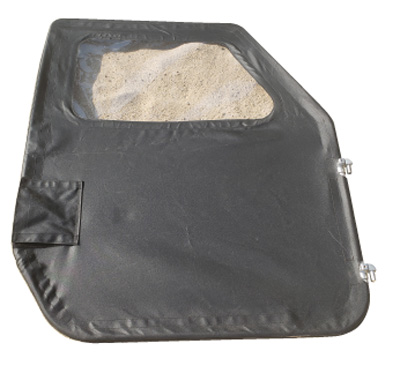
The Stowaway Door is said to be the only portable automotive door on the market. Originally created for the Jeep Wrangler and Ford Bronco, the full door protects the driver and passenger from inclement weather. When not in use, the door folds to fit under the rear seat or anywhere else a small tent can be stored inside a Jeep.
617-312-0830
www.beachcomber-offroad.myshopify.com
Bilstein Shock Absorbers
B8 8100 Bypass for ’18–’20 Jeep Wranglers
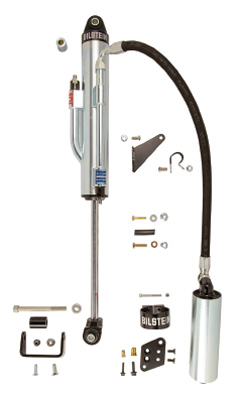
Bilstein B8 8100 bypass shocks offer position-sensitive damping, with independent external adjustments for rebound and compression damping. B8 8100 shocks are a direct fit and provide outstanding ride quality with adjustment provisions for varying load requirements.
858-386-5900
www.bilstein.com
PN: 25-287813
Bilstein Shock Absorbers
B8 6112 for ’19–’20 Ford Rangers
Bilstein B8 6112 suspension kits optimize on- and off-road capabilities with a 60mm piston for increased damping control. Includes two shocks, matched springs and billet spring perches.
858-386-5900
www.bilstein.com
PN: 47-294301
Bilstein Shock Absorbers
B8 8112 Zone Control CR for ’07–’20 Toyota Tundras
Bilstein B8 8112 Zone Control CR is a position-sensitive, direct-fit coil-over kit offering three compression zones and two rebound zones controlled by three independent internal working pistons. B8 8112 shocks provide unparalleled comfort combined with maximum control over large events.
858-386-5900
www.bilstein.com
PN: 41-284544
Bilstein Shock Absorbers
B8 8100 Bypass for ’07–’20 Toyota Tundras
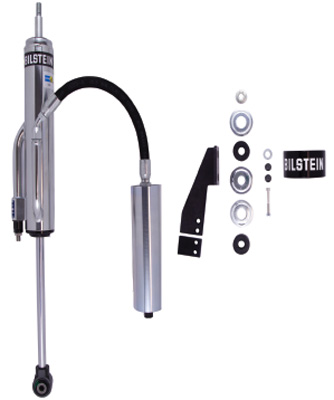
Bilstein B8 8100 bypass shocks offer position-sensitive damping, with independent external adjustments for rebound and compression damping. B8 8100 shocks are direct fit and provide outstanding ride quality with adjustment provisions for varying load requirements.
858-386-5900
www.bilstein.com
PN: 25-284539
Bilstein Shock Absorbers
B8 6112 for ’19–’20 Ram 1500s
Bilstein B8 6112 suspension kits optimize on- and off-road capabilities with a 60mm piston for increased damping control. Includes two shocks, matched springs and billet spring perches.
858-386-5900
www.bilstein.com
PN: 47-293540
Bilstein Shock Absorbers
B8 6112 for ’19–’20 Chevrolet Silverado 1500s
Bilstein B8 6112 suspension kits optimize on- and off-road capabilities with a 60mm piston for increased damping control. Includes two shocks, matched springs and billet spring perches.
858-386-5900
www.bilstein.com
PN: 47-293557
Black Armour Bed Mats
Chevrolet Silverado Black Armour Bed Mat
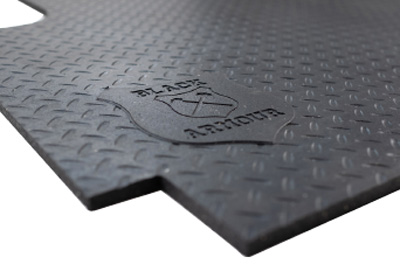
Precision engineered with NWR’s exclusive vulcanized technology, Black Armour offers 100% protection, shielding the truck bed
from scratches and dents from the most demanding cargo. Black Armour bed mats are made from 1/2-in.-thick 100%-recycled rubber, which will not harbor mold or mildew. The mat can handle anything the user throws in a truck.
604-859-2002
www.blackarmourbedmats.com
PN: 1305474
Black Armour Bed Mats
Jeep Gladiator Custom-Cut Rubber Bed Mat
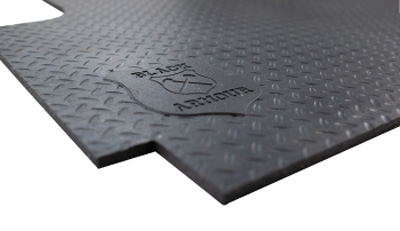
Precision engineered with NWR’s exclusive vulcanized technology, Black Armour offers 100% protection, shielding the truck bed from scratches and dents from the most demanding cargo. Black Armour bed mats are made from 1/2-in.-thick 100%-recycled rubber, which will not harbor mold or mildew. The mat can handle anything the user throws in a Jeep.
604-859-2002
www.blackarmourbedmats.com
PN: 1305497
COVID-19 significantly impacted the overland and camping sector in 2020 due to a shift in consumer travel habits. As people sought safe alternatives to travel and explore, we have seen an increase in demand for vehicle camping tents that allow them to do so. Consumers are looking for products at reasonable price points with ease of use and durability that will provide them with the freedom to travel while social distancing during the ongoing pandemic. Vehicle tents are providing a solution to many consumers’ urge to travel, and we expect to see continued growth in the overlanding aftermarket in 2021.—Jamie McAvoy, Sales and Marketing Manager, Napier
Black Armour Bed Mats
Ford F-150 Black Armour Bed Mat
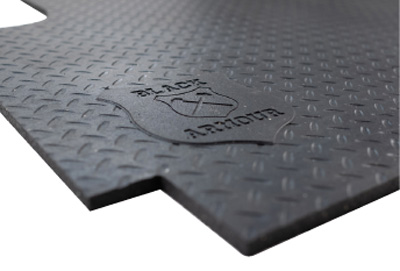
Precision engineered with NWR’s exclusive vulcanized technology, Black Armour offers 100% protection, shielding the truck bed from scratches and dents from the most demanding cargo. Black Armour bed mats are made from 1/2-in.-thick 100%-recycled rubber, which will not harbor mold or mildew. The mat can handle anything the user throws in a truck.
604-859-2002
www.blackarmourbedmats.com
PN: 1305438
Black Armour Bed Mats
Ram 1500 Black Armour Bed Mat
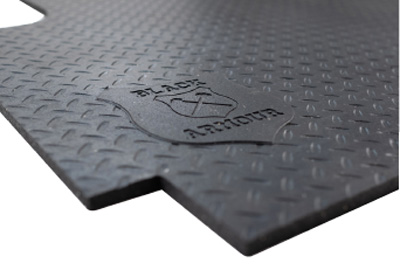
Precision engineered with NWR’s exclusive vulcanized technology, Black Armour offers 100% protection, shielding the truck bed from scratches and dents from the most demanding cargo. Black Armour bed mats are made from 1/2-in.-thick 100%-recycled rubber, which will not harbor mold or mildew. The mat can handle anything the user throws in a truck.
604-859-2002
www.blackarmourbedmats.com
PN: 1305475
Body Armor 4x4
Sky Ridge Pike Annex Room
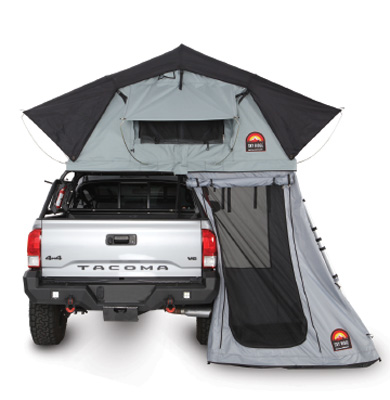
The Sky Ridge Pike annex room adds nearly 33 sq. ft. of downstairs living space to the Pike rooftop tent and attaches to the tent base using heavy-duty, weather-resistant zippers. It creates a convenient room for changing clothes, removing muddy boots, storing gear, cooking, lounging or additional sleeping space.
626-363-1660
www.bodyarmor4x4.com
PN: 20015
Body Armor 4x4
Sky Ridge Pike Two-Person Tent
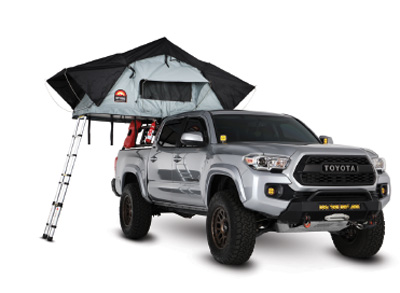
Offers 28 sq. ft. of comfortable interior accommodations. Easily mounts to any truck, SUV or trailer with a roof rack or bed rack using the included universal mounting brackets. The tent walls and roof are manufactured with 280-gsm ripstop reinforced polyester/cotton canvas, polyurethane coated for 2,000mm waterproofing.
626-363-1660
www.bodyarmor4x4.com
PN: 20010
Body Armor 4x4
Sky Ridge Pike Awning
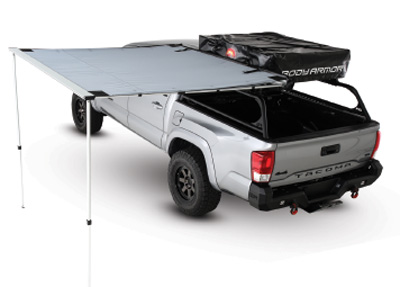
The Sky Ridge Pike awning provides 43 sq. ft. of covered space for shade, lounging, cooking, etc. The awning is made of 4420D ripstop polyester oxford fabric and is polyurethane coated for 2,500mm waterproofing. The heavy-duty travel cover is made of sturdy, UV-resistant 680GSM/1200D PVC-coated tarpaulin material with heavy-duty zippers.
626-363-1660
www.bodyarmor4x4.com
PN: 20020
BOOSTane, Octane Engineering
BOOSTane Shot
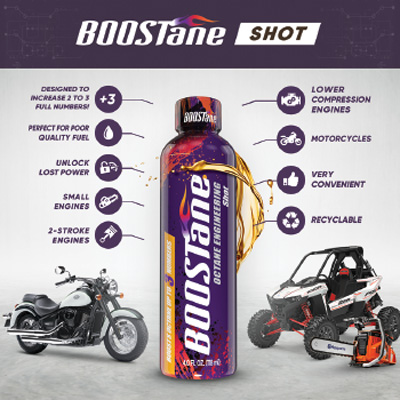
BOOSTane Shot simplifies real octane boosting. The 4-oz. Shot formulation enables a customer increase octane three full numbers in a 16-gal. tank of gas and two full numbers for 21 gal. Just pour and go. Perfect for running hard off-road, when fuel quality can be an issue. Users can feel confident that they can crawl out of whatever with the
right fuel.
855-GETS-110
www.boostane.com
PN: OCT04SHOT10
BuiltRight Industries
Tech Pouches Splash-Proof MOLLE Bags
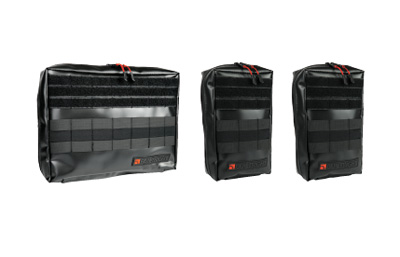
Durable, splash-proof construction means these are right at home in a truck or on a pack, and the genuine YKK zippers mean users will avoid the headache of a jammed zipper. Each pouch opens 180º for easy access to contents. The large pouch features four internal mesh compartments, and the small pouch features two cinch-closure mesh pockets.
203-546-8981
www.builtrightind.com
PN: 105101
Brandmotion
Fullvue Rear Camera Mirror for ’18–’20 Jeep Wrangler JLs
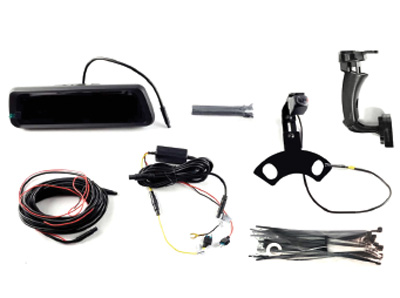
Brandmotion’s latest Fullvue is here to reset the driving experience by helping users see what they’ve never seen before. This new safety and convenience aid replaces a current rearview mirror with a full HD video screen. It improves on the mirror by providing a crisp view of what the user needs to see with no obstructions of passengers or cargo.
734-619-1250
www.brandmotion.com
PN: FVMR-8876V2
BuiltRight Industries
Bedside Rack System for ’05–’21 Toyota Tacomas
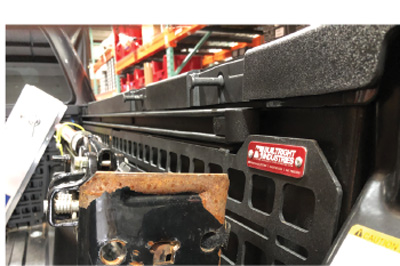
The BuiltRight Industries bedside rack system features a series of steel panels designed to mount to the inside wall of the Tacoma bed. The panels mount below the utility rail and provide a large universal MOLLE and slotted surface for clamps, straps, tools and equipment. Keeps gear out of the way but easily accessible.
203-546-8981
www.builtrightind.com
PN: 102080
BuiltRight Industries
Bedside Rack System for ’09–’19 Rams
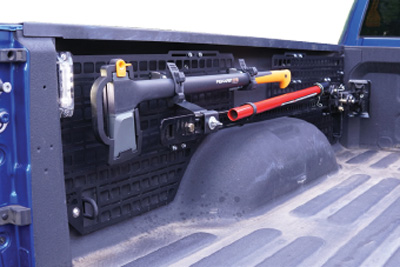
Just because users have a lot of gear doesn’t mean they have to have a lot of mess. While standard storage might not cut it, the BuiltRight bedside rack system can. Using factory mounting points, the panels install to keep gear organized, accessible and secure. They work with all MOLLE/PALS accessories in addition to many clamps and straps.
203-546-8981
www.builtrightind.com
PN: 102077
BuiltRight Industries
Bedside Rack System for ’07–’19 Chevrolet Silverados/GMC Sierras
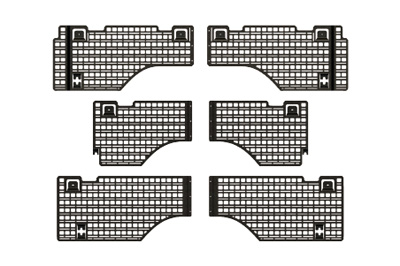
Just because users have a lot of gear doesn’t mean they have to have a lot of mess. While standard storage might not cut it, the BuiltRight bedside rack system can. Using factory mounting points, the panels install to keep gear organized, accessible and secure. They work with all MOLLE/PALS accessories in addition to many clamps and straps.
203-546-8981
www.builtrightind.com
PN: 102040
BuiltRight Industries
Bedside Rack System for ’19–’21 Rams
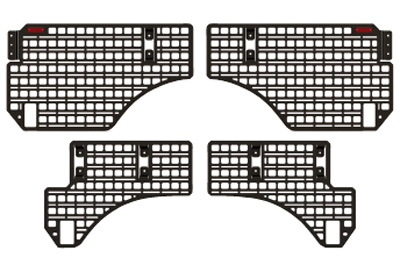
Just because users have a lot of gear doesn’t mean they have to have a lot of mess. While standard storage might not cut it, the BuiltRight bedside rack system can. Using factory mounting points, the panels install to keep gear organized, accessible and secure. They work with all MOLLE/PALS accessories in addition to many clamps and straps.
203-546-8981
www.builtrightind.com
PN: 102076
“In 2020, the truck/Jeep/off-road segments saw tremendous growth. A huge part was due to COVID-19 restrictions leading to a resurgence in the outdoor adventure market in which people were able to find their own way of social distancing by exploring the outdoors. During the beginning of the pandemic we launched our new Open Country A/T III with uncertain expectation; however, the outdoor enthusiast market created a huge upswing in demand for off-road products which we expect to continue into 2021.”—Anthony Lee, Services Manager, Toyo Tire U.S.A. Corp.
BuiltRight Industries
Bedside Rack System for ’19–’21 Ford Rangers
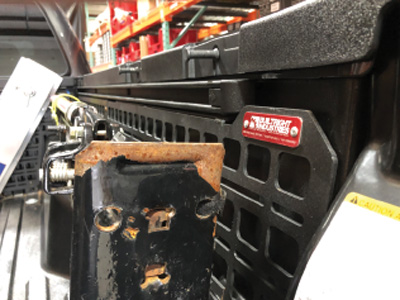
Just because users have a lot of gear doesn’t mean they have to have a lot of mess. While standard storage might not cut it, the BuiltRight bedside rack system can. Using factory mounting points, the panels install to keep gear organized, accessible and secure. They work with all MOLLE/PALS accessories in addition to many clamps and straps.
203-546-8981
www.builtrightind.com
PN: 102090
BuiltRight Industries
MOLLE Nuts 20-Piece Panel Hardware Kit
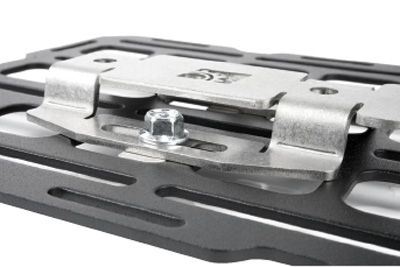
With the growing number of MOLLE panel applications available, securing gear to them easily has become increasingly important. These MOLLE Nuts fit into the MOLLE/PALS openings in the BuiltRight Industries panels and offer a threaded feature that can be adjusted side to side. They also eliminate the need to reach behind the panel with a tool.
203-546-8981
www.builtrightind.com
PN: 201023
BuiltRight Industries
Tech Plates Universal MOLLE Panels
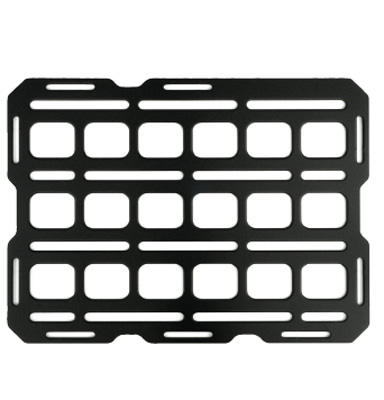
Meet the BuiltRight tech plates. These MOLLE panels are precision manufactured using 1/8-in. steel with a durable textured black powdercoated finish. Whether mounted to the utility bed of a truck, inside a center console, on the wall of a garage or the cargo area of a police cruiser, users can be confident that they’re ready for duty.
203-546-8981
www.builtrightind.com
PN: 201011
BuiltRight Industries
Bedside Rack System for ’19–’21 Chevrolet Silverado/GMC Sierra
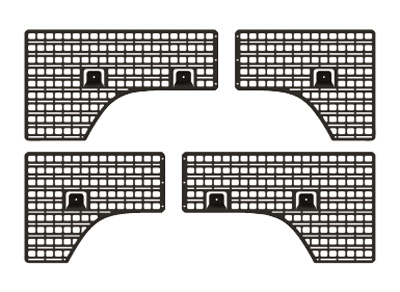
Just because users have a lot of gear doesn’t mean they have to have a lot of mess. While standard storage might not cut it, the BuiltRight bedside rack system can. Using factory mounting points, the panels install to keep gear organized, accessible and secure. They work with all MOLLE/PALS accessories in addition to many clamps and straps.
203-546-8981
www.builtrightind.com
PN: 102050
Bully Dog & SCT Performance
Bully Dog GT
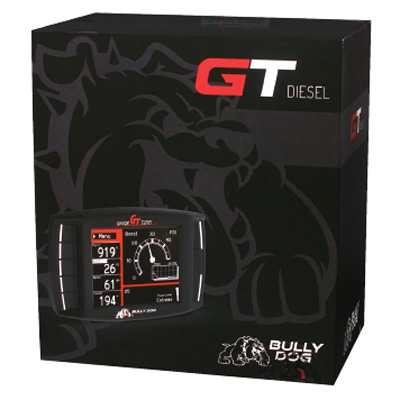
GT tuners unlock more horsepower and torque to meet the unique demands users put on their vehicles. With preloaded tuning, they can plug and play. The built-in driving coach feature helps improve driving habits for better fuel mileage.
940-783-9915
www.bullydog.com
PN: 404, 104, 041, 740, 420
Canadian Load Divider Dollies Inc.
Weight Distribution Trailer
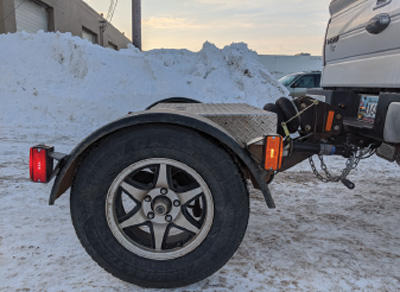
This product is a single-axle weight-distribution trailer that maintains axle weights on light-duty vehicles for safety and compliance of federal and local laws.
888-477-5805
www.cldd.ca
PN: WDT2000
Chevrolet
Silverado LD Steel Leaf-Spring Kit
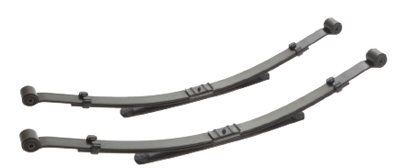
Enables the installation of a Chevrolet Performance 2-in. lift kit (sold separately) on model-year ’19+ Silverado 1500 trucks equipped with composite overload leaf springs. Offers a direct replacement for the composite leaf-spring pack, replacing it with a full steel leaf-spring pack. Expert installation by an authorized GM dealer is recommended.
866-694-6546
www.chevrolet.com/performance
PN: 84768245
Carzoom
Headlights
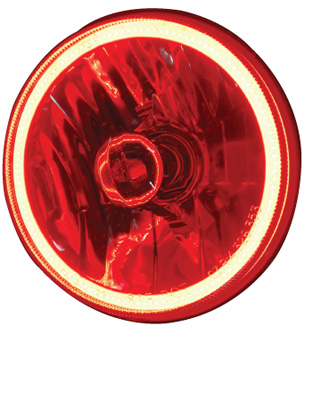
Seven-inch round metal stock headlights, 7x6-in. square metal stock headlights, 53/4-in. round metal stock headlights, 4x6-in. metal stock headlights and halo-ring headlights for automobile and motorcycle use.
646-204-7150
www.icarzoom.com
Chevrolet
Colorado Front Leveling Kit
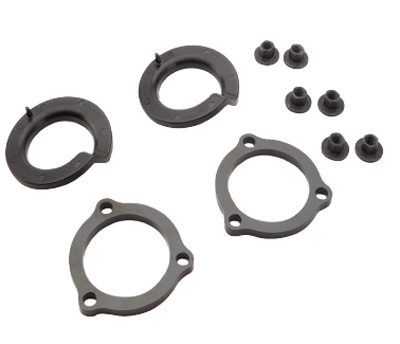
Tested for durability, efficiency and integration, this front leveling kit increases ride height by up to 1 in. to level a vehicle’s stance, providing a greater approach angle for increased clearance over off-road obstacles. Direct bolt-on for ’15-and-newer Chevrolet Colorado models and does not void the new-vehicle limited warranty.
866-694-6546
www.chevrolet.com/performance
PN: 84608728
Circuit Board Medics
’15–’20 GMC Yukon/Denali Taillight Repair
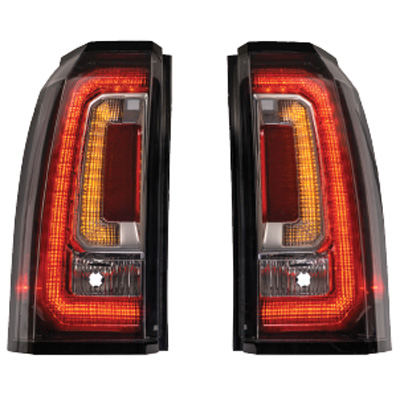
Rebuilt ’15–’20 GMC Yukon/Denali taillight. These units have been repaired to solve the internal electronic weakness that causes malfunction and failure.
800-547-2049
Website: www.circuitboardmedics.com/2015-2020-gmc-yukon-denali-tail-l
PN: R53-1G2232425
Circuit Board Medics
’15–’20 Ford F-150 Instrument Cluster Repair
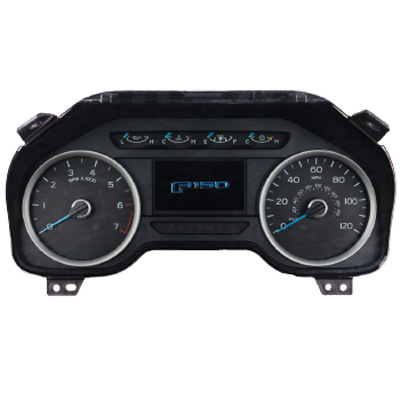
This repair service replaces a faulty or failing 4.2-in. information screen on the ’15–’20 Ford F-150 instrument cluster.
800-547-2049
www.circuitboardmedics.com
Circuit Board Medics
’06–’09 Dodge Ram TIPM Exchange
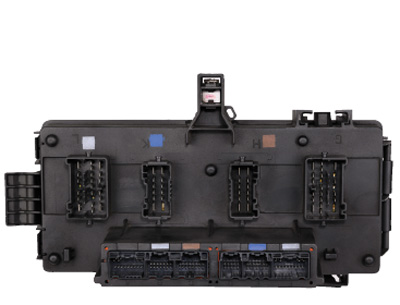
This Dodge Ram totally integrated power module (TIPM) exchange service is for a failing or faulty TIPM for 1500/2500/3500/4500/5500 models. That includes model years ’06, ’07, ’08 and ’09.
800-547-2049
www.circuitboardmedics.com/2006-2009-dodge-ram-tipm-exchange
PN: E76-1B0TX0000
At McLeod, the truck market has been an area where we see much room for growth. Truck owners have so many different style of activities they participate in. Seeing a diesel truck at a dragstrip is now a norm. Towing use is ever increasing as RV sales have grown tremendously during the past year. McLeod has added performance clutches, automatic transmission rebuild kits, and other parts for both gas and diesel trucks. The key to being successful as a reseller in this market is education about the products you carry and who you are selling them to.—Bob Scheid, Director of Business Development, McLeod Racing LLC & FTI Converters LLC
Cognito Motorsports Inc.
3-in. Performance Leveling Kit for ’14–’20 Dodge Ram 2500 4WDs
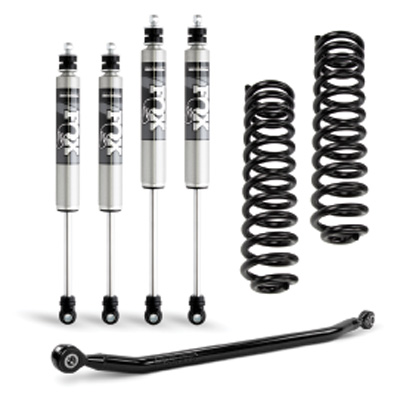
The leveling kit yields 3 in. of front lift and levels the vehicle front to rear. It is a direct bolt-on installation and includes progressive-rate coil springs, an HD fixed-length track bar and Fox Performance-series 2.0 monotube IFP front and rear shocks. It takes six hours of DIY installation time and is proudly made in the U.S.A.
866-426-4648
www.cognitomotorsports.com
PN: 115-P0944
Circuit Board Medics
’07–’18 Dodge Ram 6.7l Turbo With Actuator
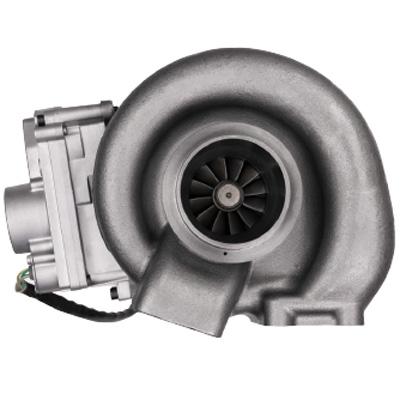
New turbo manufactured by Pure Power Technologies with new Holset actuator.
800-547-2049
www.circuitboardmedics.com
Cognito Motorsports Inc.
4-in. Performance Lift Kit With Fox PS 2.0 for ’20 GM 2500/3500 2WD/4WD Trucks
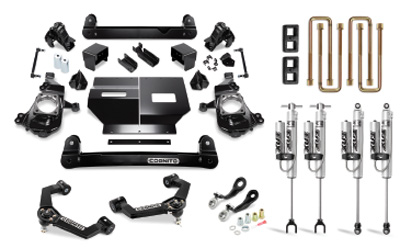
Includes 4-in. front lift components, SM-series ball-joint upper control arms, a patented pitman and idler-arm support kit, 2-in. rear lift blocks and U-bolts, and Fox 2.0 Performance-series remote reservoir shocks. Maintains adequate droop travel for superior ride quality; allows for up to a 37x12.5 tire; and made in the U.S.A.
866-426-4648
www.cognitomotorsports.com
PN: 110-P0896
Cognito Motorsports Inc.
5-in. Standard Lift Kit With Fox PS 2.0 IFP for ’20 Ford F-250/F-350 4WD Trucks
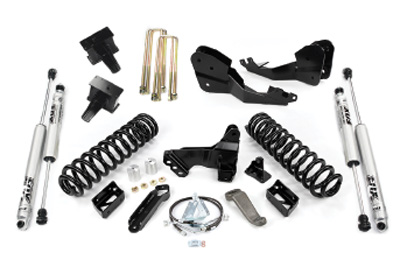
Includes 5-in. front lift components, radius-arm drop brackets, 5-in. rear lift blocks and U-bolts, and Fox 2.0 Performance-series IFP monotube shocks. Maintains adequate droop travel for superior ride quality; allows for up to a 37x12.5 tire on a 9-in.-wide wheel with 4.5-in. backspacing; and made in the U.S.A.
866-426-4648
www.cognitomotorsports.com
PN: 120-P0951
Coplus Inc.
’15+ Ford Ranger Full LED Headlight
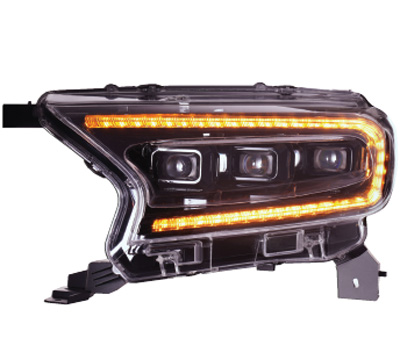
’15+ Ford Ranger full LED headlight, sequential indicator, LED DRL, sequential start, DOT-compliant, bi-LED and Osram LED.
+886-6-2655599 x232
www.coplus.com.tw
PN: 20-FD024/25S-1
Coplus Inc.
’20+ Ford Super Duty Full LED Headlight
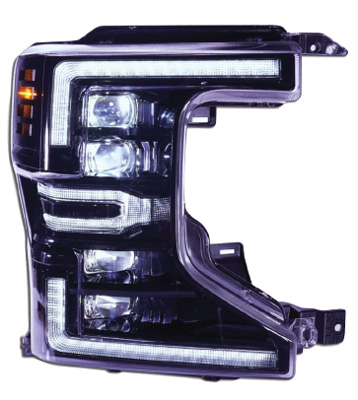
’20+ Ford Super Duty full LED headlight, sequential indicator, LED DRL, sequential start, DOT-compliant, bi-LED, Osram LED.
+886-6-2655599 x232
www.coplus.com.tw
PN: 20-FD039/40S-1
Coverking
Jeep Bikini Top
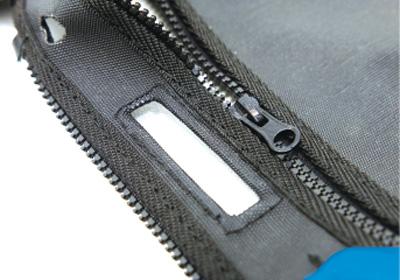
Coverking’s new bikini top combines multiple tops into one great and easy-to-use product. The kit includes mesh and solid panels for the front and rear passengers that can be zipped on and off with ease, allowing as much shade or sun as the passengers want. The outer frame snaps onto the factory rollbar and can be installed under the hardtop.
714-850-0303
www.coverking.com
PN: SPC137
Dana Inc.
Ultimate Dana 80 40-Spline Rear Axle
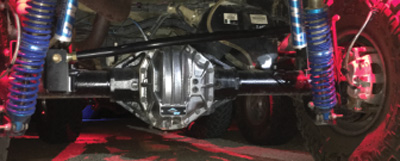
The ultimate of the ultimate Dana crate-axle lineup. The Ultimate Dana 80 features 40-spline chromoly axle shafts, an Eaton e-locker differential, a large tube diameter, increased tube wall thickness, extra-thick brackets, a 14-in. dual-piston caliper brake package, a nodular iron Dana 80 differential cover, and a plug-and-play ABS system.
800-621-8084
www.spicerparts.com
Dana Inc.
Spicer Performance Ball-Joint Kit for Jeep Wrangler JKs, JLs and Gladiator JTs
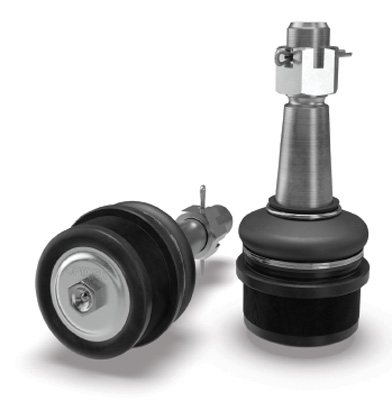
Improvements to Jeeps such as larger wheels and tires warrant a heavy-duty ball joint, ensuring that wheel alignment stays true and reducing the chance of death wobble. The Spicer Performance ball-joint kit for Jeep Wrangler JK, JL and Gladiator JT is a significant upgrade, replacing the original-equipment plastic-on-plastic design.
800-621-8084
www.spicerparts.com
Dana Inc.
Spicer Rear Performance Driveshafts for Jeep Gladiator JT
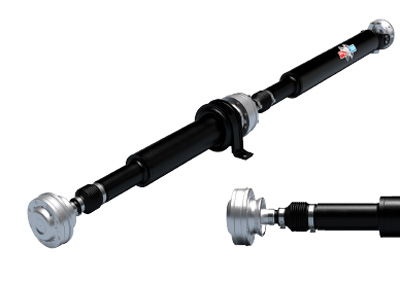
Following last year’s award-winning 1350 driveshaft for Gladiators with Ultimate Dana 60s, Dana now offers that same two-piece driveshaft for stock Dana 44 AdvanTek axles on the Gladiator. The new two-piece Spicer 1350-series driveshaft for the Jeep Gladiator JT is engineered as a direct bolt-in solution for increased strength.
800-621-8084
www.spicerparts.com
PN: 10132305
Dana Inc.
Spicer King-Pin Knuckle Kit
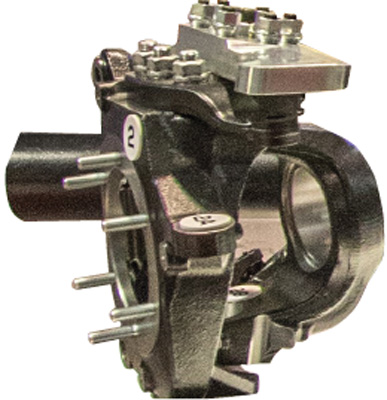
The king of king-pin knuckles, Dana is proud to announce the Spicer king-pin knuckle kit. It includes brand-new genuine Dana high-steer king-pin-style knuckles, mating tube yokes, king-pin components and bearings and other necessary bolts and hardware.
800-621-8084
www.spicerparts.com
52663_1.jpg
DashLogic
SensorTap IAT/Baro Relocation Module
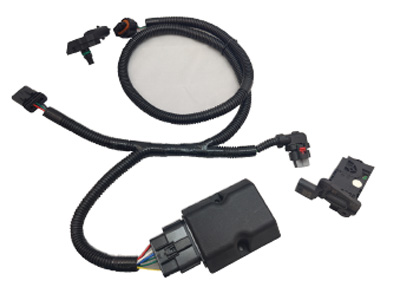
The SensorTap relocation module allows relocation of the IAT and/or Baro sensors on GM vehicles with a four-wire MAF. Now users can move their IATs farther down the air tract for better accuracy when using water/meth injection or put it within the manifold for supercharged applications. Blow-through boosted setups can break out the Baro sensor as well.
801-709-6300
www.dashlogic.com
PN: STB75CL
Diode Dynamics
SSC2 2-in. LED Pod

Introducing the Stage-series 2-in. LED pod. Featuring what is said to be higher output intensity than any other 2-in. light on the market, these LED light pods have been designed for maximum functionality, with custom-engineered TIR optics shining in highly useful beam patterns. With four standard backlight options, these lights add functionality and styling.
314-205-3033
www.diodedynamics.com
Diode Dynamics
SS3 3-in. LED Pod
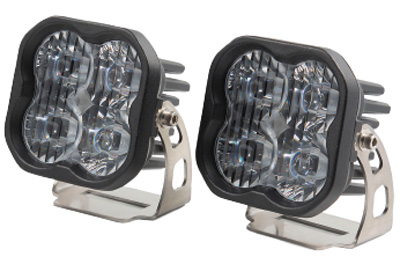
Introducing the SS3 3-in. LED pod. Featuring what is said to be higher output intensity than any other 3-in. light on the market, these LED light pods have been designed for maximum functionality, with custom-engineered TIR optics shining in highly useful beam patterns. These pods are a powerful light option that can be mounted virtually anywhere on a vehicle.
314-205-3033
www.diodedynamics.com
Dometic
CCF-T Center-Console Refrigerator
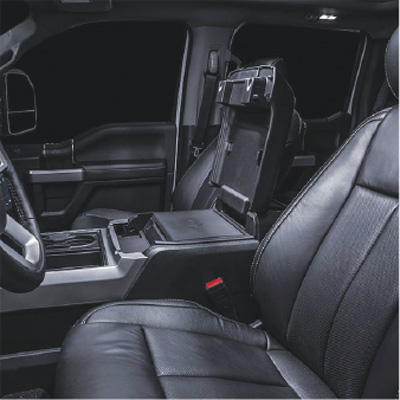
The innovative Dometic CCF-T center-console refrigerator seamlessly integrates into the center console of a Ford pickup (’15–’20) or Expedition (’18 and newer). The robust features include an automotive-approved compressor with low noise and low energy consumption, making it an ideal upgrade for a Ford pickup or Expedition.
574-294-2511 x4844
www.dometic.com/en-us/us/products/food-and-beverage/refr
PN: 9600012768
Eaton Performance Products
GM Half-Ton Truetrac
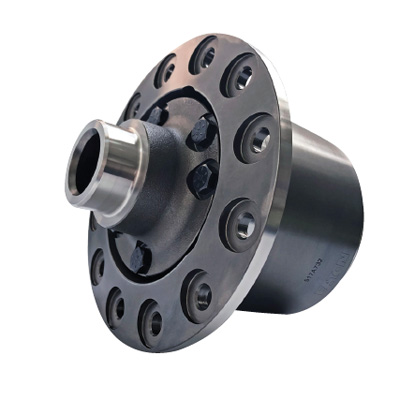
A new Detroit Truetrac limited-slip differential is available for ’14–current GM half-ton trucks (beam axle/3.42 and 3.73 gear ratios). The Truetrac operates as a standard (open) differential under normal driving conditions, allowing for unobtrusive operation. Smooth and maintenance-free, it increases off-road traction and stability while towing.
800-328-3850
www.eatonperformance.com
PN: 917A732
Eaton Performance Products
Toyota ELockers
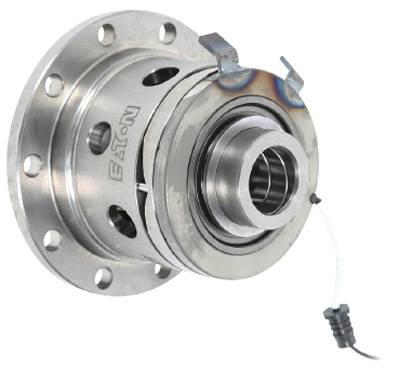
The popular Eaton ELocker locking differential is now available for many Toyota applications, including FJ Cruiser, 4Runner, Land Cruiser, Tacoma, Tundra, Sequoia and pickups. The ELocker is an electronic, selectable differential for drivers who want full control and traction on demand with the simplicity of pushbutton operation.
800-328-3850
www.eatonperformance.com
Eaton Performance Products
Ram Detroit Truetrac
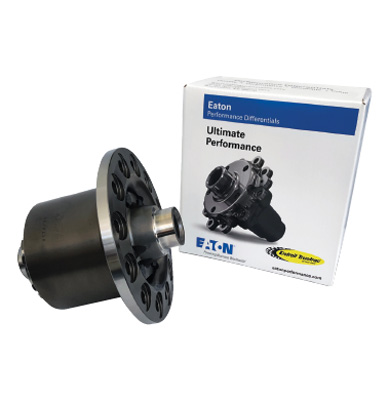
The legendary Detroit Truetrac limited-slip differential is now available for ’11–current Ram 1500 trucks (V6 and V8 engines). The Truetrac operates as a standard (open) differential under normal driving conditions, allowing for unobtrusive operation. Smooth and maintenance-free, it increases off-road traction and stability while towing.
800-328-3850
www.eatonperformance.com
PN: 917A730
Edelbrock Group
Comp Cams Xtreme 4x4 Camshafts for Jeep/AMC 4.0L ’64–’98 Engines
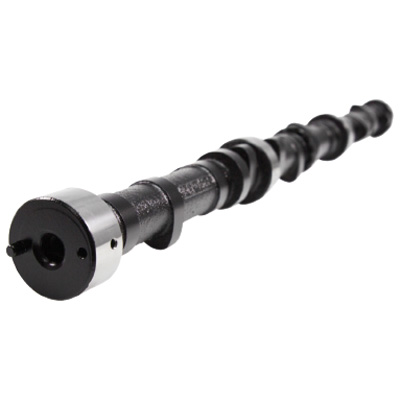
Comp Cams introduces three new camshafts for the Jeep 4.0L. Each is designed for a specific use, providing more power for everything from rock crawlers to EFI and carbureted 4.0L engines with stock to aftermarket cylinder heads.
901-795-2400
www.compcams.com
PN: 68-501-5
Edelbrock Group
AVS2-Series Off-Road Carburetors
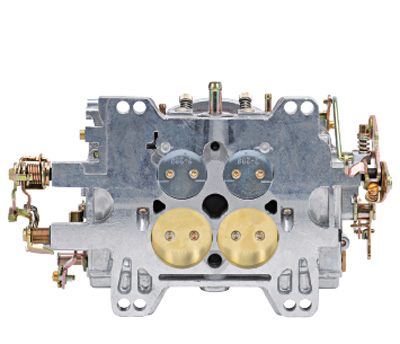
The 650-cfm AVS2-series off-road carburetors feature annular flow primary boosters with a calibration for improved off-idle and cruising performance. The annular flow booster calibration is designed to improve fuel atomization, eliminating flat spots that may be encountered when the carburetor transitions from idle to main metering.
310-781-2222
www.edelbrock.com
PN: 1915
Edelbrock Group
Comp Cams Xtreme 4x4 Camshafts for Jeep/AMC 4.0L ’99–’06 Engines
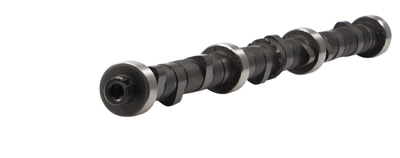
Comp Cams introduces two new camshafts for Jeep 4.0L ’99–’06 applications. Each is designed for a specific use, providing more power for EFI engines with both stock and aftermarket cylinder heads.
901-795-2400
www.compcams.com
PN: 163-201-5
Edelbrock Group
Comp Cams High-Energy Timing Sets for Jeep 4.0L Engines
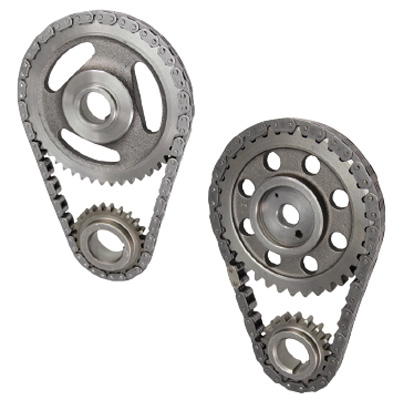
High-energy timing sets for Jeep 4.0L applications provide exceptional durability in any stock to mild performance application. Ideal for heavy-duty applications but also the perfect upgrade for stock-type rebuilds. Features a precision cast-iron camshaft gear, a steel crank sprocket and a durable link belt chain.
901-795-2400
www.compcams.com
PN: 3219
Edelbrock Group
Supercharger Kit for ’18–’20 Jeep Wrangler JL and ’20 Gladiator JT Pentastar 3.6L V6 Engines
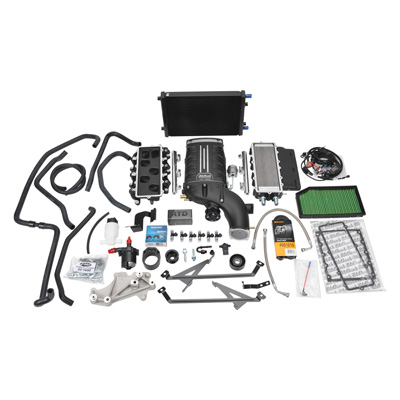
This new 50-state emissions-legal Jeep supercharger kit is a blow-down system. This front-inlet, front-drive system is an application-specific kit using the Edelbrock supercharger head unit with Eaton’s 1320 TVS rotor assembly to increase torque for improved towing and performance.
310-781-2222
www.edelbrock.com
PN: 15284
Edelbrock Group
Comp Cams .450-in.-Lift Ovate Wire Valve-Spring Kit for Jeep 4.0L ’88–’06 Engines
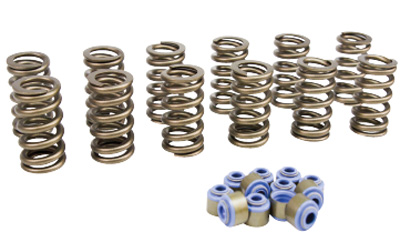
Comp Cams introduces a .450-in.-lift valve-spring kit for Jeep 4.0L engines that allows for increased performance and reliability with minimal effort. The spring upgrade eliminates valve float issues associated with the stock valve springs. Excellent spring upgrade for everything from stock rebuilds to high performance.
901-794-2400
www.compcams.com
PN: 983J-Kit
Eibach
Load-Leveling System
800-507-2338
www.eibach.com/us
Eibach
Pro UTV Spring System
800-507-2338
www.eibach.com/us
Eibach
Pro-Truck Coil-Over 2.0
800-507-2338
www.eibach.com/us
Eibach
Pro Lift Kit HD
800-507-2338
www.eibach.com/us
Energy Suspension
Jeep Wrangler JL Body Mount Set
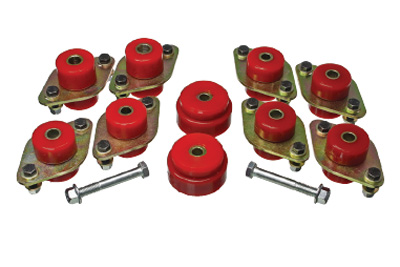
Proprietary Hyper-Flex polyurethane body mounts outlast and outperform OE rubber. Feel immediate improved control on- and off-road. Firmer bushing material reduces body lean and flex. Set includes hardware. Fits ’18–’20 Jeep Wrangler JL two- and four-door.
949-361-3935
www.energysuspension.com
PN: 2.4114
Energy Suspension
Toyota Tundra Leaf-Spring Bushing Set
Hyper-Flex polyurethane leaf-spring bushings outlast and outperform rubber. Immediately feel improved ride quality and handling
with firmer performance polyurethane bushings. Made in the U.S.A. Fits ’07–’20 Toyota Tundra.
949-361-3935
www.energysuspension.com
PN: 8.2117
Energy Suspension
Toyota 4Runner/Lexus GX460 Front Control Arm Bushing Set
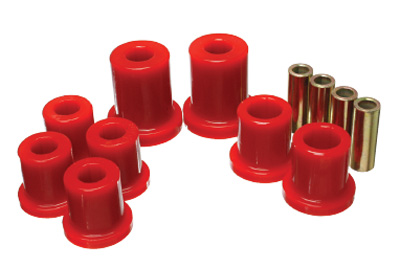
Hyper-Flex polyurethane control arm bushings outlast and out preform rubber. Gain constant vehicle control on- and off-road with firmer-than-stock bushings. Made in U.S.A. Set fits ’10–’20 Toyota 4Runner and Lexus GX460.
949-361-3935
www.energysuspension.com
PN: 8.3139
Energy Suspension
Toyota Land Cruiser FJ80 Hyper-Flex Components
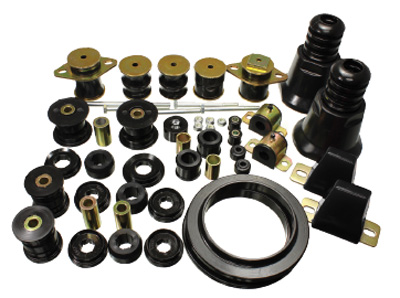
Hyper-Flex polyurethane bushings outlast and outperform OE rubber. Feel immediate improved control on- and off-road. Bushing sets for front and rear control arms, front and rear track bar, front and rear sway bar bushings body mounts, front and rear bump stops, front and rear inner spring bump stops and rear coil spring isolator. Fits ’91–’97 Toyota LC 80.
949-361-3935
www.energysuspension.com
ETL Performance Products
Jeep Exhaust Kit
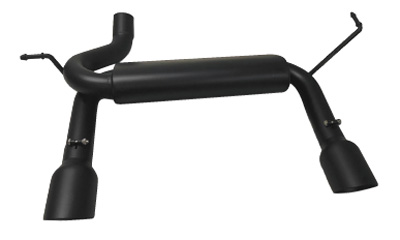
The ’07–’18 Wrangler JK axle-back exhaust kit comes with everything needed for installation, including exhaust clamps, exhaust and two muffler tips. Professional installation is recommended.
234-575-7226
www.etlperformanceproducts.com
PN: 332001
ETL Performance Products
’13–’17 6.7L Cummins Intercooler Kit
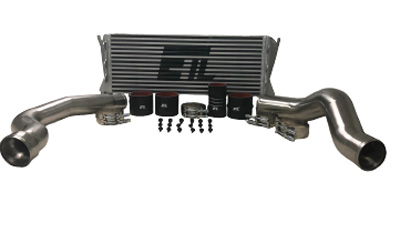
’13–’17 Dodge Ram Cummins 6.7L intercooler kit direct stock replacement bar and plate construction improve performance over stock. Vehicle-specific.
234-575-7226
www.etlperformanceproducts.com
PN: 242008
Extruded Solutions
Tailgate Seal
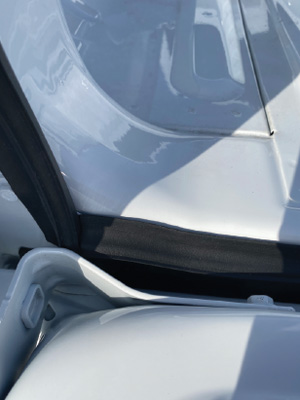
The Tailgate Seal installs to the tailgate gap and sidewalls. Save time and view detailed photo instructions for most tailgate
configurations.
630-871-6450
www.extrudedsolutions.com
Extruded Solutions
ROK Block
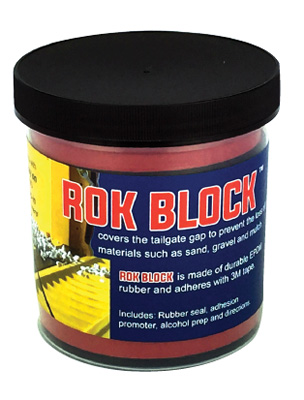
ROK Block tailgate gap cover bridges the gap between the truck bed and tailgate, preventing the loss of materials such as mulch, sand and rock.
630-871-6450
www.extrudedsolutions.com/products/rok-block.htm
Fab Fours Inc.
Truck Grumper 2.0
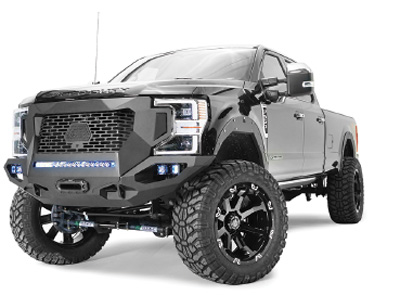
From concept to reality, Truck Grumper 2.0 is the newest release for the ’20 Ford Super Duty. A revolutionary combination of both grille and winch bumper. Fully customizable with removable inserts. Winch ready for the Warn Zeon 12 or lower. Can accommodate a 30-in. light bar and up to four LED pods. Made in the U.S.A. U.S. patented.
866-385-1905
www.fabfours.com
PN: GR4700-1
Fab Fours Inc.
Matrix-Series Front Winch Bumper for ’17+ Ford Raptors
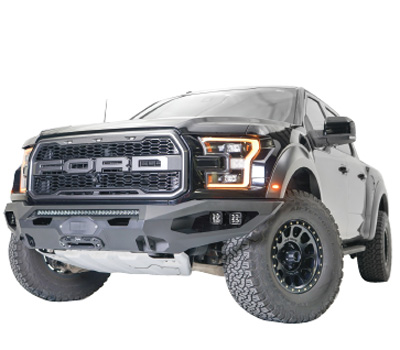
Fab Fours combined the best aspects of its premium winch bumper and its Vengeance series to give users a slim-fitting steel bumper. Equipped to hold a 30-in. light bar, four cube LED lights, and a 9,000-lb. winch, the Matrix series gives users the peak of style and utility for their trucks. Available in a no-guard or a pre-runner guard option.
866-385-1905
www.fabfours.com
PN: FF17-X4351-1
Fab Fours Inc.
Premium Front Winch Bumper
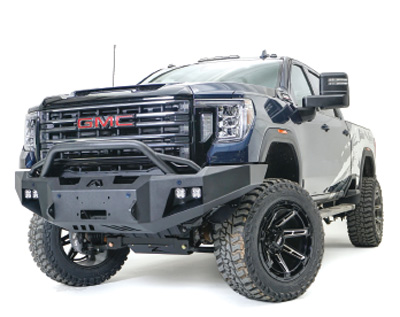
A new design with the same reputation, the Fab Fours premium winch bumper focuses on strength, durability and style. Key features include lower mounting sections for additional lighting, D-ring mounts and ability to accommodate up to a 16,500-lb. winch. Available in full guard, pre-runner guard or no-guard options. Made in the U.S.A.
866-385-1905
www.fabfours.com
PN: GM20-A5052-1
Fab Fours Inc.
Jeep Gladiator Standard Rear Bumper
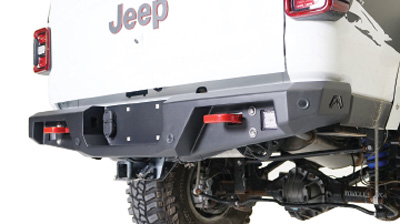
Fab Fours’ ’20 Jeep Gladiator standard rear bumper is sensor-compatible, retains the factory tow hooks, allows users to keep the OEM tow package while also allowing two additional LED light pods. Made from 3/16-in. steel construction and available in a two-stage matte black powdercoat with epoxy primer or bare steel. Made in the U.S.A.
866-385-1905
www.fabfours.com
PN: JT20-Y1952-1
Fab Fours Inc.
Jeep Gladiator Sport Rack
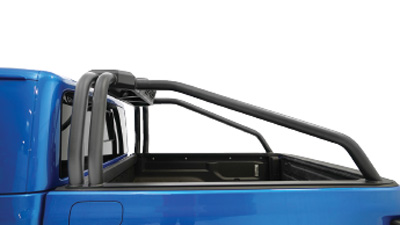
The Fab Fours sport rack brings added style and utility to the rear bed of the ’20 Jeep Gladiator. Accommodates eight 3x3 LED cube lights or four KC lights or similar. Clamp multiple accessories to the six 2.5-in. support bars. Made from 12-gauge steel and available in Fab Fours’ two-stage black matte powdercoat with epoxy primer. Made in the U.S.A.
866-385-1905
www.fabfours.com
PN: JTSR20-1
Fab Fours Inc.
Toyota Tacoma Trail Doors
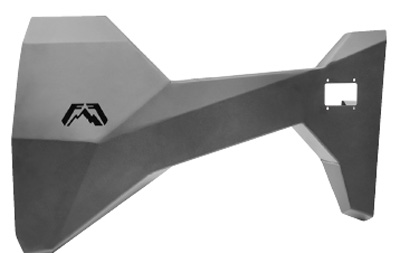
Enjoy the open-air feeling when out on the trail or during summer days with the all-new Fab Fours’ Tacoma trail doors. Made from 12-gauge U.S. steel and finished in two-stage matte black powdercoat. Front doors come with cup holders, and both front and rear doors have inside small storage areas.
866-385-1905
www.fabfours.com
PN: TT1030-1
FI New Power
SFI TH400 Case
SFI-approved TH400 heavy-duty case for racing performance and off-road.
+86-13969871486
PN: 400
FI New Power
68RFE Case
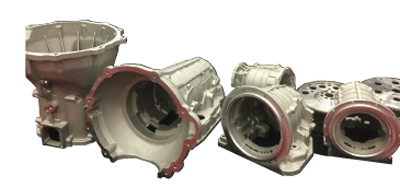
Non-crack, heavy-duty transmission case.
+86-13969871486
PN: 6800
Front Runner Outfitters
Ford F-150 Raptor (’09+) Low-Profile Slimline II Roof Rack Kit
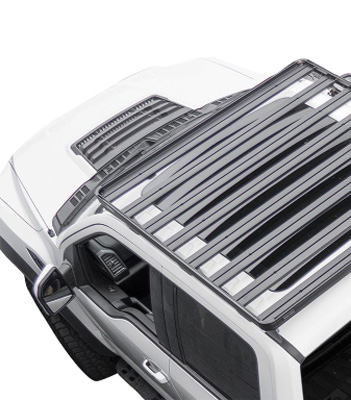
The 1560mm/61.4-in.-long fullsize, Slimline II cargo roof rack kit contains the Slimline II tray, wind deflector and 2-ft. rails to mount the Slimline II tray to a Ford F-150 Raptor. A load bed rack kit is also available. All Front Runner racks are backed by a limited
lifetime warranty.
818-253-1322
www.frontrunneroutfitters.com/en/us/ford-f150-raptor-200
PN: KRFF018T
Front Runner Outfitters
Quick-Release Awning Mount
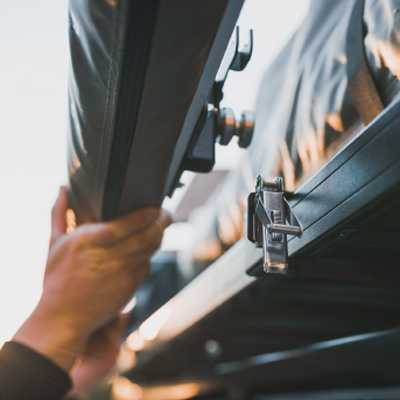
Front Runner’s quick-release awning-mount kit gives users the freedom to mount or remove their awning in seconds with no tools. The two lockable latches provide safety and added peace of mind.
818-253-1322
www.frontrunneroutfitters.com/en/us
PN: RRAC169
51155_1.jpg
Front Runner Outfitters
Jeep Gladiator JT (’19–Current) Extreme Roof Rack Kit
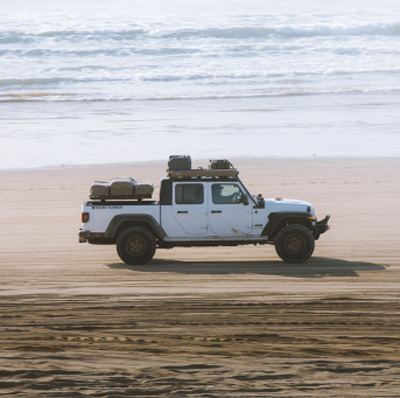
This Slimline II rack kit contains all the components needed to mount the rack to a Jeep Gladiator JT, including the Slimline II tray (1,425x1,560 mm), the Jeep extreme mounting system and a wind deflector. Allows users to quickly remove the Freedom Panels and works with the hardtop roof on or off.
818-253-1322
www.frontrunneroutfitters.com/en/us
PN: KRJG005T
Front Runner Outfitters
Land Rover Defender 110 Slimline II Roof Rack Kit
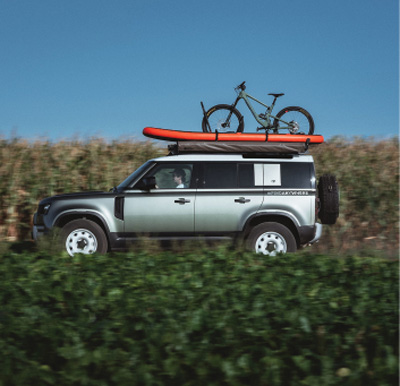
This 2,166mm/85.3-in.-long fullsize, Slimline II cargo roof rack kit contains the Slimline II tray, wind deflector and 2-ft. rails to mount the Slimline II tray to a new Defender 110. These foot rails contain two openings to access Front Runner under-rack mount tables (one smaller prep and one larger camp-size table).
818-253-1322
www.frontrunneroutfitters.com/en/us
PN: KRLD034T
Funy4x4
Shift-Knob-Handle Shift Lever for Jeep Wranglers
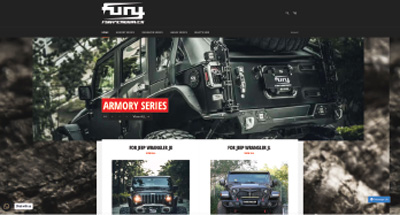
Funy-series transmission shift handle and transfer gear handle applicable to JK. (The product is also applicable to all models of 8–12mm-diameter shift rod systems.) Silver/black aluminum alloy and nylon splicing. Funy-series style, aluminum alloy CNC machining and surface anodizing.
+86-15889219696
www.furyengraver.com
PN: FY09101
Fupower Co. Ltd.
Custom Silicone Tubes
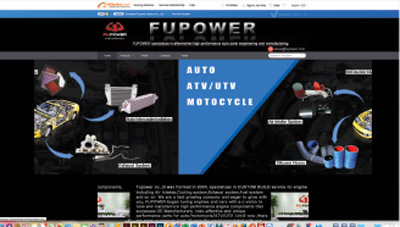
Custom-built silicone tubes for cars, ATVs, UTVs and motorcycles.
+86-18721636174
www.fupower.com
GiantGear USA
Custom Cut Mud Flaps
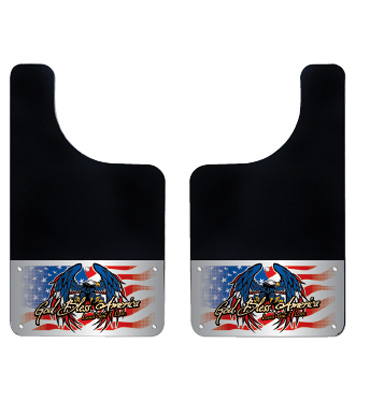
Upgrade their mud flaps to GiantGear’s better-option rubber. Same great fit with a custom cut. Choose from stock custom artwork or have GiantGear design something specifically for the user’s brand.
800-666-9868 x 205
www.giantgearusa.com
GiantGear USA
Toyota Tundra and Tacoma Custom Mud Flaps
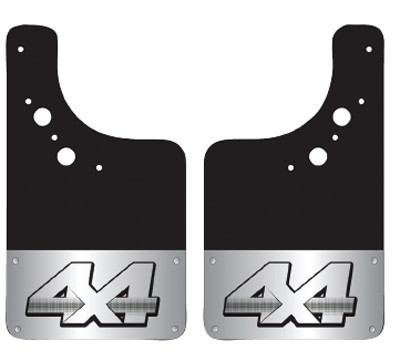
Toyota Tundra and Tacoma mud flaps custom cut for the best fit. Available in basic plastic or our a better-option rubber.
800-666-9868 x 205
www.giantgearusa.com
Go Rhino Big Country Truck Accessories
3100-Series Convertible Grille Guard
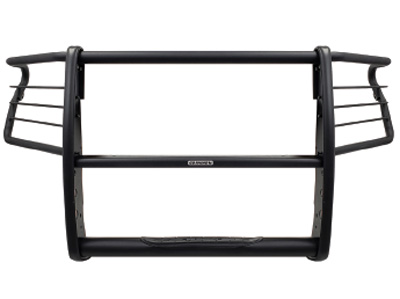
New Go Rhino 3100-series grille guards for ’19–’21 Chevrolet Silverados 1500 can be converted into a winch guard with an optional winch plate mounting kit. Features a center step on the lower bar. The lower bar can be removed to install the optional winch guard kit. Features a black textured powdercoat finish and a five-year warranty.
888-427-4466
www.gorhino.com
PN: 3176T
Gladiator Cargo Nets
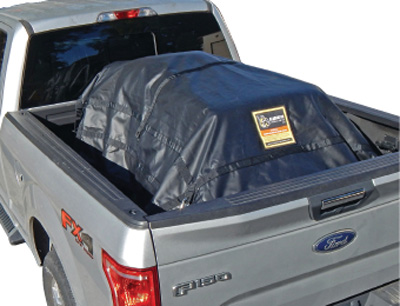
Waterproof Cargo Net
888-386-4271
www.gladiatorcargonet.com
Go Rhino Big Country Truck Accessories
Overland Extreme Rack
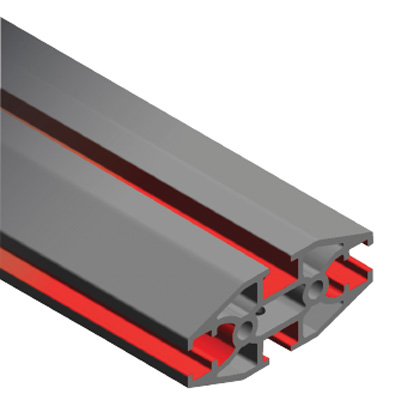
XRS Overland Xtreme Rack by Go Rhino. An overlander’s dream, this truck bed accessory is a complete rack system that provides multiple mounting areas for gear and accessories over the bed area of the vehicle. Tents, tanks, tools and toys can all be mounted and managed using the XRS Overland Xtreme Rack by Go Rhino.
888-427-4466
www.gorhino.com
PN: 5950000T
Go Rhino Big Country Truck Accessories
Overland Extreme Rack Gear Table
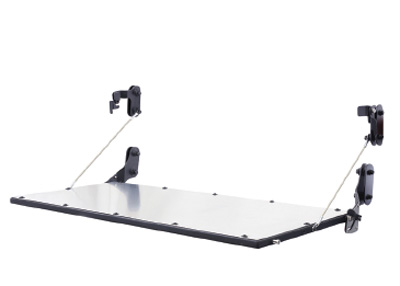
Overland Xtreme Rack multi-gear table for Go Rhino XRS Overland Xtreme Rack. Provides level stable tabletop when folded down. Steel safety straps limit table to be level. Outer surface of table has additional attachment points for accessories such as water carriers for convenient access.
888-427-4466
www.gorhino.com
PN: 5950100T
Go Rhino Big Country Truck Accessories
Overland Extreme Rack Rear Handle Kit
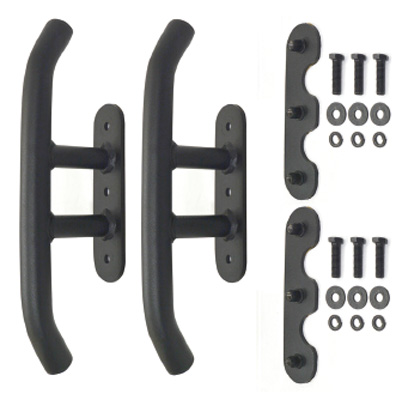
Overland Xtreme Rack rear reel handle kit for Go Rhino XRS Overland Xtreme Rack. Provides rear handle in a reel style wide enough to store and stow recovery straps.
888-427-4466
www.gorhino.com
PN: 5950110T
Go Rhino Big Country Truck Accessories
Overland Extreme Rack MOLLE Accessory Panel
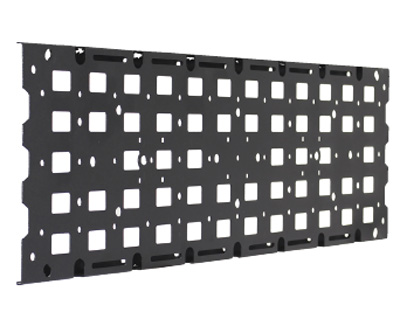
Overland Extreme Rack gear panel for Go Rhino Overland Extreme Rack. Helps mount a variety of gear, trail tools and accessories to the exterior of the Overland Extreme Rack. Laser-cut pre-slotted holes and MOLLE
strap holes make organizing gear easy.
888-427-4466
www.gorhino.com
PN: 5950020T
Go Rhino Big Country Truck Accessories
RC3 Skidplate With Light
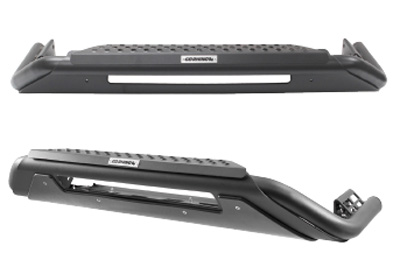
The RC3 LR with 20-ft. LED light is the newest evolution in front-end vehicle protection. This unique combination of skidplate, rock and splash guard, nonslip patented step and recessed light mount provides excellent front-end protection. Tubular and plate-steel construction with a durable black
powdercoat finish.
888-427-4466
www.gorhino.com
PN: 55211T
51585_1.jpg
Go Rhino Big Country Truck Accessories
RC4 Skidplate and Bull Bar
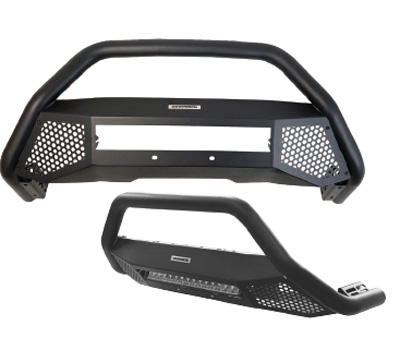
RC4 LR Light Ready bull bar and skidplate with 20-in. LED. Features tubular construction and a durable textured black powdercoat finish. Compatible with many OEM ADAS systems. Recessed light bar mount fits one 20-in. single-row LED. Five-year limited warranty on finish.
888-427-4466
www.gorhino.com
PN: 55411T
Go Rhino Big Country Truck Accessories
Vertex Side Steps
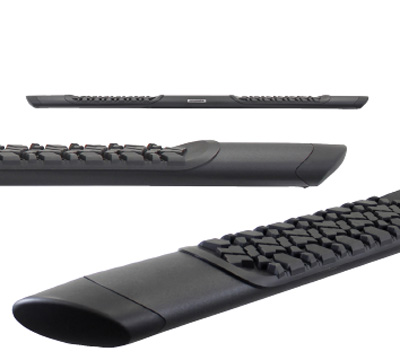
Vertex side steps feature an aerodynamic contoured design coupled with an aggressive tire-tread design step pad. These aluminum Vertex steps come with a textured black powdercoat finish to offer the ultimate corrosion resistance. The 87-in. Vertex steps fit crew-cab trucks and can be used with Go Rhino’s application-specific mounting kits.
888-427-4466
www.gorhino.com
PN: V300087T
GU Auto Tech Inc.
PRO Off-Road InfraRed Camera System
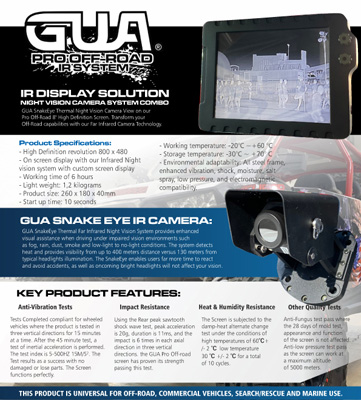
GUA PRO off-road thermal far IR night-vision system provides enhanced visual assistance when driving under impaired vision environments such as fog, rain, dust, smoke and low-light to no-light conditions. The system detects heat and provides visibility from up to 400 meters. Universal for off-road, commercial, search/rescue and marine use.
800-844-5995
www.guautotech.com
PN: IR-PRO-01
52298_1.jpg
Hellwig Products
EZ-990 Helper Springs for ’17–’20 Ford Raptors
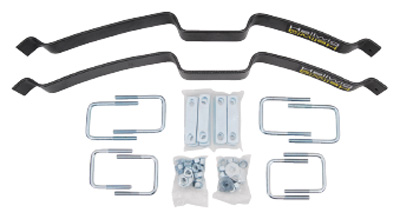
Hellwig Pro-Series helper springs have up to a 2,500-lb. load-leveling capacity and feature silencer bushings for a quieter ride. The Pro-series helper springs are an adjustable dual-leaf design. All parts come powdercoated, and Pro-series helper springs are made
in the U.S.A.
800-435-5944
www.hellwigproducts.com
PN: 61916
Hellwig Products
Chevrolet/GMC 1500 Front Sway Bar
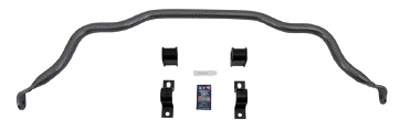
Hellwig now offers a 13/8-in.-diameter forged, heat-treated, 4140 chromoly steel, front sway bar for the ’20–’21 Chevrolet/GMC 1500. Featuring Hellwig’s signature Hammertone powdercoat to prevent corrosion and wear, the sway bar retains the factory end links and includes polyurethane bushings for reduced noise during operation.
800-435-5944
www.hellwigproducts.com
PN: 7781
Hellwig Products
Pro-Series Helper Springs for ’17–’20 Ford Raptors
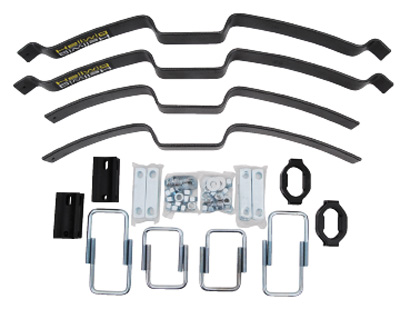
Hellwig EZ-990 helper springs for the ’17–’20 Ford Raptor allow for load-leveling capacity of up to 2,000 lbs. A single-leaf design, EZ-990 helper springs are easy to install and are adjustable rate. Like all Hellwig products, EZ-990 helper springs are made in the U.S.A.
800-435-5944
www.hellwigproducts.com
PN: 975
Hellwig Products
Toyota HiLux Rear Sway Bar
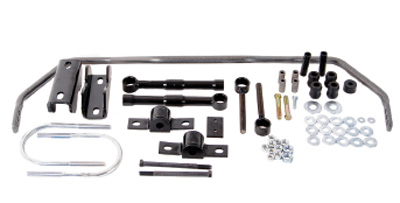
Hellwig introduces its adjustable-rate 4140 solid chromoly rear sway bars for the ’16–’20 Toyota HiLux 4WD pickup. These upgraded sway bars increase the anti-roll stiffness of the suspension, resulting in less body roll and weight transfer while cornering for better traction, improved handling and increased driver confidence.
800-435-5944
www.hellwigproducts.com
PN: 7752
Hi-Lift Jack Co.
Under-Seat Mount for ’19+ Jeep Gladiator
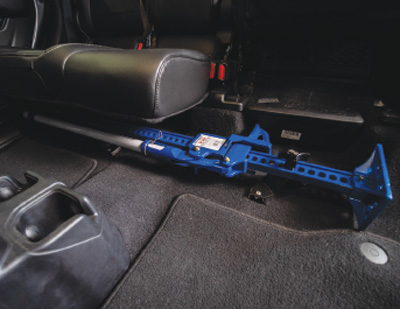
Conveniently mount and store a Hi-Lift Jack under the back seat of a Jeep Gladiator. Provides secure interior storage. Installation is simple; no drilling required. Stamped-steel and powdercoated construction for strength, durability and a
clean look.
812-384-4441
www.hi-lift.com
PN: JGUS-200
Hi-Lift Jack Co.
Winch/Clamp/Spreader Attachment
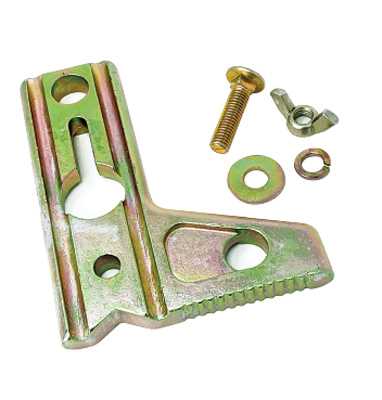
Convert a standard-model Hi-Lift Jack into a more versatile multi-use tool for extreme applications. Replaces the standard top-clamp clevis that comes with all standard-model Hi-Lift Jacks, increasing their capabilities and ease of use. Winch, clamp or spread up to 5,000 lbs. One position for all winching, clamping and spreading applications.
812-384-4441
www.hi-lift.com
PN: W-101
Hi-Lift Jack Co.
New and Improved Handle Keeper
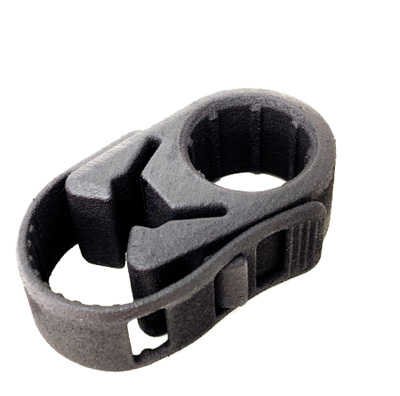
Eliminate jack rattling during transportation and storage. Using QuickFist USA technology and material, the new and improved handle keeper holds the Hi-Lift handle to the upright steel bar, keeping it in place when not in use and eliminating rattling during transportation and storage. Available in black or red.
812-384-4441
www.hi-lift.com
PN: HK-B
HushMat & ZyCoat
Year, Make and Model Kits
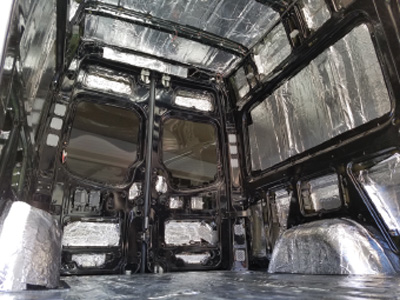
HushMat now offers more than 366,000 year-, make- and model-specific kits, including most vans, pickups and sport-utility vehicles. HushMat has measured the vehicles and offers the complete vehicle and also subsegments of each, including firewall, floor pan, doors, roof and trunk/cargo. HushMat says that it is the easiest product to install and is made in the U.S.A.
913-599-2600
www.hushmat.com
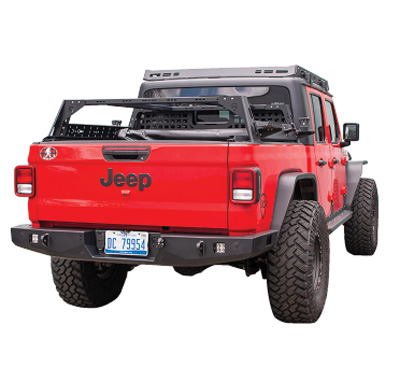
JcrOffroad
Vanguard Jeep Gladiator Rear Bumper
269-353-1184
www.jcroffroad.com
Illinois Lock Co.
Electronic Rotary Latch System
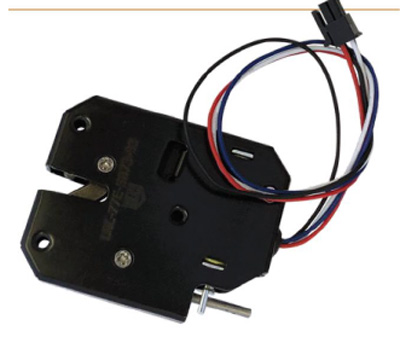
Electronic access push-to-close compact size and high strength 12V DC operating voltage. Offers 200 lbs. ultimate tensile loading with integrated mechanical release and versatile concealed latching. High cycle life.
847-537-1800
www.illinoislock.com
PN: LNL-77E-5873-93
K&N Engineering Inc.
Performance Air Intake System for ’19–’20 Chevrolet Blazer 2.5Ls
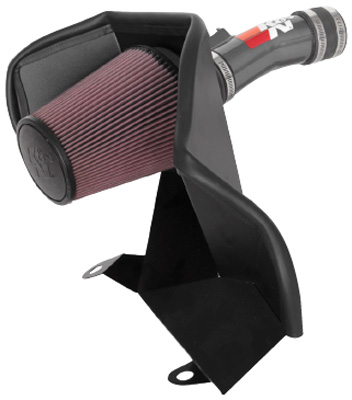
K&N’s mandrel-bent aluminum cold-air intake systems are guaranteed to provide an increase in horsepower and torque and are protected by the K&N 10-year/million-mile limited warranty.
800-858-3333
www.knfilters.com
PN: 77-3111KC
K&N Engineering Inc.
KN Replacement Air Filter for ’19–’20 Jeep Renegades
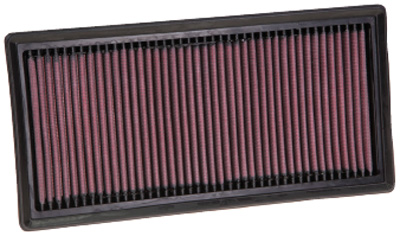
K&N washable, reusable high-flow air filters feature a state-of-the-art design of layered oiled-cotton media engineered to improve air flow and capture contaminants. They are designed to provide an increase in horsepower.
800-858-3333
www.knfilters.com
PN: 33-5101
K&N Engineering Inc.
KN Replacement Air Filter for '20 Jeep Wrangler Diesels
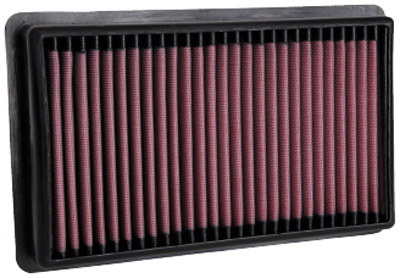
K&N washable, reusable high-flow air filters feature a state-of-the-art design of layered oiled-cotton media engineered to improve air flow and capture contaminants. They are designed to provide an increase in horsepower.
800-858-3333
www.knfilters.com
PN: 33-5106
K&N Engineering Inc.
Performance Air Intake System for ’19–’20 Jeep Cherokee V6s
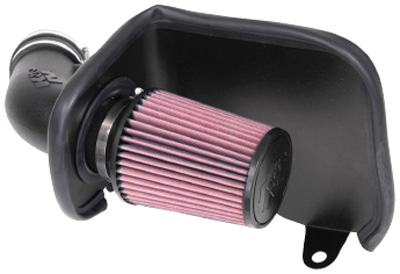
K&N’s rotomolded cold-air intake systems are guaranteed to provide an increase in horsepower and torque and are protected by the K&N 10-year/million-mile warranty.
800-858-3333
www.knfilters.com
PN: 63-1585
K&N Engineering Inc.
Performance Air Intake System for ’18–’20 Jeep Wrangler JL 2.0Ls
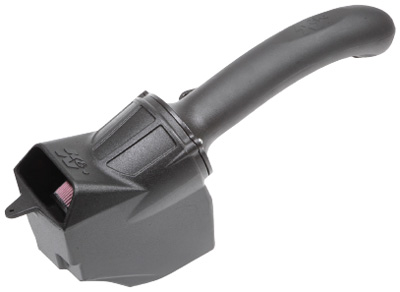
K&N’s enclosed air box rotomolded cold-air intake systems are guaranteed to provide an increase in horsepower and torque and are protected by the K&N 10-year/million-mile limited warranty.
800-858-3333
www.knfilters.com
PN: 63-1580
K&N Engineering Inc.
Exhaust Kit for ’09–’18 Dodge/Ram 1500 5.7Ls
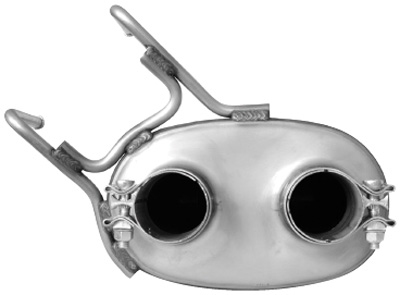
The K&N 67-1561 muffler replacement kit is engineered to increase performance, deliver robust sound and install quickly and easily on Ram 1500 5.7L models.
800-858-3333
www.knfilters.com
PN: 67-1561
K&N Engineering Inc.
Replacement Air Filter for ’20 GMC/Chevrolet 2500HDs/3500HDs
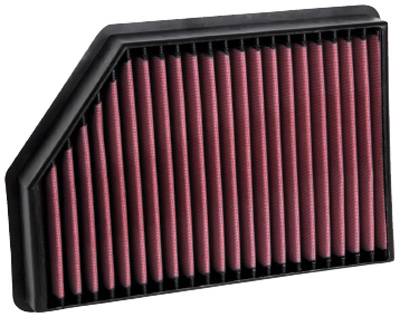
K&N washable, reusable high-flow air filters feature a state-of-the-art design of layered oiled-cotton media engineered to improve air flow and capture contaminants. They are designed to provide an increase in horsepower.
800-858-3333
www.knfilters.com
PN: 33-5098
K&N Engineering Inc.
Replacement Air Filter for ’17–’18 Hyundai Santa Fe Sport
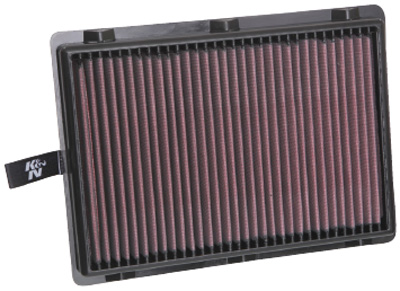
K&N washable, reusable high-flow air filters feature a state-of-the-art design of layered oiled-cotton media engineered to improve air flow and capture contaminants. They are designed to provide an increase in horsepower.
800-858-3333
www.knfilters.com
PN: 33-5075
K&N Engineering Inc.
Cabin Air Filter for ’07–’18 Dodges/Mercedes Sprinter 2500s/3500s
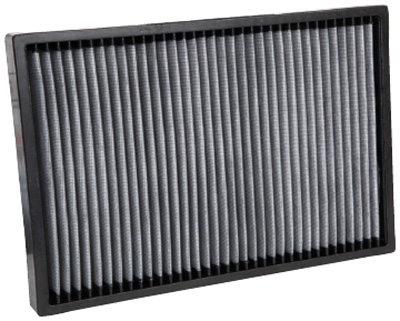
K&N washable cabin air filters are engineered to fit directly into the factory air box, offering excellent protection from
environmental contaminants and odor-causing particles.
800-858-3333
www.knfilters.com
PN: VF4002
K&N Engineering Inc.
Cabin Air Filter for ’19 Ford Ranger 2.3Ls and ’11–’19 Ford Ranger 2.0Ls, 2.2Ls, 3.2Ls
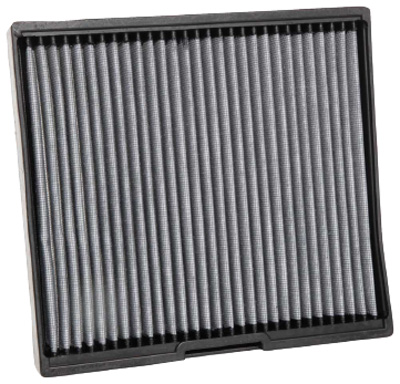
K&N washable cabin air filters are engineered to fit directly into the factory air box, offering excellent protection from environmental contaminants and odor-causing particles.
800-858-3333
www.knfilters.com
PN: VF2052
K&N Engineering Inc.
Performance Air Intake System for ’18–’19 Ford F-150 Diesels
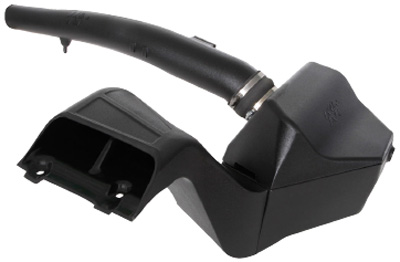
K&N’s enclosed air box rotomolded cold-air intake systems are guaranteed to provide an increase in horsepower and torque, and are protected by the K&N 10-year/million-mile warranty.
800-858-3333
www.knfilters.com
PN: 63-2607
K&N Engineering Inc.
Performance Intake System for ’17–’18 Ford Edge 2.0Ls
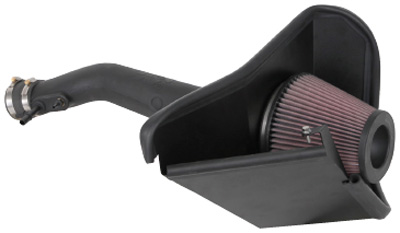
K&N’s rotomolded cold-air intake systems are guaranteed to provide an increase in horsepower and torque and are protected by the K&N 10-year/million-mile warranty.
800-858-3333
www.knfilters.com
PN: 63-2611
K&N Engineering Inc.
Performance Air Intake System for ’15–’19 Ford F-150 5.0Ls
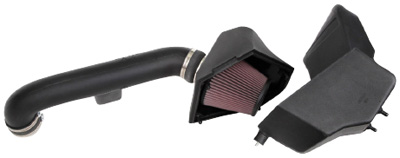
K&N’s enclosed air box rotomolded cold-air intake systems are guaranteed to provide an increase in horsepower and torque and are protected by the K&N 10-year/million-mile warranty.
800-858-3333
www.knfilters.com
PN: 63-2610
Kleinn Air Horns
Universal UTV and 4x4 Onboard Air System and Dual Air Horn
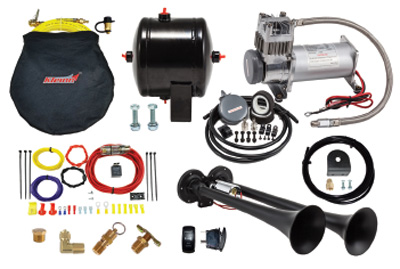
Universal onboard air system with 102-1 air horn producing 152 dB. The waterproof 150-psi compressor and 1/2-gal. tank will inflate 37-in. tires. Includes a lighted rocker switch, a tire inflator with a storage bag, hardware, fittings and air line. Designed for UTVs and 4x4s that need a powerful, compact air system without a large tank and train horn.
520-579-1531
www.kleinn.com
PN: HKUTV
Kleinn Air Horns
Bolt-On Train Horn and Onboard Air for ’19–’20 GM 1500 Trucks
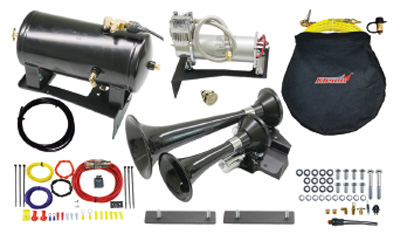
Bolt-on train horn and onboard air system requires no drilling. Includes a Model 220 train horn that delivers 154.3 thundering decibels, a 1.5-gal. tank and a 150-psi waterproof compressor that can inflate 37-in. tires and air bags. Included are a tire inflator, a storage bag and all the necessary hardware and fittings for a professional installation.
520-579-1531
www.kleinn.com
PN: GMTRK4XTREME
Kleinn Air Horns
Bolt-On Dual Air Horns for ’19–’20 GM 1500 Trucks
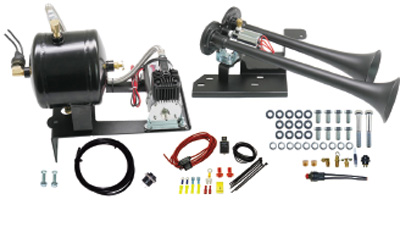
Direct-fit bolt-on air horn system includes a model 102-1 dual air horn producing 146 decibels, a sealed air compressor and a 1/2-gal. tank. No cutting or drilling required. For the person who wants an incredibly loud air horn but doesn’t need an onboard air system. Included are all the necessary hardware and fittings for a professional installation.
520-579-1531
www.kleinn.com
PN: GMTRK4
Kleinn Air Horns
Bolt-On Model 230 Train Horn and Onboard Air for Ford Super Duty With Spare-Tire Location Horn Mount
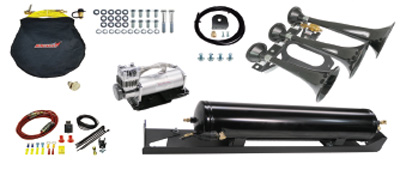
Bolt-on onboard air and train horn for Super Duty trucks. Direct-fit brackets require no cutting or drilling. Includes a 153.3dB Model 230 train horn, a waterproof 150-psi compressor rated for 37-in. tires, a 3-gal. tank, a tire inflator with a storage bag, and all hardware and fittings.
520-579-1531
www.kleinn.com
PN: SDKIT17-230STL
50590_1.jpg
Kleinn Air Horns
Jeep Wrangler TJ and LJ Onboard Air System With Train Horn
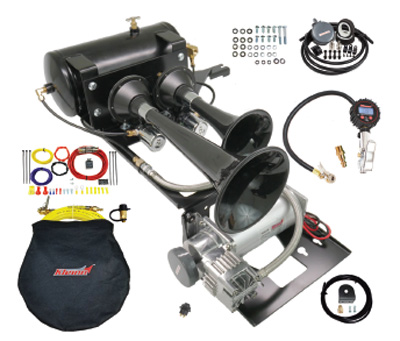
Direct-fit bolt-on air horn kit for TJ and LJ Wranglers.
520-579-1531
www.kleinn.com
PN: TJXTREME
50585_1.jpg
Kleinn Air Horns
Bolt-On Model 730 Train Horns for Ford Super Duty With Spare-Tire Location Horn Mount
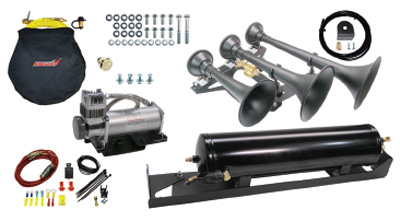
Bolt-on onboard air and train horn for Super Duty trucks. Direct-fit brackets require no cutting or drilling. Includes a 157.8dB Model 730 train horn, a waterproof 150-psi compressor rated for 37-in. tires, a 3-gal. tank, a tire inflator with a storage bag and all necessary hardware and fittings.
520-579-1531
www.kleinn.com
PN: SDKITKIT-734STL
Kleinn Air Horns
Jeep Wrangler TJ and LJ Dual Air Horn System
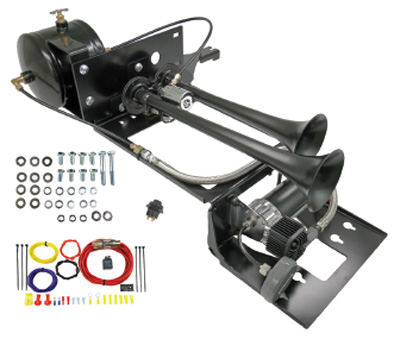
Direct-fit bolt-on air horn kit for TJ and LJ Wranglers. Includes made-in-USA brackets, air horn, a 6260RC 120-psi compressor, a 1/2-gal. tank and all necessary hardware for a professional installation. The model 102-1 black dual air horn produces a thundering 149dB blast. The kit is tucked up high between the frame rails to avoid damage on the trail.
520-579-1531
www.kleinn.com
PN: TJ102
53012_1.jpg
Kolchuga
Aluminum Skidplates
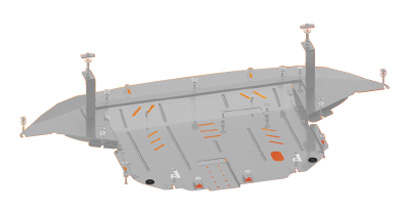
Aluminum skidplate for ’18 Hyundai Santa Fe.
929-235-1299
www.kolchuga-usa.com
PN: 3.0889.00
Kolchuga
Aluminum Skidplates
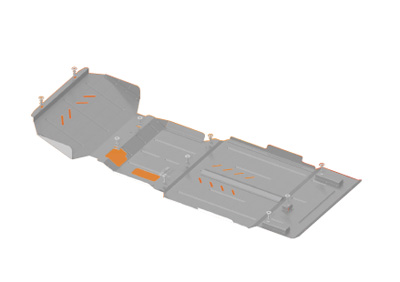
Aluminum skidplate for ’19 Ford Ranger 2.0 EcoBlue TDCi.
929-235-1299
www.kolchuga-usa.com
PN: 3.0974.00
KW Suspensions/ST Suspensions/Belltech
’07–’17 Jeep Wrangler Rubicon 4-in. Lift Kit
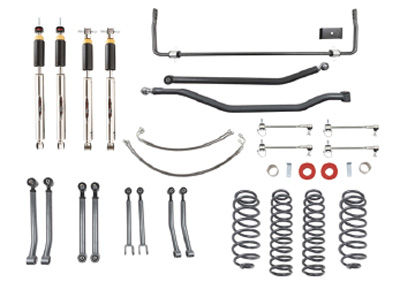
Belltech says that its Jeep Wrangler kits offer the best complete solution to lift a Wrangler. Products include Trail Performance shocks, coil springs, adjustable control arms and quick-disconnect end links.
800-445-3767
www.belltech.com
PN: 153201HKP
53327_1.jpg
KW Suspensions/ST Suspensions/Belltech
'18–’20 Jeep Wrangler Rubicon 4-in. Lift Kit
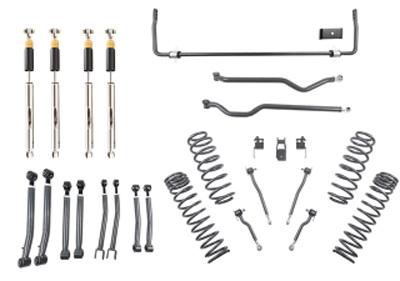
Belltech says that its Jeep Wrangler kits offer the best complete solution to lift a Wrangler. Products include Trail Performance shocks, coil springs, adjustable control arms and quick-disconnect end links.
800-445-3767
www.belltech.com
PN: 153205HKP
KW Suspensions/ST Suspensions/Belltech
’16–’18 Chevrolet Silverado 7–9-in. Lift Kit
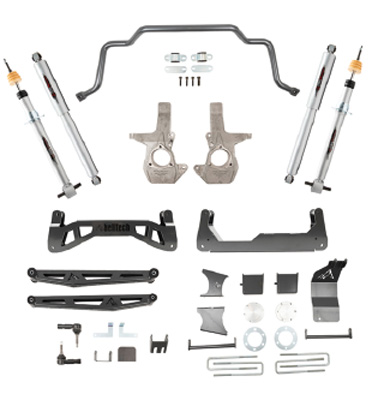
Belltech says that its fullsize lifts offer the best complete solution to lift a truck. Products include Trail Performance front and rear struts and shocks, spindles, HD high-clearance crossmembers, a performance front sway bar and bracketry.
800-445-3767
www.belltech.com
PN: 150203SPS
KW Suspensions/ST Suspensions/Belltech
’19–’20 Ford Ranger 2.5-in. Leveling Strut Spacer Kit
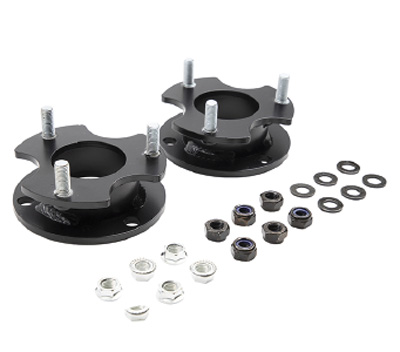
Installing Belltech strut spacers on today’s late-model strut-equipped trucks offers an application-specific, economical and simple installation solution to effectively level the front end of a new truck or SUV. This allows the needed clearance for larger, aggressive
off-road wheel/tire combinations.
800-445-3767
www.belltech.com
PN: 34938
KW Suspensions/ST Suspensions/Belltech
’19–’20 Chevrolet Silverado 6–8-in. Lift Kit
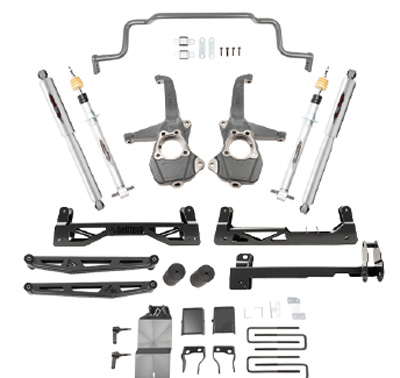
Belltech says that its fullsize lifts offer the best complete solution to lift a truck. Products include Trail Performance front and rear struts and shocks, spindles, HD high-clearance crossmembers, a performance front sway bar and bracketry.
800-445-3767
www.belltech.com
PN: 150210SPS
KW Suspensions/ST Suspensions/Belltech
’07–’17 Wrangler Rubicon Two-Way Adjustable Shock Set
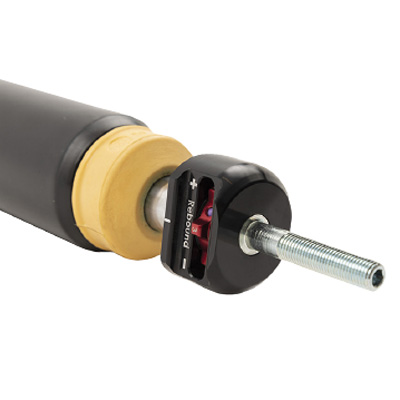
Belltech sought to adapt the acclaimed low-speed compression and rebound characteristics of its Street Performance shock into its new Trail Performance line of shocks. The Trail Performance Plus double-adjustable shock design makes tuning convenient while giving users the overall performance needed when pursuing overlanding adventures.
800-445-3767
www.belltech.com
KW Suspensions/ST Suspensions/Belltech
’18–’20 Jeep Wrangler Rubicon Two-Way Adjustable Shock Set
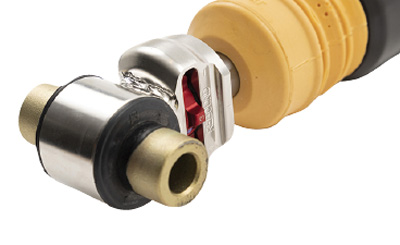
Belltech sought to adapt the acclaimed low-speed compression and rebound characteristics of its Street Performance shock into its new Trail Performance line of shocks. The Trail Performance Plus double-adjustable shock design makes tuning convenient while giving users the overall performance needed when pursuing overlanding adventures.
800-445-3767
www.belltech.com
Leed Brakes
’40–’75 Jeep Front Disc Brake Conversion Kits
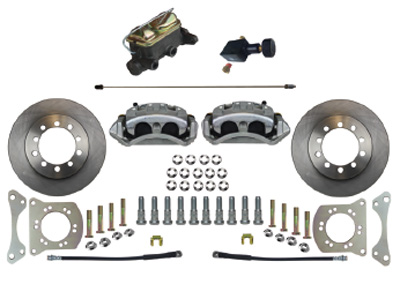
Upgrade a ’40–’75 Jeep to front disc brakes with a new bolt-on front disc brake kit. Designed to work with factory and aftermarket hubs, this kit includes a massive two-piston cast-iron caliper and a 12-in. rotor. This big brake kit is designed to fit behind most 15-in. wheels and fit the stock knuckles. Kits are available at the wheels, manual and power.
716-852-2139
www.leedbrakes.com
PN: FC3001SM
Line-X
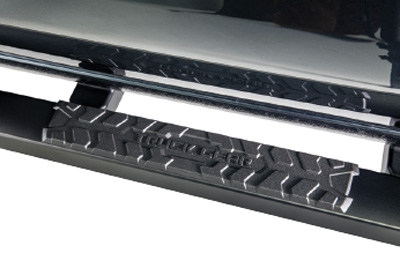
Truck Gear by Line-X Edge-Series Step Bar
877-330-1331
www.linex.com/accessories/truck-gear
Magnuson Superchargers
’16–’20 Toyota Tacoma Supercharger System
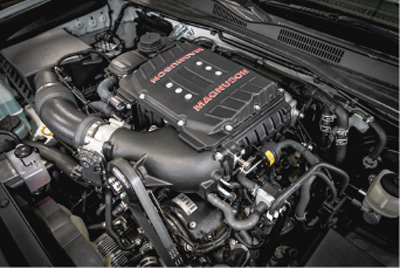
The wait is finally over. Meet the all-new Magnuson ’16+ Tacoma V6 supercharger kit, complete with all hardware and calibration. The system delivers 32% more power than the stock engine—a welcome upgrade for any Tacoma owner. Whether on- or off-road, the additional performance is a must-have for every Tacoma. Order today.
805-642-8833
www.magnusonsuperchargers.com
PN: 01-19-35-005-BL
Maradyne High Performance Fans
Carlsbad Cabin Heater
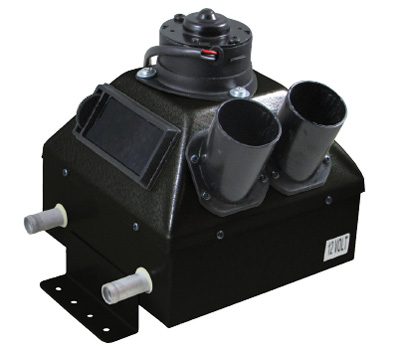
The Carlsbad heater from Maradyne offers the maximum in flexibility for aftermarket heater installations. Equipped with two 2-in. hose adapters for remote louvers or defrosters and two built-in louvers for floor dump of heat, the Carlsbad sports a two-speed permanent magnet motor, producing more than 22,000 BTU per hour.
800-403-7953
www.maradynehp.com
PN: HT-100012
MasterTop
Replacement Soft-Top Windows for JK Wranglers
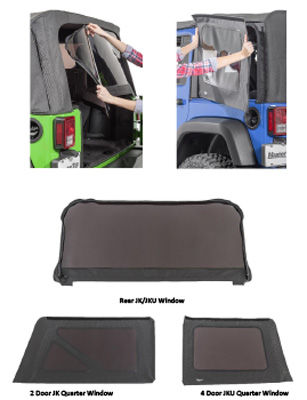
High-quality replacement windows for ’07–’18 JK Jeep Wrangler factory soft top. These windows use OE-quality fabric, zippers and 40-mil glass to provide a custom replacement of worn factory soft-top windows. Simply zip out the old windows and zip in the new MasterTop windows. Available as individual window replacements or as a complete kit.
720-575-5440
www.mastertop.com
PN: 16011xxx
MasterTop
Ultimate Summer Soft Top Combos for Jeep JK Wranglers
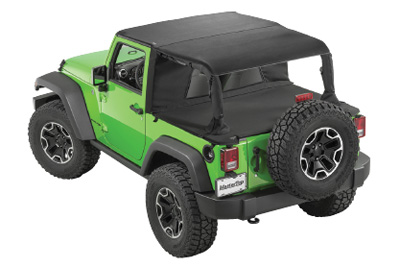
Ultimate summer soft-top combos for Jeep JK Wranglers provides protection from the elements and a great look. Each ultimate combo includes a cable Bimini plus top, a tonneau cover and Windstopper Plus that seals the cab. Constructed of luxurious MasterTwill fabric, these summer soft-top combos are the ultimate in versatility and good looks.
720-575-5440
www.mastertop.com
PN: 14810XXX
MasterTop
Ultimate Summer Soft-Top Combo for ’18–’21 Jeep JLU Soft Top Wranglers
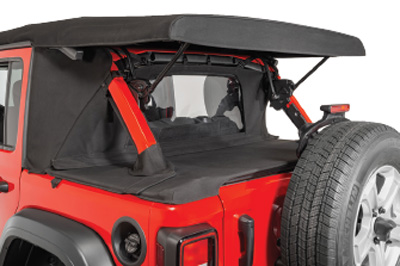
Ultimate summer soft-top combo for ’18–’21 Jeep JLU soft-top Wranglers provides protection from the elements. Each ultimate combo includes a tonneau cover and Windstopper Plus that combine with the factory soft top to seal the cab. Each combo is constructed of luxurious MasterTwill fabric.
720-575-5440
www.mastertop.com
PN: 14850624
MasterTop
Bimini Top Plus Summer Soft Top for ’18–’21 Jeep JLU Wranglers
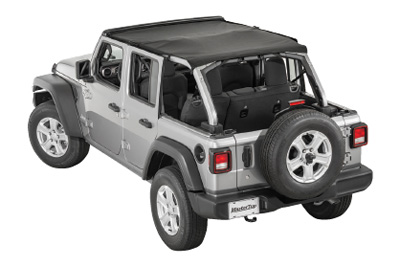
The new Bimini Top Plus summer soft top gives open-air driving with protection from the elements. Each top has an exclusive front rubber seal that helps keep water from entering the cab. Easily attaches with straps and buckles. Available in sailcloth vinyl or luxurious MasterTwill fabric.
720-575-5440
www.mastertop.com
PN: 143006XX
MasterTop
Soft-Top Window Storage Bag for ’18–’21 Jeep JLU Soft-Top Wranglers
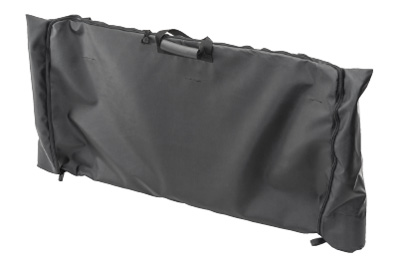
The new soft-top window storage bag for ’18–’21 Jeep JLU soft-top Wranglers provides convenient storage for easily damaged soft-top windows. Constructed of durable vinyl or luxurious MasterTwill fabric with soft felt inner liner sleeves to protect the windows from scratching. Each bag stores/attaches behind the seat.
720-575-5440
www.mastertop.com
PN: 131006XX
MasterTop
Fabric-Only Vinyl Replacement Tops for ’88–’18 Jeep Wranglers
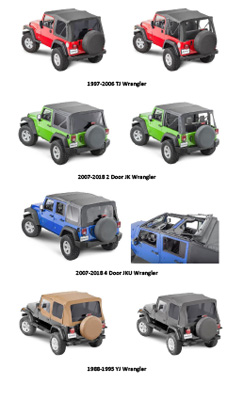
MasterTop fabric replacement tops are designed to upgrade and replace Wrangler factory soft tops. Constructed of durable 28-oz. true U.S.-made sailcloth fabric, 40-mil replaceable windows and OE-quality zippers, this top is a superior soft-top replacement. Each top is custom designed, with applications to fit most Wranglers.
720-575-5440
www.mastertop.com
PN: 15101XXX
MasterTop
Complete Soft Top Kits for ’88–’18 Jeep Wranglers
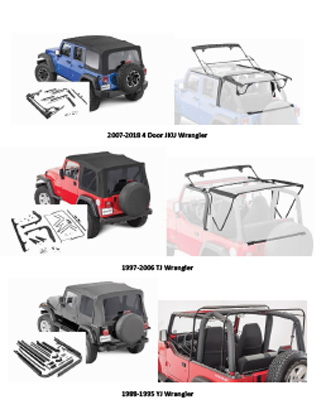
MasterTop Complete Soft Tops Kits include all the hardware and soft-top fabric for a complete soft-top replacement. Perfect for hard-top owners who want to put soft-tops on their Jeeps. OE-style hardware along with a superior quality vinyl or twill soft-top make these tops the ultimate complete soft-top solution for Jeep Wrangler vehicles.
720-575-5440
www.mastertop.com
PN: 15601XXX
MasterTop
Soft-Top Window Roll for ’87–’18 Jeep Soft-Top Wranglers
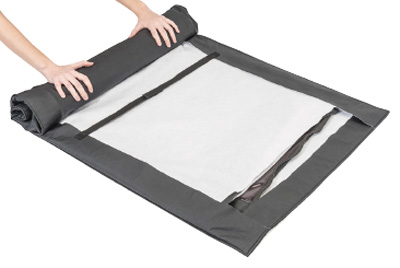
The new Soft-Top Window Roll for ’87–’18 Jeep soft-top Wranglers provides convenient storage for easily damaged soft-top windows. Constructed of durable vinyl or luxurious MasterTwill fabric with soft felt inner liner sleeves to protect the windows from scratching. Each bag stores/attaches behind the seat or rollbar of the Jeep.
720-575-5440
www.mastertop.com
PN: 131003XX
MasterTop
Freedom Top Storage Bag for ’07–’21 Jeep Wranglers
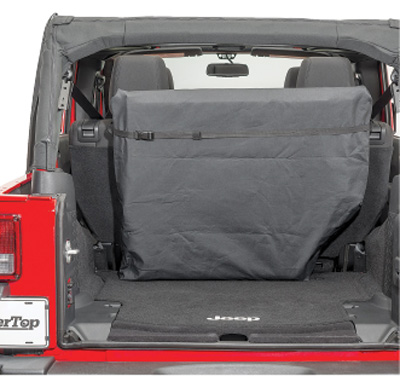
The new Freedom Top Storage Bag for ’07–’21 Jeep Wranglers provides convenient storage for Freedom Panels when removed. Constructed of durable vinyl or luxurious MasterTwill fabric with soft felt inner liner sleeves to protect the panels from scratching. Each bag stores/attaches behind the seat of the Jeep and includes carry handles.
720-575-5440
www.mastertop.com
PN: 131000XX
MasterTop
Full Door Cab Covers for ’92–’21 Jeep Wranglers
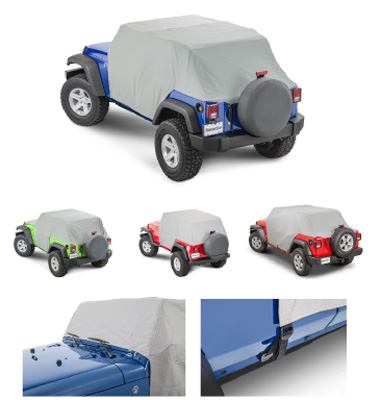
Full Door Cab Covers for ’92–’21 Jeep Wranglers are said to be the perfect solution for protecting the open-air Jeep from the elements. Constructed of durable gray vinyl fabric with a paint-pampering soft interior, these covers are designed to protect the vehicle from the elements. Custom fit for each model-year Jeep, including JLU Wranglers.
720-575-5440
www.mastertop.com
PN: 11110XXX
MasterTop
Freedom Mesh Summer Soft Tops for ’18–’21 Jeep JL/JLU Wranglers
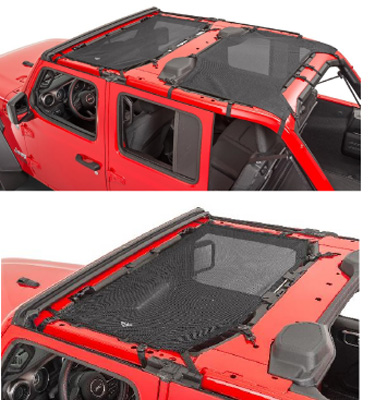
Freedom Mesh Summer Soft Tops provide the ultimate in open-air driving while still having the convenience of keeping the mesh top on when putting a hard or soft top back on a Jeep. Constructed of durable black or red tear-proof, UV-protecting mesh fabric with easy strap and buckle installation.
720-575-5440
www.mastertop.com
PN: 142016XX
MasterTop
Freedom Mesh Summer Soft Tops for ’07–’18 Jeep JK/JKU Wranglers
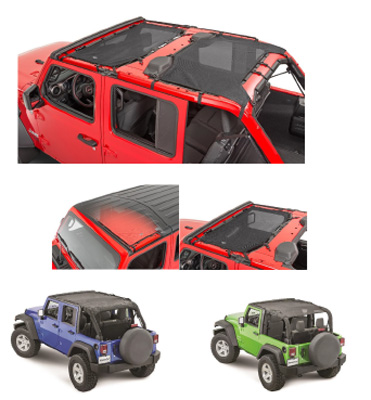
Freedom Mesh Summer Soft Tops provide the ultimate in open-air driving while still having the convenience of keeping the mesh top on when putting a hard or soft top back on the Jeep. Constructed of durable black or red tear-proof, UV-protecting mesh fabric with easy strap-and-buckle installation.
720-575-5440
www.mastertop.com
PN: 14221XXX
MasterTop
Full Door Cab Cover for ’20–’21 Jeep Gladiators
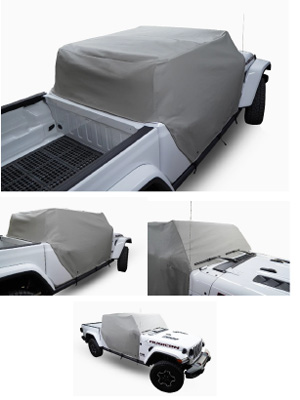
Full door cab cover for ’20–’21 Jeep Gladiators are the perfect solution for protecting open-air Jeeps from the elements. Constructed of durable gray vinyl fabric with a paint-pampering soft interior, these covers are designed to protect the vehicle from the elements. Designed to fit over Gladiators with the soft top or hard top removed.
720-575-5440
www.mastertop.com
PN: 11110709
MasterTop
SkyMaster Fastback Fabric Replacement Top for ’07–’18 Two-Door JK Wranglers
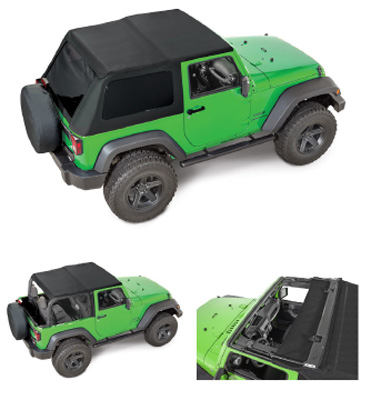
The SkyMaster Fastback Fabric Replacement Top upgrades the OE soft top while using the existing soft-top hardware. Remove the rear bow and install the top. Removable windows and fold-back front section make this top a great upgrade. Available in sailcloth vinyl or MasterTwill fabric.
720-575-5440
www.mastertop.com
PN: 157013XX
MasterTop
MasterTwill Fabric-Only Replacement Tops for ’88–’18 Jeep Wranglers
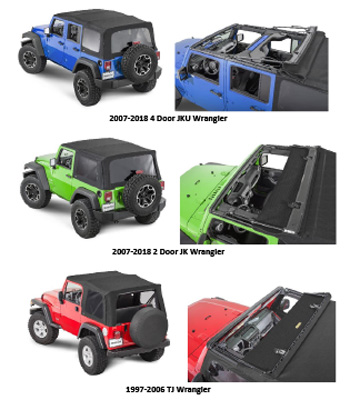
Designed to upgrade and replace Wrangler factory soft tops. Constructed of durable three-layer, 30-oz. twill fabric, 40-mil replaceable windows and OE-quality zippers, this replacement top is one of the finest soft tops available for Jeeps. Each top is custom designed, with applications to fit most Jeep Wranglers.
720-575-5440
www.mastertop.com
PN: 15201XXX
Max Trac Suspension
'20+ Jeep Gladiator (JT) 4.5-in. Lift Kit
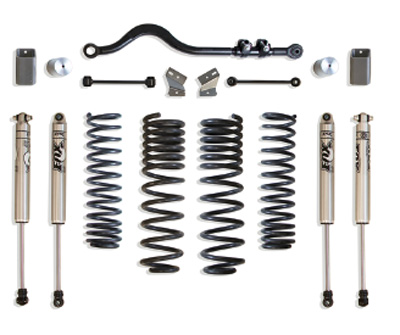
This kit features dual-rate front and rear coil springs that are capable of supporting the weight of any accessories. Included is a forged steel adjustable track bar that can be easily adjusted. This kit also comes with bump-stop extensions, sway-bar links, brake-line extensions and twin-tube shocks, with Fox 2.0 as an upgrade option.
714-630-0363
www.maxtracsuspension.com
PN: K949942F
Max Trac Suspension
'20 GM 2500 and 3500 HD 1–3-in.-Lift Torsion Key
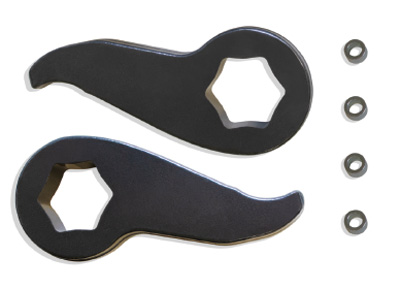
All-new redesigned ’20 GM 2500 HD/3500 HD torsion keys are made from forged steel for maximum strength and powdercoated to last a lifetime. It is a simple, effective way to achieve 1 to 3 in. of lift without compromising ride quality.
714-630-0363
www.maxtracsuspension.com
PN: 841813
Max Trac Suspension
’19+ GM Silverado/Sierra 1500 2WD and 4WD 3-/5-in. Lowering Kits
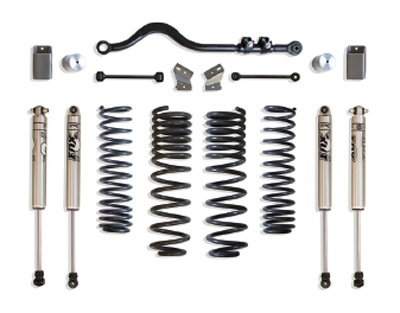
KS331935S features patent-pending lowering spindles made from ductile iron and precision machined to align to the factory specs. Also includes lowering struts to achieve the full 3 in. of front drop. The rear kit is comprised of a flip kit along with hangers that will achieve a full 5 in. of drop without compromising ride quality.
714-630-0363
www.maxtracsuspension.com
PN: KS331935S
Max Trac Suspension
’19+ Ram 1500 2WD 7.0-in. Lift Kit
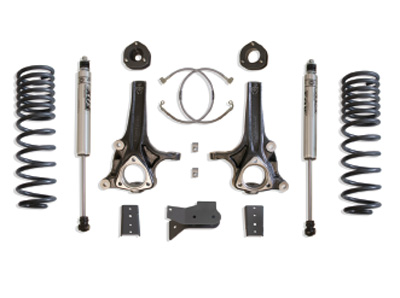
This kit features Max Trac’s iconic 4-in. ductile-iron cast spindles with 3-in. strut spacers in the front and 4-in. dual-rate coil springs in the rear. These coil springs provide soft comfort on the road as well as firmness in rough terrain. The kit also includes rear track-bar brackets and sway-bar end links with Fox 2.0 performance rear shocks.
714-630-0363
www.maxtracsuspension.com
PN: K882774F
Mentor Performance Parts
Fuel Cell
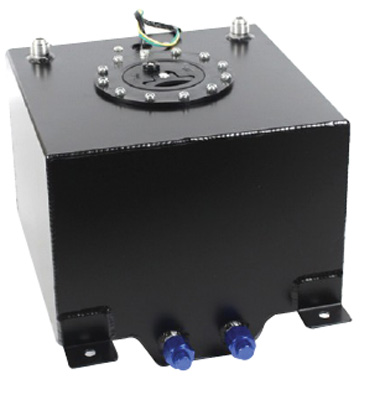
Material: high-quality aluminum. Size: 10, 20, 30, 40, 60 or 80 liters. Colors: silver, black. Application: Universal fit. Specifications: built-in 0–90-ohm fuel level sensor or without sensor; quick-release cap outside; anti-slosh foam inside; quick-release cap outside; gasoline only.
+86-574-87913131
www.mentorparts.com
PN: MP-TA25AS
Metra Electronics Corp.
Aftermarket Replacement Camera for ’18–Up Jeep Wrangler JLs
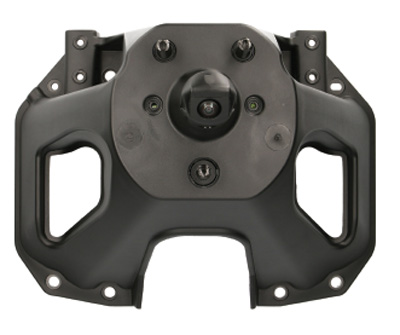
A cost-effective replacement for the rear-tire OEM LVDS camera on ’18–Up Jeep Wrangler JL models. It has an RCA output for aftermarket radios or monitors and can be viewed while driving (when used with a compatible monitor). This direct OE replacement has an improved power circuit and 550 TV line resolution.
386-257-2956
www.metraonline.com
PN: JP-JLKT
Michigan Vehicle Solutions
JK-EXT Jeep Conversion Pickup Kit
734-720-7649
www.mivehiclesolutions.com
Mile Marker Industries
PE5000 5,000-lb. Powersports Winch
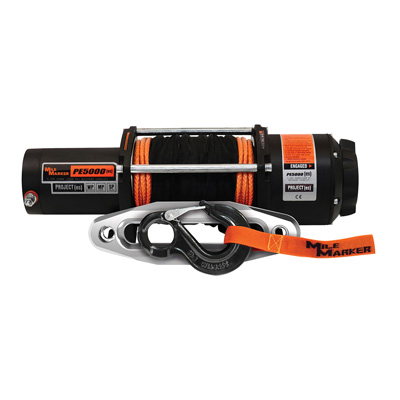
The PE5000 series winch is a mini monster of UTV recovery power packed into a sleek, compact design. Featuring an all-metal three-stage planetary gear system, a submersible 250-amp solenoid and 5,000 lbs. of pulling capacity at only 19 lbs., there is nowhere this winch can’t go.
954-782-0604
www.milemarker.com
PN: 77-53120W
Mile Marker Industries
H12000 12,000-lb. Hydraulic Winch
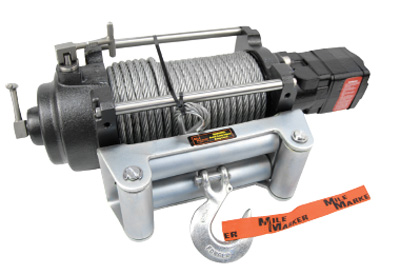
The H12000 hydraulic winch is independent from its solenoid control valve to give more freedom in application and can be mounted to the front or rear of the vehicle as a permanent or detachable recovery system. Utilizing the vehicle’s power steering system as its power source allows the H12000 to run continuously without draining the battery.
954-782-0604
www.milemarker.com
PN: 70-52000C
Mile Marker Industries
SEC12 12,000-lb. Electric Winch
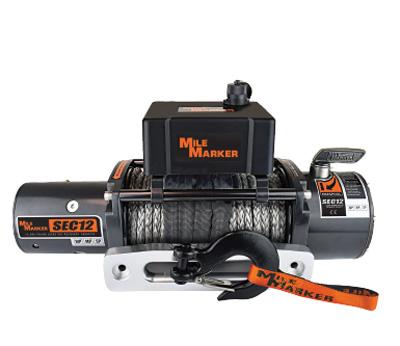
The SEC12 premium Jeep/truck/SUV winch with an impressive 12,000-lb. pull strength stands up to the most aggressive off-road environments. Powerful series-wound motors and rugged planetary gear sets are the backbone of this winch. With robust controls and a fully sealed 400-amp solenoid and body, the SEC12 is an industry-proven winch.
954-782-0604
www.milemarker.com
PN: 76-53251BW
Mile Marker Industries
449SS Premium Locking Hubs
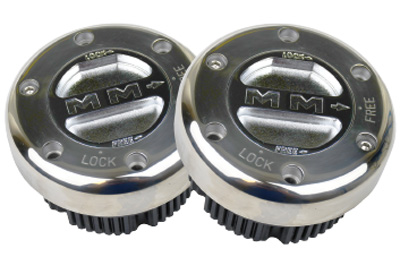
For more than 30 years, Mile Marker has been designing and manufacturing premium locking hubs that were built to last. Using premium-quality materials with durable metal construction, Mile Marker premium locking hubs are made in a wide variety of configurations to fit nearly any vehicle make and model and are designed to exceed industry standards.
954-782-0604
www.milemarker.com
PN: 449ss
myTop-Jeep Life, Simplified
Fastback Powered myTop for the JL Four-Door
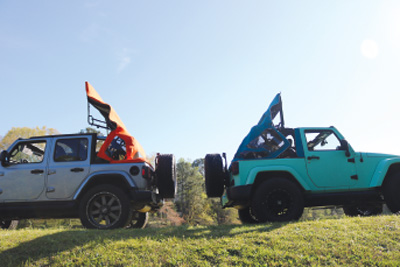
myTop says that it is only electric convertible top for the Jeep Wrangler and has now extended its product line to include a powered myTop for the Jeep Wrangler JL four-door in a fastback shape. The pushbutton activation and the highest-quality materials offer true convenience in six colors for off-road enthusiasts.
404-476-6665
www.mytop.us
PN: JL-4D-FB-01
Ningbo Sanlishin Auto Parts Co. Ltd.
2-in. Front Strut Spacer and Rear Leaf Extended Spring G Shackle Lift Kit for Toyota HiLux Vigo
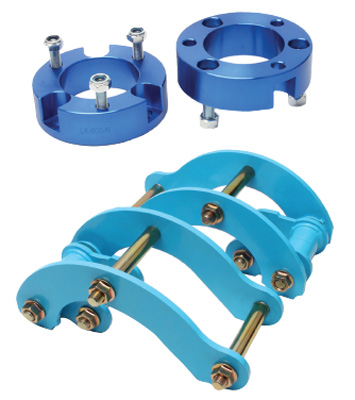
Front and rear lift height: 2 in. Weight: 10.3 kg. Color: black spacer, blue shackle. Position: front and rear. Fitment: Toyota HiLux Vigo. Material: This shackle is made of high-quality iron and PU bushing.
+86-574-88283126
www.chinaliftkits.com
PN: LK-426-T
myTop-Jeep Life, Simplified
JL Fastback Powered myTop for Jeep Wrangler JLUs
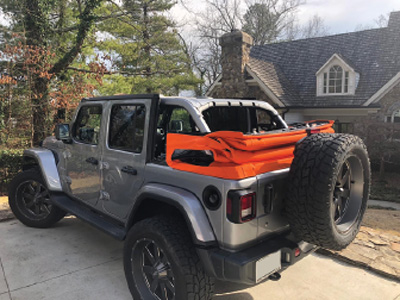
404-476-6665
www.mytop.us
Ningbo Sanlishin Auto Parts Co. Ltd.
2-in. Front Round Shape Lift Kit and 2-in. Rear Extended Shackle Lift Kits for the Ford Ranger PX
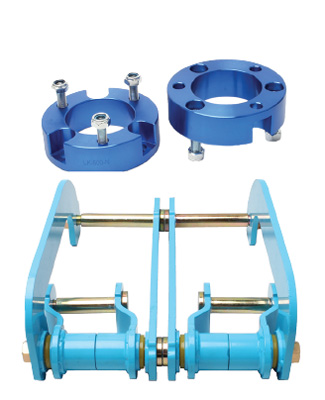
Lift Height: Rear 2 in.; front 2 in. Weight: 9.4 kg. Color: blue. Position: rear. Fitment: Ford Ranger PX.
+86-574-88283126
www.chinaliftkits.com
PN: LK-124-F
Ningbo Sanlishin Auto Parts Co. Ltd.
2.5-in. Front and Rear Leveling Kit for Ford F-250s/F-350s/F-450s
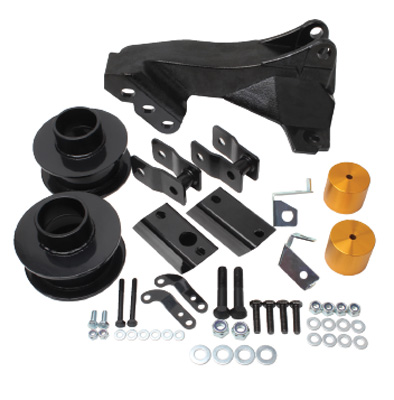
Lift Height: 2.5 in. Weight: 15 kg. Color: black. Position: front and rear. Fitment: ’11–’19 Ford F-250/F-350/F-450.
+86-574-88283126
www.chinaliftkits.com
PN: LK-126-F
Ningbo Sanlishin Auto Parts Co. Ltd.
2-in. Front-Only Lift Kit for Ford F-150 2WDs
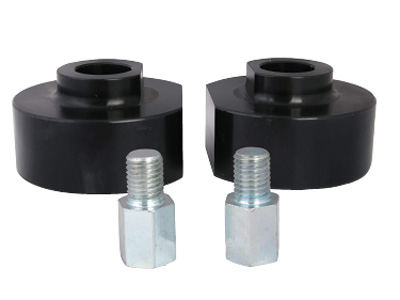
Lift height: front 2 in. Weight: 2 kg. Color: black. Position: front. Fitment: Ford F-150 2WD.
+86-574-88283126
www.chinaliftkits.com
PN: LK-125-F
Ningbo Sanlishin Auto Parts Co. Ltd.
3-in. Front and 2-in. Rear Leveling Lift Kit for Chevrolet Silverado 1500s
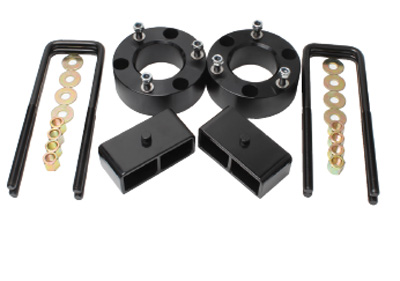
Lift height: front 3 in.; rear 2 in. Weight: 9.4 kg. Color: black. Position: front and rear. Fitment: Chevrolet Silverado 1500.
+86-574-88283126
www.chinaliftkits.com
PN: LK-213-C
Ningbo Sanlishin Auto Parts Co. Ltd.
’99–’20 Chevy Silverado (2WD, 4WD; Six-Lug Models Only)
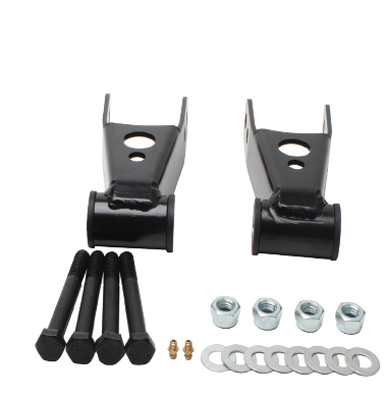
Rear drop height: adjustable 1 to 2 in. Weight: 2.8 kg. Color: black. Position: rear. Fitment: Chevrolet Silverado 1500 2WD, 4WD (six-lug models only).
+86-574-88283126
www.chinaliftkits.com
PN: LK-224-C
Ningbo Sanlishin Auto Parts Co. Ltd.
3-in. Front Leveling Lift Kit for Toyota Tundra New Models
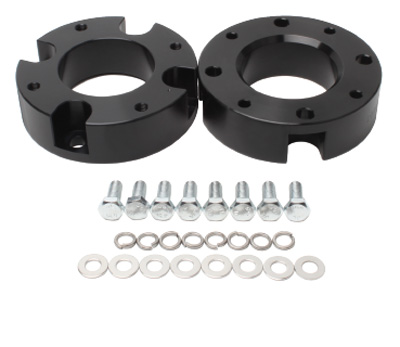
Front lift height: 3 in. Weight: 2.6 kg. Color: black. Position: front. Fitment: Toyota Tundra new model. Material: These leveling lift kits are CNC machined out of aluminum and then anodized black to match vehicle’s factory suspension. Includes 10.9-grade bolts.
+86-574-88283126
www.chinaliftkits.com
PN: LK-411-T
Ningbo Sanlishin Auto Parts Co. Ltd.
3-in. Front and 2-in. Rear Leveling Lift Kit for Toyota Tacomas
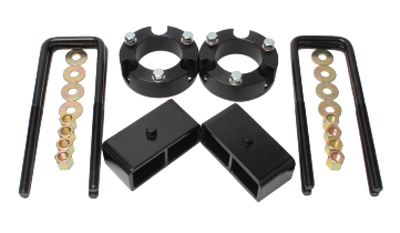
Lift height: front 3 in., rear 2 in. Weight: 8 kg. Color: black. Position: front and rear. Fitment: Toyota Tacoma new model. Material: The front strut spacers are CNC machined out of billet aluminum, then anodized black to match the factory suspension. The rear blocks are made from carbon steel, with 10.9 U-bolts.
+86-574-88283126
www.chinaliftkits.com
PN: LK-417-T
Paramount Automotive
Guardian Mid-Width Front Bumper for ’17–’21 Jeep Wrangler JKs/JLs and Gladiator JTs
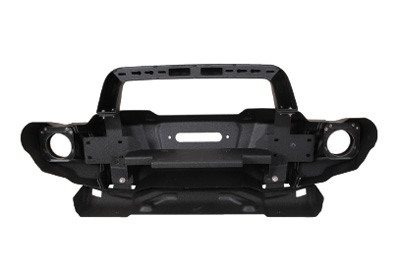
Paramount 81-20301 ’17–’21 Jeep Wrangler JK/JL and ’20 Gladiator Guardian mid-width front bumper.
909-781-6492
www.paramount-automotive.com
PN: 81-20301
Paramount Automotive
Front Plastic Inner Fender Liners for ’18–’21 Jeep Wrangler JLs/JTs
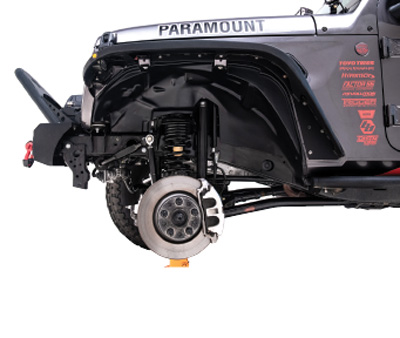
Paramount 81-21202 front plastic inner fender liners for ’18–’21 Jeep Wrangler JL/JT.
909-781-6492
www.paramount-automotive.com
PN: 81-21202
Paramount Automotive
Gen 2 Tri-Tube Rock Sliders for ’18–’21 Jeep Wrangler JLs
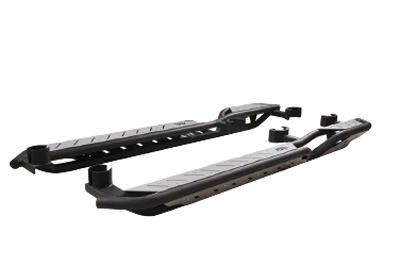
Paramount 81-20600 Gen 2 tri-tube rock sliders (four door) for ’18–’21 Jeep Wrangler JL.
909-781-6492
www.paramount-automotive.com
PN: 81-20600
Patriot Campers
X3
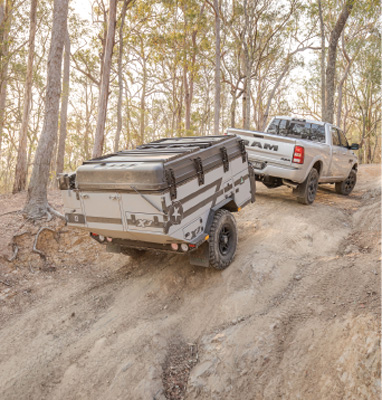
The first of its kind by Patriot Campers, the X3 is a live-in camper trailer that combines the company’s famous outdoor-living, 4WD-track-beating, tough-as-nails camper trailer with an easy-to-use, easy-to-set up, convenient indoor living area. Get the comfort of a live-in camper trailer paired with unmatched off-roadability and quality engineering.
+07-5597-0638
www.patriotcampers.com.au/x3
Paramount Automotive
Trail Front Doors With Mirrors for ’18–’21 Jeep Wrangler JL/Gladiator JTs
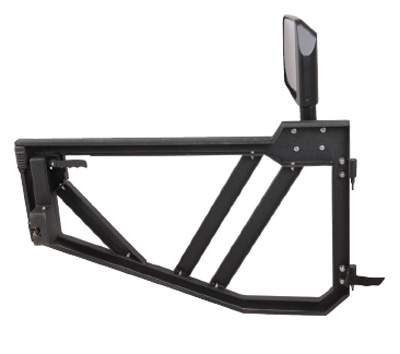
Paramount Jeep 81-20900 trail front doors with mirrors ’18–’20 Jeep Wrangler JL.
909-781-6492
www.paramount-automotive.com
PN: 81-20900
PWR Advanced Cooling Technology
Universal 31x19 Off-Road Radiator With Brushless Fans
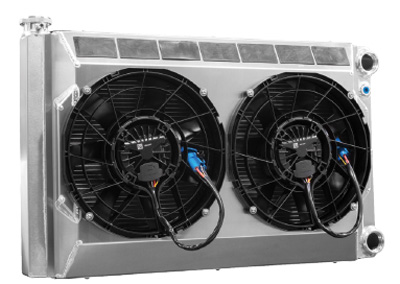
PWR’s universal off-road radiator uses the company’s high-efficiency extruded tube paired with the same fin technology used in race categories worldwide. Pairing them with SPAL’s variable-speed brushless fans ensures that users will get the greatest amount of air traveling through their radiators at all times.
317-293-4100
www.crracing.com
PN: CR-UC-RPR,044D
Pelican Products
Cargo Cases
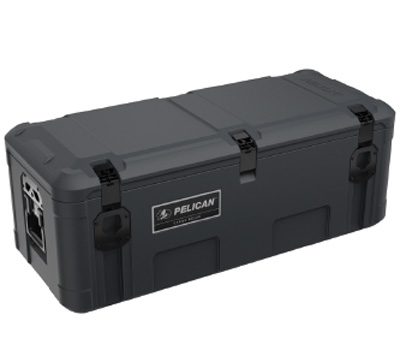
Pelican says that its cargo cases are the perfect solution to keep valuables and gear organized, secured and protected. Built with the legendary performance and quality Pelican is known for, Pelican cargo cases are extremely durable and are weather-tested. Ready-to-mount-and-protect cases can be attached to a roof rack or a truck bed or stored in an SUV.
800-473-5422
www.pelican.com
Quadratec Inc.
Q-Performance 10,000-lb. Stealth Winch With Synthetic Rope
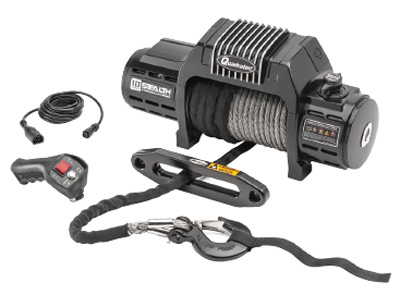
A performance tool every bit as powerful as it is beautiful and affordable. The 4.9hp series-wound waterproof motor with wireless remote control offers two never-seen-before in a removable clutch lever and amber LED winch spool light strip. Finned-aluminum solenoid housing, class-leading gear ratios for fast line speed, low draw, IP67 rating.
800-797-5857
www.quadratec.com/wholesale
PN: 92122.4011
Quadratec Inc.
Aluminum Modular Engine and Transmission Skidplate for ’07–’18 Jeep Wrangler JKs
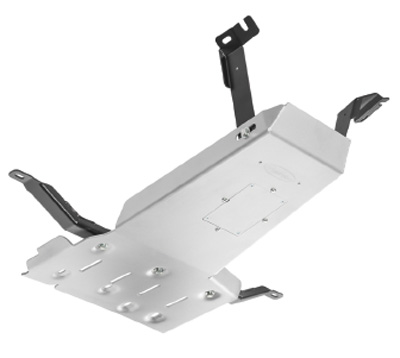
Stamped 5052 aluminum provides lightweight and strong underbody protection. Easy no-drill installation. Features removable access panel to the oil drain plug, recessed bolt heads, and drainage provisions. The 6mm-thick aluminum panels provide superior strength and flexibility while minimizing weight. Laser cut.
800-797-5857
www.quadratec.com
PN: 12500.0212
Radflo Suspension Technology
2.5 Jeep JL/JT Billet Piggyback Mount Suspension System
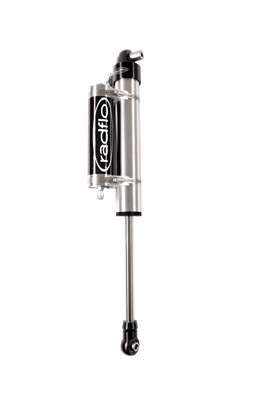
Radflo Suspension Technology announces the release of its performance suspension components for the ’18+ Jeep JL and ’20+ Jeep JT. The larger shock diameter allows for more oil flow through the piston and therefore a better-performing system that lasts longer before fading. Performance for both on-road and off-road that users can count on.
714-965-7828
www.radflo.com
PN: 6SJ 008 1A
Radflo Suspension Technology
2.5 GM ’19+ Truck Performance Suspension System
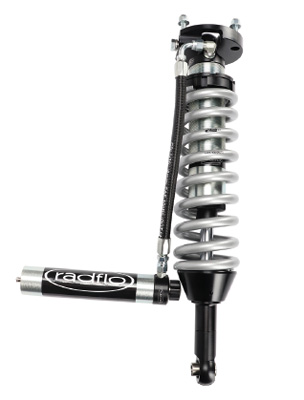
Radflo Suspension Technology announces the release of its performance suspension components for ’19+ GM trucks equipped with TrailBoss or AT4 2-in. factory lift. The larger shock diameter allows for more oil flow through the piston and therefore a better-performing system that lasts longer before fading.
714-965-7828
www.radflo.com
PN: 6CC 005 0R
Redarc
RedVision
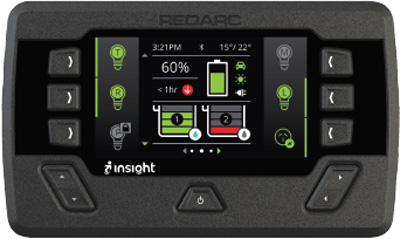
RedVision Total vehicle management system by Redarc is the ultimate control and monitoring system. It allows the user to control multiple onboard devices in a 4x4, RV, camper trailer or motorhome in one place.
+61-8-8322-4848
www.redarcelectronics.com
PN: TVMS1280-NA
Redarc
Tow-Pro Liberty
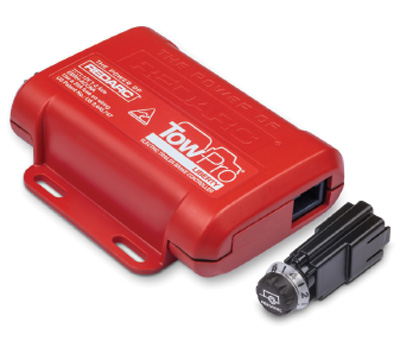
The Redarc Tow-Pro Liberty is the latest innovation in brake-controller technology that features inertia-sensing technology perfect for hauling day to day or towing in highway conditions. Factory look and no more knee knocking.
+61-8-8322-4848
www.redarcelectronics.com
PN: EBRH-ACCNA
Redarc
BCDC1212T
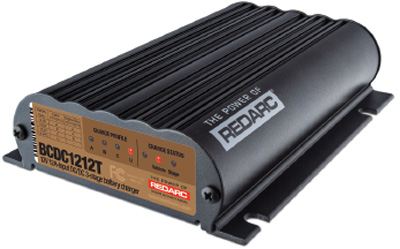
The BCDC1212T is a 12-volt, 12-amp input limited charger and works in both 12V and 24V vehicles. It is compatible with seven-way round RV plugs for an easy installation in any trailer. This BCDC1212T is ideal for trailers that have hydraulic pumps and winches, such as dump trailers, boat trailers, car trailers, liftgate trucks and camper vans.
+61-8-8322-4848
www.redarcelectronics.com
PN: BCDC1212T
RIPP Superchargers
’07–’18 Jeep Wrangler JK Cat-Back Exhaust
718-815-1313
www.rippmods.com
RIPP Superchargers
’16–’20 V6 Toyota Tacoma Coil Pack Upgrade
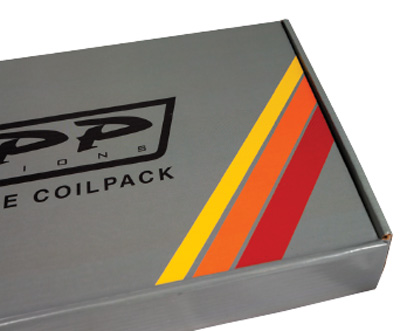
Direct bolt-in 20–30 whp gains on 91-octane fuel; 40% more power than OEM coil packs. Heat-resistant casing. Improved throttle response. Improved mpg. No tuning required. Heavy-duty primary core winding. Higher-quality iron core with stronger laminations. Increased amount of secondary core windings. Sustained power delivery.
718-815-1313
www.rippmods.com
PN: TCP35
RIPP Superchargers
’18–’20 Jeep Wrangler JL and JT Gladiator Supercharger Kit
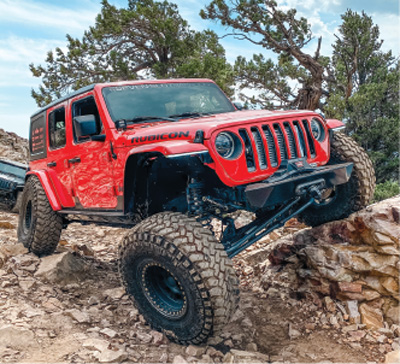
718-815-1313
www.rippmods.com
RIPP Superchargers
Prototype ’13–’18 Ram 1500 3.6L V6 Cat-Back Exhaust
T304 full stainless-steel construction. Mandrel-bent glass-packed multiple baffle muffler. Distinct rumble; no drone. High clearance for true off-road enthusiasts. Corrosion-resistant. Single-tip design. Easy bolt-on installation. No annoying buzzing, racer sound.
718-815-1313
www.rippmods.com
PN: 1318RAM36CBE
RIPP Superchargers
Prototype Jeep Gladiator JT Cat-Back Exhaust
718-815-1313
www.rippmods.com
RIPP Superchargers
’13–’18 3.6L V6 Ram 1500 Supercharger Kit
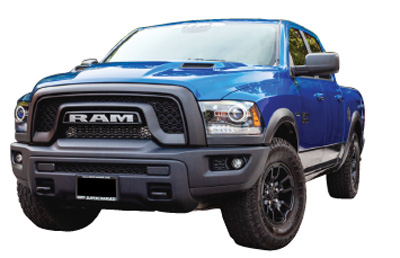
Bolt-on 450 whp right out of the box, 200 whp over stock. Vortech V3 Si Trim self-contained centrifugal supercharger. Mandrel-bent piping. Vortech max-flow blow-off valve. FIC primary injectors. HP Tuners cable with credits to license ECU. Modified PCM. RIPP proprietary MAP sensor.
718-815-1313
www.rippmods.com
PN: 1318RAM36SDS
RIPP Superchargers
Jeep Wrangler 3.8L V6 Coil Pack Upgrade
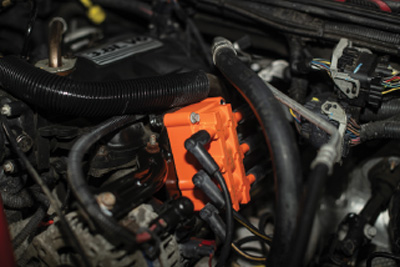
Provides 8% more power than OEM. Direct plug-and-play swap. Heat-resistant outer housing. Improved throttle response. Improved mpg. No tuning required. Heavy-duty primary core winding. Higher-quality iron core with stronger laminations. Increased amount of secondary core windings. Sustained power delivery at all rpm.
718-815-1313
www.rippmods.com
PN: 0711CPK38JK
Rock Slide Engineering
JL/JT 50-in. LED Light-Bar Bracket
A 50-in. LED light-bar bracket for the Jeep JL and JT. Attaches to the Rock Slide Engineering cowl lower LED light bracket. Uses factory bolt holes. Simple installation without harming any factory surfaces. Powdercoated black, made in the U.S.A.
435-752-4580
www.rockslideengineering.com
PN: AC-WS-201-JL
RockslideEngineering.png
Rock Slide Engineering
EZ-Plate
The EZ Plate is the solution for mounting a license plate to a spare tire after adding an aftermarket rear bumper. It attaches quickly to the spare tire with the provided adjustable strap and will fit any size spare tire. Made from 11-gauge aluminum and comes
powdercoated black. Made in the U.S.A.
435-752-4580
www.rockslideengineering.com
PN: AC-EZ-LP
Rock Slide Engineering
Hitch Slider
The receiver-hitch step slider provides off-road protection to the bumper and receiver hitch and a fixed step to allow access to get into a bed or reach a roof rack. Slides into the receiver and attaches like a regular hitch. Sleek look and function. Made from thick 7-gauge steel and comes powdercoated black. Made in the U.S.A.
435-752-4580
www.rockslideengineering.com
PN: AC-RH-SS
Rock Slide Engineering
Step Slider
Updated with an all-new internal design. New link-less system simplifies the operating mechanism and reduces moving parts that can wear out. Fully automatic deploying step that drops 12 in. to allow easy access to Wranglers and Gladiators and protection when off-roading. Fast, quiet, maintenance-free. Powdercoated black. Made in the U.S.A.
435-752-4580
www.rockslideengineering.com
PN: BD-SS-200-JL4
Rock Slide Engineering
R-Step
Powered bed access step for Jeep Gladiator. Versions for all trucks soon. Two-step ladder deploys from a hidden box behind the bed to allow access to climb up to the bed or reach roof racks. Made from 11-gauge steel, powdercoated black. Includes built-in slider on passenger side and matching rear slider for driver’s side for off-road protection. Made in the U.S.A.
435-752-4580
www.rockslideengineering.com
PN: BS-100-JT4
Rock Slide Engineering
JL Rigid-Series Rear Shorty Bumper
Rigid-series rear shorty bumper for the Jeep JL. Very low profile to protect the rear of the vehicle and provide the optimum in departure angle. Includes integrated receiver hitch, safety chain attachments, 1/2-in. tow-hook mounts, and cutout for rear tire. Integrated mounts for rear sensors. Made of 3/16-in. steel powdercoated black, and made in the U.S.A.
435-752-4580
www.rockslideengineering.com
PN: RB-F-200-JL
Rock Slide Engineering
JK Rigid-Series Rear Shorty Bumper
Rigid-series rear shorty bumper for the Jeep JK. Very low profile to protect the rear of the vehicle and provide the optimum in departure angle. Includes integrated receiver hitch, safety chain attachments, 1/2-in. tow-hook mounts, and cutout for rear tire. Integrated mounts for rear sensors. Made of 3/16-in. steel powdercoated black, and made in the U.S.A.
435-752-4580
www.rockslideengineering.com
PN: RB-F-200-JK
Rock Slide Engineering
Step Slider Stainless-Steel Skidplate
Heavy-duty skidplate for the Rock Slide Engineering Step Slider. Made from 3/16-in. stainless steel. Bolts to the Step Slider to provide protection on the most rugged rock-crawling trails. Has a window that allows the Step Slider step to open and close. Comes in natural stainless steel or powdercoat. Made in the U.S.A.
435-752-4580
www.rockslideengineering.com
PN: AX-SS-SPS-JL4
RockJock 4x4 by John Currie
Jeep JT Gladiator Pro Edition 4-in. Suspension Lift
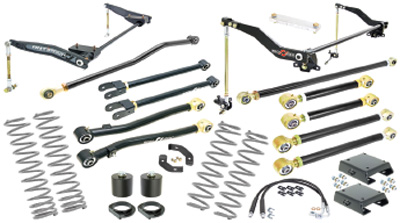
RockJock’s Pro Edition Johnny Joint suspension system with anti-rock sway bars for the Jeep JT Gladiator delivers a smooth, comfortable on-road ride with the ultimate in off-road capability. RockJock Suspension Systems feature high-quality, durable components that set them apart from the competition—all in a complete, direct bolt-on kit.
714-367-1580
www.rockjock4x4.com
PN: RJ-150002-101
RockslideEngineering.png
Rock Slide Engineering
JL/JT Cowl LED Light Bracket
Jeep JL/JT cowl light-bar brackets for LED pod lights. Replaces the factory cowl cover. Uses factory attachment points. Can mount two square LED pods. Can attach the Rock Slide upper 50-in. LED light-bar bracket and mount both a 50-in. LED bar and lower LED pods or use as is for the lower pods. Powdercoated black, made in the U.S.A.
435-752-4580
www.rockslideengineering.com
PN: AC-WS-200-JL
RockJock 4x4 by John Currie
Jeep JT Gladiator Anti-Rock Rear Sway Bar
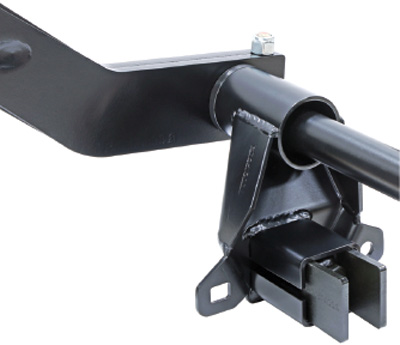
RockJock’s anti-rock rear sway bar kit for the Jeep JT, when used in conjunction with a front anti-rock sway bar, provides balanced performance of the front and rear suspension for rugged off-road conditions. Unit provides increased traction by balancing and distributing weight and traction over all four tires. Also ideal in long-travel applications.
714-367-1580
www.rockjock4x4.com
PN: RJ-256200-101
RockJock 4x4 by John Currie
Jeep JT Gladiator Sport Edition 4-in. Suspension Lift
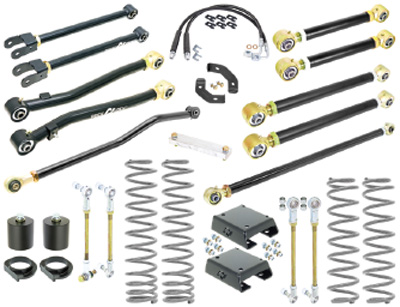
The RockJock Sport Edition Johnny Joint suspension system for the Jeep JT Gladiator delivers a smooth, comfortable on-road ride with the ultimate in off-road capability. RockJock Suspension Systems feature high-quality, durable components that set them apart from the competition—all in a complete, direct bolt-on kit.
714-367-1580
www.rockjock4x4.com
PN: RJ-150001-101
Saber Offroad
SaberPro Pink Reflective Double-Braided Winch Rope
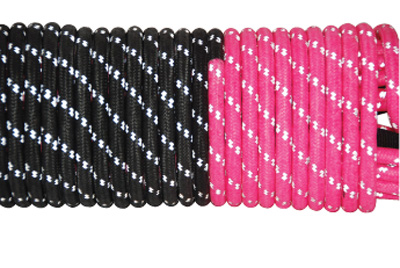
Welcome to the SaberPro double-braided winch rope: 5/12-in., 100 ft., 17,600 lbs. This rope is double braided with SaberPro, the company’s proprietary fiber, designed to be tough, durable and ready for anything.
+61-3-87992974
www.saberoffroad.com/product/saberpro-pink-double-braided-winch-rope
PN: SBR-DBWR-P
50201_1.png
Romik
RPD-C Connect Running Boards
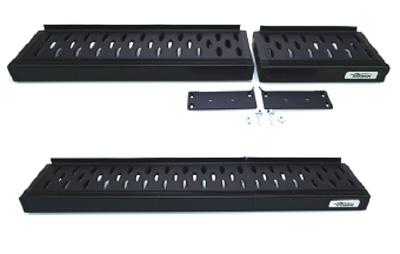
The Romik RPD-C Connect running board is designed for easy storing and shipping. Distributors can stock these products in a standard rack, since the box is only 65x16x8. RPD-C Connect comes with all mounting hardware inside the box. Fitments for Ford Transit, Dodge ProMaster or MB Sprinter make this an essential part for fleet services.
610-443-2122
www.romik.com
PN: 82382329
Saber Offroad
Rope-Friendly Recovery Hitch
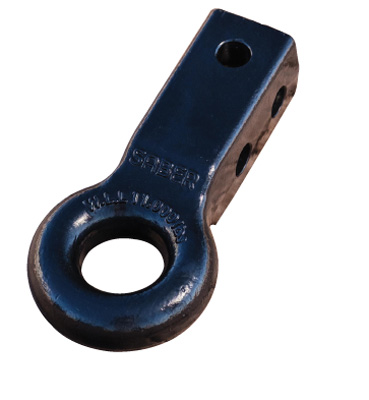
The Saber rope-friendly recovery hitch has an innovative design to provide users with a safer and stronger way to attach ropes for vehicle recovery. It has been specially designed to provide a larger bend radius suited to soft shackles, removing the requirement for metal shackles. Tested to 77,000 lbs. with no deformation and without breaking.
+61-3-78992974
www.saberoffroad.com/product/rope-friendly-recovery-hitch-steel
PN: SBR-RFRH1
Saber Offroad
Ezy-Glide Recovery Ring
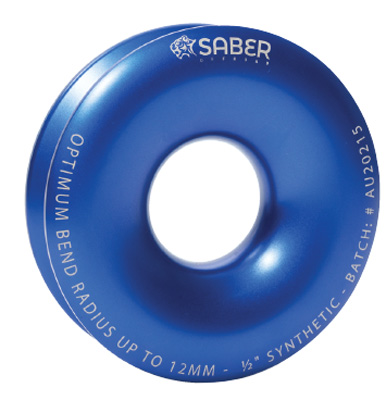
There is not a ring on the market like the Ezy-Glide recovery ring. Saber Offroad has designed a free-form central core to better support soft shackles and reduce friction. This ring has an internal channel design suitable for synthetic winch ropes of 5/12-in. or above, reducing the chance of failure due to not complying with the optimum bed radius of the rope.
+61-3-78992974
www.saberoffroad.com/product/ezy-glide-recovery-ring-new
PN: SBR-12BRR
51736_1.jpg
Saber Offroad
HDX 24,000 Kilogram Technora-Bound Soft Shackle
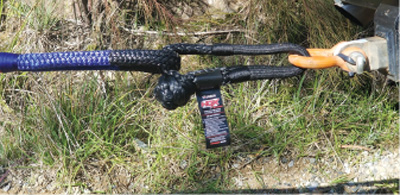
This shackle offers not only a 53,000 lbs. minimum breaking strength, but the Technora binding also offers truly cut-resistant protection for the SaberPro (a proprietary blended coated fiber) core. Saber Offroad says that there is simply not a more durable shackle on the market anywhere today.
+61-3-78992974
www.saberoffroad.com/product/hdx-24000kg-technora-bound-soft-shackle
PN: SBR-24KBSSB
Smittybilt
Tent
310-762-9944
www.smittybilt.com
Specialty Products Co./SPC Performance
Chevy/GMC C10 Truck Adjustable Upper Control Arms (Pair)
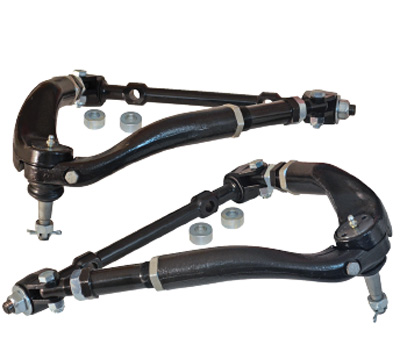
Patented design to modernize the front suspension on the classic Chevy/GMC truck/SUV. SPC uses a 1/2-in. extended ball stud to improve camber curve. The fully rebuildable and greaseable ball joints can also be customized with OE-length and 1/4-in. extended studs.
800-525-6505
www.specprod.com
PN: 97190
Specialty Products Co./SPC Performance
Ford Ranger Front Upper Adjustable Arms (Pair)
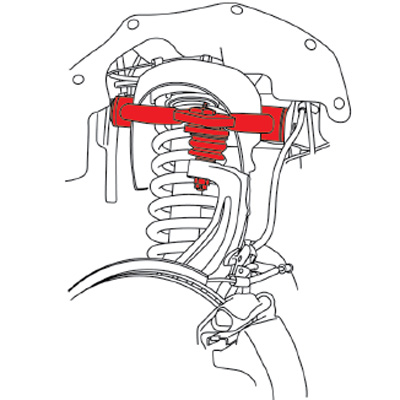
Improve droop travel, drivability and tire wear with SPC’s adjustable front upper control arms. Fit bigger tires without rubbing fenders. Greaseable ball joint and rubber isolated xAxis bushings are designed to correct alignment angles on standard-height and lifted and lowered vehicles.
800-525-6505
www.specprod.com
PN: 25670
Supreme Suspensions
’09–’14 Polaris Sportsman 550 2-in. Full Suspension Lift Kit
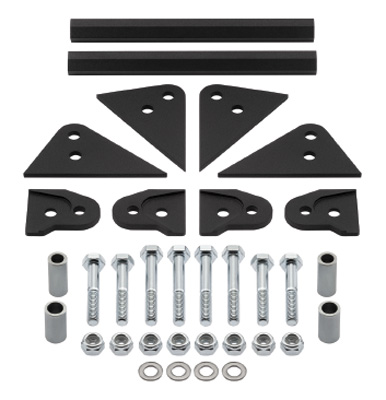
Includes four front lift brackets, four rear lift brackets and two sway bar relocating brackets. Plasma cut for fitment and performance. Protective coating to prevent oxidation/rust. Increases ground clearance and provides a firmer, responsive suspension. Allows for installation of plus-sized tires. Completely bolt-on.
888-810-6791
www.supremesuspensions.com
PN: POSP09FK2020
Strapworks LLC
Adjustable Tri-Tire Tie-Down
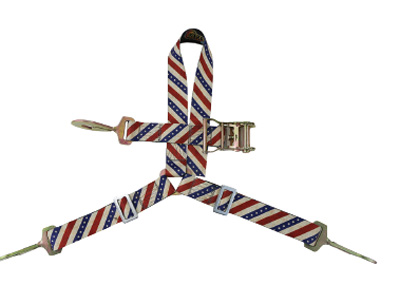
The 10K Tri-Tire tie-down is completely adjustable for various size tires. The price includes private-label branding or team ID. Made in the U.S.A. Choose a pattern or, with a three-unit minimum, submit a custom pattern.
541-741-0658
www.strapworks.com
PN: TTTD
Supreme Suspensions
Toyota Tundra Upper Control Arms
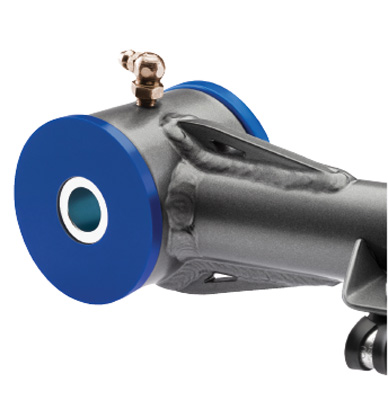
Optimize front axle alignment and prevent vibrations. Includes a set of two steel tubular uniball upper control arms. Uses 4130 chromoly steel construction. Laser cut and CNC-bent tubes with high-quality welds. Stainless-steel 1.25 in. PTFE-lined uniball bearings. Features 90-degree angled Zerk fittings. High-density polyurethane bushings and 17-4PH misalignment adapters.
888-810-6791
www.supremesuspensions.com
PN: TYTU07CTRARM
Supreme Suspensions
Patent-Pending Adjustable Shock Extender
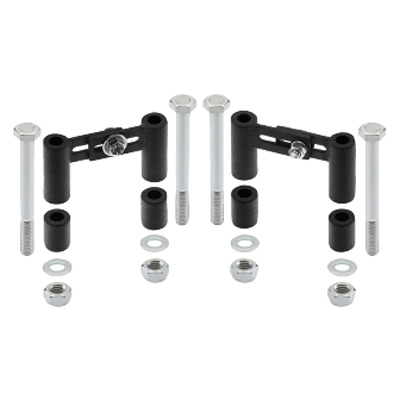
Shock extender set laser-cut finished with a proprietary protective coating to prevent rust, ensuring lifetime dependability. Shock relocation brackets engineered to reduce the over-extension of shock pistons, eliminating the need for aftermarket extended shocks. Includes two additional 1-in. spacers to provide extra length to accommodate a higher lift.
888-810-6791
www.supremesuspensions.com
PN: UNVTIESHKEXT
Supreme Suspensions
’99–’04 Ford F-250/F-350 Track Bar
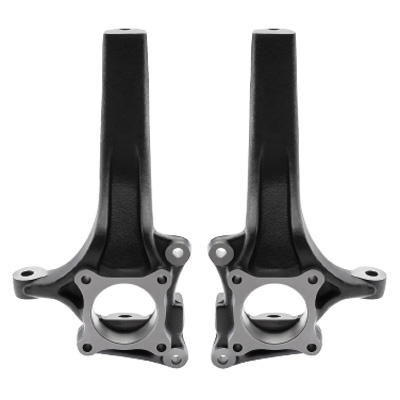
Adjustable track bar made completely out of steel components and designed by experts. On-vehicle turnbuckle adjustability allows alignment to the axle in minutes. High-strength carbon steel design ensures high stability and allows a lift for the vehicle up to 6 in. State-of-the-art powdercoating ensures a double level of protection.
888-810-6791
www.supremesuspensions.com
PN: FDF205TRKBAR
Supreme Suspensions
Patent-Pending Single-Weld Steel Lift Blocks
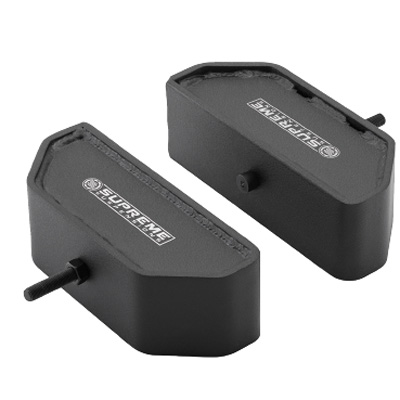
Five-bend single-weld front lift blocks machined from one 1/4-in.-thick plate of steel. GMAW seam and fillet welding to ensure maximum strength and a lifetime of dependability. Alignment pin holes milled, providing a 1/32-in. alignment tolerance between top and bottom to ensure stability. Lab tested pressure of 125,000 lbs. with no yielding observed.
888-810-6791
www.supremesuspensions.com
PN: FDEC99FL3500
Supreme Suspensions
Poly Pro Multi-Fitment Spacers
Includes two front strut spacers and six heavy-duty strut stud extenders. Proprietary polyurethane blend prevents breakdown. This kit leaves no metal-to-metal contact, preventing squeaks. Reduce road noise and vibration commonly associated with lifts and plus-sized tires. No special tools required; installs without disassembling the strut assembly.
888-810-6791
www.supremesuspensions.com
PN: UNVTRKFL2000
Supreme Suspensions
U-Bolts
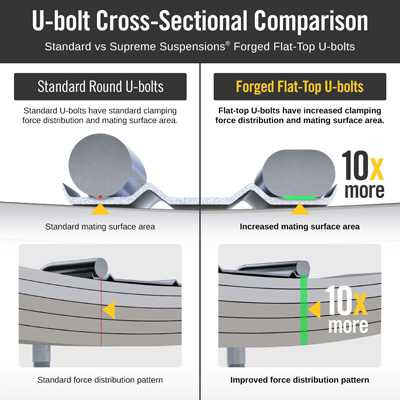
An improved mounting solution with premium forged flattop U-bolts. Provides superior strength and axle position retention. Forging process condenses metal grain structures, significantly increasing tensile strength. Flattop design increases contact mating area with leaf springs, providing more clamping force compared to traditional U-bolts.
888-810-6791
www.supremesuspensions.com
PN: BOLTU3SQ1025
Supreme Suspensions
Wheel Spacers
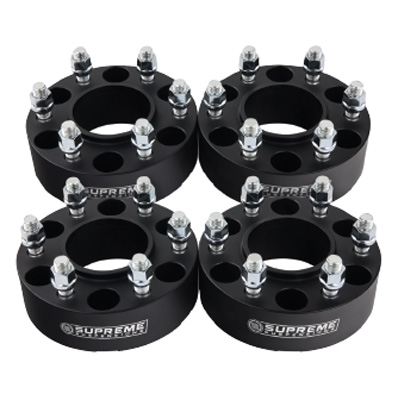
Pro-Billet wheel spacers are precision engineered to widen track width and accommodate wider custom rims and tires. They are CNC machined from solid blocks of T6 aircraft billet and receive a special anodized coating. Each spacer features splined studs that are pressed into place rather than glued, as are many lesser wheel spacers on the market.
888-810-6791
www.supremesuspensions.com
PN: FDF104WS0015
Supreme Suspensions
Rear Steel Lift Block With Bump Stop
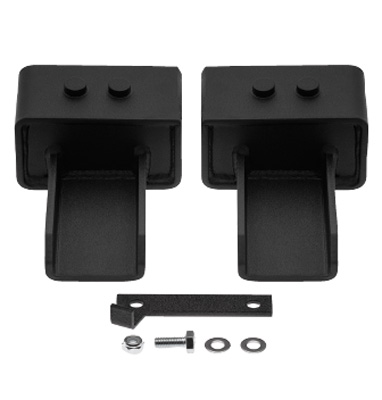
HD steel blocks for lifting the rear of a vehicle. Using heavy-duty GMAW seam and fillet welding processes, each lift block is machined from a one-piece CNC-formed steel frame and reinforced with 1/4-in. thick CNC plasma-cut support walls for maximum strength and stability. These heavy-duty lift blocks are fabricated with built-in bump-stop plates.
888-810-6791
www.supremesuspensions.com
PN: FDF104RL3000
Supreme Suspensions
’15–’20 Polaris Sportsman SP 570 2-in. Full Suspension Lift Kit
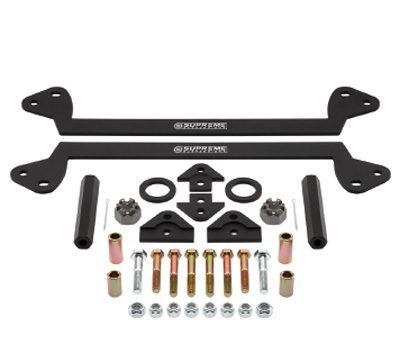
Includes two-piece front lift bracket set, four-piece front lift bracket set, two-piece sway bar bracket set, two-piece axle spacer set, two-piece axle nut set. Laser cut for fitment and performance. Increases ground clearance and provides a firmer responsive suspension. Allows for installation of plus-sized tires. Completely bolt-on.
888-810-6791
www.supremesuspensions.com
PN: POSP15FK2020
Supreme Suspensions
3-in. Front Lift Kit With Bump Stops for ’05–’20 4x2 and 4x4 Nissan Frontiers
888-810-6791
www.supremesuspensions.com
52400_1.jpg
Switch Electric Vehicles
The Switch Light Electric Pickup
The Switch chassis can be configured from a cool four-passenger ride to a small utility truck for a carpenter, surfer or gardener. It can even be custom built to act as a coffee wagon. Middle seat can spin around to serve customers seated at the custom coffee counter.
707-829-5746
www.switchvehicles.com
Switch Electric Vehicles
The Switch Electric EUV
The Switch chassis can be configured from a cool four-passenger ride to a small utility truck for a carpenter, surfer or gardener. It can even be custom built to act as a coffee wagon. Middle seat can spin around to serve customers seated at the custom coffee counter.
707-829-5746
www.switchvehicles.com
PN: SL/EV-UTIL
50130_1.jpg
Tire Stickers
Cerebrum Boost Smart Tire Sensor Solution
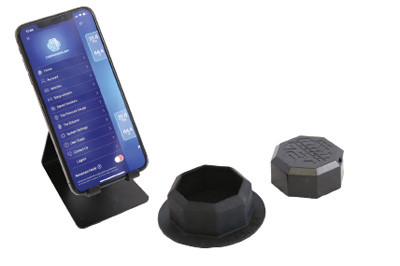
Said to be the first aftermarket tire sensor capable of measuring advanced tire analytics, including pressure, temperature and tread depth. Released in 2019 and now features load measurement. Ideal for trucks, RVs and fleets. Cerebrum sensors can connect to most wireless receivers, and analytics are available in the mobile app and cloud for telematics.
424-272-0321
www.tirestickers.com
PN: CEREBRUMBOOST
Tarox Performance Brakes
Sport Front Brake System for Toyota Land Cruiser 80 Series
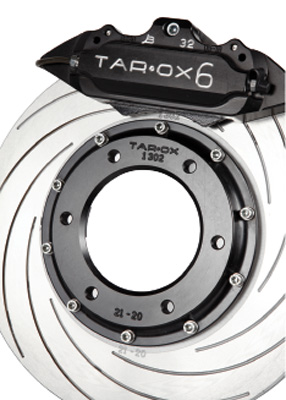
Tarox Sport brake kits for off-road vehicles offer improved braking performance with great pedal feel and modulation. The latest kit for the Toyota Land Cruiser 80 series features 335x32mm two-piece rotors. The B32 six-piston calipers even fits behind the stock 16-in. wheel. Custom made in Italy to order from the highest-quality materials.
304-715-3322
www.tarox.com
PN: KMTO1302
Titan Fuel Tanks
52-Gallon XXL Direct-Replacement Fuel Tank for ’13–’21 Dodge Ram CCSBs
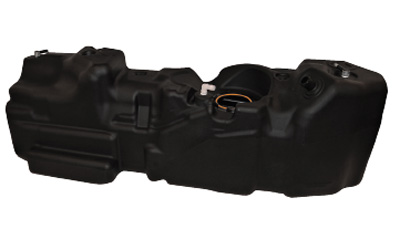
Extra-large 52-gal. direct-replacement fuel tank made for ’13–’21 Dodge Ram 2500 and 3500 crew cab, short-bed trucks equipped with the Cummins diesel engine. It is made of cross-linked polymer, which carries a lifetime warranty.
800-728-4982
www.titanfueltanks.com
PN: 7030113
Titan Fuel Tanks
’17–’21 Ford Cab and Chassis 40-gal. Auxiliary Fuel System
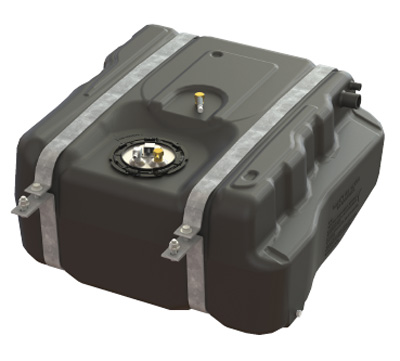
A 40-gal. auxiliary fuel system designed for ’17–’21 Ford Cab and Chassis trucks. The auxiliary tank mounts at the rear of the vehicle between the frame rails and feeds fuel to the main midship-mounted Ford fuel tank via a pushbutton controller that also serves as a fuel-level gauge for the
auxiliary tank.
800-728-4982
www.titanfueltanks.com
PN: 4020217
Titan Fuel Tanks
’17–’21 Ford Cab and Chassis 40-gal. Replacement Fuel System
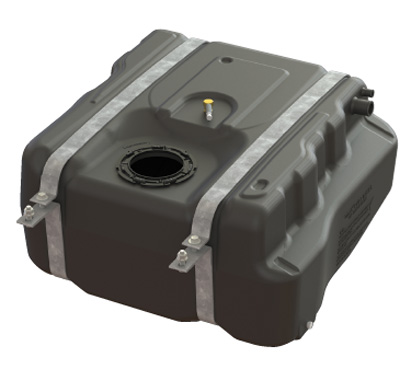
This is a direct replacement for the stock 40-gal. fuel tank in Ford Cab and Chassis trucks fitted with the rear after-axle tank from the factory. The tank is made of cross-linked polymer, which carries a lifetime warranty.
800-728-4982
www.titanfueltanks.com
PN: 8020017
Titan Fuel Tanks
60-gal. XXL Direct-Replacement Fuel Tank for ’11–’16 Ford F-250/F-350 CCSBs
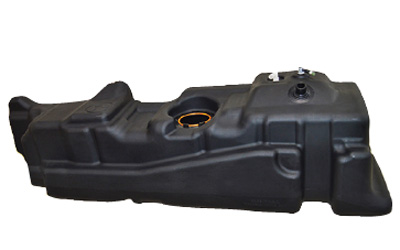
Extra-large direct-replacement fuel tank made for the ’11–’16 Ford F-250 and F-350 crew cab, short-bed trucks equipped with the Power Stroke diesel engine. Made of cross-linked polymer, which carries a lifetime warranty.
800-728-4982
www.titanfueltanks.com
PN: 7021211
Titan Fuel Tanks
56-gal. XXL Direct-Replacement Fuel Tank for ’20–’21 Chevy/GMC 2500/3500 CCSBs
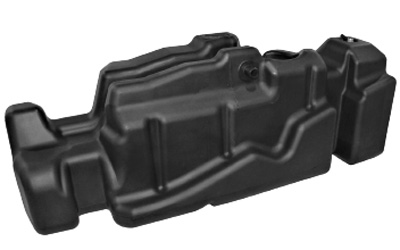
Extra-large 56-gal. direct-replacement fuel tank made for ’20–’21 Chevy/GMC crew cab, short bed-trucks equipped with the Duramax diesel engine. The tank is made of cross-linked polymer, which carries a lifetime warranty.
800-728-4982
www.titanfueltanks.com
PN: 7010220
Titan Fuel Tanks
56-gal. XXL Direct-Replacement Fuel Tank for ’17–’19 Chevy/GMC 2500/3500 CCSBs
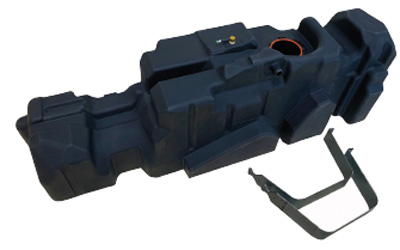
Extra-large 56-gal. direct-replacement fuel tank made for the ’13–’21 Chevy/GMC 2500 and 3500 crew cab, short-bed trucks equipped with the Duramax diesel engine. It is made of cross-linked polymer, which carries a lifetime warranty.
800-728-4982
www.titanfueltanks.com
PN: 7010217
Trac-Tire Rotation Assistance Cart/Tire Jack
Trac Tire Jack
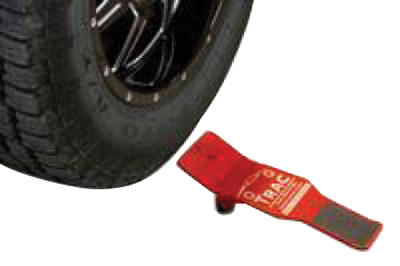
The Trac Tire Jack assists with the removal and installation of a wheel/tire assembly from a vehicle with ease. Using leverage, technicians simply lift and lower the wheel on and off the vehicle, thereby saving their backs and arms. The Trac Tire Jack is said to be a must for safety in the workplace.
720-231-1839
www.liftwithtrac.com
PN: TRACTIREJACK1
Titan Fuel Tanks
Off-Road Universal Fuel Bunker Gasoline Transfer Tank
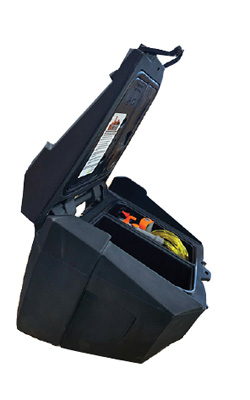
A universal, bed-mounted gasoline transfer tank for a wide array of off-road vehicles. The fuel tank has a 12-gal. capacity, an electric fuel pump and internal storage space for gear, food, etc. The locking lid features tie-down points to secure additional cargo. It is made of military-grade cross-linked polymer and is backed by a lifetime warranty.
800-728-4982
www.titanallterrain.com
PN: UTV901001
Transfer Flow
80-gal. Diesel Refueling/Transfer Tank
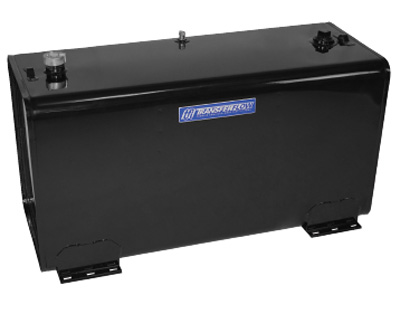
Transfer Flow, a manufacturer of premier American-made fuel tanks since 1983, introduces an 80-gal. diesel refueling tank for fullsize pickups. The tank comes with mounting hardware, a fuel cap and rollover valve, and it is made from 12-gauge aluminized steel. It’s perfect for manually fueling a diesel truck or equipment out in the field.
530-893-5209
www.transferflow.com
PN: 070-TK-34311
TrailFX
Reflex 2.0 Winch
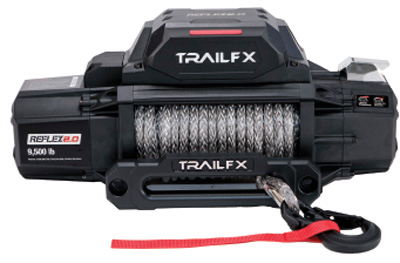
The Reflex 2.0 is the newest winch to hit the market from TrailFX. This 7hp, three-stage planetary-gear winch is available in synthetic or wire rope options at a 9,500- or a 12,000-lb. weight rating. The redesigned model features an LED auxiliary light and a load indicator warning light and meets IP68 standards for water and dust resistance.
800-521-9999
www.trailfx.com
PN: WRS295B
Transfer Flow
50-gal. Diesel Refueling/Transfer Tank
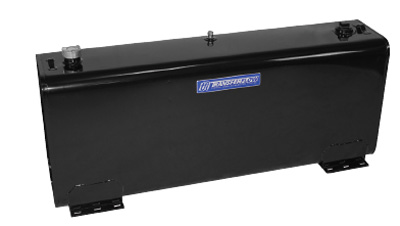
Transfer Flow, a manufacturer of premier American-made fuel tanks since 1983, introduces a 50-gal. diesel refueling tank for fullsize pickups. The tank comes with mounting hardware, a fuel cap and rollover valve, and it is made from 12-gauge aluminized steel. It’s perfect for manually fueling a diesel truck or equipment out in the field.
530-893-5209
www.transferflow.com
PN: 070-TK-34310
Transfer Flow
45-gal. Replacement Fuel Tank for Ford F-150s
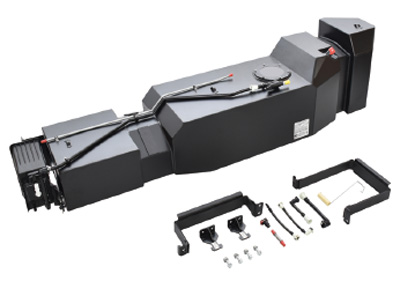
Transfer Flow says that it has introduced the only 50-state legal gasoline replacement fuel tank for Ford F-150 pickups. The 45-gallon replacement tank fits ’18–’20 gasoline Ford F-150 SuperCrew pickups with 51/2- and 61/2-ft. beds. It is the first F-150 gasoline replacement fuel tank to be granted an Executive Order from the California Air Resources Board.
530-893-5209
www.transferflow.com
PN: 080-01-16947
Tritop International Co. Ltd.
RV Bumper Hitch Adapter 2-in. Receiver
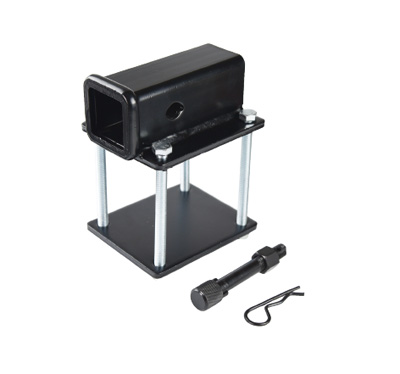
This trailer hitch RV equips a camper with a standard 2x2-in. hitch receiver, allowing for a wide variety of towing options. It can accept a ball mount, a cargo carrier, a bike rack, a tow hook and much more. The unique hitch pin eliminates the wobble at the junction of ball mounts, bike racks, cargo carriers and the hitch receiver.
+86-571-8291-3205
www.tritopcorp.com
PN: 83803AT
Transfer Flow
Trax 4 Auxiliary Tank Operating System and App
530-893-5209
www.transferflow.com
Tritop International Co. Ltd.
Anti-Rattle Hitch Clamp for 2-in. Hitches
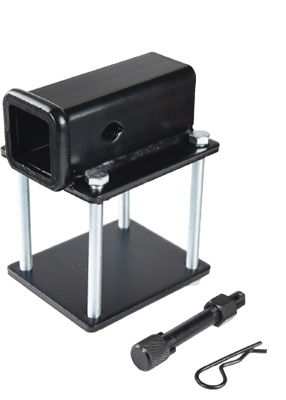
This hitch clamp eliminates the hitch wobble at the junction of ball mounts, bike racks, cargo carriers and the hitch receiver. Designed for use with almost all 2-in. hitch-mounted bike racks, cargo carriers and ball mounts, it fits most makes and models of trucks and large SUVs with 2-in. hitch receivers.
+86-571-8291-3205
www.tritopcorp.com
PN: 84711
Truck Hero Jeep & Off-Road
Dual Steering Stabilizer for ’14–’20 Ram 2500/3500 4WDs With Fox shocks
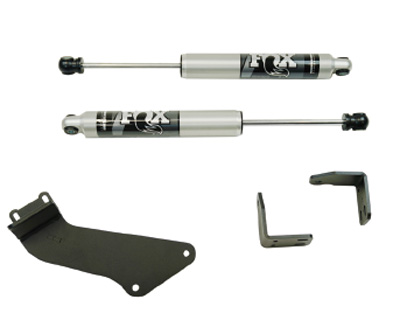
Dual steering stabilizer with Fox 2.0 cylinders is the perfect solution for steering wobble or bump steer caused by running larger tires and wheels. The Fox 2.0 has a heat-reducing aluminum body that dissipates heat faster than conventional steel. An internal floating piston separates shock oil from high-pressure nitrogen gas.
800-551-4955
www.superlift.com
PN: 92721
Truck Hero Jeep & Off-Road
Elite Taillight Guard OE Conventional Non-LED for Jeep Wrangler JLs/JLUs
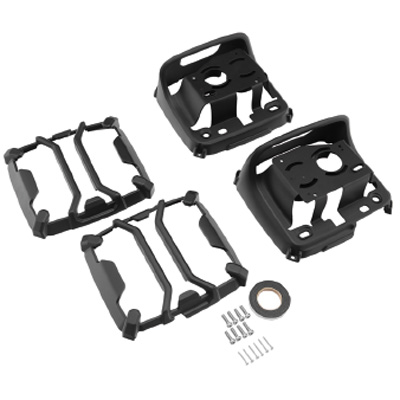
The unique shape and design of the taillights is one of the most iconic symbols of the JL, and now users can preserve their taillights while accenting what makes them so special. Elite Taillight Guards encase the light housing inside a cast-aluminum shell, keeping them safe from bumps and blows. Patent pending.
770-614-6101
www.ruggedridge.com
PN: 11226.13
Truck Hero Jeep & Off-Road
Bed-Mount Spare Tire Carrier for Jeep Gladiator JTs
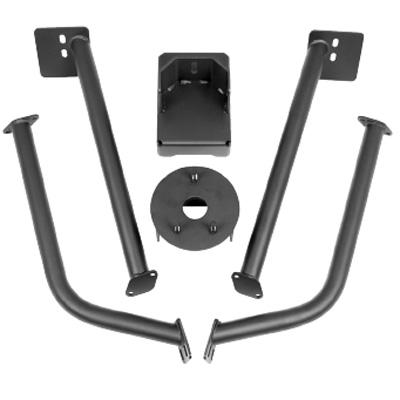
Built from 45mm-diameter, 2.5mm-wall steel tubing and 5mm-thick CNC-cut and brake-formed steel plate. Designed to survive in harsh off-road conditions. Integrated adjustable wheel mount accommodates a variety of wheel offsets. Carrier assembly installs to factory mounting locations for maximum strength and rigidity. No drilling required.
770-614-6101
www.ruggedridge.com
PN: 11546.71
Truck Hero Jeep & Off-Road
Grille LED Mount Bracket for Jeep Wrangler JLs/JLUs and Gladiator JTs
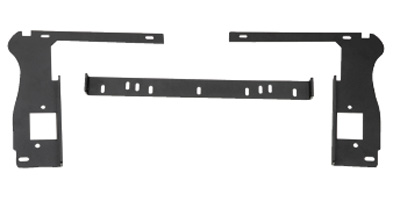
Designed to mount discretely behind the Jeep’s grille for a unique lighting accent. An adaptable three-piece design allows for mounting of both LED bars and cubes or a combination of both—any combination up to 20 in. Installation requires no drilling or modifications. Lights sold separately. Fits gas only.
770-614-6101
www.ruggedridge.com
PN: 11232.77
Truck Hero Jeep & Off-Road
Universal Rear License Plate Holder
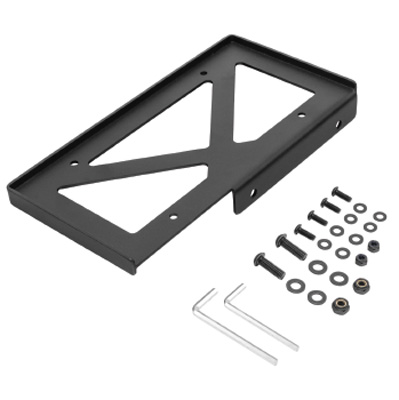
The all-steel universal rear bumper license-plate holder mounts easily to a bumper or any flat surface, giving users a sturdy mount for their state-mandated license plate. A sleek black powdercoat finish resists rust and corrosion and includes LED tag mounting bolts to keep the rig street-legal.
770-614-6101
www.ruggedridge.com
PN: 11238.15
Truck Hero Jeep & Off-Road
RRC Rocker Guard for Jeep Gladiator JTs
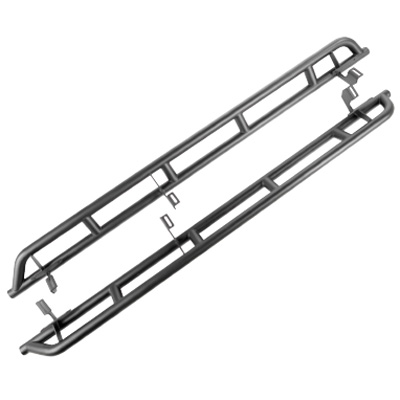
Rugged Ridge RRC rocker guard for Jeep Gladiator JT is made from high-strength 2-in.-OD steel tubing. Mounts directly to the factory body mounts for a solid installation. An angled upper hoop provides extra protection for vulnerable rocker panels. Finished with a tough satin-black powdercoat for superior resistance to rust and corrosion.
770-614-6101
www.ruggedridge.com
PN: 11504.38
Truck Hero Jeep & Off-Road
RRC Rocker Guard for Jeep Wrangler JLs
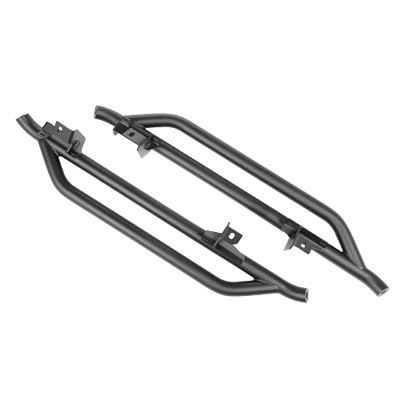
The Rugged Ridge RRC rocker guard for Wrangler JL is made from high-strength 2-in.-OD steel tubing. Mounts directly to the factory body mounts for a solid installation. An angled upper hoop provides extra protection for vulnerable rocker panels. Finished with a tough satin-black powdercoat for superior resistance to rust and corrosion.
770-614-6101
www.ruggedridge.com
PN: 11054.37
Truck Hero Jeep & Off-Road
HD Rear Bumper for Jeep Gladiator JTs
Rugged Ridge Jeep Gladiator JT HD rear bumpers are trail-tested, proven designs that pack a serious punch. Sturdy steel construction, dual-drilled shackle mounts and integrated high-lift jacking points make the HD rear bumper a serious contender. Integrated corner steps allow for easy access into the truck bed. Satin-black powdercoat finish.
770-614-6101
www.ruggedridge.com
PN: 11540.37
Truck Hero Jeep & Off-Road
XOR Front Bumper for Jeep Wrangler JLs/JLUs and Gladiator JTs
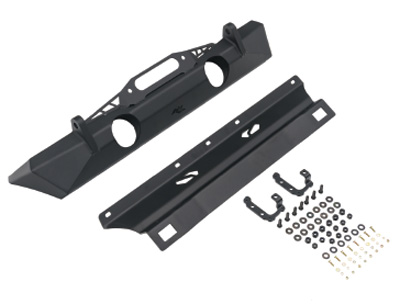
A purpose-built extreme off-road bumper with the style and sophistication of a battering ram. The 5mm-thick steel plate body XOR series has unsurpassed structural rigidity and is the foundation for the integrated top-mount winch plate. Massive 1-in.-thick shackle mounts to accommodate 3/4-in. shackles. Recessed fog-light pockets accept standard OE foglights.
770-614-6101
www.ruggedridge.com
PN: 11541.21
Truck Hero Jeep & Off-Road
XOR Rear Bumper for Jeep Wrangler JLs/JLUs
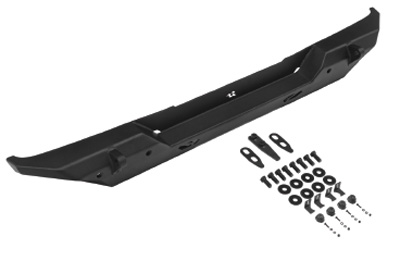
A purpose-built extreme off-road bumper with the style and sophistication of a battering ram. The 5mm-thick steel plate body XOR series has unsurpassed structural rigidity. The arching ends and integrated jack lifting points make it an obvious choice for any rig built for even occasional off-road use. Bumper proximity sensor ports are built right in.
770-614-6101
www.ruggedridge.com
PN: 11541.22
Truck Hero Jeep & Off-Road
Arcus Front Bumper for Jeep Wrangler JKs/JKUs
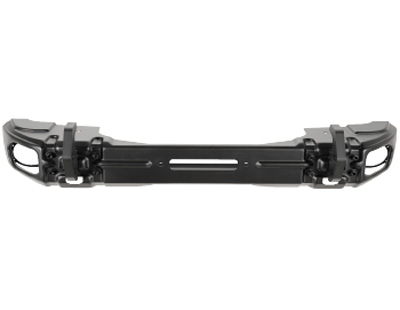
The patented-design, high-strength 11-gauge steel shell surrounding a 1/4-in.-thick steel winch plate is capable of holding most winch models up to a 12,500-lb. rating. Massive 1-in.-thick recovery hooks are dual cross-drilled to accept both 7/8- and 3/4-in. D-rings. Built-in foglight pockets accent the overall appearance and accept factory foglights.
770-614-6101
www.ruggedridge.com
PN: 11549.13
Truck Hero Jeep & Off-Road
Venator Front Bumper With Overrider for Jeep Wrangler JLs/JLUs and Gladiator JTs
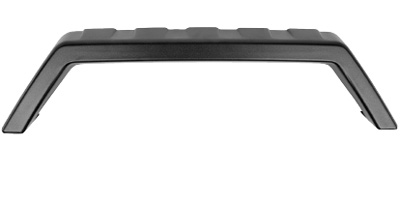
The Venator’s modern design features a built-in winch tray and capable of supporting a 12,500-lb. winch, keeping users equipped for the unexpected. Includes a stylized overrider with all the visual impact the Venator deserves. A square sculpted frame and scalloped cross bar accents the Jeep’s iconic slatted grille.
770-614-6101
www.ruggedridge.com
PN: 11549.41
Truck Hero Jeep & Off-Road
Steel Rear Fender Flares for Jeep Gladiator JTs
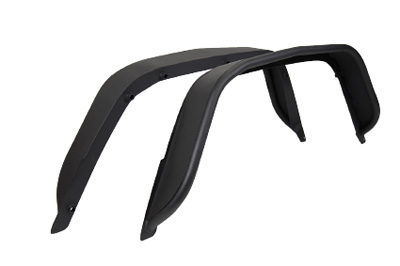
Rugged Ridge rear steel tube fenders are engineered with a burly 1.25-in. mandrel-bent steel-tube frame. The fender’s top skin is die-stamped and laser-cut from 12-gauge steel plate and finished with a durable satin-black powdercoat finish that resists rust and corrosion. Includes Teflon-coated button-head hardware with Nylock retainers.
770-614-6101
www.ruggedridge.com
PN: 11615.49
Truck Hero Jeep & Off-Road
Aluminum Rear Inner Liner for Jeep Wrangler JLs/JLUs
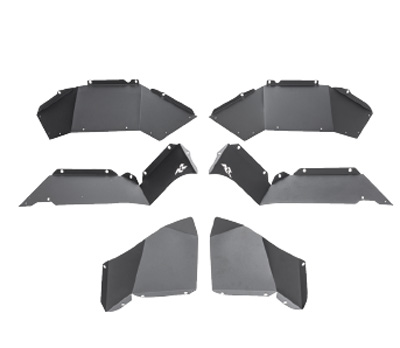
Lightweight 14-gauge aluminum, CNC laser cut and bent for a perfect fit. Designed to work with trimmed OE flares and most aftermarket fenders, they install using factory mounting locations with no drilling required. Durable satin-black powdercoated finish. Stainless-steel mounting hardware is included.
770-614-6101
www.ruggedridge.com
PN: 11615.62
Truck Hero Jeep & Off-Road
Aluminum Rear Inner Liner for Jeep Gladiator JTs
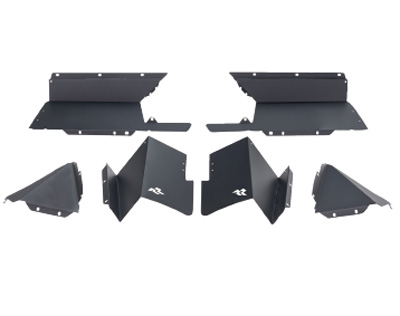
Lightweight 14-gauge aluminum, CNC laser-cut and bent, these inner fenders protect the Jeep from mud and debris. Designed to work with trimmed OE flares and most aftermarket fenders, they install using factory mounting locations with no drilling required. Durable satin-black powdercoated finish. Stainless-steel mounting hardware is included.
770-614-6101
www.ruggedridge.com
PN: 11615.63
Truck Hero Jeep & Off-Road
Front and Rear Max-Terrain Fender Flare Set for Jeep Gladiator JTs
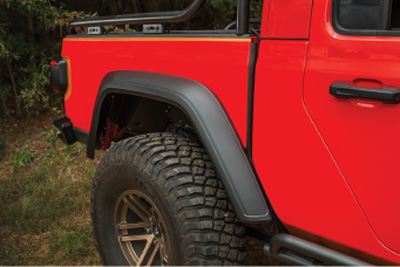
Injection-molded thermoplastic flares mount in a high-to-the-body position, delivering greater tire clearance for maximum suspension travel while off-road. Integrated two-color LED daytime running lights are cradled inside the front support brace and highlight the flare’s leading edge.
770-614-6101
www.ruggedridge.com
PN: 11640.52
Truck Hero Jeep & Off-Road
Rear Floor Liner for Jeep Gladiator JTs
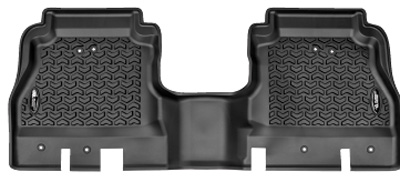
Rugged Ridge rear floor liners provide complete protection. Perfectly contoured to the vehicle’s floor for precise, secure fitment, the raised lip captures all spills, water and debris, keeping the interior pristine. Chevron-shape patented deep-tread technology channels liquid away from shoes. Patent number 8,163,369; D627,285; 2,699,641.
770-614-6101
www.ruggedridge.com
PN: 12950.61
Truck Hero Jeep & Off-Road
Passenger-Side Armis Swing-Away Box for Jeep Gladiator JTs
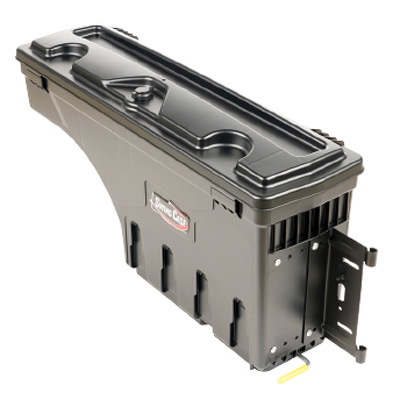
Armis Swing Case provides easy to access to gear, tools or whatever users choose to carry in a safe and convenient location just inside the JT’s tailgate. Sleek pull-action lever gives smooth access to the case without the need to climb into the bed. Tough, high-impact ABS plastic is weather-resistant and custom-fitted specifically for the Gladiator.
770-614-6101
www.ruggedridge.com
PN: 13550.29
Truck Hero Jeep & Off-Road
Driver-Side Armis Swing-Away Box for Jeep Gladiator JTs
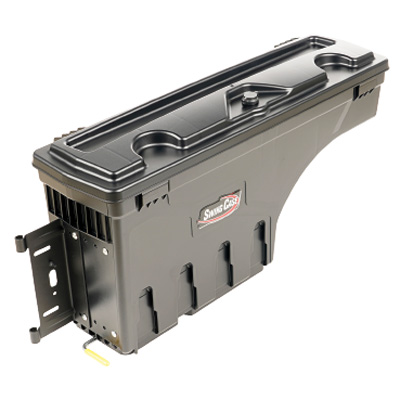
Armis Swing Case provides easy access to gear, tools or whatever users choose to carry in a safe and convenient location just inside the JT’s tailgate. Sleek pull-action lever gives smooth access to the case without the need to climb into the bed. Tough, high-impact ABS plastic is weather-resistant and custom-fitted specifically for the Gladiator.
770-614-6101
www.ruggedridge.com
PN: 13550.28
Truck Hero Jeep & Off-Road
Armis Retractable Bed Cover for Jeep Gladiator JTs
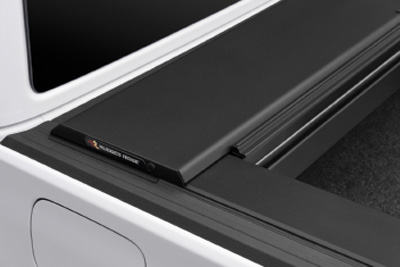
Convenient fully retractable cover has the refined finish of a traditional soft cover while maintaining a security level usually reserved for hard covers. With a durable vinyl-over-aluminum design, the cover’s unique construction delivers smooth, frictionless motion, making it a dream to use. The bed cover automatically retracts into its own compact canister.
770-614-6101
www.ruggedridge.com
PN: 13550.31
Truck Hero Jeep & Off-Road
Gear-Vise Dash Bar for Jeep Wrangler JLs/JLUs and Gladiator JTs
The Gear-Vise dash bar situates all driver essentials right where users need them, putting them in total command of their Jeep’s cab. The robust 7/8-in. steel backbone extends the width of the dash, offering a versatile and stable mounting platform for cellphones, GPS devices, tablets, dash cams and more. Mounts sold separately.
770-614-6101
www.ruggedridge.com
PN: 13551.36
Truck Hero Jeep & Off-Road
Universal Phone Holder for Gear-Vise Dash Bar
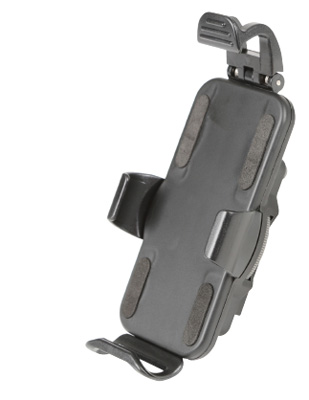
The Gear-Vise universal phone mount is designed to provide a stable and adjustable method of securing a smartphone or mobile device for safer in-cab operation, allowing users to keep their eyes on the road and their hands on the wheel. Designed to work in unison with the Rugged Ridge Gear-Vise dash bar (PN 13551.36).
770-614-6101
www.ruggedridge.com
PN: 13551.37
Truck Hero Jeep & Off-Road
Universal Tablet Holder for Gear-Vise Dash Bar
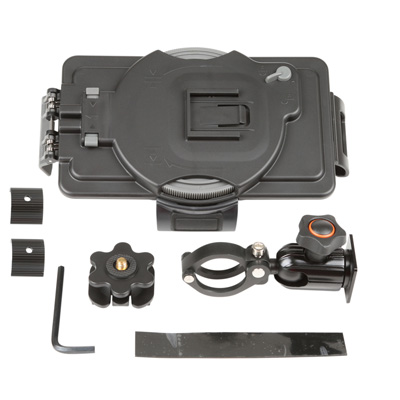
The Gear-Vise universal tablet mount is designed to provide a stable and adjustable method of securing a tablet or mobile device for safer in-cab operation, allowing users to keep their eyes on the road and their hands on the wheel. Designed to work in unison with the Rugged Ridge Gear-Vise dash bar (PN 13551.36).
770-614-6101
www.ruggedridge.com
PN: 13551.38
Truck Hero Jeep & Off-Road
Voyager Soft Top for Jeep Wrangler JKs
The Voyager soft top is designed with sleek, fastback styling and is packed with features. The frameless design installs snugly over the factory sport bar for a contoured fit and a low profile. The Voyager top’s fold-back feature affords users open-top enjoyment in just seconds. Constructed of 30-oz. premium sailcloth fabric with sealed seams.
770-614-6101
www.ruggedridge.com
PN: 13861.35
Truck Hero Jeep & Off-Road
Voyager Soft Top for Jeep Wrangler JKUs
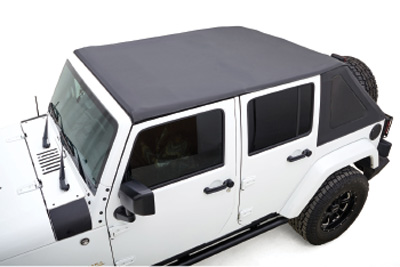
770-614-6101
www.ruggedridge.com
Truck Hero Jeep & Off-Road
Jesse Spade 17x9 Bronze Wheel for Jeep Wrangler JKs/JKUs/JLs/JLUs and Gladiator JTs
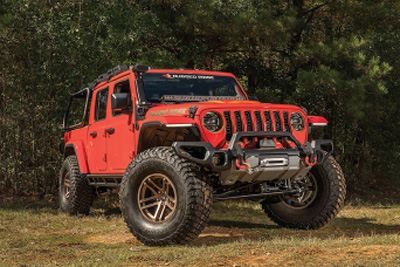
The classic styling of the Jesse Spade wheel with a new bronze powdercoat finish. Rims feature a special hub-centric mounting pad that delivers the best fitment possible. With an ideal 17x9-in. sizing and 4.53-in. backspacing, this wheel was built for all ’07–’18 Wrangler JK, ’18–’21 Wrangler JL and ’20–’21 Gladiator JT models.
770-614-6101
www.ruggedridge.com
PN: 15303.89
Truck Hero Jeep & Off-Road
Voyager Soft Top for Jeep Wrangler JLUs
770-614-6101
www.ruggedridge.com
Truck Hero Jeep & Off-Road
TrailView Top for Jeep Wrangler JLUs
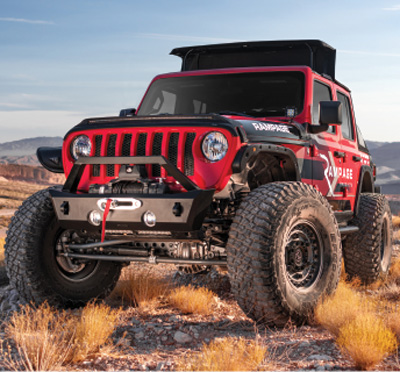
The Rampage TrailView frameless fastback for Jeep JLU installs over the factory sport bar for a snug fit. This unique design allows for larger side windows and improved visibility with removable side and rear windows that quickly convert the soft top into an open safari top. Includes door surrounds, fold-back hardware and a tailgate bar.
800-328-2409
www.rampageproducts.com
PN: 139435
Truck Hero Jeep & Off-Road
TrailView Top for Jeep Wrangler TJs
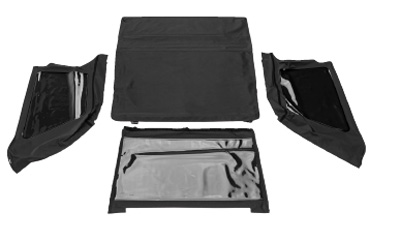
The Rampage TrailView frameless fastback installs over the original-equipment factory rollbar for a snug fit. This unique design allows for larger side windows and improved visibility with removable side and rear windows that quickly convert the soft top into an open safari top. Includes door surrounds, fold-back hardware and a tailgate bar.
800-328-2409
www.rampageproducts.com
PN: 139535
Truck Hero Jeep & Off-Road
TrailCrawler Step for Jeep Gladiator JTs
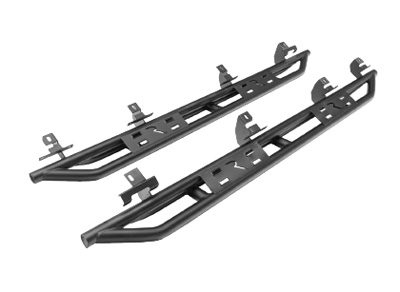
The Rampage TrailCrawler step helps users get in and out of a Jeep and also functions as an extreme rock slider out on the trails. It has a tough off-road look while giving the rocker area and doors the protection they deserve. The step features a durable black powdercoated finish. Available for the Jeep Gladiator and Wrangler JL/JLU.
800-328-2409
www.rampageproducts.com
PN: 88736
Truck Hero Jeep & Off-Road
Tailgate Bar for Jeep Wrangler JLs/JLUs
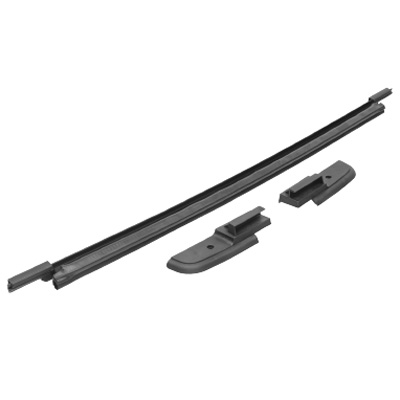
The Rampage tailgate tonneau bar kit for ’18–present Jeep Wrangler JL/JLU includes steel-reinforced retainer clips, bar and mounting screws. It is compatible with factory soft tops, Rampage tops and with most aftermarket tops and tonneau covers.
800-328-2409
www.rampageproducts.com
PN: 87136
Truck Hero Jeep & Off-Road
3.5-in. Lift Kit for ’19–’20 Ram 2500 Diesel 4WDs With Replacement Radius Arms
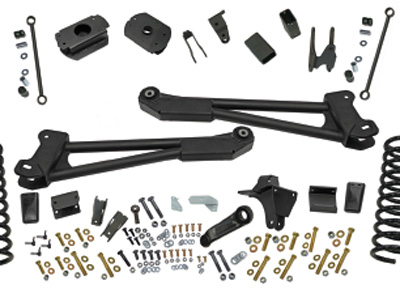
The replacement radius arms maintain proper caster throughout the suspension cycle, offer maximum ground clearance, additional clearance for larger tires, and Cleveite bushings for superior dampening. The uniquely engineered design adds strength and durability.
800-551-4955
www.superlift.com
PN: K195
Truck Hero Jeep & Off-Road
3.5-in. Lift Kit for ’19–’20 Ram 2500 Diesel 4WDs
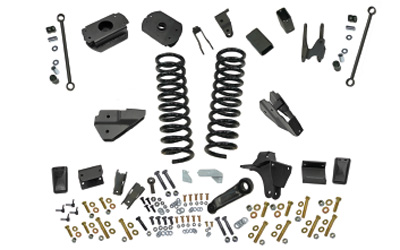
Superlift’s 3.5-in. lift kit for the ’19–’21 Dodge Ram 2500 with radius arms drop brackets uses the factory radius arms to help locate the axle front to rear while allowing it to maintain proper caster. The uniquely engineered design adds strength and durability. The kit includes rear coil spacers, radius arm drops, and front and rear shock extensions.
800-551-4955
www.superlift.com
PN: K194
Truck Hero Jeep & Off-Road
3.5-in. Lift Kit for ’19–’20 Ford Ranger 4WDs
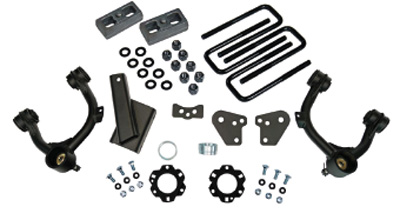
The UCA Lift Kit is the solution for adding more height. The strong, die-formed design is constructed of DOM tubing, beefy gussets and a CNC-machined ball joint cup. Features preinstalled MOOG ball joint and bushings for performance and durability. Includes differential drop spacers, a rear block kit and rear Shadow series shocks.
800-551-4955
www.superlift.com
PN: K1014
Truck Hero Jeep & Off-Road
6-in. Lift Kit for ’19–’20 Ram 1500 4WDs
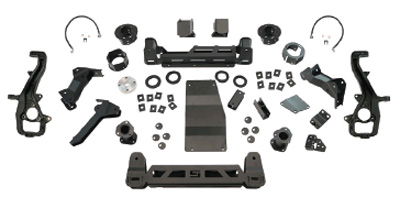
The Ram lift kit utilizes laser-cut heavy-duty crossmembers and bracketry to relocate the front lower control arms and differential. The 1/4-in.-thick belly pan protects the vitals while further increasing overall rigidity. The rear four-link-to-frame attachment points are relocated via one-piece die-formed brackets and exclusive adjustable rear coil spacers.
800-551-4955
www.superlift.com
PN: K198
Truck Hero Jeep & Off-Road
6-in. Lift Kit for ’19–’20 Chevy Silverados/GM Sierra 4WDs With King Shocks
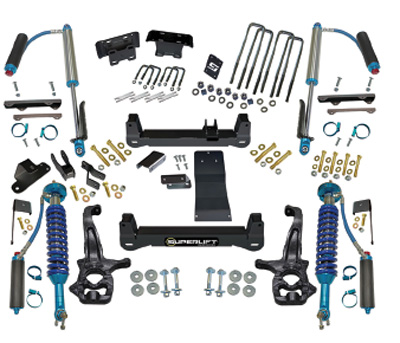
King shocks and Superlift joined forces to provide users with a precision-engineered lift system with perfectly matched and perfectly valved coil-overs and shocks. Each aspect of the Superlift-edition King shocks is a combination of advanced engineering using scientific computerized models and real-world testing.
800-551-4955
www.superlift.com
PN: K182KG
Truck Hero Jeep & Off-Road
6-in. Lift Kit for ’16–’20 Toyota Tacomas
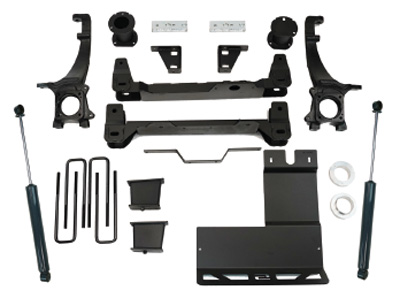
Superlift’s geometry, steering timing, linkage angles, driveshaft and CV axle operating angles yield optimal component service life and exceptional drivability. This kit includes front knuckles, front strut spacers, cross members, a belly pan skidplate, bump-stop brackets, a rear block and U-bolt kit, and rear shocks.
800-551-4955
www.superlift.com
PN: K253
TS Booster
TS Booster
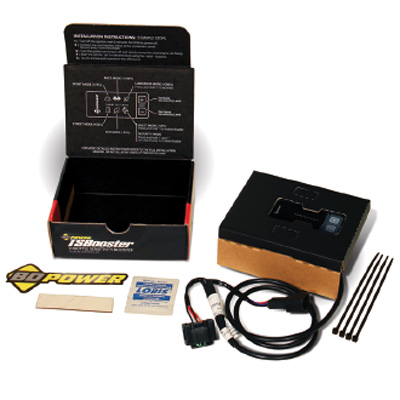
A controller that plugs inline with electronic throttle pedal and amplifies the throttle signal going to the ECM to reduce throttle lag. The new version is more compact, has more functionally, a highly visual display and is easier to use and install with AI throttle pedal learning capability.
800-887-5030
www.tsbooster.com
PN: 1057932
Truck Hero Jeep & Off-Road
Dual Steering Stabilizer for ’05–’20 Ford F-250/350 4WDs with Fox Shocks
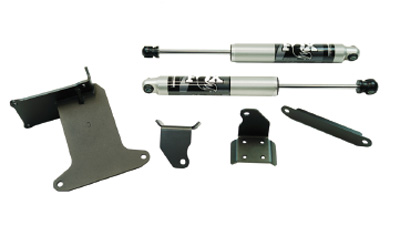
Dual steering stabilizer with Fox 2.0 cylinders is the perfect solution for steering wobble or bump steer caused by running larger tires and wheels. The Fox 2.0 has a heat-reducing aluminum body that dissipates heat faster than conventional steel. An internal floating piston separates shock oil from high-pressure nitrogen gas.
800-551-4955
www.superlift.com
PN: 92722
Turnkey Trailers
Race Transporter
Turnkey Trailers specializes in custom all-aluminum trailers created to meet the demands of off-road customers. The company has created many unique units in collaboration with its customers. Turnkey Trailers enjoys taking a concept from a napkin sketch to a working piece of equipment that will add to a team’s efficiency for years to come.
281-356-1386
www.tkind.com
PN: Model 9091
T.V.K. Industries Inc.
RangeFinderPro
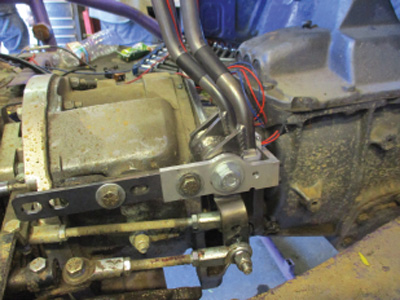
The RangeFinderPro is an aftermarket accessory designed to aid drivers of off-road vehicles equipped with multiple transfer-case shifters. Each shift knob is customized with illuminated LED gear-selection indicators for various shifting configurations (front/rear/left/right axle engagement).
707-886-5003
www.sureshifter.com
PN: RFP-3
Tyger Auto
Roof Cargo Basket
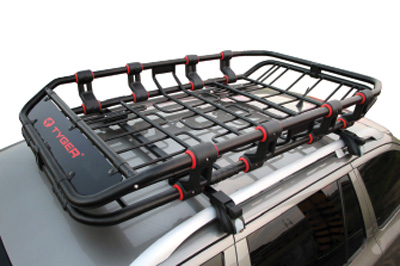
Large super-duty roof cargo basket. Stylish three-piece modular design. Length 67.6 in.; width 41.4 in.; height 8.42 in. (52-in. length without middle). Mounts to existing vehicle roof rail crossbars to provide up to 150 lbs. of extra storage. Matte-black e-coat steel
tube frame with many tie-down points. Mounting hardware included. Five-year
limited warranty.
951-333-2602
www.tygerauto.com
PN: TG-RK1B906B
Tyger Auto
Multifunctional Shovel
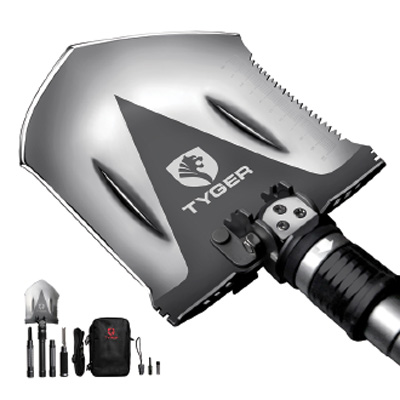
Tyger multifunctional shovel for off-roading, camping, outdoor, survival and emergencies. Patent-pending 16-in-1 shovel is forged from military-grade steel and aerospace-grade aluminum. Instant switch-mode mechanism. Compact shovel is easily stored in vehicle to help dig out tires or break glass in emergencies. Storage bag included. One-year warranty.
951-333-2602
www.tygerauto.com
PN: TG-SV8U3217
53480_1.jpg
Tyger Auto
Tonneau Cover
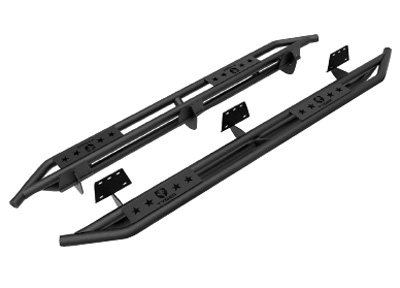
The Tyger T3 soft tri-fold tonneau cover fits ’15–’20 Ford F-150 with 5.5-ft. bed. The tonneau cover is made with dual-coated heavy-duty marine-grade vinyl, aircraft aluminum frames and stainless-steel clamps. Easy no-drill installation with instructions and hardware provided. Works with under-the-bedrail bedliners without modification. Limited lifetime warranty.
951-333-2602
www.tygerauto.com
PN: TG-BC3F1041
Tyger Auto
Star Armor Step Bars
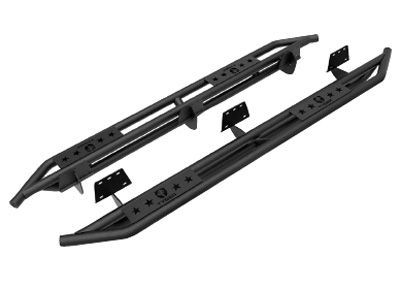
Tyger Star Armor step bars fit ’19–’20 Ram 1500 Crew Cab (not Quad or Mega Cab models). Patented Star metal step pads with heavy-duty 2-in.-diameter tube dual girder system provides maximum protection. Offers 500-lb. capacity. Powdercoated black textured finish. Easy bolt-on installation. No drilling required. Instructions included. Five-year warranty.
951-333-2602
www.tygerauto.com
PN: TG-AM2D20608
Tyger Auto
Fury Rear Bumper
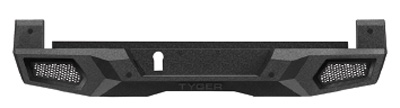
Tyger Fury Rear bumper fits ’16–’20 Toyota Tacoma. Heavy-duty carbon steel with powdercoated black textured finish. Comes with predrilled holes for parking sensors, Tow socket and license-plate lights. Removable light grilles for aftermarket lights. Easy bolt-on installation. Instructions included. Five- year warranty against manufacturing defects.
951-333-2602
www.tygerauto.com
PN: TG-BP9T80198
Tyger Auto
Fury Front Bumper
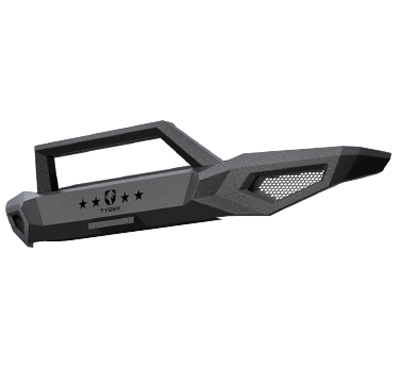
Tyger Fury front bumper fits ’14–’20 Tundra. Heavy-duty carbon steel with powdercoated black textured finish. Removable light grille covers for aftermarket lights. Light bar mounting brackets included. Up to 22-in. light bar and 3-in. side lights (not included). Easy bolt-on installation. No drilling required. Instructions included. Five-year warranty.
951-333-2602
www.tygerauto.com
PN: TG-BP6T80568
Tyger Auto
Sport Bar
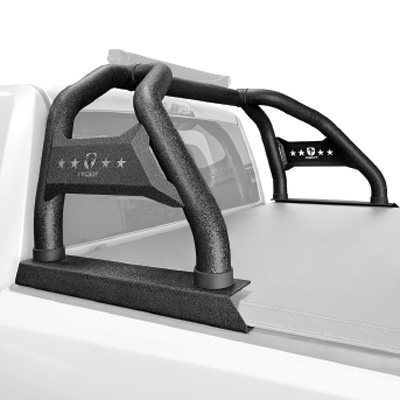
Tyger sport bar fits ’15–’20 Chevrolet Silverado and GMC Sierra 1500/2500HD/3500HD. Heavy-duty 3-in.-diameter steel tubes with powdercoated black textured finish. Compatible with most tri-fold tonneau covers. Some drilling required. Instructions and light-bar brackets included to fit up to 30-in. light bar (lights not included). Five-year warranty.
951-333-2602
www.tygerauto.com
PN: TG-SB7C88138
53485_1.jpg
Tyger Auto
Guard
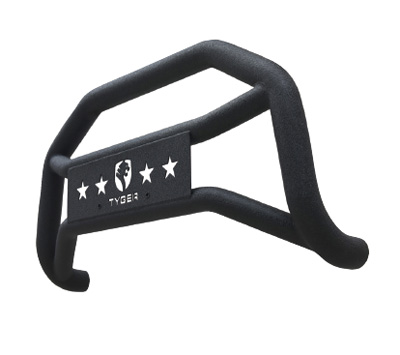
Tyger guard fits ’05–’20 Toyota Tacoma. Heavy-duty 2.5-in. tubing with E-coating textured black finish. Sturdy seamless welding structure. Light mounts for off-road lights (not included) and license-plate mounting holes. Easy bolt-on installation. Factory skidplate must be removed, and minor cutting required on ’16–up models. Five-year warranty.
951-333-2602
www.tygerauto.com
PN: TG-GD6T60028
Tyger Auto
Pocket Rivet-Style Fender Flares
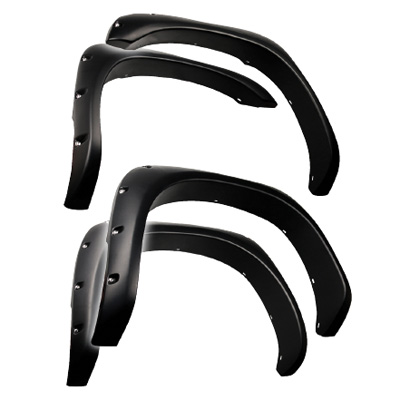
Tyger pocket-style fender flares with bolt rivets fit ’02–’09 Ram 1500/2500/3500. Four-piece UV-resistant paintable fine-
textured matte-black polypropylene resists cracking, warping and chalking. Flare height: 5.5 in. front, 4.5 in. rear. Tire Coverage:
2.5 in. front and rear. Easy no-drill installation. Hardware and mounting instruction included. Lifetime warranty.
951-333-2602
www.tygerauto.com
PN: TG-FF8D4078
Tyger Auto
Hitch Armor
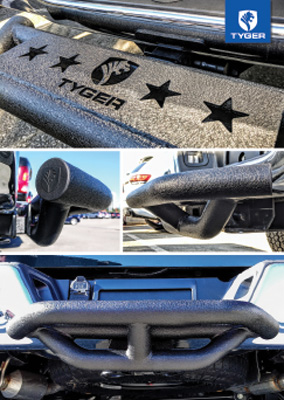
Tyger hitch armor with pin lock fits most vehicles with 2-in. hitch receiver and provides easy access to storage area. Dual girder system provides maximum protection from rear-end collisions. Features 350-lb. weight capacity. Pin lock and stabilizer included. Features 2-in.-diameter .120-wall tubes. Powdercoated textured black finish. Limited lifetime warranty.
951-333-2602
www.tygerauto.com
PN: TG-HS8U81238
Warn Industries Inc.
Ascent XP Bumpers
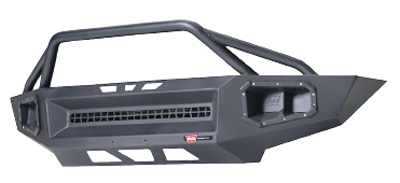
Warn Ascent XP bumpers have the rugged protection and off-road style of a welded bumper without a winch mount. Instead, Ascent XP lets users install a light bar into the bumper while providing aggressive style and extra protection. Includes a welded-on grille guard tube, light ports and powdercoated finish. Available for Ford and Chevy trucks.
503-722-1200
www.warn.com
PN: 107290
Warn Industries Inc.
Hub Wireless Receiver and App
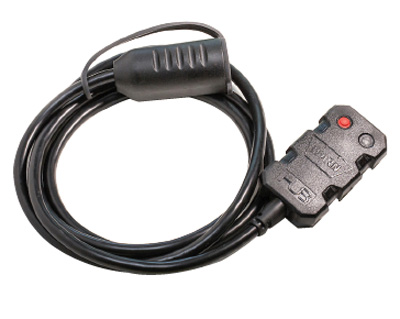
This state-of-the-art wireless control system allows users to operate a truck winch using the Bluetooth connection on a smart device. The IP68 waterproof Hub wireless receiver connects to the winch, and then the free custom-developed app for either iOS or Android communicates with the receiver via Bluetooth signal.
503-722-1200
www.warn.com
PN: 103945
51023_1.pdf
Warrior Products Inc.
Range Rover Classic Platform Roof Rack
Range Rover Classic Platform Roof Rack.
888-220-6861
www.warriorproducts.com
PN: 10936
Warn Industries Inc.
Ascent HD Bumpers
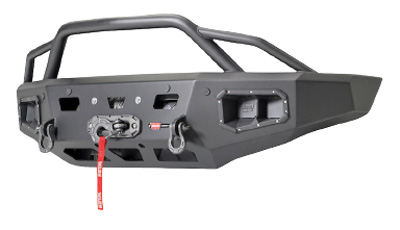
Warn Ascent HD bumpers have supreme durability for the toughest truck applications and allow users to install a mid-frame or large-frame winch up to 18,000-lb. capacity. Bumpers include welded eyelets for shackles, available welded-on grille guards, ports for lights, and powdercoated finish. Available for select Chevrolet, Ram and Ford trucks.
503-722-1200
www.warn.com
PN: 107006
Warrior Products Inc.
Lexus GX/Toyota Front Recovery Points
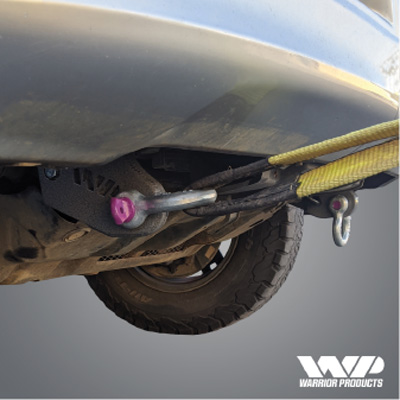
Lexus GX/Toyota 4Runner/Toyota FJ Cruiser front recovery points.
888-220-6861
www.warriorproducts.com
PN: 864
Warrior Products Inc.
Subaru Crosstrek Platform Roof Rack
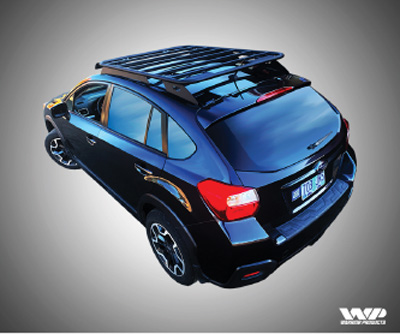
Subaru Crosstrek Platform Roof Rack.
888-220-6861
www.warriorproducts.com
PN: 10964
Wehrli Custom Fabrication
’15–’19 LML/L5P Duramax Chevrolet Silverado Bumper Grille
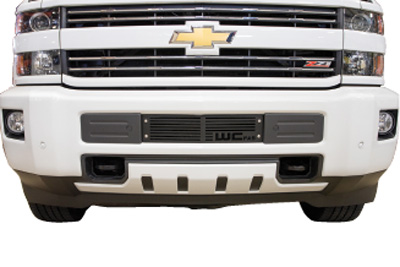
This stainless-steel grille mounts in the opening in the bumper on ’15–’19 HD Silverados, providing protection to the transmission cooler assembly from road debris while offering a finished look to the front. Installs easily with basic hand tools. Available in a variety of powdercoat finishes. Made in the U.S.A.
630-277-8239
www.wcfab.com
PN: WCF100290
Westin/Superwinch
Pro-Series Rear Bumper
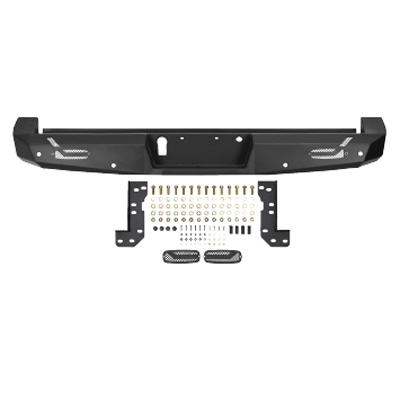
High and tight best describes the great-looking new pro-series rear bumpers from Westin. This all-new off-road style rear bumper features a lightweight, slim, one-piece design, adding a modern, aggressive look to a truck. Built to improve ground clearance and departure angles when driving in more rugged terrain.
800-345-8476
www.westinautomotive.com/images/eccm/broadcast/newproduct
PN: 58-421145
Westin/Superwinch
Overland Cargo Rack
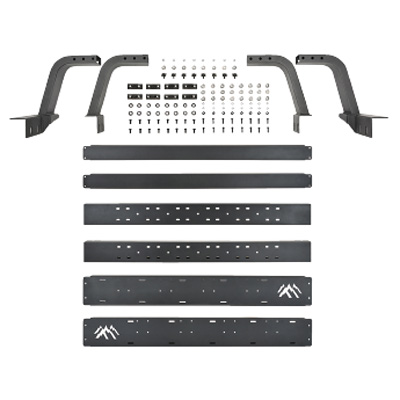
Maximize the cargo space and storage capacity of a truck with an all-new overland cargo rack from Westin. This multi-purpose bed rack cargo-management system allows for a wide variety of off-road and overland gear storage, such as off-road jacks, RotoPax gas cans, traction boards, shovels, rooftop tents, LED lighting and storage boxes.
800-345-8476
www.westinautomotive.com/images/eccm/broadcast/newproduct
PN: 51-10005
Westin/Superwinch
SX winch
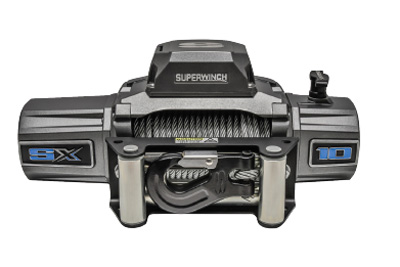
Available in 10,000- or 12,000-lb. versions. Three-stage planetary gearbox. Full-load holding brake. Patented drum light. Stainless-steel four-way fairlead for wire rope. Aluminum hawse fairlead for synthetic rope. Heavy-duty winch hook.
800-323-2031
www.superwinch.com
PN: 1710200
Zhejiang Hongxin Technology Co. Ltd.
Forge-Aluminum Wheel
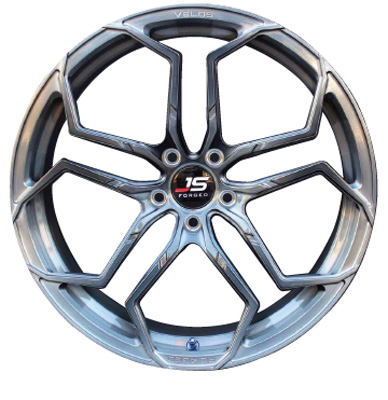
Wheel size: from 15 to 30 in. For monoblock, multiple piece. Off-road, UTV and so on. Surface: full painting, multicolor, machined, milled, polished, brushed and so on. Facility: four forging lines, 260 CNC machines. Capacity: 1 to 100,000 pieces. Quality control: TS16949 and VIA-certificated lab. Material: T6061.
+576-84161818
www.hxwheel.com
PN: HYOO6



 View the Presentation

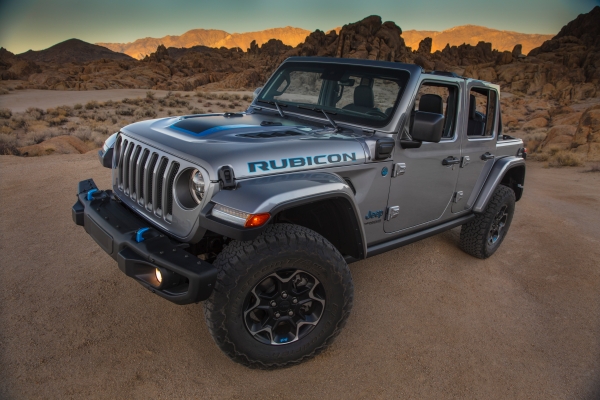
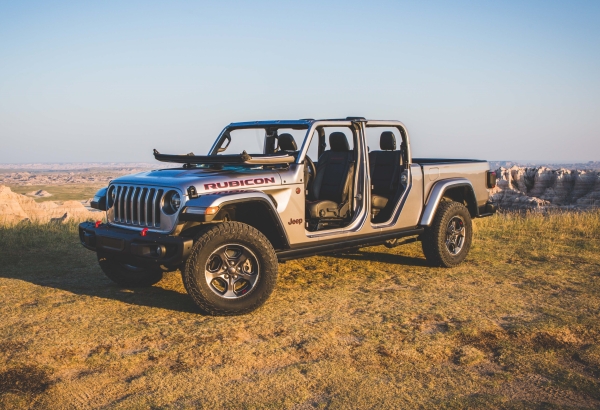
 The September 2021 issue of SEMA News will highlight rising stars in the automotive aftermarket industry who are age 35 and younger. If you know a leader in that age range as of September 1, 2021—whether they are in manufacturing and design, marketing, retail, events and media, or distribution—we would like to hear from you.
 Exhibit at the 2021 SEMA Show and shine the spotlight on your company in front of tens of thousands of qualified buyers looking for the best that the automotive specialty-equipment market has to offer.