Thu, 12/01/2022 - 21:06

SEMA News—December 2022

MARKET RESEARCH SNAPSHOT

Who Are Accessorizers

By SEMA Market Research

Accessorizors

In 2021, approximately 54% of accessorizers were under the age of 40. Accessorizers skew young, who are also more likely to be “true enthusiasts.”

Last year was a record year for the specialty-equipment industry, with U.S. retail sales hitting $50.9 billion for the first time. But who are accessorizers? Accessorizers skew young. In 2021, more than half were under 40. Younger accessorizers are more likely to be enthusiasts and tend to make more complex modifications. Accessorizers are also more likely to own pickups, SUVs and sports cars than non-accessorizers. Pickup parts remain big business for our industry and accounted for 31% of retail sales in 2021. Accessorizers are also almost twice as likely to own recreational or offroad equipment as non-accessorizers.

Accessorizors

Accessorizers are more likely to own pickups, SUVs and sports cars than non-accessorizers. CUVs tend to be more common among non-accessorizers.

Accessorizors

Accessorizers in the United States are almost twice as likely as the rest of the population to own recreational or off-road equipment, especially RVs, ATVs and motorboats.

For more information, download the “Classic Cars, Modern Market” report at www.sema.org/research.

Thu, 12/01/2022 - 20:48

SEMA News—December 2022

BUSINESS

Adventure Vans

A New Overlanding Market Takes Root

By Douglas McColloch

Adventure Vans

A new player in the overlanding segment, adventure vans can be built for any use, whether it’s easy pavement travel or more strenuous off-road activity. Photo credit: Shutterstock.com

It’s no secret that overlanding has been one of the fastest-growing segments in the automotive aftermarket, and as it has gained popularity over time, the market has diversified. This can be seen in the types of vehicles employed as build platforms. Once dominated by midsize Toyotas, the overlanding segment has grown to include Jeeps and, increasingly, fullsize HD pickups with their superior load-carrying capability.

Now, yet another vehicle type has entered the sector, and it has ushered a new generation of backcountry enthusiasts into the pastime of overlanding. Known alternatively as adventure vans, camper vans or, occasionally, “glamper” vans, these vehicles represent a fast-growing segment of the overlanding market and offer a potential new revenue stream for aftermarket outfitters looking to partner with existing van builders, for established coach builders looking to diversify their product lineups, or for startups looking to capitalize on new opportunities in a fresh market.

For the purposes of this article, vehicles referred to as “adventure vans” generally fall into the category of Class B motorhomes. They are smaller in size—typically 17–23 ft. in length—and generally less luxuriously apportioned than the more expansive Class A and C motorhomes manufactured by companies such as Winnebago and Thor Motor Coach. Also, unlike their larger counterparts, they utilize existing OE light-truck chassis and bodywork, making them a more attractive alternative for consumers on a budget. They’re also more economical to own, thanks to better fuel economy, and their smaller size makes them easier to maneuver and park.

In the North American market, the preferred platforms for these vehicles are typically 1-ton Ford Transit, RAM Pro Master or, most commonly, Mercedes Sprinter chassis, all offering all-wheel drive as the standard drive configuration, and base prices for these vehicles in stock (unmodified) trim start in the $45,000 range. Fully equipped, an outback-ready unit can list for six figures, so this segment represents a potentially lucrative source of income for businesses in the specialty-equipment market.

The State of The Market

Whatever their classification, RV sales are at an all-time high. According to a 2021 manufacturer survey conducted by the RV Industry Association, an industry record 600,240 wholesale shipments were recorded in 2021, an increase of nearly 20% since 2017. At present, the adventure van segment alone represents a $16.8 billion global market, a figure that is forecast to reach $24.8 billion by 2027, according to a 2022 survey from Marketwatch.

“The adventure van market continues to grow rapidly,” said Scott Brady, publisher of Overland Journal, “but the primary markers of success are differentiating features, unique manufacturing processes, or improvements to backcountry performance. Van builders that are creating a unique offering or a performance advantage are continuing to garner long lead-times and full production schedules.”

“The market has seen rapid growth over the recent five years, with new builders coming online almost every month,” said Eric Miller, co-funder of TouRig, a Colorado-based van conversion company. “We’re seeing new accessory companies introducing new product innovations that are directly catered towards the Adventure Van consumer. We are also seeing very nice cross-pollination with the outdoor industry, something that for years was somewhat a controversial subject.”

“It’s my understanding that Class Bs are the fastest-growing segment of the RV market,” said Neil Morse, owner/promoter of the nationwide Adventure Van Expo series. “We still have tons of new people coming to our shows that have never seen them.”

“It’s a market that’s really been growing the last few years here,” said Oliver Bahr, president for the Americas with Dometic, a manufacturer of products for the adventure-lifestyle market. “The van market has really been growing well for us.”

How well? “When we entered the market in 2014, there were somewhere around 10 to 12 real players in the space, excluding the behemoth RV brands,” Miller recalled. “Today, there could be as many as 150-plus builders contributing to the adventure van space.”

Adventure Vans

Besides having the capability to transport their owners to remote areas, adventure vans can also offer all the comforts of home—it all depends on what buyers want, and the size of their budget. Photo courtesy: Tourig

Who They Are

According to our experts, adventure van owners tend to differ from conventional RV owners by their desire to travel further afield than what’s allowed by a bigger, bulkier Class A motorhome. “All-wheel-drive vans allow access to more remote campsites, hiking trails and similar points of interest,” said Brady. “Adventure vans tend to correlate with hikers, mountain bikers and outdoor photographers.”

“It’s usually an active couple or family,” Morse said, with varied outdoor interests: “Biking, skiing, paddle boarding, surfing and the like.” Miller concurred: “Our biggest demographic is the outdoor enthusiast with a strong passion for outdoor recreation such as fishing, hunting, biking, skiing, etc.”

Despite a sometimes-steep price of entry, the segment exerts a strong appeal on younger consumers. “We get customers in their 20s, but more frequently they’re people in their 30s who’ve been working an office job for 10 years, and now they just want to travel,” said Duran Morley, founder and CEO of The Van Mart, a California-based van conversion company.

As a rule, though, the typical adventure van consumer base skews somewhat older. “We generally see a middle-aged consumer with an adventurous spirit looking to enhance their journey through travel,” said Miller. “This new category has made the journey as much fun as the destination.”

What They Buy

Overlanders have higher-than-average levels of disposable income (see “Backcountry Business Tips,” SEMA News October 2022), and players in the adventure van segment can benefit from an enthusiast customer base that’s willing to spend plenty of money to customize their vehicles to their exact liking.

“The segment’s growth is focused around accessories that improve the capability and appearance of the vans,” said Brady. “Lift kits, bumpers, racks and even snorkels abound.” Miller agreed, mentioning upgraded suspension packages, larger wheel/tire combinations, rear tire carriers, rear storage boxes, roof racks and ladders as popular items.

Morse similarly pointed to tires and wheels along with “anything battery-powered” such as cellphone boosters, and Bahr mentioned products that offer “modularity—being able to take that freezer, refrigerator or a cooktop from the inside to the outside of the van.”

Most of our experts agreed that price is secondary in importance to quality for most adventure van owners, so manufacturers of higher-end componentry can find opportunities for growth. “People are willing to pay for the quality, and they want to make sure that they have the right product for when they’re off grid,” Bahr noted. “They don’t want to be in a difficult position out in the wild.”

Adventure Vans

A multi-event series that takes place at various locations throughout the United States, Adventure Van Expo attracts hundreds of enthusiasts as well as vendors and manufacturers of outdoor lifestyle products. Photo courtesy: Adventure Van Expo

COVID and Campervans

All of our sources agreed that the outbreak of COVID-19 in 2020 turbocharged growth in the market as locked-down consumers with extra time on their hands looked for recreational opportunities away from crowded spaces. The pandemic “sent [business] through the roof!,” Morse exclaimed.

This surge in popularity has shown no signs of slowing down. Attendance at Adventure Van Expo was “double in 2021 over the previous year, and another 25% higher in 2022,” Morse said.

While COVID played a part, Brady also noted that growth “began with the availability of the AWD Mercedes Sprinter,” while adding a caveat. “As return to work has increased and financing has become more expensive, we have seen some reduction in growth. In particular, the standard van builders are seeing a reduction in order rates. However, the vans with more bespoke interiors or improved capability are still performing well.”

Social Distancing and Social Media

Adventure travelers often utilize social media to share their travel experiences with others, and our panel of experts recommended maintaining a robust social presence to optimize consumer outreach.

“People enjoy a sense of community, and they like to share within that community,” Bahr said. “We have a distinct set of users in this side of the business, where they like to share their ideas, they like to share their experiences, they like to show what they’ve done, what they’ve built and what they’re using. So engaging with that community is a really critical aspect for a brand like us.”

Future Challenges and Opportunities

While our experts were optimistic for the near-term future, some expressed concerns about a slowing economy. Morse had an eye out for the consequences of the Federal Reserve’s recent inflation-fighting measures given their affect on financing costs. “A rise in interest rates may take some players out of the van market,” he said.

Still, most of our experts agreed that the smaller Class-B platform would prove resilient in the face of competition from the bigger vehicle classes. “It’s still headed favorably in our direction,” Morse said. “We have a very economical and maneuverable platform with the diesel Sprinter. For couples, you can’t beat it. You can get into 19-ft. spaces and still have a bed, bath and shower.”

“The majority of the growth will come from the brand name offerings as they have access to the dealer networks and financing required for volume sales,” Brady said. “The most pressing challenge is chassis availability, with demand for Mercedes AWD Sprinters exceeding allocations. We need more AWD van options from companies like Nissan and RAM.”

As bigger players such as Airstream and Thor bring their own Class-B vans to market, our experts agreed that adventure vans’ public profile only figures to increase in the near term.

“The bigger players are definitely going to make an impact and actually make the industry stronger by having more visibility, driving more traffic and attention to the van market,” Bahr said, adding that “they’ll typically create a standard footprint with maybe two or three floor plans, and try to drive mass volume with that.”

“With the big RV brands starting to market vehicles into this segment, it certainly shows that stockholders are taking note,” Miller added. “As this market segment continues to grow and evolve, we will likely see interesting innovations in space management, lighter material introductions and technology improvements leading to a better consumer experience.

“The pressing challenges are in better regulation and accountability. All the rapid growth the market has seen comes with a more is better mentality which can lead to a lack in quality control. An increase in education creates an elevated experience for the end consumer.”

For the future, Morse pointed to electrification as the next big potential growth driver. “I think we need to work on E-vans sooner than later. If we get them into the 400-mi. range (fully loaded), we will see an explosion in the market.”

Bahr also noted the future movement “towards self-sustaining power, which has been massive, using solar energy to power the battery packs to then power up refrigerators, cooktops and whatever else may be within the van.

“We’re facing some economic headwinds right now, so things are kind of stabilizing a bit temporarily, but we still see a lot of growth potential in this area.”

“I also think we’ll see some of the same supply problems, be they vehicles or materials, that the industry is facing now,” Morse added. “Larger players will take bigger allocations, and the secondary market should see a bump in inventory.”

“There is already a leveling of demand and the beginning of consolidation within the segment,” Brady concluded. “This is typical, and we are watching the players closely. The economy will dictate the next shift.”

Thu, 12/01/2022 - 20:35

SEMA News—December 2022

BUSINESS

Thriving Through a Private-Equity Sale

Wade Kawasaki Explains Why a Private-Equity DEAL Isn’t Necessarily a Ruthless Takeover

By Eric Colby

Corporate

A visit to the Coker Museum should be on the bucket list of any vintage car enthusiast.

Many employees hear things like “the company’s for sale” or “we’re being sold to a private-equity firm” and conjure up an image of Michael Douglas playing the role of Gordon Gekko, the ruthless slick-haired Wall-Street tycoon. They see the man who said “greed is good” taking over their company, firing everyone and counting the checks after he sells the business.

That rarely happens, and as former SEMA Chairman of the Board Wade Kawasaki, explained in a webinar entitled “Thriving During Corporate Climate Change,” a private-equity investor purchasing a company can actually be a boost for the business.

“They’re going to want to win, increase the size of the company, increase their market share,” Kawasaki said during the webinar. “To me, the best way to keep your job is to not worry that you’re going to lose it.”

During the webinar, Kawasaki, who became the CEO of Coker Tire after he and a private-equity investor bought the company, walked viewers through the process of a private-equity firm acquiring a company and the ways an employee can ensure long-term job security.

The webinar was hosted by SEMA’s Businesswomen’s Network (SBN) and chair Allison Harding, who introduced the presentation by noting, “The [SBN’s] resource and events committee has been hard at work to provide additional resources for our members to enhance their professional career paths.”

Coker Tire was rebranded as part of Legendary Companies when Kawasaki and the management team purchased the business. Brands under the corporate umbrella include Wheels Vintiques and Paragon Corvette, and the company has a partnership with a German distributor to sell products for vintage cars overseas.

Private Equity 101

During the webinar, Kawasaki explained the process of a private-equity sale. He discussed the types of private-equity companies, those that are most likely to invest in automotive aftermarket, and other topics.

Obviously, the first step is making the decision to sell. “The reasons for selling are many,” said Kawasaki. “It could be a family company that doesn’t have a next generation that wants to run the company and would like to position it so [they] can retire.”

He continued, “It could be a need for capital for growth, we just need more money to do what we need to do.”

From the investor’s standpoint, Kawasaki said, an acquiring company will look at five things: the market, the company’s competitive position, the management team, how the business is valuated and the corporate structure.

“When you’re looking for a business, you need to make sure that they are in a space where you can win,” said Kawasaki. “The automotive aftermarket has always been very resilient.”

SEMA estimates the value of the automotive aftermarket at $52 billion broken into many segments. “Understanding your segment and the potential within that segment is pretty crucial as you present this to private equity,” said Kawasaki.

A key factor for a business is its ability to produce barriers to entry that make the company look more attractive than the competition. For example, Coker Tire has 1,100 molds for vintage and current tires in its warehouse and it licenses the rights to those tires to companies like Firestone, BFGoodrich, Uniroyal and more. “It costs millions of dollars to make those molds,” said Kawasaki. “The more barriers to entry your business has, the higher price you’ll get, and the more important that staff is that created those barriers.”

A potential buyer is also going to want to look at the long-term forecast. An investor may be focused on long-term success, but it might not want to invest long-term.

“Can you continue to have that unique product or service or different company or product, and why can your company win over the long term?” asked Kawasaki.

Smart people refer to other smart people, and Kawasaki brought up a favorite quote from investing guru Warren Buffet: “The key to investing is not assessing how much the industry is going to affect society or how much it will grow, but rather determining the competitive advantage of any given company and, above all, the durability of that advantage.”

kawasaki

A frequent public speaker, former SEMA Chairman of the Board Wade Kawasaki brought personal experience to the “corporate climate change” discussion.

Step by Step

One critical element of the automotive aftermarket segment is something that many investors might overlook. “We don’t sell something people need,” said Kawasaki. “Nobody needs to buy a single thing we sell. We’re driven by passion. All the companies on this [webinar] call are passionate about what they do and create the need for their product.”

He added that a private-equity firm looks closely at the CEO of a company under consideration for purchase. “Besides the CEO, they’re going to be looking at having that A-plus management team with a track record of success, and that they’ve been able to accomplish those things they’ve been asked to accomplish,” said Kawasaki. “They’re looking for those managers who are smarter than them.”

Once a company commits to selling, a couple of things could happen. One of the first items on the list might be retaining an investment banking firm.

“Depending on the size of the company, it may be hiring a banker, it might be hiring a consultant,” said Kawasaki. “There are many consultants in the automotive aftermarket that will help guide you through the sale process.”

The company will also need to come up with a statement describing why it would be attractive to potential buyers. A Confidential Information Memorandum (CIM) provides specifics for the company that’s up for sale.

“The next thing that happens is the investment banker, consultant or your marketing team prepares a pitch deck,” said Kawasaki. “That pitch deck is what you’re going to turn into a CIM that’s going out to private-equity companies for them to decide if this is something that’s going to interest them or not.”

While a private-equity firm is one potential category of investor or owner, there may be situations where a competitor would be interested in buying a company to solidify or enhance its position in the industry.

“Is there a competitor that would be interested, or a supplier, or a customer that would be interested in purchasing the company?” said Kawasaki.

He explained that deciding to sell and coming up with the CIM and potential list of buyers takes about 30 days. Then it’s another month to get the information out to prospective buyers.

“The next step is going to depend on the structure of the deal,” said Kawasaki. “It’s either going to be a management call or management meeting to take a look the CIM and formulating a letter of intent and sending it off to the company.”

Corporate

Coker Tires recently underwent a corporate structure change.

More Than Money

In the case of the Coker Group, the company fielded many calls with prospective buyers to explain the CIM instead of a more-drawn-out presentation.

“We sent out hundreds of CIMs and got dozens of letters of intent,” said Kawasaki. “All the letters came back to the ownership group. We looked at those and decided who we wanted to come out and make a presentation, looking at not only the things that are covered in the CIM but also [going] into greater detail of our market size and [how] they would get a more confidential look at the company.”

The management team then decides if it wants to be exclusive with one of those companies to move forward. For the Coker Group, it was about more than money. The company narrowed the field down to three investment bankers before management decided it found the right fit.

“The bid didn’t just include the dollars,” said Kawasaki. “The bid included what they planned to do with the company, how they planned to involve the management team, so there were many other discussions that came up before we made a decision.”

He continued, “We didn’t choose the highest bid, we chose the one that had the best overall package that made the best sense for the go-forward company.”

Inevitable Questions

During the webinar, questions were raised that focused on quelling the concerns that employees at the company being purchased are likely to feel. “It’s very important that the entire team understands what’s going on,” said Kawasaki. “The team doesn’t need to know you’ve hired an investment banker, but once the CIM goes out and the process continues, that’s when we had a townhall meeting with the entire staff.”

Kawasaki held a meeting with all of the company’s employees and tried to be as transparent as possible to make people more comfortable. “That’s how they understand the full process,” said Kawasaki. “The same process I outlined today, I outlined in our townhall meeting. The more you can share, and the earlier you can share, the better off you’ll be.”

It’s also critical to have good team leaders in place. “The more important questions got asked after the meeting, so it’s those team leaders who can get the information from the ownership team going forward,” said Kawasaki.

He added that it’s rare that a private-equity firm will insert a person into a company that it’s purchasing. In the case of Coker Tires, the COVID-19 pandemic presented unique challenges from the supply-chain perspective. The investing company had a supply-chain specialist who helped Coker find creative ways to deal with slowdowns.

Finally, a webinar attendee asked how an employee can participate in the ownership of the company being purchased. “The more you participate in the return on investment, the more that possibility exists,” answered Kawasaki.

Thu, 12/01/2022 - 20:13

SEMA News—December 2022

LEGISLATIVE AND TECHNICAL AFFAIRS

Law and Order

The Year in Review

By Daniel Ingber

The laws and regulations that govern SEMA members affect the way automotive specialty-equipment products are made, distributed, and marketed. The responsibility of the SEMA government affairs office is to stay on top of all relevant state and federal legislation and regulations and advocate for industry positions to ensure the best possible outcome for SEMA’s membership. The following are a few examples of critical legislative/regulatory issues addressed by the SEMA government affairs team over the past year.

FEDERAL UPDATE

Right to RepairRight to Repair: U.S. Rep. Bobby Rush (D-IL) introduced the “Right to Equitable and Professional Auto Industry Repair (REPAIR) Act.” The SEMA-supported legislation (H.R. 6570) aims to ensure the preservation of consumer choice, a fair marketplace, and the continued safe operation of the nation’s 288 million registered passenger and commercial motor vehicles. As vehicle technology continues to advance, new barriers to a competitive auto servicing marketplace are emerging. These barriers limit consumer choice in where to service, repair and modify motor vehicles and increase servicing costs. The REPAIR Act, if enacted into law, will reduce these barriers, putting consumers’ interests first. The bill is backed by SEMA, the Auto Care Association, the Automotive Aftermarket Suppliers Association and the CAR Coalition.

RPM Act: The Recognizing the Protection of Motorsports Act (RPM Act) has been reintroduced in the 117th U.S. Congress. The bipartisan, pro-motorsports, pro-business legislation will clarify that it is legal under the Clean Air Act (CAA) to make emissions-related changes to convert a street vehicle into a dedicated race car. It will also confirm that it is legal to produce, market and install racing equipment. In 2015, the U.S. Environmental Protection Agency (EPA) issued a draft rule stating that such conversions were illegal, as were products used to make the conversions. The EPA withdrew the draft rule following a huge, SEMA-led public outcry but still stands by this controversial interpretation of the CAA. The legislation (H.R. 3281/S. 2736) is sponsored by Representatives Patrick McHenry (R-NC) and Raul Ruiz (D-CA) and Senators Richard Burr (R-NC) and Jon Tester (D-MT). The Senate Environment and Public Works (EPW) Committee held a hearing on the bill in September. The bill was being considered by the Senate EPW and House Energy & Commerce Committees at the time of publication.

California Ban on Sale of New ICE-Powered Cars: The California Air Resources Board (CARB) voted to finalize a SEMA-opposed rule to implement California Governor Gavin Newsom’s 2020 executive order to phase out the sale of new diesel- or gas-powered cars in the state by 2035. The rule requires 35% of new cars, SUVs and small trucks sold to be zero-emissions starting in 2026, increasing to 68% in 2030 and 100% in 2035. In 2022, zero-emissions vehicles made up about 16% of new cars sold in California. The rule also sets durability, warranty, and other provisions on zero-emissions vehicles. The newly adopted regulations could lead to 17 other states that have often followed all or part of California’s previous clean-car rules adopting similar proposals. The sale of used cars would not be affected under the proposal, and it would not force the current fleet of diesel- or gas-powered vehicles off the road.

OutdoorOutdoor Recreation: The U.S. Senate Energy and Natural Resources Committee unanimously passed the bipartisan “America’s Outdoor Recreation Act of 2022,” S. 3266, a package of public lands and recreation legislation designed to increase access to the outdoors, streamline and simplify land management processes, and improve America’s recreation infrastructure. The legislation includes provisions to improve the permitting process for outfitters and guides who work on public lands, and it streamlines the process and expenses associated with obtaining special recreation permits. The bill includes a travel management provision that directs the U.S. Bureau of Land Management (BLM) and U.S. Forest Service to make maps available to the public depicting where vehicles are allowed and where they are prohibited, as well as to update them periodically to ensure the maps do not become outdated. In carrying out this section, agencies are required to increase opportunities for motorized and non-motorized access and experiences on federal land.

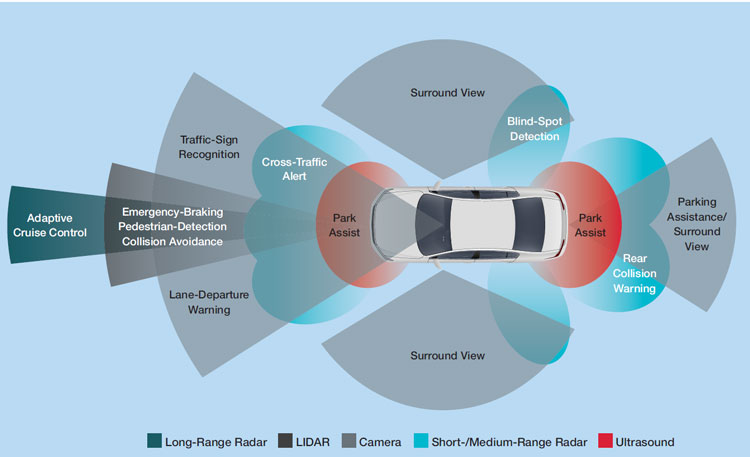
ADAS Technology: The National Highway Traffic Safety Administration (NHTSA) proposed adding four more advanced driver-assistance system (ADAS) technologies to its five-star safety rating program: lane-keeping support, pedestrian automatic emergency braking, blind-spot warning and blind-spot intervention. NHTSA’s New Car Assessment Program (NCAP) already includes four ADAS technologies: forward collision warning, lane-departure warning, crash imminent braking, and dynamic brake support. The agency is also seeking to update and strengthen the testing procedures and performance criteria for the four ADAS technologies currently in NCAP. SEMA submitted comments aimed at protecting consumers’ ability to modify their ADAS-equipped vehicles.

CCADCollector Car Appreciation Day: The 13th annual Collector Car Appreciation Day (CCAD) took place on Friday, July 8, 2022. Both the U.S. Senate and the House of Representatives introduced resolutions (H. Res. 1201/S. Res. 690) to focus attention on the vital role automotive restoration and collection plays in American society. Thousands of Americans gathered at car cruises, parades and open houses at SEMA-member companies to celebrate the nation’s automotive heritage. The day is also international in scope, as many Canadian provinces passed resolutions and hosted events. The next CCAD is set for July 14, 2023.

Supreme Court Ruling: In a 6-3 decision, the U.S. Supreme Court held that Congress did not grant the EPA the authority to devise carbon emissions caps for power plants that would shift the way they generate energy away from coal. The case, West Virginia vs. EPA, is unusual in that it centers around the 2015 Clean Power Plan that never went into effect. The Obama Administration plan was blocked in court and a subsequent Trump Administration plan was struck down. This decision, while limiting how the EPA can use its authority to reduce carbon dioxide emissions from power plants, has no effect on current EPA regulation of aftermarket performance products or mobile source emissions. It could have future implications for how much authority government agencies have to enact substantial policy without congressional approval.

Court Rules Racing Coalition Lacks Standing to Challenge EPA: The United States Court of Appeals for the District of Columbia dismissed a lawsuit brought by the Racing Enthusiasts and Suppliers Coalition (RESC) against the EPA for lack of standing. The suit, brought by a coalition of racing enthusiasts and aftermarket parts business owners, challenged the 2015 EPA interpretation of the Clean Air Act that motor vehicles designated for street use cannot be converted into dedicated race vehicles. Although the EPA abandoned efforts to make this policy a formal regulation in 2016, the agency still maintains the practice of modifying the emissions system of a motor vehicle for the purpose of converting it for racing is illegal. The court found that EPA’s 2016 rule did not create a challengeable rule and that RESC had not shown they were injured by the EPA’s rule. The court did not discuss in any detail nor decide the merits of the case concerning the EPA’s authority under the Clean Air Act to regulate dedicated race vehicles that are converted from street vehicles.

Tariffs: SEMA is working with several industry coalitions to oppose tariffs on a variety of worldwide products and materials. SEMA submitted comments to the International Trade Commission (ITC) as it evaluates the impact of Section 232 Steel and Aluminum tariffs and Section 301 tariffs on goods imported from China on the U.S. economy. The comments laid out how both tariffs have negatively impacted SEMA-member businesses. SEMA supports the swift removal of both the Section 232 and 301 tariffs. The U.S. Congress directed the ITC to conduct the investigation and issue a report by March 2023 on the impact of the tariffs on U.S. industries. The following is a summary of specific tariffs.

Steel and Aluminum: U.S. officials reached agreements with the European Union, Japan and the United Kingdom to end the tariffs on steel imports. The European Union and United Kingdom agreements also removed the tariffs on aluminum. These countries agreed to establish quota systems for the metal imports. The U.S. government imposed global tariffs on steel (25%) and aluminum (10%) beginning in June 2018 under Section 232 of U.S. trade law, citing that dependence on foreign sources posed a national security threat. Argentina, Australia, Brazil, and South Korea were excluded based on quotas, and Canada and Mexico were eventually excluded based on the U.S.–Mexico–Canada Agreement. The tariffs generally apply to processed raw materials (steel/aluminum plate, sheets, bars, etc.) but not finished products (wheels, exhaust systems, etc.). However, tariffs were imposed on bumper stampings and a few other finished products due to an import surge.

China Tariffs: The Office of the U.S. Trade Representative (USTR) began a formal review process of the Section 301 tariffs on goods imported from China that could lead to the continuation, modification, or end to the tariffs. When Section 301 tariffs are imposed, the law requires the USTR to pursue a review at the beginning of the fourth year, which has just occurred. Several domestic industries which have benefited from the tariffs have requested their continuation. The USTR will now seek public comments and then make a recommendation on whether to continue, modify, or end the tariffs. In 2018, the USTR instituted a Section 301 investigation of Chinese trade practices and imposed $50 billion in tariffs on a variety of goods on Lists 1 and 2, including miscellaneous metal and rubber parts. After China responded with retaliatory tariffs, the United States imposed the additional List 3 and 4a tariffs. The List 3 tariffs apply to most auto parts. They began at 10% in September 2018 but increased to 25% in May 2019.

Low Volume Replica Vehicle Manufacturers: NHTSA finalized a regulation to implement the SEMA-led Low Volume Motor Vehicle Manufacturers Act. SEMA worked with Congress to amend federal law to enable small auto manufacturers to produce completed replica vehicles under a streamlined regulatory structure that reflects the distinctly different business model of this niche industry. NHTSA’s regulations offer a business-friendly pathway for companies to begin producing up to 325 such replica cars a year. Replicas must resemble production vehicles manufactured at least 25 years ago to qualify.

Combatting Counterfeit Goods: The SEMA-supported “INFORM Consumers Act,” H.R. 5502, passed the U.S. House of Representatives as part of the “America Creating Opportunities for Manufacturing, Pre-Eminence in Technology, and Economic Strength Act of 2022” (America COMPETES Act), H.R. 4521. The INFORM Consumers Act is designed to protect Americans from criminals who sell counterfeit and stolen goods through online marketplaces. The legislation would require high-volume third-party sellers to disclose the full name of the seller or company, its business address, and its contact information, among other requirements. SEMA is part of the Buy Safe America Coalition, a diverse group of retailers, consumer groups, manufacturers, intellectual property advocates and law-enforcement officials who support efforts at all levels of government to protect consumers and communities from the sale of counterfeit and stolen goods.

Federal Bills Signed into Law: This year President Biden signed into law two bills that will impact the automotive industry. The “Infrastructure Investment and Jobs Act” provides $550 billion in new funding over five years for all modes of transportation, water, power and energy, public lands, and broadband. The law also directs NHTSA to issue several rules to promote new vehicle safety measures. These include mandating that all new vehicles have monitoring systems to detect drunk drivers as early as 2026; rear-seat reminders to alert parents if a child is left in the back seat as early as 2025; and automatic emergency braking and lane-
departure warnings, although no date was set for this rule. Most automakers joined a voluntary agreement under the Obama Administration to install automatic emergency braking equipment on a majority of their models by September 2022.

The second bill, the “Inflation Reduction Act of 2022,” included several automotive provisions, including the elimination of the 200,000-vehicle-per-automaker cap on the current $7,500 per-vehicle tax credit for consumers who purchase new battery-electric, hybrid plug-in and fuel-cell vehicles at the point of sale. The bill also provides a tax credit of up to $4,000 for the purchase of used vehicles listed above. The tax credit can only be used on cars that cost up to $55,000 and pickups, SUVs and vans that cost up to $80,000. It can only be claimed by buyers with incomes up to $300,000 for joint filers. The tax credit sets increasing sourcing requirements for the critical minerals used in EV batteries to be extracted or processed in the United States or in a country where the United States has a free trade agreement in effect or from materials that were recycled in North America (40% in 2024, 80% in 2027 and 100% by 2029).

E15 Ethanol: The EPA announced it will issue a temporary waiver to allow for the summertime sale of gasoline with up to 15% ethanol (E15). Currently, E15 cannot be sold between June 1 and September 15 due to fuel-volatility concerns that higher blends of ethanol combined with warmer temperatures may lead to increased ground-level ozone formation and smog. Ethanol, especially in higher concentrations such as E15, can cause metal corrosion and dissolve certain plastics and rubbers in older automobiles that were not constructed with ethanol-resistant materials and certain specialty high-performance equipment installed on newer vehicles. SEMA opposes the expansion of E15 gasoline sales as there may not be enough protections to guard against misfuelling.

Federal Headlight Standard: NHTSA issued a final rule amending the federal motor vehicle safety standard regulating lighting equipment (FMVSS No. 108) to include performance-based standards for adaptive driving beam (ADB) headlights. ADB headlights or “smart headlights,” which have been permitted on vehicles in Europe since 2006, operate as high-beam headlights and automatically dim portions of the beam when oncoming vehicles are detected by sensors. The bipartisan infrastructure bill that was signed into law in 2021 mandated that NHTSA update FMVSS No. 108 to allow for this technology. The final rule permits the use of ADB headlights on new vehicles as well as aftermarket installation of these systems, both for replacing original equipment and replacing a non-ADB headlight.

Ban on Chrysotile Asbestos: The EPA has issued a proposed rule to ban all manufacturing, processing, importation and commercial distribution of six categories of products containing chrysotile asbestos, which covers all of its current uses in the United States. This includes sheet gaskets, brake blocks, aftermarket automotive brakes/linings and other vehicle friction products. Chrysotile asbestos is the only known form of asbestos currently imported into the United States. The proposed prohibition of asbestos use in brake blocks, aftermarket automotive brakes and linings, other vehicle friction products, and other gaskets for commercial use would take effect 180 days after the EPA issues a final rule.

California Prop 65: California’s Office of Environmental Health Hazard Assessment (OEHHA) did not complete the regulatory process for its proposed amendments to the Proposition 65 short-form warning within the allotted time and allowed the rulemaking to lapse. OEHHA stated it intends to start the regulatory process again with a new proposal to update the short-form warning label and will consider the comments on the previous proposal into this process. SEMA submitted comments opposing the initial proposal and the subsequent modifications, as the new regulations would have mandated that at least one chemical associated with cancer and/or one chemical known to be a carcinogen be identified on the short form. Prop 65 doesn’t stop anyone from selling their products regardless of what chemicals they contain. It simply requires consumer warning labels under certain circumstances. The current short-form warning does not identify a specific chemical(s) while the long-form warning requires identification of a specific chemical(s).

California Oceano Dunes OHVs: SEMA and its allies in the motorized recreation community are working to protect off-highway vehicle (OHV) usage at the Oceano Dunes State Vehicular Recreation Area (SVRA), which is California’s only OHV park on the Pacific Ocean. It is located about two hours northwest of Los Angeles near San Luis Obispo. Oceano Dunes SVRA became a state park in 1974 and has been under threat of closure for many years, primarily by groups that object to motorized recreation based on environmental arguments that off-roading causes more airborne particulate matter (dust) and/or threatens plants and animals.

California State Parks and the California Coastal Commission (CCC) have been locked in a conflicting jurisdictional dispute over Oceano Dunes. The CCC contends that it has primacy with respect to environmental concerns, while State Parks cites a mandate from the state legislature to manage the area for OHV use.

In response to the CCC passing a March 2021, measure to shut down OHV access within three years, SEMA and several other off-road groups have challenged the CCC decision in lawsuits filed in California State Superior Court for San Luis Obispo County. The court held a preliminary hearing in January, and a trial is scheduled for March 2023.

STATE UPDATE

AlaskaAlaska—License Plate: Alaska Governor Mike Dunleavy signed into law SEMA-supported legislation to allow the display of only a single, rear-mounted license plate for all passenger vehicles. Under the previous law, vehicles were required to display two license plates. The new law is estimated to save the state more than $300,000 per year.

California—Automobile Cruising: The California legislature passed a SEMA-supported resolution celebrating the history and culture associated with automobile cruising. This resolution encourages local officials and law enforcement to work with local car clubs to conduct safe cruising events.

Kansas—Antique Vehicles: Governor Laura Kelly signed into law SEMA-supported legislation to allow antique vehicles which are 60 years old or older the ability to forego a VIN inspection when applying for a title. The new law expands eligibility of these vehicles for certain titling procedures by allowing only a bill of sale as proof of ownership and an application. Prior to the new law, only antique vehicles with a model year of ’50 or earlier could forego the VIN inspection when applying for a title.

ArizonaArizona—Restoration: Arizona Governor Doug Ducey signed into law SEMA-supported legislation to allow full restoration of pre-’81 vehicles, including temporary removal of the vehicle identification number (VIN) when necessary. The new law allows for the removal and reinstallation of a VIN if the vehicle was manufactured before ’81 and if the removal and reinstallation is reasonably necessary for repair or restoration.

Kansas—Restoration: Governor Laura Kelly signed into law SEMA-supported legislation to allow full restoration of antique vehicles, including temporary removal of the vehicle identification number (VIN) when necessary. This bill allows for the removal and reinstallation of a VIN if it is reasonably necessary for repair or restoration. Previously, restorers who intentionally removed or altered a VIN, regardless of reason, were guilty of a felony and the vehicle was subject to seizure and destruction by law enforcement.

Maryland—Emissions: The Maryland legislature failed to advance SEMA-opposed legislation to enact a biennial $14 fee on motor vehicles that are exempt from the state’s Vehicle Emissions Inspection Program, including historic vehicles and street rods.

Minnesota—Ethanol: The Minnesota legislature failed to advance two SEMA-opposed bills to increase the standard biofuel blend in gasoline to 15% ethanol (E15). One bill had an exemption for retailers who sell less than 500,000 gallons of gasoline/biofuel per year who are not equipped to store and dispense E15, while another bill had an exemption for retailers who sell less than 300,000 gal. of gasoline/biofuel per year.

New Hampshire—Exhaust: Governor Chris Sununu signed into law SEMA-supported legislation to allow the use of side-mounted exhaust on antique vehicles. The new law specifies exhaust discharge points (must be to the rear edge of either door if the vehicle has two doors and to the rear edge of either rear door if the vehicle has four doors) and such system directs exhaust gas away from the vehicle.

Oklahoma—Military Vehicles: Governor Kevin Stitt signed into law SEMA-supported legislation to allow the registration and titling of former military surplus vehicles for on-road use. The new law defines a military surplus vehicle as a vehicle less than 35 years old and was manufactured for use in either the U.S. Armed Forces or any country that was a member of the North Atlantic Treaty Organization at the time the vehicle was manufactured.

Pennsylvania—Motorsports: Governor Tom Wolf signed into law SEMA-supported legislation to create an exemption for motor vehicles or a motor-vehicle combination from perceived “commercial” activity provided that the vehicle is being used to transport another vehicle to or from an amateur competitive event, whether or not the owner displays sponsorship markings.

Utah—Military Vehicles: Utah Governor Spencer Cox signed into law SEMA-supported legislation to exempt military vehicles from displaying a license plate. The new law requires a license plate to be carried inside the vehicle and ready for inspection by law enforcement upon request.

Virginia—YOM Plates: Virginia Governor Glenn Youngkin signed into law SEMA-supported legislation expanding year-of-manufacture (YOM) license plates for vehicles registered as antiques to include plates manufactured in ’73 or thereafter. Prior to the new law, only vehicles manufactured in ’72 or earlier could display year-of-manufacture plates with DMV approval.

Thu, 12/01/2022 - 18:55

SEMA News—December 2022
INDUSTRY INSIDER

10 Questions for Duran Morley

By Douglas McColloch

Industry InsiderAt age 17, Duran Morley was involved in a high-speed motorcycle accident. “My motorcycle caught fire,” he said. “I’m lucky to be alive.”

While convalescing, Morley spent time watching YouTube videos on Sprinter Van conversions. Upon recovery, his “obsessive passion” became a business when, at 18, he opened the The Van Mart in a 1,000-sq.-ft. warehouse in Huntington Beach, California. Now 22, he operates a 22,000-sq.-ft. facility in nearby Westminster that customizes an average of five to seven adventure vans per month. Additionally, his Van Speed online store offers branded parts such as bumpers, roof racks and side steps for the adventure van market. His accomplishments caught our notice to the extent that he was named one of SEMA News’ “35 Under 35” for 2021.

We spent some time at Morley’s shop to learn more about this fast-growing segment, and to find out more about the person behind its success.

SEMA News: What’s your latest personal project? What’s in your home garage?

Duran Morley: Right now I’m working on a ’69 Corvair that’s on a Jeep chassis, so its 4WD, and I’m making some changes to it along with my dad.

SN: Adventure vans have gained in popularity over the past couple of years, but it’s still a “niche” market. What inspired you to “take the plunge” and invest in this kind of business?

DM: Growing up, I always had a van. It’s the best way to get from point A to point B if you’re into motorcycles, or surfing, or snowboarding or camping. For me, it wasn’t the build aspect that attracted me as much as it was where the van can take you.

SN: Who is your typical customer, and what are his/her expectations when they first walk into your shop?

DM: Our customers range all over the place, but our biggest share are recent empty nesters, people in their 50s who want to travel more but who don’t want a 50-ft. motorhome.

SN: To folks who are new to overlanding, what advice would you give them?

DM: A lot of our customers do their own research for six months or more, so they have a pretty clear idea of what they want to do. For the rest, I’d say the best way to go about it is, don’t overthink it. Rent a van or a truck at first. There are companies like Outdoorsy or Alt Camp that can supply you with a rental for a weekend trip. It’s a lot cheaper to rent a vehicle than to buy a fully outfitted van and find out later that it’s not what you really need.

SN: Have rising fuel prices had any kind of impact on your business?

DM: Most of our customers are from California, so for them, a $.30–$.40 increase in gas prices doesn’t affect them all that much, so we haven’t noticed a difference yet.

SN: You were involved in a serious motorcycle accident at age 17, and spent months recovering from it. What lessons did you learn from the experience?

DM: You’ve probably heard this a million times before, but live every day like it’s your last.

SN: Are there any builders or mentors out there who have helped you along the way?

DM: Over the years I’ve worked for a lot of great people, starting with Jerry Zaiden from Camburg Engineering. It’s the place where I learned how to weld, which inspired me to get a welder in my garage when I was 14, to hook up a 220 plug and get to work. Roland Sands at Sands Design taught me a lot about design and engineering. It was great working for him.

SN: What’s your daily driver, and what do you like best about it?

DM: Realistically, my daily driver ends up being whatever van is on the lot. What I like about is, every day is a little different—but there’s noting like having a van to run errands, or to go surf in the morning and drive to work afterward.

SN: If you went back to school, what would you study?

DM: Industrial engineering and design because I love having the ability to design your own parts—the ability get your ideas on a piece of paper that someone else can understand.

SN: Where do you see your business going five to 10 years from now?

DM: We’re definitely focused on growing the recreational part of it, RV conversions for instance. We also have a commercial division that we’re looking to grow as well to help plumbers, electricians and contractors keep their tools securely stored.

SN: What’s your dream backcountry adventure? What would you drive, where would you go, and who would you take with you?

DM: Of course, it has to be a van! For me, I’d love to take a trip from Alaska all the way down to South America, and I’d probably go with my brothers because we all love to surf and we’ve all got motorcycles. It would be a dream come true.

Thu, 12/01/2022 - 17:35

By Ashley Reyes

Among the several dozen activities slated for the 2022 PRI Trade Show (December 8–10 in downtown Indianapolis) are networking opportunities and events from the SEMA Future Leaders Network (FLN), Motorsports Parts Manufacturers Council (MPMC) and SEMA Businesswomen’s Network (SBN).

PRI

Reserved only for women, the Gear Up Girl Lunch, Powered by SBN serves as a networking opportunity for professionals to give back and share advice with today’s female youth.

Female racing and aftermarket industry professionals will connect with female students pursuing careers in the motorsports industry at the second annual Gear-Up Girl Lunch, Powered by SBN, Friday, December 9, 12:00–1:30 p.m. (EST). Reserved only for women, this fun and dynamic event serves as a networking opportunity for professionals to give back and share advice with today’s female youth. To RSVP for the Gear-Up Girl Lunch, Powered by SBN, click here.

On Friday, December 9, from 5:00 p.m.–6:30 p.m. (EST), the FLN and MPMC joint reception will serve as an opportunity to close out day 2 of the PRI Trade Show while networking with industry friends and colleagues in a relaxed setting. The event—open to current and prospective FLN and MPMC members—will feature complimentary hot hors d’oeuvres and cold drinks, and will also include the induction of the next MPMC Hall of Fame member. In addition, select committee members from both groups will answer questions about the council and network membership. To RSVP for the FLN/MPMC PRI Reception, click here.

For a complete list of events at the 2022 PRI Trade Show, and to add them to your Show planner, visit here.

To register for the PRI Trade Show, visit here.

Thu, 12/01/2022 - 14:30

Don Prudhomme Joins First Lions Automobilia Class

Don Prudhomme
Don Prudhomme

On Saturday night, December 3, the Inaugural Lions Automobilia Foundation Awards Dinner and Silent Auction will be held celebrating the “Golden Anniversary of the Last Drag Race.” The sold-out event will be dedicated to recognizing those who influenced Southern California Motorsports and inspired its car culture lifestyle. Drag-racing legend Don Prudhomme will join Mickey Thompson, Ed Iskenderian, Vic Edelbrock Sr. and CJ Pappy Hart as a member of the first Hall of Fame class. Prudomme is already a member of the Drag Racing Hall of Fame, International Motorsports Hall of Fame, the Motorsports Hall of Fame of America, the SEMA Hall of Fame and recognized as a Texas Motorplex Legend, Bristol Dragway's Legends of Thunder Valley and the No. 3 racer on the NHRA’s list of “The 50 Top Drivers of All Time.”

The event will also celebrate the 50th Anniversary of the Last Drag Race at Lions and recognizing its winners: Carl Olson (TF), Tom McEwen (FC), Bill Bagshaw (PS), Jimmy Scott (Competition), Ken Veney (Injected FC), Ed Sigmon (Modified), Ron Zeolle (Super Stock) and Dave Benisek (Stock). Proceeds from the event and silent auction will go to support the Lions Automobilia Foundation Youth Engagement and Career Path Programs.

New Car, Format, Venues for ABB FIA Formula E in Season 9

Officials have unveiled a new look ahead of Season 9 of the ABB FIA Formula E World Championship and the debut of the Gen3 car, along with a new series logo, new races in iconic cities, new teams and new sporting formats.

The Gen3—designed to be the fastest, lightest, most powerful and most efficient electric race car ever built—will make its competitive debut in Round 1 in Mexico City on January 14, following pre-season testing next month in Valencia. The championship will continue with three new cities hosting Formula E races for the first time: Hyderabad, India (Round 4, February 11); Cape Town, South Africa (Round 5, February 25) and São Paulo, Brazil (Round 6, March 25).

Sporting regulation updates include a return to racing over laps; rookie drivers taking a seat for teams in FP1 sessions; and a plan to introduce a 30-second 4kWh ‘Attack Charge’ boost at select races. In addition, McLaren and Maserati are new to the Formula E grid next season.

For the complete details, visit the announcement here. For more information, visit fiaformulae.com.

Bachman
Tyler Bachman

Xtreme Outlaw Midget Series Announces Tyler Bachman as Series Director

World Racing Group’s Xtreme Outlaw Midget Series presented by Toyota has named Tyler Bachman as the new series director. Bachman is a longtime official and safety director within the World of Outlaws and DIRTcar Racing family. He served as competition director for the Xtreme Outlaw Series in 2022 and aims to expand the Midget tour in 2023. Most recently, Bachman was nominated to the board of directors for the International Council of Motorsports Sciences (ICMS). With Bachman at the helm, the 2023 schedule will focus solely on the Midget Series, rather than spread across to Non-Wing Sprint Cars. Volusia Speedway Park's DIRTcar Nationals in February will continue to feature premier Non-Wing Sprint Car racing.

ARCA Menards Series Announces 2023 Schedule

Officials with the ARCA Menards Series have announced the 2023 schedule. The season will once again feature 20 races at 19 tracks, kicking off the series’ 70th anniversary with its 60th race at Daytona International Speedway (Daytona, Florida) and concluding, for the second consecutive year, with its championship event at its home track: Toledo Speedway (Toledo, Ohio).

The ARCA Menards Series will also hold a combination race with the ARCA Menards Series West, at Phoenix Raceway (Avondale, Arizona) in March, while the events at Iowa Speedway (Newton, Iowa), Lucas Oil Indianapolis Raceway Park (Indianapolis, Indiana), The Milwaukee Mile (West Allis, Wisconsin) and Bristol Motor Speedway (Bristol, Tennessee) will be combination races with the ARCA Menards Series East.

In addition, officials have also announced the 2023 schedules for the ARCA Menards Series East and ARCA Menards Series West. Eight races are slated for the East Series, and 12 are set for the West Series. The 2023 West Series schedule will begin at Phoenix Raceway on March 10 with a combination race with the ARCA Menards Series. The 2023 East Series schedule will commence with the series’ sixth visit to the historic Five Flags Speedway in Pensacola, Florida, March 25.

For the complete schedule, visit the ARCA Menards Series website.

For more racing news, visit Performance Racing Industry’s (PRI) website.

Thu, 12/01/2022 - 14:05

By SEMA Market Research

What did you think of the 2022 SEMA Show? Now that it’s over, the SEMA Show team is collecting feedback on how the show went, and we could use your help.

SEMA Show 2022

If you have received an email from the Show team, please take our survey. Your feedback will help us improve next year’s show for attendees and exhibitors like you.

Thu, 12/01/2022 - 13:08

SEMA News—December 2022

INTERNET

Auto-Transcription of Video Meetings

Never Take Notes on a Meeting Again

By Joe Dysart

Web

With AI-powered transcribers, making a text record of a video meeting—including adding notes, commentary, questions, still images and more—is a snap.

AI transcription of video meetings has gotten so good, many workers have completely abandoned the idea of taking notes during meetings, entrusting that task—and more—to artificial intelligence.

“In the age of remote meetings, classes, and events, keeping track of meetings can be tricky,” says Chang Chen, head of growth and marketing, Otter.ai, a popular AI-powered video meeting transcriber.

“People struggle to keep up with the conversation while taking notes, and it’s absolutely important to capture the information and make it instantly available to everyone,” Chen says.

Adds Brian Lynch, president, SteelEye Americas, a maker of an AI transcriber. “We are already seeing tier-one firms investing in advanced and real-time transcription as a priority.”

Going far beyond transcribing simply what’s being said at meetings, many AI-powered transcribers now also enable users to add commentary—on-the-fly—to the meeting record, as well as emojis, questions and similar edits.

Moreover, some apps also enable you to perform significant edits to a meeting transcript after the close of a meeting, offering one-touch addition of a slide, image or similar graphic anywhere in the transcription text, meeting summaries, meeting highlights and more.

And most software makers in the space also pre-configure their apps to integrate seamlessly with popular video meeting applications, including Zoom, Microsoft Teams, Google Meet and Webex.

Granted, no auto-transcriber of any kind right now—AI-powered or otherwise—can claim 100% accuracy. Even many humans are not that good.

But many of these AI-powered solution makers are asserting that their transcriptions of video meetings are 99% accurate.

That’s not bad if you’d rather focus entirely on a meeting rather than trying to scribble down everything you’re hearing and thinking about what’s going on.

Essentially, AI transcribers are automating virtually every aspect of creating, working with and enhancing meeting transcriptions that people used to take by hand.

And additional new features for these solutions just keep coming—thanks to fierce competition among video meeting transcriber app makers.

Key apps to evaluate include Otter.ai, Descript, Dubber, Fathom, Interprefy, Amazon Transcribe, Nuance, IBM Watson, Transcribeme, Verbit.ai, Sonix, Voicea, QNAP and Trint.

As with most apps in a hyper-competitive genre, there’s an excellent chance you’ll be able to find one that’s perfect for you.

Overall, here are the features to look for in a best-of-breed video meeting transcriber:

Live Transcription On-the-Fly: Incredibly, many AI-powered meeting transcribers now stream a live text transcription of a meeting in progress. This voice-to-text feature is great for people who may have missed something, people who have arrived late to a meeting or people who are having a problem understanding the voice of a specific person.

Live Transcription Editing, On-the-Fly: With live transcription often standard with today’s meeting transcribers, it makes sense that many offer real-time editing of a transcript of a meeting in progress.

With many solutions sporting this optimization, you can mark certain statements as ‘action items’ to follow-up on, type in questions in response to what’s being said, or mark moments in the transcript you plan to revisit after the meeting’s over.

Body Language Analysis On-the-Fly: Perfect for people who never attended the meeting, this feature enables AI to study the gazes, body language and facial expressions of people attending a video meeting and then embed the meaning of those movements into the transcript.

A thumbs-up at a meeting, for example, translates to a thumbs-up emoji in the transcript. And a bored look translates into a bored-look emoji.

Add Real-Time Human Translators: Some AI-driven transcribers are also designed to port picture-in-picture feeds of human translators or human sign-
language specialists into a meeting video. This feature enables you to broadcast a meeting in as many languages as you wish—in real-time.

Bookmarking: No more trying to remember where in the video a salient point popped up during a meeting that you want to remember. With many solutions, you can simply create a timestamp bookmark of a moment of a meeting you want to revisit—with a simple click.

Meeting Summaries: Given that AI summary technology is already so well developed, it’s no surprise that many AI meeting transcribers offer text summaries of meetings within minutes of a meeting’s conclusion.

After-Meeting-Transcript Editing: The same transcript editing actions you can perform while a meeting is in progress can also be used to enhance a transcript after the meeting’s over, including adding questions, commentary, marking action items and the like.

The same keyword feature also enables you to auto-add a slide, screenshot or other image at any point in the transcript with a single click.

Search-by-Keyword: Many solutions automatically generate a list of keywords you can use to search for statements and concepts discussed at the meeting, bringing you to specific points in the transcript where those search terms are discussed—and also enabling you to call-up the corresponding audio that generated those insights.

Plug-and-Play Integration: Many solutions are pre-configured to work seamlessly with popular software apps and platforms including Slack, Asana, Jira, Salesforce and Hubspot. With some solutions, distributing a meeting transcript on a Slack channel, for example, takes only a click or two.

Auto-Sync With Popular Calendars: With many auto-transcribers, the transcription of a meeting will start automatically as long as you schedule the meeting using popular calendar software from Google or Microsoft.

Query the Transcript for Info: On the horizon, some AI developers hope to embed additional tools in transcription software that will enable you to query the stored transcript of a meeting with specific questions you have about topics discussed.

Free: In some cases, some high-powered AI transcription solutions are actually free. The logic: The app makers are looking to grow the popularity of their apps very quickly by offering an exciting product—and then start charging users looking to add premium features.

Joe Dysart is an internet speaker and business consultant based in Manhattan.

646-233-4089

joe@customtechadvisor.com

www.dysartnewsfeatures.com

Thu, 12/01/2022 - 12:40

SEMA News—December 2022

INTERNATIONAL

SEMA Delegation Warmly Welcomed in Europe

First SEMA Nordic/Europe Business Development Program a Success

By Linda Spencer

International

The SEMA Business Development Program U.S. delegation attended an American Car Cruise, which takes place the last Friday night of each summer month. American vehicles from the ’30s–’90s lined the street, and enthusiasts with vehicles such as those pictured above cruised down Sveavägen, a main Stockholm, Sweden, thoroughfare.

Thirty-five SEMA members from 18 companies spent a week in Stockholm, Sweden, this past summer networking with trade buyers from throughout Europe. The week included exhibiting at two events—one trade-only and the other a large consumer and trade event hosted by one of Sweden’s largest distributors.

“The Nordic region is a great automotive enthusiast market,” noted Barry Adler, president of Quick Time Performance. “Their love for U.S. cars and trucks makes for great business opportunities.”

While the program was initially planned to be a gathering with buyers from the Nordic countries (which include Sweden, Norway, Denmark, Finland and Iceland), trade buyers attended from throughout Europe, including the United Kingdom, Switzerland, Germany and Netherlands. The U.S. delegation had the opportunity to meet both formally and informally with the visiting resellers at a trade-only day as well as a consumer event. Rounding out the week, the U.S. companies attended the famed Sveavägen Car Cruise and spent a day visiting retailers, wholesalers and installers with one route focusing on performance upgrades for street and racing and the other visiting shops focused on classic vehicles and restoration.

Europe

Pictured is Liz Couch, international economist—Automotive Team, U.S. Department of Commerce, Washington, D.C. Couch, SEMA’s liaison with the U.S. Department of Commerce, has attended nearly all of the SEMA business development programs and arranges the panel of U.S. government officials at each of these events—bringing together U.S. Embassy staff handling commercial affairs and other government officials, such as those charged with improving the protection of global IPR rights of U.S. companies.

Todd Payne, director of sales for Magnuson Superchargers singled out a main highlight of the trip for him—the day of touring trade buyers’ facilities in the greater Stockholm area. “The shop visits were well planned and provided a great spectrum of the Swedish automotive culture and their strong affinity for American muscle and Americana as a whole.” He added, “I attended with high expectations for the quality of this venture and they were exceeded.”

“Even though I had been to Sweden and have an existing customer, this really opened my eyes to the size and enthusiasm of the market,” said Tom Davis, UK and European business development manager for VP Racing Fuels. For him, the opportunity to exhibit at a consumer event hosted by Hansen Racing was extremely valuable as “it gave me insight into what the actual end user wants and their thoughts/experiences.”

Europe

Aleksander Moos, commercial specialist, U.S. Embassy, Copenhagen, Denmark.

Robert Scheid, vice president for McLeod Racing LLC, spoke more broadly of the program’s importance for his business. “Meeting face to face with potential new distributors was just one of the highlights of the trip. Also getting to visit key distributors, attend the famous Sveavägen Car Cruise, and other key events built the foundations for growing our business in the region exponentially.”

Performance Analysis Owner Mark Whitney noted that the trip is for companies already active in a market as well as those new to the region or exporting more generally. “These trips put you face-to-face with vetted buyers in the region. For first-time exporters, a company new to exporting and even seasoned exporters, the SEMA trade events are the best way to do what we do best, promote our products.”

Europe

Rachel Bae, regional U.S. intellectual property attaché, U.S. Mission to the European Union, Brussels, Belgium, provided an overview on property rights protection in the Nordic region and throughout Europe. One of the first steps for a company is to ensure that trademarks and other property rights are protected in the markets in which they seek to do business. Creating a priority list of these countries and/or regions in which these protections should be secured is key. Bae mentioned that there are seven U.S. IPR attachés throughout the world available to provide guidance.

Andy Lamus, vice president of international sales for Dynocom Industries Inc., similarly pointed out the benefits to his company: “New contacts, market knowledge, real on-the-ground experience and the opportunity to talk, one-on-one, to the players in this market.”

The region was new, saleswise, to a number of the participants, including Radflo Suspension Technology. Glenn Classen, CEO and president of Radflo Suspension Technology, has participated in a number of previous business development programs with SEMA, and is actively exporting to a number of global markets, but was new to the Nordic region. “I was impressed with the knowledge and enthusiasm shown by the vendors and attendees to the show.”

Europe

Barry Adler (center), president of South Carolina-based Quick Time Performance, and a repeat participant on the SEMA business development program, commented, “The Nordic region is a great automotive enthusiast market. Their love for U.S. cars and trucks makes for great business opportunities.”

The wholesale distribution system for parts for American vehicles and automotive specialty products in Europe, and the Nordic region in particular, is quite established and growing. The delegation met with many large wholesalers during the trip and visited two of the distributors’ facilities, the latter of which featured a heavy use of robotics to keep up with the demand. “The availability of parts and components into the market by local companies was impressive,” noted Classen.

Participants commented on the benefits of spending the time and funds needed to visit key markets and to meet with potential or current customers in person. “Deeper knowledge into the Northern European automotive aftermarket was gained by firsthand accounts through one-on-one interviews with buyers, workshop visits in the local area, and an American-flavored car show that can only be earned by showing up,” said David Reyna, international accounts manager for DeatschWerks Fuel Systems. A number of participants signed sales agreements during the trip. The vast majority expect that the leads they developed during the program will equate to sales in the short-term. Still others are planning to further research the market to determine whether it will be a good fit for their products.

Europe

Nancy Bjorshammar (left), commercial specialist, U.S. Embassy, Stockholm, Sweden; Johan Bjorkman (second left), commercial specialist, U.S. Embassy, Stockholm, Sweden; and Liz Couch (second right), international economist—automotive team, U.S. Department of Commerce, Washington, D.C.; and Tom Davis (right), UK and European business development manager for VP Racing Fuels. The U.S. government officials participated in a briefing on the European market for the U.S. delegation, including information on the market, such as car registration figures, population and per capita income, information on the specialty market, and enthusiast events in each of the five countries. The U.S. officials also met one-on-one with the U.S. delegation during the weeklong event.

The SEMA Nordic program is the fifth venue for the SEMA overseas business development programs, with each market chosen by the association based on a number of factors, including the current and potential sales of specialty products, sizable local interest in customizing, and the disposable income to afford this discretionary expense. This first program in Europe was added as the 25th business development program as Sweden, the Nordic region and Europe more broadly fit these criteria.

“As the European and Nordic markets continue to grow, and their demand for American brands remains relentless, this trip proved extremely valuable for international veterans and the newcomer alike,” noted Injen Technology Global Business Manager Jay Crouch. “Over the years, we’ve found that the SEMA international trips allow businesses like ours to network with key buyers in one place and get a real pulse for the region’s marketplace. We’re able to see how the local shops evolve on a yearly basis and how the market trends begin to shift before it happens,” added Crouch.

Europe

Mark Cornwell (right), vice president, new business development and specialty markets for Wilwood Disc Brakes, stated it was “hard to believe the commitment and following of American classics and hot rods in this region. It was awesome to meet with key players and listen to understand their needs. Another great SEMA export event—was a win, win, win for SEMA, manufacturers and the Nordic people.”

“The automotive-enthusiast scene in Stockholm and the surrounding region is alive and well,” commented Tim McCarthy, founder and CEO of Hushmat and a first-time business development program participant. “It was exciting to see the cruises and enthusiasm right in front of our eyes. If you did not know you were in Sweden, you would have thought you were standing at a car cruise right [in] Kansas City.” Ryan McDonald, sales manager for Custom Autosound, put it succinctly: “The Swedes aren’t just enthusiasts, they are car crazy!”

“Hard to believe the commitment and following of America classics and hot rods in this region,” added Wilwood Disc Brakes’ vice president of new business development and specialty markets Mark Cornwell. “It was awesome to meet with key players and listen to understand their needs.”

Europe

This was FUELAB’s first overseas trip with SEMA. President Brian Paitz (right) joined the SEMA delegation that was comprised of both veteran travelers, expert exporters, and those new to exporting.

The U.S. Department of Commerce’s (DOC) International Trade Administration (ITA) once again greatly enhanced the business development program experience for SEMA-member manufacturers, providing grants to trip participants to defray the cost of participating on the trip, and providing officials and briefings comprised of officials from the United States through the Market Development Cooperator Program (MDCP). This ITA program has a longstanding partnership with SEMA, which began in 2011 and since has provided $1.1 million in federal funds and technical assistance to assist U.S. companies in growing their export sales. The ITA’s efforts in the SEMA business development programs, including this program in Stockholm, have been coordinated by Brad Hess, director of the market development cooperator program, and Liz Couch, international economist—Automotive Team, U.S. Department of Commerce (DOC), Washington, D.C.; and the DOC lead on the SEMA-MDCP partnership.

Europe

Rogers Myers (left), co-founder of Custom Autosound Mfg., and Ryan McDonald (center), sales manager for Custom Autosound Mfg., along with other participating U.S. companies, exhibited in this one-day trade-only table-top display and reception. They also met with more than 1,000 attendees and saw hundreds of American project vehicles. Noted McDonald, “The Swedes aren’t just enthusiasts, they are car crazy!”

Other U.S. officials participating in the inaugural SEMA Nordic program include Nancy Bjorshammar, commercial specialist, U.S. Embassy, Stockholm, Sweden; Aleksander Moos, commercial specialist, U.S. Embassy, Copenhagen, Denmark; Joseph Lin, economic unit chief, U.S. Embassy, Stockholm, Sweden; and Rachel Bae, regional U.S. intellectual property attaché, U.S. Mission to the European Union, Brussels, Belgium.

The following photos were taken at the 2022 SEMA Nordic Business Development Program.

Companies participating in the 2022 SEMA Nordic trip:  

  • aFe Power
  • Bed Wood and Parts LLC
  • Borla Performance
  • Custom Autosound Mfg.
  • DeatschWerks Fuel Systems
  • Dynocom Industries Inc.
  • FUELAB
  • HushMat
  • Hypercraft
  • Injen Technology
  • Magnuson Superchargers
  • McLeod Racing LLC
  • Performance Analysis
  • Quick Time Performance
  • Radflo Suspension Technology
  • United Engine & Machine Co.
  • VP Racing Fuels
  • Wilwood Disc Brakes
Europe

Jay Crouch (left), director of global business for Injen Technology, and Ron Delgado (second left), president for Injen Technology. Injen participated in the first SEMA overseas business development program to China and most trips since then. “Injen Technology looks forward to the SEMA international events every year,” noted Crouch, “and without fail, SEMA delivered beyond expectations with the Nordic trip. This is key to growth for any region, and SEMA provides this to their members at a cost that is outweighed by the tremendous ROI.” The company typically adds additional days either before or after the program to follow up with current or potential buyers or to use the opportunity to measure vehicles not present in the U.S. market to create product.

Europe

Andy Lamus (left), vice president of international sales for Dynocom Industries Inc., was one of 35 SEMA members from 18 companies who participated in the four-day program, which included receptions, briefings, exhibiting and site visits to resellers and installers. Lamus noted that he most valued the “new contacts, market knowledge, real on-the-ground experience, and the opportunity to talk one-on-one with the players in this market.”

Europe

Mark Whitney (center, white shirt), owner of Performance Analysis, noted, “These trips put you face to face with vetted buyers in the region. The opportunities provided by these trips cannot be duplicated by just traveling to a country. For first-time exporters, a company new to exporting, and even seasoned exporters, the SEMA trade events are the best way to do what we do best—promote our products.”

Europe

Christopher Sulprizio (right), vice president of United Engine & Machine Co., participated in his company’s first overseas trip with SEMA, though he has traveled numerous times to the nation. It was a great opportunity for the company to visit current customers and to meet additional resellers from throughout Europe.

Europe

Tom Davis (right), UK & European business development manager for VP Racing Fuels, said, “It was a fantastically well put-together event and agenda. Even though I had been to Sweden and have an existing customer, this really opened my eyes to the size and enthusiasm in the market. The Hansen Day was great as it gave me insight into what the actual end user wants and their thoughts/experiences. If you are a U.S. business that isn’t working in the Nordics already, then I believe you are missing a fantastic opportunity.”

Europe

Robert Scheid (second left), vice president for McLeod Racing LLC, has participated in most of the SEMA business development programs and takes pre-trip and post-trip preparation seriously. He contacts current and potential customers before leaving the United States, sets up additional meetings while in a country, and makes sure to follow up promptly with all leads and inquiries upon returning to the States. Scheid and other experienced exporters have been an invaluable resource to SEMA-member suppliers that are newer to exporting and/or the SEMA business development programs. “Meeting face-to-face with potential new distributors was just one of the highlights of the trip,” noted Scheid. “Also getting to visit key distributors, attend the famous Sveavägen Car Cruise, and other key events, built the foundations for growing our business in the region exponentially.”

Europe

Todd Payne (left), director of sales for Magnuson Superchargers. Magnuson has participated in both of the 2022 SEMA business development programs and the first since international travel became possible post-COVID. “The inaugural SEMA Nordic trip was well worth the wait,” noted Payne. “The business owners I met with during meetings were engaged and prepared to discuss their unique markets. The shop visits were well planned and provided a great spectrum of the Swedish automotive culture and their strong affinity for American muscle and Americana as a whole. I attended with high expectations for the quality of this venture and they were exceeded.“

Europe

Glenn Classen (left), CEO and president of Radflo Suspension Technology, has participated in previous SEMA business development programs. His company has a strong overseas presence. Classen signed up for this inaugural trip to the region—one in which his company is not currently active—as a first step in exploring the Nordic market.

Europe

Jeffrey Major (left), CEO of Bed Wood and Parts LLC, and Amanda Major (second left), vice president of risk management for Bed Wood and Parts LLC. Resellers are always eager to see new products and companies come to the market. This was Bedwood’s first overseas trip with SEMA, and they experienced both the camaraderie among delegation participants and the eagerness of the European specialty-equipment market to meet with the visiting Americans.

Europe

David Deatsch (left), president of DeatschWerks Fuel Systems, and David Reyna (second left), international accounts manager for DeatschWerks Fuel Systems. Noted Reyna, “Happy to attend the 2022 inaugural SEMA Nordic event in Stockholm, Sweden. Deeper knowledge into the Northern European automotive aftermarket was gained by firsthand accounts through one-on-one interviews with buyers, workshop visits in the local area, and an American-flavored car show that can only be earned by showing up.”

Europe

Timothy McCarthy (left, red shirt), founder/CEO for HushMat. The SEMA Nordic trip was HushMat’s first business development program. McCarthy returned with insight into the market and a new customer. “There is tremendous potential in the Nordic/European region, as virtually every product sold in the sound-deadening and insulation-materials category is manufactured in either Russia or China,” commented McCarthy. “There is a need for American-manufactured technology that is designed to reduce noise and heat inside the vehicle. We are very excited to announce our distribution relationship with the Hansen Racing team in Sweden and look forward to bringing our technology to the automotive enthusiasts in this region.”

Europe

Nancy Bjorshammar (left), commercial specialist with the U.S. Embassy, Stockholm, Sweden, speaks with Joshua Abbott (right), global sales manager for Borla Performance Industries Inc. Borla Performance, which has participated in nearly all of the SEMA business development programs, was one of 18 SEMA-member manufacturers traveling on the inaugural trip to Sweden. Other venues for international business development programs are Australia, China, the Middle East and Russia. The most recent trip was the first to Europe. The U.S. government representatives from the region participated in a briefing for the U.S. suppliers and met one-on-one with each of the American companies.

Europe

Pictured: Casey Lewis (left), account executive for Hypercraft, and Shaun Hill (right), CRO for Hypercraft. The U.S. suppliers exhibited at both a trade-only event as well as a consumer event (pictured above) at Hansen Racing featuring 1,000 consumers, hundreds of customized American vehicles and a BBQ.

Europe

The U.S. delegation exhibited at a large consumer event hosted by Hansen Racing, one of the biggest distributors in Sweden. Here, William Hansen (center) was just presented with a SEMA Ambassador license plate from Bill Miller (far right), SEMA senior vice president of operations.

Europe

Jenny Amado is aFe Power’s export account manager. The company has attended a number of SEMA overseas business development programs and is actively selling abroad. “The Nordic trip was eye-opening, many opportunities to explore,” commented Amado. “We at aFe will be focusing on how we can best service this region and focus on development.”

Europe

The U.S. delegation spent a day visiting retailers, wholesalers and installers, including this shop on the outskirts of Stockholm.