Tue, 10/01/2019 - 10:49

SEMA News—October 2019

RETAIL SPOTLIGHT

Brick-and-Mortar Retailing

Four Ways to Play Up Your Advantages

By Mike Imlay

Retail Spotlight
Far too many automotive stores look alike, so injecting your distinct personality into yours can give you an edge. Survey what others do, then ask what you can do to stand out and create a better experience for customers.

There’s little doubt that the explosive growth of online sellers has given local retailing a run for its money. Still, while big sellers such as Amazon can be tough competitors, they can’t completely drive traditional brick-and-mortar stores out of business. That’s because local retail outlets have several inherent advantages that the big guys can never match.

“We see far too many brick-and-mortar retailers looking at internet sellers and saying, ‘I can’t do what they do,’” said Tom Shay, principal of Profits Plus Solutions, a small-business advisory firm based in St. Petersburg, Florida. “What we don’t see enough of is retailers looking at the other side of the equation and asking, ‘What can I do that they can’t or won’t do?’

“The key is making the business something a customer wants to be around. As an example, I read where Starbucks decided to stop selling its products on its website. Others may sell Starbucks products online, but Starbucks will not. Their reason is that they want their customers to experience their stores. That represents a lot of confidence in what their stores look like and how their people perform.

“How confident are aftermarket retailers that a customer would have a great experience in their place? If they aren’t going to try to win customers by having the lower price on an item, then what are they going to do to win the customer?”

According to Shay, the right answers involve recognizing your brick-and-mortar strengths and then playing them up.

Retail Spotlight
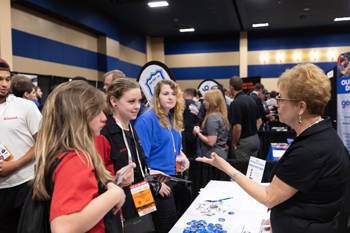
As competition from online sellers continues to tighten, brick-and-mortar stores still boast several advantages, including the ability to directly engage customers. Learning to play up such advantages can help a retailer thrive.

1. Offer Customers an Experience

First of all, brick-and-mortar stores are still the one place where consumers can see and touch merchandise while getting their questions instantly answered in detail. Despite misconceptions floating around the popular media, research indicates that the desire among consumers to personally investigate and buy products in a retail setting cuts across all demographics, including Millennials. To play up that advantage, a retail owner should make his or her brick-and-mortar outlet stand out as an experience.

According to Shay, a store should have so many touchpoints (sights, sounds, etc.) seamlessly working together that a customer can’t figure out what exactly makes the overall experience inviting—they just know that it is. Just as important, those touchpoints should start presenting themselves long before a customer even walks through the door.

“I recently stopped into an auto-parts store in Arkansas,” Shay related. “The sign they had out front was so faded that you couldn’t read anything on it. Its lights were burnt out, and the metal post was all rusted. That’s the first impression. Tell me about your parking lot. Is it clean? Is it striped? Does it have potholes? Do you have lights in the parking lot and on the front of the building? Fifty-three percent of a customer’s impression of a business comes from when they first see it, not when they get in it. The key is to start selling from where I can first see you, 200–300 yards away.”

He added that owners should ensure that their promotional signage is current and that it doesn’t obscure the goodies inside the windows. Even seemingly minor details make a difference.

“Once you get inside the door, then we’re down to lights, which can move you around the store simply by where they are concentrated,” he said. “If I want to get customers to a corner of a store, all I have to do is add more lights there. Even the music matters. I like country and jazz, but the right kind of music is a lighter jazz—almost an instrumental piece—because it’s not offensive. It’s the least hated music out there.”

Shay also advised another simple way to set your store apart from competitors: Ditch the branded racks.

“Walk into most places, and you’re in nothing but a collection of manufacturer display racks,” he said. “That’s wrong. This is your store. What you’re selling is your personality. If every other store is filled with the same identical racks, how have you shown personality?”

Shay said that it’s fine in the end to get ideas from other retailers, but don’t outright copy them. Instead, ask yourself what those other businesses get right and what they do wrong, then strategize how you can take their ideas and do better. The point is to create innovative touchpoints that differentiate your outlet and the shopping experience it offers from your rivals down the street, since auto-parts stores everywhere tend to look far too similar to begin with.

Retail Spotlight
Creating kits of items needed to get a job done right is one way to differentiate your store from online sellers. At the very least, employees should learn how to brainstorm related products they can suggest to customers who come in for one or two items.

2. Strive for Engagement

The ability to engage customers in person is a tremendous advantage, which makes customer service all the more important. You may think you offer great customer service, but Shay suggested that you start by checking your reviews on Yelp and other social media if you truly want an honest appraisal. What you find may surprise you.

“I always ask business owners one question,” he said. “Do you have a class that meets on some regularly scheduled basis in which everyone who works for you comes, participates, and does things like practice selling? If the answer is no, then how do you expect me to believe you really give great customer service? Do you think it just happens? I encourage people to teach everyone who works for them how to do customer service.”

Remember, a parts store can be intimidating for a do-it-yourself customer, especially when the sales people stand behind a counter staring at screens while looking up items and prices.

“You want the customer involved as part of the transaction,” Shay said. “Don’t leave them twiddling their thumbs. Turn the screen sideways, and let the customer look at it with you. Sit them down and talk.”

In fact, take a good hard look at your staff and how they dress. Do they stand out? Are they wearing distinctive clothing proudly branded with your shop’s insignia? Can they be spotted the moment a customer steps into the store? Can they handle several customers at once? No customer should ever have to wait for acknowledgment, let alone go on a search for help.

“When you’re good as a sales person, you can wait on several people at the same time,” Shay said. He also advised that staff take parts from boxes and place them in customers’ hands while demonstrating their features.

“We know that if I can get the product in the customer’s hand, there’s something psychologically that happens to the customer,” he explained. “They begin to own the merchandise.”

Lastly, if an item isn’t in stock, salespeople should check to see when it will arrive and inform the customer. Better yet, take the customer’s contact information and promptly alert him when the product does come in. Supply additional information about the product and its manufacturer to whet the customer’s appetite. Make it worth their time to return and get the item from you. Strive to take customer service to the next level of actual customer engagement.

3. Add Value to Your Sales

Online sellers certainly offer a wide variety of products at competitive prices, but they often display little knowledge of what aftermarket customers truly need for a project. That’s another deficiency that retailers can turn to their advantage.

“There’s so much more that a physical retailer can do as part of the sale to help the customer get the job done right,” Shay explained. “For example, let’s say I’m going to sell you an alternator. I can do it like an online retailer and try to compete on price, which gets ugly. But think about it: What else does the customer need? How about a sample-size tube of dielectric grease, thread locker and new bolts?”

Don’t just suggest those items as upsells. Instead, actually bundle them all into a single kit that ultimately saves the customer time and effort at little, if any, additional cost. Your shoppers will appreciate not only the convenience but also the thinking ahead that you’ve done for them. That adds incalculable value, Shay said.

“What customer is going to go back to somebody’s website and calculate the cost of all those separate items?” he asked. “It’s no longer a comparison of apples to apples. You’re making your sale a different product than what the others have got.”

When it comes to actual upselling, be sure that your people clue customers into special deals and shop promotions, even if there’s no obvious connection to what they originally came in for. Explain the benefits of those deals to the customer. If you’re having a “buy-one-get-one-free” offer on wiper blades, talk up the safety and convenience of always having a spare set on hand. Do it in a spirit of helpfulness. In fact, as part of your staff’s customer-service training (see bullet #2 on p. 294), play a variation on the old hot-potato game. Gather your employees in a circle and pass around a product, giving each one 10 seconds to suggest something else they can offer a customer who came in for that item.

SEMA Show Retail Seminars 
Tom Shay, principal of Profits Plus Solutions, is slated to deliver two “Retail Next” educational programs at the 2019 SEMA Show in Las Vegas. The first, entitled “Competing With the Big Box,” will expand on many of the concepts featured in this article. The second, “A Pricing Strategy; Keys to Stop Discounting,” will look at five unique components of a successful business pricing plan to increase customer count and profits. For details and to register, go to www.SEMAShow.com/education. 

4. Be a Community Hub

Retailers have one final advantage over online sellers: They know their community. Look for local groups doing automotive events and ask how you can participate. Or else organize your own. Send out a weekly e-newsletter reporting your activities and the automotive exploits of your customers. Invite manufacturers to demonstrate new products at customer gatherings several times a year and serve up hot dogs. Those are just a few of the many simple ways you can make your brick-and-mortar store more visible within your locality.

“Even better, come to the SEMA Show and make sure you go to the business seminars,” Shay suggested. “And go around the Show and look. It’s a good investment. When you come to the SEMA Show, you’re the first to see whatever is new.”

Position yourself as a sort of consumer correspondent at the Show for your customers back home. Using social media, share your photos, experiences and first-hand impressions of the latest trends as you walk the Show floor. Invite your followers to share likes and comments on what you’re posting. Doing so will further your reputation as an aftermarket expert, strengthen your customer relationships, and make your store an indispensable hub of your local enthusiast community.

Tue, 10/01/2019 - 10:49

SEMA News—October 2019

RETAIL SPOTLIGHT

Brick-and-Mortar Retailing

Four Ways to Play Up Your Advantages

By Mike Imlay

Retail Spotlight
Far too many automotive stores look alike, so injecting your distinct personality into yours can give you an edge. Survey what others do, then ask what you can do to stand out and create a better experience for customers.

There’s little doubt that the explosive growth of online sellers has given local retailing a run for its money. Still, while big sellers such as Amazon can be tough competitors, they can’t completely drive traditional brick-and-mortar stores out of business. That’s because local retail outlets have several inherent advantages that the big guys can never match.

“We see far too many brick-and-mortar retailers looking at internet sellers and saying, ‘I can’t do what they do,’” said Tom Shay, principal of Profits Plus Solutions, a small-business advisory firm based in St. Petersburg, Florida. “What we don’t see enough of is retailers looking at the other side of the equation and asking, ‘What can I do that they can’t or won’t do?’

“The key is making the business something a customer wants to be around. As an example, I read where Starbucks decided to stop selling its products on its website. Others may sell Starbucks products online, but Starbucks will not. Their reason is that they want their customers to experience their stores. That represents a lot of confidence in what their stores look like and how their people perform.

“How confident are aftermarket retailers that a customer would have a great experience in their place? If they aren’t going to try to win customers by having the lower price on an item, then what are they going to do to win the customer?”

According to Shay, the right answers involve recognizing your brick-and-mortar strengths and then playing them up.

Retail Spotlight
As competition from online sellers continues to tighten, brick-and-mortar stores still boast several advantages, including the ability to directly engage customers. Learning to play up such advantages can help a retailer thrive.

1. Offer Customers an Experience

First of all, brick-and-mortar stores are still the one place where consumers can see and touch merchandise while getting their questions instantly answered in detail. Despite misconceptions floating around the popular media, research indicates that the desire among consumers to personally investigate and buy products in a retail setting cuts across all demographics, including Millennials. To play up that advantage, a retail owner should make his or her brick-and-mortar outlet stand out as an experience.

According to Shay, a store should have so many touchpoints (sights, sounds, etc.) seamlessly working together that a customer can’t figure out what exactly makes the overall experience inviting—they just know that it is. Just as important, those touchpoints should start presenting themselves long before a customer even walks through the door.

“I recently stopped into an auto-parts store in Arkansas,” Shay related. “The sign they had out front was so faded that you couldn’t read anything on it. Its lights were burnt out, and the metal post was all rusted. That’s the first impression. Tell me about your parking lot. Is it clean? Is it striped? Does it have potholes? Do you have lights in the parking lot and on the front of the building? Fifty-three percent of a customer’s impression of a business comes from when they first see it, not when they get in it. The key is to start selling from where I can first see you, 200–300 yards away.”

He added that owners should ensure that their promotional signage is current and that it doesn’t obscure the goodies inside the windows. Even seemingly minor details make a difference.

“Once you get inside the door, then we’re down to lights, which can move you around the store simply by where they are concentrated,” he said. “If I want to get customers to a corner of a store, all I have to do is add more lights there. Even the music matters. I like country and jazz, but the right kind of music is a lighter jazz—almost an instrumental piece—because it’s not offensive. It’s the least hated music out there.”

Shay also advised another simple way to set your store apart from competitors: Ditch the branded racks.

“Walk into most places, and you’re in nothing but a collection of manufacturer display racks,” he said. “That’s wrong. This is your store. What you’re selling is your personality. If every other store is filled with the same identical racks, how have you shown personality?”

Shay said that it’s fine in the end to get ideas from other retailers, but don’t outright copy them. Instead, ask yourself what those other businesses get right and what they do wrong, then strategize how you can take their ideas and do better. The point is to create innovative touchpoints that differentiate your outlet and the shopping experience it offers from your rivals down the street, since auto-parts stores everywhere tend to look far too similar to begin with.

Retail Spotlight
Creating kits of items needed to get a job done right is one way to differentiate your store from online sellers. At the very least, employees should learn how to brainstorm related products they can suggest to customers who come in for one or two items.

2. Strive for Engagement

The ability to engage customers in person is a tremendous advantage, which makes customer service all the more important. You may think you offer great customer service, but Shay suggested that you start by checking your reviews on Yelp and other social media if you truly want an honest appraisal. What you find may surprise you.

“I always ask business owners one question,” he said. “Do you have a class that meets on some regularly scheduled basis in which everyone who works for you comes, participates, and does things like practice selling? If the answer is no, then how do you expect me to believe you really give great customer service? Do you think it just happens? I encourage people to teach everyone who works for them how to do customer service.”

Remember, a parts store can be intimidating for a do-it-yourself customer, especially when the sales people stand behind a counter staring at screens while looking up items and prices.

“You want the customer involved as part of the transaction,” Shay said. “Don’t leave them twiddling their thumbs. Turn the screen sideways, and let the customer look at it with you. Sit them down and talk.”

In fact, take a good hard look at your staff and how they dress. Do they stand out? Are they wearing distinctive clothing proudly branded with your shop’s insignia? Can they be spotted the moment a customer steps into the store? Can they handle several customers at once? No customer should ever have to wait for acknowledgment, let alone go on a search for help.

“When you’re good as a sales person, you can wait on several people at the same time,” Shay said. He also advised that staff take parts from boxes and place them in customers’ hands while demonstrating their features.

“We know that if I can get the product in the customer’s hand, there’s something psychologically that happens to the customer,” he explained. “They begin to own the merchandise.”

Lastly, if an item isn’t in stock, salespeople should check to see when it will arrive and inform the customer. Better yet, take the customer’s contact information and promptly alert him when the product does come in. Supply additional information about the product and its manufacturer to whet the customer’s appetite. Make it worth their time to return and get the item from you. Strive to take customer service to the next level of actual customer engagement.

3. Add Value to Your Sales

Online sellers certainly offer a wide variety of products at competitive prices, but they often display little knowledge of what aftermarket customers truly need for a project. That’s another deficiency that retailers can turn to their advantage.

“There’s so much more that a physical retailer can do as part of the sale to help the customer get the job done right,” Shay explained. “For example, let’s say I’m going to sell you an alternator. I can do it like an online retailer and try to compete on price, which gets ugly. But think about it: What else does the customer need? How about a sample-size tube of dielectric grease, thread locker and new bolts?”

Don’t just suggest those items as upsells. Instead, actually bundle them all into a single kit that ultimately saves the customer time and effort at little, if any, additional cost. Your shoppers will appreciate not only the convenience but also the thinking ahead that you’ve done for them. That adds incalculable value, Shay said.

“What customer is going to go back to somebody’s website and calculate the cost of all those separate items?” he asked. “It’s no longer a comparison of apples to apples. You’re making your sale a different product than what the others have got.”

When it comes to actual upselling, be sure that your people clue customers into special deals and shop promotions, even if there’s no obvious connection to what they originally came in for. Explain the benefits of those deals to the customer. If you’re having a “buy-one-get-one-free” offer on wiper blades, talk up the safety and convenience of always having a spare set on hand. Do it in a spirit of helpfulness. In fact, as part of your staff’s customer-service training (see bullet #2 on p. 294), play a variation on the old hot-potato game. Gather your employees in a circle and pass around a product, giving each one 10 seconds to suggest something else they can offer a customer who came in for that item.

SEMA Show Retail Seminars 
Tom Shay, principal of Profits Plus Solutions, is slated to deliver two “Retail Next” educational programs at the 2019 SEMA Show in Las Vegas. The first, entitled “Competing With the Big Box,” will expand on many of the concepts featured in this article. The second, “A Pricing Strategy; Keys to Stop Discounting,” will look at five unique components of a successful business pricing plan to increase customer count and profits. For details and to register, go to www.SEMAShow.com/education. 

4. Be a Community Hub

Retailers have one final advantage over online sellers: They know their community. Look for local groups doing automotive events and ask how you can participate. Or else organize your own. Send out a weekly e-newsletter reporting your activities and the automotive exploits of your customers. Invite manufacturers to demonstrate new products at customer gatherings several times a year and serve up hot dogs. Those are just a few of the many simple ways you can make your brick-and-mortar store more visible within your locality.

“Even better, come to the SEMA Show and make sure you go to the business seminars,” Shay suggested. “And go around the Show and look. It’s a good investment. When you come to the SEMA Show, you’re the first to see whatever is new.”

Position yourself as a sort of consumer correspondent at the Show for your customers back home. Using social media, share your photos, experiences and first-hand impressions of the latest trends as you walk the Show floor. Invite your followers to share likes and comments on what you’re posting. Doing so will further your reputation as an aftermarket expert, strengthen your customer relationships, and make your store an indispensable hub of your local enthusiast community.

Tue, 10/01/2019 - 10:28

SEMA News—October 2019

EVENTS

What to Know Before You Go

SEMA’s Vice President of Events Offers SEMA Show Attendees Tips for Success

By Chad Simon

SEMA Show
More than 170,000 specialty-equipment professionals from all over the world are expected to attend the 2019 SEMA Show in Las Vegas.

More than 170,000 automotive specialty-equipment professionals from all over the world—including 60,000 buyers—are expected to attend the 2019 SEMA Show, November 5–8, in Las Vegas. This year’s Show promises to deliver several new features and opportunities for exhibitors and buyers to connect across the more than 1 million sq. ft. of exhibit space inside and around the Las Vegas Convention Center (LVCC). SEMA Vice President of Events Tom Gattuso offered attendees a preview of what to expect this year as well as tips on how they can make the most efficient use of their time on the Show floor.

SEMA News: What are some significant changes to this year’s SEMA Show?

Tom Gattuso: This year’s Show is going to be dressed in innovation. We have numerous reports of companies bringing more new products and diverse offerings than ever before. We’ve added some new features, including the SEMA Overlanding Experience, which will be located inside the Performance Pavilion just south of the LVCC South Hall.

This new feature will include rugged vehicles that are purpose-built for long-term expeditions and camping. This is a growing segment of our industry and has good support with both our buyer audience and exhibitor base, so we decided to bring it in and highlight it more than we’ve done in years past.

Another element we’ve added is SEMA Electrified, which showcases the trend of companies doing electric conversions to vehicles in our industry. We want to not only showcase that trend but also some of the companies that produce the related component parts.

For the first time ever, we will have education tracks on the Show floor. A stage will be set up in the lower South Hall, and we will provide headphones to drown out the ambient noise so you can focus on what the speakers are saying. We are also emphasizing a brand experience in SEMA Central. We invite you to visit and celebrate the industry with us.

Some of the more robust outdoor features we are bringing back include the Continental Extreme Driving Experience, Ford Out Front and Hoonigan’s “The SEMA of Shred.” The New Products Breakfast will still be held on Tuesday, which is the official kick-off to the SEMA Show. Buyers can also take part in our SEMA Banquet, which takes place on Thursday night of the Show, where we celebrate our leaders and the legends of the industry.

Tom Gattuso
SEMA Vice President of Events Tom Gattuso.

SN: What is your strategy for organizing the Show?

TG: We are generally five years out at any given time for long-term planning. From a shorter-term vision, we are focused on three years and the current year. We average 18 months out when we are planning the Show. With a convention center expansion on the horizon, we’ve focused more on our long-term strategy than we have in the past, but we are anticipating a lot of great things that are part of the LVCC expansion and renovation. The expansion in the Gold Lot will be done in 2021, but then they will immediately renovate the existing building, which will be a process that goes through 2023. So, we are looking at scenario planning for use of the available halls and how we will fit the Show into an ever-changing campus.

SN: What steps can buyers take now to prepare for the Show?

TG: Start to target companies you want to visit. About 78% of buyers come to the Show with a list of companies they want to see. Use www.SEMAShow.com and the floorplan to view the companies that will exhibit at the Show and put your list together of who you want to meet with. As the Show gets closer, key in on the mobile app as well as SEMA eNews and SEMA News for updates and more pertinent information.

The bottom line is to come to the Show with a plan. You can never start too early to establish that plan so that you can make the most efficient use of your time at the Show.

Also, register for the Show before the mailing deadlines (October 11 for domestic attendees and September 13 for international) and ensure that you have a place to stay. We have a robust room block and recommend that you book through our housing partner, onPeak. More information can be found on www.SEMAShow.com.

Monorail
Parking will be extremely impacted due to the LVCC’s ongoing renovation. Alternative transportation methods, including the monorail, are advised.

SN: How can buyers make the most of their time and meet with everyone they plan to meet with at the Show?

TG: The SEMA Show boils down to a multitude of five-minute conversations between buyers and exhibitors. Everything we build is to foster this connection between buyer and seller, so I recommend that you have as many of those conversations as you can and look at every opportunity as a chance to connect, a chance to grow and be a part of this awesome industry. How many of those connections can you have and how many do you want? You have to answer those questions first, then come to the Show and make it happen.

SN: Are there any changes to the SEMA Show mobile app this year?

TG: The app is a comprehensive tool that you can hold in the palm of your hand. It gets smarter and grows along with our Show. For instance, we are going to add a feature this year that allows buyers to scan new products to find exhibitors and also scan feature vehicles to find information about a company’s products. You can also connect to social media through the app, and it’s a great resource for notes so you have points you can follow up with as soon as you arrive to the Show. In addition, the app will store information from previous Shows, so you won’t lose information from last year’s Show. It’s a good reference tool to see what you did last year as you build for what you want to do this year, including who you saw, what products you saw, any place you want to return, what you missed last year, etc.

The Show is big, so using the map feature can help greatly. People don’t realize that they are so close to an access point to the second floor of the South Hall and they’ll walk to the front of the building, get on an escalator and go to the back of the hall, not even realizing that what could have been a five-minute journey turned into almost a half-hour.

New Products Showcase
The New Products Showcase—the number-one destination for buyers—will feature more products this year than ever before.

SN: What do buyers need to know about transportation at the Show?

TG: With the expansion and renovation project the LVCC is going through, parking is extremely impacted. Research in advance how you will get on and off campus. We suggest using our shuttle buses, taxis, ride-share vehicles and the monorail instead of driving to the Show. We’ve set up these services to drop off in convenient locations so that everyone has an efficient way to get on and off campus.

SN: What should media attendees know about covering the Show?

TG: First and foremost, we have a world-class media center that includes everything you will need to research, write and
produce content. We staff it prior to the Show opening each day and past Show close so you have a space to be able to work and resources to supplement your research. We also suggest the New Products Showcase (directly adjacent to the Media Center) as the first place to visit before heading out to the Show floor. Get a jumpstart on the Show with our Monday Night Reveal, where we highlight some of the more prominent builds that will be seen at the Show. Finally, wrap up the week with the SEMA Cruise and SEMA Ignited, taking place Friday afternoon.

SN: How do you ensure that only approved, credentialed buyers are allowed on the Show floor?

TG: We have a team of qualifiers who review every application for its relevance in the automotive industry. We do that because we want to make sure that the connections we make on the Show floor are with qualified buyers and manufacturers. The process is simple: Just fill out an application and provide documentation that proves your connection to the industry, and from there, our qualifiers will send you either an approval or a request for more information.

SEMA Education
For the first time ever, education tracks will be held on the Show floor in the lower South Hall of the Las Vegas Convention Center.

SN: Are there any changes to SEMA Ignited this year?

TG: There will be some changes in terms of layout, but we will still be able to feature some of the great things we have in the past, including drifting, demonstrations, a celebration of the industry, and an awesome parade of the industry’s leading vehicles via the SEMA Cruise, which takes place immediately following the closing of the Show floor on Friday.

SN: How can buyers make sure to keep the momentum of the SEMA Show going even after they head home?

TG: Use our resources (website, mobile app, etc.), but learn more about SEMA as an association and how we can serve you throughout the year. Recently, we’ve started to emphasize more valuable programs for both manufacturers and retail members. We work hard to offer support programming the other 361 days of the year.

SN: How do you use information from previous Shows to improve succeeding Shows?

TG: We closely watch the connections that are happening in and around our Show and are constantly making improvements to foster better-quality conversations. We also are constantly evolving our Show so that it mirrors the industry we represent. Where changes are necessary, we are proactive to be on the leading edge as evidenced by our two newest features: the SEMA Overlanding Experience and SEMA Electrified. At the end of the day, we want our exhibitors to be the stars of the Show, and everything we build is to support that buyer connection.

SN: How is this year’s Show poised to be even better than last year’s Show?

TG: Hands down, the number of new products will be greater than we’ve ever seen. We are excited because that tells us the industry is very healthy and continues to innovate in a constantly changing landscape. We’ve also found that we will have more new buyers than we’ve ever had, which will give optimal exposure for our exhibitor base but also spur new business for the industry for months and years to come.

Tue, 10/01/2019 - 10:28

SEMA News—October 2019

EVENTS

What to Know Before You Go

SEMA’s Vice President of Events Offers SEMA Show Attendees Tips for Success

By Chad Simon

SEMA Show
More than 170,000 specialty-equipment professionals from all over the world are expected to attend the 2019 SEMA Show in Las Vegas.

More than 170,000 automotive specialty-equipment professionals from all over the world—including 60,000 buyers—are expected to attend the 2019 SEMA Show, November 5–8, in Las Vegas. This year’s Show promises to deliver several new features and opportunities for exhibitors and buyers to connect across the more than 1 million sq. ft. of exhibit space inside and around the Las Vegas Convention Center (LVCC). SEMA Vice President of Events Tom Gattuso offered attendees a preview of what to expect this year as well as tips on how they can make the most efficient use of their time on the Show floor.

SEMA News: What are some significant changes to this year’s SEMA Show?

Tom Gattuso: This year’s Show is going to be dressed in innovation. We have numerous reports of companies bringing more new products and diverse offerings than ever before. We’ve added some new features, including the SEMA Overlanding Experience, which will be located inside the Performance Pavilion just south of the LVCC South Hall.

This new feature will include rugged vehicles that are purpose-built for long-term expeditions and camping. This is a growing segment of our industry and has good support with both our buyer audience and exhibitor base, so we decided to bring it in and highlight it more than we’ve done in years past.

Another element we’ve added is SEMA Electrified, which showcases the trend of companies doing electric conversions to vehicles in our industry. We want to not only showcase that trend but also some of the companies that produce the related component parts.

For the first time ever, we will have education tracks on the Show floor. A stage will be set up in the lower South Hall, and we will provide headphones to drown out the ambient noise so you can focus on what the speakers are saying. We are also emphasizing a brand experience in SEMA Central. We invite you to visit and celebrate the industry with us.

Some of the more robust outdoor features we are bringing back include the Continental Extreme Driving Experience, Ford Out Front and Hoonigan’s “The SEMA of Shred.” The New Products Breakfast will still be held on Tuesday, which is the official kick-off to the SEMA Show. Buyers can also take part in our SEMA Banquet, which takes place on Thursday night of the Show, where we celebrate our leaders and the legends of the industry.

Tom Gattuso
SEMA Vice President of Events Tom Gattuso.

SN: What is your strategy for organizing the Show?

TG: We are generally five years out at any given time for long-term planning. From a shorter-term vision, we are focused on three years and the current year. We average 18 months out when we are planning the Show. With a convention center expansion on the horizon, we’ve focused more on our long-term strategy than we have in the past, but we are anticipating a lot of great things that are part of the LVCC expansion and renovation. The expansion in the Gold Lot will be done in 2021, but then they will immediately renovate the existing building, which will be a process that goes through 2023. So, we are looking at scenario planning for use of the available halls and how we will fit the Show into an ever-changing campus.

SN: What steps can buyers take now to prepare for the Show?

TG: Start to target companies you want to visit. About 78% of buyers come to the Show with a list of companies they want to see. Use www.SEMAShow.com and the floorplan to view the companies that will exhibit at the Show and put your list together of who you want to meet with. As the Show gets closer, key in on the mobile app as well as SEMA eNews and SEMA News for updates and more pertinent information.

The bottom line is to come to the Show with a plan. You can never start too early to establish that plan so that you can make the most efficient use of your time at the Show.

Also, register for the Show before the mailing deadlines (October 11 for domestic attendees and September 13 for international) and ensure that you have a place to stay. We have a robust room block and recommend that you book through our housing partner, onPeak. More information can be found on www.SEMAShow.com.

Monorail
Parking will be extremely impacted due to the LVCC’s ongoing renovation. Alternative transportation methods, including the monorail, are advised.

SN: How can buyers make the most of their time and meet with everyone they plan to meet with at the Show?

TG: The SEMA Show boils down to a multitude of five-minute conversations between buyers and exhibitors. Everything we build is to foster this connection between buyer and seller, so I recommend that you have as many of those conversations as you can and look at every opportunity as a chance to connect, a chance to grow and be a part of this awesome industry. How many of those connections can you have and how many do you want? You have to answer those questions first, then come to the Show and make it happen.

SN: Are there any changes to the SEMA Show mobile app this year?

TG: The app is a comprehensive tool that you can hold in the palm of your hand. It gets smarter and grows along with our Show. For instance, we are going to add a feature this year that allows buyers to scan new products to find exhibitors and also scan feature vehicles to find information about a company’s products. You can also connect to social media through the app, and it’s a great resource for notes so you have points you can follow up with as soon as you arrive to the Show. In addition, the app will store information from previous Shows, so you won’t lose information from last year’s Show. It’s a good reference tool to see what you did last year as you build for what you want to do this year, including who you saw, what products you saw, any place you want to return, what you missed last year, etc.

The Show is big, so using the map feature can help greatly. People don’t realize that they are so close to an access point to the second floor of the South Hall and they’ll walk to the front of the building, get on an escalator and go to the back of the hall, not even realizing that what could have been a five-minute journey turned into almost a half-hour.

New Products Showcase
The New Products Showcase—the number-one destination for buyers—will feature more products this year than ever before.

SN: What do buyers need to know about transportation at the Show?

TG: With the expansion and renovation project the LVCC is going through, parking is extremely impacted. Research in advance how you will get on and off campus. We suggest using our shuttle buses, taxis, ride-share vehicles and the monorail instead of driving to the Show. We’ve set up these services to drop off in convenient locations so that everyone has an efficient way to get on and off campus.

SN: What should media attendees know about covering the Show?

TG: First and foremost, we have a world-class media center that includes everything you will need to research, write and
produce content. We staff it prior to the Show opening each day and past Show close so you have a space to be able to work and resources to supplement your research. We also suggest the New Products Showcase (directly adjacent to the Media Center) as the first place to visit before heading out to the Show floor. Get a jumpstart on the Show with our Monday Night Reveal, where we highlight some of the more prominent builds that will be seen at the Show. Finally, wrap up the week with the SEMA Cruise and SEMA Ignited, taking place Friday afternoon.

SN: How do you ensure that only approved, credentialed buyers are allowed on the Show floor?

TG: We have a team of qualifiers who review every application for its relevance in the automotive industry. We do that because we want to make sure that the connections we make on the Show floor are with qualified buyers and manufacturers. The process is simple: Just fill out an application and provide documentation that proves your connection to the industry, and from there, our qualifiers will send you either an approval or a request for more information.

SEMA Education
For the first time ever, education tracks will be held on the Show floor in the lower South Hall of the Las Vegas Convention Center.

SN: Are there any changes to SEMA Ignited this year?

TG: There will be some changes in terms of layout, but we will still be able to feature some of the great things we have in the past, including drifting, demonstrations, a celebration of the industry, and an awesome parade of the industry’s leading vehicles via the SEMA Cruise, which takes place immediately following the closing of the Show floor on Friday.

SN: How can buyers make sure to keep the momentum of the SEMA Show going even after they head home?

TG: Use our resources (website, mobile app, etc.), but learn more about SEMA as an association and how we can serve you throughout the year. Recently, we’ve started to emphasize more valuable programs for both manufacturers and retail members. We work hard to offer support programming the other 361 days of the year.

SN: How do you use information from previous Shows to improve succeeding Shows?

TG: We closely watch the connections that are happening in and around our Show and are constantly making improvements to foster better-quality conversations. We also are constantly evolving our Show so that it mirrors the industry we represent. Where changes are necessary, we are proactive to be on the leading edge as evidenced by our two newest features: the SEMA Overlanding Experience and SEMA Electrified. At the end of the day, we want our exhibitors to be the stars of the Show, and everything we build is to support that buyer connection.

SN: How is this year’s Show poised to be even better than last year’s Show?

TG: Hands down, the number of new products will be greater than we’ve ever seen. We are excited because that tells us the industry is very healthy and continues to innovate in a constantly changing landscape. We’ve also found that we will have more new buyers than we’ve ever had, which will give optimal exposure for our exhibitor base but also spur new business for the industry for months and years to come.

Tue, 10/01/2019 - 10:11

SEMA News—October 2019

INTERNET

By Joe Dysart

Getting the Most From LinkedIn: Promoting With Your Own Newsletter

LinkedIn
Use LinkedIn’s “Write an article” tool to publish and distribute your newsletter on the network. Using that tool ensures that your newsletter (or similar valuable content) will be distributed to all of your connections and all of your followers on LinkedIn.

One of the best ways to maximize your presence on LinkedIn (www.linkedin.com) is to publish a weekly or even daily newsletter on the social network. Pretty much the de facto online meeting place for business professionals across the world, LinkedIn is considered so influential that Microsoft lunged at the opportunity to buy the network for $26 billion in 2016.

So far, that move still appears to have been extremely savvy. Growth on the network is still expanding at a searing pace. In fact, membership has burgeoned from approximately 433 million members in 2016 to 610 million, and business pros from more than 200 countries now regularly dial in to LinkedIn to catch-up with colleagues, keep their fingers on the pulse of their industries, and network for new business.

Keeping those valuable business people coming back for more is, of course, LinkedIn’s top priority. So it’s no surprise that the social network craves—and rewards—newsletters and similar posts from members that offer true value and insight to its business community.

The secret to maximizing those rewards while gaining ongoing exposure for your business is to use LinkedIn’s “Write an article” tool to publish and distribute your newsletter on the network. Using that tool ensures that your newsletter (or similar valuable content) will be distributed to all of your connections and all of your followers on LinkedIn. It also ensures that you’ll have an opportunity to get a boost to an even wider audience if LinkedIn’s algorithm and/or human editors detect that your newsletter is gaining traction on the network and is proving itself as a hot commodity.

Probably the best news in all this is that LinkedIn’s “Write an article” tool is a snap to use. If you already have your content written and an image to go with it or you have an existing newsletter that you simply want to repurpose on LinkedIn, you can effortlessly publish a newsletter on the network in just a few minutes. Here’s how:

Begin at the Home Button: Once you’ve logged into LinkedIn, click the “home” button at the top center of the page. Just to the right of your profile picture, you’ll find a blue “write an article” link to click, which will bring you to a blank layout page for your newsletter.

Prepare for Takeoff: Like many online publishing tools, the one on LinkedIn is painless to use. You’ll create a quick headline for your newsletter and add the text of your publication with a simple cut and paste.

Check Out the Editor: If you want to add a little polish, you can use the tool’s text editor (located just above your headline) to add bold face to some of your text, imbue some phrases with hyperlinks, add bulleted text, insert a pull quote and the like.

Add a Graphic: As you’re most likely aware, posts with photos or other images always draw more interest than simple text posts, so you should definitely include a graphic with your newsletter.

In practice, you can add a graphic, video, slideshow and similar multimedia to your newsletter on LinkedIn by clicking on the image of a blue “plus” sign, which you’ll find just above the headline that you created for your newsletter.

Keep in mind that the optimal image size for posts on LinkedIn is 744x400 pixels. Any decent photo-editing program will enable you to put together those dimensions, including Adobe Photoshop or Adobe Elements. Simply import your image to the photo editor and then crop or enlarge it to render in optimal size.

Stuck for image ideas? No problem. Fortunately, we live in an era in which tens of thousands of professional-grade images are available on the web for your use absolutely free—free of copyright, free of royalties, even free of credit-mention requirements.

You can find those free photos and illustrations at the dozens of free stock image sites that pepper the web. Two of our favorites are Pexels (www.pexels.com) and Pixabay (www.pixabay.com). Both generally have plenty of professional-grade images that can be found by entering in a narrow search term or two. Other free stock image sites include Unsplash
(www.unsplash.com), Gratisography (www.gratisography.com) and SplitShire (www.splitshire.com). Find even more such sites by Googling “free stock images.”

One Caution: Study the fine print on any stock image site you decide to use as an image source. Some have different use policies than others. And some have use terms that are much more restrictive than others.

LinkedIn
Get the most from LinkedIn by publishing a company newsletter there.

Get Fancy With Your Graphic: If you’re looking to add some text or other special effects to your newsletter graphic, free site Canva (www.canva.com) offers easy-to-use tools for such customization.

Publish: Once you’re satisfied with the look and feel of your newsletter, simply click the “Publish” button in the upper right side of your screen. LinkedIn will prompt you to add a few #hashtags to your newsletter to make it easier for people to find and—voilà!—you’ve published your first newsletter to the social network. Easy peasy.

Get More Legs for Your Newsletter: You can increase your newsletter’s reach on LinkedIn if you also post it in a few of the tens of thousands of special-interest groups the social network offers. Essentially, those are birds-of-a-feather communities that attract people with the same interests. While some groups have only a few members, others have hundreds of thousands.

To find groups where your newsletter would be welcomed, type the word “groups” into the LinkedIn search engine, which you’ll find in the upper left corner of the home page. The search engine results will lead you to prompts that will help you find groups catering to your specific business interests.

Think Quality: As you might imagine, LinkedIn rigorously polices its network with an algorithm that weeds out spam newsletters and spam posts, so be forewarned. Repeated posts marked as spam by other LinkedIn users could spell trouble for you long-term, while posts shared and commented upon will be smiled upon.

LinkedIn also employs human editors who rummage through posts and articles on a regular basis. The good news here is that your newsletter could be distributed to a wider audience if it turns the head of a human editor in a positive way.

Analyze: Once your newsletter goes live, LinkedIn immediately begins tracking and analyzing how your content is performing on its network. You can view those stats by clicking on the home” button and looking for a very small picture of yourself in the top right corner of the page. Under that photo, you’ll find the word “me” to click on, which calls up a drop-down box offering various links. Simply scroll down and click “posts & activity” to view the posts LinkedIn is tracking for you—including your first newsletter post.

For each post tracked there, LinkedIn offers stats on the number of views and likes your newsletter generated and the number of shares and reshares it generated. You’ll also find the demographics for your audience, including the companies they work for, their job titles and their locations. (Analytics start popping up after your first newsletter or other post gets 10 or more unique views.)

Another one of the great advantages of using LinkedIn’s “Write an article” tool is that LinkedIn retains analytics on each article for two years. In contrast, analytics for a simple post on LinkedIn are available for only 60 days after creation of the post.

More Help: If you need more clarification on how to publish a newsletter on LinkedIn, click on the black “More” button located in the upper right corner of the “Write an article” tool and select “Help Center” from the drop-down box.

Joe Dysart is an internet speaker and business consultant based in Manhattan.

646-233-4089

joe@joedysart.com

www.joedysart.com

Tue, 10/01/2019 - 09:53

SEMA News—October 2019

EVENTS

By SEMA New Editors

2019 SEMA Memorial Scholarship and Loan Forgiveness Award Winners Announced

Scholarship
The 2018 SEMA Memorial Scholarship Fund winners at the SEMA Launch Pad event at the 2018 SEMA Show in Las Vegas.

The SEMA Memorial Scholarship Fund awarded $272,000 to 97 individuals this year. The financial awards include scholarships for current students and loan-forgiveness awards to employees of SEMA-member companies.

“This year’s pool of scholarship winners represents the diversity of interests and disciplines that the automotive industry attracts,” said SEMA Board of Directors Chairman Tim Martin. “SEMA is committed to offering support to the next generation of young men and women that will drive this industry for years to come.”

More than $2.5 million has been awarded to more than 1,500 deserving students since the program’s establishment in 1984. The SEMA Memorial Scholarship Fund and the SEMA Loan Forgiveness Program are dedicated to fostering the next generation of automotive aftermarket industry leaders and innovators by helping them get off to a successful start in their education and automotive aftermarket careers.

Online applications for next year’s awards will be accepted November 1, 2019, through March 1, 2020, at www.sema.org/scholarships.

For questions or additional information, contact Juliet Marshall, manager, student programs, at 909-978-6655 or julietm@sema.org.

2019 SEMA Loan Forgiveness Award Winners

Recipient Employer Institution Name Major Award Fund Supporter
Andrew Balduf Toyota Technical Center University of Toledo Mechanical Engineering  
Charles Becker III University of Northwestern Ohio University of Northwestern Ohio Automotive Technology  
Chelsea Beights Transfer Flow Inc. California State University-Chico Art Studio, Photography John Raffa
Edward Carroll McGard LLC SUNY College at Buffalo Mechanical Engineering  
Trevor Chaney Lane Automotive University of Northwestern Ohio Automotive Technology  
Ashlee Chramega PPG University of Wisconsin-Milwaukee Chemistry  
Nick D'Orazio Fox Racing Shox Georgia Institute of Technology 
Mechanical Engineering
 Bernie Karp
Collin Gentry Meyer Distributing University of Southern Indiana 
Education
 YEN
Brett Gervais K&N Engineering Clarkson University Mechanical Engineering  
Jeffrey Hidde The Carlstar Group LLC University of South Carolina-Columbia 
Mechanical Engineering
  
Jacob Marshall National Hot Rod Association Indiana University-Purdue University-Indianapolis Motorsports and
Mechanical Engineering
  
Erin Mattay Retro Manufacturing College of Southern Nevada Liberal/General Studies  
Adam Mihalko Quirey Quality Design Co. Gannon University Mechanical Engineering  
Justin Miles Cummins Inc. Brigham Young University-Idaho Advanced Vehicle
Systems
 Thurston Warn
Chris Occhiogrosso Xtreme Diesel Performance LLC Monmouth University Accounting  
Tyler Perkins Hunter High School Universal Technical Institute of Arizona Automotive Technology  
Austin Rivera Brandmotion LLC College for Creative Studies Fine Arts  
Josh Seaver COMP Performance Group Minnesota State University-Mankato Automotive Engineering & Technology  
Alex Stivaletti Detroit Speed Inc. NASCAR Technical Institute Automotive Technology  
Austyn Sullivan-Watson Momz Garage University of Idaho Mechanical Engineering  
Denise Waddingham Dee Zee Inc. William Penn University Business Leo Kagan


2019 SEMA Scholarship Award Winners

Recipient Institution Name Major Award Fund Supporter
Eric Anderson  Ohio University  Mechanical Engineering   Harlan Felder
Dylan Baillie Boise State University  Mechanical Engineering   
Jacob Barfuss Utah State University  Engineering   
Frank Bravo  Texas A&M University  Aerospace Aeronautical   
Joey Brinegar  University of Northwestern Ohio  Automotive/Business
Management 
  
Ian Brown  San Diego State University  Mechanical Engineering   
Daniel Buckel  Georgia Southern University  Mechanical Engineering   
Emma Cameron  Boise State University  Mechanical Engineering  Dan Borré 
Liam Casto  Indiana University-Purdue University-Indianapolis  Mechanical Engineering   
Ethan Champe  Texas A&M University  Mechanical Engineering   
William Cloutier University of Portland  Computer & Information Sciences   
Taylor Crafton  Ivy Tech Community College-Wabash Valley  Transportation/Logistics   
Ryan Curtis  University of Wyoming  Mechanical Engineering   
Isaiah Daniel  California State University, Fresno  Mechanical Engineering   
John DeBoer  California Polytechnic State University, San Luis Obispo  Electrical Engineering   
Bonifacio Duller III  College for Creative Studies  Automotive Design   
Cordell Durcholz  Indiana University-Purdue University-Indianapolis  Mechanical Engineering   
Benjamin Falconer  McPherson College  Automotive Restoration/Communications  ARMO/Jeff Moses 
Jacob Feenstra  Kettering University  Mechanical Engineering   
Reid Florence  University of Florida  Mechanical Engineering   
Arturo Flores Southwest University at El Paso Automation Technology Steve Woomer
Nathan Friedman  Riverside Community College  Automation Technology  K&N Engineering 
Clare Frigo  Massachusetts Institute of Technology  Mechanical Engineering   
Trey Galgon  University of Northwestern Ohio  Automotive Technology   
Brianna Glowinski  University of Northwestern Ohio  Automotive Technical Supervision   
Samuel Griffith  Northwood University  Automotive Marketing & Management  PRO and Jim A. Borré 
Christopher Hagen  University of Miami  Marketing   
John Haggerty  Michigan State University  Mechanical Engineering   
Kali Holt  The University of Tennessee  Business Management   
Gregory Hovis  University of Northwestern Ohio  Automotive Technology   
Noah Jacobson  University of Northwestern Ohio  Automotive Technology   
Zachary Jones  Clemson University  Mechanical Engineering   
Gable Kemna-Berg  Rio Hondo College  Automotive Technology   
Brendan King  University of St. Thomas  Accountancy   
Darren Kusumoto  Rio Hondo College  Automotive Technology   
Kenton Kyger  Kettering University  Mechanical Engineering   
Keilan Levesque  Texas A&M University  Computer Engineering   
Frank Lyons Jr.  Fayetteville Technical Community College  Automotive Technology   
Samuel Maner  The University of Alabama  Mechanical Engineering   
Broderick Medley  University of Dayton  Mechanical Engineering   
Devan Merkle  Universal Technical Institute
of Pennsylvania 
 Automotive Technology  Joseph B. Amato Sr. 
Lauren Mims  Clemson University  Automotive Engineering & Technology   
Kyle Morris  University of Northwestern Ohio  Automotive Technology   
Sean Morton  Northwestern University  Materials Engineering   
Thomas Nelson Massachusetts Institute of Technology  Mechanical Engineering  ETTN and Nat Danas 
Judy Newman  Chattahoochee Technical College  Automotive Technology   
Christian Nisperos  University of California, Berkeley  Mechanical Engineering   
Christopher Okumura  University of Michigan, Ann Arbor  Mechanical Engineering   
Samuel Oliva-Perry  Kettering University  Mechanical Engineering   
Austin Owen Western Michigan University  Mechanical Engineering  HRIA/John Menzler 
Eric Patrell  Kettering University  Mechanical Engineering   
Christian Pegouske  Auburn University  Mechanical Engineering   
Casey Pepper Kettering University  Mechanical Engineering   
Emma Powers  University of Akron  Mechanical Engineering  SBN and Trudy Thompson 
Sarah Puder  Cuesta College  Liberal/General Studies  Wally Parks 
Aidan Shannon  University of Kentucky  Mechanical Engineering   
Ashley Stamboulian  Villanova University  Finance  Michael Kunzman 
Kyle Stewart  Indiana University-Purdue University-Indianapolis  Automotive Engineering & Technology  Joe Hrudka 
Caleb Stringer  Kettering University  Mechanical Engineering  TORA 
Brett Suggs  High Point University  Marketing  WTC 
Nathan Thompson  University of Akron  Mechanical Engineering Technology   
Benjamin Tiemeyer  University of Northwestern Ohio  Diesel Technology   
Cole Trent  Purdue University  Mechanical Engineering  MPMC 
Stephen Trinklein  University of Northwestern Ohio  Automotive Technology   
Dylan Uribe  Cypress College  Automation Technology   
Luke Voldahl  Eastern Michigan University  Information Technology   
Brody Vrooman  Northeast Community College  Automation Technology   
Brian Walker  Kettering University  Mechanical Engineering  TOP STUDENT 
Darrell Walters  Western Kentucky University  Mechanical Engineering   
Evan Wendling  Ferris State University  Engineering   
Jake Whelan  North Carolina State University
at Raleigh 
 Mechanical Engineering   
William White-Griggs University of Northwestern Ohio Automotive Technology  
Connor Witham Michigan State University Mechanical Engineering Melvin Burton
Madison Wong Massachusetts Institute of Technology Engineering  
Daniel Wright Colorado School of Mines Metallurgical Engineering  
Brandon York Pittsburg State University Automation Technology  


Tue, 10/01/2019 - 09:38

SEMA News—October 2019

LEGISLATIVE AND TECHNICAL AFFAIRS

By Stuart Gosswein

FEDERAL UPDATE

California
California—Off Highway Vehicles: The California Coastal Commission voted to make no changes to a permit that allows off-highway vehicle (OHV) use at the Oceano Dunes State Vehicular Area. The commission voted against a prohibition on night riding, additional fencing to restrict OHV use, eliminating unlimited OHV use on holidays, and increased enforcement efforts focused on vehicle use and speed limit. The commission also voted down a proposal to provide year-round protection to a 300-acre endangered species area (which is currently protected on a seasonal basis) and future closures for the purpose of dust control. Oceano Dunes encompasses nearly 3,600 acres along the Pacific Ocean, of which OHV use is now limited to 1,500 acres or less. It became a state OHV park in the ’80s and is the only such park on California’s coast.

Minimum Wage: The U.S. House of Representatives passed a bill to gradually increase the federal minimum hourly wage from $7.25 to $15 by 2024. The legislation would increase the wage in seven yearly steps and then index future increases to median wage growth. The federal wage has not been hiked since 2007, although 29 states and Washington, D.C., have set higher minimum wages. While the U.S. Senate is not expected to consider the bill, the issue will be a topic of debate in the upcoming presidential campaign.

Apprenticeships: The U.S. Department of Labor (DOL) has issued a proposed rule to encourage companies, trade associations, colleges, unions and other entities to establish federally recognized apprenticeship programs. The apprenticeships would be paid positions that provide trainees with on-the-job training and classroom education. The initiative is intended to expand the pool of available workers, given the fact that the U.S. currently has many more job openings than skilled workers. Federal funds would be available to help partner educational institutions with companies for a market-based approach that operates within DOL standards for training, structure and curricula.

Repair and Warranty Restrictions: The Federal Trade Commission (FTC) held a one-day workshop to examine ways in which manufacturers may limit third-party automotive replacement and repairs, including limitations on consumer rights under the Magnuson-Moss Warranty Act. Issues covered included the current prevalence of repair restrictions, reasons provided by manufacturers for such restrictions, and whether consumers are aware of their right to install aftermarket products. The workshop also explored the technological and financial impact repair restrictions have on small businesses and consumers. The workshop was a fact-finding effort as the FTC seeks to better understand challenges faced in enforcing the law.

Outdoor Recreation: The U.S. House Natural Resources Committee passed SEMA-supported legislation help to address a $16 billion maintenance backlog on America’s public lands. The Restore Our Parks and Public Lands Act would create a public-lands fund spending up to $1.3 billion a year between 2020 and 2024. Deferred maintenance projects include rebuilding roadways, bridges, buildings, campgrounds, trails and other vital infrastructure that support outdoor recreation.

STATE UPDATE

Hawaii—Military Vehicles: Hawaii Governor David Ige vetoed legislation that would have allowed for the registration and titling of former military vehicles. In announcing his intent to veto the legislation, Governor Ige explained that he believed the bill would result in vehicles that didn’t conform to emissions standards or federal motor safety standards on Hawaii roadways.

New Brunswick—License Plates: New Brunswick Public Safety Minister Carl Urquhart announced that motorists in the province will no longer be required to display a front license plate on passenger vehicles and light trucks weighing less than 4,500 kg. Antique vehicles are unaffected by the change and will continue to be issued a single, rear-mounted license plate.

Pennsylvania—Emissions: A package of bills to reform Pennsylvania’s Vehicle Emissions Inspection and Maintenance (I/M) Program passed the Senate and currently await consideration in the House Transportation Committee. These bills would replace the annual emissions-testing requirement with a biennial requirement, exempt new vehicles from the I/M program for eight years after the manufacture date, exempt certain counties from testing requirements, and change testing criteria for model-year ’94–’95 vehicles in the Pittsburgh and Philadelphia regions.

Rhode Island—License Plates: Legislation in Rhode Island to allow vehicles with year-of-manufacture tags to display a single license plate on the rear of the vehicle passed the legislature and awaits consideration by Governor Gina Raimondo.

Tue, 10/01/2019 - 09:38

SEMA News—October 2019

LEGISLATIVE AND TECHNICAL AFFAIRS

By Stuart Gosswein

FEDERAL UPDATE

California
California—Off Highway Vehicles: The California Coastal Commission voted to make no changes to a permit that allows off-highway vehicle (OHV) use at the Oceano Dunes State Vehicular Area. The commission voted against a prohibition on night riding, additional fencing to restrict OHV use, eliminating unlimited OHV use on holidays, and increased enforcement efforts focused on vehicle use and speed limit. The commission also voted down a proposal to provide year-round protection to a 300-acre endangered species area (which is currently protected on a seasonal basis) and future closures for the purpose of dust control. Oceano Dunes encompasses nearly 3,600 acres along the Pacific Ocean, of which OHV use is now limited to 1,500 acres or less. It became a state OHV park in the ’80s and is the only such park on California’s coast.

Minimum Wage: The U.S. House of Representatives passed a bill to gradually increase the federal minimum hourly wage from $7.25 to $15 by 2024. The legislation would increase the wage in seven yearly steps and then index future increases to median wage growth. The federal wage has not been hiked since 2007, although 29 states and Washington, D.C., have set higher minimum wages. While the U.S. Senate is not expected to consider the bill, the issue will be a topic of debate in the upcoming presidential campaign.

Apprenticeships: The U.S. Department of Labor (DOL) has issued a proposed rule to encourage companies, trade associations, colleges, unions and other entities to establish federally recognized apprenticeship programs. The apprenticeships would be paid positions that provide trainees with on-the-job training and classroom education. The initiative is intended to expand the pool of available workers, given the fact that the U.S. currently has many more job openings than skilled workers. Federal funds would be available to help partner educational institutions with companies for a market-based approach that operates within DOL standards for training, structure and curricula.

Repair and Warranty Restrictions: The Federal Trade Commission (FTC) held a one-day workshop to examine ways in which manufacturers may limit third-party automotive replacement and repairs, including limitations on consumer rights under the Magnuson-Moss Warranty Act. Issues covered included the current prevalence of repair restrictions, reasons provided by manufacturers for such restrictions, and whether consumers are aware of their right to install aftermarket products. The workshop also explored the technological and financial impact repair restrictions have on small businesses and consumers. The workshop was a fact-finding effort as the FTC seeks to better understand challenges faced in enforcing the law.

Outdoor Recreation: The U.S. House Natural Resources Committee passed SEMA-supported legislation help to address a $16 billion maintenance backlog on America’s public lands. The Restore Our Parks and Public Lands Act would create a public-lands fund spending up to $1.3 billion a year between 2020 and 2024. Deferred maintenance projects include rebuilding roadways, bridges, buildings, campgrounds, trails and other vital infrastructure that support outdoor recreation.

STATE UPDATE

Hawaii—Military Vehicles: Hawaii Governor David Ige vetoed legislation that would have allowed for the registration and titling of former military vehicles. In announcing his intent to veto the legislation, Governor Ige explained that he believed the bill would result in vehicles that didn’t conform to emissions standards or federal motor safety standards on Hawaii roadways.

New Brunswick—License Plates: New Brunswick Public Safety Minister Carl Urquhart announced that motorists in the province will no longer be required to display a front license plate on passenger vehicles and light trucks weighing less than 4,500 kg. Antique vehicles are unaffected by the change and will continue to be issued a single, rear-mounted license plate.

Pennsylvania—Emissions: A package of bills to reform Pennsylvania’s Vehicle Emissions Inspection and Maintenance (I/M) Program passed the Senate and currently await consideration in the House Transportation Committee. These bills would replace the annual emissions-testing requirement with a biennial requirement, exempt new vehicles from the I/M program for eight years after the manufacture date, exempt certain counties from testing requirements, and change testing criteria for model-year ’94–’95 vehicles in the Pittsburgh and Philadelphia regions.

Rhode Island—License Plates: Legislation in Rhode Island to allow vehicles with year-of-manufacture tags to display a single license plate on the rear of the vehicle passed the legislature and awaits consideration by Governor Gina Raimondo.

Tue, 10/01/2019 - 09:38

SEMA News—October 2019

LEGISLATIVE AND TECHNICAL AFFAIRS

By Stuart Gosswein

FEDERAL UPDATE

California
California—Off Highway Vehicles: The California Coastal Commission voted to make no changes to a permit that allows off-highway vehicle (OHV) use at the Oceano Dunes State Vehicular Area. The commission voted against a prohibition on night riding, additional fencing to restrict OHV use, eliminating unlimited OHV use on holidays, and increased enforcement efforts focused on vehicle use and speed limit. The commission also voted down a proposal to provide year-round protection to a 300-acre endangered species area (which is currently protected on a seasonal basis) and future closures for the purpose of dust control. Oceano Dunes encompasses nearly 3,600 acres along the Pacific Ocean, of which OHV use is now limited to 1,500 acres or less. It became a state OHV park in the ’80s and is the only such park on California’s coast.

Minimum Wage: The U.S. House of Representatives passed a bill to gradually increase the federal minimum hourly wage from $7.25 to $15 by 2024. The legislation would increase the wage in seven yearly steps and then index future increases to median wage growth. The federal wage has not been hiked since 2007, although 29 states and Washington, D.C., have set higher minimum wages. While the U.S. Senate is not expected to consider the bill, the issue will be a topic of debate in the upcoming presidential campaign.

Apprenticeships: The U.S. Department of Labor (DOL) has issued a proposed rule to encourage companies, trade associations, colleges, unions and other entities to establish federally recognized apprenticeship programs. The apprenticeships would be paid positions that provide trainees with on-the-job training and classroom education. The initiative is intended to expand the pool of available workers, given the fact that the U.S. currently has many more job openings than skilled workers. Federal funds would be available to help partner educational institutions with companies for a market-based approach that operates within DOL standards for training, structure and curricula.

Repair and Warranty Restrictions: The Federal Trade Commission (FTC) held a one-day workshop to examine ways in which manufacturers may limit third-party automotive replacement and repairs, including limitations on consumer rights under the Magnuson-Moss Warranty Act. Issues covered included the current prevalence of repair restrictions, reasons provided by manufacturers for such restrictions, and whether consumers are aware of their right to install aftermarket products. The workshop also explored the technological and financial impact repair restrictions have on small businesses and consumers. The workshop was a fact-finding effort as the FTC seeks to better understand challenges faced in enforcing the law.

Outdoor Recreation: The U.S. House Natural Resources Committee passed SEMA-supported legislation help to address a $16 billion maintenance backlog on America’s public lands. The Restore Our Parks and Public Lands Act would create a public-lands fund spending up to $1.3 billion a year between 2020 and 2024. Deferred maintenance projects include rebuilding roadways, bridges, buildings, campgrounds, trails and other vital infrastructure that support outdoor recreation.

STATE UPDATE

Hawaii—Military Vehicles: Hawaii Governor David Ige vetoed legislation that would have allowed for the registration and titling of former military vehicles. In announcing his intent to veto the legislation, Governor Ige explained that he believed the bill would result in vehicles that didn’t conform to emissions standards or federal motor safety standards on Hawaii roadways.

New Brunswick—License Plates: New Brunswick Public Safety Minister Carl Urquhart announced that motorists in the province will no longer be required to display a front license plate on passenger vehicles and light trucks weighing less than 4,500 kg. Antique vehicles are unaffected by the change and will continue to be issued a single, rear-mounted license plate.

Pennsylvania—Emissions: A package of bills to reform Pennsylvania’s Vehicle Emissions Inspection and Maintenance (I/M) Program passed the Senate and currently await consideration in the House Transportation Committee. These bills would replace the annual emissions-testing requirement with a biennial requirement, exempt new vehicles from the I/M program for eight years after the manufacture date, exempt certain counties from testing requirements, and change testing criteria for model-year ’94–’95 vehicles in the Pittsburgh and Philadelphia regions.

Rhode Island—License Plates: Legislation in Rhode Island to allow vehicles with year-of-manufacture tags to display a single license plate on the rear of the vehicle passed the legislature and awaits consideration by Governor Gina Raimondo.

Tue, 10/01/2019 - 09:28

SEMA News—October 2019

INDUSTRY NEWS

Spy Photos

Photos courtesy SpiedBilde, Brian Williams. Reuse or reproduction without the copyright holder’s consent is prohibited.

’21 Jaguar F-Type Coupe and Cabrio


Mystery Colorado Mule Caught

Jaguar

 Colorado
Jaguar Colorado

Prototypes for the Jaguar F-type coupe and Cabrio were caught testing at the German Nürburgring. The new car looks to move away from the E-type lines the current car riffs on. The grille is larger, the headlights are slimmer and sharper, and the rear lights look svelte and squared off. This is not an all-new model.

Expect the aluminum structure of today’s car to evolve into the next decade. Thin, horizontal headlamps are ushered in, replacing the more vertical arrangements today and helping to give the F a fresh, more modern face.

The new ’20 F-type will retain its front engine, and there are talks of a purely electric Jaguar F-type featuring a 100kWh energy cell and two e-motors rated at 150kW/350Nm each. An electric F-type wouldn’t launch before 2023, and the powertrain is still up in the air.

 Last week, shots surfaced of a purported Bronco/Courier mule disguised as a Chevy Colorado. Unfortunately, that is not believed to be the case. These are photos of that same mule, although this time it had its front bumper attached. However, it didn’t feature the yellow identification tag that is seen on virtually every Ford prototype windshield. Second, the truck featured a five-lug setup, not six like the earlier Bronco mules (and the Ford Ranger). Finally, the supplier that the vehicle returned to is known for testing other brands at the Ford Dearborn Proving Grounds (e.g. Mahindra, Ssangyong, Tata, Karma). The identification of this mule is unknown; however, it is believed that it is not a mule related to the Bronco’s development.

Baby Bronco Tests Its Off-Road Chops


C8 Corvette Convertible Confirms Hard-Top

Bronco

 Corvette
Bronco Corvette

This is the upcoming Ford Adventurer compact SUV. Ford will fill out its SUV lineup with the introduction of an Escape-based crossover that’s made more rugged and styled similarly to the upcoming Bronco SUV. Called “Baby Bronco” or “Scout,” it’s tipped to be given the Adventurer nameplate for the ’21 model year.

Little is known about the small “Bronco” other than it will use mechanicals from the ’20 Escape. Expect it to be larger than a Jeep Renegade but boast similar levels of off-road capability and come with five doors. A lineup of turbocharged four- and possibly three-cylinder engines is expected as well as some type of hybrid or plug-in version. Front-wheel drive will likely be the standard drivetrain, however.

Expect to see baby Adventurer sometime next year.

 Here’s an up-close look at the upcoming Corvette C8 convertible. The C8 will switch to a hard-top configuration for the convertible model. This represents a major departure from prior models that were soft-top convertibles. Video confirms the “hard-top” nature of the convertible roof panel, as the photographer delivers a few “knocks” on the convertible roof panel and the panel immediately behind it. It’s unclear how the convertible mechanism will work at this point. However, Chevrolet teased the C8 convertible with the roof down in a recent video, and it looks like part of the assembly will be folded into and over the engine cover.