SEMA Vice President of Events Tom Gattuso Talks Show Plans, a New Hall and the Excitement to Come
By Mike Imlay
The excitement is building for the return of the SEMA Show.
With just months to go, Show planners have been working
diligently with Nevada, Las Vegas and convention-center
officials to present a world-class trade event in a welcoming,
safe and business-oriented environment.
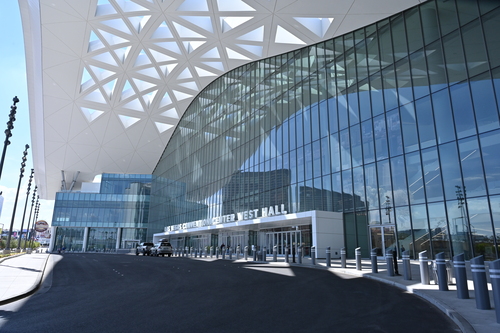
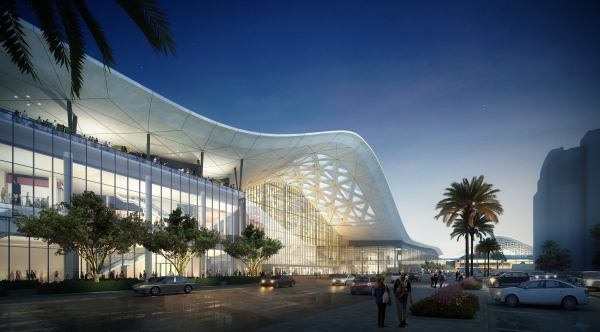
With just five months to go, SEMA is on track to again deliver an exciting in-person SEMA Show at the Las Vegas Convention Center (LVCC), November 2–5. In addition, the LVCC’s newly constructed West Hall will ensure ample space for new Show features and enhancements.
The hall was completed in January amid the COVID-19 shutdown and boasts 1.4 million sq. ft., which SEMA announced will now encompass exhibitors from the Restyling & Car Care Accessories, Powersports & Utility Vehicles, and Truck, SUV & Off-Road sections.
The realignment is one element in a comprehensive plan to optimize the attendee experience and connect exhibitors and buyers with engaging and interactive features throughout the four-day trade event. Details about additional resources—including a new online component that focuses on manufacturers, new products, feature vehicles and educational opportunities—were still being finalized as of this writing. However, Show organizers promised a series of exciting announcements set for the weeks leading up to the Show.
For a look at all the planning, along with hints at what’s to come, SEMA News turned to SEMA Vice President of Events Tom Gattuso. The following are highlights of our Q&A discussion, edited for clarity and conciseness.
SEMA News: This past spring, SEMA announced the return of the live SEMA Show for 2021. With registration well underway, how are plans shaping up?
Tom Gattuso: There is a lot of industry excitement—and certainly we’re excited—that the in-person SEMA Show is returning to the LVCC this November. There have been a lot of positive developments with both the city and the convention center that are making this possible. The state of Nevada and the city of Las Vegas are on course for a safe return of live events beginning in June. Their plans have support from the tradeshow and other industries, and we’re all working together to ensure that SEMA Show participants have a successful event in a safe and robust business environment come November.
SN: SEMA also announced that the Show footprint is expanding into the LVCC’s new West Hall. How will that impact the Show?
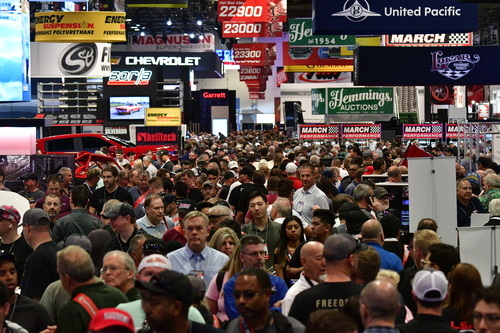
TG: The West Hall was a big announcement. We’re looking forward to deploying our industry Show throughout the entire LVCC campus, including the brand-new hall, which was part of a 1.4-million-sq.-ft. construction project. We’re thrilled, because the expansion will make our Show easier for exhibitors and attendees to experience. Plus, we’ll be able to showcase the industry in new and even more exciting ways this year. We can also plan for wider aisles and increased traffic flow so that people can move about more efficiently as they experience more than 2,000 world-class aftermarket companies in our new environment.
It’s also a great step for our future. The West Hall will now hold the Restyling & Car Care Accessories, Powersports & Utility Vehicles, and Truck, SUV & Off-Road sections. The Collision Repair & Refinish and Tools & Equipment sections will move from the North Hall into the Upper South Hall. The Lower South Hall mainstays, the TIA Global Tire Expo and our Wheel & Tire Accessories section as well as Racing & Performance, Hot Rod Alley and the Restoration Marketplace will remain in their traditional positions, but we’ll now have new adjacent overflow space allowing those sections to grow into the future.
SN: What do you think the return of the SEMA Show means for the industry?
TG: It’s interesting, because the industry has been doing well in many respects, so we’re excited to promote that resilience found in the aftermarket. In the 54-year history of the SEMA Show, we’ve never canceled an event until the situation that emerged in 2020, so we’re anticipating that the demand among people to return to this business opportunity will be very high. The SEMA Show has always been a huge draw for people eager to do business, network, experience first-rate education, and see thousands of new products and feature vehicles. We’re looking forward to creating a 2021 SEMA Show reflecting the industry’s passion.
SN: Along those lines, is SEMA offering any encouragements or incentives to Show exhibitors for 2021?
TG: From an exhibitor standpoint, SEMA has gone to great lengths to lower the risk of participation in the Show. Similar to last year, we’re giving manufacturers the ability to reserve their spaces with confidence by extending the refund policy to September 2, 2021. That enables them to reserve their space, make sure the marketplace is returning to the levels they anticipate, and know that they’ll have a great opportunity to reconnect with the industry and see the return on investment they’ve long been used to when they come to the Show in November.
SN: Beyond the Show’s return and expansion into the new West Hall, are there other new and exciting features planned?
TG: With a larger canvas on which to create opportunities, we’re seeing more companies wanting to participate. That means there will be more feature and demonstration areas and more education opportunities than we’ve ever had. We’ll be announcing many of those plans as they’re finalized in the lead-up to the Show.
SN: Last year, SEMA360 was created as an online alternative when the live SEMA Show was cancelled. Will the returning Show also have an online component?
SEMA Vice President of
Events Tom Gattuso.
TG: Yes, it will. Along with our in-person event, we’re planning a digital resource to accompany the exhibitor showcases directly from the Show floor. That resource will also become available throughout the year to extend the Show’s reach. We have four goals for the digital tool: to continue showcasing our manufacturers’ new products; to feature our industry’s great vehicle builds; to recognize their builders; and to make the education that takes place in and around our Show in November even more accessible to the industry.
SN: These have obviously been eventful times for SEMA members, the association and the SEMA Show team. Before we end this interview, would you like to share any personal thoughts on all that’s taken place?
TG: Looking at things positively, I think we can say that what we experienced since the 2019 SEMA Show has been an accelerated learning opportunity. We’re seeing many changes in the way the marketplace is doing business. That goes for everything from how audiences are consuming media to the relationships distributors, retailers and consumers have with our industry’s manufacturers and the ability to congregate and network at industry events. So, we’ve been evolving over the past two years, and the SEMA Show will leverage those market changes and continue to evolve to reflect our industry and anticipate its needs.
In addition, for 2021, we’ll have a Show that welcomes participants into an ideal environment where they can conduct the business they have come to expect from our in-person, trade-only events, so we’re excited at what’s coming this November.
We have a positive vision for a Show that will truly benefit our SEMA members. As we build it and see the growing participant support, a lot of new concepts and opportunities are going to manifest themselves. From a trade association perspective, even though there will be challenges, the benefits for the industry of getting together again at a live SEMA Show are second to none.
Plan Now to Attend
The SEMA Show offers an in-person attendee experience like no other trade show on the planet. It’s a pure business-to-business event and the best place to see the newest automotive performance products, discover the latest product and vehicle trends, and develop essential skills by attending any of the free education sessions, all of which are led by top industry professionals.
For attendee and media registration information, go to www.SEMAShow.com.
The SEMA Board of Directors provides strategic direction to the association and plays a critical role in shaping the future of the automotive specialty-equipment industry. There are a total of 10 candidates running for six open seats on the Board for the 2021 election cycle.
Online voting began May 11 and will continue through May 25. Voting is open to current SEMA-member companies, and votes must be cast by each company’s primary contact. Details on the election were sent to each member-company’s designated contact beginning April 30. For more information about the Board of Directors election, contact Susan Alfonso at susana@sema.org or 909-978-6671.
The winners will be announced by May 28 and will be featured in an upcoming issue of SEMA News. The new Board members will also be formally inducted at the SEMA Installation & Gala on Friday, July 30, in the newly completed West Hall of the Las Vegas Convention Center.
All SEMA-member companies are invited to join the festivities, but seating is limited. Register for the event at www.sema.org/gala.
Read on for the biographical information and statements of the 10 candidates. As a reminder, the remarks and opinions expressed by the candidates are solely their own. SEMA does not take responsibility for the accuracy or content of the candidates’ messages, and statements made by the candidates do not necessarily represent the views of SEMA.
2021 SEMA Board of Directors Candidates
Chairman-Elect (one open seat):
Kyle Fickler–Director, Driven Racing Oil
Les Rudd–President, Bob Cook Sales
Distributor/Retailer (two open seats):
Larry Montante–Vice President, Keystone Automotive Operations
Brian Rowland–GM, Parts & Accessories, Walmart
Steve Whipple–Director, Jegs High Performance
Manufacturer (two open seats):
Ian Lehn–Founder, BOOSTane
Kim Pendergast–CEO/Owner, Magnuson Superchargers
Brian Reese–President/CEO, The Retrofit Source
Service (one open seat):
Lindsay Hubley–Managing Partner, Lodestone Events
Jim Liaw–President/Co-Founder, Formula Drift Holdings
Kyle Fickler
Chairman-Elect Category
Kyle Fickler
As a candidate for SEMA chairman-elect, I will work to maintain our right to modify our vehicles and have a place to enjoy them. This freedom can be restricted in many ways, but whether it is regulatory, legislative or societal, we need to act proactively as an industry to provide solutions. I bring SEMA members a unique perspective blended from the education of a licensed attorney, the unwavering commitment required of a business owner, and the hands-on passion demonstrated by a virtual lifetime of successful participation in motorsports and our industry.
I have served the last eight years on the SEMA Board of Directors and as SEMA treasurer, following six years as a select committee member and as MPMC chair, in addition to numerous SEMA task forces and committees, including:
SEMA Board Executive Committee
SEMA Investment Committee
SEMA Budget Committee, Chair
PRI Advisory Committee
SEMA Manufacturer of the Year Task Force, Chair
SEMA Person of the Year Task Force
SEMA Board Nominating Committee, Chair and three-time member
SEMA Town Hall, Host and three-time Panelist
MPMC Rules of the Road, three-time Panelist
MPMC Future of Performance, Panelist
CBLC Liaison
SEMA PAC, President’s Club
Although I am a licensed attorney in Missouri and Montana, my best experience has been in service of three different industry-leading manufacturers dating back more than 25 years: Aeromotive, Inc.–director of business development; Weld Racing LLC–vice president of sales and equity partner; and currently Driven Racing Oil–director of sales and business development.
I am very active in motorsports, with an AHRA World Championship and two NHRA National event wins to date. My wife and daughter also race, with Danika (my daughter) winning back-to-back races to start this season. When not racing, you are likely to hear a story about our JK on a Badge of Honor trail, and, like most gearheads, we have plenty of projects (10) that need attention.
Our industry is what my family lives for, and I will be a capable and energetic leader serving our industry for the benefit of current and future generations.
I am equally humbled and honored to have this opportunity to run as your next chairman-elect of the SEMA Board of Directors. With your support and vote, I will bring my lifelong experiences and my knowledge of our industry to the forefront to provide all SEMA members a supportive voice. I have personal experience at the jobber, dealer, e-comm, manufacturer and, of course, the manufacturers’ rep level. I understand firsthand the small-business challenges that we currently face and what lies ahead for each of us to overcome and turn them into opportunities.
I will support SEMA members with vision, integrity, loyalty and honesty as we face the key issues that lie before us today and on the horizon. I will maintain a key vision on the issues and opportunities that will lead us towards a prominent and secure future to ensure that all SEMA members succeed and prosper.
Professional employment:
1991–Present-Bob Cook Sales
1991–2003 Representative
2004–2013 Partner/Principal
2014–Current–President
1985–1991 TCI Automotive, National Sales Manager
Career Achievements and SEMA Involvement
Five years SEMA Board of Directors
SEMA Manufacturers’ Rep Network Chair–2014–2016
SEMA Manufacturers’ Rep Council Chair–2002–2004
SEMA PAC Presidents Club
24+ years of SEMA Council and Network Volunteerism
CPMR–Certified Professional Manufacturers’ Rep
Previous CAN and PWA BOD Liaison
Member of Bob Cook Sales for seven SEMA Rep of the Year Awards
Numerous Rep of the Year Awards from manufacturers and customers
Past Goodguys Pros Pick 2007, 2008
Super Chevy Editor’s Choice 2008 and Outstanding ’55 Award 2008
Numerous Committees, Task Force memberships and industry recognitions
Although our industry is a large part of my everyday life, I do spend time on other interests as well. I am an avid outdoorsman. I am a regular volunteer and leader at my church. I enjoy gardening, a great steak, a nice wine, my five sons, my two grandchildren and my great wife whose patience and support allow for me seek my dreams.
Your confidence in me is an honor–your vote is greatly appreciated.
Larry Montante
Distributor/Retailer Category
Larry Montante
My name is Larry Montante and I am excited to have the opportunity to serve the SEMA membership.
The market is changing and it’s time for action with a fresh approach. I am a proven, innovative leader, with 37 years of industry experience across many functions and channels, who knows the needs of the supplier, retailer and consumer.
Agenda–Leveraging my experience, passion for driving change and strategic nature I will drive several impactful topics to be part of SEMA’s future plans:
Preserve–Protect our industry by engaging in key legislative areas, understanding and managing market shifts that cause disruption, fostering the creative passion that drives our industry, and preparing for changes brought on by future vehicles and technologies.
Grow–Expand our industry and increase consumer awareness, target youth markets and onboard new enthusiasts and consumers, while developing plans to pursue adjacent markets.
Engage–Drive more engagement from existing membership and grow membership, drive effectiveness and reach of SEMA communications, diversify SEMA’s influence beyond the SEMA Show and deliver more consumer reach through digital channels.
Experience
Career—37 years with Keystone Automotive. Well-versed in different business functions from my various leadership roles:
Currently: Vice President, Category Management.
Previously: Vice President, Marketing; Pricing & Analytics Director; Category Manager; Buyer; Salesperson; Retail Store Associate; and Warehouse Associate where I started my career at Keystone.
Industry–Served on the SEMA Show Committee, TORA, WTC and YEN. Hosted several SEMA events and served as an advisor to SEMA and member companies. Currently a Federated Group Executive Board member.
Accomplishments–Multiple SEMA WD of the Year Awards and 30+ top customer awards. Launched more than 25 innovative programs, websites, loyalty programs, promotions, shows and publications. Led new brand, product and market launches. Graduate of Wharton School Advanced Management Program.
At Work for You–As a hands-on driver of change, I will deliver fresh thinking to protect the future of our industry and promote GROWTH.
I appreciate the opportunity to serve the members by running the SEMA Board, and I humbly ask for your vote.
I’m Brian Rowland, a lifelong automotive enthusiast and 14-year aftermarket veteran. I’m honored to be running for your 2021 SEMA Board of Directors and humbled by the opportunity to serve the membership.
If elected, I will bring distinct skills, experience and resources to the Board:
Insights, trends and perspectives from the No. 1 retailer in the world.
Major OE experience monetizing telematics data.
Deep knowledge of marketplaces, as a seller and a platform.
Proven digital transformation, omnichannel strategy and e-commerce expertise.
Expertise in automotive data, technology and marketing integrations.
Proven ability to successfully build and grow B2B and B2C businesses.
I’m uniquely equipped to help the membership with three critical issues:
Growing U.S. Jobs: At Walmart, U.S.-made product is good business and an ethical obligation supported by programs and resources targeting U.S. jobs and products. I will look to replicate these efforts throughout our industry.
Internet Penetration: 2020 was “a decade in a year” for digitization and sales mix, resulting in permanent customer behavior changes. Leveraging my e-commerce, omnichannel, B2B and B2C retail expertise combined with experience and insights from the world’s largest retailer, I will help our industry skate where this puck is going.
Vehicle Telematics: OEs are creating a “moat” around their business by encrypting telematics data, building software designed to challenge aftermarket parts and removing OBDII ports from vehicles. From my time with a major OE, I will help protect our membership against “weaponized” telematics data.
Professional Experience:
GM, Parts & Accessories; Walmart Inc.
Director, Aftersales Marketing & Technology; Nissan USA
Head of Digital & Ecommerce, Transamerican Auto Parts
Vice President Category Management, US Auto Parts
Volunteer Experience:
2021 ACPN Keynote Speaker; 2021 Automotive Sales Council Speaker;
2017–2019 ARMO Select Committee; 2017 SEMA Launch Pad Judge;
2012–2016 Auto Care Association ACPN Board Member and Vice President
Why Steve? The world has changed; undoubtedly we won’t go back to where it was. It’s time for leadership to shape the industry of tomorrow: new thinking, new innovation, new motivation, new inspiration, new transparency and commitment—not the same old stuff. It’s not the same old world!
Passions:
Protect the Industry: Against being regulated out of business with unnecessary regulations and governmental overreach.
Focus on the Future: Overcome the challenges in vehicle technology, including electric vehicles; successfully engaging the next generation of automotive enthusiast, including customers and employees, to influence our great industry going forward.
Provide a Passionate Voice for All SEMA Members: Whether you’re a manufacturer, warehouse distributor, industry service provider or a small shop fighting for your life, I will be your voice, I will serve the SEMA members passionately.
Leadership Experience
4 months—Jegs Automotive, Director of Private Brands–New Markets
21 years—Edelbrock, Vice President, Sales and Marketing
2 years—Nitrous Oxide Systems (NOS), Director, Sales and Marketing
22 years—Super Shops, Western States Sales Manager
20+ years in Performance Core Manufacturing
20+ years in Performance Distribution
40+ years in the Performance Industry
SEMA Service and Awards
SEMA Board of Directors–3 years
SEMA MPMC Select Committee–5 years
SEMA WD of the Year Committee–5 years
SEMA Rep of the Year Committee–3 years
SEMA: Attended the Washington Rally to meet with Congress in support of the RPM Act.
PWA 2015 Person of the Year
SEMA MPMC 2016 and 2017 Chairman’s Award
SEMA MPMC Hall of Fame
Personal Life
Been married for 42 years, to the same lady, Lisa.
Have two great kids: Lindsey, 37, married to Christian, and Michael, 32, married to Kelly. I also have two “faultless” grandkids, Charlotte and Elliot.
You need to make a difference and vote. Vote for people that will make a difference—for people that have the industry experience to make a difference. I have that passion, the experience and the integrity to do the job the next three years. I ask for your vote.
Vote Steve Whipple, SEMA Board of Directors 2021.
Ian Lehn
Manufacturers Category
Ian Lehn
My name is Ian Lehn, and I am the founder of BOOSTane Octane Engineering, a small company based around a proprietary fuel technology that I developed while obtaining my engineering degree at Georgia Tech.
My experience as a small-business owner, innovator and racer enables me to help lead our association through the challenges ahead.
Keep Innovation Within SEMA: As the automotive industry continues to evolve, it is imperative that we embrace the challenges that lie ahead. My goal is to continue in my efforts to identify emerging trends and technologies and keep an eye on further government oversight, while developing the tools and resources to turn those challenges into opportunities for you, our member companies.
I believe to accomplish this successfully, you have to be proactive on all fronts:
Youth Engagement: My journey into the automotive aftermarket came when I won SEMA’s Launch Pad competition. It propelled my college project into a thriving business. I have a responsibility to pay that opportunity forward and foster a clear pathway for the next generation of enthusiasts entering our industry.
Government Legislation: The next four years are going to be a defining era for the future of our industry. Regulations and governmental overreach continue to threaten our passion and way of life. I plan to utilize my experience navigating the likes of CARB, EPA, DOT and other regulatory bodies to continue the fight alongside the SEMA PAC, lobbying on the Hill for legislation like the RPM Act.
OEM Relations and Future Technology: I want to reinforce and expound upon the symbiotic relationship of the automotive aftermarket and OEMs. Encryption, regulation and technology (ADAS, EV, etc.) don’t need to be roadblocks—but rather opportunities.
Volunteer Experience
Chair–SEMA Emerging Trends & Technology Network
Chair–SEMA Scholarship and Student Engagement Committee
Chair–SEMA Launch Pad Competition
YEN Select Committee member
President’s Club–SEMA Political Action Committee
Judge and Mentor–Formula SAE/SAE Baja Competition
Taskforce Chair–ETTN Student Competition Outreach
Personal
If I’m not racing or playing rugby, I’m caring for a new pup, tinkering on vintage motorcycles, or having a Guinness.
Proof:
Instagram: ian_for_sema
Kim Pendergast
Manufacturer Category
Kim Pendergast
I’m Kim Pendergast, running for reelection to the SEMA Board of Directors. I am CEO and owner of Magnuson Superchargers, an entrepreneur, with 44 years of experience in business and 15 years in the automotive aftermarket.
Although new to the SEMA Board—replacing Dr. Jamie Meyer when he became president of PRI—I have experience on five boards in the automotive industry.
So, why am I running for reelection?
Simple: I believe it is CRITICAL that we PROTECT our industry—my business and your business—from increasing ATTACKS by the EPA and restrictive government regulations. I will be a voice in the board room pushing for our industry—through SEMA—to mount an aggressive and effective response in Washington.
How? First, SEMA must grow its Political Action Committee, and quickly. Next, SEMA must proactively and massively push back against the actions being taken against our industry through public awareness campaigns, grassroots efforts and organized, aggressive outreach campaigns at the local, state and national levels. Let them know who we are and why we are important!
As a business owner and manufacturer, I understand all too well the issues the industry is facing and want to address them head on. I promise to help SEMA be a strong industry advocate in Washington, and make clear to America, to Congress and regulators who we are, and the immense popularity and size of our industry.
New technological trends such as electrification threaten to become political mandates. We must take the lead on these issues, and make sure the aftermarket is not banned from playing a role in the future modification of vehicles.
I have been a member of SEMA since 2005 and strong supporter of the SEMA Businesswomen’s Network (SBN). In 2018, I was honored with the SEMA SBN Athena Woman of the Year Award. I served as the SEMA chair of the 2017 Person of the Year Task Force, as well as the 2018 Scholarship Committee.
With your vote, I will fight for our companies and our industry as a whole. Thank you for your support.
With the honor of serving on the SEMA Board, my overarching commitment is to represent the best interests of all SEMA members. My focus will start with four objectives. First, keep our industry legal! Legislative threats must be met with increased proactive effort from SEMA, and I will push for this. Second, SEMA must look forward and prepare the industry for emerging trends and technology, such as vehicle electrification. I will drive SEMA to lead this charge. Third, I will push SEMA to market the thrills and excitement of the aftermarket, in order to attract new enthusiasts and appeal as a career for talent, so we continue to be relevant and enticing to next generations. Finally, my door is always open—I welcome contact from members, who I am here to serve.
I bring broad and extensive experience, having worked my entire career for SEMA-member companies across several categories. Currently I am the president, CEO and co-owner of The Retrofit Source, the leader in aftermarket lighting. Previously, I was the president and CEO of Race Winning Brands (JE Pistons, Wiseco, Diamond Pistons, Trend, Dart, MGP, Rekluse, ProX and Manley). Prior to RWB, I served as a vice president at COMP Performance Group, vice president at Craftsman & DieHard, and director at SLP Performance.
My SEMA volunteer experience spans more than 20 years, starting as a YEN member. I have served on three councils (SCC, SPC, ETTN), chaired two councils, elected CBLC, served as a YEN Launch Pad judge, and served on several task forces and committees, including the HOF, Gen-III Innovator, and SEMA Garage planning team. I have been awarded the GEN-III Innovator (2012) and YEN Vanguard (2020) awards.
I am a fanatical “car guy.” From motorcycles to Jeeps to classics to performance and racing, I am an active participant. I have built engines, painted cars, raced motocross, autocrossed, road raced and drag raced. It’s my passion, personally and professionally. Beyond SEMA, I am also an endurance athlete who enjoys precious time with my wife and son as well as traveling the world.
My name is Lindsay Hubley and I am honored to run for the SEMA Board of Directors. I am an experienced public trade show and consumer event strategist with a passion for the overall sustainability of the automotive aftermarket, fostering the careers of women and youth, protecting our right to modify our vehicles and OHV land-use advocacy!
I grew up in this industry working into a leadership role in my father’s event production company—producing events like the Hot Rod Power Tour, Car Craft Summer Nationals, Sand Sports Super Show and Off-Road Expo. Today, I am a 20-year active SEMA member and co-founder of Lodestone Events, producers of the Overland Expo series.
Over my career, I’ve produced thousands of events, reaching millions of automotive enthusiasts nationwide across racing/performance, classic car, powersports and off-road. My event management background combined with the successful pivot of a live-event business through the pandemic makes me uniquely qualified to guide SEMA’s development of a hybrid trade show strategy that is both live and virtual, and a 365-day content plan to engage young innovators and expand SEMA’s reach.
Youth Engagement, Education and Advocacy:
2012–2016—SEMA Young Executives Network (YEN) Select Committee
2013—Developed first SEMA YEN Launch Pad
2014—Developed first SEMA YEN Power Tour
2015—2021 SEMA Political Action Committee Member
2019—Curated Overland Education for the SEMA Overland Experience
Current Positions:
Off-Road Business Association Board Member
Tread Lightly Education and Fundraising Partner
Founding and Current Board Member, One Voice Foundation for Off Road Motorized Recreation
Strategic Initiatives:
Expand SEMA’s youth engagement and global reach
Enhanced SEMA member benefits including a robust year-round business education program.
Threats from intellectual property and trademark infringement + the counterfeit community.
Automotive + aftermarket industry sustainability in a looming net-zero emissions economy.
Protecting the right to modify our vehicles and motorized access to public lands.
I am an industry professional that raises the bar, questions the status quo and drives change. As a SEMA Board member, I will PROTECT our right to innovate, modify, and to recreate in the automobile. Learn more at LindsayForSEMA.com.
Jim Liaw
Service Category
Jim Liaw
I’m running for the SEMA Board because I believe my experience will help preserve what’s great about the industry while stimulating new members and enthusiasts.
I’ve been involved in the automotive industry since graduating UCLA, first visiting SEMA in 1997 with McMullen Argus. When I saw the scale and massive potential of the industry, I was hooked—my passion became my career!
After working at the IDRC drag racing series and Hot Import Nights, I took those lessons and co-founded Formula DRIFT in 2003 with Ryan Sage. We took an unknown sport and elevated it to a world leader, with the best fan engagement in America behind NASCAR. We also have one of the most popular livestreams in the world, attracting fans and drivers globally.
Having successfully navigated through the dot-com crash, 2008 recession and global pandemic, I’m not afraid to innovate. I’m adept at adapting to trends and attracting new fans. I strongly believe the health of the industry is as dependent upon new enthusiasts as it is on established industry leaders.
While running a successful motorsports series, I’ve witnessed the challenges faced by tracks around the country. I’m committed to supporting not only the tracks, but ensuring people can build and race cars without strangling restrictions. This will be a pillar of my candidacy.
I have the experience and leadership to succeed as a SEMA Board member:
Accolades:
SEMA YEN Vanguard of the Year
SEMA GEN-III Award Finalist
LA Magazine–The Influentials
Super Street Magazine–Industry Innovators
Long Beach Post–40 Under 40
OC Metro Business–Hottest 25 People
SEMA Volunteerism:
YEN: Launch Pad Task Force chair, member and judge; Select Committee
GEN-III: Award Task Force
SPC: Select Committee; RASR Task Force
Battle of the Builders: Young Guns Advisory Group
SEMA Show: Show Committee; Panelist; SEMA Ignited, drifting exhibition organizer
SEMA Challenges EPA Position on Race Parts: SEMA filed an amicus brief in a lawsuit between the U.S. Environmental Protection Agency (EPA) and Gear Box Z. Inc., arguing against the EPA’s contention that the Clean Air Act (CAA) does not allow a motor vehicle to be converted into a racing vehicle used solely for competition. The EPA first pursued this controversial interpretation of the CAA as part of a 2015 draft rulemaking, but it quickly withdrew the provision following a huge, SEMA-led public outcry. In the GBZ litigation, however, the EPA again maintains that once a vehicle has been certified as a street vehicle, it cannot be converted into a racing vehicle even if that vehicle is trailered to the track and is never driven on public roads. In its brief, SEMA argued that the CAA does not apply to certified vehicles used exclusively on the track. SEMA noted that “the agency’s interpretation breaks from the plain language of the CAA, the legislative history, and EPA’s regulations and guidance.” The EPA responded to SEMA’s amicus brief, taking the position that its enforcement is limited to defeat devices (illegal parts installed on highway vehicles). The U.S. District Court for Arizona ruled that there was sufficient evidence in the case to issue a temporary restraining order against GBZ for future sales pending a court trial. The court declined to consider the motor-vehicle-conversion issue raised by SEMA, ruling that the issue was moot since GBZ presented no conclusive evidence its products were sold exclusively for competition.
RPM Act: SEMA is working with lawmakers in the U.S. Congress to reintroduce and pass the Recognizing the Protection of Motorsports Act (RPM Act)—bipartisan legislation to clarify that it is legal to make emissions-related changes to convert a street vehicle into a dedicated race car. It also confirms that it is legal to produce, market and install racing equipment. Since it was first introduced in 2016, the legislation has been subject to committee hearings and inclusion in a 2020 energy bill passed by the House but never taken up by the Senate. Congress must pass the RPM Act to counter EPA overreach and provide certainty to racers and motorsports parts businesses
Trade Show Participant Tax Credit: SEMA-supported legislation was introduced in the U.S. Congress that would provide tax credits to cover 50% of the expenses associated with exhibiting at or attending trade shows and conventions in the United States between January 1, 2021, and December 31, 2024. The Hospitality and Commerce Job Recovery Act would help businesses that participate in trade shows and the millions of men and women employed in the tourism industry. The legislation has been referred to the House and Senate committees that oversee tax policy.
Economic Support for Racetracks: SEMA and PRI (Performance Racing Industry) have formed a coalition in partnership with 17 organizations representing recreation, sports and amusement live venues that have experienced significant revenue declines during the COVID-19 pandemic. The coalition is working with Congress to create a federal program to provide financial grants to racetracks and other live-entertainment businesses impacted by state and local attendance restrictions during the pandemic.
Disaster Loan Payment Deferments: The U.S. Small Business Administration (SBA) has extended deferment periods for all disaster loans until 2022, including the COVID-19 Economic Injury Disaster Loan (EIDL) program. For all SBA disaster loans made in 2020, the first payment due date is 24 months from the date of the note (extended from 12 months). For all SBA disaster loans made in 2021, the first payment due date is 18 months from the date of the note (extended from 12 months). The SBA also granted an additional 12-month deferment of principal and interest payments for existing disaster loans approved prior to 2020 and in effect on March 1, 2020. This is the third deferral extension for those loans. The SBA has approved more than $200 billion in COVID-19 EIDL loans to more than 3.7 million small businesses and non-profit organizations.
Definition of Independent Contractor: The Biden administration is withdrawing the independent contractor rule issued in the closing days of the Trump administration. The U.S. Department of Labor (DOL) questioned whether the rule fully aligned with the Fair Labor Standards Act, court rulings, and application of the economic realities test. At issue is an attempt to clarify when an individual is an independent contractor rather than a company employee. Factors include defining the economic independence of the contractor, such as control over the work and the opportunity for profit or loss. The withdrawal means that the issue reverts to previous DOL positions on the topic, which do not override laws enacted by California or any other states or local jurisdictions.
STATE UPDATE
Arizona—License Plates: The Arizona House of Representatives passed SEMA-supported legislation to create new legacy license plates replicating examples from the state’s past to be available for display on all vehicles. The plates would cost $25. Currently, authentic vintage plates may be displayed only on vehicles that are eligible for either classic-car or historic-vehicle plates upon authorization from the DMV. The bill awaits consideration by the Senate Transportation and Technology Committee.
Hawaii—Exhaust Noise: The Hawaii Senate passed SEMA-supported legislation that would allow the use, sale, alteration or installation of car mufflers that meet a 95-decibel noise limit. Under the current law, no person can sell, alter or install a muffler that will noticeably increase a vehicle’s noise. The bill currently awaits consideration by the House Committees on Transportation and Judiciary.
Idaho—Custom Vehicles: The Idaho Senate Transportation Committee passed SEMA-supported legislation to add a vehicle registration classification for custom vehicles. The bill defines a custom vehicle as a replica vehicle that is at least 30 years old and is designed and manufactured to resemble a vehicle that would qualify for classic license plates. Current law permits specialty designations only for motor vehicles registered as classics, old-timers or street rods. As with current specialty designations, a unique license plate would be created for custom vehicles and would allow the display of a single rear-mounted plate. The bill awaits consideration by the full Senate.
Idaho—License Plates: The Idaho House of Representatives passed SEMA-supported legislation that would allow all vehicles that were not originally equipped with a bracket, device or other means to display and secure a front license plate to display a single license plate on the rear of the vehicle. Current law permits the display of a single rear-mounted plate only for motor vehicles registered as classics, old-timers or street rods. The bill awaits consideration in the Senate Transportation Committee.
Illinois—License Plates: The Illinois House of Representatives introduced legislation to allow the display of only a single, rear-mounted license plate for all passenger vehicles. Under current law, vehicles must display two license plates. The bill currently awaits consideration in the House Transportation, Vehicles & Safety Committee.
Iowa—License Plates: The Iowa Senate passed SEMA-supported legislation that would allow certain vehicles to display a single license plate on the rear of the vehicle, including those registered as antiques or any vehicle that would require modification to accommodate a front plate. Current law permits the display of a single plate only for motor vehicles that are model-year ’48 or older as well as reconstructed or specially constructed vehicles built to resemble vehicles that are model-year ’48 or older. The bill currently awaits consideration by the House Transportation Committee.
Mississippi—Vehicle Titling: The Mississippi Senate passed SEMA-supported legislation that would allow for the titling of vehicles that are at least 30 years old and are missing documents on oath of ownership. Under current law, there is no such exemption from proper documentation for title applications for older vehicles. The bill currently awaits consideration in the House Ways and Means Committee.
South Dakota—Collector Car Appreciation Week: The South Dakota Senate issued a SEMA-supported resolution commemorating the last week of August as Collector Car Appreciation Week in the state. This action builds on last year’s recognition of Collector Car Appreciation Day and is intended to coincide with the state’s popular collector-car shows.
Texas—License Plates: The Texas House of Representatives introduced legislation to require the display of only a single, rear-mounted license plate for all passenger vehicles, with an additional $50 annual fee. Under current law, vehicles must display two license plates. The bill currently awaits consideration in the House Transportation Committee.
Vermont—License Plates and Window Tint: The Vermont House of Representatives introduced SEMA-supported legislation to require the display of only a single, rear-mounted license plate for all passenger vehicles with a registered weight of 10,000 lbs. or less. The bill would also allow window shading or tinting material on the side and vent windows to the left and right side of the driver. Under current law, vehicles must display two license plates, and window shading or tinting material is only permitted for medical reasons. The bill awaits consideration in the House Committee on Transportation.
Virginia—Imported Vehicles: The Virginia legislature passed SEMA-
supported legislation to allow the DMV to issue a title for an imported foreign-market vehicle manufactured at least 25 years ago. Current law allows for a negotiable title to be issued only to such vehicles manufactured prior to 1968. The bill currently awaits consideration by Governor Ralph Northam.
West Virginia—Antique Vehicles: The West Virginia House of Delegates introduced SEMA-supported legislation to create an “antique fleet” plate program whereby the owner of five or more antique vehicles would be able to use a single registration plate. Currently, antique license plates are available for vehicles that are older than 25 years and are owned solely as collector’s items. The bill currently awaits consideration in the House Technology and Infrastructure Committee.
West Virginia—Motorsports: The West Virginia Senate introduced SEMA-supported legislation to aid and incentivize the construction of motorsports complexes. The bill was introduced in the previous legislative session but failed to pass prior to the adjournment of the session. The bill currently awaits consideration in the Senate Economic Development Committee. n
OHV Access at Oceano Dunes: SEMA is vigorously opposing efforts by the California Coastal Commission to abolish off-roading at California’s Oceano Dunes State Vehicular Recreation Area (SVRA). The Commission voted to phase out off-highway vehicle (OHV) access within three years. The commission is citing environmental concerns despite decades of OHV access. Oceano Dunes is managed by California State Parks and is the only park that allows OHV access to the state’s Pacific coast. It has been enjoyed by outdoor enthusiasts from across the country for decades under a permit first issued by the commission in 1982. The commission’s unilateral action to remove OHV recreation will likely lead to a lawsuit, since it conflicts with a separate action by State Parks to establish a long-range management plan for the area to include OHV access. State Parks is reviewing public comments on its proposed management plan. SEMA will continue to support OHV access to Oceano Dunes.
Artificial Intelligence, Electric Vehicles…and Flying Cars?
From The Drawing Board to The Dealer Showroom, the Future of Propulsion Is (Almost) Here
By Douglas McColloch
A recent SEMA virtual education webinar explored the growth of the
electric vehicle (EV) market and its potential impact on the
aftermarket. The verdict: Electrification will be the eventual standard
of vehicle propulsion, but it will take many years to happen, and its
biggest impediment for the near future is insufficient infrastructural
support, meaning lengthy charging times. Photo Courtesy:
Shutterstock.com
If there’s a topic that’s a greater subject of controversy in the automotive world at present than future tech, one would be hard-pressed to name it. By “future tech,” we’re referring to the increased production and popularity of electric and alternative-fuel vehicles; the explosive growth of advanced driver-assistance systems (ADAS) over the past decade and a half; how both of those market trends are influencing consumer behavior and driving the development of semi- and even fully autonomous vehicle (AV) propulsion systems; and how these developments will potentially impact the specialty-equipment aftermarket in the not-too-distant future.
A recent SEMA Education webinar titled “A.I., Electric Cars, Flying Cars and Other Unicorns” took a deep dive into the subject of future vehicle propulsion systems. Hosted by SEMA Director of Market Research Gavin Knapp, the webinar looked at electric and other alternative-fuel systems and the state of autonomous vehicle technology and their potential impacts on OE chassis and powertrain development for the next decade and beyond. What follows is a brief summation of the webinar.
EVs: Peas in the Ocean, but Growing in Number
To gain some perspective, Knapp first provided the lay of the land.
“There are more than 280 million vehicles on the road in the United States, and that’s just passenger cars and light trucks,” he said. “Obviously, there’s a lot more vehicles, large and small, than those worldwide. There are five times that many vehicles on the road, and newer vehicles dominate the road, right? We know that vehicles are now lasting 10 to 12 years.”
He also noted increased sales volumes for SUVs and CUVs over traditional cars as another trend to bear in mind.
On the other hand, he said, new cars are essentially computers on wheels, and the manufacturers are so reliant upon computerization now that “we’ve probably all heard in recent days about the microchip shortage that’s having OEMs shutter their plants and stop their assembly lines because they’re missing out on that little chip.”
“Because of that,” Knapp continued, “there are whole new branches of the auto ecosystem that are popping up—not just micro-electronics but also software and, of course, cybersecurity. Those are things that are really taking off within automotive and are going to flow through everything that happens with new cars moving forward.”
While electric vehicles (EVs) still constitute a minuscule market share of all new-vehicle sales, their numbers are expected to grow—and grow rapidly—in the coming years. A recent survey by global marketing firm IHS Markit found that new EV registrations in the United States had tripled during the period of December 2017 to December 2020. Based on that trend, the firm forecasted a market share of 3.5% by the end of 2021 and 10% by the end of 2025. While nearly 80% of all current EV registrations are of Tesla models, the proliferation of new platforms—including ever-popular pickups—from a growing number of automakers suggests a promising rate of growth in the segment in the years beyond.
“Ultimately, we expect the plug-in or the electric vehicle to take over,” Knapp said. “At this point, you’re starting from zero with electrics, but they are growing. That is a path the OEMs are going down. We’ve got GM, Ford, Volkswagen, Jaguar, Land Rover and Volvo all coming out with plans to spend multibillions of dollars to convert their fleets to electric over the next 15 years, so this is absolutely a path that’s happening, but it’s not going to happen tomorrow.”
In that vein, Knapp reminded that “even if we stopped making gas vehicles today and only made electrics, it would take us 20 years to replace all the gas vehicles on the road. And that’s not happening anyway, because the infrastructure is not there, especially for the batteries or for the companies to even be able to make that many electric vehicles right now. So even in an aggressive scenario, we’d be looking at fewer than half of the gas vehicles off the road in 20 years.”
Contextualizing further, Knapp noted that “even if you look at the peak sales of the Tesla Model 3 a couple of years ago, you’re still talking about half of what the [annual] sales of a Toyota Camry are.”
Now in its seventh season on the FIA circuit, Formula E provides a
rolling showcase for the latest EV technologies on racing platforms,
with teams from Mercedes, Jaguar, Audi and Porsche heavily invested
in the series. This Mercedes-EQ entry piloted by Stoffel Vandoorne
enjoyed podium finishes in its first two races and was the pole sitter
at the 2019 Hong Kong Grand Prix. Photo courtesy: Shutterstock
If the Market’s so Small, Why Care at All?
As the variety of EVs expands beyond the purely utilitarian, their appeal to enthusiasts is likely to increase and in fact has already begun. Knapp used Tesla as a case study.
“They focused on the high-end upscale market, and they pushed performance as one of their selling points, as one of their brand offerings. If you don’t believe it, find somebody with a Model S and have them launch it. It’s a kick. And then, of course, the thing will park itself afterward.
“So expect to see a lot more push from those companies on the performance side and the enthusiast side as we go forward with new models—and not just giving you the Prius-type vehicles that we’ve seen in the past.
“Look at the Ford Mustang Mach-E that’s just been released. It will do 0–60 in 3.5 sec. That’s going to be more than enough performance for the general public and even for those who think of themselves as enthusiasts. The Mach-E also tops out at 300 mi. of range on a full charge, so that gets electric vehicles into that normal gas-car threshold. That alleviates a lot of the ‘range anxiety’ issues that came from earlier vehicles.”
Additionally, tax incentives such as those found in California can help bring down the prices of EVs to a more affordable range. The Mustang Mach-E “starts at $42,000, but there are still government incentives that could bring that down. If you’re in California, it can bring it down as much as $10,000,” Knapp observed. “That puts it into a pretty normal range, even though the cost of producing electrics is generally higher because of the battery technology.”
Challenges and Opportunities
While the future looks rosy for EVs, there are still some logistical roadblocks that will need to be cleared before they find wider acceptance among the general public. The first and most noticeable is charging time. Using the Mach-E as a benchmark, Knapp laid down a timeline.
“Using the supplied standard charger that you can plug into a 120-volt outlet, Ford estimates that it takes 95 hours to completely charge the vehicle—that’s four full days to charge,” he said. “So if you charge overnight, you can get 30 mi. of range. That’s probably good enough for your commute, but if you use it every day, you’re never going to get the thing fully charged.
“If you have access to a 240-volt outlet, you can get the charging time down to 15 hours, or a dedicated charger gets the charging time down to 11 hours—an overnight charge scenario. But a lot of people don’t have access to 240-volt outlets, especially if they live in apartments. If you live in some other building that requires you to park in a lot or on the street, charging options are not going to be good for you right now—and maybe charging at home is not an option at all.”
While public charging options have increased exponentially over the past decade with more than 16,000 charging stations nationwide now, Knapp noted that the number pales compared with the more than 120,000 gas stations in the United States.
“If you look at the map, the bigger issue is that there’s a lot of areas where there are no public charging stations,” he said. “Those empty areas are definitely a problem if we’re talking about widespread use of the vehicle and if you want to drive across the country.”
Even with those limitations, Knapp counseled against the aftermarket selling EVs short.
“You’ve looked at these issues facing electric cars and may be thinking, ‘Well, it’s only because of the hippies and the government that they’re doing this,’” he said. “I have to tell you, this is really largely about money and capitalism.”
Using Lordstown Motors as an example, Knapp laid down the bottom-line benefits to electrification.
“Lordstown Motors thinks its truck’s big benefit is that it has four electric motors, each one mounted at a wheel,” he explained. “There are no axles, no drivelines, no transmission and none of the thousands of other moving parts that need to be assembled in a typical gas-engine vehicle.
“If you’re a manufacturer, you have to look at that and say, ‘Wow, I can use fewer vendors. I can stock fewer parts. I can manufacture fewer parts, and I can very much simplify my assembly-line process by going down this type of path.’ I guarantee you that the OEMs are looking at that and saying, ‘We’ll invest now, but we will save a lot of money down the line once these electric vehicles come online.’”
Investors have also made it abundantly clear that they see electrification as the automotive wave of the future.
“Tesla sells a few hundred thousand cars per year, and yet they have a market cap of more than $600 billion,” Knapp explained. “The nearest other car company is Toyota at $200 billion—and Toyota sells 10 million cars a year—yet Tesla is still worth three times more. You look at GM, Ford—eight times multiple, 13 times multiple in terms of market cap, so when these companies are going into the electric vehicle market, they’re not just doing it to satisfy gas regulations, and they’re not just doing it to be green—they’re chasing the money.
“Even companies like Rivian, which hasn’t even delivered vehicles, is seeing multibillion-dollar investments and a $20 billion valuation. Some other companies you may not even have heard of have multibillion-dollar valuations. So keep that in mind when you’re thinking, ‘Oh, it’s just about going green, it’s just about government regulations.’ It’s about money, and if you follow the money, that is one of the reasons why I believe that electric is here to stay.”
Many experts believe that for autonomous vehicles to interact in a
reliably safe and predictable manner in typical traffic conditions, cars
on roads of the future will need to be “connected” and exchanging
operational data (such as ADAS data) with each other via a series of
wireless networks. That in turn will pose challenges to both in-vehicle
cybersecurity and external traffic management systems. For those
reasons (among others), fully autonomous self-driving passenger
cars are seen as still being a long way from widespread use among
the general public.
Potential for the Aftermarket
While the short-term crossover appeal to the specialty-equipment market may be small—1% of the overall market, Knapp estimated—the popularity of EVs will continue to grow as more OE manufacturers produce vehicles such as the Mach-E that are tailored to the performance enthusiast sector.
“They’re going to try to get enthusiasts on board to become their advocates for electric power,” he said. And the future of this market trend may very well be now.
“The place this is most likely to start, and what might be the tipping point to entice enthusiasts and to bring our industry on board, is all of the new electric trucks that have been announced,” Knapp surmised. “Look at GM. It took the name of the poster child for fuel-economy excess, the Hummer, and made an electric truck out of it. You’ve got the Tesla Cyber Truck and the Lordstown trucks that are coming out and, of course, the Jeep Wrangler 4xe that’s coming out.
“So while people are used to seeing the Prius types, companies are changing their tack, and they are going after the high end and the enthusiast community with electric vehicles, which means they’re coming after our space” [emphasis added].
Formula Drift and Ultra 4 racer Vaughn Gittin Jr. explained the enthusiast appeal of electrification in a recent interview with SEMA News.
“I’m a Mustang guy to my core, but the acceleration [in the Mach-E] is unbelievable,” he said. “Because of the low center of gravity, the handling is something like you’ve never felt in an internal-combustion car except for supercars. The battery is in between the axles, inches from the ground, and the car just turns. It feels unbelievable. I’ve been swayed, and my increased love and passion for electric and these technologies is a result of that.”
Tesla’s semi-autonomous Class 8 semi truck has been spotted testing
recently at the company’s facility in Fremont, California. Powered by
four electric motors and capable of a 5-second 0–60 time and a
claimed 500-mile range, the truck is scheduled to enter production
later this year. Preorders have already been received from companies
such as Frito-Lay, Walmart, Pepsi and Anheuser-Busch. Photo
courtesy: Shutterstock.com
AVs: Driving the More Distant Future
As with EVs, the market share for autonomous vehicles is expected to rise throughout the decade as more OE players and startups alike get involved in the segment, offering more makes and models for a greater variety of tasks and applications. A 2020 study by market research firm Market Digits forecasted substantial growth in market size for the sector, from $35 billion in global revenue in 2021 to $856 billion by 2027, with a compound annual growth rate of 58% during the period. While applications for passenger cars will remain limited for the near future, the study identified transportation (buses, cabs, etc.) and national defense as two promising industry growth sectors in the short term.
While many ADAS technologies that enable a degree of autonomous vehicle operation have already been adapted across the market—collision avoidance, automated brake assist, adaptive cruise control and self-park assist, to name a few—the realization of fully autonomous operation for OE production cars is still in the more distant future.
“I think GM had promised that we’re going to have a fleet of 50,000 autonomous vehicles on the road within the next four years,” Knapp recalled. “That was five years ago. It hasn’t happened.”
Still, as with EVs, the investment community, the OE manufacturers and the Silicon Valley tech companies have made it clear that they see autonomous vehicle technology as a viable growth market going forward.
“The biggest names in technology—companies with lots of money, such as Google, Microsoft, Apple and Amazon—are putting multi-billion dollar investments behind autonomous vehicles,” Knapp said. “Recent investments in [GM-backed] Cruise and [Google-owned] Waymo have shown them at valuations of $30 billion—and those are companies that have not produced any cars and, frankly, are quite a way from producing any road-going cars. But again, the money is following that technology.”
And the manufacturers are putting their platforms to the test. In California alone, Knapp noted, there are 63 companies that have permits to test AVs on public roads. Last year, 650 AV test vehicles reported mileage of almost two million combined miles.
Even with its current drawbacks, there are specific applications where AV technology could be employed before it becomes production-vehicle ready.
“Where we will see a lot more movement in the short term is with the special-use cases, such as a people mover,” Knapp said. “Basically, it’s a low-speed vehicle. It’s limited to a very specific area, like a parking lot at a university or a business park, and its object is to function like a small bus. People get on, get to where they’re going and get off. You’ve probably also seen those little drone autonomous delivery vehicles. They are coming too.
“Another area that seems to be a big push, which may be a little scary, is in long-haul trucking—basically the biggest vehicles on the road. It’s another area where people are predicting that autonomous driving may come early, at least for the highway portion of the route.”
Tesla, for one, is in the late testing stages of a Class 8 semi truck that is slated to enter production for preorder buyers later this year.
And Those Flying Cars?
For the foreseeable future, flying cars remain as they have been since they were envisioned in the ’40s and ’50s—an aspirational vehicle that’s still more embedded in theory than reality.
“We’re just not there yet,” Knapp admitted. “The space we’re in right now, there’s a lot of companies that are pushing out prototypes, who are pushing out hopes to do that, but most of the things coming out would be more like personal helicopters or large-scale drones. I think most companies are angling more for a commuter taxi type of setup rather than being actual cars that you drive and fly yourself. But while we’re not quite there yet, maybe someday we’ll have flying cars.”
About SEMA Education
Accessing SEMA’s industry-leading education curriculum is easier than ever. With dozens of live and on-demand offerings—and more live-streaming during the year—SEMA Virtual Education includes comprehensive presentations and insightful discussions and videos that teach, inform and entertain automotive specialty-equipment professionals. Builders, engineers, marketers and sales staff can all become better educated and prepared for success through SEMA’s Virtual Education. Visit www.sema.org/virtual-education to learn more.
EPA Enforcement, Compliance and What You Need to Know
By Daniel Ingber
There is something in the air and it smells like a shakedown.
Manufacturers, distributors and retailers alike are living in
fear of a dreaded EPA Notice of Violation or agents knocking
on their door.
There is something in the air and it smells like a shakedown. Ever since the Volkswagen diesel scandal broke six years ago, it seems like the government has set its sights on the automotive specialty aftermarket. You can’t open the newspaper without reading about another enforcement action or settlement.
Last year the Environmental Protection Agency (EPA) specifically said it was prioritizing “stopping aftermarket defeat devices for vehicles and engines” that override required emissions controls. No one expects things to get any better under the new administration.
Manufacturers, distributors and retailers alike are living in fear of a dreaded Notice of Violation or agents knocking on their door. Manufacturers and resellers of aftermarket performance tuners or parts for vehicle engine or exhaust systems are asking questions: What do I need to do to be left alone to run my business? How do I comply with the law when the rules seem to be changing all the time? How do I sell parts for race cars without the government coming after me? What can I do to help my company and the industry?
This article will answer these and other questions. Although this article is not intended as legal advice (after all, every company, enforcement action and situation is unique, and you should always consult your own lawyer), it does contain some legal talk. So bear with me here—I promise it won’t be so bad—and it may just help your company better navigate the tricky waters of emissions compliance.
The Legal Starting Point
Under the law, an aftermarket-part manufacturer cannot manufacture or sell products which defeat or tamper with the anti-pollution mechanisms of a vehicle. It will come as no surprise that the State of California was the first jurisdiction to establish emissions requirements for new automobiles—the California Air Resources Board (CARB) was formed in 1967, which pre-dated establishment of the Federal Air Quality Act of 1967. The Federal Clean Air Act (CAA) was passed in 1970, with major revisions in 1977 and 1990. Together, California and federal emissions law provides the legal framework for aftermarket compliance.
Manufacturers can demonstrate compliance with both federal and California law by receiving a CARB Executive Order (EO). Although the California Vehicle Code prohibits the sale of any part that alters or modifies a vehicle’s pollution-
control system, a part is exempt from this prohibition if it receives a CARB EO verifying a vehicle remains emissions-compliant with the part installed. As detailed below, one must submit an application to CARB and sometimes undertake lab testing to receive an EO for the part. A CARB EO is a golden ticket—neither EPA nor CARB will enforce against a part that has a CARB EO.
Clear as mud, right? Well, we haven’t even begun to talk about parts sold for race cars.
Enforcement activities have targeted warehouse distributors,
jobbers and some retail outlets because they are visibly
marketing a variety of products and may not be as
knowledgeable as the manufacturers in regards to CARB EOs
and certification obligations.
The Racing Angle
From the Clean Air Act’s inception, parts sold to convert street vehicles to vehicles used exclusively on the track fell outside the scope of the law. Of course, this makes perfect sense—a street vehicle converted for race use only (having attributes such as a roll bar, racing tune, etc.) and trailered to the track is no different than a purpose-built race car, and purpose-built race cars unambiguously fall outside of EPA jurisdiction.
In 2015, however, the EPA threw a wrench in the works, sneaking an interpretation into its rulemaking on an unrelated issue that would prohibit street-car to race-car conversions. That new interpretation would thereby prohibit the sale of parts that take a street vehicle out of compliance even if it became a track-use-only vehicle. Although the EPA quickly withdrew that official interpretation after a SEMA-led uproar—which included a White House petition that garnered more than 100,000 signatures—the EPA continues to stick to its guns. In fact, the agency has reiterated its position in recent enforcement litigation.
The EPA’s unreasonable interpretation of the Clean Air Act has sent a chill through the aftermarket and has manufacturers, distributors and retailers who sell parts for converted race cars looking over their shoulders. Even parts manufacturers who sell parts for dedicated, purpose-built race cars are worried that if their products find their way onto an outlaw street vehicle, they will be subject to enforcement. This is no way to treat a sector of the American economy that employs hundreds of thousands of people, generates billions of dollars in economic activity, and serves the needs of countless enthusiasts throughout the nation.
That’s why Congress needs to pass the Recognizing the Protection of Motorsports Act (RPM Act) ASAP. If you have been engaged with SEMA for the last few years, you probably already know what the RPM Act is. Still, here’s a refresher: The RPM Act reverses the EPA’s interpretation that the Clean Air Act does not allow a motor vehicle designed for street use to be converted into a dedicated race car.
Converting street vehicles into dedicated race vehicles is an American tradition dating back decades and has negligible environmental impact. The RPM Act will provide the racing community with certainty and confidence in the face of an EPA interpretation of the Clean Air Act that threatens to devastate an American pastime and eliminate jobs in our communities. That is why Congress must pass the RPM Act—now! Visit www.sema.org/rpmact.
Compliance Issues
For products intended to be installed on highway vehicles, the surest way to protect yourself from EPA/CARB enforcement is to obtain a CARB EO. Any product that affects airflow into or out of the engine, impacts the containment or delivery of fuel, or affects the functionality of an emissions control system or device must demonstrate emissions compliance to be considered legal for street use. This includes (but is not limited to) intake systems, exhaust components, tuning products, intercoolers, turbos and superchargers.
An application for a CARB EO is made with a test lab, which can test and evaluate the product, submit the application, and advocate for the product with CARB staff. To obtain a CARB EO, a manufacturer must submit an application that describes the product, its function and the range of vehicle fitment. Depending on the product’s complexity and potential impact, either an engineering evaluation or laboratory testing will be needed to demonstrate compliance. Testing requirements vary based on the type of product being tested. For example, superchargers and tuners must undergo more extensive testing than headers or air intake systems. The SEMA Garage operates a recognized testing facility, making it a viable option for member companies (see “Safeguarding Your Business,” p. 46).
Depending on the product’s complexity and potential impact,
either an engineering evaluation or laboratory testing will be
needed to demonstrate compliance. Testing requirements
vary based on the type of product being tested.
Federal Compliance
A CARB EO is required under the law to sell an emissions-related part in California. At the federal level, the Clean Air Act prevents the modification of vehicles with products that impact emissions unless the vehicle remains compliant (just like California). Under EPA policy, the manufacturer of an emissions-related product must have a “reasonable basis” to market the product as compliant.
The EPA’s testing guidelines were prohibitively onerous until the agency issued its new Tampering Policy (Nov. 23, 2020). The agency has now identified three ways a company can demonstrate a reasonable basis for concluding that the specialty part is compliant: 1) having an CARB EO; 2) having applied for a CARB EO; or 3) performing equivalent independent emissions tests. The SEMA Garage is currently developing services that will help manufacturers test their parts and produce data establishing reasonable-basis compliance. Although California would still require a CARB EO, reasonable-basis testing should help companies bring products to market faster than seeking a CARB EO (or while waiting for California to issue the EO).
EPA Civil Enforcement
How does the EPA “find” you? Enforcement staff regularly review aftermarket manufacturer, distributor and retailer websites and social-media content to identify products that may take a vehicle out of compliance with applicable clean-air standards. Marketplace competitors also provide tips and information. Investigators will look at claims made about performance enhancement and any listed limitations on the use of the product to identify potentially illegal products.
EPA enforcement investigations can be overly aggressive and very disruptive (or even destructive) to businesses. As an example, Susan Peachtree (all names have been changed to protect the innocent) owns a successful warehouse distribution company that sells thousands of products—from suspension accessories to superchargers to tuners—through its website and catalog. Peachtree’s EPA enforcement ordeal began with an unannounced visit. (Peachtree, knowing her rights, declined to grant the agents access to her facility.) She then received the dreaded “208 letter”—an official Request for Information under § 208(a) of the Clean Air Act which authorizes the EPA to investigate.
“I was in a state of shock when I received this letter,” said Peachtree. “It was 20 pages long and demanded information on hundreds of products—including SKUs, pricing information, advertising information, technical information… The scope was breathtaking—anything affecting OBD, exhaust, catalysts… The list goes on and on.”
Peachtree wisely hired an attorney to immediately begin negotiations with the EPA regarding the range of the request. Together they tried to persuade the EPA investigator that the list of parts being targeted, and the time period covered, were too broad and onerous. Because fines could be in excess of $3,750 per violation (now $4,819 per violation), the EPA was threatening Peachtree with a multi-million-dollar penalty. “Basically, the EPA was threatening to destroy my business,” she said, “a business I have spent my entire life building.”
“Most of the parts on the EPA’s list were completely benign,” her attorney told me, “and for months the investigator would not even discuss the issue. It was clear to me that the investigator did not truly understand the parts or the industry, and simply wanted to threaten my client with as high of a fine as possible.” The EPA continued to pepper Peachtree with invasive requests about revenue and finances. “I was living with a cloud over my head,” she recalled. “I was losing a lot of sleep.”
Finally, after a year and a half—and a lot of back and forth between Susan’s attorney and the EPA—the EPA settled the case for a low six-figure sum (representing a fraction of the initial settlement amount proposed by the EPA) and an agreement limiting the parts that Peachtree could sell. Between the fines, attorneys’ fees and the enforcement ordeal, her business barely weathered the storm. “I am lucky that I am still in business,” she said, “but the whole process left a very bad taste in my mouth.”
Mark Binkens (a pseudonym to protect his clients), an attorney who defends clients in EPA and CARB enforcement actions, summed it up this way: “This is how they do it. They threaten exorbitant fines that no company can ever pay. They wear you down with onerous information requests, ask for financial documents to establish your breaking point, and finally offer a settlement just shy of that breaking point. No one can afford to take them to court because attorneys’ fees add up so quickly and fines are so high that it isn’t worth the risk. It’s a shakedown.”
Binkens added an ominous observation regarding the EPA’s actions: “Through the process the EPA also gains access to all of your suppliers, manufacturers, customers and shops you are doing business with.”
Some SEMA-member companies have reported unscheduled
worksite visits by EPA enforcement personnel. EPA employees
typically inform the companies they visit that they are carrying
out investigations and then provide business cards to identify
themselves. However, the enforcement teams usually provide
little or no other paperwork connected with, or explaining the
purpose of the visit.
Unannounced Visits
Some SEMA-member companies have even reported unscheduled worksite visits by EPA enforcement personnel. EPA employees have been informing the companies they visit that they are carrying out investigations and have typically provide business cards to identify themselves. However, the enforcement teams usually provided little or no other paperwork connected with, or explaining the purpose of the visit.
If EPA or CARB does investigate your business, SEMA strongly advises you to work with an attorney to respond. Initial missteps during an investigation can have long-lasting consequences. If an EPA or a CARB official visits your facility unannounced, company personnel should respond in a business-like manner. It is appropriate to request official identification and a business card. Let the officials know that company policy requires employees to first confer with top management and legal counsel before granting any access. Ask the official to provide a written request for the information being sought. Then call your lawyer. In addition, SEMA staff are available to assist member companies in understanding the investigative process and can provide a list of attorneys experienced in this area of law.
This article has covered a lot of ground and a number of complex issues. The bottom line is that emissions compliance is something that the EPA takes seriously. The agency has stepped up its enforcement. But now, hopefully, you’re up to speed and educated in the legal, compliance and enforcement basics that can help protect your business from the knock at the door.
You can work with the SEMA Garage to design, develop and
test your part to obtain a CARB EO.
Safeguarding Your Business
How can you protect yourself against EPA/CARB enforcement? Below are things to think about.
My Company Manufactures or Sells Parts for Street Vehicles
Obtain a CARB EO for any part that affects airflow into or out of the engine, impacts the containment or delivery of fuel or affects the functionality of an emissions control system (such as air intake systems, exhaust components, tuning product, intercoolers, turbos and superchargers). You can work with the SEMA Garage to design, develop, and test your part to obtain a CARB EO.
If the part is not a performance or engine product (such as an aftermarket spoiler, rims, etc.), you can manufacture and sell it without worrying about EPA/CARB enforcement.
A part can’t legally be sold for, or installed on, a street vehicle if the part can’t be engineered or designed in a way that maintains the function of a vehicle’s original pollution-control system (for example, DPF delete devices, racing tuners or cold air intake that increases emissions).
My Company Manufactures or Sells Parts for Competition Vehicles
The Clean Air Act does not apply to parts manufactured and sold for street vehicles that have been modified to be track-only vehicles, but the EPA says otherwise. Help pass the RPM Act and save our race cars!
In the meantime, know your customer. Document as much as you can that the vehicles you are manufacturing or selling for are race vehicles and have attributes such as roll bars, belong to a race team, or don’t have license plates.
Ensure the number of units manufactured or sold supports sales that are for race-use-only vehicles.
Do not rely on “For Race Use Only” labelling alone; it will not protect you from EPA enforcement.
If you manufacture or sell parts for purpose-built race vehicles, the EPA probably won’t target you. Still, it’s possible, if highly unlikely, that if one of your parts ends up on a street vehicle the EPA will come knocking. “Trust us” isn’t good enough from the EPA: help pass the RPM Act.
Be cognizant of your advertisements and social-media content. A viral video of a non-Clean-Air-Act-complaint vehicle doing burnouts on the street or a truck off-roading and belching out black smoke is an evidentiary “gift” to enforcers.
My Company Is a Distributor or Retailer
Enforcement activities have targeted warehouse distributors, jobbers and some retail outlets because they are visibly marketing a variety of products and may not be as knowledgeable as the manufacturer about EOs and certification obligations.
Ask your suppliers if their parts have CARB EOs and question them about a part’s legality.
Advertise parts appropriately (for example, don’t show a license-plated vehicle on an advertisement for a race-use part) and be wary of claims made on websites (such as horsepower gains, etc.).
Be mindful that based on the number of parts a distributor sells, fines can be extremely high.
Emissions Testing at the SEMA Garage
The SEMA Garage is available to assist with CARB EOs. It includes a CARB-recognized emissions laboratory for testing products at an affordable cost. The lab capabilities cover all tests (except evaporative testing when necessary) that may be required by CARB for the purposes of obtaining an EO for both gasoline and diesel vehicles. For more information on the SEMA Garage Compliance Center, go to www.semagarage.com or contact the staff at 909-978-6728 or garage@sema.org.
The SEMA Garage is available to help SEMA-member auto parts manufacturers with part design and demonstrate that a vehicle will remain emissions-compliant when the product is installed. The Garage’s Compliance Center includes experts and resources available to help members navigate the process, including evaluation of your product and recommendations for compliance procedures, assistance with the CARB EO process, interaction with CARB staff on your behalf, and review and evaluation of test data. SEMA also works closely with CARB and California lawmakers to ensure that testing procedures are fair and that EO applications are processed quickly.
SEMA also works with the EPA to assist our members in complying with the law. The EPA’s recent Tampering Policy, which will allow for more streamlined federal compliance, was a product of SEMA’s collaboration with EPA. SEMA also educates the EPA to dispel myths about the industry and to assist the EPA in setting enforcement priorities that do not unfairly target the aftermarket.
SEMA’s education programs help members comply with a complicated regulatory and enforcement landscape. SEMA’s February webinar on the EPA’s new Tampering Policy has been viewed more than 3,000 times (a SEMA record!), and the association has website resources on topics ranging from replica cars and vehicle titling/registration laws to state sales tax and Prop 65. Check SEMA eNews for new webinars and programs, and if you attend the SEMA Show this year, make sure to attend these two seminars: “Creating and Implementing an Effective Compliance Program to Manage EPA and CARB Risks,” and “Emissions Compliance: What You Need to Know,” which will include a panel of experts talking about EPA/CARB compliance and enforcement.
Fighting EPA Overreach
SEMA is leading the fight against the EPA’s overaggressive legal interpretations and enforcement tactics in the courts, the legislatures and the regulatory agencies. SEMA is determined to pass the RPM Act to correct the EPA’s misinterpretation of the Clean Air Act and allow racers to modify street cars into racing machines. SEMA also challenged the EPA in federal court on the assertion that a motor vehicle cannot be converted into a full-time race car. While the court did not address the issue directly, it did offer positive statements regarding the government’s burden of proof in such cases. Absent passage of the RPM Act or the EPA changing its position, this first-of-its-kind legal challenge is likely not the last.
SEMA is also leading the fight against overaggressive EPA enforcement. SEMA is asking the Office of Management and Budget, which oversees the regulatory process, to review and rein in the EPA’s use of unannounced site visits, government agents making overbroad or threatening statements, onerous demands for information, extortionate settlement demands, and other fear tactics employed by the EPA. SEMA will continue to oppose EPA overreach and protect the industry.
SEMA is committed to helping its members comply with the law and to influence the legal and regulatory compliance environment in a way that allows the industry to thrive. Through the SEMA Garage and Compliance Center, education programs, and working directly with the regulators and lawmakers, SEMA is easing the way for industry compliance.
Get Involved!
Being engaged with the government is an essential part of doing business as an aftermarket company. If you are a SEMA member, join the SEMA PAC and help SEMA throw its weight around Washington. Want to host a member of Congress at your company workplace? Let us know—SEMA helps arrange site visits. You can also represent the aftermarket and meet your lawmakers in person at the 2022 SEMA Washington Rally next May in D.C. Finally, every auto enthusiast should join the SEMA Action Network (SAN) to receive information about everything that affects enthusiasts and the industry, from the RPM Act to single license plate laws to military vehicle registration. The SAN is free, open to anyone, and a powerful tool to tell lawmakers what you think.
Photos courtesy SpiedBilde, Brian Williams. Reuse or reproduction without the copyright holder’s consent is prohibited.
’22 Bronco Warthog Hybrid
This may be a prototype of the upcoming Bronco Warthog. Unlike the prototype spied last year, the one seen here has a set of orange cables on the undercarriage. The cables appear to be high-voltage lines typically used in carrying currents in hybrid-
electric configurations. The model features a single-tip exhaust outlet (possibly for EPA testing). By comparison, the prototype spied last year without the orange cables featured a dual-tip, single exhaust outlet. Both of these are telltales that this prototype could be a Bronco Warthog Hybrid.
’23 Ford Mustang AWD
Here’s a first look at a very early mule for the next-generation (S650) Ford Mustang. Clearly based on the current S550 Mustang GT, the prototype is wearing light checkered camouflage on the front end, along with a smorgasbord of parts from various current Mustang variants: The lower splitter and side skirts are from the new Mach 1, and the dual-tip dual exhaust is an option on the GT and EcoBoost models.
The most intriguing part is the execution of the rear brakes. While the regular Mustang GT features a small rear caliper mounted at the back of the rotor, this mule places a much larger caliper on the forward end of its rotor, with a small parking brake on the back of it. A set of cables entering the cabin from each wheel suggests data-collection practices.
’21 F-150 Raptor
Here’s the ’21 Ford F-150 Raptor riding on 35-in. tires with new rims, with a first look at the optional graphics package.
At the front, the package features a set of thick, black graphics in the shape of lines on the hood, accompanied by a set of thin white lines. The black graphics transition into dots as they reach the rear end of the hood.
Things get a bit more interesting on the side of the box, where the thick black lines give way to a sparser pattern. The box also features the letters FP (with what appears to be a QR code tucked inside the P) for Ford Performance, as well as the U.S. flag and the number 03 to designate the third generation of the F-150 Raptor.
NASCAR announced that Eric Ryan was named to the position of vice president of communications. Ryan will provide leadership across strategic initiatives and day-to-day operations of the sanctioning body’s communications and public relations work in his new role. Based in Daytona Beach, Florida, Ryan will report to Chief Communications and Social Responsibility Officer Eric Nyquist. Working across Fortune 100 companies and some of the world’s most respected brands, Ryan has managed teams responsible for integrated internal and external communication initiatives across numerous corporate functions.
QA1 announced the expansion of its MOPAR suspension line with the acquisition of Gerst Tubular Suspension, a manufacturer of coil-over systems for classic Dodge, Plymouth and Chrysler platforms. Gerst has been producing high-end classic MOPAR coil-over systems for nearly a decade. The acquisition pairs Gerst’s popular MOPAR products with QA1’s manufacturing capability and distribution network.
Classic Instruments announced that Scott Avery was added to the team as the company’s performance gauge division manager. “Scott joined our team a little over a year ago and has been a great addition,” said owner John McLeod. “He has really stepped up to get our performance gauge offerings out into the performance world.” The Classic Instruments performance division is responsible for adding nearly 3,800 new parts to the company’s current product offerings.
DPI Off-Road Brands announced the acquisition of J.T.’s Parts & Accessories, manufacturer of Nitro Gear & Axle, which has been awarded three SEMA Global Media Awards for its product line. Customers will benefit from having access to DPI’s complete offering of industry-leading off-road products and one-stop-shop sourcing.
Dynabrade Inc. announced the retirement of President and CEO Hardy Hamann, effective March 31. Hamann served as the 98th president of the Industrial Supply Manufacturers Association (now part of ISA), representing 550 North American Manufacturers in 2002–03. Dynabrade will announce its new company president at a later date.
Several organizational changes were announced by Yokohama Tire Corp. (YTC). Jeff Barna, president of YTC, was promoted to president and CEO of YTC. Shinichi Takimoto, a senior managing officer of The Yokohama Rubber Co. Ltd. (YRC) and current CEO of YTC, will retain his role as chairman of YTC as well as president and CEO of Yokohama Corp. of North America (YCNA), chairman of Yokohama Tire Canada Inc. (YTV), and chairman of Yokohama Tire Mexico S. de R.L. de C.V. (YTMX). Takehisa Morimoto is the new chairman and president of Yokohama Tire Manufacturing Mississippi (YTMM). Tom Kenny, currently senior director of research and development at YDCA, was promoted to vice president of YDCA. Jeremy Kahrs was promoted to senior director of technical services at YDCA.
Following the company’s recent announcement of its acquisition of Cooper Tire, Goodyear announced that Ryan Patterson, currently president of its Asia Pacific business unit, will lead the integration effort as senior vice president for business integration. Nathaniel Madarang, currently managing director of Goodyear China, will succeed Patterson as president of Goodyear Asia Pacific. Prior to his role in Asia Pacific, Patterson was president of Goodyear’s North America consumer business, where he developed the company’s consumer strategy and its focus on high-value segments.
OTC Daihen Inc., a supplier of advanced manual and robotic welding systems, announced the promotion and appointment of Dr. Yasuhiro Kojina as president/CEO. Kojina replaces Shinsuke “Luke” Kadota, who is returning to Japan to become the deputy general manager of sales and marketing for the planning and administration department of the FA Robot Division at Daihen Corp.
Holley will become a public company as part of a definitive merger agreement with Empower Ltd.—a publicly traded special-purpose acquisition company. As a result of the agreement, Holley will become a publicly listed company on the New York Stock Exchange under the new ticker symbol HLLY. Holley President and CEO Tom Tomlinson and the current management team will continue to lead the combined company. Empower’s management team is led by CEO Matt Rubel and President Graham Clempson. Rubel is expected to serve as chairman of the board of directors. Holley is controlled by Sentinel Capital Partners LLC, a private-equity firm that will remain Holley’s largest shareholder upon closing.
The University of Northwestern Ohio (UNOH) announced a new degree in motorsports marketing. UNOH will now educate students to run this multi-billion dollar industry’s marketing side. According to the university, the new program marks the only four-year bachelor-degree program in the country focused on motorsports marketing. With one required internship, students have the chance to work within the motorsports field of their choice, from grassroots racing to the pinnacles of motorsports such as NASCAR, IndyCar and more. For more information, visit www.unoh.edu.
Permatex promoted Eva Pitts to director of sales. In her new role, Pitts will manage Permatex’s traditional and international businesses. Pitts joined Permatex’s parent company, ITW, in 2015 as brand manager for Rain-X wiper blades and appearance products with the car care division in Houston. She was promoted to group brand manager in 2017 and oversaw the launch of Rain-X Silicone AdvantEdge wiper blades. In 2019, Pitts transitioned into operations with the engine repair division, where she served as quality and EHS manager at Permatex’s facility in Solon, Ohio.
The Automotive Aftermarket Charitable Foundation (AACF) announced a new board structure, designed to expand the Foundation’s reach to additional markets and underserved aftermarket segments. Effective immediately, the board will consist of 30 members. Additionally, AACF also announced the appointment of two vice presidents to serve on the realigned executive committee: Luanne Brown, president and CEO of eTool Developers; and Jon Owens, national sales manager for Epicor Software.
The latest “SEMA Industry Indicators” report
shows an improving U.S. economy as COVID
vaccinations increase nationwide.
Industry Indicators: U.S. Economic Outlook Improves as Vaccinations Accelerate
Economic activity improved significantly in the early months of the year, according to the latest edition of “SEMA Industry Indicators.” The rate of vaccinations is accelerating, and the number of COVID-19 cases, while still high, is improving. Additionally, the COVID relief bill likely will push economic growth above forecasts for the back half of 2021 and through much of 2022. All of that paints a much better outlook for the economy as it moves past the pandemic.
Still, there are some potential risks. Inflation is a possibility, and prices in some segments of the economy are moving higher. Supply chains are constrained because of disruption from the virus. Additionally, consumers spent more money on goods over the past year, as many services were closed. Consumers stayed at home and bought items such as electronics and auto parts. As the country opens and restrictions lift, consumers may divert more money to things they haven’t been able to do, potentially slowing growth for certain segments of the economy.
For more information, download the new March “SEMA Industry Indicators” report today, and for a more in-depth, longer-term look at the path of recovery for the industry and the economy, check out the “SEMA Future Trends—January 2021” report at www.sema.org/research.
This year’s PAACE Automechanika Mexico will
be held December 1–3 In San Luis Potosí,
Mexico.
New Dates, Location Announced for 2021 INA PAACE Automechanika Mexico
New dates and a new location have been announced for the 2021 INA PAACE Automechanika Mexico. After careful consideration, and in light of the ongoing COVID-19 developments in Mexico and globally, this year’s edition will be held December 1–3, 2021, at the San Luis Potosí Convention Center in San Luis Potosí, Mexico.
San Luis Potosí is easily accessible and is an automotive hub for various plants, including both General Motors and BMW, along with more than 250 Tier 1 and Tier 2 suppliers. INA PAACE Automechanika Mexico showcases the latest technology and advancements over the entire spectrum of the automotive aftermarket industry. Registration information will be available in the coming weeks.
The Las Vegas Convention Center’s all-new
West Hall will be the home for Powersports and
Truck & Off-Road exhibitors, among others, at
the 2021 SEMA Show.
SEMA Announces Plans for West Hall at LVCC for the 2021 SEMA Show
SEMA is on track to deliver an exciting in-person SEMA Show at the Las Vegas Convention Center (LVCC) November 2–5, 2021. With exhibits included in the LVCC’s newly constructed West Hall, the entire SEMA Show floorplan will be optimized and offer room for new features and enhancements for an improved overall attendee experience.
“The industry is eager to reconnect,” said Chris Kersting, SEMA president and CEO. “The return to an in-person SEMA Show gives resellers a chance to engage with an amazing gathering of suppliers, new products, stunning vehicle builds and networking opportunities. We are excited to provide our industry with a world-class marketplace that will help them grow and expand their businesses.”
The LVCC’s new West Hall is a 1.4-million-sq.-ft. facility completed in January during the COVID-19 shutdown. Details on additional resources, including a new online component that focuses on manufacturers, new products, feature vehicles and educational resources, will be announced as they are finalized in the coming weeks. For all the latest developments, see “The In-Person SEMA Show Is Back” on p. 50 of this issue.
The region of Scandinavia is a performance
enthusiast’s paradise and will be the site of SEMA’s
first-ever Nordictrip August 25–29, 2021.
Registration is open now.
Registration Open for SEMA Nordic Trip
Join SEMA on the first SEMA Nordic trip, August 25–29, 2021, in Stockholm, Sweden. Participants will learn the potential for their products in the area’s performance and classic-car paradise. Meet with top trade buyers who enable the half-century-old craze in Sweden and the surrounding countries of Norway, Finland and Denmark to restore and upgrade American classic cars.
The region hosts the headquarters of the European drag-racing championship. Rally racing and drifting also enjoy fan support. A robust sportsman program allows enthusiasts to use their more modestly upgraded rides in numerous competitions. High disposable income, a love of American vehicles and products, and a passion for personalization make this an attractive region.
The SEMA Nordic trip is the fifth region for the popular SEMA Business Development Programs. These low-cost, turnkey overseas events bring together SEMA-member manufacturers and buyers from key global markets. The price of the upcoming trip includes hotels, a tabletop display, meals and networking events. Prices start at $4,500 per company, not including flights to/from the United States. U.S. government grants (federal and state) are available to help defray the cost for qualified companies.
For more information, visit www.sema.org/nordic or contact Linda Spencer at lindas@sema.org.
Steve Torrence pedaled to a 4.001-second pass at 260.06 mph in his
11,000hp Capco Contractors dragster to beat veteran Doug Kalitta in
the final round.
S. Torrence, Hight and Hartford Earn Wins at Rain-Delayed MOPAR Express Lane NHRA SpringNationals Presented by Pennzoil
Three-time defending Top Fuel world champ Steve Torrence finally conquered Houston Raceway Park, racing to the victory on Monday at the 34th annual Mopar Express Lane NHRA SpringNationals presented by Pennzoil at Houston Raceway Park. Robert Hight (Funny Car) and Matt Hartford (Pro Stock) also won in their respective categories at the fifth race of the 2021 NHRA Camping World Drag Racing Series season. Eliminations were postponed to Monday due to inclement weather on Sunday.
Torrence pedaled to a 4.001-second pass at 260.06 mph in his 11,000hp Capco Contractors dragster to beat veteran Doug Kalitta in the final round, earning this third win this season and extending his points lead.
In their 70th career meeting in eliminations and ninth time in the final round, it was Hight who got the best of Ron Capps in a matchup of Funny Car heavyweights, with Hight going a 3.916 at 327.19 in his 11,000hp AAA Texas Chevrolet Camaro SS.
In the Pro Stock final, Hartford picked up his first victory of the year in his Total Seal Chevrolet Camaro with a run of 7.660 at 145.11. Final-round opponent Deric Kramer had even more trouble, shaking the tires almost immediately to help hand the victory to Hartford.
The NHRA Camping World Drag Racing Series returns to action June 11-13, with the TascaParts.com NHRA New England Nationals presented by Bandero Premium Tequila at New England Dragway.
Mooresville, North Carolina, Provides $100k in Support of Motorsports
Iredell County Economic Development Corporation (EDC) will launch a technical assistance program called ReVamp to help local motorsports teams and component manufacturers diversify to serve new markets. The program was made possible through partnership and funding from the Town of Mooresville and Industry Expansion Solutions (IES) at North Carolina State University. The ReVamp program will support companies with matching funds up to $10,000 per company for technical support assistance. The Town of Mooresville has provided $100,000 to Iredell EDC to support the ReVamp program, which was launched in response to the changes resulting from the impact of both NASCAR’s Next Gen car and the impact of COVID-19 on the racing industry.
The initiative is modeled on a program previously deployed by IES to help Department of Defense contractors diversify. Two local companies—Roush Yates Engines and MSI Defense— participated.
ReVamp is one of three programs developed by Iredell EDC to respond to the changes happening in the motorsports industry, including ReGen, a series of “lunch and learns” webinars to provide local manufacturers basic tools for diversification and to invite them to the “deeper dive” of ReVamp. Stream 2021, hosted earlier this year, brought together Charlotte region manufacturers to facilitate supplier and procurement opportunities for companies. For more information, visit iredelledc.com/revamp. To register for the webinar, click here.
According to the latest “SEMA Industry
Indicators” report, retail sales are nearly
18% higher than they were prior to the
pandemic in February 2020—further
helping the recovery.
The current outlook of the U.S. economy remains positive, with several tailwinds helping to drive the recovery. States have lifted many COVID-19 restrictions as vaccination rates rise and consumers are responding. This, combined with loose federal monetary policy and stimulus payments, is spurring consumer spending.
Retail sales are nearly 18% higher than they were prior to the pandemic in February 2020—further helping the recovery. It will be difficult for retail sales to continue to grow at these historic rates in the coming years and months, as the increased opening of the service economy will likely pull away some of this growth in the later part of 2021.
New-vehicle sales hit record highs in April. However, supply constraints are hurting production levels. The auto sector is racing to keep up with this historic demand, but supply-chain shortages may take some time before fully recovering.
For more information, download the new May “SEMA Industry Indicators” report today at www.sema.org/research.