The SEMA Future Leaders Network (FLN) has named James Kovac, wholesale account manager at Diode Dynamics, as the network's newest spotlight member.
Get to know Kovac in his interview with SEMA News below.
SEMA News:What is the best advice you have ever received?
James Kovac: Follow your passion when looking for a career. Growing up, I figured that working in this industry would be a pipe dream or simply unsustainable. After I graduated, I took a chance at (what was) a small company and have been growing with them ever since!
SN:What keeps you in the industry?
JK: My love of all things automotive. Secondly, being able to contribute product and process suggestions that have a tangible impact on my company's operations.
SN:Where can you be found on a Saturday?
JK: If I'm not attending an expo or show for work, you can find me working on an endless list of DIY projects for my old house or spending time with friends and family.
SN:How do you prepare for an important meeting?
JK: Step one, ensure that I am fully caffeinated! Then, I usually dedicate 10 minutes or so to mentally reviewing the subject and objectives of the meeting. I'll make a short list of talking points that need to be hit to ensure nothing is missed.
SN:If you could go to lunch with one industry leader, living or dead, who would it be?
The PRI Show, December 7-9 in downtown Indianapolis, provides dozens of conferences, seminars, social gatherings and more events to help the industry share new ideas. Among the activities are networking opportunities and events from the SEMA Businesswomen's Network (SBN), SEMA Future Leaders Network (FLN) and the Motorsports Parts Manufacturers Council (MPMC).
SBN Gear-Up Girl Lunch
Women racing professionals are encouraged to register to share their expertise with students pursuing careers in the motorsports industry at the 2023 PRI Show.
Female racing and aftermarket industry professionals will connect with female students pursuing careers in the motorsports industry at the Gear-Up Girl Lunch powered by SBNon Friday, December 8, 11:45 a.m.-1:00 p.m. EST in Room 208. Reserved only for women, this fun and dynamic event serves as a networking opportunity for professionals to give back and share advice with today's female youth. To RSVP for the Gear-Up Girl Lunch powered by SBN, click here.
FLN and MPMC Networking Reception
On Friday, December 8, from 5:00 p.m.-6:30 p.m. EST in the Wabash Ballroom, the FLN and MPMC networking receptionwill serve as an opportunity to close out day two of the PRI Show while networking with industry friends and colleagues in a relaxed setting. The event features complimentary hot hors d'oeuvres and drinks, and will include the induction of the next MPMC Hall of Fame member. Select committee members will be on-site to answer questions about council and network membership, and limited quantities of SEMA swag will be available too! To RSVP for the reception,click here.
During the 2023 SEMA Show, SEMA presented its Stephen B. McDonald Lawmaker of the Year Award to California State Senator Anthony Portantino for his work on SB 301, the "Zero-Emissions Aftermarket Conversion Project."
SB 301 is a groundbreaking bill, which currently awaits a final vote by the Assembly, that would create new opportunities for SEMA members and provide financial assistance to Californians to convert their gasoline-powered vehicles to zero-emissions vehicles (ZEVs).
California has multiple programs to promote the purchase of new ZEVs, but none assist with ZEV conversions of gas-powered vehicles. SB 301 would fill this gap, making it more affordable for Californians to convert their existing vehicles to ZEVs.
SB 301 has won the backing of business and environmental groups alike. The California Manufacturing and Technology Association (CMTA), the Los Angeles Business Federation (LA BizFed), the California Hispanic Chambers of Commerce, BREATHE California and CALSTART have all endorsed the bill. The California Chamber of Commerce (CalChamber) has also labeled SB 301 as a "Job Creator."
During a tour of the 2023 SEMA Show, California Senator Anthony Portantino was interviewed by the National Hot Rod Association (NHRA), the top drag racing sanctioning body that is based in his district. During the conversation, he touched upon a crucial aspect of technological advancement: the role of policymakers in fostering innovation. Senator Portantino emphasized that instead of favoring specific technologies, policymakers should focus on creating a level playing field where diverse innovations can flourish.
"We as policymakers sometimes get pushed between what technology we should embrace," he stated, "and I think one of the things that I'm walking away from here (the 2023 SEMA Show) is that we shouldn't be picking the winners, we should be helping all of them compete against each other."
This approach, Portantino believes, will lead to a more dynamic and inclusive technological landscape, where the best ideas have the opportunity to thrive.
"Senator Portantino is a true champion for SEMA members and the aftermarket industry," said Christian Robinson, senior director of state government affairs and grassroots at SEMA. "He understands the importance of the aftermarket industry to California's economy and the role that SEMA members play in developing new technologies to reduce emissions and make vehicles more fun to drive."
"SB 301 is a groundbreaking bill that would create new opportunities for SEMA members," Robinson continued. "The bill would create new demand for aftermarket parts and services, and SEMA members would be well-positioned to meet that demand."
SEMA supports all of the above vehicle technology approaches, including the aftermarket expansion for ZEVs. SEMA opposes the government choosing winners and losers in the marketplace, including California's 2035 ban on new gas- and diesel-powered cars and trucks. SEMA believes that Californians and their families should be able to choose what type of vehicle is best suited for their needs.
Senator Anthony Portantino represents California's 25th State Senate District, which stretches along the 210 Freeway from Sunland/Tujunga to Upland. Senator Portantino currently serves as the chair of the Senate Appropriations Committee. Before his years in the legislature, he worked in film and television production, served on the California Film Commission, and spent nearly eight years on the La Cañada Flintridge City Council, with two terms as mayor.
Senator Portantino grew up in New Jersey, where he attended public schools and graduated from Albright College in Reading, Pennsylvania, where he met his future wife, Ellen, a longtime business executive at Warner Brothers and Disney. They have two daughters.
For more information, contact Christian Robinson at christianr@sema.org.
The U.S. House of Representatives Subcommittee on Innovation, Data, and Commerce has passed H.R. 906, the "Right to Equitable and Professional Auto Industry Repair (REPAIR) Act." The subcommittee voted on 16 pieces of legislation to improve product safety, secure supply chains, bring consumer transparency on hidden fees and protect consumers' right to repair their motor vehicles. The Energy & Commerce Committee can now consider the SEMA-supported REPAIR Act. SEMA continues to advocate for the REPAIR Act to be amended in committee to expand the legislation to protect the right to modify our motor vehicles.
The bipartisan legislation would ensure that the aftermarket industry will have access to the tools and repair information necessary to produce and install parts used to repair cars, trucks and SUVs that we love as an industry. SEMA supports expanding the legislation to protect our right to modify. We are seeking changes to the bill to:
Prevent vehicle manufacturers from employing any technological, legal or cryptographic barriers that impede the ability of an aftermarket parts manufacturer or a vehicle repair facility to produce or install aftermarket parts and software that are custom or modify a vehicle.
Amend the bill's cybersecurity provision to ensure that motor vehicle owners and their designees can access cryptographic or technologically protected vehicle-generated data and safety-critical vehicle systems.
Amend how the bill defines "critical repair information and tools" to include advanced driver assistance systems (ADAS) recalibrations necessary to return a vehicle to operational specifications.
The REPAIR Act was introduced by U.S. Representatives Neal Dunn (R-FL), Brendan Boyle (D-PA), Warren Davidson (R-OH) and Marie Gluesenkamp Perez (D-WA). The bill currently has 46 co-sponsors (23 Republicans and 23 Democrats).
Click here to send a letter to your U.S. Representative asking them to support and expand the REPAIR Act to protect our right to modify vehicles.
The U.S. House of Representatives Subcommittee on Innovation, Data, and Commerce has passed H.R. 906, the "Right to Equitable and Professional Auto Industry Repair (REPAIR) Act." The subcommittee voted on 16 pieces of legislation to improve product safety, secure supply chains, bring consumer transparency on hidden fees and protect consumers' right to repair their motor vehicles. The Energy & Commerce Committee can now consider the SEMA-supported REPAIR Act. SEMA continues to advocate for the REPAIR Act to be amended in committee to expand the legislation to protect the right to modify our motor vehicles.
The bipartisan legislation would ensure that the aftermarket industry will have access to the tools and repair information necessary to produce and install parts used to repair cars, trucks and SUVs that we love as an industry. SEMA supports expanding the legislation to protect our right to modify. We are seeking changes to the bill to:
Prevent vehicle manufacturers from employing any technological, legal or cryptographic barriers that impede the ability of an aftermarket parts manufacturer or a vehicle repair facility to produce or install aftermarket parts and software that are custom or modify a vehicle.
Amend the bill's cybersecurity provision to ensure that motor vehicle owners and their designees can access cryptographic or technologically protected vehicle-generated data and safety-critical vehicle systems.
Amend how the bill defines "critical repair information and tools" to include advanced driver assistance systems (ADAS) recalibrations necessary to return a vehicle to operational specifications.
The REPAIR Act was introduced by U.S. Representatives Neal Dunn (R-FL), Brendan Boyle (D-PA), Warren Davidson (R-OH) and Marie Gluesenkamp Perez (D-WA). The bill currently has 46 co-sponsors (23 Republicans and 23 Democrats).
Click here to send a letter to your U.S. Representative asking them to support and expand the REPAIR Act to protect our right to modify vehicles.
The Wheel Group Board of Directors has announced the appointment of Dave Albert as incoming CEO.
Albert brings broad cross-functional and business leadership experience and a proven track record of quickly building organizational trust, clarity of strategy and aligned execution to The Wheel Group brands. Current CEO David Williams will shift to the role of director of strategy and business development.
"With the continued growth of The Wheel Group brands, adding Dave Albert to the team is a move to capitalize on our strong momentum ten-fold," said The Wheel Group Executive Chairman Wade Kawasaki. "Dave's rich background of experience at world-class companies and proven strategic leadership will be an outstanding addition to our team."
Albert most recently served as president of Spectrum Brands' Home and Personal Care Appliances Division, provider of home and personal care appliances under brands, including Black & Decker, Remington, George Foreman and Russell Hobbs. Previously, Albert was the vice president and general manager of Spectrum Brands' Asia Pacific and Canadian regions. In these roles, he led local operations and the go-to-market executions of Spectrum's entire brand portfolio.
"The Wheel Group boasts an incredible variety of brands and products, and I am excited to assist in a new era of growth," said Albert.
Top honors were awarded at the annual SEMA Industry Awards Banquet by SEMA, the trade association representing the $51.8 billion automotive specialty-equipment industry.
Winners of the prestigious awards are:
SEMA Person of the Year: Ian Lehn, BOOSTane
Gen-III Innovator of the Year: Jon Delgado, Repairify
Content Creator of the Year: Vin Anatra, Hoonigan
Industry business owners, luminaries and media celebrated the thriving industry during the Banquet. The ultimate networking and social event was attended by industry leaders, rising stars and volunteers.
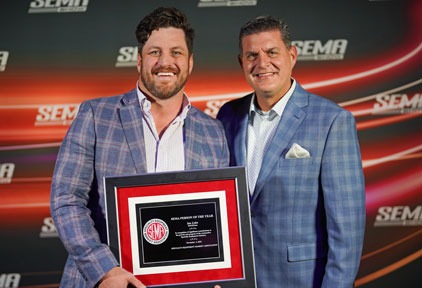
Ian Lehn (left) of BOOSTane Octane Engineering was named the 2023 SEMA Person of the Year.
The 2023 SEMA Person of the Year award went to Ian Lehn, founder of BOOSTane in Cincinnati, Ohio, in recognition for his volunteerism in the industry. Lehn has served in leadership positions for two different SEMA councils, works with the SEMA PAC and supports various charities. His company received the prestigious LaunchPad product of the year award in 2014.
Mike Burns (right), the 2022 Gen-III Innovator of the Year, presented the 2023 SEMA Gen-III Innovator of the Year award to Jon Delgado, Repairify.
The 2022 Gen-III Innovator of the Year award was presented toJon Delgado, chief technology officer of Repairify. Delgado led the engineering of the patented asTech Rules Engine, which uses empirical data to present users with the most accurate and cost-effective diagnostic scan option specific to a given vehicle. Delgado is also a key contributor and leader in ADAS calibration identifications with his adasThink solution. With the services he has delivered, shops can be confident that they are properly calibrating safety systems as required by OEM repair procedures.
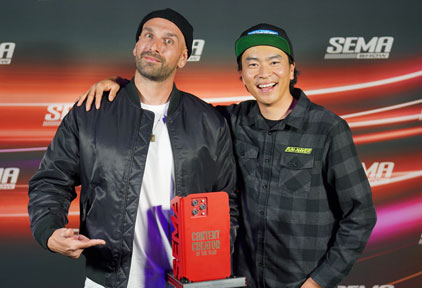
The inaugural SEMA Content Creator of the Year Larry Chen (right) presented Vin Anatra, Hoonigan, with the 2023 SEMA Content Creator of the Year Award.
Vin Anatra is Hoonigan's vice president of business development and has more than 200,000 followers on his personal Instagram page. Beginning as an inexperienced kid from New York with a passion for cars, Anatra helped Hoonigan build one of the most notable and influential brands in the automotive apparel and media space..
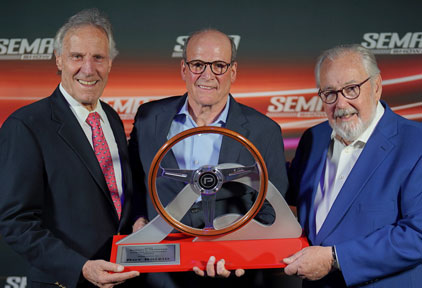
In addition, Roy Brizio of Roy Brizio Street Rods was named the recipient of the Robert E. Petersen Lifetime Achievement Award.
(Left to right) Bruce Meyer, car collector and former motorcycle racer; Robert E. Petersen Lifetime Achievement Award winner Roy Brizio, Roy Brizio Street Rods; and Terry L Karges Sr., Petersen Museum executive director.
The event also paid homage to the most recent SEMA Hall of Fame Inductees, Steve Ames, Ames Performance Engineering; John Iannotte, Kunzman & Associates; and Mitch Williams, Rigid Industries. In addition, the evening included a moving tribute to the late Ken Block, with a talented speed artist creating a portrait of one of the industry's most influential legends created before the audience's eyes.
"SEMA congratulates the recipients of this year's SEMA Industry Awards, which was once again the perfect place to unite the industry representing past, present and future leadership in a one-of-a-kind setting," said Tom Gattuso, SEMA vice president of events.
SEMA announced the best new vehicles for personalization during last week's SEMA Show in Las Vegas. The prestigious SEMA Awards are presented annually to exhibiting OEMs to recognize automakers for supporting the aftermarket with vehicle platforms that encourage customization.
SEMA celebrated Ford, Toyota and Nissan during the 2023 SEMA Show in Las Vegas last week.
One of the most highly anticipated trade shows in the country, the SEMA Show and its Monday Reveal and awards were highly attended.
The SEMA Awards are voted on by exhibiting manufacturers in six categories. Categories and this year's winners are:
Car of the Year: Ford Mustang
Full-Size Truck of the Year: Ford F-Series
Mid-Size Truck of the Year: Toyota Tacoma
4x4/SUV of the Year: Ford Bronco
Sport Compact Car of the Year: Nissan Z
Electric Vehicle of the Year: Ford Lightning
"SEMA Award-winning vehicles are setting worldwide trends in the automotive enthusiast industry," said Warren Kosikov, SEMA vice president of sales. "The Awards recognize the best new vehicles on the market that offer the greatest opportunities for customization. Attendees can see many of these unique award-winning vehicles during the 2023 SEMA Show."
The SEMA Awards were presented to automakers during the SEMA Show Monday Reveal, where media and exhibitors get a sneak peek at some of the vehicles debuting at the 2023 trade-only event. As the four-day Show opens, the business-to-business trade show features thousands of uniquely modified project vehicles.
The SEMA Show is the place to see latest trending products and hottest vehicles. As aftermarket manufacturers invest more in the Ford Mustang, Ford F-Series, Toyota Tacoma, Ford Bronco, Nissan Z and Ford Lightning, consumers can expect to find greater options for accessorizing these vehicles.
To learn more about the SEMA Show and the vehicles and products that debuted at the 2023 event, visit semashow.comor download the official SEMA Show Mobile App.
SEMA has announced its Best New Products Award winners during the 2023 SEMA Show last week in Las Vegas. These awards are given to the most innovative and cutting-edge automotive aftermarket products that will be consumable in 2023.
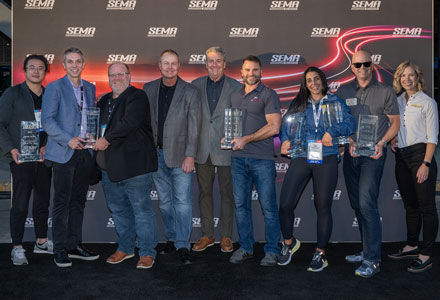
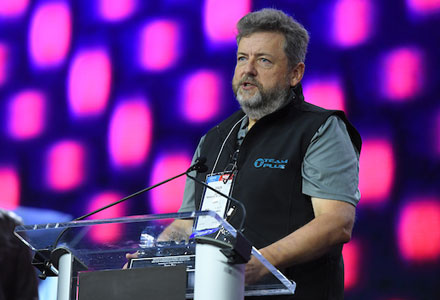
The Team Plus Wheel Turtle Pro from Team Plus was honored as the Best New Product Awards winner in the Performance-Racing Product category at the 2023 SEMA Show.
SEMA's annual New Product Awards competition recognizes outstanding achievements in the development of products being introduced to the automotive specialty-equipment market at the SEMA Show. Products are judged in 18 award categories and each category has one winner and two runners-up.
More than 1,300 products were entered into the 18 different Showcase categories to be considered for a SEMA New Product Awards this year. Winners were selected based on a variety of factors that included superiority of innovation, technical achievement, quality and workmanship, consumer appeal and marketability and more.
The New Product Award Winners are:
The 2023 SEMA New Product Award winners and runners-up are as follows:
Advanced Driver Assistance System (ADAS) Product
Winner: Ultimate ADAS™, Hunter Engineering Company
Runner Up: National CDS 360 OEM Laptop, National Calibration and Diagnostic Solutions, Pro Mobile Scan, ADAS Targeting Solutions
Runner Up: AiDN, Diagnostic Network
Collision Repair & Refinish Product
Winner: Goliath Test Weld Stand, Goliath Carts
Runner Up: GUNI X Series, GUNIWHEEL LLC
Runner Up: KECO GPR+ System, KECO Body Repair Products
Electric Vehicle Product
Winner: '16-'21 Tesla Model S NOVA-Series LED Projector Headlights, AlphaRex
Runner Up: Venom EV Conversion Kit, Scorpion EV
Runner Up: Plug-N-Play Digital Sound Processor Solution for Tesla Model Vehicles, Metra Electronics
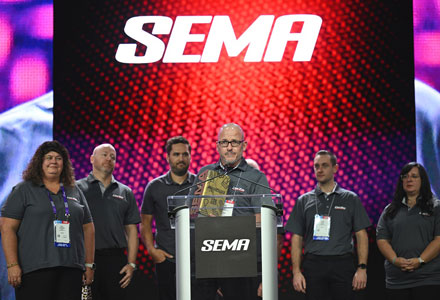
Dee Zee Inc. was named the 2023SEMA Manufacturer of the Year and Summit Racing Equipment was named SEMA Channel Partner of the Year at the 2023 SEMA Show last week in Las Vegas.
SEMA selected Dee Zee Inc. as the 2023 SEMA Manufacturer of the Year for its success in delivering high-quality products to its customers through innovation, teamwork and continuous improvements.
Announced at the SEMA Show Kickoff Breakfast on Tuesday, October 31, the awards are among the trade association's highest honors and recognize the recipient's outstanding contributions to the specialty-equipment industry over the past year. Each honoree was nominated by SEMA members and now joins the ranks of influential companies that embody the SEMA mission through their professionalism, service, integrity and ethics that help propel the industry forward.
Dee Zee Inc. was named Manufacturer of the Year for its success in delivering high-quality products to its customers through innovation, teamwork and continuous improvements. The company brings a diversified approach to the marketplace that involves both original equipment manufacturers, as well as aftermarket. A connector for various segments within the industry, Dee Zee Inc. is always seeking new ways to expand its product line while maintaining a high level of quality.
Dee Zee Inc. is currently working with the Britedrop program, which is owned by General Motors, to make structural aluminum components for its electric delivery vans. This program has created 150 job opportunities across three shifts.
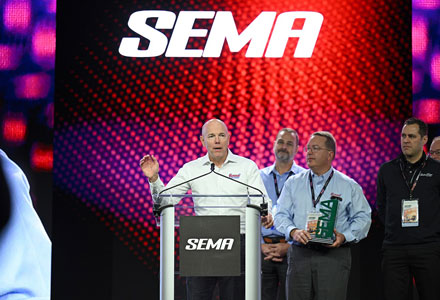
SEMA honored Summit Racing Equipment as its Channel Partner of the Year for its strong commitment to customer service and ability to deliver products to the consumer on a timely basis.
Summit Racing Equipment was named Channel Partner of the Year for its strong commitment to customer service and ability to deliver products to the consumer on a timely basis from its well-stocked warehouse locations. A long-established and reputable destination for automotive enthusiasts, the company has put many manufacturers on the map with its consumer reach.
Summit Racing Equipment services a broad customer base, ranging from car enthusiasts and hobbyists to professional racers and mechanics.
Dee Zee Inc. and Summit Racing Equipment are among the more than 2,200 exhibiting companies that were at the 2023 SEMA Show, the ultimate trade show for aftermarket professionals to see thousands of the newest automotive performance products from new and iconic exhibitors, discover the latest product and vehicle trends and develop essential skills.


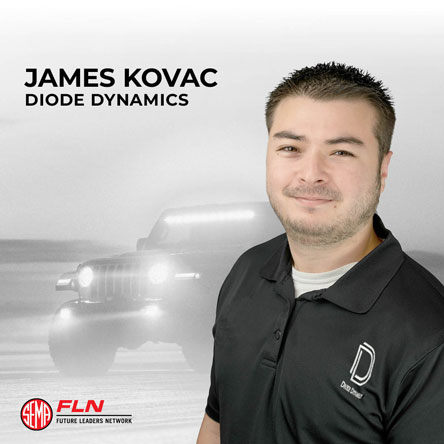 account manager at Diode Dynamics, as the network's newest spotlight member.
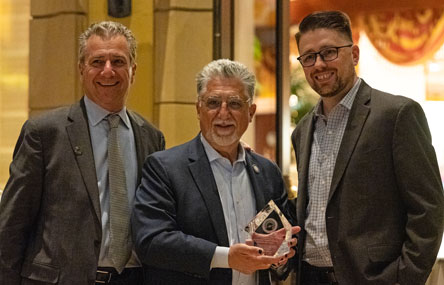 Lawmaker of the Year Award to California State Senator Anthony Portantino for his work on SB 301, the "Zero-Emissions Aftermarket Conversion Project."
 Commerce has passed