Thu, 08/01/2019 - 12:46

By SEMA Editors

New Products Showcase
Exhibitors can take advantage of the New Products Showcase by entering a qualified product for free.

With more than 3,000 credentialed members of the media and more than 2,000 exhibitors attending the SEMA Show each year, getting the attention of reporters can be challenging. A good media strategy, along with a well-executed trade-show plan, can generate increased product awareness and lead to profitable sales.

Of course, every exhibitor is unique, and results will vary from company to company. Nevertheless, key strategies for SEMA Show exhibitors include:

  • Post press releases in the SEMA Show Online Media Center: By posting news releases in the SEMA Show Online Media Center, you ensure that reporters looking for Show-related news do not miss out on your story. Posting to the Online Media Center can also generate coverage from SEMA’s publications and social media outlets. Post your release today.
  • Enter the New Products Showcase: Exhibitors can take advantage of the New Products Showcase by entering a qualified product for free. Providing a detailed description of that product can generate additional exposure and drive traffic to the booth. The Showcase often generates additional coverage in SEMA publications and online. Enter a product now.
  • Have someone dedicated to media efforts: Having an outside agency/consultant has many benefits, especially since they typically have media-relations experience and resources. However, exhibitors can still be successful by keeping their media relations in-house. The key is to assign someone the responsibility of managing the media program and to not treat it as a secondary thought. While your primary business is getting the product ready and selling to buyers, making the media a priority will lead to top results.
  • Targeted media outreach: Media at the SEMA Show cover an array of market segments, including motorsports, off-road, mobile electronics and more. Reach out to media targeted to your market and industry. Conduct web-based research and audit to identify relevant media who covered the SEMA Show in previous years and reporters who would potentially be interested in your story.
  • Pitch to media before the SEMA Show opens: Reporters are often contacted months before the SEMA Show and offered story ideas, images, facts and access to high-level company executives. Invite publications that are planning special SEMA Show editions, under embargo, to individual briefings with company executives in advance of the Show opening.
  • Create a comprehensive press kit: Knowing that thousands of media outlets will be at the SEMA Show, develop a comprehensive press kit to distribute onsite at the event. In addition to having press kits available to reporters in the booth, exhibitors are able to place press kits and releases in the official SEMA Show Media Center at no cost.

To learn more about all of the PR opportunities available for exhibitors, visit the Exhibitor Services Manual or contact an account rep at sales@sema.org or 909-396-0289.

Thu, 08/01/2019 - 12:46

By SEMA Editors

New Products Showcase
Exhibitors can take advantage of the New Products Showcase by entering a qualified product for free.

With more than 3,000 credentialed members of the media and more than 2,000 exhibitors attending the SEMA Show each year, getting the attention of reporters can be challenging. A good media strategy, along with a well-executed trade-show plan, can generate increased product awareness and lead to profitable sales.

Of course, every exhibitor is unique, and results will vary from company to company. Nevertheless, key strategies for SEMA Show exhibitors include:

  • Post press releases in the SEMA Show Online Media Center: By posting news releases in the SEMA Show Online Media Center, you ensure that reporters looking for Show-related news do not miss out on your story. Posting to the Online Media Center can also generate coverage from SEMA’s publications and social media outlets. Post your release today.
  • Enter the New Products Showcase: Exhibitors can take advantage of the New Products Showcase by entering a qualified product for free. Providing a detailed description of that product can generate additional exposure and drive traffic to the booth. The Showcase often generates additional coverage in SEMA publications and online. Enter a product now.
  • Have someone dedicated to media efforts: Having an outside agency/consultant has many benefits, especially since they typically have media-relations experience and resources. However, exhibitors can still be successful by keeping their media relations in-house. The key is to assign someone the responsibility of managing the media program and to not treat it as a secondary thought. While your primary business is getting the product ready and selling to buyers, making the media a priority will lead to top results.
  • Targeted media outreach: Media at the SEMA Show cover an array of market segments, including motorsports, off-road, mobile electronics and more. Reach out to media targeted to your market and industry. Conduct web-based research and audit to identify relevant media who covered the SEMA Show in previous years and reporters who would potentially be interested in your story.
  • Pitch to media before the SEMA Show opens: Reporters are often contacted months before the SEMA Show and offered story ideas, images, facts and access to high-level company executives. Invite publications that are planning special SEMA Show editions, under embargo, to individual briefings with company executives in advance of the Show opening.
  • Create a comprehensive press kit: Knowing that thousands of media outlets will be at the SEMA Show, develop a comprehensive press kit to distribute onsite at the event. In addition to having press kits available to reporters in the booth, exhibitors are able to place press kits and releases in the official SEMA Show Media Center at no cost.

To learn more about all of the PR opportunities available for exhibitors, visit the Exhibitor Services Manual or contact an account rep at sales@sema.org or 909-396-0289.

Thu, 08/01/2019 - 12:46

By SEMA Editors

New Products Showcase
Exhibitors can take advantage of the New Products Showcase by entering a qualified product for free.

With more than 3,000 credentialed members of the media and more than 2,000 exhibitors attending the SEMA Show each year, getting the attention of reporters can be challenging. A good media strategy, along with a well-executed trade-show plan, can generate increased product awareness and lead to profitable sales.

Of course, every exhibitor is unique, and results will vary from company to company. Nevertheless, key strategies for SEMA Show exhibitors include:

  • Post press releases in the SEMA Show Online Media Center: By posting news releases in the SEMA Show Online Media Center, you ensure that reporters looking for Show-related news do not miss out on your story. Posting to the Online Media Center can also generate coverage from SEMA’s publications and social media outlets. Post your release today.
  • Enter the New Products Showcase: Exhibitors can take advantage of the New Products Showcase by entering a qualified product for free. Providing a detailed description of that product can generate additional exposure and drive traffic to the booth. The Showcase often generates additional coverage in SEMA publications and online. Enter a product now.
  • Have someone dedicated to media efforts: Having an outside agency/consultant has many benefits, especially since they typically have media-relations experience and resources. However, exhibitors can still be successful by keeping their media relations in-house. The key is to assign someone the responsibility of managing the media program and to not treat it as a secondary thought. While your primary business is getting the product ready and selling to buyers, making the media a priority will lead to top results.
  • Targeted media outreach: Media at the SEMA Show cover an array of market segments, including motorsports, off-road, mobile electronics and more. Reach out to media targeted to your market and industry. Conduct web-based research and audit to identify relevant media who covered the SEMA Show in previous years and reporters who would potentially be interested in your story.
  • Pitch to media before the SEMA Show opens: Reporters are often contacted months before the SEMA Show and offered story ideas, images, facts and access to high-level company executives. Invite publications that are planning special SEMA Show editions, under embargo, to individual briefings with company executives in advance of the Show opening.
  • Create a comprehensive press kit: Knowing that thousands of media outlets will be at the SEMA Show, develop a comprehensive press kit to distribute onsite at the event. In addition to having press kits available to reporters in the booth, exhibitors are able to place press kits and releases in the official SEMA Show Media Center at no cost.

To learn more about all of the PR opportunities available for exhibitors, visit the Exhibitor Services Manual or contact an account rep at sales@sema.org or 909-396-0289.

Thu, 08/01/2019 - 12:34

SEMA News—August 2019

LEGISLATIVE AND TECHNICAL AFFAIRS

By Neal Billig

Drill, Baby, Drill?

Single License Plates Are a Unifying Issue for Enthusiasts

Single License Plate
The SEMA Action Network seeks to impact hundreds of legislative proposals, but no topic garners more consistent grassroots enthusiasm at the state level than single license plate proposals.

For most of the country’s automotive enthusiasts, drilling holes into the front bumper of a prized possession is both a sad and unavoidable occurrence. To them, the legal mandate to equip a license plate on their front bumper is like painting a mustache on the Mona Lisa.

While this dilemma is often associated with classic cars, many of their modern counterparts are also adversely impacted. The fact is, a great number of late-model cars simply weren’t designed with forward-facing license plates in mind, including recent Camaros, Mustangs, Corvettes and even Teslas. Fortunately for the owners of those cars, an ever-growing legislative trend could make their bumpers whole again.

In any given year, the SEMA Action Network seeks to impact hundreds of legislative proposals, but no topic garners more consistent grassroots enthusiasm at the state level than single license plate proposals. Single plates are one of the rare issues that resonate with all types of enthusiasts—from street rodders to modern musclecar fans. These hobbyists are unified by their passion to protect the appearance of their vehicles. While influencing the legislative process may often seem unapproachable, the popularity of single-plate proposals stems in part because they present a simple and easy-to-articulate legislative solution: 50 states with 50 single plates.

The number and types of license plates issued are regulated at the state level. As of 2019, passenger vehicles in 31 of the 50 states and the District of Columbia are required to display two license plates. Fortunately, 2019 represented the start of a new legislative session, with hundreds of fresh faces in state houses. That has led to a push to enact single-plate laws across the country. In fact, a record 10 states have considered legislative proposals aimed at the single-plate issue.

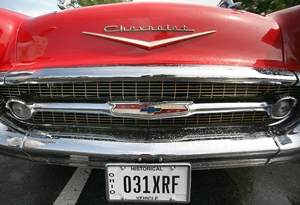
The biggest legislative success for removing front plates this year came in Ohio, where vocal advocates from the state’s hobbyist community found allies in the state capitol. Each year, Ohio’s legislature is tasked with passing an omnibus transportation budget bill that determines everything from the gas-tax rate to highway infrastructure spending improvements. The hobby’s allies fought to get a single-license-plate provision included in the final bill. Starting in 2020, the 5 million or so vehicles driven on the Ohio roadways will no longer need a front plate.

Single License Plates
Automotive enthusiasts overwhelmingly favor single, rear-mounted license plates that do not interfere with the performance or styling of their favorite ride.

And 2019 could yield more legislative victories for single-plate advocates. Nebraska, Illinois, Texas and Missouri all have pending legislation that would remove the requirement to display a front plate on all passenger vehicles. Sadly, similar single-plate legislation failed to pass earlier this year in Utah and New Hampshire, but both states saw their proposals gain serious traction before running out of gas.

While many state legislatures were considering a transition from two plates to one, New Mexico was the lone state to consider going in the opposite direction. However, the enthusiast community’s fierce opposition to the addition of a front plate resulted in the bill failing to be considered on the House floor. It was killed as the session concluded in March, and this is the second year in the row that New Mexico legislators attempted to institute a front plate mandate only to discover they had severely underestimated the popularity of the current policy.

One of the most interesting developments in the past year has been the rise in the number of states looking into a single-plate exemption for specialty vehicles. The major advantage of these compromise bills is that they drum up less opposition from single-plate detractors and thus stand a greater likelihood of becoming law.

Single License Plate
For off-roaders, front license plates are a nuisance when installing upgraded equipment, such as brawler bars and winches.

In 2016, Nebraska passed a law allowing owners of vehicles not originally equipped with a front bracket to request a single license plate. The successful implementation and widespread positive feedback from vehicle owners on this new policy spurred similar compromise legislation this session in Connecticut and Iowa. The Iowa bill only narrowly failed to pass the legislature, and Connecticut’s bill is still being actively considered.

So what’s in it for business? The most obvious areas of impact by front-plate requirements on the industry are in performance and styling. A tag mounted on the front end hinders one’s ability to strike a pleasing balance of form and function. The challenge of optimizing peak aerodynamics, induction and cooling—while maintaining aesthetics—are made much tougher.

The off-roading crowd favors an unobstructed body that’s ready for enhancements such as heavy-duty bumpers, guards, winches and other items. Doors can open wide to customizers seeking facelifts of vehicles new and old. An entire market could spring up for reimagined versions of factory designs where the provision for a plate is removed. The OEMs could also begin standardizing all models without any concerns of plate mounting aside from the rear.

The largest barrier to single-plate enactment is from law enforcement, which contends that front plates are a necessary part of their ability to identify vehicles. However, that need may soon be a thing of the past as the technology to create digital license plates is already here. For example, automated license-plate readers are already being used in New York. With greater technology available for vehicle identification, the future for single-plate legislation and front bumpers without holes looks bright.

Thu, 08/01/2019 - 12:34

SEMA News—August 2019

LEGISLATIVE AND TECHNICAL AFFAIRS

By Neal Billig

Drill, Baby, Drill?

Single License Plates Are a Unifying Issue for Enthusiasts

Single License Plate
The SEMA Action Network seeks to impact hundreds of legislative proposals, but no topic garners more consistent grassroots enthusiasm at the state level than single license plate proposals.

For most of the country’s automotive enthusiasts, drilling holes into the front bumper of a prized possession is both a sad and unavoidable occurrence. To them, the legal mandate to equip a license plate on their front bumper is like painting a mustache on the Mona Lisa.

While this dilemma is often associated with classic cars, many of their modern counterparts are also adversely impacted. The fact is, a great number of late-model cars simply weren’t designed with forward-facing license plates in mind, including recent Camaros, Mustangs, Corvettes and even Teslas. Fortunately for the owners of those cars, an ever-growing legislative trend could make their bumpers whole again.

In any given year, the SEMA Action Network seeks to impact hundreds of legislative proposals, but no topic garners more consistent grassroots enthusiasm at the state level than single license plate proposals. Single plates are one of the rare issues that resonate with all types of enthusiasts—from street rodders to modern musclecar fans. These hobbyists are unified by their passion to protect the appearance of their vehicles. While influencing the legislative process may often seem unapproachable, the popularity of single-plate proposals stems in part because they present a simple and easy-to-articulate legislative solution: 50 states with 50 single plates.

The number and types of license plates issued are regulated at the state level. As of 2019, passenger vehicles in 31 of the 50 states and the District of Columbia are required to display two license plates. Fortunately, 2019 represented the start of a new legislative session, with hundreds of fresh faces in state houses. That has led to a push to enact single-plate laws across the country. In fact, a record 10 states have considered legislative proposals aimed at the single-plate issue.

The biggest legislative success for removing front plates this year came in Ohio, where vocal advocates from the state’s hobbyist community found allies in the state capitol. Each year, Ohio’s legislature is tasked with passing an omnibus transportation budget bill that determines everything from the gas-tax rate to highway infrastructure spending improvements. The hobby’s allies fought to get a single-license-plate provision included in the final bill. Starting in 2020, the 5 million or so vehicles driven on the Ohio roadways will no longer need a front plate.

Single License Plates
Automotive enthusiasts overwhelmingly favor single, rear-mounted license plates that do not interfere with the performance or styling of their favorite ride.

And 2019 could yield more legislative victories for single-plate advocates. Nebraska, Illinois, Texas and Missouri all have pending legislation that would remove the requirement to display a front plate on all passenger vehicles. Sadly, similar single-plate legislation failed to pass earlier this year in Utah and New Hampshire, but both states saw their proposals gain serious traction before running out of gas.

While many state legislatures were considering a transition from two plates to one, New Mexico was the lone state to consider going in the opposite direction. However, the enthusiast community’s fierce opposition to the addition of a front plate resulted in the bill failing to be considered on the House floor. It was killed as the session concluded in March, and this is the second year in the row that New Mexico legislators attempted to institute a front plate mandate only to discover they had severely underestimated the popularity of the current policy.

One of the most interesting developments in the past year has been the rise in the number of states looking into a single-plate exemption for specialty vehicles. The major advantage of these compromise bills is that they drum up less opposition from single-plate detractors and thus stand a greater likelihood of becoming law.

Single License Plate
For off-roaders, front license plates are a nuisance when installing upgraded equipment, such as brawler bars and winches.

In 2016, Nebraska passed a law allowing owners of vehicles not originally equipped with a front bracket to request a single license plate. The successful implementation and widespread positive feedback from vehicle owners on this new policy spurred similar compromise legislation this session in Connecticut and Iowa. The Iowa bill only narrowly failed to pass the legislature, and Connecticut’s bill is still being actively considered.

So what’s in it for business? The most obvious areas of impact by front-plate requirements on the industry are in performance and styling. A tag mounted on the front end hinders one’s ability to strike a pleasing balance of form and function. The challenge of optimizing peak aerodynamics, induction and cooling—while maintaining aesthetics—are made much tougher.

The off-roading crowd favors an unobstructed body that’s ready for enhancements such as heavy-duty bumpers, guards, winches and other items. Doors can open wide to customizers seeking facelifts of vehicles new and old. An entire market could spring up for reimagined versions of factory designs where the provision for a plate is removed. The OEMs could also begin standardizing all models without any concerns of plate mounting aside from the rear.

The largest barrier to single-plate enactment is from law enforcement, which contends that front plates are a necessary part of their ability to identify vehicles. However, that need may soon be a thing of the past as the technology to create digital license plates is already here. For example, automated license-plate readers are already being used in New York. With greater technology available for vehicle identification, the future for single-plate legislation and front bumpers without holes looks bright.

Thu, 08/01/2019 - 12:34

SEMA News—August 2019

LEGISLATIVE AND TECHNICAL AFFAIRS

By Neal Billig

Drill, Baby, Drill?

Single License Plates Are a Unifying Issue for Enthusiasts

Single License Plate
The SEMA Action Network seeks to impact hundreds of legislative proposals, but no topic garners more consistent grassroots enthusiasm at the state level than single license plate proposals.

For most of the country’s automotive enthusiasts, drilling holes into the front bumper of a prized possession is both a sad and unavoidable occurrence. To them, the legal mandate to equip a license plate on their front bumper is like painting a mustache on the Mona Lisa.

While this dilemma is often associated with classic cars, many of their modern counterparts are also adversely impacted. The fact is, a great number of late-model cars simply weren’t designed with forward-facing license plates in mind, including recent Camaros, Mustangs, Corvettes and even Teslas. Fortunately for the owners of those cars, an ever-growing legislative trend could make their bumpers whole again.

In any given year, the SEMA Action Network seeks to impact hundreds of legislative proposals, but no topic garners more consistent grassroots enthusiasm at the state level than single license plate proposals. Single plates are one of the rare issues that resonate with all types of enthusiasts—from street rodders to modern musclecar fans. These hobbyists are unified by their passion to protect the appearance of their vehicles. While influencing the legislative process may often seem unapproachable, the popularity of single-plate proposals stems in part because they present a simple and easy-to-articulate legislative solution: 50 states with 50 single plates.

The number and types of license plates issued are regulated at the state level. As of 2019, passenger vehicles in 31 of the 50 states and the District of Columbia are required to display two license plates. Fortunately, 2019 represented the start of a new legislative session, with hundreds of fresh faces in state houses. That has led to a push to enact single-plate laws across the country. In fact, a record 10 states have considered legislative proposals aimed at the single-plate issue.

The biggest legislative success for removing front plates this year came in Ohio, where vocal advocates from the state’s hobbyist community found allies in the state capitol. Each year, Ohio’s legislature is tasked with passing an omnibus transportation budget bill that determines everything from the gas-tax rate to highway infrastructure spending improvements. The hobby’s allies fought to get a single-license-plate provision included in the final bill. Starting in 2020, the 5 million or so vehicles driven on the Ohio roadways will no longer need a front plate.

Single License Plates
Automotive enthusiasts overwhelmingly favor single, rear-mounted license plates that do not interfere with the performance or styling of their favorite ride.

And 2019 could yield more legislative victories for single-plate advocates. Nebraska, Illinois, Texas and Missouri all have pending legislation that would remove the requirement to display a front plate on all passenger vehicles. Sadly, similar single-plate legislation failed to pass earlier this year in Utah and New Hampshire, but both states saw their proposals gain serious traction before running out of gas.

While many state legislatures were considering a transition from two plates to one, New Mexico was the lone state to consider going in the opposite direction. However, the enthusiast community’s fierce opposition to the addition of a front plate resulted in the bill failing to be considered on the House floor. It was killed as the session concluded in March, and this is the second year in the row that New Mexico legislators attempted to institute a front plate mandate only to discover they had severely underestimated the popularity of the current policy.

One of the most interesting developments in the past year has been the rise in the number of states looking into a single-plate exemption for specialty vehicles. The major advantage of these compromise bills is that they drum up less opposition from single-plate detractors and thus stand a greater likelihood of becoming law.

Single License Plate
For off-roaders, front license plates are a nuisance when installing upgraded equipment, such as brawler bars and winches.

In 2016, Nebraska passed a law allowing owners of vehicles not originally equipped with a front bracket to request a single license plate. The successful implementation and widespread positive feedback from vehicle owners on this new policy spurred similar compromise legislation this session in Connecticut and Iowa. The Iowa bill only narrowly failed to pass the legislature, and Connecticut’s bill is still being actively considered.

So what’s in it for business? The most obvious areas of impact by front-plate requirements on the industry are in performance and styling. A tag mounted on the front end hinders one’s ability to strike a pleasing balance of form and function. The challenge of optimizing peak aerodynamics, induction and cooling—while maintaining aesthetics—are made much tougher.

The off-roading crowd favors an unobstructed body that’s ready for enhancements such as heavy-duty bumpers, guards, winches and other items. Doors can open wide to customizers seeking facelifts of vehicles new and old. An entire market could spring up for reimagined versions of factory designs where the provision for a plate is removed. The OEMs could also begin standardizing all models without any concerns of plate mounting aside from the rear.

The largest barrier to single-plate enactment is from law enforcement, which contends that front plates are a necessary part of their ability to identify vehicles. However, that need may soon be a thing of the past as the technology to create digital license plates is already here. For example, automated license-plate readers are already being used in New York. With greater technology available for vehicle identification, the future for single-plate legislation and front bumpers without holes looks bright.

Thu, 08/01/2019 - 12:30

Ford

This is the upcoming Ford Adventurer compact SUV.

Ford will fill out its SUV lineup with the introduction of an Escape-based crossover that’s made more rugged and styled similarly to the upcoming Bronco SUV. Called “Baby Bronco” or “Scout,” it's tipped to be given the Adventurer nameplate for the ’21 model year.

Little is known about the small “Bronco,” other than it will use mechanicals from the ’20 Escape. Expect it to be larger than a Jeep Renegade, but boast similar levels of off-road capability and come with five doors. A lineup of turbocharged four- and possibly three-cylinder engines are expected, as well as some type of hybrid or plug-in version. Front-wheel-drive will likely be the standard drivetrain, however.

Expect to see baby Adventurer sometime next year.

Ford

Photo credit: Brian Williams, SpiedBilde

Thu, 08/01/2019 - 12:30

Ford

This is the upcoming Ford Adventurer compact SUV.

Ford will fill out its SUV lineup with the introduction of an Escape-based crossover that’s made more rugged and styled similarly to the upcoming Bronco SUV. Called “Baby Bronco” or “Scout,” it's tipped to be given the Adventurer nameplate for the ’21 model year.

Little is known about the small “Bronco,” other than it will use mechanicals from the ’20 Escape. Expect it to be larger than a Jeep Renegade, but boast similar levels of off-road capability and come with five doors. A lineup of turbocharged four- and possibly three-cylinder engines are expected, as well as some type of hybrid or plug-in version. Front-wheel-drive will likely be the standard drivetrain, however.

Expect to see baby Adventurer sometime next year.

Ford

Photo credit: Brian Williams, SpiedBilde

Thu, 08/01/2019 - 12:30

Ford

This is the upcoming Ford Adventurer compact SUV.

Ford will fill out its SUV lineup with the introduction of an Escape-based crossover that’s made more rugged and styled similarly to the upcoming Bronco SUV. Called “Baby Bronco” or “Scout,” it's tipped to be given the Adventurer nameplate for the ’21 model year.

Little is known about the small “Bronco,” other than it will use mechanicals from the ’20 Escape. Expect it to be larger than a Jeep Renegade, but boast similar levels of off-road capability and come with five doors. A lineup of turbocharged four- and possibly three-cylinder engines are expected, as well as some type of hybrid or plug-in version. Front-wheel-drive will likely be the standard drivetrain, however.

Expect to see baby Adventurer sometime next year.

Ford

Photo credit: Brian Williams, SpiedBilde

Thu, 08/01/2019 - 12:30

Ford

This is the upcoming Ford Adventurer compact SUV.

Ford will fill out its SUV lineup with the introduction of an Escape-based crossover that’s made more rugged and styled similarly to the upcoming Bronco SUV. Called “Baby Bronco” or “Scout,” it's tipped to be given the Adventurer nameplate for the ’21 model year.

Little is known about the small “Bronco,” other than it will use mechanicals from the ’20 Escape. Expect it to be larger than a Jeep Renegade, but boast similar levels of off-road capability and come with five doors. A lineup of turbocharged four- and possibly three-cylinder engines are expected, as well as some type of hybrid or plug-in version. Front-wheel-drive will likely be the standard drivetrain, however.

Expect to see baby Adventurer sometime next year.

Ford

Photo credit: Brian Williams, SpiedBilde