Tue, 08/05/2025 - 12:50

By SEMA News Editors
 

Veteran Leader Alicia Boler Davis Named President of Ford Pro
Alicia Boler Davis Ford Pro


Ford Motor Company announced that Alicia Boler Davis, an accomplished executive with more than 30 years of experience in automotive, technology and customer experience, has been named president of Ford Pro, effective October 1.

Davis succeeds Andrew Frick, who has served as interim leader of Ford Pro since last year and will continue to lead Ford Blue and Ford Model e.

Davis was most recently CEO of Alto Pharmacy, and from 2019 to 2024, served in senior roles at Amazon, joining as vice president of global customer fulfillment and then promoted to senior vice president in 2022. In that role, she guided Amazon's global fulfillment network through the intense challenges of the COVID-19 pandemic, driving major advances in robotics and technology.

Before Amazon, Davis worked for 25 years at General Motors. She started as a manufacturing engineer and rose through leadership roles in manufacturing, quality and connected customer experience. In her final GM post--as executive vice president of global manufacturing and labor relations, reporting directly to the CEO--she oversaw 22 vehicle launches and managed 150 facilities in 20 countries.

For more information, visit ford.com.
 

Mopar Launches New Affiliated Accessory Program

Mopar, the original-equipment parts, accessories and customer care brand of Stellantis, has launched a new expanded accessories program for United States-based dealerships that sell and service Chrysler, Dodge, Jeep and Ram vehicles.

The new Mopar Affiliated Accessories program offers more than 1,000 popular accessories from well-known and preferred aftermarket supplier partners that can be installed during the vehicle purchase or any time thereafter, providing customers with access to a wider choice of trusted aftermarket options than ever before to personalize or enhance the performance of their vehicles.

All Mopar Affiliated Accessories have been reviewed by Mopar for proper fitment and are guaranteed by each supplier separately. The expanding list of affiliated accessories can be ordered online through the Mopar eStore or at a local dealership. Items are then delivered to the selling dealership for customer pickup or installation.

Currently, more than 40 partnering suppliers are offering more than 1,000 items in the Mopar Affiliated Accessories program. The growing list of current suppliers includes:

  • AccuAir Lift Kits
  • Add-A-Tap
  • AEV Bumper and Attachments
  • AllTrade Tool Kits
  • ASG Catalytic Converter Protection and Badge Overlays
  • Baja Designs Lighting
  • Cascadia 4x4 Solar Power
  • ClearLidz Roof Panels
  • Cobra CB and GMRS Radios, and Dash Cameras
  • Competition Specialties – Bilstein, WeatherTech, ReadyLIFT, Pittman Outdoors and ARB
  • CTEK Power Solutions 
  • Curt Towing Accessories
  • Dometic Coolers
  • EGR Power Tonneau Covers
  • Element Fire Extinguishers
  • EZ 4x4 Door Racks and Hangers
  • Guidepoint Systems EVTS
  • HitchFire Grilles
  • Kuat Roof Racks
  • Leitner Cargo Systems
  • LoadTamer Cargo Nets
  • Lumen Phone Holder
  • MB Quart Sound System
  • MEK Magnet Graphics
  • Napier Tents
  • Nemesys Gear Cooler Bag and Pet Carrier
  • Putco Storage Panels
  • Racing Optics Windshield Protection
  • RedArc Overlanding and Electrical Components
  • Rival Hood Struts
  • Rockslide Engineering Step Sliders
  • SeaSucker Racks
  • Segway Personal Transportation
  • Sto N Sho Brackets
  • Tailgater Tire Tables
  • THULE Roof and Hitch Racks
  • Tuffy Safes
  • Visco Graphics
  • WildTop Truck Caps
  • XG Cargo Storage Units

For more information, visit mopar.com or stellantis.com.
 

Litens Aftermarket Hires Sam Molin as Inventory and Logistics Analyst

Litens Aftermarket N.A., a provider of aftermarket belt drive products, has hired Sam Molin as inventory and logistics analyst.

In this role, Molin will manage outbound shipments to customers, track inventory levels and support warehouse operations at the company's Toledo facility.

Joining Litens shortly after the addition of Mitchel Skamiera as operations analyst, the hiring of Molin further reflects the company's growing focus on enhancing its logistics and operations functions. These strategic additions are part of a broader initiative to streamline warehouse processes and enhance customer fulfillment, the company said.

For more information, visit litensaftermarket.com.

 

Lexani Tires Launches 3-in-1 Incentive-Based Dealer Program

Lexani Tires, a subsidiary brand from Turbo Wholesale Tires, has launched an all-inclusive rewards program with the Lexani, Lionhart and Rolling Big Power tire lines.

All three tire lines are assembled to support a variety of dealers with all their passenger, light truck, off-road and commercial vehicle needs. The new program includes LexaniShop.com, where each tire brand's literature, point-of-sale materials and apparel are all available and redeemable with program points.

"The easy-to-use and functional portal lets dealers know their accumulated points and where they stand in their annual goals," said Bridney Jordan, product manager. "Additionally, brand enthusiasts and customers can conveniently order official Lexani, Lionhart and Rolling Big Power apparel, drinkware, and other branded merchandise--delivered directly to their home or place of business."

"We're here to help our dealers turn heads and boost business with bold, eye-catching point-of-sale materials that bring our brand to life and build serious confidence with customers," said Todd Pickens, chief commercial officer.

Tue, 08/05/2025 - 12:29

By Ashley Reyes

FLN Member Spotlight Martin Klepper


The SEMA Future Leaders Network (FLN) has named Martin Klepper, technical assistant/customer-service representative for motorsports at Antigravity Batteries, as the network's newest spotlight member. 

Get to know Klepper in his interview with SEMA News below. 

SEMA News: What is the best advice you have ever received? 

Martin Klepper: "When [General Motors] told me I couldn't do it, I went out and beat them." One of my old customers told me that, and it's just a reminder of what you can achieve in the face of any odds or obstacles. 

SN: What keeps you in the industry? 

MK: I've wanted to be around cars since I was a teenager. I've never really looked past this industry as a career path. This is my industry. 

SN: Where can you be found on a Saturday? 

MK: Taking care of friends and family.

SN: How do you prepare for an important meeting? 

MK: Take notes on my manager and how she wants to hear information. That way I know how to deliver information to her whether I'm prepared or not. 

SN: If you could go to lunch with one industry leader, living or dead, who would it be? 

MK: Bruce McLaren.  

Fill out an FLN member spotlight form to be eligible to be featured on FLN's social media, SEMA News and FLN member updates. 

Tue, 08/05/2025 - 11:33

By Ashley Reyes

WTSBC Coffee and Conversation


Winter will be here again before we know it, bringing rain, snow and icy roads that will contribute to more dangerous road conditions. To help industry members get ahead of the season, the SEMA Wheel, Tire, Suspension & Brake Council (WTSBC) will host a virtual Coffee and Conversation on preparing vehicles for winter driving, with a focus on tires, wheels, brakes and suspension, on Thursday, August 7 at 9:00 a.m. PDT/12:00 p.m. EDT.  

The discussion will focus on why it's crucial to plan ahead and address these components before the first snowfall. Attendees will learn how early preparation ensures product availability, avoids seasonal installation delays and keeps vehicles safe and reliable when winter conditions hit. 

Featured Experts: 

  • Brian McCroskey, suspension senior manager--special projects, Thyssenkrupp Bilstein of America 
  • Mike Messina, general manager--racing division, Brembo North America 
  • John Rastetter,Tire Rack 
  • Gary Ruede, supervisor technical, Discount Tire 
  • Ryan Rutlidge, suspension director of product development, Air Lift Company 

Don't wait until it's too late—get the insights you need to stay ahead of the cold. Register for the Coffee and Conversation here. 

Tue, 08/05/2025 - 10:35

By SEMA News Editors

SEMA Show Exhibitor car unveil for Exhibitor Deadlines article


As specialty-equipment industry manufacturers once again prepare to descend on Las Vegas for the 2025 SEMA Show, November 4-7, it's important for exhibitors to keep critical deadlines and checklists at the forefront and take advantage of the many programs available to exhibitors that are designed to help your brand increase exposure and improve ROI.

In order to help your brand prepare to connect with dedicated buyers, influencers, dealers and automotive professionals, here are some exhibitor resources to help you track upcoming deadlines and stay on budget.

Products for Project-Vehicle Builders Program

SEMA Show exhibitors can expand their reach, product exposure and Show-floor presence through the exclusive Products for Project-Vehicle Builders program, which is now open at semashow.com/projectvehicle.

The Products for Project-Vehicle Builders list is designed for builders looking to collaborate and seek product offers straight from confirmed SEMA Show exhibitors.

Qualified builders interested in obtaining a product should contact exhibitors directly with the provided contact information. All product-placement decisions, negotiations and agreements are the responsibility of the exhibiting manufacturer and the builder, with each project vehicle on display at the SEMA Show required to be supported by a current 2025 SEMA Show exhibitor.

The list is open to exhibitors of the 2025 SEMA Show only. To be included in the list, complete the form at semashow.com/projectvehicle.

SEMA Show Deadlines List

This all-encompassing checklist provides a breakdown of deadlines for booth orders, rentals, booth vehicle applications, celebrity appearance notifications and more key dates, some of which are also detailed in this article below.

View the SEMA Show deadlines checklist.

Budget Checklist

This checklist allows exhibitors to keep track of all costs--like exhibit design, booth services, freight/material handling, labor and miscellaneous fees. Simply input the exhibiting company name for a personalized form.

View the SEMA Show budget checklist.

Upcoming Key Exhibitor Deadlines

Be sure to check out the complete list of deadlines for more dates, including the upcoming July 25 deadline for Feature Vehicle Display applications. The Feature Vehicle Display program allows exhibitors to expand their Show presence beyond their booth space and is open to vehicles of all categories and applications of the aftermarket. Click here for more information on the Feature Vehicle Display program.

  • August 13: SEMA Show Directory listing information.
  • August 15: Press/Media Conference application.
  • August 22: SEMA Show Directory ad space reservations.
  • August 28: SEMA Show Directory ad materials due.

Placing Freeman orders before the Thursday, October 2 discount deadline, which offers discounted prices off regular rates on nearly all services, is one of the best ways to save ahead of the SEMA Show.

Don't forget that the Exhibitor Services Manual, accessed at semashow.com/esm, is a one-stop shop for all things related to exhibiting at the SEMA Show. It contains everything companies need to know to exhibit like a pro, including the deadline and budget checklists.

And now that you know these dates, exhibitors can also lock in the guaranteed lowest hotel rates by booking in the official SEMA Show Block provided by OnPeak.

Tue, 08/05/2025 - 09:46

By Ashley Reyes

MPMC Media Trade Conference


Registration is now open for exhibitors to participate in the 2026 SEMA Motorsports Parts Manufacturers Council (MPMC) Media Trade Conference, the aftermarket industry's premier event for establishing connections between motorsports parts manufacturers and media professionals. Taking place January 27-29, 2026, in Anaheim, California, this unique event delivers a focused, high-impact value like no other. 

Hear It From Those Who Were There 

Here is what past participants had to say about the 2025 event on social media: 

  • "The Wharton Automotive Group team is off to an incredible start at the SEMA MPMC event! We're connecting with some of the brightest minds in the industry, sharing ideas and showcasing what makes our brands stand out." - @beardellinger on Instagram  
  • "Representing Fluidampr, together with Nick Orefice, we welcomed nearly 40 introductory MTC meetings with the most variety of content creators I've experienced in my 14-plus years with the company. Thank you to all who took the time to meet with us!" - Brian LeBarron on LinkedIn 
  • "Proud to have been part of the 2025 SEMA MPMC Media Trade Conference! A fantastic opportunity to connect with industry leaders and showcase Speedmaster's latest innovations. Excited for the future of automotive excellence." - Speedmaster on LinkedIn 
  • "Likened to 'speed dating' between media and manufacturers, the program is a great way to network and share information with the media about our latest products to get the word out to the masses! It's three days of 30-minute meetings (with some fun thrown in at night)!" - COMP Cams on Facebook 
  • "Another great SEMA MPMC Media Trade Conference! Our ProCharger Superchargers team crushed it with more than 45 meetings in 3 days." - Kyle Fickler on Facebook 

Put Your Brand in Front of the Industry's Top Voices  

Ready to put your brand front and center? Save $100 off your registration by registering by September 8 at mediatradeconference.com.

Tue, 08/05/2025 - 08:46

By Ashley Reyes

Best Engineered Vehicle


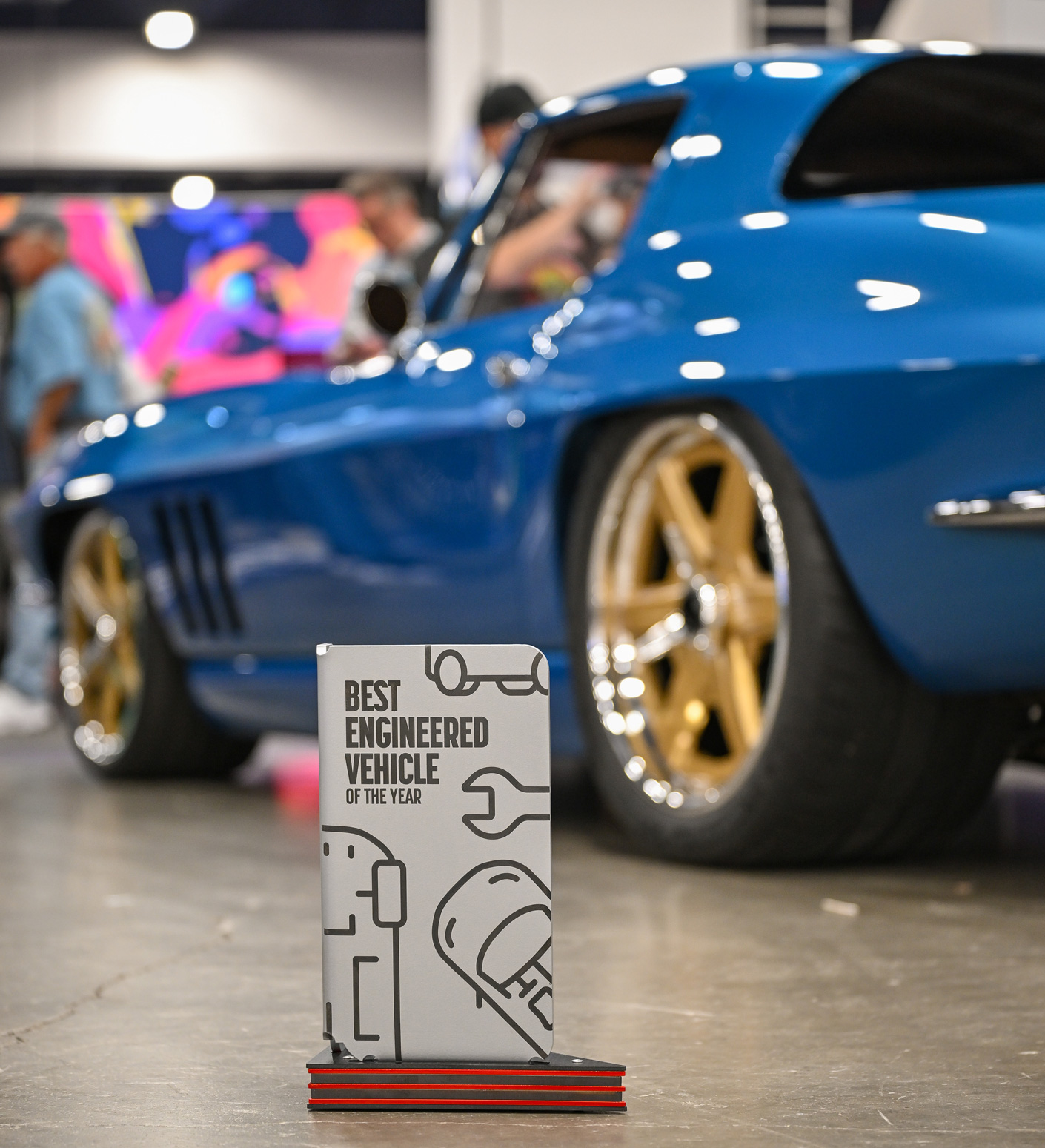
SEMA is now accepting nominations for its highly regarded Best Engineered Vehicle of the Year Award. Designed to place an emphasis on engineers and their impact on the industry, the award honors a featured vehicle at the SEMA Show that demonstrates exceptional engineering throughout the entire vehicle, or an aspect of the vehicle that goes beyond just physical appearance. 

"Engineers are continuously pushing the envelope of custom car building, implementing innovative upgrades and technology that make cars look cooler, operate more efficiently and deliver at the highest of performance standards," said Jose Escobar, SEMA manager of recognition programs. "Whether it's a fresh take on a timeless classic or a never-before-seen cutting-edge concept, this award embraces innovation and the creative minds of builders who have perfected their craft."  

Blazin Rods Doughboy


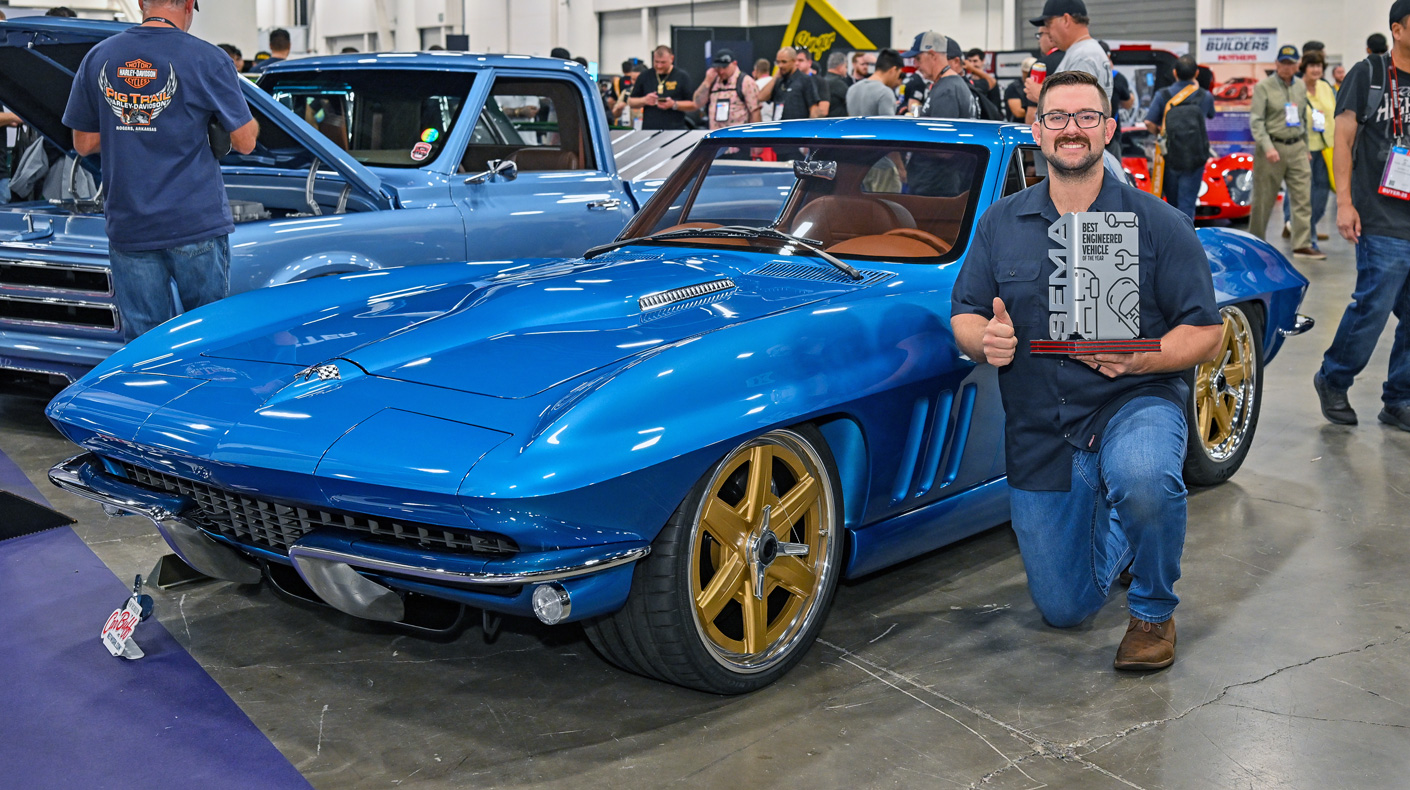
Blazin Rodz from Rancho Santa Magarita, California, received SEMA Best Engineered Vehicle of the Year honors at the 2024 SEMA Show for their '70 Chevrolet Chevelle. The Chevelle--dubbed "Doughboy"--is powered by a twin-turbo Chevy-based big-block delivering more than 2,800 hp and built utilizing multiple 3D-based design and printing techniques. Featuring the aesthetics of a GT Cup car, the Chevelle was designed, manufactured and assembled in-house using 35 custom CNC and 3D-printed parts, including its bespoke metal widebody. 

Apply Now  

The deadline to submit nominations for SEMA's Best Engineered Vehicle of the Year Award is Wednesday, October 29. Submit a nomination at the button below or this link, and read more about Blazin Rodz's award-winning Chevelle here.   

APPLY HERE button for BEV

The award winner will be announced at the 2025 SEMA Show on Thursday, November 6, in SEMA Central.  

Tue, 08/05/2025 - 07:36

By Ashley Reyes

ChrisFix


In today's world of social media, where content is king, it takes a creative mind, authentic storytelling and high-quality content to capture and keep an audience's attention. For automotive content creators, this means producing photos and videos that are not only entertaining to watch but also educate, inspire and engage passionate enthusiasts across the automotive spectrum. 

To recognize and celebrate a content creator whose exceptional dedication has enriched automotive culture during the past year, SEMA is accepting nominations for its 2025 SEMA Content Creator of the Year Award.  

The SEMA Content Creator of the Year Award recognizes a content creator's significant impact in shaping a vibrant community and fostering a positive environment among automotive enthusiasts. Nominees should be individuals whose creative efforts have not only elevated the discourse around automotive passions but have also inspired a deeper appreciation for art and innovation within the industry. 

If you know a content creator who has used their platform to promote positive automotive content, messaging and/or entertainment which has benefited the automotive aftermarket and automotive culture, this is your chance to help them get the recognition they deserve! Submit a nomination by Friday, August 15, at sema.org/awards.  

SEMA is also accepting nominations for other prestigious SEMA Industry Awards. The SEMA Industry Awards are presented to individuals and companies that have made outstanding contributions to the automotive specialty-equipment industry during the past year. The program recognizes honorees in six different categories: Channel Partner of the Year, Content Creator of the Year, Gen-III Innovator of the Year, Manufacturer of the Year, Person of the Year and Visionary 8. 

The 2025 SEMA Show festivities will shift into gear on Tuesday, November 4, with the Kickoff Breakfast, where 15 cutting-edge New Product Awards will be unveiled alongside top honors for Channel Partner of the Year and Manufacturer of the Year. 

On Thursday, November 6, the Visionary 8 and SEMA's Best Engineered Vehicle of the Year winner will be announced live at SEMA Central. The momentum will continue the same day at the newly reimagined industry homecoming--SEMA Industry Honors--now staged at the iconic Fontainebleau. This red-carpet-style gathering brings together the industry's biggest names to spotlight standout achievements, including Content Creator of the Year, Gen-III Innovator of the Year and the coveted Person of the Year. 

Learn more, and submit your nominations at sema.org/awards.  

Fri, 08/01/2025 - 12:42

By John Stewart

A close up of a car


Perhaps the Single Most Important Piece of Advice the Association Can Offer is to Seek Qualified Counsel


The ideas, names, logos and inventions of your company are valuable property and often can be legally protected for your exclusive use. But many SEMA-member companies are unaware of the types of intellectual property (IP) their company generates, how to go about protecting them or how to decide exactly which protective investments could be appropriate.
 

The task of optimizing IP protection will vary from company to company. Perhaps the single most important piece of advice the association can offer is to seek qualified counsel––both when IP issues arise and, ideally, well in advance of any possible entanglements. One such entity is the Ohio-based law firm of Sisson and Banyas, which specializes in IP protection. The firm exhibits at the SEMA Show, and Manager of Legal Protection Jeffrey Banyas is a former racer and SEMA volunteer who participates in a variety of association councils and networks. He is well acquainted with the types of issues that tend to arise in the automotive aftermarket.


"We spend a lot of time here studying the way illegal goods move and what makes companies the target of counterfeiters or knockoff products," Banyas told us. "I tend to separate them into three categories. At the bottom of the tree, if you will, are small, not very well-known companies that don't have high levels of sales or brands that are very well known and are not very attractive to counterfeiters.
 

"At the other end of the spectrum are the big players, the Nikes, Louis Vuittons and big fashion brands that everybody knows with products that everybody wants, and they're constantly being knocked off. They have teams and teams of people all over the world constantly working against counterfeiters––and they're still getting counterfeited and knocked off because of how lucrative it is to do it.


"And in the middle are a lot of our customers, and really, a lot of the brands at SEMA, that are big enough that if a counterfeiter starts knocking off, say Oracle Lighting, there is a market for them because they have been in business for 30 years, they have a reputation, people seek them out and want to buy their products. These companies in the middle usually don't have teams of people in place around the world working to enforce against counterfeiters."
 

A CASE HISTORY


Let's take a closer look at the case of SEMA-member Oracle Lighting, which provides an example of a successful IP defense against an overseas infringement.
 

"A few years ago, we debuted a new product at the SEMA Show that went viral overnight," said Justin Hartenstein, Oracle Lighting chief innovation officer. "People were really excited, and we had a lot of people come over and take pictures in the booth. Some were suspiciously detailed photos, but you don't assume the worst when someone is looking at your product—that's what it's there for. But within a couple months we were alerted that there were images showing up on Chinese websites that looked very similar to our product. And before we were even able to fully launch our product, the counterfeits were already starting to come out."
 

That Oracle product, the Vector Grill System, was designed to solve an OEM lighting limitation inherent in Jeep Wranglers, providing an original solution to a longstanding issue.
 

An illustration of Oracle's Vector Grill System.


This drawing illustrates the product Oracle Lighting developed and patented. The product resolved lighting limitations inherent in Jeep
Wranglers by replacing the single round headlight with a new front clip that allowed for adjusting each lighting element separately if the vehicle's stance was altered. When the product was counterfeited, Oracle was able to defend their patent and gain redress.


"We did a massive amount of research and put a lot of time into this project, and because we were replacing the entire grille and lighting assembly," Hartenstein explained, "we invested a significant amount of money of tooling. So when the counterfeits came out, we were devastated. The counterfeit product wasn't as good as what we designed but it looked similar and was cheaper, so it's going to fool the majority of low-research consumers. Our first step was to contact Sisson and Banyas, who had done our patent work for the product. The counterfeiters had changed almost every feature in an attempt to get around our IP. It was not an exact replica, but it had the appearance overall. We knew this was going to be a challenge, but we decided to move forward against the counterfeiters."
 

When counterfeiting rears its ugly head, the decision to seek redress is one that involves many factors, particularly when the infringing company is located overseas.
 

"Ultimately, it becomes a business decision," said Banyas. "You have to decide how much harm is actually being generated by the infringing sales, or could be generated, and how much money are they actually taking away from you relative to the cost of litigation. You can get monetary damages from courts in China or another country, you maybe can here, but generally it's not something where you can expect a big windfall. And whether it's here or in another country, you're going to spend time with this, and it can be a distraction to your business. We try to make it as minimal distraction as we can but there are decisions that have to be made the whole way through," Banyas added.
 

"What made it easier for us to decide," Hartenstein explained, "was that we had another product, years earlier that we released at SEMA, and the product was counterfeited shortly thereafter. At the time, we didn't want to spend the money on that because it's expensive and burdensome and who knows if you can enforce it or not, and if they change it, it's not enforceable—and all the reasons why not to do it."
 

This time around, based on the circumstances and past experience, Oracle's decision was to pursue redress, a tactic that brought with it multiple long-term benefits.
 

"We'd already seen what happens when we didn't have a patent," Hartenstein said. "In this case, we had a patent and if we didn't enforce it then we would have spent the money and effort for nothing. The important part was that we had a patent in the United States and one in China, and that makes a difference. Because if you have a patent in the United States, people can't legally import it in the United States. The problem is, the U.S. Customs and Border Patrol doesn't know this. So they're not going to catch it right as it is imported. You're going to have to police it. And that's a constant effort because the factory overseas can still produce it. Enforcing a patent claim in China is much more expensive on the front end, but it saves you money in the long run because you don't have to constantly enforce against multiple distributors, so that made the decision to enforce much easier."
 

"We are not a big corporation; I started the company in my garage when I was 18. Today, we have 30 employees," Hartenstein continued, "so it's not like we have infinitely deep pockets. But our mentality is that if we can show that we're willing to make the effort to stop counterfeits and use that as an example, then other counterfeiters are less likely, in the future, to copy our products. Ultimately, the court ruled in our favor and awarded us damages. Then there was an appeal—but once again, they decided for us, and we were awarded additional damages in that appeals process," he said.
 

BUILDING A WALL AROUND YOUR IP


According to Banyas, the strategy of going after the copycat manufacturer, instead of multiple resellers, can make sense even when the infringement originates overseas. "While China is typically the elephant in the room when we are talking about counterfeiting originating outside of the United States, it isn't the only country where we see a problem. We see counterfeiting activity in the Southeast Asian countries––Vietnam, Taiwan, Hong Kong, Philippines are common areas. Behind that would be Eastern Europe––Turkey being the most notable," Banyas told us. In the Oracle Lighting case, the counterfeiter was located in China.


Generally, success will depend on the degree of advance preparation, and how well your legal team understands the justice system in the overseas location. "The first step is to ensure that there are some rights to be able to enforce," Banyas explained. "We'll be looking at what registered property rights they have––if they have a design patent, for instance, or a trademark registered. From there––let's say there is a patent granted and it covers the infringed product, whether it is a design patent or a utility patent––the next thing is, where is that patent granted? Just here in the United States or overseas in Europe––anywhere in Asia, China, India, Korea, Australia? Where is it granted––particularly if it is granted where commercial activity is taking place? Because a lot of times, particularly with counterfeit and knockoff goods, the person selling the product here in the United States is pretty far divorced from where the real harm is happening."


"So what we want to do is get back to where the product is being manufactured," continued Banyas. "If you can get to where the product is being manufactured and if you have rights in that country, I would prefer to enforce there so you can go after the manufacturer. And now you have a lot more teeth and a lot more leverage. That said, it can be difficult to find where the product is actually being made. And that's where we have to get our private investigators involved a lot of the time."

A patent drawing of the Oracle Vector Grill System.

Patent drawings show individual elements of design in detail. Design patents protect the ornamental features or appearance of a product rather than the structure or function. Design patents generally expire 14 years after granting.


Particularly with regard to infringement originating in China, some would say that enforcement is difficult, if not impossible. But as Banyas explained, a thorough understanding of how overseas courts work makes favorable outcomes much more attainable.
 

"It's very different to enforce in China compared to here because their legal system is very different," Banyas explained. "In U.S. law, you put your hand on a bible and swear to tell the truth, the whole truth, and nothing but the truth, so help you God. Or maybe an affidavit sworn under penalty of perjury, and that's your evidence," he said. "They kind of take the viewpoint in China that everybody lies, and the penalty of perjury is not deterrent enough. So instead of going through this really long and expensive discovery process with affidavits and sworn testimony, China looks for notarized evidence," he explained.
 

Gathering that evidence is not always easy, Banyas notes, but with the right tactics, it can be done. (Hartenstein likens it to a sting operation.)
 

As Banyas explained, "They want you to actually do an undercover buy or visit to the factory that is manufacturing the product, and whatever evidence that comes out of that has to be notarized. And the people who are sophisticated counterfeiters in China are on the lookout and will try to insulate themselves––not let you into the factory. A good private investigator will hopefully be able to get you from the public-facing retailer or distributor back to the factory, get you into the factory, and while you're in the factory, your public notary is waiting outside in a parking lot right around the corner.


"When your investigator comes out of the factory and it's notarized, that's what you use to prove your case. You have notarized evidence directly from the factory. Here is a copy of the infringing product and here are pictures we took inside the factory showing the process of making the infringing product; it's all notarized. Then Chinese courts and Chinese judges know that the evidence is good," he continued.
 

"The other thing I'll say about cost verses benefits––going through this process in other countries that don't have this expensive discovery process that we have here in the United States," he continued, "often it is less expensive than the cost of comparable litigation here in the United States. Here, if you're talking about patent litigation and go all the way through a jury trial, you're talking at least mid-six-figure cost in legal fees, attorney fees, expert witnesses, discovery and everything else that goes with it," Banyas told us. "In China, we'll get through Chinese litigation for 10% or 20% of that cost. And it gives you the added protection of going right back to the manufacturer where the harm originated."


Hartenstein agrees: "It worked out really well for us in the long run. I do feel like having that historical evidence–– that we're willing to enforce our patents–– puts a lot more teeth in it. And honestly, we've had a 100% success rate moving forward…We've had very good success."


THE RISK/REWARD DECISION


While every case is a little different, when it comes to advice about how companies might best protect their IP, Banyas provided some general guidelines.
 

"Number one, every company has a brand—a brand name and logo, usually both," he said. "Make sure you have registered trademarks on those. Have them registered in the United States and have them registered in the markets where you expect counterfeiting or knockoff activity," he said. "Number two, this is a really highly innovative industry, so find a patent attorney that you can trust. If you are bringing new products to the market, before you launch them, make sure you have an evaluation done as to whether or not they are potentially patentable. If they are patentable, make a decision on whether you want to file an application."
 

According to Banyas, the decision to spend the money on a patent would be based on a number of factors, including timing.
 

"What I see far too often is people who try to launch the product, then make the decision to file the patent application one, two years later. By that point in time, literally, the patent laws won't allow you to be granted a patent on that invention anymore. In some instances, you might get a one-year grace period in the United States if you've filed your patent application, but in other countries, there is no grace period. The minute you put it on the floor at the SEMA Show, if you don't have a patent application filed, sorry, no patent for you. And you want those to be proactive and affirmative decisions that you make ahead of time, not a reactionary decision where you're trying to put toothpaste back in the tube."
 

In short, you must have some rights in place if you hope to enforce.
 

"Whether you're in the United States or overseas, the courts are not going to find in your favor if you have no registered IP rights. So get them in line first and consider where the key countries are––whether it's Asia or maybe you've got significant sales in Australia and you have got a distributor down there and want to make sure they're protected. Or if there is a huge market for your product in Canada or Europe somewhere. So consider where you'd like to have those rights filed and strategically build that wall around your intellectual property as high as you can," Banyas advises.


Second, consider what to patent, and what to leave unprotected.
 

"Most companies can't patent everything," Banyas noted. "It's kind of an ongoing decision and very much a business decision. The first thing to look at before you launch the product is the product life. If you're looking at a very niche product and you think the market is only going to be, say $20,000 in sales, generally speaking, that product is not worth filing the patent application. Even if counterfeiters or knockoffs take 50% of your market share, 50% of $10,000 is only $5,000––there is not much meat on the bone that you're trying to protect. If you've got a product that you're thinking is going to be a big hit and generate hundreds of thousands or millions in revenue, then you're probably going to want to go ahead and put a patent application on that. Because if somebody comes in and starts knocking your product off, even if they only take 5% or 10% of your revenue, that becomes a pretty big number.


"It's an ongoing decision as well," he continued, "because if you have some products that you think are going to be a big hit but two, three years into it, the market hasn't responded to it the way you thought it would or technology has evolved in a different direction, you have to be willing to cut that patent application loose. Because the economics don't justify it.
 

And the other thing you've got to be evaluating is, what is the likelihood of getting something patented? A good patent attorney will do background searches and prior art searches before they file an application. Does it meet the novelty requirement––the non-obvious requirements for getting granted a patent? And [could it be] granted a patent that is going to have a broad enough scope to make a difference? A lot of times, you can get a granted patent on an invention, but the patent is so narrow that it becomes really easy for someone to design around it."


At the end of the day, the nature and scope of IP protection will vary from company to company, as will the decision to enforce. In the case of Oracle, Hartenstein feels that their experience should demonstrate that enforcement, even overseas, is a viable option.
 

"People have told us for the longest time, 'You can't go to China and fight for your IP," Hartenstein said. "And I feel like there are so many people who didn't enforce their rights and just let these companies walk all over them." This time around, Hartenstein has no regrets.
 

"Honestly, we'd invested so much in that project, if we had just walked away from this and not pursued it, it would have made a substantial hit for the company and would have delayed us from having the capital to pursue other projects. It could have evolved into a much bigger problem. I feel there are companies that have produced something novel that haven't gone over there to protect their rights because someone told them it wasn't possible. We want to get the word out that this is something that you can, and should, enforce overseas. People shouldn't feel that their hands are tied when it comes to these things."


READ MORE LIKE THIS FOR FREE


SEMA magazine is now available to everyone--at no cost--online by claiming your complimentary subscription. Haven't claimed yours yet? Here's how:

  • Claim your coupon voucher HERE
  • Fill in the mandatory fields and questions regarding your automotive interests
  • Subscribe
  • Download the SEMA magazine app
  • Sign in to access a year's worth of valuable industry knowledge
  • Start reading!

For step-by-step instructions on how to claim your free SEMA magazine subscription, click HERE.


Images courtesy of Shutterstock


Fri, 08/01/2025 - 12:42

By John Stewart

A close up of a car


Perhaps the Single Most Important Piece of Advice the Association Can Offer is to Seek Qualified Counsel


The ideas, names, logos and inventions of your company are valuable property and often can be legally protected for your exclusive use. But many SEMA-member companies are unaware of the types of intellectual property (IP) their company generates, how to go about protecting them or how to decide exactly which protective investments could be appropriate.
 

The task of optimizing IP protection will vary from company to company. Perhaps the single most important piece of advice the association can offer is to seek qualified counsel––both when IP issues arise and, ideally, well in advance of any possible entanglements. One such entity is the Ohio-based law firm of Sisson and Banyas, which specializes in IP protection. The firm exhibits at the SEMA Show, and Manager of Legal Protection Jeffrey Banyas is a former racer and SEMA volunteer who participates in a variety of association councils and networks. He is well acquainted with the types of issues that tend to arise in the automotive aftermarket.


"We spend a lot of time here studying the way illegal goods move and what makes companies the target of counterfeiters or knockoff products," Banyas told us. "I tend to separate them into three categories. At the bottom of the tree, if you will, are small, not very well-known companies that don't have high levels of sales or brands that are very well known and are not very attractive to counterfeiters.
 

"At the other end of the spectrum are the big players, the Nikes, Louis Vuittons and big fashion brands that everybody knows with products that everybody wants, and they're constantly being knocked off. They have teams and teams of people all over the world constantly working against counterfeiters––and they're still getting counterfeited and knocked off because of how lucrative it is to do it.


"And in the middle are a lot of our customers, and really, a lot of the brands at SEMA, that are big enough that if a counterfeiter starts knocking off, say Oracle Lighting, there is a market for them because they have been in business for 30 years, they have a reputation, people seek them out and want to buy their products. These companies in the middle usually don't have teams of people in place around the world working to enforce against counterfeiters."
 

A CASE HISTORY


Let's take a closer look at the case of SEMA-member Oracle Lighting, which provides an example of a successful IP defense against an overseas infringement.
 

"A few years ago, we debuted a new product at the SEMA Show that went viral overnight," said Justin Hartenstein, Oracle Lighting chief innovation officer. "People were really excited, and we had a lot of people come over and take pictures in the booth. Some were suspiciously detailed photos, but you don't assume the worst when someone is looking at your product—that's what it's there for. But within a couple months we were alerted that there were images showing up on Chinese websites that looked very similar to our product. And before we were even able to fully launch our product, the counterfeits were already starting to come out."
 

That Oracle product, the Vector Grill System, was designed to solve an OEM lighting limitation inherent in Jeep Wranglers, providing an original solution to a longstanding issue.
 

An illustration of Oracle's Vector Grill System.


This drawing illustrates the product Oracle Lighting developed and patented. The product resolved lighting limitations inherent in Jeep
Wranglers by replacing the single round headlight with a new front clip that allowed for adjusting each lighting element separately if the vehicle's stance was altered. When the product was counterfeited, Oracle was able to defend their patent and gain redress.


"We did a massive amount of research and put a lot of time into this project, and because we were replacing the entire grille and lighting assembly," Hartenstein explained, "we invested a significant amount of money of tooling. So when the counterfeits came out, we were devastated. The counterfeit product wasn't as good as what we designed but it looked similar and was cheaper, so it's going to fool the majority of low-research consumers. Our first step was to contact Sisson and Banyas, who had done our patent work for the product. The counterfeiters had changed almost every feature in an attempt to get around our IP. It was not an exact replica, but it had the appearance overall. We knew this was going to be a challenge, but we decided to move forward against the counterfeiters."
 

When counterfeiting rears its ugly head, the decision to seek redress is one that involves many factors, particularly when the infringing company is located overseas.
 

"Ultimately, it becomes a business decision," said Banyas. "You have to decide how much harm is actually being generated by the infringing sales, or could be generated, and how much money are they actually taking away from you relative to the cost of litigation. You can get monetary damages from courts in China or another country, you maybe can here, but generally it's not something where you can expect a big windfall. And whether it's here or in another country, you're going to spend time with this, and it can be a distraction to your business. We try to make it as minimal distraction as we can but there are decisions that have to be made the whole way through," Banyas added.
 

"What made it easier for us to decide," Hartenstein explained, "was that we had another product, years earlier that we released at SEMA, and the product was counterfeited shortly thereafter. At the time, we didn't want to spend the money on that because it's expensive and burdensome and who knows if you can enforce it or not, and if they change it, it's not enforceable—and all the reasons why not to do it."
 

This time around, based on the circumstances and past experience, Oracle's decision was to pursue redress, a tactic that brought with it multiple long-term benefits.
 

"We'd already seen what happens when we didn't have a patent," Hartenstein said. "In this case, we had a patent and if we didn't enforce it then we would have spent the money and effort for nothing. The important part was that we had a patent in the United States and one in China, and that makes a difference. Because if you have a patent in the United States, people can't legally import it in the United States. The problem is, the U.S. Customs and Border Patrol doesn't know this. So they're not going to catch it right as it is imported. You're going to have to police it. And that's a constant effort because the factory overseas can still produce it. Enforcing a patent claim in China is much more expensive on the front end, but it saves you money in the long run because you don't have to constantly enforce against multiple distributors, so that made the decision to enforce much easier."
 

"We are not a big corporation; I started the company in my garage when I was 18. Today, we have 30 employees," Hartenstein continued, "so it's not like we have infinitely deep pockets. But our mentality is that if we can show that we're willing to make the effort to stop counterfeits and use that as an example, then other counterfeiters are less likely, in the future, to copy our products. Ultimately, the court ruled in our favor and awarded us damages. Then there was an appeal—but once again, they decided for us, and we were awarded additional damages in that appeals process," he said.
 

BUILDING A WALL AROUND YOUR IP


According to Banyas, the strategy of going after the copycat manufacturer, instead of multiple resellers, can make sense even when the infringement originates overseas. "While China is typically the elephant in the room when we are talking about counterfeiting originating outside of the United States, it isn't the only country where we see a problem. We see counterfeiting activity in the Southeast Asian countries––Vietnam, Taiwan, Hong Kong, Philippines are common areas. Behind that would be Eastern Europe––Turkey being the most notable," Banyas told us. In the Oracle Lighting case, the counterfeiter was located in China.


Generally, success will depend on the degree of advance preparation, and how well your legal team understands the justice system in the overseas location. "The first step is to ensure that there are some rights to be able to enforce," Banyas explained. "We'll be looking at what registered property rights they have––if they have a design patent, for instance, or a trademark registered. From there––let's say there is a patent granted and it covers the infringed product, whether it is a design patent or a utility patent––the next thing is, where is that patent granted? Just here in the United States or overseas in Europe––anywhere in Asia, China, India, Korea, Australia? Where is it granted––particularly if it is granted where commercial activity is taking place? Because a lot of times, particularly with counterfeit and knockoff goods, the person selling the product here in the United States is pretty far divorced from where the real harm is happening."


"So what we want to do is get back to where the product is being manufactured," continued Banyas. "If you can get to where the product is being manufactured and if you have rights in that country, I would prefer to enforce there so you can go after the manufacturer. And now you have a lot more teeth and a lot more leverage. That said, it can be difficult to find where the product is actually being made. And that's where we have to get our private investigators involved a lot of the time."

A patent drawing of the Oracle Vector Grill System.

Patent drawings show individual elements of design in detail. Design patents protect the ornamental features or appearance of a product rather than the structure or function. Design patents generally expire 14 years after granting.


Particularly with regard to infringement originating in China, some would say that enforcement is difficult, if not impossible. But as Banyas explained, a thorough understanding of how overseas courts work makes favorable outcomes much more attainable.
 

"It's very different to enforce in China compared to here because their legal system is very different," Banyas explained. "In U.S. law, you put your hand on a bible and swear to tell the truth, the whole truth, and nothing but the truth, so help you God. Or maybe an affidavit sworn under penalty of perjury, and that's your evidence," he said. "They kind of take the viewpoint in China that everybody lies, and the penalty of perjury is not deterrent enough. So instead of going through this really long and expensive discovery process with affidavits and sworn testimony, China looks for notarized evidence," he explained.
 

Gathering that evidence is not always easy, Banyas notes, but with the right tactics, it can be done. (Hartenstein likens it to a sting operation.)
 

As Banyas explained, "They want you to actually do an undercover buy or visit to the factory that is manufacturing the product, and whatever evidence that comes out of that has to be notarized. And the people who are sophisticated counterfeiters in China are on the lookout and will try to insulate themselves––not let you into the factory. A good private investigator will hopefully be able to get you from the public-facing retailer or distributor back to the factory, get you into the factory, and while you're in the factory, your public notary is waiting outside in a parking lot right around the corner.


"When your investigator comes out of the factory and it's notarized, that's what you use to prove your case. You have notarized evidence directly from the factory. Here is a copy of the infringing product and here are pictures we took inside the factory showing the process of making the infringing product; it's all notarized. Then Chinese courts and Chinese judges know that the evidence is good," he continued.
 

"The other thing I'll say about cost verses benefits––going through this process in other countries that don't have this expensive discovery process that we have here in the United States," he continued, "often it is less expensive than the cost of comparable litigation here in the United States. Here, if you're talking about patent litigation and go all the way through a jury trial, you're talking at least mid-six-figure cost in legal fees, attorney fees, expert witnesses, discovery and everything else that goes with it," Banyas told us. "In China, we'll get through Chinese litigation for 10% or 20% of that cost. And it gives you the added protection of going right back to the manufacturer where the harm originated."


Hartenstein agrees: "It worked out really well for us in the long run. I do feel like having that historical evidence–– that we're willing to enforce our patents–– puts a lot more teeth in it. And honestly, we've had a 100% success rate moving forward…We've had very good success."


THE RISK/REWARD DECISION


While every case is a little different, when it comes to advice about how companies might best protect their IP, Banyas provided some general guidelines.
 

"Number one, every company has a brand—a brand name and logo, usually both," he said. "Make sure you have registered trademarks on those. Have them registered in the United States and have them registered in the markets where you expect counterfeiting or knockoff activity," he said. "Number two, this is a really highly innovative industry, so find a patent attorney that you can trust. If you are bringing new products to the market, before you launch them, make sure you have an evaluation done as to whether or not they are potentially patentable. If they are patentable, make a decision on whether you want to file an application."
 

According to Banyas, the decision to spend the money on a patent would be based on a number of factors, including timing.
 

"What I see far too often is people who try to launch the product, then make the decision to file the patent application one, two years later. By that point in time, literally, the patent laws won't allow you to be granted a patent on that invention anymore. In some instances, you might get a one-year grace period in the United States if you've filed your patent application, but in other countries, there is no grace period. The minute you put it on the floor at the SEMA Show, if you don't have a patent application filed, sorry, no patent for you. And you want those to be proactive and affirmative decisions that you make ahead of time, not a reactionary decision where you're trying to put toothpaste back in the tube."
 

In short, you must have some rights in place if you hope to enforce.
 

"Whether you're in the United States or overseas, the courts are not going to find in your favor if you have no registered IP rights. So get them in line first and consider where the key countries are––whether it's Asia or maybe you've got significant sales in Australia and you have got a distributor down there and want to make sure they're protected. Or if there is a huge market for your product in Canada or Europe somewhere. So consider where you'd like to have those rights filed and strategically build that wall around your intellectual property as high as you can," Banyas advises.


Second, consider what to patent, and what to leave unprotected.
 

"Most companies can't patent everything," Banyas noted. "It's kind of an ongoing decision and very much a business decision. The first thing to look at before you launch the product is the product life. If you're looking at a very niche product and you think the market is only going to be, say $20,000 in sales, generally speaking, that product is not worth filing the patent application. Even if counterfeiters or knockoffs take 50% of your market share, 50% of $10,000 is only $5,000––there is not much meat on the bone that you're trying to protect. If you've got a product that you're thinking is going to be a big hit and generate hundreds of thousands or millions in revenue, then you're probably going to want to go ahead and put a patent application on that. Because if somebody comes in and starts knocking your product off, even if they only take 5% or 10% of your revenue, that becomes a pretty big number.


"It's an ongoing decision as well," he continued, "because if you have some products that you think are going to be a big hit but two, three years into it, the market hasn't responded to it the way you thought it would or technology has evolved in a different direction, you have to be willing to cut that patent application loose. Because the economics don't justify it.
 

And the other thing you've got to be evaluating is, what is the likelihood of getting something patented? A good patent attorney will do background searches and prior art searches before they file an application. Does it meet the novelty requirement––the non-obvious requirements for getting granted a patent? And [could it be] granted a patent that is going to have a broad enough scope to make a difference? A lot of times, you can get a granted patent on an invention, but the patent is so narrow that it becomes really easy for someone to design around it."


At the end of the day, the nature and scope of IP protection will vary from company to company, as will the decision to enforce. In the case of Oracle, Hartenstein feels that their experience should demonstrate that enforcement, even overseas, is a viable option.
 

"People have told us for the longest time, 'You can't go to China and fight for your IP," Hartenstein said. "And I feel like there are so many people who didn't enforce their rights and just let these companies walk all over them." This time around, Hartenstein has no regrets.
 

"Honestly, we'd invested so much in that project, if we had just walked away from this and not pursued it, it would have made a substantial hit for the company and would have delayed us from having the capital to pursue other projects. It could have evolved into a much bigger problem. I feel there are companies that have produced something novel that haven't gone over there to protect their rights because someone told them it wasn't possible. We want to get the word out that this is something that you can, and should, enforce overseas. People shouldn't feel that their hands are tied when it comes to these things."


READ MORE LIKE THIS FOR FREE


SEMA magazine is now available to everyone--at no cost--online by claiming your complimentary subscription. Haven't claimed yours yet? Here's how:

  • Claim your coupon voucher HERE
  • Fill in the mandatory fields and questions regarding your automotive interests
  • Subscribe
  • Download the SEMA magazine app
  • Sign in to access a year's worth of valuable industry knowledge
  • Start reading!

For step-by-step instructions on how to claim your free SEMA magazine subscription, click HERE.


Images courtesy of Shutterstock


Thu, 07/31/2025 - 12:29

From the SEMA Washington, D.C., office

EPA GHG Announcement


The U.S. Environmental Protection Agency (EPA) recently announced it would seek the repeal of the 2009 "endangerment" legal interpretation on greenhouse gas emissions that has since formed the backbone of federal and state emissions policies and standards. EPA Administrator Lee Zeldin also outlined the agency's plans to repeal its multipollutant standards for light- and medium-duty motor vehicles (i.e., tailpipe standards). 

SEMA is excited by this announcement–but why? We explain below. 

What's happening? 

The EPA is taking concrete steps to repeal a formal declaration from 2009 that establishes that greenhouse gas emissions pose a threat to public health and welfare. The agency will use the federal rulemaking process, a series of steps that will play out over the course of several months (including an opportunity for the public to comment), before a repeal is official. It all started with the July 29 announcement of a forthcoming proposed rule to rescind the 2009 endangerment finding and with it all subsequent greenhouse gas emissions regulations for motor vehicles and engines.   

Why is this important? 

The greenhouse gas emissions endangerment finding has served as the legal and scientific backbone of many federal actions to regulate the emissions of motor vehicles, but also power plants and other industries determined to be sources of carbon dioxide, methane and several other heat-trapping air emissions. 

How did this all happen? 

Like a lot of things in Washington, D.C., it started with a court case. In 2007, the U.S. Supreme Court in Massachusetts v. EPA ruled that greenhouse gases are air pollutants covered under the Clean Air Act and therefore subject to regulation. The EPA, under the Obama Administration, then underwent an extensive rulemaking period (similar to the one that's about to start), which resulted in a "cause or contribute" determination for motor vehicles.  

The first greenhouse gas emissions standard for vehicles was issued in 2010 under the Obama Administration, with both the Massachusetts decision and rulemaking as the legal justification. Ever since then, the EPA has used the greenhouse gas endangerment finding as its basis to regulate motor vehicle emissions. 

What's affected? 

If finalized, this proposed rule will eliminate greenhouse gas standards for light-, medium- and heavy-duty vehicles and heavy-duty engines on new vehicles. This will ensure that automakers are able to produce vehicles based on consumer demand, rather than staying under greenhouse gas limits defined by the EPA, which have significantly influenced the models of vehicles available to the American people since 2009. This policy shift will directly impact the range of new vehicle choices that exist in the coming years. 

What's not affected? 

The EPA's proposed rule will directly impact federal new car requirements, but does not allow vehicle owners to remove emissions control features from vehicles driven on-road. 

Accordingly, defeat devices remain illegal under section 203(a)(3) of the Clean Air Act and 40 C.F.R. §§ 1068.101(b). This has not changed; the EPA continues to maintain the authority to enforce against businesses that manufacture, offer for sale, sell or install any parts or components that bypass or defeat emissions controls for on-road vehicles. 

Similarly, any production, sale, distribution or use of aftermarket products that take a street-use motor vehicle out of compliance with federal emissions standards could still face action by EPA and the Department of Justice. 

Check out our previous FAQ for more information. 

My friends say if I support this, I'm anti-environment. Is that true? 

Absolutely not. This proposed regulation is about supporting the free market and not handcuffing our nation's innovators. "Vehicle choice" isn't anti-environment–it's about providing a foundation upon which automakers can build and sell cars that people want to drive. If the product is right, people will buy it, and this frees up the marketplace to follow the lead of the consumers.  

In a free-market economy, options drive down prices and consumer demand dictates production on behalf of manufacturers. That's great for families, small businesses and anyone else who relies on their vehicle day in and day out. 

Same with the aftermarket; this frees you up to develop products that are better than the ones our predecessors offered. If you've got an idea that's safer, more efficient and downright better, you should have the opportunity to see if your customers agree. Because isn't that what our industry is all about? For more than 100 years, your work has consistently delivered more horsepower while reducing emissions profiles. You deserve the opportunity to continue this legacy, and this is what this policy change is about. 

What can I do? 

First, help combat misinformation and work with us to educate the public. This is complicated, slow government policy stuff. It's not instant, it's not black-and-white, and it can be pretty technical and heady (and boring!) at times.  

So call out people when they misrepresent what's happening here – on both sides.  

Yes, that means those in our community who see a clickbait headline and use it as an excuse to break the law or encourage others to do so. Those who oppose our industry are paying attention and they keep receipts, just like we do. Let's not give them any fuel for the fire that our opponents can use to fire up their supporters. 

Second, and just as important, consider submitting a comment. Your story and perspective are highly valued. Stay tuned for more details in the coming weeks on how to submit your own comments for consideration. 

I still have questions. 

And we've got answers! Contact Eric Snyder, SEMA senior director for federal government affairs, at erics@sema.org