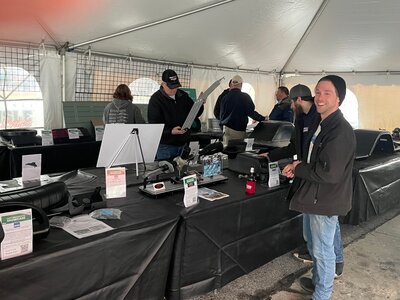
The SEMA Automotive Restoration Market Organization (ARMO) is accepting product entries for its 2023 ARMO Hot Products Showcase, taking place at the Spring Carlisle, April 21–22.
The Hot Products Showcase is a popular feature of the Spring Carlisle event where consumers go to view the hottest and most sought-after restoration products, straight from some of the biggest manufacturers in the industry.
Participation in the Showcase is free and exclusive to ARMO-member manufacturers, and allows them to:
Gain on-site product exposure to an estimated 100,000+ Spring Carlisle attendees.
Obtain increased visitors to their booth if exhibiting at Spring Carlisle.
Enter for a chance to win a New Product or People's Choice Award.
Located in the big tent in front of the stage, north side of the grandstand, the Showcase is the best place for manufacturers to share their newest innovations and best product offerings. Participants may choose to ship their products in advance with a return label, or drop off their products on-site. New product award winners will be recognized at the SEMA Show in November.
The SEMA Truck & Off-Road Alliance (TORA) has named AWE as this week’s member spotlight company. Get to know their story in SEMA’s interview with AWE Vice President Jesse Kramer.
SEMA: Tell us the story of your company. How did your company start?
Jesse Kramer: AWE started as an installer of performance parts in 1991. AWE was originally called “Air and Water Enterprises,” and was founded by Todd Sager, who still remains as the president and CEO today. The company began with early air-cooled Volkswagens, grabbing a name for itself in the underserved Euro performance space.
Before long, the brand moved into Audi and Porsche—focusing on everything from big power kits to exhaust manufacturing. In 2010, the company began a strategy to further refine what the brand meant: high-performance parts manufacturing, focused on exhausts, intakes and intercoolers, and we jettisoned tangential offerings.
In 2016, AWE began its next chapter by moving beyond just European vehicle parts, with the entrance into the Mustang exhaust space. This paved the way for AWE to become known as not just a household name in the European exhaust, intake and intercooler performance space, but also the broader aftermarket. Today, we have about 80 superstars creating AWE brand performance products that are sold globally through our preferred network of dealers, online and from our state-of-the-art headquarters outside of Philadelphia.
The brand manufactures performance parts for Audi, BMW, Mercedes-Benz, Ford, Toyota, Porsche, Subaru, McLaren, Volkswagen, RAM, Dodge, Chevrolet, Jeep and Honda. Since 1991, AWE's elite team of researchers, engineers, innovators and drivers have track-tested and introduced premium performance upgrades for some of the finest automobiles in the world.
SEMA: What was your company’s breakthrough moment?
JK: There are definitely a few. First, was the patenting of AWE’s drone cancelling solution, 180 Technology. Making an exhaust fit is one thing, making it unlock performance, last forever, and sound the part outside of the cabin while keeping the interior virtually drone-free are quite another thing. 180 Technology is now patented, and it’s featured in almost all of the exhaust suites offered catalog.
The second break through was entering the off-road and truck market with unique exhaust offerings for Jeep, Bronco, TRX, Tacoma, Silverado, F-150 and more. Lastly, I feel like every day is a breakthrough—this is a team that does not accept “standard.” We have a core value that is “We Build Better,” and it applies to everything from the latest Tacoma exhaust to go-to-market strategies. We love competition. And we love winning.
SEMA: Tell us about your business now and projects you are working on.
JK: Today, we’re heavy into development of many new product lines for the off-road market, mostly circling the AWE 0FG exhaust line. We’re innovating special solutions that are as much about high-clearance as they are about the sound that people have come to expect from AWE. We’ll do all of this while not turning our backs on our roots in Euro and Supercars—we’re engineering everything from McLaren exhaust to the new Jeep 392, and we’re bringing something special to every application.
SEMA: Tell us about a product that you are proud of.
JK: I’m partial to our Bronco exhaust line. The innovation on this one was extra strong. We kept dealers in mind: 2.3T, 2.7TT, two-door and four-door applications—all covered via one exhaust. We made it 3 in. We engineered a bespoke mounting bracket allows for 2.3T installation without bumper removal. We included an AWE BashGuard in every configuration to provide best-in-class clearance on the fly, we made tip options that are downright unique, and we even chose locking collars for exhaust hangers to prevent movement.
All handcrafted from CNC mandrel-bent, U.S.-sourced .065-in.-wall T304L stainless steel, proudly engineered, designed and manufactured in-house, in the United States with a Perfect Fitment Guarantee—AWE No CEL Guarantee and Lifetime warranty. I do love this line. But we have so many children, how can you choose one?
SEMA: What advice do you have for young professionals contemplating a career in the automotive aftermarket?
JK: Many people entering the industry feel that because they are car people they will do well in the aftermarket. But that’s not it. Lots of people love cars. The key is to have a specialty—one that could be applied to any industry—then apply it to your passion in automotive. Not the other way around. Otherwise you’re letting the tide take you. Become an expert, layer in passion, and boom, you’re a sought-after entity in this fun world we’re all living in!
Fill out a TORA-member spotlight form to highlight how you or your company are contributing to the truck and off-road specialty-equipment industry. Selected candidates are eligible to be featured on TORA’s social media, SEMA News and future TORA member updates.
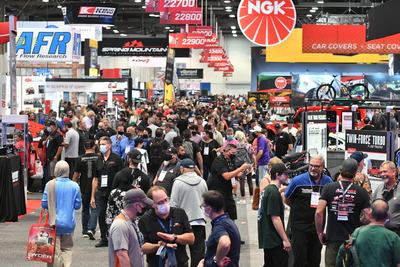
With just four weeks to go before the Priority Booth Space Selection deadline, more than 1,000 exhibiting companies are investing in their future, preparing to strengthen key relationships and generating more brand visibility by exhibiting at in the 2023 SEMA Show.
Organizers expect the number to increase to more than 2,000 by Show time. See who is exhibiting.
There is no other automotive experience that unites new and iconic manufacturers, qualified buyers, and global media to create authentic life-long business connections.
To take part in the May 1–17 Priority Booth Space Selection Process, you must submit your Exhibitor Services Rental Application and deposit by Monday, April 3.
The Automotive Aftermarket Charitable Foundation (AACF) has announced the promotion of Misty Walker to operations manager. Walker had served as AACF executive assistant to Joel Ayres since 2015. Walker previously worked as a project manager with a web development company.
For more information on AACF or how to get involved, contact Ayres at joel@aftermarketcharity.org.
Speedway Motorsports Announces Five Promotions
Speedway Motorsports has announced the promotion of five industry veterans. Daniel Bandoly has been elevated to the vice president of sales operations. He will oversee technology platforms to drive business and productivity and assist the company’s sales leaders in growing revenues across Speedway Motorsports’ 11 venues.
In addition, Nick Skrabalak has been promoted to vice president of consumer sales. He will be responsible for providing executive leadership and direction of the company’s consumer sales efforts for admissions, camping, hospitality, parking, and value-added inventory across all venues. Skrabalak is a 13-year ticket sales veteran at Charlotte Motor Speedway.
Jason Christofferson has been promoted to vice president of consumer operations, where he will provide executive leadership and direction of the company’s consumer operations efforts across all properties. Prior, he was a longtime vice president of ticket system operations at Charlotte Motor Speedway.
Landon Owen has been promoted to vice president of consumer sales for Bristol Motor Speedway (Bristol, Tennessee) and New Hampshire Motor Speedway (Loudon, New Hampshire). Before, Owen served as senior director of ticket sales and service for Bristol.
Finally, Kacy Harmon has been promoted to vice president of consumer sales for Nashville Superspeedway (Lebanon, Tennessee) and Dover Motor Speedway (Dover, Delaware). She previously joined the company in January 2022 as senior director of ticket sales for both speedways.
Pertronix Performance Brands Hires Dr. Jamie Meyer to Lead Product and Innovation
Dr. Jamie Meyer
PerTronix Performance Brands has announced the appointment of Dr. Jamie Meyer as its new chief product and innovations officer. This change takes effect immediately. In his new role, Dr. Meyer will oversee product development, engineering and innovation for all brands within the PerTronix Performance family, including PerTronix Ignition, JBA Performance Exhaust, The Original Doug’s Headers, Patriot Exhaust, Compu-Fire, Spyke, Aeromotive Inc., Waterman Racing Components and Taylor Cable Products.
Most recently, Dr. Meyer served as the president of Performance Racing Industry (PRI), where he transformed the PRI Trade Show into a top 40 trade event in North America, developed an exclusive membership program for the racing industry, led the purchase of the PRI headquarters in Indianapolis and produced a powerful media footprint for PRI, which included the PRI Road Tour program. He is also known for his leadership role in the government and public affairs teams at SEMA. Dr. Meyer served two years on the SEMA Board of Directors before taking the position at PRI.
Prior to PRI, Dr. Meyer spent 15 years at General Motors, leading multiple product development teams. He is most noted for his innovative work with the COPO Camaro, the LS and LSX line of crate engines and components, the emission-compliant E-ROD drivetrains and multiple vehicle-specific performance parts, including the first-ever factory lift kit for full-sized Chevrolet and GMC light-duty trucks. Meyer also spearheaded a line of EV-specific performance parts while at GM.
Polaris Unveils RZR XP New Generation
Polaris Off Road has unveiled the next generation of the RZR XP sport side-by-side. The all-new ’24 RZR XP has been completely redesigned from the ground up, delivering class-leading durability, comfort and performance.
Stronger than ever before, the Polaris RZR XP chassis provides improved trail agility and rugged durability in rough conditions. It showcases a new, aggressive style, with integrated doors, LED accent lights and an upgraded level of fit and finish delivering a premium experience. A newly designed, reinforced driveline withstands rough terrain with stronger half shafts, prop shaft and bearings. The RZR XP’s Walker Evans Racing Needle Shocks with 16-position adjustability provide a plush ride, while a redesigned cockpit improves legroom and line of sight for drivers and passengers. Featuring responsive acceleration due to an all-new ProStar 1000 Gen 2, 114hp engine, the RZR XP also provides extra traction through technical terrain via Polaris’ on-demand all-wheel-drive system. To learn more, visit Polaris.com/RZR.
Race Winning Brands Adds Bob Cook Sales
Race Winning Brands (RWB)—the Mentor, Ohio-based portfolio company of MiddleGround Capital in Lexington, Kentucky, and manufacturer of high-performance components—has announced Bob Cook Sales (BCS) joins the “team of RWB representation... brands in Southeastern United States territories.”
BCS will help represent nine RWB brands, including BoostLine Products, Dart Machinery, K1 Technologies, MGP Connecting Rods, Trend Performance, Victory 1 Performance, PAC Racing Springs, Transmission Specialties (TSI) and RevMax. Southeast territories include Alabama, Arkansas, Florida, Georgia, Louisiana, Mississippi, North Carolina, Oklahoma, South Carolina, Tennessee, Texas, Virginia and West Virginia.
ORBA Names RealTruck Vice President Lee Riser to Board of Directors
Lee Riser
RealTruck Inc. has announced the appointment of Lee Riser, vice president of marketing and passionate off-roader, to the Off-Road Business Association (ORBA) board of directors, where she will serve as the organization’s only female member. The announcement comes today from RealTruck in celebration of International Women's Day.
“I‘m thrilled to join the ORBA board of directors,” said Riser. “ORBA is at the forefront of policy change that may impact our current and future access to public lands and our right to ride. As an avid off-roader myself working in the industry, it’s extremely important to me to advocate for those in the off-roading community.”
Riser has vast expertise in the off-roading space and recently competed in The Rebelle Rally, a women-only off-road navigational competition that covers more than 1,600 miles of the western desert in the United States. With more than 20 years of experience in the automotive industry, she will be a part of the only female-featured team in the upcoming season of “Overlanders,” airing on The Outdoor Channel this summer.
“It's important at RealTruck to recognize and celebrate the trailblazing women in our company who are leading the way for others,” said Tony Ambroza, chief growth officer at RealTruck. “Lee embodies what it means to be a true off-road advocate and enthusiast. I know she'll bring her passion and experience for life off-road to the ORBA board of directors and be a powerful asset to the organization.”
Autotrader Announces Best New Cars of 2023
Autotrader has curated a list of the Best New Cars of 2023 by narrowing down the consideration set to 11 vehicles that shine above the rest. Each chosen vehicle has unique features specific to various lifestyle needs, including interior comfort, build quality, tech features, driving experience and more, with the editors giving particular focus to vehicles that are groundbreaking in some way or that offer significant value. Because there are many new or redesigned vehicles for 2023, the editors only considered models available for purchase within the next nine months.
This year’s list includes one pure electric vehicle and three hybrid gasoline-electric vehicles (HEVs), joined by seven traditional gas internal combustion engine (ICE) models:
’23 Acura Integra
’23 BMW 740i/760i xDrive
’23 Chevrolet Corvette Z06
’23 Genesis GV60
’23 Honda Civic Type R
’23 Honda CR-V
’23 Hyundai Palisade
’23 Kia Sportage
’23 Nissan Z
’23 Toyota GR Corolla
’23 Toyota Prius
MAE Installs E-Mobility Dyno at University of Windsor
Mustang Mustang Advanced Engineering’s (MAE)—an American manufacturer of equipment especially for electric-vehicle testing for research and development—most recent e-mobility dyno has been installed at the University of Windsor in Ontario, Canada. The MAE-AWD-500-AC/EC-LEGACY-BG chassis dynamometer was a custom-built piece of testing equipment to meet the school’s requirements for research into electric vehicles, including BEV, PHEV and FCEV. MAE was contacted because of its significant background in designing and building custom testing equipment for a wide variety of vehicles.
The University of Windsor is regionally connected with the automotive industry, and since 1996, has partnered with Stellaris to establish the Automotive Research and Development Centre (ARDC), home to research and expertise in areas such as cybersecurity, autonomous and connected vehicles, sensors, sustainability, data and AI, supply chains and greenhouse growing conditions.
Mustang’s testing equipment is used at a variety of universities and technical schools throughout the world. One such institution is the University of Windsor. When looking for a dynamometer as a training tool for their automotive technical school and for the research and development of the vehicles of the future, they turned to Mustang Advanced Engineering for the right dyno for their needs. The product recommended is a dynamometer that can handle the torque and loading from a performance vehicle to a large diesel truck to the high horsepower of an electric vehicle, such as a Tesla.
VP Racing Announces New Licensing Agreement With Greenlight Collectibles
VP Racing Fuels Inc. has announced that Greenlight Collectibles is joining VP’s lineup of licensees. The licensing partnership will allow GreenLight to produce new vehicles, gas pumps and more featuring the VP Racing brand. Licensing the VP brand to manufacturers of various product categories expands the brand’s reach, exposure, recognition and sales.
Have some company news you would like to share? Let us know and the news may appear in an upcoming issue of SEMA News. Send your items for consideration to editors@sema.org.
Photography Courtesy: Eric Dahlquist, Petersen Publishing Company Archive
2023 marks the 100th anniversary of Carroll Shelby’s birth. The milestone will be celebrated in a number of ways, from a Centennial-Edition Mustang by Shelby American to a tribute to his life and cars at the Goodwood Revival in England this fall.
Volumes have been written about Shelby’s life, from the successful ’50s racing career cut short by a heart condition to the organ transplants that kept him alive far longer than his OEM parts would have sustained him. There were the Cobras, Mustangs, Omnis, Chargers and other cars—and trucks—that bore his name. There were SCCA championships and the Le Mans efforts that would ultimately see Ford win the “Ford vs. Ferrari” battle put on film a few years ago. He was funny and charming but also litigious, using a scorched-earth strategy to protect his name from countless Cobra imitators and others.
Type the word “Shelby” into the search field of the digitized Petersen Publishing photo archive and the result is nearly 3,000 images, from photos of magazine editors testing the first Cobra in 1962 to a snapshot of him at the 2010 SEMA Show sitting on a sofa joking with Speedy Bill Smith and Linda Vaughn. Only a fraction of those results are photos of the man himself; the majority are shots of cars taken during vehicle road tests, for build-up or restoration articles, and at vintage races, Shelby club conventions and other events. To get an accurate count of how many photos of Shelby himself are in the archive would take a fair amount of sleuthing. He was a prolific racer in his prime, driving sports and Formula 1 cars, earning Sports Illustrated magazine’s Driver of the Year in 1956 and winning Le Mans in an Aston Martin in 1959. We recently, and by accident, found a photo of him at the wheel of a 4.9L Ferrari at the 1957 Daytona Speedweeks.
So why choose this photo of Shelby for his 100th birthday tribute? We found the image, taken by Motor Trend’s Eric Dahlquist at a November 1968 press preview of the ’69 Mustang GT350 and GT500, remarkably prescient. By this time Shelby had little to do with his namesake Mustang. Production of the ’68 models had moved from Shelby American’s LAX-based facility to Michigan; and the ’69 models, as Shelby historian Greg Kolasa described them, were becoming less “Shelby” and more “Ford.” Just a few months after this photo was taken, Shelby brought an end to the Mustang program. The ’69 cars were the end of the era, though several hundred unsold ’69 models were retagged with new VINs and marketed as ’70 models.
In Dahlquist’s photo, Shelby seems distracted, disinterested in the Mustang he’s sitting on, instead looking off in the distance to a future yet to be written.
The SEMA Hall of Fame is an honor bestowed upon individuals who have improved the automotive specialty-equipment industry. These individuals have gone above and beyond the normal course of business to enhance the stature of the industry and/or the association’s growth.
While many well-known names are often nominated for the program, it’s important that SEMA doesn’t overlook leaders and innovators who may not be as well known. There are many unsung heroes who contribute to and impact the industry greatly—and the association needs input from members to make sure they get the recognition they deserve.
Nominate an industry trailblazer who deserves the prestigious honor before March 17 at www.sema.org/hof.
To qualify, the candidate must have been involved in the specialty-equipment automotive industry and/or SEMA for a minimum of 10 years, be at least 50 years of age prior to the 2023 SEMA Show and their contributions must have extended throughout the national or international level.
Candidates who are deceased qualify for nomination at any age, as long as the nomination is presented at least one year posthumous.
Are you hunting for a new job? The SEMA Career Center has a comprehensive listing of automotive-related job openings around the country. Here are some of the latest jobs posted to the website.
ProCharger is hiring an inventory/production control associate responsible for assisting with work order planning/creation for some manufacturing departments, cycle counting of inventory items in the warehouse, packing of inventory for shipment to outside vendors and reviewing and correcting inventory values within an MRP system. Candidates must have 1-2 years’ experience in inventory control or a manufacturing environment, a high-school diploma or GED and solid computer skills.
ECS Tuning is hiring a marketing planner to collaborate with the marketing manager, product team and sourcing teams to plan and execute promotions and other special marketing events, ensure that those events are coordinated across the company’s banner sites and forecast sales growth to allow the company to purchase inventory in a timely manner to support promotional events. Candidates must be passionate and knowledgeable in the automotive space and have a minimum of 1–2 years’ digital experience, particularly with, but not limited to, web, social and emerging technologies.
Edelbrock Group is hiring a director of product development to provide leadership and strategic direction, as well as oversee product development and testing for the Edelbrock Group portfolio of automotive aftermarket brands. The individual will report to the president/CEO and will work directly with the director of product management and product managers across all brands, as well as sales and marketing, data Integration and supply-chain teams. Candidates must have 10+ years’ job experience related to engineering and/or product development and more than five years’ managerial/director-level experience.
In conjunction with the SEMA Emerging Trends & Technology Network (ETTN), the Southern California Society of Automotive Engineers (SAE) is staging an event at both SEMA Garages to connect its students with businesses in the industry.
Taking place March 25 at the SEMA Garage in Diamond Bar, California, and April 29 at the SEMA Garage in Detroit, the ETTN/SAE Career Fair will include more than 100 university students. Both events take place 10:00 a.m.–2:00 p.m. (local time). SEMA-member companies are invited to participate and meet with future automotive engineers at the events.
Participating businesses will have an opportunity to share their expertise with university students who are part of Formula and Baja SAE competition teams, help them explore career opportunities and inspire them in their career paths.
This is a great chance to connect face-to-face with potential candidates, put your company name out in the industry and network with other aftermarket businesses and industry professionals.
Register your company at the SEMA Garage, Diamond Bar, California.
Register your company at the SEMA Garage, Detroit.
Last year Tom Bailey, a Hot Rod magazine Drag Week veteran with five wins under his belt, decided that he wanted in on the lucrative drag-and-drive scene and whipped up his own racetrack-and-roadway tour, called Sick Week, and it was a success. Three hundred fifty slots were available for anyone who wanted to push their car and themselves to the limit while touring the dragstrips of Florida and Georgia, and even with a day rained out last year, the racers raved and many said up-front that they would come back for round two in 2023.
Sure enough, at the start of Sick Week 2023, a full roster of racers were waiting at Orlando Speedworld to begin a five-day affair that would see personal bests smashed thanks to outstanding conditions, two major accidents and plenty of mechanical carnage while racers worked to secure the best average elapsed time in their class.
Click here for complete details from the 2023 event.
Daijiro “Dai” Yoshihara
Dai Yoshihara Announces Entry Into the TC America Race Series With VGRT
Pro athlete and motorsport star, Daijiro “Dai” Yoshihara enters the professional competition field in TC America with the Florida-based Victor Gonzalez Racing Team (VGRT). The TC America powered by Skip Barber championship continues to be both a manufacturer and driver destination for professional touring car racing. Comprised of three competition classes—TCX, TC and TCA — all TC America powered by Skip Barber championships utilize factory-built or supported turn-key race cars, with TCX supporting the BMW M2 CS Racing platform and other full-fledged, homologated race cars.
Now in its fourth year, the racing outfit has competed in TC America, GR Cup, and the IMSA Michelin Pilot Challenge. Yoshihara will pilot a Honda FK8 Civic Type R TCR in the series. He is among three drivers in the VGRT TC America entry list: Ruben Iglesias Jr. represents the team in TCA, Michael Hurczyn in TC and Yoshihara in TCX. While the other Hondas in the team’s lineup are production models modified for racing, the hindmost is a full-blown Type R race car built by JAS Motorsport—the official Honda motorsport engineering and customer service partner since 1998.
Yoshihara’s participation is another step forward in his multi-lateral growth as a motorsport icon and brand under the Pit+Paddock athlete management portfolio. During his inaugural year under the Pit+Paddock flag, he soared as the fastest EV at the 100th Running of Pikes Peak International Hill Climb, allowed fans to experience his Formula DRIFT Pro class BRZ during the nationwide Ride with Dai Experience and became an official ambassador for Turn 14 Distribution, ENEOS and Yokohama Tire.
NASCAR To Announce New Short-Track, Road Course Rules
Officials with NASCAR have announced plans to debut new aerodynamic rules designed to enhance NASCAR Cup Series racing at short ovals and road courses. The new rules will help reduce downforce by up to 30%, according to NASCAR’s Dr. Eric Jacuzzi, who said the downforce levels are reminiscent of those in the mid-’90s.
The main change will be the move to a 2-in. rear spoiler (reduced from the current 4-in.) and under-car tweaks, such as the removal of three diffuser strakes and engine panel strakes and a trimmed diffuser outer fencing.
All road courses, and most short tracks, will utilize the new rules in 2023. This includes Charlotte Roval, Chicago Street Course, Circuit of The Americas, Indianapolis Motor Speedway Road Course, Martinsville, New Hampshire, North Wilkesboro, Phoenix, Richmond, Sonoma and Watkins Glen.
The new rules package will debut on Sunday, March 12, during the United Rentals Work United 500 at Phoenix Raceway. For the complete details, visit the NASCAR announcement here.
NHRA Pro Mod to Feature New Playoff-Style Points in 2023
Finish Line Consultants and National Hot Rod Association (NHRA) officials have announced a new points system will be introduced for the FuelTech NHRA Pro Mod Drag Racing Series presented by Type A Motorsports during the 2023 season. The new points system will incorporate a playoff-style competition similar to the NHRA Camping World Drag Racing Series Countdown to the Championship—part of an initiative to showcase Pro Mods more prominently in the NHRA.
The first of 10 overall events will feature a points-and-a-half format for the standout competitors in the Pro Mod ranks, meaning the race winner will earn 150 points. Following the sixth event in Norwalk, the top 10 drivers in the points standings—along with those who meet the minimum qualifying requirements at all six regular-season races—will compete in the Road to the Championship over the final four NHRA Pro Mod events of the year in Brainerd, Indy, St. Louis, and the finale at the NHRA Nevada Nationals at The Strip at Las Vegas Motor Speedway on Oct. 26–29.
Those final four races will determine the 2023 world champion in the FuelTech NHRA Pro Mod Drag Racing Series presented by Type A Motorsports, with a points-and-a-half format also in place in Las Vegas.
Along with the Road to the Championship format, additional qualifying points after each round and for overall qualifying will be available at the regular-season finale in Norwalk and the last race of the season in Las Vegas.
For the complete details, visit the NHRA announcement here.
Öhlins Racing Joins NASCAR Competition Partner Program
Öhlins Racing—the racing suspension supplier based in Stockholm, Sweden, with a United States branch in Hendersonville, North Carolina—has joined the NASCAR Competition Partner program, the company announced. Öhlins, which first started developing components for NASCAR in 1994, is currently the exclusive supplier of shock absorbers for the NASCAR Cup Series Next Gen car platform.
Since the start of the 2022 season, all Cup Series teams have been running the “highly advanced” five-way adjustable version of the Öhlins TTR coilover damper featured in IndyCar and the 24 Hours of Le Mans. The Cup Series TTR damper, developed and tested by Öhlins engineers and NASCAR representatives, is designed to help teams quickly dial in precise damping characteristics to achieve maximum performance on various track conditions.
The Competition Partner program is an extension of NASCAR’s Next Gen Supplier program. It allows companies to promote their affiliation with the NASCAR organization and the products they supply for the Next Gen Car to fans, customers and the motorsports industry at large.




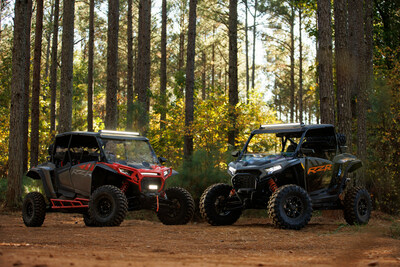 Polaris Off Road has unveiled the next generation of the RZR XP sport side-by-side. The all-new ’24 RZR XP has been completely redesigned from the ground up, delivering class-leading durability, comfort and performance.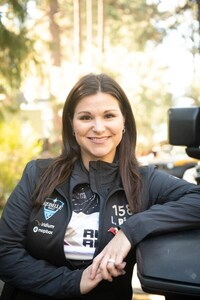
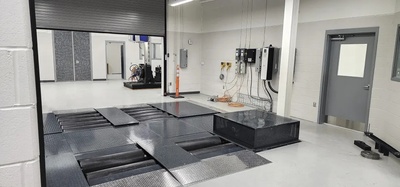 Mustang Mustang Advanced Engineering’s (MAE)—an American manufacturer of equipment especially for electric-vehicle testing for research and development—most recent e-mobility dyno has been installed at the University of Windsor in Ontario, Canada. The MAE-AWD-500-AC/EC-LEGACY-BG chassis dynamometer was a custom-built piece of testing equipment to meet the school’s requirements for research into electric vehicles, including BEV, PHEV and FCEV. MAE was contacted because of its significant background in designing and building custom testing equipment for a wide variety of vehicles.
 2023 marks the 100th anniversary of Carroll Shelby’s birth. The milestone will be celebrated in a number of ways, from a Centennial-Edition Mustang by Shelby American to a tribute to his life and cars at the Goodwood Revival in England this fall.
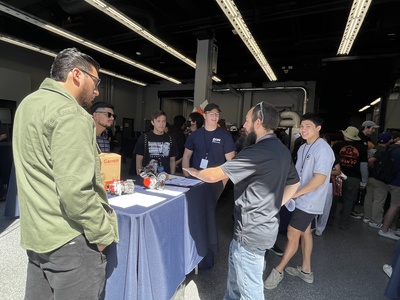 In conjunction with the SEMA
 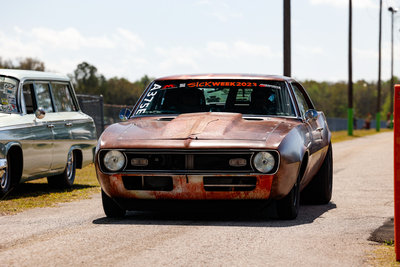 Last year Tom Bailey, a Hot Rod magazine Drag Week veteran with five wins under his belt, decided that he wanted in on the lucrative drag-and-drive scene and whipped up his own racetrack-and-roadway tour, called Sick Week, and it was a success. Three hundred fifty slots were available for anyone who wanted to push their car and themselves to the limit while touring the dragstrips of Florida and Georgia, and even with a day rained out last year, the racers raved and many said up-front that they would come back for round two in 2023.