Tue, 12/02/2025 - 09:42

By SEMA News Editors
 

Special Single-Owner Mercedes-Benz Collection Spearheads RM Sotheby's Upcoming 2026 Paris Auction
Special Single-owner Mercedes-Benz Collection Spearheads RM Sotheby's Upcoming 2026 Paris Auction


RM Sotheby's will return to its traditional home at the Louvre Palace's spectacular Salles du Carrousel on January 28, 2026, for the 13th running of Europe's premier collector car auction in Paris. Following this year's incredible auction that saw the '65 24 Hours of Le Mans-winning '64 Ferrari 250 LM sell for approximately $40,494,284 in the City of Lights, next year's sale is already shaping up to be one to remember with the early consignment of The Silver Star Collection, a six-strong group of some of the German marque's most iconic machines. Leading the collection is a pair of Mercedes-Benz 300 SLs that represent both the very earliest and dying days of production.

Only 167 examples of Mercedes-Benz's groundbreaking super coupé were built in the first year of production, among them this '54 Mercedes-Benz 300 SL Gullwing. Like many, this car was first bound for New York and arrived on US shores finished in White Grey with a green-beige chequered fabric interior. It later returned to Germany and was restored in 2016, re-finished in the ever-popular combination of silver over red with two pieces of fitted luggage trimmed in complementary red leather.

Meanwhile, a '62 Mercedes-Benz 300 SL Roadster is among the final few hundred examples to leave the Sindelfingen works. One of only 182 Roadsters built in 1962, the car was delivered to England at the start of the year, finished in the Fire Engine Red over Cream combination that it retains today. Beautifully presented following an exacting restoration at the hands of Mercedes-Benz Classic from 2015-2016, the matching-numbers example comes complete with a Mercedes-Benz Classic restoration book and a copy of its factory data card.

The two landmark models are followed by a pair of gullwing icons of a younger generation, the AMG-tuned, 563-horsepower SLS—also presented in matching open and closed configuration. A '13 Mercedes-Benz SLS AMG Coupé finished in Iridium Silver over a Black and Anthracite Exclusive leather interior is the model in its purest form. This example is well equipped with an AMG performance steering wheel, rearview camera and memory seats.

Offering comparable performance in open-top guise is a '13 Mercedes-Benz SLS AMG Roadster. This time finished in Obsidian Black over Black and Anthracite leather, the Roadster also benefits from an AMG steering wheel, plus carbon ceramic brakes, AMG forged wheels, and an Airscarf system.

The neatly curated six-car collection is rounded out with two more of the Three-Pointed Star's most memorable models. A one-of-520 '10 Mercedes-Benz SLR McLaren Roadster presents beautifully in Crystal Laurit Silver Metallic over Black and Anthracite leather with 19-in. turbine wheels.

Finally, a '69 Mercedes-Benz 280 SL "Pagoda"  offers both accessible glamour and timeless style. Restored between 2014 and 2016 in its factory-correct Grey Blue Metallic over Blue leather and to European specifications (it was first delivered to the United States), the elegant convertible pairs a matching-numbers 2.8-L straight-six with a four-speed automatic gearbox and comes complete with a colour-matched hardtop.


Thad Smith Appointed National Sales Director at Dynamat

Dynamat has announced the appointment of Thad Smith as its new national sales director.

Smith brings 30 years of experience in the automotive industry, ranging from managing auto repair and tire shops to leading a large team of business development managers and territory sales managers for a distribution center of a Fortune 200 company.

In his new role, Smith will oversee national sales initiatives, support Dynamat's distributor and dealer networks and drive programs designed to enhance the customer experience. His expertise in developing high-performance teams and his passion for delivering value make him a strong addition to the organization. "I am blessed and excited about this opportunity to lead the sales initiatives for Dynamat. I am passionate about earning your trust, supporting our partners and building relationships to help everyone grow," said Smith.

For more information, visit dynamat.com.


KYB Adds New Marketing Manager and Territory Sales Manager
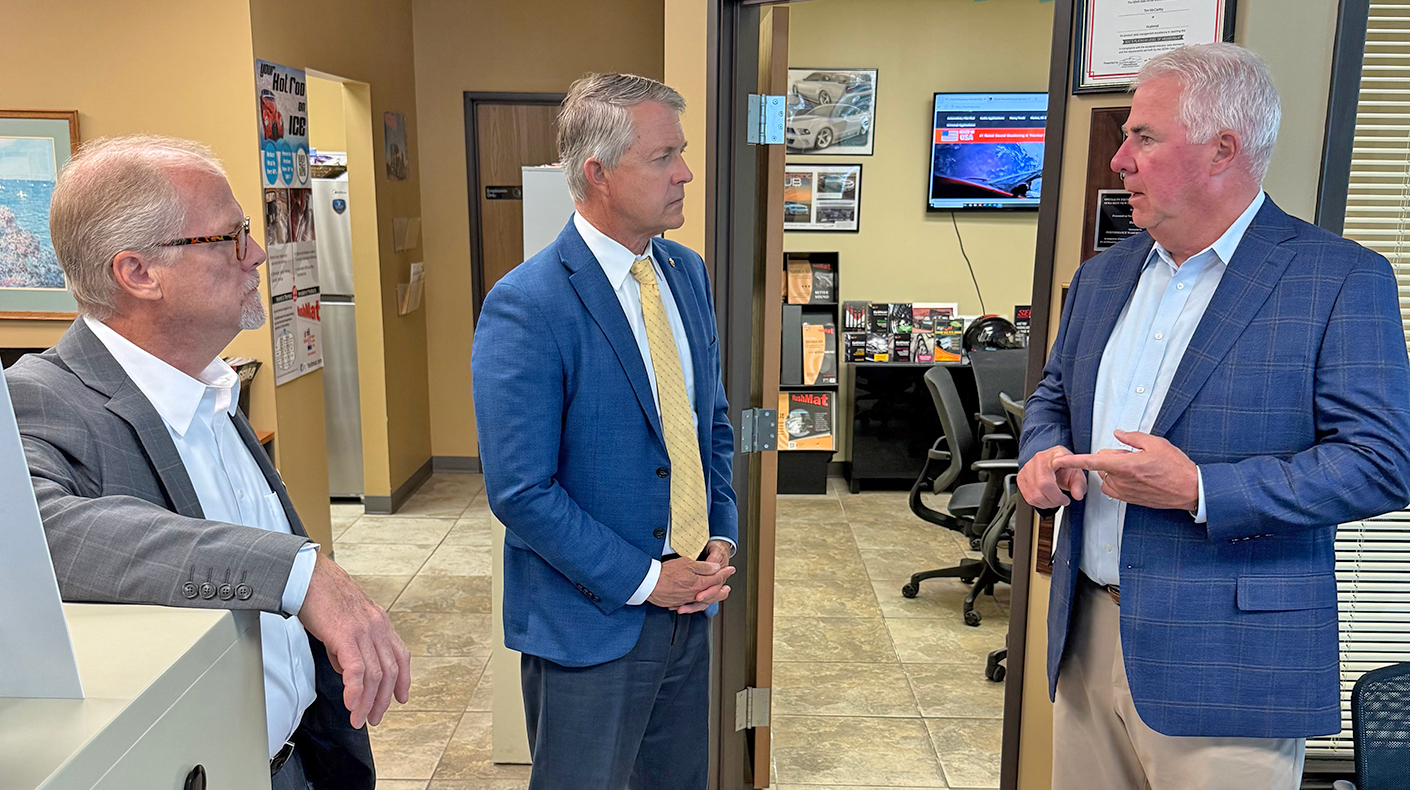
Mike Deckys and Whitney Howard, KYB Americas

KYB Americas has announced two key appointments to its staff.

Mike Deckys joins the Central Region sales team as a territory sales manager. With nearly 25 years of automotive aftermarket experience, Deckys brings a wealth of knowledge. He has worked across all levels of distribution with organizations such as Dorman Products, Walker Products and Fisher Auto Parts.

"I'm eager to reconnect with longtime partners, build new relationships and help drive the kind of shared success that strengthens KYB's growth while elevating our customers' performance throughout the region," said Deckys.

Deckys will cover the northern part of KYB's Central Region, which includes Illinois, Michigan, Missouri, Iowa, Wisconsin, Minnesota and more.

Whitney Howard, meanwhile, joins the company with an agency background and has worked with clients such as Mobil 1, FedEx and the Perot Museum of Nature and Science. As marketing manager, Howard will develop and execute the KYB media plan, promotions calendar, and social media schedule, among other duties.

Howard said, "I'm excited to join KYB and bring my strategic agency experience to the organization. I'm eager to amplify our story, grow our brand presence, and help solidify KYB's stature in the ride-control industry."

"Whitney is a great addition to our team," said Andy Castleman, director of product and marketing. "She's already brought us several fresh ideas and viewpoints from outside the automotive aftermarket. We threw her in the deep end right away and had her come to AAPEX after only being on the job for a week. She definitely impressed us with her initial observations and ability to learn quickly."

For more information, visit kyb.com.

Tue, 12/02/2025 - 08:50

By SEMA News Editors

The racing and performance industry will be gathering next week at the 2025 PRI Show, December 11-13, in Indianapolis for three days of connection, innovation, development and planning for the race season ahead. Get a sneak peek of the Show below with previews of new parts and products, planned activations, celebrity appearances, Show-week events, educational opportunities and a lot more.


Inside the Show Hall: What to Expect at the 2025 PRI Show
PRI Show What to Expect


At the heart of the PRI Show experience are the new product introductions and race car reveals. For many companies, the Show marks the debut of the latest engine components, safety equipment, chassis gear, electronics, and more. In addition to seeing cutting-edge product solutions for the first time, racers walking the Show floor may also get a peek at their competition as numerous race vehicles will be featured in the booths.


Each December in Indianapolis, Indiana, the PRI Show gives teams, builders and manufacturers a critical advantage in planning the future as well as tackling present-day challenges. Around each booth, bench racing sets the tone for the Show as everyone looks for the game-changers across their racing disciplines.


Read more here.


Have the Ultimate Insider PRI Experience: Get VIP Access With SEMA & PRI PAC


The 2025 PRI Show will be packed with lots of action, but the real insider experience happens in the SEMA & PRI PAC Lounge and Dining Room.


SEMA & PRI PAC donors will receive exclusive benefits all week, from premium access, exclusive hospitality and even an up-close look at a legendary race car.


Read more here.


PRI to Deliver Powerful Educational Programming for Motorsports Professionals
PRI Education


The PRI Show is offering a robust lineup of educational programming designed to empower motorsports professionals with the latest insights, strategies and technologies to drive success both on and off the track.


During the Show, there will be more than 50 educational seminars, breakout sessions and panel discussions covering technical innovations, marketing strategies, business management and more.


Read more here.


PRI to Open Doors for Students to Launch Motorsports Careers


The PRI Show is accelerating opportunities for the next generation of motorsports professionals through a dynamic lineup of student-focused programs.


From education tracks and networking events to hands-on competitions, the PRI Show is delivering experiences that connect students with industry leaders and career pathways while showcasing the strength and economic impact of the motorsports industry.


Read more here.


PRI Partners With RACER on Exclusive Creator Hub at PRI Show


Debuting at the PRI Show, the RACER Creator Hub will be a dedicated on-site space designed to support creators and media professionals with:
 

  • A RACER-branded interview backdrop featuring PRI branding
  • A Creator Networking Lounge with meeting areas, charging stations, Wi-Fi and refreshments
  • Creator-focused panels, including a RACER-hosted session moderated by RACER Creator Network President Taro Koki
  • Opportunities for filming, podcast recording, and collaboration on the show floor


Read more here.


Antron Brown, Angelle Sampey and More at PRI Show Prayer Breakfast
Prayer Breakfast


Kicking off the final day of the 2025 PRI Show, Saturday, December 13, the Prayer Breakfast is set to bring attendees together for an inspiring morning program with appearances from drag racers Antron Brown, Angelle Sampey, Jason Terrell and more.


Doors will open and a complimentary hot breakfast will be served beginning at 7:30 a.m. EST, followed by a program from 8:00 to 9:00 a.m. EST, ending before the show floor opens at 9:00 a.mEST. (Guests must RVSP ahead of attending at ThePrayerBreakfast.com.)


Read more here.


Star Drivers Confirmed for Charity Bowling Event Before PRI 2025


NHRA headliners Alexis DeJoria, Cruz Pedregon, Tony Stewart and Ida Zetterström will help kick off the festivities at the recently revived "Rev n Roll" fundraiser benefiting Riley Children's Foundation on Wednesday, December 10. The event returns after a six-year hiatus and will once again serve as an unofficial kickoff to the PRI Show's week of activities.


The event offers race fans the opportunity to bowl and mingle alongside their favorite drivers while supporting an important community cause.


Read more here.


Registration for 2025 PRI Show

The PRI Show draws attendees from all 50 states and around the world, including race teams, retailers, engine builders, fabricators, media and others. To register, book hotel accommodations and learn more about the 2025 PRI Show, visit PRI2025.com/Attend.

Tue, 12/02/2025 - 07:49

By SEMA News Editors

SEMA Cares


SEMA Cares is accepting applications for its Annual Contribution Program, helping fund initiatives that benefit the automotive aftermarket industry. 

Each year, SEMA receives requests from a variety of organizations seeking contributions to support their activities. Through the Annual Contribution Program, applicants can raise awareness of their mission, highlight key projects or issues and strengthen their relationship with SEMA and the broader aftermarket community. 

SEMA Cares


SEMA will allocate funds for the 2026 cycle following a review of all applications. Applications are due by Friday, January 16, 2026, at this link. 

Tue, 12/02/2025 - 07:17

By SEMA News Editors

SEMA and PRI Wisconsin Race Tracks


SEMA and PRI continue to lay the groundwork for their 2026 priority of protecting the racing community, making a major push in Wisconsin to rally support for "Right to Race" legislation ahead of the next legislative session starting in January.
 

For three days last month, SEMA and PRI staff and advocates hit the ground in Madison, the state capital, to build momentum to support legislation that protects race tracks from nuisance claims, mirroring a recent SEMA- and PRI-led victory in North Carolina. The team met with lawmakers and later joined more than 35 race tracks at the Promoters of Wisconsin Auto Racing (POWAR) meeting at Angell Park Speedway to give a presentation outlining the legislation, explaining its urgency and organizing next steps to strengthen a unified statewide coalition.
 

Wisconsin Race Tracks

Left to Right: Gregg McKarns, owner of Madison International Speedway; Rep. Jeff Mursau; Mike Kertscher, president of Road America; Tierra Hubbard, senior manager of state government affairs at SEMA and PRI; Tom Deery, PRI ambassador.


SEMA and PRI’s Government Affairs team, alongside local race track owners and operators, met with 16 lawmakers to advance nuisance-protection legislation aimed at safeguarding long-standing facilities from challenges driven by new surrounding development.
 

On November 12, the Wisconsin Historical Society held a beam-signing event to celebrate its collaborative exhibit project with Road America, commemorating the track’s 70th anniversary. SEMA and PRI were honored to add their signatures to the future Wisconsin History Center, a state-of-the-art facility opening on Capitol Square in 2027.
 

Wisconsin History Center

Wisconsin History Center beam displaying the signature of SEMA and PRI, and Madison International Speedway in the Rotunda of the Wisconsin State Capitol.


PRI also hosted a presentation on November 11 for race tracks across Wisconsin, Minnesota and Illinois, outlining the legislation, highlighting its urgency and coordinating next steps to strengthen a unified statewide coalition.


Lawmakers are listening, race tracks are mobilizing and momentum is building. Support is growing as leaders recognize the essential role race tracks play in the United States' economy, heritage and communities. This is a pivotal opportunity to protect the future of racing while preserving jobs, investment, tourism and long-standing traditions.


SEMA and PRI remain committed to advancing similar protections nationwide, ensuring motorsports facilities and related businesses have the safeguards they need to thrive.


Want to get involved?


Help us keep race tracks alive and thriving. For information on how you can support motorsports advocacy in your state, contact SEMA and PRI's senior managers of state government affairs: Tierra Hubbard, who leads efforts in the eastern states, at tierrah@sema.org, and Victor Muñoz, who covers western states, at victorm@sema.org.

Tue, 12/02/2025 - 07:17

By SEMA News Editors

SEMA and PRI Wisconsin Race Tracks


SEMA and PRI continue to lay the groundwork for their 2026 priority of protecting the racing community, making a major push in Wisconsin to rally support for "Right to Race" legislation ahead of the next legislative session starting in January.
 

For three days last month, SEMA and PRI staff and advocates hit the ground in Madison, the state capital, to build momentum to support legislation that protects race tracks from nuisance claims, mirroring a recent SEMA- and PRI-led victory in North Carolina. The team met with lawmakers and later joined more than 35 race tracks at the Promoters of Wisconsin Auto Racing (POWAR) meeting at Angell Park Speedway to give a presentation outlining the legislation, explaining its urgency and organizing next steps to strengthen a unified statewide coalition.
 

Wisconsin Race Tracks

Left to Right: Gregg McKarns, owner of Madison International Speedway; Rep. Jeff Mursau; Mike Kertscher, president of Road America; Tierra Hubbard, senior manager of state government affairs at SEMA and PRI; Tom Deery, PRI ambassador.


SEMA and PRI’s Government Affairs team, alongside local race track owners and operators, met with 16 lawmakers to advance nuisance-protection legislation aimed at safeguarding long-standing facilities from challenges driven by new surrounding development.
 

On November 12, the Wisconsin Historical Society held a beam-signing event to celebrate its collaborative exhibit project with Road America, commemorating the track’s 70th anniversary. SEMA and PRI were honored to add their signatures to the future Wisconsin History Center, a state-of-the-art facility opening on Capitol Square in 2027.
 

Wisconsin History Center

Wisconsin History Center beam displaying the signature of SEMA and PRI, and Madison International Speedway in the Rotunda of the Wisconsin State Capitol.


PRI also hosted a presentation on November 11 for race tracks across Wisconsin, Minnesota and Illinois, outlining the legislation, highlighting its urgency and coordinating next steps to strengthen a unified statewide coalition.


Lawmakers are listening, race tracks are mobilizing and momentum is building. Support is growing as leaders recognize the essential role race tracks play in the United States' economy, heritage and communities. This is a pivotal opportunity to protect the future of racing while preserving jobs, investment, tourism and long-standing traditions.


SEMA and PRI remain committed to advancing similar protections nationwide, ensuring motorsports facilities and related businesses have the safeguards they need to thrive.


Want to get involved?


Help us keep race tracks alive and thriving. For information on how you can support motorsports advocacy in your state, contact SEMA and PRI's senior managers of state government affairs: Tierra Hubbard, who leads efforts in the eastern states, at tierrah@sema.org, and Victor Muñoz, who covers western states, at victorm@sema.org.

Tue, 12/02/2025 - 06:31

Mike Spagnola
The following is a message to SEMA Members from SEMA President and CEO Mike Spagnola about the 2026 Board of Directors nominations, which are now open to SEMA members online here:


Dear SEMA Member,


As a valued member of the association, we invite your recommendations for industry leaders to serve on the SEMA Board of Directors.


Please take a moment to submit the name of an individual you believe would be an excellent candidate by completing and submitting a Nomination Form.
 

A strong board ensures strong leadership and an association that effectively serves its members. We encourage your participation in the nomination process--our industry has many exceptional professionals who would be a tremendous asset to the board, and your recommendations help bring these individuals to the attention of the nominating committee.
 

Nominations for the SEMA Board of Directors are due by January 5, 2026, at 5:00 p.m. PST.
 

NOMINATE HERE button for SEMA Board of Directors 2026


Thank you for your engagement and continued support of the association.


Sincerely,


Mike Spagnola

SEMA President and CEO


This article was originally published on Tuesday, December 2.

Mon, 12/01/2025 - 15:37

By Michael Imlay

Image of the U.S. Capitol Hill on a cloudy day.


How SEMA Won the Fight to Overturn California's EV Mandates


In an East Room ceremony at the White House, a remarkable milestone took place on June 12, 2025. President Trump signed a Congressional Review Act resolution revoking three EPA waivers that would have enabled California to ban internal combustion vehicles.


By SEMA's estimate, that stroke of the pen instantly protected more than 333,000 American jobs, preserved $100 billion in annual economic impact for the U.S. economy and saved the specialty aftermarket industry from certain catastrophe.


And among the officials and observers in attendance for that historic event were SEMA CEO Mike Spagnola, SEMA Senior Director for Federal Government Affairs Eric Snyder and SEMA Senior Vice President for Public and Government Affairs Karen Bailey-Chapman, together representing the association that played a catalyzing role in the legislation.


"Just walking up to the White House… The grandeur of it all, the people in uniform, the buzz you could feel and then getting to walk around all the rooms of the East Wing––you felt so honored to be able to represent SEMA," recalls Spagnola.


"We were among 100 non-elected officials present for the signing," adds Bailey-Chapman, describing the pomp. "The Marine Corps band playing, the string quartet and the freedom to explore the East Wing were all incredible experiences. But more than that, this was probably the biggest piece of energy and vehicle technology legislation in 20 years, and SEMA earned a seat at the table in passing it."


For President Trump, the signing represented delivery on a key campaign pledge to preserve vehicle choice for Americans. For SEMA, it was the culmination of a hard-fought battle and a watershed moment for industry businesses and their consumers. So how did this victory come about?


THE ROAD TO THE WHITE HOUSE


Anyone familiar with the old Schoolhouse Rock "I'm Just a Bill" cartoon generally gets how proposed legislation moves through Congress, passes both houses and then lands on the President's desk for signature.


Well… "If only it were that easy," quips Bailey-Chapman.


In fact, the complicated backstory of this particular legislation dates to 1970 and the implementation of the federal Clean Air Act.


"Back then, California had already set up some of its own emissions standards and programs because of that state's unique pollution issues––especially in Southern California," Bailey-Chapman explains. "Because of that, the federal Clean Air Act gave California certain exemptions to set stricter standards and regulations unique to California."


Only California's standards didn't remain so unique. Automakers don't build 49-state vehicles. Rather, to maintain cost-effective production, they must build one-type-fits-all vehicles for the entire U.S. market. In addition, 17 other states began tying their emissions standards to California's, creating the so-called "California Effect." By the '00s, the Golden State was gaining an outsized voice in regulating the nation's automobiles.


Then, in 2022, the California Air Resources Board (CARB) promulgated the Advanced Clean Cars II (ACC-II) regulation calling for 100% zero emissions vehicles (ZEVs) by 2035. The regulation also set strict intermediate targets for automakers to meet in the years leading up to the 2035 goal. However, because state new-vehicle emissions standards are preempted by the federal Clean Air Act, California required a U.S. Environmental Protection Agency (EPA) waiver to implement its tighter regulations.


In December 2024, the EPA awarded CARB three specific waivers:

  • A waiver permitting CARB to implement the ACC-II regulation.
  • A waiver allowing CARB to implement the Advanced Clean Trucks (ACT) rule, which would introduce a mandatory schedule for the sales of ZEV Class 2b-Class 8 trucks.
  • A waiver permitting CARB to implement a Heavy-Duty Low NOx Omnibus Regulation, which would require a further 90% reduction of NOx emissions from heavy-duty on-road engines.


"This was the line in the sand for us––a backdoor to the complete elimination of the internal combustion engine [ICE] across the United States," says Bailey-Chapman.


AN EXISTENTIAL THREAT


In SEMA's view, the mandates would lay waste to the automotive aftermarket, an industry composed of small businesses, an estimated 33% of which are ICE-dependent. More than 500 engine product manufacturers alone could be wiped out within a few short years. That blow to the aftermarket ecosystem could cripple other businesses as well, ultimately threatening some 330,000 American jobs.


"ACC-II raised a lot of questions for us," Spagnola recalls. "How long would it take for aftermarket manufacturers to switch to an EV-driven market? Could they even do that? And what would that look like and what would it do to the industry? Plus, the rule completely ignored all the technological evolution taking place around ICE, alternative fuels and propulsion systems."


Spagnola is quick to point out that SEMA is not––and never has been––"anti-EV." Rather, it champions a technology-neutral, consumer-first approach fostering innovation and ingenuity.


"We've had a section for EVs and alternative platforms at the SEMA Show for some time now and we embrace these technologies," he notes. "But government shouldn't put its thumb on the scale or pick winners and losers. We support allowing Americans to continue innovating and letting consumers decide which innovations best meet their needs."


A rendering of an internal combustion engine.


Based on the threat that ACC-II represented, coupled with SEMA's tech-neutral philosophy, there was no question that the association would stand in opposition to California setting national emissions policy. But how would SEMA defang ACC-II? And how successful might SEMA be?


"Fortunately, the SEMA Board of Directors has staunchly supported industry advocacy and governmental engagement, and has allocated the considerable resources needed to accomplish our mission over the years," says Spagnola.


That support has enabled SEMA to transform its industry advocacy, shifting from a reactive stance in public policy debates to a proactive one. The association has steadily built alliances with local, state and federal officials.


Meanwhile, it has also broadened its outreach to automotive consumer-enthusiasts through its SEMA+ initiatives, created the Driving Force Action SuperPAC and expanded the fundraising efforts of SEMA's traditional federal political action committee (PAC) to pool and channel resources toward candidates, ballot initiatives and legislation favorable to the industry. In addition, SEMA's recent nationwide economic impact study was another major step in educating lawmakers on the aftermarket's sizable contributions to the American economy and jobs.


"If we just sit here and kind of throw up our hands and wait to see what cards we’re dealt, it may not be good. We had to at least try to impact the make-up of the political landscape in Congress and the White House," explains Bailey-Chapman. "That's why we've been so involved in Congressional races and, more recently, the presidential election."


THE BREAKTHROUGH MOMENT


As it turns out, recent years of organizing and political action perfectly positioned SEMA to take advantage of a political sea change that emerged on Election Night 2024. While SEMA remains nonpartisan, GOP wins in Congress and the White House completely "flipped the script" for rolling back EV mandates, according to Bailey-Chapman.


"There was that moment of, 'Oh… It's not just about managing a stalemate anymore… Now there's a real window of opportunity,'" she recalls. "I called an administrative law expert and said, 'Let's throw spaghetti at the wall and put all options on the table.'" After exploring several legal pathways, a Congressional Review Act (CRA) resolution quickly emerged as the clearest and strongest option for repealing the EPA's California waivers and killing the EV mandates.


The CRA is a special type of legislation adopted in 1996 to allow Congress to review and overturn federal regulations issued by government agencies. Any representative or senator can trigger a CRA resolution. Once introduced, Congress has a limited, specified number of legislative days to review and repeal a regulation through a joint resolution. Simple majority votes in each house are enough to secure passage––CRA resolutions cannot be filibustered in the Senate. If Congress repeals the regulation, and the president signs the bill (or Congress overrides a veto), the agency rule is nullified and the agency is prohibited from reissuing it without Congressional authorization.


The SEMA Board of Directors fully backed the plan. "We provided strategic direction, offered feedback and contributed resources wherever possible," says SEMA Chair of the Board Melanie White. "This was a critical issue for our industry, and the Board worked closely with staff to ensure alignment and momentum."


With the course of action decided, the association's grassroots and legislative coalitions swung into action. SEMA networked with other industries affected by the EPA waivers, creating a focused coalition. Early on, the coalition agreed on a single, disciplined strategy: There would be no "Christmas-treeing" the legislation with extra demands or goodies.


"An overloaded Christmas tree falls over. We wanted to keep it clean and concise," observes Bailey-Chapman.


In Spagnola's view, the messaging surrounding the CRA required equal precision: "Our voice had to be 'let America continue to innovate.' We also had to be bipartisan. You have to have your voice heard, so we work on both sides of the aisle. When we walked in, there were people already on our side. Others, we were able to flip when they understood the whole story. People recognized it was good for the economy and good for business."


So much so that SEMA was able to secure House Representative John Joyce (R-PA) and Sen. Shelley Moore Capito (R-WV) as lead sponsors for the CRA. The sponsor list quickly grew from there with Reps. Doug LaMalfa (R-CA), John James (R-MI), Russ Fulcher (R-ID), Jay Obernolte (R-CA), Kevin Kiley (R-CA) and Lisa C. McClain (R-MI); and Sens. Deb Fischer (R-NE), Markwayne Mullin (R-OK), Pete Ricketts (R-NE), Ted Cruz (R-TX), Mike Crapo (R-ID), Bernie Moreno (R-OH) and John Barrasso (R-WY). In time, the co-sponsorship list further grew to 41 House members and 21 senators

in all.


GOING FULL THROTTLE


With the legislative push on, SEMA next deployed a media action plan encompassing op-ed articles and earned media in key publications. By April 2024, the campaign was in full swing, supported with countdown reminders and coordinated letters from industry leaders and automotive enthusiasts. House and Senate lawmakers ultimately received more than 56,000 letters urging a CRA vote.


In the past, SEMA's political tone had always been sober and formal. Now, its communications adopted a punchier, personality-driven style in keeping with the "authentic" zeitgeist of today's social and political climates.


"It was more 'let's go full throttle,'" says Bailey-Chapman. "I really credit [SEMA Director of Communications for Government Affairs] Matt Daigle, [SEMA Political Director] Will Townsend, and the comms team for creating a narrative and voice that cut through the typical Washington chatter. Thankfully, we also have a community with that same style of communication. Frankly, that directness reflects our industry's personality, and that of the current White House, so it was pitch-perfect."


Meanwhile, Spagnola and Bailey-Chapman made the rounds to more than 30 podcasts and media outlets to build public support. SEMA also ran targeted digital ads and phone campaigns, generating more than 2,000 constituent calls to key Congressional offices.


Moreover, this was no scattershot approach; rather, the blitz was strategic and precise. "We placed op-eds and letters to the editor from our members in key Congressional and Senate locations," Bailey-Chapman notes. "We didn't need to hit all 50 states; we only needed a handful of representatives and senators who were on the fence."


A series of legislative fly-ins and coordinated in-person visits to Capitol Hill further drove home SEMA's point with legal analysis and economic impact data. SEMA also circulated the coalition letter signed by 300-plus SEMA small businesses.


"The coalition essentially said, 'Hey, don't forget this. You promised us this, it's what people voted on,' and so forth. The letter got a ton of attention. Within the Beltway, we were actually credited with lighting a fire with that letter."


Along the way, states beyond California began seeing the harms of EV mandates. Virginia, Maryland, Delaware and Vermont each backed off policies echoing California’s emissions regulations, while North Carolina, Texas, Ohio, West Virginia and eight other states passed SEMA-supported "ban the ban" legislation to ensure such mandates never take effect again. This effort was led by SEMA Senior Director of State Government Affairs Christian Robinson, starting in late 2022.


Back on Capitol Hill, the intense lobbying was paying off, too. As Spagnola underscores, "We wanted these bills to have a bipartisan vote, and they did. Eventually, 35 House Democrats and one Democratic Senator crossed party lines" to support the CRA resolution, demonstrating that economic arguments can unite lawmakers around industry issues.


The House of Representatives took up the CRA resolution in April, ultimately voting to revoke the California waivers on April 30, 2025. The Senate, however, proved more nail-biting when it opened its CRA debate on May 21.


"It was an entire day of debate. We kept thinking, well, they wouldn’t bring it to the floor if it didn’t have the votes, but the debate continued late into the evening. Sen. Capito actually quoted our economic and jobs impact numbers in her closing argument for the bill. Then they adjourned for the night."


The cliffhanger ended the next day, May 22, when the Senate finally voted to revoke the California waivers.


"The best night's sleep I've had in the past decade was probably the night after that Senate vote," confides Bailey-Chapman.


A SEAT AT THE TABLE


During his 2024 election campaign, President Trump had pledged to preserve vehicle choice for Americans. Soon after the CRA legislation passed Congress, he signaled he would sign it. The only question was exactly which day and how.


An image of the White House.

SEMA was invited to the White House for the President's signing of the joint CRA resolution, symbolizing the association's hard-earned seat at the table in public policy debates.


"It's rare for a president to do public signings; it’s usually only on major initiatives that a president really cares about,” explains Bailey-Chapman. Nevertheless, SEMA began working with its White House contacts for a high-profile public signing. "I also called Mike [Spagnola] up and said, 'I don't know if it's going to happen, but if it does, we may only have 24 hours' notice for you to come to Washington.'"


Spagnola got the word as he was driving to the airport for SEMA's annual Sacramento Rally. He quickly canceled that trip and changed flights to the nation's capital, arriving Wednesday night, June 11––just in time for the public signing in the East Room of the White House the following morning.


The rest is literally history. Awed as they were by their White House experience, both Spagnola and Bailey-Chapman say the red carpet wasn't rolled out for them, but for SEMA and its coalition partners.


"We brought American manufacturing muscle. We brought American automotive muscle. We brought American small-business muscle," Bailey-Chapman says. "It was unlike anything I've seen in my career."


As Board chair, White views the accomplishment as a powerful validation of SEMA's ability to influence meaningful outcomes for our industry. "It reinforces the strength of our collective voice and the effectiveness of our strategic advocacy efforts," she says. "More importantly, it sets a precedent and builds momentum for future initiatives. With continued collaboration, focus and persistence, we're well-positioned to drive lasting change. The industry is watching, and we've demonstrated that we’re prepared to lead with purpose and impact."


"Whether you called it an EV mandate or an ICE ban, the industry and enthusiasts really rallied behind our efforts, and we all pulled together for the common good," adds Kyle Fickler, immediate past chairman of the SEMA Board. "And let's not forget the public at large. They are now more aware of SEMA's advocacy... Whether you're a performance enthusiast or not, we were fighting to protect your freedom to buy the powertrain of your choice."


"The task was daunting, and I was probably one of those who worried it might never happen," sums up Spagnola. "But to be one of the only automotive groups represented at the White House, let alone being 'little SEMA' among other major automotive companies… It proves these things can be done. We've won a seat at the table, and we can continue to make a difference." 


READ MORE LIKE THIS FOR FREE


SEMA magazine is now available to everyone--at no cost--online by claiming your complimentary subscription. Haven't claimed yours yet? Here's how:

  • Claim your coupon voucher HERE
  • Fill in the mandatory fields and questions regarding your automotive interests
  • Subscribe
  • Download the SEMA magazine app
  • Sign in to access a year's worth of valuable industry knowledge
  • Start reading!

For step-by-step instructions on how to claim your free SEMA magazine subscription, click HERE.


Images courtesy of Shutterstock


Mon, 12/01/2025 - 15:37

By Michael Imlay

Image of the U.S. Capitol Hill on a cloudy day.


How SEMA Won the Fight to Overturn California's EV Mandates


In an East Room ceremony at the White House, a remarkable milestone took place on June 12, 2025. President Trump signed a Congressional Review Act resolution revoking three EPA waivers that would have enabled California to ban internal combustion vehicles.


By SEMA's estimate, that stroke of the pen instantly protected more than 333,000 American jobs, preserved $100 billion in annual economic impact for the U.S. economy and saved the specialty aftermarket industry from certain catastrophe.


And among the officials and observers in attendance for that historic event were SEMA CEO Mike Spagnola, SEMA Senior Director for Federal Government Affairs Eric Snyder and SEMA Senior Vice President for Public and Government Affairs Karen Bailey-Chapman, together representing the association that played a catalyzing role in the legislation.


"Just walking up to the White House… The grandeur of it all, the people in uniform, the buzz you could feel and then getting to walk around all the rooms of the East Wing––you felt so honored to be able to represent SEMA," recalls Spagnola.


"We were among 100 non-elected officials present for the signing," adds Bailey-Chapman, describing the pomp. "The Marine Corps band playing, the string quartet and the freedom to explore the East Wing were all incredible experiences. But more than that, this was probably the biggest piece of energy and vehicle technology legislation in 20 years, and SEMA earned a seat at the table in passing it."


For President Trump, the signing represented delivery on a key campaign pledge to preserve vehicle choice for Americans. For SEMA, it was the culmination of a hard-fought battle and a watershed moment for industry businesses and their consumers. So how did this victory come about?


THE ROAD TO THE WHITE HOUSE


Anyone familiar with the old Schoolhouse Rock "I'm Just a Bill" cartoon generally gets how proposed legislation moves through Congress, passes both houses and then lands on the President's desk for signature.


Well… "If only it were that easy," quips Bailey-Chapman.


In fact, the complicated backstory of this particular legislation dates to 1970 and the implementation of the federal Clean Air Act.


"Back then, California had already set up some of its own emissions standards and programs because of that state's unique pollution issues––especially in Southern California," Bailey-Chapman explains. "Because of that, the federal Clean Air Act gave California certain exemptions to set stricter standards and regulations unique to California."


Only California's standards didn't remain so unique. Automakers don't build 49-state vehicles. Rather, to maintain cost-effective production, they must build one-type-fits-all vehicles for the entire U.S. market. In addition, 17 other states began tying their emissions standards to California's, creating the so-called "California Effect." By the '00s, the Golden State was gaining an outsized voice in regulating the nation's automobiles.


Then, in 2022, the California Air Resources Board (CARB) promulgated the Advanced Clean Cars II (ACC-II) regulation calling for 100% zero emissions vehicles (ZEVs) by 2035. The regulation also set strict intermediate targets for automakers to meet in the years leading up to the 2035 goal. However, because state new-vehicle emissions standards are preempted by the federal Clean Air Act, California required a U.S. Environmental Protection Agency (EPA) waiver to implement its tighter regulations.


In December 2024, the EPA awarded CARB three specific waivers:

  • A waiver permitting CARB to implement the ACC-II regulation.
  • A waiver allowing CARB to implement the Advanced Clean Trucks (ACT) rule, which would introduce a mandatory schedule for the sales of ZEV Class 2b-Class 8 trucks.
  • A waiver permitting CARB to implement a Heavy-Duty Low NOx Omnibus Regulation, which would require a further 90% reduction of NOx emissions from heavy-duty on-road engines.


"This was the line in the sand for us––a backdoor to the complete elimination of the internal combustion engine [ICE] across the United States," says Bailey-Chapman.


AN EXISTENTIAL THREAT


In SEMA's view, the mandates would lay waste to the automotive aftermarket, an industry composed of small businesses, an estimated 33% of which are ICE-dependent. More than 500 engine product manufacturers alone could be wiped out within a few short years. That blow to the aftermarket ecosystem could cripple other businesses as well, ultimately threatening some 330,000 American jobs.


"ACC-II raised a lot of questions for us," Spagnola recalls. "How long would it take for aftermarket manufacturers to switch to an EV-driven market? Could they even do that? And what would that look like and what would it do to the industry? Plus, the rule completely ignored all the technological evolution taking place around ICE, alternative fuels and propulsion systems."


Spagnola is quick to point out that SEMA is not––and never has been––"anti-EV." Rather, it champions a technology-neutral, consumer-first approach fostering innovation and ingenuity.


"We've had a section for EVs and alternative platforms at the SEMA Show for some time now and we embrace these technologies," he notes. "But government shouldn't put its thumb on the scale or pick winners and losers. We support allowing Americans to continue innovating and letting consumers decide which innovations best meet their needs."


A rendering of an internal combustion engine.


Based on the threat that ACC-II represented, coupled with SEMA's tech-neutral philosophy, there was no question that the association would stand in opposition to California setting national emissions policy. But how would SEMA defang ACC-II? And how successful might SEMA be?


"Fortunately, the SEMA Board of Directors has staunchly supported industry advocacy and governmental engagement, and has allocated the considerable resources needed to accomplish our mission over the years," says Spagnola.


That support has enabled SEMA to transform its industry advocacy, shifting from a reactive stance in public policy debates to a proactive one. The association has steadily built alliances with local, state and federal officials.


Meanwhile, it has also broadened its outreach to automotive consumer-enthusiasts through its SEMA+ initiatives, created the Driving Force Action SuperPAC and expanded the fundraising efforts of SEMA's traditional federal political action committee (PAC) to pool and channel resources toward candidates, ballot initiatives and legislation favorable to the industry. In addition, SEMA's recent nationwide economic impact study was another major step in educating lawmakers on the aftermarket's sizable contributions to the American economy and jobs.


"If we just sit here and kind of throw up our hands and wait to see what cards we’re dealt, it may not be good. We had to at least try to impact the make-up of the political landscape in Congress and the White House," explains Bailey-Chapman. "That's why we've been so involved in Congressional races and, more recently, the presidential election."


THE BREAKTHROUGH MOMENT


As it turns out, recent years of organizing and political action perfectly positioned SEMA to take advantage of a political sea change that emerged on Election Night 2024. While SEMA remains nonpartisan, GOP wins in Congress and the White House completely "flipped the script" for rolling back EV mandates, according to Bailey-Chapman.


"There was that moment of, 'Oh… It's not just about managing a stalemate anymore… Now there's a real window of opportunity,'" she recalls. "I called an administrative law expert and said, 'Let's throw spaghetti at the wall and put all options on the table.'" After exploring several legal pathways, a Congressional Review Act (CRA) resolution quickly emerged as the clearest and strongest option for repealing the EPA's California waivers and killing the EV mandates.


The CRA is a special type of legislation adopted in 1996 to allow Congress to review and overturn federal regulations issued by government agencies. Any representative or senator can trigger a CRA resolution. Once introduced, Congress has a limited, specified number of legislative days to review and repeal a regulation through a joint resolution. Simple majority votes in each house are enough to secure passage––CRA resolutions cannot be filibustered in the Senate. If Congress repeals the regulation, and the president signs the bill (or Congress overrides a veto), the agency rule is nullified and the agency is prohibited from reissuing it without Congressional authorization.


The SEMA Board of Directors fully backed the plan. "We provided strategic direction, offered feedback and contributed resources wherever possible," says SEMA Chair of the Board Melanie White. "This was a critical issue for our industry, and the Board worked closely with staff to ensure alignment and momentum."


With the course of action decided, the association's grassroots and legislative coalitions swung into action. SEMA networked with other industries affected by the EPA waivers, creating a focused coalition. Early on, the coalition agreed on a single, disciplined strategy: There would be no "Christmas-treeing" the legislation with extra demands or goodies.


"An overloaded Christmas tree falls over. We wanted to keep it clean and concise," observes Bailey-Chapman.


In Spagnola's view, the messaging surrounding the CRA required equal precision: "Our voice had to be 'let America continue to innovate.' We also had to be bipartisan. You have to have your voice heard, so we work on both sides of the aisle. When we walked in, there were people already on our side. Others, we were able to flip when they understood the whole story. People recognized it was good for the economy and good for business."


So much so that SEMA was able to secure House Representative John Joyce (R-PA) and Sen. Shelley Moore Capito (R-WV) as lead sponsors for the CRA. The sponsor list quickly grew from there with Reps. Doug LaMalfa (R-CA), John James (R-MI), Russ Fulcher (R-ID), Jay Obernolte (R-CA), Kevin Kiley (R-CA) and Lisa C. McClain (R-MI); and Sens. Deb Fischer (R-NE), Markwayne Mullin (R-OK), Pete Ricketts (R-NE), Ted Cruz (R-TX), Mike Crapo (R-ID), Bernie Moreno (R-OH) and John Barrasso (R-WY). In time, the co-sponsorship list further grew to 41 House members and 21 senators

in all.


GOING FULL THROTTLE


With the legislative push on, SEMA next deployed a media action plan encompassing op-ed articles and earned media in key publications. By April 2024, the campaign was in full swing, supported with countdown reminders and coordinated letters from industry leaders and automotive enthusiasts. House and Senate lawmakers ultimately received more than 56,000 letters urging a CRA vote.


In the past, SEMA's political tone had always been sober and formal. Now, its communications adopted a punchier, personality-driven style in keeping with the "authentic" zeitgeist of today's social and political climates.


"It was more 'let's go full throttle,'" says Bailey-Chapman. "I really credit [SEMA Director of Communications for Government Affairs] Matt Daigle, [SEMA Political Director] Will Townsend, and the comms team for creating a narrative and voice that cut through the typical Washington chatter. Thankfully, we also have a community with that same style of communication. Frankly, that directness reflects our industry's personality, and that of the current White House, so it was pitch-perfect."


Meanwhile, Spagnola and Bailey-Chapman made the rounds to more than 30 podcasts and media outlets to build public support. SEMA also ran targeted digital ads and phone campaigns, generating more than 2,000 constituent calls to key Congressional offices.


Moreover, this was no scattershot approach; rather, the blitz was strategic and precise. "We placed op-eds and letters to the editor from our members in key Congressional and Senate locations," Bailey-Chapman notes. "We didn't need to hit all 50 states; we only needed a handful of representatives and senators who were on the fence."


A series of legislative fly-ins and coordinated in-person visits to Capitol Hill further drove home SEMA's point with legal analysis and economic impact data. SEMA also circulated the coalition letter signed by 300-plus SEMA small businesses.


"The coalition essentially said, 'Hey, don't forget this. You promised us this, it's what people voted on,' and so forth. The letter got a ton of attention. Within the Beltway, we were actually credited with lighting a fire with that letter."


Along the way, states beyond California began seeing the harms of EV mandates. Virginia, Maryland, Delaware and Vermont each backed off policies echoing California’s emissions regulations, while North Carolina, Texas, Ohio, West Virginia and eight other states passed SEMA-supported "ban the ban" legislation to ensure such mandates never take effect again. This effort was led by SEMA Senior Director of State Government Affairs Christian Robinson, starting in late 2022.


Back on Capitol Hill, the intense lobbying was paying off, too. As Spagnola underscores, "We wanted these bills to have a bipartisan vote, and they did. Eventually, 35 House Democrats and one Democratic Senator crossed party lines" to support the CRA resolution, demonstrating that economic arguments can unite lawmakers around industry issues.


The House of Representatives took up the CRA resolution in April, ultimately voting to revoke the California waivers on April 30, 2025. The Senate, however, proved more nail-biting when it opened its CRA debate on May 21.


"It was an entire day of debate. We kept thinking, well, they wouldn’t bring it to the floor if it didn’t have the votes, but the debate continued late into the evening. Sen. Capito actually quoted our economic and jobs impact numbers in her closing argument for the bill. Then they adjourned for the night."


The cliffhanger ended the next day, May 22, when the Senate finally voted to revoke the California waivers.


"The best night's sleep I've had in the past decade was probably the night after that Senate vote," confides Bailey-Chapman.


A SEAT AT THE TABLE


During his 2024 election campaign, President Trump had pledged to preserve vehicle choice for Americans. Soon after the CRA legislation passed Congress, he signaled he would sign it. The only question was exactly which day and how.


An image of the White House.

SEMA was invited to the White House for the President's signing of the joint CRA resolution, symbolizing the association's hard-earned seat at the table in public policy debates.


"It's rare for a president to do public signings; it’s usually only on major initiatives that a president really cares about,” explains Bailey-Chapman. Nevertheless, SEMA began working with its White House contacts for a high-profile public signing. "I also called Mike [Spagnola] up and said, 'I don't know if it's going to happen, but if it does, we may only have 24 hours' notice for you to come to Washington.'"


Spagnola got the word as he was driving to the airport for SEMA's annual Sacramento Rally. He quickly canceled that trip and changed flights to the nation's capital, arriving Wednesday night, June 11––just in time for the public signing in the East Room of the White House the following morning.


The rest is literally history. Awed as they were by their White House experience, both Spagnola and Bailey-Chapman say the red carpet wasn't rolled out for them, but for SEMA and its coalition partners.


"We brought American manufacturing muscle. We brought American automotive muscle. We brought American small-business muscle," Bailey-Chapman says. "It was unlike anything I've seen in my career."


As Board chair, White views the accomplishment as a powerful validation of SEMA's ability to influence meaningful outcomes for our industry. "It reinforces the strength of our collective voice and the effectiveness of our strategic advocacy efforts," she says. "More importantly, it sets a precedent and builds momentum for future initiatives. With continued collaboration, focus and persistence, we're well-positioned to drive lasting change. The industry is watching, and we've demonstrated that we’re prepared to lead with purpose and impact."


"Whether you called it an EV mandate or an ICE ban, the industry and enthusiasts really rallied behind our efforts, and we all pulled together for the common good," adds Kyle Fickler, immediate past chairman of the SEMA Board. "And let's not forget the public at large. They are now more aware of SEMA's advocacy... Whether you're a performance enthusiast or not, we were fighting to protect your freedom to buy the powertrain of your choice."


"The task was daunting, and I was probably one of those who worried it might never happen," sums up Spagnola. "But to be one of the only automotive groups represented at the White House, let alone being 'little SEMA' among other major automotive companies… It proves these things can be done. We've won a seat at the table, and we can continue to make a difference." 


READ MORE LIKE THIS FOR FREE


SEMA magazine is now available to everyone--at no cost--online by claiming your complimentary subscription. Haven't claimed yours yet? Here's how:

  • Claim your coupon voucher HERE
  • Fill in the mandatory fields and questions regarding your automotive interests
  • Subscribe
  • Download the SEMA magazine app
  • Sign in to access a year's worth of valuable industry knowledge
  • Start reading!

For step-by-step instructions on how to claim your free SEMA magazine subscription, click HERE.


Images courtesy of Shutterstock


Mon, 12/01/2025 - 13:59

By Cristian Gonzalez

An image of a UTV.

Understanding The UTV Space, How They Fit in With the Automotive Aftermarket and Where You Can Find Opportunity


Powersports, particularly utility terrain vehicles (UTVs), also known as side-by-sides, is a growing market within the United States, catapulted by off-road and thrill-seeking enthusiasts.


New companies and products are emerging in this relatively young sector, seemingly going in every which direction but down. With SEMA's recent acquisition of the Off-Road Business Association (ORBA), a leading organization dedicated to representing businesses and professionals in the off-road and powersports industries, SEMA will assume a more significant role in the industry and off-road advocacy.


If you have attended any recent SEMA Shows, then you have probably already noticed a growing number of UTVs proudly displayed in booths and lots across the Las Vegas Convention Center, all heavily modified to accent the automotive aftermarket space. With new trends, new partnerships and evolving technology, UTVs now comprise a space that is more than an accessory to the specialty-equipment market. Today, they form a healthy market category in their own right.


EVOLVING


Legacy side-by-sides like the Polaris RZR have been around since the mid-'00s and have slowly evolved from their early golf-cart-like qualities, with ATV-sized wheels and 6-in. travel, to the variants seen today racing across destinations like Glamis, Baja and Moab.


Initially, side-by-sides were developed for utility usage around the ranch or farm or as auxiliary hunting rigs. They were not made to get through the toughest terrain at extreme speeds. They were designed to get around places an SUV or truck could not.


In 2007, Polaris introduced the Ranger RZR, a sportier model to juxtapose the utility-styled Ranger. While not the fastest or most powerful side-by-side at the time, it sparked a new demand for sport UTVs. Powersports enthusiasts loved their look and saw their potential.


An image of a UTV on a backroad.

UTVs have proven to be well-suited vehicles for traversing virtually any terrain.


Everything from suspensions to powertrains has vastly improved over the past decade, with a strong accompanying aftermarket following suit. Specialty automotive companies, such as Holley, are now looking to enter and leverage that growing sector, with Landon Phillips, head of powersports and truck and off-road, leading the effort. Phillips has been involved in the powersports arena, racing UTVs across the United States for years. Holley brought him in to help expand the company’s efforts in the UTV aftermarket.


"At Holley, we have recognized that UTVs are an extremely large and growing market, so much so that we have seen a decline in traditional automotive off-road as far as Jeeps and trucks go," says Phillips, observing that more traditional off-road vehicle enthusiasts are transitioning to the UTV platform.


Phillips offers himself as a prime example. He spent years and thousands of dollars modifying a Jeep specifically to tackle Moab trails. Over the course of four years, Phillips witnessed UTV presence in Moab go from near zero to prevalent. By 2017, he had seen enough to overwhelm his curiosity and bought himself a side-by-side, leaving his fully built Jeep to sit in his garage for two years. He realized the capabilities and potential performance these machines possessed, making him and a growing number of off-road enthusiasts true aficionados.


Holley owns roughly 67 brands, potentially more by the time this goes to print, many of which cater to consumers with trucks and trailers hauling UTVs. If enthusiasts trust Holley products on their tow rigs and other vehicles, why would they not look to the same brands for their UTVs? From exhaust systems and brakes to suspension, entertainment and tires, numerous categories offer automotive aftermarket companies the means to seamlessly extend into the UTV market.


"You have a sales opportunity through the diesel truck that customers tow with, the Raptor that they play with and now the side-by-side that they recreate with. It opens a gigantic market to a lot of these parts manufacturers and people that are trying to sell into the off-road vehicle realm," says Phillips.


THE CURRENT STATE OF UTVs


As the demand for UTVs has evolved, so has their engineering prowess. Their builds are now more comparable to trucks or SUVs than golf carts. Competition between the big powersports OEMs like Polaris, Can-Am and others has taken them from 9 in. of travel in '07 to more than 20 in. today.


Moreover, the segment is seeing competition for more power.


An image of a UTV at the SEMA Show.

Side-by-sides are increasing sights at the SEMA Show. With SEMA's acquisition of ORBA, you can expect to see their presence grow further.


"It really has come down to a horsepower war. Features and benefits kind of come second," says Dane Garvik, FOX Power Vehicle Group marketing manager. "I liken it to the heavy-duty truck market where it is all about who tows the most this year." According to Garvik, Polaris, Can-Am and Kawasaki, the three major OEMs in the UTV space, are separated by no more than about 10 hp when comparing similar models.

 
These vehicles also offer optional accessories from the dealer, such as GPS, audio systems, Bluetooth and navigation, providing more avenues for consumers to modify and upgrade their UTVs. If you attended the SEMA Show this year or in previous years, you might have already seen heavily modified UTVs showcasing the unique aftermarket potential they offer, whether in terms of utility, performance or style.


"You can absolutely customize these things into the six figures if you have the desire, the will and the need," says Garvik. "I have seen quite a few $100,000 non-race-ready UTVs because of the powdercoat, chrome, lights, accent lights, stereo systems, wheels, tires, vinyl and custom interiors. It definitely is in line with the Jeep and Bronco spectrum of customization."


TURNKEY ACCESSIBILITY


Garvik and Phillips agree that more consumers interested in entering the off-road space are opting for a side-by-side over a Jeep or pre-runner-style truck build, and the primary reasons for this are accessibility and cost. To better understand why, consider FOX’s three pillars used to categorize customers: DIY, do-it-for-me and turnkey.


Folks in the DIY pillar are the ones who will buy a Wrangler or F-150 and modify it themselves with bolt-on parts and fabrication. This saves money on labor, but costs more in time that some may not want to invest. Do-it-for-me consumers will take their rig to an aftermarket shop to be outfitted and modified for outdoor adventure, which delivers a capable vehicle with no personal labor, but significantly raises expenses. "That is the Raptor owner," jokes Garvik.


Turnkey users typify most UTV owners. For the price of a new car, someone without the means or knowledge to build a fast, off-road-capable vehicle can have something just as competitive, complete with a confidence-inspiring roll cage.


Phillips explains, "You really have the best of both worlds with a UTV for rock crawling and also desert racing or trail riding. You are able to drop it into low gear and crawl over something at 2 mph. Then once you get past that obstacle, you put it into high gear, floor it and now you are doing 100 mph. It is just a lot more fun in a UTV, and it is more accessible and more affordable. Whenever you start talking about a Jeep versus a UTV, you start talking about parts, lift kits, tires and more. A 40-in. tire for a Jeep compared to a 33- or 35-in. tire for your UTV, that tire alone is several hundred dollars more expensive, so it is a lot more economical for most people."


Even though these machines can reach extreme speeds, consumers are still modifying and improving where they can. "Power is never enough," Phillips continues. "And these guys are always thirsty for more. There is always a bigger dune to climb, and you always want to beat your buddy up that hill."


RACING POTENTIAL AND ACCESS


Human nature is to take anything with a motor and race it, and for many, UTVs are their entry point. Side-by-sides have made grassroots-level off-road racing more accessible than ever while also making waves in professional competition.


An image of Kyle Chaney's UTV.

Kyle Chaney is the first person to win the King of the Hammers overall in a UTV, marking a significant milestone for the application.


With 20 in. of suspension travel, 35-in. tires, more than 220 hp and 85-in.-wide stances, race-ready UTVs are not only participating, they are dominating the off-road racing scene. Earlier this year, Kyle Chaney, driving a Can-Am Maverick R, became the first person to win the King of the Hammers overall with a UTV against purpose-built buggies and trucks. These are not entry-level vehicles struggling to finish. These UTVs are competing and winning, giving drivers a competitive edge.


"I would love to race a trophy truck," admits Garvik. "In the off-road community, the trophy truck is the pinnacle of off-road racing. The reality is it can cost upward of $1,000,000. Very few people can obtain that. But I get trophy truck feelings in a UTV, and then I have to remind myself it is not a trophy truck. The barrier to entry now is much lower in off-road racing."


A competitive racing UTV can cost upward of $100,000. Polaris even sells a turnkey race-only RZR for $140,000, the RZR Pro R Factory. Still expensive, but far more attainable than a million-dollar race vehicle.


There is also a safety aspect that appeals to many motocross racers. "With age comes a cage," says Garvik, noting that many freestyle motocross and professional motocross racers once transitioned to rally racing later in their careers. Now, more are turning to UTVs to continue competing while improving safety.


UTILITY


Despite their sporty evolution, side-by-sides still deliver on the "utility" in UTV. As the vehicles have grown in size, and as Western-state municipalities expand laws to allow UTVs for street use, they are becoming more SUV-like.


Take Polaris’ new Xpedition. "It is a five-seat, four-door UTV with air conditioning, heating, a sound system and 13 in. of wheel travel. It is a $45,000 vehicle that is fairly large in size. It is about the size of a Jeep Wrangler and not street legal everywhere, but it is something where you can go out there and meet many of your needs," says Garvik.


These new enclosed-cab UTVs serve a multifaceted purpose, combining utility and adventure. "You see the explosion of the enclosed-cab UTV, where it has heat and air conditioning. You can bring your family in it year-round. Where I live in a state like Arizona, we have license plates on our UTVs and we drive them like cars. I tow my jet skis to the lake with it. They are becoming utilitarian vehicles, not just for farmers, but for people who live in the city also," says Phillips.


All of this means that as capability and utility evolve, and as public road accessibility expands, consumers will have more justification to choose a side-by-side as their recreation or adventure vehicle. In turn, the growing UTV fleet will provide specialty-equipment brands like Holley, FOX and others with more opportunities to enter the space and create products and solutions for enthusiasts who love to drive and modify whatever is in their garage with four wheels, a motor and potential.


READ MORE LIKE THIS FOR FREE


SEMA magazine is now available to everyone--at no cost--online by claiming your complimentary subscription. Haven't claimed yours yet? Here's how:

  • Claim your coupon voucher HERE
  • Fill in the mandatory fields and questions regarding your automotive interests
  • Subscribe
  • Download the SEMA magazine app
  • Sign in to access a year's worth of valuable industry knowledge
  • Start reading!

For step-by-step instructions on how to claim your free SEMA magazine subscription, click HERE.


Lead image courtesy of FOX


 Second image courtesy of Shutterstock


Mon, 12/01/2025 - 13:59

By Cristian Gonzalez

An image of a UTV.

Understanding The UTV Space, How They Fit in With the Automotive Aftermarket and Where You Can Find Opportunity


Powersports, particularly utility terrain vehicles (UTVs), also known as side-by-sides, is a growing market within the United States, catapulted by off-road and thrill-seeking enthusiasts.


New companies and products are emerging in this relatively young sector, seemingly going in every which direction but down. With SEMA's recent acquisition of the Off-Road Business Association (ORBA), a leading organization dedicated to representing businesses and professionals in the off-road and powersports industries, SEMA will assume a more significant role in the industry and off-road advocacy.


If you have attended any recent SEMA Shows, then you have probably already noticed a growing number of UTVs proudly displayed in booths and lots across the Las Vegas Convention Center, all heavily modified to accent the automotive aftermarket space. With new trends, new partnerships and evolving technology, UTVs now comprise a space that is more than an accessory to the specialty-equipment market. Today, they form a healthy market category in their own right.


EVOLVING


Legacy side-by-sides like the Polaris RZR have been around since the mid-'00s and have slowly evolved from their early golf-cart-like qualities, with ATV-sized wheels and 6-in. travel, to the variants seen today racing across destinations like Glamis, Baja and Moab.


Initially, side-by-sides were developed for utility usage around the ranch or farm or as auxiliary hunting rigs. They were not made to get through the toughest terrain at extreme speeds. They were designed to get around places an SUV or truck could not.


In 2007, Polaris introduced the Ranger RZR, a sportier model to juxtapose the utility-styled Ranger. While not the fastest or most powerful side-by-side at the time, it sparked a new demand for sport UTVs. Powersports enthusiasts loved their look and saw their potential.


An image of a UTV on a backroad.

UTVs have proven to be well-suited vehicles for traversing virtually any terrain.


Everything from suspensions to powertrains has vastly improved over the past decade, with a strong accompanying aftermarket following suit. Specialty automotive companies, such as Holley, are now looking to enter and leverage that growing sector, with Landon Phillips, head of powersports and truck and off-road, leading the effort. Phillips has been involved in the powersports arena, racing UTVs across the United States for years. Holley brought him in to help expand the company’s efforts in the UTV aftermarket.


"At Holley, we have recognized that UTVs are an extremely large and growing market, so much so that we have seen a decline in traditional automotive off-road as far as Jeeps and trucks go," says Phillips, observing that more traditional off-road vehicle enthusiasts are transitioning to the UTV platform.


Phillips offers himself as a prime example. He spent years and thousands of dollars modifying a Jeep specifically to tackle Moab trails. Over the course of four years, Phillips witnessed UTV presence in Moab go from near zero to prevalent. By 2017, he had seen enough to overwhelm his curiosity and bought himself a side-by-side, leaving his fully built Jeep to sit in his garage for two years. He realized the capabilities and potential performance these machines possessed, making him and a growing number of off-road enthusiasts true aficionados.


Holley owns roughly 67 brands, potentially more by the time this goes to print, many of which cater to consumers with trucks and trailers hauling UTVs. If enthusiasts trust Holley products on their tow rigs and other vehicles, why would they not look to the same brands for their UTVs? From exhaust systems and brakes to suspension, entertainment and tires, numerous categories offer automotive aftermarket companies the means to seamlessly extend into the UTV market.


"You have a sales opportunity through the diesel truck that customers tow with, the Raptor that they play with and now the side-by-side that they recreate with. It opens a gigantic market to a lot of these parts manufacturers and people that are trying to sell into the off-road vehicle realm," says Phillips.


THE CURRENT STATE OF UTVs


As the demand for UTVs has evolved, so has their engineering prowess. Their builds are now more comparable to trucks or SUVs than golf carts. Competition between the big powersports OEMs like Polaris, Can-Am and others has taken them from 9 in. of travel in '07 to more than 20 in. today.


Moreover, the segment is seeing competition for more power.


An image of a UTV at the SEMA Show.

Side-by-sides are increasing sights at the SEMA Show. With SEMA's acquisition of ORBA, you can expect to see their presence grow further.


"It really has come down to a horsepower war. Features and benefits kind of come second," says Dane Garvik, FOX Power Vehicle Group marketing manager. "I liken it to the heavy-duty truck market where it is all about who tows the most this year." According to Garvik, Polaris, Can-Am and Kawasaki, the three major OEMs in the UTV space, are separated by no more than about 10 hp when comparing similar models.

 
These vehicles also offer optional accessories from the dealer, such as GPS, audio systems, Bluetooth and navigation, providing more avenues for consumers to modify and upgrade their UTVs. If you attended the SEMA Show this year or in previous years, you might have already seen heavily modified UTVs showcasing the unique aftermarket potential they offer, whether in terms of utility, performance or style.


"You can absolutely customize these things into the six figures if you have the desire, the will and the need," says Garvik. "I have seen quite a few $100,000 non-race-ready UTVs because of the powdercoat, chrome, lights, accent lights, stereo systems, wheels, tires, vinyl and custom interiors. It definitely is in line with the Jeep and Bronco spectrum of customization."


TURNKEY ACCESSIBILITY


Garvik and Phillips agree that more consumers interested in entering the off-road space are opting for a side-by-side over a Jeep or pre-runner-style truck build, and the primary reasons for this are accessibility and cost. To better understand why, consider FOX’s three pillars used to categorize customers: DIY, do-it-for-me and turnkey.


Folks in the DIY pillar are the ones who will buy a Wrangler or F-150 and modify it themselves with bolt-on parts and fabrication. This saves money on labor, but costs more in time that some may not want to invest. Do-it-for-me consumers will take their rig to an aftermarket shop to be outfitted and modified for outdoor adventure, which delivers a capable vehicle with no personal labor, but significantly raises expenses. "That is the Raptor owner," jokes Garvik.


Turnkey users typify most UTV owners. For the price of a new car, someone without the means or knowledge to build a fast, off-road-capable vehicle can have something just as competitive, complete with a confidence-inspiring roll cage.


Phillips explains, "You really have the best of both worlds with a UTV for rock crawling and also desert racing or trail riding. You are able to drop it into low gear and crawl over something at 2 mph. Then once you get past that obstacle, you put it into high gear, floor it and now you are doing 100 mph. It is just a lot more fun in a UTV, and it is more accessible and more affordable. Whenever you start talking about a Jeep versus a UTV, you start talking about parts, lift kits, tires and more. A 40-in. tire for a Jeep compared to a 33- or 35-in. tire for your UTV, that tire alone is several hundred dollars more expensive, so it is a lot more economical for most people."


Even though these machines can reach extreme speeds, consumers are still modifying and improving where they can. "Power is never enough," Phillips continues. "And these guys are always thirsty for more. There is always a bigger dune to climb, and you always want to beat your buddy up that hill."


RACING POTENTIAL AND ACCESS


Human nature is to take anything with a motor and race it, and for many, UTVs are their entry point. Side-by-sides have made grassroots-level off-road racing more accessible than ever while also making waves in professional competition.


An image of Kyle Chaney's UTV.

Kyle Chaney is the first person to win the King of the Hammers overall in a UTV, marking a significant milestone for the application.


With 20 in. of suspension travel, 35-in. tires, more than 220 hp and 85-in.-wide stances, race-ready UTVs are not only participating, they are dominating the off-road racing scene. Earlier this year, Kyle Chaney, driving a Can-Am Maverick R, became the first person to win the King of the Hammers overall with a UTV against purpose-built buggies and trucks. These are not entry-level vehicles struggling to finish. These UTVs are competing and winning, giving drivers a competitive edge.


"I would love to race a trophy truck," admits Garvik. "In the off-road community, the trophy truck is the pinnacle of off-road racing. The reality is it can cost upward of $1,000,000. Very few people can obtain that. But I get trophy truck feelings in a UTV, and then I have to remind myself it is not a trophy truck. The barrier to entry now is much lower in off-road racing."


A competitive racing UTV can cost upward of $100,000. Polaris even sells a turnkey race-only RZR for $140,000, the RZR Pro R Factory. Still expensive, but far more attainable than a million-dollar race vehicle.


There is also a safety aspect that appeals to many motocross racers. "With age comes a cage," says Garvik, noting that many freestyle motocross and professional motocross racers once transitioned to rally racing later in their careers. Now, more are turning to UTVs to continue competing while improving safety.


UTILITY


Despite their sporty evolution, side-by-sides still deliver on the "utility" in UTV. As the vehicles have grown in size, and as Western-state municipalities expand laws to allow UTVs for street use, they are becoming more SUV-like.


Take Polaris’ new Xpedition. "It is a five-seat, four-door UTV with air conditioning, heating, a sound system and 13 in. of wheel travel. It is a $45,000 vehicle that is fairly large in size. It is about the size of a Jeep Wrangler and not street legal everywhere, but it is something where you can go out there and meet many of your needs," says Garvik.


These new enclosed-cab UTVs serve a multifaceted purpose, combining utility and adventure. "You see the explosion of the enclosed-cab UTV, where it has heat and air conditioning. You can bring your family in it year-round. Where I live in a state like Arizona, we have license plates on our UTVs and we drive them like cars. I tow my jet skis to the lake with it. They are becoming utilitarian vehicles, not just for farmers, but for people who live in the city also," says Phillips.


All of this means that as capability and utility evolve, and as public road accessibility expands, consumers will have more justification to choose a side-by-side as their recreation or adventure vehicle. In turn, the growing UTV fleet will provide specialty-equipment brands like Holley, FOX and others with more opportunities to enter the space and create products and solutions for enthusiasts who love to drive and modify whatever is in their garage with four wheels, a motor and potential.


READ MORE LIKE THIS FOR FREE


SEMA magazine is now available to everyone--at no cost--online by claiming your complimentary subscription. Haven't claimed yours yet? Here's how:

  • Claim your coupon voucher HERE
  • Fill in the mandatory fields and questions regarding your automotive interests
  • Subscribe
  • Download the SEMA magazine app
  • Sign in to access a year's worth of valuable industry knowledge
  • Start reading!

For step-by-step instructions on how to claim your free SEMA magazine subscription, click HERE.


Lead image courtesy of FOX


 Second image courtesy of Shutterstock