By SEMA News Editors
Education at the 2026 SEMA Show offered more than opportunities to learn about emerging technologies and business trends. Sessions also gave attendees ideas they could bring back to their organizations––from developing the next generation of automotive talent to using consumer data to make smarter business and marketing decisions, and much more.
Several attendees shared how the sessions connected to their professional goals and day-to-day work.
Confidence and Mentorship Can Help Build the Next Generation of Industry Leaders

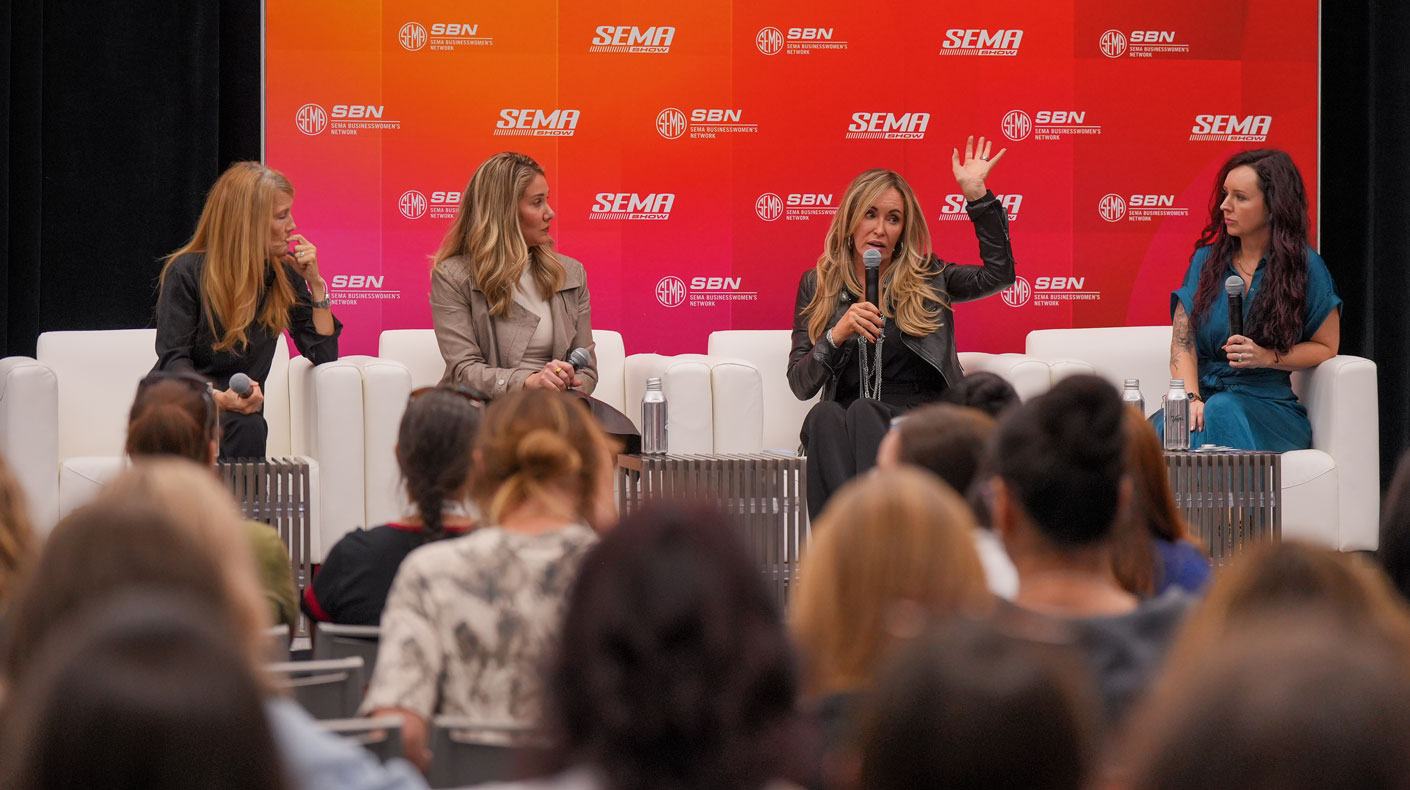
The SEMA Women's Leadership Symposium, "Own the Room: Executive Presence, Leadership Transitions and Strategic Influence for Women Leaders," presented by the SEMA Businesswomen's Network (SBN), addressed the importance of communicating with confidence, developing leadership skills and building relationships with mentors and sponsors.
For Santine Ngwe of the U.S. Air Force in Tempe, Arizona, one message stood out: Stop apologizing before speaking.
"I'm really big on apologizing before I make a statement," Ngwe said. "Attending this has taught me I should put the apologies aside and say what I have to say with confidence."
Ngwe is transitioning from a career in finance to becoming a mechanic. After completing technical school in Port Hueneme, California, she attended the 2026 SEMA Show to learn more about the automotive industry before beginning her new career.
She said working in a male-dominated field can sometimes make her question whether her ideas are correct. The symposium reinforced the importance of preparing, understanding the technical information and speaking with confidence.
"If I get into the room with confidence and I take the time to understand the technical orders, I can talk with confidence without apologizing," she said.
Her experience also underscored the value of leadership development and mentorship as the industry works to attract and retain new talent.
Real Life Data Can Help Businesses Make Smarter Decisions
The session "Driving Smarter Decisions: Insights Into Today's Vehicle and Consumer Trends," part of the Aftermarket Updates and Future Trends track, explored how vehicle registration activity and consumer data can help aftermarket businesses understand the market and reach customers.
Presenter Kristen Von Busch, the product marketing director for the Experian Automotive, emphasized the importance of looking beyond headlines to understand what consumers are actually buying, how those purchasing patterns are changing and what the trends mean for the aftermarket.
The information can also help businesses make more informed marketing decisions.
"If I know what people are buying, how do I reach them? How do I resonate with them?" Von Busch said, describing how businesses can adjust messaging and marketing channels based on consumer purchase activity.
Attendees Jason McDonald and Kendra Hill of Keystone Automotive in Exeter, Pennsylvania, said the session demonstrated the importance of translating raw data into information businesses and their customers can act on.
McDonald highlighted the value of presenting data through visuals and infographics rather than simply providing spreadsheets or reports.
"The data translation to normal, as opposed to a spreadsheet, or raw data that's out there... [We need to be] pulling it down and putting it into sort of actionable thoughts," he said. "And then more importantly, the marketing side of it, turning it [into an interesting way] of presenting data, that's kind of critical."
Hill said the next step is helping dealers understand what to do with the information they already receive. She pointed to the value of combining vehicle and registration trends with psychographic insights to help businesses better understand and reach their customers.
McDonald also cautioned against overwhelming businesses with information that never gets put to use. The goal, he said, is to understand the data well enough to apply it to sales and marketing strategies––including identifying opportunities in a dealer's local market.
The takeaway: Data is most useful when businesses can translate it into specific actions, from refining marketing messages to directing sales teams toward new opportunities.
Developing the Aftermarket Workforce Requires Early Industry Investment
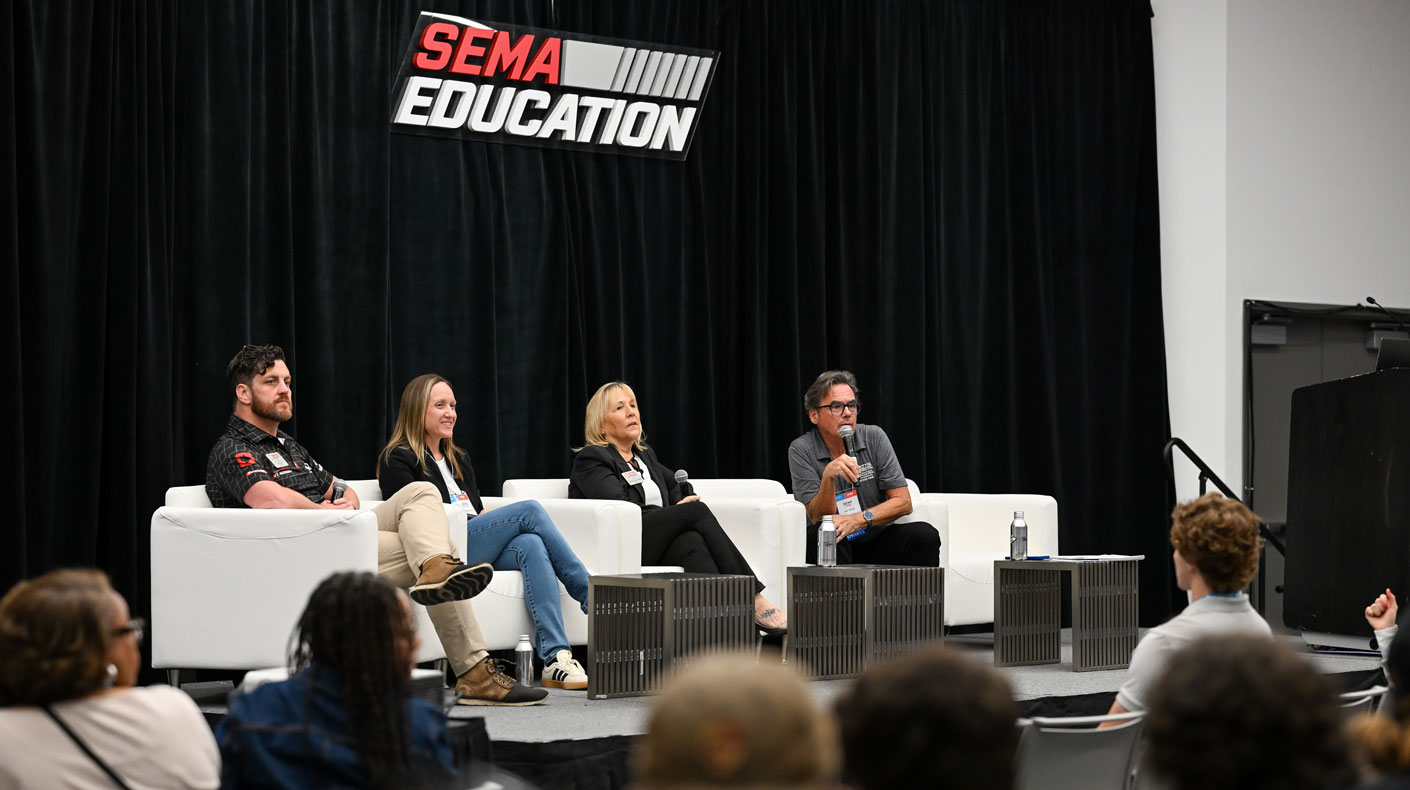
The session "SAE International, SEMA and the Future of Automotive Careers" focused on the industry's talent pipeline and the opportunities available to students pursuing careers in engineering and related fields.
Dean Case, engineering ambassador for Motivo and longtime SAE International volunteer, discussed the importance of connecting SAE students with the broad range of career opportunities available across the SEMA community.
"We wanted the greater SEMA community to know about the amazing talent pipeline that resides within SAE. Equally, we want the SAE students to know about the diverse career opportunities within the SEMA world," Case said.
Case noted that outreach to schools and students has generated strong interest, but companies need to make those connections early. With SEMA member businesses located throughout the country, there are opportunities for companies to engage with students in their own communities.
"Influencing them early is good for business," Case said. "Companies that get involved with education will find some benefits. And some of them show up decades later."
Senior Director of Product Line at SAE International Allison Hostetler also emphasized the importance of industry investment and expertise in helping shape educational programs that prepare students for future careers.
With experienced workers approaching retirement and the industry facing a continuing talent gap, developing relationships with schools and supporting career education can help businesses build a stronger workforce over time.
FutureTech Studio and ADAS Showcase Put Emerging Technology Into Focus
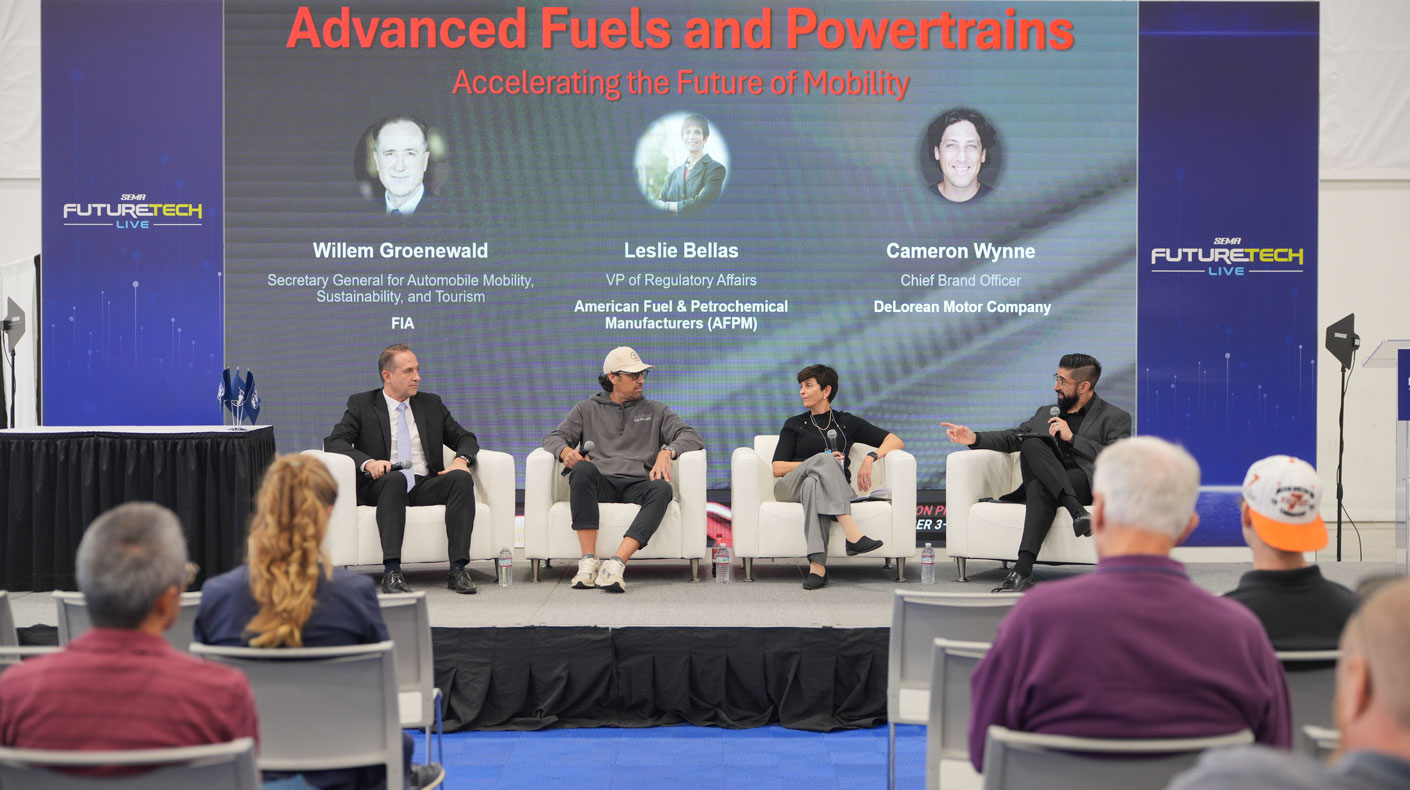
The SEMA FutureTech Studio gave attendees an opportunity to explore emerging vehicle technologies, alternative fuels, artificial intelligence and advanced manufacturing through a full schedule of education sessions and more than 20 cutting-edge vehicles. The displays and presentations highlighted how new technologies are influencing vehicle development, customization and the aftermarket. In addition, the FutureTech Studio featured a stage with a continuous schedule of panelist sessions. The Thursday session "Advanced Fuels and Propulsion: Accelerating the Future of Mobility" brought together representatives from SEMA, the Fédération Internationale de l'Automobile (FIA), DeLorean Motor Company and the American Fuel & Petrochemical Manufacturers (AFPM) to discuss the technologies shaping the future of mobility.
A central point of the discussion was that the transition will involve multiple powertrain technologies rather than a single solution.
Willem Groenewald of FIA noted the scale of the challenge, pointing to a global fleet of approximately 1.4 billion vehicles compared with roughly 70 million new-vehicle sales annually.
"If 100% of a single powertrain solution is adopted today and 100% of vehicles sold are EVs, it will take 20 years to drive that transition," Groenewald said.
AFPM's Leslie Bellas noted that the United States has approximately 290 million vehicles on the road, with a median vehicle age of about 12 years. That existing internal-combustion and hybrid fleet will remain part of the market for decades.
Cameron Wynne of DeLorean Motor Company emphasized the importance of keeping existing vehicles on the road.
"It's all about keeping cars on the road for the original car as much as possible," Wynne said.
For aftermarket businesses, the discussion reinforced the continuing need to support the existing vehicle population while preparing for changes in fuels, propulsion systems and related technologies.
The SEMA ADAS Showcase, developed with the Society of Collision Repair Specialists (SCRS) and its ADAS Council, offered hands-on demonstrations focused on advanced driver assistance systems. Attendees were on-hand to learn about sensor alignment, calibration troubleshooting, vehicle geometry and repair requirements while engaging with vehicle engineers and industry specialists. As the demonstrations reinforced, repairing a vehicle also means understanding and addressing the ADAS technology built into it.
Read more about the SEMA FutureTech Studio and ADAS Showcase.
Industry Partners Added More Education Opportunities
SEMA's education program also included full schedules of sessions from industry partners SCRS, I-CAR and the Tire Industry Association (TIA). Their programs covered topics relevant to collision repair, vehicle technology, tire service and business operations, giving attendees additional opportunities to build technical knowledge and explore issues affecting their businesses.
The SEMA Show Puts Education Into Action
Across the 2026 SEMA Show, education sessions connected industry trends and emerging technologies with the people and businesses working through those changes. Whether the focus was developing new talent, communicating with confidence, understanding consumer behavior or preparing for evolving vehicle technology, the sessions offered attendees information to consider as they plan for the future.
The 2026 SEMA Show may be over, but the connections, ideas and industry momentum continue. The aftermarket will reunite in Las Vegas for the next SEMA Show, November 2–5, 2027. Companies interested in exhibiting can learn more at semashow.com/reserve-booth-2027 and through the 2027 Official Exhibitor Services Portal. For additional Show information, visit semashow.com.