By SEMA News Editors
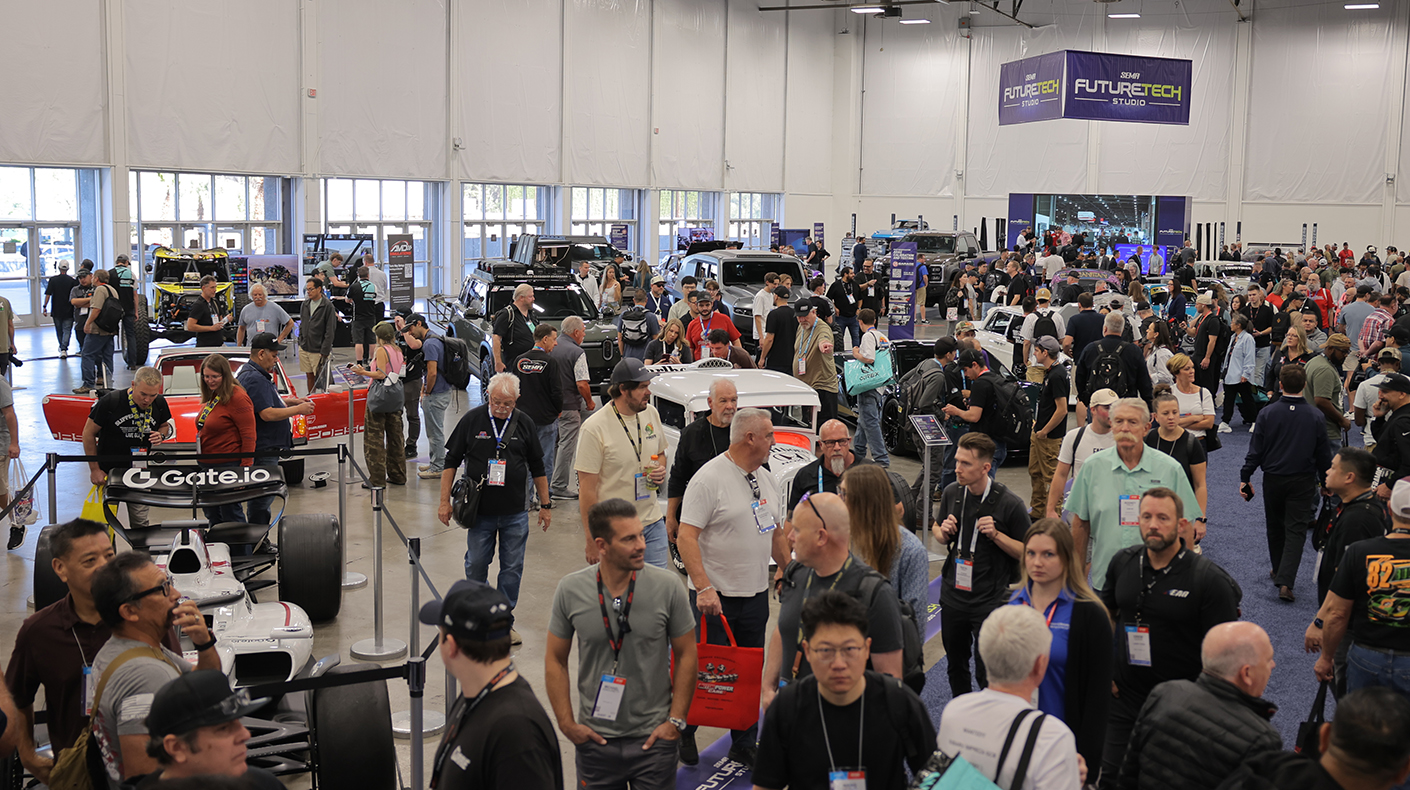
Every inch of the 2026 SEMA Show floor has an eye toward the future of the automotive aftermarket, with thousands of ground-breaking new parts and technologies spread across 1.1 million sq. ft. of exhibit space. To supplement the innovative new parts and products filling the Las Vegas Convention Center this week, several SEMA Show features are designed to keep aftermarket pros up to date on crucial skills, resources and emerging trends in today's changing world of vehicle technology.
One SEMA Show staple, the SEMA FutureTech Studio, is dedicated to the next era of mobility, offering a glimpse of the automotive aftermarket technology of tomorrow, with detailed looks at alternative fuels, artificial intelligence (AI), next-generation vehicles and a lot more. Elsewhere on the Show floor, the SEMA ADAS Showcase provided installers and collision repair specialists with close-up demos of advanced driver assistance systems (ADAS) technology, processes and best practices, access to OEMs,
Leveling the Playing Field at the 2026 SEMA FutureTech Studio
From a full slate of education sessions to more than 20 cutting-edge vehicles, FutureTech Studio is where attendees can prepare for the technological advances impacting the industry today and in the future. But it also demonstrated how builders are using tomorrow's technology today.
The variety of vehicles on display illustrated how advanced engineering, modern components and emerging technologies are expanding what's possible for aftermarket builders.
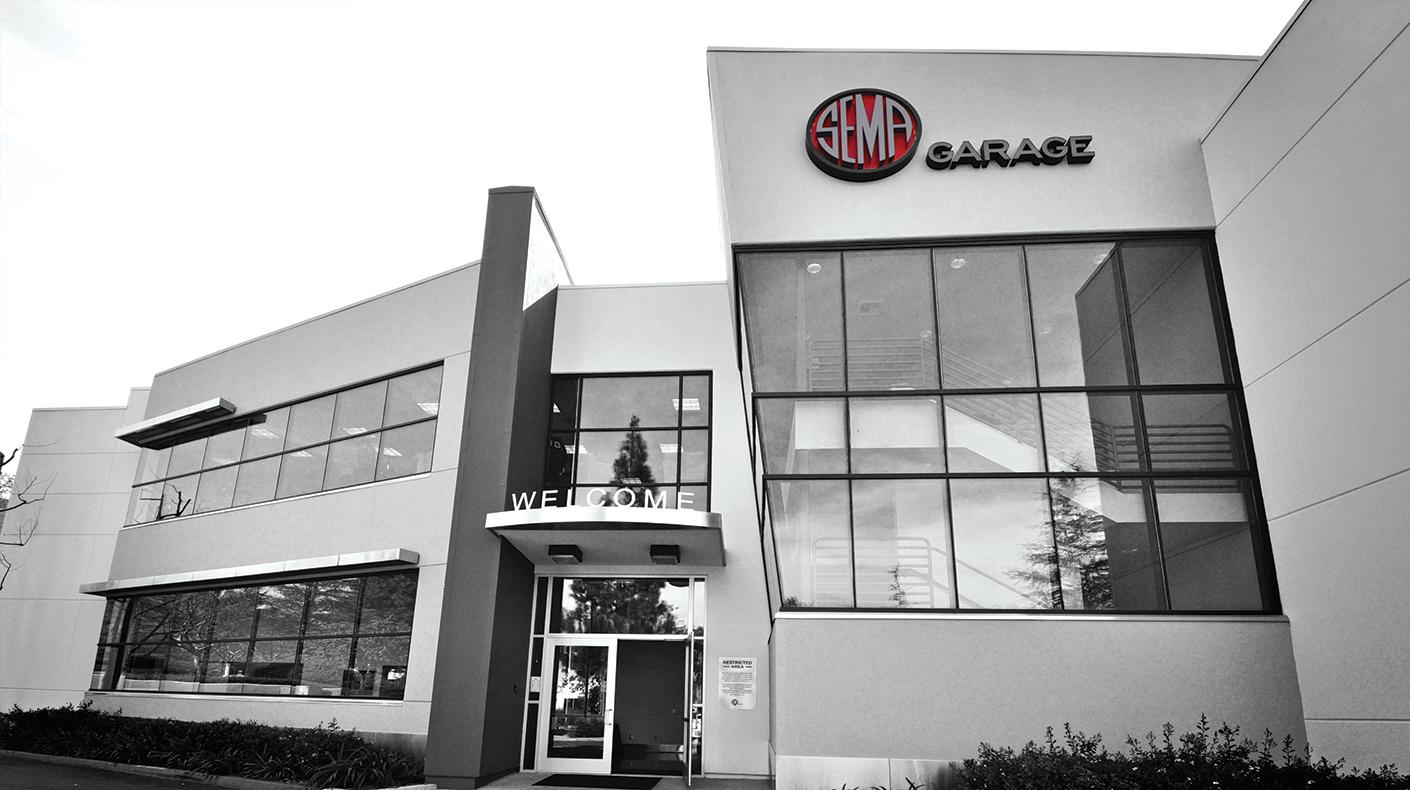
Summit Racing's Prodi-G Chevrolet Monte Carlo, an '87 Monte Carlo SS, offered a particularly compelling example of how aftermarket performance and emissions improvements can go hand in hand. Developed with assistance from SEMA Garage, the Pro-Touring build was designed to challenge the perception that hot rodding and cleaner vehicle operation are mutually exclusive.
The project set out to demonstrate that modern aftermarket components can deliver more power and performance while reducing emissions. The finished Monte Carlo produces twice the horsepower and half the emissions of its stock configuration. The build involved several industry partners, including Greg Banish, Jstar Fab, Screaming Turtle Specialty Coatings, Rittman Automotive, Kenny Carraway and Trans Colonial Auto Service.
Off-road engineering also had a place in the FutureTech Studio, including an American Expedition Vehicles (AEV) Ford F-350 FXL equipped to handle demanding terrain without sacrificing on-road drivability.
The truck featured 40-in. BFGoodrich HD-Terrain KT tires mounted on AEV Katmai DualSport 18-in. wheels, along with a four-inch DualSport suspension lift. The suspension package combines dual-rate front coil springs, rear lift blocks, axle relocation and revised geometry to provide additional clearance. AEV-tuned Bilstein 8100 front and 5100 rear dampers help control the ride on pavement and off-road.
Additional upgrades included AEV front and rear bumpers, a 20,000-lb. winch mount, recovery points and a brush guard. A CAD-verified wheel-travel analysis helped eliminate potential tire-rub points throughout the suspension's range of motion.
The FutureTech Studio also looked beyond vehicle hardware to examine how evolving technologies and industry practices are changing motorsports and the broader automotive landscape.
Formula 1's transition to advanced sustainable fuels for the 2026 season offered an example of how innovation in motorsports can influence the future of vehicle technology. As part of a broader sustainability initiative, F1 introduced a fully sustainable, fossil-free drop-in fuel designed for its new-generation power units.
The fuel is produced using non-food biomass, municipal waste and captured carbon, rather than newly extracted fossil resources. The initiative is one component of F1's commitment to achieving net-zero carbon emissions by 2030, which also includes measures such as using solar power and recycled vegetable oil to support event operations and reducing single-use plastics.
The shift demonstrates the potential for motorsports to serve as a proving ground for new technologies and alternative fuels, while bringing greater attention to developments that could have implications well beyond the racetrack.
Technology is also changing how shops manage their everyday operations. BILDTRAK, a visual hardware mapping system, has a display showcasing a new approach to organizing shop hardware and improving parts management.
Rather than relying on cardboard containers, coffee cans and handwritten labels to track hardware, the product serves as a visual map to help shops identify where components belong.
But the future of the automotive aftermarket was perhaps best illustrated by an award-winning vehicle previously recognized for its ingenuity and innovation at last year's SEMA Show.
Kyle Kuhnhausen, from Kuhnhausen Metal Concepts and builder of the 2025 SEMA Show Best Engineered Vehicle, partnered with SEMA Garage and the FutureTech Studio to highlight how he applied cutting-edge tech to his award-winning build, and the role SEMA Garage played in making it happen.
On display in the FutureTech Studio, Kuhnhausen's '66 Chevrolet Corvette is an engineering marvel and is equipped with custom-designed components designed on his laptop in Oregon and 3D-printed at SEMA Garage Los Angeles using advanced new tech available to SEMA members.
"My collaboration with SEMA Garage shows how members can use its tools in their workflow, from an idea to a prototype and even finished, end-use parts. I recreated one-off components for this car that could become products—the process is the same whether you're making one or a thousand," he said. "A custom grille for a high-level hot rod competing in Battle of the Builders would typically be CNC-machined, which is expensive and heavy."
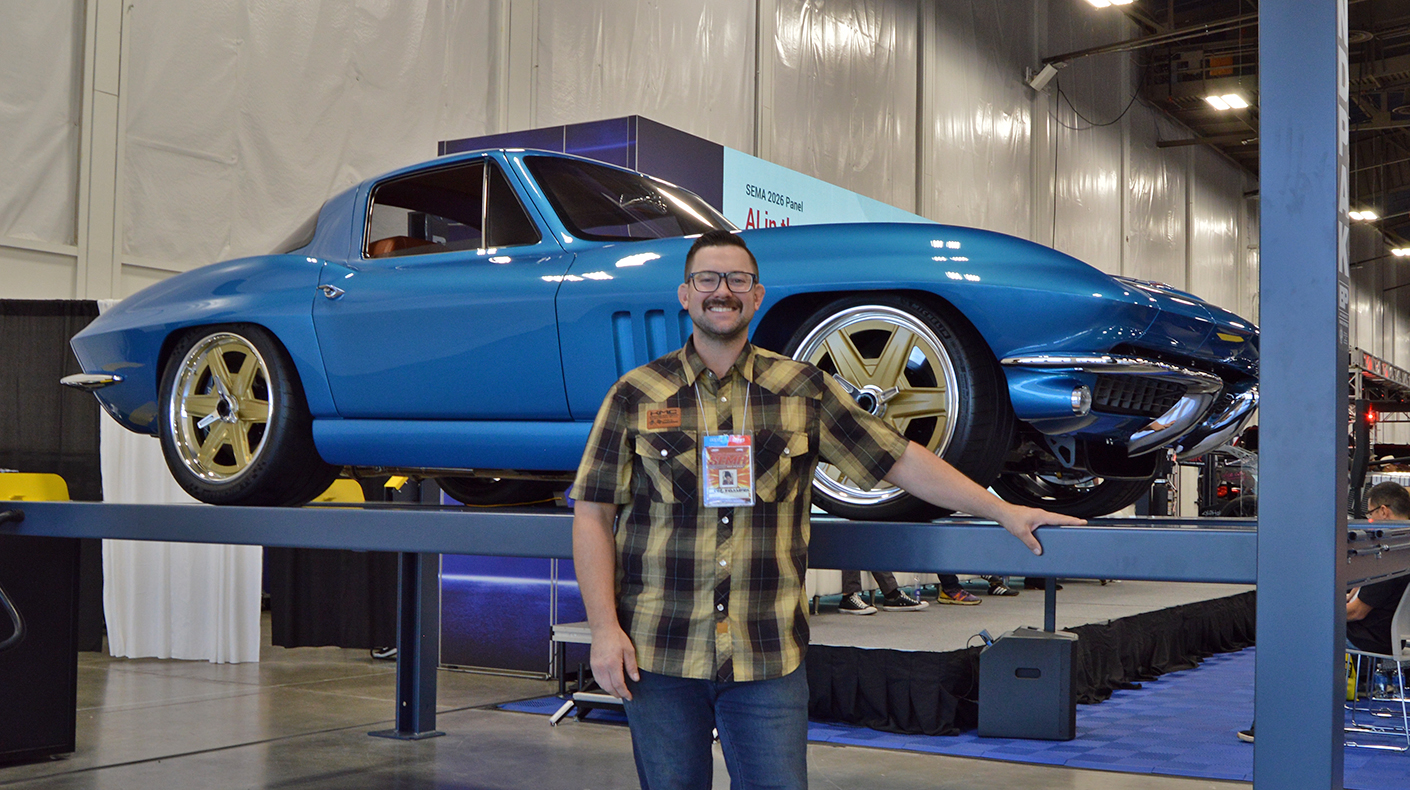
Instead, Kuhnhausen used SEMA Garage's BigRep printer to create a more economical, lighter, modular grille made of four printed parts that can be replaced in sections if damaged. Once the design was finalized, Kuhnhausen sent in his design, then received the 3D-printed parts in the mail, opening up new doors for his build, and his business.
"A printer like that costs over $60,000 and takes up space I don't have in my small shop," he added. "SEMA Garage helps me create one-off components that could become products, with expertise and tools such as 3D scanning to support the process. We want more SEMA members to use these resources."
The availability of those resources enables any smaller company or builder, like Kuhnhausen and his company, to create innovative new parts and compete with just about anyone.
"My garage is 1,200 sq. Ft., with no CNC machine or laser cutter and no room or ability to add them. Yet I can design parts, receive them the same week and get the quality and type of parts available to multibillion-dollar companies. It's leveling the playing field."
ADAS in Action at the SEMA ADAS Showcase
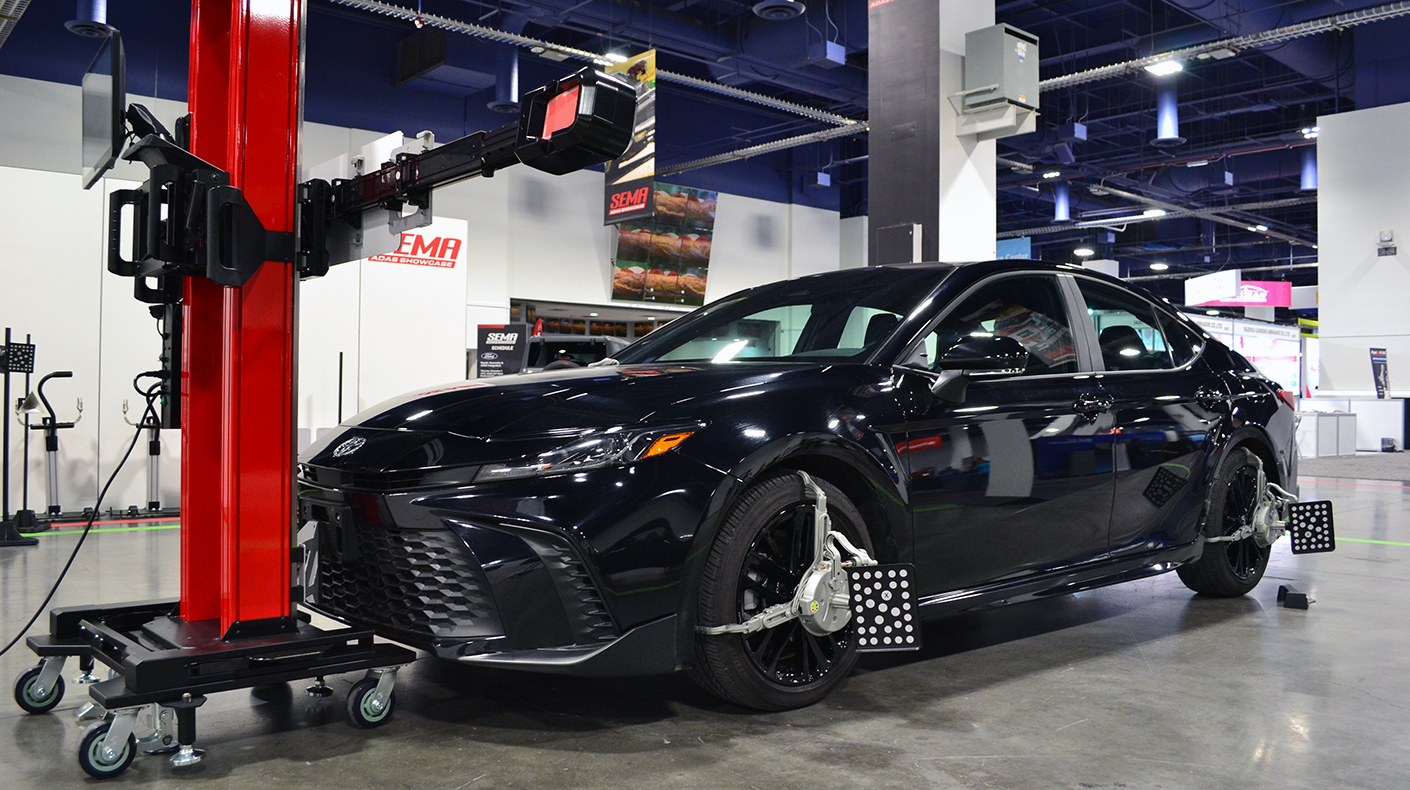
The expanded SEMA ADAS Showcase, developed with the Society of Collision Repair Specialists (SCRS) and its ADAS Council, is giving attendees an in-person look at how vehicle changes, repairs and calibration requirements affect ADAS. Continuing today in Upper South Hall, booth #31200, the Showcase has featured vehicle engineers from several OEMs, along with collision-repair and calibration specialists demonstrating real-world scenarios using late-model vehicles and calibration equipment.
Open to all registered SEMA Show buyers and exhibitors, the Showcase offers attendees opportunities to explore topics such as sensor alignment, calibration troubleshooting, repair requirements and more, and see in-person and hands-on demonstrations designed to educate the industry on one of the most impactful developments facing the automotive aftermarket today, according to James Rodis, a long-time ADAS professional who works with OEM Calibration, ADAS Assist and member of the SCRS ADAS Council.
"If a car is repaired and you don't fix the ADAS, that's really bad," Rodis said. "We're really trying to educate that it needs to be a controlled environment, it has to get done. It's not an option anymore. We're trying to give some of our knowledge back to anybody that comes by."
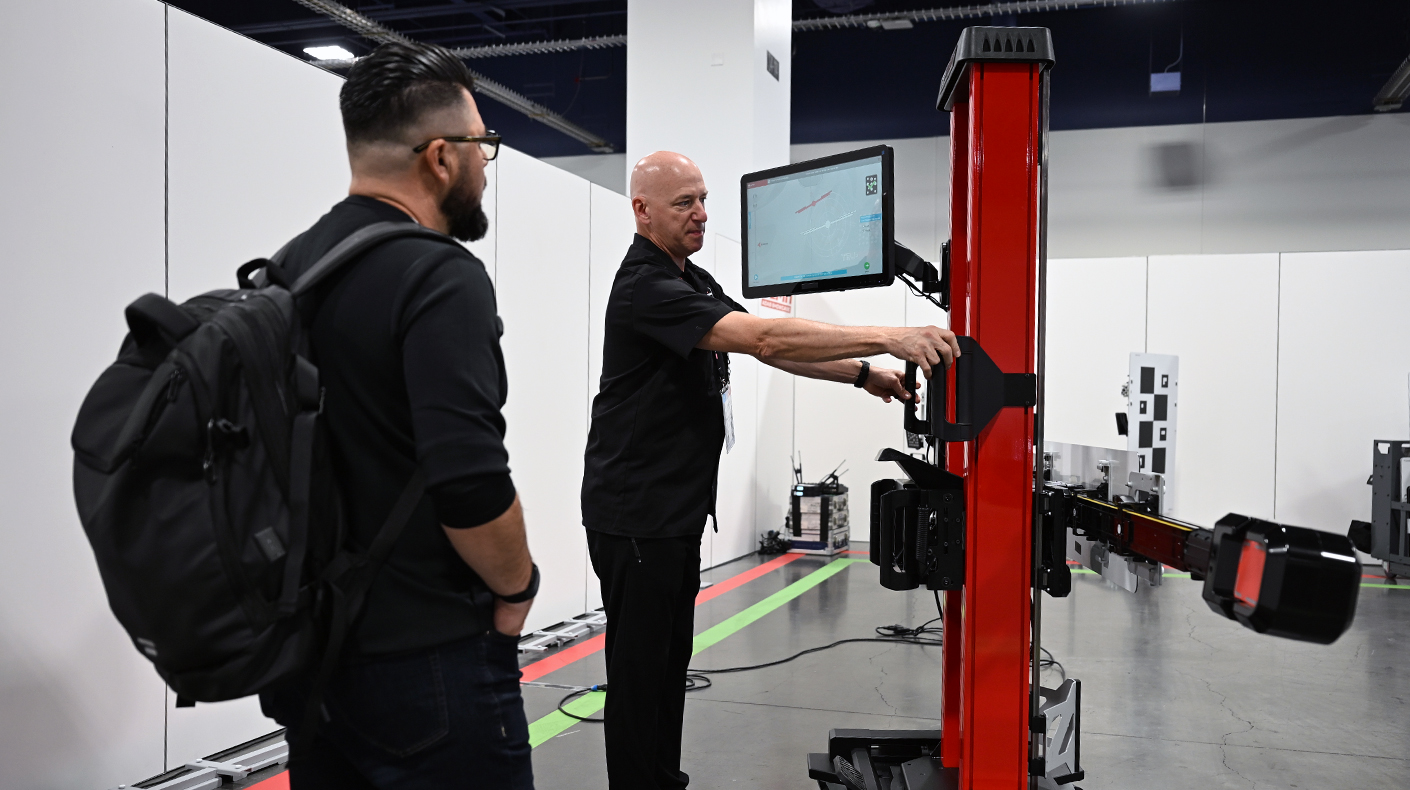
With hands-on demos, Q&A sessions and other programming continuing through the rest of the SEMA Show, the ADAS Showcase is another one of the many opportunities for SEMA Show attendees to learn vital skills to carry their aftermarket business into the future.
"We have leading ADAS calibration machines, we have people from Hunter, Autel and Snap-On, the experts here that know how to run those machines. It's all education," said Rodis. "People that want to learn more about ADAS, maybe thinking of getting into it, we're hoping they swing by and we can answer all the questions, dispel some of the myths and educate, educate, educate."
Programming at the FutureTech Studio and ADAS Showcase continues today at the SEMA Show. Attendee and buyer registration is open online. For more information, visit semashow.com, the Registration Resource Center, or the 2026 SEMA Show floorplan.