

The Georgia House of Representatives introduced SEMA-supported legislation that would allow the use, sale, alteration or installation of car mufflers that meet a 95-decibel noise limit. Under the current law, no person can sell, alter or install a muffler that “causes excessive or unusual noise.” The bill currently awaits consideration in the House Motor Vehicles Committee.
California appears to be doing everything in its power to burnish its reputation as the least business-friendly state in the union. Exhibit A is California’s Proposition 65 (Prop. 65), a California law that gives consumers and attorneys the ability to sue businesses that do not include warning labels on products containing certain chemicals. Prop. 65 has been a boondoggle for plaintiffs’ lawyers, a burden on businesses nationwide that manufacture, distribute or sell products that go to California, and is of little use to California consumers—its intended beneficiary. Now, California is proposing regulations that would make Prop. 65 even more onerous on SEMA-member companies. Enough is enough!
Replica Cars: NHTSA completed a regulation allowing low-volume
motor vehicle manufacturers to begin selling replica cars that
resemble vehicles produced at least 25 years ago—from ’30s
roadsters to ’60s musclecars and more. SEMA worked with Congress
to enact the 2015 law, which permits each company to produce up to
325 replicas a year for the U.S. market. The law removed regulatory
barriers that previously prevented construction. While enthusiasts will
now have a chance to purchase a turnkey replica car, they will still
have the option to build a car from a kit. The program does not take
effect until the NHTSA rule has been officially published in the
Federal Register, which was delayed due to the presidential transition
but is expected to occur within weeks as of this writing.
Commemorating Route 66: The U.S. Senate and House of Representatives approved a SEMA-supported bill to create a commission to recommend ways to commemorate Route 66’s 100th
anniversary. The first all-paved U.S. highway was completed in 1926. The 15-person commission will include representatives from the states through which the highway ran: Illinois, Missouri, Kansas, Oklahoma, Texas, New Mexico, Arizona and California. The commission may recommend the production of various written materials, films and documentaries, education programs, artistic works, commemorative memorabilia and celebrations to commemorate Route 66’s storied history. The bill was signed into law on December 23, 2020.
China Tariffs: Tariffs were imposed on most imported goods from China starting in July 2018. The tariffs were divided into four separate lists, with auto parts generally placed on List 3. The tariffs were first intended as leverage during U.S.–China trade talks. While the two nations reached a Phase One agreement in January 2020 on increasing intellectual property protection, eliminating forced technology transfer and other issues, the tariffs remain to ensure compliance.
The U.S. Treasury issued a new loan forgiveness application form for Payroll Protection Program (PPP) loans of $50,000 or less, intending to simplify the loan review process for smaller loan amounts. While the new form was reduced from five to two pages, it still requires the borrower to submit significant documentation (bank statements, tax forms, payment receipts, employee benefit statements, etc.). While welcoming the revised form, SEMA has joined a coalition of companies and organizations seeking a more streamlined process so that small-business owners can invest in jobs and supporting their local economies rather than spending time and resources on paperwork. The PPP has provided 5.2 million loans worth $525 billion to American small businesses, according to the U.S. Treasury.
Although Detroit is known for being the capital of the U.S. automotive industry and the home of the Big Three automakers, the region’s economy is also driven by everything automotive, from tier-one suppliers to specialty aftermarket businesses. That nuance is not lost on U.S. Representative Haley Stevens (D-MI), who understands as well as any member of Congress the interconnected nature of the automakers and the aftermarket.
Law & Order
admin
Tue, 12/01/2020 - 14:34
 The laws and regulations that govern how SEMA members do business have a continuous impact on the way automotive specialty-equipment products are made, distributed and marketed. The charge of the SEMA government affairs office is to stay on top of all relevant state and federal legislation and regulations and advocate for industry positions to ensure the best possible outcome for SEMA’s membership. The following are a few examples of critical legislative/regulatory issues addressed by the SEMA government affairs team over the past year.
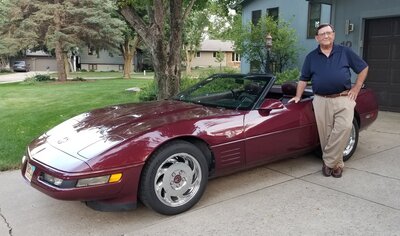 South Dakota—Collector Car Appreciation Day: The South Dakota State Legislature issued a resolution commemorating Thursday, August 27, as Collector Car Appreciation Day in the state. The resolution was introduced by State Automotive Enthusiast Leadership Caucus member Representative Larry Zikmund, pictured here.
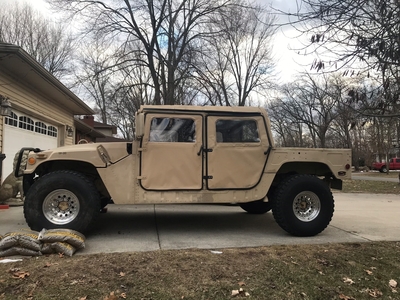 Michigan—Military Vehicles: The Michigan House of Representatives passed SEMA-supported legislation to allow for the titling and registration of historic military-surplus vehicles. Such vehicles are not currently able to be titled or registered for use on highways in the state. The bill awaits consideration by the Senate Committee on Transportation and Infrastructure.