

Lately, the aftermarket has been asking a lot of questions surrounding youth engagement. Is the upcoming generation still interested in the automotive lifestyle? Is the industry doing enough to attract young people and set them on career paths? And, perhaps most importantly, what new ideas do they bring to the table? In what directions might they take the industry?
 The good news for 2019 SEMA Show exhibitors is that the trade-only event is on track to draw more than 60,000 buyers, a large percentage of whom are already deciding which companies they will see. With the Show’s opening just weeks away on Tuesday, November 5, this is the critical point for first-time and veteran exhibitors alike to make sure that their booths and Show strategies are ready to go.
 If you’re a buyer destined for the 2019 SEMA Show, now is the time to strategize a successful Show itinerary. First-time exhibitors are of particular interest because they bring never-before-seen products and services to the Show. As of June, more than 250 first-time exhibitors were already on the floorplan, and that data is offered here so you can get busy preparing a list of leads well before your Las Vegas arrival. Seasoned buyers will tell you that this is one of the best ways to hit the ground running and take full advantage of an active Show week.
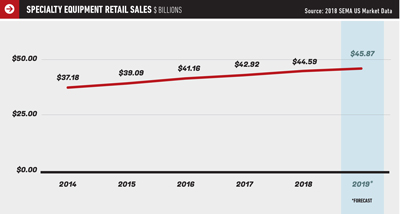 The automotive specialty-equipment market kept humming along to the tune of $44.6 billion in total parts sales in 2018—a 4% increase over 2017, according to the just-released “2019 SEMA Market Report.” Rumors continue to circulate that young people have disengaged from the automotive aftermarket hobby, but that couldn’t be further from the truth. Young customizers spent more than $7 billion on parts.
 Companies without any physical presence in a state can now be required to collect sales tax based on their sales volume. In June 2018, the U.S. Supreme Court ruled in favor of a South Dakota state law requiring remote sellers to collect sales tax. (The term “remote” applies to internet, catalog and telephone sales, along with other types of transactions.) The court overturned the 1992 Quill decision, which required a physical presence to create “substantial nexus,” thereby allowing state sales tax collections.
 The SEMA Board of Directors is composed of industry representatives who volunteer their time to lead and guide the association. They are elected by all SEMA-member companies and represent the trade association’s key membership categories: manufacturers, distributors/retailers, manufacturers’ representatives, and services. There were five open seats on the Board for the 2018 election cycle, including the chairman-elect position. Online voting opened May 14 and concluded May 28 with the following results.
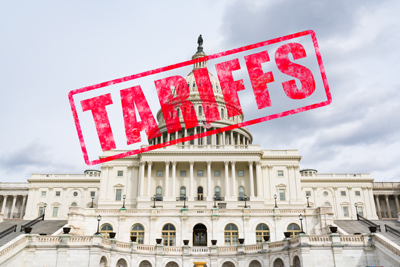 The global trading system has the potential to foster economic growth and support peaceful relations between nations. If it breaks down, it can lead to confrontation as countries seek to shield their domestic industries. Tariffs can be a powerful tool for leveling the playing field or, conversely, lead to trade wars and protectionism. The Trump Administration is using tariffs to strengthen its hand in trade negotiations with its trading partners. Is the strategy working?
 IT security pros are gearing up in earnest for the newest threat to corporate security: viruses, malware and similar cybersecurity attacks turbocharged with artificial intelligence (AI). The reason: Just as AI is remaking every other part of the digital world with applications that can think for themselves and grow smarter over time, the wonder technology is also being hijacked by hackers to imbue already dangerous cyber threats with machine intelligence and creativity.