Thu, 02/26/2026 - 08:08

By SEMA News Editors
Air Lift Company

ProSeries Air Spring Kit for '24-'25 Ford Ranger 4WD
AirLift New Products


Air Lift Company has released its new ProSeries Air Spring Kit for the '24-'25 Ford Ranger 4WD (all trims except Raptor) to deliver up to 5,000 lbs. or load-leveling support. The ProSeries system features double-bellow air springs with upper and lower roll plates, as well as ultra-high-strength nylon end caps. The kit works in conjunction with the Ranger's factory suspension to reduce rear-end sag, improve steering response, correct headlight aim, and minimize body roll and bottoming out when the vehicle is fully loaded, according to the company.

airliftcompany.com


Synergy Manufacturing

Jeep JL/JLU/JT Titan Series Tie Rod
Synergy Manufacturing Titan Tie Rod


Synergy Manufacturing recently announced the release of its new Jeep JL/JLU/JT Titan Series Tie Rod. Engineered for off-road and daily-driver applications, the steering upgrade features 1.75-in. heat-treated chromoly construction and metal-on-metal tie-rod ends. Bolts to factory locations and is fully adjustable while installed in the vehicle.

synergymfg.com


Westin Automotive

Power Retractable Tonneau Cover
Westin Tonneau


Westin has announced its new Power Retractable Tonneau Cover Is now available, offering all-weather protection and a low-profile OE look, according to the company. Built from heavy-duty aluminum, the tonneau cover supports up to 500 lbs. of evenly distributed weight and opens and closes remotely with a key fob. A compact roll-up canister conserves bed space while integrated T-slot channels allow for accessory mounting and a built-in LED bed light provides extra visibility.

westinautomotive.com

Thu, 02/26/2026 - 06:50

By SEMA News Editors

Person using a laptop with the SEMA Show exhibitor portal webpage pulled up. Courtesy of Shutterstock


New this year, exhibitors must activate or create an account in our new CRM before submitting their 2026 SEMA Show Exhibit Space Rental Application (ESRA).


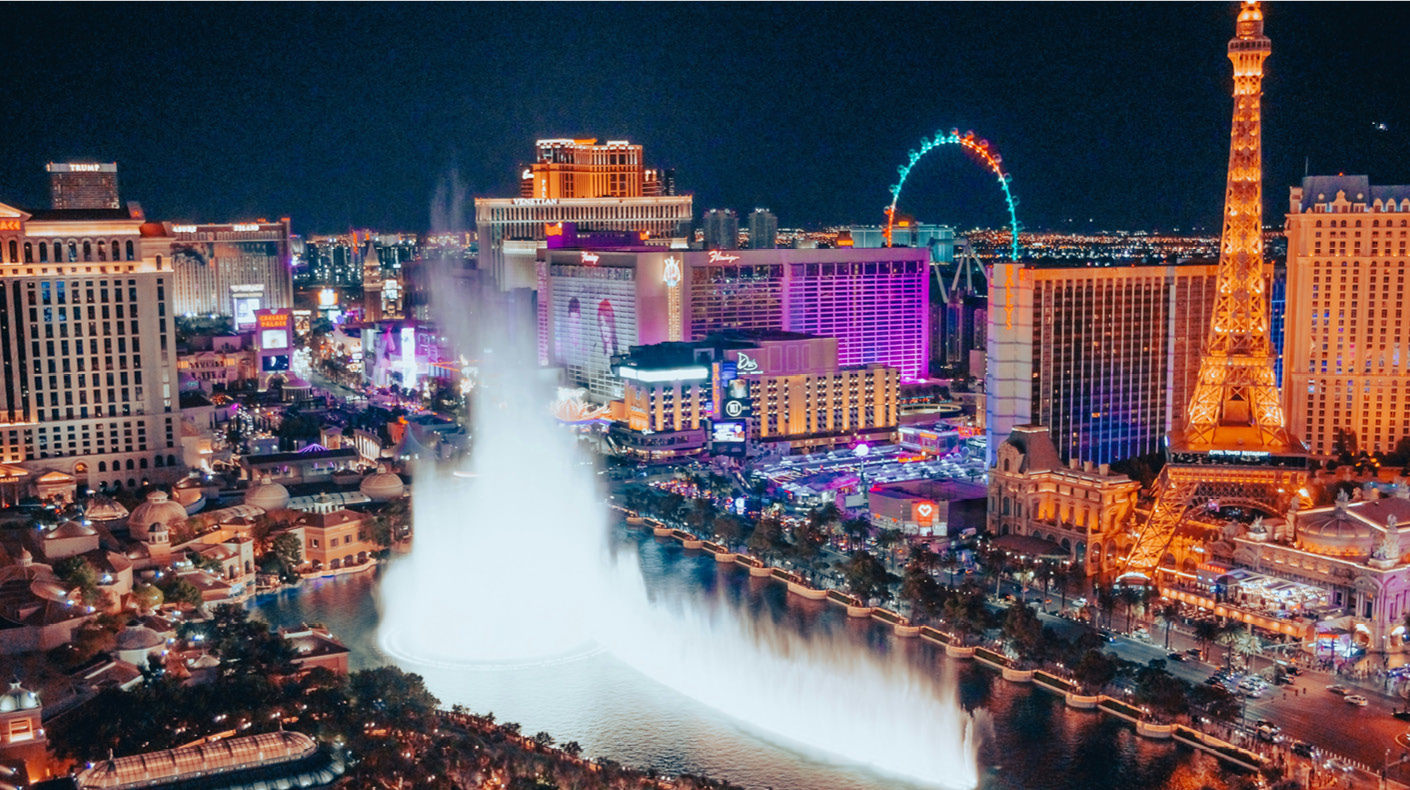
SEMA has launched a new customer management system ahead of this year's SEMA Show, November 3-6, 2026, in Las Vegas.

To improve how SEMA engages with exhibitors and serves the industry year-round, the association has migrated to a new customer management system powered by Salesforce.

  
What This Means for 2026 SEMA Show Exhibitors

New this year, exhibitors must activate or create an account in our new customer relationship management (CRM) system before submitting their 2026 SEMA Show Exhibit Space Rental Application (ESRA). Once an account is set up, industry members will be able to:

  • Reserve exhibit space.
  • Download invoices, complete online payments and access exhibitor resources.
How to Get Started

Getting set up in the new SEMA Show exhibitor platform is simple:

  • Visit services.semashow.com.
  • Returning exhibitors:
    • Enter the email you've used to purchase a SEMA Show booth before to receive a password reset link (click here).
  • New exhibitors or returning exhibitors using a new email: 

Once logged in, exhibitors are ready to reserve an exhibit space.

Having Issues Reserving Your Exhibit Space? 

If you're not receiving a password reset email or can't set up a new account, it's possible your record has more than one email address on file. In that case, our team will need to assist you with setting up your account.

SEMA is providing hands-on support to ensure a smooth transition for every exhibitor. 

Call: 240-ASK-SEMA (240-275-7362)

Email: customercare@sema.org

SEMA's stellar customer care team will walk you through account setup, password resets or answer any question

Note: updating your account does not affect exhibitors' account history or SEMA Show seniority.

We're excited to share what we've been working on--and we look forward to helping you make the most of it.


In related news, SEMA has opened registration for the 2026 Exhibitor Summit, a must-attend and complimentary event for all exhibitors, including first-timers and long-timers. Learn more about that here.

The 2026 SEMA Show is set for November 3-6, in Las Vegas. Interested exhibitors can buy a booth and learn more at semashow.com/exhibitor. Attendee and buyer registration opens in Spring 2026; to sign up for notifications, visit here. For more information, visit semashow.com


Image courtesy of Shutterstock | DC Studio

Thu, 02/26/2026 - 06:44

By SEMA News Editors


BMR Suspension Acquires Heidts Suspension
BMR Heidts


BMR Suspension, based in Lakeland, Florida, has acquired hot-rod and musclecar parts manufacturer Heidts Suspension of Lake Zurich, Illinois.

The acquisition allows BMR Suspension to further its mission of providing innovative, quality-oriented American-made suspension and chassis products at an affordable price, the company said.

"BMR Suspension and Heidts Suspension are like two sides of the same coin," says Allan Miller, president of BMR Suspension. "BMR dominates the American late-model market and Heidts dominates the American musclecars and street rods, so this synergy is perfect for our two companies and customers moving forward."

"This acquisition combines decades of engineering expertise, US manufacturing capabilities and a deep focus on quality," states Wallace Leyshon, president and CEO of Heidts Suspension. "Moving forward, this partnership ensures that we will expand our commitment to American craftsmanship while developing innovative suspension solutions for the vehicles our customers love."

The sale of Heidts to Miller Performance Products was facilitated by Hart Marx Advisors. The financial terms of the purchase were not disclosed.

Both BMR and Heidts will continue to operate independently of each other, continuing to serve the needs of their respective customers. BMR Suspension will continue to expand upon its established lineup for Ford, GM and Mopar offerings, while BMR and Heidts will collaborate closely to create new product lines.

For more information, visit heidts.com or bmrsuspension.com.

Image courtesy of Shutterstock | Wirestock Creators


Design Engineer Josh Cooper Joins Skyjacker Suspension
Josh Cooper Skyjacker Suspension


Skyjacker Suspension has hired Josh Cooper to join its design engineering team.

Cooper brings more than 23 years of diverse experience in the off-road and automotive aftermarket industry to Skyjacker with a background that includes sales management, custom shop ownership, collaboration with Ultra4 racing teams and several years dedicated specifically to engineering.

Cooper was most recently involved with an Ultra4 team has kept him at the forefront of cutting-edge off-road performance, durability, 3D modeling/scanning and race-proven designs, the company said, and brings a practical, trail-tested approach to product development that aligns with Skyjacker's commitment to performance and reliability.

"Having someone with this level of experience, passion and character on our team is truly exciting," said Lonnie McCurry Jr., president of Skyjacker Suspension. "He understands our customers because he is one of them. His technical knowledge, industry insight and approachable personality make him a tremendous addition to our engineering department."

For more information, visit skyjacker.com.

Tue, 02/24/2026 - 13:19

From the SEMA Washington, D.C., office

Leno's Law Returns in California SB 1392


A new version of "Leno's Law" has been introduced in California as Senate Bill (SB) 1392, authored by Sen. Dave Cortese with Sen. Shannon Grove returning as the main coauthor. This bipartisan effort is backed by legendary car enthusiast Jay Leno and supported by SEMA. 

SB 1392 provides a clear, limited pathway for qualifying collector vehicles to receive relief from the state's biennial smog check requirement. The bill is narrowly designed: it applies only to collector vehicles, requires collector-vehicle insurance with proof at registration, and phases in eligibility in a controlled way--starting with certain older model years and expanding gradually over time. 

This exemption is crucial as it addresses the challenges classic car owners face, including the difficulty and expense of finding smog stations equipped to test older vehicles. For many enthusiasts, keeping older vehicles compliant has become more difficult and more expensive as fewer shops maintain the specialized equipment needed to test older vehicles. Currently, only 7% of California smog checks are performed on pre-OBD-II vehicles, and many STAR-certified stations test fewer than one of these vehicles per day. Classic cars are typically driven only on special occasions, weekends or to car shows, minimizing their environmental impact compared to daily-driven vehicles. SB 1392 offers a practical update to reflect how collector vehicles are actually used: typically sparingly, carefully maintained and often for community events. 

SEMA urges California enthusiasts and small businesses to speak up early and help move SB 1392 forward. 

Take action now: Visit semahq.org and sign up for updates.

"Few things in our divided nation unite us in the way our love of cars and trucks do. Our vehicles are a bridge between generations, a driver of economic empowerment and the source of a rich culture and heritage that transcends demographics," said Mike Spagnola, SEMA CEO. "Leno's Law is an important cultivator for our shared car culture, an update to existing law that empowers the next generation to enjoy for decades to come the vehicles that are most meaningful to them, while providing Californians with the assurances that existing laws and policies regarding smog emissions are appropriately updated to best serve all communities. SEMA strongly urges passage of Leno's Law, and thanks Senators Cortese and Grove for their bipartisan work to unite Californians under our love of motor vehicles." 

SEMA, based in Diamond Bar, California, represents nearly 1,100 member businesses in California. This thriving aftermarket industry significantly contributes to California's economy, generating more than $40 billion in economic impact, supporting approximately 150,000 jobs, $14 billion in wages and benefits, and $6 billion in taxes. 

For updates on SB 1392, sign up to be a SEMA Action Member or contact Victor Muñoz, SEMA senior manager for state government affairs,  at victorm@sema.org

Tue, 02/24/2026 - 13:19

From the SEMA Washington, D.C., office

Leno's Law Returns in California SB 1392


A new version of "Leno's Law" has been introduced in California as Senate Bill (SB) 1392, authored by Sen. Dave Cortese with Sen. Shannon Grove returning as the main coauthor. This bipartisan effort is backed by legendary car enthusiast Jay Leno and supported by SEMA. 

SB 1392 provides a clear, limited pathway for qualifying collector vehicles to receive relief from the state's biennial smog check requirement. The bill is narrowly designed: it applies only to collector vehicles, requires collector-vehicle insurance with proof at registration, and phases in eligibility in a controlled way--starting with certain older model years and expanding gradually over time. 

This exemption is crucial as it addresses the challenges classic car owners face, including the difficulty and expense of finding smog stations equipped to test older vehicles. For many enthusiasts, keeping older vehicles compliant has become more difficult and more expensive as fewer shops maintain the specialized equipment needed to test older vehicles. Currently, only 7% of California smog checks are performed on pre-OBD-II vehicles, and many STAR-certified stations test fewer than one of these vehicles per day. Classic cars are typically driven only on special occasions, weekends or to car shows, minimizing their environmental impact compared to daily-driven vehicles. SB 1392 offers a practical update to reflect how collector vehicles are actually used: typically sparingly, carefully maintained and often for community events. 

SEMA urges California enthusiasts and small businesses to speak up early and help move SB 1392 forward. 

Take action now: Visit semahq.org and sign up for updates.

"Few things in our divided nation unite us in the way our love of cars and trucks do. Our vehicles are a bridge between generations, a driver of economic empowerment and the source of a rich culture and heritage that transcends demographics," said Mike Spagnola, SEMA CEO. "Leno's Law is an important cultivator for our shared car culture, an update to existing law that empowers the next generation to enjoy for decades to come the vehicles that are most meaningful to them, while providing Californians with the assurances that existing laws and policies regarding smog emissions are appropriately updated to best serve all communities. SEMA strongly urges passage of Leno's Law, and thanks Senators Cortese and Grove for their bipartisan work to unite Californians under our love of motor vehicles." 

SEMA, based in Diamond Bar, California, represents nearly 1,100 member businesses in California. This thriving aftermarket industry significantly contributes to California's economy, generating more than $40 billion in economic impact, supporting approximately 150,000 jobs, $14 billion in wages and benefits, and $6 billion in taxes. 

For updates on SB 1392, sign up to be a SEMA Action Member or contact Victor Muñoz, SEMA senior manager for state government affairs,  at victorm@sema.org

Tue, 02/24/2026 - 13:19

From the SEMA Washington, D.C., office

Leno's Law Returns in California SB 1392


A new version of "Leno's Law" has been introduced in California as Senate Bill (SB) 1392, authored by Sen. Dave Cortese with Sen. Shannon Grove returning as the main coauthor. This bipartisan effort is backed by legendary car enthusiast Jay Leno and supported by SEMA. 

SB 1392 provides a clear, limited pathway for qualifying collector vehicles to receive relief from the state's biennial smog check requirement. The bill is narrowly designed: it applies only to collector vehicles, requires collector-vehicle insurance with proof at registration, and phases in eligibility in a controlled way--starting with certain older model years and expanding gradually over time. 

This exemption is crucial as it addresses the challenges classic car owners face, including the difficulty and expense of finding smog stations equipped to test older vehicles. For many enthusiasts, keeping older vehicles compliant has become more difficult and more expensive as fewer shops maintain the specialized equipment needed to test older vehicles. Currently, only 7% of California smog checks are performed on pre-OBD-II vehicles, and many STAR-certified stations test fewer than one of these vehicles per day. Classic cars are typically driven only on special occasions, weekends or to car shows, minimizing their environmental impact compared to daily-driven vehicles. SB 1392 offers a practical update to reflect how collector vehicles are actually used: typically sparingly, carefully maintained and often for community events. 

SEMA urges California enthusiasts and small businesses to speak up early and help move SB 1392 forward. 

Take action now: Visit semahq.org and sign up for updates.

"Few things in our divided nation unite us in the way our love of cars and trucks do. Our vehicles are a bridge between generations, a driver of economic empowerment and the source of a rich culture and heritage that transcends demographics," said Mike Spagnola, SEMA CEO. "Leno's Law is an important cultivator for our shared car culture, an update to existing law that empowers the next generation to enjoy for decades to come the vehicles that are most meaningful to them, while providing Californians with the assurances that existing laws and policies regarding smog emissions are appropriately updated to best serve all communities. SEMA strongly urges passage of Leno's Law, and thanks Senators Cortese and Grove for their bipartisan work to unite Californians under our love of motor vehicles." 

SEMA, based in Diamond Bar, California, represents nearly 1,100 member businesses in California. This thriving aftermarket industry significantly contributes to California's economy, generating more than $40 billion in economic impact, supporting approximately 150,000 jobs, $14 billion in wages and benefits, and $6 billion in taxes. 

For updates on SB 1392, sign up to be a SEMA Action Member or contact Victor Muñoz, SEMA senior manager for state government affairs,  at victorm@sema.org

Tue, 02/24/2026 - 12:51

By SEMA News Editors


Formula DRIFT Changes Qualifying Format for 2026 Season
Formula DRIFT


Formula DRIFT will change its qualifying format for the 2026 season following driver feedback and the introduction of a new telemetry-based scoring system, the series announced.

After two seasons using the all-tandem seeding bracket format to set the Top 32 grid, most PRO Championship drivers voted to eliminate it, while PROSPEC drivers voted to retain the format during two summits held with series drivers. As a result, PRO will return to a two-run qualifying format, while PROSPEC will continue using seeding bracket qualifying.

Series officials said reverting to two-run qualifying created scheduling challenges, particularly on combined weekends when both championships share track time. To address this, Formula DRIFT partnered with Australian company Race Data Labs to implement its Universal Drift Scoring Method (UDSM), a telemetry-driven judging system.

Under the new structure, approximately 80% of a PRO driver's qualifying score will be generated automatically. The UDSM system will fully score drift line and angle using vehicle data. The remaining 20%, covering style, will continue to be judged by Formula DRIFT's three-judge panel. Style scoring has been separated from the other categories to allow judges to weigh difficulty and driver errors independently.

The Race Data Labs system will be installed in all competition cars throughout each event weekend. In addition to qualifying, judges will be able to reference telemetry data during tandem battles, including proximity between cars, comparative angle and speed, deceleration patterns and off-course excursions. The system is also designed to clarify fault in contact incidents.

"We're finally able to give our judges the tools they've been asking for, empowering them to make the right decisions with greater certainty and in a shorter time," said Formula DRIFT President Ryan Sage. "In partnership with RDL, we're able to provide information about the incredibly complex dynamics of 1,200hp PRO drift cars at high speed that's invisible to the naked eye and has been extremely difficult to analyze and interpret despite the help of our multiple camera angles."

Formula DRIFT plans to integrate portions of the telemetry data into its livestream broadcasts beginning with the season opener in Long Beach on April 10–11.

For more information, visit formulad.com.


Kyle Petty Charity Ride Across America Announces 30th Anniversary Ride Route
Kyle Petty Charity Ride


Former NASCAR driver and current racing analyst Kyle Petty today officially announced the complete route and overnight stops for the 30th Anniversary Kyle Petty Charity Ride Across America (KPCRAA). For the milestone edition, the 30th Anniversary KPCRAA will truly cross the United States, starting in Sonoma, California, on May 1, 2026, and concluding in Charlotte, North Carolina, on May 9, 2026.

The 30th Anniversary Kyle Petty Charity Ride Across America will be book-ended by trips to two iconic Speedway Motorsports (SM) racetracks, Sonoma Raceway and Charlotte Motor Speedway, and will see Petty lead roughly 150 motorcycles over 3,400 miles across 11 states in just nine days to raise funds and awareness for Victory Junction--a camp dedicated to providing life-changing camping experiences for children with serious and chronic medical conditions. Since 1995, more than 9,575 riders have logged 13.3 million cumulative motorcycle miles and raised more than $23 million for Victory Junction and other children's charities.

Spectators and race fans along the 2026 route are encouraged to attend one of the Ride's nine overnight stops or daily pit stops to greet Petty and the riders, purchase memorabilia, collect autographs and make donations to Victory Junction.

The start and end points for the 30th Anniversary Ride also replicates the first route taken by Kyle Petty and friends during the initial Ride in 1995. The first Ride kicked off May 8, 1995, following the NASCAR Cup Series race at Sonoma Raceway, and wrapped up in Charlotte eight days later.

Applications for the 2026 Ride are closed, and all riders have been selected. The Ride accepted 26 new riders, and applications for the 30th Anniversary Ride filled up in record-setting time--less than 72 hours after applications were distributed. All told, there will be riders from 35 different states, plus two Canadian provinces, taking part in this year's Ride.

For more information about the Ride or to donate, please visit www.kylepettycharityride.com.

Tue, 02/24/2026 - 11:38

By SEMA News Editors

March April 2026 issue of SEMA Magazine cover Dean Case


While previously only available in print to SEMA business members, SEMA magazine is now available to everyone in a digital format, including the latest issue filled with valuable insights on current industry trends, profiles on aftermarket figures and much more.

The March/April Business Issue leads with a story on SEMA Person of the Year Dean Case, who sat down with SEMA magazine to discuss mentorship, collaboration and engineering the industry's future. Additional coverage also includes:

  • American Refinement: Kunhausen's Serious66 C2 Corvette Transcends Continents and Eras
  • 2026 SEMA Product Guide
  • 2026 Wheel and Tire Trends
  • The State of the Industry: SEMA Market Research Releases Latest Report
  • A Connected Aftermarket: The Latest Updates from SEMA Data and Its Newest Asset--SEMA Connected

As a reminder, SEMA magazine is now available to everyone--at no cost--online by claiming your complimentary subscription. Haven't claimed yours yet? Here's how:

  • Claim your coupon voucher HERE
  • Fill in the mandatory fields and questions regarding your automotive interests
  • Subscribe
  • Download the SEMA magazine app
  • Sign in to access a year's worth of valuable industry knowledge
  • Start reading!

For step-by-step instructions on how to claim your free SEMA magazine subscription, click HERE.

Tue, 02/24/2026 - 11:26

From the SEMA Washington, D.C., office

US Supreme Court Tariffs


Topping headlines last week was a ruling by the U.S. Supreme Court that struck down the Trump Administration's country-by-country tariffs issued under the International Emergency Economic Powers Act of 1977 (IEEPA)

The Supreme Court's 6-3 ruling upholds an October U.S. Court of Appeals ruling that IEEPA tariffs, which range from 10% to 50%, are unlawful and exceed the authority of the statute. 

In response to the Supreme Court's invalidation of IEEPA tariffs, President Donald Trump issued a temporary 15% tariff on imported goods. 

  • However, items that are subject to Sec. 232 tariffs, including automotive parts and steel- and aluminum-derivative items, are not subject to the 15% tariff (more on this below) nor are they impacted by this legal decision. 

SEMA will continue to advocate for a level playing field for its members, including helping companies looking to re-domesticate their supply chains. SEMA, in a previous letter to the Trump Administration, urged the use of incentives that support American manufacturers as they transition their capabilities, including tariff exemptions for things like molds, tooling and machinery brought back to the United States, as well as tax incentives to offset the associated costs. 

Here's what you need to know about this latest court development, and its broader implications on the American trade-and-export landscape. 
 

Invalidating IEEPA tariffs does not impact tariffs imposed under Section 232 and 301 
  • The United States has imposed Section 232 tariffs on automobiles, auto parts, steel/aluminum/copper (including derivative items that contain these metals), semiconductors, timber/lumber and medium and heavy-duty trucks and their parts to safeguard industries vital to national defense. Sec. 232 tariffs are authorized by the Trade Expansion Act of 1962, a statute designed to protect United States national security by restricting imports of products deemed to threaten it. 
  • The United States has imposed Section 301 tariffs on imports from China (ranging from 7.5% to 25%) and Nicaragua (10%). Sec. 301 tariffs are designed to address unfair trade practices by other countries, such as intellectual property theft or trade imbalances.  
  • IEEPA tariffs include the "fentanyl" tariffs imposed on imports from China, Mexico, and Canada to address the opioid crisis, along with "reciprocal" tariffs that have been applied to goods from various countries in response to economic threats or actions harmful to U.S. interests. 

New Sec. 122 Tariffs and Sec. 301 Investigations 

While the ruling is welcome news to businesses that import goods and components subject to country-by-country tariffs issued under IEEPA, which ended on February 24, President Trump announced that he would implement a 15% global tariff under Section 122 of the Trade Act of 1974. 

  • Automobiles and auto parts that are covered by Sec. 232 tariffs are exempt from the new Sec. 122 tariffs, which took effect on February 24 and can last a maximum of 150 days (July 24 expiration date) unless Congress affirmatively votes to extend the tariffs. The new tariffs also do not apply to imports of steel, aluminum, copper and imports from Canada and Mexico that comply with USMCA.  
  • The president's executive order announcing Sec. 122 tariffs provides a limited exemption for goods loaded on a vessel in the final mode of transit prior to 12:01 am EST on February 24. To qualify, goods must enter into the United States before February 28. 

President Trump also announced the initiation of new Section 301 investigations into unfair trade practices (countries that would be subject to the new investigations have not been named).  

  • Tariff authorities like Section 301, Section 232 (national security), and Section 201 require agency investigations, public comment periods, and agency reports to the President. These processes are not immediate.  

IEEPA Tariff Repayment 

The Supreme Court ruling does not provide a direct pathway for the U.S. government to repay businesses for IEEPA tariffs previously paid. The court ruled that tariff challenges can only be brought in the Court of International Trade, which will be responsible for deciding whether the U.S. government must repay businesses for tariffs collected under IEEPA.  

Impact on Other Trade Deals 

In the past year, the Administration has negotiated trade framework deals with 12 countries, including the European Union, the United Kingdom and Japan, and trade agreements with seven countries that relied in part on the IEEPA authority. SCOTUS's ruling on IEEPA generates uncertainty regarding those trade deals and framework agreements, including the agreed-upon tariff rates. 

For additional information, contact Eric Snyder, SEMA's senior director of federal government affairs, at erics@sema.org.  


Image courtesy of Shutterstock | Yaya Ernst

Tue, 02/24/2026 - 11:26

From the SEMA Washington, D.C., office

US Supreme Court Tariffs


Topping headlines last week was a ruling by the U.S. Supreme Court that struck down the Trump Administration's country-by-country tariffs issued under the International Emergency Economic Powers Act of 1977 (IEEPA)

The Supreme Court's 6-3 ruling upholds an October U.S. Court of Appeals ruling that IEEPA tariffs, which range from 10% to 50%, are unlawful and exceed the authority of the statute. 

In response to the Supreme Court's invalidation of IEEPA tariffs, President Donald Trump issued a temporary 15% tariff on imported goods. 

  • However, items that are subject to Sec. 232 tariffs, including automotive parts and steel- and aluminum-derivative items, are not subject to the 15% tariff (more on this below) nor are they impacted by this legal decision. 

SEMA will continue to advocate for a level playing field for its members, including helping companies looking to re-domesticate their supply chains. SEMA, in a previous letter to the Trump Administration, urged the use of incentives that support American manufacturers as they transition their capabilities, including tariff exemptions for things like molds, tooling and machinery brought back to the United States, as well as tax incentives to offset the associated costs. 

Here's what you need to know about this latest court development, and its broader implications on the American trade-and-export landscape. 
 

Invalidating IEEPA tariffs does not impact tariffs imposed under Section 232 and 301 
  • The United States has imposed Section 232 tariffs on automobiles, auto parts, steel/aluminum/copper (including derivative items that contain these metals), semiconductors, timber/lumber and medium and heavy-duty trucks and their parts to safeguard industries vital to national defense. Sec. 232 tariffs are authorized by the Trade Expansion Act of 1962, a statute designed to protect United States national security by restricting imports of products deemed to threaten it. 
  • The United States has imposed Section 301 tariffs on imports from China (ranging from 7.5% to 25%) and Nicaragua (10%). Sec. 301 tariffs are designed to address unfair trade practices by other countries, such as intellectual property theft or trade imbalances.  
  • IEEPA tariffs include the "fentanyl" tariffs imposed on imports from China, Mexico, and Canada to address the opioid crisis, along with "reciprocal" tariffs that have been applied to goods from various countries in response to economic threats or actions harmful to U.S. interests. 

New Sec. 122 Tariffs and Sec. 301 Investigations 

While the ruling is welcome news to businesses that import goods and components subject to country-by-country tariffs issued under IEEPA, which ended on February 24, President Trump announced that he would implement a 15% global tariff under Section 122 of the Trade Act of 1974. 

  • Automobiles and auto parts that are covered by Sec. 232 tariffs are exempt from the new Sec. 122 tariffs, which took effect on February 24 and can last a maximum of 150 days (July 24 expiration date) unless Congress affirmatively votes to extend the tariffs. The new tariffs also do not apply to imports of steel, aluminum, copper and imports from Canada and Mexico that comply with USMCA.  
  • The president's executive order announcing Sec. 122 tariffs provides a limited exemption for goods loaded on a vessel in the final mode of transit prior to 12:01 am EST on February 24. To qualify, goods must enter into the United States before February 28. 

President Trump also announced the initiation of new Section 301 investigations into unfair trade practices (countries that would be subject to the new investigations have not been named).  

  • Tariff authorities like Section 301, Section 232 (national security), and Section 201 require agency investigations, public comment periods, and agency reports to the President. These processes are not immediate.  

IEEPA Tariff Repayment 

The Supreme Court ruling does not provide a direct pathway for the U.S. government to repay businesses for IEEPA tariffs previously paid. The court ruled that tariff challenges can only be brought in the Court of International Trade, which will be responsible for deciding whether the U.S. government must repay businesses for tariffs collected under IEEPA.  

Impact on Other Trade Deals 

In the past year, the Administration has negotiated trade framework deals with 12 countries, including the European Union, the United Kingdom and Japan, and trade agreements with seven countries that relied in part on the IEEPA authority. SCOTUS's ruling on IEEPA generates uncertainty regarding those trade deals and framework agreements, including the agreed-upon tariff rates. 

For additional information, contact Eric Snyder, SEMA's senior director of federal government affairs, at erics@sema.org.  


Image courtesy of Shutterstock | Yaya Ernst