Thu, 06/04/2020 - 11:17

By SEMA Washington, D.C., Staff

The U.S. Trade Representative (USTR) granted exclusion requests for 78 List 3 products imported from China and subject to 25% tariffs. The products cover a wide variety of commodities including several auto parts, such as:

  • Fuel filters for internal combustion engines, employing paper filtering media, each measuring at least 7 cm but not more than 16 cm in diameter, weighing not more than 120 g (described in statistical reporting number 8421.23.0000).
  • Self-regulating valves to control fuel pressure for automotive and marine applications (described in statistical reporting number 8481.80.9015).
  • Headlamp assemblies for passenger cars and trucks of subheading 8701.20 or heading 8702, 8703, 8704 or 8705, each comprising a plastic housing, a clear polycarbonate (“PC”) lens and light bulbs (described in statistical reporting number 8512.20.2040).
  • Die-cast aluminum alloy running boards for motor vehicles of headings 8701 to 8705, each measuring not more than 230 cm in length, not more than 21 cm in width and not more than 3 cm in thickness (described in statistical reporting number 8708.29.5060).

View the entire list.

An exclusion is product-specific, not company-specific. That means a company that did not request the exclusion may still benefit, although the benefit may be narrowly applied. For example, the beneficiary company may need to demonstrate that its product’s technical specifications are related, and the product can be used in the same manner as the excluded product.

The time period for List 3 exclusions is September 24, 2018 to August 7, 2020, regardless of when the exclusion request was granted. (The time period for requesting an exclusion ended September 30, 2019.)

Questions? Contact Stuart Gosswein at stuartg@sema.org.

Thu, 06/04/2020 - 11:17

By SEMA Washington, D.C., Staff

The U.S. Trade Representative (USTR) granted exclusion requests for 78 List 3 products imported from China and subject to 25% tariffs. The products cover a wide variety of commodities including several auto parts, such as:

  • Fuel filters for internal combustion engines, employing paper filtering media, each measuring at least 7 cm but not more than 16 cm in diameter, weighing not more than 120 g (described in statistical reporting number 8421.23.0000).
  • Self-regulating valves to control fuel pressure for automotive and marine applications (described in statistical reporting number 8481.80.9015).
  • Headlamp assemblies for passenger cars and trucks of subheading 8701.20 or heading 8702, 8703, 8704 or 8705, each comprising a plastic housing, a clear polycarbonate (“PC”) lens and light bulbs (described in statistical reporting number 8512.20.2040).
  • Die-cast aluminum alloy running boards for motor vehicles of headings 8701 to 8705, each measuring not more than 230 cm in length, not more than 21 cm in width and not more than 3 cm in thickness (described in statistical reporting number 8708.29.5060).

View the entire list.

An exclusion is product-specific, not company-specific. That means a company that did not request the exclusion may still benefit, although the benefit may be narrowly applied. For example, the beneficiary company may need to demonstrate that its product’s technical specifications are related, and the product can be used in the same manner as the excluded product.

The time period for List 3 exclusions is September 24, 2018 to August 7, 2020, regardless of when the exclusion request was granted. (The time period for requesting an exclusion ended September 30, 2019.)

Questions? Contact Stuart Gosswein at stuartg@sema.org.

Thu, 06/04/2020 - 11:17

By SEMA Washington, D.C., Staff

The U.S. Trade Representative (USTR) granted exclusion requests for 78 List 3 products imported from China and subject to 25% tariffs. The products cover a wide variety of commodities including several auto parts, such as:

  • Fuel filters for internal combustion engines, employing paper filtering media, each measuring at least 7 cm but not more than 16 cm in diameter, weighing not more than 120 g (described in statistical reporting number 8421.23.0000).
  • Self-regulating valves to control fuel pressure for automotive and marine applications (described in statistical reporting number 8481.80.9015).
  • Headlamp assemblies for passenger cars and trucks of subheading 8701.20 or heading 8702, 8703, 8704 or 8705, each comprising a plastic housing, a clear polycarbonate (“PC”) lens and light bulbs (described in statistical reporting number 8512.20.2040).
  • Die-cast aluminum alloy running boards for motor vehicles of headings 8701 to 8705, each measuring not more than 230 cm in length, not more than 21 cm in width and not more than 3 cm in thickness (described in statistical reporting number 8708.29.5060).

View the entire list.

An exclusion is product-specific, not company-specific. That means a company that did not request the exclusion may still benefit, although the benefit may be narrowly applied. For example, the beneficiary company may need to demonstrate that its product’s technical specifications are related, and the product can be used in the same manner as the excluded product.

The time period for List 3 exclusions is September 24, 2018 to August 7, 2020, regardless of when the exclusion request was granted. (The time period for requesting an exclusion ended September 30, 2019.)

Questions? Contact Stuart Gosswein at stuartg@sema.org.

Thu, 06/04/2020 - 10:57

By Jay Carpio, Fredy Ramirez, and Carr Winn

SEMA members have been helping fight the Coronavirus locally, across the country and even internationally. The common thread in these stories are businesses identifying ways to protect their employee's health, prevent the spread of the virus and offer support to first responders.

Fab Fours is an example of a SEMA member who wants to help retail customers feel safe as states begin to allow businesses to reopen. Here now is CEO of Fab Fours Greg Higgs discussing their efforts to work with 4 Wheel Parts and make safety a priority. For more information visit 4wheelparts.com and fabfours.com.

Thule is another SEMA member with headquarters located in Seymour, Connecticut, that answered the call when a local organization asked about manufacturing PPE. In an effort to supply first responders at St. Mary's Hospital with PPE, Thule engineers fired up their 3D printers and got to work. Here is PR & Communications Manager Chris Ritchie to talk a little more about the project. 

Speaking of 3D printers, Stratasys has gathered companies around the world with 3D printing capabilities to manufacture personal protective equipment to help medical field workers combat COVID-19. They designed and publicly shared the CAD model of their visor in hopes that manufacturers and service providers worldwide respond to the current global COVID-19 pandemic. SEMA News recently spent time with several members of the Stratasys team to learn more about this project.

Additional suppliers are encouraged to join and be a part of this initiative. Information on how to help can be found here. If you have the capability to provide 3D-Printed visors, protective shields, or if you are IN-NEED of any of those items, please register through this link.

For the latest news and updates pertaining to the Coronavirus pandemic visit sema.org/corona-updates. This page includes relevant business resources offered by SEMA and through local, state and federal offices. Also as restrictions are starting to lift across the country, here's a look at SEMA members who are opening their doors again. And finally, if you have a story about a SEMA member helping fight the Coronavirus, we would love to hear from you.

Please e-mail the story details to membergoodnews@sema.org.

Thu, 06/04/2020 - 10:57

By Jay Carpio, Fredy Ramirez, and Carr Winn

SEMA members have been helping fight the Coronavirus locally, across the country and even internationally. The common thread in these stories are businesses identifying ways to protect their employee's health, prevent the spread of the virus and offer support to first responders.

Fab Fours is an example of a SEMA member who wants to help retail customers feel safe as states begin to allow businesses to reopen. Here now is CEO of Fab Fours Greg Higgs discussing their efforts to work with 4 Wheel Parts and make safety a priority. For more information visit 4wheelparts.com and fabfours.com.

Thule is another SEMA member with headquarters located in Seymour, Connecticut, that answered the call when a local organization asked about manufacturing PPE. In an effort to supply first responders at St. Mary's Hospital with PPE, Thule engineers fired up their 3D printers and got to work. Here is PR & Communications Manager Chris Ritchie to talk a little more about the project. 

Speaking of 3D printers, Stratasys has gathered companies around the world with 3D printing capabilities to manufacture personal protective equipment to help medical field workers combat COVID-19. They designed and publicly shared the CAD model of their visor in hopes that manufacturers and service providers worldwide respond to the current global COVID-19 pandemic. SEMA News recently spent time with several members of the Stratasys team to learn more about this project.

Additional suppliers are encouraged to join and be a part of this initiative. Information on how to help can be found here. If you have the capability to provide 3D-Printed visors, protective shields, or if you are IN-NEED of any of those items, please register through this link.

For the latest news and updates pertaining to the Coronavirus pandemic visit sema.org/corona-updates. This page includes relevant business resources offered by SEMA and through local, state and federal offices. Also as restrictions are starting to lift across the country, here's a look at SEMA members who are opening their doors again. And finally, if you have a story about a SEMA member helping fight the Coronavirus, we would love to hear from you.

Please e-mail the story details to membergoodnews@sema.org.

Thu, 06/04/2020 - 10:36

By Kyle Cheng

From May 20–29, SEMA conducted a survey of more than 1,800 professionals within the specialty-equipment industry to check in on how they were doing. Overall, our industry continues to maintain a positive outlook and is beginning to move past the disruption.

The number of companies that are “mostly business as usual” jumped from 17% in early April to 28% at the end of May. Overall, almost 90% of companies said they are “mostly business as usual” or “impacted short-term, but will get through it.” As restrictions start to lift, businesses are beginning to return to more normalcy.

In the coming months, businesses that experienced setbacks will undertake a variety of plans to return to full operations. Approximately 42% plan on taking measures to increase customer and employee safety, and 30% are allowing employees to work remotely. Few businesses chose to close facilities or lay off staff during the pandemic, and most plan to completely re-open or re-hire some staff in the coming months.

By the end of 2020, 69% of companies anticipate having the same or more staff as they had before the virus outbreak started.

About half of all companies surveyed applied for financial assistance over the last few months, particularly the Payment Protection Program (PPP) and Economic Injury Disaster Loans (EIDL) from the Small Business Administration. More than 70% of companies applying for aid report that they have received at least some of the funding.

Companies primarily turned to banks to apply for financial assistance, with nearly half using small local banks or credit unions.

Despite the disruption over the past few months, our industry remains optimistic about their ability to push through. Three-fourths of those surveyed said they are confident in their company’s plan moving forward.


Thu, 06/04/2020 - 10:36

By Kyle Cheng

From May 20–29, SEMA conducted a survey of more than 1,800 professionals within the specialty-equipment industry to check in on how they were doing. Overall, our industry continues to maintain a positive outlook and is beginning to move past the disruption.

The number of companies that are “mostly business as usual” jumped from 17% in early April to 28% at the end of May. Overall, almost 90% of companies said they are “mostly business as usual” or “impacted short-term, but will get through it.” As restrictions start to lift, businesses are beginning to return to more normalcy.

In the coming months, businesses that experienced setbacks will undertake a variety of plans to return to full operations. Approximately 42% plan on taking measures to increase customer and employee safety, and 30% are allowing employees to work remotely. Few businesses chose to close facilities or lay off staff during the pandemic, and most plan to completely re-open or re-hire some staff in the coming months.

By the end of 2020, 69% of companies anticipate having the same or more staff as they had before the virus outbreak started.

About half of all companies surveyed applied for financial assistance over the last few months, particularly the Payment Protection Program (PPP) and Economic Injury Disaster Loans (EIDL) from the Small Business Administration. More than 70% of companies applying for aid report that they have received at least some of the funding.

Companies primarily turned to banks to apply for financial assistance, with nearly half using small local banks or credit unions.

Despite the disruption over the past few months, our industry remains optimistic about their ability to push through. Three-fourths of those surveyed said they are confident in their company’s plan moving forward.


Thu, 06/04/2020 - 10:20

Land Rover

Land Rover will launch its first hybrid Discovery as part of a roster of updates aimed at boosting the model’s sales, which continue to fall below expectations.

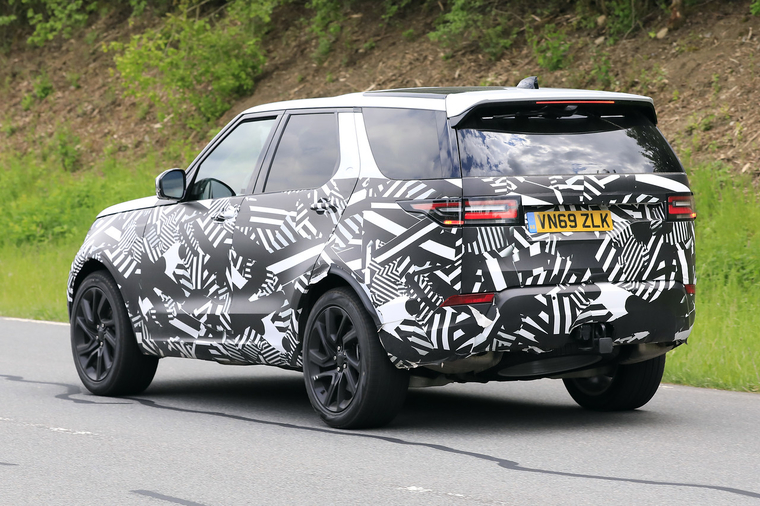
Photos of this camouflaged prototype show a substantial disguise for what is described by a Land Rover source as a “model-year update,” suggesting the changes are more far reaching than the usual equipment upgrades and light tweaks. More interesting, however, is that the Disco will soon be available as a hybrid-electric model alongside its combustion engine siblings.

Land Rover has yet to officially confirm which hybrid powertrain it’s going to use for the Discovery. It’s possible the brand is considering introducing a plug-in hybrid variant with the four-cylinder P400e system used on the Range Rover and Range Rover Sport.

However, very likely it’s going to be a mild hybrid, using the 48V system added to the Range Rover last year. The only current Land Rover system suitable for a car of this size and weight is the latest 3.0L straight-six turbo engine mated to a starter/generator and 48V battery.

However, given the Discovery’s diesel-heavy mix, expect such a system to be introduced in the four- and six-cylinder oil-burners for the seven-seat SUV’s launch, likely at the end of 2020.

Updates such as this will be crucial as Jaguar Land Rover aims to avoid fines under the EU’s fleet average CO2 target. The brand’s two biggest hopes for achieving this will be the upcoming Discovery Sport and Evoque plug-in hybrids, which are set to go on sale in the coming weeks. They use a 200hp, 1.5L three-cylinder gas engine and a 108hp electric powertrain for an electric-only range of about 31 miles.

Land Rover

Photo credit: Brian Williams, SpiedBilde


This story was originally published on June 4, 2020. For more industry news, visit SEMANews.com and subscribe to SEMA News at the bottom of the webpage to get the latest updates straight to your inbox, twice a week.

Thu, 06/04/2020 - 10:20

Land Rover

Land Rover will launch its first hybrid Discovery as part of a roster of updates aimed at boosting the model’s sales, which continue to fall below expectations.

Photos of this camouflaged prototype show a substantial disguise for what is described by a Land Rover source as a “model-year update,” suggesting the changes are more far reaching than the usual equipment upgrades and light tweaks. More interesting, however, is that the Disco will soon be available as a hybrid-electric model alongside its combustion engine siblings.

Land Rover has yet to officially confirm which hybrid powertrain it’s going to use for the Discovery. It’s possible the brand is considering introducing a plug-in hybrid variant with the four-cylinder P400e system used on the Range Rover and Range Rover Sport.

However, very likely it’s going to be a mild hybrid, using the 48V system added to the Range Rover last year. The only current Land Rover system suitable for a car of this size and weight is the latest 3.0L straight-six turbo engine mated to a starter/generator and 48V battery.

However, given the Discovery’s diesel-heavy mix, expect such a system to be introduced in the four- and six-cylinder oil-burners for the seven-seat SUV’s launch, likely at the end of 2020.

Updates such as this will be crucial as Jaguar Land Rover aims to avoid fines under the EU’s fleet average CO2 target. The brand’s two biggest hopes for achieving this will be the upcoming Discovery Sport and Evoque plug-in hybrids, which are set to go on sale in the coming weeks. They use a 200hp, 1.5L three-cylinder gas engine and a 108hp electric powertrain for an electric-only range of about 31 miles.

Land Rover

Photo credit: Brian Williams, SpiedBilde


This story was originally published on June 4, 2020. For more industry news, visit SEMANews.com and subscribe to SEMA News at the bottom of the webpage to get the latest updates straight to your inbox, twice a week.

Thu, 06/04/2020 - 10:20

Land Rover

Land Rover will launch its first hybrid Discovery as part of a roster of updates aimed at boosting the model’s sales, which continue to fall below expectations.

Photos of this camouflaged prototype show a substantial disguise for what is described by a Land Rover source as a “model-year update,” suggesting the changes are more far reaching than the usual equipment upgrades and light tweaks. More interesting, however, is that the Disco will soon be available as a hybrid-electric model alongside its combustion engine siblings.

Land Rover has yet to officially confirm which hybrid powertrain it’s going to use for the Discovery. It’s possible the brand is considering introducing a plug-in hybrid variant with the four-cylinder P400e system used on the Range Rover and Range Rover Sport.

However, very likely it’s going to be a mild hybrid, using the 48V system added to the Range Rover last year. The only current Land Rover system suitable for a car of this size and weight is the latest 3.0L straight-six turbo engine mated to a starter/generator and 48V battery.

However, given the Discovery’s diesel-heavy mix, expect such a system to be introduced in the four- and six-cylinder oil-burners for the seven-seat SUV’s launch, likely at the end of 2020.

Updates such as this will be crucial as Jaguar Land Rover aims to avoid fines under the EU’s fleet average CO2 target. The brand’s two biggest hopes for achieving this will be the upcoming Discovery Sport and Evoque plug-in hybrids, which are set to go on sale in the coming weeks. They use a 200hp, 1.5L three-cylinder gas engine and a 108hp electric powertrain for an electric-only range of about 31 miles.

Land Rover

Photo credit: Brian Williams, SpiedBilde


This story was originally published on June 4, 2020. For more industry news, visit SEMANews.com and subscribe to SEMA News at the bottom of the webpage to get the latest updates straight to your inbox, twice a week.