Tue, 04/21/2026 - 11:46

By Ashley Reyes


A graphic promoting the upcoming webinar.


Hot-rod business owners and professionals have limited time left to register for the SEMA Hot Rod Industry Alliance (HRIA) General Membership Meeting and Panel Discussion on "Building Your Future Workforce: Practical Hiring Pathways for Automotive Businesses."


RSVP here button.


Taking place Tuesday, April 28, at 10:00 a.m. PDT/1:00 p.m. EDT, this session will help automotive businesses strengthen their future workforce by understanding proven talent pathways, including hands-on training, certified education, and institutional college programs, as well as helping students and parents see that there is more than one road to success.


Moderated by Kevin Webb, the owner at Hot Rod Custom Garage, the session will feature panelists George Arrants, vice president at ASE Education Foundation; Cindy Barlow, director of industry relations at Wyotech; and Aaron Valencia, executive director and founder at the Lost Angels Career Center.


Together, they will help shop owners understand what students value today, how to communicate career progression clearly and how to build a culture that supports long-term retention and growth.


Discussion topics include:

  • Talent pipeline challenges and growth strategies.
  • Multiple entry ways into the industry.
  • The early engagement and mentorship model.
  • Profession and retention strategies.
  • Aligning shop culture with next-generation workforce expectations.
  • Action steps for partnership and hiring within 90 days.
  • Executing a long-term industry-to-education vision.


Whether you're looking to attract, develop or retain the next generation of talent at your business, this event will help you understand the training pathways available today, how to connect with emerging talent and actionable steps you can take immediately to begin building a stronger workforce pipeline.


Save your seat for the virtual session.


Tue, 04/21/2026 - 11:40

By Ashley Reyes

Graphic for the SEMA FLN Lunch and Learn on building and growing an automotive shop.


One week remains to secure your spot for the SEMA Future Leaders Network (FLN) virtual Lunch and Learn, "Inside the Shop: An Automotive Shop Ownership Panel" on Thursday, April 30, at 10:30 a.m. PDT/12:30 p.m. EDT.
 

Running an automotive shop today takes more than technical skill; it demands business strategy, customer insight and the ability to adapt to an ever-changing industry. During this session, three shop owners from different corners of the automotive world will share what it really takes to build, grow and sustain a successful shop.
 

Moderated by Aly Oakley, sales at BrakeQuip, the session will feature panelists Tara Demuth, co-owner/general manager of R&S Truck Caps, Zack Hampton, co-owner of Chromotize, and Sara Morosan, vice president of LGE-CTS Motorsports. Together, they will discuss the foundational business elements required to own and operate an automotive aftermarket shop and build a culture within a business.
 

Key takeaways include:
 

  • How to transition from an employee to an owner.
  • Strategies for culture building and leadership development in business.
  • What all goes into business ownership.
  • Unique challenges of owning a shop in the automotive aftermarket.
  • How to navigate trends in the automotive aftermarket.


Whether your goal is to own an automotive shop one day or you are new to shop ownership, this event is your opportunity to learn from current shop owners who run a shop day-to-day.
 

🎁 Bonus incentive: The first 20 SEMA members to register for the session in advance and attend the full webinar will receive an Uber Eats voucher to be used after the webinar through the following day.
 

Register here.


Tue, 04/21/2026 - 11:04

By SEMA News Editors


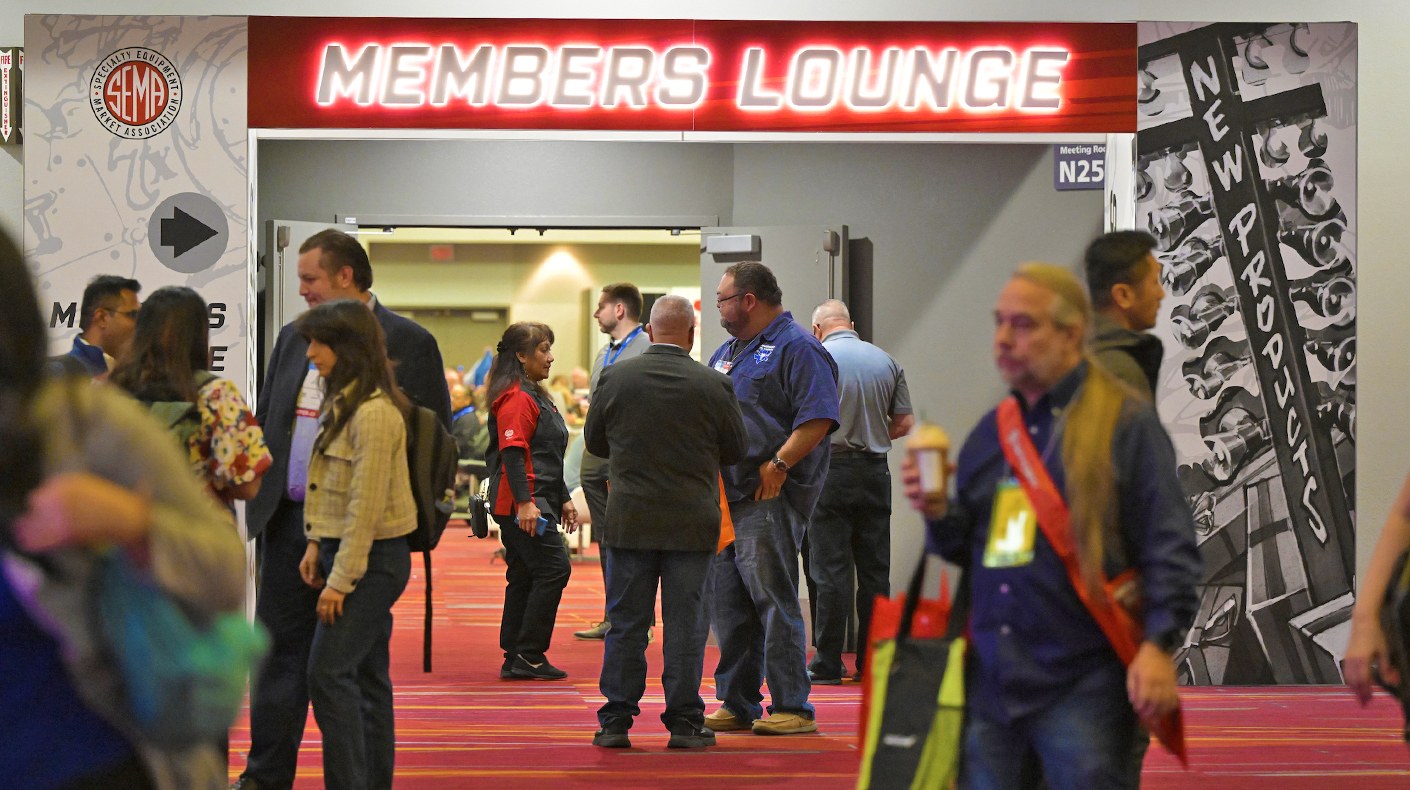
An image of the SEMA Members Lounge at the SEMA Show.

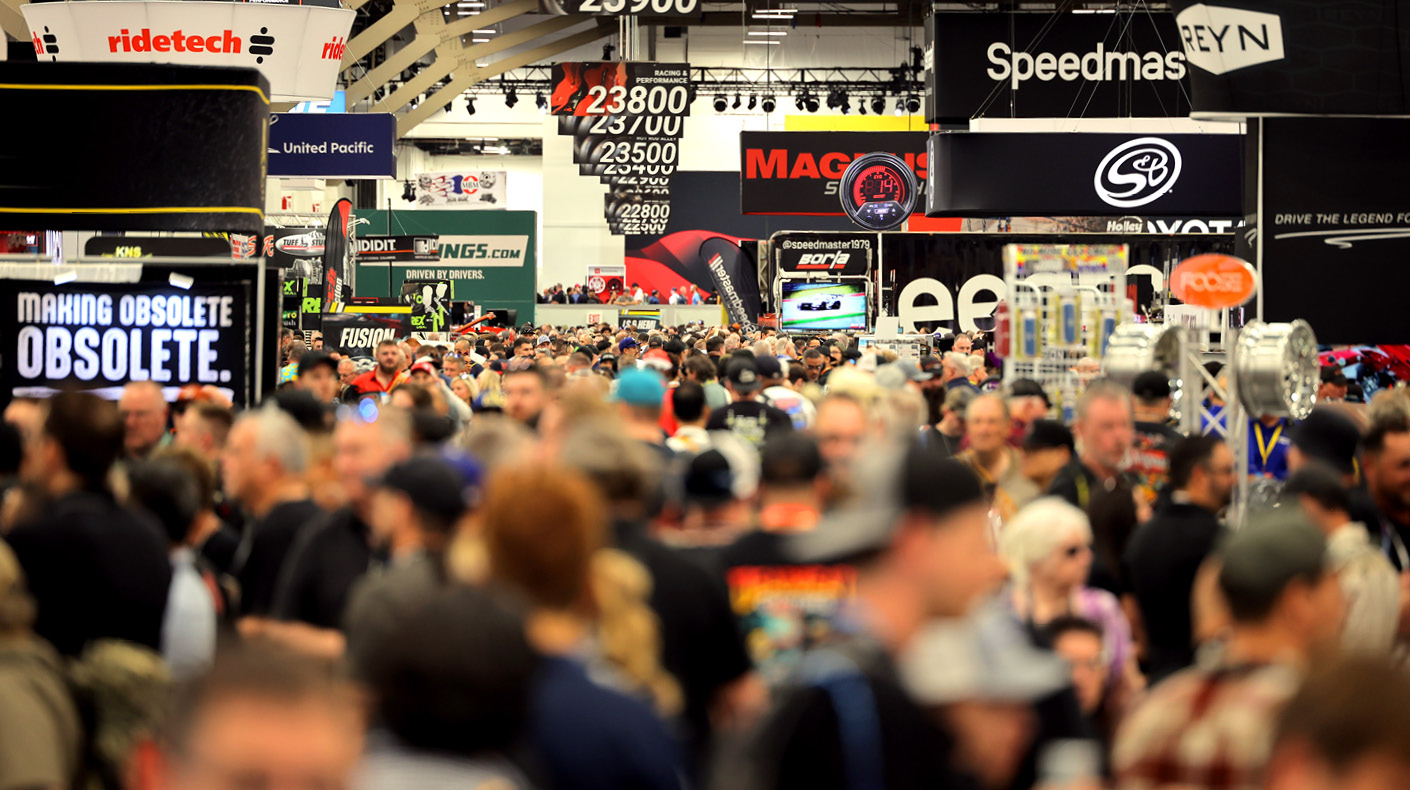
The Members Lounge at the SEMA Show is the perfect spot for industry members to regroup away from the busy SEMA Show floor.


Industry professionals already recognize the energy, deal-making and connections that define the SEMA Show in Las Vegas. Still, the savviest of them also know to elevate their Show experience with SEMA membership.


A red button with the words Learn More.


Real SEMA Show Perks for SEMA Members


Active SEMA members receive exclusive access and perks at the SEMA Show, including:

  • Member Lounges: Take a moment off the Show floor with light refreshments and a calm place to recharge your mind, body and devices.
  • Private Meeting Rooms: Impress and connect with colleagues and business partners in a quiet, professional setting off the Show floor.
  • Networking Opportunities: Meet industry leaders and peers away from the busy Show floor.


The result is a more efficient and productive Show experience, helping members make the most of their trip to Las Vegas.


SEMA Membership Has Year-Round Business Benefits, Too


SEMA membership also opens the doors for aftermarket businesses seeking to elevate their brand with exclusive, valuable benefits, like discounts and partner offers, reducing everyday business expenses on shipping, insurance, software and more.


In addition, SEMA members stay ahead of industry trends with access to live and recorded webinars and workshops, plus industry data (including the sought-after Market Research reports).


SEMA membership also allows members to showcase their brands and connect with the right partners.


Make the Move: Join SEMA Membership Today


If the SEMA Show is where business begins, then SEMA membership is how it continues to grow. For owners, executives and key decision-makers, this is more than a typical membership program––it is a strategic advantage designed to help companies grow.


Businesses can explore how SEMA membership not only enhances the SEMA Show experience but also supports businesses year-round.


An image of a red button with the words JOIN MEMBERSHIP.


To learn more about SEMA and the services and discounts available to help drive your business to success, contact your Membership Team at 909-610-2030.


Tue, 04/21/2026 - 09:54

By SEMA News Editors

The Acura MDX Type S Overland Concept pictured on a mountain road.


SEMA, in collaboration with Acura, revealed a one-of-one '26 Acura MDX Type S Overland Concept, showcasing how modern OEM platforms can be thoughtfully reimagined through purposeful aftermarket upgrades to support off-road and overland adventure--without sacrificing daily comfort and refinement.
 

Designed and built at the SEMA Garage in Los Angeles, the MDX Type S Overland Concept showcases the innovation and technical expertise of SEMA-member companies. By pairing Acura's high-performance SUV architecture with cutting-edge aftermarket components, the build demonstrates a growing shift in the enthusiast market: the desire for "go anywhere" capability without sacrificing refined "daily driver" performance.
 

"This project is a perfect example of SEMA's mission in action--bringing OEMs and the aftermarket together to explore what's possible," said SEMA Director of Vehicle Technology & Product Development Luis Morales. "The 2026 Acura MDX Type S Overland Concept shows how the aftermarket can responsibly and creatively expand vehicle capability while retaining the refinement and performance consumers expect from a premium OEM."
 

Redefining the Modern Adventure Vehicle


Built on the performance-focused foundation of the '26 Acura MDX Type S, the vehicle was transformed into an adventure-ready, overland-capable concept through the integration of off-road wheels and tires, functional lighting, cargo solutions and camping equipment. The build is intended as a design and engineering exercise--not a production vehicle--to inspire enthusiasts and demonstrate fitment, function and integration across a modern OEM platform.

The Acura MDX Type S Overland Concept built at the SEMA Garage.


Multiple SEMA-member aftermarket brands contributed components to the project, including:
 

  • Baja Designs – XL Linkable Light Bar and Squadron Pro Ditch Lights
  • Black Rhino – Voll Wheels (18x8.5 ET25)
  • Falken – WildPeak A/T4W Tires (275/65R18)
  • Inspired Overland – Overland Stargazer Duo Rooftop Tent
  • NoLo Designs – Ditch Light Brackets
  • Prinsu – Roof Rack
  • RiG'd – UltraSwing Spare Tire Carrier


Each component was selected to support off-road durability, overland utility and cohesive visual integration--illustrating how aftermarket innovation can extend vehicle capability beyond its original design intent.
 

Built at the SEMA Garage


The vehicle was assembled at the SEMA Garage–Los Angeles, SEMA's OEM-agnostic facility dedicated to aftermarket testing, product development and advanced vehicle technology. The Garage provided the tools, expertise and environment necessary to develop and validate aftermarket solutions on the MDX Type S platform.
 

"Builds like this help SEMA and our members better understand new vehicle platforms and develop real-world solutions," said Morales. "It benefits the aftermarket, OEMs, and ultimately the enthusiast."
 

Public Debut at California's 2026 Acura Grand Prix of Long Beach


The 2026 Acura MDX Type S Overland Concept will made its public debut in the Acura display at the 2026 Acura Grand Prix of Long Beach, where attendees had the opportunity to see the one-off build up close. 
 

The SEMA Show: Where Aftermarket Trends Take Shape


At the 2025 SEMA Show, one standout trend was the growing number of performance-focused vehicles being outfitted for off-road and adventure use — a signal that enthusiasts increasingly want builds that don't fit neatly into a single category. While the MDX Type S isn't a supercar, this concept reflects the same go-anywhere mindset, translated into a premium SUV platform that many enthusiasts can realistically picture using every day.
 

Registration for the 2026 SEMA Show opens May 4, 2026. The Show remains the place where the industry gathers to spot what's next across trucks, SUVs, off-road, performance and lifestyle-driven builds.
 

For more information on SEMA, the SEMA Garage and OEM partnership programs, visit www.sema.org. For more information on the SEMA Show, visit www.semashow.com.

Mon, 04/20/2026 - 11:58

From the SEMA Washington, D.C., office

A container ship docking at a port. Image courtesy of Shutterstock and Rober V Schwemmer.


The U.S. Customs and Border Protection (CBP) has announced Phase 1 of its Consolidated Administration and Processing of Entries (CAPE) process for refunding International Emergency Economic Powers Act (IEEPA) tariffs. 
 

This first phase is narrow in scope: CBP will only accept CAPE declarations for entries that were liquidated within the preceding 80 days to ensure compliance with CBP's 90-day voluntary reliquidation period. 
 

  • Through the CAPE Claim Portal, only the importer of record or its authorized broker(s) will be able to submit refund requests by uploading a CSV file listing eligible entries as described below.  Click here to read for information on the CAPE process.


Refund submissions will be subjected to a validation process and once validated, CAPE will remove IEEPA HTS numbers from covered entries, recalculate duties and support liquidation or reliquidation without the IEEPA duties, routing the refunds into CBP's Automated Commercial Environment (ACE) collections module for delivery with potential interest (if applicable). ACE is the United States's centralized digital system for processing imports and exports: cbp.gov/trade/automated.
 

Limited Start for Applying for IEEPA Refunds
 

Phase 1 of the IEEPA refund process only focuses on basic transactions and will not cover all entries on which IEEPA tariffs were paid. CBP will only accept CAPE declarations for entries that were liquidated within the preceding 80 days. The language from CBP suggests that importers will not be permitted to include "finally liquidated" entries in their Phase I refund declarations and will need to wait for a subsequent phase. 
 

In addition, CBP clarified certain other categories of entries that will not be accepted on a CAPE declaration during Phase 1:
 

  • Entries flagged for reconciliation and Entry Type 09 – Reconciliation Summary entries
  • Entries designated for drawback claims
  • Entries covered by a protest
  • Entries not filed in ACE and without a liquidation status in ACE
  • Entries subject to antidumping and countervailing duties that have liquidation instructions


Following acceptance of a complete, validated CAPE refund declaration, and assuming no complicating issues, CBP still estimates there will be a 60 to 90‑day review period for even the most straightforward transactions. Subsequent phases of refund submissions are in process, but CBP has not released details on the next phases.
 

Preparing CAPE Refund Claims
 

To participate in the CAPE refund process, importers of record and their authorized customs brokers must have an ACE Secure Data Portal account and must ensure that bank account information for refund recipients is up to date in ACE. CAPE refund declarations must be filed in the ACE Portal by the importer or by the broker who originally filed the underlying entries, and refunds will be issued electronically.
 

Because CAPE is designed to handle refund requests in consolidated batches, importers should expect that refunds will not be immediate even once Phase 1 goes live and that CBP will likely prioritize submissions that pass automated validations and do not raise compliance concerns. The staged nature of CAPE means that importers may need to sequence their claims and maintain detailed tracking of which entries are included in each CAPE declaration, especially where multiple brokers or related entities are involved.
 

Compliance Risks When Filing CAPE Refund Claims
 

Each CAPE refund claim will require a certification by the importer that the entry summaries in the CAPE declaration comply with all applicable laws.  Importers, in advance, should identify risks posed by any historically non‑compliant entries before including those entries in a CAPE declaration, particularly where prior disclosures or internal reviews have not yet been completed. Companies with IEEPA-related supply chains may find that CAPE creates both an opportunity to recover material refunds and an obligation to reconcile past compliance gaps.
 

How to Prepare for IEEPA Refunds


Importers who paid IEEPA tariffs should consider the following measures:
 

  1. Ensure that they have an account in CBP's ACE system
  2. Establish an Automated Clearing House (ACH) link in ACE
  3. Conduct a refund analysis and risk assessment.
  4. Obtain import records/reports from ACE or your customs broker. Monitor United States imports for which IEEPA tariffs were paid and their liquidation status (e.g., unliquidated, liquidated but not yet final entries, and "finally liquidated" entries) and:
     
  • Separate liquidated entries into two groups: (i) liquidated but not "final" entries that are within 80 days after liquidation (i.e., eligible for Phase 1) and (ii) entries more than 80 days past liquidation (which likely will need to be filed during a subsequent phase).
  • Stay vigilant to preserve your right to refunds for IEEPA duties. For entries liquidated more than 90 days but less than 180 days, consider filing a protest with CBP. It is not clear, however, how such entries will be treated by subsequent CAPE phases. According to CBP's messaging, entries subject to a protest will not be eligible for Phase 1.
  • For finally liquidated entries that are beyond the 180-day protest period, consider filing an appeal with the CIT before the end of the two-year statute of limitations from the date of entry. However, according to the Court's order on March 27, such entries are eligible for refund by CBP and will likely be included in a subsequent phase of CAPE.
     

For more information, contact SEMA Senior Director of Federal Government Affairs Eric Snyder at erics@sema.org.


Image courtesy of Shutterstock | Robert V Schwemmer

Mon, 04/20/2026 - 11:58

From the SEMA Washington, D.C., office

A container ship docking at a port. Image courtesy of Shutterstock and Rober V Schwemmer.


The U.S. Customs and Border Protection (CBP) has announced Phase 1 of its Consolidated Administration and Processing of Entries (CAPE) process for refunding International Emergency Economic Powers Act (IEEPA) tariffs. 
 

This first phase is narrow in scope: CBP will only accept CAPE declarations for entries that were liquidated within the preceding 80 days to ensure compliance with CBP's 90-day voluntary reliquidation period. 
 

  • Through the CAPE Claim Portal, only the importer of record or its authorized broker(s) will be able to submit refund requests by uploading a CSV file listing eligible entries as described below.  Click here to read for information on the CAPE process.


Refund submissions will be subjected to a validation process and once validated, CAPE will remove IEEPA HTS numbers from covered entries, recalculate duties and support liquidation or reliquidation without the IEEPA duties, routing the refunds into CBP's Automated Commercial Environment (ACE) collections module for delivery with potential interest (if applicable). ACE is the United States's centralized digital system for processing imports and exports: cbp.gov/trade/automated.
 

Limited Start for Applying for IEEPA Refunds
 

Phase 1 of the IEEPA refund process only focuses on basic transactions and will not cover all entries on which IEEPA tariffs were paid. CBP will only accept CAPE declarations for entries that were liquidated within the preceding 80 days. The language from CBP suggests that importers will not be permitted to include "finally liquidated" entries in their Phase I refund declarations and will need to wait for a subsequent phase. 
 

In addition, CBP clarified certain other categories of entries that will not be accepted on a CAPE declaration during Phase 1:
 

  • Entries flagged for reconciliation and Entry Type 09 – Reconciliation Summary entries
  • Entries designated for drawback claims
  • Entries covered by a protest
  • Entries not filed in ACE and without a liquidation status in ACE
  • Entries subject to antidumping and countervailing duties that have liquidation instructions


Following acceptance of a complete, validated CAPE refund declaration, and assuming no complicating issues, CBP still estimates there will be a 60 to 90‑day review period for even the most straightforward transactions. Subsequent phases of refund submissions are in process, but CBP has not released details on the next phases.
 

Preparing CAPE Refund Claims
 

To participate in the CAPE refund process, importers of record and their authorized customs brokers must have an ACE Secure Data Portal account and must ensure that bank account information for refund recipients is up to date in ACE. CAPE refund declarations must be filed in the ACE Portal by the importer or by the broker who originally filed the underlying entries, and refunds will be issued electronically.
 

Because CAPE is designed to handle refund requests in consolidated batches, importers should expect that refunds will not be immediate even once Phase 1 goes live and that CBP will likely prioritize submissions that pass automated validations and do not raise compliance concerns. The staged nature of CAPE means that importers may need to sequence their claims and maintain detailed tracking of which entries are included in each CAPE declaration, especially where multiple brokers or related entities are involved.
 

Compliance Risks When Filing CAPE Refund Claims
 

Each CAPE refund claim will require a certification by the importer that the entry summaries in the CAPE declaration comply with all applicable laws.  Importers, in advance, should identify risks posed by any historically non‑compliant entries before including those entries in a CAPE declaration, particularly where prior disclosures or internal reviews have not yet been completed. Companies with IEEPA-related supply chains may find that CAPE creates both an opportunity to recover material refunds and an obligation to reconcile past compliance gaps.
 

How to Prepare for IEEPA Refunds


Importers who paid IEEPA tariffs should consider the following measures:
 

  1. Ensure that they have an account in CBP's ACE system
  2. Establish an Automated Clearing House (ACH) link in ACE
  3. Conduct a refund analysis and risk assessment.
  4. Obtain import records/reports from ACE or your customs broker. Monitor United States imports for which IEEPA tariffs were paid and their liquidation status (e.g., unliquidated, liquidated but not yet final entries, and "finally liquidated" entries) and:
     
  • Separate liquidated entries into two groups: (i) liquidated but not "final" entries that are within 80 days after liquidation (i.e., eligible for Phase 1) and (ii) entries more than 80 days past liquidation (which likely will need to be filed during a subsequent phase).
  • Stay vigilant to preserve your right to refunds for IEEPA duties. For entries liquidated more than 90 days but less than 180 days, consider filing a protest with CBP. It is not clear, however, how such entries will be treated by subsequent CAPE phases. According to CBP's messaging, entries subject to a protest will not be eligible for Phase 1.
  • For finally liquidated entries that are beyond the 180-day protest period, consider filing an appeal with the CIT before the end of the two-year statute of limitations from the date of entry. However, according to the Court's order on March 27, such entries are eligible for refund by CBP and will likely be included in a subsequent phase of CAPE.
     

For more information, contact SEMA Senior Director of Federal Government Affairs Eric Snyder at erics@sema.org.


Image courtesy of Shutterstock | Robert V Schwemmer

Thu, 04/16/2026 - 14:18

From the SEMA Washington, D.C., office


An image of the US Capitol with the CARB logo overlaid.


A SEMA-sponsored California bill (SB 1069), aimed at reforming the California Air Resources Board's (CARB) Executive Order (EO) process for aftermarket parts, has advanced out of the Senate Environmental Quality Committee. It now moves to the Senate Appropriations Committee.


  • EOs are required for many emissions-related aftermarket parts to be legally sold in California. While the standards themselves remain unchanged, companies must wait for CARB approval before bringing products to market, making the decision timeline a critical issue for the industry.


The measure, authored by Sen. Tim Grayson (D-Concord), is focused on improving the EO application process by establishing clear timelines for CARB to act on submissions and by adding transparency around how long approvals are taking. It does not change emissions requirements or limit CARB's authority to deny non-compliant products.


The reform is needed to bring predictability to a process that has become increasingly uncertain. Companies are investing heavily in testing and compliance; the process costs companies several thousand dollars for each application in fees that were intended to facilitate faster reviews. However, long and inconsistent wait times continue to delay product launches and tie up capital.


If you have any questions or are interested in supporting the effort, contact Christian Robinson, SEMA's senior director for state government affairs, at christianr@sema.org.


This article was originally published on Thursday, April 16.


Top image courtesy of Shutterstock | Robert Schlie


Featured feed image courtesy of Shutterstock | Lane V. Erickson


Thu, 04/16/2026 - 14:18

From the SEMA Washington, D.C., office


An image of the US Capitol with the CARB logo overlaid.


A SEMA-sponsored California bill (SB 1069), aimed at reforming the California Air Resources Board's (CARB) Executive Order (EO) process for aftermarket parts, has advanced out of the Senate Environmental Quality Committee. It now moves to the Senate Appropriations Committee.


  • EOs are required for many emissions-related aftermarket parts to be legally sold in California. While the standards themselves remain unchanged, companies must wait for CARB approval before bringing products to market, making the decision timeline a critical issue for the industry.


The measure, authored by Sen. Tim Grayson (D-Concord), is focused on improving the EO application process by establishing clear timelines for CARB to act on submissions and by adding transparency around how long approvals are taking. It does not change emissions requirements or limit CARB's authority to deny non-compliant products.


The reform is needed to bring predictability to a process that has become increasingly uncertain. Companies are investing heavily in testing and compliance; the process costs companies several thousand dollars for each application in fees that were intended to facilitate faster reviews. However, long and inconsistent wait times continue to delay product launches and tie up capital.


If you have any questions or are interested in supporting the effort, contact Christian Robinson, SEMA's senior director for state government affairs, at christianr@sema.org.


This article was originally published on Thursday, April 16.


Top image courtesy of Shutterstock | Robert Schlie


Featured feed image courtesy of Shutterstock | Lane V. Erickson


Thu, 04/16/2026 - 14:18

From the SEMA Washington, D.C., office


An image of the US Capitol with the CARB logo overlaid.


A SEMA-sponsored California bill (SB 1069), aimed at reforming the California Air Resources Board's (CARB) Executive Order (EO) process for aftermarket parts, has advanced out of the Senate Environmental Quality Committee. It now moves to the Senate Appropriations Committee.


  • EOs are required for many emissions-related aftermarket parts to be legally sold in California. While the standards themselves remain unchanged, companies must wait for CARB approval before bringing products to market, making the decision timeline a critical issue for the industry.


The measure, authored by Sen. Tim Grayson (D-Concord), is focused on improving the EO application process by establishing clear timelines for CARB to act on submissions and by adding transparency around how long approvals are taking. It does not change emissions requirements or limit CARB's authority to deny non-compliant products.


The reform is needed to bring predictability to a process that has become increasingly uncertain. Companies are investing heavily in testing and compliance; the process costs companies several thousand dollars for each application in fees that were intended to facilitate faster reviews. However, long and inconsistent wait times continue to delay product launches and tie up capital.


If you have any questions or are interested in supporting the effort, contact Christian Robinson, SEMA's senior director for state government affairs, at christianr@sema.org.


This article was originally published on Thursday, April 16.


Top image courtesy of Shutterstock | Robert Schlie


Featured feed image courtesy of Shutterstock | Lane V. Erickson


Thu, 04/16/2026 - 12:39

By Laura Pitts


An image of Porsche race vehicles.


My Acura Grand Prix of Long Beach (GPLB) weekend began in the passenger seat of a Porsche 911 Carrera GTS, the safety car for the Porsche Carrera Cup North America, with IMSA and TransAm champion Tommy Kendall behind the wheel. And yes, I fully understand how much that sentence captures a once-in-a-lifetime moment.


There's something visceral about experiencing a street circuit at speed from the seat of a Porsche before the crowds officially arrive. It's like seeing the track in its purest form––before the noise, before the chaos, before the big show.


Although, in true Long Beach fashion, the crowds were already there––lined up on public bridges, phones out, watching us flash underneath in a blur.


By the time we hit the main straight for the second time, it all started to sink in. The speedometer was creeping past 150 mph. I was pinned into the seat, trying––mostly failing––to capture the moment. It was equal parts surreal and slightly out of control (at least on my end) in the best possible way.


An image of a Porsche safety race vehicle.


One lap later, we peeled into the pit lane and rolled to a smooth stop. That's when Kendall casually mentioned it was his first warm-up lap around the Long Beach street circuit in 20 years.


My immediate reaction?


"You could've fooled me."


From there, it was straight into the rhythm of Media Day––working pit lane, photographing Formula Drift builds up close and taking in the mix of competition cars and curated builds that define this event.


The Legacy of Jim Michaelian Carries On


Before we got into GP competition talk, the weekend took a moment to remember a longtime fixture of the event, Jim Michaelian, the Acura GPLB president and CEO who passed away in March.


It was the first Media Day where Michaelian was not addressing media members on stage since the Grand Prix's inception. His absence, but also his influence, was felt everywhere.


To help celebrate his legacy, every car on track––across every series during the GP weekend––will carry a sticker honoring Michaelian. The sense of legacy carried directly into the future of the event during conversations with LBGP leadership.


An image of Jim Liaw at the Grand Prix of Long Beach media luncheon.


Jim Liaw, who most recently served as the general manager for PRI, was a familiar presence for our PRI team. He stepped into his role sooner than expected following Michaelian's passing.

Speaking to the press about evolution, Liaw shared how, under new ownership from Penske Corporation, the Acura GPLB is already seeing upgrades––new grandstands, expanded viewing areas, even a double-decker hospitality structure along pit row. There are murals now, too, scattered throughout the circuit, telling the story of a race that has been part of this city since 1975.


And beyond the racing, the Grand Prix Foundation continues to invest back into Long Beach, supporting local students year after year.


It's easy to focus on lap times and results, but weekends like this remind you that major events are ecosystems. They shape cities just as much as they showcase speed.


Inside the Formula Drift Mindset


A Formula Drift team working on the vehicle.


Then came the Formula Drift press conference. (By the time this reaches readers, the Formula Drift season opener is already in the books, with Conor Shanahan taking the Round 1 win on the streets of Long Beach after a close final against Fredric Aasbø.)


If you want a snapshot of where Formula Drift is right now, it's this: the talent level has never been higher––and everyone knows it.


Reigning champion James Deane didn't sound like someone coasting on five titles, but someone ready to grab his sixth. He talked about watching other drivers' builds in the offseason, about how the overall level keeps rising, and about how competition forces everyone to find new limits.


Sitting just a few seats down, Fredric Aasbø echoed that sentiment. Yes, he believes he can win. But so can everyone else next to him.


That's the theme this year––depth. There are no easy rounds these days. And perhaps no one embodied that intensity more than Matt Field. He walked through his offseason in detail: training, nutrition, reaction work, even blood analysis. Every variable was optimized, he said.


"I've never been more ready," he said.


An image of Hiroya Minowa next to his drift vehicle.


Of course, not every driver's season will follow a traditional path.


Hiroya Minowa is stepping back to run a partial schedule, shifting focus to rally racing with Toyota Gazoo Racing. Sliding a drift car, he explained, translates naturally to rally. But rally, in turn, sharpens precision, throttle control and decision-making.


It's a reminder of how interconnected motorsports has become, with drivers moving between disciplines, carrying skills from one to another.


Then there's Adam LZ, the driver who exists at the intersection of competition and car culture. He talked about his upcoming role in Sung Kang's movie "Drifter," and what it could mean for the sport.


Not immediately, maybe. But long term.


"The movies I watched when I was 12 or 13 shaped what I wanted to do," he said.


It's a simple idea, but an important one. Motorsports doesn't grow in isolation but through exposure, storytelling, and the next generation finding its entry point.


An image of Conor Shanahan.


In hindsight, Shanahan was the driver to watch, building momentum that ultimately carried him to the Round 1 win. At the press conference, he spoke about the challenge of balancing programs across continents––adapting to different cars, tracks and judging styles from one weekend to the next.


"You're going from one side of the world to the other, trying to figure everything out from scratch," he said. "Sometimes you don't even get the perfect practice session, so you're constantly adapting."


With qualifying returning this season, Shanahan noted it should play to his strengths, giving drivers a clearer structure heading into competition.


More Than a Race Weekend
 

An image of a lineup of race vehicles.


While Formula Drift has already crowned its Long Beach winner, the Grand Prix itself is still ahead, adding another layer of anticipation to a weekend that's already delivered plenty.


This weekend isn't just one race, it's many: NTT INDYCAR Series, IMSA, Porsche Carrera Cup North America, Stadium SUPER Trucks and Historic Sports Car, all converging on the same streets. And for the first time, both marquee events will air on network television, bringing Long Beach to an even broader audience.


But what stayed with me most wasn't any single series.


It was the feeling that everything here––every lap, every upgrade, every tribute––is connected.


The city of Long Beach isn't just hosting motorsports. It's shaping where it goes next––and Long Beach is right at the center of it.