

One of the more pressing issues confronting today’s small-business shops is finding and attracting young talent.
https://www.sema.org/sema-news/2020/03/attracting-and-retaining-next-generation-talent
Thu, 03/12/2020 - 10:05
Thu, 03/12/2020 - 08:22
Compiled by SEMA Editors
 Ashton Robinson |
PRI Hires Ashton Robinson as Marketing Coordinator
PRI has hired Ashton Robinson as marketing coordinator. With a passion for racing, Robinson says her entire life revolves around motorsports and the automotive industry. “I grew up around motorsports with my dad, from dirt bikes to go-karting. I currently compete in a few local series driving a ’15 Camaro 1LE, and this year I will be starting my journey competing in the Optima Batteries Search For The Ultimate Street Car. So far, I’ve driven Auto Club Speedway, Streets of Willow, and Big Willow (my favorite) and plan to drive Chuckwalla Raceway and Las Vegas Motor Speedway this year,” she said.
 Brandon Lowder |
Accudraft Paint Booths Welcomes Brandon Lowder as New Senior Vice President of Auto and Truck
Accudraft has announced the appointment of Brandon Lowder to the newly created position of senior vice president of auto and truck. Lowder will oversee the automotive and truck industries for Accudraft’s growing operation. He brings more than 20 years of experience in product sales, revenue management and business development. Prior to joining Accudraft, Lowder was the general manager of Pro Spot International and has six years’ experience as vice president of auto refinishing at Global Finishing Solutions.
Dana Opens New Louisiana Facility
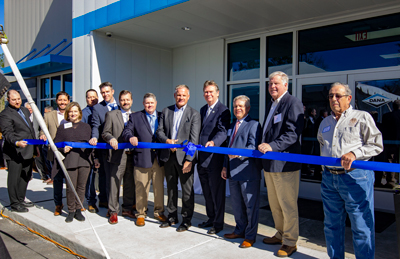 Dana Chairman and CEO Jim Kamsickas (center) attends the grand opening and ribbon-cutting ceremony at the company’s new Slidell, Louisiana facility. |
Dana Inc. has announced it has opened the doors to a nearly 32,000 sq.-ft. facility in Slidell, Louisiana, for the repair, service and assembly of industrial gearboxes, including the ability to custom-make gears up to 6.5 ft. Located in the Fremaux Park development, the new facility replaces the company’s current operations in Slidell. The company also invested in gear-grinding and hobbing equipment and skilled personnel to increase the ability to quickly turnaround gearboxes for customers.
Red Line Synthetic Oil Opens Sponsorship Program to Support New Racers and Builders for the 2020 Powersports Season
Red Line Synthetic Oil has announced plans to recruit new, influential racers, riders, enthusiasts and builders to promote the Red Line brand and products throughout 2020 and beyond. The company seeks on-brand ambassadors who are committed to powersports and are interested in taking the necessary steps to maintain and prepare their bikes for the most extreme conditions. Red Line provides amateur and professional support for sponsored riders of all levels. New additions to the program this season will include lower product order minimums and refreshed, branded casual clothing designs. For consideration, Red Line requests résumés, bios or proposals with recent photos and results. Should you be accepted into the program, you will gain access to Red Line’s VIP ordering portal, as well as direct technical support and product discount support, based upon your level. Currently, only riders in the United States are eligible for the program. Those interested may submit their applications no later than April 30.
Have some company news you would like to share? Let us know and the news may appear in an upcoming issue of SEMA eNews. Send your items for consideration to editors@sema.org.
Thu, 03/12/2020 - 07:40
By Ashley Reyes
Due to the unprecedented and growing concerns surrounding the COVID-19 Coronavirus, the 2020 ARMO Hot Products Showcase has been CANCELLED. The decision to cancel the event was difficult to make, and is being guided by recommendations and best practices from health officials. We thank our association community for their support as we take the measures needed to ensure the health and welfare of our members.
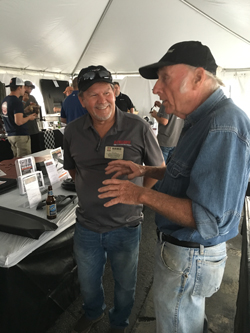 The Hot Products Showcase at Spring Carlisle provides an opportunity for ARMO members to display one or more products at one of the largest gatherings of automotive restoration enthusiasts in the world. |
ARMO members who would like to display their products in front of thousands of restoration enthusiasts and consumers can do so by entering their products in the ARMO Hot Products Showcase, taking place at the Spring Carlisle Collector Car Swap Meet, April 23–25. Benefits include:
Increased Product Visibility: Available exclusively to ARMO members, participating manufacturers will have one or more of their products displayed at one of the largest gatherings of automotive enthusiasts in the world at no cost.
Award Contender: Alongside product exposure, participating companies can enter their products for a New Product Award in nine different categories. While winners will be notified the following week, participants receive industry recognition and a physical award to be presented at the ARMO Industry Awards Reception at the 2020 SEMA Show in Las Vegas.
High-Quality Images: Each product will also be professionally photographed for manufacturers to use in their own promotions. All product photographs will be displayed on the ARMO website and in the ARMO booth at the 2020 SEMA Show.
Consumer Reach: Spring Carlisle attracts thousands of consumers each year, making the Hot Products Showcase the best way to display your new or featured products alongside the best-selling items in the restoration aftermarket.
Thu, 03/12/2020 - 07:40
By Ashley Reyes
Due to the unprecedented and growing concerns surrounding the COVID-19 Coronavirus, the 2020 ARMO Hot Products Showcase has been CANCELLED. The decision to cancel the event was difficult to make, and is being guided by recommendations and best practices from health officials. We thank our association community for their support as we take the measures needed to ensure the health and welfare of our members.
The Hot Products Showcase at Spring Carlisle provides an opportunity for ARMO members to display one or more products at one of the largest gatherings of automotive restoration enthusiasts in the world. |
ARMO members who would like to display their products in front of thousands of restoration enthusiasts and consumers can do so by entering their products in the ARMO Hot Products Showcase, taking place at the Spring Carlisle Collector Car Swap Meet, April 23–25. Benefits include:
Increased Product Visibility: Available exclusively to ARMO members, participating manufacturers will have one or more of their products displayed at one of the largest gatherings of automotive enthusiasts in the world at no cost.
Award Contender: Alongside product exposure, participating companies can enter their products for a New Product Award in nine different categories. While winners will be notified the following week, participants receive industry recognition and a physical award to be presented at the ARMO Industry Awards Reception at the 2020 SEMA Show in Las Vegas.
High-Quality Images: Each product will also be professionally photographed for manufacturers to use in their own promotions. All product photographs will be displayed on the ARMO website and in the ARMO booth at the 2020 SEMA Show.
Consumer Reach: Spring Carlisle attracts thousands of consumers each year, making the Hot Products Showcase the best way to display your new or featured products alongside the best-selling items in the restoration aftermarket.
Thu, 03/12/2020 - 07:40
By Ashley Reyes
Due to the unprecedented and growing concerns surrounding the COVID-19 Coronavirus, the 2020 ARMO Hot Products Showcase has been CANCELLED. The decision to cancel the event was difficult to make, and is being guided by recommendations and best practices from health officials. We thank our association community for their support as we take the measures needed to ensure the health and welfare of our members.
The Hot Products Showcase at Spring Carlisle provides an opportunity for ARMO members to display one or more products at one of the largest gatherings of automotive restoration enthusiasts in the world. |
ARMO members who would like to display their products in front of thousands of restoration enthusiasts and consumers can do so by entering their products in the ARMO Hot Products Showcase, taking place at the Spring Carlisle Collector Car Swap Meet, April 23–25. Benefits include:
Increased Product Visibility: Available exclusively to ARMO members, participating manufacturers will have one or more of their products displayed at one of the largest gatherings of automotive enthusiasts in the world at no cost.
Award Contender: Alongside product exposure, participating companies can enter their products for a New Product Award in nine different categories. While winners will be notified the following week, participants receive industry recognition and a physical award to be presented at the ARMO Industry Awards Reception at the 2020 SEMA Show in Las Vegas.
High-Quality Images: Each product will also be professionally photographed for manufacturers to use in their own promotions. All product photographs will be displayed on the ARMO website and in the ARMO booth at the 2020 SEMA Show.
Consumer Reach: Spring Carlisle attracts thousands of consumers each year, making the Hot Products Showcase the best way to display your new or featured products alongside the best-selling items in the restoration aftermarket.
Wed, 03/11/2020 - 17:00
By Ashley Reyes
Specialty-equipment manufacturers and suppliers are invited to take part in an informative webinar delivered by the Original Equipment Suppliers Association (OESA) and supply-chain experts Oliver Wyman. The webinar will address best practices regarding supply-chain risks and business operations affected by the COVID-19 Coronavirus. The webinar is scheduled for Monday, March 16, at 10:30 a.m.–12 p.m. (EDT).
The webinar will consist of three segments:
- General overview of the current COVID-19 situation.
- Supply-Chain Risks. Presenters will discuss how suppliers can set up a line of defense and will provide a checklist of what should be considered up and down the supply chain.
- Operations Under Constraint. How will a company respond when operations are threatened, if an employee tests positive for the virus or if there is a regional quarantine where operations exist. Appropriate responses will be discussed as well as how suppliers can ensure operations continue.
A Q&A is also scheduled on the agenda for participants who would like to ask questions.
SEMA members can register at the low cost of $25. Find out more information and register today.
For registration assistance and program information, contact OESA at 248-952-6401.
Thu, 03/05/2020 - 15:22
By Ashley Reyes
Due to the unprecedented and growing concerns surrounding the COVID-19 Coronavirus, the 2020 ARMO Hot Products Showcase has been CANCELLED. The decision to cancel the event was difficult to make, and is being guided by recommendations and best practices from health officials. We thank our association community for their support as we take the measures needed to ensure the health and welfare of our members.
The Hot Products Showcase at Spring Carlisle provides an opportunity for ARMO members to display one or more products at one of the largest gatherings of automotive restoration enthusiasts in the world. |
Manufacturers of restoration products may be able to showcase them to thousands of car enthusiasts at the Spring Carlisle Collector Car Swap Meet, April 23–25, at no cost. Available exclusively to ARMO members as a benefit of council membership, the Hot Products Showcase is a popular feature at the Spring Carlisle, and allows ARMO members to display one or more products at one of the largest automotive restoration gatherings in the world.
In addition to showcasing products and increasing visibility, products may qualify for a New Product Award in five different categories, and will be professionally photographed. The photos will be used on the ARMO website and in the ARMO booth at the SEMA Show, and can be used by manufacturers for future promotions and marketing purposes.
The annual event attracts thousands of consumers each year, making the ARMO Hot Products Showcase the best way to promote automotive restyling products in the industry.
Stop by the Hot Products Tent for ARMO’s Industry Mixer
The council will host an industry mixer in the Hot Products Showcase tent at Spring Carlisle, Thursday, April 23, at 5:00 p.m.
All ARMO members and those interested in learning about opportunities to support the automotive restoration market are encouraged to attend. Connect with industry professionals and ARMO select committee members as they discuss the latest council initiatives and ways to get more involved.
For more information, contact Council Director Jim Skelly at 909-978-6690 or jimsk@sema.org.
Thu, 03/05/2020 - 15:22
By Ashley Reyes
Due to the unprecedented and growing concerns surrounding the COVID-19 Coronavirus, the 2020 ARMO Hot Products Showcase has been CANCELLED. The decision to cancel the event was difficult to make, and is being guided by recommendations and best practices from health officials. We thank our association community for their support as we take the measures needed to ensure the health and welfare of our members.
The Hot Products Showcase at Spring Carlisle provides an opportunity for ARMO members to display one or more products at one of the largest gatherings of automotive restoration enthusiasts in the world. |
Manufacturers of restoration products may be able to showcase them to thousands of car enthusiasts at the Spring Carlisle Collector Car Swap Meet, April 23–25, at no cost. Available exclusively to ARMO members as a benefit of council membership, the Hot Products Showcase is a popular feature at the Spring Carlisle, and allows ARMO members to display one or more products at one of the largest automotive restoration gatherings in the world.
In addition to showcasing products and increasing visibility, products may qualify for a New Product Award in five different categories, and will be professionally photographed. The photos will be used on the ARMO website and in the ARMO booth at the SEMA Show, and can be used by manufacturers for future promotions and marketing purposes.
The annual event attracts thousands of consumers each year, making the ARMO Hot Products Showcase the best way to promote automotive restyling products in the industry.
Stop by the Hot Products Tent for ARMO’s Industry Mixer
The council will host an industry mixer in the Hot Products Showcase tent at Spring Carlisle, Thursday, April 23, at 5:00 p.m.
All ARMO members and those interested in learning about opportunities to support the automotive restoration market are encouraged to attend. Connect with industry professionals and ARMO select committee members as they discuss the latest council initiatives and ways to get more involved.
For more information, contact Council Director Jim Skelly at 909-978-6690 or jimsk@sema.org.
Thu, 03/05/2020 - 14:48
By SEMA Washington, D.C., Staff
Former U.S. Representative Jason Lewis (R-MN) served the south Twin Cities metro area in Minnesota’s 2nd Congressional District, where he was involved in the SEMA-supported Congressional Automotive Performance and Motorsports Caucus. Rep. Lewis spent his formative years in Iowa and has background as a radio broadcaster, television host and columnist. He earned a degree from the University of Iowa, as well as the University of Colorado. Although his bid for reelection to Congress was unsuccessful in 2018, Rep. Lewis is running in the Republican primary to be the party’s nominee for the U.S. Senate in 2020.
Watch the video below to learn more about former Rep. Lewis, an advocate for the Recognizing the Protection of Motorsports (RPM) Act. Send a letter asking your legislator to support the RPM Act and protect the future of motorsports.
Thu, 03/05/2020 - 14:48
By SEMA Washington, D.C., Staff
Former U.S. Representative Jason Lewis (R-MN) served the south Twin Cities metro area in Minnesota’s 2nd Congressional District, where he was involved in the SEMA-supported Congressional Automotive Performance and Motorsports Caucus. Rep. Lewis spent his formative years in Iowa and has background as a radio broadcaster, television host and columnist. He earned a degree from the University of Iowa, as well as the University of Colorado. Although his bid for reelection to Congress was unsuccessful in 2018, Rep. Lewis is running in the Republican primary to be the party’s nominee for the U.S. Senate in 2020.
Watch the video below to learn more about former Rep. Lewis, an advocate for the Recognizing the Protection of Motorsports (RPM) Act. Send a letter asking your legislator to support the RPM Act and protect the future of motorsports.