Sat, 06/01/2019 - 12:10

SEMA News—June 2019

BUSINESS

By Douglas McColloch

The New State of Hot Rodding

What’s Hot, New and Trending for 2019 and Beyond

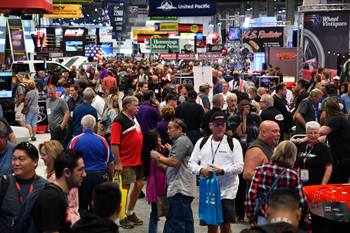
Hot Rod Alley 2019The Las Vegas Convention Center’s Central Hall—also known as Hot Rod Alley—was a hub of activity at the 2018 SEMA Show. Recent sanctioning-body reclassifications have greatly expanded the hot-rod market segment and, with it, the opportunity for ever more imaginative and innovative builds on an expanding number of vehicles.

If the SEMA Show comprises the body of the automotive aftermarket, Hot Rod Alley might well be said to be its beating heart. For decades, the hot-rod and performance-street segments have led the aftermarket in leading-edge engine, drivetrain and suspension technologies. Given recent industry and technological trends, the hot-rodding market segment only figures to increase in popularity and sales in years to come. As it stands, the hot-rodding segment is an integral part of a $1.26-billion industry, according to the latest available report from the Hot Rod Industry Alliance (HRIA).

While the ’32–’48 roadsters of old may be rodding’s most iconic rides, the definition of what constitutes a “hot rod” has expanded in recent years—in particular since the Goodguys Rod & Custom Association revised its eligibility list in 2018 to include vehicle makes and models up to the ’87 model year in its nationwide show series. Pickups and musclecars, to name but two, are once-neglected categories that now qualify for hot-rod status—and they are, in fact, two of the hottest segments in the market at present.

As with any enthusiast-driven vehicle segment, hot rodding faces a number of challenges in the coming years, while also presenting some intriguing opportunities for future growth. For this article, we contacted some two dozen industry insiders representing manufacturers, fabricators, racers, retailers, media and enthusiasts. What follows is a compilation of their insights.

The State of the Industry

Hot Rod MarketA hint of future trends, perhaps, the ’19 Chevy Camaro eCOPO concept debuted at the 2018 SEMA Show sporting an all-electric powertrain said to generate 700 hp and 600 lb.-ft. of torque. A number of experts we consulted expect to see an increasing number of “electro-mods” in the coming years.

Overall, the experts we consulted overwhelmingly agreed that the state of the hot-rod aftermarket is robust and has been on an upswing for most of the past decade. Brian Brennan, network director at Motor Trend Group, said he detected “a noticeable comeback that began about five years ago.” Josh Henning, director of operations and business development at Roadster Shop, said he’s seeing the entry of “more new customers, age groups and interests than I have ever seen in the past 20 years.” Vintage Air Executive Vice President and former HRIA Chair Rick Love has seen a steady increase in growth, adding that “it’s encouraging when I see some of our warehouse distributors stocking up on inventory. That’s an indication that they see a strong market ahead for them, too.”

While agreeing that the state of the industry is strong, Goodguys Gazette Editor Damon Lee sees a gradual change overtaking the market: “The traditional pre-’48 hot-rod market has likely hit a plateau, but we are still seeing great growth in ’60s-and-newer vehicles that fall under the broader definition of a hot rod. Those different types of cars bring different needs with them, and we see the market shifting, adapting and evolving to better
serve them.”

New Trends: Classic Old Pickups, Brand-New Tech

Across the board, the experts we consulted agreed on one of the hottest segments in hot rodding, and one that seems to be driving a lot of growth: pickups. Brennan pointed to the ’73–’87 Chevy as the hottest at present, with ’48–’52 and ’67–’72 bowties close behind. Love concurred.

“For a while, the ’73–’87 Chevy wasn’t all that popular,” he said. “Now, those square-body pickups have just boomed in popularity, and I think that’s going to extend to the ’88–’93s and later models.”

Hot Rod MarketPickups are still among the hottest platforms in the hot-rod/performance-street market segment. This restomod ’71 Chevy K-Blazer was a highlight of the 2018 SEMA Show and neatly encapsulates builders Mike and Jim Ring’s current views on the direction of the market: “Seventies trucks are where it’s at.”

InGear Media head Todd Ryden said that ’70s and ’80s pickups are “absolutely on fire.” Edelbrock President and CEO Don Barry agreed that the segment is “in hyperdrive.” And John McLeod, owner of Classic Instruments and former HRIA chair, noted that older trucks provide an attractive build platform because the entry price is low and good parts are available.

Within the truck segment itself, “the most popular modification is suspension—and air-ride in particular,” said Scott Nelson, operations manager of C-10 pickup specialist GSI Machine & Fabrication. “Advancements in chassis design and air management have really evolved and lent themselves to a more hassle-free and user-friendly experience.” Also garnering notice was the LS engine platform, which Barry observed “is super-hot right now and not going away anytime soon.”

Another growing market segment that nearly all of the experts pointed to is embodied by the trend of applying newer technologies, such as electronically controlled engines, modern comfort features, wireless communications and the like to older vehicle platforms. To Nitro Cool Owner Shawn Parker, the single biggest change in the hot-rod market in recent years has been the wholesale acceptance of ECM-controlled engine assemblies.

Love pointed to the increase in products that enhance the driving experience, particularly with older, rough-riding vehicles. “Those musclecars of the ’60s were famous for having all kinds of horsepower and absolutely terrible braking systems,” he recalled. “Products that improve the overall driving experience are what’s really fueling the growth.” Henning concurred.

“Without a doubt, the leading trend we are seeing on a daily basis is toward modifications that first and foremost enhance the driving experience, to get people enjoying their vehicles faster,” he said. And Trevor Hobson, national sales manager at VSF Racing, said: “We’re seeing a lot more electronics-related upgrades, whether it is fuel injection, power steering, performance management or interior amenities.”

Hot Rod MarketSixties-vintage musclecars, once excluded from the hot-rod designation, are now show-eligible and, according to our experts, are driving a great deal of current market growth. This LS3-powered ’69 Camaro built by Kyle Tucker was the winner of SEMA’s 2018 Battle of the Builders competition.

The experts also agreed that build quality has improved markedly in recent years. Love pointed to “the sheer quantity and quality of reproduction parts, body parts and trim parts that are available now. They have really improved across a whole range of makes and models, and I think that’s fueled a lot of growth.”

In a related vein, Mike and Jim Ring, co-founders of Ringbrothers, explained how advances in computerization have helped to drive the growth of high-quality components: “A couple years ago, we dabbled in scanning and designing body parts for our builds using CAD and then CNC-machining plugs for carbon parts production. The process adds a level of precision to the body that is impossible to achieve by hand.”

Parker also noted changes in enthusiasts’ buying habits and how they have affected build priorities. “The quality of the builds across the board over the past 10 years has been revolutionized,” he said, “I think that’s because a lot less money is being spent on things that used to be high-ticket items. The LS drivetrain, for instance. Nowadays, $2,500 buys a very good used, guaranteed 5.3L/automatic combo, so the guys are spending less on things like that and more on fit and finish items.”

Short-Term Challenges: Taxes, Tariffs and Staffing

A government initiative that a number of the experts felt could have an impact on the market for 2019 and beyond is the potential fallout from the 2018 Supreme Court decision (South Dakota vs. Wayfair) that allows states to charge sales tax from out-of-state sellers, even if the seller has no physical presence in the taxing state.

“We’re seeing a lot of changes in tax codes being enacted in various states, and distributors and manufacturers will now have to start collecting sales tax, submitting that tax and submitting tax returns,” Love said. “It’s another clerical accounting layer that’s being applied to the industry, and it’s going to be a challenge because it’s not something that’s easy to do.”

Hot Rod MarketWhile pickups and ’60s pony cars may be the rage at present, there’s still plenty of room in the rodding segment for old-school roadsters like this ’36 Ford built by Jason Graham. Powered by an injected 347ci small-block, it was a finalist at SEMA’s 2018 Battle of the Builders competition.

While bigger companies may be able to accommodate the state mandates with their existing organizational infrastructure, smaller to midsize companies may face logistical challenges and increased expenses.

“If you’re a smaller company, you’ll either have to contract out to a firm with software tied in that will help you through that, or you’re going to have to hire someone to help you navigate your way through the process,” Love said. “I think a lot of people in the industry—and consumers—don’t realize how much change this is going to bring.”

McLeod echoed that sentiment, saying that the new tax mandates “will change the industry as we know it today.” Hobson claims it’s “the biggest change we’ve seen over the last year, and it will be interesting to see how it plays out over the next 12 to 24 months.”

The experts could not reach a consensus on the market effects being felt as a result of the ongoing United States-China trade war, with roughly equal numbers claiming that their businesses had been either helped or handicapped by the imposition of tariffs. However, all agreed with the sentiments expressed by Barry, who felt that the dispute has cast a question mark over much of the industry.

“I’d like to see this ironed out so that we can put this behind us and say we don’t have to worry about this anymore,” he said.

Another challenge that many companies face in a growing economy with low unemployment is staffing. Henning considered this his company’s biggest challenge in order to keep up with greater demands from a changing customer demographic. The Rings pointed out the challenge of staffing and retaining young talent in their rural location, adding that they’re working with local trade schools to find solutions. McLeod agreed, saying that employee retention is key to expanding business.

The Next Generation: The Millennial Wave

From the ’60s onward, interest in hot rodding has been driven primarily by a now-dwindling Baby Boomer enthusiast demographic, and one challenge facing the industry is the ability to attract a new generation of builders to the hobby.

“This has to be one of our biggest concerns,” Love said, noting the success of SEMA and HRIA youth programs at attracting new hobbyists. Danny Agosta, Steel Rubber Products automotive project coordinator, has noticed a demographic change sweep the segment over the past decade.

“One of the biggest changes I see in the market is the continued growth of Millennials,” Agosta said. “I’m 29, and I remember when I was in my early 20s, I didn’t see many people my age. Now I do.” Henning said that “it’s encouraging to see such an influx of first timers,” and Ryden also noted the growth of newer custom-car shows that are aimed at a younger enthusiast demographic.

“Roadkill Nights draws thousands,” Ryden said. “Their Hooptie Challenge is all younger guys working with what they can find to go fast, and LS Fests all seem to draw younger rodders. Take in the Hot Rod Hill Climb, Vintage Torque Fest, Lone Star Throwdown, C10s in The Park and other shows, and you’ll see nothing but younger guys playing with old technology.”

Barry additionally noted the continued strong appeal of drifting among younger enthusiasts on a limited budget.

“It’s mostly young kids who don’t have that much money,” he said. “They tend to self-fund their own cars, but they’re making it happen—and now the sport is getting big. It may still be under the radar of some of the bigger corporate sponsors, but it’s giving younger people an opportunity to get into the sport and have fun with it.”

Love saw an additional reason for optimism, pointing to the growing popularity of pickups and later-model vehicles that can be had for reasonably low prices, which in turn could give younger builders on a budget an entrée to the hobby.

“The price of admission for a pickup is a lot less than a lot of the more-expensive cars,” he said. “I think that a lot of late-’80s GM cars—the Monte Carlos and others that older enthusiasts kind of overlooked—are starting to become more popular now with younger hobbyists.”

Lee added that “one reason Goodguys opened up our events to vehicles through ’87 is the availability of those vehicles and the ease with which enthusiasts can make them strong performers with bolt-on parts.”

Looking Ahead: The Changing Hot-Rod Marketplace

Which leads us to ask: What actually qualifies as a hot rod in the 21st century? The answer, it would seem, is anything on four wheels that builders want to customize.

“From dusty barn finds to four-door fullsize cruisers, slammed Suburbans or Mustang IIs, restified musclecars, Tri-Fives and ’30s rods, they’re all being done,” Ryden observed. “Today, we get to see them all.”

Henning sees market evolution as inevitable: “As the customer base changes, the projects and types of vehicles they’re interested in will change as well—not just in genre or year/model but also the intended use. Builders’ individual needs will make it harder to label or categorize builds or styles.”

Nearly all of the experts we consulted agreed that the new-tech-for-old-iron trend will continue into the foreseeable future. “There seems to be no shortage of new products to be developed,” observed David Hays, owner of Hot Rod Innovations.

According to the latest HRIA market survey, nearly half of all classic-car owners rely on internet searches when shopping for parts. In that vein, many of the experts agreed that a healthy online presence—including social media—will likely be an integral part of any future business model.

“Millennials grew up shopping online,” Agosta reminded. “Many use the internet exclusively to research and order parts.”

Love agreed on the need for an online public profile: “We have a presence on social media, and that’s absolutely crucial to our business.”

On the other hand, Trent Campbell, president of CarBuff Network, cautioned against overreliance on social-media as sites such as Facebook and Instagram continue to grow their user bases.

“Platforms that have worked well for the last 10 years are becoming crowded, making it difficult to create and maintain brand awareness,” Campbell said. He sees old-school relationships and networking as critical to creating a solid brand and said that the industry’s traditional word-of-mouth communications model will always play a key role in the automotive aftermarket.

One relatively new market segment that’s already attracting interest, and which has the potential for tremendous future growth, is electrification. The idea of a hot rod without an internal-combustion engine may seem like heresy to some, but the advent of electric hot rods is upon us, Brennan noted, saying that “we will see more and more examples in the next few years.” As examples, he pointed to Chevrolet’s eCOPO Camaro concept, which was unveiled at the 2018 SEMA Show, as well as a Tesla powertrain in a ’49 Mercury as example of the new-tech/old-car paradigm that was one of the Show’s biggest draws.

Parker concurred: “A lot of it will be legislated, so some of those changes will happen whether we like them or not, but as EVs grow in popularity and successive generations of Priuses get better, we will eventually see the adoption of these newer technologies.”

But Barry noted the volatility surrounding the still-evolving EV market to suggest that the transition to electric rods is likely to happen slowly: “That side of the market is still trying to figure itself out, and it has its own set of challenges. I think that’s why internal-combustion engines are going to be here for quite a while.”

Resources for Hot Rodders

Hot Rod Industry Alliance: SEMA’s Hot Rod Industry Alliance is a council dedicated to preserving the hobby and promoting the industry. To learn more about how your business can get involved and benefit from the community, visit www.sema.org/hria.

SEMA Action Network: The SEMA Action Network (SAN) is a nationwide partnership between vehicle clubs, enthusiasts and members of the specialty auto-parts industry who want to promote and preserve their hobby. Founded in 1997, SAN was designed to raise awareness of legislative threats to the hobby and to promote more favorable legislation. To learn more and join, visit www.semasan.com.

Sat, 06/01/2019 - 12:10

SEMA News—June 2019

BUSINESS

By Douglas McColloch

The New State of Hot Rodding

What’s Hot, New and Trending for 2019 and Beyond

Hot Rod Alley 2019The Las Vegas Convention Center’s Central Hall—also known as Hot Rod Alley—was a hub of activity at the 2018 SEMA Show. Recent sanctioning-body reclassifications have greatly expanded the hot-rod market segment and, with it, the opportunity for ever more imaginative and innovative builds on an expanding number of vehicles.

If the SEMA Show comprises the body of the automotive aftermarket, Hot Rod Alley might well be said to be its beating heart. For decades, the hot-rod and performance-street segments have led the aftermarket in leading-edge engine, drivetrain and suspension technologies. Given recent industry and technological trends, the hot-rodding market segment only figures to increase in popularity and sales in years to come. As it stands, the hot-rodding segment is an integral part of a $1.26-billion industry, according to the latest available report from the Hot Rod Industry Alliance (HRIA).

While the ’32–’48 roadsters of old may be rodding’s most iconic rides, the definition of what constitutes a “hot rod” has expanded in recent years—in particular since the Goodguys Rod & Custom Association revised its eligibility list in 2018 to include vehicle makes and models up to the ’87 model year in its nationwide show series. Pickups and musclecars, to name but two, are once-neglected categories that now qualify for hot-rod status—and they are, in fact, two of the hottest segments in the market at present.

As with any enthusiast-driven vehicle segment, hot rodding faces a number of challenges in the coming years, while also presenting some intriguing opportunities for future growth. For this article, we contacted some two dozen industry insiders representing manufacturers, fabricators, racers, retailers, media and enthusiasts. What follows is a compilation of their insights.

The State of the Industry

Hot Rod MarketA hint of future trends, perhaps, the ’19 Chevy Camaro eCOPO concept debuted at the 2018 SEMA Show sporting an all-electric powertrain said to generate 700 hp and 600 lb.-ft. of torque. A number of experts we consulted expect to see an increasing number of “electro-mods” in the coming years.

Overall, the experts we consulted overwhelmingly agreed that the state of the hot-rod aftermarket is robust and has been on an upswing for most of the past decade. Brian Brennan, network director at Motor Trend Group, said he detected “a noticeable comeback that began about five years ago.” Josh Henning, director of operations and business development at Roadster Shop, said he’s seeing the entry of “more new customers, age groups and interests than I have ever seen in the past 20 years.” Vintage Air Executive Vice President and former HRIA Chair Rick Love has seen a steady increase in growth, adding that “it’s encouraging when I see some of our warehouse distributors stocking up on inventory. That’s an indication that they see a strong market ahead for them, too.”

While agreeing that the state of the industry is strong, Goodguys Gazette Editor Damon Lee sees a gradual change overtaking the market: “The traditional pre-’48 hot-rod market has likely hit a plateau, but we are still seeing great growth in ’60s-and-newer vehicles that fall under the broader definition of a hot rod. Those different types of cars bring different needs with them, and we see the market shifting, adapting and evolving to better
serve them.”

New Trends: Classic Old Pickups, Brand-New Tech

Across the board, the experts we consulted agreed on one of the hottest segments in hot rodding, and one that seems to be driving a lot of growth: pickups. Brennan pointed to the ’73–’87 Chevy as the hottest at present, with ’48–’52 and ’67–’72 bowties close behind. Love concurred.

“For a while, the ’73–’87 Chevy wasn’t all that popular,” he said. “Now, those square-body pickups have just boomed in popularity, and I think that’s going to extend to the ’88–’93s and later models.”

Hot Rod MarketPickups are still among the hottest platforms in the hot-rod/performance-street market segment. This restomod ’71 Chevy K-Blazer was a highlight of the 2018 SEMA Show and neatly encapsulates builders Mike and Jim Ring’s current views on the direction of the market: “Seventies trucks are where it’s at.”

InGear Media head Todd Ryden said that ’70s and ’80s pickups are “absolutely on fire.” Edelbrock President and CEO Don Barry agreed that the segment is “in hyperdrive.” And John McLeod, owner of Classic Instruments and former HRIA chair, noted that older trucks provide an attractive build platform because the entry price is low and good parts are available.

Within the truck segment itself, “the most popular modification is suspension—and air-ride in particular,” said Scott Nelson, operations manager of C-10 pickup specialist GSI Machine & Fabrication. “Advancements in chassis design and air management have really evolved and lent themselves to a more hassle-free and user-friendly experience.” Also garnering notice was the LS engine platform, which Barry observed “is super-hot right now and not going away anytime soon.”

Another growing market segment that nearly all of the experts pointed to is embodied by the trend of applying newer technologies, such as electronically controlled engines, modern comfort features, wireless communications and the like to older vehicle platforms. To Nitro Cool Owner Shawn Parker, the single biggest change in the hot-rod market in recent years has been the wholesale acceptance of ECM-controlled engine assemblies.

Love pointed to the increase in products that enhance the driving experience, particularly with older, rough-riding vehicles. “Those musclecars of the ’60s were famous for having all kinds of horsepower and absolutely terrible braking systems,” he recalled. “Products that improve the overall driving experience are what’s really fueling the growth.” Henning concurred.

“Without a doubt, the leading trend we are seeing on a daily basis is toward modifications that first and foremost enhance the driving experience, to get people enjoying their vehicles faster,” he said. And Trevor Hobson, national sales manager at VSF Racing, said: “We’re seeing a lot more electronics-related upgrades, whether it is fuel injection, power steering, performance management or interior amenities.”

Hot Rod MarketSixties-vintage musclecars, once excluded from the hot-rod designation, are now show-eligible and, according to our experts, are driving a great deal of current market growth. This LS3-powered ’69 Camaro built by Kyle Tucker was the winner of SEMA’s 2018 Battle of the Builders competition.

The experts also agreed that build quality has improved markedly in recent years. Love pointed to “the sheer quantity and quality of reproduction parts, body parts and trim parts that are available now. They have really improved across a whole range of makes and models, and I think that’s fueled a lot of growth.”

In a related vein, Mike and Jim Ring, co-founders of Ringbrothers, explained how advances in computerization have helped to drive the growth of high-quality components: “A couple years ago, we dabbled in scanning and designing body parts for our builds using CAD and then CNC-machining plugs for carbon parts production. The process adds a level of precision to the body that is impossible to achieve by hand.”

Parker also noted changes in enthusiasts’ buying habits and how they have affected build priorities. “The quality of the builds across the board over the past 10 years has been revolutionized,” he said, “I think that’s because a lot less money is being spent on things that used to be high-ticket items. The LS drivetrain, for instance. Nowadays, $2,500 buys a very good used, guaranteed 5.3L/automatic combo, so the guys are spending less on things like that and more on fit and finish items.”

Short-Term Challenges: Taxes, Tariffs and Staffing

A government initiative that a number of the experts felt could have an impact on the market for 2019 and beyond is the potential fallout from the 2018 Supreme Court decision (South Dakota vs. Wayfair) that allows states to charge sales tax from out-of-state sellers, even if the seller has no physical presence in the taxing state.

“We’re seeing a lot of changes in tax codes being enacted in various states, and distributors and manufacturers will now have to start collecting sales tax, submitting that tax and submitting tax returns,” Love said. “It’s another clerical accounting layer that’s being applied to the industry, and it’s going to be a challenge because it’s not something that’s easy to do.”

Hot Rod MarketWhile pickups and ’60s pony cars may be the rage at present, there’s still plenty of room in the rodding segment for old-school roadsters like this ’36 Ford built by Jason Graham. Powered by an injected 347ci small-block, it was a finalist at SEMA’s 2018 Battle of the Builders competition.

While bigger companies may be able to accommodate the state mandates with their existing organizational infrastructure, smaller to midsize companies may face logistical challenges and increased expenses.

“If you’re a smaller company, you’ll either have to contract out to a firm with software tied in that will help you through that, or you’re going to have to hire someone to help you navigate your way through the process,” Love said. “I think a lot of people in the industry—and consumers—don’t realize how much change this is going to bring.”

McLeod echoed that sentiment, saying that the new tax mandates “will change the industry as we know it today.” Hobson claims it’s “the biggest change we’ve seen over the last year, and it will be interesting to see how it plays out over the next 12 to 24 months.”

The experts could not reach a consensus on the market effects being felt as a result of the ongoing United States-China trade war, with roughly equal numbers claiming that their businesses had been either helped or handicapped by the imposition of tariffs. However, all agreed with the sentiments expressed by Barry, who felt that the dispute has cast a question mark over much of the industry.

“I’d like to see this ironed out so that we can put this behind us and say we don’t have to worry about this anymore,” he said.

Another challenge that many companies face in a growing economy with low unemployment is staffing. Henning considered this his company’s biggest challenge in order to keep up with greater demands from a changing customer demographic. The Rings pointed out the challenge of staffing and retaining young talent in their rural location, adding that they’re working with local trade schools to find solutions. McLeod agreed, saying that employee retention is key to expanding business.

The Next Generation: The Millennial Wave

From the ’60s onward, interest in hot rodding has been driven primarily by a now-dwindling Baby Boomer enthusiast demographic, and one challenge facing the industry is the ability to attract a new generation of builders to the hobby.

“This has to be one of our biggest concerns,” Love said, noting the success of SEMA and HRIA youth programs at attracting new hobbyists. Danny Agosta, Steel Rubber Products automotive project coordinator, has noticed a demographic change sweep the segment over the past decade.

“One of the biggest changes I see in the market is the continued growth of Millennials,” Agosta said. “I’m 29, and I remember when I was in my early 20s, I didn’t see many people my age. Now I do.” Henning said that “it’s encouraging to see such an influx of first timers,” and Ryden also noted the growth of newer custom-car shows that are aimed at a younger enthusiast demographic.

“Roadkill Nights draws thousands,” Ryden said. “Their Hooptie Challenge is all younger guys working with what they can find to go fast, and LS Fests all seem to draw younger rodders. Take in the Hot Rod Hill Climb, Vintage Torque Fest, Lone Star Throwdown, C10s in The Park and other shows, and you’ll see nothing but younger guys playing with old technology.”

Barry additionally noted the continued strong appeal of drifting among younger enthusiasts on a limited budget.

“It’s mostly young kids who don’t have that much money,” he said. “They tend to self-fund their own cars, but they’re making it happen—and now the sport is getting big. It may still be under the radar of some of the bigger corporate sponsors, but it’s giving younger people an opportunity to get into the sport and have fun with it.”

Love saw an additional reason for optimism, pointing to the growing popularity of pickups and later-model vehicles that can be had for reasonably low prices, which in turn could give younger builders on a budget an entrée to the hobby.

“The price of admission for a pickup is a lot less than a lot of the more-expensive cars,” he said. “I think that a lot of late-’80s GM cars—the Monte Carlos and others that older enthusiasts kind of overlooked—are starting to become more popular now with younger hobbyists.”

Lee added that “one reason Goodguys opened up our events to vehicles through ’87 is the availability of those vehicles and the ease with which enthusiasts can make them strong performers with bolt-on parts.”

Looking Ahead: The Changing Hot-Rod Marketplace

Which leads us to ask: What actually qualifies as a hot rod in the 21st century? The answer, it would seem, is anything on four wheels that builders want to customize.

“From dusty barn finds to four-door fullsize cruisers, slammed Suburbans or Mustang IIs, restified musclecars, Tri-Fives and ’30s rods, they’re all being done,” Ryden observed. “Today, we get to see them all.”

Henning sees market evolution as inevitable: “As the customer base changes, the projects and types of vehicles they’re interested in will change as well—not just in genre or year/model but also the intended use. Builders’ individual needs will make it harder to label or categorize builds or styles.”

Nearly all of the experts we consulted agreed that the new-tech-for-old-iron trend will continue into the foreseeable future. “There seems to be no shortage of new products to be developed,” observed David Hays, owner of Hot Rod Innovations.

According to the latest HRIA market survey, nearly half of all classic-car owners rely on internet searches when shopping for parts. In that vein, many of the experts agreed that a healthy online presence—including social media—will likely be an integral part of any future business model.

“Millennials grew up shopping online,” Agosta reminded. “Many use the internet exclusively to research and order parts.”

Love agreed on the need for an online public profile: “We have a presence on social media, and that’s absolutely crucial to our business.”

On the other hand, Trent Campbell, president of CarBuff Network, cautioned against overreliance on social-media as sites such as Facebook and Instagram continue to grow their user bases.

“Platforms that have worked well for the last 10 years are becoming crowded, making it difficult to create and maintain brand awareness,” Campbell said. He sees old-school relationships and networking as critical to creating a solid brand and said that the industry’s traditional word-of-mouth communications model will always play a key role in the automotive aftermarket.

One relatively new market segment that’s already attracting interest, and which has the potential for tremendous future growth, is electrification. The idea of a hot rod without an internal-combustion engine may seem like heresy to some, but the advent of electric hot rods is upon us, Brennan noted, saying that “we will see more and more examples in the next few years.” As examples, he pointed to Chevrolet’s eCOPO Camaro concept, which was unveiled at the 2018 SEMA Show, as well as a Tesla powertrain in a ’49 Mercury as example of the new-tech/old-car paradigm that was one of the Show’s biggest draws.

Parker concurred: “A lot of it will be legislated, so some of those changes will happen whether we like them or not, but as EVs grow in popularity and successive generations of Priuses get better, we will eventually see the adoption of these newer technologies.”

But Barry noted the volatility surrounding the still-evolving EV market to suggest that the transition to electric rods is likely to happen slowly: “That side of the market is still trying to figure itself out, and it has its own set of challenges. I think that’s why internal-combustion engines are going to be here for quite a while.”

Resources for Hot Rodders

Hot Rod Industry Alliance: SEMA’s Hot Rod Industry Alliance is a council dedicated to preserving the hobby and promoting the industry. To learn more about how your business can get involved and benefit from the community, visit www.sema.org/hria.

SEMA Action Network: The SEMA Action Network (SAN) is a nationwide partnership between vehicle clubs, enthusiasts and members of the specialty auto-parts industry who want to promote and preserve their hobby. Founded in 1997, SAN was designed to raise awareness of legislative threats to the hobby and to promote more favorable legislation. To learn more and join, visit www.semasan.com.

Sat, 06/01/2019 - 12:10

SEMA News—June 2019

BUSINESS

By Douglas McColloch

The New State of Hot Rodding

What’s Hot, New and Trending for 2019 and Beyond

Hot Rod Alley 2019The Las Vegas Convention Center’s Central Hall—also known as Hot Rod Alley—was a hub of activity at the 2018 SEMA Show. Recent sanctioning-body reclassifications have greatly expanded the hot-rod market segment and, with it, the opportunity for ever more imaginative and innovative builds on an expanding number of vehicles.

If the SEMA Show comprises the body of the automotive aftermarket, Hot Rod Alley might well be said to be its beating heart. For decades, the hot-rod and performance-street segments have led the aftermarket in leading-edge engine, drivetrain and suspension technologies. Given recent industry and technological trends, the hot-rodding market segment only figures to increase in popularity and sales in years to come. As it stands, the hot-rodding segment is an integral part of a $1.26-billion industry, according to the latest available report from the Hot Rod Industry Alliance (HRIA).

While the ’32–’48 roadsters of old may be rodding’s most iconic rides, the definition of what constitutes a “hot rod” has expanded in recent years—in particular since the Goodguys Rod & Custom Association revised its eligibility list in 2018 to include vehicle makes and models up to the ’87 model year in its nationwide show series. Pickups and musclecars, to name but two, are once-neglected categories that now qualify for hot-rod status—and they are, in fact, two of the hottest segments in the market at present.

As with any enthusiast-driven vehicle segment, hot rodding faces a number of challenges in the coming years, while also presenting some intriguing opportunities for future growth. For this article, we contacted some two dozen industry insiders representing manufacturers, fabricators, racers, retailers, media and enthusiasts. What follows is a compilation of their insights.

The State of the Industry

Hot Rod MarketA hint of future trends, perhaps, the ’19 Chevy Camaro eCOPO concept debuted at the 2018 SEMA Show sporting an all-electric powertrain said to generate 700 hp and 600 lb.-ft. of torque. A number of experts we consulted expect to see an increasing number of “electro-mods” in the coming years.

Overall, the experts we consulted overwhelmingly agreed that the state of the hot-rod aftermarket is robust and has been on an upswing for most of the past decade. Brian Brennan, network director at Motor Trend Group, said he detected “a noticeable comeback that began about five years ago.” Josh Henning, director of operations and business development at Roadster Shop, said he’s seeing the entry of “more new customers, age groups and interests than I have ever seen in the past 20 years.” Vintage Air Executive Vice President and former HRIA Chair Rick Love has seen a steady increase in growth, adding that “it’s encouraging when I see some of our warehouse distributors stocking up on inventory. That’s an indication that they see a strong market ahead for them, too.”

While agreeing that the state of the industry is strong, Goodguys Gazette Editor Damon Lee sees a gradual change overtaking the market: “The traditional pre-’48 hot-rod market has likely hit a plateau, but we are still seeing great growth in ’60s-and-newer vehicles that fall under the broader definition of a hot rod. Those different types of cars bring different needs with them, and we see the market shifting, adapting and evolving to better
serve them.”

New Trends: Classic Old Pickups, Brand-New Tech

Across the board, the experts we consulted agreed on one of the hottest segments in hot rodding, and one that seems to be driving a lot of growth: pickups. Brennan pointed to the ’73–’87 Chevy as the hottest at present, with ’48–’52 and ’67–’72 bowties close behind. Love concurred.

“For a while, the ’73–’87 Chevy wasn’t all that popular,” he said. “Now, those square-body pickups have just boomed in popularity, and I think that’s going to extend to the ’88–’93s and later models.”

Hot Rod MarketPickups are still among the hottest platforms in the hot-rod/performance-street market segment. This restomod ’71 Chevy K-Blazer was a highlight of the 2018 SEMA Show and neatly encapsulates builders Mike and Jim Ring’s current views on the direction of the market: “Seventies trucks are where it’s at.”

InGear Media head Todd Ryden said that ’70s and ’80s pickups are “absolutely on fire.” Edelbrock President and CEO Don Barry agreed that the segment is “in hyperdrive.” And John McLeod, owner of Classic Instruments and former HRIA chair, noted that older trucks provide an attractive build platform because the entry price is low and good parts are available.

Within the truck segment itself, “the most popular modification is suspension—and air-ride in particular,” said Scott Nelson, operations manager of C-10 pickup specialist GSI Machine & Fabrication. “Advancements in chassis design and air management have really evolved and lent themselves to a more hassle-free and user-friendly experience.” Also garnering notice was the LS engine platform, which Barry observed “is super-hot right now and not going away anytime soon.”

Another growing market segment that nearly all of the experts pointed to is embodied by the trend of applying newer technologies, such as electronically controlled engines, modern comfort features, wireless communications and the like to older vehicle platforms. To Nitro Cool Owner Shawn Parker, the single biggest change in the hot-rod market in recent years has been the wholesale acceptance of ECM-controlled engine assemblies.

Love pointed to the increase in products that enhance the driving experience, particularly with older, rough-riding vehicles. “Those musclecars of the ’60s were famous for having all kinds of horsepower and absolutely terrible braking systems,” he recalled. “Products that improve the overall driving experience are what’s really fueling the growth.” Henning concurred.

“Without a doubt, the leading trend we are seeing on a daily basis is toward modifications that first and foremost enhance the driving experience, to get people enjoying their vehicles faster,” he said. And Trevor Hobson, national sales manager at VSF Racing, said: “We’re seeing a lot more electronics-related upgrades, whether it is fuel injection, power steering, performance management or interior amenities.”

Hot Rod MarketSixties-vintage musclecars, once excluded from the hot-rod designation, are now show-eligible and, according to our experts, are driving a great deal of current market growth. This LS3-powered ’69 Camaro built by Kyle Tucker was the winner of SEMA’s 2018 Battle of the Builders competition.

The experts also agreed that build quality has improved markedly in recent years. Love pointed to “the sheer quantity and quality of reproduction parts, body parts and trim parts that are available now. They have really improved across a whole range of makes and models, and I think that’s fueled a lot of growth.”

In a related vein, Mike and Jim Ring, co-founders of Ringbrothers, explained how advances in computerization have helped to drive the growth of high-quality components: “A couple years ago, we dabbled in scanning and designing body parts for our builds using CAD and then CNC-machining plugs for carbon parts production. The process adds a level of precision to the body that is impossible to achieve by hand.”

Parker also noted changes in enthusiasts’ buying habits and how they have affected build priorities. “The quality of the builds across the board over the past 10 years has been revolutionized,” he said, “I think that’s because a lot less money is being spent on things that used to be high-ticket items. The LS drivetrain, for instance. Nowadays, $2,500 buys a very good used, guaranteed 5.3L/automatic combo, so the guys are spending less on things like that and more on fit and finish items.”

Short-Term Challenges: Taxes, Tariffs and Staffing

A government initiative that a number of the experts felt could have an impact on the market for 2019 and beyond is the potential fallout from the 2018 Supreme Court decision (South Dakota vs. Wayfair) that allows states to charge sales tax from out-of-state sellers, even if the seller has no physical presence in the taxing state.

“We’re seeing a lot of changes in tax codes being enacted in various states, and distributors and manufacturers will now have to start collecting sales tax, submitting that tax and submitting tax returns,” Love said. “It’s another clerical accounting layer that’s being applied to the industry, and it’s going to be a challenge because it’s not something that’s easy to do.”

Hot Rod MarketWhile pickups and ’60s pony cars may be the rage at present, there’s still plenty of room in the rodding segment for old-school roadsters like this ’36 Ford built by Jason Graham. Powered by an injected 347ci small-block, it was a finalist at SEMA’s 2018 Battle of the Builders competition.

While bigger companies may be able to accommodate the state mandates with their existing organizational infrastructure, smaller to midsize companies may face logistical challenges and increased expenses.

“If you’re a smaller company, you’ll either have to contract out to a firm with software tied in that will help you through that, or you’re going to have to hire someone to help you navigate your way through the process,” Love said. “I think a lot of people in the industry—and consumers—don’t realize how much change this is going to bring.”

McLeod echoed that sentiment, saying that the new tax mandates “will change the industry as we know it today.” Hobson claims it’s “the biggest change we’ve seen over the last year, and it will be interesting to see how it plays out over the next 12 to 24 months.”

The experts could not reach a consensus on the market effects being felt as a result of the ongoing United States-China trade war, with roughly equal numbers claiming that their businesses had been either helped or handicapped by the imposition of tariffs. However, all agreed with the sentiments expressed by Barry, who felt that the dispute has cast a question mark over much of the industry.

“I’d like to see this ironed out so that we can put this behind us and say we don’t have to worry about this anymore,” he said.

Another challenge that many companies face in a growing economy with low unemployment is staffing. Henning considered this his company’s biggest challenge in order to keep up with greater demands from a changing customer demographic. The Rings pointed out the challenge of staffing and retaining young talent in their rural location, adding that they’re working with local trade schools to find solutions. McLeod agreed, saying that employee retention is key to expanding business.

The Next Generation: The Millennial Wave

From the ’60s onward, interest in hot rodding has been driven primarily by a now-dwindling Baby Boomer enthusiast demographic, and one challenge facing the industry is the ability to attract a new generation of builders to the hobby.

“This has to be one of our biggest concerns,” Love said, noting the success of SEMA and HRIA youth programs at attracting new hobbyists. Danny Agosta, Steel Rubber Products automotive project coordinator, has noticed a demographic change sweep the segment over the past decade.

“One of the biggest changes I see in the market is the continued growth of Millennials,” Agosta said. “I’m 29, and I remember when I was in my early 20s, I didn’t see many people my age. Now I do.” Henning said that “it’s encouraging to see such an influx of first timers,” and Ryden also noted the growth of newer custom-car shows that are aimed at a younger enthusiast demographic.

“Roadkill Nights draws thousands,” Ryden said. “Their Hooptie Challenge is all younger guys working with what they can find to go fast, and LS Fests all seem to draw younger rodders. Take in the Hot Rod Hill Climb, Vintage Torque Fest, Lone Star Throwdown, C10s in The Park and other shows, and you’ll see nothing but younger guys playing with old technology.”

Barry additionally noted the continued strong appeal of drifting among younger enthusiasts on a limited budget.

“It’s mostly young kids who don’t have that much money,” he said. “They tend to self-fund their own cars, but they’re making it happen—and now the sport is getting big. It may still be under the radar of some of the bigger corporate sponsors, but it’s giving younger people an opportunity to get into the sport and have fun with it.”

Love saw an additional reason for optimism, pointing to the growing popularity of pickups and later-model vehicles that can be had for reasonably low prices, which in turn could give younger builders on a budget an entrée to the hobby.

“The price of admission for a pickup is a lot less than a lot of the more-expensive cars,” he said. “I think that a lot of late-’80s GM cars—the Monte Carlos and others that older enthusiasts kind of overlooked—are starting to become more popular now with younger hobbyists.”

Lee added that “one reason Goodguys opened up our events to vehicles through ’87 is the availability of those vehicles and the ease with which enthusiasts can make them strong performers with bolt-on parts.”

Looking Ahead: The Changing Hot-Rod Marketplace

Which leads us to ask: What actually qualifies as a hot rod in the 21st century? The answer, it would seem, is anything on four wheels that builders want to customize.

“From dusty barn finds to four-door fullsize cruisers, slammed Suburbans or Mustang IIs, restified musclecars, Tri-Fives and ’30s rods, they’re all being done,” Ryden observed. “Today, we get to see them all.”

Henning sees market evolution as inevitable: “As the customer base changes, the projects and types of vehicles they’re interested in will change as well—not just in genre or year/model but also the intended use. Builders’ individual needs will make it harder to label or categorize builds or styles.”

Nearly all of the experts we consulted agreed that the new-tech-for-old-iron trend will continue into the foreseeable future. “There seems to be no shortage of new products to be developed,” observed David Hays, owner of Hot Rod Innovations.

According to the latest HRIA market survey, nearly half of all classic-car owners rely on internet searches when shopping for parts. In that vein, many of the experts agreed that a healthy online presence—including social media—will likely be an integral part of any future business model.

“Millennials grew up shopping online,” Agosta reminded. “Many use the internet exclusively to research and order parts.”

Love agreed on the need for an online public profile: “We have a presence on social media, and that’s absolutely crucial to our business.”

On the other hand, Trent Campbell, president of CarBuff Network, cautioned against overreliance on social-media as sites such as Facebook and Instagram continue to grow their user bases.

“Platforms that have worked well for the last 10 years are becoming crowded, making it difficult to create and maintain brand awareness,” Campbell said. He sees old-school relationships and networking as critical to creating a solid brand and said that the industry’s traditional word-of-mouth communications model will always play a key role in the automotive aftermarket.

One relatively new market segment that’s already attracting interest, and which has the potential for tremendous future growth, is electrification. The idea of a hot rod without an internal-combustion engine may seem like heresy to some, but the advent of electric hot rods is upon us, Brennan noted, saying that “we will see more and more examples in the next few years.” As examples, he pointed to Chevrolet’s eCOPO Camaro concept, which was unveiled at the 2018 SEMA Show, as well as a Tesla powertrain in a ’49 Mercury as example of the new-tech/old-car paradigm that was one of the Show’s biggest draws.

Parker concurred: “A lot of it will be legislated, so some of those changes will happen whether we like them or not, but as EVs grow in popularity and successive generations of Priuses get better, we will eventually see the adoption of these newer technologies.”

But Barry noted the volatility surrounding the still-evolving EV market to suggest that the transition to electric rods is likely to happen slowly: “That side of the market is still trying to figure itself out, and it has its own set of challenges. I think that’s why internal-combustion engines are going to be here for quite a while.”

Resources for Hot Rodders

Hot Rod Industry Alliance: SEMA’s Hot Rod Industry Alliance is a council dedicated to preserving the hobby and promoting the industry. To learn more about how your business can get involved and benefit from the community, visit www.sema.org/hria.

SEMA Action Network: The SEMA Action Network (SAN) is a nationwide partnership between vehicle clubs, enthusiasts and members of the specialty auto-parts industry who want to promote and preserve their hobby. Founded in 1997, SAN was designed to raise awareness of legislative threats to the hobby and to promote more favorable legislation. To learn more and join, visit www.semasan.com.

Sat, 06/01/2019 - 11:11

SEMA News—June 2019

INTERNATIONAL

By Linda Spencer

Connecting With Middle-East Buyers

SEMA Business Development Program Forges Valuable Relationships

Connecting With Middle-East BuyersFirst-time exhibitor Specialty Vehicle Engineering Inc./DBA Hamburger’s Superchargers Inc. attracted lots of attention among local buyers. Vice President of Marketing David Hamburger (second right) noted that he and Sales Manager P.K. Krwawecz (third right) enjoyed their first SEMA overseas business trip, especially explaining the features and benefits of Hamburger’s superchargers to potential UAE clients. The company will be also participate in the association’s upcoming trip to Australia.

One hundred and fifty-seven SEMA-member companies have traveled to the United Arab Emirates (UAE) with the association to take part in the SEMA Middle East Business Development Program and Custom Show Emirates trade show since the inaugural trip there in 2012. While certain trends, vehicle mixes and other factors have changed in the intervening eight years since the first trip, some fundamentals are consistent, including the following.

The Importance of Building Relationships Before Business in the Gulf

“Business in the Middle East is based on relationships,” said Mark Whitney, owner of Performance Analysis. “Coming over to the show and meeting the customers is the best way to build those relationships and grow your business in the market.” Added Ace Chatoo, regional sales manager and Middle East sales manager for MW Company: “The face-to-face meetings are invaluable in establishing customer relationships and securing a piece of the performance market in the UAE.”

Participating in SEMA Overseas Trips Is Designed for Those Visiting the Market for the First Time as Well as Those With Existing Customers in the Region

“For those with existing distribution in the market, traveling to the region allows for a review of relationships and time to strengthen partnerships,” said Bob Scheid, director of business development for McLeod Racing LLC. “The importance of being face-to-face with our customers in the Middle East each and every year was evident again this year. Only by being there can we see the market trends and how those trends can lead to increased sales of our products. SEMA has given us a great format to get a diverse view of the market in a very affordable and time-effective way.”

Companies Participating in the 2019 SEMA Middle East Business Development Program 
  • BDS Suspension
  • Borla Performance Industries Inc.
  • DeatschWerks Fuel Systems
  • Demon Powersports/Rugged ATV UTV Products/PD International
  • FOX
  • Injen Technology
  • McLeod Racing LLC
  • Mickey Thompson Performance Tires & Wheels
  • Motorsports Fuel and Equipment Inc./RACE-GAS
  • MotoshieldPro
  • Mustang Dynamometer
  • MW Company
  • OBD Solutions
  • Performance Analysis
  • Precision Turbo and Engine
  • Sherwood Innovations
  • Specialty Vehicle Engineering Inc./DBA Hamburger’s
  • Superchargers Inc.
  • VP Racing Fuels
  • Wilwood Engineering

Josh Abbott, global sales manager for Borla Performance Industries, agreed. His company has participated on each of the SEMA overseas trips, including the eight to the Middle East. “We once again had the chance to meet a great selection of buyers from the region, conducted critical and very useful conversations with existing partners and had the opportunity to learn about the market itself,” he said. “The UAE continues to be one of the most rewarding territories in the Gulf Cooperation Council (GCC) for Borla Performance.”

Jeff Hermann is product manager for powered vehicles at FOX. His company also has distribution in the UAE. “The SEMA Middle East trip was an excellent opportunity to validate and strengthen our current business relationships in the region,” he said. “We were also able to speak directly to consumers at the show and get valuable firsthand feedback on trends and market requests specific to the region.”

Dan Muldowney, CEO of Motorsports Fuel and Equipment/RACE GAS, enjoyed visiting the market for the first time and saw potential for his company and other SEMA members. “We were very impressed with how enthusiastic and eclectic the car culture is in the Middle East,” Muldowney said. “We saw everything from supercars to sand buggies. If it has an engine, you will find a shop in that market that will want to make it go faster!”

In fact, 100% of the participants—both returning and new to the market—reported in a post-event survey that they developed leads and plan to actively seek to turn those leads into sales over the next 12 months.

The Growing GCC Racing Scene Provides Sales Opportunities fo U.S. Companies

The Gulf region receives worldwide attention for hosting F1 races on state-of-the-art circuits in Bahrain and the UAE, and rumors that Dakar racing might be coming to the region is also good news. But some of the best opportunities are with the more grassroots events that involve passionate car enthusiasts with various levels of expertise and vehicle customization, including drag racing; drifting; karting and many other types of on- and off-track racing; sand dragging; dune climbing; and desert rallies, such as the Abu Dhabi Desert Challenge. That translates into a great and growing opportunity for U.S. companies.

“The majority of engine, brake, suspension and other products to make vehicles in the Gulf region race-ready are coming from the United States,” according to Saeed Al Marzouqi, the CEO of Custom Show Emirates.

The Automotive Specialty-Equipment Market Continues to Evolve

InternationalRon Scudder (center), international sales manager for BDS Suspension, met with local business representatives during the consumer and trade event. Each SEMA member was provided with a 3x3-m. turnkey booth at the three-day Custom Show Emirates.

One of the latest niches to explode is the UTV market, and it’s creating opportunities for U.S. manufacturers of aftermarket parts for those popular vehicles. Trucks (particularly the Nissan Patrol and Toyota Land Cruiser) have long been among the most popular off-road vehicles and are easy to spot on any trip into the desert, though sand cars, UTVs and ATVs are the fastest-growing segment.

“The UTV market in the gulf region is growing at a good pace,” said first-time exhibitor Saniya Bindrani, inside sales for Demon Powersports. “SEMA made it easier to connect with buyers and help us get an insight into the market. It is very exciting to be a part of an up-and-coming market and to be able to shape it like the first SEMA Shows did to the U.S. market.”

Custom Show Emirates Is the Largest Show in the Gulf and a Great Venue for U.S. Companies to Raise Brand Awareness, Strengthen Relationships With Exhibiting Customers and Meet Potential New Distributors

The SEMA delegation exhibited in turnkey booths at the Abu Dhabi-based show. More than 32,000 attended this year’s event, which featured local distributors in addition to the displays by the manufacturers, such as those in the SEMA section. This year, the show added new sections for RVs, UTVs/ATVs, sand buggies and power motorsports. The event also featured a wide array of competitions, including an “engine battle” between a U.S. and UAE company in which the company producing the most horsepower was named the winner. There was also a biker build-off and a custom car competition as well as drifting demonstrations in front of packed bleachers.

“By participating in the SEMA UAE Business Development Program and Custom Show Emirates, we were able to connect with key buyers in the region as well as learn about market-specific needs, challenges and expectations,” said Vitaliy Maksimov, founder and CEO of OBD Solutions.

n “The SEMA trip to the Middle East was a great experience,” said Josh Abbott (right), global sales manager for Borla Performance Industries Inc. “Thanks to the always amazing and very professional SEMA crew, we once again had the chance to meet a great selection of buyers from the region, conducted critical and very useful conversations with existing partners, and had the opportunity to learn about the market itself. For Borla Performance, the UAE continues to be one of the most rewarding territories in the Gulf region. The market consists of mostly young and middle-aged enthusiasts with a higher disposable income and immense love and passion for cars and modifications, which translates into strong business potential. We will sure go back next year to capitalize on future opportunities.

International


International

“The SEMA trip to the Middle East was a great experience,” said Josh Abbott (right), global sales manager for Borla Performance Industries Inc. “Thanks to the always amazing and very professional SEMA crew, we once again had the chance to meet a great selection of buyers from the region, conducted critical and very useful conversations with existing partners, and had the opportunity to learn about the market itself. For Borla Performance, the UAE continues to be one of the most rewarding territories in the Gulf region. The market consists of mostly young and middle-aged enthusiasts with a higher disposable income and immense love and passion for cars and modifications, which translates into strong business potential. We will sure go back next year to capitalize on future opportunities.”


“We had a good mix of trade buyers from several GCC countries present again this year who were ready to conduct business,” said David Reyna (right), international sales for DeatschWerks Fuel Systems.


International International

“The SEMA Middle East trip was an excellent opportunity to validate and strengthen our current business relationships in the region,” said Jeff Hermann (left), product manager for powered vehicles at Fox Factory. “We were also able to speak directly to consumers at the show and get valuable firsthand feedback on trends and market requests specific to the region.”


“The UTV market in the gulf region is growing at a good pace,” commented Saniya Bindrani (not pictured), inside sales at Demon Powersports/Rugged ATV UTV Products/PD International. “SEMA made it easier to connect with buyers and helped us get an insight into the market. It is very exciting to be a part of an up-and-coming market and to be able to shape it like the first SEMA Shows did to the U.S. market. I think the biggest struggle today is finding the right customers to help us in that adventure.” Pictured above is Sarankan Sri (right), Demon Powersports R&D/sales representative.

   
International International

Jay Crouch (left) attended the UAE show as director of global business development for Injen Technology. The California-based company has been actively developing their brand and distribution network in the Middle East. That effort includes regular trips to the region.


 “The SEMA Middle East Business Development Program provides insights into a developing automotive market and customer base in the region,” said Bill O’Roake (left), international sales manager at Mickey Thompson Performance Tires & Wheels. “The SEMA group does a great job of organizing the entire experience, including potential new customer contacts. It is also a great show from an enthusiast’s perspective. If you want to sell more products in the Middle East, learn how to market in the region and meet the right types of distributors and dealers who will succeed in marketing your brand, I would recommend attending.”

   
International International
CEO Rick Fung (second from right) and Vice President of Sales Bryan Ingram (right) attended the UAE event for MotoshieldPro. “We are grateful for our experience and time with SEMA in Abu Dhabi. As a result of being an exhibitor, we are now connected directly with distributors for our products. Overall the event has generated meaningful, impactful and strategic connections into the GCC. We look forward to exhibiting again next year,” commented Ingram, a first-time exhibitor.
 

“The yearly Middle East is a great opportunity for the entire MW Company portfolio of brands as well as other manufacturers within the automotive aftermarket to reach one of the fastest-growing international business populations,” said Ace Chatoo (right), regional sales manager at MW Company. “The face-to-face meetings are invaluable in establishing customer relationships and securing a piece of the performance market in the UAE.”

International International
“By participating in the SEMA UAE Business Development Conference and Custom Show Emirates, we were able to connect with key buyers in the region as well as learn about market-specific needs, challenges and expectations,” said Vitaliy Maksimov (third left), CEO of OBD Solutions. “The program helped us uncover opportunities we would not have on our own.”
 

“I have found that the customers know what they want and are very intelligent about the products that are available,” said Mark Whitney (left), owner of Performance Analysis. “The customers that come up to your booth already know your product and are so happy to see you in their market.”


International International
In addition to exhibiting in a turnkey booth, each participant visited specialty-equipment shops in Dubai and Abu Dhabi and were briefed by a panel of top buyers. Representatives of SEMA-member companies such as Joe Krivickas (left), site manager for Precision Turbo and Engine, also attended a market overview with U.S. government representatives in the region.


“We were very impressed with how enthusiastic and eclectic the car culture is in the Middle East,” said Daniel Muldowney (center right), CEO of Motorsports Fuel and Equipment Inc. “We saw everything from supercars to sand buggies. If it has an engine, you will find a shop in that market that will want to make it go faster!”

International International

Chris Cosentino (center), chairman of Sherwood Innovations, and Alice Nassar (right), the company’s marketing coordinator. The company, which traveled with SEMA to the Middle East for the first time, will also be participating in the upcoming trip to Australia.


 “The importance of being face to face with our customers in the Middle East each and every year was evident again this year,” said Robert Scheid (left), director of business development for McLeod Racing LLC. “Only by being there can we see the market trends and how those trends can lead to increased sales of our products. SEMA has given us a great format to get a diverse view of the market in a very affordable and time-effective way.”
International International
“We were most gratified to see so much brand recognition for VP from the multiple countries in the region,” said Peter Coleman (right), business development manager for VP Racing Fuels. “We had the opportunity to discuss both our current distribution and potential to expand further, and SEMA’s actions in extending our influence in this lucrative market were very much appreciated.”

 “The Middle East SEMA experience has provided us with increased opportunities for product development and sales of brake systems for SUVs, off-road and armored vehicles that we would not have been aware of without our participation in the event,” said Robert Roese (right), business development for Wilwood Engineering. “I cannot say enough about the positive experience of meeting so many new customers.”

International International

The SEMA Middle East program provided participants with the opportunity to not only network with overseas buyers but also with each other. Pictured here, the group gathered for the opening session.


 The 2019 SEMA Middle East event kicked off with a panel of top buyers. Among the topics discussed was the growing racing scene in the UAE and the Gulf region and how it is translating into increased sales for U.S. companies. The buyers of racing and off-road products talked about the challenges and opportunities of doing business in the region, the positive partnerships they have formed with U.S. companies, and their current needs for additional suppliers.

International International
Liz Couch from the U.S. Department of Commerce’s headquarters in Washington, D.C., briefed the SEMA delegation on doing business in the region. She was joined by U.S. government representatives based in the UAE, Kuwait and Saudi Arabia.

 Eight shops in Abu Dhabi and Dubai were included on a tour of specialty-equipment businesses this year. During one visit, Mark Link (right), president and COO of Race Gas, chatted with the general manager of a high-end racing/performance installer in Dubai.

International International
Delegation members participated in one of two tours of shops. The first group selected the installers, retailers and distributors of products for car performance and racing (primarily drag racing and drifting), and the other visited shops specializing more in styling and engine performance for trucks and off-road racing. “It always brings a big smile to my face to see Wilwood products on American musclecars all over the world. Especially when they are on ones that have been restored to such a spec as this 6.2L supercharged SS,” commented Charles Dixie (left), who works in sales and engineer for Wilwood Engineering.


The delegation visited some of the leading UAE shops for specialty-equipment products, including a shop that offered installations, retail and online sales under one roof.


Sat, 06/01/2019 - 11:11

SEMA News—June 2019

INTERNATIONAL

By Linda Spencer

Connecting With Middle-East Buyers

SEMA Business Development Program Forges Valuable Relationships

Connecting With Middle-East BuyersFirst-time exhibitor Specialty Vehicle Engineering Inc./DBA Hamburger’s Superchargers Inc. attracted lots of attention among local buyers. Vice President of Marketing David Hamburger (second right) noted that he and Sales Manager P.K. Krwawecz (third right) enjoyed their first SEMA overseas business trip, especially explaining the features and benefits of Hamburger’s superchargers to potential UAE clients. The company will be also participate in the association’s upcoming trip to Australia.

One hundred and fifty-seven SEMA-member companies have traveled to the United Arab Emirates (UAE) with the association to take part in the SEMA Middle East Business Development Program and Custom Show Emirates trade show since the inaugural trip there in 2012. While certain trends, vehicle mixes and other factors have changed in the intervening eight years since the first trip, some fundamentals are consistent, including the following.

The Importance of Building Relationships Before Business in the Gulf

“Business in the Middle East is based on relationships,” said Mark Whitney, owner of Performance Analysis. “Coming over to the show and meeting the customers is the best way to build those relationships and grow your business in the market.” Added Ace Chatoo, regional sales manager and Middle East sales manager for MW Company: “The face-to-face meetings are invaluable in establishing customer relationships and securing a piece of the performance market in the UAE.”

Participating in SEMA Overseas Trips Is Designed for Those Visiting the Market for the First Time as Well as Those With Existing Customers in the Region

“For those with existing distribution in the market, traveling to the region allows for a review of relationships and time to strengthen partnerships,” said Bob Scheid, director of business development for McLeod Racing LLC. “The importance of being face-to-face with our customers in the Middle East each and every year was evident again this year. Only by being there can we see the market trends and how those trends can lead to increased sales of our products. SEMA has given us a great format to get a diverse view of the market in a very affordable and time-effective way.”

Companies Participating in the 2019 SEMA Middle East Business Development Program 
  • BDS Suspension
  • Borla Performance Industries Inc.
  • DeatschWerks Fuel Systems
  • Demon Powersports/Rugged ATV UTV Products/PD International
  • FOX
  • Injen Technology
  • McLeod Racing LLC
  • Mickey Thompson Performance Tires & Wheels
  • Motorsports Fuel and Equipment Inc./RACE-GAS
  • MotoshieldPro
  • Mustang Dynamometer
  • MW Company
  • OBD Solutions
  • Performance Analysis
  • Precision Turbo and Engine
  • Sherwood Innovations
  • Specialty Vehicle Engineering Inc./DBA Hamburger’s
  • Superchargers Inc.
  • VP Racing Fuels
  • Wilwood Engineering

Josh Abbott, global sales manager for Borla Performance Industries, agreed. His company has participated on each of the SEMA overseas trips, including the eight to the Middle East. “We once again had the chance to meet a great selection of buyers from the region, conducted critical and very useful conversations with existing partners and had the opportunity to learn about the market itself,” he said. “The UAE continues to be one of the most rewarding territories in the Gulf Cooperation Council (GCC) for Borla Performance.”

Jeff Hermann is product manager for powered vehicles at FOX. His company also has distribution in the UAE. “The SEMA Middle East trip was an excellent opportunity to validate and strengthen our current business relationships in the region,” he said. “We were also able to speak directly to consumers at the show and get valuable firsthand feedback on trends and market requests specific to the region.”

Dan Muldowney, CEO of Motorsports Fuel and Equipment/RACE GAS, enjoyed visiting the market for the first time and saw potential for his company and other SEMA members. “We were very impressed with how enthusiastic and eclectic the car culture is in the Middle East,” Muldowney said. “We saw everything from supercars to sand buggies. If it has an engine, you will find a shop in that market that will want to make it go faster!”

In fact, 100% of the participants—both returning and new to the market—reported in a post-event survey that they developed leads and plan to actively seek to turn those leads into sales over the next 12 months.

The Growing GCC Racing Scene Provides Sales Opportunities fo U.S. Companies

The Gulf region receives worldwide attention for hosting F1 races on state-of-the-art circuits in Bahrain and the UAE, and rumors that Dakar racing might be coming to the region is also good news. But some of the best opportunities are with the more grassroots events that involve passionate car enthusiasts with various levels of expertise and vehicle customization, including drag racing; drifting; karting and many other types of on- and off-track racing; sand dragging; dune climbing; and desert rallies, such as the Abu Dhabi Desert Challenge. That translates into a great and growing opportunity for U.S. companies.

“The majority of engine, brake, suspension and other products to make vehicles in the Gulf region race-ready are coming from the United States,” according to Saeed Al Marzouqi, the CEO of Custom Show Emirates.

The Automotive Specialty-Equipment Market Continues to Evolve

InternationalRon Scudder (center), international sales manager for BDS Suspension, met with local business representatives during the consumer and trade event. Each SEMA member was provided with a 3x3-m. turnkey booth at the three-day Custom Show Emirates.

One of the latest niches to explode is the UTV market, and it’s creating opportunities for U.S. manufacturers of aftermarket parts for those popular vehicles. Trucks (particularly the Nissan Patrol and Toyota Land Cruiser) have long been among the most popular off-road vehicles and are easy to spot on any trip into the desert, though sand cars, UTVs and ATVs are the fastest-growing segment.

“The UTV market in the gulf region is growing at a good pace,” said first-time exhibitor Saniya Bindrani, inside sales for Demon Powersports. “SEMA made it easier to connect with buyers and help us get an insight into the market. It is very exciting to be a part of an up-and-coming market and to be able to shape it like the first SEMA Shows did to the U.S. market.”

Custom Show Emirates Is the Largest Show in the Gulf and a Great Venue for U.S. Companies to Raise Brand Awareness, Strengthen Relationships With Exhibiting Customers and Meet Potential New Distributors

The SEMA delegation exhibited in turnkey booths at the Abu Dhabi-based show. More than 32,000 attended this year’s event, which featured local distributors in addition to the displays by the manufacturers, such as those in the SEMA section. This year, the show added new sections for RVs, UTVs/ATVs, sand buggies and power motorsports. The event also featured a wide array of competitions, including an “engine battle” between a U.S. and UAE company in which the company producing the most horsepower was named the winner. There was also a biker build-off and a custom car competition as well as drifting demonstrations in front of packed bleachers.

“By participating in the SEMA UAE Business Development Program and Custom Show Emirates, we were able to connect with key buyers in the region as well as learn about market-specific needs, challenges and expectations,” said Vitaliy Maksimov, founder and CEO of OBD Solutions.

n “The SEMA trip to the Middle East was a great experience,” said Josh Abbott (right), global sales manager for Borla Performance Industries Inc. “Thanks to the always amazing and very professional SEMA crew, we once again had the chance to meet a great selection of buyers from the region, conducted critical and very useful conversations with existing partners, and had the opportunity to learn about the market itself. For Borla Performance, the UAE continues to be one of the most rewarding territories in the Gulf region. The market consists of mostly young and middle-aged enthusiasts with a higher disposable income and immense love and passion for cars and modifications, which translates into strong business potential. We will sure go back next year to capitalize on future opportunities.

International


International

“The SEMA trip to the Middle East was a great experience,” said Josh Abbott (right), global sales manager for Borla Performance Industries Inc. “Thanks to the always amazing and very professional SEMA crew, we once again had the chance to meet a great selection of buyers from the region, conducted critical and very useful conversations with existing partners, and had the opportunity to learn about the market itself. For Borla Performance, the UAE continues to be one of the most rewarding territories in the Gulf region. The market consists of mostly young and middle-aged enthusiasts with a higher disposable income and immense love and passion for cars and modifications, which translates into strong business potential. We will sure go back next year to capitalize on future opportunities.”


“We had a good mix of trade buyers from several GCC countries present again this year who were ready to conduct business,” said David Reyna (right), international sales for DeatschWerks Fuel Systems.


International International

“The SEMA Middle East trip was an excellent opportunity to validate and strengthen our current business relationships in the region,” said Jeff Hermann (left), product manager for powered vehicles at Fox Factory. “We were also able to speak directly to consumers at the show and get valuable firsthand feedback on trends and market requests specific to the region.”


“The UTV market in the gulf region is growing at a good pace,” commented Saniya Bindrani (not pictured), inside sales at Demon Powersports/Rugged ATV UTV Products/PD International. “SEMA made it easier to connect with buyers and helped us get an insight into the market. It is very exciting to be a part of an up-and-coming market and to be able to shape it like the first SEMA Shows did to the U.S. market. I think the biggest struggle today is finding the right customers to help us in that adventure.” Pictured above is Sarankan Sri (right), Demon Powersports R&D/sales representative.

   
International International

Jay Crouch (left) attended the UAE show as director of global business development for Injen Technology. The California-based company has been actively developing their brand and distribution network in the Middle East. That effort includes regular trips to the region.


 “The SEMA Middle East Business Development Program provides insights into a developing automotive market and customer base in the region,” said Bill O’Roake (left), international sales manager at Mickey Thompson Performance Tires & Wheels. “The SEMA group does a great job of organizing the entire experience, including potential new customer contacts. It is also a great show from an enthusiast’s perspective. If you want to sell more products in the Middle East, learn how to market in the region and meet the right types of distributors and dealers who will succeed in marketing your brand, I would recommend attending.”

   
International International
CEO Rick Fung (second from right) and Vice President of Sales Bryan Ingram (right) attended the UAE event for MotoshieldPro. “We are grateful for our experience and time with SEMA in Abu Dhabi. As a result of being an exhibitor, we are now connected directly with distributors for our products. Overall the event has generated meaningful, impactful and strategic connections into the GCC. We look forward to exhibiting again next year,” commented Ingram, a first-time exhibitor.
 

“The yearly Middle East is a great opportunity for the entire MW Company portfolio of brands as well as other manufacturers within the automotive aftermarket to reach one of the fastest-growing international business populations,” said Ace Chatoo (right), regional sales manager at MW Company. “The face-to-face meetings are invaluable in establishing customer relationships and securing a piece of the performance market in the UAE.”

International International
“By participating in the SEMA UAE Business Development Conference and Custom Show Emirates, we were able to connect with key buyers in the region as well as learn about market-specific needs, challenges and expectations,” said Vitaliy Maksimov (third left), CEO of OBD Solutions. “The program helped us uncover opportunities we would not have on our own.”
 

“I have found that the customers know what they want and are very intelligent about the products that are available,” said Mark Whitney (left), owner of Performance Analysis. “The customers that come up to your booth already know your product and are so happy to see you in their market.”


International International
In addition to exhibiting in a turnkey booth, each participant visited specialty-equipment shops in Dubai and Abu Dhabi and were briefed by a panel of top buyers. Representatives of SEMA-member companies such as Joe Krivickas (left), site manager for Precision Turbo and Engine, also attended a market overview with U.S. government representatives in the region.


“We were very impressed with how enthusiastic and eclectic the car culture is in the Middle East,” said Daniel Muldowney (center right), CEO of Motorsports Fuel and Equipment Inc. “We saw everything from supercars to sand buggies. If it has an engine, you will find a shop in that market that will want to make it go faster!”

International International

Chris Cosentino (center), chairman of Sherwood Innovations, and Alice Nassar (right), the company’s marketing coordinator. The company, which traveled with SEMA to the Middle East for the first time, will also be participating in the upcoming trip to Australia.


 “The importance of being face to face with our customers in the Middle East each and every year was evident again this year,” said Robert Scheid (left), director of business development for McLeod Racing LLC. “Only by being there can we see the market trends and how those trends can lead to increased sales of our products. SEMA has given us a great format to get a diverse view of the market in a very affordable and time-effective way.”
International International
“We were most gratified to see so much brand recognition for VP from the multiple countries in the region,” said Peter Coleman (right), business development manager for VP Racing Fuels. “We had the opportunity to discuss both our current distribution and potential to expand further, and SEMA’s actions in extending our influence in this lucrative market were very much appreciated.”

 “The Middle East SEMA experience has provided us with increased opportunities for product development and sales of brake systems for SUVs, off-road and armored vehicles that we would not have been aware of without our participation in the event,” said Robert Roese (right), business development for Wilwood Engineering. “I cannot say enough about the positive experience of meeting so many new customers.”

International International

The SEMA Middle East program provided participants with the opportunity to not only network with overseas buyers but also with each other. Pictured here, the group gathered for the opening session.


 The 2019 SEMA Middle East event kicked off with a panel of top buyers. Among the topics discussed was the growing racing scene in the UAE and the Gulf region and how it is translating into increased sales for U.S. companies. The buyers of racing and off-road products talked about the challenges and opportunities of doing business in the region, the positive partnerships they have formed with U.S. companies, and their current needs for additional suppliers.

International International
Liz Couch from the U.S. Department of Commerce’s headquarters in Washington, D.C., briefed the SEMA delegation on doing business in the region. She was joined by U.S. government representatives based in the UAE, Kuwait and Saudi Arabia.

 Eight shops in Abu Dhabi and Dubai were included on a tour of specialty-equipment businesses this year. During one visit, Mark Link (right), president and COO of Race Gas, chatted with the general manager of a high-end racing/performance installer in Dubai.

International International
Delegation members participated in one of two tours of shops. The first group selected the installers, retailers and distributors of products for car performance and racing (primarily drag racing and drifting), and the other visited shops specializing more in styling and engine performance for trucks and off-road racing. “It always brings a big smile to my face to see Wilwood products on American musclecars all over the world. Especially when they are on ones that have been restored to such a spec as this 6.2L supercharged SS,” commented Charles Dixie (left), who works in sales and engineer for Wilwood Engineering.


The delegation visited some of the leading UAE shops for specialty-equipment products, including a shop that offered installations, retail and online sales under one roof.


Sat, 06/01/2019 - 11:11

SEMA News—June 2019

INTERNATIONAL

By Linda Spencer

Connecting With Middle-East Buyers

SEMA Business Development Program Forges Valuable Relationships

Connecting With Middle-East BuyersFirst-time exhibitor Specialty Vehicle Engineering Inc./DBA Hamburger’s Superchargers Inc. attracted lots of attention among local buyers. Vice President of Marketing David Hamburger (second right) noted that he and Sales Manager P.K. Krwawecz (third right) enjoyed their first SEMA overseas business trip, especially explaining the features and benefits of Hamburger’s superchargers to potential UAE clients. The company will be also participate in the association’s upcoming trip to Australia.

One hundred and fifty-seven SEMA-member companies have traveled to the United Arab Emirates (UAE) with the association to take part in the SEMA Middle East Business Development Program and Custom Show Emirates trade show since the inaugural trip there in 2012. While certain trends, vehicle mixes and other factors have changed in the intervening eight years since the first trip, some fundamentals are consistent, including the following.

The Importance of Building Relationships Before Business in the Gulf

“Business in the Middle East is based on relationships,” said Mark Whitney, owner of Performance Analysis. “Coming over to the show and meeting the customers is the best way to build those relationships and grow your business in the market.” Added Ace Chatoo, regional sales manager and Middle East sales manager for MW Company: “The face-to-face meetings are invaluable in establishing customer relationships and securing a piece of the performance market in the UAE.”

Participating in SEMA Overseas Trips Is Designed for Those Visiting the Market for the First Time as Well as Those With Existing Customers in the Region

“For those with existing distribution in the market, traveling to the region allows for a review of relationships and time to strengthen partnerships,” said Bob Scheid, director of business development for McLeod Racing LLC. “The importance of being face-to-face with our customers in the Middle East each and every year was evident again this year. Only by being there can we see the market trends and how those trends can lead to increased sales of our products. SEMA has given us a great format to get a diverse view of the market in a very affordable and time-effective way.”

Companies Participating in the 2019 SEMA Middle East Business Development Program 
  • BDS Suspension
  • Borla Performance Industries Inc.
  • DeatschWerks Fuel Systems
  • Demon Powersports/Rugged ATV UTV Products/PD International
  • FOX
  • Injen Technology
  • McLeod Racing LLC
  • Mickey Thompson Performance Tires & Wheels
  • Motorsports Fuel and Equipment Inc./RACE-GAS
  • MotoshieldPro
  • Mustang Dynamometer
  • MW Company
  • OBD Solutions
  • Performance Analysis
  • Precision Turbo and Engine
  • Sherwood Innovations
  • Specialty Vehicle Engineering Inc./DBA Hamburger’s
  • Superchargers Inc.
  • VP Racing Fuels
  • Wilwood Engineering

Josh Abbott, global sales manager for Borla Performance Industries, agreed. His company has participated on each of the SEMA overseas trips, including the eight to the Middle East. “We once again had the chance to meet a great selection of buyers from the region, conducted critical and very useful conversations with existing partners and had the opportunity to learn about the market itself,” he said. “The UAE continues to be one of the most rewarding territories in the Gulf Cooperation Council (GCC) for Borla Performance.”

Jeff Hermann is product manager for powered vehicles at FOX. His company also has distribution in the UAE. “The SEMA Middle East trip was an excellent opportunity to validate and strengthen our current business relationships in the region,” he said. “We were also able to speak directly to consumers at the show and get valuable firsthand feedback on trends and market requests specific to the region.”

Dan Muldowney, CEO of Motorsports Fuel and Equipment/RACE GAS, enjoyed visiting the market for the first time and saw potential for his company and other SEMA members. “We were very impressed with how enthusiastic and eclectic the car culture is in the Middle East,” Muldowney said. “We saw everything from supercars to sand buggies. If it has an engine, you will find a shop in that market that will want to make it go faster!”

In fact, 100% of the participants—both returning and new to the market—reported in a post-event survey that they developed leads and plan to actively seek to turn those leads into sales over the next 12 months.

The Growing GCC Racing Scene Provides Sales Opportunities fo U.S. Companies

The Gulf region receives worldwide attention for hosting F1 races on state-of-the-art circuits in Bahrain and the UAE, and rumors that Dakar racing might be coming to the region is also good news. But some of the best opportunities are with the more grassroots events that involve passionate car enthusiasts with various levels of expertise and vehicle customization, including drag racing; drifting; karting and many other types of on- and off-track racing; sand dragging; dune climbing; and desert rallies, such as the Abu Dhabi Desert Challenge. That translates into a great and growing opportunity for U.S. companies.

“The majority of engine, brake, suspension and other products to make vehicles in the Gulf region race-ready are coming from the United States,” according to Saeed Al Marzouqi, the CEO of Custom Show Emirates.

The Automotive Specialty-Equipment Market Continues to Evolve

InternationalRon Scudder (center), international sales manager for BDS Suspension, met with local business representatives during the consumer and trade event. Each SEMA member was provided with a 3x3-m. turnkey booth at the three-day Custom Show Emirates.

One of the latest niches to explode is the UTV market, and it’s creating opportunities for U.S. manufacturers of aftermarket parts for those popular vehicles. Trucks (particularly the Nissan Patrol and Toyota Land Cruiser) have long been among the most popular off-road vehicles and are easy to spot on any trip into the desert, though sand cars, UTVs and ATVs are the fastest-growing segment.

“The UTV market in the gulf region is growing at a good pace,” said first-time exhibitor Saniya Bindrani, inside sales for Demon Powersports. “SEMA made it easier to connect with buyers and help us get an insight into the market. It is very exciting to be a part of an up-and-coming market and to be able to shape it like the first SEMA Shows did to the U.S. market.”

Custom Show Emirates Is the Largest Show in the Gulf and a Great Venue for U.S. Companies to Raise Brand Awareness, Strengthen Relationships With Exhibiting Customers and Meet Potential New Distributors

The SEMA delegation exhibited in turnkey booths at the Abu Dhabi-based show. More than 32,000 attended this year’s event, which featured local distributors in addition to the displays by the manufacturers, such as those in the SEMA section. This year, the show added new sections for RVs, UTVs/ATVs, sand buggies and power motorsports. The event also featured a wide array of competitions, including an “engine battle” between a U.S. and UAE company in which the company producing the most horsepower was named the winner. There was also a biker build-off and a custom car competition as well as drifting demonstrations in front of packed bleachers.

“By participating in the SEMA UAE Business Development Program and Custom Show Emirates, we were able to connect with key buyers in the region as well as learn about market-specific needs, challenges and expectations,” said Vitaliy Maksimov, founder and CEO of OBD Solutions.

n “The SEMA trip to the Middle East was a great experience,” said Josh Abbott (right), global sales manager for Borla Performance Industries Inc. “Thanks to the always amazing and very professional SEMA crew, we once again had the chance to meet a great selection of buyers from the region, conducted critical and very useful conversations with existing partners, and had the opportunity to learn about the market itself. For Borla Performance, the UAE continues to be one of the most rewarding territories in the Gulf region. The market consists of mostly young and middle-aged enthusiasts with a higher disposable income and immense love and passion for cars and modifications, which translates into strong business potential. We will sure go back next year to capitalize on future opportunities.

International


International

“The SEMA trip to the Middle East was a great experience,” said Josh Abbott (right), global sales manager for Borla Performance Industries Inc. “Thanks to the always amazing and very professional SEMA crew, we once again had the chance to meet a great selection of buyers from the region, conducted critical and very useful conversations with existing partners, and had the opportunity to learn about the market itself. For Borla Performance, the UAE continues to be one of the most rewarding territories in the Gulf region. The market consists of mostly young and middle-aged enthusiasts with a higher disposable income and immense love and passion for cars and modifications, which translates into strong business potential. We will sure go back next year to capitalize on future opportunities.”


“We had a good mix of trade buyers from several GCC countries present again this year who were ready to conduct business,” said David Reyna (right), international sales for DeatschWerks Fuel Systems.


International International

“The SEMA Middle East trip was an excellent opportunity to validate and strengthen our current business relationships in the region,” said Jeff Hermann (left), product manager for powered vehicles at Fox Factory. “We were also able to speak directly to consumers at the show and get valuable firsthand feedback on trends and market requests specific to the region.”


“The UTV market in the gulf region is growing at a good pace,” commented Saniya Bindrani (not pictured), inside sales at Demon Powersports/Rugged ATV UTV Products/PD International. “SEMA made it easier to connect with buyers and helped us get an insight into the market. It is very exciting to be a part of an up-and-coming market and to be able to shape it like the first SEMA Shows did to the U.S. market. I think the biggest struggle today is finding the right customers to help us in that adventure.” Pictured above is Sarankan Sri (right), Demon Powersports R&D/sales representative.

   
International International

Jay Crouch (left) attended the UAE show as director of global business development for Injen Technology. The California-based company has been actively developing their brand and distribution network in the Middle East. That effort includes regular trips to the region.


 “The SEMA Middle East Business Development Program provides insights into a developing automotive market and customer base in the region,” said Bill O’Roake (left), international sales manager at Mickey Thompson Performance Tires & Wheels. “The SEMA group does a great job of organizing the entire experience, including potential new customer contacts. It is also a great show from an enthusiast’s perspective. If you want to sell more products in the Middle East, learn how to market in the region and meet the right types of distributors and dealers who will succeed in marketing your brand, I would recommend attending.”

   
International International
CEO Rick Fung (second from right) and Vice President of Sales Bryan Ingram (right) attended the UAE event for MotoshieldPro. “We are grateful for our experience and time with SEMA in Abu Dhabi. As a result of being an exhibitor, we are now connected directly with distributors for our products. Overall the event has generated meaningful, impactful and strategic connections into the GCC. We look forward to exhibiting again next year,” commented Ingram, a first-time exhibitor.
 

“The yearly Middle East is a great opportunity for the entire MW Company portfolio of brands as well as other manufacturers within the automotive aftermarket to reach one of the fastest-growing international business populations,” said Ace Chatoo (right), regional sales manager at MW Company. “The face-to-face meetings are invaluable in establishing customer relationships and securing a piece of the performance market in the UAE.”

International International
“By participating in the SEMA UAE Business Development Conference and Custom Show Emirates, we were able to connect with key buyers in the region as well as learn about market-specific needs, challenges and expectations,” said Vitaliy Maksimov (third left), CEO of OBD Solutions. “The program helped us uncover opportunities we would not have on our own.”
 

“I have found that the customers know what they want and are very intelligent about the products that are available,” said Mark Whitney (left), owner of Performance Analysis. “The customers that come up to your booth already know your product and are so happy to see you in their market.”


International International
In addition to exhibiting in a turnkey booth, each participant visited specialty-equipment shops in Dubai and Abu Dhabi and were briefed by a panel of top buyers. Representatives of SEMA-member companies such as Joe Krivickas (left), site manager for Precision Turbo and Engine, also attended a market overview with U.S. government representatives in the region.


“We were very impressed with how enthusiastic and eclectic the car culture is in the Middle East,” said Daniel Muldowney (center right), CEO of Motorsports Fuel and Equipment Inc. “We saw everything from supercars to sand buggies. If it has an engine, you will find a shop in that market that will want to make it go faster!”

International International

Chris Cosentino (center), chairman of Sherwood Innovations, and Alice Nassar (right), the company’s marketing coordinator. The company, which traveled with SEMA to the Middle East for the first time, will also be participating in the upcoming trip to Australia.


 “The importance of being face to face with our customers in the Middle East each and every year was evident again this year,” said Robert Scheid (left), director of business development for McLeod Racing LLC. “Only by being there can we see the market trends and how those trends can lead to increased sales of our products. SEMA has given us a great format to get a diverse view of the market in a very affordable and time-effective way.”
International International
“We were most gratified to see so much brand recognition for VP from the multiple countries in the region,” said Peter Coleman (right), business development manager for VP Racing Fuels. “We had the opportunity to discuss both our current distribution and potential to expand further, and SEMA’s actions in extending our influence in this lucrative market were very much appreciated.”

 “The Middle East SEMA experience has provided us with increased opportunities for product development and sales of brake systems for SUVs, off-road and armored vehicles that we would not have been aware of without our participation in the event,” said Robert Roese (right), business development for Wilwood Engineering. “I cannot say enough about the positive experience of meeting so many new customers.”

International International

The SEMA Middle East program provided participants with the opportunity to not only network with overseas buyers but also with each other. Pictured here, the group gathered for the opening session.


 The 2019 SEMA Middle East event kicked off with a panel of top buyers. Among the topics discussed was the growing racing scene in the UAE and the Gulf region and how it is translating into increased sales for U.S. companies. The buyers of racing and off-road products talked about the challenges and opportunities of doing business in the region, the positive partnerships they have formed with U.S. companies, and their current needs for additional suppliers.

International International
Liz Couch from the U.S. Department of Commerce’s headquarters in Washington, D.C., briefed the SEMA delegation on doing business in the region. She was joined by U.S. government representatives based in the UAE, Kuwait and Saudi Arabia.

 Eight shops in Abu Dhabi and Dubai were included on a tour of specialty-equipment businesses this year. During one visit, Mark Link (right), president and COO of Race Gas, chatted with the general manager of a high-end racing/performance installer in Dubai.

International International
Delegation members participated in one of two tours of shops. The first group selected the installers, retailers and distributors of products for car performance and racing (primarily drag racing and drifting), and the other visited shops specializing more in styling and engine performance for trucks and off-road racing. “It always brings a big smile to my face to see Wilwood products on American musclecars all over the world. Especially when they are on ones that have been restored to such a spec as this 6.2L supercharged SS,” commented Charles Dixie (left), who works in sales and engineer for Wilwood Engineering.


The delegation visited some of the leading UAE shops for specialty-equipment products, including a shop that offered installations, retail and online sales under one roof.


Sat, 06/01/2019 - 09:50

SEMA News—June 2019

BUSINESS

By Mike Imlay

Do Young People Still Love Cars?

Yes, Says a New SEMA Report—Just Differently

Youth Report Cars and their accessorization are still very much a youthful passion, according to the newly released “SEMA Young Accessorizers Report,” which separates fact from media hype about the demographic’s automotive habits.

Is today’s younger generation giving up on driving, shunning car culture and turning away from vehicle accessorization? Far from it, says a new consumer study by SEMA’s Marketing Research department. In fact, the recently released “SEMA Young Accessorizers Report” suggests that this demographic is still as car crazy as ever—just in a different way.

Two years in the making, SEMA’s research initiative encompassed an online quantitative survey of more than 1,000 young accessorizers, followed by an online qualitative deep dive into the behaviors and attitudes of a representative subset. To be considered a “young accessorizer,” subjects had to fall within a specific age range; have a valid driver’s license; drive or own at least one vehicle and use it in some capacity; be at least somewhat involved in its maintenance, repair or modification; and have modified or upgraded it in the past year.

“For this study, we wanted to look at emerging drivers and emerging adults, so we focused specifically on 16- to 24-year-olds,” said Gavin Knapp, SEMA director of market research. “What we found is that most 16-year-olds don’t have a driver’s license. It’s hard for them. They have to worry about insurance and all the hoops of getting a license. There’s not free drivers’ education anymore, and so they wait. But they only wait until they’re 17, 18 or 19. Once they have their license and start driving—and especially once they get into their 20s—they need a car for work, school and socializing, and they want to make that car their own.”

Urban Myth-Busting

But what about all the news reports saying kids are no longer into cars, care only about their phones and digital devices, and would rather take Uber or Lyft than drive? According to Knapp, such reporting is likely based on the urban bias of the major media outlets doing the coverage.

“A lot of what’s coming out about vehicles in general comes from media and analysts who live in places like Manhattan and think the whole world is following the trends found there,” he explained. “One example is the idea that college-age kids in highly condensed urban areas aren’t owning cars. But that’s nothing new. If you look back 10 or 20 years, that same demographic also didn’t own cars. And just because someone may fit into that box now doesn’t mean that they’re going to act the same when they’re 30 or 35 and their life is completely changed.”

In fact, SEMA research indicates that young drivers actually accessorize at greater rates than the average aftermarket consumer.

“When we look at the broad spectrum of people, we find that only a quarter of drivers participate in our industry,” Knapp said. “With this young group, even when we factor in the 16- and 17-year-olds, it’s still a higher percentage that participates in our industry by accessorizing and modifying their vehicles. So this is actually a highly engaged group.”

The truth is that an estimated 7.9 million young people accessorize their vehicles, spending roughly $7.2 billion on upgrades and accessories last year and representing a sizable share of the $43 billion industry marketplace. Those teen and young-adult accessorizers say they derive a number of key personal benefits from their purchases, including a better-looking vehicle (39%), a sense of pride (37%), enhanced vehicle performance (34%), and greater automotive knowledge (33%). Moreover, today’s youth continue to see the automobile as a primary means to overcome isolation and explore new adventures with friends. Contrary to stereotypes, accesorizers in that demographic say they would rather give up their phones for a week than
their vehicles.

The vast majority of young accessorizers are males, who are influenced by exotic cars, trucks and SUVs. Female accesorizers skew more heavily toward trucks, SUVs and vehicles evoking utility and outdoor activities. But small/midrange vehicles and classics are the cars that each gender within this age group can love.

Whatever their dream car, males and females alike aim for a blend of performance and style. They seek convenience, reliability and environmental friendliness without skimping on looks, speed and safety. Yet despite all that, only 23% of male and 17% of female customizers say they can identify with the wider car culture.

Redefining Coolness

Youth ReportAs teens age into their 20s, they are more likely to get a driver’s license, modify their vehicles and increase their spending on aftermarket parts and accessories.

“They’re creating their own car culture,” Knapp explained, adding that the ways the industry has traditionally defined car culture may actually be alienating these budding customizers. “One of the overriding themes of our report is that young people are social, no matter what they’re into. So if you’re marketing to the guy who sneaks off to the garage to have his alone time away from family, that’s not working for this group. This group is all about inclusion, friends, showing off and collaboration.”

Compared to Other Age Groups, Young Drivers
Modify at a Very High Rate*
 

Age 16–24 33%
Age 25–34 34%
Age 35–44 30%
Age 45-54 23%
Age 55–64 18%
Age 65+ 7%

*Among those with access to a vehicle.

Source: 2017 SEMA Market Data

“It’s about taking pictures of your car and putting them on Instagram,” echoed Kyle Cheng, the lead SEMA research manager for the report. “But money is also an issue for this group. Only half of this 16–24 age group would be considered hardcore enthusiasts. The types of big upgrades that our market associates with car culture are beyond them.”

According to Cheng, “nuts and bolts don’t speak to this demographic,” which grows into the hobby gradually over time. They see their cars less as projects and more as a means to connect with friends. If they do take on projects, they involve their peers, and most feel that they can handle only light to moderate upgrades.

“One thing that popped up when we were doing interviews was that young people have the idea that they want to get from A to B, but it’s a little more nuanced,” Cheng said. “It’s about getting from A to B in a safe way, not necessarily loading a vehicle with a ton of features. Also, while they’re more technically advanced than other groups, they aren’t necessarily looking for a lot of advanced technology like a lot of marketers think.”

“Given the types of [newer] cars they have available in which engine mods are not so easy to do, personalization is going to be key,” Knapp added. “We always find that wheels and tires are sort of the ‘gateway drug’ across all segments of modifiers, and they certainly are with this group, because wheels and tires deliver bang for the buck. This group wants to do something cool and get the picture up on social media. Even with engine mods, they want to do those they can take pictures of and look cool.”

Shopping Habits

Of course, all shopping starts with an inspiration, which for this generation begins online, usually via social-media platforms such as Instagram, Google images and YouTube. The images and videos they find there stir their emotions and encourage them to formulate dreams. Friends, family members (usually dad) and auto professionals are next in the line of major influencers—with an emphasis on friends.

Youth ReportThe average young accessorizer has performed three types of modifications to his or her vehicle, with wheels being the single most common upgrade. Other appearance mods are also highly popular.

In the words of one 20-year-old survey participant, “I saw a friend driving with tints, and it made his car look sleek and modern. The older model no longer looked old, and it inspired me to make upgrades too.”

Another 24-year-old female respondent stated, “A friend posted pictures of her new covers on social media, and I thought I’d try it out.”

Youth ReportThe percentage of buyers who purchase products only in stores increases with age. Just as noteworthy, young buyers who only purchase online still tend to visit brick-and-mortar locations as part of their shopping experience.

Ironically, even with all their reputation as voracious social-media users, the people in this age group are far less likely to venture into online forums or similar car-enthusiast sites for purchasing advice. Plus, according to Cheng, they have few inhibitions about brick-and-mortar stores.

“There’s the perception that people don’t shop in stores anymore, but if you look at how this group purchases parts, they are going into the shops,” he said. “People want to actually see and touch the stuff they’re going to put in their cars.”

In fact, about 66% of those canvassed for the SEMA market study reported buying at least some parts via brick-and-mortar stores, with 70% of store buyers picking their purchases up personally (as opposed to shipment to their home or another shop). That behavior changes somewhat when young enthusiasts become more immersed in the hobby and increasingly confident about making their parts decisions online. In those cases, 79% said they had their parts shipped to their homes.

“Obviously, some things are going to be easier in terms of shipping, others in terms of installation,” Knapp observed. “That said, the flip side, especially with products such as chemicals, is that we actually see more in-person purchases, because when you want it, you want it now.”

And although they’re budget conscious, they aren’t prone to fudge on quality. Whether doing a build themselves or having someone do it for them, the vast majority looks for the highest-quality, most reliable parts. What’s more, 82% say they have bought only new parts for their favorite automotive projects.

“We often hear people complain that young people don’t have any money, so therefore they’re not going to buy from our industry,” Knapp said. “We do see in this research that money is a barrier, but the flip side of that is that young people in that life stage spend whatever money they have. They’re not saving for retirement and probably aren’t paying a mortgage or supporting a family or spending extra on medical insurance. So if their hobby or passion is cars, that’s what they’re going to spend on.”

Key Purchases

When it comes to actual parts purchases, products with immediate visual appeal top the list. They include:

  • Wheel and tire modifications (49%)
  • Exterior and body mods (42%)
  • Fluids, cleaners and synthetic oils (39%)
  • Interior enhancements (36%)
  • Lighting upgrades (33%)
  • Tuning chips and electrical engine mods (29%)
  • Suspension and brake upgrades (27%)
  • Mobile-electronic products (24%)
  • Internal engine mods (19%)
  • Racks, truck shells, tonneau covers, hitches and winches (18%)

The above list may partially explain why so many industry veterans assume that younger modifiers have lost interest in car culture. Where are the ambitious build projects? Why aren’t they digging in under their hoods and getting their hands a little dirtier?

 Young Accessorizers
Fast Facts

Contrary to media reports, young people remain highly engaged with automobiles and driving, and they accessorize their vehicles at significant rates. Here are some key findings from SEMA’s market research:

  • 24 million young people age 16–24 have access to a vehicle and drive.
  • This demographic drove 155 billion miles in 2017 alone.
  • Nearly half this demographic would rather go a week without their phones than their cars.
  • 7.9 million of them accessorize, accounting for roughly $7.2 billion in aftermarket spending.
  • By age 23, more than 30% will modify their vehicle(s) in some way.
  • 66% of young modifiers buy at least some parts for their favorite projects in stores.
  • 79% of young accessorizers say that their vehicles help them stay closer to friends.
  • One in four belong to a car-related group on social media.

“When you compare them to past generations, you have to remember that the cars they deal with are totally different,” Knapp answered. “If you want to go back to the ’50s, ’60s and ’70s and talk performance, they’ve got way more performance coming right off the lot now than we ever had back then. Plus, when older generations were kids, cars weren’t as reliable. You didn’t have as many options to fix them, and they were easier to work on. All of those things have changed with the vehicles that are available to this generation. The idea of customization and personalization is still big for them, but the things they can do to their cars have naturally changed.”

“Older people in this industry often look back on car projects they shared with their dads,” Cheng added. “Some people still do that, but this generation is a little different in that they have social media and YouTube, where they can watch people build cars rather than rely on someone else to show them. Just because we don’t see the old way happening anymore doesn’t mean this generation doesn’t care about cars.”

Reaching Young Buyers

The “SEMA Young Accessorizers Report” offers a number of strategies for reaching the younger generation, and Knapp said that a good place to start is to drop the millennial moniker.

“The problem is that the Millennial label will go from ages 18 to 35, and I’m sorry, but 18- and 35-year-olds are nothing alike. So we want to get out of that labeling,” he asserted.

Get the Full Report 
The “SEMA Young Accessorizers Report” is now available alongside all of the association’s latest research studies on the SEMA Market Research webpage at www.sema.org/market-research. No member login is required, and downloads are free.

Given that only about one in five young accessorizers considers the auto industry something they fit into, helping them to see themselves in the community is crucial. Stores are ideal for creating that sense of community, because less-confident shoppers appreciate the knowledge that brick-and-mortar staffs provide. This is a generation ready to learn, so messaging, workshops and other outreaches that help them build their knowledge, confidence and empowerment can go a long way.

In regards to marketing, the report recommends pumping inspiration into social channels—notably YouTube, Facebook, Instagram, Snapchat and Reddit. Images and content should aim to show them possibilities while encouraging them to share their own mods with others.

Keep in mind also that this is an eco-friendly and budget-conscious demographic that defines performance beyond speed. For them, performance can also mean vehicle safety and efficiency enhancements.

Finally, demonstrate how modifications improve both enthusiast and non-enthusiast lifestyles with messaging that highlights the enjoyment derived from researching and executing their upgrades.

Ultimately, young people are like other specialty-equipment consumers in that they’re pursuing aspirations, just from a different angle. As Knapp summed up, “When they talk about what’s important for them socially, it’s about actually being with their friends. And how do you make that happen? You get in the car and you drive. And when they do get to the point of driving and having the car, suddenly all the cool activities and adventures you can do with cars, trucks and SUVs open up to them.”

Sat, 06/01/2019 - 09:50

SEMA News—June 2019

BUSINESS

By Mike Imlay

Do Young People Still Love Cars?

Yes, Says a New SEMA Report—Just Differently

Youth Report Cars and their accessorization are still very much a youthful passion, according to the newly released “SEMA Young Accessorizers Report,” which separates fact from media hype about the demographic’s automotive habits.

Is today’s younger generation giving up on driving, shunning car culture and turning away from vehicle accessorization? Far from it, says a new consumer study by SEMA’s Marketing Research department. In fact, the recently released “SEMA Young Accessorizers Report” suggests that this demographic is still as car crazy as ever—just in a different way.

Two years in the making, SEMA’s research initiative encompassed an online quantitative survey of more than 1,000 young accessorizers, followed by an online qualitative deep dive into the behaviors and attitudes of a representative subset. To be considered a “young accessorizer,” subjects had to fall within a specific age range; have a valid driver’s license; drive or own at least one vehicle and use it in some capacity; be at least somewhat involved in its maintenance, repair or modification; and have modified or upgraded it in the past year.

“For this study, we wanted to look at emerging drivers and emerging adults, so we focused specifically on 16- to 24-year-olds,” said Gavin Knapp, SEMA director of market research. “What we found is that most 16-year-olds don’t have a driver’s license. It’s hard for them. They have to worry about insurance and all the hoops of getting a license. There’s not free drivers’ education anymore, and so they wait. But they only wait until they’re 17, 18 or 19. Once they have their license and start driving—and especially once they get into their 20s—they need a car for work, school and socializing, and they want to make that car their own.”

Urban Myth-Busting

But what about all the news reports saying kids are no longer into cars, care only about their phones and digital devices, and would rather take Uber or Lyft than drive? According to Knapp, such reporting is likely based on the urban bias of the major media outlets doing the coverage.

“A lot of what’s coming out about vehicles in general comes from media and analysts who live in places like Manhattan and think the whole world is following the trends found there,” he explained. “One example is the idea that college-age kids in highly condensed urban areas aren’t owning cars. But that’s nothing new. If you look back 10 or 20 years, that same demographic also didn’t own cars. And just because someone may fit into that box now doesn’t mean that they’re going to act the same when they’re 30 or 35 and their life is completely changed.”

In fact, SEMA research indicates that young drivers actually accessorize at greater rates than the average aftermarket consumer.

“When we look at the broad spectrum of people, we find that only a quarter of drivers participate in our industry,” Knapp said. “With this young group, even when we factor in the 16- and 17-year-olds, it’s still a higher percentage that participates in our industry by accessorizing and modifying their vehicles. So this is actually a highly engaged group.”

The truth is that an estimated 7.9 million young people accessorize their vehicles, spending roughly $7.2 billion on upgrades and accessories last year and representing a sizable share of the $43 billion industry marketplace. Those teen and young-adult accessorizers say they derive a number of key personal benefits from their purchases, including a better-looking vehicle (39%), a sense of pride (37%), enhanced vehicle performance (34%), and greater automotive knowledge (33%). Moreover, today’s youth continue to see the automobile as a primary means to overcome isolation and explore new adventures with friends. Contrary to stereotypes, accesorizers in that demographic say they would rather give up their phones for a week than
their vehicles.

The vast majority of young accessorizers are males, who are influenced by exotic cars, trucks and SUVs. Female accesorizers skew more heavily toward trucks, SUVs and vehicles evoking utility and outdoor activities. But small/midrange vehicles and classics are the cars that each gender within this age group can love.

Whatever their dream car, males and females alike aim for a blend of performance and style. They seek convenience, reliability and environmental friendliness without skimping on looks, speed and safety. Yet despite all that, only 23% of male and 17% of female customizers say they can identify with the wider car culture.

Redefining Coolness

Youth ReportAs teens age into their 20s, they are more likely to get a driver’s license, modify their vehicles and increase their spending on aftermarket parts and accessories.

“They’re creating their own car culture,” Knapp explained, adding that the ways the industry has traditionally defined car culture may actually be alienating these budding customizers. “One of the overriding themes of our report is that young people are social, no matter what they’re into. So if you’re marketing to the guy who sneaks off to the garage to have his alone time away from family, that’s not working for this group. This group is all about inclusion, friends, showing off and collaboration.”

Compared to Other Age Groups, Young Drivers
Modify at a Very High Rate*
 

Age 16–24 33%
Age 25–34 34%
Age 35–44 30%
Age 45-54 23%
Age 55–64 18%
Age 65+ 7%

*Among those with access to a vehicle.

Source: 2017 SEMA Market Data

“It’s about taking pictures of your car and putting them on Instagram,” echoed Kyle Cheng, the lead SEMA research manager for the report. “But money is also an issue for this group. Only half of this 16–24 age group would be considered hardcore enthusiasts. The types of big upgrades that our market associates with car culture are beyond them.”

According to Cheng, “nuts and bolts don’t speak to this demographic,” which grows into the hobby gradually over time. They see their cars less as projects and more as a means to connect with friends. If they do take on projects, they involve their peers, and most feel that they can handle only light to moderate upgrades.

“One thing that popped up when we were doing interviews was that young people have the idea that they want to get from A to B, but it’s a little more nuanced,” Cheng said. “It’s about getting from A to B in a safe way, not necessarily loading a vehicle with a ton of features. Also, while they’re more technically advanced than other groups, they aren’t necessarily looking for a lot of advanced technology like a lot of marketers think.”

“Given the types of [newer] cars they have available in which engine mods are not so easy to do, personalization is going to be key,” Knapp added. “We always find that wheels and tires are sort of the ‘gateway drug’ across all segments of modifiers, and they certainly are with this group, because wheels and tires deliver bang for the buck. This group wants to do something cool and get the picture up on social media. Even with engine mods, they want to do those they can take pictures of and look cool.”

Shopping Habits

Of course, all shopping starts with an inspiration, which for this generation begins online, usually via social-media platforms such as Instagram, Google images and YouTube. The images and videos they find there stir their emotions and encourage them to formulate dreams. Friends, family members (usually dad) and auto professionals are next in the line of major influencers—with an emphasis on friends.

Youth ReportThe average young accessorizer has performed three types of modifications to his or her vehicle, with wheels being the single most common upgrade. Other appearance mods are also highly popular.

In the words of one 20-year-old survey participant, “I saw a friend driving with tints, and it made his car look sleek and modern. The older model no longer looked old, and it inspired me to make upgrades too.”

Another 24-year-old female respondent stated, “A friend posted pictures of her new covers on social media, and I thought I’d try it out.”

Youth ReportThe percentage of buyers who purchase products only in stores increases with age. Just as noteworthy, young buyers who only purchase online still tend to visit brick-and-mortar locations as part of their shopping experience.

Ironically, even with all their reputation as voracious social-media users, the people in this age group are far less likely to venture into online forums or similar car-enthusiast sites for purchasing advice. Plus, according to Cheng, they have few inhibitions about brick-and-mortar stores.

“There’s the perception that people don’t shop in stores anymore, but if you look at how this group purchases parts, they are going into the shops,” he said. “People want to actually see and touch the stuff they’re going to put in their cars.”

In fact, about 66% of those canvassed for the SEMA market study reported buying at least some parts via brick-and-mortar stores, with 70% of store buyers picking their purchases up personally (as opposed to shipment to their home or another shop). That behavior changes somewhat when young enthusiasts become more immersed in the hobby and increasingly confident about making their parts decisions online. In those cases, 79% said they had their parts shipped to their homes.

“Obviously, some things are going to be easier in terms of shipping, others in terms of installation,” Knapp observed. “That said, the flip side, especially with products such as chemicals, is that we actually see more in-person purchases, because when you want it, you want it now.”

And although they’re budget conscious, they aren’t prone to fudge on quality. Whether doing a build themselves or having someone do it for them, the vast majority looks for the highest-quality, most reliable parts. What’s more, 82% say they have bought only new parts for their favorite automotive projects.

“We often hear people complain that young people don’t have any money, so therefore they’re not going to buy from our industry,” Knapp said. “We do see in this research that money is a barrier, but the flip side of that is that young people in that life stage spend whatever money they have. They’re not saving for retirement and probably aren’t paying a mortgage or supporting a family or spending extra on medical insurance. So if their hobby or passion is cars, that’s what they’re going to spend on.”

Key Purchases

When it comes to actual parts purchases, products with immediate visual appeal top the list. They include:

  • Wheel and tire modifications (49%)
  • Exterior and body mods (42%)
  • Fluids, cleaners and synthetic oils (39%)
  • Interior enhancements (36%)
  • Lighting upgrades (33%)
  • Tuning chips and electrical engine mods (29%)
  • Suspension and brake upgrades (27%)
  • Mobile-electronic products (24%)
  • Internal engine mods (19%)
  • Racks, truck shells, tonneau covers, hitches and winches (18%)

The above list may partially explain why so many industry veterans assume that younger modifiers have lost interest in car culture. Where are the ambitious build projects? Why aren’t they digging in under their hoods and getting their hands a little dirtier?

 Young Accessorizers
Fast Facts

Contrary to media reports, young people remain highly engaged with automobiles and driving, and they accessorize their vehicles at significant rates. Here are some key findings from SEMA’s market research:

  • 24 million young people age 16–24 have access to a vehicle and drive.
  • This demographic drove 155 billion miles in 2017 alone.
  • Nearly half this demographic would rather go a week without their phones than their cars.
  • 7.9 million of them accessorize, accounting for roughly $7.2 billion in aftermarket spending.
  • By age 23, more than 30% will modify their vehicle(s) in some way.
  • 66% of young modifiers buy at least some parts for their favorite projects in stores.
  • 79% of young accessorizers say that their vehicles help them stay closer to friends.
  • One in four belong to a car-related group on social media.

“When you compare them to past generations, you have to remember that the cars they deal with are totally different,” Knapp answered. “If you want to go back to the ’50s, ’60s and ’70s and talk performance, they’ve got way more performance coming right off the lot now than we ever had back then. Plus, when older generations were kids, cars weren’t as reliable. You didn’t have as many options to fix them, and they were easier to work on. All of those things have changed with the vehicles that are available to this generation. The idea of customization and personalization is still big for them, but the things they can do to their cars have naturally changed.”

“Older people in this industry often look back on car projects they shared with their dads,” Cheng added. “Some people still do that, but this generation is a little different in that they have social media and YouTube, where they can watch people build cars rather than rely on someone else to show them. Just because we don’t see the old way happening anymore doesn’t mean this generation doesn’t care about cars.”

Reaching Young Buyers

The “SEMA Young Accessorizers Report” offers a number of strategies for reaching the younger generation, and Knapp said that a good place to start is to drop the millennial moniker.

“The problem is that the Millennial label will go from ages 18 to 35, and I’m sorry, but 18- and 35-year-olds are nothing alike. So we want to get out of that labeling,” he asserted.

Get the Full Report 
The “SEMA Young Accessorizers Report” is now available alongside all of the association’s latest research studies on the SEMA Market Research webpage at www.sema.org/market-research. No member login is required, and downloads are free.

Given that only about one in five young accessorizers considers the auto industry something they fit into, helping them to see themselves in the community is crucial. Stores are ideal for creating that sense of community, because less-confident shoppers appreciate the knowledge that brick-and-mortar staffs provide. This is a generation ready to learn, so messaging, workshops and other outreaches that help them build their knowledge, confidence and empowerment can go a long way.

In regards to marketing, the report recommends pumping inspiration into social channels—notably YouTube, Facebook, Instagram, Snapchat and Reddit. Images and content should aim to show them possibilities while encouraging them to share their own mods with others.

Keep in mind also that this is an eco-friendly and budget-conscious demographic that defines performance beyond speed. For them, performance can also mean vehicle safety and efficiency enhancements.

Finally, demonstrate how modifications improve both enthusiast and non-enthusiast lifestyles with messaging that highlights the enjoyment derived from researching and executing their upgrades.

Ultimately, young people are like other specialty-equipment consumers in that they’re pursuing aspirations, just from a different angle. As Knapp summed up, “When they talk about what’s important for them socially, it’s about actually being with their friends. And how do you make that happen? You get in the car and you drive. And when they do get to the point of driving and having the car, suddenly all the cool activities and adventures you can do with cars, trucks and SUVs open up to them.”

Sat, 06/01/2019 - 09:50

SEMA News—June 2019

BUSINESS

By Mike Imlay

Do Young People Still Love Cars?

Yes, Says a New SEMA Report—Just Differently

Youth Report Cars and their accessorization are still very much a youthful passion, according to the newly released “SEMA Young Accessorizers Report,” which separates fact from media hype about the demographic’s automotive habits.

Is today’s younger generation giving up on driving, shunning car culture and turning away from vehicle accessorization? Far from it, says a new consumer study by SEMA’s Marketing Research department. In fact, the recently released “SEMA Young Accessorizers Report” suggests that this demographic is still as car crazy as ever—just in a different way.

Two years in the making, SEMA’s research initiative encompassed an online quantitative survey of more than 1,000 young accessorizers, followed by an online qualitative deep dive into the behaviors and attitudes of a representative subset. To be considered a “young accessorizer,” subjects had to fall within a specific age range; have a valid driver’s license; drive or own at least one vehicle and use it in some capacity; be at least somewhat involved in its maintenance, repair or modification; and have modified or upgraded it in the past year.

“For this study, we wanted to look at emerging drivers and emerging adults, so we focused specifically on 16- to 24-year-olds,” said Gavin Knapp, SEMA director of market research. “What we found is that most 16-year-olds don’t have a driver’s license. It’s hard for them. They have to worry about insurance and all the hoops of getting a license. There’s not free drivers’ education anymore, and so they wait. But they only wait until they’re 17, 18 or 19. Once they have their license and start driving—and especially once they get into their 20s—they need a car for work, school and socializing, and they want to make that car their own.”

Urban Myth-Busting

But what about all the news reports saying kids are no longer into cars, care only about their phones and digital devices, and would rather take Uber or Lyft than drive? According to Knapp, such reporting is likely based on the urban bias of the major media outlets doing the coverage.

“A lot of what’s coming out about vehicles in general comes from media and analysts who live in places like Manhattan and think the whole world is following the trends found there,” he explained. “One example is the idea that college-age kids in highly condensed urban areas aren’t owning cars. But that’s nothing new. If you look back 10 or 20 years, that same demographic also didn’t own cars. And just because someone may fit into that box now doesn’t mean that they’re going to act the same when they’re 30 or 35 and their life is completely changed.”

In fact, SEMA research indicates that young drivers actually accessorize at greater rates than the average aftermarket consumer.

“When we look at the broad spectrum of people, we find that only a quarter of drivers participate in our industry,” Knapp said. “With this young group, even when we factor in the 16- and 17-year-olds, it’s still a higher percentage that participates in our industry by accessorizing and modifying their vehicles. So this is actually a highly engaged group.”

The truth is that an estimated 7.9 million young people accessorize their vehicles, spending roughly $7.2 billion on upgrades and accessories last year and representing a sizable share of the $43 billion industry marketplace. Those teen and young-adult accessorizers say they derive a number of key personal benefits from their purchases, including a better-looking vehicle (39%), a sense of pride (37%), enhanced vehicle performance (34%), and greater automotive knowledge (33%). Moreover, today’s youth continue to see the automobile as a primary means to overcome isolation and explore new adventures with friends. Contrary to stereotypes, accesorizers in that demographic say they would rather give up their phones for a week than
their vehicles.

The vast majority of young accessorizers are males, who are influenced by exotic cars, trucks and SUVs. Female accesorizers skew more heavily toward trucks, SUVs and vehicles evoking utility and outdoor activities. But small/midrange vehicles and classics are the cars that each gender within this age group can love.

Whatever their dream car, males and females alike aim for a blend of performance and style. They seek convenience, reliability and environmental friendliness without skimping on looks, speed and safety. Yet despite all that, only 23% of male and 17% of female customizers say they can identify with the wider car culture.

Redefining Coolness

Youth ReportAs teens age into their 20s, they are more likely to get a driver’s license, modify their vehicles and increase their spending on aftermarket parts and accessories.

“They’re creating their own car culture,” Knapp explained, adding that the ways the industry has traditionally defined car culture may actually be alienating these budding customizers. “One of the overriding themes of our report is that young people are social, no matter what they’re into. So if you’re marketing to the guy who sneaks off to the garage to have his alone time away from family, that’s not working for this group. This group is all about inclusion, friends, showing off and collaboration.”

Compared to Other Age Groups, Young Drivers
Modify at a Very High Rate*
 

Age 16–24 33%
Age 25–34 34%
Age 35–44 30%
Age 45-54 23%
Age 55–64 18%
Age 65+ 7%

*Among those with access to a vehicle.

Source: 2017 SEMA Market Data

“It’s about taking pictures of your car and putting them on Instagram,” echoed Kyle Cheng, the lead SEMA research manager for the report. “But money is also an issue for this group. Only half of this 16–24 age group would be considered hardcore enthusiasts. The types of big upgrades that our market associates with car culture are beyond them.”

According to Cheng, “nuts and bolts don’t speak to this demographic,” which grows into the hobby gradually over time. They see their cars less as projects and more as a means to connect with friends. If they do take on projects, they involve their peers, and most feel that they can handle only light to moderate upgrades.

“One thing that popped up when we were doing interviews was that young people have the idea that they want to get from A to B, but it’s a little more nuanced,” Cheng said. “It’s about getting from A to B in a safe way, not necessarily loading a vehicle with a ton of features. Also, while they’re more technically advanced than other groups, they aren’t necessarily looking for a lot of advanced technology like a lot of marketers think.”

“Given the types of [newer] cars they have available in which engine mods are not so easy to do, personalization is going to be key,” Knapp added. “We always find that wheels and tires are sort of the ‘gateway drug’ across all segments of modifiers, and they certainly are with this group, because wheels and tires deliver bang for the buck. This group wants to do something cool and get the picture up on social media. Even with engine mods, they want to do those they can take pictures of and look cool.”

Shopping Habits

Of course, all shopping starts with an inspiration, which for this generation begins online, usually via social-media platforms such as Instagram, Google images and YouTube. The images and videos they find there stir their emotions and encourage them to formulate dreams. Friends, family members (usually dad) and auto professionals are next in the line of major influencers—with an emphasis on friends.

Youth ReportThe average young accessorizer has performed three types of modifications to his or her vehicle, with wheels being the single most common upgrade. Other appearance mods are also highly popular.

In the words of one 20-year-old survey participant, “I saw a friend driving with tints, and it made his car look sleek and modern. The older model no longer looked old, and it inspired me to make upgrades too.”

Another 24-year-old female respondent stated, “A friend posted pictures of her new covers on social media, and I thought I’d try it out.”

Youth ReportThe percentage of buyers who purchase products only in stores increases with age. Just as noteworthy, young buyers who only purchase online still tend to visit brick-and-mortar locations as part of their shopping experience.

Ironically, even with all their reputation as voracious social-media users, the people in this age group are far less likely to venture into online forums or similar car-enthusiast sites for purchasing advice. Plus, according to Cheng, they have few inhibitions about brick-and-mortar stores.

“There’s the perception that people don’t shop in stores anymore, but if you look at how this group purchases parts, they are going into the shops,” he said. “People want to actually see and touch the stuff they’re going to put in their cars.”

In fact, about 66% of those canvassed for the SEMA market study reported buying at least some parts via brick-and-mortar stores, with 70% of store buyers picking their purchases up personally (as opposed to shipment to their home or another shop). That behavior changes somewhat when young enthusiasts become more immersed in the hobby and increasingly confident about making their parts decisions online. In those cases, 79% said they had their parts shipped to their homes.

“Obviously, some things are going to be easier in terms of shipping, others in terms of installation,” Knapp observed. “That said, the flip side, especially with products such as chemicals, is that we actually see more in-person purchases, because when you want it, you want it now.”

And although they’re budget conscious, they aren’t prone to fudge on quality. Whether doing a build themselves or having someone do it for them, the vast majority looks for the highest-quality, most reliable parts. What’s more, 82% say they have bought only new parts for their favorite automotive projects.

“We often hear people complain that young people don’t have any money, so therefore they’re not going to buy from our industry,” Knapp said. “We do see in this research that money is a barrier, but the flip side of that is that young people in that life stage spend whatever money they have. They’re not saving for retirement and probably aren’t paying a mortgage or supporting a family or spending extra on medical insurance. So if their hobby or passion is cars, that’s what they’re going to spend on.”

Key Purchases

When it comes to actual parts purchases, products with immediate visual appeal top the list. They include:

  • Wheel and tire modifications (49%)
  • Exterior and body mods (42%)
  • Fluids, cleaners and synthetic oils (39%)
  • Interior enhancements (36%)
  • Lighting upgrades (33%)
  • Tuning chips and electrical engine mods (29%)
  • Suspension and brake upgrades (27%)
  • Mobile-electronic products (24%)
  • Internal engine mods (19%)
  • Racks, truck shells, tonneau covers, hitches and winches (18%)

The above list may partially explain why so many industry veterans assume that younger modifiers have lost interest in car culture. Where are the ambitious build projects? Why aren’t they digging in under their hoods and getting their hands a little dirtier?

 Young Accessorizers
Fast Facts

Contrary to media reports, young people remain highly engaged with automobiles and driving, and they accessorize their vehicles at significant rates. Here are some key findings from SEMA’s market research:

  • 24 million young people age 16–24 have access to a vehicle and drive.
  • This demographic drove 155 billion miles in 2017 alone.
  • Nearly half this demographic would rather go a week without their phones than their cars.
  • 7.9 million of them accessorize, accounting for roughly $7.2 billion in aftermarket spending.
  • By age 23, more than 30% will modify their vehicle(s) in some way.
  • 66% of young modifiers buy at least some parts for their favorite projects in stores.
  • 79% of young accessorizers say that their vehicles help them stay closer to friends.
  • One in four belong to a car-related group on social media.

“When you compare them to past generations, you have to remember that the cars they deal with are totally different,” Knapp answered. “If you want to go back to the ’50s, ’60s and ’70s and talk performance, they’ve got way more performance coming right off the lot now than we ever had back then. Plus, when older generations were kids, cars weren’t as reliable. You didn’t have as many options to fix them, and they were easier to work on. All of those things have changed with the vehicles that are available to this generation. The idea of customization and personalization is still big for them, but the things they can do to their cars have naturally changed.”

“Older people in this industry often look back on car projects they shared with their dads,” Cheng added. “Some people still do that, but this generation is a little different in that they have social media and YouTube, where they can watch people build cars rather than rely on someone else to show them. Just because we don’t see the old way happening anymore doesn’t mean this generation doesn’t care about cars.”

Reaching Young Buyers

The “SEMA Young Accessorizers Report” offers a number of strategies for reaching the younger generation, and Knapp said that a good place to start is to drop the millennial moniker.

“The problem is that the Millennial label will go from ages 18 to 35, and I’m sorry, but 18- and 35-year-olds are nothing alike. So we want to get out of that labeling,” he asserted.

Get the Full Report 
The “SEMA Young Accessorizers Report” is now available alongside all of the association’s latest research studies on the SEMA Market Research webpage at www.sema.org/market-research. No member login is required, and downloads are free.

Given that only about one in five young accessorizers considers the auto industry something they fit into, helping them to see themselves in the community is crucial. Stores are ideal for creating that sense of community, because less-confident shoppers appreciate the knowledge that brick-and-mortar staffs provide. This is a generation ready to learn, so messaging, workshops and other outreaches that help them build their knowledge, confidence and empowerment can go a long way.

In regards to marketing, the report recommends pumping inspiration into social channels—notably YouTube, Facebook, Instagram, Snapchat and Reddit. Images and content should aim to show them possibilities while encouraging them to share their own mods with others.

Keep in mind also that this is an eco-friendly and budget-conscious demographic that defines performance beyond speed. For them, performance can also mean vehicle safety and efficiency enhancements.

Finally, demonstrate how modifications improve both enthusiast and non-enthusiast lifestyles with messaging that highlights the enjoyment derived from researching and executing their upgrades.

Ultimately, young people are like other specialty-equipment consumers in that they’re pursuing aspirations, just from a different angle. As Knapp summed up, “When they talk about what’s important for them socially, it’s about actually being with their friends. And how do you make that happen? You get in the car and you drive. And when they do get to the point of driving and having the car, suddenly all the cool activities and adventures you can do with cars, trucks and SUVs open up to them.”

Thu, 05/30/2019 - 16:05

By Fredy Ramirez

The SEMA Data Co-op (SDC) is “data central” for hundreds of specialty parts brands, representing millions of part numbers and tens of millions of vehicle applications. Created by SEMA, the SDC is the definitive, industry-owned and -operated centralized data repository, complete with a comprehensive set of online data management tools.

The product releases below are from SEMA members who are also part of the SDC at the the Bronze, Silver, Gold or Platinum level. Learn more about the SDC at www.semadatacoop.org.

SDC members are invited to submit new-product press releases for consideration to editors@sema.org.

STS Journal Bearing Turbochargers

Holley announced the release of STS Journal Bearing Turbochargers. The turbos are now available individually in numerous sizes to accommodate a variety of applications. They can be mounted almost anywhere and are engineered to serve as the basis for a powerful, reliable, efficient system. STS Journal Bearing Turbochargers feature optimized T3/T4 housing combinations designed for maximum performance and 100% cartridge balancing for smooth operation.

866-464-6553
www.holley.com
PN: Sts200

STS Journal Bearing Turbochargers 

Hooker Blackheart Long Tube Headers Camaro SS ZL

Holley announced the Hooker BlackHeart’s latest Long Tube Headers for the ’10–’15 Camaro SS ZL1. They with come with 2-in. primary tubes for handling supercharged and high-horsepower naturally aspirated engines. These 2x3 full-length headers are made of mandrel-bent 18-gauge stainless steel and come with long-transition 3-in. collectors with merge spears for maximum flow and increased exhaust velocity.

866-464-6553
www.holley.com
PN: 70101302-RHKR

Long Tube Headers 

Amp’d Throttle Booster for ’20 Jeep Gladiator JT

Edge products announced the release of Amp’d Throttle Sensitivity Booster for the ’20 Jeep. The booster is designed to improve throttle sensitivity and optimize driving in town and on the highway. It is said to have faster acceleration from stop and throughout the RPM band.

888-360-3343
www.edgeproducts.com
PN: 48858-JT

Throttle Booster

Heatshield Armor Pipe Kit

Heatshield Products introduces the Heatshield Armor Pipe Kit, engineered to reduce heat radiating from a vehicle exhaust system, while also increasing power and the efficiency of the exhaust system. Heatshield Armor Pipe Kit can also be painted to color-match the engine or engine bay. This Kit is designed to withstand 1,800 degrees Fahrenheit direct heat and 2,200 degrees intermittent heat. Kits are available for various exhaust pipe sizes. Heatshield Armor material can be trimmed easily for a custom fit for other lengths of exhaust pipe.

844-723-2665
www.heatshieldproducts.com
PN: 172252

Heatshield Armor Pipe Kit 

Frostbite Intercoolers

Holley announced the release of Frostbite Intercoolers. The intercoolers are engineered to bring efficiency, durability and affordability to any turbocharger system. The universal air-to-air intercoolers come in 18 unique size and finish variations in the most popular sizes, and feature all-aluminum construction, welded-on universal mounting bungs, and slip-fit inlets and outlets.

866-464-6553
www.holley.com
PN: Fb603b

Frostbite Intercoolers