Fri, 06/01/2018 - 14:02

SEMA News—June 2018

BUSINESS

By Amanda Gubbins

The New Rules of Hot Rodding

Trends and Opportunities in Today’s Marketplace

Hot Rod UpdateLate-model musclecars like this ’69 Charger by BBT Fabrications are growing in popularity and broadening the scope of what’s accepted as a hot rod.

Among the most popular destinations at the SEMA Show, Hot Rod Alley is home to exhibitors who design and manufacture products intended to add reliability, performance and comfort to American classics. The hot-rod niche has seen significant growth in recent years, and it’s currently estimated to be a $1.26-billion industry, according to the Hot Rod Industry Alliance’s “2017 Biannual Report.” Gauging by the number of Hot Rod Alley exhibitors honored in the 2017 Global Media Awards, it’s also a category that’s gaining momentum worldwide.

But what is it, exactly, that qualifies a vehicle as a hot rod? It’s sort of like the old adage, said Dave Wallace, veteran automotive journalist and owner of Good Communications Inc.: “You know it when you see it. Someone at Hot Rod said at one point he thought a hot rod was any four-wheeled vehicle that was modified. That’s probably the widest possible explanation, but I consider a tuner car as a late-model hot rod. So personally, I don’t have any year cutoff.”

In fact, it’s not just individuals who are changing their definitions of hot rods. The Goodguys Rod & Custom Association announced last fall that, beginning in 2018, it would raise the year eligibility for participating vehicles in most of its events to ’87 and earlier. That change came after years of careful consideration and guidance from the association’s audience, according to the official announcement that was published on October 31, 2017.

“The more the merrier,” Wallace said. “The more people who want to modify a vehicle instead of spending money on a guitar or a video game or a motorcycle—if they’re in our niche here, I think the hobby welcomes them all. We’ve had a long period of traditional hot rods. That’s what was winning the trophies—not rat rods, but traditional hot rods that looked as much as possible like the immediate post-World War II cars. And now it seems the rules or the styles have loosened up a little bit. They don’t seem to follow that formula so closely.”

Ford F1Robert Logsdon’s team at Premier Street Rods built this ’51 Ford F1 that was displayed in the Ford booth at the 2017 SEMA Show. Classic trucks are a growing trend in the hot-rod segment.

New Faces and Fresh Ideas

Those shifts in what is accepted as a hot rod would seem to be born out of a thriving industry and the rise of a younger group of enthusiasts, according to Scott Bowers, owner and president of Ron Francis Wiring.

“I would say the market is very strong,” he said. “I think that we are encountering a demographic of individuals who are coming of age and have the discretionary income to play with the vehicles they grew up with. I would say today’s 40- and 50-year-olds grew up with the ’70s and ’80s cars, and so that’s what they’re looking at.”

Wallace echoed that sentiment.

“There are still a lot of Baby Boomers, and theoretically, we have this disposable income and time since the families are gone,” he said. “So I think part of it’s just a chronological, natural order of things about what we wanted when we were young.”

Bowers has begun to notice that the trend toward newer vehicles is not just among his own customers also but those of other manufacturers.

“You can see that transition in the marketplace as well,” he said. “When it comes to the SEMA Show New Products Showcase, a lot of the new products that manufacturers are coming out with are catering to those newer vehicles. Fox-body Mustangs, third-generation Camaros, Chevy square-body trucks and any reasonable vehicle of that era are being considered collectible or nostalgic by the consumer, who is our customer.”

Along with newer model years, the makes and models of hot rods are broadening.

“I think what’s new with the musclecars from the ’60s and early ’70s is that you see oddball cars now—they’re not all Camaros,” Wallace said. “You might see station wagons; you might see a four-door; you might see something that you’re not used to seeing in the traditional sense.”

All across the automotive industry, trucks are fashionable, and the hot-rod segment is no exception. Robert Logsdon is president of Premier Street Rod Parts and Manufacturing Corp., a licensed manufacturer of ’47–’53 and ’55–’59 Chevrolet truck bodies as well as a retail and build shop. It’s a good time to be a truck specialist, Logsdon said, since the niche has been hot for the past several years. He anticipates that the next most popular series will be ’67–’72 Chevy trucks, and the company is currently prototyping those bodies.

“The square-body truck is becoming very popular,” Logsdon added. “I’m seeing the generations jump up, and I’m seeing the newer models start to be a popular thing at the car shows.”

Wallace said that the truck trend is one he’s seen increasingly around the country at hot-rod shows. Historically, he said, trucks have been a functional, work-related purchase. For the most part, consumers kept their trucks for a long time.

“There have been a lot of them, and they are traditionally inexpensive,” he said. “The majority of pickups were just not desirable enough to command high dollars.”

RoadsterWhile newer models are rising in popularity at hot rod shows, pre-war classics such as this ’32 roadster also have a strong following.

Building on a Budget

And speaking of expense, that’s another major factor in the changing look of hot rods. One reason for rising costs is government involvement, where programs and regulations have impacted availability.

“The entry-level street machine has gotten so high because there are so few left, and a lot of that had to do with the scrappage programs that were really popular at different times in our history,” Wallace asserted. “The inventory of vehicles has been reduced dramatically, so that forces people into a four-door or a station wagon or a second or third choice. Maybe they’re Ford guys and they didn’t get the fastback Mustang that they wanted, so they might step down a notch and find an old Galaxie or something in the Ford family that isn’t the high-dollar rare car.”

Rob McCall, owner of Rob’s Rod Shop, is quite involved in the local car show and racing scenes on the east coast, and he’s noticed popularity shifts.

“I think the enthusiasts are looking for other things to play with that they can actually afford,” he said. “That’s why you don’t see the guys in their 20s and 30s looking at traditional musclecars. But some of them are finding alternatives like the pre-war cars that are becoming a little more affordable now. We’re starting to see a little bit of attention being given to the later ’70s and some of the ’80s cars. For the longest time in the hobby, people looked down on them as smog-era cars or malaise-era cars, and they’re starting to get a little more appreciation now.”

McCall said that a number of the young racers he knows favor older cars and have figured out how to build and race them without breaking the bank.

“These are guys who are building a traditional hot rod on a fairly tight budget, but they’re going out and having a blast with the car,” he said. “They’re not looking to build a SEMA Show car out of a late-’20s Ford; they’re looking to build something that maybe their grandfather or great-grandfather could have built on a farm back in the day.”

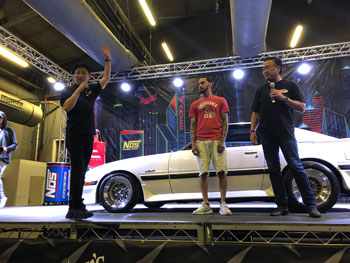
Mach 1 MustangMany consumers are looking to blend classic styles and modern comforts. Chip Foose’s (right) ’71 Mach 1 Mustang is a perfect example. The body sits on a modern ’10 Mustang GT platform with an extended wheelbase.

Top Modifications

Modern amenities are also in high demand among today’s hot-rod enthusiasts—a trend that hasn’t always been the case for old-school hot rodders who valued authenticity above all. In general, consumers are interested in features such as air conditioning, power locks, power windows and power steering, but they are also looking at pushbutton start/stop, backup cameras, and interior touchscreen controls.

For Bowers at Ron Francis Wiring, one of the biggest upgrades he’s noticed in demand is for fuel-injected engines, and McCall concurred that fuel-injected engines and ignition upgrades are on the rise. He added that newer technology and automatic features are important as well.

“As some of our clientele gets older, things like manual steering or manual brakes were fine when they were in their 20s, but now they want it more comfortable,” he said. “They want the car fast; they want it to stop well and handle decent; and they don’t want to get beat up while doing it. So we try to find a balance for them.”

McCall also said reliability is a common theme in customer requests.

“Right now, a lot of the [customer demand] is that guys want horsepower, but they want it reliable,” he said. “I think they’re getting spoiled by the late-model daily drivers with anywhere from 400–700 hp with a factory warranty. They want their hot rod or musclecar faster, but they want it as reliable as a new Challenger or a Corvette or a Mustang or a Camaro. We’ve been trying to integrate more modern technology for some of the guys who have been clinging to their ’60s and ’70s cars.”

A custom chassis with new suspension, steering and transmission is another technique many builders are using now to give consumers a more comfortable ride in a car that still looks like a classic hot rod on the outside.

“The bar is raised very, very high on those builds that we’re seeing out there,” said Logsdon. “What I see in the marketplace is that the people who want to have a street rod—or, let’s say, a Pro Touring car—they want it to look, for example, like a ’47 Chevrolet pickup, but they want it to drive like their ’15 in the parking lot that they drove in. So the technology and the advancements of the builds themselves has greatly increased over even the last five years.”

Though not an especially new phenomenon, engine swaps also serve to pair a retro look with modern performance. McCall used a current project as an example.

“We have a customer’s ’76 Torino here right now,” he said. “Very clean, original car. It does have some engine trouble, but we’ve talked with the owner and, depending on what’s wrong with the engine, we may be looking at a five-liter Coyote swap in it. It will keep the original look on the outside, but when you pop the hood, it will be like a brand-new Mustang GT. That way, he can still have the look and the comfort of a ’70s Starsky-and-Hutch-style Torino but with horsepower that will actually throw you in the seat.”

Future Challenges

Resources for Hot Rodders

Hot Rod Industry Alliance: SEMA’s Hot Rod Industry Alliance (HRIA) is a council dedicated to preserving the hobby and promoting the industry. To learn more about how your business can become involved and benefit from the community, visit
www.sema.org/hria.

SEMA Action Network: The SEMA Action Network (SAN) is a nationwide partnership between vehicle clubs, enthusiasts and members of the specialty auto-parts industry who want to protect their hobby. Founded in 1997, SAN was designed to help stamp out legislative threats to the automotive hobby and pass favorable laws. To learn more and join, visit www.semasan.com.

Looking ahead, Bowers anticipated that regulations will continue to bring new challenges to the marketplace and said that industry involvement is the best way to stay informed about how legislation impacts businesses.

“It is very important to stay active in the industry and know what pitfalls are going to come before us,” he said, “whether it’s national sales taxes or things like Prop 65. If I weren’t so involved in SEMA, I wouldn’t have even known about Prop 65.”

Similarly, McCall is actively working to educate the racers he works with about the RPM Act and why it’s important to clarify that it’s always been legal to convert street cars into race cars.

“If the guys with the late-model Camaros and whatnot can’t come out [to the track], then the car count goes down and there’s going to be fewer people competing and maybe fewer events to go to,” he said.

SEMA members who want to stay better informed about those and other issues can make use of SEMA resources such as the Hot Rod Industry Alliance and the SEMA Action Network. See the sidebar “Resources for Hot Rodders” for more information about those groups.

In sum: Yes, the rules of hot rodding are changing, but that’s the beauty of the segment. In Logsdon’s words: “Trends are a weird thing, because they come and go so quickly, and there’s a following for just about everything. The nice thing about a street rod or a hot rod is that it’s custom—you build it the way that you want to build it, and you’re the only person that you need to make happy.”

Fri, 06/01/2018 - 14:02

SEMA News—June 2018

BUSINESS

By Amanda Gubbins

The New Rules of Hot Rodding

Trends and Opportunities in Today’s Marketplace

Hot Rod UpdateLate-model musclecars like this ’69 Charger by BBT Fabrications are growing in popularity and broadening the scope of what’s accepted as a hot rod.

Among the most popular destinations at the SEMA Show, Hot Rod Alley is home to exhibitors who design and manufacture products intended to add reliability, performance and comfort to American classics. The hot-rod niche has seen significant growth in recent years, and it’s currently estimated to be a $1.26-billion industry, according to the Hot Rod Industry Alliance’s “2017 Biannual Report.” Gauging by the number of Hot Rod Alley exhibitors honored in the 2017 Global Media Awards, it’s also a category that’s gaining momentum worldwide.

But what is it, exactly, that qualifies a vehicle as a hot rod? It’s sort of like the old adage, said Dave Wallace, veteran automotive journalist and owner of Good Communications Inc.: “You know it when you see it. Someone at Hot Rod said at one point he thought a hot rod was any four-wheeled vehicle that was modified. That’s probably the widest possible explanation, but I consider a tuner car as a late-model hot rod. So personally, I don’t have any year cutoff.”

In fact, it’s not just individuals who are changing their definitions of hot rods. The Goodguys Rod & Custom Association announced last fall that, beginning in 2018, it would raise the year eligibility for participating vehicles in most of its events to ’87 and earlier. That change came after years of careful consideration and guidance from the association’s audience, according to the official announcement that was published on October 31, 2017.

“The more the merrier,” Wallace said. “The more people who want to modify a vehicle instead of spending money on a guitar or a video game or a motorcycle—if they’re in our niche here, I think the hobby welcomes them all. We’ve had a long period of traditional hot rods. That’s what was winning the trophies—not rat rods, but traditional hot rods that looked as much as possible like the immediate post-World War II cars. And now it seems the rules or the styles have loosened up a little bit. They don’t seem to follow that formula so closely.”

Ford F1Robert Logsdon’s team at Premier Street Rods built this ’51 Ford F1 that was displayed in the Ford booth at the 2017 SEMA Show. Classic trucks are a growing trend in the hot-rod segment.

New Faces and Fresh Ideas

Those shifts in what is accepted as a hot rod would seem to be born out of a thriving industry and the rise of a younger group of enthusiasts, according to Scott Bowers, owner and president of Ron Francis Wiring.

“I would say the market is very strong,” he said. “I think that we are encountering a demographic of individuals who are coming of age and have the discretionary income to play with the vehicles they grew up with. I would say today’s 40- and 50-year-olds grew up with the ’70s and ’80s cars, and so that’s what they’re looking at.”

Wallace echoed that sentiment.

“There are still a lot of Baby Boomers, and theoretically, we have this disposable income and time since the families are gone,” he said. “So I think part of it’s just a chronological, natural order of things about what we wanted when we were young.”

Bowers has begun to notice that the trend toward newer vehicles is not just among his own customers also but those of other manufacturers.

“You can see that transition in the marketplace as well,” he said. “When it comes to the SEMA Show New Products Showcase, a lot of the new products that manufacturers are coming out with are catering to those newer vehicles. Fox-body Mustangs, third-generation Camaros, Chevy square-body trucks and any reasonable vehicle of that era are being considered collectible or nostalgic by the consumer, who is our customer.”

Along with newer model years, the makes and models of hot rods are broadening.

“I think what’s new with the musclecars from the ’60s and early ’70s is that you see oddball cars now—they’re not all Camaros,” Wallace said. “You might see station wagons; you might see a four-door; you might see something that you’re not used to seeing in the traditional sense.”

All across the automotive industry, trucks are fashionable, and the hot-rod segment is no exception. Robert Logsdon is president of Premier Street Rod Parts and Manufacturing Corp., a licensed manufacturer of ’47–’53 and ’55–’59 Chevrolet truck bodies as well as a retail and build shop. It’s a good time to be a truck specialist, Logsdon said, since the niche has been hot for the past several years. He anticipates that the next most popular series will be ’67–’72 Chevy trucks, and the company is currently prototyping those bodies.

“The square-body truck is becoming very popular,” Logsdon added. “I’m seeing the generations jump up, and I’m seeing the newer models start to be a popular thing at the car shows.”

Wallace said that the truck trend is one he’s seen increasingly around the country at hot-rod shows. Historically, he said, trucks have been a functional, work-related purchase. For the most part, consumers kept their trucks for a long time.

“There have been a lot of them, and they are traditionally inexpensive,” he said. “The majority of pickups were just not desirable enough to command high dollars.”

RoadsterWhile newer models are rising in popularity at hot rod shows, pre-war classics such as this ’32 roadster also have a strong following.

Building on a Budget

And speaking of expense, that’s another major factor in the changing look of hot rods. One reason for rising costs is government involvement, where programs and regulations have impacted availability.

“The entry-level street machine has gotten so high because there are so few left, and a lot of that had to do with the scrappage programs that were really popular at different times in our history,” Wallace asserted. “The inventory of vehicles has been reduced dramatically, so that forces people into a four-door or a station wagon or a second or third choice. Maybe they’re Ford guys and they didn’t get the fastback Mustang that they wanted, so they might step down a notch and find an old Galaxie or something in the Ford family that isn’t the high-dollar rare car.”

Rob McCall, owner of Rob’s Rod Shop, is quite involved in the local car show and racing scenes on the east coast, and he’s noticed popularity shifts.

“I think the enthusiasts are looking for other things to play with that they can actually afford,” he said. “That’s why you don’t see the guys in their 20s and 30s looking at traditional musclecars. But some of them are finding alternatives like the pre-war cars that are becoming a little more affordable now. We’re starting to see a little bit of attention being given to the later ’70s and some of the ’80s cars. For the longest time in the hobby, people looked down on them as smog-era cars or malaise-era cars, and they’re starting to get a little more appreciation now.”

McCall said that a number of the young racers he knows favor older cars and have figured out how to build and race them without breaking the bank.

“These are guys who are building a traditional hot rod on a fairly tight budget, but they’re going out and having a blast with the car,” he said. “They’re not looking to build a SEMA Show car out of a late-’20s Ford; they’re looking to build something that maybe their grandfather or great-grandfather could have built on a farm back in the day.”

Mach 1 MustangMany consumers are looking to blend classic styles and modern comforts. Chip Foose’s (right) ’71 Mach 1 Mustang is a perfect example. The body sits on a modern ’10 Mustang GT platform with an extended wheelbase.

Top Modifications

Modern amenities are also in high demand among today’s hot-rod enthusiasts—a trend that hasn’t always been the case for old-school hot rodders who valued authenticity above all. In general, consumers are interested in features such as air conditioning, power locks, power windows and power steering, but they are also looking at pushbutton start/stop, backup cameras, and interior touchscreen controls.

For Bowers at Ron Francis Wiring, one of the biggest upgrades he’s noticed in demand is for fuel-injected engines, and McCall concurred that fuel-injected engines and ignition upgrades are on the rise. He added that newer technology and automatic features are important as well.

“As some of our clientele gets older, things like manual steering or manual brakes were fine when they were in their 20s, but now they want it more comfortable,” he said. “They want the car fast; they want it to stop well and handle decent; and they don’t want to get beat up while doing it. So we try to find a balance for them.”

McCall also said reliability is a common theme in customer requests.

“Right now, a lot of the [customer demand] is that guys want horsepower, but they want it reliable,” he said. “I think they’re getting spoiled by the late-model daily drivers with anywhere from 400–700 hp with a factory warranty. They want their hot rod or musclecar faster, but they want it as reliable as a new Challenger or a Corvette or a Mustang or a Camaro. We’ve been trying to integrate more modern technology for some of the guys who have been clinging to their ’60s and ’70s cars.”

A custom chassis with new suspension, steering and transmission is another technique many builders are using now to give consumers a more comfortable ride in a car that still looks like a classic hot rod on the outside.

“The bar is raised very, very high on those builds that we’re seeing out there,” said Logsdon. “What I see in the marketplace is that the people who want to have a street rod—or, let’s say, a Pro Touring car—they want it to look, for example, like a ’47 Chevrolet pickup, but they want it to drive like their ’15 in the parking lot that they drove in. So the technology and the advancements of the builds themselves has greatly increased over even the last five years.”

Though not an especially new phenomenon, engine swaps also serve to pair a retro look with modern performance. McCall used a current project as an example.

“We have a customer’s ’76 Torino here right now,” he said. “Very clean, original car. It does have some engine trouble, but we’ve talked with the owner and, depending on what’s wrong with the engine, we may be looking at a five-liter Coyote swap in it. It will keep the original look on the outside, but when you pop the hood, it will be like a brand-new Mustang GT. That way, he can still have the look and the comfort of a ’70s Starsky-and-Hutch-style Torino but with horsepower that will actually throw you in the seat.”

Future Challenges

Resources for Hot Rodders

Hot Rod Industry Alliance: SEMA’s Hot Rod Industry Alliance (HRIA) is a council dedicated to preserving the hobby and promoting the industry. To learn more about how your business can become involved and benefit from the community, visit
www.sema.org/hria.

SEMA Action Network: The SEMA Action Network (SAN) is a nationwide partnership between vehicle clubs, enthusiasts and members of the specialty auto-parts industry who want to protect their hobby. Founded in 1997, SAN was designed to help stamp out legislative threats to the automotive hobby and pass favorable laws. To learn more and join, visit www.semasan.com.

Looking ahead, Bowers anticipated that regulations will continue to bring new challenges to the marketplace and said that industry involvement is the best way to stay informed about how legislation impacts businesses.

“It is very important to stay active in the industry and know what pitfalls are going to come before us,” he said, “whether it’s national sales taxes or things like Prop 65. If I weren’t so involved in SEMA, I wouldn’t have even known about Prop 65.”

Similarly, McCall is actively working to educate the racers he works with about the RPM Act and why it’s important to clarify that it’s always been legal to convert street cars into race cars.

“If the guys with the late-model Camaros and whatnot can’t come out [to the track], then the car count goes down and there’s going to be fewer people competing and maybe fewer events to go to,” he said.

SEMA members who want to stay better informed about those and other issues can make use of SEMA resources such as the Hot Rod Industry Alliance and the SEMA Action Network. See the sidebar “Resources for Hot Rodders” for more information about those groups.

In sum: Yes, the rules of hot rodding are changing, but that’s the beauty of the segment. In Logsdon’s words: “Trends are a weird thing, because they come and go so quickly, and there’s a following for just about everything. The nice thing about a street rod or a hot rod is that it’s custom—you build it the way that you want to build it, and you’re the only person that you need to make happy.”

Fri, 06/01/2018 - 14:02

SEMA News—June 2018

BUSINESS

By Amanda Gubbins

The New Rules of Hot Rodding

Trends and Opportunities in Today’s Marketplace

Hot Rod UpdateLate-model musclecars like this ’69 Charger by BBT Fabrications are growing in popularity and broadening the scope of what’s accepted as a hot rod.

Among the most popular destinations at the SEMA Show, Hot Rod Alley is home to exhibitors who design and manufacture products intended to add reliability, performance and comfort to American classics. The hot-rod niche has seen significant growth in recent years, and it’s currently estimated to be a $1.26-billion industry, according to the Hot Rod Industry Alliance’s “2017 Biannual Report.” Gauging by the number of Hot Rod Alley exhibitors honored in the 2017 Global Media Awards, it’s also a category that’s gaining momentum worldwide.

But what is it, exactly, that qualifies a vehicle as a hot rod? It’s sort of like the old adage, said Dave Wallace, veteran automotive journalist and owner of Good Communications Inc.: “You know it when you see it. Someone at Hot Rod said at one point he thought a hot rod was any four-wheeled vehicle that was modified. That’s probably the widest possible explanation, but I consider a tuner car as a late-model hot rod. So personally, I don’t have any year cutoff.”

In fact, it’s not just individuals who are changing their definitions of hot rods. The Goodguys Rod & Custom Association announced last fall that, beginning in 2018, it would raise the year eligibility for participating vehicles in most of its events to ’87 and earlier. That change came after years of careful consideration and guidance from the association’s audience, according to the official announcement that was published on October 31, 2017.

“The more the merrier,” Wallace said. “The more people who want to modify a vehicle instead of spending money on a guitar or a video game or a motorcycle—if they’re in our niche here, I think the hobby welcomes them all. We’ve had a long period of traditional hot rods. That’s what was winning the trophies—not rat rods, but traditional hot rods that looked as much as possible like the immediate post-World War II cars. And now it seems the rules or the styles have loosened up a little bit. They don’t seem to follow that formula so closely.”

Ford F1Robert Logsdon’s team at Premier Street Rods built this ’51 Ford F1 that was displayed in the Ford booth at the 2017 SEMA Show. Classic trucks are a growing trend in the hot-rod segment.

New Faces and Fresh Ideas

Those shifts in what is accepted as a hot rod would seem to be born out of a thriving industry and the rise of a younger group of enthusiasts, according to Scott Bowers, owner and president of Ron Francis Wiring.

“I would say the market is very strong,” he said. “I think that we are encountering a demographic of individuals who are coming of age and have the discretionary income to play with the vehicles they grew up with. I would say today’s 40- and 50-year-olds grew up with the ’70s and ’80s cars, and so that’s what they’re looking at.”

Wallace echoed that sentiment.

“There are still a lot of Baby Boomers, and theoretically, we have this disposable income and time since the families are gone,” he said. “So I think part of it’s just a chronological, natural order of things about what we wanted when we were young.”

Bowers has begun to notice that the trend toward newer vehicles is not just among his own customers also but those of other manufacturers.

“You can see that transition in the marketplace as well,” he said. “When it comes to the SEMA Show New Products Showcase, a lot of the new products that manufacturers are coming out with are catering to those newer vehicles. Fox-body Mustangs, third-generation Camaros, Chevy square-body trucks and any reasonable vehicle of that era are being considered collectible or nostalgic by the consumer, who is our customer.”

Along with newer model years, the makes and models of hot rods are broadening.

“I think what’s new with the musclecars from the ’60s and early ’70s is that you see oddball cars now—they’re not all Camaros,” Wallace said. “You might see station wagons; you might see a four-door; you might see something that you’re not used to seeing in the traditional sense.”

All across the automotive industry, trucks are fashionable, and the hot-rod segment is no exception. Robert Logsdon is president of Premier Street Rod Parts and Manufacturing Corp., a licensed manufacturer of ’47–’53 and ’55–’59 Chevrolet truck bodies as well as a retail and build shop. It’s a good time to be a truck specialist, Logsdon said, since the niche has been hot for the past several years. He anticipates that the next most popular series will be ’67–’72 Chevy trucks, and the company is currently prototyping those bodies.

“The square-body truck is becoming very popular,” Logsdon added. “I’m seeing the generations jump up, and I’m seeing the newer models start to be a popular thing at the car shows.”

Wallace said that the truck trend is one he’s seen increasingly around the country at hot-rod shows. Historically, he said, trucks have been a functional, work-related purchase. For the most part, consumers kept their trucks for a long time.

“There have been a lot of them, and they are traditionally inexpensive,” he said. “The majority of pickups were just not desirable enough to command high dollars.”

RoadsterWhile newer models are rising in popularity at hot rod shows, pre-war classics such as this ’32 roadster also have a strong following.

Building on a Budget

And speaking of expense, that’s another major factor in the changing look of hot rods. One reason for rising costs is government involvement, where programs and regulations have impacted availability.

“The entry-level street machine has gotten so high because there are so few left, and a lot of that had to do with the scrappage programs that were really popular at different times in our history,” Wallace asserted. “The inventory of vehicles has been reduced dramatically, so that forces people into a four-door or a station wagon or a second or third choice. Maybe they’re Ford guys and they didn’t get the fastback Mustang that they wanted, so they might step down a notch and find an old Galaxie or something in the Ford family that isn’t the high-dollar rare car.”

Rob McCall, owner of Rob’s Rod Shop, is quite involved in the local car show and racing scenes on the east coast, and he’s noticed popularity shifts.

“I think the enthusiasts are looking for other things to play with that they can actually afford,” he said. “That’s why you don’t see the guys in their 20s and 30s looking at traditional musclecars. But some of them are finding alternatives like the pre-war cars that are becoming a little more affordable now. We’re starting to see a little bit of attention being given to the later ’70s and some of the ’80s cars. For the longest time in the hobby, people looked down on them as smog-era cars or malaise-era cars, and they’re starting to get a little more appreciation now.”

McCall said that a number of the young racers he knows favor older cars and have figured out how to build and race them without breaking the bank.

“These are guys who are building a traditional hot rod on a fairly tight budget, but they’re going out and having a blast with the car,” he said. “They’re not looking to build a SEMA Show car out of a late-’20s Ford; they’re looking to build something that maybe their grandfather or great-grandfather could have built on a farm back in the day.”

Mach 1 MustangMany consumers are looking to blend classic styles and modern comforts. Chip Foose’s (right) ’71 Mach 1 Mustang is a perfect example. The body sits on a modern ’10 Mustang GT platform with an extended wheelbase.

Top Modifications

Modern amenities are also in high demand among today’s hot-rod enthusiasts—a trend that hasn’t always been the case for old-school hot rodders who valued authenticity above all. In general, consumers are interested in features such as air conditioning, power locks, power windows and power steering, but they are also looking at pushbutton start/stop, backup cameras, and interior touchscreen controls.

For Bowers at Ron Francis Wiring, one of the biggest upgrades he’s noticed in demand is for fuel-injected engines, and McCall concurred that fuel-injected engines and ignition upgrades are on the rise. He added that newer technology and automatic features are important as well.

“As some of our clientele gets older, things like manual steering or manual brakes were fine when they were in their 20s, but now they want it more comfortable,” he said. “They want the car fast; they want it to stop well and handle decent; and they don’t want to get beat up while doing it. So we try to find a balance for them.”

McCall also said reliability is a common theme in customer requests.

“Right now, a lot of the [customer demand] is that guys want horsepower, but they want it reliable,” he said. “I think they’re getting spoiled by the late-model daily drivers with anywhere from 400–700 hp with a factory warranty. They want their hot rod or musclecar faster, but they want it as reliable as a new Challenger or a Corvette or a Mustang or a Camaro. We’ve been trying to integrate more modern technology for some of the guys who have been clinging to their ’60s and ’70s cars.”

A custom chassis with new suspension, steering and transmission is another technique many builders are using now to give consumers a more comfortable ride in a car that still looks like a classic hot rod on the outside.

“The bar is raised very, very high on those builds that we’re seeing out there,” said Logsdon. “What I see in the marketplace is that the people who want to have a street rod—or, let’s say, a Pro Touring car—they want it to look, for example, like a ’47 Chevrolet pickup, but they want it to drive like their ’15 in the parking lot that they drove in. So the technology and the advancements of the builds themselves has greatly increased over even the last five years.”

Though not an especially new phenomenon, engine swaps also serve to pair a retro look with modern performance. McCall used a current project as an example.

“We have a customer’s ’76 Torino here right now,” he said. “Very clean, original car. It does have some engine trouble, but we’ve talked with the owner and, depending on what’s wrong with the engine, we may be looking at a five-liter Coyote swap in it. It will keep the original look on the outside, but when you pop the hood, it will be like a brand-new Mustang GT. That way, he can still have the look and the comfort of a ’70s Starsky-and-Hutch-style Torino but with horsepower that will actually throw you in the seat.”

Future Challenges

Resources for Hot Rodders

Hot Rod Industry Alliance: SEMA’s Hot Rod Industry Alliance (HRIA) is a council dedicated to preserving the hobby and promoting the industry. To learn more about how your business can become involved and benefit from the community, visit
www.sema.org/hria.

SEMA Action Network: The SEMA Action Network (SAN) is a nationwide partnership between vehicle clubs, enthusiasts and members of the specialty auto-parts industry who want to protect their hobby. Founded in 1997, SAN was designed to help stamp out legislative threats to the automotive hobby and pass favorable laws. To learn more and join, visit www.semasan.com.

Looking ahead, Bowers anticipated that regulations will continue to bring new challenges to the marketplace and said that industry involvement is the best way to stay informed about how legislation impacts businesses.

“It is very important to stay active in the industry and know what pitfalls are going to come before us,” he said, “whether it’s national sales taxes or things like Prop 65. If I weren’t so involved in SEMA, I wouldn’t have even known about Prop 65.”

Similarly, McCall is actively working to educate the racers he works with about the RPM Act and why it’s important to clarify that it’s always been legal to convert street cars into race cars.

“If the guys with the late-model Camaros and whatnot can’t come out [to the track], then the car count goes down and there’s going to be fewer people competing and maybe fewer events to go to,” he said.

SEMA members who want to stay better informed about those and other issues can make use of SEMA resources such as the Hot Rod Industry Alliance and the SEMA Action Network. See the sidebar “Resources for Hot Rodders” for more information about those groups.

In sum: Yes, the rules of hot rodding are changing, but that’s the beauty of the segment. In Logsdon’s words: “Trends are a weird thing, because they come and go so quickly, and there’s a following for just about everything. The nice thing about a street rod or a hot rod is that it’s custom—you build it the way that you want to build it, and you’re the only person that you need to make happy.”

Fri, 06/01/2018 - 14:02

SEMA News—June 2018

BUSINESS

By Amanda Gubbins

The New Rules of Hot Rodding

Trends and Opportunities in Today’s Marketplace

Hot Rod UpdateLate-model musclecars like this ’69 Charger by BBT Fabrications are growing in popularity and broadening the scope of what’s accepted as a hot rod.

Among the most popular destinations at the SEMA Show, Hot Rod Alley is home to exhibitors who design and manufacture products intended to add reliability, performance and comfort to American classics. The hot-rod niche has seen significant growth in recent years, and it’s currently estimated to be a $1.26-billion industry, according to the Hot Rod Industry Alliance’s “2017 Biannual Report.” Gauging by the number of Hot Rod Alley exhibitors honored in the 2017 Global Media Awards, it’s also a category that’s gaining momentum worldwide.

But what is it, exactly, that qualifies a vehicle as a hot rod? It’s sort of like the old adage, said Dave Wallace, veteran automotive journalist and owner of Good Communications Inc.: “You know it when you see it. Someone at Hot Rod said at one point he thought a hot rod was any four-wheeled vehicle that was modified. That’s probably the widest possible explanation, but I consider a tuner car as a late-model hot rod. So personally, I don’t have any year cutoff.”

In fact, it’s not just individuals who are changing their definitions of hot rods. The Goodguys Rod & Custom Association announced last fall that, beginning in 2018, it would raise the year eligibility for participating vehicles in most of its events to ’87 and earlier. That change came after years of careful consideration and guidance from the association’s audience, according to the official announcement that was published on October 31, 2017.

“The more the merrier,” Wallace said. “The more people who want to modify a vehicle instead of spending money on a guitar or a video game or a motorcycle—if they’re in our niche here, I think the hobby welcomes them all. We’ve had a long period of traditional hot rods. That’s what was winning the trophies—not rat rods, but traditional hot rods that looked as much as possible like the immediate post-World War II cars. And now it seems the rules or the styles have loosened up a little bit. They don’t seem to follow that formula so closely.”

Ford F1Robert Logsdon’s team at Premier Street Rods built this ’51 Ford F1 that was displayed in the Ford booth at the 2017 SEMA Show. Classic trucks are a growing trend in the hot-rod segment.

New Faces and Fresh Ideas

Those shifts in what is accepted as a hot rod would seem to be born out of a thriving industry and the rise of a younger group of enthusiasts, according to Scott Bowers, owner and president of Ron Francis Wiring.

“I would say the market is very strong,” he said. “I think that we are encountering a demographic of individuals who are coming of age and have the discretionary income to play with the vehicles they grew up with. I would say today’s 40- and 50-year-olds grew up with the ’70s and ’80s cars, and so that’s what they’re looking at.”

Wallace echoed that sentiment.

“There are still a lot of Baby Boomers, and theoretically, we have this disposable income and time since the families are gone,” he said. “So I think part of it’s just a chronological, natural order of things about what we wanted when we were young.”

Bowers has begun to notice that the trend toward newer vehicles is not just among his own customers also but those of other manufacturers.

“You can see that transition in the marketplace as well,” he said. “When it comes to the SEMA Show New Products Showcase, a lot of the new products that manufacturers are coming out with are catering to those newer vehicles. Fox-body Mustangs, third-generation Camaros, Chevy square-body trucks and any reasonable vehicle of that era are being considered collectible or nostalgic by the consumer, who is our customer.”

Along with newer model years, the makes and models of hot rods are broadening.

“I think what’s new with the musclecars from the ’60s and early ’70s is that you see oddball cars now—they’re not all Camaros,” Wallace said. “You might see station wagons; you might see a four-door; you might see something that you’re not used to seeing in the traditional sense.”

All across the automotive industry, trucks are fashionable, and the hot-rod segment is no exception. Robert Logsdon is president of Premier Street Rod Parts and Manufacturing Corp., a licensed manufacturer of ’47–’53 and ’55–’59 Chevrolet truck bodies as well as a retail and build shop. It’s a good time to be a truck specialist, Logsdon said, since the niche has been hot for the past several years. He anticipates that the next most popular series will be ’67–’72 Chevy trucks, and the company is currently prototyping those bodies.

“The square-body truck is becoming very popular,” Logsdon added. “I’m seeing the generations jump up, and I’m seeing the newer models start to be a popular thing at the car shows.”

Wallace said that the truck trend is one he’s seen increasingly around the country at hot-rod shows. Historically, he said, trucks have been a functional, work-related purchase. For the most part, consumers kept their trucks for a long time.

“There have been a lot of them, and they are traditionally inexpensive,” he said. “The majority of pickups were just not desirable enough to command high dollars.”

RoadsterWhile newer models are rising in popularity at hot rod shows, pre-war classics such as this ’32 roadster also have a strong following.

Building on a Budget

And speaking of expense, that’s another major factor in the changing look of hot rods. One reason for rising costs is government involvement, where programs and regulations have impacted availability.

“The entry-level street machine has gotten so high because there are so few left, and a lot of that had to do with the scrappage programs that were really popular at different times in our history,” Wallace asserted. “The inventory of vehicles has been reduced dramatically, so that forces people into a four-door or a station wagon or a second or third choice. Maybe they’re Ford guys and they didn’t get the fastback Mustang that they wanted, so they might step down a notch and find an old Galaxie or something in the Ford family that isn’t the high-dollar rare car.”

Rob McCall, owner of Rob’s Rod Shop, is quite involved in the local car show and racing scenes on the east coast, and he’s noticed popularity shifts.

“I think the enthusiasts are looking for other things to play with that they can actually afford,” he said. “That’s why you don’t see the guys in their 20s and 30s looking at traditional musclecars. But some of them are finding alternatives like the pre-war cars that are becoming a little more affordable now. We’re starting to see a little bit of attention being given to the later ’70s and some of the ’80s cars. For the longest time in the hobby, people looked down on them as smog-era cars or malaise-era cars, and they’re starting to get a little more appreciation now.”

McCall said that a number of the young racers he knows favor older cars and have figured out how to build and race them without breaking the bank.

“These are guys who are building a traditional hot rod on a fairly tight budget, but they’re going out and having a blast with the car,” he said. “They’re not looking to build a SEMA Show car out of a late-’20s Ford; they’re looking to build something that maybe their grandfather or great-grandfather could have built on a farm back in the day.”

Mach 1 MustangMany consumers are looking to blend classic styles and modern comforts. Chip Foose’s (right) ’71 Mach 1 Mustang is a perfect example. The body sits on a modern ’10 Mustang GT platform with an extended wheelbase.

Top Modifications

Modern amenities are also in high demand among today’s hot-rod enthusiasts—a trend that hasn’t always been the case for old-school hot rodders who valued authenticity above all. In general, consumers are interested in features such as air conditioning, power locks, power windows and power steering, but they are also looking at pushbutton start/stop, backup cameras, and interior touchscreen controls.

For Bowers at Ron Francis Wiring, one of the biggest upgrades he’s noticed in demand is for fuel-injected engines, and McCall concurred that fuel-injected engines and ignition upgrades are on the rise. He added that newer technology and automatic features are important as well.

“As some of our clientele gets older, things like manual steering or manual brakes were fine when they were in their 20s, but now they want it more comfortable,” he said. “They want the car fast; they want it to stop well and handle decent; and they don’t want to get beat up while doing it. So we try to find a balance for them.”

McCall also said reliability is a common theme in customer requests.

“Right now, a lot of the [customer demand] is that guys want horsepower, but they want it reliable,” he said. “I think they’re getting spoiled by the late-model daily drivers with anywhere from 400–700 hp with a factory warranty. They want their hot rod or musclecar faster, but they want it as reliable as a new Challenger or a Corvette or a Mustang or a Camaro. We’ve been trying to integrate more modern technology for some of the guys who have been clinging to their ’60s and ’70s cars.”

A custom chassis with new suspension, steering and transmission is another technique many builders are using now to give consumers a more comfortable ride in a car that still looks like a classic hot rod on the outside.

“The bar is raised very, very high on those builds that we’re seeing out there,” said Logsdon. “What I see in the marketplace is that the people who want to have a street rod—or, let’s say, a Pro Touring car—they want it to look, for example, like a ’47 Chevrolet pickup, but they want it to drive like their ’15 in the parking lot that they drove in. So the technology and the advancements of the builds themselves has greatly increased over even the last five years.”

Though not an especially new phenomenon, engine swaps also serve to pair a retro look with modern performance. McCall used a current project as an example.

“We have a customer’s ’76 Torino here right now,” he said. “Very clean, original car. It does have some engine trouble, but we’ve talked with the owner and, depending on what’s wrong with the engine, we may be looking at a five-liter Coyote swap in it. It will keep the original look on the outside, but when you pop the hood, it will be like a brand-new Mustang GT. That way, he can still have the look and the comfort of a ’70s Starsky-and-Hutch-style Torino but with horsepower that will actually throw you in the seat.”

Future Challenges

Resources for Hot Rodders

Hot Rod Industry Alliance: SEMA’s Hot Rod Industry Alliance (HRIA) is a council dedicated to preserving the hobby and promoting the industry. To learn more about how your business can become involved and benefit from the community, visit
www.sema.org/hria.

SEMA Action Network: The SEMA Action Network (SAN) is a nationwide partnership between vehicle clubs, enthusiasts and members of the specialty auto-parts industry who want to protect their hobby. Founded in 1997, SAN was designed to help stamp out legislative threats to the automotive hobby and pass favorable laws. To learn more and join, visit www.semasan.com.

Looking ahead, Bowers anticipated that regulations will continue to bring new challenges to the marketplace and said that industry involvement is the best way to stay informed about how legislation impacts businesses.

“It is very important to stay active in the industry and know what pitfalls are going to come before us,” he said, “whether it’s national sales taxes or things like Prop 65. If I weren’t so involved in SEMA, I wouldn’t have even known about Prop 65.”

Similarly, McCall is actively working to educate the racers he works with about the RPM Act and why it’s important to clarify that it’s always been legal to convert street cars into race cars.

“If the guys with the late-model Camaros and whatnot can’t come out [to the track], then the car count goes down and there’s going to be fewer people competing and maybe fewer events to go to,” he said.

SEMA members who want to stay better informed about those and other issues can make use of SEMA resources such as the Hot Rod Industry Alliance and the SEMA Action Network. See the sidebar “Resources for Hot Rodders” for more information about those groups.

In sum: Yes, the rules of hot rodding are changing, but that’s the beauty of the segment. In Logsdon’s words: “Trends are a weird thing, because they come and go so quickly, and there’s a following for just about everything. The nice thing about a street rod or a hot rod is that it’s custom—you build it the way that you want to build it, and you’re the only person that you need to make happy.”

Fri, 06/01/2018 - 13:54

SEMA News—June 2018

EDUCATION

By Mike Imlay

Kids, Cars and STEM Careers

SEMA, Championship Auto Shows and Ten80 Pilot a New Education Series

Among SEMA’s chief goals as a trade association is working to ensure the industry’s future, in part by expanding youth engagement programs. The goal is to interest young talent in car culture, and ultimately to fill a variety of emerging technological, skilled, creative and administrative positions. A number of those efforts also involve collaborating on initiatives conceived and operated by outside organizations, with SEMA serving as a catalyst.

The goal of the STEM experience was to teach science, technology, engineering and math skills to middle schoolers while getting them thinking about the excitement to be found in the automotive industry.

A pilot program in partnership with Championship Auto Shows (CAS) and Ten80, an educational organization dedicated to stimulating innovative thinking in young people was launched this past January. Dubbed the SEMA STEM Experience, the initiative engaged middle-school students in an experiential project built around CAS World of Wheels events in Pittsburgh, Kansas City, Detroit, Chicago, Omaha and Salt Lake City. Designed to get them thinking about cool vehicles and career possibilities in automotive design, engineering and marketing, the educational forums simultaneously tapped into Ten80’s custom-developed science, technology, engineering and math (STEM) curriculum. The results of the trial program are now being reviewed by the SEMA Board of Directors.

“SEMA is involved in a number of youth-engagement initiatives, and this is an important pilot program,” said SEMA Board of Directors Chairman Wade Kawasaki, who personally participated in the Chicago event. “It’s a great example of how we can reach out to impressionable youth in the junior-high-school area and be able to actually help them formulate a desire to get involved with the automotive industry.”

More than 200 students participated in the Chicago event, but beyond the numbers, Kawasaki was most impressed by the young people’s automotive zeal.

“The big surprise for me was how many of these kids consider themselves car enthusiasts,” Kawasaki explained. “It would’ve been my guess that maybe 10% of the room was car enthusiasts, and I would’ve been happy because that is a great opportunity. But when they raised their hands, it was probably more than 30%–40% of the kids in that room who considered themselves car enthusiasts. And when they went out on the car show floor, those kids moved fast and were engaged. Hopefully, we are turning that 30% to 40% into 60% or 70% by the end of the day.”

For its initial phase, the program concentrated on Midwestern venues throughout the winter quarter. Each event involved full-day student field trips from area schools to CAS automotive shows, along with interactive breakout sessions applying STEM-based skills to automotive concepts.

“For instance, there was a section measuring aerodynamics, in which students had the opportunity to determine which car was the most aerodynamic,” said Zane Clark, SEMA senior director of education. “There was also a tire station, where they determined the best grip versus the best performance of a varying range of tires. Then there was an RC challenge, where they got to race an RC car, and they got to do a pit-crew experience, where they took the wheels off and reinstalled them in a timed scenario against other students. And, finally, there was an area where they could measure torque on a vehicle.

“All those experiences were designed to keep things interactive. They also laid the groundwork for a survey identifying their sixth- to eighth-grade demographics and getting a reading of vehicle preferences and perceptions. So questions were asked along the lines of ‘What is most important to you? Is it performance? Is it price? Is it safety?’ Then there were more feature-related questions about the products they would most like to see on a car.”

According to Clark, the goal was to get students thinking about how they would design their own vehicles, automotive companies, and what features and benefits they would include on their offerings to consumers.

Next, SEMA volunteers guided the students on a tour of the CAS show floor to “research” vehicles and the marketplace. Designated stops along the way allowed them to ask questions of exhibitors. All of that occurred before the show floor officially opened, giving the young attendees a sense of VIP access.

“They visually saw and felt the things they’d been thinking about and got excited about the cars,” Clark continued. “They came back from the show tour, broke into groups, developed a 30-sec. elevator pitch on their company or program and built a 3D origami car as a visual prototype. Then they pitched it to industry judges who included SEMA staff and volunteers drawn from our Board of Directors, select committees or networks, including Wade Kawasaki and SEMA President and CEO Chris Kersting. At end of day, there were informal interactive awards where we recognized the presentations and gave swag to the students being recognized.”

Wade Kawasaki
SEMA Board of Directors Chairman Wade Kawasaki (top left) was among the presenters at the Chicago event, which was attended by more than 200 students. Ten80, represented by Lerone Langston (top right), created the day’s lesson plans.

Real-World Skills

Like Kawasaki and Kersting, Clark was impressed with the skills and enthusiasm the students brought to bear on their assignments.

“The action centers kept them moving, learning and stimulated,” he said, “The exciting part of it was watching them gather in one central room to work together on vehicle design. That’s the core of the program.”

The Ten80 organization is known for its dynamic curriculum programs that help educational institutions teach not only STEM skills but also agile, cross-discipline thinking, teamwork and leadership. Lerone Langston, who represented Ten80 at the Chicago event, said that it was gratifying to see students tackling real-world applications of classroom principles in a fun and challenging way.

“We’re actually combining the STEM initiatives along with the automotive industry and SEMA in a combination of Ten80 and SEMA coming together with the recipe of success for kids learning more about the industry, as well as how science takes part in the whole picture,” Langston said. “But it also enables them to put practicality into what we’re doing with science, technology, engineering and math. In the showroom, you had not only vintage cars—your ’50s, ’60s and ’70s—but also motorcycles that they could see, as well as modern-day cars and local car enthusiasts. What that means is that kids can see things in practicality that they’ve never seen before, as well as things they see on the road on a daily basis. That helps form better ties with what we’re teaching them inside the room that falls back into those science, engineering, technology and math opportunities and windows.”

Known as a leader in indoor custom car shows and the producer of the category’s largest show series, CAS is probably best known under the monikers of Autorama or World of Wheels. Hot rods are often the heart of CAS shows, but events have also recently expanded to include competition, specialty and concept vehicles. With a circuit of 18 shows to choose from across the United States and Canada, CAS offered an ideal laboratory for the pilot SEMA STEM program. CAS’ Pete Toundas said that his organization was excited to join with SEMA in reaching middle-school students and awakening their car bug at such an impressionable age.

“The SEMA program complements Championship Auto Shows’ existing partnership with Summit Racing Equipment that focuses on promoting the automotive industry to high-school and college students,” he said. “With SEMA, we are now creating a long tail into the industry that will ultimately benefit us all.”

Education
Students applied STEM skills to design their ideal car models for consumers, then pitched their creations to industry judges using origami prototypes. SEMA staff and council and network volunteers served as resource people and judges.
Education
SEMA President and CEO Chris Kersting (left) was also among the Chicago judges. Students were drawn from local schools for the daylong field trip, which included a tour of all the cool vehicles on the CAS floor.

Planting Seeds

All in all, the six events engaged more than 1,200 students and 150 instructors. The attendees represented a diverse background, and attention was paid to breaking down stereotypical barriers to gender.

“We’re bringing in a lot of varied interests, and the school districts that we targeted were purposely diverse from a socioeconomic perspective,” Clark said. “In fact, we saw a very diverse attendance in all aspects of the word. Middle schools are a demographic that we’ve never really interacted with previously. Here we wanted to reach an even younger audience while they are more impressionable and don’t have as many preconceived notions about what they could do. So we’re starting at an early age, planting seeds with the middle-school program. Then we foster growth through high-school development and into our post-secondary programs, scholarships and career center to get them into the industry.

“A big part of the messaging is asking students, ‘What drives your passion? Is it being artistic? Do you like solving problems? Putting puzzles together? Or are you more extroverted and like to be up front giving presentations?’ The underlying theme that we try to communicate is that they have some natural interests already. They certainly can develop and expand those interests in the automotive industry.”

Can the SEMA STEM Experience serve as a template for other industry programs, or will SEMA expand it to other venues? The SEMA Board of Directors is now weighing those determinations, but Kersting said that, at the very least, SEMA and its partners have learned valuable lessons that can be applied to other initiatives down the line.

“The idea is showing great promise,” Kersting said. “One of the project’s most attractive elements is that it scales up well, with the potential of reaching hundreds of students at every event. SEMA does so much to help our member businesses grow and succeed, and this is a great example of using our resources to try to help grow this entire industry. In the last couple years, the SEMA Board of Directors has expanded its focus on youth engagement, going even younger than the high-school tech students who are interested in careers. We’re now also getting out to young people who maybe haven’t yet discovered their internal car bug. In this case, we saw a great opportunity with CAS and Ten80 to bring
kids together.”

Beyond the benefits to the aftermarket, however, Kersting also believes SEMA has helped introduce students to a broader world where their learning truly can make a difference.

“One of the wonderful things about our industry is the products that our companies are involved in; it’s the coolest stuff on the planet,” he said. “Cool cars and trucks are marvelous, wonderful subject matter to turn kids on to. And what we’ve done, naturally, is try to match up some of the STEM-type curriculum and the arts from a design standpoint. We’ve exposed the kids to that connection between the learning that they’re doing in class and a car show like CAS, and how those different disciplines can be brought to bear to make amazingly cool stuff.”

Fri, 06/01/2018 - 13:54

SEMA News—June 2018

EDUCATION

By Mike Imlay

Kids, Cars and STEM Careers

SEMA, Championship Auto Shows and Ten80 Pilot a New Education Series

Among SEMA’s chief goals as a trade association is working to ensure the industry’s future, in part by expanding youth engagement programs. The goal is to interest young talent in car culture, and ultimately to fill a variety of emerging technological, skilled, creative and administrative positions. A number of those efforts also involve collaborating on initiatives conceived and operated by outside organizations, with SEMA serving as a catalyst.

The goal of the STEM experience was to teach science, technology, engineering and math skills to middle schoolers while getting them thinking about the excitement to be found in the automotive industry.

A pilot program in partnership with Championship Auto Shows (CAS) and Ten80, an educational organization dedicated to stimulating innovative thinking in young people was launched this past January. Dubbed the SEMA STEM Experience, the initiative engaged middle-school students in an experiential project built around CAS World of Wheels events in Pittsburgh, Kansas City, Detroit, Chicago, Omaha and Salt Lake City. Designed to get them thinking about cool vehicles and career possibilities in automotive design, engineering and marketing, the educational forums simultaneously tapped into Ten80’s custom-developed science, technology, engineering and math (STEM) curriculum. The results of the trial program are now being reviewed by the SEMA Board of Directors.

“SEMA is involved in a number of youth-engagement initiatives, and this is an important pilot program,” said SEMA Board of Directors Chairman Wade Kawasaki, who personally participated in the Chicago event. “It’s a great example of how we can reach out to impressionable youth in the junior-high-school area and be able to actually help them formulate a desire to get involved with the automotive industry.”

More than 200 students participated in the Chicago event, but beyond the numbers, Kawasaki was most impressed by the young people’s automotive zeal.

“The big surprise for me was how many of these kids consider themselves car enthusiasts,” Kawasaki explained. “It would’ve been my guess that maybe 10% of the room was car enthusiasts, and I would’ve been happy because that is a great opportunity. But when they raised their hands, it was probably more than 30%–40% of the kids in that room who considered themselves car enthusiasts. And when they went out on the car show floor, those kids moved fast and were engaged. Hopefully, we are turning that 30% to 40% into 60% or 70% by the end of the day.”

For its initial phase, the program concentrated on Midwestern venues throughout the winter quarter. Each event involved full-day student field trips from area schools to CAS automotive shows, along with interactive breakout sessions applying STEM-based skills to automotive concepts.

“For instance, there was a section measuring aerodynamics, in which students had the opportunity to determine which car was the most aerodynamic,” said Zane Clark, SEMA senior director of education. “There was also a tire station, where they determined the best grip versus the best performance of a varying range of tires. Then there was an RC challenge, where they got to race an RC car, and they got to do a pit-crew experience, where they took the wheels off and reinstalled them in a timed scenario against other students. And, finally, there was an area where they could measure torque on a vehicle.

“All those experiences were designed to keep things interactive. They also laid the groundwork for a survey identifying their sixth- to eighth-grade demographics and getting a reading of vehicle preferences and perceptions. So questions were asked along the lines of ‘What is most important to you? Is it performance? Is it price? Is it safety?’ Then there were more feature-related questions about the products they would most like to see on a car.”

According to Clark, the goal was to get students thinking about how they would design their own vehicles, automotive companies, and what features and benefits they would include on their offerings to consumers.

Next, SEMA volunteers guided the students on a tour of the CAS show floor to “research” vehicles and the marketplace. Designated stops along the way allowed them to ask questions of exhibitors. All of that occurred before the show floor officially opened, giving the young attendees a sense of VIP access.

“They visually saw and felt the things they’d been thinking about and got excited about the cars,” Clark continued. “They came back from the show tour, broke into groups, developed a 30-sec. elevator pitch on their company or program and built a 3D origami car as a visual prototype. Then they pitched it to industry judges who included SEMA staff and volunteers drawn from our Board of Directors, select committees or networks, including Wade Kawasaki and SEMA President and CEO Chris Kersting. At end of day, there were informal interactive awards where we recognized the presentations and gave swag to the students being recognized.”

Wade Kawasaki
SEMA Board of Directors Chairman Wade Kawasaki (top left) was among the presenters at the Chicago event, which was attended by more than 200 students. Ten80, represented by Lerone Langston (top right), created the day’s lesson plans.

Real-World Skills

Like Kawasaki and Kersting, Clark was impressed with the skills and enthusiasm the students brought to bear on their assignments.

“The action centers kept them moving, learning and stimulated,” he said, “The exciting part of it was watching them gather in one central room to work together on vehicle design. That’s the core of the program.”

The Ten80 organization is known for its dynamic curriculum programs that help educational institutions teach not only STEM skills but also agile, cross-discipline thinking, teamwork and leadership. Lerone Langston, who represented Ten80 at the Chicago event, said that it was gratifying to see students tackling real-world applications of classroom principles in a fun and challenging way.

“We’re actually combining the STEM initiatives along with the automotive industry and SEMA in a combination of Ten80 and SEMA coming together with the recipe of success for kids learning more about the industry, as well as how science takes part in the whole picture,” Langston said. “But it also enables them to put practicality into what we’re doing with science, technology, engineering and math. In the showroom, you had not only vintage cars—your ’50s, ’60s and ’70s—but also motorcycles that they could see, as well as modern-day cars and local car enthusiasts. What that means is that kids can see things in practicality that they’ve never seen before, as well as things they see on the road on a daily basis. That helps form better ties with what we’re teaching them inside the room that falls back into those science, engineering, technology and math opportunities and windows.”

Known as a leader in indoor custom car shows and the producer of the category’s largest show series, CAS is probably best known under the monikers of Autorama or World of Wheels. Hot rods are often the heart of CAS shows, but events have also recently expanded to include competition, specialty and concept vehicles. With a circuit of 18 shows to choose from across the United States and Canada, CAS offered an ideal laboratory for the pilot SEMA STEM program. CAS’ Pete Toundas said that his organization was excited to join with SEMA in reaching middle-school students and awakening their car bug at such an impressionable age.

“The SEMA program complements Championship Auto Shows’ existing partnership with Summit Racing Equipment that focuses on promoting the automotive industry to high-school and college students,” he said. “With SEMA, we are now creating a long tail into the industry that will ultimately benefit us all.”

Education
Students applied STEM skills to design their ideal car models for consumers, then pitched their creations to industry judges using origami prototypes. SEMA staff and council and network volunteers served as resource people and judges.
Education
SEMA President and CEO Chris Kersting (left) was also among the Chicago judges. Students were drawn from local schools for the daylong field trip, which included a tour of all the cool vehicles on the CAS floor.

Planting Seeds

All in all, the six events engaged more than 1,200 students and 150 instructors. The attendees represented a diverse background, and attention was paid to breaking down stereotypical barriers to gender.

“We’re bringing in a lot of varied interests, and the school districts that we targeted were purposely diverse from a socioeconomic perspective,” Clark said. “In fact, we saw a very diverse attendance in all aspects of the word. Middle schools are a demographic that we’ve never really interacted with previously. Here we wanted to reach an even younger audience while they are more impressionable and don’t have as many preconceived notions about what they could do. So we’re starting at an early age, planting seeds with the middle-school program. Then we foster growth through high-school development and into our post-secondary programs, scholarships and career center to get them into the industry.

“A big part of the messaging is asking students, ‘What drives your passion? Is it being artistic? Do you like solving problems? Putting puzzles together? Or are you more extroverted and like to be up front giving presentations?’ The underlying theme that we try to communicate is that they have some natural interests already. They certainly can develop and expand those interests in the automotive industry.”

Can the SEMA STEM Experience serve as a template for other industry programs, or will SEMA expand it to other venues? The SEMA Board of Directors is now weighing those determinations, but Kersting said that, at the very least, SEMA and its partners have learned valuable lessons that can be applied to other initiatives down the line.

“The idea is showing great promise,” Kersting said. “One of the project’s most attractive elements is that it scales up well, with the potential of reaching hundreds of students at every event. SEMA does so much to help our member businesses grow and succeed, and this is a great example of using our resources to try to help grow this entire industry. In the last couple years, the SEMA Board of Directors has expanded its focus on youth engagement, going even younger than the high-school tech students who are interested in careers. We’re now also getting out to young people who maybe haven’t yet discovered their internal car bug. In this case, we saw a great opportunity with CAS and Ten80 to bring
kids together.”

Beyond the benefits to the aftermarket, however, Kersting also believes SEMA has helped introduce students to a broader world where their learning truly can make a difference.

“One of the wonderful things about our industry is the products that our companies are involved in; it’s the coolest stuff on the planet,” he said. “Cool cars and trucks are marvelous, wonderful subject matter to turn kids on to. And what we’ve done, naturally, is try to match up some of the STEM-type curriculum and the arts from a design standpoint. We’ve exposed the kids to that connection between the learning that they’re doing in class and a car show like CAS, and how those different disciplines can be brought to bear to make amazingly cool stuff.”

Thu, 05/31/2018 - 11:39

Compiled by SEMA Editors

NASCAR
Jeff Gordon will be inducted into the NASCAR Hall of Fame Class of 2019.

Five Legends Named To 2019 NASCAR Hall of Fame Class

NASCAR announced the inductees who will comprise the NASCAR Hall of Fame Class of 2019. The five-person group—the 10th since the inception of the NASCAR Hall of Fame in 2010—consists of Davey Allison, Alan Kulwicki, Jeff Gordon, Roger Penske and Jack Roush. In addition, NASCAR announced that Jim Hunter earned the 2019 Landmark Award for Outstanding Contributions to NASCAR. The distinguished group will be honored during the NASCAR Hall of Fame Induction Ceremony, February 1, 2019. The Class of 2019 was determined by votes cast by the NASCAR Hall of Fame Voting Panel. The Class of 2019 Induction Weekend is set for Thursday, January 31, 2019, through Saturday, February 2, 2019, at the NASCAR Hall of Fame and Charlotte Convention Center in Charlotte, North Carolina. The Class of 2019 marks a total of 50 legends inducted into the NASCAR Hall of Fame. To celebrate, NASCAR has added new events and special programs throughout the extended weekend. Find out additional details about the Class of 2019 Induction Weekend schedule and ticket packages.

WeatherTech
Timothy P. McGrane

WeatherTech Raceway Laguna Seca Appoints New CEO

WeatherTech Raceway Laguna Seca officials have announced Timothy P. McGrane as CEO of the County of Monterey-owned facility, effective June 1. McGrane is a lifelong automotive enthusiast with an extensive background in event management, fundraising and sponsorship acquisition. He has been involved with classic car auctions for 30 years, the Pebble Beach Concours d’Elegance through various associations for 25 years and most recently served as executive director of Blackhawk Automotive Museum since 2013.

Charlie Henry’s Kar-Kraft Book Goes Into Second Printing

Kar Kraft
Kar-Kraft: Race Cars, Prototypes and Muscle Cars of Ford’s Special Vehicles Program, has gone into its second printing.

SEMA member Charlie Henry’s car tech book, Kar-Kraft: Race Cars, Prototypes and Muscle Cars of Ford’s Special Vehicles Program, has gone into its second printing. The Antique Automobile Club of America awarded the book its M.J. Duryea Memorial Cup for outstanding contribution to automotive history for 2017. The book tells the story of Kar-Kraft—Ford’s exclusive contract special vehicle shop. Kar-Kraft designed and built the Le Mans-winning GT 40 Mk IV, factory Trans-Am Mustangs, Boss 429 Mustangs and other Ford race and performance cars of the ’60s. Documents and images illustrate the story from beginning to the sudden end in 1970. 

For more racing news, visit Performance Racing Industry’s (PRI) website.


Thu, 05/31/2018 - 11:39

Compiled by SEMA Editors

NASCAR
Jeff Gordon will be inducted into the NASCAR Hall of Fame Class of 2019.

Five Legends Named To 2019 NASCAR Hall of Fame Class

NASCAR announced the inductees who will comprise the NASCAR Hall of Fame Class of 2019. The five-person group—the 10th since the inception of the NASCAR Hall of Fame in 2010—consists of Davey Allison, Alan Kulwicki, Jeff Gordon, Roger Penske and Jack Roush. In addition, NASCAR announced that Jim Hunter earned the 2019 Landmark Award for Outstanding Contributions to NASCAR. The distinguished group will be honored during the NASCAR Hall of Fame Induction Ceremony, February 1, 2019. The Class of 2019 was determined by votes cast by the NASCAR Hall of Fame Voting Panel. The Class of 2019 Induction Weekend is set for Thursday, January 31, 2019, through Saturday, February 2, 2019, at the NASCAR Hall of Fame and Charlotte Convention Center in Charlotte, North Carolina. The Class of 2019 marks a total of 50 legends inducted into the NASCAR Hall of Fame. To celebrate, NASCAR has added new events and special programs throughout the extended weekend. Find out additional details about the Class of 2019 Induction Weekend schedule and ticket packages.

WeatherTech
Timothy P. McGrane

WeatherTech Raceway Laguna Seca Appoints New CEO

WeatherTech Raceway Laguna Seca officials have announced Timothy P. McGrane as CEO of the County of Monterey-owned facility, effective June 1. McGrane is a lifelong automotive enthusiast with an extensive background in event management, fundraising and sponsorship acquisition. He has been involved with classic car auctions for 30 years, the Pebble Beach Concours d’Elegance through various associations for 25 years and most recently served as executive director of Blackhawk Automotive Museum since 2013.

Charlie Henry’s Kar-Kraft Book Goes Into Second Printing

Kar Kraft
Kar-Kraft: Race Cars, Prototypes and Muscle Cars of Ford’s Special Vehicles Program, has gone into its second printing.

SEMA member Charlie Henry’s car tech book, Kar-Kraft: Race Cars, Prototypes and Muscle Cars of Ford’s Special Vehicles Program, has gone into its second printing. The Antique Automobile Club of America awarded the book its M.J. Duryea Memorial Cup for outstanding contribution to automotive history for 2017. The book tells the story of Kar-Kraft—Ford’s exclusive contract special vehicle shop. Kar-Kraft designed and built the Le Mans-winning GT 40 Mk IV, factory Trans-Am Mustangs, Boss 429 Mustangs and other Ford race and performance cars of the ’60s. Documents and images illustrate the story from beginning to the sudden end in 1970. 

For more racing news, visit Performance Racing Industry’s (PRI) website.


Thu, 05/31/2018 - 11:36

By Jim Graven

SDC PlatinumSEMA members are encouraged to take advantage of the SEMA Data Co-op’s (SDC) Platinum Rewards Program to receive $10,000 in marketing exposure at the 2018 SEMA Show.

The SEMA Data Co-op (SDC) is offering $10,000 in marketing outreach to participating SDC suppliers exhibiting at the 2018 SEMA Show that achieve or maintain Platinum status. Enroll now, as the deadline is July 13—less than two months away! The SDC is an industry-owned and -operated project that provides full product data-management capabilities to participating suppliers at the lowest possible cost.

Participating SDC suppliers exhibiting at the 2018 SEMA Show that achieve or maintain SDC Platinum status (prior to July 13) will receive $10,000 in marketing exposure, including:

  • Carpet/floor ad near booth location.
  • Meter-panel listing in the SEMA Show’s lobbies.
  • Ad listing in the 2018 September, October and November issues of SEMA News magazine.
  • Ad listing in each of the four SEMA Show Daily magazines.

Questions? Visit www.semadatacoop.org. The SDC East Coast/Midwest contact is Jim Graven, 888-958-6698, ext. 4. The West Coast SDC contact is Tim Stewart, 888-958-6698, ext. 9.


Thu, 05/31/2018 - 11:36

By Jim Graven

SDC PlatinumSEMA members are encouraged to take advantage of the SEMA Data Co-op’s (SDC) Platinum Rewards Program to receive $10,000 in marketing exposure at the 2018 SEMA Show.

The SEMA Data Co-op (SDC) is offering $10,000 in marketing outreach to participating SDC suppliers exhibiting at the 2018 SEMA Show that achieve or maintain Platinum status. Enroll now, as the deadline is July 13—less than two months away! The SDC is an industry-owned and -operated project that provides full product data-management capabilities to participating suppliers at the lowest possible cost.

Participating SDC suppliers exhibiting at the 2018 SEMA Show that achieve or maintain SDC Platinum status (prior to July 13) will receive $10,000 in marketing exposure, including:

  • Carpet/floor ad near booth location.
  • Meter-panel listing in the SEMA Show’s lobbies.
  • Ad listing in the 2018 September, October and November issues of SEMA News magazine.
  • Ad listing in each of the four SEMA Show Daily magazines.

Questions? Visit www.semadatacoop.org. The SDC East Coast/Midwest contact is Jim Graven, 888-958-6698, ext. 4. The West Coast SDC contact is Tim Stewart, 888-958-6698, ext. 9.