Thu, 05/21/2026 - 13:55

From the SEMA Washington, D.C., office

An image of a car mechanic looking at the suspension.


In addition to endorsing important legislation to help protect vehicle owners' right to modify their cars and trucks, SEMA has also invested more than $25 million in its SEMA Garage program to help the aftermarket stay ahead of rapidly evolving vehicle technology.


In a groundbreaking first, legislation endorsed by SEMA to protect vehicle owners' right to modify their cars and trucks is advancing out of committee and heading to a full vote in the U.S. House of Representatives. The House Committee on Energy and Commerce passed HR 7389, Motor Vehicle Modernization Act of 2026, Section 221 of which is an amended version of the bipartisan, SEMA-backed ADAS Functionality and Integrity Act. The bill would ensure that vehicle owners and the automotive aftermarket industry have the necessary information needed to ensure advanced safety systems continue to operate as intended after common modifications of cars and trucks, including the addition of wraps, bumpers with winches or even bike racks.
 

The ADAS Functionality and Integrity Act (Section 221) directs the National Highway Traffic Safety Administration (NHTSA) to study the impact of common vehicle modifications on ADAS (advanced driver-assistance systems) and empowers the agency to develop data-driven guidelines that specify how much a vehicle can be modified without compromising ADAS functionality.


The ADAS Functionality and Integrity Act is sponsored by Rep. Diana Harshbarger (R-TN) and co-sponsored by Rep. Gabe Vasquez (D-NM), Rep. Jay Obernolte (R-CA), Rep. Norma Torres (D-CA) and Rep. Ryan Mackenzie (R-PA).
 

"This is an important day for vehicle owners, the automotive aftermarket and our collective efforts to ensure all vehicles are as safe as their technology intends," said SEMA Senior Vice President for Public and Government Affairs Karen Bailey-Chapman. "Americans deserve the protection that advanced safety systems enable, especially when they modify their vehicles to support their businesses, family needs and recreation choices. SEMA is thrilled that this bill will receive important consideration by the full House of Representatives, and we look to keeping it moving all the way to the Senate, and, eventually, President Trump."


About the ADAS Functionality and Integrity Act


Sec. 221 of HR 7389 requires NHTSA to study the impact that common modifications have on ADAS calibration, and it empowers the agency to establish ADAS guidelines to create modification ranges and tolerances for new vehicles based on the results of the study.
 

• Sec. 221 (a)(1) provides NHTSA with 18 months to complete a study and publish a report on its website that reviews the impact of vehicle modifications on ADAS functionality.


• NHTSA's study must look at the 10 most common vehicle modifications and look at how they impact a vehicle's ADAS performance. 


• The report must provide information necessary to create industry guidelines, including allowable modification ranges and vehicle tolerances, taking into consideration ride height, wheel and tire dimensions, and sensor and camera function.


• NHTSA would also be required to review the information necessary to develop guidelines for proper calibration procedures of ADAS and other vehicle dynamics systems following modification and customization.


Sec. 221 (b) of HR 7389 provides NHTSA with two years after publishing a report as required by (a) to issue ADAS guidelines if the agency determines that they are feasible and practical. It also enables NHTSA to develop a process for automakers to provide the agency with modification ranges for their vehicles.


Background on SEMA's Fight for the Right to Modify
 

As ADAS features become increasingly offered in new vehicles, they present both opportunities and challenges for vehicle owners and aftermarket businesses that modify vehicles in common ways, such as installing a wrap, an aftermarket bumper or winch, a bike rack, lifting a vehicle to navigate tough terrain or installing larger tires to adapt to weather conditions. ADAS technologies, such as automatic emergency braking, lane-keep assist, lane-departure warning and forward-collision warning, add complexity when vehicles are repaired or modified.


• Currently, there are no standards to properly calibrate the sensors and cameras that support ADAS features after a vehicle has been customized or modified.


• Beginning in model-year '29, all new passenger cars and light trucks must be equipped with certain ADAS technology, specifically automatic emergency braking under NHTSA's FMVSS 127 rulemaking. The ADAS Functionality and Integrity Act is critical to ensure that these advanced safety systems continue to work properly, even after vehicles are repaired or modified, and that pathways to compliance are clear as ADAS becomes standard on every vehicle.


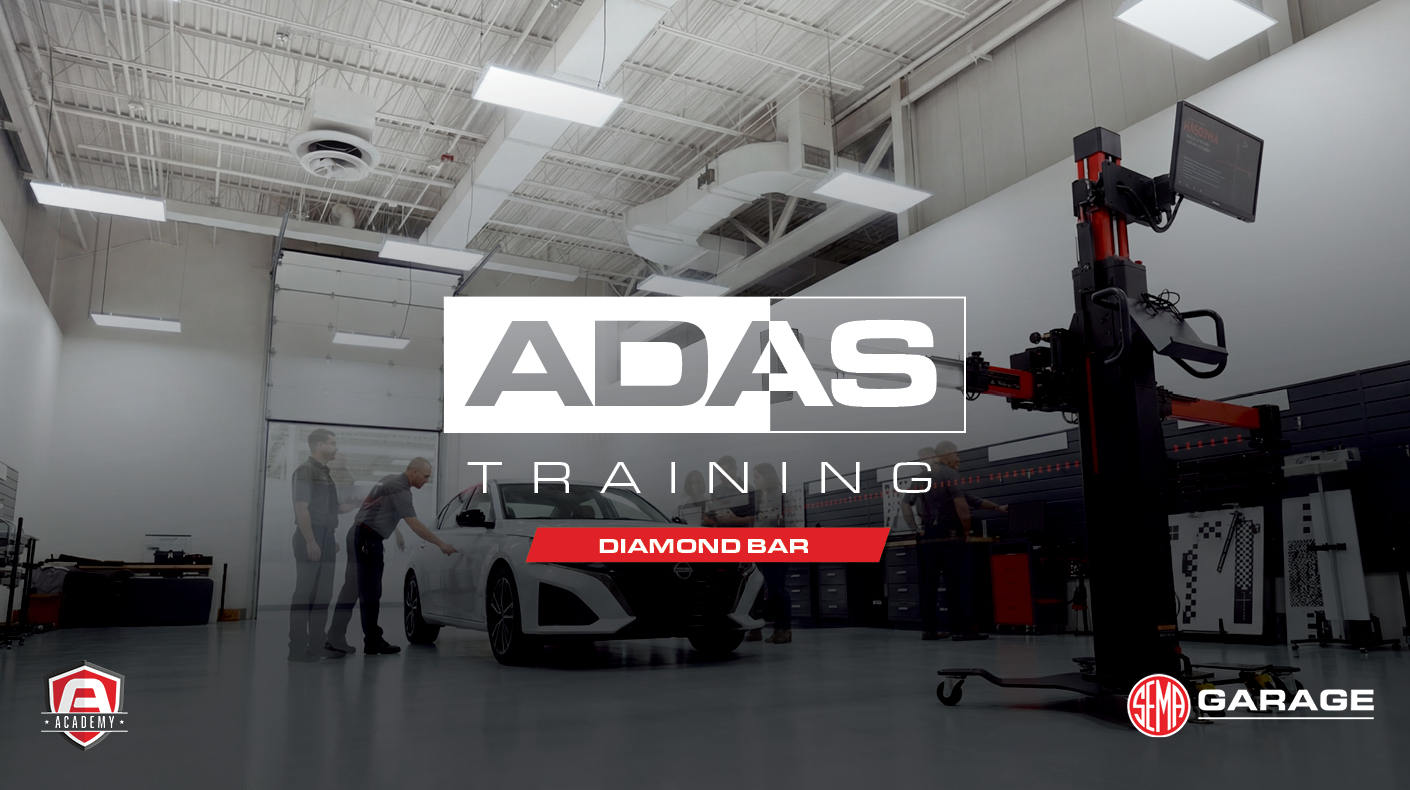
• SEMA has invested more than $25 million in its SEMA Garage program to help the aftermarket stay ahead of rapidly evolving vehicle technology. With facilities in Diamond Bar, California, and Plymouth, Michigan, the SEMA Garage provides advanced tools, OEM data and dedicated ADAS labs that support product development and groundbreaking research on how modifications affect modern safety systems.


• To better understand the landscape of ADAS calibration and the impact of modifications on these systems, the SEMA Garage has hosted dozens of professionals from the customization, collision and repair industries for a symposium to address the most growing and pressing challenges associated with ADAS calibrations--creating a clear, industry-wide roadmap to ensure ADAS functions safely and reliably in every vehicle.


• Based on its rigorous research, SEMA released a series of white papers examining how aftermarket modifications affect ADAS performance across popular vehicles, including the Chevrolet Silverado 1500, Ford F-150, Ford Bronco, Toyota Tacoma and the Ram 1500. The research provides clear, data-driven insight into how changes such as lift kits, wheels and suspension components influence sensor reliability. This research helps manufacturers, installers and enthusiasts understand when recalibration is needed to preserve full ADAS functionality.


Image courtesy of Shutterstock | Sun Shock


Thu, 05/21/2026 - 13:45

By Ashley Reyes

Graphic for the upcoming SBN webinar on generational differences.


With a workforce that spans four generations, automotive aftermarket businesses are uniquely positioned to leverage generational diversity to build stronger collaborative teams. But doing so requires a clear understanding of how each generation communicates, what they value and what they expect in the workplace.
 

SEMA members are invited to join the SEMA Businesswomen's Network (SBN) virtual session, "Creating Positive Outcomes With Generational Differences" on Tuesday, June 9, at 12:00 p.m. PDT/3:00 p.m. EDT, where aftermarket industry leaders will share how generational differences can strengthen communication, alignment and overall business performance. Moderated by Annette Bauer, owner and CEO of The Straightline Co., the session will feature panelists Tariq Ghani, community manager at Timbren; Eliza Leon, regional performance manager at Caliber Collision; Riley Schlick, owner at CEO at Riley's Rebuilds; and Marcus Umlauff, general manager--remarketing, KINTO, fleet management at Toyota Financial Services.
 

What You'll Learn:

  • How generational perspectives impact communication and collaboration.
  • Practical strategies to improve team dynamics across age groups.
  • Ways to turn generational differences into opportunities for growth.
  • Approaches to building more inclusive and productive workplaces.
     

Don't let generational differences divide your team. Attend this free webinar and start turning generational diversity into a competitive advantage.
 

Button to register for webinar.


Feed image courtesy of Shutterstock | SFIO CRACHO

Thu, 05/21/2026 - 13:01

From the SEMA Washington, D.C., office

The CARB logo over a photo of the California statehouse.


A SEMA-sponsored effort to reform the California Air Resources Board's (CARB) executive order (EO) process for aftermarket parts continues to advance, as California SB 1069 unanimously passed the full Senate. The bill will now move to the Assembly for consideration.
 

The bill, authored by Sen. Tim Grayson (D-Concord), aims to streamline CARB's executive order (EO) process for aftermarket parts by establishing clear timelines for CARB to act on EO applications and increase transparency around review times. The bill does not change emissions requirements or limit CARB's authority to deny non-compliant products.
 

The reform effort continues to gain momentum as manufacturers and business groups voice concerns about long, unpredictable wait times that delay product launches and tie up capital. Companies investing in emissions-compliant products already pay application fees intended to support faster processing, yet many continue to face extended timelines before receiving approval.
 

SEMA continues to build industry support for the legislation as it advances through the Senate. Companies can click here to join the growing business coalition supporting the effort.
 

BACKGROUND ON CARB
 

EOs are required for many emissions-related aftermarket parts to be legally sold in California. While the standards themselves remain unchanged, companies must wait for CARB approval before bringing products to market, making the decision timeline a critical issue for the industry.
 

If you have any questions or are interested in supporting the effort, contact SEMA Senior Director for State Government Affairs Christian Robinson at christianr@sema.org.


Lead image background courtesy of Shutterstock | Robert Schlie


Feed image courtesy of Shutterstock | Sharon Ball


Thu, 05/21/2026 - 13:01

From the SEMA Washington, D.C., office

The CARB logo over a photo of the California statehouse.


A SEMA-sponsored effort to reform the California Air Resources Board's (CARB) executive order (EO) process for aftermarket parts continues to advance, as California SB 1069 unanimously passed the full Senate. The bill will now move to the Assembly for consideration.
 

The bill, authored by Sen. Tim Grayson (D-Concord), aims to streamline CARB's executive order (EO) process for aftermarket parts by establishing clear timelines for CARB to act on EO applications and increase transparency around review times. The bill does not change emissions requirements or limit CARB's authority to deny non-compliant products.
 

The reform effort continues to gain momentum as manufacturers and business groups voice concerns about long, unpredictable wait times that delay product launches and tie up capital. Companies investing in emissions-compliant products already pay application fees intended to support faster processing, yet many continue to face extended timelines before receiving approval.
 

SEMA continues to build industry support for the legislation as it advances through the Senate. Companies can click here to join the growing business coalition supporting the effort.
 

BACKGROUND ON CARB
 

EOs are required for many emissions-related aftermarket parts to be legally sold in California. While the standards themselves remain unchanged, companies must wait for CARB approval before bringing products to market, making the decision timeline a critical issue for the industry.
 

If you have any questions or are interested in supporting the effort, contact SEMA Senior Director for State Government Affairs Christian Robinson at christianr@sema.org.


Lead image background courtesy of Shutterstock | Robert Schlie


Feed image courtesy of Shutterstock | Sharon Ball


Thu, 05/21/2026 - 12:12

By SEMA News Editors
 

A graphic with details about the SEMA Show Exhibitor Summit.


A first-time exhibitor explains how the free event transformed his SEMA Show strategy and ROI, plus direct access to Show organizers, networking and money-saving tips.


Exhibitors of the SEMA Show have a lot on their plates to prepare for the world's largest automotive trade show, November 3-6, in Las Vegas.


Between booth planning, lead generation, networking and navigating the Show floor, success and ROI come down to one thing: preparation.


That is exactly why the SEMA Show Exhibitor Summit exists.


The free-of-charge event gives new and returning exhibitors access to insider tips, suggestions and ideas on how to maximize their SEMA Show week. Sit down with the people who run the SEMA Show, learn what buyers and media respond to and find out exactly where exhibitors can save money on drayage, electrical and rigging.


Even better? Summit attendees also receive complimentary hotel accommodations (two nights, up to two company reps) and select meals.


Meet the Show team and get an early look at the newly remodeled Las Vegas Convention Center before it fills up in November. 


View the agenda and register at semashow.com/exhibitor-summit.


Ahead of the 2026 SEMA Show, SEMA News spoke with a first-time exhibitor in 2025, Alex Bohatiuk, about how attending the Summit changed the way his startup approached the Show. Bohatiuk is the founder and CEO of FixMyCarDude.com, an auto repair platform.


Following is an edited transcript for exhibitors to learn more about the SEMA Show Exhibitor Summit:

SEMA News: How did you first discover the SEMA Show?

Alex Bohatiuk of FixMyCarDude.com:

I'm the founder and CEO of FixMyCarDude.com, which is a complete auto repair platform that connects shop owners and customers on a single real-time platform.


The first thing I did was Google auto expos and car expos, and of course, SEMA showed up everywhere. After exploring it, I said, "You know what? The timing's perfect."


SN: When did you first hear about the SEMA Show Exhibitor Summit?

Bohatiuk:

When I signed up for a booth, admittedly, I had no idea there was a Summit. I started asking questions to my sales rep, who explained that it's almost like a dress rehearsal for what to expect. Attending the Summit made things easier. SEMA provided the lodging, a tight schedule, and everything was organized for us.


SN: Would you recommend the Summit to first-time exhibitors?

Bohatiuk:

It's a must. It's not even recommended. I would almost make the Exhibitor Summit mandatory if you want to be successful at the SEMA Show.


SN: Why was the Summit so valuable for your team?

Bohatiuk:

Failing to plan is planning to fail. After attending the Summit, I had a totally different perspective on how to prepare and plan for SEMA.  I don't know how you can do SEMA without attending the Summit.


SN: What was the biggest mindset shift you took away from the event?

Bohatiuk:

The biggest shift was realizing how fast things happen during SEMA Show week. You really need an organized plan with your team. One presenter at the Summit said something that really stuck with me: You don't have 20 minutes to spend with one person. You need to identify your ideal customer quickly.


SN: What did the Summit teach you about attracting the right attendees to your booth?

Bohatiuk:

We learned how important it was to identify our ideal customer.
 

For us, our ideal customer is independent repair shop owners, especially husband-and-wife-owned shops.
 

Once we understood the badge system and attendee categories better, we could focus our time more effectively, thanks to the Summit.


SN: Did the Summit change your strategy for the Show itself?

Bohatiuk:

Absolutely. We set a goal of 100 leads across the four days. On day one, we only had 14 leads. Then we met as a team and pivoted.


The next day, I got into a Ricky Bobby outfit, started taking photos with attendees and created a real buzz around our booth. We ended up with 37 leads that day. By the end of the week, we reached our goal easily. I don't think we would've known how to adapt that quickly if we hadn't attended the Summit.


SN: How did the Summit help improve your ROI?

Bohatiuk:

The Summit accelerated the learning curve and helped me understand what to expect in Vegas.


I also learned about real tools like Express Leads through Maritz. If I hadn't gone to the Summit, I wouldn't have known anything about it.


Instead of writing down contact information manually, we learned that exhibitors can scan badges in just a few seconds to capture a lead. We were able to review all our leads at the end of the day––that alone made a huge difference for us.


SN: What surprised you most about the Summit experience?

Bohatiuk:

The SEMA team really welcomed me. I felt like everyone was welcome, no matter what they were exhibiting or selling.


We became friends with people from seven or eight different automotive categories at the Summit. Those conversations gave us ideas we never would've thought about otherwise.


SN: What would you say to exhibitors considering attending the 2026 Summit?

Bohatiuk:

If you're serious about your business and you want to be successful, you've got to utilize all the tools. SEMA gives you a great starting tool with the Summit.


You can't just show up. You have to prepare, study and bring the right team.


Everyone's trying to succeed. We should make sure people have all the tools available to them––and the Summit does that in just two days.


Register to join the SEMA Show Exhibitor Summit in Las Vegas this June, and the SEMA team will have the rest covered. Exhibitors enjoy complimentary event registration, a two-night hotel stay (for up to two representatives from each exhibiting company) and select meals--all courtesy of SEMA.


A red REGISTER button.


View the agenda and register at semashow.com/exhibitor-summit.


Have questions about the Exhibitor Summit? Contact SEMA Show Management at 909-396-0289 or email regmgr@sema.org.


If you haven't heard, SEMA has launched a new customer management system ahead of this year's SEMA Show, November 3-6, 2026, in Las Vegas. Read more about that here, or visit semashow.com/exhibitor.


Thu, 05/21/2026 - 06:45

By SEMA News Editors

The SEMA Garage BigRep 3D Printer bay.

SEMA Garage's new partnership with BigRep America is bringing large-format 3D printing capabilities to members at the Diamond Bar, California, facility.  


It's no secret that desktop 3D printing is now a standard fixture in many product development workflows. The harder challenge for manufacturers is what happens when the part you need is too large to print in one piece. Traditional manufacturing can fill that gap, but tooling costs and lead times make low-volume production difficult to justify. Industrial large-format 3D printing, now available to SEMA members in SoCal, solves both.
 

Join SEMA Garage and BigRep on Tuesday, June 23, for a lunch-and-learn on large-format additive manufacturing at the SEMA Garage facility in Diamond Bar, California. This half-day session covers the three areas that matter most when evaluating large-format additive manufacturing for your operation.


  • When Large-Format Makes Sense: When and why it makes sense to move from desktop to large-format--and what the real use cases look like.
  • Designing for Additive Manufacturing: Designing parts that take full advantage of the format and the mistakes most teams make early on.
  • Materials and Applications: How to choose the right material for common manufacturing applications so you can avoid costly trial and error.


Attendees can expect live demonstrations with the BigRep STUDIO.2 and direct access to the experts from BigRep for questions specific to your operations. The SEMA Garage team will be on hand to discuss how their product development services can support your work.


Button to register for SEMA Garage lunch-and-learn.


3D Additive Manufacturing Lunch-and-Learn:
Date: Tuesday, June 23
Time: 12:00 p.m.–4:00 p.m.
Location: SEMA Garage, 1577 Valley Vista Dr., Diamond Bar, CA 91765


Attendance is free. Space is limited--register to hold your spot.


SEMA Membership offers real savings, real benefits and real tools to help your business grow, like access to the countless SEMA Garage services and much more. Join SEMA today at sema.org/membership-business


Wed, 05/20/2026 - 16:41

By the SEMA Washington, D.C., office

REPAIR Act auto mechanic Shutterstock image


SEMA, on behalf of the specialty automotive aftermarket industry and community of automotive enthusiasts nationwide, believes that individuals' right to repair and modify the vehicles they own is essential to a free nation and the future of the industry.  
 

New barriers, whether legal or technological, hinder vehicle owners' ability to work on their vehicles, seek repairs at independent automotive shops, and manufacture and install replacement and specialty parts, software and services to enhance their vehicles' safety, performance and comfort each year.
 

These barriers represent an ever-evolving challenge to vehicle owners and the thousands of businesses that make up the specialty automotive aftermarket industry, whose $337 billion annual economic impact is a core driver of the nation's economy.  
 

Historically, aftermarket modifications have been largely mechanical. However, modifying newer vehicles to improve performance, safety, reliability and appearance requires aftermarket businesses to access a vehicle's electronic control unit (ECU), on-board diagnostics systems (OBD) and advanced driver assistance systems (ADAS) to ensure it understands how the parts and products installed interact with OEM systems. Accordingly, it is imperative that OEM data from testing and system calibration is available and able to accommodate vehicle modifications to maintain the integrity and performance of safety systems after a vehicle has been modified.  
 

While many new ADAS features, such as lane-departure warning, lane-keep assist, forward-collision warning, and automatic emergency braking, come standard in the latest models of vehicles, the technology automakers employ to support these systems varies greatly by model and OEM. Currently, vehicle manufacturers are not required to provide full-vehicle lifecycle support, including instructions, application guides, proper mounting or functionality windows, or access to make changes outside of the original sensor location and configuration.  
 

This presents a challenge to correctly and safely calibrate ADAS and ensure optimal performance after basic modifications, such as installing larger tires and wheels, lift kits, lowering kits, bumpers, grilles, push bars, light bars, bike racks and winches.  
 

SEMA is committed to protecting the rights of vehicle owners and millions of automotive enthusiasts to choose where and with what parts and software their vehicles are repaired, customized and modified.  
 

It is imperative that any legislative, regulatory or industry standards or agreements adhere to the principles outlined below. While the REPAIR Act is designed to provide vehicle information and data to protect the future of the independent repair industry, the bill does not extend similar protections to individuals and businesses that modify and customize vehicles, nor does it provide access to the information needed to properly recalibrate ADAS systems after a vehicle has been modified.  
 

SEMA is neutral on the REPAIR Act and will advocate for expanding the legislation to protect the right to modify and customize vehicles. 
 

SEMA's support for any "right to repair" legislation is contingent upon meeting the aftermarket industry's needs in the following areas: 

  • Access: As automotive technology continues to evolve, vehicle owners and the specialty automotive aftermarket industry, including businesses that manufacture and install specialty parts and software, must have access to the tools, repair procedures and information, configurable vehicle parameters, customization settings, software, technical and compatibility information, and wiring diagrams. Automakers must provide this access at fair and reasonable prices and subject to the same cryptographic or technological protections as their authorized dealers and service providers. 
  • Calibration and recalibration: Specialty aftermarket businesses must have access to the information needed to calibrate and recalibrate vehicle systems, including ADAS, to ensure safe operation after a vehicle's ride height and profile is modified, or if the vehicle has been customized.  
  • Elimination of barriers: Motor vehicle manufacturers must be prevented from using technological and legal barriers to limit aftermarket parts manufacturers, vehicle repairers, and businesses that modify or customize vehicles to manufacture or install aftermarket parts, services, and software needed to repair, customize, or modify a vehicle. 
  • A level playing field: Vehicle owners, aftermarket parts manufacturers, diagnostic tool manufacturers, and motor-vehicle service businesses must have access to the same information and tools as OEM's authorized vehicle service providers. Along these lines, such access must be provided in the same manner, time, method, cost (must be fair and reasonable), content set, and subject to the same cryptographic or technological protections, as vehicle manufacturers' authorized vehicle service providers. 
  • Owners' data rights: Vehicle owners must have the right to access their vehicle's safety and performance data and be able to share this information with the repairer or vehicle service provider of their choice. 
     

For more information, contact Eric Snyder at erics@sema.org. 


This story was originally published on February 25, 2025.


Image courtesy of Shutterstock | mpohodzhay
Image courtesy of Shutterstock | Tualek Photographer


Wed, 05/20/2026 - 16:41

By the SEMA Washington, D.C., office

REPAIR Act auto mechanic Shutterstock image


SEMA, on behalf of the specialty automotive aftermarket industry and community of automotive enthusiasts nationwide, believes that individuals' right to repair and modify the vehicles they own is essential to a free nation and the future of the industry.  
 

New barriers, whether legal or technological, hinder vehicle owners' ability to work on their vehicles, seek repairs at independent automotive shops, and manufacture and install replacement and specialty parts, software and services to enhance their vehicles' safety, performance and comfort each year.
 

These barriers represent an ever-evolving challenge to vehicle owners and the thousands of businesses that make up the specialty automotive aftermarket industry, whose $337 billion annual economic impact is a core driver of the nation's economy.  
 

Historically, aftermarket modifications have been largely mechanical. However, modifying newer vehicles to improve performance, safety, reliability and appearance requires aftermarket businesses to access a vehicle's electronic control unit (ECU), on-board diagnostics systems (OBD) and advanced driver assistance systems (ADAS) to ensure it understands how the parts and products installed interact with OEM systems. Accordingly, it is imperative that OEM data from testing and system calibration is available and able to accommodate vehicle modifications to maintain the integrity and performance of safety systems after a vehicle has been modified.  
 

While many new ADAS features, such as lane-departure warning, lane-keep assist, forward-collision warning, and automatic emergency braking, come standard in the latest models of vehicles, the technology automakers employ to support these systems varies greatly by model and OEM. Currently, vehicle manufacturers are not required to provide full-vehicle lifecycle support, including instructions, application guides, proper mounting or functionality windows, or access to make changes outside of the original sensor location and configuration.  
 

This presents a challenge to correctly and safely calibrate ADAS and ensure optimal performance after basic modifications, such as installing larger tires and wheels, lift kits, lowering kits, bumpers, grilles, push bars, light bars, bike racks and winches.  
 

SEMA is committed to protecting the rights of vehicle owners and millions of automotive enthusiasts to choose where and with what parts and software their vehicles are repaired, customized and modified.  
 

It is imperative that any legislative, regulatory or industry standards or agreements adhere to the principles outlined below. While the REPAIR Act is designed to provide vehicle information and data to protect the future of the independent repair industry, the bill does not extend similar protections to individuals and businesses that modify and customize vehicles, nor does it provide access to the information needed to properly recalibrate ADAS systems after a vehicle has been modified.  
 

SEMA is neutral on the REPAIR Act and will advocate for expanding the legislation to protect the right to modify and customize vehicles. 
 

SEMA's support for any "right to repair" legislation is contingent upon meeting the aftermarket industry's needs in the following areas: 

  • Access: As automotive technology continues to evolve, vehicle owners and the specialty automotive aftermarket industry, including businesses that manufacture and install specialty parts and software, must have access to the tools, repair procedures and information, configurable vehicle parameters, customization settings, software, technical and compatibility information, and wiring diagrams. Automakers must provide this access at fair and reasonable prices and subject to the same cryptographic or technological protections as their authorized dealers and service providers. 
  • Calibration and recalibration: Specialty aftermarket businesses must have access to the information needed to calibrate and recalibrate vehicle systems, including ADAS, to ensure safe operation after a vehicle's ride height and profile is modified, or if the vehicle has been customized.  
  • Elimination of barriers: Motor vehicle manufacturers must be prevented from using technological and legal barriers to limit aftermarket parts manufacturers, vehicle repairers, and businesses that modify or customize vehicles to manufacture or install aftermarket parts, services, and software needed to repair, customize, or modify a vehicle. 
  • A level playing field: Vehicle owners, aftermarket parts manufacturers, diagnostic tool manufacturers, and motor-vehicle service businesses must have access to the same information and tools as OEM's authorized vehicle service providers. Along these lines, such access must be provided in the same manner, time, method, cost (must be fair and reasonable), content set, and subject to the same cryptographic or technological protections, as vehicle manufacturers' authorized vehicle service providers. 
  • Owners' data rights: Vehicle owners must have the right to access their vehicle's safety and performance data and be able to share this information with the repairer or vehicle service provider of their choice. 
     

For more information, contact Eric Snyder at erics@sema.org. 


This story was originally published on February 25, 2025.


Image courtesy of Shutterstock | mpohodzhay
Image courtesy of Shutterstock | Tualek Photographer


Wed, 05/20/2026 - 16:41

By the SEMA Washington, D.C., office

REPAIR Act auto mechanic Shutterstock image


SEMA, on behalf of the specialty automotive aftermarket industry and community of automotive enthusiasts nationwide, believes that individuals' right to repair and modify the vehicles they own is essential to a free nation and the future of the industry.  
 

New barriers, whether legal or technological, hinder vehicle owners' ability to work on their vehicles, seek repairs at independent automotive shops, and manufacture and install replacement and specialty parts, software and services to enhance their vehicles' safety, performance and comfort each year.
 

These barriers represent an ever-evolving challenge to vehicle owners and the thousands of businesses that make up the specialty automotive aftermarket industry, whose $337 billion annual economic impact is a core driver of the nation's economy.  
 

Historically, aftermarket modifications have been largely mechanical. However, modifying newer vehicles to improve performance, safety, reliability and appearance requires aftermarket businesses to access a vehicle's electronic control unit (ECU), on-board diagnostics systems (OBD) and advanced driver assistance systems (ADAS) to ensure it understands how the parts and products installed interact with OEM systems. Accordingly, it is imperative that OEM data from testing and system calibration is available and able to accommodate vehicle modifications to maintain the integrity and performance of safety systems after a vehicle has been modified.  
 

While many new ADAS features, such as lane-departure warning, lane-keep assist, forward-collision warning, and automatic emergency braking, come standard in the latest models of vehicles, the technology automakers employ to support these systems varies greatly by model and OEM. Currently, vehicle manufacturers are not required to provide full-vehicle lifecycle support, including instructions, application guides, proper mounting or functionality windows, or access to make changes outside of the original sensor location and configuration.  
 

This presents a challenge to correctly and safely calibrate ADAS and ensure optimal performance after basic modifications, such as installing larger tires and wheels, lift kits, lowering kits, bumpers, grilles, push bars, light bars, bike racks and winches.  
 

SEMA is committed to protecting the rights of vehicle owners and millions of automotive enthusiasts to choose where and with what parts and software their vehicles are repaired, customized and modified.  
 

It is imperative that any legislative, regulatory or industry standards or agreements adhere to the principles outlined below. While the REPAIR Act is designed to provide vehicle information and data to protect the future of the independent repair industry, the bill does not extend similar protections to individuals and businesses that modify and customize vehicles, nor does it provide access to the information needed to properly recalibrate ADAS systems after a vehicle has been modified.  
 

SEMA is neutral on the REPAIR Act and will advocate for expanding the legislation to protect the right to modify and customize vehicles. 
 

SEMA's support for any "right to repair" legislation is contingent upon meeting the aftermarket industry's needs in the following areas: 

  • Access: As automotive technology continues to evolve, vehicle owners and the specialty automotive aftermarket industry, including businesses that manufacture and install specialty parts and software, must have access to the tools, repair procedures and information, configurable vehicle parameters, customization settings, software, technical and compatibility information, and wiring diagrams. Automakers must provide this access at fair and reasonable prices and subject to the same cryptographic or technological protections as their authorized dealers and service providers. 
  • Calibration and recalibration: Specialty aftermarket businesses must have access to the information needed to calibrate and recalibrate vehicle systems, including ADAS, to ensure safe operation after a vehicle's ride height and profile is modified, or if the vehicle has been customized.  
  • Elimination of barriers: Motor vehicle manufacturers must be prevented from using technological and legal barriers to limit aftermarket parts manufacturers, vehicle repairers, and businesses that modify or customize vehicles to manufacture or install aftermarket parts, services, and software needed to repair, customize, or modify a vehicle. 
  • A level playing field: Vehicle owners, aftermarket parts manufacturers, diagnostic tool manufacturers, and motor-vehicle service businesses must have access to the same information and tools as OEM's authorized vehicle service providers. Along these lines, such access must be provided in the same manner, time, method, cost (must be fair and reasonable), content set, and subject to the same cryptographic or technological protections, as vehicle manufacturers' authorized vehicle service providers. 
  • Owners' data rights: Vehicle owners must have the right to access their vehicle's safety and performance data and be able to share this information with the repairer or vehicle service provider of their choice. 
     

For more information, contact Eric Snyder at erics@sema.org. 


This story was originally published on February 25, 2025.


Image courtesy of Shutterstock | mpohodzhay
Image courtesy of Shutterstock | Tualek Photographer


Tue, 05/19/2026 - 13:29

From the SEMA Washington, D.C., office

Jay Leno and Senator Shannon Grove in a classic car.


Editor's Note: This story was originally published on May 19, 2026. A more recent story is available.


Leno's Law has cleared another major hurdle.
 

Authored by Senators Dave Cortese and Shannon GroveSB 1392 has passed the Senate Appropriations Committee and now heads to the California Senate floor for a full vote. 
 

Are you in California? Tell your Senator to vote YES on Leno's Law; it only takes a minute!
 

Leno's Law creates a narrow, phased-in, collector-only pathway to a smog-check exemption for certain older vehicles. The bill starts with vehicles manufactured before the '81 model year and gradually expands, reaching vehicles manufactured before the '86 model year by 2032. Importantly, it does not change the existing pre-1976 exemption already in law.  
 

Leno's Law is designed to focus on true collector vehicles--those used primarily for shows, parades, charitable functions and historical exhibitions--rather than as an owner's primary mode of transportation. 
 

The Appropriations Committee amended the bill, adding a new requirement that the vehicle be used on a limited basis. To qualify, the owner would need to either provide DMV with proof of collector car insurance at registration or use a future DMV process to show the vehicle is driven fewer than 1,000 miles per year
 

Now that Leno's Law has passed Senate Appropriations, it moves to the Senate floor for a vote. Floor votes can happen quickly, and every message helps lawmakers understand that this issue matters to enthusiasts and the small businesses that support them.  
 

SEMA has been hard at work gathering support from the automotive community and a big thank you goes out to Chris Jacobs and Carmen Vera (Pasadena Classic Car) for using their platforms to highlight why Leno's Law matters. 
 

🎞️ VIDEO: Watch Chris Jacobs and Carmen Vera's message on Leno's Law below: 


For more information on how to support Leno's Law and to stay updated on its progress, contact Victor Muñoz, SEMA's senior manager for state government affairs, at victorm@sema.org. Sign up for SEMA Action updates at semahq.org