SEMA News—September 2021
35 Under 35
Meet Our 2021 Class of Next-Gen Talent
By SEMA News Editors
 There’s no doubt that the automotive specialty-equipment industry has entered a transformative era. The internet and social media have revolutionized marketing communications and commerce. Manufacturing and supply chains stretch across the globe as never before. Electrification, automation and other emerging vehicle technologies are reshaping vehicle platforms and the way we modify them. CAD and additive manufacturing techniques have forever changed how we design, develop and speed products to market. And through it all, more and more Baby Boomers are retiring as the Millennial generation matures into management positions. How will the industry embrace these advances, and who will be its leaders?
When we debuted our annual “35 Under 35” feature in September 2012, the goals were simple: to identify and encourage rising industry talent and introduce that talent to the wider aftermarket. Then as now, many wondered whether an industry perceived as “graying” was effectively attracting and nurturing next-gen innovators, entrepreneurs and leaders. Ultimately, we hoped that the feature would foster discussion, fuel youth engagement and focus industry awareness on the question.
The project clearly resonated with SEMA members—so much so that “35 Under 35” has become a highly anticipated SEMA News feature over the last nine years. In fact, nominations for 2021 honorees reached a record level. Clearly, young people with drive and fresh ideas not only have a home in the aftermarket but are already achieving great things. What’s more, the industry is taking notice and cheering them forward.
In the following pages, we are again pleased to present 35 trendsetters who are age 35 and younger and represent a broad cross section of industry segments. In order to make our “35 Under 35” list, honorees must first be nominated by one or more industry peers. Poring through the nominations, SEMA News looks for candidates from a wide variety of backgrounds who are making significant contributions through their leadership within their organizations or businesses. Entrepreneurship, commitment, insight, innovation, integrity and responsibility as well as demonstrated skill, involvement and success within the marketplace weigh heavily in our decision-making. The selection process is never easy, since every nominee is uniquely outstanding. Ultimately, however, our mission is to choose just 35 for this special feature.
We think you’ll enjoy meeting our 2021 class of honorees. They’re an inspiring group of people who are setting their sights on the future—a new generation of enthusiasts possessing a special combination of work ethic, ideas and dreams. (Plus, as in past years, their preferred briefcase items and tastes in pizza toppings betray a hint of a lighter side.) As they build their careers in the specialty-equipment aftermarket, it will be exciting to see where they take us all.
 Kianoush “Kia” Aghai, 26
Product Manager
Warn Industries
Kianoush “Kia” Aghai’s family immigrated to the United States when he was just 9 years old. Having lived on two continents, in three different countries and in five cities, he thrives in diverse environments. What’s more, he’s passionate about anything automotive, mechanical, creative or helpful to people.
“I decided to pursue mechanical engineering as a means to bridge my technical aptitude with my creative mindset,” he explained.
A young man of many talents, his list of accomplishments is long and varied. Prior to joining Warn, Kia engineered a proprietary nanocomposite coating to better withstand wear, abrasion and impact. As product manager at Warn, he’s most proud of leading the development of the company’s highly durable SeriesG2 industrial winch lineup.
“Knowing that our nimble, adaptable and dependable solutions are what individuals can rely on across many applications around the world excites me,” Aghai said. “Continuous learning has been a big part of my journey, and my desire to evolve within my current role has led me to embark on an MBA program,” he said.
What’s in his briefcase: His notepad, a favorite pen, an iPhone, AirPods, a laptop, a portable monitor and a mouse.
Favorite pizza topping: “Chicken, mushrooms and pineapple—the triple combo.”
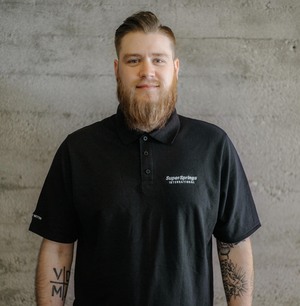 Tom Bateman, 30
Creative Director
SuperSprings International
Tom Bateman landed in the aftermarket serendipitously.
“I was working in marketing for the financial industry and growing tired of its corporate mazes and emptiness,” he explained, but his best friend had transitioned into the aftermarket and found fulfillment, so Bateman reached out to him for a career change.
That led to a marketing position at SuperSprings, where he’s now creative director and can’t imagine working anywhere else. His move has been good for the company, too. His efforts have led to tremendous growth in brand awareness, with the videos he’s filmed and edited garnering more that 1.2 million YouTube views in 2020—a 2,300% rise over 2019. The company’s website also recorded 40% growth in page views, and products marketed saw a 16% revenue surge. His early forays into TikTok show promise as well. One video saw more than 600,000 views in two days.
“I’m proud of the lifestyle brand I’m helping to build, the marketing content that didn’t exist two years ago, and the ever-growing view library we’ve curated in-house,” he said.
What’s in his briefcase: “A MacBook, Adobe Suite, Outlook, good Wi-Fi, and a pen from my friend Adam.”
Favorite pizza topping: Pepperoni and sausage.
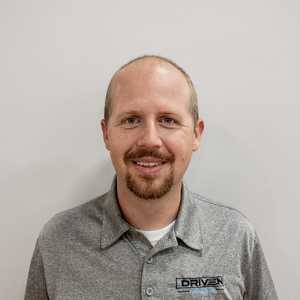 Bradley Brown, 35
Director of Innovation
Driven Lighting Group
“I’ve been building mechanical things since I was very young,” Bradley Brown admitted. He started with a rebuilt lawnmower at age nine. A graduate of the NASCAR Technical Institute, he worked in engineering testing and product development at Comp Cams, where he was promoted to R&D manager while earning an engineering degree at night. Eventually, he incorporated software coding, programming and back-end systems development into his professional repertoire. As director of innovation and technology, he led the development of custom manufacturing and data-acquisition software for Comp Cams and Race Winning Brands.
“I’ve had the pleasure of designing race-engine parts, multimillion-dollar robotic warehouse systems and everything in between,” Brown said of his proudest accomplishments. But he’s not interested in standing still and sees himself at the helm of his own company in the future. “I enjoy the challenges that come with startups and the wide range of skills required to launch a business,” he said.
What’s in his briefcase: “My calendar is a major tool for me to stay organized. I tell people that Excel is my calculator, and I also use CAD software for designing purposes as needed. My coding skills have been useful, with SQL, JavaScript, Virtual Basic and HTML being used regularly when needed.”
Favorite pizza topping: Pepperoni.
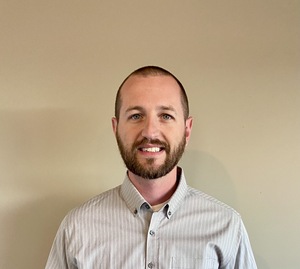 Aaron Barnhart, 35
CEO
Go Powertrain
As the owner of one of the country’s largest powertrain distributorships, Aaron Barnhart set out to create an all-in-one component source for parts stores, dealerships and repair facilities, with an emphasis on providing outstanding customer service. It seems to have worked: In only seven years, his company expanded from a single employee (himself) to a full-time staff of 17, with customers in all 50 states and on six continents.
“Our customers like us for being a one-stop shop with industry-leading warranty coverage,” Barnhart explained.
That coverage includes a mobile programming service that buyers can use after Go Powertrain’s parts have been installed.
“With such a high-labor dollar amount on the installation of our products, we pride ourselves on our customer service from quote to installation,” he said.
While the company is still young, it has attracted widespread notice throughout the industry. So much so that Barnhart earned a spot on the Inc. 5000 list for 2020 (number 1,337).
What’s in his briefcase: “I’d be lost without my MacBook Pro and Google Sheets. I also carry my iPhone, headphones and business cards.”
Favorite pizza topping: Bacon.
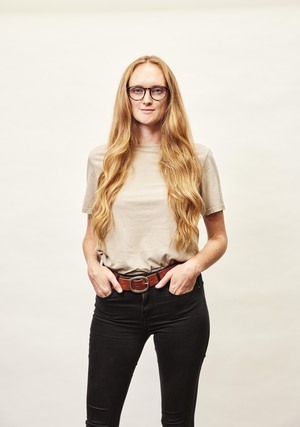 Lisa Cady, 32
Co-Founder, Chief Operations and Design Officer
Agaso Outdoor
Originally, Lisa Cady studied architecture and interior design, working in historic preservation and renovation for many years. Five years ago, she co-founded Agaso Outdoor, a fast-growing Southern California restorations and parts business that works closely with some of the industry’s best-known brands. She considers it her greatest career accomplishment.
“I’ve always loved history, and it was a natural segue from historic homes to vintage cars,” she explained.
Peers describe Cady as a skilled technician and builder. Equally important, she’s adept at design, engineering, business management and the adoption of emerging technologies. She’s currently directing a Porsche 912 EV conversion, working with her team to create a kit for the platform that she intends to scale and sell, but her true specialty is early Ford Broncos.
“I was particularly drawn to the 4x4 world, as you’re not limited to pavement,” she said. “Our customers come to us with a nostalgic feeling that they’re looking to create or recreate. It’s challenging getting the Bronco platform to function far better than it ever did from the factory. The quality of the aftermarket parts we use is paramount.”
What’s in her briefcase: “My dog and the ’70 F-100 shop truck.”
Favorite pizza topping: Basil and mozzarella.
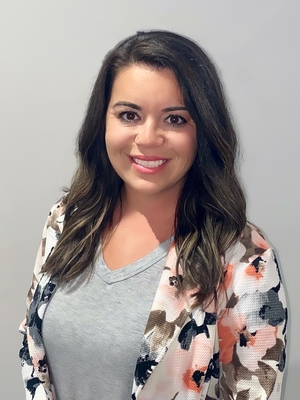 Kristina Coburn, 31
Marketing Manager—Truck Bed Cover Division
Truck Hero
Coburn admitted she “stumbled” into the aftermarket with a part-time customer service job at 4WD Hardware, but she discovered that hours of discussing Jeeps and off-roading with customers and colleagues “lit a fire in me.”
Over the next six years, her dedication propelled her first to a position as Jeep brand manager and then as manager of new-product opportunities. In 2020, she accepted her current position at Truck Hero, where she helped navigate the company’s brands through the twin challenges of a recession and a pandemic.
But Coburn’s passion for the industry extends beyond her job. She served as Northeast Region ambassador for the SEMA Businesswomen’s Network, and in 2017 she was elected to the Light Truck Accessory Alliance (now Truck & Off-Road Alliance) select committee, where she served as chairwoman of numerous task forces that were instrumental in renaming the council.
When asked about her future plans, she said that she intends to continue “allocating more time for volunteer work in the industry, to help where I can, so the generations to come fall in love with it just as I have.”
What’s in her briefcase: “I couldn’t live without my iPhone. Apps are a must—Photo Editor for quick touchups, Scannable, Microsoft Teams, of course, my laptop and Wrike.”
Favorite pizza topping: Cheese.
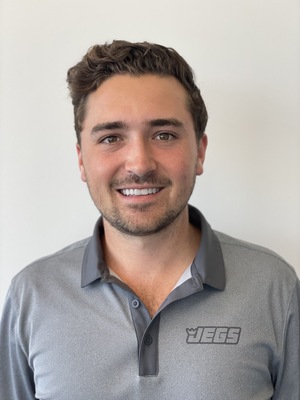 Jeg Coughlin III, 24
Vice President
Jegs High Performance
Although raised in the family automotive and racing business, Jeg Coughlin III pursued his golfing passion through high school, eventually playing for The Ohio State University in college. Starting his junior year, however, he began working part time at Jegs and discovered his love for the business and industry.
“We’re fortunate to have both a talented and passionate group of associates at Jegs who brought me under their wing and helped me learn about our customers and business,” he said. “At my first SEMA Show in 2018, I was in total awe.”
Upon graduation, he began his fulltime career at Jegs and hasn’t looked back. In fact, he’s known for rolling up his sleeves and jumping into any operation that requires assistance. He’s helped digitally modernize the company along the way, resulting in a 79% increase in consumers ages 18–24, a lucrative new revenue stream for a company whose traditional demographics skewed older.
“The Jegs brand has represented innovation and customer satisfaction for over 61 years,” Coughlin said. “It’s exciting to be expanding into new categories and audiences.”
What’s in his briefcase: “I can’t go anywhere without my MacBook and AirPods. I’m Apple-dependent.”
Favorite pizza topping: “Can’t beat pepperoni.”
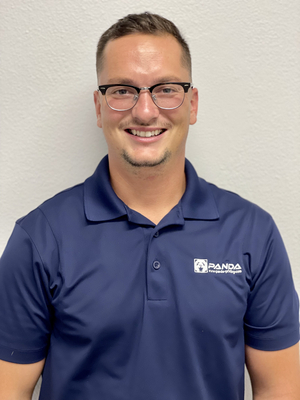 Douglas Clarke, 26
CFO/Owner
Panda Printing
At age 12, Douglas Clarke repaired and drove a ’94 Ram 1500 on his family’s farm. That got him hooked on doing 10 more truck builds over the ensuing years. Then, fresh out of college three years ago, he teamed with industry friends to launch Panda Printing, a wrap shop focused on quality design and fast turnarounds. It quickly became a multi-million-dollar business with three Florida outlets. Along the way, he innovated a full-service intake and delivery process for fleet vehicle upfitting that’s easily duplicated and scalable across multiple locations. That service has had an outstanding impact on local dealerships and the small-businesses community.
“The most exciting part of our business is that no job is ever the same,” Clarke said. “A good portion of our customers are first-time small-business owners looking for logos, business cards and vehicle wraps, and it’s rewarding to watch them grow and thrive. The other 40% of our business is straight fun. Custom wraps let our artistry shine. From brand-new Ferraris to ’70s pickups, we do it all.”
What’s in his briefcase: An iPhone and a strong reliance on shop computers boasting “the latest and greatest software.”
Favorite pizza topping: Pepperoni.
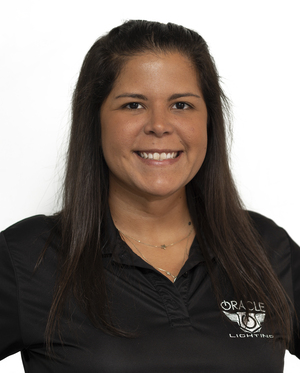 Sandy Crespo-Mossi, 34
Operations Manager
Oracle Lighting
Originally planning a career in the hospitality industry, Sandy Crespo-Mossi moved to New Orleans after graduating from college in Switzerland, aiming to explore a management training opportunity at a five-star hotel. While there, she fell in love with the city and its people and decided to switch career paths upon completion of her training program. She began looking for a company that was “welcoming, family-oriented, and had room for growth.”
Despite having no knowledge of the automotive industry, she took a position as an administrative assistant at Oracle Lighting. Nearly 10 years later, she’s now the operations manager for the company, which has 29 full-time staff and has been listed on the Inc. 500 list of “Fastest Growing Companies” for nine years running.
Besides continuing her career in the aftermarket, Crespo-Mossi also sees a role for herself in community service: After 12 years in New Orleans, she relishes the opportunity to “share my experience and/or skills to elevate the quality of life in it.”
What’s in her briefcase: “My ReMarkable follows me wherever I go. Handling multiple projects and the need to take a lot of ‘for later’ notes and ideas, it’s the perfect place for me to keep everything in one spot.”
Favorite pizza topping: Jalapeño peppers.
 Nick Dominato, 30
Senior Vice President
asTech
Nick Dominato grew up in the collision-repair industry. His parents owned a regional paint jobber, and shortly after finishing school, he was introduced to an exciting new company in the industry that was doing OEM diagnostics. That company was asTech, and as Dominato said, “I haven’t looked back since.”
While some in the industry look at advanced driver-assistance systems (ADAS) with apprehension and dread, Dominato relishes the challenges the new technology brings. “Autonomy and—until we get there—ADAS have the potential to change the way people live, work and move around in the world,” he said.
The more he delved into the subject, however, the more he came to realize that the collision-repair industry was failing to stay abreast of the technology, so he founded adasThink in 2020. It’s a first-of-its-kind software company that was intended to help collision repairers identify onboard ADAS systems and required calibrations and to provide OEM documentation. The company was acquired by Repairify Inc., asTech’s parent company, in 2021.
What’s in his briefcase: “My dog Ginger. We go for walks together, and I ask her about the important issues and opportunities of the day. She usually doesn’t say much back, but by the end of the walk, I find that I’ve made real progress in figuring things out.”
Favorite pizza topping: Buffalo mozzarella.
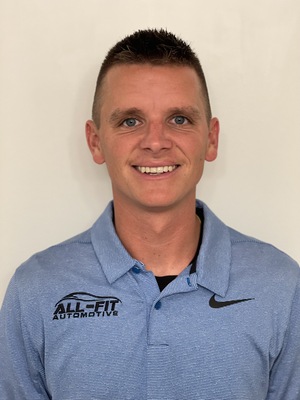 AJ Dudon, 30
Founder
All-Fit Automotive
A self-confessed “car kid,” AJ Dudon went into business for himself at an early age, buying and selling parts for nitro R/C racers on eBay when he was 10. At 15, he started his first “real” company, selling products online. By age 17, he was brokering high-end vehicles with nationwide marketing campaigns.
“With a love of cars and a few bucks in my pocket came vision and opportunity,” he recalled.
At 19, he founded All-Fit Automotive, his automotive accessories business. Barely 10 years old, the company has attracted worldwide notice, winning a pair of Global Media Awards at the 2019 SEMA Show.
While he loves the fact that his business “allows me to be as creative as I want,” he takes a pragmatic and levelheaded view of it. His proudest career accomplishment? Survival.
“While I am extremely proud of some of All-Fit’s accomplishments that no amount of money can ever replace, surviving the ups and downs is an accomplishment that’s often overlooked,” he said.
What’s in his briefcase: “If only this asked, ‘What’s in your golf bag?’ I am most productive the few times I can distance myself from work and recharge. A little time off is all I need in my briefcase.”
Favorite pizza topping: Pepperoncinis.
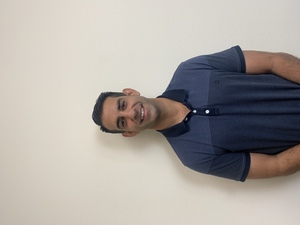 Ravi Dolwani, 33
Director, Racing and High Performance
CSF Radiators
At 33, Ravi Dolwani has already racked up several major accomplishments. In 2010, he founded CSF Race, a cooling manufacturer with a global distribution and dealer network. Under his direction, its annual revenues have hit $10 million.
Moreover, the company’s racing involvement encompasses Pikes Peak, Formula Drift, Global Time Attack and drag racing, with CSF Cooling components used on six world-record-breaking vehicles since 2018.
Dolwani has been a SEMA Battle of the Builders contestant twice and a nominee for the SEMA Board of Directors.
“The most exciting aspect of my business is creating new, first-to-market products,” he said. “I enjoy the entire process—taking apart the vehicle, reverse engineering OEM parts, seeing what can be improved, then designing, test fitting and launching the upgraded products.”
Dolwani said his greatest achievement to date was developing a highly acclaimed cooling product line for the BMW S55.
Next up? “I hope to be a contender and possibly win the 2021 SEMA Battle of the Builders,” he smiled.
What’s in his briefcase: A laptop, a reserve battery, a ruler, a tape measure, pens, Manila folders and ear plugs.
Favorite pizza topping: Hot peppers.
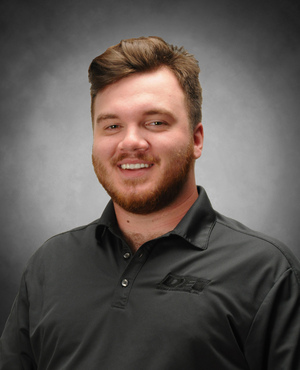 Will Farkas, 23
Social-Media Specialist/Sponsorship Coordinator
Design Engineering Inc.
Since taking on his position in October 2020, Will Farkas has already increased Design Engineering’s social-media reach 60%. In addition, he’s opened a previously untapped marketing channel for the heat and sound insulation company by forging significant business partnerships with world-class builders and influencers. His sponsorship efforts have also enabled the company to sign on with top IMSA and SCCA drivers and teams as well as top builders and pro Formula Drift drivers.
“A big initiative of mine was to align us with the big influencers, specifically on YouTube,” Farkas said. “In the short time we’ve done so, we’ve seen it pay off immensely in terms of digital benefits and our demographic as a whole.
“Our customers range from mom-and-pop hot-rod shops to aerospace companies to racers competing across the spectrum. I’ve even dealt with the bee industry. So many industries and end users are faced with the common issue of things getting too hot or creating too much noise, which is where we step in.”
What’s in his briefcase: An iPhone, an iPad, a notepad and a pen, plus Sprout for managing social-media channels.
Favorite pizza topping: Cup-and-char pepperoni.
 Dustin Foust, 34
Owner/Operator
Classic Restorations of Southern Indiana
Dustin Foust began his automotive career at an early age, working in his father’s Indiana restoration shop at age 10, sweeping the shop floor and learning the business as he grew up. Upon graduating from college in 2010, he became a 50% partner in the company, and Classic Restorations has been producing award-winning customs ever since—a number of which have found their way onto the floor at the SEMA Show.
Foust first attracted notice on the car-show circuit in 2005, when he captured a Goodguys Young Guys award at the Columbus PPG Nationals at age 19. Since then, he has been a Goodguys Muscle Machine of the Year finalist and a Street Rod of the Year finalist, an F-100 Supernationals Truck of the Year winner, and an ISCA Top 5 Truck winner. He garnered numerous Goodguys and NSRA Builders’ Choice awards as well, but his proudest accomplishment, he said, was winning the Jack Trepanier Legacy Award at the 2017 Chicago World of Wheels “and having my dad at my side when receiving it.”
What’s in his briefcase: “My office computer, my smartphone with all my industry contacts, as well as pens, Sharpies, invoice sheets and two McDonald’s sweet teas to keep me hydrated throughout the day.”
Favorite pizza topping: BBQ chicken.
 Garrett Harmola, 34
Owner/President
Aldan American
Garrett Harmola admits to being obsessed with cars since childhood.
“I grew up going to Goodguys car shows and the roadster show in Northern California,” he said. “My brother and I spent weekends buying and selling dirt bikes on the internet, which turned into owning and building several classic trucks and 4x4s.”
But he took a life-changing leap in 2014, striking a deal to acquire Aldan American, a legacy hot-rod coil-over and suspension manufacturer. He recruited new leadership and talent, introduced vehicle-specific applications, streamlined manufacturing, and instituted new efficiencies. The resulting 500% product-line expansion put Aldan on a road to resurgence, with the company posting exponential sales gains over the past seven years.
“The most exciting thing for me in operating Aldan American day to day is working with my team to expand our business,” Harmola said. “We’re a quality-focused organization that’s been growing and scaling year over year. My team and I are constantly creating jobs, developing people and providing products and services that make driving enjoyable.”
What’s in his briefcase: “A Yeti Rambler cup loaded with French-pressed coffee, a pocket knife, a notebook, black and blue pens, and an iPhone.”
Favorite pizza topping: Bell peppers.
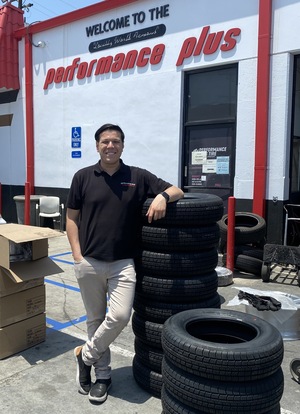 Dennis Feldman, 31
General Manager
Performance Plus Tire
After spending two years post graduate in the public relations field, Dennis Feldman hit the ground running at Performance Plus Tire. In the last five years, he’s helped boost company sales by 25% while playing a key role in strategizing a second Performance Plus distribution and off-site call center in Tennessee. Moreover, he was instrumental in the Performance Plus acquisition of the Boyd Coddington Wheel Co., and is heavily involved in strategic planning and identifying potential new products.
An industry advocate, Feldman has additionally served as a SEMA Wheel & Tire Council select committee member and participated in multiple training programs through Michelin and Bridgestone, as well as SEMA Young Executives Network training. In fact, Feldman embraces learning and is currently working on his MBA.
“I’m fortunate to represent my family’s third generation in the wheel and tire industry,” he said. “My grandmother founded Performance Plus Tire in 1971, and the ever-changing landscape of today’s e-commerce makes our business exciting and challenging. New technology continues to offer different ways to reach people, and we’re dedicated to understanding all the possibilities.”
What’s in his briefcase: “My workflow revolves entirely around Microsoft Outlook and Google Chrome.”
Favorite pizza topping: Pepperoni.
 Matt Hellmann, 30
Director of Category Management—Tools and Equipment
Genuine Parts Company (GPC)/U.S. Automotive Parts Group
While he has worked in the automotive aftermarket for only six years, Matt Hellmann’s list of career accomplishments is already long. He started as a marketing analyst for GPC in 2015, advancing to the position of category manager and then, last year, to director of category management overseeing the tools and equipment category team. It’s a promotion that he mentioned as among his proudest accomplishments to date.
But Hellmann has expanded his professional reach beyond GPC. Since 2018, he has served on the Tools & Equipment Committee of the AutoCare Association, and he has participated at the association’s annual Legislative Summit. In 2019, he earned Automotive Aftermarket Professional certification from Northwood University, and this year he earned Certified Professional Category Analyst certification from the Category Management Association. On top of it all, he is also involved as a volunteer with the City of Refuge in Atlanta. “Being able to be a part of something bigger than you and changing individuals’ lives for the better is what life is all about,” he said.
What’s in his briefcase: “A laptop, an iPhone, an iPad, a notebook, a pen, portable chargers and a Carlyle tools ratchet.”
Favorite pizza topping: Jalapeños.
 Anthony Hostetler, 26
Industrial Designer
Oracle Lighting
A graduate of Kendall College of Art and Design, Anthony Hostetler first became attracted to the automotive industry after a 2015 visit to the Detroit Auto Show while he was a student.
“I realized that there was a huge opportunity for creative designers in this space and decided to pursue a career in automotive design,” he said.
While young in years, Hostetler has already made a mark in the industry. He was the lead designer of the exterior lighting system for the Delage D12 Hypercar project, which, in the words of Oracle Director of Product Development Justin Hartenstein, “was perhaps the most innovative and forward-thinking vehicle of 2020.” Additionally, he played a lead role in the development of the A.I.R. Solo, an acclaimed antimicrobial irradiation respirator that Oracle created and brought to market in response to the COVID-19 pandemic last year.
His greatest career accomplishment? “Seeing my product designs being used in the real world.”
What’s in his briefcase: “I can’t leave my apartment without my laptop, sketchpad and some pens. Without them, I’m just kind of stuck. Like if you get four tires deep while mudding. Without a winch. In the middle of nowhere.”
Favorite pizza topping: Pepperoni.
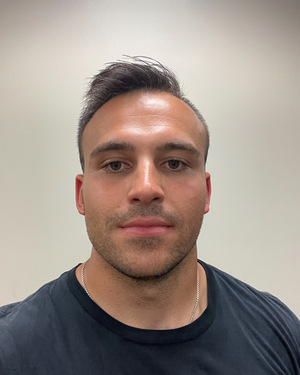 Greg Keosayian, 28
Owner
Kong Performance
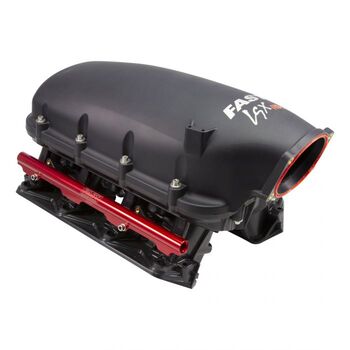
As with many startups, Greg Keosayian’s business began in his own garage, working on his own C6 ZR1 and thinking of how to make the supercharger work more efficiently. He eventually founded what would rank among one of the industry’s most highly regarded CNC supercharger porting companies and the go-to source for GM, Dodge and Ford CNC supercharger port work.
Keosayian didn’t stop there. Kong Performance eventually took business to a new level with the design and manufacture of its own LSA/LS9 superchargers. The units were designed to be easy bolt-on replacements—a perfect upgrade for Keosayian’s customers, the majority of whom are “average guys who want to make tons of horsepower in both street cars and race cars.”
Upon release, the Kong LSA/LS9 TVS 2650 immediately grabbed the attention of the LS community. It appealed to the performance aftermarket as a user-friendly upgrade that produced record-setting horsepower while fitting easily under a stock hood.
“Everyone said that it couldn’t be done, so we made it happen,” he said. “It is a true game-changer in the world of LS performance.”
What’s in his briefcase: “Keys to a few 1,000hp ZR1s!”
Favorite pizza topping: Cheese.
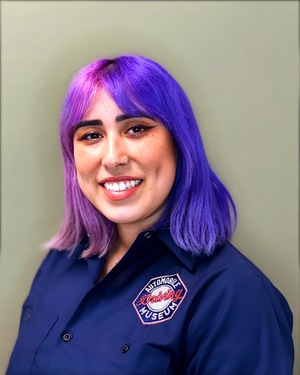 Marisol Herrera, 28
Executive Director
Automobile Driving Museum
Marisol Herrera wasn’t originally a car person, but working with museum nonprofits, she sought a challenge and took a receptionist position with the Automobile Driving Museum in El Segundo, California. The museum curates a collection of more than 130 classics and specializes in ride-alongs and basic mechanics lessons for kids.
Herrera soon became operations manager, then the executive director in 2019. Along the way, she developed events and programs to educate the public on automotive history, maintenance and preservation. She broadened the museum’s appeal to all ages and ethnic groups, developed partnerships and initiatives to grow attendance, and made the museum a go-to Los Angeles County venue. The museum is even partnering with higher-learning institutions to promote automotive careers.
“I think most people come thinking we just have a garage full of cars, but we are highly interactive, and it’s exciting to see their faces when they walk in,” she said. “We survived COVID-19 and are on track for expansion, and I can’t wait to contribute more to our community.”
What’s in her briefcase: A Mac, earphones, a notebook, gel pens, Reese’s cups, an ice-cold Hydro Flask and Hot Wheels to give out to kids.
Favorite pizza topping: Ham and mushroom.
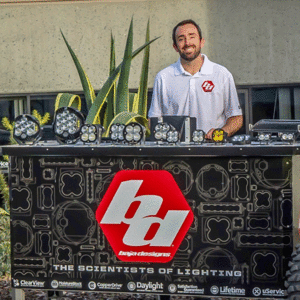 Trent Kirby, 33
CEO
Baja Designs
Trent Kirby’s love for cars and racing came early on in life: his grandfather was a mechanic for Parnelli Jones, and his mother raced sidecars.
“I knew from a very early age that I wanted to establish a career in the automotive/powersports market,” he admitted.
Since then, he has risen through the ranks at Baja Designs, starting in marketing and now serving as the CEO of a growing company with more than 110 employees. He recently led Baja Designs in the acquisition of a new 30,000-sq.-ft. manufacturing facility for its off-road lighting line, and he puts his own products through their paces by competing in the UTV class in the SCORE racing series. His proudest accomplishment, though, is helping to form his company’s office culture.
“We have a team full of enthusiasts,” he said. “We welcome constructive criticism, have an open-door policy for all positions, and we respectfully hold each other accountable to achieve our true potential. It’s a unique yet satisfying experience.”
What’s in his briefcase: “Windows 365, Monday project-management software, audio books, and excellent reporting software that provides an immediate pulse on our business.”
Favorite pizza topping: Jalapeños.
 Cody Mayer, 34
Director of Engineering
Driven Lighting Group
Cody Mayer has been interested in cars—and particularly engines—for as long as he can remember. After his sophomore year at Vanderbilt University, he was accepted for an internship at Comp Cams in his hometown of Memphis. That later turned into a full-time job that began his career in the aftermarket. Since then, he has worked as a mechanical-engineering group manager at Comp Cams (where he won a SEMA Best Engineered New Product award), a mechanical-design engineering manager at Craftsman, a senior manager of advanced product development at Race Winning Brands, and is now director of engineering at Driven Lighting Group—picking up 12 utility patents along the way. Oh, and he did all of that while earning a master’s degree from Northwestern in 2018.
While he may be an accomplished aftermarket pro, Mayer remains humble about his success, crediting “the opportunities that my mentor [Driven Lighting Group CEO] Brian Reese has given me at every turn to show what I am capable of accomplishing. It never gets old being at a track or a car show and seeing a product I designed out in the wild.”
What’s in his briefcase: “A CAD-capable laptop, Mitutoyo calipers, an EZ-EFI jump drive, and phone numbers for all the super-talented engineers and leaders I have worked with in the past.”
Favorite pizza topping: Sausage.
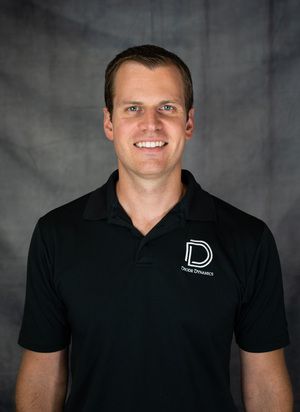 Paul McCain, 31
Founder and CEO
Diode Dynamics
Paul McCain started Diode Dynamics in his garage as a teenager. Today the company boasts more than 75 employees and is a name brand in LED lighting components for on- and off-road applications.
“Before 2014, I was importing and rebranding most of what we sold, but I knew we could do better,” McCain said. “I set out to transform Diode Dynamics into a full-fledged engineering, design and manufacturing company, with products built here in the United States.”
McCain acknowledged that it wasn’t easy. Electronics technology is complex, and he had zero experience, but he did have dedication and a drive to learn and innovate. His efforts not only built a company but also made him a SEMA Young Executives Network Vanguard Award winner in 2017. He has also served as a SEMA Show speaker on sourcing, production and related business topics.
“Every time we sit down to design a new product, there are fresh opportunities to improve performance and features,” he said. “Staying on the leading edge of technology is a big challenge that keeps things exciting.”
What’s in his briefcase: “Google Sheets, our ERP app, and a knife to open hot shipments of the latest components.”
Favorite pizza topping: Provel cheese.
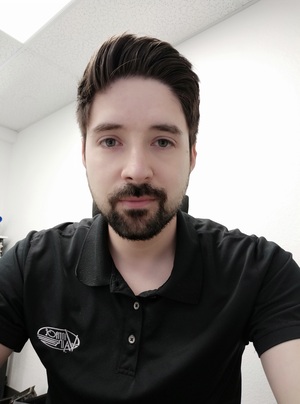 Daniel Manautou, 30
Research and Development Manager
Vintage Air
“Commonly, we design parts for classic cars,” Daniel Manautou said. “A lot of times, you have to find a solution to create parts that will fit OEM holes using the available tools and machines.”
To that end, he expanded Vintage Air’s parts repertoire to include digital tools such as 3-D printers and a 3-D scanner. In so doing, he helped to refine and improve the company’s product line. As an example, he altered the process for making aluminum molds for ABS parts from the use of wooden prototypes to 3-D-printed units, improving product quality and enabling more efficient mold making.
Manautou has overseen the release of a dozen SureFit A/C kits that include all customized components and an electronic A/C control panel replacement or an OEM conversion to operate the system. When COVID-19 hit, he was further called upon to revamp the production of multiple A/C kits due to supply-chain disruptions.
“Sometimes you have to push yourself to come up with nice and low-cost solutions,” Manautou said.
What’s in his briefcase: “I implemented Smartsheet in the company. This is a project-management cloud tool that helps you organize your tasks and projects.”
Favorite pizza topping: Pepperoni.
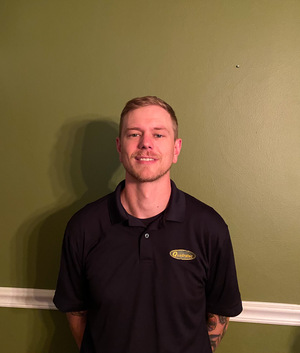 Sean McComsey, 35
Digital Marketing Manager
Quadratec
In his 11 years at Quadratec, Sean McComsey has been instrumental in transforming the company from a catalog retailer to an online sales leader in Jeep aftermarket parts and accessories. He and his team have also helped pivot the company’s digital strategies to increase sales, reach new customers and expand direct-to-consumer sales. Their efforts have focused on search-engine optimizations, expanding the email program, growing their social-media presence and dominating paid search.
“The moment I searched for my first car, this industry became an obsession,” he said. “I’ve modded every car I’ve owned, which has led me on some great adventures. I’ve traveled the East Coast for car shows and shipped my VW R32 to Germany for a car show and to drive the Nürburgring.”
McComsey finds staying on top of new trends and accessories exciting work.
“The most challenging part is providing a unique personal experience to customers in a world of fast shipping and low-price leaders,” he said. “A business needs a USP that customers can rely on.”
What’s in his briefcase: “Google Analytics, my budget spend sheet and my TI 83 calculator from high school.”
Favorite pizza topping: Buffalo chicken.
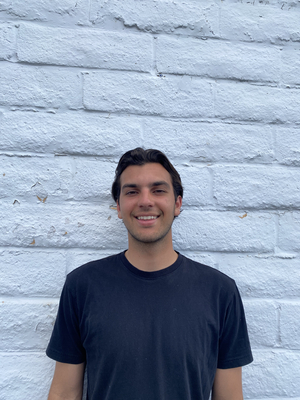 Duran Morley, 21
CEO
The Van Mart/Van Speed Shop
When he was 17, a texting car driver pulled in front of Duran Morley’s motorcycle. Morley crashed at more than 50 mph.
“My motorcycle caught fire,” he said. “I’m lucky to be alive.”
Bedridden for six months, Morley spent his days viewing YouTube videos on Sprinter Van conversions. Upon recovery, his “obsessive passion” became a business when, at 18, he opened the Van Speed Shop in a 1,000-sq.-ft. Southern California warehouse. He quickly outgrew the first shop and now works from a 22,000-sq.-ft. Huntington Beach facility customizing an average of five to seven vehicles per month. Additionally, he operates the Van Speed brand online store for parts and fabricated roof racks and side steps.
“My dreams turned into a life-long passion without any outside investment,” he said proudly. “But the greatest accomplishment is the opportunity to work alongside the many talented, passionate and dedicated craftsmen in our shop. We do so much more than interior and exterior enhancements. We’re constantly evolving with solar power, energy-saving devices, Wi-Fi, Bluetooth and smart-home technologies.”
What’s in his briefcase: Various pencils, drawing pads, check lists and notebooks, plus an iPad for designs and layouts.
Favorite pizza topping: Buffalo chicken.
 Charles Myers, 28
Business Development Manager
Nitrous Supply
Formerly a dragstrip manager at Irwindale Raceway, Charles Myers made a big impression in motorsports at a young age. Nitrous Supply’s sales tripled in his first year in charge of the company’s business development, and he has overseen the company’s expansion into 29 states. He worked with the NHRA alongside the likes of Don Prudhomme and Joe Amato to develop the Legends Tour at the 2018 SEMA Show, and he has twice been included among Drag Illustrated’s “30 Under 30.”
Throughout it all, Myers remains unassuming about his success. Above all, he credits the relationships that he has been able to form with people in the industry.
“I have found that surrounding yourself with great people allows you to do great things,” he said.
While he conceded that he works with “old-school technology,” he relishes the challenges the future holds for the aftermarket.
“It seems like our industry changes from day to day,” he said. “For me, that’s what makes it exciting.”
What’s in his briefcase: “I like to think that I carry stuff around that isn’t tangible—things such as the ability to develop great relationships and interpersonal skills. Other than that, an ink pen, a business card and my cellphone, because I’m always available.”
Favorite pizza topping: Pepperoni.
 Colby McLaughlin, 33
President
Trim Illusion
Having been bitten by the car bug as a boy, Colby McLaughlin enrolled in the Custom Cars and Concepts program at Washtenaw (Michigan) Community College, which helped to launch him on his current career path. He honed his craft at Special Projects Inc. alongside “some of the most talented people I know,” he said, and his vehicle build artistry has been profiled on “TLC Rides.” But McLaughlin’s business acumen is just as keen as his customization skills.
He took over a failing sales territory at Chrome Enhancements and turned it into a record revenue generator, and he has overseen growth of 250% in the last three years alone at Trim Illusion. As his influence in the industry has grown, he’s been elected SEMA Professional Restylers Organization (PRO) council chair-elect, and he has been a SEMA PRO Manufacturer of the Year nominee.
“The fact that I’m able to combine my love for business and my love for the car industry is a dream,” he said.
What’s in his briefcase: “I’m a huge note-taker, so my iPad and Apple Pencil keep me organized and focused on initiatives. I always have one book, and I can’t live without Slack. Post-COVID, it especially helps manage an increased remote workforce.”
Favorite pizza topping: Spicy sausage.
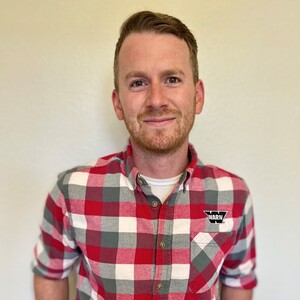 Thomas Paasch, 31
Senior Product Manager
Warn Industries
“I grew up riding ATVs and dirt bikes, and I love every minute I’m out on the trail or at the dunes,” Thomas Paasch said.
While still in college, he was able to secure a job at Honda Powersports via the Baja SAE competition, and he has spent the rest of his career in the powersports industry. At Warn, he created concepts and helped lead the team in developing and launching the Axon and VRX winch lines, for which VRX was named the 2018 SEMA Show Powersports Product of the Year. (“Accepting the award was a pretty cool experience,” he admitted.)
Since then, Paasch continued brainstorming and launching innovative new products—most recently by harnessing Bluetooth technology to develop the Hub Wireless Control, which allows Warn owners to control their winch operations via smartphone. Like the VRX before it, it was honored with a SEMA award, this time for Off-Road Product of the Year at SEMA360 in 2020. For the future, he plans to continue launching new products that “reinvent the vehicle recovery experience.”
What’s in his briefcase: “Briefcases are so 1995! I travel as light as I can (phone, keys, wallet and a pocket knife). Almost all business can be done on a phone, and I keep a couple of business cards in my wallet in case it can’t.”
Favorite pizza topping: “Is there such a thing as bad pizza?”
 Corey Simone, 33
Social Media and Sponsorship Manager
4 Wheel Parts
Corey Simone loves the challenges of his job at 4 Wheel Parts.
“When it comes to marketing, there’s a continual need to push the creative envelope for each product launch,” he said. “From brainstorming an idea to collaborating with the team and watching the idea build—that’s the exciting part.”
His enthusiasm shows. He’s driven a four-fold return on investment for the company’s sponsorship spending while gaining significant brand awareness through nontraditional spends. He’s also grown and managed a 40-plus-member influencer program to include micro-influencers who reach targeted consumers.
He drove millions of impressions and collected more than 40,000 consumer email leads for the company’s Smittybilt Scout Trailer launch. He’s also demonstrated an acumen for product placement and building non-endemic partnerships.
“The growth in our social-media and sponsorship program has allowed for several successful product launches,” he said. “Also, COVID-19 really inspired a whole segment of consumers who wouldn’t normally think of hitting the dirt in their vehicles to turn to local trails and outdoors adventures during shutdowns. This is an opportunity for our off-road community, as it introduced a new audience to playing in the dirt.”
What’s in his briefcase: An iPhone, AirPods, a notepad and a pen.
Favorite pizza topping: Meatball.
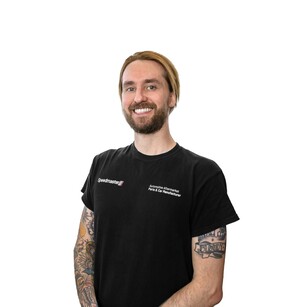 Michael Skeels, 31
Warehouse Leader
Speedmaster
“Growing up, I was always taught to take care of my things,” Michael Skeels said. When he bought an ’05 Jeep Wrangler, he realized the importance of taking care of it, too. That led him into the world of auto parts and eventually to his position at Speedmaster, where he was tasked with expanding the distribution capacity of a fast-growing aftermarket parts company.
How fast? Speedmaster expanded its Los Angeles-area distribution center from 5,000 to 20,000 to 75,000 sq. ft. in under seven years. Working with CEO Jason Kencevski, Skeels was involved in all manner of infrastructural decision-making during that span, including designing floor plans and implementing new shipping software. He devised an automated conveyor system that allowed a near-fourfold increase in parcels per hour, and Speedmaster has received a number of industry awards for its operations—most notably a Pitney Bowes Warehouse Technology Innovation Award in 2019.
After 10 years at the company, he’s learned enough of the business to be able to “single-handedly smash these large-scale projects down to spec and watch them go.”
What’s in his briefcase: “My MacBook and iPhone by far! I’m also a big user of the Viber app, as it makes staying in touch with our Australian branch a breeze. Aside from that, a granola bar.”
Favorite pizza topping: Pepperoni.
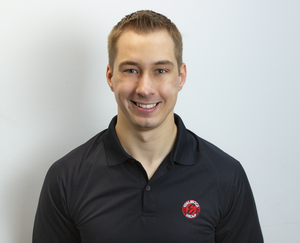 Hunter Pauloski, 26
Product Design Engineer
Edelbrock Group
At 10, Hunter Pauloski received a dirt bike for Easter. The mechanics fascinated him. He was soon tearing down and rebuilding weed trimmers, then motorcycles, then cars. That led to higher education degree in automotive engineering technology, a stint on the Formula SAE team, and now his position at Edelbrock. There, he has led the development of several innovative industry firsts in electronic devices.
“The most exciting part of the high-performance engine industry is working with the rapidly advancing technology,” he said. “Unfortunately, modern engines are quite well developed, which makes designing performance parts more difficult. Thankfully, I’ve never been one to back away from a challenge, and I love using the advanced design and test equipment we have at Edelbrock.”
While not letting on what exactly it is, Pauloski hinted he’s working on a major project that he hopes will be released at this year’s SEMA Show.
“Our customers are passionate about speed, and not even a global pandemic will stop them,” he said. “I’m thankful to serve such incredibly passionate customers.”
What’s in his briefcase: His grandfather’s pocket knife, CAD software, a 3-D printer, day planner, phone and business cards.
Favorite pizza topping: “Shamelessly pineapple.”
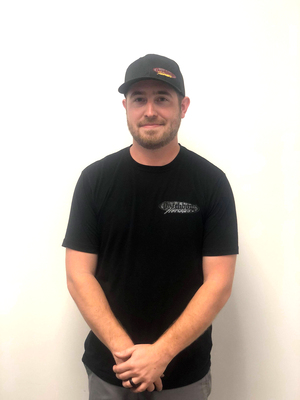 Paul VanNus, 30
Owner
Dutchboys Hotrods
About a decade ago, Paul VanNus started Dutchboys Hotrods with his father. Back then, they worked out of their pole barn. Since those humble beginnings, he has solidified his reputation as both a successful shop owner and a first-rate builder while remaining highly hands-on with his craft. Excited by each and every new custom vehicle he designs, his driving motivation is consistent quality, and it shows. In 2020, he captured Goodguys Street Machine of the Year honors with a stunning ’69 Camaro.
Known best for Pro-Touring-style builds and his exceptional paint and bodywork, VanNus also received an invitation to the Barrett Jackson Cup in 2021 and a Goodguys Gold Award the year before that—not to mention a coveted design and engineering award from GM. And those are just a few among his many trophies.
“As a kid, I loved going to car shows with my dad, and winning Street Machine of the Year has been a dream of mine since childhood,” VanNus said. “Our customers’ outstanding passion for their cars and bringing those cars to life is very rewarding.”
What’s in his briefcase: “My laptop, a calendar and all my dealer websites.”
Favorite pizza topping: Pineapple.
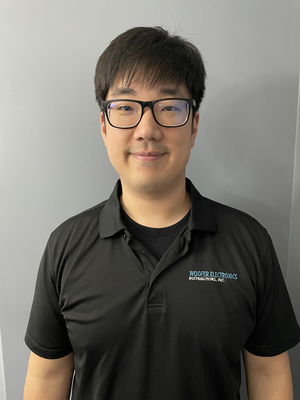 Sam Yoo, 34
President
Woofer Electronics Distributors
As president of Woofer Electronics, Sam Yoo has steadily increased staff and sales volume while establishing a solid reputation for integrity. In fact, his company’s rapid growth required a move to a much larger facility in 2020 and enabled him to co-found a second company, Lucas Lighting, an automotive LED manufacturer.
Asked about his greatest hurdle to date, Yoo said without a doubt it was the havoc that COVID-19 wrecked on supply chains.
“It has been challenging finding enough product to fill the overwhelming demand,” he explained.
Still, he’s ardent about his work.
“Like many of my peers, my passion and love for cars attracted me to the industry,” he said. “The majority of my dealers are family-owned and -operated retail stores. Most are diehard automotive enthusiasts doing what they love and trying their best to provide for their families.”
Yoo feels privileged to have created businesses that allow him to work with “so many incredibly talented people.” But he recently experienced something even more rewarding. “My wife and I just had our first baby boy, RJ, in January,” he said.
What’s in his briefcase: A Surfacebook 3, an iPhone, AirPods and a portable charger.
Favorite pizza topping: Sausage and mushrooms.
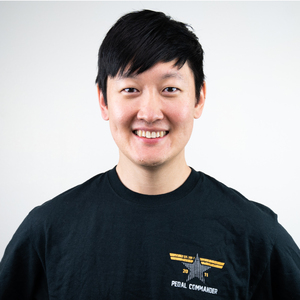 Shawn Wang, 33
Director of E-Commerce
Pedal Commander
In sports, an “impact player” is someone whose work can turn a losing team into a winner and a winning team into a title contender. Shawn Wang would certainly seem to fit that bill. Pedal Commander’s monthly sales revenues have risen over 500% to more than $1 million since Wang took over e-commerce business operations only two years ago.
He accomplished that primarily by transitioning the company’s e-commerce platform to Shopify and building out a digital advertising team that managed the company’s accounts on digital ad platforms, such as Google and Microsoft Ads, Amazon Ads, TikTok Ads and more. He cited the company’s rapid growth as his proudest accomplishment. First, however, he modestly credited “everyone at Pedal Commander” for his success.
But Wang’s already got an eye on growing and helping lead the business going forward.
“By the end of the year, we plan to expand into Asia,” he said, “so I would see myself leading our team in Asia.”
What’s in his briefcase: “A MacBook Pro, AirPods Pro, an iPhone and a Vicks Vapoinhaler.”
Favorite pizza topping: Pepperoni.
Do you know a rising star within the specialty-equipment industry, age 35 or younger? To nominate them for future 35 Under 35 recognition, visit
www.sema.org/35-under-35.




 With SEMA-member companies based in Louisiana and Mississippi, SEMA is working with the Automotive Aftermarket Charitable Foundation (AACF) to aid individuals and families in the industry who may have been adversely impacted by Hurricane Ida.
 Available when you need them, where you need them—SEMA’s On-Demand Virtual Education library includes dozens of recorded sessions that SEMA members can access anytime, anywhere.

 SEMA Data is “data central” for the specialty-equipment segment, containing millions of products and vehicle fitments from performance and accessories brands. Created by SEMA, SEMA Data is the definitive, industry-owned and -operated centralized data warehouse, complete with comprehensive online tools, and a team of dedicated data and technology experts to assist manufacturers and resellers with product data needs. Learn more at
  SEMA supports future industry innovators by providing scholarships to students pursuing careers in the automotive industry, and loan-forgiveness awards to employees of SEMA-member companies. Shop Owner ensures that its readers know when they can apply for financial assistance from the SEMA Scholarship Program.