Thu, 07/23/2026 - 13:22

By Ashley Reyes

Colin Cook FLN Member spotlight


The SEMA Future Leaders Network (FLN) has named Colin Cook, product manager at Brembo-North America, as the network's newest spotlight member. 

Get to know Cook in his interview with SEMA News below. 


SEMA News: What is the best advice you have ever received? 

Colin Cook: Something I have heard many times is that it's better to listen than to speak. Over time, I've realized that the people who learn the most, build the strongest relationships and make the best decisions are usually the ones who truly listen first. In both personal life and work, being a good listener creates trust and helps you grow. Sometimes the smartest thing you can say is nothing at all until you fully understand the situation.


SN: What keeps you in the industry? 

CC: The variety. From motorcycles to cars to trucks to on-road and off-road––I enjoy it all!


SN: Where can you be found on Saturday? 

CC: In the garage working or outside on my dirt bike or mountain bike.


SN: How do you prepare for an important meeting? 

CC: Trying to do any research I might need to be pre-informed. I also have any documents, files and information already open and ready at any point.


SN: If you could go to lunch with an industry leader, living or dead, who would it be? 

CC: John Penton: He literally did everything. He raced, was a mechanic, sold bikes, built the brand and much more all at the same time. I would love to hear how he did it all and the stories he could tell.


Fill out an FLN member spotlight form to be eligible to be featured on FLN's social media, SEMA News and FLN member updates. 

Thu, 07/23/2026 - 11:21

By SEMA News Editors

Deja Mitchell founder and CEO of Driving With Dej image.


The SEMA Businesswomen's Network (SBN)hasnamed Deja Mitchell, founder and CEO of Driving With Dej, as the network's newest #SheIsSEMA spotlight member.  


Get to know Mithchell in her interview with SEMA News below.  


SEMA News: How many years have you been in the industry and what was your first industry job?  

Deja Mitchell (DM): I have been in the automotive industry for about nine years, beginning my career as a receptionist in a service center while in college. 


SN: How many years have you been with your current company and what do you enjoy most about working there? 

DM: I am the founder of Driving With Dej [an accident and insurance education company]. While the business is still in its early stages, my journey in automotive has been ongoing for several years. What I enjoy most is the ability to turn confusion into clarity for customers. Every day, I get to bridge the gap between the technical side of the industry and the everyday consumer who often feels overwhelmed. That impact is what drives me. 


SN: What is the most challenging part of running your business or job?  

DM: One of the biggest challenges has been having to consistently prove my knowledge and authority in spaces where it's often questioned. There have been moments where I've had to speak up, stand firm and advocate not only for myself but for customers who weren’t being properly guided.  


A moment that has stayed with me was during my first job at a service center while I was in college. I witnessed a supervisor raise their voice at a customer, telling him he should already know what to do after his car was damaged. That didn't sit right with me. After the interaction, I remember saying to the supervisor, "Not everyone knows what to do; that's why they come to us." That moment stuck with me because it highlighted a gap in the industry: people are expected to understand a process they were never taught.  


Now, nearly nine years later, that experience has come full circle. It's the reason I do what I do today, helping drivers understand, feel confident and never feel dismissed in a moment when they need guidance the most. 


SN: What are three qualities that got you to where you are today?  

DM: Resilience, curiosity and leadership. Resilience has allowed me to keep going in an industry where challenges are constant and growth takes time. Curiosity pushed me to learn beyond my role, helping me understand the full scope of the automotive and collision space. Leadership has enabled me to step up, guide teams and now build something of my own. These qualities have helped me not only advance professionally but also build credibility and confidence in spaces where I'm often one of the few women. 


SN: Being a woman in the industry, what have been your biggest challenges and accomplishments?  

DM: The most challenging part is balancing growth with structure. As I build my brand and expand services, I’m constantly wearing multiple hats: operator, educator, strategist and problem solver. The "why" behind that challenge is important because I'm not just building a business; I'm building something that shifts how people experience the collision and repair process. That requires intentionality, patience and the ability to stay focused even when things aren’t fully built out yet. 


SN: Who are your role models or mentors in the industry?  

DM: I've been fortunate to connect with strong leaders and women through organizations like SEMA SBN, Women's Motor Fest and Women in Automotive. These individuals have provided insight, encouragement and real examples of what’s possible in this industry. Their stories have helped me see that there is space to grow, lead and innovate even when the path isn't clearly defined. 


SN: What is the best career advice you have received?  

DM: The best advice I've received is: "Don't wait until you feel ready; start where you are and figure it out as you go." This has helped me take action instead of overthinking. Professionally, it pushed me to step into leadership roles and start my business. Personally, it built my confidence and reminded me that growth comes from doing, not waiting. 


SN: Have you always wanted to work in the automotive industry? What keeps you here?  

DM: Not always; once I got in during and after college, I realized how much impact I could have. What keeps me here is the opportunity to make a difference and help people understand their vehicles, repairs and options. There's a real need for transparency and education in this space, and I’m committed to being part of that change. 


SN: Who was the most influential person on your career/goals?  

DM: The most influential person has been myself––through my experiences, challenges and the decision to keep pushing forward. Every obstacle I've faced has shaped my direction and strengthened my purpose. While I've had support along the way, it's been my commitment to growth and impact that has truly defined my path. 


Fill out a #SheIsSEMA spotlight form to submit a self-nomination or nominate a colleague and highlight how you or she is contributing to the specialty-equipment industry. Selected candidates are automatically eligible to be considered for SBN's #SheIsSEMA Woman of the Year award, featured on SBN's social media,SEMA News and recognized on the sema.org/she-is-sema website.  


Wed, 07/22/2026 - 12:58

By SEMA News Editors


AMSOIL

Reformulated Signature Series 100% Synthetic Motor Oil

AMSOIL Signature Series Synthetic Motor Oil.


AMSOIL has launched a new formulation for its Signature Series Synthetic Motor Oil. Formulated with premium base oils and a precision-engineered additive system, it helps control wear and maintains viscosity even in extreme heat, pressure and cold-start operating conditions and delivers double the protection against volatility, helping reduce oil consumption, minimizing top-offs and keeping engines cleaner over time, according to the manufacturer. AMSOIL Signature Series Synthetic Motor Oil is available in eight viscosities.

amsoil.com


DeatschWerks

Universal Import Injector Kits

Deatschwerks Injector kit


The Universal Import Injector Kits simplify fueling upgrades for popular 4- and 6-cylinder applications like the Honda K series, Toyota JZ and Nissan RB engines with one complete, flow-matched solution, according to the manufacturer. Available from 550cc to 2400cc, each kit includes the adapters, seals and connectors needed for straightforward installation.

deatschwerks.com


CRUSH!

CRUSH! Scented Floor Mats

Crush floor mat.


CRUSH!, a new consumer lifestyle brand, officially launched with a floor mat you crush to release fragrance. Available in six shapes and scents, CRUSH! mats are 17-in. x 22-in. in size and live on the floor of your car (passenger side only!) and release scent on contact every time they’re stepped on or crushed.

crushandsniff.com


Milwaukee Tool

Jobsite Lunch Warmer

Milwaukee Lunch Warmer


Milwaukee Tool has expanded its jobsite solutions with the introduction of the M18 Jobsite Lunch Warmer, a personal, cordless, heating solution for jobsite meals. Part of the M18 system, the lunch warmer can heat up to two meals on a single M18 REDLITHIUM XC5.0 battery, while custom foam insulation keeps meals warm for up to 30 minutes after heating. This solution includes two 4.75-cup stainless steel containers with leakproof lids to secure contents during transport; both the container and lid are dishwasher safe.

milwaukeetool.com

Tue, 07/21/2026 - 18:39

By Ashley Reyes

Graphic for the SEMA Cares Industry Cup Challenge.


Time is running out for automotive aftermarket companies to secure their place in one of the most spirited traditions of the SEMA Leaders & Legends Gala. The Industry Cup Challenge, returning Friday, July 24, in Newport Beach, California, is approaching fast, and this is the final call to join.


The Industry Cup Challenge brings SEMA members together for an evening of high‑energy pinewood derby racing, industry camaraderie and meaningful charitable impact. Every sponsored car helps fuel the mission of SEMA Cares and its partner charities: the Austin Hatcher Foundation, Childhelp and Victory Junction.


A Beloved Tradition


The Industry Cup Challenge features five divisions: warehouse distributors, manufacturers, media, sales rep agencies and service providers. Each division will compete for the top spot in its category with the winning companies going on to represent that division in an all-out industry race and to be crowned the Industry Cup Challenge champion.


The winning company's name will be engraved on the Industry Cup Challenge trophy alongside past champions in a Stanley Cup-style tradition. The winner will hold the trophy for one year before returning it to defend their title at the next Gala.


Racing for a Cause 


SEMA Industry Cup Challenge pinewood cars on display.


SEMA Cares provides a platform for association members to make a collective, positive impact beyond the automotive community. Through the Industry Cup Challenge, SEMA Cares provides critical resources, care and life-changing experiences for children and families navigating pediatric cancer, abuse recovery and serious medical conditions.


Secure Your Spot on the Starting Line  


Ready to rally your team, connect with fellow industry members and make a difference that will have a lasting impact? Sponsor a pinewood derby car.


Sponsorships are $1,000 per company, and all races are officiated by SEMA Cares volunteers.


Can't attend the Gala in person? No problem. A SEMA Cares volunteer will race your company's pinewood derby car on your behalf, keeping you in the competition no matter where you are.


To purchase tickets for the 2026 SEMA Leaders & Legends Gala, the annual celebration honoring SEMA Hall of Fame inductees and recognizing incoming and outgoing members of the SEMA Board of Directors, visit www.sema.org/gala.

Tue, 07/21/2026 - 13:18

From the SEMA Washington, D.C., office

A car tire on the road.


The California Energy Commission (CEC) has released revised replacement tire regulations that delay implementation and provide new flexibility for several specialty tire categories. 


  • The revisions are meaningful and address several technical and specialty-product concerns raised by SEMA and its coalition partners. However, many of the coalition's broader concerns remain unresolved, meaning our work continues on this issue. 


The proposal would move the first phase of the standards by one year to 2029 and the second phase by two years to 2033. It would also exempt competition tires, qualifying all-season winter tires, tires with rim diameters of 13 in. or less and large off-road tires measuring at least 34.5 in. in overall diameter with a speed rating of Q or lower.  


Run-flat tires would receive more flexible standards, and the CEC revised testing procedures for light-truck and commercial tires. The updated language also broadens the long-life and ultra-long-life tire categories and establishes clearer testing tolerances and enforcement procedures. 


  • The proposed regulation stems from a 2003 law directing the CEC to develop a program intended to make replacement tires, on average, as energy efficient as tires installed on new vehicles. The CEC says the standards will reduce rolling resistance, lower fuel and electricity use, and cut emissions while maintaining wet-grip performance. 


Remaining Concerns 


SEMA continues to see significant issues with the proposal, even after the favorable revisions. The CEC has not provided a new economic analysis or market data supporting its claim that compliant tires will cost consumers only slightly more. As written, the mandate will raise tire prices and reduce the number of affordable options available to California drivers. Rather than allowing consumers to balance cost, efficiency, traction and tread life based on their own needs, the proposal would restrict that choice by mandating performance standards. 


SEMA and its coalition partners will continue working with the CEC to build on the positive changes while seeking stronger protections for consumers, small businesses and access to affordable tire choices. The revised language triggers a new public comment period with comments due by 10:00 a.m. PDT on August 3


If you have any questions or are interested in supporting the effort, contact SEMA Senior Director for State Government Affairs Christian Robinson at christianr@sema.org


Image courtesy of Shutterstock | LeManna

Tue, 07/21/2026 - 13:18

From the SEMA Washington, D.C., office

A car tire on the road.


The California Energy Commission (CEC) has released revised replacement tire regulations that delay implementation and provide new flexibility for several specialty tire categories. 


  • The revisions are meaningful and address several technical and specialty-product concerns raised by SEMA and its coalition partners. However, many of the coalition's broader concerns remain unresolved, meaning our work continues on this issue. 


The proposal would move the first phase of the standards by one year to 2029 and the second phase by two years to 2033. It would also exempt competition tires, qualifying all-season winter tires, tires with rim diameters of 13 in. or less and large off-road tires measuring at least 34.5 in. in overall diameter with a speed rating of Q or lower.  


Run-flat tires would receive more flexible standards, and the CEC revised testing procedures for light-truck and commercial tires. The updated language also broadens the long-life and ultra-long-life tire categories and establishes clearer testing tolerances and enforcement procedures. 


  • The proposed regulation stems from a 2003 law directing the CEC to develop a program intended to make replacement tires, on average, as energy efficient as tires installed on new vehicles. The CEC says the standards will reduce rolling resistance, lower fuel and electricity use, and cut emissions while maintaining wet-grip performance. 


Remaining Concerns 


SEMA continues to see significant issues with the proposal, even after the favorable revisions. The CEC has not provided a new economic analysis or market data supporting its claim that compliant tires will cost consumers only slightly more. As written, the mandate will raise tire prices and reduce the number of affordable options available to California drivers. Rather than allowing consumers to balance cost, efficiency, traction and tread life based on their own needs, the proposal would restrict that choice by mandating performance standards. 


SEMA and its coalition partners will continue working with the CEC to build on the positive changes while seeking stronger protections for consumers, small businesses and access to affordable tire choices. The revised language triggers a new public comment period with comments due by 10:00 a.m. PDT on August 3


If you have any questions or are interested in supporting the effort, contact SEMA Senior Director for State Government Affairs Christian Robinson at christianr@sema.org


Image courtesy of Shutterstock | LeManna

Tue, 07/21/2026 - 13:01

By SEMA News Editors

SEMA Battle of the Builders details.


The industry's most prestigious builder competition is officially open for 2026, and builders across the automotive and motorcycle worlds are invited to enter now at semabotb.com.


Now in its 13th year, the SEMA Battle of the Builders Presented by Mothers has become the ultimate proving ground for custom vehicle builders exhibiting at the SEMA Show. For 2026, the competition is expanding beyond four wheels with the debut of the SEMA Battle of the Builders: Bike Builder Shootout, creating a new opportunity for custom motorcycle builders to earn industry recognition on one of the biggest stages in automotive culture. Entries will be evaluated separately by motorcycle industry judges based on craftsmanship, design innovation and overall execution, with entries advancing through the competition until one builder is ultimately named the overall Bike Builder champion. 


The Bike Builder Shootout joins the program's four core automotive competition classes: Hot Rod & Hot Rod Truck4 Wheel Drive & Off-RoadSport Compact, Import Performance, Luxury & Exotic; and BFGoodrich Young Guns. As in years past, winners from these four classes will advance through the competition, with one ultimately named overall Battle of the Builders champion.


Supporting the Next Generation of Builders With the BFGoodrich Young Guns


SEMA Battle of the Builders Top 12 from 2025.


Builders age 29 and younger can enter the BFGoodrich Young Guns category, which continues to provide emerging talent with increased visibility and opportunities to compete alongside some of the industry's most respected names.


"BFGoodrich is proud to support the next generation of builders through the BFGoodrich Young Guns category at the SEMA Battle of the Builders," said BFGoodrich Ultra High Performance Brand Manager TJ Dennis. "Creating opportunities for young builders to showcase their talent, gain industry recognition and compete alongside some of the best in the business is what makes this program so special. We’re excited to continue supporting the innovation, passion and creativity that define the future of vehicle customization."


Eligible Young Guns entrants may also be selected to participate in virtual Golden Ticket competitions throughout the summer. Winners receive prize packages that can include vehicle transportation to Las Vegas, hotel accommodations and travel assistance (keep an eye on SEMA News for additional details in the coming weeks).


If your vehicle will be displayed at the 2026 SEMA Show, now is the time to throw your hat in the ring at semabotb.com.


Enter the 2026 SEMA Battle of the Builders Presented by Mothers today.


The 2026 SEMA Show is set for November 3-6, in Las Vegas. Interested exhibitors can buy a booth and learn more at semashow.com/exhibitor. Attendee and buyer registration is now open online. For more information, visit semashow.com.  


SEMA Fest has been confirmed for Friday, November 6, and industry members will get the lowest rate on tickets through the registration portal and Attendee Resource Center. Sign up for updates at semafest.com.   


Tue, 07/21/2026 - 12:33

From the SEMA Washington, D.C., office

SEMA Certified Emissions and SEMA Garage.


If you missed the big news earlier this month, the U.S. Environmental Protection Agency (EPA) has issued a groundbreaking advisory opinion that states that a SEMA Certified-Emissions certification qualifies as a reasonable basis under the Tampering Policy and companies can rely on this certificate to demonstrate compliance with federal emissions requirements. With this formal recognition, the EPA is establishing a regulatory pathway allowing for companies to meet emissions standard in 49 states (excluding California) and reasserts federal leadership on emissions issues.


To help members understand what the announcement means for manufacturers, compliance efforts and the industry at large, SEMA's Washington, D.C., advocacy team has compiled the following FAQs, a source of answers from the experts who work every day on behalf of the industry, advocating for policies that help businesses succeed and bringing clarity to complex regulatory issues.


So what's the big news here? 

The EPA announced that the SC-E program provides a recognized pathway for manufacturers to establish the "documented reasonable basis" described in EPA's 2020 Tampering Policy. That reasonable basis is the technical evidence that aftermarket manufacturers and vendors may ordinarily rely on to support the conclusion that an aftermarket product does not adversely affect vehicle emissions. 


Ok, now tell me how this happened? 

President Trump issued a presidential memorandum on June 29 within which was a request that “the Administrator of the EPA shall encourage the submission of, expeditiously consider, and act on any requests from organizations capable of testing aftermarket parts for conformance with the [Clean Air Act (CAA)]." The EPA on July 1 responded by recognizing SEMA "as an alternative certification authority for aftermarket vehicle parts. Moving forward, Americans will be able to use SEMA's Certified Emissions Program to show compliance with the [CAA] and verify that approved aftermarket parts do not negatively impact vehicle emissions."


This is what you saw in the news, but below the surface, SEMA has been paddling like crazy for nearly a decade to secure much-needed clarity on what constitutes a "reasonable basis." We've worked across several administrations to show what SC-E can provide, how it's done, the methodology and rigor, and demonstrate the value to the automotive aftermarket by providing certainty in an otherwise nebulous process. 


Really? A decade? 

Yup. We’ll give you a rundown below. But let's address your other questions first. 


So what's so different about SEMA Certified-Emissions? 

SC-E is the first non-governmental emissions compliance program that EPA has publicly recognized as satisfying the Tampering Policy’s "reasonable basis" framework. Rather than relying solely on a manufacturer's internal engineering analysis, SC-E provides standardized emissions testing together with an independent technical review to document that a product does not adversely affect emissions. 


Unlike a California Air Resources Board (CARB) Executive Order (EO), SC-E is not a California regulatory approval. Instead, it is designed to help manufacturers demonstrate federal, 49-state emissions compliance under EPA's existing enforcement framework while also generating technical data that can support a future CARB EO application where applicable. 


Why not California? 

A SEMA Certified-Emissions Certificate of Compliance does not provide access to sell regulated aftermarket products in California because California law requires a CARB EO for applicable aftermarket parts. SC-E is an alternative emissions compliance program designed to establish a documented "reasonable basis" under EPA's Tampering Policy for all other states, but it is not a substitute for CARB's requirement of obtaining an EO in California. 


SC-E and EO are complementary, not competing, compliance pathways. In fact, SEMA explicitly states that SC-E testing is designed so that, in many cases, the same test data can later be used to obtain a CARB EO. 


Aren't compliance costs still too high? 

Depending on the product and the application, costs vary. In some cases, good engineering judgement can be used to prove compliance. In other cases, actual testing must be conducted. Yes, those costs can be significant. Based on regulatory language and testing precedent, testing must be conducted pursuant to applicable processes using suitable test equipment. While that is not an inexpensive endeavor, producing irrefutable data is the goal.


The SEMA Garage for the SC-E program is at or below the standard industry rate for testing. Depending on the complexity of the project, the application cost to manufacturers is somewhere between $500 and $3,500. The SEMA Garage tests to the applicable standards, and we do so at a competitive rate that also includes the premium customer support that other labs charge tens of thousands of dollars for. Independent analysis shows that our prices are at or below others in the industry. And guess what: the SEMA Garage operates at a loss. The services the SEMA Garage provides (which go beyond just emissions compliance) are made possible through reinvestment of the organization’s revenues to help our members. 


Product testing is one of the ways we help the industry. Most SEMA members don’t have the budgets that larger manufacturers have to do this work (every test requires skilled technicians to operate the equipment and engineers to analyze and understand the data that's being generated) and that's a big part of why the SEMA Garage and SC-E program exist. 


You might have heard numbers circulating in the ballpark of $18,000 per product for emissions certification. These are accurate, but here’s some important context: they’re on the higher side––and a clear exception to most product certifications––with good reason, once you understand the breakdown of SC-E costs. 


An SC-E application costs on average $1,500, but that can range between $500 and $3,500, depending on the complexity of the application (factors of which include vehicle coverage or special features that the SEMA Garage doesn’t see as frequently). There are no surprises here––applicants know these costs at the front end of their certification process.  


CARB's EO application costs an additional $1,500 to $3,500, and the lower end of that range reflects a discount for companies who sought an SC-E certification first. 


Emissions testing is typically the largest project expense. The cost depends on the type of product and vehicle being tested. On average, emissions testing costs range from $8,000 to $17,000, depending on the project scope and testing requirements. 


Testing costs can also vary depending on the product type, required mileage accumulation, fuel type, baseline testing requirements and other project-specific factors. For example, emissions testing for a diesel vehicle is generally more expensive than for a gasoline vehicle; testing an ECU calibration typically costs more than testing a cold air intake, due to the additional testing and evaluation requirements. 


Does this action actually help fix the issue of knock-offs and counterfeit products? 

Here's an undeniable fact: counterfeit products are flooding into the United States, bypassing testing and compliance, while American manufacturers wait for approval to sell to their customers. Earlier this year, SEMA, along with one of our members, examined a counterfeit version of one of their products, available through a major online retailer.  In one year, this one product, sold on a single e-commerce platform, generated $12 million in sales. We know the issue is widespread, and our data indicates that this one product is just the tip of the iceberg. 


Meanwhile, American companies seeking emissions testing and compliance can be hindered by the time it takes to complete this process. Based on SEMA Garage data, in California, the average EO approval period is approximately six months, with some taking as long as two years to complete. While American manufacturers navigate that process, they are deprived of significant revenue and market share.


Meanwhile, the aforementioned counterfeits continue to flood the marketplace, grabbing what is not rightfully theirs while bypassing the emissions certification processes that compliant manufacturers must navigate. 


Because SC-E is a faster process, manufacturers gain a streamlined, efficient path for testing and compliance. The SC-E program further helps regulators, distributors, installers and consumers to identify products that meet established emissions requirements. 


Why can't companies just label these products for "off-road use only" and bypass the emissions compliance process? 

"Off-road use only" does not mean "off limits" from emissions standards. Every UTV, dirt bike, earth mover and Bobcat tractor has certification standards that they were certified to. Over time, the "off-road use only" title was slapped on everything in sight, with people thinking it was a clever workaround. Turns out it just positioned a bunch of folks up for enforcement by the EPA. In most cases, those off-road parts found their way to on-road applications, which is not Clean Air Act compliant. A close cousin to "off-road use only" is "race use only". This can be a legitimate label, when used correctly, and when the manufacturer (or retailer) tracks the destination to ensure it's not a workaround for on-road applications.  


How are small businesses supposed to benefit from this, anyway? 


1. Faster access to the U.S. market 

Historically, many small manufacturers delayed product launches until a CARB EO was issued. SC-E provides manufacturers with a documented "reasonable basis" under EPA's Tampering Policy to support sales in states that do not require a CARB EO. 


2. A clear compliance pathway 

Small businesses often lack in-house regulatory expertise. SC-E provides a structured process built around EPA's Tampering Policy, helping manufacturers understand what testing and documentation are needed to support emissions compliance.  


3. Independent verification 

Instead of relying solely on internal engineering assessments, manufacturers receive an independent evaluation of their product's emissions performance. This can increase confidence among distributors, installers and consumers making purchasing decisions.  


4. Better market credibility 

A SEMA Certified product gives manufacturers a recognized way to substantiate claims that a product meets EPA's "reasonable basis" criteria, reducing uncertainty for customers and business partners.  


5. A bridge to California compliance 

In many cases, the emissions data collected through the SC-E program can also support a subsequent CARB EO application, reducing duplication of testing and creating a more efficient path to nationwide market access.  


6. Opportunities for products without a CARB pathway 

Some product categories may not have a practical or available path to a CARB EO. The SC-E program provides a means to document compliance under EPA's Tampering Policy for products that can legally be marketed federally but are not eligible for California approval. 


Did this just create a federal regulation for compliance, apart from CARB's regulations? 

No. The EPA announcement did not create a new federal regulation. The announcement recognizes that manufacturers participating in the SEMA Certified-Emissions program can establish the documented "reasonable basis" contemplated by EPA's Tampering Policy for concluding that a product does not adversely affect emissions. This gives manufacturers a practical pathway to demonstrate compliance with the existing federal tampering provisions of the Clean Air Act. 


Is SEMA now regulating its own members? 

No. EPA remains the regulator and sets the standards. EPA agreed that, as described, emissions testing performed through the SC-E program satisfies the Tampering Policy's criteria. 


Does EPA review every SC-E determination? 

The EPA certainly has the authority to do so––EPA retains discretion to evaluate each case independently and may consider all relevant facts and circumstances when determining compliance. "Reasonable basis" means you are obligated to produce the methodology and testing used to determine compliance if requested. If you are unable to demonstrate this basis, the EPA can pursue civil and/or criminal charges against you.    


Can the EPA still take enforcement action against an SC-E-certified product? 

Yes, the EPA expressly stated that it retains its enforcement discretion. If the EPA determines a product violates the Clean Air Act, or if fraud was committed during the certification process, it may still take enforcement action. But that's one area where SC-E is unique: we will stand behind our testing, and if a certification is challenged, we'll defend it on behalf of the member. 


Why should consumers trust industry-run testing? 

Because it's already happening in other industries, and you’ve probably been the beneficiary of it without realizing it. Industries ranging from healthcare to education to finance and technology evaluate products, services and programs to ensure they meet standards set by the federal government. And these are big-deal organizations that have the resources and expertise to help facilitate accreditation and certification, like the American Medical Association and the American Society of Mechanical Engineers.  


In these cases, the government sets the law and the regulation, but not necessarily the standards by which compliance with those regulations is achieved. That's the role organizations like SEMA can play; they develop rigorous technical programs that manufacturers can use to demonstrate compliance with the law. SC-E is built on documented methodology, engineering rigor, reproducibility and auditability. These are all things the SEMA Garage had to show to the EPA before gaining this recognition. 


Does this weaken emissions protections? 

No. The EPA explicitly stated the action does not change emissions standards or compliance obligations; it simply provides an additional documented pathway for demonstrating emissions compliance via SC-E, and any future organization that can demonstrate that its testing has sufficient rigor can do the same. 


Is SC-E equivalent to a CARB EO? 

No, they serve similar functions under different legal frameworks. In all states except California, a CARB EO and an SC-E represent the same thing: a documented reasonable basis under EPA's Tampering Policy that aftermarket manufacturers and vendors may ordinarily rely on as documentation that a product does not adversely affect emissions. Because CARB has exclusive jurisdiction over the state of California, SC-E can serve only as the basis for an EO application. 


So again, you worked on this for how long? 

very long time. It's been a long haul! 


On April 22, 2026, SEMA made a formal request to the EPA via letter seeking recognition of SEMA Certified-Emissions as a "reasonable basis" under its Tampering Policy, but this has been in the works for nearly a decade, with a recent, sustained push toward this resolution over the last 18 months. 


SEMA has advocated for nearly a decade for clearer federal guidance on what constitutes a "reasonable basis" under the Clean Air Act.This has been a consistent part of our federal advocacy through multiple presidential administrations. For instance, the RPM Act was one piece of that effort, an effort to "solve" ambiguity issues within federal regulations, but was tabled when the originally proposed legislation became wholly unworkable for our industry (which often happens during the legislative process––sometimes you have to recognize a bad deal and step away from the table). 


But, regardless of the outcome of the RPM Act legislative effort, SEMA has continued its talks with EPA across numerous administrations to get to where we are today. 


Over the years, we've raised this topic with EPA staff who have participated in our emissions compliance panels at the SEMA Show (often alongside CARB staff), consistently encouraging the agency to provide greater clarity around the "reasonable basis" standard. We have also encouraged EPA to recognize the SEMA Certified Emissions program as a means of demonstrating compliance with applicable emissions requirements. 


The June 29 Presidential Memorandum was the first formal federal action directing EPA to consider alternative certification organizations. We learned of the White House’s announcement via social media and caught the livestream in progress. And like everyone else, we first reviewed the memorandum after it was publicly released.  


Separately, we've had similar discussions with CARB since 2017 regarding the SEMA Certified-Emissions program and the EO process. After the openings of the SEMA Garages in California and Michigan, we hosted CARB leaders for tours and discussions of how the SEMA Certified-Emissions program could complement the EO process by providing complete, technically robust applications that help reduce CARB's workload. We sought to expedite the CARB EO process, so between 2021 and 2022 we collaborated with CARB to determine appropriate fees that could fund additional staff who could help with reviews and approvals.  


And currently, we've got legislation advancing through the California legislature that would enable a "conditional sales designation" while companies' EO applications are under consideration––again, the product of discussions and negotiations with CARB to solve a shared concern of how to get clean products to market. 


From our perspective, the White House memorandum and California's EO program address two separate compliance frameworks. SB 1069 is focused exclusively on improving California's EO process and does not alter federal emissions requirements or EPA's authority.  


SEMA greatly appreciates CARB's willingness to work collaboratively with us on SB 1069. We believe the bill represents a thoughtful approach that maintains California's emissions standards while creating meaningful improvements for manufacturers that invest in compliance. 


Like we said, a long time coming, but we're thrilled with this new pathway to support the industry and help it thrive!


Visit semahq.org to sign up for advocacy updates and access additional information and resources.


Tue, 07/21/2026 - 12:33

From the SEMA Washington, D.C., office

SEMA Certified Emissions and SEMA Garage.


If you missed the big news earlier this month, the U.S. Environmental Protection Agency (EPA) has issued a groundbreaking advisory opinion that states that a SEMA Certified-Emissions certification qualifies as a reasonable basis under the Tampering Policy and companies can rely on this certificate to demonstrate compliance with federal emissions requirements. With this formal recognition, the EPA is establishing a regulatory pathway allowing for companies to meet emissions standard in 49 states (excluding California) and reasserts federal leadership on emissions issues.


To help members understand what the announcement means for manufacturers, compliance efforts and the industry at large, SEMA's Washington, D.C., advocacy team has compiled the following FAQs, a source of answers from the experts who work every day on behalf of the industry, advocating for policies that help businesses succeed and bringing clarity to complex regulatory issues.


So what's the big news here? 

The EPA announced that the SC-E program provides a recognized pathway for manufacturers to establish the "documented reasonable basis" described in EPA's 2020 Tampering Policy. That reasonable basis is the technical evidence that aftermarket manufacturers and vendors may ordinarily rely on to support the conclusion that an aftermarket product does not adversely affect vehicle emissions. 


Ok, now tell me how this happened? 

President Trump issued a presidential memorandum on June 29 within which was a request that “the Administrator of the EPA shall encourage the submission of, expeditiously consider, and act on any requests from organizations capable of testing aftermarket parts for conformance with the [Clean Air Act (CAA)]." The EPA on July 1 responded by recognizing SEMA "as an alternative certification authority for aftermarket vehicle parts. Moving forward, Americans will be able to use SEMA's Certified Emissions Program to show compliance with the [CAA] and verify that approved aftermarket parts do not negatively impact vehicle emissions."


This is what you saw in the news, but below the surface, SEMA has been paddling like crazy for nearly a decade to secure much-needed clarity on what constitutes a "reasonable basis." We've worked across several administrations to show what SC-E can provide, how it's done, the methodology and rigor, and demonstrate the value to the automotive aftermarket by providing certainty in an otherwise nebulous process. 


Really? A decade? 

Yup. We’ll give you a rundown below. But let's address your other questions first. 


So what's so different about SEMA Certified-Emissions? 

SC-E is the first non-governmental emissions compliance program that EPA has publicly recognized as satisfying the Tampering Policy’s "reasonable basis" framework. Rather than relying solely on a manufacturer's internal engineering analysis, SC-E provides standardized emissions testing together with an independent technical review to document that a product does not adversely affect emissions. 


Unlike a California Air Resources Board (CARB) Executive Order (EO), SC-E is not a California regulatory approval. Instead, it is designed to help manufacturers demonstrate federal, 49-state emissions compliance under EPA's existing enforcement framework while also generating technical data that can support a future CARB EO application where applicable. 


Why not California? 

A SEMA Certified-Emissions Certificate of Compliance does not provide access to sell regulated aftermarket products in California because California law requires a CARB EO for applicable aftermarket parts. SC-E is an alternative emissions compliance program designed to establish a documented "reasonable basis" under EPA's Tampering Policy for all other states, but it is not a substitute for CARB's requirement of obtaining an EO in California. 


SC-E and EO are complementary, not competing, compliance pathways. In fact, SEMA explicitly states that SC-E testing is designed so that, in many cases, the same test data can later be used to obtain a CARB EO. 


Aren't compliance costs still too high? 

Depending on the product and the application, costs vary. In some cases, good engineering judgement can be used to prove compliance. In other cases, actual testing must be conducted. Yes, those costs can be significant. Based on regulatory language and testing precedent, testing must be conducted pursuant to applicable processes using suitable test equipment. While that is not an inexpensive endeavor, producing irrefutable data is the goal.


The SEMA Garage for the SC-E program is at or below the standard industry rate for testing. Depending on the complexity of the project, the application cost to manufacturers is somewhere between $500 and $3,500. The SEMA Garage tests to the applicable standards, and we do so at a competitive rate that also includes the premium customer support that other labs charge tens of thousands of dollars for. Independent analysis shows that our prices are at or below others in the industry. And guess what: the SEMA Garage operates at a loss. The services the SEMA Garage provides (which go beyond just emissions compliance) are made possible through reinvestment of the organization’s revenues to help our members. 


Product testing is one of the ways we help the industry. Most SEMA members don’t have the budgets that larger manufacturers have to do this work (every test requires skilled technicians to operate the equipment and engineers to analyze and understand the data that's being generated) and that's a big part of why the SEMA Garage and SC-E program exist. 


You might have heard numbers circulating in the ballpark of $18,000 per product for emissions certification. These are accurate, but here’s some important context: they’re on the higher side––and a clear exception to most product certifications––with good reason, once you understand the breakdown of SC-E costs. 


An SC-E application costs on average $1,500, but that can range between $500 and $3,500, depending on the complexity of the application (factors of which include vehicle coverage or special features that the SEMA Garage doesn’t see as frequently). There are no surprises here––applicants know these costs at the front end of their certification process.  


CARB's EO application costs an additional $1,500 to $3,500, and the lower end of that range reflects a discount for companies who sought an SC-E certification first. 


Emissions testing is typically the largest project expense. The cost depends on the type of product and vehicle being tested. On average, emissions testing costs range from $8,000 to $17,000, depending on the project scope and testing requirements. 


Testing costs can also vary depending on the product type, required mileage accumulation, fuel type, baseline testing requirements and other project-specific factors. For example, emissions testing for a diesel vehicle is generally more expensive than for a gasoline vehicle; testing an ECU calibration typically costs more than testing a cold air intake, due to the additional testing and evaluation requirements. 


Does this action actually help fix the issue of knock-offs and counterfeit products? 

Here's an undeniable fact: counterfeit products are flooding into the United States, bypassing testing and compliance, while American manufacturers wait for approval to sell to their customers. Earlier this year, SEMA, along with one of our members, examined a counterfeit version of one of their products, available through a major online retailer.  In one year, this one product, sold on a single e-commerce platform, generated $12 million in sales. We know the issue is widespread, and our data indicates that this one product is just the tip of the iceberg. 


Meanwhile, American companies seeking emissions testing and compliance can be hindered by the time it takes to complete this process. Based on SEMA Garage data, in California, the average EO approval period is approximately six months, with some taking as long as two years to complete. While American manufacturers navigate that process, they are deprived of significant revenue and market share.


Meanwhile, the aforementioned counterfeits continue to flood the marketplace, grabbing what is not rightfully theirs while bypassing the emissions certification processes that compliant manufacturers must navigate. 


Because SC-E is a faster process, manufacturers gain a streamlined, efficient path for testing and compliance. The SC-E program further helps regulators, distributors, installers and consumers to identify products that meet established emissions requirements. 


Why can't companies just label these products for "off-road use only" and bypass the emissions compliance process? 

"Off-road use only" does not mean "off limits" from emissions standards. Every UTV, dirt bike, earth mover and Bobcat tractor has certification standards that they were certified to. Over time, the "off-road use only" title was slapped on everything in sight, with people thinking it was a clever workaround. Turns out it just positioned a bunch of folks up for enforcement by the EPA. In most cases, those off-road parts found their way to on-road applications, which is not Clean Air Act compliant. A close cousin to "off-road use only" is "race use only". This can be a legitimate label, when used correctly, and when the manufacturer (or retailer) tracks the destination to ensure it's not a workaround for on-road applications.  


How are small businesses supposed to benefit from this, anyway? 


1. Faster access to the U.S. market 

Historically, many small manufacturers delayed product launches until a CARB EO was issued. SC-E provides manufacturers with a documented "reasonable basis" under EPA's Tampering Policy to support sales in states that do not require a CARB EO. 


2. A clear compliance pathway 

Small businesses often lack in-house regulatory expertise. SC-E provides a structured process built around EPA's Tampering Policy, helping manufacturers understand what testing and documentation are needed to support emissions compliance.  


3. Independent verification 

Instead of relying solely on internal engineering assessments, manufacturers receive an independent evaluation of their product's emissions performance. This can increase confidence among distributors, installers and consumers making purchasing decisions.  


4. Better market credibility 

A SEMA Certified product gives manufacturers a recognized way to substantiate claims that a product meets EPA's "reasonable basis" criteria, reducing uncertainty for customers and business partners.  


5. A bridge to California compliance 

In many cases, the emissions data collected through the SC-E program can also support a subsequent CARB EO application, reducing duplication of testing and creating a more efficient path to nationwide market access.  


6. Opportunities for products without a CARB pathway 

Some product categories may not have a practical or available path to a CARB EO. The SC-E program provides a means to document compliance under EPA's Tampering Policy for products that can legally be marketed federally but are not eligible for California approval. 


Did this just create a federal regulation for compliance, apart from CARB's regulations? 

No. The EPA announcement did not create a new federal regulation. The announcement recognizes that manufacturers participating in the SEMA Certified-Emissions program can establish the documented "reasonable basis" contemplated by EPA's Tampering Policy for concluding that a product does not adversely affect emissions. This gives manufacturers a practical pathway to demonstrate compliance with the existing federal tampering provisions of the Clean Air Act. 


Is SEMA now regulating its own members? 

No. EPA remains the regulator and sets the standards. EPA agreed that, as described, emissions testing performed through the SC-E program satisfies the Tampering Policy's criteria. 


Does EPA review every SC-E determination? 

The EPA certainly has the authority to do so––EPA retains discretion to evaluate each case independently and may consider all relevant facts and circumstances when determining compliance. "Reasonable basis" means you are obligated to produce the methodology and testing used to determine compliance if requested. If you are unable to demonstrate this basis, the EPA can pursue civil and/or criminal charges against you.    


Can the EPA still take enforcement action against an SC-E-certified product? 

Yes, the EPA expressly stated that it retains its enforcement discretion. If the EPA determines a product violates the Clean Air Act, or if fraud was committed during the certification process, it may still take enforcement action. But that's one area where SC-E is unique: we will stand behind our testing, and if a certification is challenged, we'll defend it on behalf of the member. 


Why should consumers trust industry-run testing? 

Because it's already happening in other industries, and you’ve probably been the beneficiary of it without realizing it. Industries ranging from healthcare to education to finance and technology evaluate products, services and programs to ensure they meet standards set by the federal government. And these are big-deal organizations that have the resources and expertise to help facilitate accreditation and certification, like the American Medical Association and the American Society of Mechanical Engineers.  


In these cases, the government sets the law and the regulation, but not necessarily the standards by which compliance with those regulations is achieved. That's the role organizations like SEMA can play; they develop rigorous technical programs that manufacturers can use to demonstrate compliance with the law. SC-E is built on documented methodology, engineering rigor, reproducibility and auditability. These are all things the SEMA Garage had to show to the EPA before gaining this recognition. 


Does this weaken emissions protections? 

No. The EPA explicitly stated the action does not change emissions standards or compliance obligations; it simply provides an additional documented pathway for demonstrating emissions compliance via SC-E, and any future organization that can demonstrate that its testing has sufficient rigor can do the same. 


Is SC-E equivalent to a CARB EO? 

No, they serve similar functions under different legal frameworks. In all states except California, a CARB EO and an SC-E represent the same thing: a documented reasonable basis under EPA's Tampering Policy that aftermarket manufacturers and vendors may ordinarily rely on as documentation that a product does not adversely affect emissions. Because CARB has exclusive jurisdiction over the state of California, SC-E can serve only as the basis for an EO application. 


So again, you worked on this for how long? 

very long time. It's been a long haul! 


On April 22, 2026, SEMA made a formal request to the EPA via letter seeking recognition of SEMA Certified-Emissions as a "reasonable basis" under its Tampering Policy, but this has been in the works for nearly a decade, with a recent, sustained push toward this resolution over the last 18 months. 


SEMA has advocated for nearly a decade for clearer federal guidance on what constitutes a "reasonable basis" under the Clean Air Act.This has been a consistent part of our federal advocacy through multiple presidential administrations. For instance, the RPM Act was one piece of that effort, an effort to "solve" ambiguity issues within federal regulations, but was tabled when the originally proposed legislation became wholly unworkable for our industry (which often happens during the legislative process––sometimes you have to recognize a bad deal and step away from the table). 


But, regardless of the outcome of the RPM Act legislative effort, SEMA has continued its talks with EPA across numerous administrations to get to where we are today. 


Over the years, we've raised this topic with EPA staff who have participated in our emissions compliance panels at the SEMA Show (often alongside CARB staff), consistently encouraging the agency to provide greater clarity around the "reasonable basis" standard. We have also encouraged EPA to recognize the SEMA Certified Emissions program as a means of demonstrating compliance with applicable emissions requirements. 


The June 29 Presidential Memorandum was the first formal federal action directing EPA to consider alternative certification organizations. We learned of the White House’s announcement via social media and caught the livestream in progress. And like everyone else, we first reviewed the memorandum after it was publicly released.  


Separately, we've had similar discussions with CARB since 2017 regarding the SEMA Certified-Emissions program and the EO process. After the openings of the SEMA Garages in California and Michigan, we hosted CARB leaders for tours and discussions of how the SEMA Certified-Emissions program could complement the EO process by providing complete, technically robust applications that help reduce CARB's workload. We sought to expedite the CARB EO process, so between 2021 and 2022 we collaborated with CARB to determine appropriate fees that could fund additional staff who could help with reviews and approvals.  


And currently, we've got legislation advancing through the California legislature that would enable a "conditional sales designation" while companies' EO applications are under consideration––again, the product of discussions and negotiations with CARB to solve a shared concern of how to get clean products to market. 


From our perspective, the White House memorandum and California's EO program address two separate compliance frameworks. SB 1069 is focused exclusively on improving California's EO process and does not alter federal emissions requirements or EPA's authority.  


SEMA greatly appreciates CARB's willingness to work collaboratively with us on SB 1069. We believe the bill represents a thoughtful approach that maintains California's emissions standards while creating meaningful improvements for manufacturers that invest in compliance. 


Like we said, a long time coming, but we're thrilled with this new pathway to support the industry and help it thrive!


Visit semahq.org to sign up for advocacy updates and access additional information and resources.


Tue, 07/21/2026 - 12:05

By SEMA News Editors

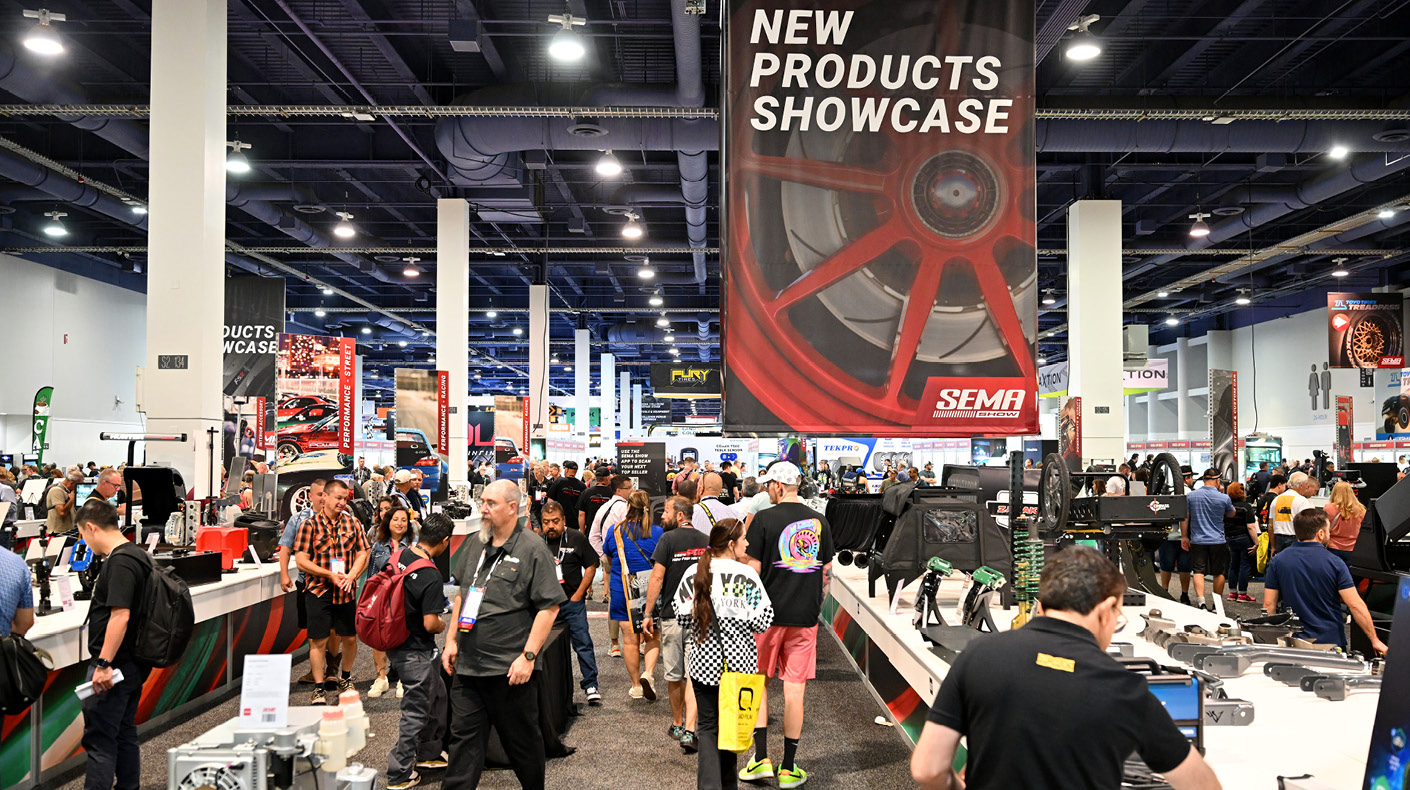
An image of the New Products Showcase at the SEMA Show.


The SEMA Show, this year November 3-6 in Las Vegas, serves as the stage for the newest products, technologies and trends shaping the automotive aftermarket.


For exhibitors looking to maximize their impact on the SEMA Show floor, one opportunity stands above the rest: the New Products Showcase.


Recognized as the No. 1 destination for buyers and media at the SEMA Show, the New Products Showcase gives exhibitors a dedicated display for their latest innovations and best-selling products.


The best part: the first product entry is always free, so entering is a no-brainer. Additional entries are $95 each through Friday, October 2. After the deadline, the cost rises to $175.


New for 2026, a brand-new product category joins the ranks: Powersports | SxS | Lifestyle. It joins the current lineup:

  • Car Care & Protection
  • Collision Repair & Refinish
  • Emerging Technology
  • Engineered New Product
  • Exterior Accessory
  • Interior Accessory
  • Package Design & Display
  • Performance - Racing
  • Performance - Street
  • Powersports | SxS | Lifestyle
  • Street Rod & Custom Car
  • Tire & Related
  • Tools & Equipment
  • Truck & Off-Road
  • Wheel & Related


The Showcase is located in an easily accessible location, the east end of Lower South Hall and for many, the main entrance to the SEMA Show.


Why Participate? The Data Proves It


The New Products Showcase has long been considered one of the most valuable exhibitor programs at the SEMA Show. Now, exhibitors have the data to back it up.


A recent analysis using the New Products Showcase technology from FastSensor found that the program generated more than 620,000 brand impressions during the most recent SEMA Show.


Visitors spent an average of 21 minutes exploring products in the Showcase, while nearly 45% of qualified visitors engaged deeply with multiple product categories or displays.


In addition, 78% of buyers and media members report visiting an exhibitor's booth after discovering a product in the display. For companies looking to generate leads, build brand awareness and increase booth traffic, participation can deliver significant value.


Why Participate? Your Brand Could Win


Eligible products are automatically considered for the prestigious SEMA New Product Awards, which recognize outstanding innovations introduced at the SEMA Show. Winners are announced during the SEMA Show Kickoff Breakfast on Tuesday, November 3, and are featured in a special section of SEMA Magazine.


Why Participate? Get Additional Publicity 


Beyond the on-site exposure, participating products receive additional publicity through SEMA News, SEMA Magazine, the SEMA Show App, SEMAshow.com and the exclusive New Products digital catalog available to browse 24/7.


Exhibitors can also take advantage of optional promotional opportunities, including enhanced product listings, Buyers' Guide advertising and on-site branding packages. (Contact sales@sema.org to connect with your sales rep for more information).


How to Enter the New Products Showcase


Exhibitors can enter the New Products Showcase by visiting the Exhibitor Dashboard at exhibitor.semashow.com.


The entered products should be brought to the New Products Showcase area during designated check-in hours on Sunday, November 1, and Monday, November 2. Products checked in before 2:00 p.m. local time on Monday are eligible for New Product Award consideration.


On Tuesday, November 3, at 7:30 a.m. local time, the SEMA Show Kick-Off Breakfast will honor the winners of each category.


Exhibitors must then return to the New Products Showcase on Friday, November 6, from 4:00 to 8:00 p.m. local time to retrieve their products.


Frequently Asked Questions About the New Products Showcase


What qualifies as a new product?

To be eligible for the New Products Showcase and New Product Awards, a product must have been introduced to the marketplace after the 2025 SEMA Show and be available for shipment within 90 days following the close of the 2026 SEMA Show, or by February 2027.


Products that do not meet these requirements may still be displayed in the New Products Showcase as an Exhibitor Pick, but they will not be eligible for New Product Award consideration.


Can I show a video of my product instead of bringing the product itself?


Yes. Exhibitors may display product videos on a laptop or tablet set to run continuously throughout the Show. Alternatively, exhibitors may provide a QR code that links to a landing page or video explaining the product.


Please note that video or landing page content should be informational only and should not contain marketing, advertising or sales copy.


Can I enter the same product in more than one category?


Yes. Exhibitors may submit a product into multiple New Product Showcase categories. However, a separate product display must be provided for each category entered.


Can I ship my products in advance?


Yes. Exhibitors may ship products to the Freeman warehouse before the Show. Advance receiving begins in October, and shipments must arrive at the Freeman warehouse no later than Wednesday, October 21.


Please note that even if products are shipped in advance, they must still be checked in by a representative of the exhibiting company during the scheduled New Products Showcase check-in hours.


Do I need to pick up my products after the Show?


Yes. Exhibitors are responsible for retrieving their product displays from the New Products Showcase on Friday, November 6, between 4:00 p.m. and 8:00 p.m.


UPS representatives will be available on-site during check-in and check-out to assist with return shipping. Products not collected by the end of the designated pick-up period will be considered abandoned.


Still have questions? Contact your SEMA Show sales representative at sales@sema.org909-396-0289 or semashow.com/contact. Still need booth space for the SEMA Show? Get started at semashow.com/buyabooth.


The 2026 SEMA Show is set for November 3-6, in Las Vegas. Interested exhibitors can buy a booth and learn more at semashow.com/exhibitor. Attendee and buyer registration is now open online. For more information, visit semashow.com.  


SEMA Fest has been confirmed for Friday, November 6, 2026, and industry members will get the lowest rate on tickets through the registration portal and Attendee Resource Center. Sign up for updates at semafest.com.