From the SEMA Washington, D.C., office
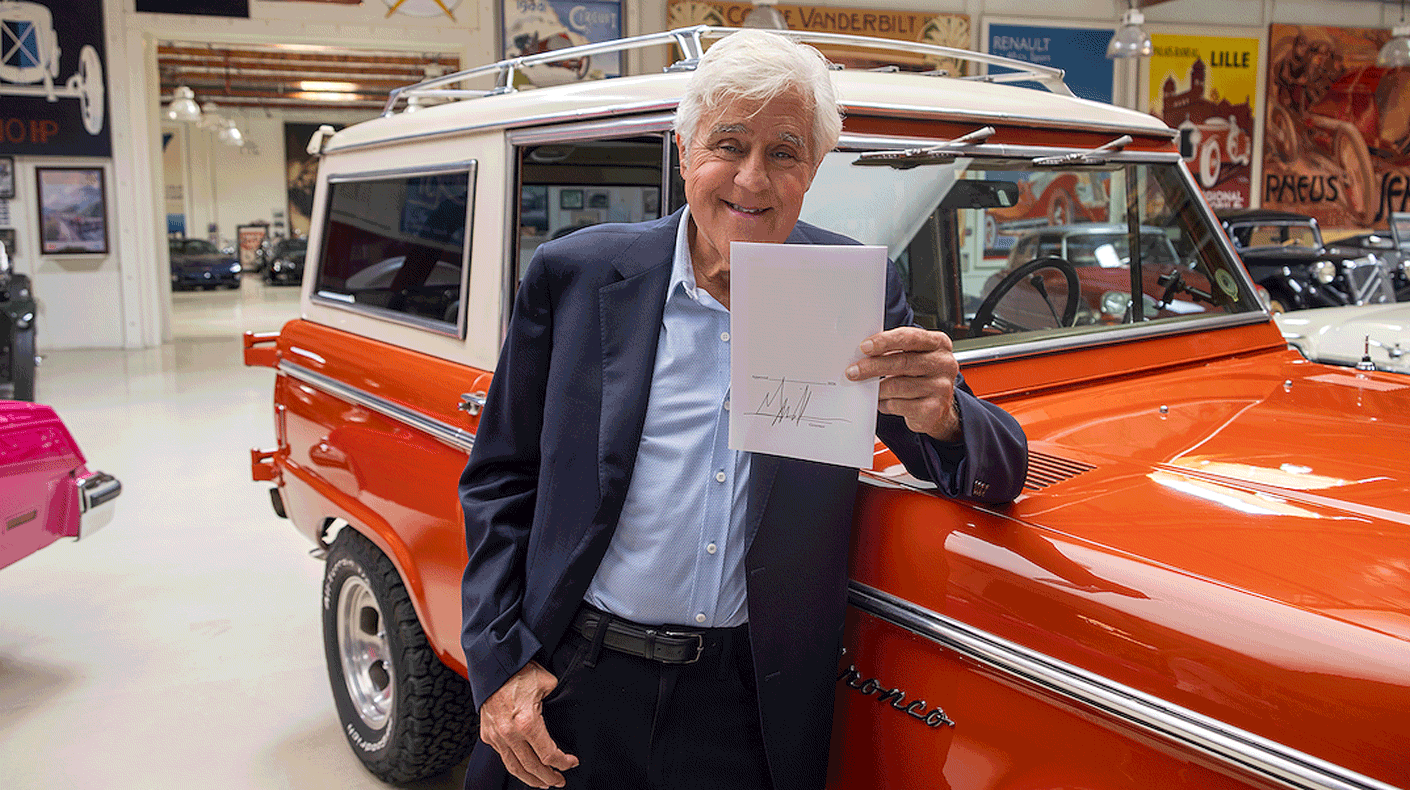
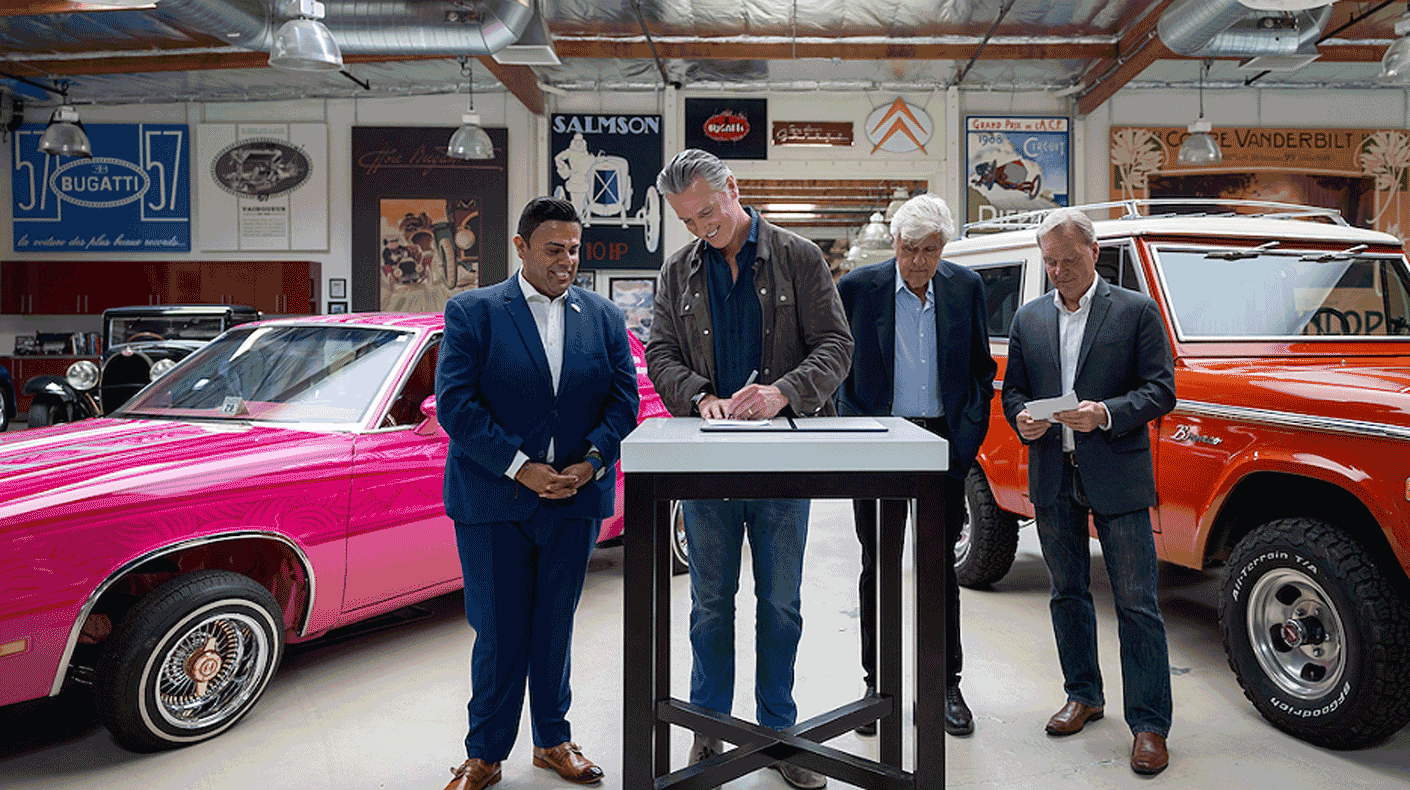
In a historic moment for California's automotive heritage and enthusiasts, Governor Gavin Newsom has signed Leno's Law (Senate Bill 1392) at the garage owned by the bill's namesake, entertainer and noted automotive enthusiast Jay Leno. The bill signing delivers significant, much-needed reform to smog check requirements to appropriately balance environmental stewardship with cultural reverence.
The bill was sponsored by Leno and SEMA.
Gov. Newsom was joined at the signing ceremony by Leno, SEMA CEO Mike Spagnola, SEMA Chair Melanie White, Senior Manager State Government Affairs Victor Muñoz, Senator Dave Cortese, and advocates who participated in the effort to preserve California's automotive heritage, including Francine Mata, co-founder and president of the Sacramento Lowrider Commission and a founding member of the California Lowrider Alliance, and Carmen Vera, co-owner of acclaimed restoration shop Pasadena Classic Car.
Leno's Law, authored by Sen. Cortese with principal co-author Sen. Shannon Grove, creates a narrow, phased-in pathway to exemptions from California's smog-check requirements for qualifying collector vehicles manufactured between 1976 and 1985. Leno's Law was crafted to provide a carefully limited solution for vehicles typically preserved for shows, parades, charitable functions and historical exhibitions, rather than vehicles used for everyday transportation.
The collaborative and fruitful effort to pass Leno's Law united Democrats and Republicans and mobilized a diverse set of stakeholders, including lowrider groups and car clubs, collectors, preservationists, automotive businesses and enthusiasts.
"SEMA applauds Governor Newsom for putting his signature on a historic win for California’s automotive community and for every family, enthusiast, and small business working to keep this culture alive," said Spagnola. "Leno's Law shows that California can protect clean air while also showing the appropriate reverence for the vehicles that connect generations and tell an important part of our state's story. We are grateful to Senators Cortese and Grove, Jay Leno, our member companies and the thousands of advocates whose energy fueled this effort with an unrelenting passion for our shared automotive heritage."
Background on Leno's Law
Leno's Law establishes a narrow, phased-in, collector-only pathway to a smog-check exemption for certain older vehicles. Under the bill, beginning January 1, 2028, qualifying collector vehicles (manufactured before model year 1981) would be exempt from smog-check requirements. The exemption would annually expand by one model year until 2033, when it would apply to vehicles manufactured before model year 1986. To qualify, vehicles must meet the bill's collector-use requirements, and owners must either carry collector-car insurance or, via a future DMV process to be established by 2030, verify that the vehicle is driven fewer than 1,000 miles per year. The bill does not change California's existing exemption for pre-'76 vehicles.
The effort to pass this bill gained support from California's automotive community and international enthusiasts. California's lowrider groups sent more than 1,700 letters, and FIA's International Historical Commission endorsed it, praising its balance of preservation and environmental goals.
California is widely recognized as a key cultural hub for America's automotive history, instantly identifiable through countless images of classic cars and trucks cruising across its roads––from desert to coast and the urban landscapes in between. Appropriately, the state is home to more than 1,500 SEMA member businesses, and its automotive aftermarket sector sustains nearly 150,000 jobs. It annually generates more than $40 billion in economic activity, provides $13 billion in wages and benefits and contributes $6 billion in taxes.
For more information, visit sema.org or visit semahq.org.