Sat, 04/01/2023 - 08:44

SEMA News—April 2023

BUSINESS

Truck and Off-Road Market Trends

Small Trucks Log Sales Gains, Larger Pickups Lag; Classic Trucks Surge in Popularity; Overlanding Remains a Market Mover; EVs Dominate Upcoming Releases

By Douglas McColloch
Truck and Off-Road

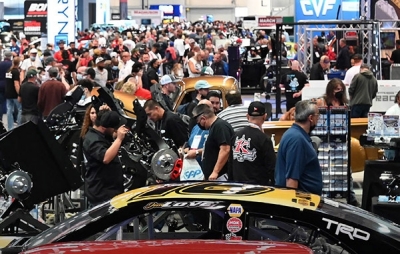
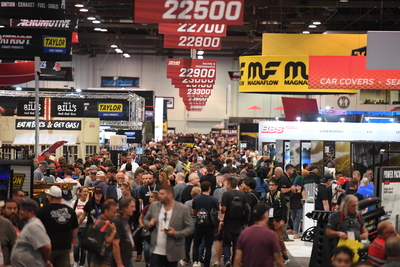
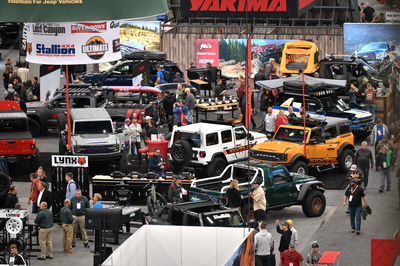
Pickups, Jeeps and off-road vehicles filled the West Hall at the 2022 SEMA Show. Leading products trending from the specialty-equipment market included bed and exterior accessories, wheels and tires, and overlanding gear.

Consumer trends and preferences may change over time, but in the automotive sphere, pickups never really fall out of fashion. They’re the ideal multipurpose vehicles that function equally as daily commuters, job-site workhorses or recreational trail toys. For sheer versatility, nothing compares to them, and that’s probably why the bestselling vehicle in the United States for more than 40 years in a row has been a pickup.

More than half of all vehicles on the road in the United States are either a pickup, an SUV or a crossover CUV. According to the most recent issue of “SEMA Future Trends,” the light-truck segment—which includes pickups, vans, SUVs and CUVs—is forecast to account for close to 80% of all new-vehicle sales by 2027, with pickups alone making up nearly 50% of all new vehicles sold.

Healthy truck and SUV sales generally augur well for the automotive aftermarket. Parts and accessories for pickups alone account for 31% of specialty equipment sales, according to the latest “SEMA Pickup Accessorization Report,” with $16 billion in annual sales. Throw in SUVs, crossovers and vans, and that sales number grows to more than $30 billion yearly. More than half of all late-model pickups on the road have been modified with specialty-equipment parts, with HD models more likely to receive upgrades, and more than a quarter of pickup drivers purchase aftermarket equipment for their trucks each year.

While consumer demand for late-model truck parts remains high, new-truck sales—like new-car sales overall—faced tough sledding in 2022. The combination of persistent semiconductor shortages, COVID-related supply disruptions, spikes in fuel prices for much of the year, and low inventory on dealer lots combined to make new trucks more difficult to obtain and more expensive to operate. While eight of the top-selling vehicles sold in the United States were either pickups or SUVs, nearly all posted sales declines in 2022 over the previous year. Ford’s F-150 was again the nation’s best-selling vehicle but reported sales of 653,000 units, which marked a 10% decline over 2021. Among the top 10, the RAM 1500, Toyota Highlander and Jeep Grand Cherokee all posted double-digit declines, with the Tesla Model Y compact SUV the only top 10 vehicle to log a year-over-year (YOY) sales increase with an impressive 40% YOY gain.

There were still some bright sports. The Ford Bronco, in its first full calendar year on the market, reported 117,000 units sold, a 233% increase over 2021. Similarly, the Ford Maverick compact pickup, also in its first year on the market, logged a whopping 687% sales increase from 2021. Additionally, the midsize Chevrolet Colorado logged a 22% sales increase, and the Jeep Compass compact SUV reported a 14% gain for 2022. Noticing a trend here?

While CUVs continue to gain overall market share in the sector, smaller trucks and compact SUVs are seeing a resurgence in popularity, perhaps reflecting higher fuel costs. Midsize trucks accounted for only 15% of U.S. pickup sales in 2015 but have gained ground since then and are forecast to comprise 30% of U.S. pickup sales by 2025.

But in any event, consumer demand for trucks remains high, and if consumers can’t find them new, they’ll buy them used. According to a January 2023 survey of three-year-old used cars conducted by iSeeCars, eight of the top 10 most used vehicles purchased last year were either a truck, an SUV or a crossover, with F-150, Silverado 1500 and RAM 1500 leading the pack. Depreciation rates plummeted by more than half from 2020 to 2022, according to a report from Wards Auto, suggesting future high resale values for many models.

For this article, we consulted several industry leaders for their perspectives on the overall state of the marketplace. What follows is a summation of their views.
Trucks and Off-Road

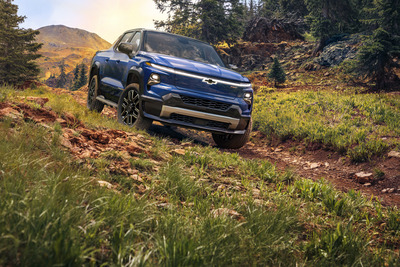
Long anticipated, the Chevrolet Silverado EV is slated to go on sale this year with a claimed range of 400 mi. and a tow capacity of up to 20,000 lbs., depending on trim level. Photo courtesy: Chevrolet

What’s in The Pipeline: New and Notable Vehicles

While supply-chain issues could delay some releases, the following pickups, SUVs and crossover were tentatively scheduled to enter production within the next 18 months at the time this story was published.

Ford: Introduced globally in 2018, the Ranger Raptor comes to the United States with (most likely) a 3.0L EcoBoost V6 and a 10-speed transmission. Full-time four-wheel drive and 33-in. BFG tires are expected to be standard offerings.

General Motors: Long anticipated, the dual-motor Chevy Silverado EV is slated to go on sale later this year. The truck will be available as a base W/T sporting 510 hp, and a top-line RST First Edition that comes with 660-plus hp (and a six-figure price tag). Four-wheel steering will be an option, and the truck is said to offer a 400-mi. range between charges and a tow rating of up to 20,000 lbs. A Trail Boss version of the EV is in the works as well. The GMC Sierra Denali EV, set to launch early next year, will offer a similar cruising range and up to 750-plus hp.

Also new from GMC is the Hummer EV SUV, which has a claimed range of 250–300 mi. Consumers have already made 90,000 reservations for the EV, which has a base MSRP of $84,000.

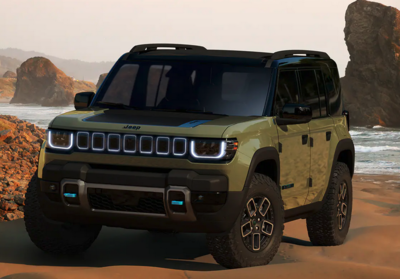
Jeep: Two new Jeep BEVs are slated to start production within the coming year: The three-row Grand Wagoneer EV and the Recon EV, which will offer a power folding roof and removable doors. (It’s still a Jeep, after all.) Jeep aims to offer the three-row with a 400-mi. range, 600 hp and a 3.5-sec. 0–60 time. Little is known about the Recon at this point, though renderings of the vehicle suggest a strong enthusiast appeal.

Land Rover: The luxury automaker enters the electrification space with the all-new Range Rover EV. The rear-wheel-drive ’Rover is said to accommodate three rows of seating and an all-new chassis architecture that can be adapted to gas, hybrid, or full-electric drive configurations.

Mercedes-Benz: The current rage of the adventure van market, the M-B Sprinter EV will be manufactured and sold in the United States with a claimed range of around 300 mi. and a GVWR of 8,500 lbs.

RAM: Set to arrive in 2024, the 1500 Revolution EV, which debuted at the 2023 Consumer Electronics Show, marks the truckmaker’s first foray into full electrification. The 1500 will utilize the new STLA-dedicated EV chassis architecture that will support both light- and heavy-duty RAM electric pickups; cruising range is a claimed 500 mi. and tow capacity is said to be as much as 10,000 lbs.

RAM also re-enters the already-crowded midsize pickup segment with the introduction of the all-new Dakota. It’s still not clear if the truck will be based off the Jeep Gladiator or RAM 1500 platform, but it will almost certainly be powered by the 3.6L engine that’s ubiquitous across the Stellantis product line; a 3.0L diesel Six is another possibility. Rear-wheel- and four-wheel-drive versions will be offered, and a Dakota Rebel off-road trim package is a likely future option.

Tesla: Long delayed, Tesla’s already-iconic Cybertruck is expected to enter production in the second half of 2023. The truck will be produced in both three-motor and four-motor powertrain configurations that are said to enable 0–60 acceleration in under 3 sec. and tow capabilities of up to 14,000 lbs. Rear steering is said to be an option, and cruising range is a claimed 500 mi. between charges.

Toyota: Unchanged since a 2020 facelift, the fourth generation of the Tacoma midsize pickup is expected to debut in mid-2023 with a choice of powertrain options: a turbocharged 2.4L four-cylinder that’s rated at 265 hp in the current Highlander, or the Hybrid Max gas-electric system found in the all-new Crown sedan that replaces the Avalon in Toyota’s product line. The truck will ride on a modified version of the TNGA-F global chassis architecture and is expected to switch over to a rear coil suspension à la the current fullsize Tundra. Additionally, an all-electric version of the HiLux pickup debuted in Thailand last winter, so a Tacoma EV may be in the offing as well.

Also new from Toyota is the three-row Grand Highlander SUV, which debuted at the 2023 Chicago Auto Show and will be built at Toyota’s Indiana assembly plant. The Grand Highlander is expected to receive the same powertrain options as the Tacoma pickup; a Lexus version of the SUV, known as TX, will also roll out this year to replace the GX. A new midsize electric Toyota SUV, the bZ4X, is available for a base MSRP of $42,000 and with a claimed range of 250 mi. Finally, the boxy, off-road-oriented Compact Cruiser EV will look to compete against the Ford Bronco Sport in the compact off-road segment.

Volkswagen: While not a truck or SUV per se, the ’24 ID. Buzz microbus presents an intriguing platform for the evolving overlanding market. (Volkswagen must think so, too; the company plans to roll out a Campmobile version, dubbed “ID. California,” the following year, though it isn’t clear if the vehicle will be sold in the United States) Riding on the same MEB platform shared with the other BEVs in the ID series, the retro-styled, rear-wheel-drive Buzz uses a 150kWh battery that produces some 200 hp.

Overall, the members of our industry panel were generally upbeat about the current condition of the marketplace, with some notable caveats. Specifically, the microchip shortage that has repeatedly sidelined production at OE assembly plants for the past two years has exerted a ripple effect on the specialty-equipment market.

“Right now, it’s very difficult trying to get vehicles,” said Karl Harr, director of sales and marketing for Liquid Spring. “That’s probably been the biggest issue that we’ve had—just getting the truck or chassis to build on. Clients have been waiting up to a year for a vehicle.”

“We’re seeing low inventory at dealerships,” said Rachel Deere, outside sales—light-truck products for Merritt Products, “so it’s a little bit slower just trying to get some of our accessories to our dealers.”

“We also had an issue getting new vehicles,” said Mike Hallmark, marketing and international sales manager for Hellwig Products, “but with production picking back up, we’re seeing more brand-new ’23s on the lots.”

While the limited supply of the late-model trucks continues to pose difficulties, the old-school classic-truck market, by contrast, has seen a surge in popularity in recent years.

“It’s booming,” said Jay McFarland, director of business development for Holley, who also noted that the number of build platforms in the ‘classic-truck’ segment continues to expand. “The ’67–’72 Chevrolet/GMC trucks have always been really popular, but it seems like there’s a shift going on to the square-body ’73–’87 trucks, and now, even the ’88–’98s. I’ve seen the values of those trucks just skyrocket lately.”

D. Brian Smith, marketing copywriter for Classic Industries, concurred. “I don’t know that we’ve seen the boom as big for classic trucks for so long. We’ve been supporting the ’73–’87 trucks for at least 10 years now, and similarly for the ’88–’98 trucks, so we were already had our foot in that market before interest grew. But we’ve definitely seen a major uptick in interest and sales.”

At the grassroots shop level, what are enthusiasts building?

“The ’90s vibe is coming back,” said Theresa Contreras, president of LGE-CTS Motorsports at a recent SEMA Education seminar. “We’re seeing a lot of the ’90s Chevy trucks, and all the phone calls I’ve been getting lately from customers are saying ‘I want to bag and body-drop
my truck’.”

“It’s come full circle to the point that vehicles that were in the early ’90s are on their third owner now, and the ones that weren’t modified are now coming back,” added Sean Holman, co-host of “The Truck Show” podcast. For veteran builders, “If you wait long enough and things become popular again, you might be the only person who can service the vehicle if you’ve done that in the past.”

According to Matt Dinelli, owner of Attitude Performance, modern-day truck builds seem to fall into one of two categories: mild or massive. “What we’re seeing at our shop right now,” he says, “is either a basic lift and 35-in. tires, no matter what the platform is, or an absolutely over-the-top, astronomical, down-to-the-frame, motor swap, 1-ton axles and coilovers. Our jobs are either small lift kits and leveling kits, or stuff that’s at the shop for six months. There’s not really a middle ground anymore.”

As the segment expands and more newbies enter the accessorization space, hands-on education at the shop and retail level becomes an important part of customer outreach. “One of our biggest sales tactics is to educate people about the product that they want to purchase and let them make the choice on which brand they end up going with,” said Contreras. “Whenever something leaves our shop, one of our salespeople will go over the vehicle and show the owner how to disconnect the sway bars or how to engage four-wheel drive. There are a lot of people who just don’t know.”

Dinelli concurs, suggesting that shops consider tailoring education sessions to specific audiences. “We’ve had women education classes at our shop where they don’t want to ask their boyfriend, they don’t want to ask their significant other—they want to learn about their vehicle because it is their vehicle and they want to know what you have to do after you drive through water and what have you.” On the other hand, “A lot of our customers are male, and they don’t want to listen to anybody else because they think they already know it.”

All of our sources stressed the importance of maintaining a robust multi-platform digital media presence, with Instagram and YouTube most commonly cited as generating the most user engagement. “Right now, it’s people going on social and just trying to find a very specific thing for their truck,” said Stewart Webb, vice president of marketing at PRYNT Digital. “If you can post whatever you’re building and do it consistently, you’re able to speak to a broader audience and able to bring in more customers as well.”

Targeted search is another viable outreach tool for manufacturers looking to connect with a niche buyer demographic. “We do quite a bit of Google search,” said Cort Charles, western regional sales manager for Auto Meter. “When we’re trying to push specific product lines, we have a lot of targeted ads that are in place. Because some of our newer products are platform-specific and vehicle-specific, it allows us to hone in on a specific group.”

In any event, companies are well advised to invest as heavily as possible in new media. “We have a full digital media department,” said Holley’s McFarland. “We’ve got a social-media department, a department that deals specifically with just videography, and a department that specializes specifically on email and things like that. You’ve got to make that commitment. Otherwise, you’re going to be left behind.”
Trucks and Off-Road

If this rendering is any guide, the all-new Jeep Recon EV aims to compete against the Ford Bronco Sport in the compact off-road segment. Old-school removable doors are said to be a standard feature. Photo courtesy: Jeep/Stellantis

Overlanding: Still Trending Upward

Nearly all of our experts agreed that the future of overlanding—which has gone from a fringe marketplace to a major industry player in slightly more than a decade—continues to look bright.

“That’s where we have seen a lot of growth,” said Harr. “We do a lot of what we call the ‘habitat builds’ on the Ford F-550 and RAM 5500, and now it’s pushed us into the smaller truck market in the overland space. Right now, we’re also looking at developing product for Mercedes Sprinters and the Ford Transit.”

“I don’t think we’ve hit the plateau yet,” said Steven Shearer, senior marketing manager, communications for Toyo Tire. “There are still manufacturers in the aftermarket space creating product to support that market, and the OE manufacturers are still creating vehicles that are specific to that segment.”

The exact size of the overlanding market, in terms of sales, remains elusive, but the outdoor recreation segment of which it is a component continues to see robust growth. New data released by the U.S. Department of Commerce’s Bureau of Economic Analysis (BEA) shows that outdoor recreation generated $454 billion in economic output and supported in excess of four million jobs in 2021. According to the BEA report, inflation-adjusted GDP for the sector increased 21% over the previous year.

While overlanders, in the aggregate, tend to be older and more affluent than other automotive consumer bases, several of our experts saw growth opportunity among a younger demographic.

“For the foreseeable future, there will still be upward growth, especially among the younger generation that’s big on traveling outdoors,” said Hannah DeWeese, brand leader for Terra Rover. “Some of these people are adopting it as a new hobby, so it will just keep going as the years go by.

“Our primary target market is Gen X and Millennials,” DeWeese continued. “People who have established incomes that allow them to invest in a nicer trailer for longer trips. They might also have kids, so they’re looking for something bigger. That’s who we’re targeting.”

Some of our experts pointed toward all-wheel-drive crossovers as a future growth segment, particularly to younger “weekend warrior” enthusiasts with limited build budgets.

“RAV4 adventurers seem to be the newest entry,” Holman noted. “I’ve seen so many of those things out in places they shouldn’t be.” Contreras similarly mentioned Kia SUVs such as the Telluride as a source of potential new aftermarket sales. “We get a ton of customer calls because we do stuff with Kia,” she says.

Companies that previously hadn’t catered to the overlanding market have taken notice of the segment’s resiliency and are adjusting their business models accordingly.

“We started in the heavy-duty commercial world,” said Rachel Deere. “We’ve been in the accessories world for years and years, with heavy-duty products, but a lot of our products—ladder racks, headache racks and side boxes—are applicable to overlanding, so in the next year or so, we’re going to be launching new products for that market.”

“Bed accessories are huge right now,” Holman agreed, “and cargo systems such as racks, slides, and things to support rooftop tents and light bars.”

“We’re seeing a slowdown on the side of rooftop tent sales,” Contreras observes, “but the rack systems and multipurpose cargo stuff that make your vehicle more versatile for everything that you do is becoming way more popular, especially for people who want to use the truck for work.”

DeWeese sees additional growth opportunities among the traditional “outdoor lifestyle” sector of recreationalists.

“Another market that hasn’t been mentioned, which we would look to capitalize on, would be the hunting or outdoor sector—people who aren’t just traveling for leisure, but who are going to do something specific. They need storage, and they may need a trailer to be able to get there.”

The increased popularity of overlanding, and other forms of off-road recreation, comes at a potential cost. Public lands saw a surge in visitations in the wake of the COVID pandemic, and the increase in vehicle use poses numerous possible threats to the integrity of fragile ecosystems—and with it, continued access to public lands. To ensure public lands stay accessible, therefore, our experts agreed that newer users need to be educated on the proper principles of off-road etiquette and responsible sustainability practices.

“Education is what changes actions and attitudes, and that’s really where we need to get to,” said Matt Caldwell,” president of Tread Lightly!. “And I think the industry can do that by making sure people understand what their equipment is capable of—both good and, sometimes, bad. Make sure that people understand that just because their vehicle can go anywhere, it’s not supposed to go everywhere.

Trucks and Off-Road

Also long awaited, the retro-styled Volkswagen ID. Buzz offers an intriguing potential overland build platform with a particular appeal to younger Millennial and Gen Z buyers. Photo courtesy: Volkswagen AG

“There’s a lot of discussion about performance, and performance is great, but focusing on positive performance rather than those things that are going to cause issues down the line—this is where the industry can support us.

“Look at it an organization like Overland Expo. They have a very strong educational component. We need to continue to get people to attend events like these so that we can educate them appropriately. We need to be proactive and make sure that people understand that, ‘Hey, this is land that we’ve worked and fought for for years.’ We need to make sure that we’re continuing that and share the kinds of information that the new person on the trail might not know.”

The Outlook Ahead

Several of our experts expressed concerns about fuel prices and rising interest rates as potential hindrances to growth in 2023.

“Inflation is going to be one of the biggest things,” said Deere, “so we’re probably looking at a little less [consumer] spending.”

The trend toward electrification was cited by several experts as both a potential short-term challenge and a promising long-term opportunity.

“We are broadening our offerings and going into EV platforms,” said Hallmark. “We just released a sway bar for the Tesla Model 3 and Model Y, and we’re looking at the Rivian and any other electric platforms that are there. We’re releasing a front swaybar for the F-150 Lightning as well, so we’re trying to stay ahead of the curve for the adaptations and changes that are coming to the market with EVs.”

On the other hand, electric drivetrains raise compatibility issues for certain specialty-equipment manufacturers, as Auto Meter’s Charles explains: “When you talk about our instrumentation, unless there’s some additional data that their computer is not going to provide, it’s going to be tough for us to find a way to get in there and be a part of it.”

Still, the consensus among our experts was that ICE engines would continue to be the powertrain of choice for the vast majority of truck and SUV owners for the foreseeable future.

“You can’t run the Baja 1000 on an electric vehicle,” said Ben Anderson, product development manager for Mickey Thompson Tires & Wheels. “Gas vehicles are going to be around for quite a while—in the United States, anyway.”

A number of our sources pointed to overseas markets as growth opportunities, with the Middle East and Australia being repeatedly singled out. “They’re our two strongest,” said Hellwig’s Hallmark, “the main reason being is that we’ve seen an influx in USDM [U.S domestic manufacturer] left-hand drive vehicles being sold there. It’s a platform that we’re used to.”

“What’s kind of neat about the international markets is they have a number of applications that we don’t have here in the States, but which may be shared across various countries,” said Ben Anderson, “so globally we can we can cover a lot of area.”

Despite potential economic headwinds, most of our insiders expressed optimism for the future, primarily due to strong consumer demand. “As far as the growth of the industry goes, people are still going to want their accessories,” Deere said. “People really do like that and they like their vehicles, so they’re always looking at the opportunity to upgrade.”

The near-term outlook for overlanding in particular appears to be especially promising. “You know, COVID has been around for more than three years now,” DeWeese concluded, “and the market doesn’t seem to be declining, only growing. It’s definitely not a passing fad.”

About the Truck & Off-Road Alliance

Members of the Truck & Off-Road Alliance (TORA) represent the collective interest of its members through a single, powerful voice that can play a significant role in shaping the industry. They are joined together to form a potent coalition whose mission is to determine the shape and future of the truck and off-road accessory industry. TORA is a SEMA council whose member companies manufacture, distribute, sell and/or install accessories for off-road vehicles, light-duty pickups, ATVs or provide services to the off-road or truck accessory industry. To learn more about TORA and SEMA’s other industry councils, visit www.sema.org/get-involved.

About Tread Lightly!

The outbreak of the COVID-19 pandemic in 2020 saw a surge in motorized vehicle traffic on public lands as outdoor enthusiasts sought their own forms of “social distancing.” The U.S Forest Service alone logged some 168 million visits, while the Bureau of Land Management recorded more than 73 million more. With public lands being subjected to more intensive use than ever, and a generation of new and inexperienced recreationalists entering the sector via overlanding and adventure vans, the need for educational outreach—to provide guidance in the proper stewardship of our natural resources for future generations—has never been greater.

Enter Tread Lightly! Founded in 1985 as a division of the U.S. Forest Service, the organization now functions as a member-based nonprofit working in cooperation with private-sector partners in the outdoor industry on nationwide initiatives to protect and enhance recreational access and opportunities by promoting outdoor ethics to increase individual awareness and understanding.

Tread Lightly!’s goal is to balance the needs of the people who enjoy outdoor recreation with the need to maintain healthy ecosystems and thriving populations of fish and wildlife. The scope of Tread Lightly!’s work includes both land and water and represents most popular forms of outdoor recreation such as hunting, recreational shooting, fishing, and boating. Promoting safe and responsible use of motorized and mechanized vehicles in the outdoors remains a top priority.

SOURCE

Tread Lightly! is supported by numerous automotive companies, including BFGoodrich, Ford Motor Co., Warn Industries, Jeep, Land Rover, Overland Expo, Quadratec, Yamaha and many others. For more information on member benefits and partnership opportunities, visit www.treadlightly.org/support.

Sat, 04/01/2023 - 08:28

SEMA News—April 2023

LEGISLATIVE AND TECHNICAL AFFAIRS

Law and Order

By Christian Robinson

VirginiaVirginia—ZEV Mandate: Lawmakers in Virginia introduced SEMA-supported legislation to repeal the law tying the state to California’s motor vehicle emissions standards. Under current law, sales of new gas- and diesel-powered vehicles will be banned starting in 2035. Virginia is seen as the most likely state to repeal its mandate and Governor Glenn Youngkin has made it one of his top priorities. However, control of the legislature is narrowly split between Republicans and Democrats, making the final outcome hard to predict.
FEDERAL UPDATE

Defeat Devices: The U.S. Environmental Protection Agency-proposed (EPA) National Enforcement and Compliance Initiatives (NECI) draft list for 2024–2027 does not include “stopping aftermarket defeat devices for vehicles and engines.” While illegal aftermarket parts would remain a standard or core priority, as they had been for many years until 2020, they would no longer be a top EPA enforcement priority. SEMA submitted comments in support of the agency’s preliminary decision to remove “stopping aftermarket defeat devices for vehicles and engines” from the NECI. The EPA is expected to publish the final NECI list this fall. Aftermarket defeat devices had been included on the NCI list (now “NECI”) for 2020–2023. During this time, the EPA noted that it had resolved approximately 130 cases, addressing more than 460,000 violations. In fiscal year 2022 alone, the EPA concluded 41 cases with more than $19 million in civil penalties. The EPA’s Office of Inspector General (OIG) issued a critical review of the agency’s implementation of the NECI for stopping aftermarket vehicle defeat devices, noting that the agency is “not on track” to meet 10 of its 40 goals for the initiative. The OIG report reviewed the implementation over 2021 and 2022 and was issued shortly after the EPA announced its top enforcement priorities for 2024–2027.

China Tariffs: SEMA urged the U.S. Trade Representative (USTR) to remove the tariffs imposed on goods from China because they have not helped achieve the goal of eliminating China’s unfair practices with respect to technology transfer, intellectual property and innovation. The Section 301 tariffs were imposed in 2018 and are being reviewed by the USTR to determine whether they should continue, expire or be modified. Nearly all SEMA members sourcing goods from China have been directly impacted by the 25% tariffs. The tariffs have had the opposite of their intended effect and are making U.S. manufacturers less competitive and preventing American companies from growing. They have also increased costs for American consumers and contributed to inflation. There is no deadline for completing the review.

R&D Tax Credit and Bonus Depreciation: When the 2017 tax law was enacted, it allowed companies to amortize certain tax deductions over one year, but the benefit was only temporary. The business community urged Congress to extend the provisions in 2022, but this did not occur despite widespread support in Congress. Until 2021, companies could take a 100% tax deduction for research and development (R&D) spending in the year it occurred. Starting in 2022, companies must deduct their R&D expenses over five years. Until 2023, a company could also expense 100% of the cost of any Section 179 property (includes equipment, vehicles and software) and deduct it in the year the property was placed in service, with a maximum deduction of $2.5 million, adjusted for inflation. The Section 179 deduction now phases out over the next four years: 80% in 2023, 60% in 2024, 40% in 2025, 20% in 2026, 0% in 2027. SEMA and the business community will be making a push in 2023 to get Congress to reinstate the 2017 provisions for R&D expenditures and the bonus depreciation.

Noncompete Clauses: The Federal Trade Commission (FTC) issued a proposed rule to ban employers from including noncompete clauses in worker contracts. The agency contends that the provisions are an unfair method of competition that have the effect of suppressing wages, hampering innovation, and thwarting entrepreneurs from starting up new businesses. The FTC argues that removing them would allow workers to more freely switch jobs, seek higher wages and better working conditions, and expand the talent pool from which other businesses hire employees. Opponents of the proposed rule argue that noncompete provisions encourage companies to retain and promote workers and invest in training. The FTC estimates that at least 30 million Americans are subject to noncompete clauses. The proposed rule would not apply to other types of employment restrictions such as non-disclosure agreements. SEMA is reviewing the proposed rule along with member feedback on its potential impact.

STATE UPDATE

MaineMaine—Imported Vehicles: SEMA State Automotive Enthusiast Leadership Caucus member Rep. Shelly Rudnicki introduced a bill to allow on-road registrations to be issued for imported vehicles manufactured at least 25 years ago. Under federal law, these vehicles are exempt from federal safety and emissions standards. Current Maine law prohibits vehicles that do not meet these standards from being driven on public roads.



District of Columbia—Noise Cameras: Councilmembers in Washington, D.C., have introduced the SEMA-opposed Vehicular Noise Reduction Act of 2023, which would test noise cameras to ticket loud cars and trucks. While the city currently has a fair exhaust noise law in effect, noise camera technology is not a fair and reliable way to fine motorists.

New Hampshire—License Plates: Lawmakers in New Hampshire introduced SEMA-supported legislation to allow the display of only a single, rear-mounted license plate for all passenger vehicles. A similar bill passed the House of Representatives in 2022 but was not taken up by the Senate before the end of the legislative session.

New Hampshire—ZEV Mandate: Members of the New Hampshire House of Representatives introduced SEMA-opposed legislation to adopt California’s low- and zero-emissions motor-vehicle standards and ban the sale of new gas- and diesel-powered motor vehicles starting in 2035. Republicans currently control the legislature and governor’s mansion, making adoption of California’s standards unlikely.

North Dakota—License Plates: The North Dakota House of Representatives introduced SEMA-supported legislation to allow the display of only a single, rear-mounted license plate for all passenger vehicles. If enacted, the bill would protect the aesthetic contours of collector cars and prevent vehicle owners from having to drill mounting holes in bumpers.

Vermont—ZEV Mandate: Lawmakers in Vermont introduced SEMA-supported legislation to repeal the law tying the state to California’s motor-vehicle emissions standards. Under current law, sales of new gas- and diesel-powered vehicles will be banned starting in 2035. Democrats currently control the legislature, making repeal unlikely.

Washington—ZEV Mandate: Lawmakers in Washington introduced SEMA-supported legislation to repeal the law tying the state to California’s motor-vehicle emissions standards. Under current law, sales of new gas- and diesel-powered vehicles will be banned starting in 2035. Democrats currently control the legislature and governor’s mansion, making repeal unlikely.

West Virginia—Antique Vehicles: Delegate Gary Howell, chairman emeritus of the SEMA State Automotive Enthusiast Leadership Caucus, reintroduced legislation to create an “Antique Fleet” plate program whereby the owner of five or more antique vehicles would be able to use a single registration plate. The owner would be required to register every antique vehicle upon which the plate will be displayed.

West Virginia—Motorsports: West Virginia lawmakers, including Senator Mark Maynard, SEMA’s 2018 Stephen B. McDonald Lawmaker of the Year, introduced SEMA-supported legislation to establish the Motorsport Responsibility Act, which would define areas of responsibility and assumed risks by participants for recreational and commercial motorsports facilities.

Sat, 04/01/2023 - 08:09

SEMA News—April 2023

BUSINESS

Smiles for Success

Leveraging Amazon to Drive Online Sales

By Douglas McColloch

Education

Amazon’s online sales represent some 40% of the e-commerce market—bigger than Wal-Mart, Target, Apple and eBay combined. This presents a potentially lucrative revenue stream to companies that can leverage Amazon’s massive scale to their benefit. Photo credit: Shutterstock.com

It’s a popular nostrum that the COVID-19 pandemic provided the accelerant that enabled the explosion in e-commerce sales that continues unextinguished to this day. Cautious consumers under remain-in-place orders stayed away from brick-and-mortar retail outlets in droves, the story goes, and turned to the convenience of the internet as a shopping and purchasing alternative, turning the conventional point-of-sale business model on its head.

There’s much truth to the narrative, but in reality, e-commerce sales were already booming before the outbreak of COVID, and have continued to grow exponentially since then, with global sales of some $5.7 trillion in 2022, according to e-commerce giant Shopify. That figure is forecast to top $7.5 trillion in 2025 and $8 trillion in 2026, so the “new normal” of online retailing presents a vast and potential lucrative revenue stream for manufacturers and retailers.

But there are right and wrong ways of conducting e-commerce, and it’s not as cut-and-dried as simply setting up an Amazon account, paying a seller’s fee, and creating a few product listings—though that can get you started. A recent SEMA Education seminar, “How to Optimize Amazon,” took a deeper dive into the subject, with a review of some of the pitfalls companies face when working with Amazon to build their brands and sell their products. Moderated by Vanessa Ruminski, president of SupplyKick, an Indiana-based Amazon wholesaler and consulting firm with specialty-equipment clients that include Dometic, Mothers, Eagle Lights and Lock ’Er Down, the session reviewed several challenges aspiring Amazon sellers may encounter, along with recommended best practices to best take advantage of Amazon’s massive customer reach.

Ruminski begins by stressing the importance of maintaining a strong presence on Amazon. For starters:

  • 75% of online product searches begin on Amazon. It’s sometimes easy to forget the fact that Amazon isn’t only the world’s biggest online marketplace—it’s also one of the internet’s most powerful search engines. “If you’re searching for a product, 75% of the people out there go right to Amazon and they type in the search bar,” Ruminski notes, “so if you want your products to be found and purchased online, you need to be there. You need to understand how you can leverage those consumers in the right way for your business.”
  • 76% of shoppers on Amazon are brand loyal. “And they’re not only Amazon-loyal, they love their Prime shipping,” Ruminski adds. “They love that it’s a very easy checkout, and they love that all their product information is already stored on the platform,” which makes purchasing as easy as clicking on “Buy it Again.” “As long as the customer is satisfied with the product quality and they have a convenient shopping experience, they’ll purchase the same product over and over again.”
  • Additionally, 40% of U.S. e-commerce sales are spent on Amazon. “Think about that as a number,” Ruminski advises. “Nearly two out of every $5 spent online in the United States is spent on Amazon. Yes, there are other big players out there—there’s Walmart, Target, Apple, eBay, Costco, Kroger, all big names in the industry. But all of those combined only make up 31% of e-commerce sales. So if you’re not on Amazon, you need to be.”

Often, however, companies that sell on Amazon may wonder if they’re not fully optimizing the power and scale of the site to drive greater brand awareness and consumer loyalty in addition to sales.

At this point, Ruminski pauses to review the top five issues that companies may face when addressing these perceived (and often real) shortcomings. These can potentially include:

Selling directly to Amazon via Vendor Central. It sounds simple and straightforward—Amazon sends you regular purchase orders, you ship the product, and Amazon handles the rest. But in truth, it’s not always so simple.

One potential drawback is flexibility in pricing. “You may have a cost increase on your product,” Ruminski notes. “There’s a lot of that going on in the industry right now with supply-chain constraints and raw material shortages, so you may need to increase pricing on a particular product. You may also want to raise your pricing to a point that other retailers are selling at, but Amazon may or may not accept that. You may want to increase pricing from, say, $60 to $100, and your Amazon rep might answer, ‘No, we’re going to price it at $60.’ So sometimes it’s not easy to leverage these types of conversations to your advantage.”

There is also the issue of chargebacks. “There can be a lot of these,” Ruminski continues, “and while the reasonings vary, it really all comes down to lack of ownership and control.” The solution? Ruminski recommends upgrading your Amazon account. “If you have an Amazon first-party Vendor Central relationship and you want to make a change, switching to three-peer [3P] Seller Central is really the way to go. You can still leverage Prime shipping, you can use FBA [Fulfillment by Amazon], and you can still team up with a single-third party seller. This will gain you time and resources and a considerable amount of expertise—and, specifically, gain back control of your Amazon business.”

Unauthorized Amazon sellers or too many sellers. Ruminski cautions against conflating online sales with traditional brick-and-mortar retail, reminding companies that they follow distinctly different business models. “We all know when selling to brick-and-mortar, more sellers in the old-school way of thinking equals more sales. You’re opening new stores and new distribution channels, and you’ll hit new customers—and as long as you’re doing it with the right brand voice and the right channels of distribution, typically it does equal more sales.

“The issue is, if you’re doing that to your Amazon business, you’re taking one sale and you’re fragmenting it among many, many sellers. So you’re not doing any more business—you’re doing the same amount. But by spreading it out over a larger group of people, you may incur higher shipping costs on those B2B orders that you’re sending. So you may have too many sellers.”

“You may not even know who some of your Amazon sellers are,” Ruminski warns. “You don’t even know who they are and perhaps they’re not authorized to sell your brands. How do you get control of this?”

Too many sellers can also translate into price inconsistencies, which can inhibit sales and damage your brand. “This is a problem that we see a lot—and if you think about it, all those sellers could have different pricing for your products. They’re all trying to get into the coveted ‘buy box,’ and they’re doing it in a way that hurts your brand.”

How to mitigate this problem? Ruminski suggests “ways such as Amazon Brand Registry, consolidating sellers, consistent monitoring, controlling your distribution and registering your brand. You need to take back that control and leverage your brand in the right way.”

Inaccurate forecasting and inventory flow. This is a subject deserving of greater attention when selling on Amazon, according to Ruminski.

“Say someone wants to purchase your product and it’s not there. It’s money on the table you can’t access, and it drives you crazy,” she says. Conversely, “you have so much product, you don’t know what to do with it. Then you’re incurring fees. Then you’re looking at yourself and asking, ‘Should I drop the price?’”

The key to avoiding these traps, then, is to have “the right inventory at the right time, really making sure that you’re using the data and the seasonality to lead where your inventory should be going and flowing it appropriately.” Analyzing and optimizing Amazon logistics should be done on a daily basis, if possible, and investing in either inventory optimization software and/or dedicated employees to monitor inventory is advisable. Finally, excess inventory stocks should be purged to avoid unnecessary fees. “Either you’re flowing your inventory correctly or you have stock-outs or overstocks—and either way, you’re losing business.

“In general, the concept of ‘set it and forget it’ doesn’t exist on Amazon.”

Overspending on Amazon advertising. “We encounter many people who are overspending on Amazon advertising,” Ruminski asserts, adding that “Amazon is ‘pay-to-play’ and advertising is a must.” Amazon offers numerous channels for advertising, including Amazon Sponsored Products, Amazon Sponsored Brands and Amazon DSP [demand-side platform].

How to navigate these varied platforms to maximize your brand’s Amazon presence? To Ruminski, the key is to identify what your advertising objective is at any given time in the business cycle and let that be the determining factor in your decision-making. “The first thing we say to customers is, ‘What is your goal at the end of the day with your Amazon business? Is it to build brand awareness? Are you launching a new product? Are you focused on margin? Working through budget constraints?”

Once that question has been answered to your satisfaction, Ruminski advises constant monitoring and revising of advertising strategies as your business’s needs evolve throughout the cycle. “Maybe I want to improve my profit efficiency in the fourth quarter, and then I’m looking to improve brand efficiency in the first quarter,” she cites as an example. “Then, what are those KPIs that are important on each side of those decisions? Say if you’re building brand awareness, what’s that KPI that’s driving your decision making? The same goes with efficiencies.

“We look at our KPIs daily, weekly, monthly, quarterly, yearly. They can really change over time, and they’ll obviously help you in future decision-making and future seasonality standpoints.”

One other thing to remember: Organic and paid advertising should be working together with one voice. “You have to use those together to leverage your future strategy.”

Education

Key Performance Indicators (KPIs) should be checked daily, with advertising strategies adjusted accordingly to meet shifts in consumer preferences. As a rule, “set it and forget it” doesn’t work with Amazon. Photo credit: Shutterstock.com

Lack of brand presence and building trust. Many brands don’t succeed on Amazon because they haven’t established a brand presence—one that builds a connection with the consumer and converts them at a higher rate than their competitors. The way to overcome this obstacle, Ruminski advises, is by creating a narrative—an online brand identity that tells a story about your products, which builds interest in your brand, and which facilitates a more convenient shopping experience. Tools to deploy to that end can include keywords, targeted messaging, video and photography, setting up an Amazon Storefront or a combination thereof. Each company will have its own needs and requirements in this area, but one thing that’s crucial across all platforms is that your brand messaging contains “A+ content.”

“It needs to be well designed,” she says in closing, “and it needs to be in your brand voice. A customer is looking for transparency and trust, and you only have seconds to get them to convert. You have a very, very limited amount of time in order to get your message across.

“It’s all about that journey of the customer and making sure that you are consistent and that you’re really focused on success. Just as marketing and branding are important in all your other retail channels, it’s just as important on Amazon. Whenever you launch a product in-store, you want to make sure it was branded appropriately. You want to make sure your Amazon listings look the same way.”

SOURCE

SupplyKick

11793 Technology Ln.

Fishers, IN 46038

317-653-2755

www.supplykick.com

About SEMA Virtual Education

Accessing SEMA’s industry-leading education is easier than ever. With dozens of live and on-demand offerings—and more debuting during the year—SEMA Virtual Education includes comprehensive presentations, insightful discussions, and short videos that teach, inform, inspire and entertain automotive specialty equipment professionals. From builders and engineers to marketers and sales staff, participants will become more educated and prepared for success through SEMA’s Virtual Education. To learn more and to register for future webinars, visit www.sema.org/virtual-education.

Sat, 04/01/2023 - 07:44

SEMA News—April 2023

BUSINESS

SEMA Launches New Membership Portal

For Member Businesses, Their Employees and Individuals, Accessing SEMA Programs and Benefits Is Easier Than Ever

By Mike Imlay

Membership

As a trade association, SEMA offers business members and their employees a broad range of personal and professional enrichment programs, along with other benefits and perks. Now a newly launched membership portal lets you find and access them all in one place.

As a specialty-equipment market trade association, SEMA’s mission is to help its business members succeed and prosper. To this end, it offers a broad variety of programs. Some are designed to help a business as a whole, while others are tailored toward employees or individuals. Combined, all SEMA programs and benefits offer powerful opportunities to grow brands, careers and industry enthusiasm. But how can members discover and access them all?

Enter the recently launched SEMA Member Portal at www.SEMA.org. Now a simple login takes members directly to an exclusive area highlighting and tracking all the benefits open to them. Members can also build a personal profile to help promote themselves and their businesses. To learn more about the new portal and association benefits, SEMA News turned to Andrea (“AJ”) Carney, the association’s director of membership. The following is our interview, edited for clarity.

SEMA News: Why was the new web portal developed and what is its main advantage for SEMA-member businesses?

AJ Carney: The portal is a one-stop entry point for seeing and taking advantage of all SEMA’s member benefits. In the past, business members inquiring about our many programs were referred to a variety of websites, email addresses or phone numbers. Recently, the SEMA Board of Directors tasked us with simplifying the member experience on www.SEMA.org. This is a major step in that ongoing process and our first-ever hub where members can find and access everything all from one dashboard. It’s a much more user-friendly experience for our members.

Also, the portal experience is individualized for our business members. When a business or company joins SEMA, there are a range of benefits available to its leadership and employees, some of which are based upon their position within the business. Each individual will be able to login through their own personalized account and view the specific programs and benefits open to them.

SN: You’ve focused here on SEMA business members. Is there a distinction between them and SEMA individual members?

AJC: Yes. As you know, we recently launched a SEMA Individual Membership (SIM) program for individual consumer enthusiasts. To avoid confusion, we should clarify that the new portal accommodates both our business members and our individual members. As we continue to develop our SIM program, this portal will also grow and expand its services to all members, regardless of type. When someone logs in, the portal will know whether they’re a business or an individual member and display the benefits unique to their type of membership. It will all be automated from the back end. So regardless of whether you are a business member or an individual member, this portal would serve you either way.

SN: So for the business members who will be reading this article, can you briefly take us through the process of accessing their specific benefits through the portal?

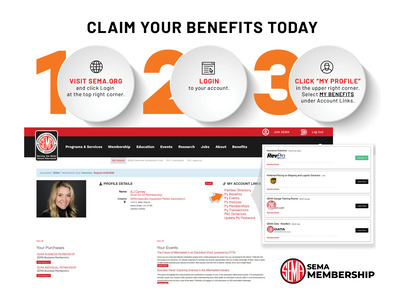
AJC: It’s very simple. Now when a member goes to www.SEMA.org, they’ll see a login icon at the upper right of the landing page. Once they’re registered and logged in, they can click on the “My Profile” icon, which takes them to their profile page. That page displays their image, all their company information, and a “My Benefits” column to the right. That column is their portal. And within that portal, that’s where members can take advantage of savings on parts purchases, SEMA Garage and SEMA Data [formerly the SEMA Data Co-op], and much more.

All they have to do is select a benefit or perk they’re interested in and hit the “Claim” button. They’ll learn more about that benefit, any applicable cost, and all the information needed to engage with it quickly and easily.

Membership

A simple three-step process is now all it takes for SEMA business members and their employees to take advantage of their benefits.

SN: You just mentioned a few of the benefits open to our business members. Perhaps we should go a little deeper into all that’s available to them.

AJC: Definitely. I can list several important examples right off the bat. Our manufacturing members have access to numerous SEMA Garage programs, such as Tech Transfer, rapid prototyping, measuring sessions and laser scanning, to list some of the most popular ones.

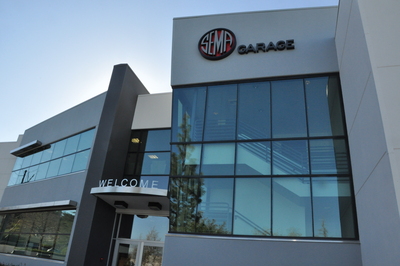
Another SEMA Garage perk we want members to be aware of is the training facility. Any SEMA business member can book our training room. Manufacturers can use it to educate their staff, consultants, the media and other partners about their products—or pretty much anything else. Retail members can book it, bring in vehicles or products from their shops, and train their employees. The Garage also has work bays equipped complete with tools and lifts.

Participation in SEMA Data is also a major service for member businesses, and they can access that program through the portal as well. If they’re a manufacturer logging in, they’ll see the filtered SEMA Data services that pertain only to them. If they’re a retailer or reseller, they’ll see SEMA Data services filtered for their needs. The portal is very intuitive.

In addition, many members take frequent advantage of SEMA Market Research, and the portal will give them direct access to our association reports. These are a huge advantage for businesses of all types.

SN: You also alluded to other perks. Can you give some examples?

AJC: We’re building our discount program for SEMA business members, which also is an ongoing process. I’ll highlight a couple examples. Right now, business members can redeem SEMA Gear online-only apparel discounts at 15% off through the portal, 40% off at 5.11 Tactical, and 20% parts discounts through Trader Tim’s Tie Downs. Then there’s an exclusive discount from Oakley, Costa and other fashion brands; and a 35% discount on digital ad placements on My Race Pass, to name just a few.

Of course, the portal also provides discount access to our benefit partners, including UPS, First Data and Alliant Insurance Services, among others. We’ll be rolling out more discount partnerships in the coming year. We’ll also reach out to potential partners directly on a member’s behalf when they suggest or inquire about them. Our goal is to greatly expand our perks, and we’re putting a lot of effort into delivering a full range of first-class discounts and benefits. If your business or company is interested in becoming a Benefits Partner, reach out to Mike Kirks, our membership benefits manager, at mikek@
sema.org.

SN: How about access to SEMA Education?

AJC: That is also available now through the portal. Business members can register and pay for select education events and seminars, and access free content as well, including SEMA on-demand education videos. This is another great member benefit. Our education topics are presented by subject-matter experts and cover a variety of subjects for business and personal
enrichment. Regardless of who you are or what you do in the industry, there’s something for everyone.

SN: SEMA council and networks are also important to many of our association members. Do they have a place in the new portal too?

AJC: Yes, SEMA has council and networks addressing a variety of industry segments, and we hope the new portal will increase member engagement with them. They’re a great way to tackle common industry issues, advance your business and even your personal career. But in the past, many members didn’t fully understand what our councils and networks were all about, what they could do for them, or even how to connect with them.

Now members no longer have to go searching for contacts or information about each council or network. The portal explains council and network benefits in one place. When an employee hits the “Claim Benefits” feature, all their council and network options are presented to them, and they can apply for membership right there. It’s a much easier way for business members to start their networking journey within SEMA.

SN: Speaking of networking, how about the full SEMA Member Directory? Is that available online?

AJC: We do have an online Member Directory, which is extremely robust. When members log in to their profile, they’ll see a link to it in the menu. When they click on that link, they’ll be able to filter results. Say, for instance, they want to find retailer members in their radius or manufacturers within a certain category. Boom! They can filter them quickly in the directory. That’s a function we’ve never had before. Previously, members only had access to a PDF copy of a printed directory that they had to sift through themselves. Now it’s automated and much less cumbersome. They can sort members by all types of fields.

Membership

SEMA manufacturing members have access to numerous SEMA Garage programs.

SN: And how about keeping their SEMA membership current?

AJC: Once they log in, they’ll see tools for that as well. They can view their annual invoice (90 days before membership expires) and pay it by clicking on “My Invoices” from their profile page. The system even keeps track of all the separate services or benefits they’ve paid for, including any benefit claim codes they’ve previously gotten. Some perks can be accessed multiple times using a single claim code. So if they ever forget or misplace that claim code, they can easily go back to their portal under “My Benefits” and retrieve it from their claimed area.

SN: Up to now, we’ve spoken about business members, but are there also benefits currently available to SEMA Individual Members when they log in to the portal?

AJC: Absolutely! When a SEMA Individual Member logs into SEMA.org and clicks on “Benefits,” they will be presented with a list of benefits/perks. For example, there’s a $10 off a $100 a Summit Racing Equipment purchase; discounts on Oakley, Costa and other fashion brands; 10% off online-only SEMA Gear purchases; 15% off at Hypertech; $15 off a $75 purchase through 5.11 Tactical; and 10% off any two- or five-day welding workshop through PIT Instruction and Training, among others.

SEMA Individual Membership

Employees of SEMA-member businesses and SEMA Individual Members wishing to make use of the portal should go to www.sema.org. At the upper right of the webpage, there are icons to join SEMA and/or log in. Selecting “Login” will take members to a page where they can sign in with their email and password.

If your business is not currently a SEMA member, you can gain member portal access, start saving and growing your business today at www.sema.org/join.

In addition, if you are not yet a SEMA Individual Member, you can join today and get immediate access to membership perks and more by visiting www.sema.org/individual-membership.

Start saving today!

Thu, 03/30/2023 - 16:51

By Jason Catullo

At last year's Industry Awards Banquet, SEMA introduced SEMA Fest, an enthusiast-focused experience that connects automotive enthusiasts with the aftermarket industry for a celebration of car culture and automotive lifestyle. Combined with the SEMA Show and officially called SEMA Week, the goal of the expansion is to create the most exciting automotive event in the world.

2023 SEMA Show, Tuesday–Friday, October 31–November 3, Las Vegas Convention Center

SEMA Show

During the planned five-year rollout period and beyond, SEMA will remain dedicated to producing the annual SEMA Show—the premier automotive trade show that puts the latest products from top companies in front of tens of thousands of qualified buyers representing every segment of the specialty-equipment industry. Companies that would like to exhibit at the 2023 SEMA Show can get started at SEMAShow.com/buyabooth.

Held at the Las Vegas Convention Center, the SEMA Show provides exhibitors with the aftermarket’s most valuable venue for creating more business, expanding brand awareness, introducing new products and engaging with automotive professionals.

Open to the automotive trade, the 2023 SEMA Show will take place Tuesday–Friday, October 31–November 3. For more information on the 2023 SEMA Show or to exhibit, visit www.SEMAShow.com.

SEMA Fest, Friday–Saturday, November 3–4, Las Vegas Festival Grounds

SEMA Fest

SEMA Fest is an enthusiast-focused event that is open to everyone, including automotive enthusiasts and professionals. The two-day celebration will be held at a separate venue—the Las Vegas Festival Grounds—Friday and Saturday, November 3–4.

The festival will feature music and entertainment, craft food, automotive celebrities, drifting competitions, freestyle motocross and the world’s most innovative and advanced custom vehicles.

To register for SEMA Fest or for more information, visit www.SEMAFest.com.

Thu, 03/30/2023 - 13:39

RealTruck Revs Up Easter Jeep Safari With Launch of New Apparel Line

RealTruckRealTruck Inc. has recently launched its first-ever apparel line, which will be available for purchase at Easter Jeep Safari during the last two days of the Moab, Utah, event. RealTruck, a Safari sponsor, recently dropped the collection online to celebrate the passion truck owners have for their way of life.

The apparel and accessories collection includes five T-shirts, three hats and one hoodie, as well as an assortment of custom-designed graphic stickers for outdoor enthusiasts. Each T-shirt option will be offered in both male and female styles. Many of the items are already on RealTruck’s apparel page and all will be available upon the conclusion of Easter Jeep Safari.

The nine-day event is hosted by local off-roading group, Red Rock 4-Wheelers Inc. It consists of day-long trail rides departing from Moab, Utah, in which participants provide their own vehicles, safety equipment and needs. RealTruck will leverage Easter Jeep Safari as a platform to showcase the new clothing line while connecting with consumers. The brand’s booths will be located inside and outside of Old Spanish Trail Arena during the vendor show.

Tread Lightly! Announces OVR: Outdoor Vehicle Recreation @OVRmag as Official Partner

Tread Lightly! has announced Outdoor Vehicle Recreation (OVR) magazine its newest official partner along with a new gift for all Tread Lightly! members. As an official partner of Tread Lightly!, OVR will support Tread Lightly!’s mission to protect off-road trail access and public lands through stewardship projects and responsible recreation education.

OVR is a print and digital magazine that is all about Outdoor, Vehicle, Recreation. OVR serves the needs of vehicle-based outdoor enthusiasts. As a partner of Tread Lightly!, OVR  will present a gift one-year digital subscription to every Tread Lightly! member with no credit card required. Details can be found on Tread Lightly! Member Benefits page.

For more information on OVR, visit www.ovrmag.com. To learn more about Tread Lightly!, visit www.treadlightly.org.

320hp Acura Integra Type S Full Reveal Coming Next Month

Acura has announced the ’24 Integra Type S will launch this summer with 320 hp, 310 lb.-ft. of torque and class-leading power-to-weight ratio, taking Integra performance to its highest levels yet. With power derived from a race-proven, high-revving 2.0L VTEC turbocharged engine and paired exclusively with a precise, short-throw six-speed manual transmission, the Integra Type S promises ultimate street performance delivered with premium appointments. Geared for a new generation of enthusiast drivers, the ’24 Integra Type S will be officially revealed next month ahead of the 48th annual Acura Grand Prix of Long Beach.

Polaris Launches Polaris Xchange Powersports Marketplace

Polaris Inc. has launched Polaris Xchange—a one-stop online marketplace provides customers the ability to shop, research and start the buying process on thousands of off-road vehicles, snowmobiles, motorcycles, side-by-sides, auto-cycles and ATVs from participating Polaris dealers nationwide.

Polaris Xchange is designed to offer consumers the tools they need to start the buying process from the comfort of their homes, including: finding the vehicle, viewing used vehicle history and condition reports, shopping for accessories, indicating interest in protection products, determining trade-in value and prequalifying for a loan. From there, the customer needs to complete the purchase and pick up the vehicle from a dealer or have it delivered.

Polaris Xchange also provides value to Polaris dealers who can publish their new and used inventory online increasing visibility, reach and awareness to shoppers.

With JoyDrive as a technology partner, Polaris Xchange will showcase used powersports inventory from all powersports manufacturers as well as available inventory of new Polaris vehicles at participating dealers. For more information, visit www.polarisxchange.com.

NASA Names Replacement for Retiring Jerry Kunzman

Officials with the National Auto Sport Association (NASA) have announced co-founder and executive director Jerry Kunzman will retire in 2023. He will continue to serve as the regional director of NASA’s Northern California region. Jeremy Croiset, current COO, will replace Kunzman as CEO. NASA was founded by Kunzman and Ali Arsham in 1991. Croiset joined the organization in 2005 to help manage sponsorship and marketing duties. In 2010, he was promoted to director of business development before being named vice president in 2018. In April 2020, he was named COO.

FASTRAKFASTRAK and Ultimate Series Sold to Bill and Stacy Lupinos
Stan Lester—the founder of the Carnesville, Georgia-based FASTRAK Racing Series and the ULTIMATE Super Late Model Series—has sold both series to Bill and Stacy Lupinos. Bill, currently the FASTRAK vice president, also owns and operates FASTRAK’s Heart of America USLMS (ULTIMATE HoA) and Richmond Speedway in Richmond, Kentucky, with his wife Stacy. For more information, visit the FASTRAK announcement here.

All Star Circuit of Champions Promote Kevin Nouse as Series Director

Officials with the Brownsburg, Indiana-based Tezos All Star Circuit of Champions presented by Mobil 1 organization have announced Kevin Nouse has been promoted to the position of series director for 2023 and beyond. Nouse is a sprint-car racing veteran who joined All Star as a technical official in 2022, when he also served as a point of contact between the pit area and scoring tower. Nouse will maintain responsibilities on the grounds before transitioning to the scoring tower in 2024.

In addition, longtime scorer and current operations director Ross Paulson will assume the race director role in 2023. Brad Hockaday will serve as the scorer for most events. The voice of the All Stars Blake Anderson will continue as the series announcer. The All Stars will also welcome back technical officials: Ken Osborne, John Menear, and Steve Topper. Erin Noel returns as pit steward and social media content creator. Jeffry “Gooch” Patterson will drive the official series pace truck.

The All Star Circuit of Champions points season begins at Attica Raceway Park (Attica, Ohio) for the Core & Main Spring Nationals on April 7–8.

NHRA Names Mike Eames Northwest Division Director

Officials with the National Hot Rod Association (NHRA) have announced the addition of Mike Eames as the division director of the Northwest Division, also known as Division 6. Eames will oversee NHRA member tracks in Alaska, Alberta (Canada), British Columbia (Canada), Idaho, Montana, Oregon and Washington.

Before the announcement, Eames served as the general manager at Rocky Mountain Raceways (West Valley City, Utah), awarded NHRA Division 7 Track of the Year in 2018 under his leadership. He also has spent time in the NHRA announcer’s booth at NHRA divisional and national events.

Eames joins a team of division directors who oversee the seven NHRA divisions throughout the United States and internationally. The Northwest Division sees several Lucas Oil Drag Racing Series events throughout the season and the Flav-R-Pac NHRA Northwest Nationals at Pacific Raceways in Seattle as part of the NHRA Camping World Drag Racing Series.

The US Department of Energy and Stellantis Announce the Battery Workforce Challenge

StellantisThe U.S. Department of Energy (DOE) and Stellantis have announced the launch of the Battery Workforce Challenge, which includes a three-year collegiate engineering competition; vocational training; youth education in science, technology, engineering and math (STEM); and career and technical education.
DOE has set a bold target to address climate change, and puts the United States on a path to achieve net-zero emissions, economy-wide, by 2050. Key to this target goal are the design and development of advanced batteries to electrify the transportation and energy sectors and a highly skilled domestic workforce with the hands-on experience and knowledge needed for in-demand positions throughout the electric-vehicle/battery industry.

Managed by Argonne National Laboratory for DOE and co-sponsored by Stellantis, this government and industry partnership is designed to build the next generation of engineers, technicians and workers to address the unprecedented demand for a domestic electric-vehicle/battery workforce.

Kicking off in fall 2023, the Battery Workforce Challenge includes an advanced battery design and development student competition series that invites universities and vocational schools from across North America to design, build, test and integrate an advanced electric-vehicle battery into a future Stellantis vehicle. Teams will follow real-world industry milestones focused on battery design, simulation, controls development, testing and vehicle integration and demonstration.

Argonne is now accepting applications from colleges and universities to select up to 11 teams that will participate in the Battery Workforce Challenge collegiate and vocational program. Proposals may be submitted from four-year universities located in the continental United States that are accredited by the Accreditation Board of Engineering Technology (ABET), and four-year universities located in Canada that are accredited by the Canadian Engineering Accreditation Board (CEAB). Non-accredited schools, such as community colleges, trade schools and apprenticeship programs, may participate as a partner to an accredited university as part of the vocational collaboration requirement. For more background about the Battery Workforce Challenge, visit www.battchallenge.org.

Atlanta Motorsports Park Becomes First Race Track to Install Level 3 Fast Chargers for High-Performance EVs

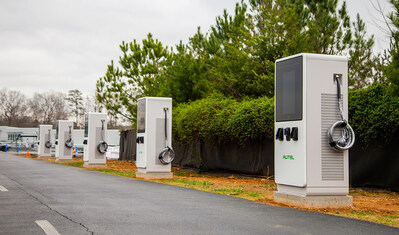
Atlanta Motorsports ParkIn partnership with Indigo Energy, Atlanta Motorsports Park (AMP) has become the first race track in the United States to install five brand-new Autel MaxiCharger DC Fast Level 3 Chargers. These EV “superchargers” offer up to 180kW of charging, providing up to 125 miles of range in 10 minutes with a maximum 400A output current. A total charge requires just 20–30 minutes for most vehicles.

Located close to member garages, the five Autel MaxiCharger DC Fast charging stations provide ease-of-access when both coming to and getting off the track. Manufacturer Autel promises that the chargers will provide continued software compatibility with new vehicles, and the chargers are already compatible with all vehicles of IEC standards.

The addition of the chargers is the latest move AMP has made in an effort to act as a pioneer to EV motorsports. Looking to the future, the track anticipates that many states could soon follow California’s lead, with plans to phase out the sale of internal combustion vehicles totally or completely within the next 50 years. Many AMP members have been early adopters of EV powertrains, with some banding together to form EV-focused garages specifically designed to bring the most performance out of any electric vehicle.

K&N Repositions for Growth With New Intake System Pricing and Line Extension

K&N Engineering has announced a series of changes designed to make its products more accessible and affordable for customers. Effective immediately, K&N will reduce prices across intake products within the K&N brand family, including AEM, Airaid and Spectre. This decision comes after two years of challenges due to the labor, material costs and supply-chain disruptions that have driven up pricing for the industry as a whole.

K&N has been able to reduce some operational costs through increased efficiencies in manufacturing, including improved performance from its new plant in Grand Prairie, Texas, and greater efficiencies in the supply chain.

Furthermore, the company has announced new development of more than 50 intakes with both Dryflow synthetic and oiled cotton options on new and top-selling applications in the coming months. Additionally, K&N is bringing back discontinued SKUs to offer additional options for less-popular vehicles.

Have some company news you would like to share? Let us know and the news may appear in an upcoming issue of SEMA News. Send your items for consideration to editors@sema.org.

Thu, 03/30/2023 - 13:19

By Ashley Reyes

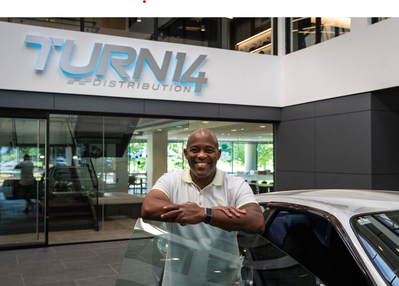
FLN Live ChatSEMA members are invited to connect with Daryl Sampson, vice president of marketing at Turn 14 Distribution, during the FLN Facebook and Instagram live chat, Wednesday, April 12, at 12:00 p.m. (PDT).  

Sampson’s career has encompassed a multitude of roles throughout the aftermarket in the past 20 years—from sales manager of a prominent retail performance and sales installation facility to his current role at Turn 14 Distribution.  

During this live chat, Sampson will share his perspective on landscape shifts in the industry, particularly as they pertain to warehouse distributors. SEMA members will learn what the company is doing well to remain successful, changes that have impacted business and how EVs are affecting WDs.  

This is a great chance to hear from an aftermarket expert who has been on the cusp of industry-leading marketing and sales programs, and to learn about the state of the industry with WDs. Get your questions ready and join the live chat to tap into Sampson’s expertise.  

Live chat location:  

Thu, 03/30/2023 - 13:11

By Della Domingo

The SEMA and PRI legislative team will be providing the industry with an update on the association’s advocacy efforts during an open virtual meeting on Friday, March 31, at 1:00 p.m. (PDT)/4:00 p.m. (EDT).

All members and industry professionals are invited to join the meeting, where they will gain an understanding of how the government affairs team in Washington, D.C., is advocating for the industry and its businesses.

Attendees will receive both federal and state updates, specifically on the RPM Act, as well as an overview of the advocacy communications strategy they aim to utilize.

To register and/or receive a recording of the meeting after the event, sign up here.

Thu, 03/30/2023 - 12:59

By Eric Colby

Chris Stewart was walking out of a concert in Grand Rapids, Michigan, in 2003 when a lowered white Honda Civic ES hatchback caught his eye. He was running a car club for import-car owners out of the house he rented while attending college and thought the car’s owner could be a good fit.

Gridlife

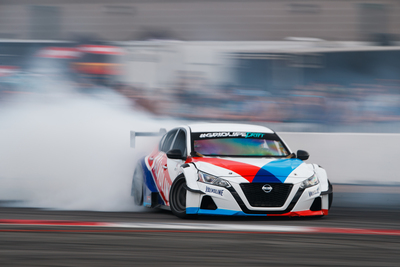
The self-taught Formula Drift champion racer Chris Forsberg (and his 2,000hp, Valvoline-sponsored Nissan Altima “Altimaniac” drift car) is among the big-name heroes of car culture to be found at GRIDLIFE events.

“I left a note on this white Civic, and every January we would borrow a buddy’s dad’s stake truck and drive from Grand Rapids to bring imported motors into Michigan,” said Stewart.

It turned out that the owner of that white Civic was Adam Jabaay, who joined Stewart’s club called West Michigan Honda. The two shared a love of modifying and racing import cars and got into road racing and autocross. In 2004, they rented the GingerMan Raceway in South Haven, Michigan, for the first time, inviting their friends to come out for a day at the track. “If you were trying to get into track racing or autocross, you didn’t have many paths forward,” said Stewart.

They attended other track days held by more “traditional” organizations, but “it didn’t “feel like our people or our scene,” explained Stewart. “We started to organically grow a group of younger individuals to get into the track scene.”

In addition to being car enthusiasts, Stewart and Jabaay had moved to Chicago while working for an advertising agency. Stewart spent many evenings at local clubs enjoying a variety of musical performers.

Oftentimes the simplest ideas can lead to the greatest success. Stewart and Jabaay started talking about how to bring together three elements: young people who enjoy various auto-racing disciplines, car-culture enthusiasts and those with similar musical interests.

The result is #GRIDLIFE, a grassroots racing organization that invites car and music enthusiasts to a track for weekend-long festivals and track days. The events feature a diverse collection of on-track competition, car culture and sometimes a Saturday-night concert all in one place. Think of it as Lollapalooza meets Nitro Circus.

“GRIDLIFE was birthed out of the intersection of my passions,” said Stewart. “How do I create a community that glues together all my friends,” he asked. “It’s not just a track event with drifting in the corner. Our mission statement is motorsports inclusion.”

Overall, GRIDLIFE had 14 events around the country last year, mostly at road courses where drifters get a unique opportunity because they run on the same track as the sporting categories.

“The barrier between road racers and drifting has been there for a long time,” said Stewart. “A road-race driver can look at the brake marker and see where they initiate the turn.”

You can’t deny that the group is growing—and introducing a fresh demographic of enthusiast consumers to the racing-performance and specialty-equipment industries. Last summer, GRIDLIFE celebrated the 10th anniversary of its flagship Midwest festival, and the company held events around the country in 2022. Partners include some of the best-known names in motorsports, car culture and the aftermarket, including MOMO, Valvoline, Falken Tires, eBay Motors, Sta-Bil, Advance Auto Parts and more. The organization has also exhibited at the recent SEMA Show and Performance Racing Industry Trade Show.

GRIDLIFE is the largest time-attack organization with more competitors than any group in the United States. GRIDLIFE held events in California the last two years and another in Texas. In addition, 2022 was the first year that GRIDLIFE held an event in New England, at Connecticut’s legendary Lime Rock Park. The Midwest Festival drew 2,200 people 10 years ago, but last summer 20,000 people attended with well-known EDM performer Kaskayde entertaining the crowd Saturday night. Other noteworthy musical guests have included rappers Waka Flocka and T Pain and alternative-band Taking Back Sunday.

Gridlife

Drift car racer and Youtube influencer TJ Hunt (center) has gained a huge following among the young crowds at GRIDLIFE events.

“Almost all of our events are sold out,” said Stewart. The GRIDLIFE website encourages guests to spend the weekend camping onsite for the full experience. The average cost for a weekend is $550, including track time and the concert. For smaller events, a single track day can cost as little as $110 per day. “We punch above our weight in terms of experience within the category of club racing,” said Stewart. “We’re looked at and compared to a Formula Drift or an IMSA—that’s not what we are.” Between on-track racing, drifting, interactive experiences and the concerts, GRIDLIFE has 17 hours of programming per day during a festival weekend.

Falken has two time-attack classes that GRIDLIFE wrote the rules for, and Stewart said the corporate sponsorships are evolving. “We’re still trying to figure out partnerships. It’s kind of an ever-flowing thing,” he said. “We don’t do a lot of presented-by or series titling.”

Cheralyn Smith, director of motorsports marketing for MW Company, the parent of MOMO, Weld and other brands, called GRIDLIFE the best of both worlds. “One of the things that’s really unique is the motorsports festival,” she said. “It’s nice to have car enthusiasts and non-enthusiasts at one event.”

For MW, which is based in Gardena, California, GRIDLIFE events present the possibility to revive interest in the MOMO name, which is well-known to sportscar enthusiasts, as well as Forgestar, a newer company.

“MOMO is a brand that’s been around 60 years and GRIDLIFE lets us relaunch the brand in the United States to many different consumer bases,” she said. “We’ve seen growth with Forgestar through partnerships with events like GRID.”

Through Forgestar, the company is reaching a new customer base with the drifters. “One of the things we can make is wheels to the spec they need without spacers,” she explained. “We’re finding traction within that area because we offer a product that makes sense to them.”

In addition to product, companies like MW and Valvoline can put their professional drivers in front of their fans in the informal environment that GRIDLIFE provides. Beyond the racing and product displays, there are also other attractions and activations, including ride-alongs and iRacer simulators.

The simulators represent an especially novel immersive-racing concept also aimed at stoking grassroots enthusiasm. According to Stewart, the simulator competitions open motorsports to a gaming audience while instilling valuable track skills. Ultimately, that can build newcomer confidence to join in the racing lifestyle at live GRIDLIFE track days and programs.

Names known to the car-culture world who appear at GRIDLIFE events include Robert Thorne, who also just won the Pro Drift championship, Chris Forsberg and Rob Dahm, who is one of YouTube’s best-known influencers with his quad-rotor Mazda.

There are no membership charges for GRIDLIFE, but drivers must be licensed. The lack of a membership fee is by design; it ensures the racing remains affordable. Stewart said there were 1,600 licensed competitors in 2022 and most ranged from 23–36 years old.

Don’t let the casual atmosphere and the weekend-capping concerts make you think the competition isn’t serious, though. Pro drivers come in to compete in various classes and everyone wants to win. “If you look at any of our events from 20,000 ft. in the air, it would still look like cars going around a racetrack,” said Stewart.

Because Stewart spent time in advertising, he understands the importance of social media and a variety of outlets for people who can’t attend in person. “We livestream and present and broadcast six races per year,” said Stewart. “These aren’t IMSA teams. They are people building their programs. We bring in partners so we can do that broadcast so they can bring in sponsors and continue in the hobby.”

In addition to welcoming myriad racing disciplines, GRIDLIFE is one of the most inclusive motorsports organizations. More than 25% of the attendees and competitors are women, and the group works with LGBTQ organizations like Racing Pride and Out Motorsports.

“We just try to be allies to groups to make them feel welcome,” said Stewart. “It’s not just general acceptance, it’s celebration of those groups.”

Perhaps no one can fully understand the value of the audience that GRIDLIFE draws more than Patrick Daugherty, associate brand manager/sponsorships at Valvoline. In addition to bringing in influencers sponsored by the lubrication giant like TJ Hunt, Forsberg and Dahm, Daugherty gets the viewpoint of GRIDLIFE racers because he’s one of them. Daugherty competes in Street Class with a ’21 Honda Civic Type R. “It’s fun to be one of them and see things from a different perspective,” said Daugherty.

He’s been competing in sports cars since 2008, starting in Autocross, and he has run a time-attack car.

“When we first started sponsoring GRIDLIFE, I was already in time attack and I started competing at the events I could drive my car to,” said Daugherty.

Valvoline kicked off its sponsorship with GRIDLIFE in 2012, and Daugherty says the group “renewed a lot of excitement around car culture and motorsports.” He added, “Their concept to marry music and these automotive festivals is pretty awesome.”

From the Valvoline side, Daugherty said GRIDLIFE events let fans interact with influencers like Hunt and Forsberg. “There will be a huge line to meet with T.J. and he’ll spend however long the fan wants to chat with him,” said Daugherty. “They’re not only getting the GRIDLIFE experience, they’re getting content.”

Gridlife

GRIDLIFE iRacing simulator competitions open motorsports up to a gaming audience, instilling newcomers with the confidence to join real-life track days and other events.

The influencers also give attendees the chance to experience the crazy machines they see on YouTube. Hunt is building a quad-rotor Mazda for time attack and has a huge following on the video-hosting site. Forsberg built the Valvoline-sponsored Altimaniac, a 2,000hp four-seat Nissan Altima drift car. Show attendees can enter a lottery to go for a ride with him at a GRIDLIFE event.

While he couldn’t put a number on the “value” of Valvoline’s participation in GRIDLIFE, Daugherty did say, “Event-wise, it’s the best place for us to gain exposure and brand awareness with our influencers. The events tick all the boxes. It’s engagement, reach and their content is the best.”

Moving forward, Stewart said that GRIDLIFE is looking at electric propulsion and Mountain Pass Performance that caters to vehicles that compete in events like the Pikes Peak Challenge.

“We have so many facets to our world. The competitors make the series,” said Stewart. “All we do is provide structure, experience and friendships.”

Thu, 03/30/2023 - 12:52

By SEMA Editors

Show FloorThe road to the 2023 SEMA Show begins with the annual Priority Selection Process—where companies choose a Show floor location based on exhibitor seniority. The process literally builds the SEMA Show section by section, booth by booth.

“It is like the order of a pro sports draft; we rank each exhibitor by seniority, determined by how many SEMA Shows an exhibitor has participated in and by Show section,” said Andy Tompkins, SEMA’s trade show director. “To do this, we call every single exhibitor; we speak to brands that are just starting out, all the way to established companies that have been part of the Show for years.”

Every approved exhibitor that submits their Exhibit Space Rental Application (ESRA) and deposit prior to the April 3 deadline has the opportunity to select their booth space. During the exhibitor’s time to pick, a SEMA Show account representative will call the primary SEMA Show contact and help locate and assign the exhibit space that best suits the company’s needs.

“This is a fair and equitable way for companies to select their best possible location—part of our commitment to providing the best exhibit experience possible,” Tompkins said. “We even have tie-breakers built into the system in case companies have the same seniority. The process is never the same, which is one of the ways we keep the SEMA Show so cool, exciting and new each year.”

One of the most important aspects for having a successful Show is pre-Show marketing and promotion. The Priority Selection Process allows exhibitors to understand their Show floor location and how large their exhibit is going to be so they can begin to envision their display design, product presentation, staffing and promote their presence at the Show.

“This process creates the Show floorplan that we publish each year, which buyers, media and other Show attendees preview, helping to promote participating brands to a world of buying power and getting thousands of people ready to attend and work the Show like a pro,” Tompkins said.

To date, nearly 1,500 companies have committed to exhibiting at the 2023 SEMA Show. Organizers expect the number to increase to more than 2,000 by Show time. See who is exhibiting.

There is still time to get involved in this process; submit your ESRA application by April 3! Don’t miss this opportunity to connect with the world’s most iconic buying organizations, media, manufacturers and influencers.

The 2023 SEMA Show will  be held October 31–November 3 in Las Vegas. For more information about exhibiting, visit www.SEMAShow.com/exhibitor or check out the exhibitor brochure.